Article

State Incentives and Sustainable Motivation System in the Health Sector
by
Slobodan Ćulafić
1,
Tatjana Janovac
2,
Saša Virijević Jovanović
3,*,
Jelena Tadić
4,
Jamila Jaganjac
5,
Aleksandra Milošević
1 and
Aleksandra Bibić
1
1
Faculty of Medicine, University of Belgrade, 11000 Belgrade, Serbia
2
Faculty of Applied Management, Economics and Finance, University Business Academy in Novi Sad, 11000 Belgrade, Serbia
3
Modern Business School, 11000 Belgrade, Serbia
4
Faculty of Business Economics, The University Educons, 21208 Sremska Kamenica, Serbia
5
Faculty of Business Economics, University “Vitez”, 72250 Vitez, Bosnia and Herzegovina
*
Author to whom correspondence should be addressed.
Sustainability 2021, 13(24), 13592; https://doi.org/10.3390/su132413592
Submission received: 30 September 2021 / Revised: 17 November 2021 / Accepted: 22 November 2021 / Published: 9 December 2021
(This article belongs to the Special Issue Sustainability Management in the Healthcare Sector)

Abstract

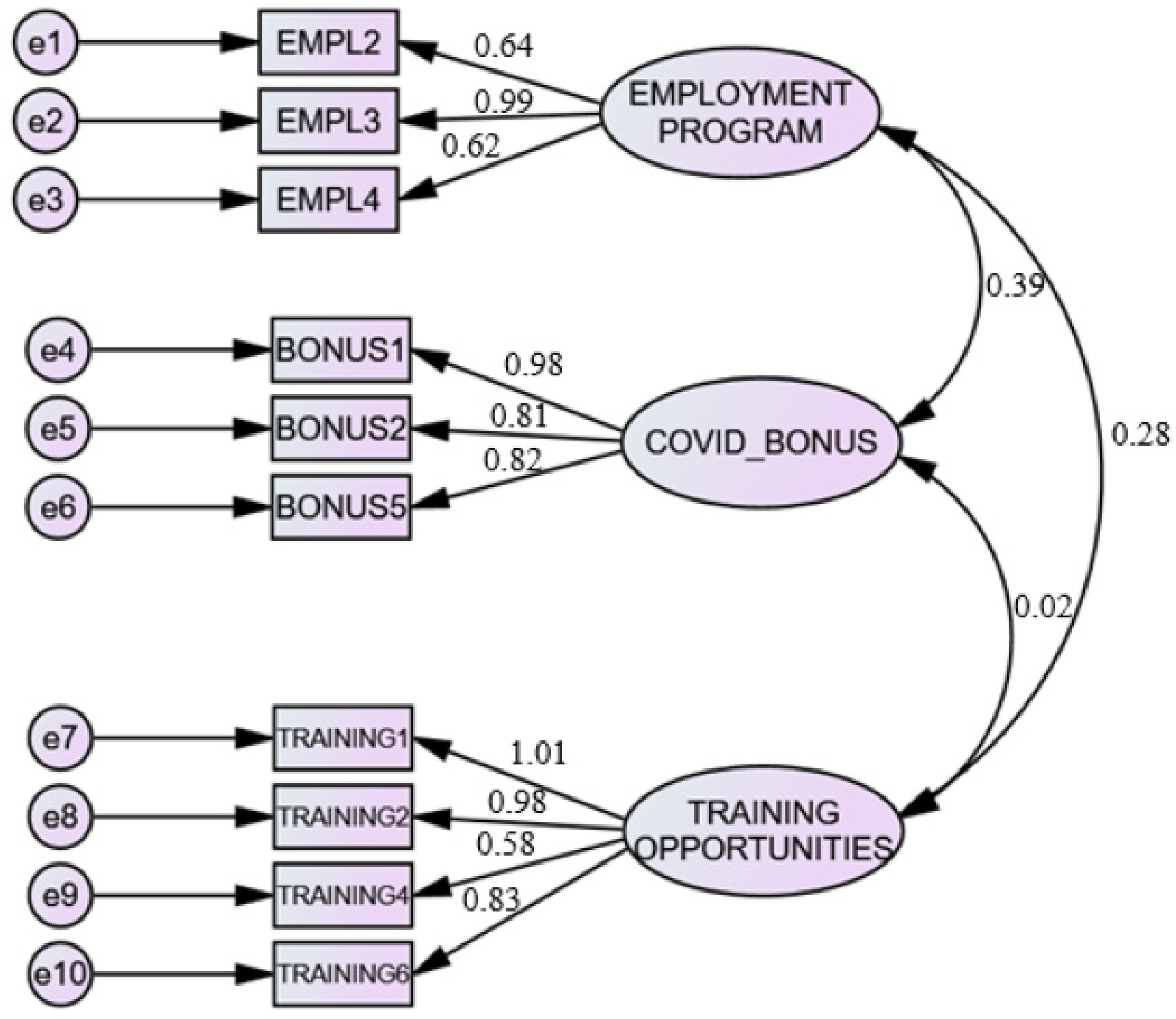
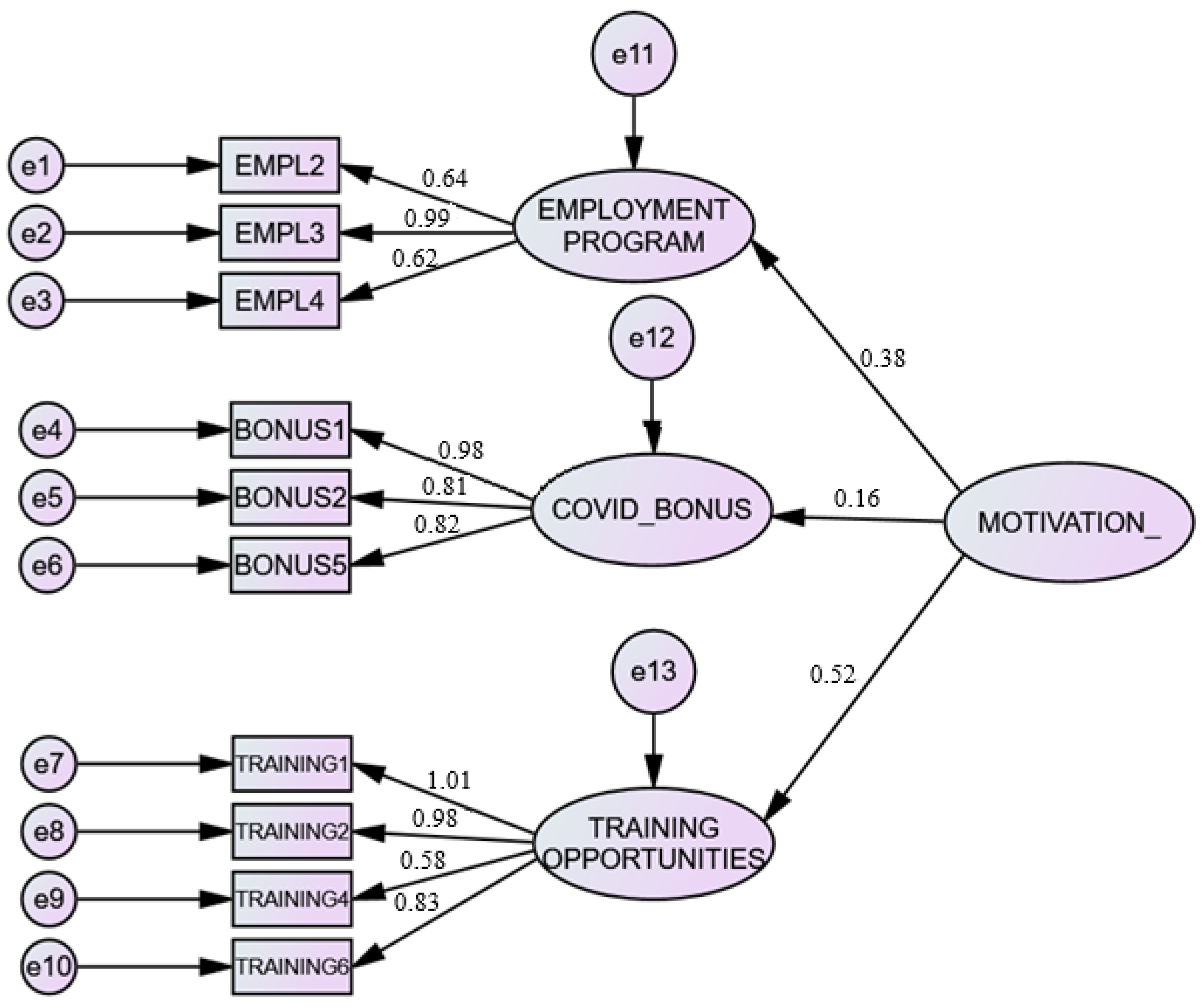
Now that the pandemic has entered the second phase, in which countries are adapting to the crisis, governments need to determine incentives that will contribute to the sustainability of the health system and human health. Regarding this, human resources are a significant factor, which affects the sustainability of any system, and it is important to establish a relevant motivation system that will withstand the challenges that society will face in the coming period. The aim of this paper is to analyse three dimensions of state incentives (employment program, COVID-19 bonus, training opportunities) and to examine their influence on healthcare workers’ motivation and the sustainability of the health system in the Republic of Serbia. The empirical research was conducted on a sample of 207 respondents employed in the tertiary level of healthcare. Data analysis included exploratory factor analysis (EFA), confirmatory factor analysis (CFA) and structural equation modelling (SEM). The research results confirmed the existence of all three incentives and indicated that state incentive “training opportunities” has the strongest effect on the motivation of health workers and the sustainability of the healthcare system.
Keywords: coronavirus; healthcare sector; incentives; human resources; motivation; sustainable system; human health coronavirus; healthcare sector; incentives; human resources; motivation; sustainable system; human health