Article

Environmental Preferences and Fish Handling Practice among European Freshwater Anglers with Different Fishing Specialization Profiles

by
Emil Andrzej Karpiński
* and
Andrzej Robert Skrzypczak
*
Department of Tourism, Recreation & Ecology, Institute of Engineering and Environmental Protection, University of Warmia and Mazury, Oczapowskiego St. 5, 10-719 Olsztyn, Poland
*
Authors to whom correspondence should be addressed.
Sustainability 2021, 13(23), 13167; https://doi.org/10.3390/su132313167
Submission received: 20 September 2021 / Revised: 16 November 2021 / Accepted: 23 November 2021 / Published: 27 November 2021

Abstract

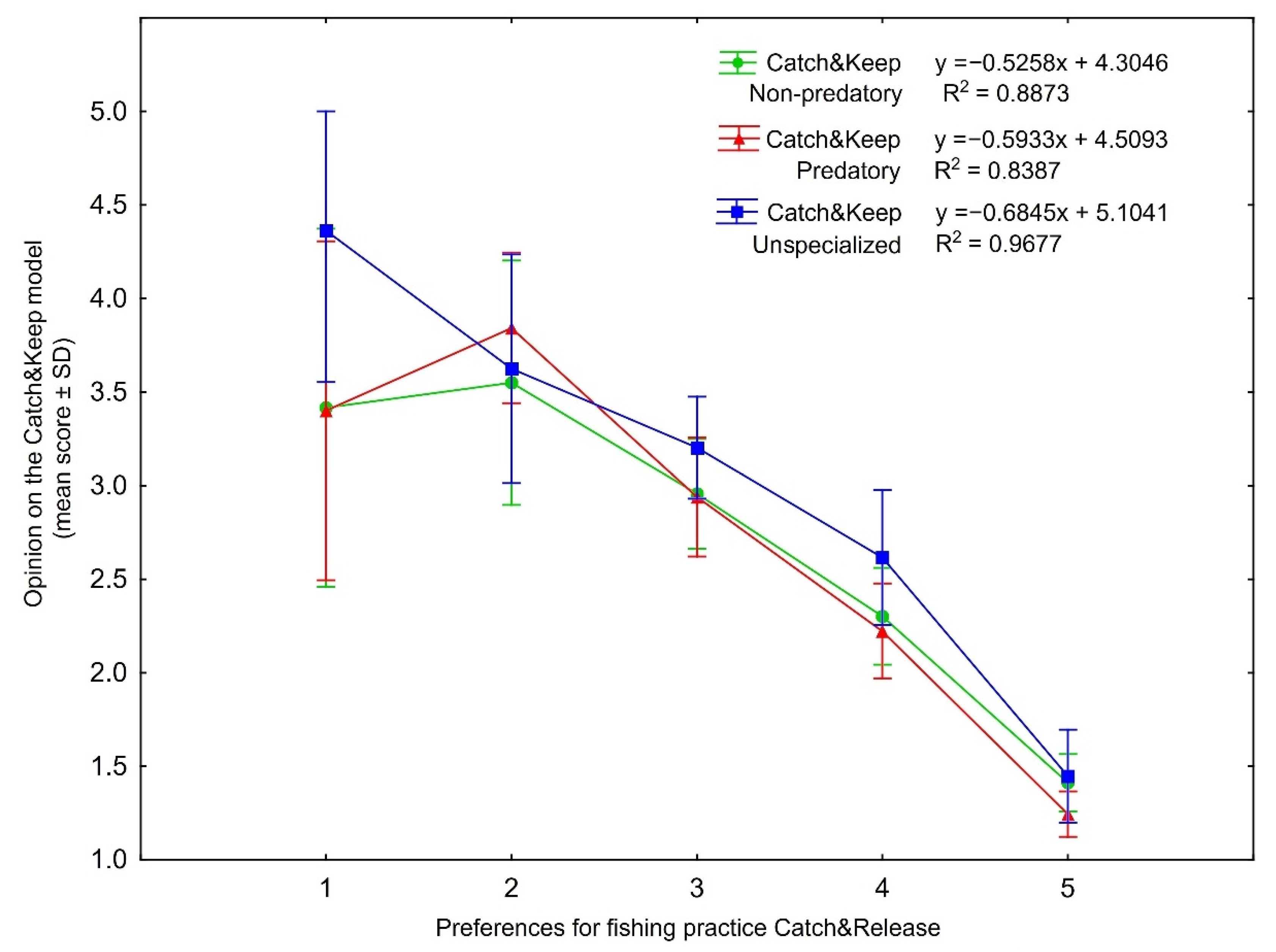
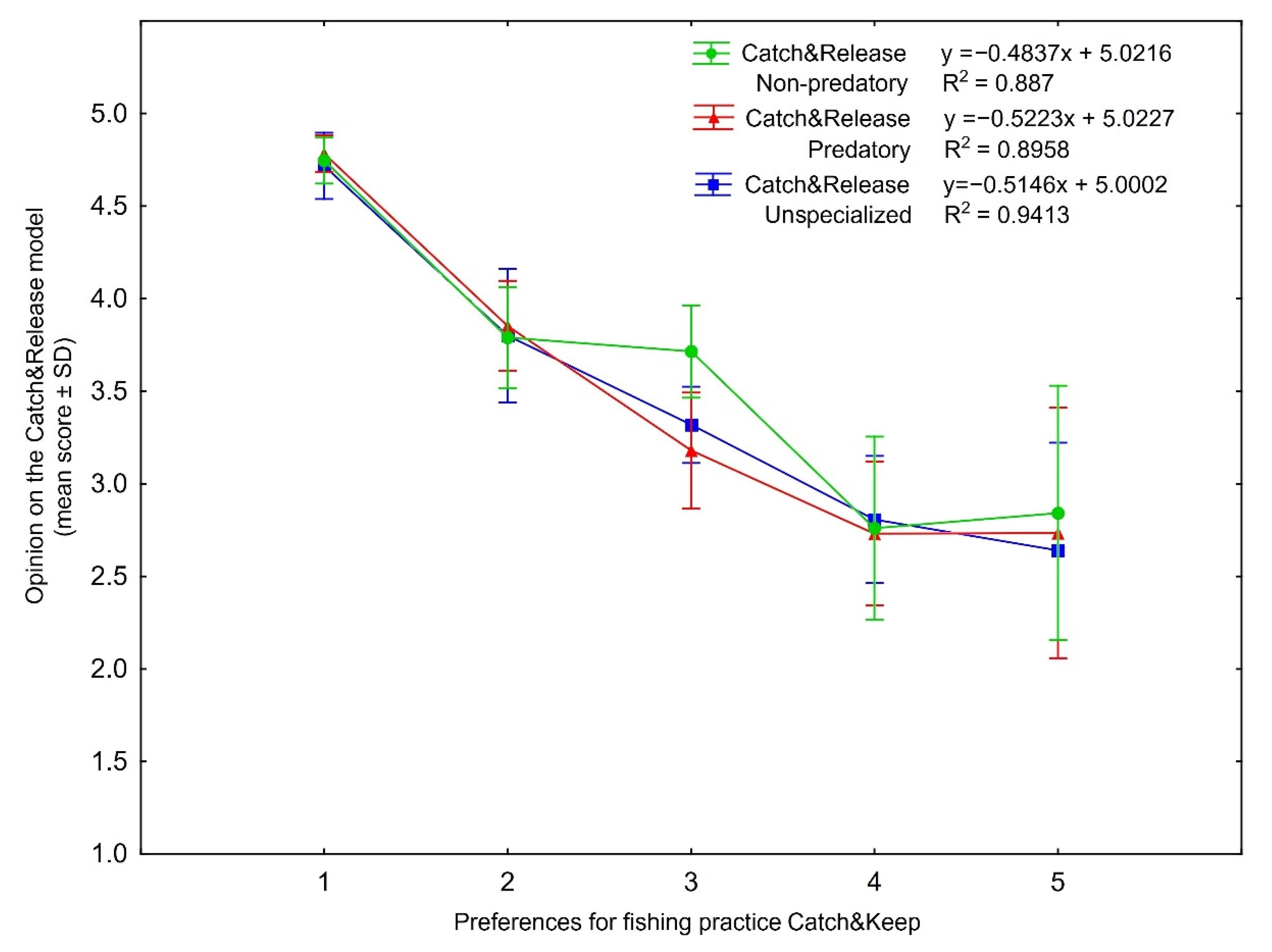
Recreational specialization is characteristic of many activities, including recreational fishing, which is a popular and important form of recreation throughout the world. The pressure on the environmental resources used by anglers is increasing. It is becoming crucial to understand the preferences and behaviors of anglers, which can accumulate and multiply the risk of damage to fish stocks and aquatic habitats. The main objective of the study was to comprehensively analyze the differences between anglers with diverse specialization profiles. By investigating the fishing preferences within the context of the socioeconomic, demographic and engagement factors, three groups of anglers were identified: anglers who specialize in predatory fish, anglers who specialize in non-predatory fish and unspecialized anglers. Specialized anglers, regardless of type, were found to be more supportive of releasing caught fish (71% on average) and were less likely to keep them (16%) than unspecialized anglers (55% and 27%, respectively). Unspecialized anglers (26.5% of the surveyed population) show less commitment to ethical values. The potential negative environmental impact of the least specialized anglers is an accumulation of the preferences for the use of ground bait, artificial lures, and live fish as bait. Anglers specializing in predatory fish are the most critical in their evaluation of fish resources and water quality and are least attached to specific fisheries. This work provides insight into angler experience and it may help to better identify anglers who are disrespectful towards the fishing laws in place. The results of this work may be incorporated into fishery management strategies, including strategies to reduce naïve anglers and deter disrespectful anglers, which are lucrative in the fishing process.
Keywords: recreational fishing; angling specialization; fisheries management; fish handling; environmental impact recreational fishing; angling specialization; fisheries management; fish handling; environmental impact