Article

Microplastic Contamination in the Human Gastrointestinal Tract and Daily Consumables Associated with an Indonesian Farming Community

by
Anjar Tri Wibowo
1,*,
Husna Nugrahapraja
2,3,*,
Ruri Agung Wahyuono
4,*,
Izzatul Islami
5,
Muhammad Husain Haekal
4,
Yasri Fardiansyah
6,
Pramudya Wisnu Wicaksono Sugiyo
1,
Yohanes Kartjito Putro
1,
Faiza Nur Fauzia
1,
Heri Santoso
7,
Friedrich Götz
8,
Bieby Voijant Tangahu
6 and
Arif Luqman
5,*
1
Department of Biology, Faculty of Science and Technology, Airlangga University, Surabaya 60115, Indonesia
2
Biology Department, Institut Teknologi Bandung, Bandung 40132, Indonesia
3
University Center of Excellence for Nutraceuticals, Bioscience and Biotechnology Research Center, Institut Teknologi Bandung, Bandung 40132, Indonesia
4
Physics Engineering Department, Institut Teknologi Sepuluh Nopember, Surabaya 60111, Indonesia
5
Biology Department, Institut Teknologi Sepuluh Nopember, Surabaya 60111, Indonesia
6
Environmental Engineering Department, Institut Teknologi Sepuluh Nopember, Surabaya 60111, Indonesia
7
Generasi Biologi Indonesia (Genbinesia) Foundation, Gresik 61171, Indonesia
8
Microbial Genetics Department, Eberhard Karls University of Tuebingen, 72076 Tuebingen, Germany
*
Authors to whom correspondence should be addressed.
Sustainability 2021, 13(22), 12840; https://doi.org/10.3390/su132212840
Submission received: 4 October 2021 / Revised: 11 November 2021 / Accepted: 16 November 2021 / Published: 19 November 2021

Abstract

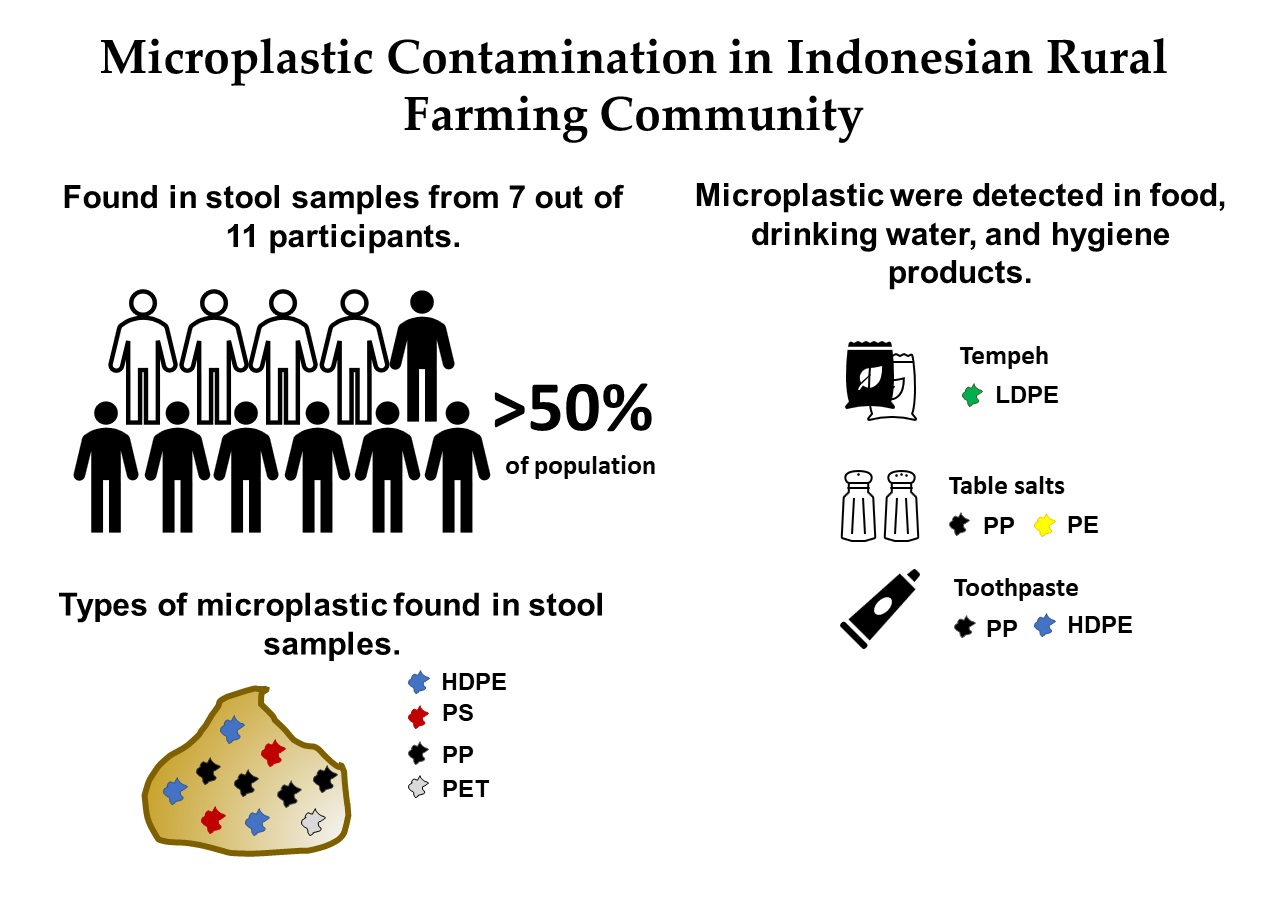
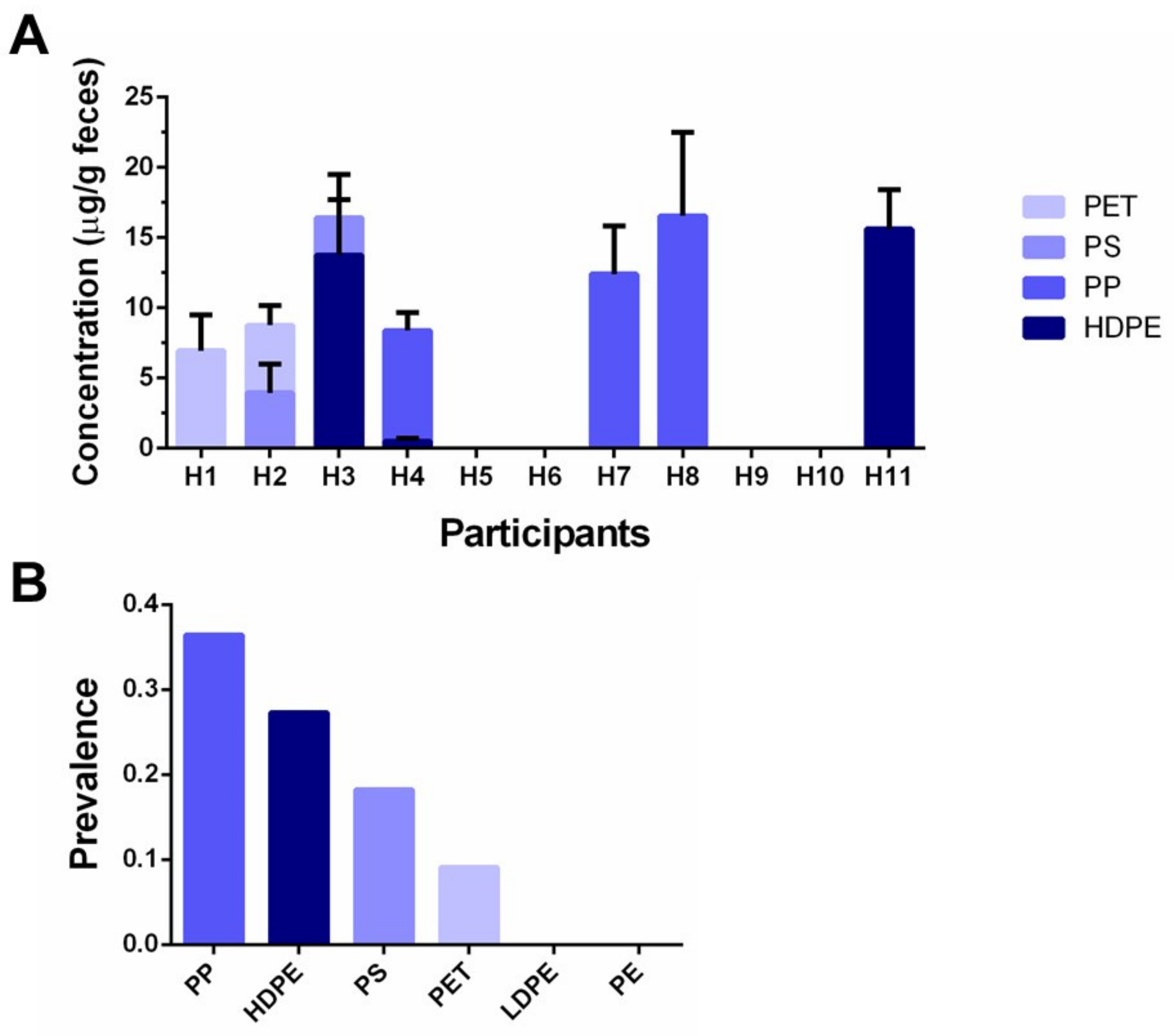
Plastic is one of the most abundant pollutants in the environment. As a result of natural physical processes, large plastic waste is degraded into microsized particles (<5 mm) called microplastics. Because of their size, abundance, and durability, microplastics are widely distributed in the environment, contaminating food and water intended for human consumption. The extent of microplastic contamination in the human body is still unclear because there are few studies concerning microplastic contamination in human specimens and, in most studies, data were collected from city dwellers. Despite having the fourth largest population and being the fourth largest plastic waste producer in the world and second largest plastic polluter in the ocean, there are currently no data with respect to microplastic exposure for the Indonesian population. Several studies have reported on microplastic contamination in seafood and freshwater organisms from Indonesia, and it is likely that microplastics have contaminated the gastrointestinal tracts of Indonesians. Using Raman spectroscopy, we detected microplastic contamination in 7 out of 11 analyzed stool samples collected from a farming community in the highland village of Pacet, East Java, Indonesia. Polypropylene (PP) was the most abundant and prevalent type of microplastic observed, and it was found in four of the positive samples with an average concentration of 10.19 microgram per gram of feces (μg/g). Microplastics were also detected at high concentrations in tempeh (soybean cake, a staple protein source for Indonesians), table salts, and toothpaste, which were regularly consumed and used by the study participants. PP was particularly high in table salts (2.6 μg/g) and toothpaste (15.42 μg/g), suggesting that these products might contribute to the gastrointestinal contamination in the studied population. This pilot study indicated microplastic contamination in the rural Indonesian population and in their daily consumables, demonstrating the far-reaching extent of microplastic pollution beyond urban areas.
Keywords: microplastic; human stool; microplastic contamination; human exposure; waste management microplastic; human stool; microplastic contamination; human exposure; waste management
Graphical Abstract