Article

Creation of a Virtual Museum for the Dissemination of 3D Models of Historical Clothing

by
Cecile Meier
1,*,
Isabel Sanchez Berriel
2 and
Fernando Pérez Nava
2
1
Department of Fine Arts, University of La Laguna, 38320 San Cristóbal de La Laguna, Spain
2
Department of Computer and Systems Engineering, University of La Laguna, 38200 San Cristóbal de La Laguna, Spain
*
Author to whom correspondence should be addressed.
Sustainability 2021, 13(22), 12581; https://doi.org/10.3390/su132212581
Submission received: 29 September 2021 / Revised: 5 November 2021 / Accepted: 8 November 2021 / Published: 15 November 2021
(This article belongs to the Special Issue 3D Technology for Sustainable Education, Culture and Divulgation)

Abstract

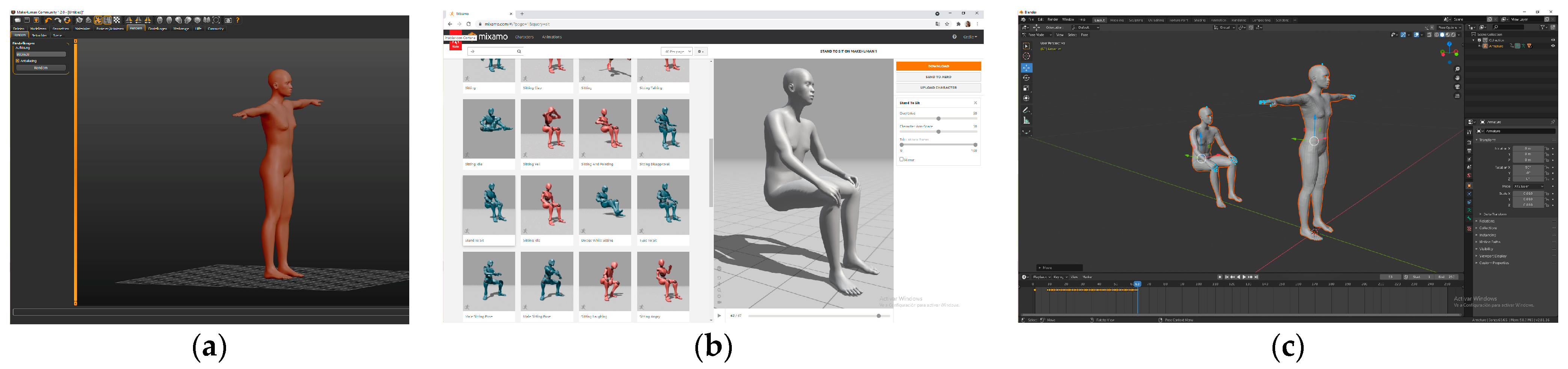
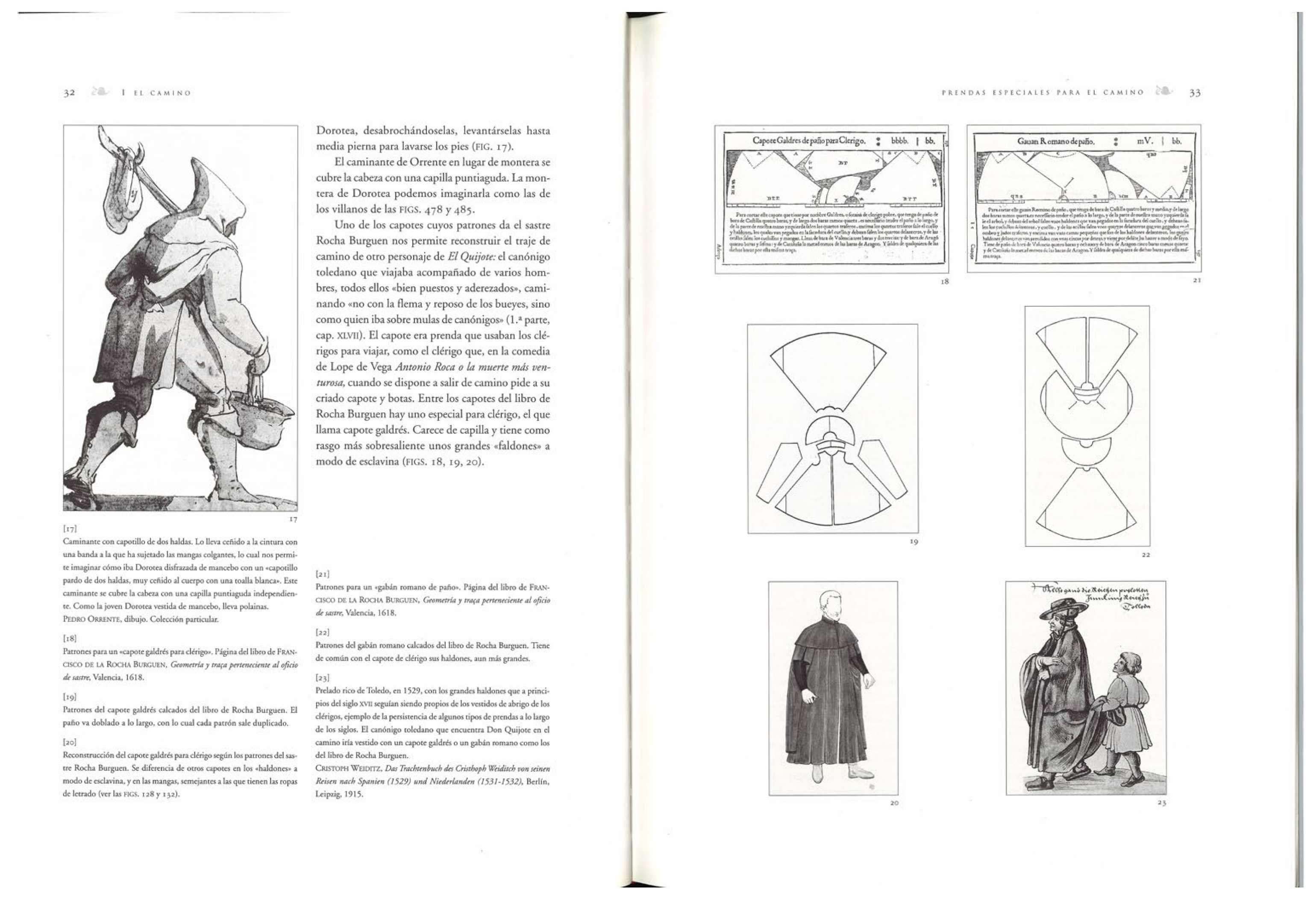
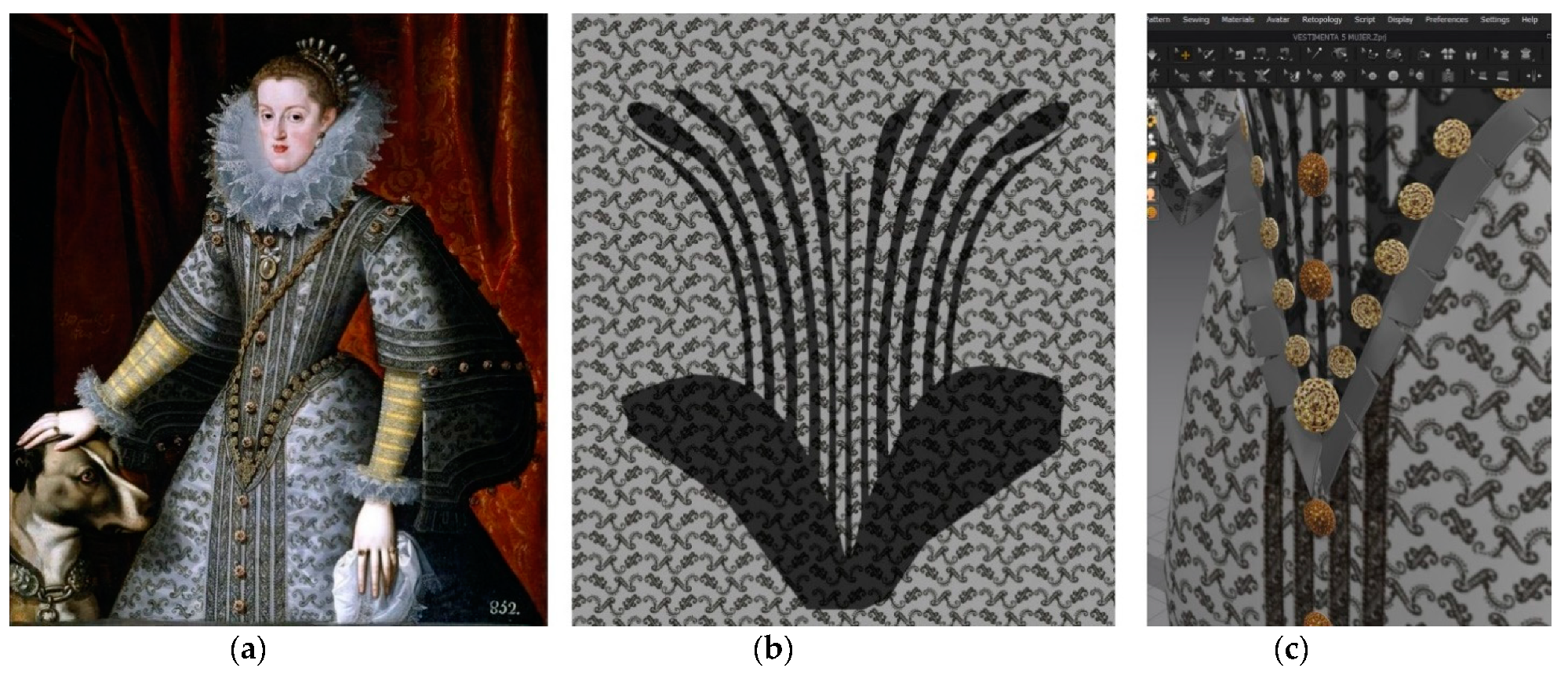
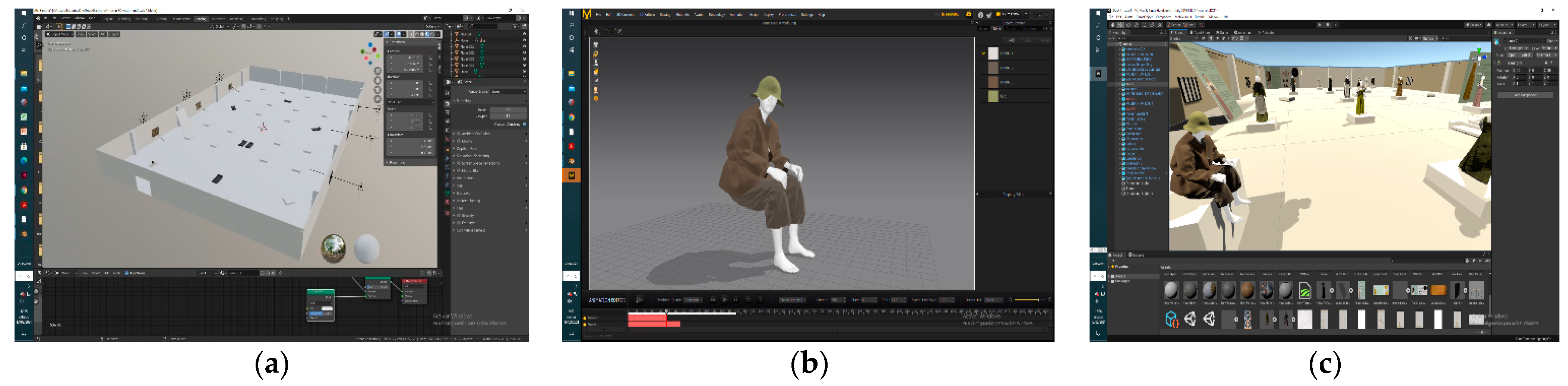
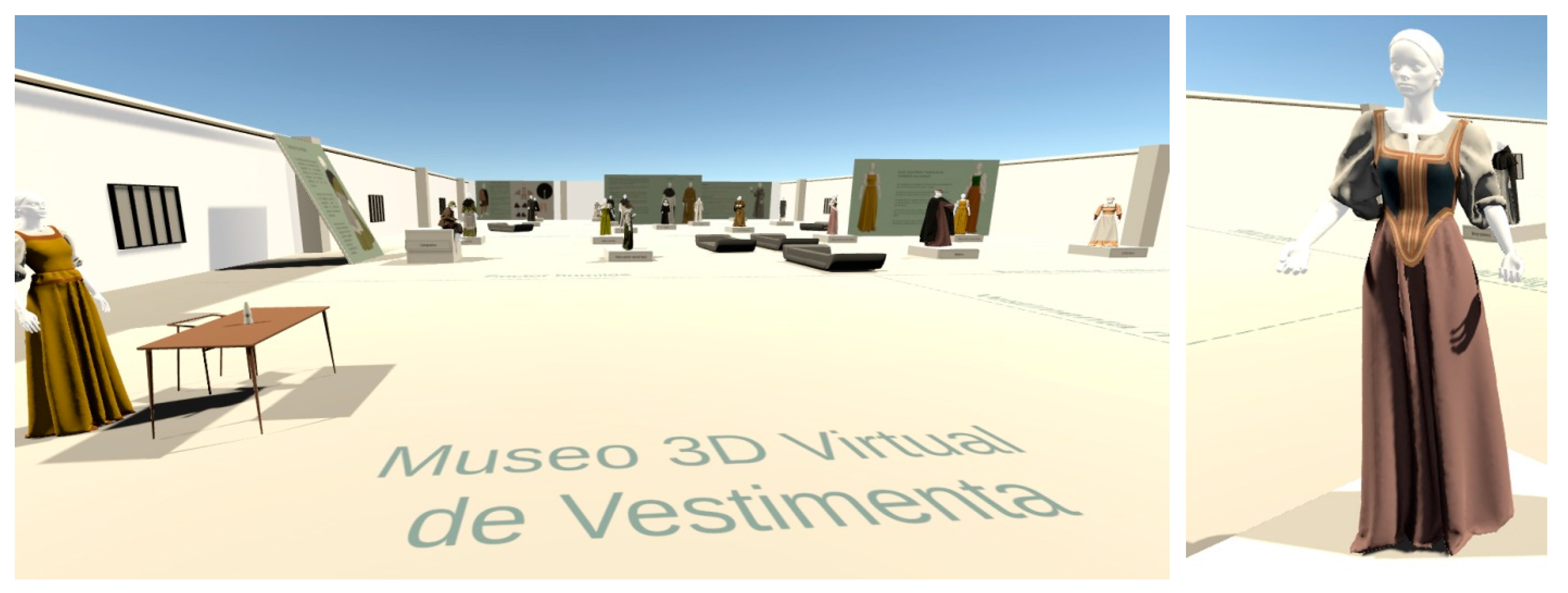
Museums have been the main centers for the dissemination of cultural heritage throughout history. In recent years, they have been increasingly digitizing their content, so that it is now common for each museum to have free digital content available on the Web. This can be photographs of the works with detailed information or even objects created in three dimensions. It is also common to find virtual museums, which might be a representation of an existing museum that has been digitized or a museum created only in digital format. This paper describes the creation of a virtual museum of Spanish clothing from the 16th century, one that exists only in digital format, accessible from a computer or digital tablet. In order to create the museum, various documentation and drawings or pictures of the clothing of that time were studied. The costumes were then created in a specialized 3D costume-modeling program called Marvelous Designer. A 3D model of the exhibition hall was created in Blender, and finally, everything was assembled in the Unity videogame engine, where the interactive part was also added, allowing the virtual visitors to walk through the hall as if they were visiting a real museum.
Keywords: virtual museum; clothing; digitizing; three-dimensional; cultural heritage virtual museum; clothing; digitizing; three-dimensional; cultural heritage