Article

The Relationship between Academic Dishonesty, Ethical Attitude and Ethical Climate: The Evidence from Taiwan

1
Center for Teacher Education, National Changhua University of Education, Changhua 50007, Taiwan
2
National Caotun Commercial & Industrial Vocational Senior High School, Nantou 54253, Taiwan
3
National Hsin Hua Senior High School, Tainan 71251, Taiwan
*
Author to whom correspondence should be addressed.
Sustainability 2021, 13(21), 11615; https://doi.org/10.3390/su132111615
Submission received: 23 September 2021 / Revised: 15 October 2021 / Accepted: 17 October 2021 / Published: 21 October 2021
(This article belongs to the Collection Sustainable Citizenship and Education)

Abstract

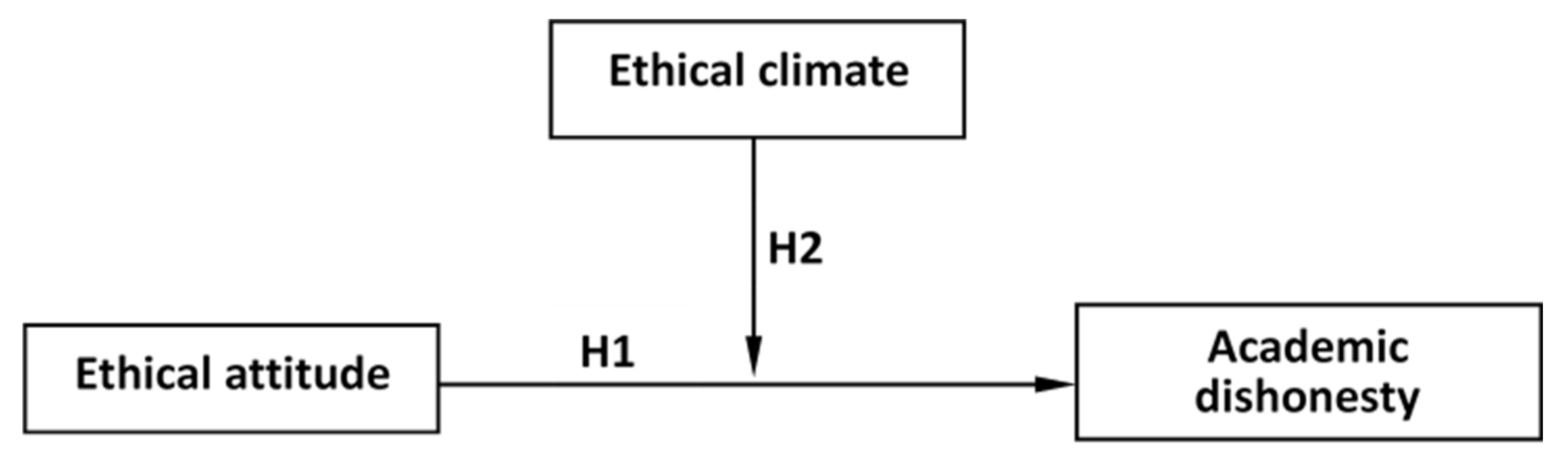
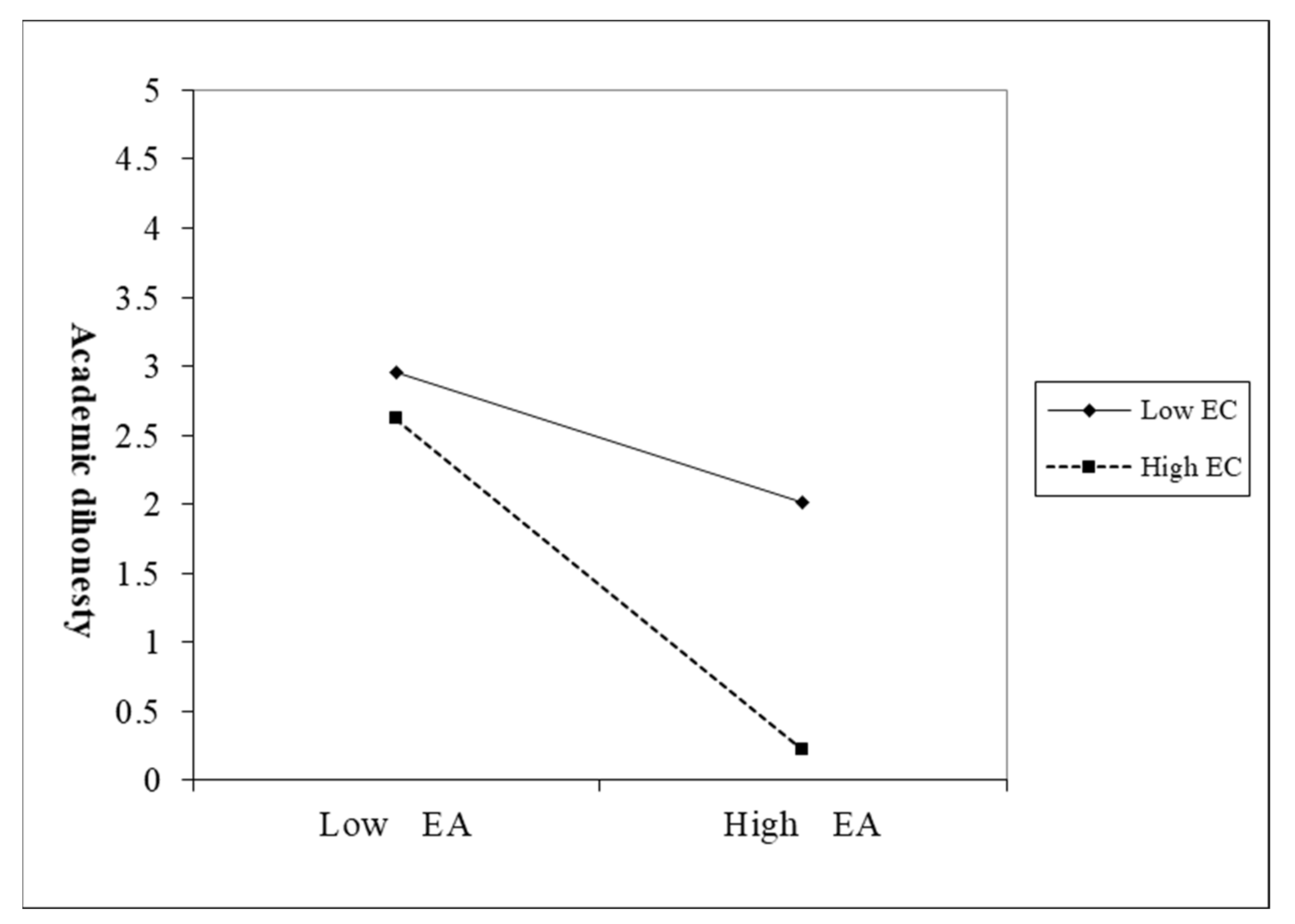
Academic dishonesty has become a global issue widely studied in many countries. Plagiarism using the Internet is prevalent across the world and seems to be increasing, affecting the reputation of schools and even countries. On the basis of the social cognitive theory and the theory of planned behavior, this study explored the relationship between ethical attitude and academic dishonesty, and we focused on the moderating effect of ethical climate on the relationship. A survey of 1271 students (745 female students, 526 male students; mean age = 16.38 years, SD = 0.76) from 31 senior high schools in Taiwan was conducted and analyzed using hierarchical regression by SPSS 26 to test the hypotheses of this study. The result shows that: (1) Compared with male students, female students had a more positive attitude towards ethical attitude and showed less academic dishonesty. Compared with general senior high school students, vocational senior high school students showed a more positive ethical attitude and a positive ethical climate; (2) ethical attitude was negatively related to academic dishonesty; (3) high ethical climate strengthened the negative relationship between ethical attitude and academic dishonesty. In addition, the theoretical implications, practical implications, and directions for future research are also discussed in this article. The result of the study can be a credible reference for educational researchers and educational administrative systems, when planning ethical-related courses or educational policies for high schools with more emphasis on academic dishonesty and other relevant issues.
Keywords: ethical attitude; academic dishonesty; ethical climate ethical attitude; academic dishonesty; ethical climate