Article

Settlement and Recruitment Potential of Four Invasive and One Indigenous Barnacles in South Korea and Their Future


1
Marine Biological Resources Institute, Sahmyook University, Seoul 01795, Korea
2
Department of Animal Biotechnology and Resource, College of Science and Technology, Sahmyook University, Seoul 01795, Korea
3
O-Jeong Resilience Institute, Korea University, Seoul 02841, Korea
4
Division of Environmental Science and Ecological Engineering, Korea University, Seoul 02841, Korea
*
Author to whom correspondence should be addressed.
These authors contributed equally to this work.
Sustainability 2021, 13(2), 634; https://doi.org/10.3390/su13020634
Submission received: 17 November 2020 / Revised: 4 January 2021 / Accepted: 7 January 2021 / Published: 11 January 2021

Abstract

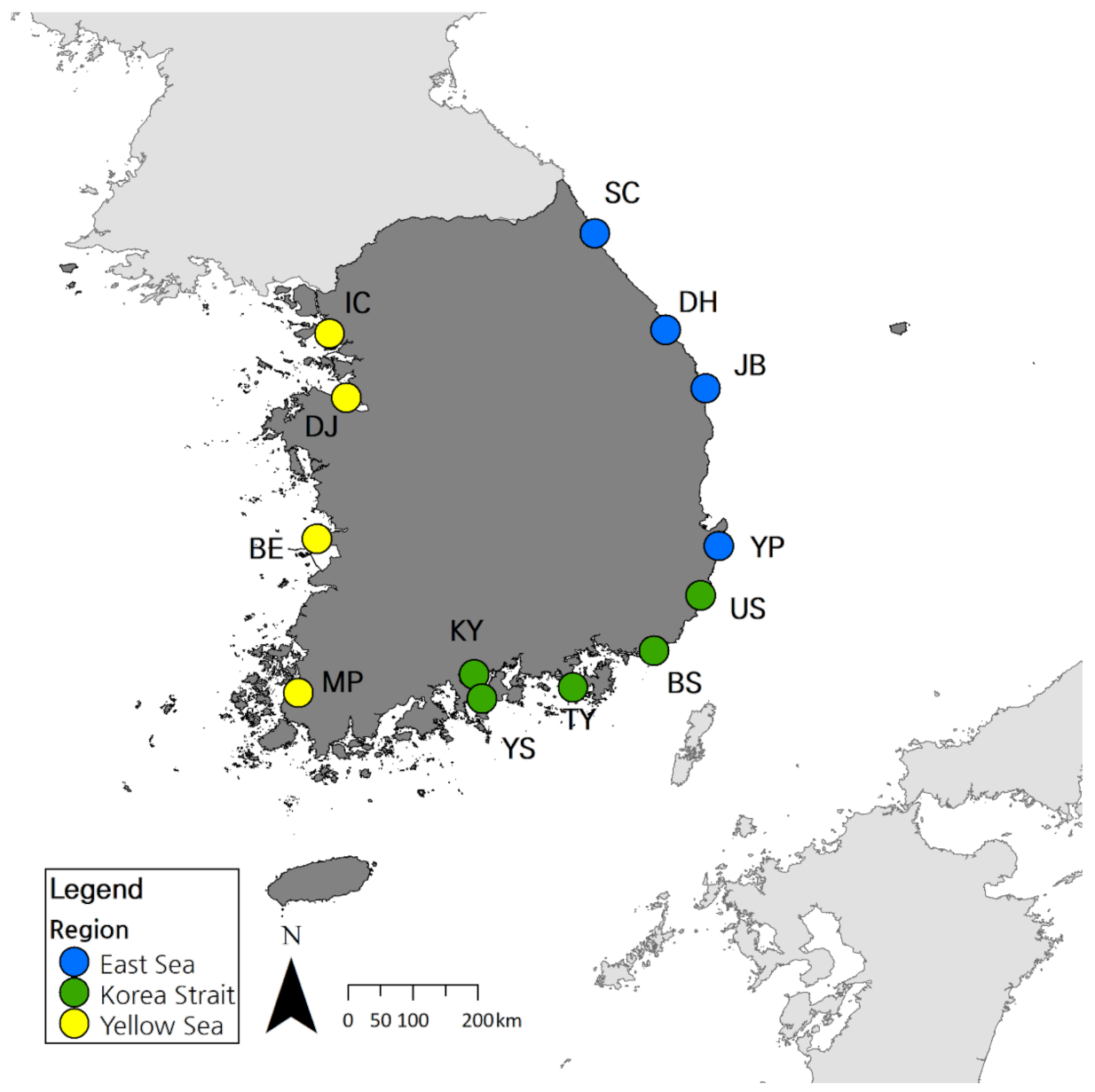
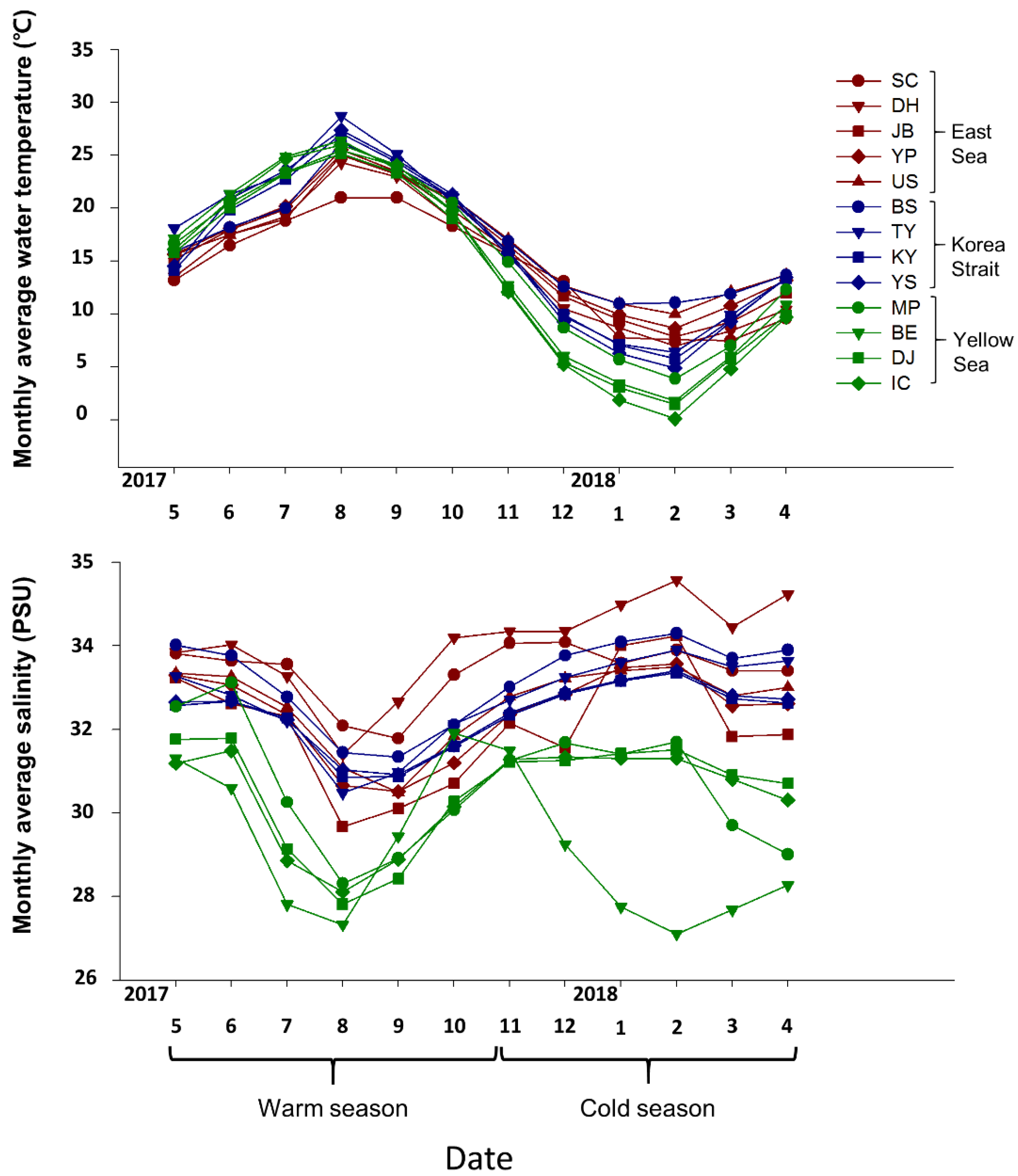
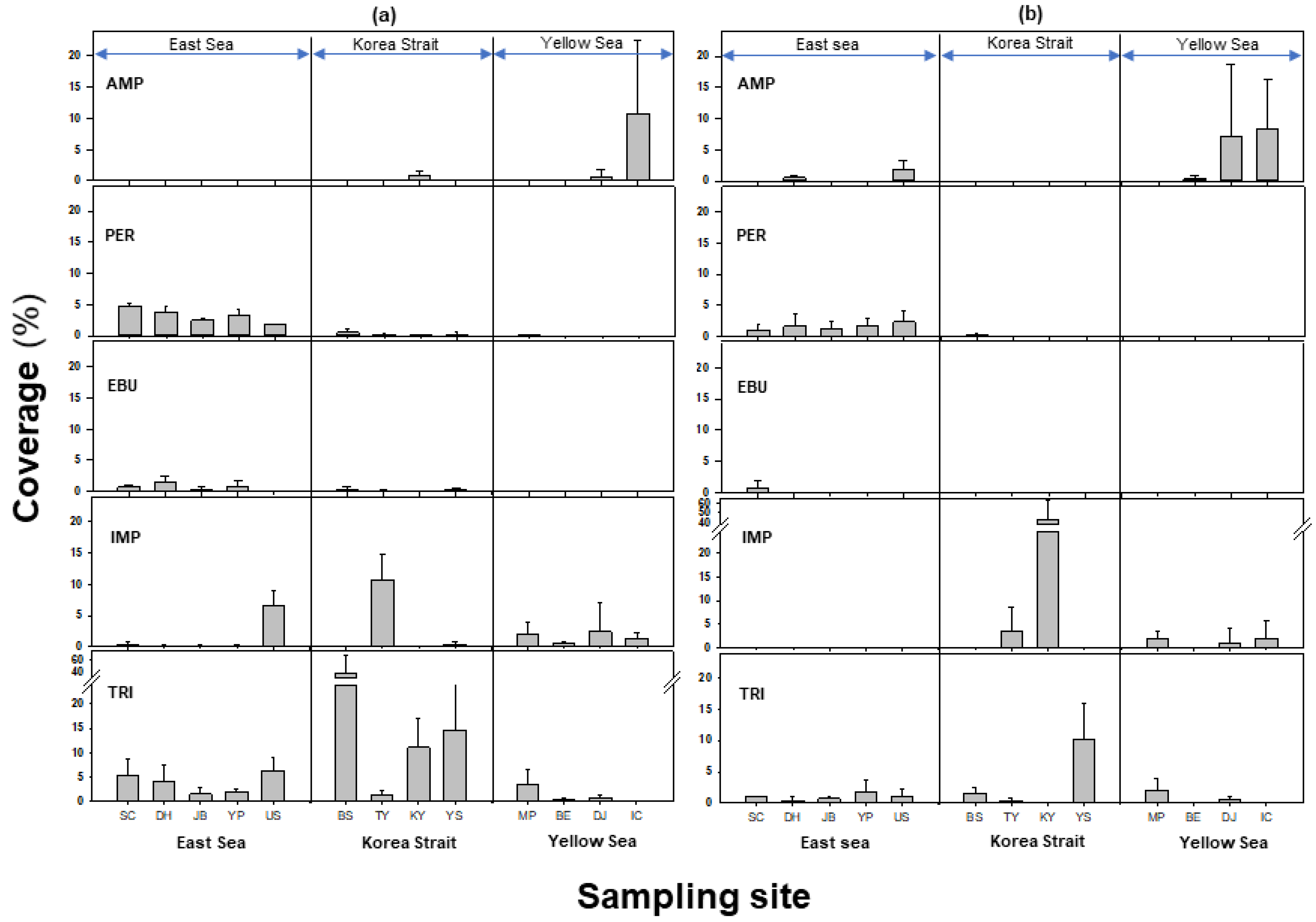
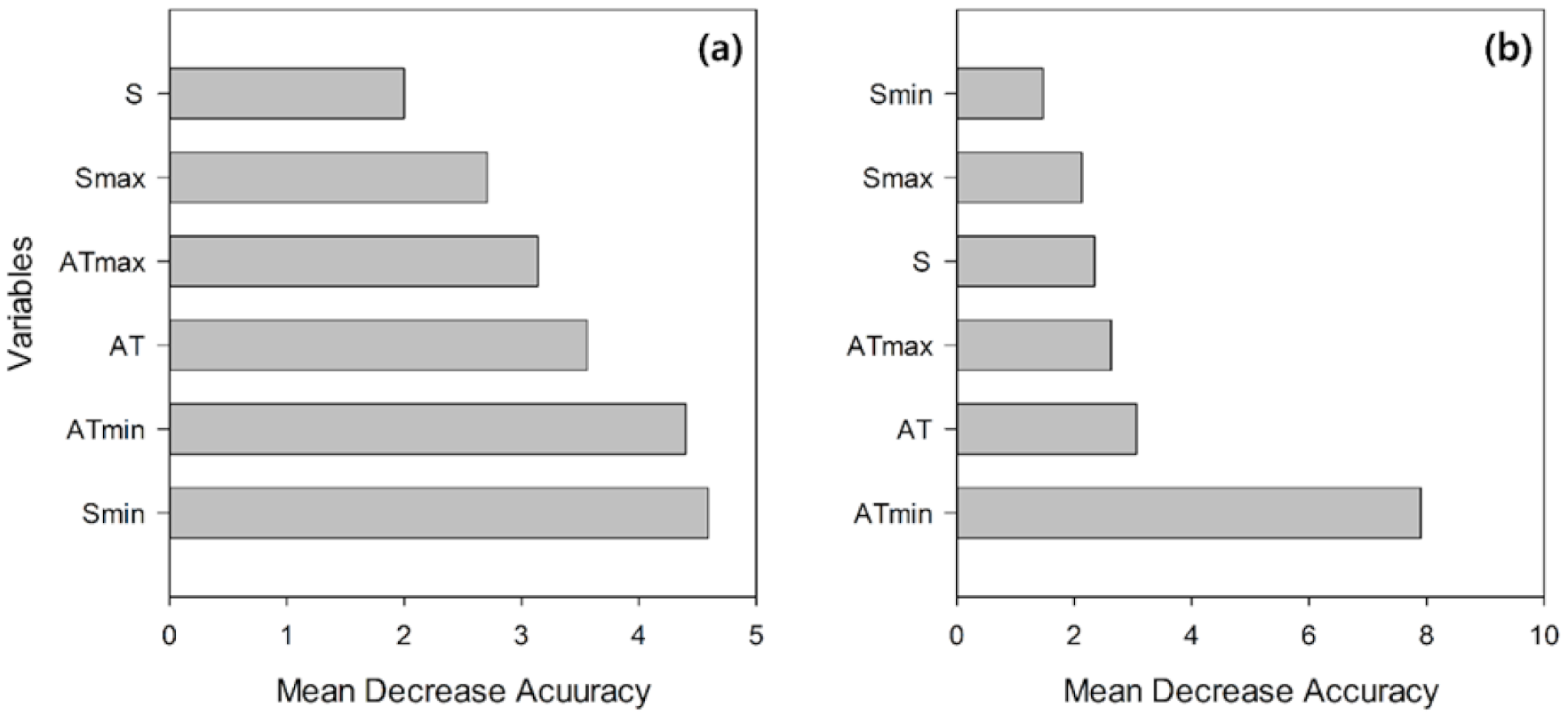
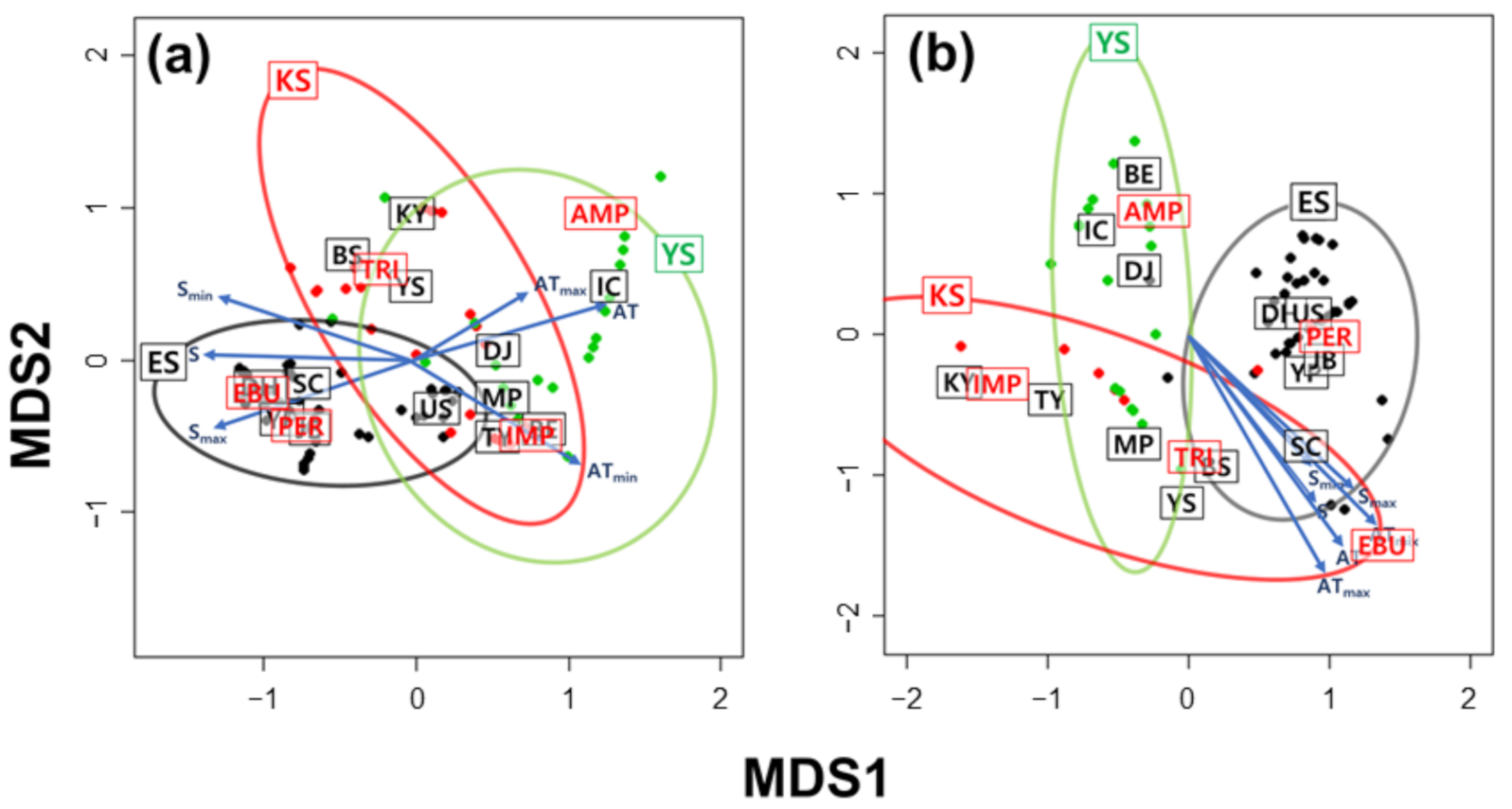
Invasion by nonindigenous species is a major threat to marine ecosystems. In this study, the distribution and occupied area (as a percentage) of four invasive barnacles (Amphibalanus amphitrite, Amphibalanus eburneus, Amphibalanus improvisus, Perforatus perforatus), and one indigenous (Balanus trigonus) barnacle in 13 ports in three Korean seas (East sea, Korea Strait, and Yellow Sea) were investigated. The average ratio for all five species was 11.17% in summer and 7.59% in winter, indicating a higher occupancy in summer. B. trigonus, which is an indigenous species, was found on all ports, except for one (IC). Of the invasive species, A. amphitrite was found mainly in the Yellow Sea, A. improvisus in the Korea Strait, and A. eburneus along with P. perforatus were found in the East Sea. From nonmetric multidimensional scaling (NMDS) analysis, six parameters related to water temperature and salinity were found to be significantly correlated with the distribution and occupancy status of these five barnacles. Using the six parameters as independent variables, random forest (RF) models were developed. Based on these models, the predicted future dominant invasive species were A. improvisus and A. amphitrite in the Yellow Sea and P. perforatus in the East Sea and Korea Strait. This study suggests that long-term monitoring of invasive species is crucial, and that determining the relationship between the results of monitoring and environmental variables can be helpful in predicting the damage caused by invasive species resulting from environmental changes.
Keywords: Barnacles; distribution; environmental factors; invasive species; seasons Barnacles; distribution; environmental factors; invasive species; seasons