Article

Elevating Cultural Preservation Projects into Urban Regeneration: A Case Study of Bahrain’s Pearling Trail
Graduate School, Global Culture & Contents, College of Education, Hankuk University of Foreign Studies, Seoul 02450, Korea
*
Author to whom correspondence should be addressed.
Sustainability 2021, 13(12), 6629; https://doi.org/10.3390/su13126629
Submission received: 5 May 2021 / Revised: 5 June 2021 / Accepted: 7 June 2021 / Published: 10 June 2021
(This article belongs to the Section Tourism, Culture, and Heritage)

Abstract

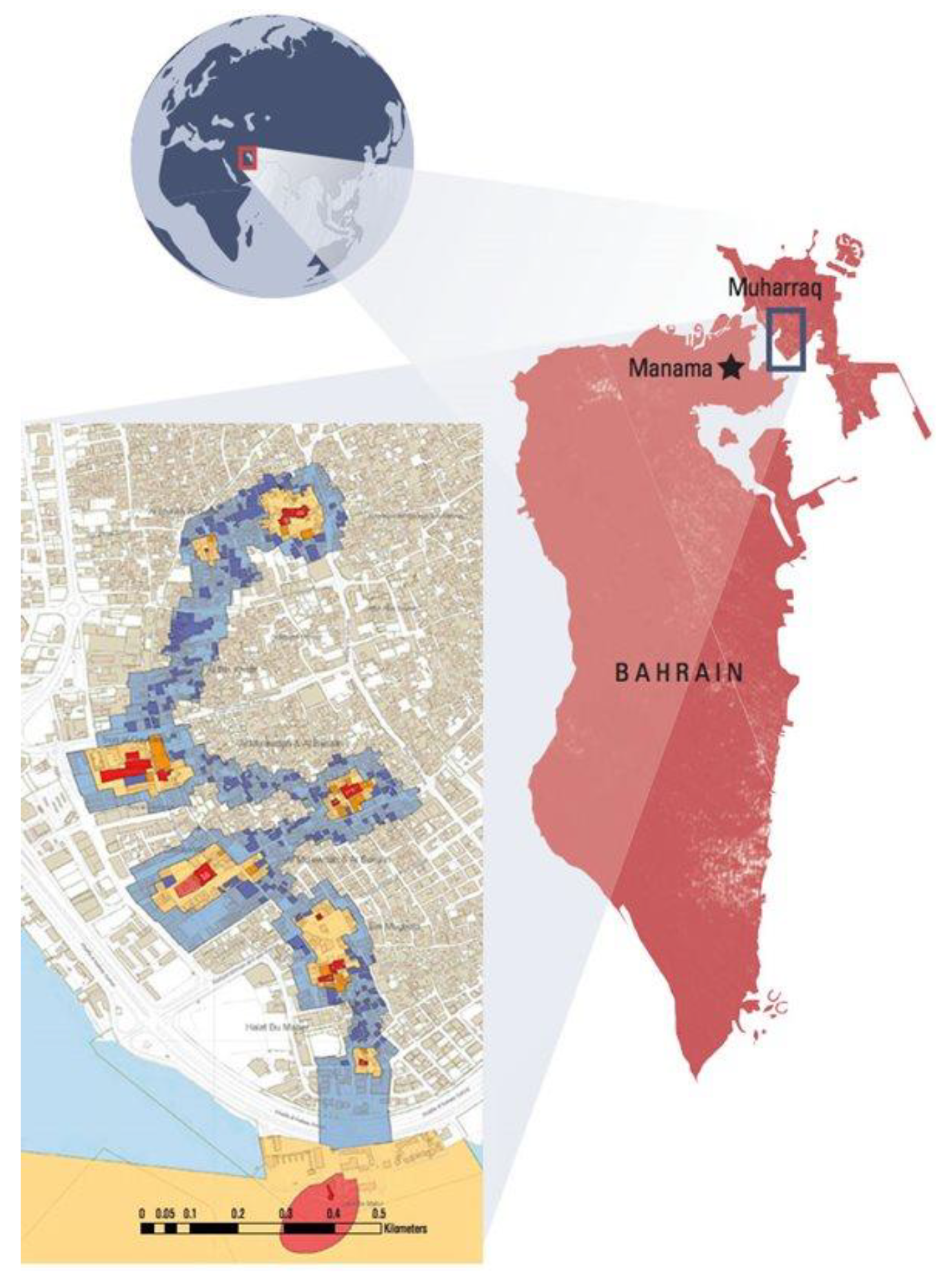
The island of Muharraq in the Kingdom of Bahrain was previously in a state of socioeconomic disrepair and neglect, until the nine years-long “Pearling Trail” project revived the area. Historically, Muharraq’s importance inheres in it being the main trade center of the Middle East since the Mesopotamian period, especially as the source of the finest pearls in the world. However, the discovery of oil that led to the rapid urbanization of the region and Japan perfecting the production of cultured pearls had meant that Muharraq dwindled out of cultural significance. Due to the residents’ dissatisfaction and nostalgia for the island’s past glory, along with the government’s new policies towards cultural preservation, the “Pearling Trail” Project commenced in 2012. The Ministry of Culture of Bahrain repaired, renovated and preserved an area of 3.5 km, transforming it into an eco-museum with a thriving business and cultural community. The transformation of the island elevated the city into a trendy local attraction, hosting local and global cultural festivals and events, owing to the “Pearling Trail’s” Urban Regeneration Project’s success. By studying the “Pearling Trail” three success factors are identified: Project expansion beyond UNESCO preservation requirements, focus on sustainability and continuous use, and improved access to culture and cultural opportunities. Identifying these factors could allow for future preservation projects in Bahrain or elsewhere to be upgraded for urban regeneration or revitalization.
Keywords: Bahrain; Muharraq; Pearling Trail; urban regeneration; Eco Museum Bahrain; Muharraq; Pearling Trail; urban regeneration; Eco Museum