Article

Reducing Exchange Rate Risks in International Trade: A Hybrid Forecasting Approach of CEEMDAN and Multilayer LSTM

The School of Economics and Management, Fuzhou University, Fuzhou 350108, China
*
Author to whom correspondence should be addressed.
Sustainability 2020, 12(6), 2451; https://doi.org/10.3390/su12062451
Submission received: 4 February 2020 / Revised: 4 March 2020 / Accepted: 15 March 2020 / Published: 20 March 2020

Abstract

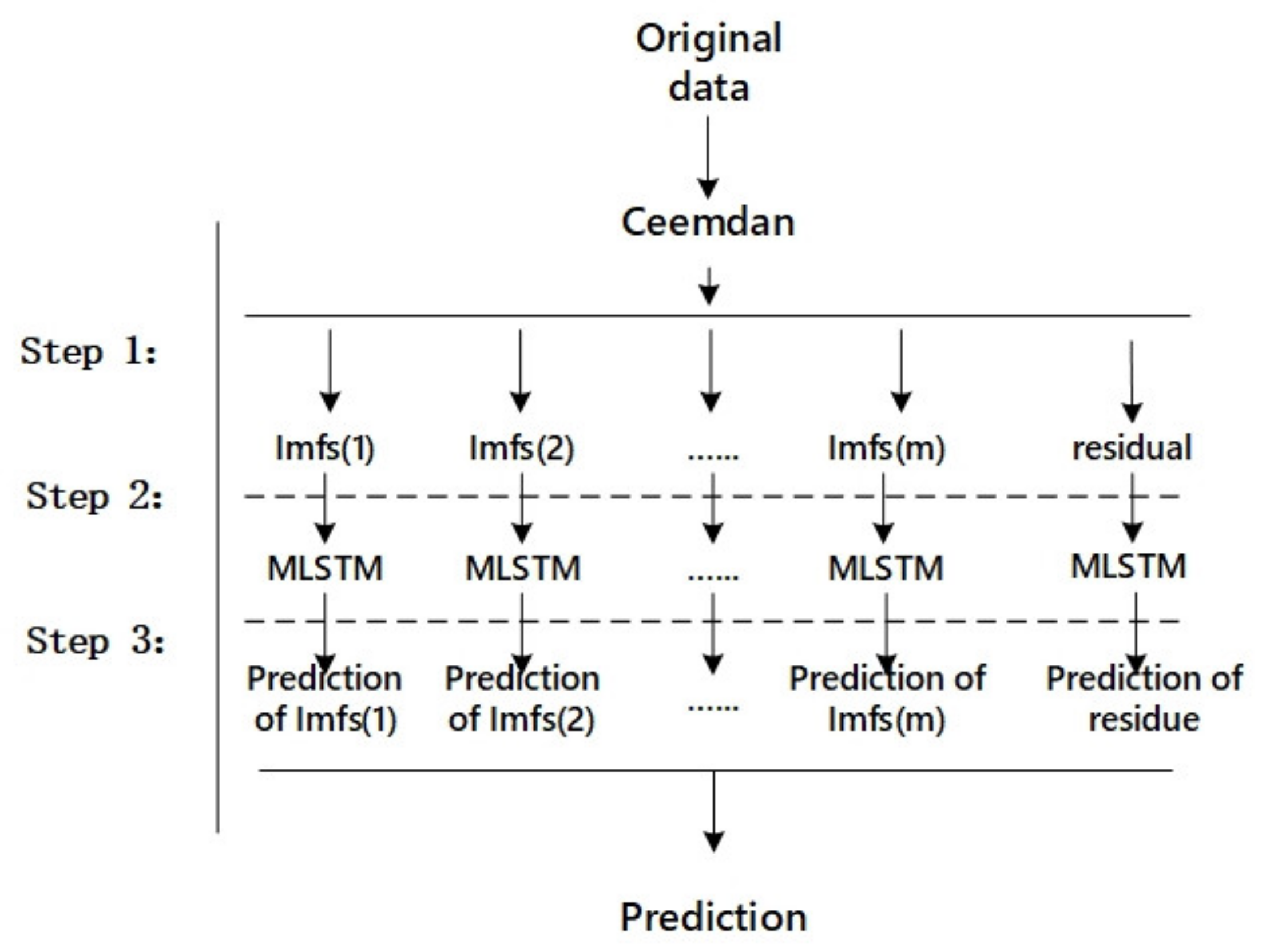
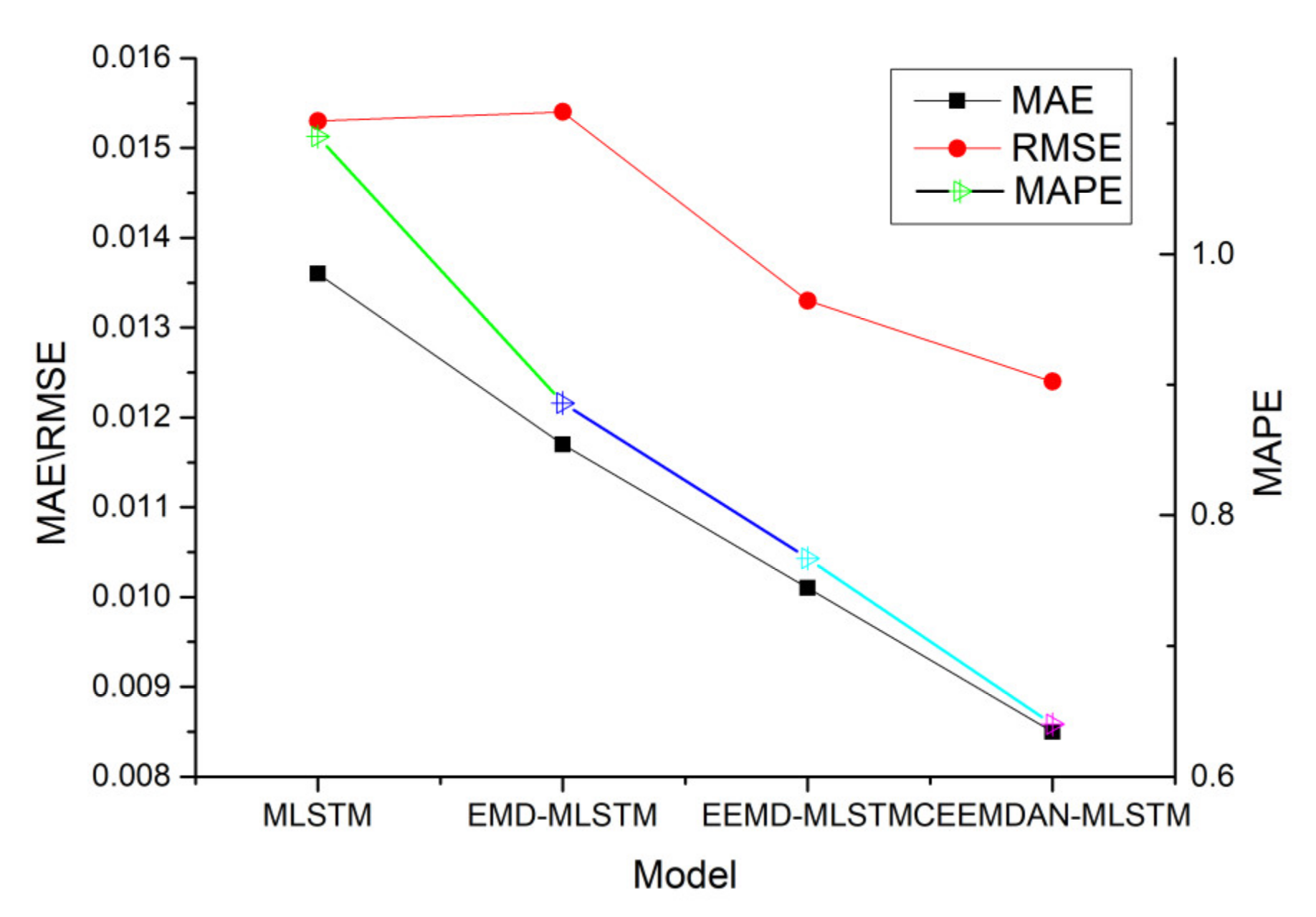
In international trade, it is common practice for multinational companies to use financial market instruments, such as financial derivatives and foreign currency debt, to hedge exchange rate risks. Making accurate predictions and decisions on the direction and magnitude of exchange rate movements is a more direct way to reduce exchange rate risks. However, the traditional time series model has many limitations in forecasting exchange rate, which is nonlinear and nonstationary. In this paper, we propose a new hybrid model of complete ensemble empirical mode decomposition (CEEMDAN) based multilayer long short-term memory (MLSTM) networks. It overcomes the shortcomings of the classic methods. CEEMDAN not only solves the mode mixing problem of empirical mode decomposition (EMD), but also solves the residue noise problem which is included in the reconstructed data of ensemble empirical mode decomposition (EEMD) with less computation cost. MLSTM can learning more complex dependences from exchange rate data than the classic model of time series. A lot of experiments have been conducted to measure the performance of the proposed approach among the exchange rates of British pound, the Australian dollar, and the US dollar. In order to get an objective evaluation, we compared the proposed method with several standard approaches or other hybrid models. The experimental results show that the CEEMDAN-based MLSTM (CEEMDAN–MLSTM) goes on better than some state-of-the-art models in terms of several evaluations.
Keywords: exchange rate risks; hybrid forecasting approach; complete ensemble empirical mode decomposition with adaptive noise (CEEMDAN); multilayer long short-term memory (MLSTM) exchange rate risks; hybrid forecasting approach; complete ensemble empirical mode decomposition with adaptive noise (CEEMDAN); multilayer long short-term memory (MLSTM)