Article

Spatial Conflict of Production–Living–Ecological Space and Sustainable-Development Scenario Simulation in Yangtze River Delta Agglomerations


1
College of Geoscience and Surveying Engineering, China University of Mining & Technology (Beijing), Ding No. 11 Xueyuan Road, Haidian District, Beijing 100083, China
2
State Key Laboratory of Nuclear Resources and Environment, East China University of Technology, Nanchang 330013, China
3
State Key Laboratory of Resources and Environmental Information System, Institute of Geographical Sciences and Natural Resources Research, Chinese Academy of Sciences, No. 11A Datun Road, Chaoyang District, Beijing 100101, China
4
College of Resources and Environment, University of Chinese Academy of Sciences, No. 19A Yuquan Road, Haidian District, Beijing 100049, China
5
Key Laboratory of Carrying Capacity Assessment for Resource and Environment, Ministry of Land &Resources, No. 46 Fuchengmen Road, Xicheng District, Beijing 100812, China
*
Authors to whom correspondence should be addressed.
Sustainability 2020, 12(6), 2175; https://doi.org/10.3390/su12062175
Submission received: 21 February 2020 / Revised: 5 March 2020 / Accepted: 10 March 2020 / Published: 11 March 2020

Abstract

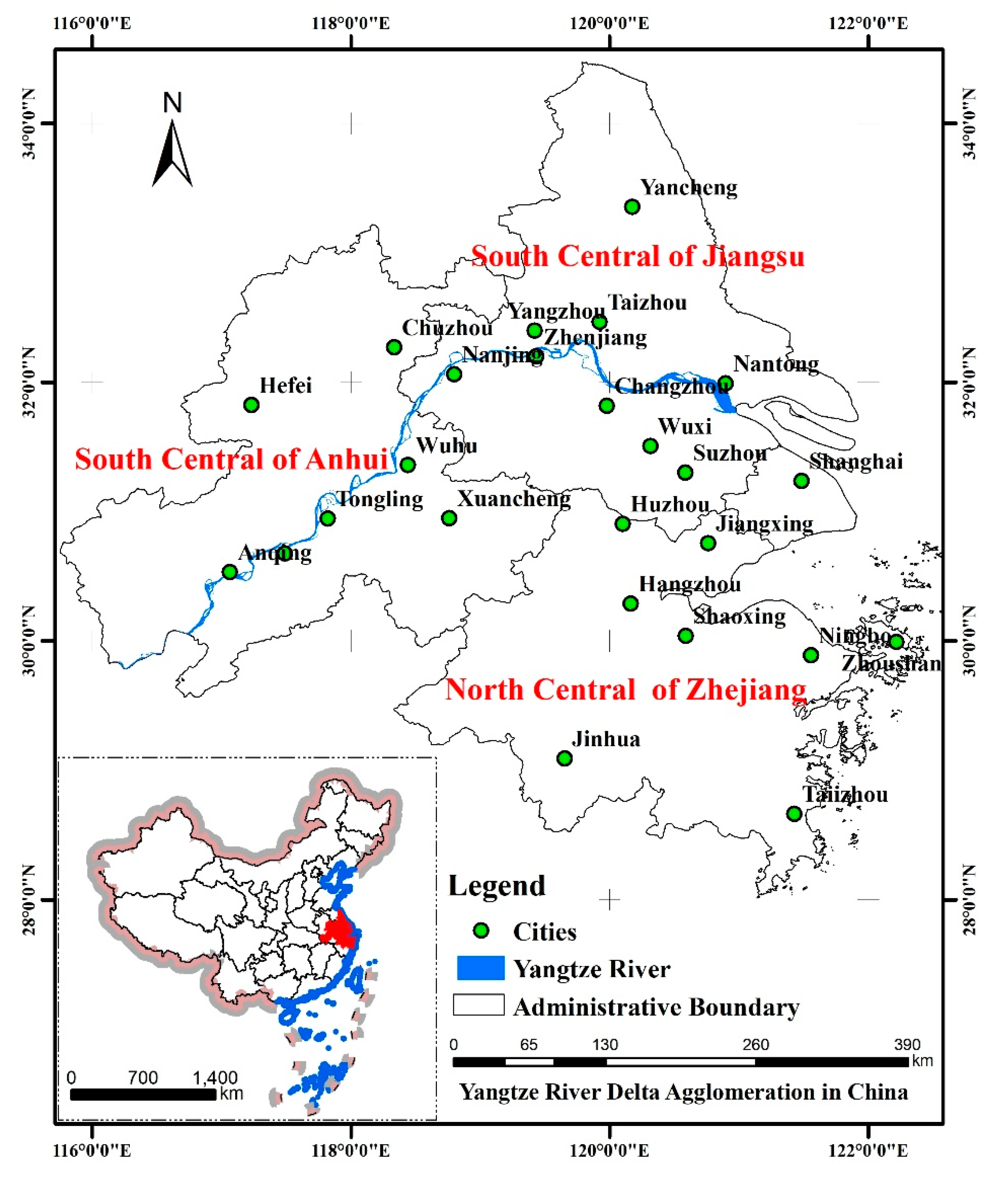
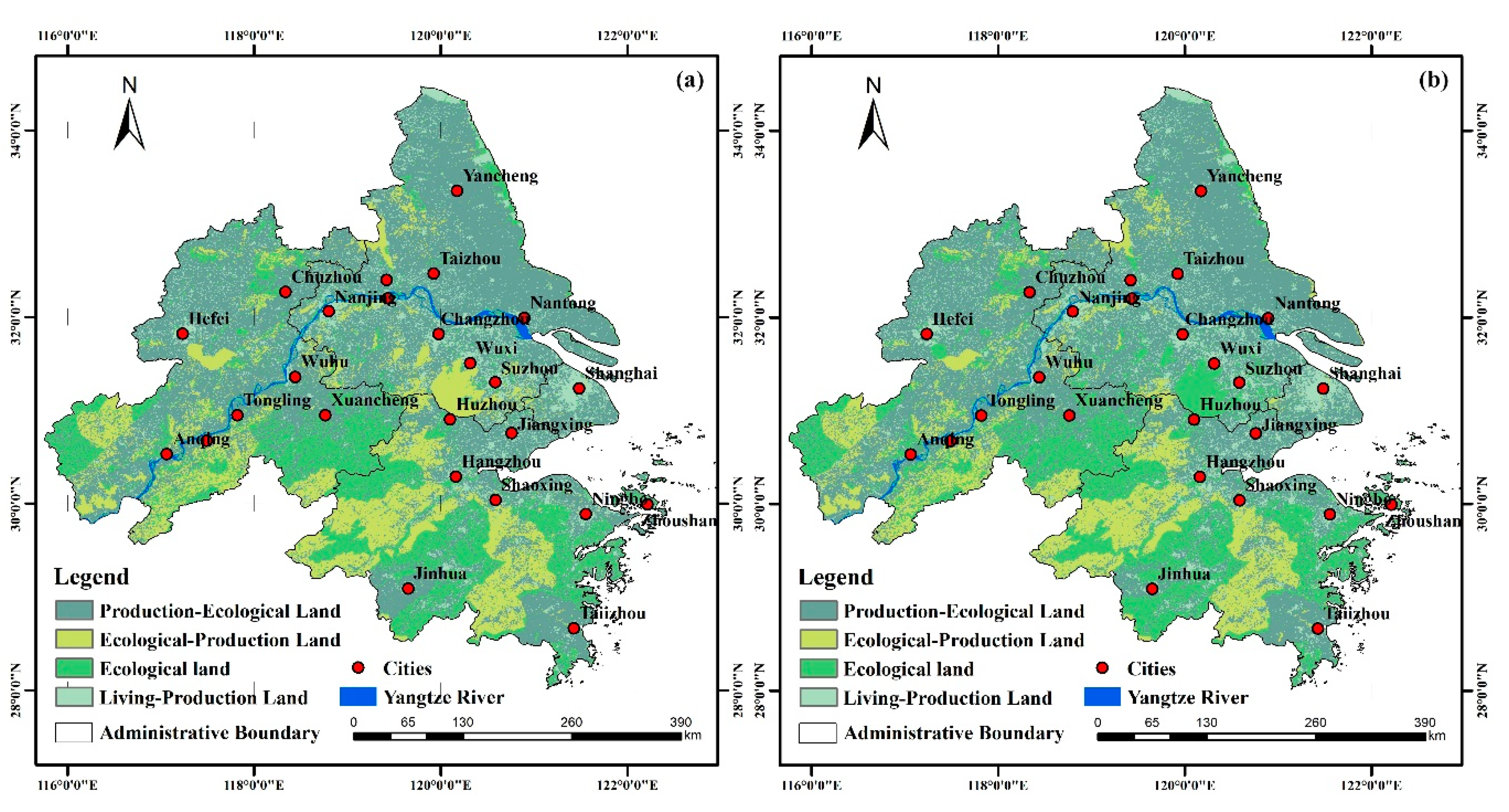
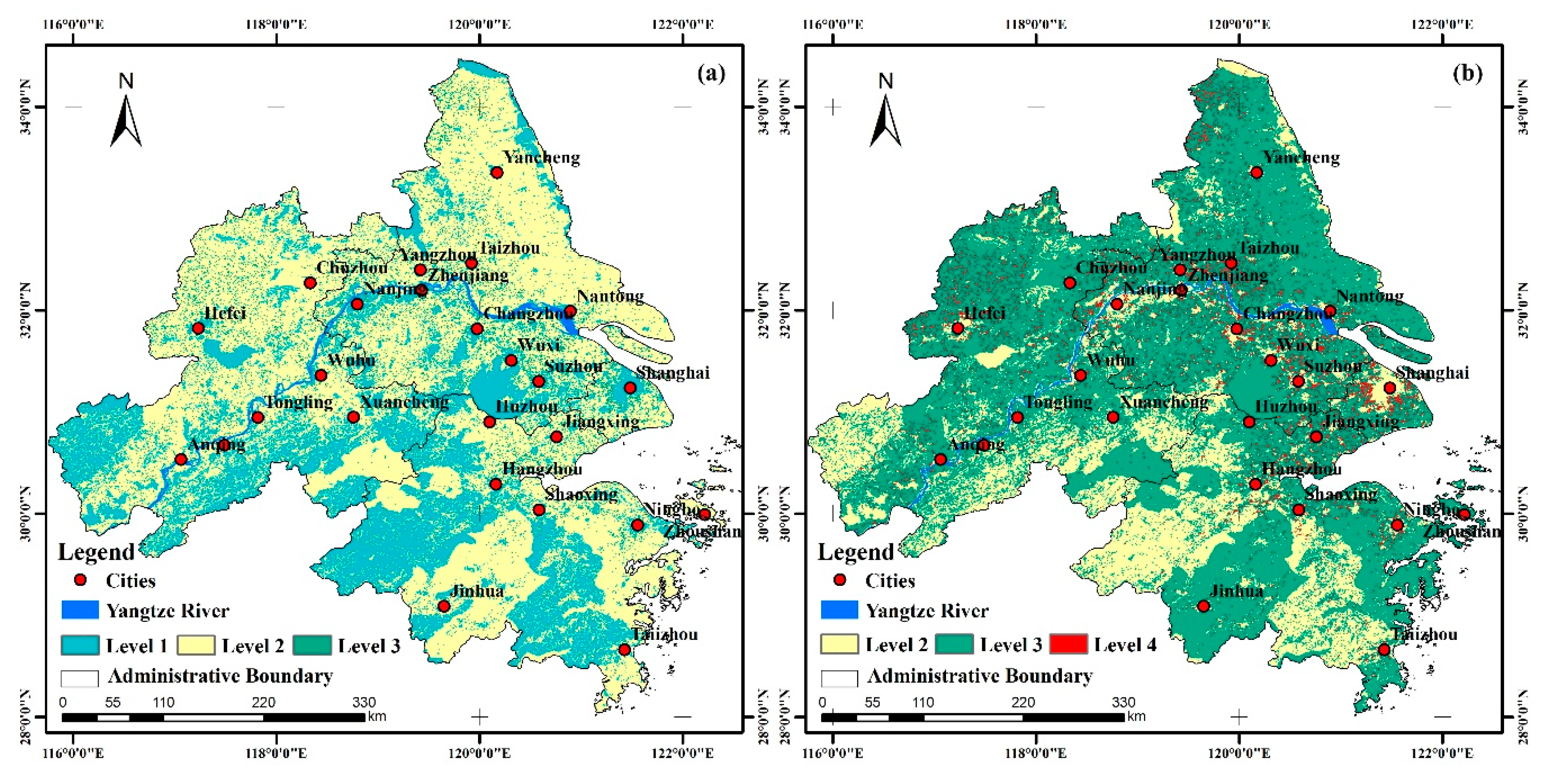
Production–living–ecological space (PLES) is a recent research hotspot on land planning and regional sustainable development in China. Taking the Yangtze River Delta agglomerations as a case study, this paper establishes a spatial-conflict index to identify the PLES conflicts, and then builds a cellular-automaton (CA) Markov model to simulate the PLES pattern in 2030 and to evaluate the influence on PLES conflicts under two scenarios. Results showed that the ecological space (ES) and the living–productive space (LPS) of the Yangtze River Delta agglomerations showed a descending tendency in 2010–2015, whereas ecological–productive space (EPS) and productive–ecological space (PES) reflected a small increase. EPS and PES had squeezed ES and LPS with urbanization and industrial development in this region. Meanwhile, the spatial conflicts of PLES worsened during the period, with the average of the spatial-conflict index (SCI) shifting from 0.283 to 0.522, and seemed to gain momentum. On the basis of scenario analysis for 2030, it was concluded that the “ecological red line policy”, appropriate restriction of urban expansion, and ecological management of the bank of the Yangtze River are helpful in alleviating PLES conflicts, and contribute to spatial structure and harmonizing. The results of this study are expected to provide valuable implications for spatial planning and sustainable development in the Yangtze River delta agglomerations.
Keywords: PLES; spatial conflict indices; CA Markov; scenario analysis PLES; spatial conflict indices; CA Markov; scenario analysis