Article

Does an Innovative Climate Help to Sustain Competitiveness? The Moderating Effect of Government Support and Market Competition

1
School of Management and Economics, Beijing Institute of Technology, Beijing 100081, China
2
School of Economics and Management, Tsinghua University, Beijing 100084, China
3
International Business School, Beijing Foreign Studies University, Beijing 100089, China
*
Author to whom correspondence should be addressed.
Sustainability 2020, 12(5), 2029; https://doi.org/10.3390/su12052029
Submission received: 2 February 2020 / Revised: 29 February 2020 / Accepted: 3 March 2020 / Published: 6 March 2020
(This article belongs to the Special Issue Competitiveness of SMEs)

Abstract

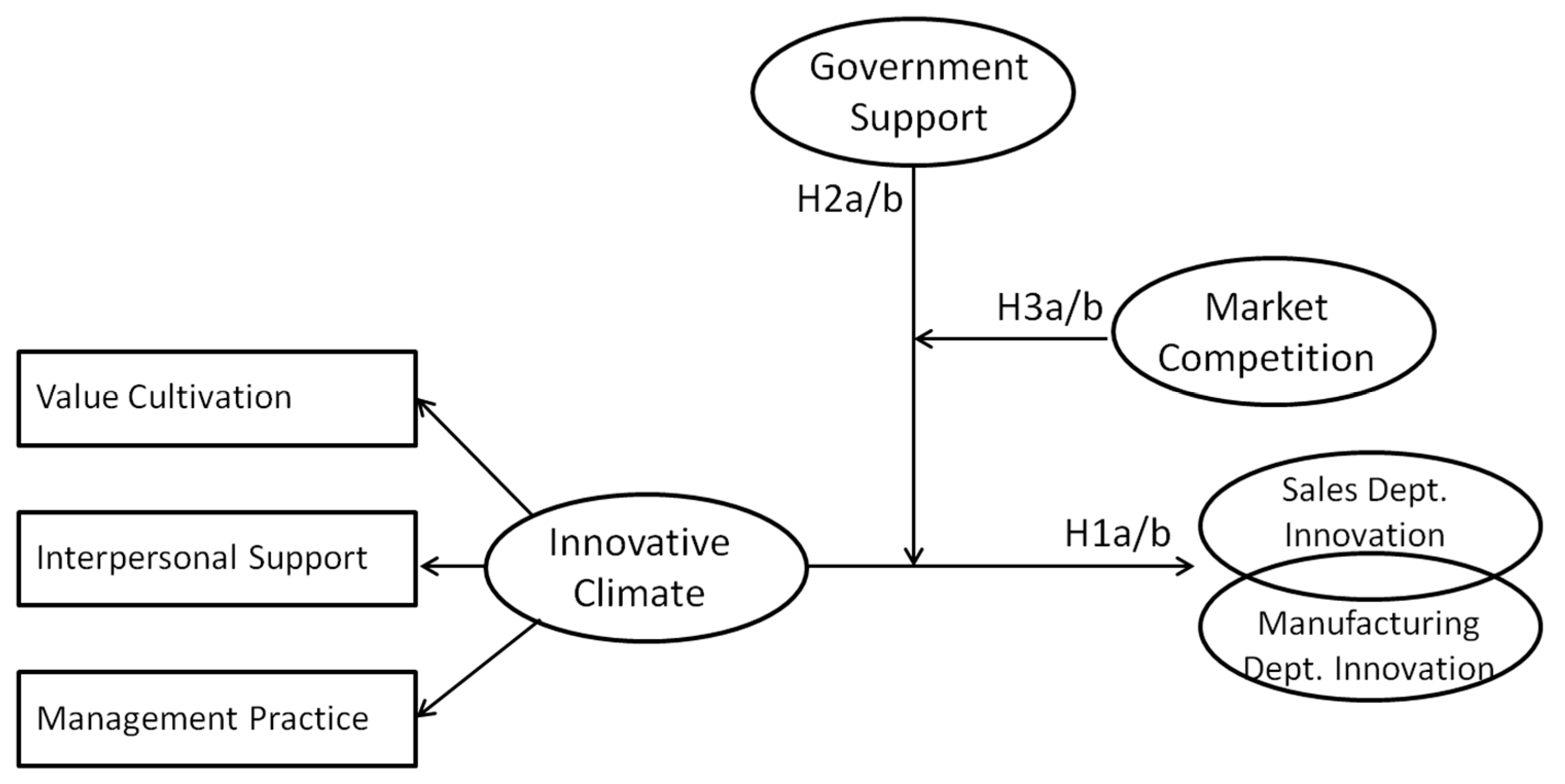
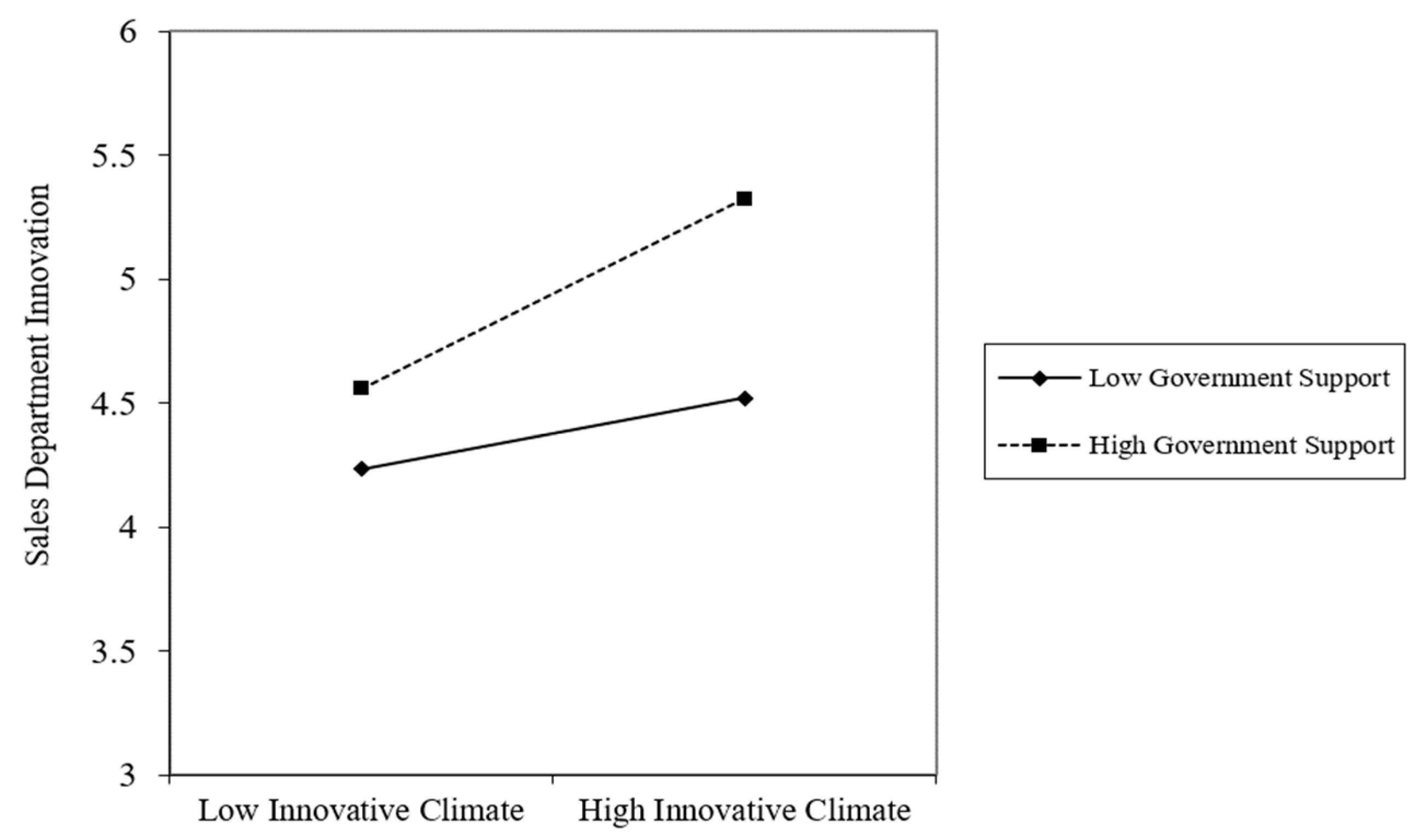
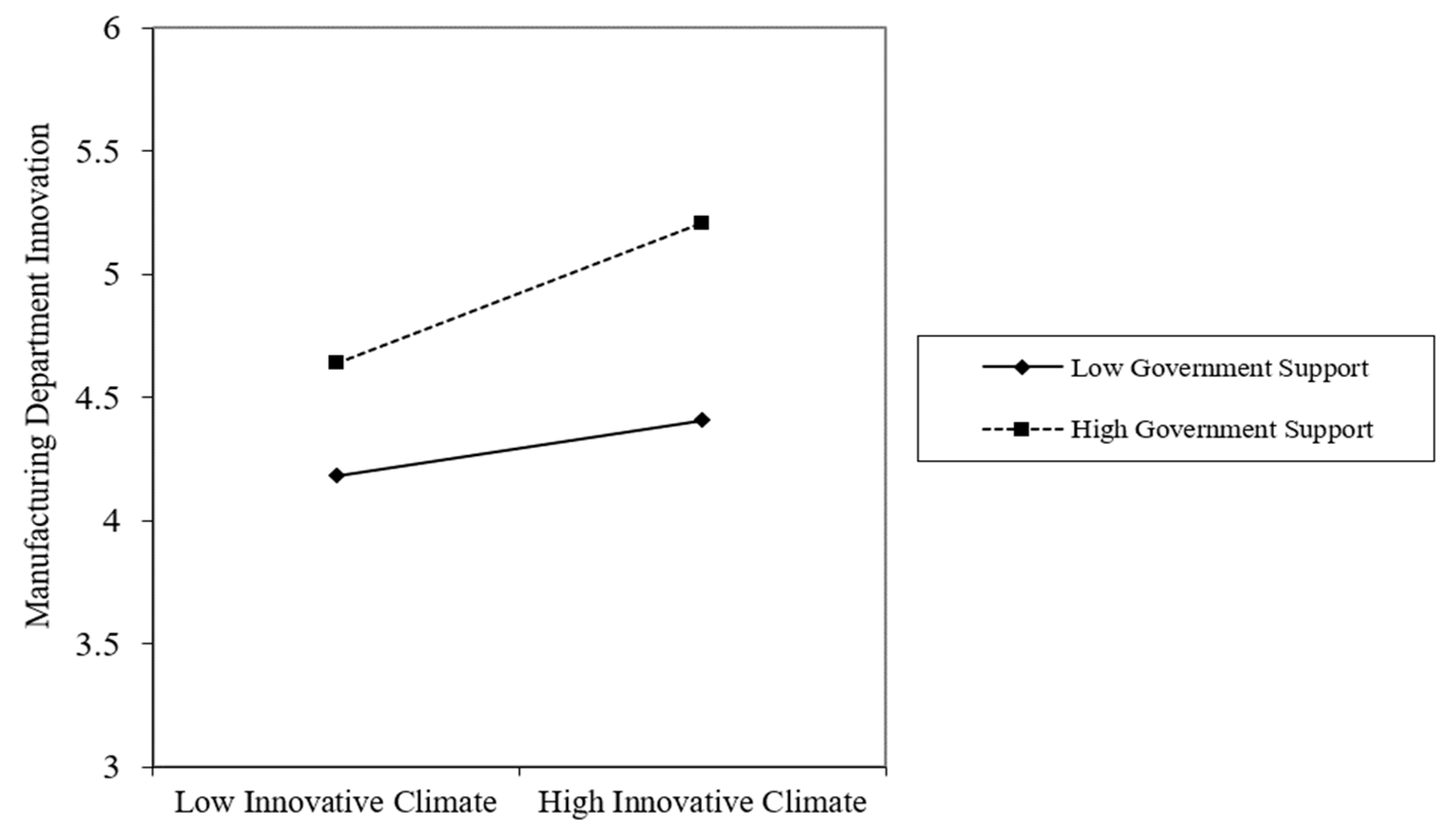
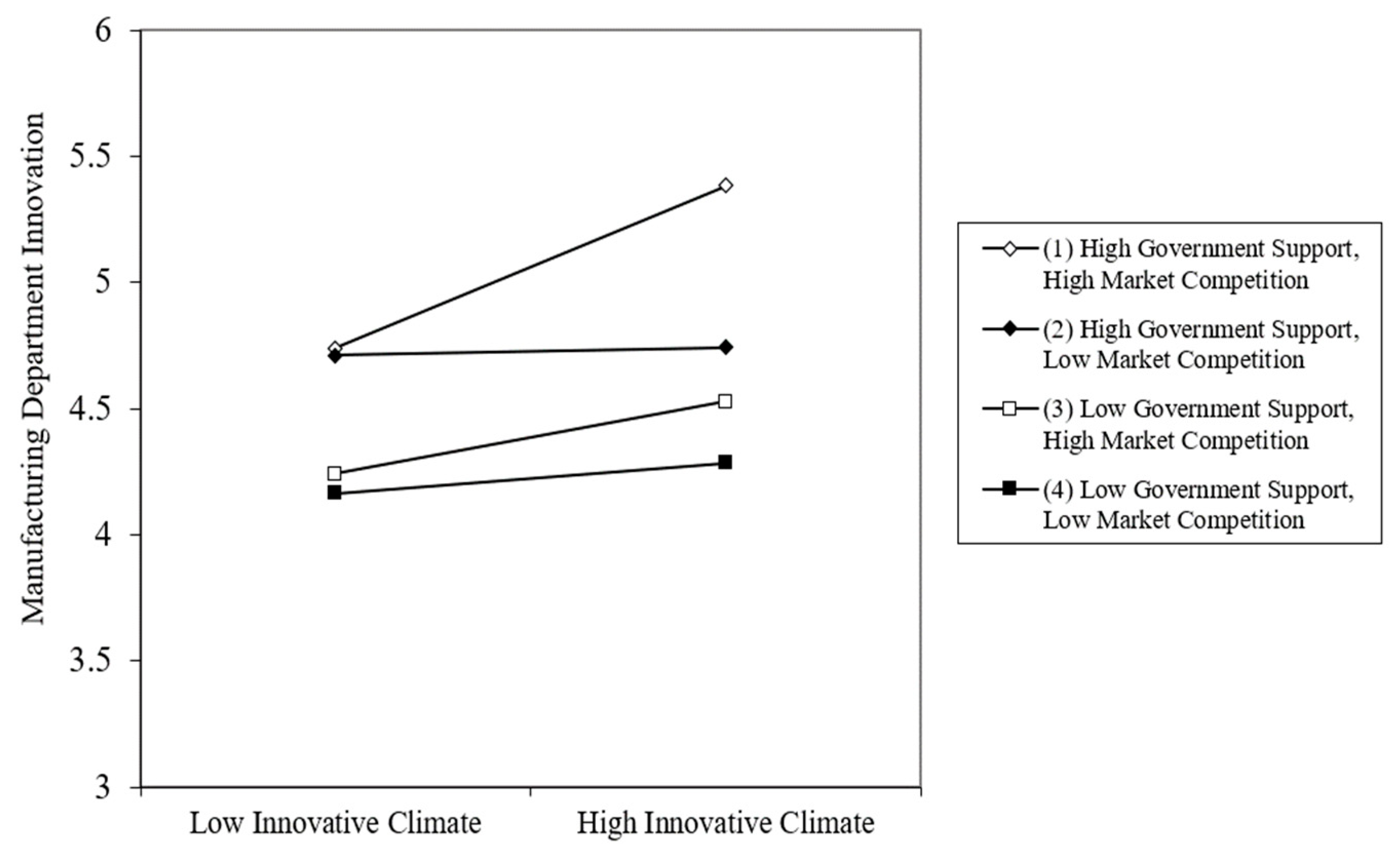
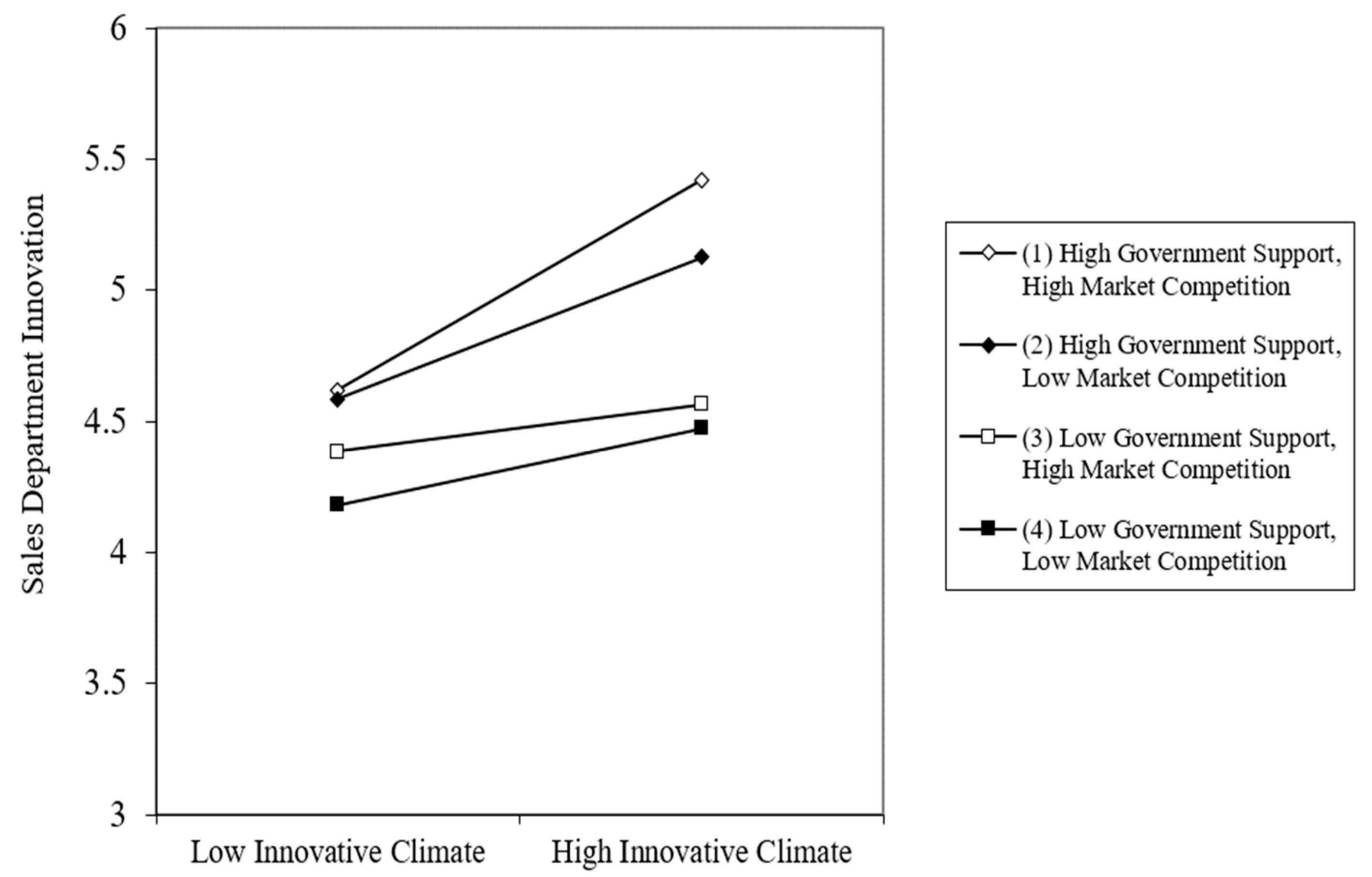
Innovation has become a key source of competitive advantage that supports companies in achieving sustainable development. Organizational innovations usually start from employees’ innovative ideas, irrespective of the company’s size. If there were no specific rules to restrain employees from generating novel ideas, innovation could happen anywhere in an organization. The quest for innovation calls for a broad range of management strategies that are far beyond the research and development (R&D) investment. How can managers integrate intra-organizational management and external factors to incentivize people for innovations? Drawing on the interactional theory of organizational innovation, this study adopted a systematic perspective and tested the effect of the innovative climate on sales and manufacturing department innovation while examining the moderating effects of government support and market competition. Our findings from a survey of 482 companies showed that: (1) an innovative climate has a positive effect on both sales and manufacturing department innovation, (2) government support strengthens the positive effect of an innovative climate on department innovations, and (3) market competition enhances the positive moderating effect of government support on the relationship between an innovative climate and department innovation, such that the innovative climate exerts a stronger influence on department employee-driven innovation when government support and market competition are both high. Our study provides companies with an effective and low-cost approach to enhance competitiveness. We discuss the theoretical contributions and practical implementations of this study.
Keywords: innovative climate; department innovation; government support; market competition innovative climate; department innovation; government support; market competition