Lignite Improved the Quality of Composted Manure and Mitigated Emissions of Ammonia and Greenhouse Gases during Forced Aeration Composting



Abstract
1. Introduction
2. Materials and Methods
2.1. Raw Materials and Preparation of Feedstocks for Composting
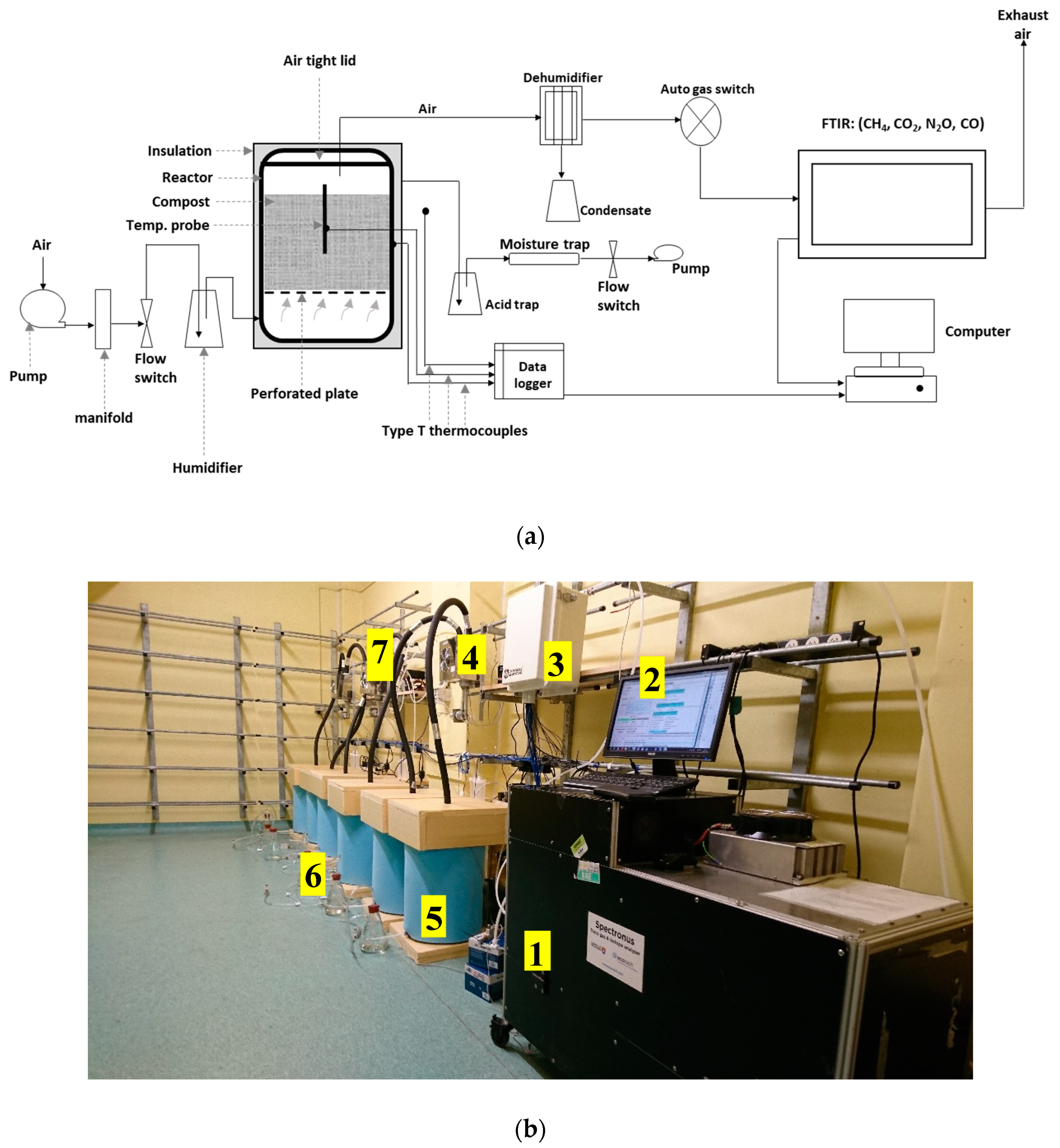
2.2. In-Vessel Composting System
2.3. Composting and Sampling Procedure
2.4. Sample Analysis and Gas Measurement
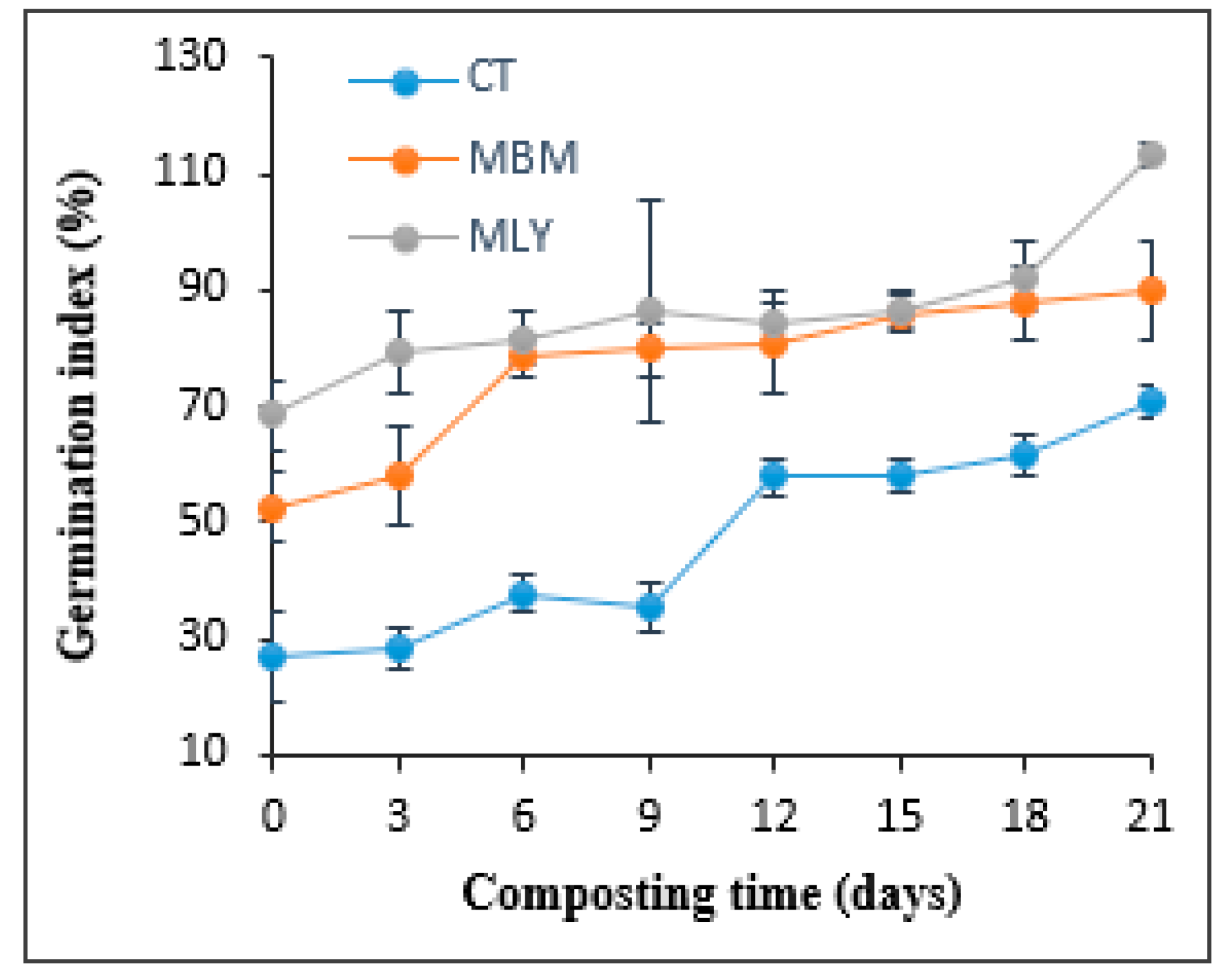
2.5. Germination Index
2.6. Calculations
2.7. Statistical Analysis
3. Results and Discussion
3.1. Characteristics of Feedstocks
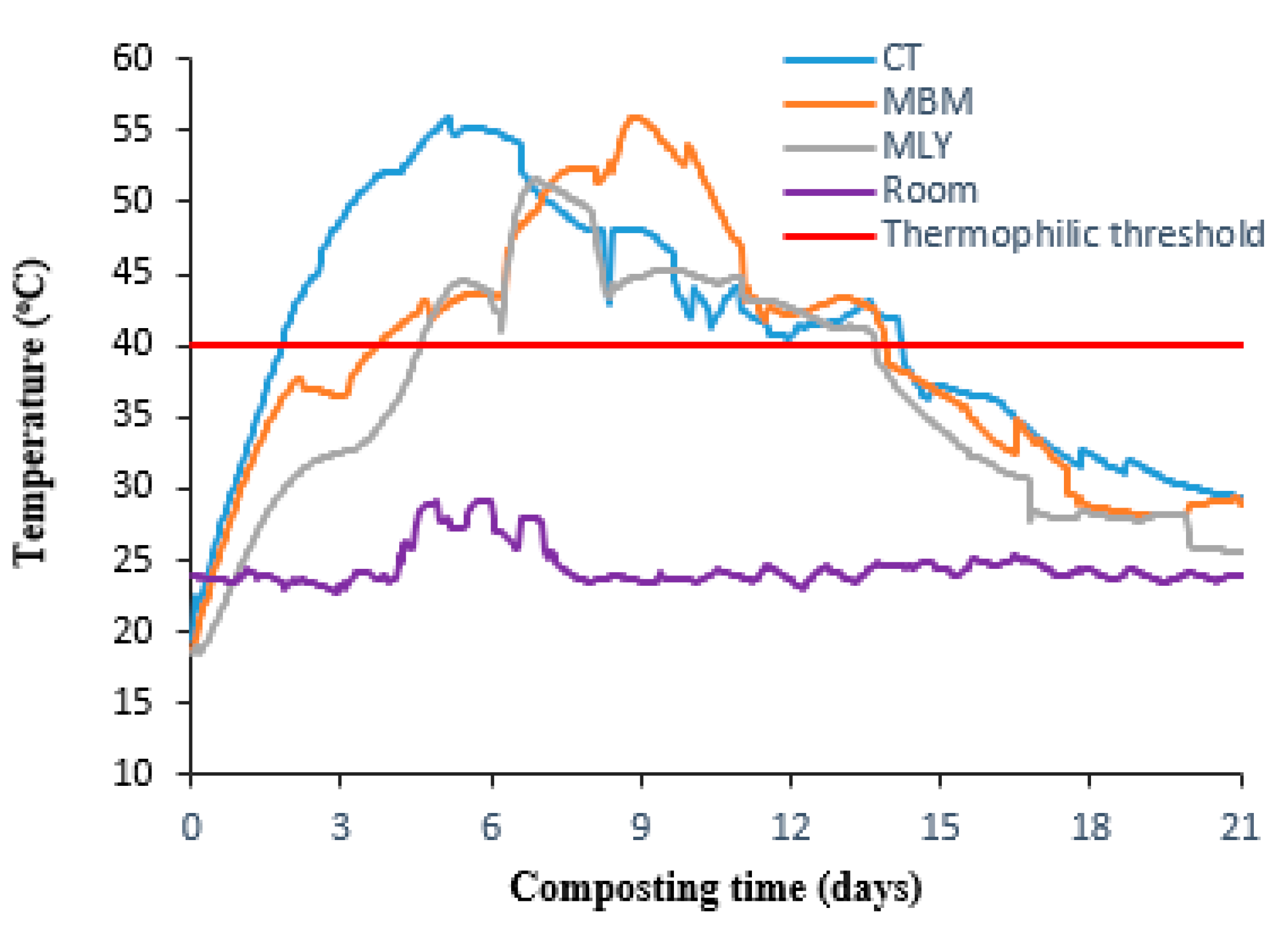
3.2. Changes of Temperature
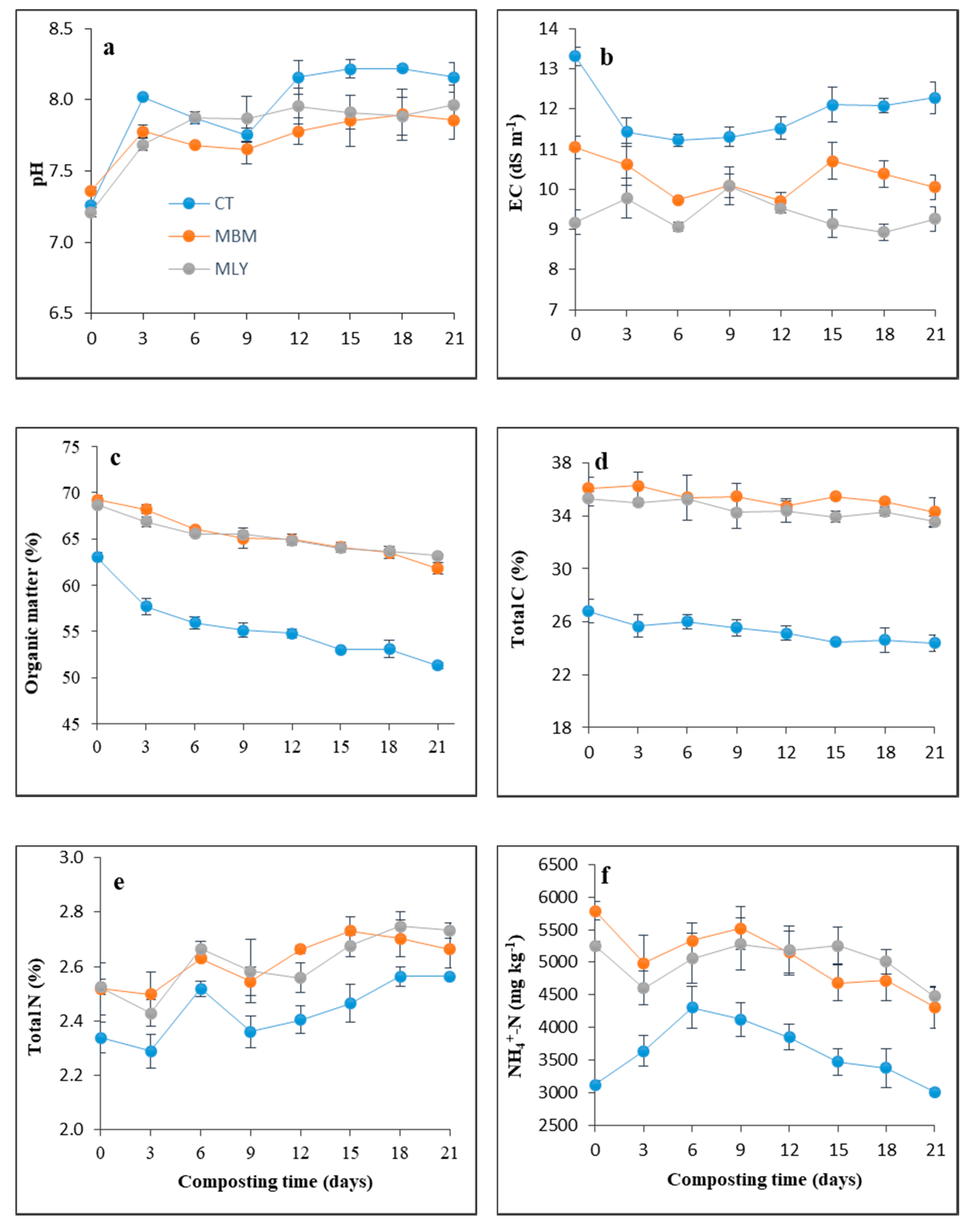
3.3. Changes of pH, Electrical Conductivity, Organic Matter, Total Carbon and Nitrogen
3.4. Gaseous Emissions
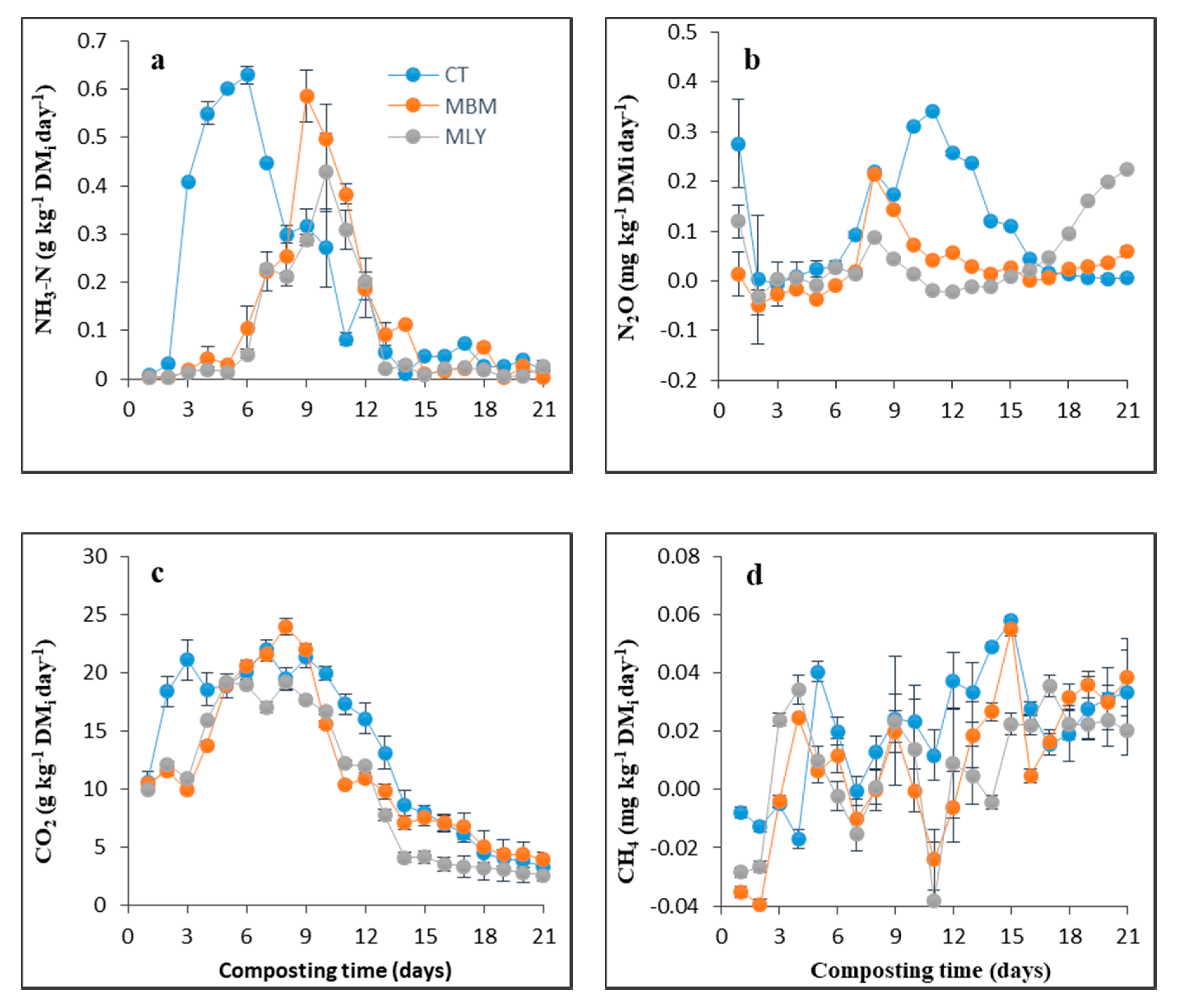
3.4.1. Ammonia (NH3) Emission
3.4.2. Greenhouse Gas Emissions
3.5. Compost Stability Indices
4. Conclusions
Supplementary Materials
Author Contributions
Funding
Acknowledgments
Conflicts of Interest
References
- Bradford, G.E. Contributions of animal agriculture to meeting global human food demand. Livest. Prod. Sci. 1999, 59, 95–112. [Google Scholar] [CrossRef]
- FAO. The future of food and agriculture—Trends and challenges. In Food and Agriculture Organization of the United Nations; FAO: Rome, Italy, 2017; p. 180. [Google Scholar]
- Bernal, M.P.; Alburquerque, J.A.; Moral, R. Composting of animal manures and chemical criteria for compost maturity assessment. A review. Bioresour. Technol. 2009, 100, 5444–5453. [Google Scholar] [CrossRef] [PubMed]
- Arriaga, H.; Viguria, M.; López, D.M.; Merino, P. Ammonia and greenhouse gases losses from mechanically turned cattle manure windrows: A regional composting network. J. Environ. Manag. 2017, 203, 557–563. [Google Scholar] [CrossRef] [PubMed]
- Risse, L.M.; Cabrera, M.L.; Franzluebbers, A.J.; Gaskin, J.W.; Gilley, J.E.; Killorn, R.; Radcliffe, D.E.; Tollner, W.E.; Zhang, H. Land Application of Manure for Beneficial Reuse. In Animal Agriculture and the Environment: National Center for Manure and Animal Waste White Papers; Rice, J.M., Caldwell, F.J., Humenik, F.J., Eds.; ASABE: St. Joseph, MI, USA, 2006. [Google Scholar]
- Clarisse, L.; Clerbaux, C.; Dentener, F.J.; Hurtmans, D.; Coheur, P.F. Global ammonia distribution derived from infrared satellite observations. Nat. Geosci. 2009, 2, 479–483. [Google Scholar] [CrossRef]
- Reddy, K.R.; Khaleel, R.; Overcash, M.R.; Westerman, P.W. A Nonpoint Source Model for Land Areas Receiving Animal Wastes: II. Ammonia Volatilization. Trans. ASAE 1979, 22, 1398–1405. [Google Scholar] [CrossRef]
- Sutton, M.A.; Erisman, J.W.; Dentener, F.; Möller, D. Ammonia in the environment: From ancient times to the present. Environ. Pollut. 2008, 156, 583–604. [Google Scholar] [CrossRef]
- Wu, Y.; Gu, B.; Erisman, J.W.; Reis, S.; Fang, Y.; Lu, X.; Zhang, X. PM2.5 pollution is substantially affected by ammonia emissions in China. Environ. Pollut. 2016, 218, 86–94. [Google Scholar] [CrossRef]
- Vanderstelt, B.; Temminghoff, E.J.; Vanvliet, P.; VanRiemsdijk, W. Volatilization of ammonia from manure as affected by manure additives, temperature and mixing. Bioresour. Technol. 2007, 98, 3449–3455. [Google Scholar] [CrossRef]
- Parker, D.B.; Pandrangi, S.; Greene, L.W.; Almas, L.K.; Cole, N.A.; Rhoades, M.B.; Koziel, J.A. Rate and frequency of urease inhibitor application for minimizing ammonia emissions from beef cattle feedyards. Trans. ASAE 2005, 48, 787–793. [Google Scholar] [CrossRef]
- McCrory, D.F.; Hobbs, P. Additives to reduce ammonia and odor emissions from livestock wastes: A review. J. Environ. Qual. 2001, 30, 345–355. [Google Scholar] [CrossRef]
- Cole, N.A.; Clark, R.N.; Todd, R.W.; Richardson, C.R.; Gueye, A.; Greene, L.W.; McBride, K. Influence of dietary crude protein concentration and source on potential ammonia emissions from beef cattle manure1,2,3. J. Anim. Sci. 2005, 83, 722–731. [Google Scholar] [CrossRef]
- Chadwick, D. Emissions of ammonia, nitrous oxide and methane from cattle manure heaps: Effect of compaction and covering. Atmos. Environ. 2005, 39, 787–799. [Google Scholar] [CrossRef]
- Závodská, L.; Lesný, J. Recent Development in Lignite Investigation; HEJ Manuscript, No. ENV-061026-A, HU ISSN; HEJ: Karachi, Pakistan, 2006; pp. 1418–7108. [Google Scholar]
- Chen, D.; Sun, J.; Bai, M.; Dassanayake, K.B.; Denmead, O.T.; Hill, J. A new cost-effective method to mitigate ammonia loss from intensive cattle feedlots: Application of lignite. Sci. Rep. 2015, 5, 16689. [Google Scholar] [CrossRef] [PubMed]
- Sun, J.; Bai, M.; Shen, J.; Griffith, D.W.T.; Denmead, O.T.; Hill, J.; Lam, S.K.; Mosier, A.R.; Chen, D. Effects of lignite application on ammonia and nitrous oxide emissions from cattle pens. Sci. Total Environ. 2016, 565, 148–154. [Google Scholar] [CrossRef] [PubMed]
- Dana, M.M.; Ardeshir, A. Reducing ammonia loss from broiler litter with lignite coal and biochar. In Enhancing Productivity in a Changing Climate; American Society of Agronomy: Madison, WI, USA; Crop Science Society of America: Fitchburg, Mi, USA, 2018. [Google Scholar]
- Dong, L.; Córdova-Kreylos, A.L.; Yang, J.; Yuan, H.; Scow, K.M. Humic acids buffer the effects of urea on soil ammonia oxidizers and potential nitrification. Soil Biol. Biochem. 2009, 41, 1612–1621. [Google Scholar] [CrossRef]
- Tu, Y.; Feng, P.; Ren, Y.; Cao, Z.; Wang, R.; Xu, Z. Adsorption of ammonia nitrogen on lignite and its influence on coal water slurry preparation. Fuel 2019, 238, 34–43. [Google Scholar] [CrossRef]
- Larney, F.J.; Olson, A.F.; DeMaere, P.R.; Handerek, B.P.; Tovell, B.C. Nutrient and trace element changes during manure composting at four southern Alberta feedlots. Can. J. Soil Sci. 2008, 88, 45–59. [Google Scholar] [CrossRef]
- Bernal, M.P.; Sommer, S.G.; Chadwick, D.; Qing, C.; Guoxue, L.; Michel, F.C. Current approaches and future trends in compost quality criteria for agronomic, environmental, and human health benefits. Adv. Agron. 2017, 143–233. [Google Scholar] [CrossRef]
- Himanen, M.; Hänninen, K. Composting of bio-waste, aerobic and anaerobic sludges—Effect of feedstock on the process and quality of compost. Bioresour. Technol. 2011, 102, 2842–2852. [Google Scholar] [CrossRef]
- Cao, Y.; Bai, M.; Han, B.; Impraim, R.; Butterly, C.; Hu, H.; He, J.; Chen, D. Enhanced nitrogen retention by lignite during poultry litter composting. J. Clean. Prod. 2020, 277, 122422. [Google Scholar] [CrossRef]
- Bai, M.; Impraim, R.; Coates, T.; Flesch, T.; Trouvé, R.; Van Grinsven, H.; Cao, Y.; Hill, J.; Chen, D. Lignite effects on NH3, N2O, CO2 and CH4 emissions during composting of manure. J. Environ. Manag. 2020, 271, 110960. [Google Scholar] [CrossRef] [PubMed]
- Cao, Y.; Hu, H.W.; Guo, H.G.; Butterly, C.; Bai, M.; Zhang, Y.S.; Chen, D.; He, J.Z. Lignite as additives accelerates the removal of antibiotic resistance genes during poultry litter composting. Bioresour. Technol. 2020, 315, 123841. [Google Scholar] [CrossRef] [PubMed]
- Georgacakis, D.; Tsavdaris, A.; Bakouli, J.; Symeonidis, S. Composting solid swine manure and lignite mixtures with selected plant residues. Bioresour. Technol. 1996, 56, 195–200. [Google Scholar] [CrossRef]
- Manyapu, V.; Mandpe, A.; Kumar, S. Synergistic effect of fly ash in in-vessel composting of biomass and kitchen waste. Bioresour. Technol. 2018, 251, 114–120. [Google Scholar] [CrossRef] [PubMed]
- Whiteley, G.M.; Pettit, C. Effect of lignite humic acid treatment on the rate of decomposition of wheat straw. Biol. Fertil. Soils 1994, 17, 18–20. [Google Scholar] [CrossRef]
- Bierman, S.; Erickson, G.E.; Klopfenstein, T.J.; Stock, C.R.A.; Shain, D.H. Evaluation of nitrogen and organic matter balance in the feedlot as affected by level and source of dietary fiber. J. Anim. Sci. 1999, 77, 1645–1653. [Google Scholar] [CrossRef]
- Watts, P.J.; McGahan, E.; Bonner, S.L.; Wiedemann, S. Feedlot Mass Balance and greenhouse gas emissions—A literature review. (No. B.FLT.0361). In MLA Report; Meat & Livestock Australia: Sydney, Australia, 2011; p. 125. [Google Scholar]
- Griffith, D.W.T.; Deutscher, N.M.; Caldow, C.; Kettlewell, G.; Riggenbach, M.; Hammer, S. A Fourier transform infrared trace gas and isotope analyser for atmospheric applications. Atmos. Meas. Tech. 2012, 5, 2481–2498. [Google Scholar] [CrossRef]
- An, C.; Huang, G.; Yao, Y.; Sun, W.; An, K. Performance of in-vessel composting of food waste in the presence of coal ash and uric acid. J. Hazard. Mater. 2012, 203, 38–45. [Google Scholar] [CrossRef]
- Van Vliet, P.C.J.; Bloem, J.; Goede, R.G.M. Microbial diversity, nitrogen loss and grass production after addition of Effective Micro-organisms® (EM) to slurry manure. Appl. Soil Ecol. 2006, 32, 188–198. [Google Scholar] [CrossRef]
- Awasthi, M.K.; Pandey, A.K.; Bundela, P.S.; Khan, J. Co-composting of organic fraction of municipal solid waste mixed with different bulking waste: Characterization of physicochemical parameters and microbial enzymatic dynamic. Bioresour. Technol. 2015, 182, 200–207. [Google Scholar] [CrossRef]
- Wolf, A.; Watson, M.; Wolf, N. Digestion and dissolution methods for P, K, Ca, Mg and trace elements. In Recommended Methods for Manure Analysis; Peters, J., Ed.; University of Wisconsin: Madison, WI, USA, 2003; pp. 3–38. [Google Scholar]
- Tiquia-Arashiro, S.M. Reduction of compost phytotoxicity during the process of decomposition. Chemosphere 2010, 79, 506–512. [Google Scholar] [CrossRef] [PubMed]
- Wu, L.; Ma, L.Q.; Martinez, G.A. Comparison of methods for evaluating stability and maturity of biosolids compost. J. Environ. Qual. 2000, 29, 424–429. [Google Scholar] [CrossRef]
- Marcu, D.; Damian, G.; Cosma, C.; Cristea, V. Gamma radiation effects on seed germination, growth and pigment content, and ESR study of induced free radicals in maize (Zea mays). J. Biol. Phys. 2013, 39, 625–634. [Google Scholar] [CrossRef] [PubMed]
- Woodley, A.L.; Drury, C.F.; Reynolds, W.; Calder, W.; Yang, X.M.; Oloya, T.O. Improved acid trap methodology for determining ammonia volatilization in wind tunnel experiments. Can. J. Soil Sci. 2018, 98, 193–199. [Google Scholar] [CrossRef]
- Larney, F.J.; Ellert, B.H.; Olson, A.F. Carbon, ash and organic matter relationships for feedlot manures and composts. Can. J. Soil Sci. 2005, 85, 261–264. [Google Scholar] [CrossRef]
- Brito, L.M.; Coutinho, J.; Smith, S. Methods to improve the composting process of the solid fraction of dairy cattle slurry. Bioresour. Technol. 2008, 99, 8955–8960. [Google Scholar] [CrossRef] [PubMed]
- Tran, C.K.T.; Rose, M.; Cavagnaro, T.R.; Patti, A.F. Lignite amendment has limited impacts on soil microbial communities and mineral nitrogen availability. Appl. Soil Ecol. 2015, 95, 140–150. [Google Scholar] [CrossRef]
- Caceres, R.; Flotats, X.; Marfa, O. Changes in the chemical and physicochemical properties of the solid fraction of cattle slurry during composting using different aeration strategies—Bicarbonates. Waste Manag. 2006, 26, 1081–1091. [Google Scholar] [CrossRef]
- Li, X.; Shi, X.S.; Lu, M.Y.; Zhao, Y.Z.; Zhou, J.; Peng, H. Improved nitrogen conservation capacity during composting of dairy manure amended with oil shale semi-coke as the porous bulking agent. J. Hazard. Mater. 2020, 388, 121742. [Google Scholar] [CrossRef]
- Li, X.; Shi, X.S.; Yang, Z.M.; Xu, X.H.; Zhou, J. Effects of recyclable ceramsite as the porous bulking agent during the continuous thermophilic composting of dairy manure. J. Clean. Prod. 2019, 217, 344–351. [Google Scholar] [CrossRef]
- Li, R.; Wang, J.J.; Zhang, Z.; Shen, F.; Zhang, G.; Qin, R.; Li, X.; Xiao, R. Nutrient transformations during composting of pig manure with bentonite. Bioresour. Technol. 2012, 121, 362–368. [Google Scholar] [CrossRef] [PubMed]
- Zhu, N. Effect of low initial C/N ratio on aerobic composting of swine manure with rice straw. Bioresour. Technol. 2007, 98, 9–13. [Google Scholar] [CrossRef]
- Sánchez-Monedero, M.Á.; Roig, A.; Paredes, C.; Bernal, M. Nitrogen transformation during organic waste composting by the Rutgers system and its effects on pH, EC and maturity of the composting mixtures. Bioresour. Technol. 2001, 78, 301–308. [Google Scholar] [CrossRef]
- Gao, M.; Liang, F.; Yu, A.; Li, B.; Yang, L. Evaluation of stability and maturity during forced-aeration composting of chicken manure and sawdust at different C/N ratios. Chemosphere 2010, 78, 614–619. [Google Scholar] [CrossRef] [PubMed]
- De Guardia, A.; Mallard, P.; Teglia, C.; Marin, A.; Le Pape, C.; Launay, M.; Benoist, J.; Petiot, C. Comparison of five organic wastes regarding their behaviour during composting: Part 2, nitrogen dynamic. Waste Manag. 2010, 30, 415–425. [Google Scholar] [CrossRef] [PubMed]
- Skodras, G.; Kokorotsikos, P.; Serafidou, M. Cation exchange capability and reactivity of low-rank coal and chars. Open Chem. 2014, 12, 33–43. [Google Scholar] [CrossRef]
- Pehlivan, E.; Arslan, G. Comparison of adsorption capacity of young brown coals and humic acids prepared from different coal mines in Anatolia. J. Hazard. Mater. 2006, 138, 401–408. [Google Scholar] [CrossRef]
- Eghball, B.; Power, J.F.; Gilley, J.E.; Doran, J.W. Nutrient, carbon, and mass loss during composting of beef cattle feedlot manure. J. Environ. Qual. 1997, 26, 189–193. [Google Scholar] [CrossRef]
- Barthod, J.; Rumpel, C.; Dignac, M.F. Composting with additives to improve organic amendments. A review. Agron. Sustain. Dev. 2018, 38, 17. [Google Scholar] [CrossRef]
- Yang, F.; Li, G.X.; Yang, Q.Y.; Luo, W.H. Effect of bulking agents on maturity and gaseous emissions during kitchen waste composting. Chemosphere 2013, 93, 1393–1399. [Google Scholar] [CrossRef]
- Fukumoto, Y.; Osada, T.; Hanajima, D.; Haga, K. Patterns and quantities of NH3, N2O and CH4 emissions during swine manure composting without forced aeration––Effect of compost pile scale. Bioresour. Technol. 2003, 89, 109–114. [Google Scholar] [CrossRef]
- Jiang, T.; Schuchardt, F.; Li, G.; Guo, R.; Zhao, Y. Effect of C/N ratio, aeration rate and moisture content on ammonia and greenhouse gas emission during the composting. J. Environ. Sci. 2011, 23, 1754–1760. [Google Scholar] [CrossRef]
- Jarvis, Å.; Sundberg, C.; Milenkovski, S.; Pell, M.; Smårs, S.; Lindgren, P.-E.; Hallin, S. Activity and composition of ammonia oxidizing bacterial communities and emission dynamics of NH3and N2O in a compost reactor treating organic household waste. J. Appl. Microbiol. 2009, 106, 1502–1511. [Google Scholar] [CrossRef] [PubMed]
- Sanchezgarcia, M.; Alburquerque, J.; Sánchez-Monedero, M.; Roig, A.; Cayuela, M.L. Biochar accelerates organic matter degradation and enhances N mineralisation during composting of poultry manure without a relevant impact on gas emissions. Bioresour. Technol. 2015, 192, 272–279. [Google Scholar] [CrossRef] [PubMed]
- Chen, R.; Wang, Y.; Wei, S.; Wang, W.; Lin, X. Windrow composting mitigated CH4 emissions: Characterization of methanogenic and methanotrophic communities in manure management. FEMS Microbiol. Ecol. 2014, 90, 575–586. [Google Scholar] [CrossRef] [PubMed]
- Bai, M.; Flesch, T.; Trouvé, R.; Coates, T.; Butterly, C.; Bhatta, B.; Hill, J.; Chen, D. Gas emissions during cattle manure composting and stockpiling. J. Environ. Qual. 2020, 49, 228–235. [Google Scholar] [CrossRef]
- Larney, F.J.; Sullivan, D.M.; Buckley, K.E.; Eghball, B. The role of composting in recycling manure nutrients. Can. J. Soil Sci. 2006, 86, 597–611. [Google Scholar] [CrossRef]
- De Klein, C.; Novoa, R.S.; Ogle, S.; Smith, K.A.; Rochette, P.; Wirth, T.C.; McConkey, B.G.; Mosier, A.; Rypdal, K.; Walsh, M.; et al. N2O emissions from managed soils, and CO2 emissions from lime and urea application. In IPCC Guidelines for National Greenhouse Gas Inventories; National Greenhouse Gas Inventories Programme: Hamaya, Japan, 2006; Volume 4, pp. 1–54. [Google Scholar]
- Myhre, G.; Shindell, D.; Pongratz, J. Anthropogenic and Natural Radiative Forcing, in Climate Change 2013: The Physical Science Basis. In Contribution of Working Group I to the Fifth Assessment Report of the Intergovernmental Panel on Climate Change; Stocker, T.F., Ed.; Cambridge University Press: Cambridge, UK; Cambridge, NY, USA, 2013; p. 82. [Google Scholar]
- Hue, N.; Liu, J. Predicting compost stability. Compos. Sci. Util. 1995, 3, 8–15. [Google Scholar] [CrossRef]
- Michel, F.C., Jr.; Pecchia, J.A.; Rigot, J.; Keener, H.M. Mass and nutrient losses during the composting of dairy manure amended with sawdust or straw. Compost Sci. Util. 2004, 12, 323–334. [Google Scholar] [CrossRef]
- Nakhshiniev, B.; Biddinika, M.K.; Gonzales, H.B.; Sumida, H.; Yoshikawa, K. Evaluation of hydrothermal treatment in enhancing rice straw compost stability and maturity. Bioresour. Technol. 2014, 151, 306–313. [Google Scholar] [CrossRef] [PubMed]
- Gómez-Brandón, M.; Lazcano, C.; Domínguez, J. The evaluation of stability and maturity during the composting of cattle manure. Chemosphere 2008, 70, 436–444. [Google Scholar] [CrossRef] [PubMed]
- Tambone, F.; Terruzzi, L.; Scaglia, B.; Adani, F. Composting of the solid fraction of digestate derived from pig slurry: Biological processes and compost properties. Waste Manag. 2015, 35, 55–61. [Google Scholar] [CrossRef] [PubMed]
- Tian, W.; Li, L.; Liu, F.; Zhang, Z.; Yu, G.; Shen, Q.; Shen, B. Assessment of the maturity and biological parameters of compost produced from dairy manure and rice chaff by excitation–emission matrix fluorescence spectroscopy. Bioresour. Technol. 2012, 110, 330–337. [Google Scholar] [CrossRef] [PubMed]
- Tiquia, S.; Tam, N.; Hodgkiss, I. Effects of composting on phytotoxicity of spent pig-manure sawdust litter. Environ. Pollut. 1996, 93, 249–256. [Google Scholar] [CrossRef]
- Guo, R.; Li, G.; Jiang, T.; Schuchardt, F.; Chen, T.; Zhao, Y.; Shen, Y. Effect of aeration rate, C/N ratio and moisture content on the stability and maturity of compost. Bioresour. Technol. 2012, 112, 171–178. [Google Scholar] [CrossRef]
- Masciandaro, G.; Ceccanti, B.; Ronchi, V.; Benedicto, S.; Howard, L. Humic substances to reduce salt effect on plant germination and growth. Commun. Soil Sci. Plant. Anal. 2002, 33, 365–378. [Google Scholar] [CrossRef]
- Ouni, Y.; Ghnaya, T.; Montemurro, F.; Abdelly, C.; Lakhdar, A. The role of humic substances in mitigating the harmful effects of soil salinity and improve plant productivity. Int. J. Plant Prod. 2014, 8, 353–374. [Google Scholar]
- Nasir, S.; Sarfaraz, T.B.; Verheyen, T.V.; Chaffee, A.L. Structural elucidation of humic acids extracted from Pakistani lignite using spectroscopic and thermal degradative techniques. Fuel Process. Technol. 2011, 92, 983–991. [Google Scholar] [CrossRef]
- Woskoboenko, F.; Satcy, W.; Raisbeck, D. Physical structure and properties of brown coal. In The Science of Victorian Brown Coal: Sturcture, Properties and Consequences for Utilization; Durie, R.A., Ed.; Butterworth-Heinemann Ltd.: Oxford, UK, 1991; pp. 152–235. [Google Scholar]



| Feedstocks | Final Composts | |||||
|---|---|---|---|---|---|---|
| CT | MBM | MLY | CT | MBM | MLY | |
| pHH2O | 7.26 ± 0.02 a | 7.36 ± 0.03 a | 7.21 ± 0.03 a | 8.16 ± 0.10 b | 7.86 ± 0.13 b | 7.79 ± 0.14 b |
| EC (dS cm−1) | 13.31 ± 0.26 d | 11.05 ± 0.28 bc | 9.18 ± 0.31 a | 12.28 ± 0.39 c | 10.05 ± 0.30 ab | 9.30 ± 0.31 a |
| TC (%) | 26.8 ± 0.88 a | 36.1 ± 0.81 c | 35.3 ± 0.52 bc | 24.39 ± 1.21 a | 34.30 ± 1.10 bc | 33.57 ± 0.45 b |
| OM (%) | 63.0 ± 0.45 b | 69.2 ± 0.43 c | 68.7 ± 0.15 c | 51.3 ± 0.33 a | 61.77 ± 0.61 b | 63.19 ± 0.16 b |
| TN (%) | 2.34 ± 0.06 a | 2.52 ± 0.10 ab | 2.52 ± 0.03 ab | 2.56 ± 0.01 b | 2.66 ± 0.07 b | 2.73 ± 0.03 b |
| CN ratio | 11.5 ±0.12 b | 14.7 ± 0.1 d | 14.0 ± 0.2 cd | 9.51 ± 0.43 a | 12.88 ± 0.49 bc | 12.29 ± 0.07 b |
| NH4+-N (mg kg−1) | 3118 ± 60 a | 5786 ± 69 c | 5252 ± 139 c | 3004 ± 62 a | 4308 ± 141 b | 4479 ± 325 b |
| Total element concentration (mg kg−1) | ||||||
| Al | 10,653 ± 169 b | 9076 ± 426 a | 9235 ± 376 a | 13,649 ± 215 c | 8583 ± 344 a | 11,182 ± 179 b |
| Fe | 5412 ± 153 bc | 5154 ± 213 a | 5219 ± 418 b | 6514 ± 55 d | 6124 ± 306 cd | 5357 ± 66 bc |
| Mg | 6528 ± 81 c | 5450 ± 27 a | 5173 ± 85 a | 9431± 77 e | 8105 ± 135 d | 6752 ± 190 b |
| Na | 13,274 ± 66 c | 10,702 ± 147 a | 10,658 ± 63 a | 15,163 ± 109 e | 13,884 ± 96 d | 12,239 ± 137 b |
| K | 14,485 ± 100 c | 11,480 ± 178 a | 11,458 ± 98 a | 16,711 ± 117 d | 14,011 ± 168 c | 13,357 ± 97 b |
| Ca | 16,291 ± 38 c | 11,568 ± 134 a | 11,032 ± 161 a | 20,433 ± 407 d | 17,046 ± 417 c | 14,619 ± 424 b |
| P | 7086 ± 17 c | 4824 ± 102 a | 4488 ± 86 a | 8867 ± 188 d | 5591± 143 b | 5690 ± 274 b |
| S | 5136 ± 26 ab | 6799 ± 112 b | 4764 ± 27 a | 6094 ± 103 b | 10,453 ± 116 c | 5357 ± 103 ab |
| Zn | 171.6 ± 0.1 d | 126.6 ± 4.8 ab | 119.21 ± 4.3 a | 213.6 ± 6.9 e | 142.2 ± 1.9 bc | 149.4 ± 5.7 c |
| Mn | 170.6 ± 2.6 c | 123.6 ± 3.0 a | 116.93 ± 1.9 a | 207.8 ± 5.4 d | 171.9 ± 1.4 c | 147.4 ± 3.4 b |
| Cu | 32.1 ± 0.2 c | 24.7 ± 1.1 ab | 22.67 ± 0.5 a | 37.9 ± 1.4 d | 27.0 ± 0.5 b | 27.8 ± 0.7 b |
| B | 64.6 ± 6.6 abc | 45.5 ± 2.9 ab | 38.49 ± 4.7 a | 82.5 ± 21.1 bc | 96.2 ± 6.3 c | 69.8 ± 15.6 abc |
| CT | MBM | MLY | |
|---|---|---|---|
| Dry matter | |||
| Initial 1 dry matter (g) | 7000 | 7000 | 7000 |
| Final 2 dry matter (g) | 5314 ± 145 | 5633 ± 115 | 5955 ± 42 |
| Loss of DM (% of initial) | 24.1 | 19.5 | 14.9 |
| Organic Matter | |||
| Initial concentration (%) | 63.0 ± 0.4 | 69.2 ± 0.4 | 68.7 ± 0.2 |
| Initial amount (g) | 4412 ± 313 | 4847 ± 299 | 4808 ± 107 |
| Final concentration (%) | 51.3 ± 0.3 | 61.8 ± 0.6 | 63.2 ± 0.2 |
| Final amount (g) | 2726 ± 175 | 3480 ± 344 | 3763 ± 97 |
| Loss of OM (% of initial) | 38.2 | 28.2 | 21.7 |
| Total Carbon | |||
| Initial concentration (%) | 26.8 ± 0.9 | 36.1 ± 0.8 | 35.3 ± 0.5 |
| Initial amount (g) | 1876 ± 62 | 2528 ± 56 | 2472 ± 37 |
| Final concentration (%) | 24.4 ± 0.6 | 34.2 ± 1.1 | 33.6 ± 0.5 |
| Final amount (g) | 1268 ± 32 | 1932 ± 61 | 1986 ± 27 |
| Loss of total C (% of initial) | 32.42 | 23.55 | 19.67 |
| Total Nitrogen | |||
| Initial concentration (%) | 2.34 ± 0.06 | 2.52 ± 0.10 | 2.52 ± 0.05 |
| Initial amount (g) | 163.7 ± 4.7 | 176.3 ± 8.1 | 176.7 ± 2.3 |
| Final concentration (%) | 2.56 ± 0.04 | 2.66 ± 0.07 | 2.73 ± 0.03 |
| Final amount (g) | 136.3 ± 5.2 | 150.0 ± 3.7 | 162.7 ± 1.7 |
| Loss of total N (% of initial) | 16.77 | 14.92 | 7.94 |
| GHG (g kg−1 DMi) § | CT | MBM | MLY |
|---|---|---|---|
| N2O §§ | 11.72 | 7.40 | 5.36 |
| CH4 | 0.012 | 0.006 | 0.005 |
| Total GHG | 11.73 | 7.41 | 5.37 |
Publisher’s Note: MDPI stays neutral with regard to jurisdictional claims in published maps and institutional affiliations. |
© 2020 by the authors. Licensee MDPI, Basel, Switzerland. This article is an open access article distributed under the terms and conditions of the Creative Commons Attribution (CC BY) license (http://creativecommons.org/licenses/by/4.0/).
Share and Cite
Impraim, R.; Weatherley, A.; Coates, T.; Chen, D.; Suter, H. Lignite Improved the Quality of Composted Manure and Mitigated Emissions of Ammonia and Greenhouse Gases during Forced Aeration Composting. Sustainability 2020, 12, 10528. https://doi.org/10.3390/su122410528
Impraim R, Weatherley A, Coates T, Chen D, Suter H. Lignite Improved the Quality of Composted Manure and Mitigated Emissions of Ammonia and Greenhouse Gases during Forced Aeration Composting. Sustainability. 2020; 12(24):10528. https://doi.org/10.3390/su122410528
Chicago/Turabian StyleImpraim, Robert, Anthony Weatherley, Trevor Coates, Deli Chen, and Helen Suter. 2020. "Lignite Improved the Quality of Composted Manure and Mitigated Emissions of Ammonia and Greenhouse Gases during Forced Aeration Composting" Sustainability 12, no. 24: 10528. https://doi.org/10.3390/su122410528
APA StyleImpraim, R., Weatherley, A., Coates, T., Chen, D., & Suter, H. (2020). Lignite Improved the Quality of Composted Manure and Mitigated Emissions of Ammonia and Greenhouse Gases during Forced Aeration Composting. Sustainability, 12(24), 10528. https://doi.org/10.3390/su122410528