Strength and Swell Performance of High-Sulphate Kaolinite Clay Soil




Abstract
1. Introduction
2. Methodology
2.1. Materials
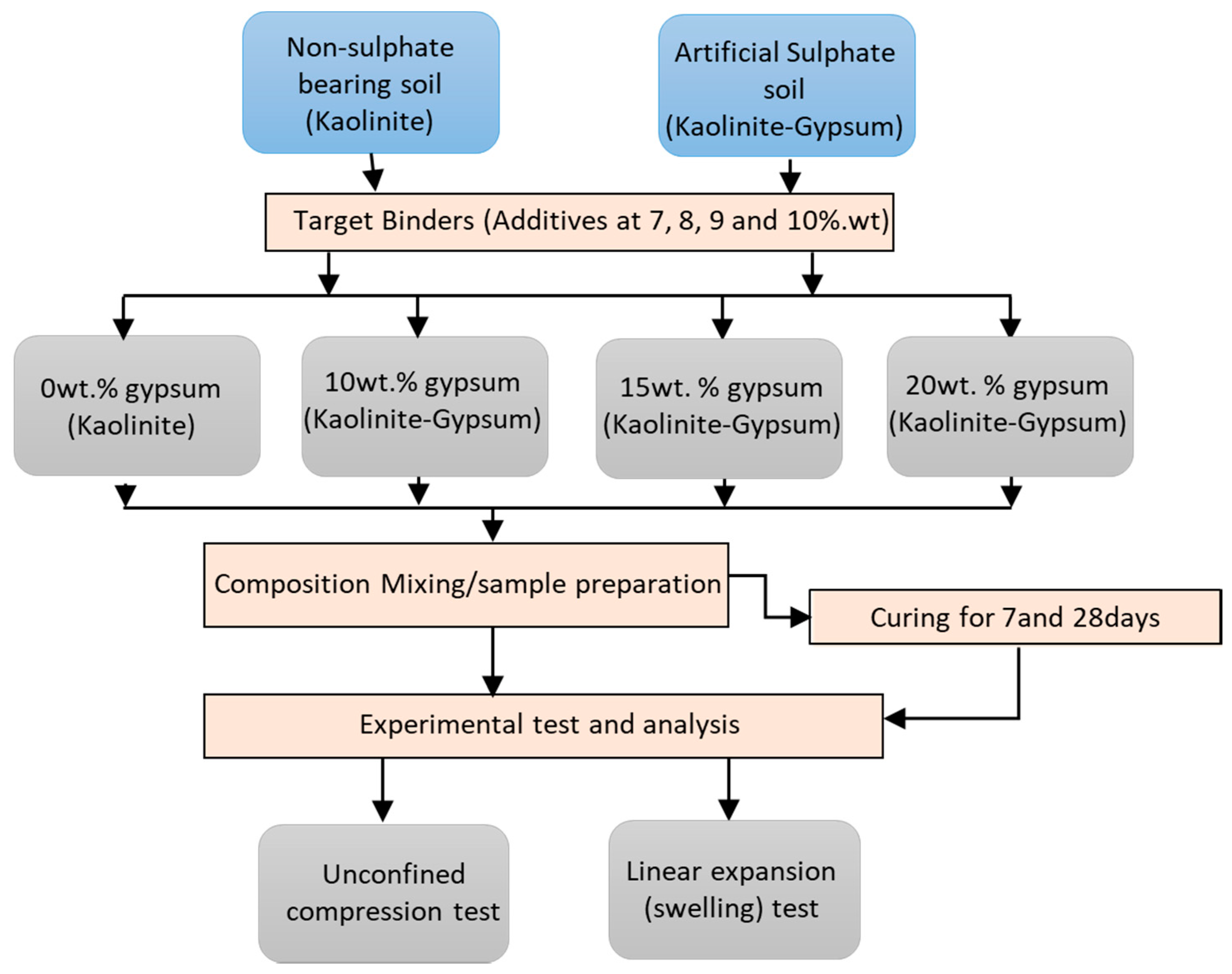
2.2. Mix Design, Test Sample Preparation and Testing
2.3. Experimental Test and Analysis
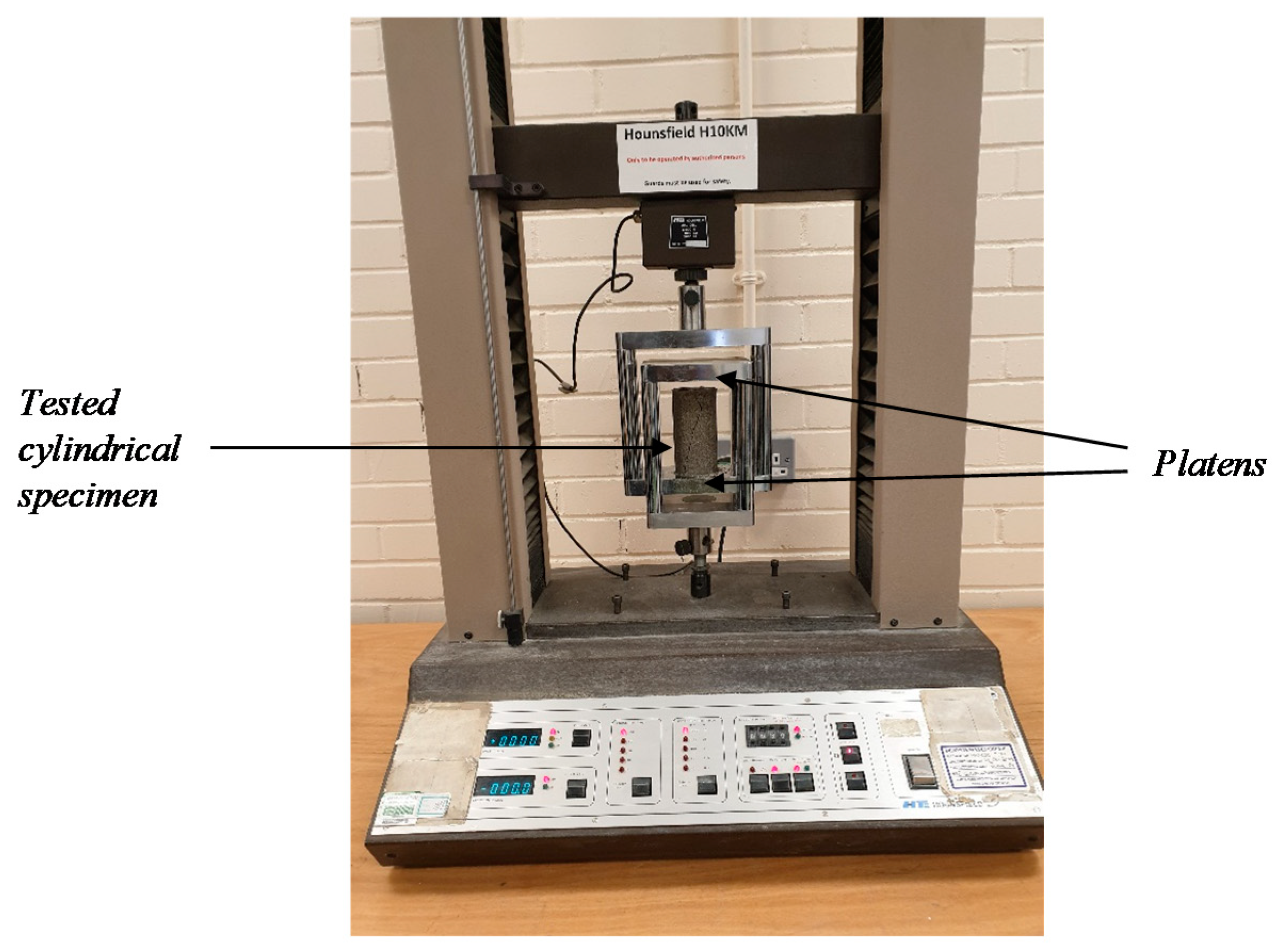
2.3.1. Unconfined Compression Strength (UCS) Test
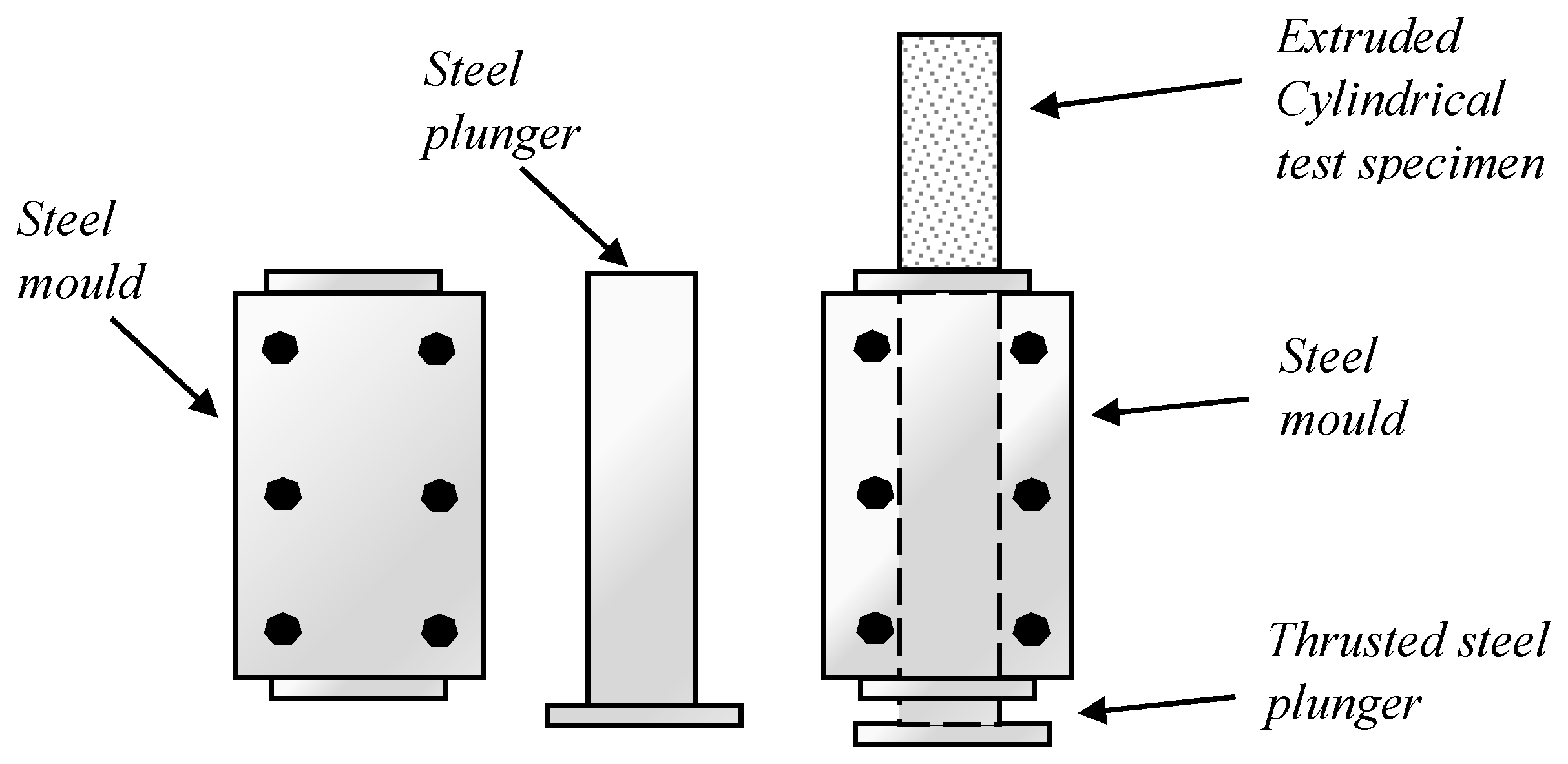
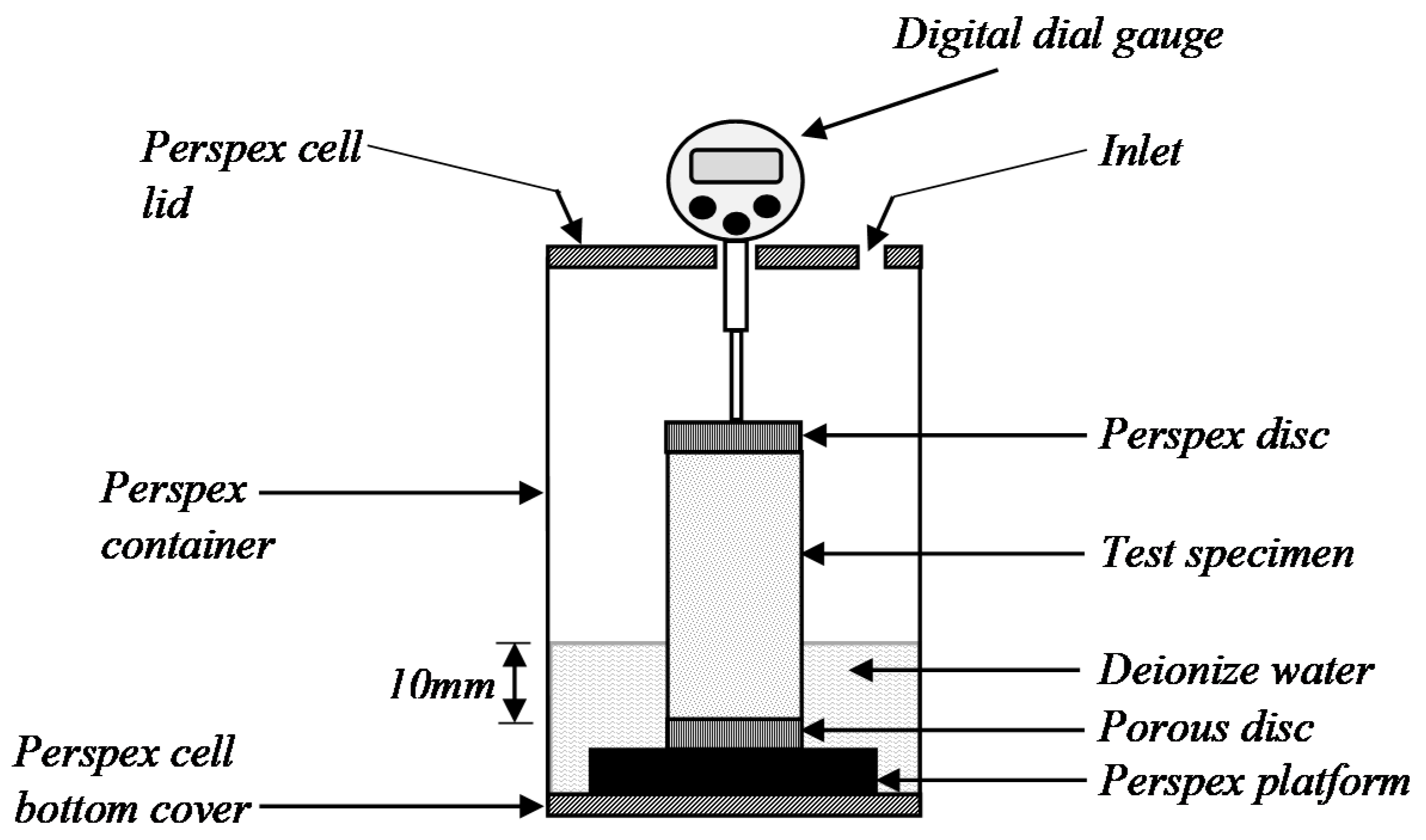
2.3.2. Linear Expansion (Swelling) Test
3. Results
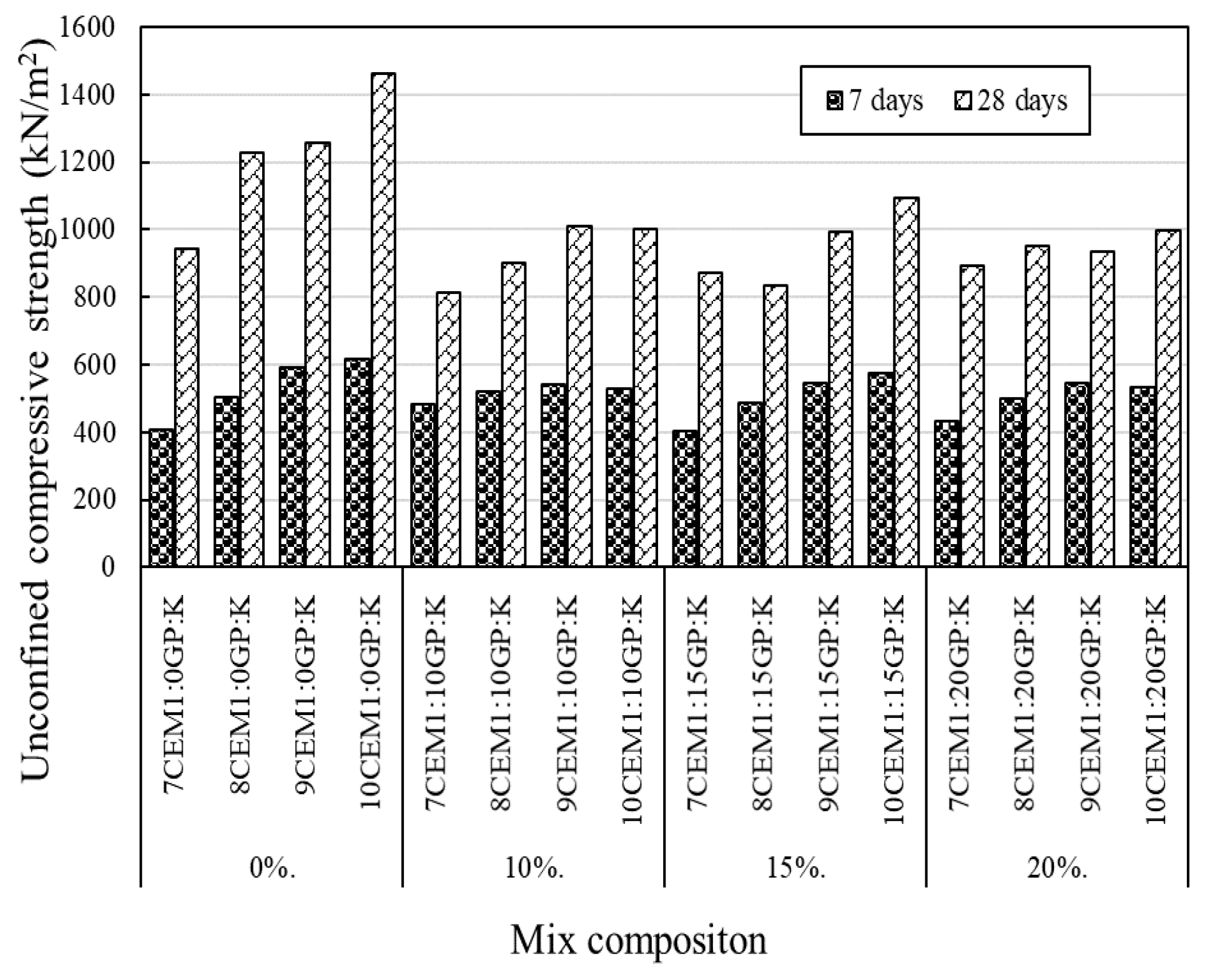
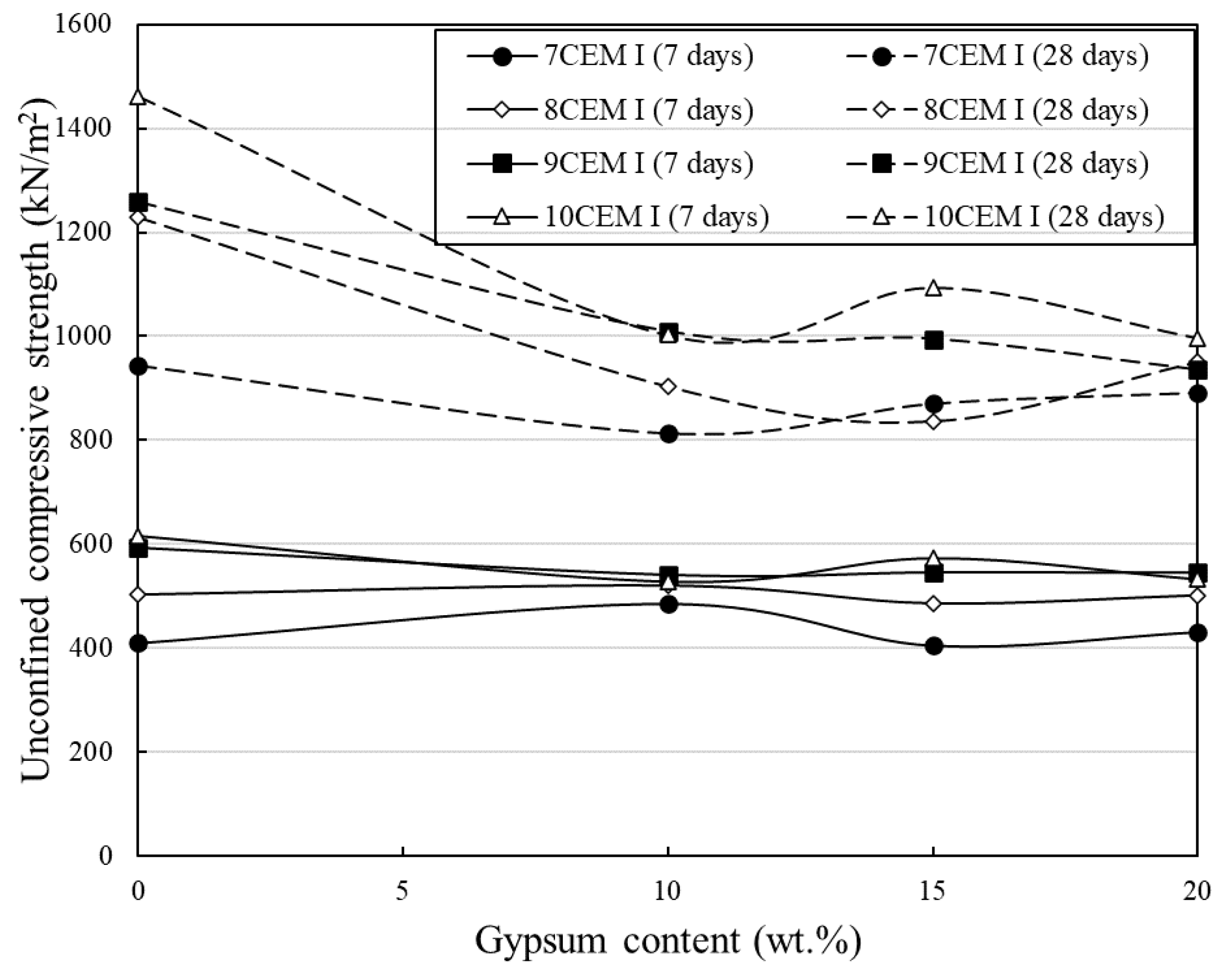
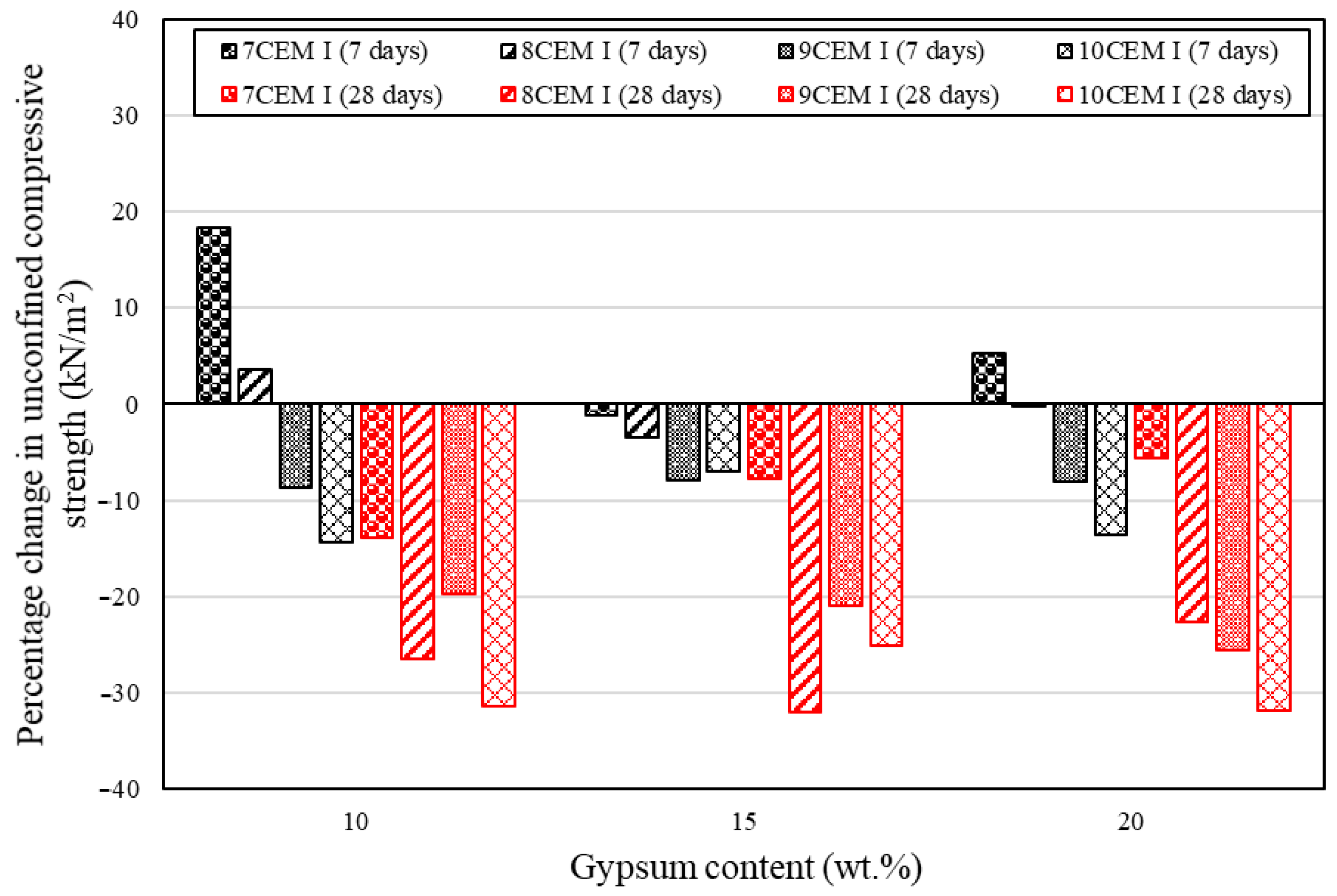
3.1. Strength Development of CEM I–Kaolinite and CEM I–Gypsum–Kaolinite Clay Systems
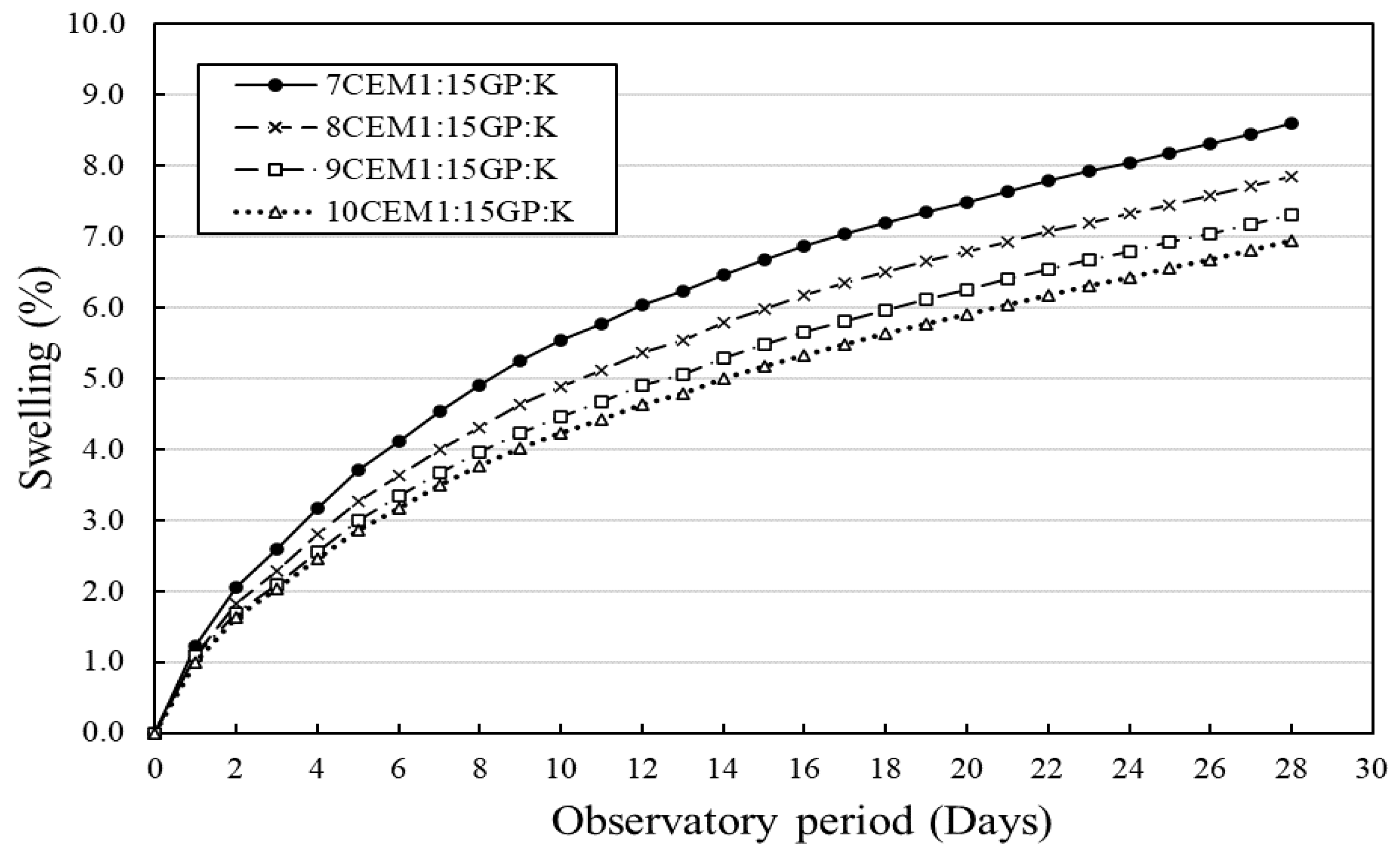
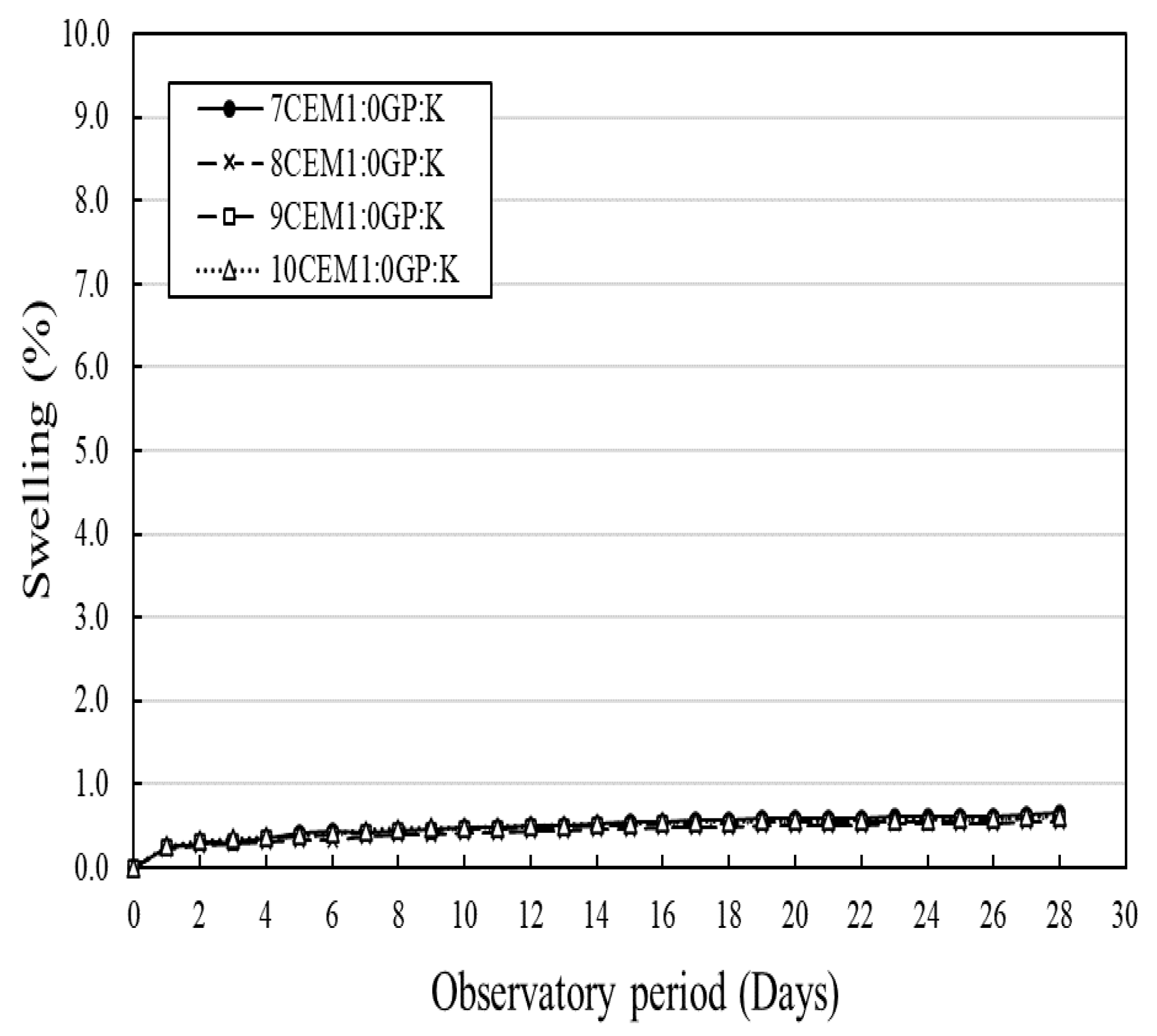
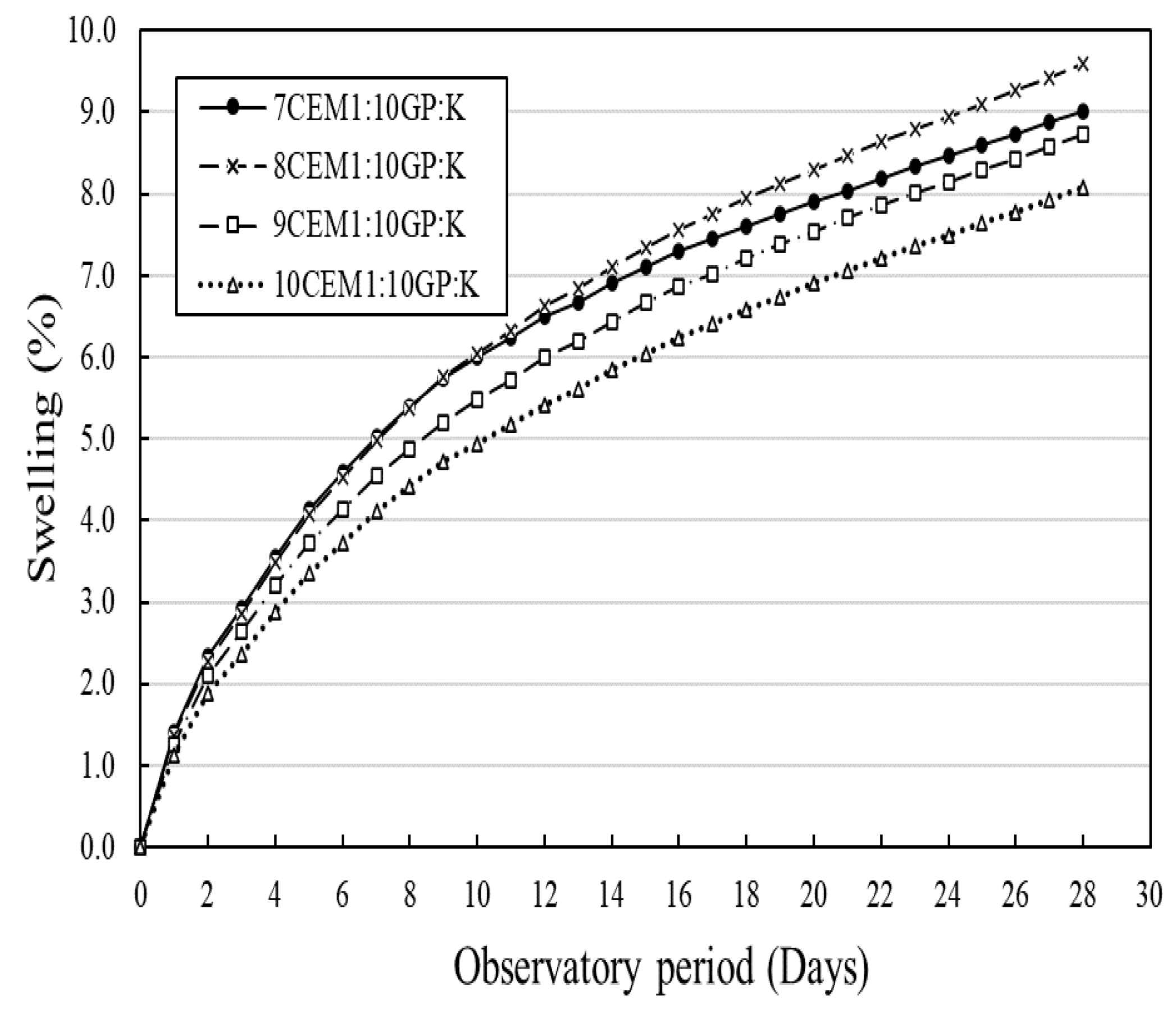
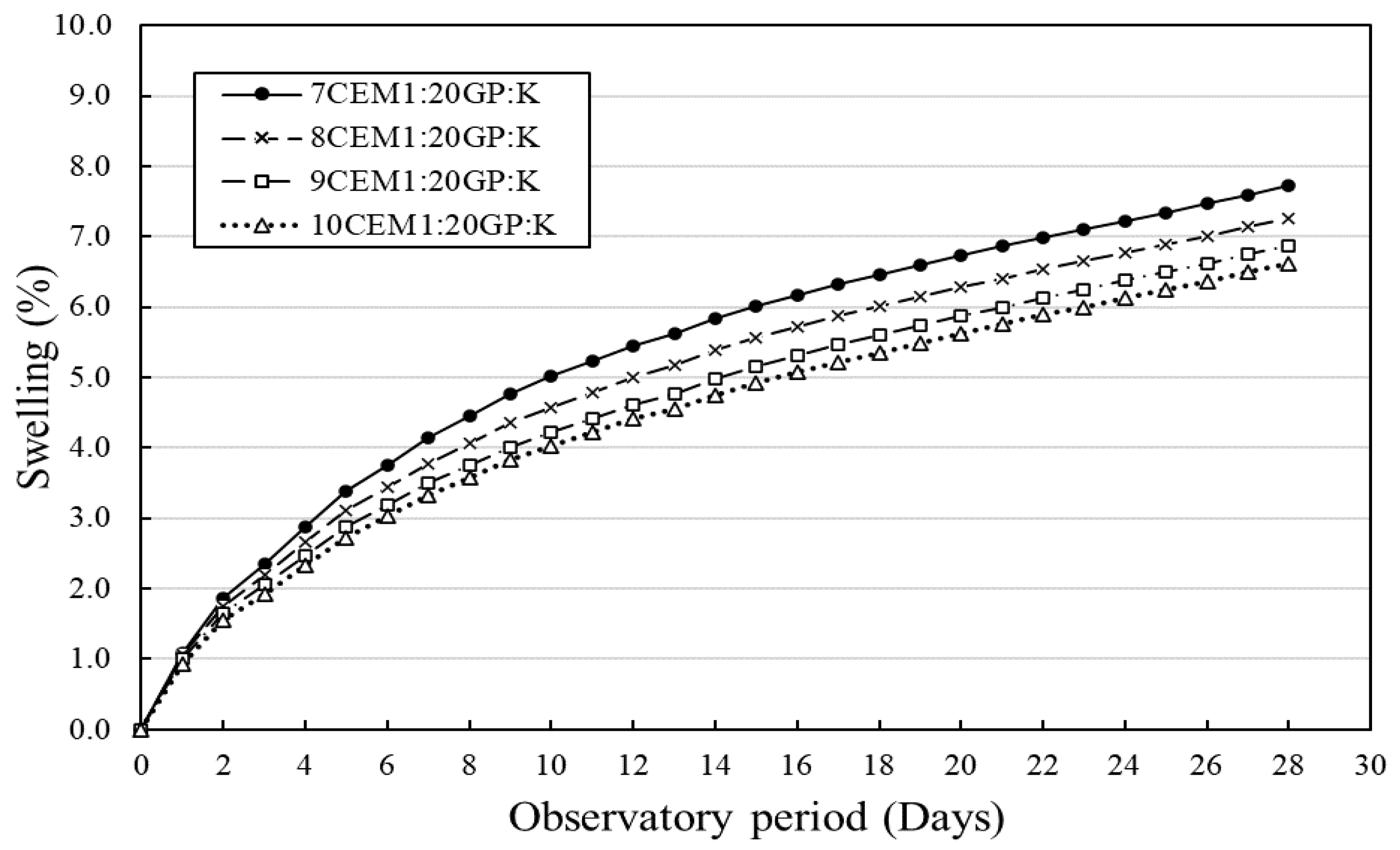
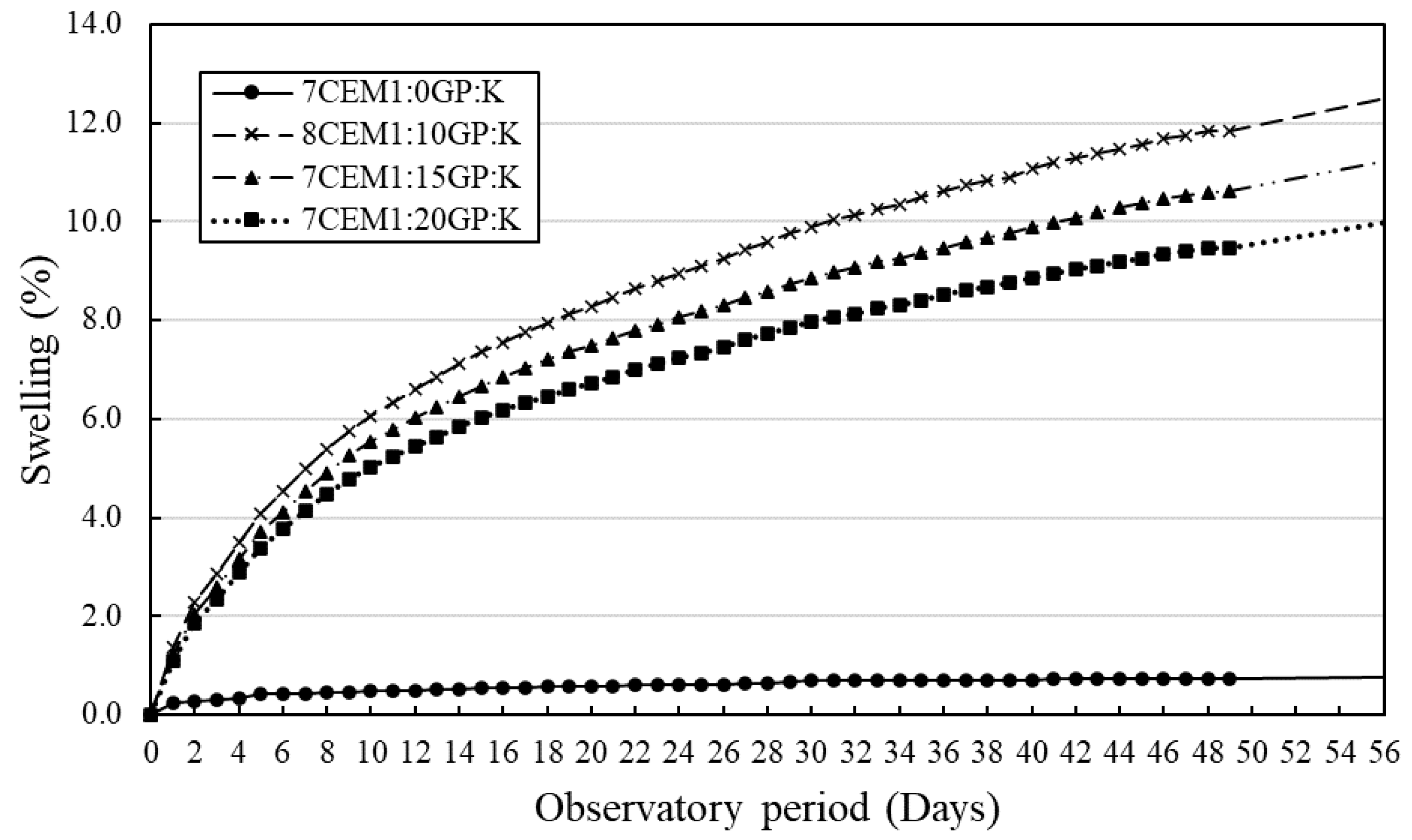
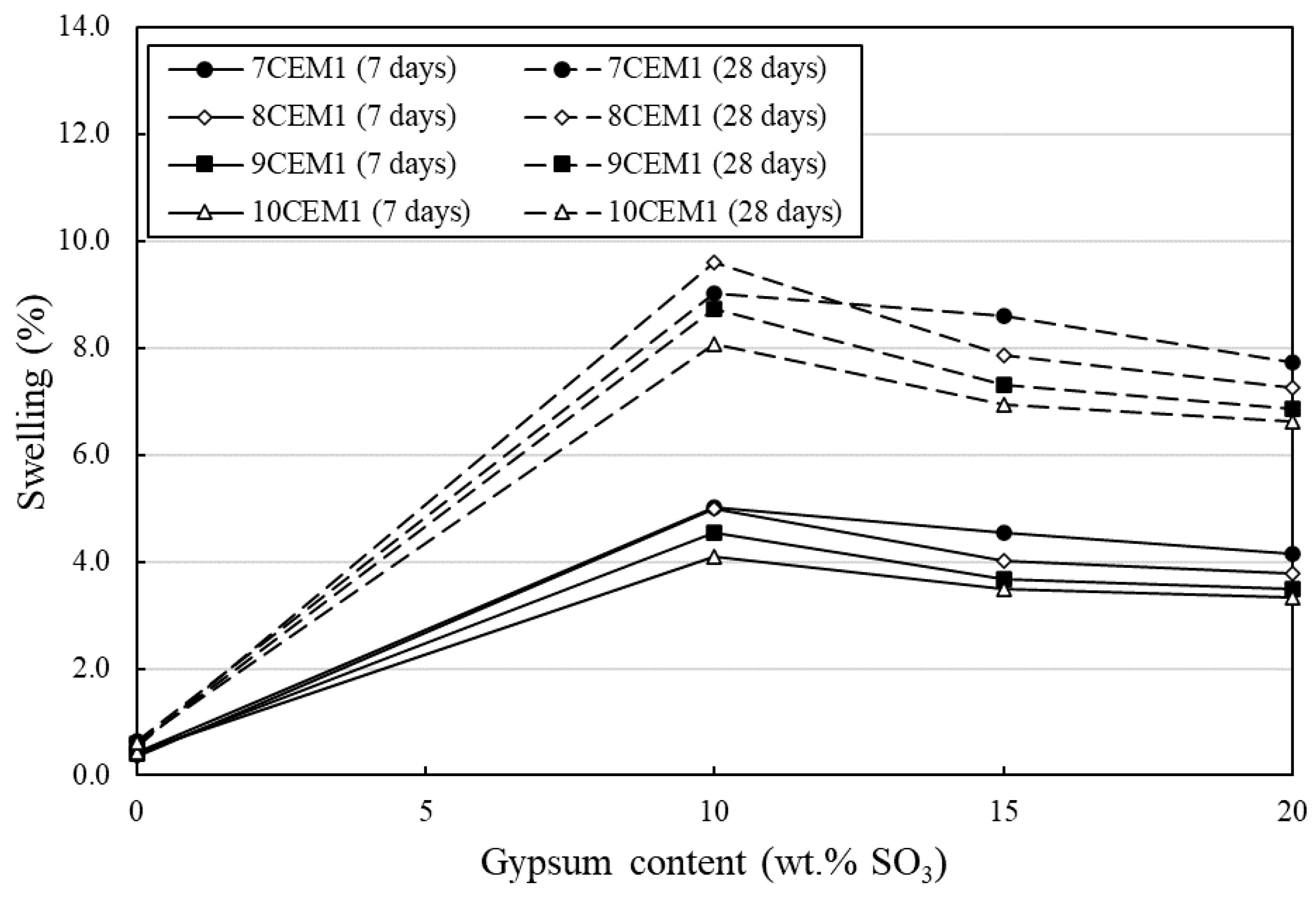
3.2. Swell Development of CEM I–Kaolinite and CEM I–Gypsum–Kaolinite Clay Systems
4. Discussion
5. Conclusions
- The maximum expansion for an artificial sulphate soil system occurred at 8 wt.% binder content with an optimum Gypsum content of 10% by weight.
- The swell behaviour of Kaolinite clay–Gypsum system stabilized with calcium-based product is dependent on both the Gypsum content and curing age.
- The swelling experienced in the artificial sulphate soil system stabilized with calcium-based products-CEM I was mainly due to the formation of ettringite and Gypsum crystallisation in the presence of water.
- The increase in strength for the cylinder samples are largely due to the continuous hydration reaction, which produces more C-S-H gel to fill the voids within the sulfate induced Kaolinite soil particles.
- The introduction of Gypsum to a Kaolinite clay system reduces the compressive strength of the stabilised product with a range factor of 6 to 47% at 28 days moist curing age.
Author Contributions
Funding
Conflicts of Interest
References
- Jan, P.; Šedivý, M. Prediction of Soil Swelling Parameters. Procedia Earth Planet. Sci. 2015, 15, 219–224. [Google Scholar] [CrossRef] [Scilit]
- Dang, L.C.; Fatahi, B.; Khabbaz, H. Behaviour of expansive clay stabilized with hydrated lime and Bagasse Fibres. Procedia Eng. 2016, 143, 658–665. [Google Scholar] [CrossRef] [Scilit]
- Jones, L.D.; Jefferson, I. Expansive soils. In ICE Manual of Geotechnical Engineering: Volume 1, Geotechnical Engineering Principles, Problematic Soils and Site Investigation; Burland, J., Ed.; ICE Publishing: London, UK, 2012; pp. 413–441. [Google Scholar]
- Kinuthia, J.M.; Oti, J.E. Designed non-fired clay mixes for sustainable and low carbon use. Appl. Clay Sci. 2012, 59, 131–139. [Google Scholar] [CrossRef] [Scilit]
- Miqueleiz, L.; Ramírez, F.; Seco, A.D.A.; Nidzam, R.; Kinuthia, J.; Abu Tair, A.; Garcia, R. The use of stabilised Spanish clay soil for sustainable construction materials. Eng. Geol. 2012, 133–134, 9–15. [Google Scholar] [CrossRef] [Scilit]
- Phanikumar, B.R.; Singla, R. Swell-consolidation characteristics of fibre-reinforced expansive soils. Soils Found. 2016, 56, 138–143. [Google Scholar] [CrossRef] [Scilit]
- Cheshomi, A.; Eshaghi, A.; Hassanpour, J. Effect of lime and fly ash on swelling percentage and Atterberg limits of sulfate-bearing clay. Appl. Clay Sci. 2017, 135, 190–198. [Google Scholar] [CrossRef] [Scilit]
- Seco, A.; Miqueleiz, L.; Prieto, E.; Marcelino, S.; García, B.; Urmeneta, P. Sulfate soils stabilization with magnesium-based binders. Appl. Clay Sci. 2017, 135, 457–464. [Google Scholar] [CrossRef] [Scilit]
- Seco, A.; Ramirez, F.; Miqueleiz, L.; Garcia, B. Stabilization of expansive soils for use in construction. Appl. Clay Sci. 2011, 51, 348–352. [Google Scholar] [CrossRef] [Scilit]
- Cheng, K.; Heidari, Z. A new method for quantifying cation exchange capacity in clay minerals. Appl. Clay Sci. 2018, 161, 444–455. [Google Scholar] [CrossRef] [Scilit]
- Schanz, T.; Tripathy, S.; Sridharan, A. Volume change behaviour of swelling and non-swelling clays upon inundation with water and a low dielectric constant fluid. Appl. Clay Sci. 2018, 158, 219–225. [Google Scholar] [CrossRef] [Scilit]
- Wang, L.; Roy, A.; Seals, R.K.; Metcalf, J.B. Stabilization of Sulfate-Containing Soil by Cementitious Mixtures Mechanical Properties. Transp. Res. Rec. J. Transp. Res. Board 2003, 1837, 12–19. [Google Scholar] [CrossRef] [Scilit]
- Oti, J.E.; Kinuthia, J.; Bai, J. Compressive strength and microstructural analysis of unfired clay masonry bricks. Eng. Geol. 2009, 109, 230–240. [Google Scholar] [CrossRef] [Scilit]
- Oti, J.E.; Kinuthia, J.; Bai, J. Engineering properties of unfired clay masonry bricks. Eng. Geol. 2009, 107, 130–139. [Google Scholar] [CrossRef] [Scilit]
- Kinuthia, J.; Wild, S.B.; Jones, G. Effects of monovalent and divalent metal sulphates on consistency and compaction of lime-stabilised kaolinite. Appl. Clay Sci. 1999, 14, 27–45. [Google Scholar] [CrossRef] [Scilit]
- Kinuthia, J.M.; Wild, S. Effects of some metal sulphates on the strength and swelling properties of lime-stabilised kaolinite. Int. J. Pavement Eng. 2001, 2, 103–120. [Google Scholar]
- Rahmat, M.N.; Kinuthia, J.M. Effects of mellowing sulfate-bearing clay soil stabilized with wastepaper sludge ash for road construction. Eng. Geol. 2011, 117, 170–179. [Google Scholar] [CrossRef] [Scilit]
- Nidzam, R.M.; Kinuthia, J.M. Sustainable soil stabilisation with blastfurnace slag—A review. Proc. Inst. Civ. Eng. Constr. Mater. 2010, 163, 157–165. [Google Scholar] [CrossRef] [Scilit]
- Caselles, L.D.; Hot, J.; Roosz, C.; Cyr, M. Stabilization of soils containing sulfates by using alternative hydraulic binders. Appl. Geochem. 2020, 113, 104494. [Google Scholar] [CrossRef] [Scilit]
- Wild, S.; Kinuthia, J.; Jones, G.; Higgins, D. Suppression of swelling associated with ettringite formation in lime stabilized sulphate bearing clay soils by partial substitution of lime with ground granulated blastfurnace slag (GGBS). Eng. Geol. 1999, 51, 257–277. [Google Scholar] [CrossRef] [Scilit]
- Ciliberto, E.; Ioppolo, S.; Manuella, F. Ettringite and thaumasite: A chemical route for their removal from cementious artefacts. J. Cult. Herit. 2008, 9, 30–37. [Google Scholar] [CrossRef] [Scilit]
- Norman, R.L.; Dann, S.E.; Hogg, S.C.; Kirk, C.A. Synthesis and structural characterisation of new ettringite and thaumasite type phases: Ca6[Ga(OH)6·12H2O]2(SO4)3·2H2O and Ca6[M(OH)6·12H2O]2(SO4)2(CO3)2, M = Mn, Sn. Solid State Sci. 2013, 25, 110–117. [Google Scholar] [CrossRef] [Scilit]
- Hunter, D. Lime-induced heave in sulfate-bearing clay soils. J. Geotech. Eng. 1988, 114, 150–167. [Google Scholar] [CrossRef] [Scilit]
- Dermatas, D. Ettringite-Induced Swelling in Soils: State-of-the-Art. Appl. Mech. Rev. 1995, 48, 659–673. [Google Scholar] [CrossRef] [Scilit]
- Snedker, E.A.; Temporal, J. M40 Motorway Banbury IV Contract—Lime Stabilization. Highw. Transp. 1990, 37, 7–8. [Google Scholar]
- Parker, D. 25% of A10 Hit by Sulphide Attack. 2004. Available online: https://www.newcivilengineer.com/archive/25-of-a10-hit-by-sulphide-attack-25-03-2004 (accessed on 20 July 2020).
- Li, W.; Yi, Y.; Puppala, A.J. Suppressing Ettringite-Induced Swelling of Gypseous Soil by Using Magnesia-Activated Ground Granulated Blast-Furnace Slag. J. Geotech. Geoenviron. Eng. 2020, 146, 6020008. [Google Scholar] [CrossRef] [Scilit]
- BS EN 197-1:2011: Cement Part 1: Composition, Specifications and Conformity Criteria for Common Cements; BSI Standards Ltd.: London, UK, 2011.
- BS EN 15167-1:2006: Ground Granulated Blast Furnace Slag for Use in Concrete, Mortar and Grout—Definitions, Specifications and Conformity Criteria; BSI Standards Ltd.: London, UK, 2006.
- BS EN 15309:2007: Characterization of Waste and Soil—Determination of Elemental Composition by X-Ray Fluorescence; BSI Standards Ltd.: London, UK, 2007.
- BS ISO 18227:2014: Soil Quality, Determination of Elemental Composition by X-Ray Fluorescence; BSI Standards Ltd.: London, UK, 2014.
- BS 1377-4:1990: Methods of Test for Soils for Civil Engineering Purposes: Compaction-Related Tests; BSI Standards Ltd.: London, UK, 1990.
- BS EN 13286-49:2004, Unbound and Hydraulically Bound Mixtures: Accelerated Swelling Test for Soil Treated by Lime and/or Hydraulic Binder; BSI Standards Ltd.: London, UK, 2004.
- BS 1924-2:2018, Hydraulically Bound and Stabilized Materials for Civil Engineering Purposes: Sample Preparation and Testing of Materials during and after Treatment; BSI Standards Ltd.: London, UK, 2018.
- BS EN 12390-4:2019: Testing Hardenend Concrete—Part 4: Compressive Strength—Specification for Testing Machines; BSI Standards Ltd.: London, UK, 2019.
- Behnood, A. Soil and clay stabilization with calcium- and non-calcium-based additives: A state-of-the-art review of challenges, approaches and techniques. Transp. Geotech. 2018, 17, 14–32. [Google Scholar] [CrossRef] [Scilit]
- Ikeagwuani, C.C.; Nwonu, D.C. Emerging trends in expansive soil stabilisation: A review. J. Rock Mech. Geotech. Eng. 2019, 11, 423–440. [Google Scholar] [CrossRef] [Scilit]
- Kuttah, D.K.; Sato, K. Review on the effect of gypsum content on soil behavior. Transp. Geotech. 2015, 4, 28–37. [Google Scholar] [CrossRef] [Scilit]
- Hawkins, A.B.; Pinches, G.M. Understanding sulphate generated heave resulting from pyrite degradation. In Implications of Ground Chemistry and Microbiology for Construction; Hawkins, A.B., Ed.; Balkema: Rotterdam, The Netherland, 1997. [Google Scholar]
- Abbey, S.J.; Eyo, E.; Oti, J.E.; Amakye, S.Y.; Ng’Ambi, S. Mechanical Properties and Microstructure of Fibre-Reinforced Clay Blended with By-Product Cementitious Materials. Geosciences 2020, 10, 241. [Google Scholar] [CrossRef] [Scilit]
- Oti, J.; Kinuthia, J. The Development of Stabilised Clay-Hemp Building Material for Sustainability and Low Carbon Use. J. Civ. Eng. Constr. 2020, 9, 205–214. [Google Scholar] [CrossRef] [Scilit]


| Oxides | Composition (wt.%) | ||
|---|---|---|---|
| Kaolinite Clay | CEM I | GP | |
| CaO | <0.01 | 61.49 | 32.81 |
| SiO2 | 47.32 | 18.84 | 0.10 |
| Al2O3 | 35.96 | 4.77 | 0.05 |
| MgO | 0.21 | 3.54 | 0.08 |
| Fe2O3 | 0.69 | 2.87 | 0.03 |
| Mn2O3 | 0.02 | 0.05 | 0.01 |
| SO3 | <0.01 | 3.12 | 47.31 |
| TiO2 | 0.02 | 0.26 | <0.01 |
| K2O | 1.80 | 0.57 | <0.01 |
| Na2O | 0.07 | 0.02 | <0.02 |
| P2O5 | 0.12 | 0.10 | 0.03 |
| V2O5 | <0.01 | 0.06 | <0.01 |
| BaO | 0.07 | 0.05 | 0.02 |
| L.O.I. | 13.10 | 4.30 | 19.90 |
| Physical Properties | |||
| Colour | White | Grey | White |
| Specific gravity | 2.16 | 3.16 | 2.32 |
| Mix Code | Mix Composition | Gypsum Content (%) | Binders (g) | Target Material (g) | Water (g) | Total Weight (g) | |
|---|---|---|---|---|---|---|---|
| CEM I | GP | K | |||||
| BC0-1 | 7CEM I:0GP:K | 0 | 18.8 | 0.0 | 268.4 | 106.8 | 394.0 |
| BC0-2 | 8CEM I:0GP:K | 21.3 | 0.0 | 265.9 | 106.8 | 394.0 | |
| BC0-3 | 9CEM I:0GP:K | 23.7 | 0.0 | 263.5 | 106.8 | 394.0 | |
| BC0-4 | 10CEM I:0GP:K | 26.1 | 0.0 | 261.1 | 106.8 | 394.0 | |
| BC10-1 | 7CEM I:10GP:K | 10 | 18.8 | 24.4 | 244.0 | 106.8 | 394.0 |
| BC10-2 | 8CEM I:10GP:K | 21.3 | 24.2 | 241.7 | 106.8 | 394.0 | |
| BC10-3 | 9CEM I:10GP:K | 23.7 | 24.0 | 239.5 | 106.8 | 394.0 | |
| BC10-4 | 10CEM I:10GP:K | 26.1 | 23.7 | 237.3 | 106.8 | 394.0 | |
| BC15-1 | 7CEM I:15GP:K | 15 | 18.8 | 35.0 | 233.4 | 106.8 | 394.0 |
| BC15-2 | 8CEM I:15GP:K | 21.3 | 34.7 | 231.2 | 106.8 | 394.0 | |
| BC15-3 | 9CEM I:15GP:K | 23.7 | 34.4 | 229.1 | 106.8 | 394.0 | |
| BC15-4 | 10CEM I:15GP:K | 26.1 | 34.1 | 227.0 | 106.8 | 394.0 | |
| BC20-1 | 7CEM I:20GP:K | 20 | 18.8 | 44.7 | 223.7 | 106.8 | 394.0 |
| BC20-2 | 8CEM I:20GP:K | 21.3 | 44.3 | 221.6 | 106.8 | 394.0 | |
| BC20-3 | 9CEM I:20GP:K | 23.7 | 43.9 | 219.6 | 106.8 | 394.0 | |
| BC20-4 | 10CEM I:20GP:K | 26.1 | 43.5 | 217.6 | 106.8 | 394.0 | |
| Swelling (%) | Severity |
|---|---|
| 0 | No swell |
| 0–0.1 | Negligible |
| 0.1–0.5 | Light |
| 0.5–1.0 | Medium |
| 1.0–2.0 | Strong |
| Over 2.0 | Very strong |
Publisher’s Note: MDPI stays neutral with regard to jurisdictional claims in published maps and institutional affiliations. |
© 2020 by the authors. Licensee MDPI, Basel, Switzerland. This article is an open access article distributed under the terms and conditions of the Creative Commons Attribution (CC BY) license (http://creativecommons.org/licenses/by/4.0/).
Share and Cite
Adeleke, B.; Kinuthia, J.; Oti, J. Strength and Swell Performance of High-Sulphate Kaolinite Clay Soil. Sustainability 2020, 12, 10164. https://doi.org/10.3390/su122310164
Adeleke B, Kinuthia J, Oti J. Strength and Swell Performance of High-Sulphate Kaolinite Clay Soil. Sustainability. 2020; 12(23):10164. https://doi.org/10.3390/su122310164
Chicago/Turabian StyleAdeleke, Blessing, John Kinuthia, and Jonathan Oti. 2020. "Strength and Swell Performance of High-Sulphate Kaolinite Clay Soil" Sustainability 12, no. 23: 10164. https://doi.org/10.3390/su122310164
APA StyleAdeleke, B., Kinuthia, J., & Oti, J. (2020). Strength and Swell Performance of High-Sulphate Kaolinite Clay Soil. Sustainability, 12(23), 10164. https://doi.org/10.3390/su122310164