Review

Soil Contamination in Areas Impacted by Military Activities: A Critical Review

1
Department of Civil and Environmental Engineering, Nazarbayev University, Nur-Sultan 010000, Kazakhstan
2
The Environment and Resource Efficiency Cluster (EREC), Nazarbayev University, Nur-Sultan 010000, Kazakhstan
3
Department of Chemical Engineering, Masjed-Soleiman Branch, Islamic Azad University, Masjed-Soleiman 1584743311, Iran
*
Author to whom correspondence should be addressed.
Sustainability 2020, 12(21), 9002; https://doi.org/10.3390/su12219002
Submission received: 2 October 2020 / Revised: 19 October 2020 / Accepted: 20 October 2020 / Published: 29 October 2020
(This article belongs to the Special Issue Soil Quality and Soil Management)

Abstract

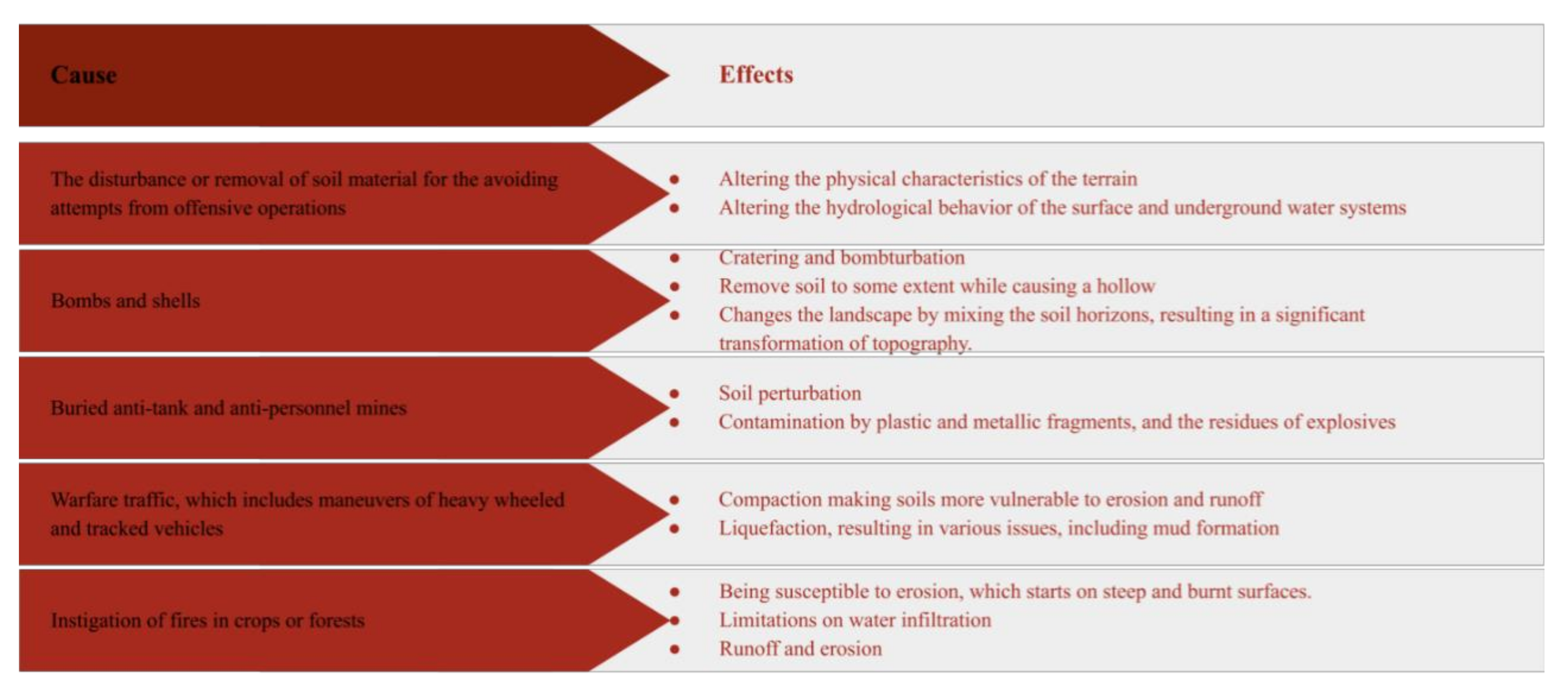
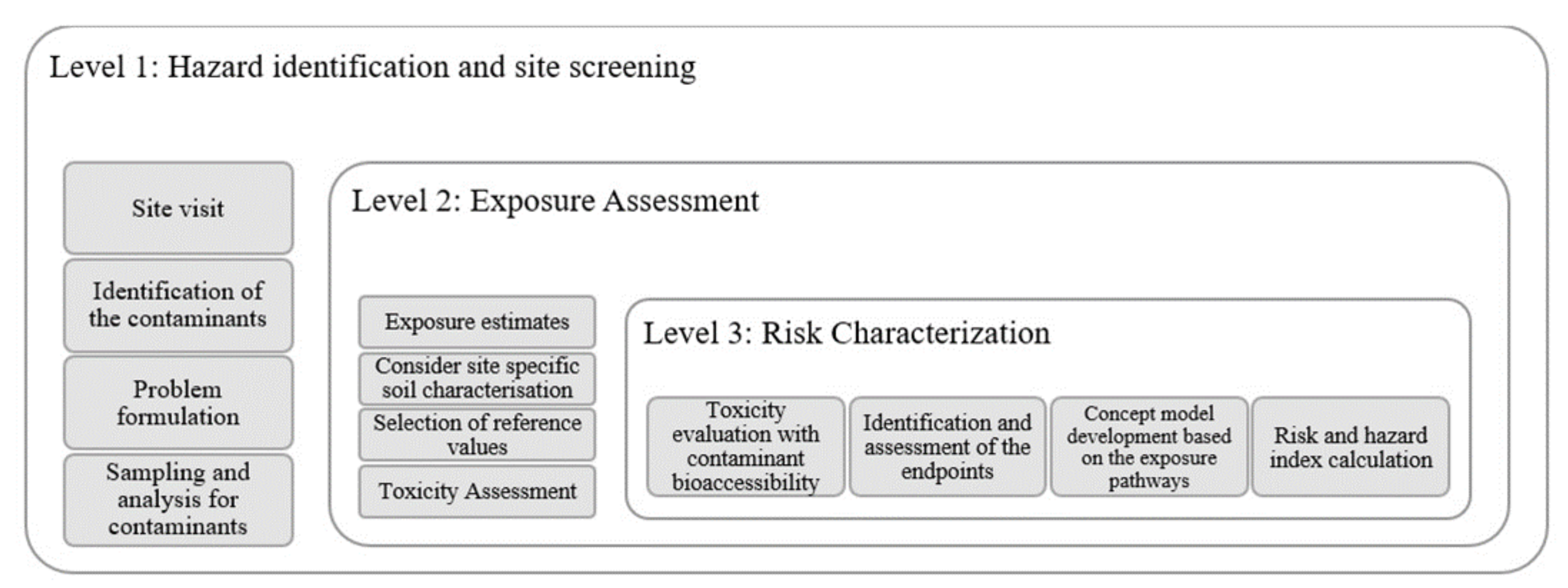
Military activities drastically affect soil properties mainly via physical/chemical disturbances during military training and warfare. The present paper aims to review (1) physical/chemical disturbances in soils following military activities, (2) approaches to characterization of contaminated military-impacted sites, and (3) advances in human health risk assessment for evaluating potential adverse impacts. A literature search mainly covering the period 2010–2020 but also including relevant selected papers published before 2010 was conducted. Selected studies (more than 160) were grouped as follows and then reviewed: ~40 on the presence of potentially toxic elements (PTEs), ~20 on energetic compounds (ECs) and chemical warfare agents (CWAs), ~40 on human health risk assessment, and generic limits/legislation, and ~60 supporting studies. Soil physical disturbances (e.g., compaction by military traffic) may drastically affect soil properties (e.g., hydraulic conductivity) causing environmental issues (e.g., increased erosion). Chemical disturbances are caused by the introduction of numerous PTEs, ECs, and CWAs and are of a wide nature. Available generic limits/legislation for these substances is limited, and their contents do not always overlap. Among numerous PTEs in military-impacted zones, Pb seems particularly problematic due to its high toxicity, abundance, and persistence. For ECs and CWAs, their highly variable physiochemical properties and biodegradability govern their specific distribution, environmental fate, and transport. Most site characterization includes proper spatial/vertical profiling, albeit without adequate consideration of contaminant speciation/fractionation. Human health risk assessment studies generally follow an agreed upon framework; however, the depth/adequacy of their use varies. Generic limits/legislation limited to a few countries do not always include all contaminants of concern, their content doesn’t overlap, and scientific basis is not always clear. Thus, a comprehensive scientific framework covering a range of contaminants is needed. Overall, contaminant speciation, fractionation, and mobility have not been fully considered in numerous studies. Chemical speciation and bioaccessibility, which directly affect the results for risk characterization, should be properly integrated into risk assessment processes for accurate results.
Keywords: chemical warfare agents; energetic compounds; human health risk assessment; potentially toxic elements; site characterization; soil pollution chemical warfare agents; energetic compounds; human health risk assessment; potentially toxic elements; site characterization; soil pollution