Article

Design of a Development Index for Spanish Municipalities


by
Ana Nieto Masot
*,
Gema Cárdenas Alonso
and
Ángela Engelmo Moriche
Department of Art and Territorial Sciences, University of Extremadura, 10071 Cáceres, Spain
*
Author to whom correspondence should be addressed.
Sustainability 2020, 12(21), 8910; https://doi.org/10.3390/su12218910
Submission received: 4 August 2020 / Revised: 20 October 2020 / Accepted: 23 October 2020 / Published: 27 October 2020

Abstract

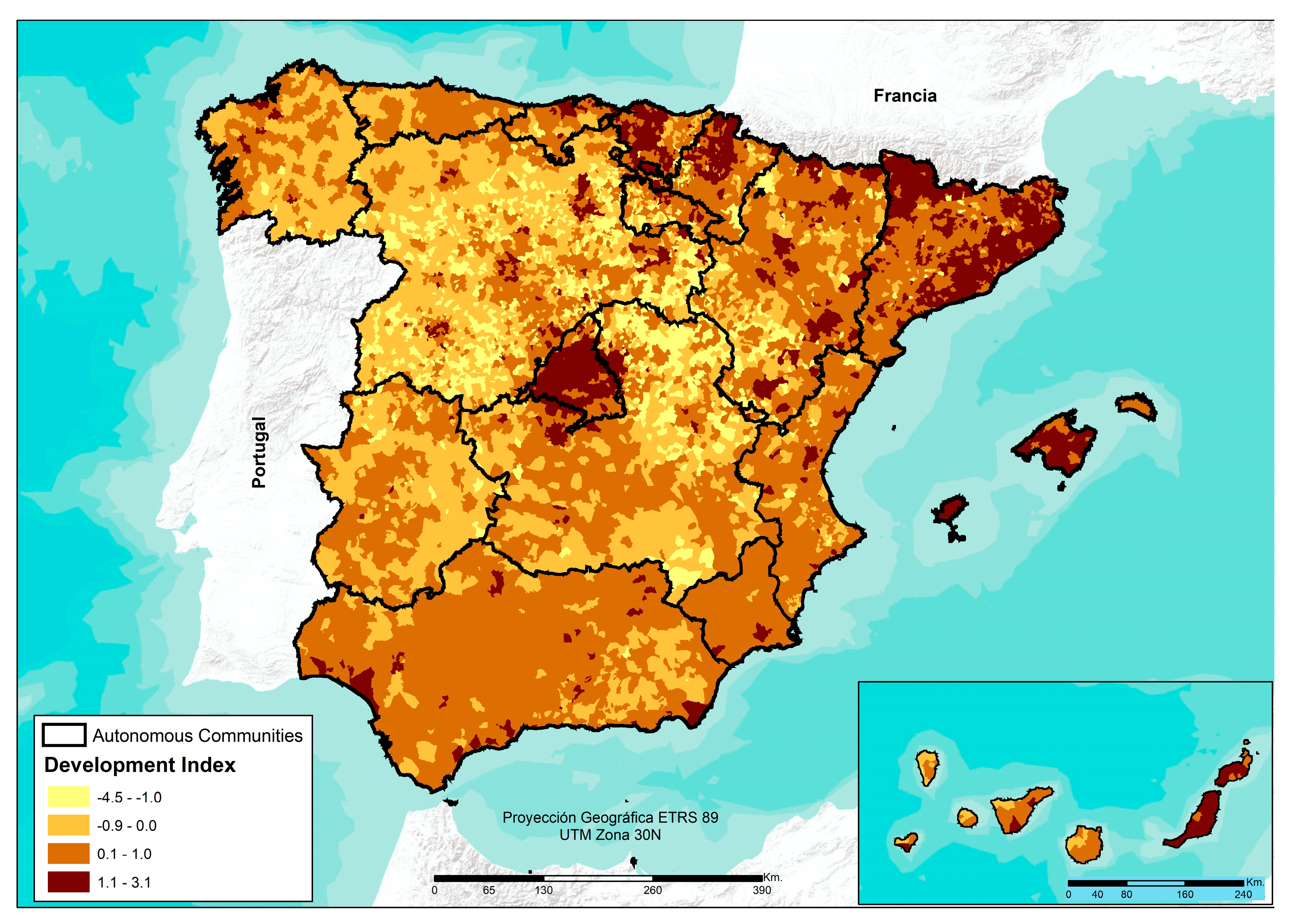
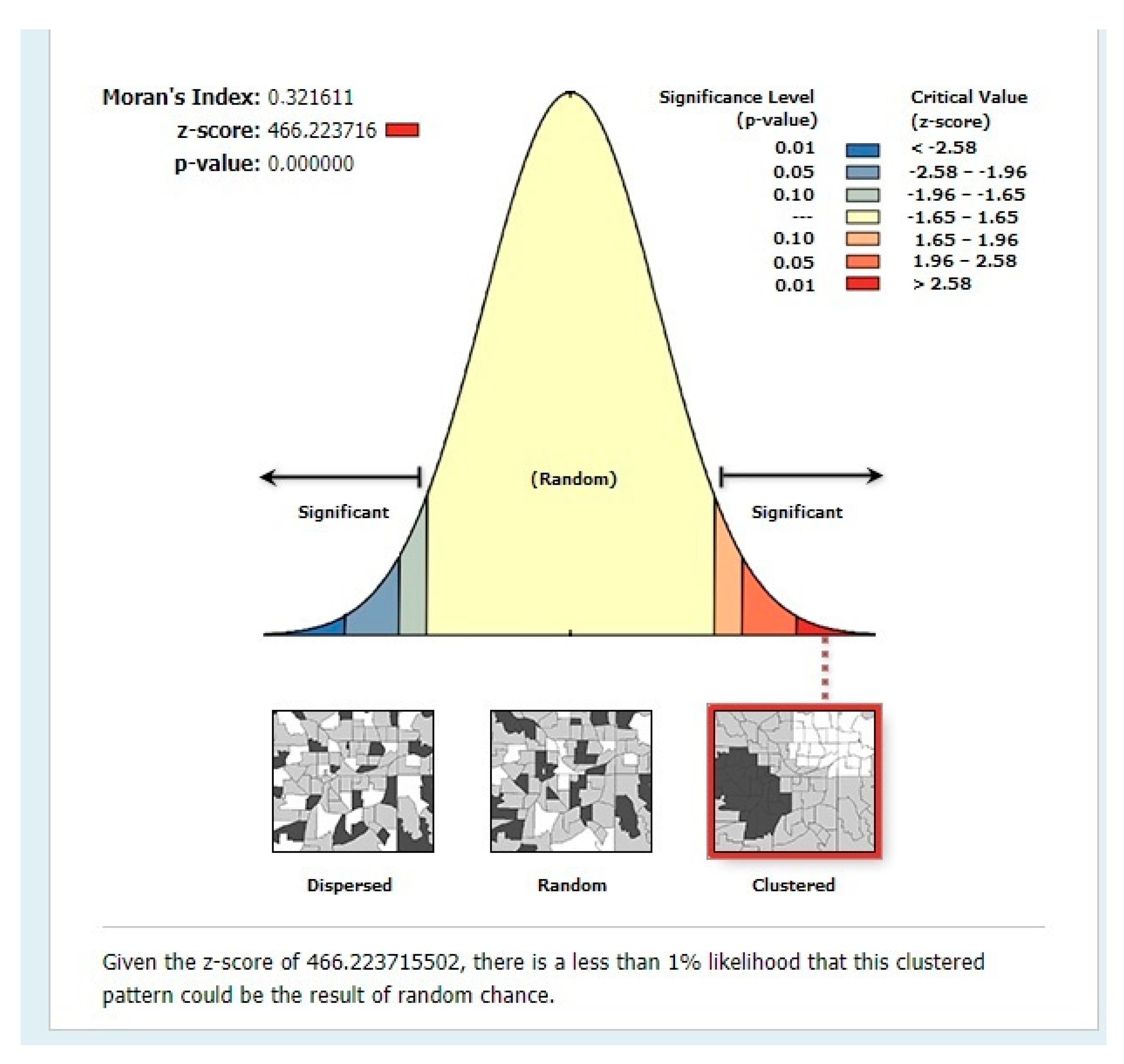
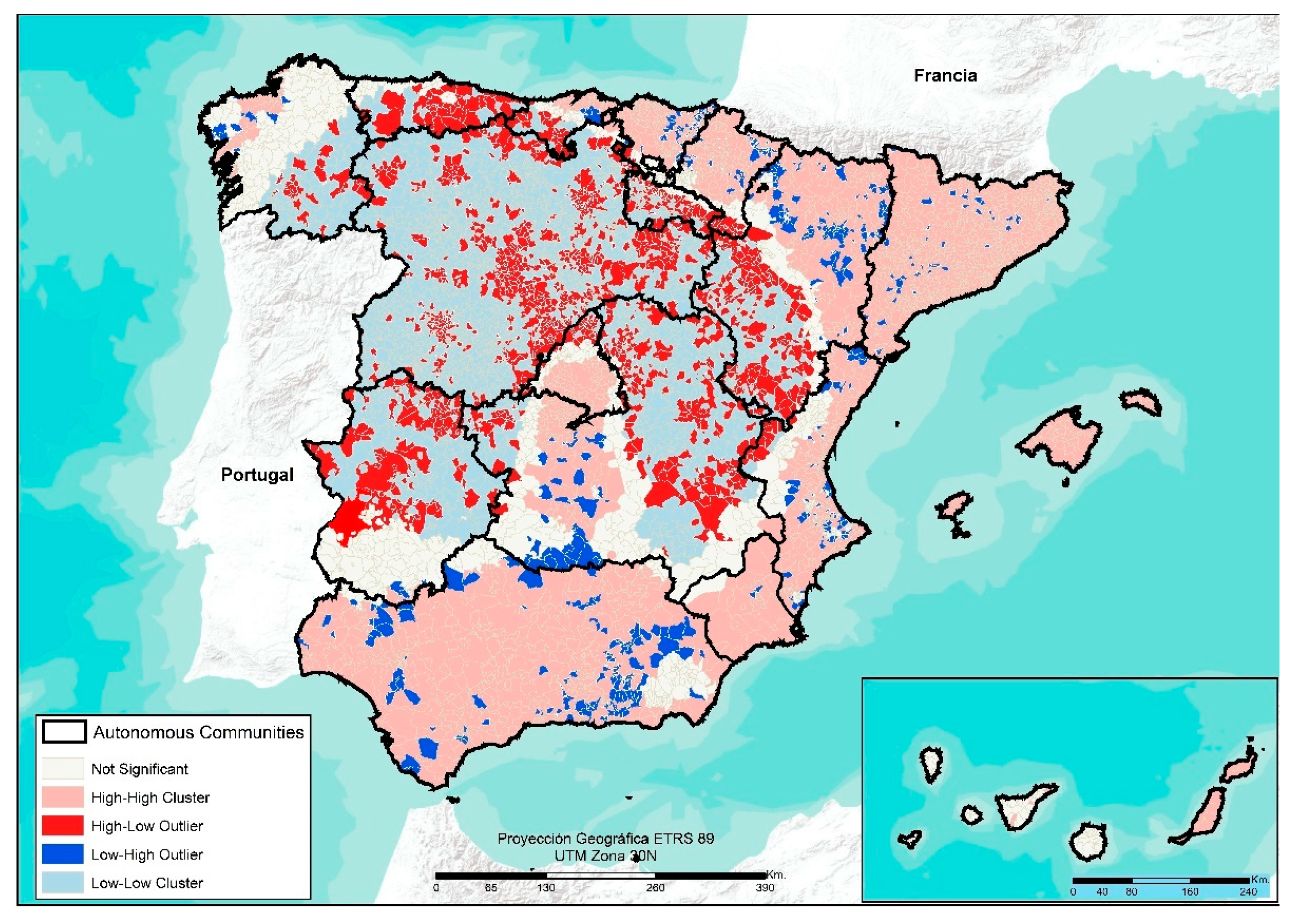
Currently, the demographic vacuum and poor development suffered by most areas of Spain are some of the most worrying issues from a territorial point of view, which is why this study is necessary. In this paper, the objective is to create a Development Index with which to study the different realities of rural and urban spaces through demographic and socioeconomic variables of the Spanish municipalities. Principal Component Analysis is carried out, with whose results the index has been prepared. This is then explored with a Spatial Autocorrelation Analysis. The results show that most developed Spanish municipalities and most of the population are concentrated in coastal areas and in the main cities of the country. In opposition, there are interior rural areas with less developed municipalities at risk of disappearance due to their increasing ages and levels of depopulation. Thus, in this paper, new variables and methods are used in the study of the social and economic diversity of rural and urban areas, verifying the inequality that still exists between both.
Keywords: development index; demography; economy; principal component analysis; spatial autocorrelation analysis development index; demography; economy; principal component analysis; spatial autocorrelation analysis