Article

Reporting of Intellectual Capital Management Using a Scoring Model


1
Centre for Socioeconomic and Territorial Studies (DINÂMIA’CET-ISCTE), Instituto Universitário de Lisboa (ISCTE-IUL), 1649-026 Lisboa, Portugal
2
ICLab-ICAA-Intellectual Capital Association, 2005-162 Santarém, Portugal and CINAV-Naval School, 2810-001 Almada, Portugal
3
UNIDEMI, Department of Mechanical and Industrial Engineering, NOVA School of Science and Technology, Universidade NOVA de Lisboa, 2829-516 Caparica, Portugal
*
Author to whom correspondence should be addressed.
Sustainability 2020, 12(19), 8086; https://doi.org/10.3390/su12198086
Submission received: 3 August 2020 / Revised: 28 September 2020 / Accepted: 30 September 2020 / Published: 30 September 2020
(This article belongs to the Special Issue Intellectual Capital and Sustainability)

Abstract

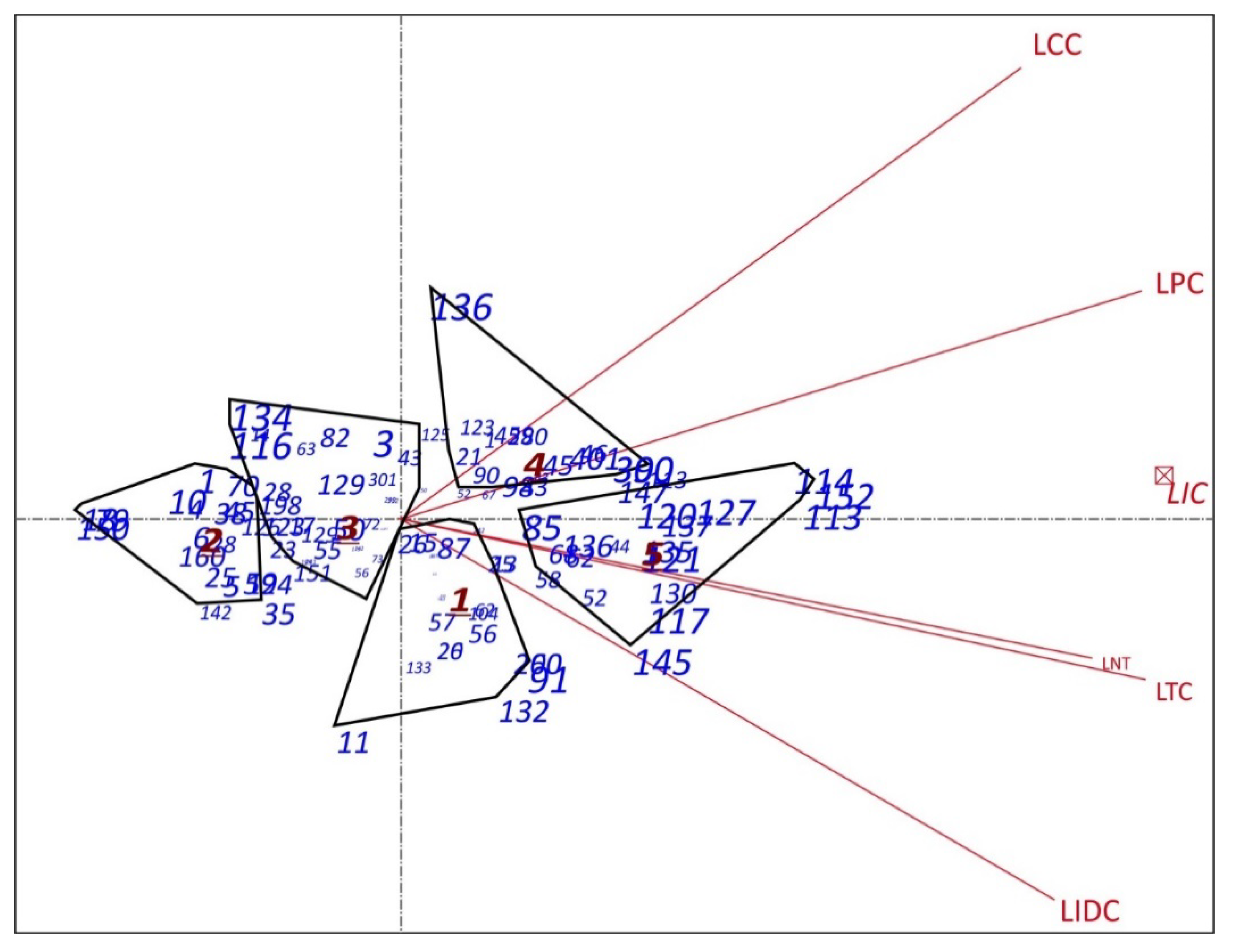
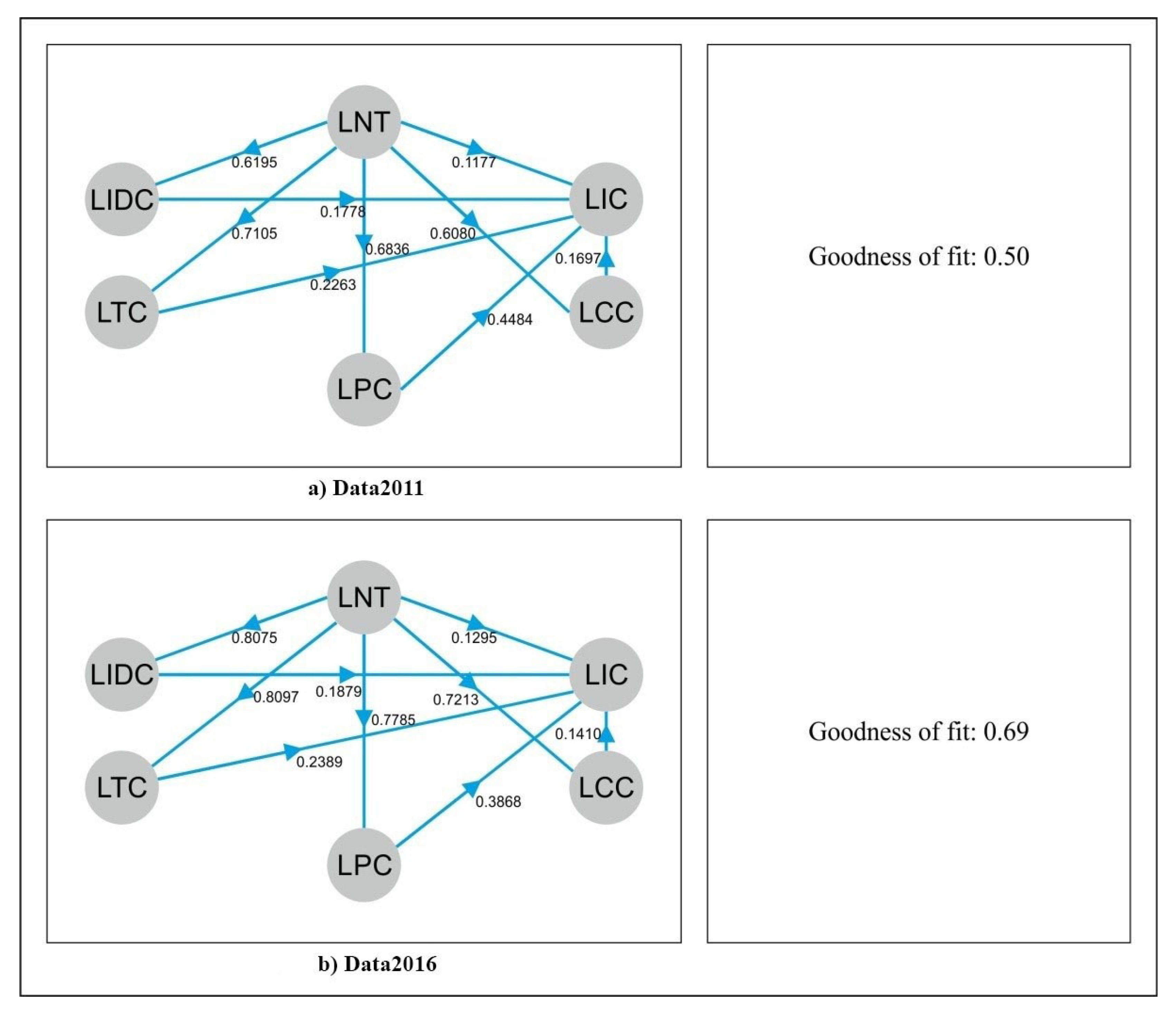
The global transformation of the economy, driven by digital transformation and sustainability challenges, is placing its focus on the evaluation of companies’ intangible assets. Thus, if the report of those intangible assets, namely intellectual capital (IC) management, is endowed with credible metrics, recognized, and accepted, it can work as a guarantee, ensuring the reliability and sustainability of an organization. The aim of this research is to propose a data-driven Intellectual Capital Management Scoring System to be used in the auditing of the IC management of organisations. This paper presents one of the first attempts to use Path Modelling and the Partial Least Squares (PLS) Methodology, combined with Biplots, to define and validate Intellectual Capital Scoring Systems. This system relies on a model estimated using the PLS Path Modelling methodology and uses data from two independent random samples of Portuguese small and medium-sized enterprises (SMEs), which, in turn, was used to obtain two independent model estimates. The results obtained with the mentioned methodology show a good consistency both in performance and very similar parameters estimates, suggesting the validity of the associated scoring function.
Keywords: intellectual capital; scoring model; path modelling; structural equations; partial least squares; biplots intellectual capital; scoring model; path modelling; structural equations; partial least squares; biplots