1. Introduction: Sorok-do as a Difficult Heritage in South Korea
1.1. Background
A difficult heritage is understood as a place associated with traumatic and painful historic events that can be now interpreted from the perspectives of different stakeholders. Due to diverse perspectives interwoven with the place, the interpretation of difficult heritage sites frequently leads to political dissonance and memory conflicts, which affect the formation of community identity and collective memory [
1,
2,
3]. The Auschwitz concentration camp in Poland and the Hiroshima Peace Memorial (the so-called Atomic Bomb Dome) in Japan that were both designated as World Heritage Sites in 1976 and 1994, respectively, are representative examples of a difficult heritage. They represent the pain and trauma of the Second World War and still invoke the memory conflicts between the victims and perpetrators that affect international relationships [
4]. In the official narratives of South Korea, the Japanese colonial period (1910–1945) is taught and socialized as “a shameful past” or “a problematic past” so that many examples of Japanese colonial architecture, built by the Japanese colonial authorities, embody these negative connotations [
3]. In addition, during the post-colonial period, the voices of various stakeholder groups around the architectural sites affect their interpretation and the formation of South Korea’s national identity [
3]. The symbolic meaning of Sorok-do island was initially formed by the Japanese colonial authorities, and its stories have become more complex as a result of the urban development during the post-colonial period. In this sense, Sorok-do can be perceived as a difficult heritage in South Korea. While Asia’s difficult heritage (including South Korean cases) has been dealt with as part of nation-building, this paper endeavors to shed new light on difficult heritages using as a case study Sorok-do, to locate it in the context of urban rehabilitation for sustainability.
Sorok-do is a small island of 4.4 km
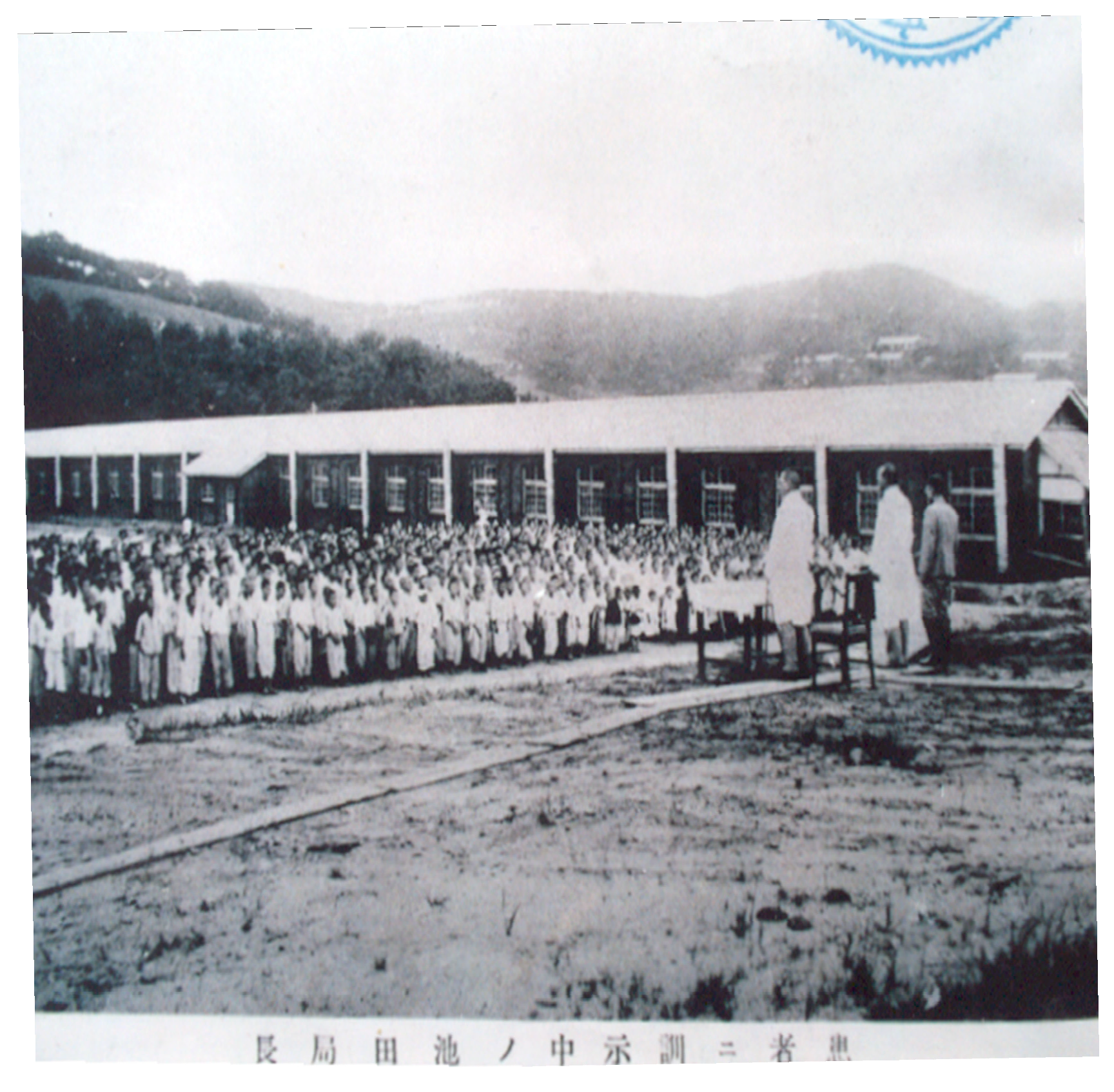
2 and has a powerful symbolism related to both the Japanese colonial and post-colonial history of Korea. In 1916, the Japanese Government General of Korea established the Sorok Island Jahye Hospital (currently the Sorok-do National Hospital, hereafter “SNH”) and a Hansen’s disease village in order to not only isolate, but also to accommodate patients with Hansen’s disease [
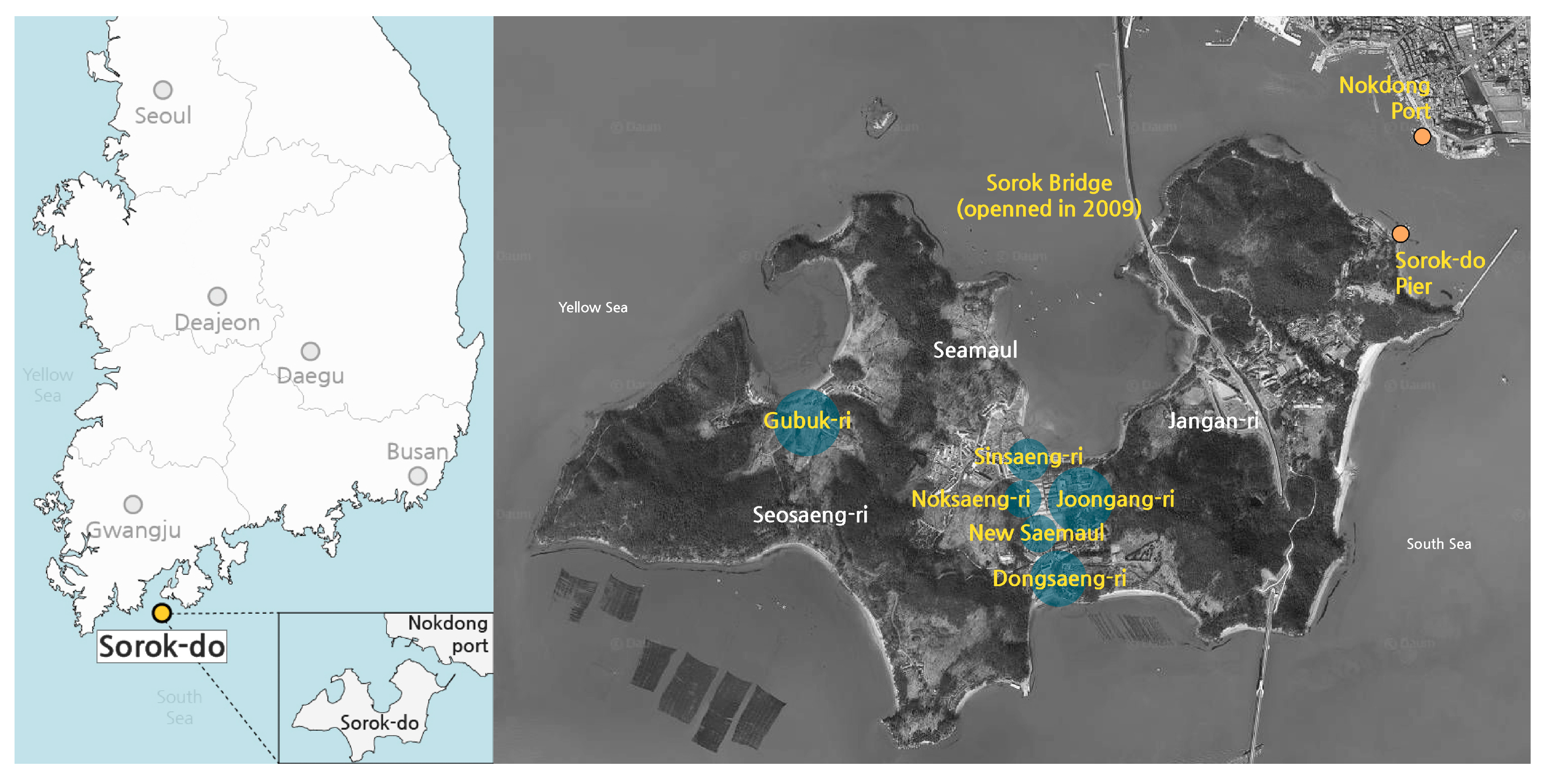
5] (see
Figure 1). After the liberation in 1945, the island continued to be used as a residence for patients suffering from Hansen’s disease just as it had been operated during the Japanese colonial era. As of April 2020, there are eight villages on Sorok-do, with 480 Hansen’s disease patients living in seven villages (Namsaeng-ri, Dongsaeng-ri, Sinsaeng-ri, Joongang-ri, Gubuk-ri, Noksaeng-ri, and (new) Saemaeul) and hospital employees living in one village [
6] (see
Figure 2).
Sorok-do is an historic site reflecting the lives of Hansen’s disease patients who have been isolated for the past 100 years due to social prejudice. This prejudice stems from widely spread negative preconceptions in South Korean society that Hansen’s disease is an incurable and infectious genetic disease. As a result, sufferers were forcefully segregated on the island until the 1950s, even after the end of the colonial period, and the island’s residents were prevented from communicating with people in other parts of South Korea [
5]. However, along with the establishment of the Society of Korean Leprologists in 1958, and the revision of the Infectious Diseases Prevention Act in 1963, the forced segregation was officially abolished so that the lives of Hansen’s disease patients moved into a new phase [
5]. In addition, in 1996, the SNH’s publication,
80 Years’ History of Sorok-do, provided a starting point in revealing the history of Sorok-do to the world [
5]. Meanwhile, academic interest in Sorok-do increased during the late 1990s, and new academic approaches to this island have been widely introduced during the 2000s.
1.2. Literature Review
While the academic studies of Sorok-do in the 1980s focused mainly on the medical issues of Hansen’s disease patients [
8,
9], the late 1990s saw a watershed moment where the research direction turned towards examining multi-layered meanings of local residents’ lives and places. In particular, an academic work pioneered novel approaches to investigating Sorok-do. Jung (1997) provided an opportunity to understand the relationship between Sorok-do, Hansen’s disease, and Hansen’s disease patients living during the Japanese colonial period [
10]. From the 2000s, academics in architecture and urban planning paid particular attention to surviving colonial architectural sites and their place in the changing urban structure of Sorok-do. For example, Jeon (2010) perceived some colonial sites as industrial heritage sites, and put forward a plan for a “garden museum” using Sorok-do’s industrial heritage [
11]. Korean sociologist, Park (2010), also examined the impact of dramatic changes in urban structure on the lives of Hansen’s disease patients in Sorok-do [
12]. Along with the work of active medical historians on the colonial system and imperial modernism related to Hansen’s disease patients [
13,
14], the latest research by Choung and Choi (2020) shows their perspective on Sorok-do as a controversial dark tourism site featuring the stories of Hansen’s disease sufferers and the Japanese colonial past [
15]. Such recent academic efforts have helped and broadened the understanding of the historical, medical, and social conditions on Sorok-do. Nevertheless, the existing literature on Sorok-do is still limited. In particular, approaching Sorok-do from the perspectives of urban history and heritage is seldom found, although there are the aforementioned academic attempts on examining Sorok-do’s architectural sites [
11,
12]. Acknowledging the significant research gaps between Sorok-do’s colonial history and its contemporary use, two researchers, Jang and Kang, have endeavored to examine the characteristics of Sorok-do as a place of history and heritage for 100 years since 2017 [
16,
17]. Based on two research achievements, this paper seeks to understand the entire comprehensive history of Sorok-do as modern heritage sites. In addition, this tries to open a novel way of conserving Sorok-do not only for its historic protection, but also for sustainable development.
Under the new enactment of “Registered Cultural Heritage” in 2001, public perceptions about the Japanese colonial architectural legacy have dramatically changed from them being reminders of Korea’s shameful past to being useful educational tools [
18]. The Registered Cultural Heritage legislation constituted a law for the protection of a “modern and contemporary” heritage that was constructed, produced, and formed more than fifty years earlier, including Japanese colonial architecture [
18]. Hence, Japanese colonial architectural sites have entered into the category of official heritage in South Korea and are called “modern heritage” rather than “Japanese legacy”. As part of this trend, Sorok-do’s many sites and artefacts created during the colonial period are now understood to be heritage that requires protection and conservation at both local and national levels. Therefore, as seen in
Table 1, the buildings (14 sites), installations (1 site), and artefacts (14 pieces) have been designated as part of the Registered Cultural Heritage (also see
Figure 3). In the process of conserving Sorok-do’s history and memory, the Sorok-do National Hospital Museum (hereafter “SNHM”) was opened in 2016 to celebrate the centenary of the SNH. Furthermore, the World Forum on Hansen’s Disease was held on 1–3 November 2016, in Seoul, on the topic, “Shaping a Better Future: Historic Significance of Hansen’s Disease Cultural Heritage”. Over the last two decades, Sorok-do endeavored to conserve its tangible and intangible values that reflect not only the historic and social significance of the place, but also a local aspiration to build the sustainability of the community for those who suffer from Hansen’s disease in the future.
Sorok-do’s conservation efforts started to attract tourist interest. In addition, the opening of the Sorok-do Bridge in 2009 brought about a dramatic change to Sorok-do’s urban structure and has helped increase visitor access to this formerly isolated island by connecting Nok-dong, Goheung-gun, and Sorok-do. Consequently, the number of Sorok-do’s tourists has reached around 300,000 each year [
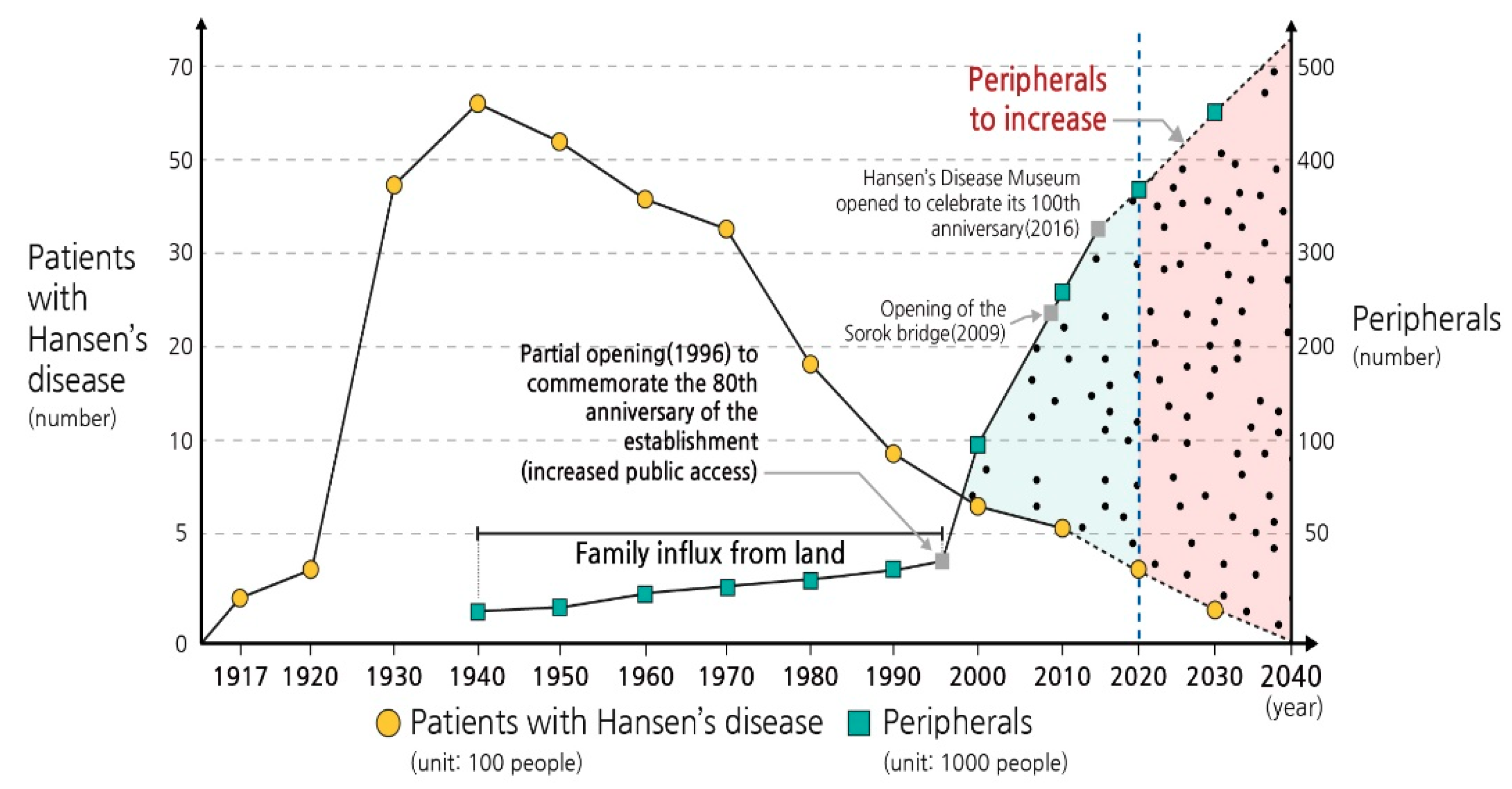
19]. Countering the increasing interest in Sorok-do, a new challenge has arisen due to the rapid decline of Hansen’s disease patients. Considering the average patient age is 76, it is likely that, around 20 years later, the population of Sorok-do will no longer include the Hansen’s disease patients who are the main stakeholder group in the formation of Sorok-do’s identity (
Figure 4). Thus, only 20 years of Sorok-do in its current state remains until a decision must be made on how its tangible and intangible values can sustainably be conserved. As a difficult heritage, Sorok-do has painful and traumatic historic memories for South Korean people, and complex post-colonial stories are added through the urban development. Hence, a sustainable conservation plan for Sorok-do will be challenging, and a novel and comprehensive approach is necessary.
1.3. Aims of the Study
This paper aims to establish a plan for the sustainable conservation of a difficult heritage for future generations in Korea using the case-study of Sorok-do. Despite introducing the aforementioned Registered Cultural Heritage Law in 2001, a difficult heritage, such as the heritage of the Japanese colonial era and the cold war in South Korea, has been neglected in conservation policy and planning when prioritizing the protection of traditional heritage sites. Although a difficult heritage includes multi-layered memories claimed by various stakeholder groups, it is not likely that the diverse memories of Sorok-do will be preserved through the existing conservation policy of Korean cultural heritage. Therefore, this paper endeavors to form a novel plan for the comprehensive conservation of the tangible and intangible values of a difficult heritage. Overcoming the existing conservation policy in South Korea by emphasizing the physical authenticity and architectural value, the new plan will meet UNESCO’s international standards and criteria for evaluating the tangible and intangible values and will cover the Sorok-do area and the development of its entire urban structure.
The structure of the paper is presented as follows: The first part comprises a comprehensive examination of the historical, spatial, and social transformation processes that took place at Sorok-do over the past 100 years. This part analyzes the change in the social meaning of Sorok-do from being a symbol of isolation and alienation to one of human rights and peace through urban change. The second part explores a novel criterion for Sorok-do’s sustainable conservation and introduces a new concept of “conservation resources”. This paper suggests a new classification, including tangible resources, such as the natural environment, buildings, memorial facilities, equipment, and landscape of Sorok-do, as well as the intangible resources related to the memory of Sorok-do. The third section analyzes the entire collection of conservation resources, selects the “essential” conservation resources from them, and proposes a feasible and efficient sustainable conservation system of a difficult heritage. Finally, this paper provides a final reflection on the rationale for the sustainable conservation policy of a difficult heritage in the rapid urban refurbishment of South Korea.
2. Data Collection and Research Methods
In order to build up a comprehensive understanding of Sorok-do’s historic, social, and urban history, this paper has collected data using three methodologies: archival research, participant observation, and semi-structured in-depth interviews with key informants (heritage professionals, civil officers, and Hansen’s disease patients). The first method, archival research, was used to create a database of existing documentation from official publications of Sorok-do published by the SNH and the 20 academic articles and books on Sorok-do. The second research method, participant observation, was used to obtain a general understanding of the lives of Hansen’s disease patients in the context of the entire urban, architectural, and material structure of Sorok-do. The participant observation was carried out during 10 site visits from February 2016 to March 2018: (1) site visits for two nights and three days (three times); (2) site visits for one night and two days (five times); and (3) site visits for one day (twice). In order to collect more detailed data on the tangible and intangible conservation resources, not only authors, but also undergraduate and graduate students working in the Urban Conservation Lab, Kyungsung University were involved in participant observation. The data from the participant observation was conducted to mainly understand the characteristics of Hansen’s disease patients’ lives that were deeply engaged in the physical environment. The outcomes of the participant observation were used to build a database of all the conservation resources and classify them. The third research method, semi-structured in-depth interviews, was conducted to collect more detailed and deeper information on the lives of Hansen’s disease patients. As a pilot study, semi-structured interviews with 10 local residents were carried out. Through the pilot research, we learned that there were only a few local residents who were able to communicate with us and had clear memories of their lives in Sorok-do. Then, five interviewees were selected as key informants for in-depth interviews from May 2017 through March 2018; that is, two residents from Sinsaeng-ri and Joongang-ri, who lived on Sorok-do for their entire lives, were communicable, and were willing to share their memories; two curators who were deeply engaged in the Sorok-do’s history and wrote the book
The 80-year history of Sorok-do; and one civil officer working in the SNHM and providing administrative information. Considering their historic and administrative knowledge on Sorok-do, the length of their living in this island, and memories, they were selected as key informants (more details on the questionnaire, please see
Appendix A). All participants gave their informed consent for inclusion before they participated in the study. The study was conducted in accordance with the Ethical Research Manual published by the National Research Foundation of Korea, and the protocol was approved by the Ethics Committee of Kyungsung University.
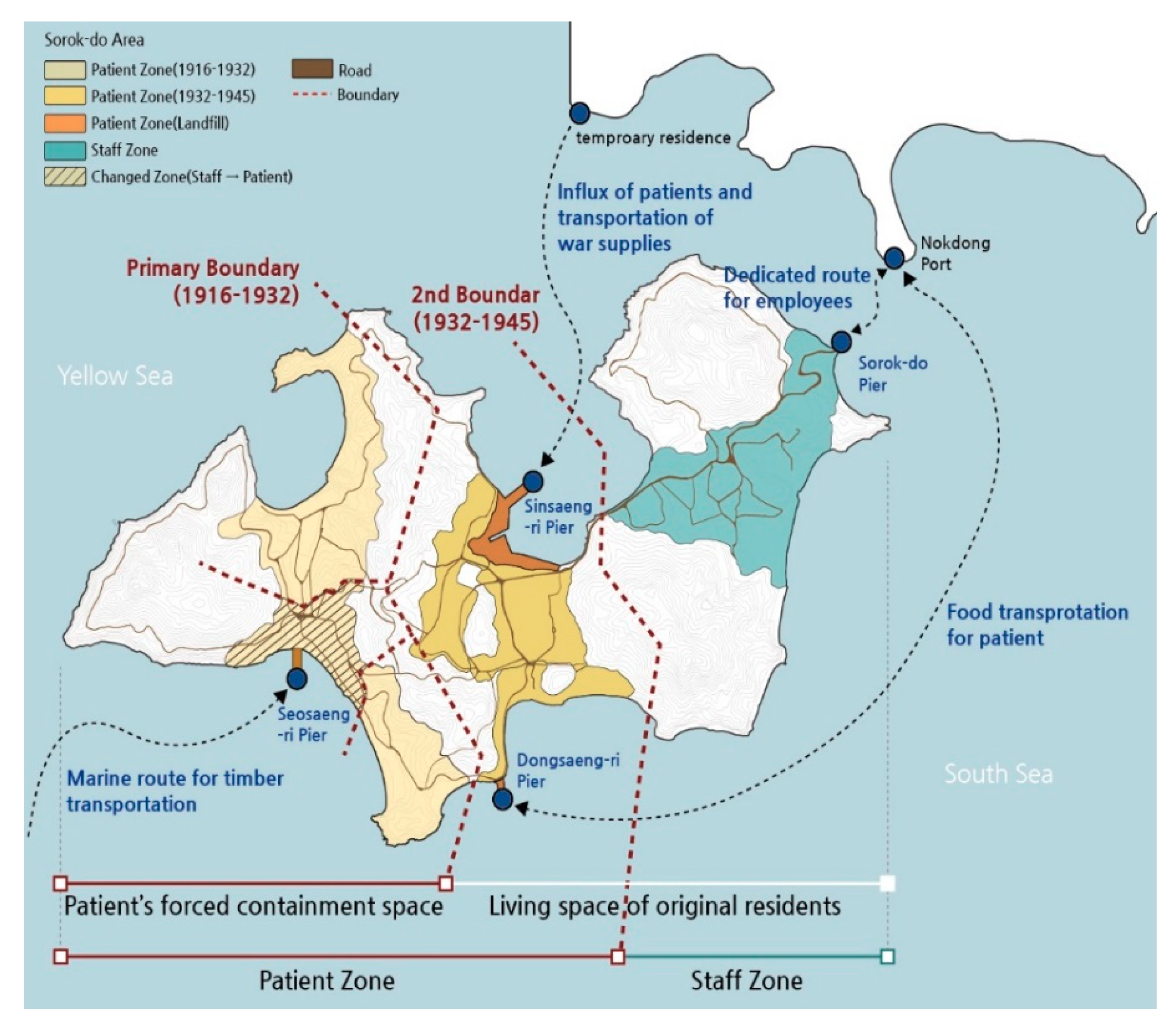
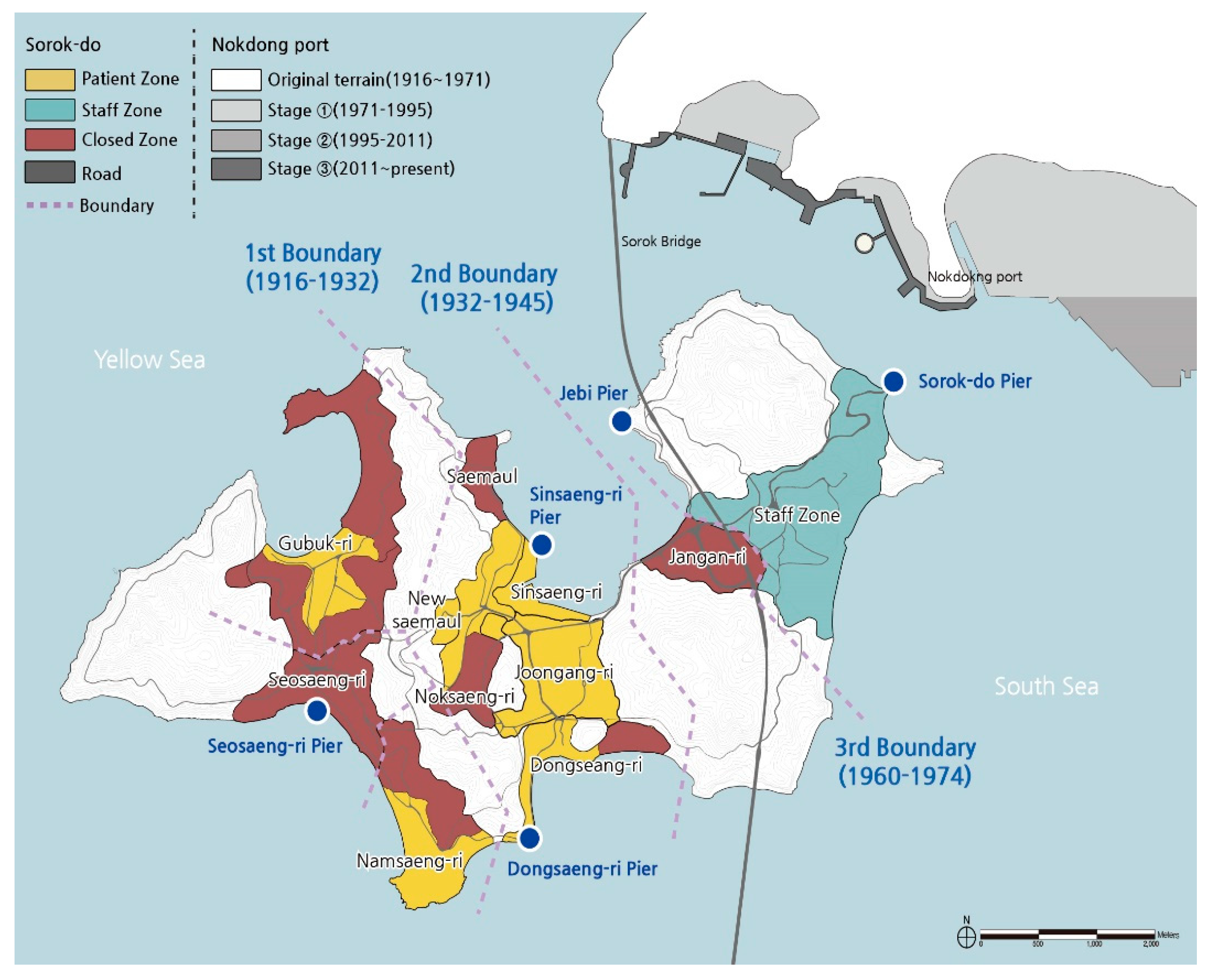
The research was carried out in three phases. In the first phase, we sought to understand the entire timeline of Sorok-do from 1916, when the SNH (formerly Jahye Clinic) was constructed, to 2019. We endeavored to examine certain key transition periods of Sorok-do that brought about changes in symbolic meaning, considering the changes in spatial divisions (
Figure 5). Thus, the entire timeline of Sorok-do is divided into seven stages: initial, extension, confusion, conversion, improvement and decline, recovery, and communication periods (see
Table 2).
In the second phase, we classified 348 conservation resources into tangible (266 sites) and intangible types (82 sites), which we selected from the collected database. The tangible types are classified into the natural environment, building, structure, installation, memorial facility, and place while the intangible types are classified into incident/event, society/community, landscape, and documents that contain collective memories of the seven stages.
Sorok-do is a place deeply embedded with multi-layered memories of Hansen’s disease patients and their children, and the medical workers and volunteers who treated them. In addition, due to a sharp increase in the number of visitors in from 2010, visitors’ activities have formed new dynamics with existing local residents. The analysis of interview data shows that the complex interwoven memories are strongly attached to places of their medical treatment and lives. The sites of memory are also represented with the following key words: treatment, production, life, faith, funeral, imprisonment, education (including the children of Hansen’s disease patients), and culture. Due to the limitation of classifying the conservation resources by function, we choose a novel classification whereby we considered attributes embracing the tangible and intangible values. In addition, we took particular resources from the memories of Hansen’s disease patients via interviews into account in the qualitative valuation of the conservation resources, explained in the third phase.
In the third phase, we conduct a qualitative evaluation of the conservation resources in order to understand them more accurately in a variety of conditions. The evaluation criteria for tangible resources include (1) the whole extent of the exterior of the resource is preserved (complete preservation, partial preservation and dissolution); (2) the extent of the resources’ original functions are maintained (“continuation”), a state where the original function of the resources are interrupted (“discontinuation”), and a state where the original function of resources are changed (“alteration”); and (3) how intangible resources are managed (transmission, permanent keeping, and archiving). We used “position mapping” as an analytical tool for the evaluation results. After reflecting on the analysis of the interview data, the essential conservation resources that Hansen’s disease patients considered to be more meaningful than the rest of the conservation resources were selected. Hence, the essential conservation resources can be a useful source to provide sustainable conservation planning for the future of Sorok-do. In addition, criteria for selecting the tangible conservation resources were based on “authenticity and integrity” from the UNESCO World Heritage system as these two criteria helps evaluate the originality and whole structure of the tangible resources and in preparation for the future nomination of Sorok Island as a UNESCO World Heritage Site. The final selection of the essential conservation resources, named “Sorok-do heritage”, can be preserved in the official system soon. In addition, an evaluation of all the qualitative values was carried out by in-depth discussions about each asset, on-the-spot inspection, and the final selection by the five key informants.
3. Tracing the Changes of Sorok-do
This part examines the changes to Sorok-do by three different approaches: the changes in its history, space, and social perception. This approach helps to not only understand the multi-layered memories accumulated in Sorok-do for the past 100 years, but also examine the meaning of these changes.
3.1. Historical Approach to Sorok-do
Before the Japanese colonial period, Sorok-do was a small island on which about 1000 people lived in 170 households [
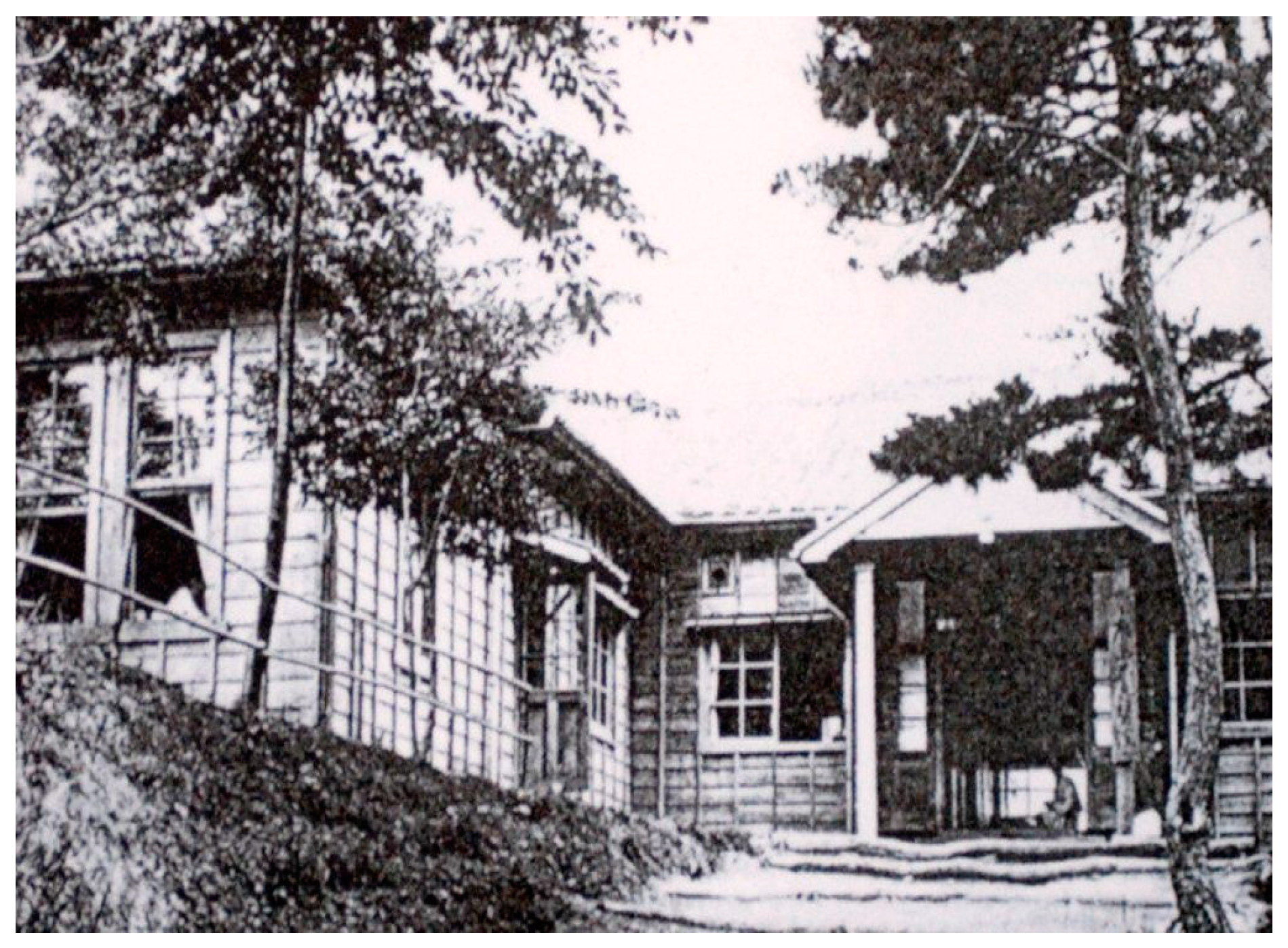
5]. The initial period (1916–1932) was from the establishment of Jahye Clinic by the Japanese colonial authorities to that of the Joseon Leprosy Prevention Association in 1932 (see
Figure 6). During this period, the Hansen’s disease patients were forcefully relocated to this island for their isolated accommodation. The Japanese Government General of Korea constructed the Jahye Clinic and other facilities (69 buildings, 735 inpatients) on the south-west portion of the island, farthest from the mainland of Korea, and installed fences to separate the space between the patients and employees [
5].
The extension period (1932–1945) was when the policies of forced segregation were implemented by the Japanese Government General of Korea. These policies included the establishment of the Joseon Leprosy Prevention Association, which aimed to raise funds for the extension of the forced isolation accommodation facilities, and the name was changed from Jahye Clinic to Sorok-do Rehabilitation Center. The extension period also included a large-scale construction effort to expand the entire island into a Hansen’s disease area. The construction work was led by the fourth director, Suo Masasue, and included continuous compulsory mobilization of patients [
20]. During the expansion work from 1933 through 1940, the capacity for patients on the island sharply increased to 5770 people and a coastal patrol road was built to prevent their escape [
5,
16].
The confusion period (1945–1960) stretched from liberation from Japan in 1945 through to the time when the organization was revised to the SNH. During this time, measures were implemented for the guarantee of rights, interests, and support for patients (e.g., improving the educational environment and nurturing medical personnel). However, the eighth director, Sang-Tae Kim (1948–1954), adopted the policies on Hansen’s disease that were implemented during the Japanese colonial period, justifying his decision as inevitable in order to re-establish the social order [
16]. Moreover, Director Kim reinstalled the boundary barbed wire that had been a symbol of segregation during colonial occupation and which had been demolished immediately after liberation and resumed castration surgery [
5]. He also installed both a watch office and a reception room to improve the control over patients, and let parents and children live separately for the prevention of contagion of children. He made parents and children stand on both ends of the road on the village boundary once a month to let them see each other but would not allow them to touch each other. Hence, Hansen’s disease patients called this “a place of tragedy” [
21].
During the transition period (1960–1974), the forced segregation/accommodation system was changed to a treatment-centered special hospital system. In 1963, with the revision of the Infectious Disease Prevention Act, patients could go to the mainland, although this was quite limited [
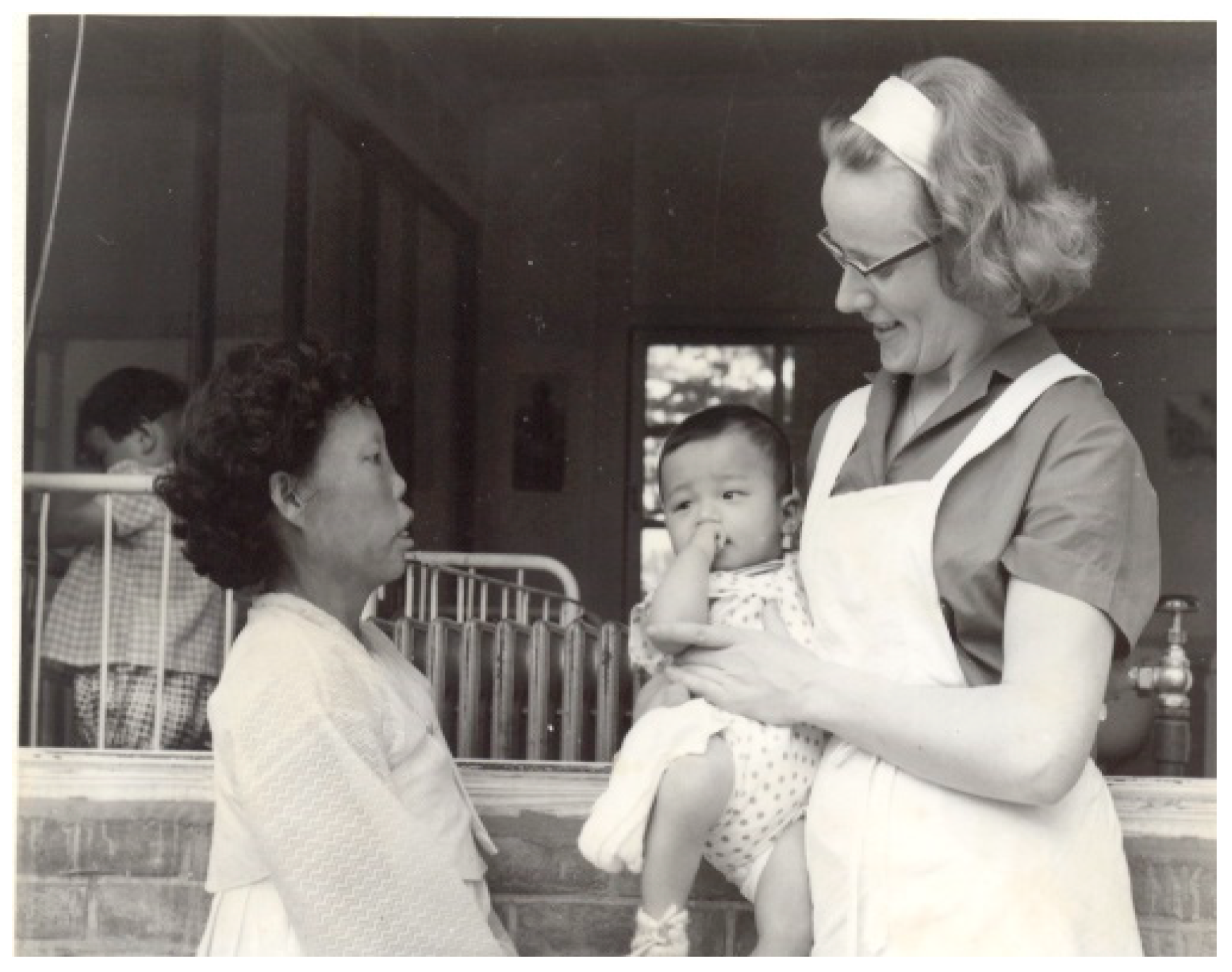
22]. In April 1966, an agreement on support for Hansen’s disease was concluded between the SNH and the Damien Foundation in Belgium to provide 901,000 USD for five years to construct
Saemaeul (a new village in Korean) to accommodate patients who tested negative on Sorok-do [
5] (see
Figure 7).
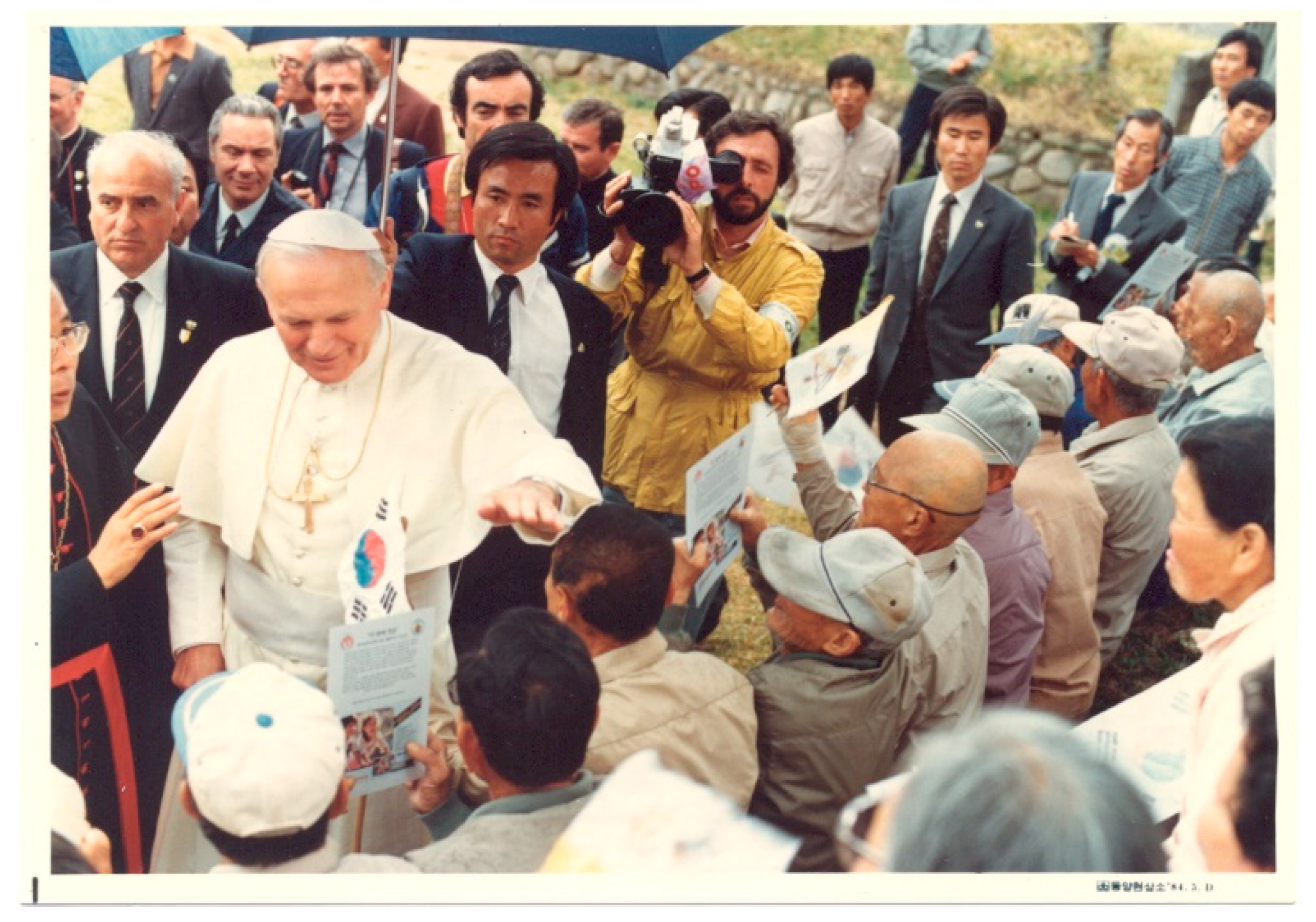
The improvement/decline period (1974–1996) was a time when some systems that were considered to be harsh and inhumane for Hansen’s disease patients were abolished, and the basic principle for the recovery of Hansen’s disease patients’ human rights was established. In January 1974, the boundary between the employees and patients was demolished, and the detention room, a symbol of violations of human rights starting from the Japanese colonial era, was closed. From this period, visits from volunteer groups were allowed, and the 1984 visit of Pope John Paul II to Sorok-do became a significant turning point of reconsidering and recovering patients’ human rights (see
Figure 8). While the human rights of patients in Sorok-do were improved during this period, the number of Sorok-do patients in the community declined. In the 1980s, the number of patients dropped to 2000, and the aging issues of Hansen’s disease patients accelerated [
23]. Hence, the schools (Noksan Elementary School, Noksan Middle School, and Seongsil Bible Middle and High School Building on Sorok-do Island) and villages (Jangan-ri, Seosaeng-ri, and Saemaeul) were closed.
The recovery period (1996–2009) was from the 80th anniversary of the foundation of Sorok-do in 1999 to the opening of the Sorok-do bridge in 2009. During this period, various projects were implemented to promote the Sorok-do history to the South Korean public and improve patients’ welfare. In November 1999, the welfare fund of the Hansen’s disease patients was run by the donation of Sister Marianne Stoeger of the Damien Foundation, and in 2001, the Volunteering Center was established [
24]. It is worth noting that, from 2003 to 2004, 11 facilities symbolizing the authentic Sorok-do were designated as Registered Cultural Heritage sites (see
Table 1). This helped change the perception of many built sites in Sorok-do as heritage sites that needed to be protected.
Finally, the communication period (2009–present) was a time of rapid change due to the opening of the Sorok-do Bridge in 2009. The construction of the bridge made it possible for Sorok’s civil workers to commute from the mainland to the island, instead of living in the official residence on the island. While the number of patients sharply decreased to 600, the visitor numbers sharply increased as the new bridge made it more convenient to visit [
25]. During the dramatic changes to the urban and social structure, the municipal government of Sorok-do endeavored to preserve the disappearing memories in preparation for the centenary celebration of the SNH in 2016. Their efforts have yielded fruit in that the daily goods used by Hansen’s disease patients were designated as Registered Cultural Heritage, and the Hansen’s Disease Museum was opened in 2016. These cultural resources attracted visitors and have become a communication tool to convey stories of Sorok-do to the people on the mainland. Now, 313,312 from mainland Korea visit Sorok-do (as of 2016) [
19].
Sorok-do was formed as a space that symbolized the discrimination and isolation of Hansen’s disease patients by the Japanese colonial authorities. From the end of the colonial period in 1945 to the 1980s, Sorok-do retained a negative connotation, as a place where there were violations of human rights, stemming from the Japanese colonial period. However, the visit of Pope John Paul II, who was a symbol of world peace, singled out the significance of Sorok-do, and the meaning of this small island was changed to “a holy place” of human rights. From the 2000s, Sorok-do was protected as a designated space of cultural heritage, and Sorok-do’s history was widely commemorated not only by local people, but also people on the mainland. The seven phases of Sorok-do’s history show how historical changes of the meaning of place have caused changes in the perception of the importance of its conservation.
3.2. Approach to Sorok-do According to Changes of Spatial Structure
3.2.1. Spatial Arrangement According to Changes in Treatment Systems
Since Hansen’s disease was recognized as a highly contagious incurable disease, patients from the entire Korean peninsula were relocated to Sorok-do where they were socially and spatially isolated until the mid-20th century. Four different types of spatial isolation are evident on Sorok-do (see
Figure 5 and
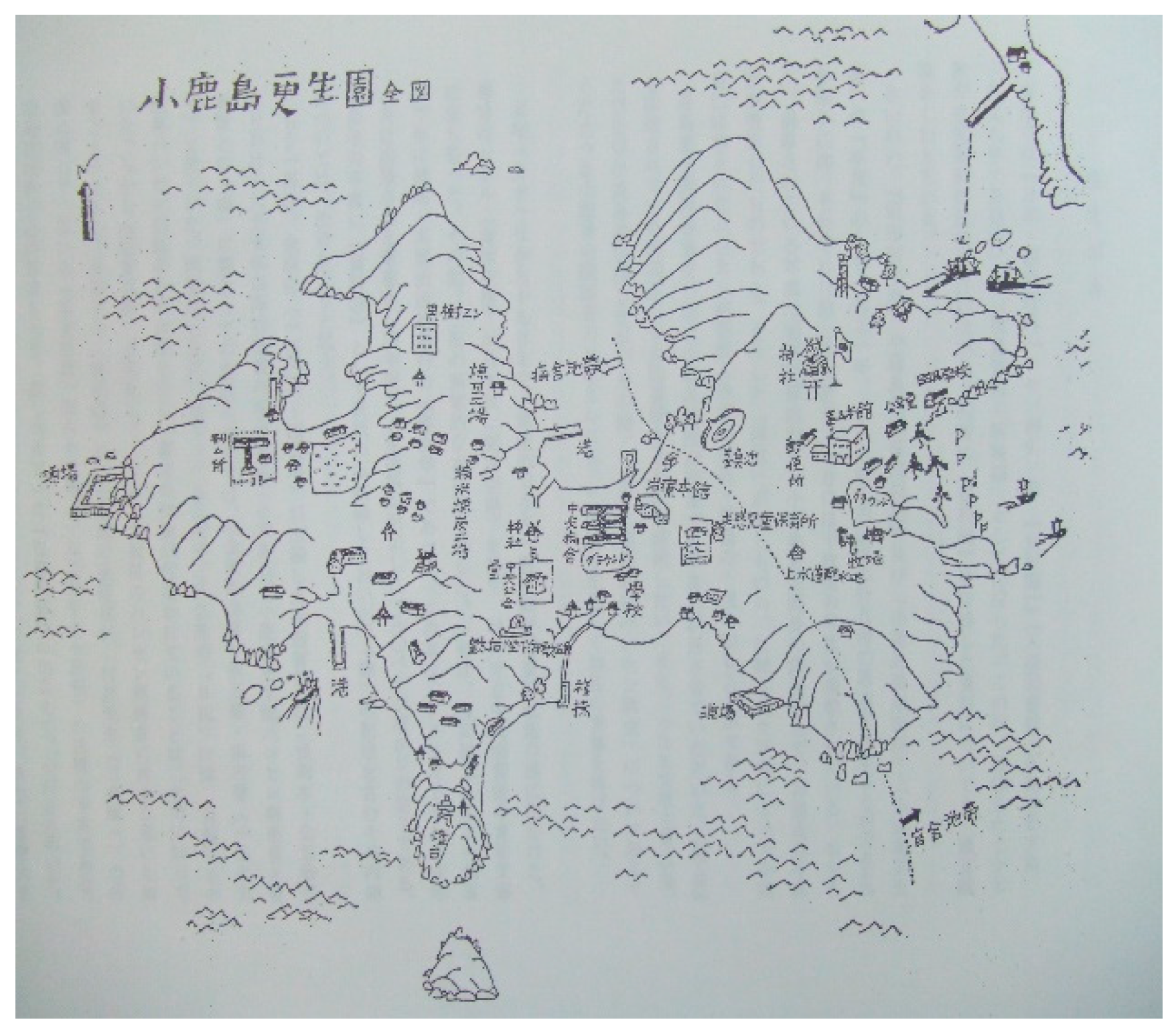
Figure 9). First, “complete spatial segregation from the mainland” was carried out. Secondly, “spatial division inside the island” was accomplished by separating the patients’ area near the hospital from the employee’s area, by the installation of a barbed-wire fence along the boundary (see
Figure 10). The first boundary had been constructed on the south-west side, farthest from the mainland, and was moved toward the east three times with the extension of accommodation facilities. Finally, the boundary was demolished in 1974. After the second information center, which acted as a surveillance facility, was shut down in 1992, the spatial divisions on Sorok Island no longer existed.
The third form of spatial isolation was “segregation by village according to the patient’s treatment system”. This started with the establishment of the main treatment building in Jungang-ri in the early to mid-1930s. In 1973, with the revision of the regulations on the operation of the national leprosarium, the villages were re-arranged from the main treatment building as follows: people who tested bacillus-positive, disabled people, people who were over 60 years old, and people able to return to normal social life [
26]. Such a spatial arrangement is still maintained. Hansen’s disease patients who need intensive care live in Jungang-ri and Noksaeng-ri, located at the center of the main treatment building, and those patients who receive outpatient treatment live in the peripheral villages.
The fourth form of spatial isolation was “segregation in the family according to patient’s situation”. From 1933, new types of family relationships were formed, such as the marriage of Hansen’s disease patients who agreed to a vasectomy, and a new family consisting of foster parents and their adoptees and sworn brothers [
16]. In addition, the number of children increased as female patients from the mainland became permanent residents. Children who were under five years old were initially raised by their parents, but from 1966 their children were brought up by the Damien Foundation infant home [
27]. Children who were over five years old lived in the special accommodation for patients’ children. Separated from their parents, they were allowed to meet once a month at “the place of tragedy” [
5]. Children who had not been infected by Hansen’s disease until they were 15 years old needed to complete vocational courses conducted by the National Sahmyook School. Afterwards, they were able to return to society. However, in September 1979, the National Sahmyook School was shut down due to the rapid decrease in the number of students [
21].
3.2.2. Changes of Urban Space to Improve Accessibility
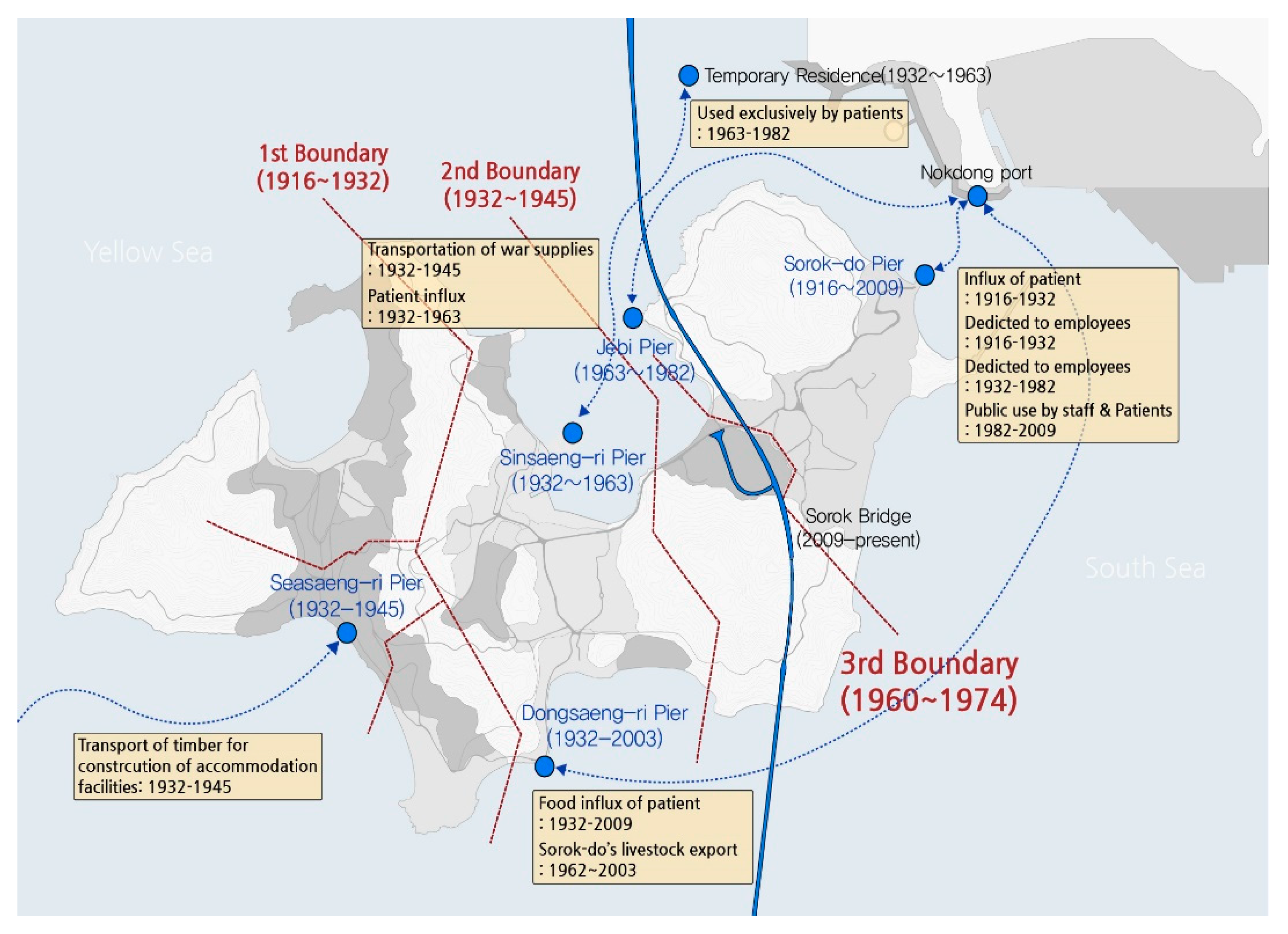
The connection between the urban space of Sorok-do and the mainland was made through the piers. There were five piers in Sorok Island, and the purpose of each pier and the date of its establishment were all different (see
Figure 11). The first, Sorok-do Pier, was closest to Nokdong Port. Until 1932, this pier was the main one facilitating the transport of patients, employees, and goods. In 1923, the construction of the road from Sorok-do Pier to the patients’ residential area at the west end was completed, and in 1932, three piers in Seoseang-ri, Sinsaeng-ri, and Dongsaeng-ri were built for three different purposes within the patients’ residential area [
28]: the main function of Seosaeng-ri pier was for transporting timber for the construction of accommodation facilities; the Dongsaeng-ri pier was for the transportation of foods and livestock; and the Sinsaeng-ri pier for the transportation of patients.
When forced segregation as instituted by the Japanese colonial authorities was abolished in 1963, patients were allowed to visit the mainland. At this time, another pier, Jebi Pier, was constructed for these patients to travel between Sorok-do and the mainland. Just before Pope John Paul II’s visit in 1984, Jebi Pier was reported as historic evidence of discrimination against the Hansen’s disease patients on the National Broadcasting Company in the US (NBC), which bought about the closure of the pier in that year [
29]. Afterwards, Sorok-do Pier, the only remaining pier, became a shared one that both patients and employees use, and the use of this pier ended after the opening of the Sorok-do Bridge in 2009 [
30].
3.3. Approaches to Sorok-do According to Social Changes
3.3.1. The Development of Social Perceptions on Hansen’s Disease
In Japan, there are now 13 National Hansen’s Disease Leprosaria. In particular, the first national leprosaria, the National Sanatorium Nagashima-Aiseien (established in 1930) and the National Sanatorium Oku-Komayoen (established in 1907, which had started as a private institute and was changed into a national one) are located on the islands [
31]. The Japanese Empire regarded Hansen’s disease as very contagious and they considered that the forced containment of Hansen’s disease patients was required. During the Japanese colonial period, Hansen’s disease patients experienced isolated lives as the result of forced isolation and discipline by the Japanese colonial authorities, according to the control system recorded in the handbook
An Understanding of Hospitalized Patients, which demonstrated how to control the daily lives of Hansen’s disease patients in Sorok-do [
21]. This control system lasted until the 1950s, even after the colonial authorities left in 1945. However, the 1958 foundation of the “Society of Korean Leprologists” provided an opportunity to change South Korea’s public perception on Hansen’s disease [
5]. The foundation helped to improve the methods to protect from Hansen’s disease, and the number of cases where patients and their children who tested negative and were rehabilitated to the mainland society increased. At that time, to raise funds to support those who wanted to be rehabilitated into society, the Stock-raisers’ Association was established [
5].
After the mid-1960s, the number of volunteers who assisted patients and medical workers increased [
16]. Additionally, due to the powerful remark by Pope John Paul II, pinpointing Sorok-do as one of the most isolated places in South Korea, its image was rapidly changed from a place of segregation to one that needed more tolerance and attention. The designation of daily goods and facilities that were used by Hansen’s disease patients as a national heritage reflects South Korea’s changing social perception on Hansen’s disease and Sorok-do, in that they should not be neglected but be protected in consideration of their socio-cultural importance.
3.3.2. Development of Treatment Technology and the Hospital
Hansen’s disease was mentioned for the first time in Korea in the first-year activity report of the Widespread Relief House in 1886 (10 April 1885–10 April 1886), and medical missionaries worked actively in the entire Korean peninsula to treat Hansen’s disease patients [
32]. The first hospital for Hansen’s disease was the Busan Leprosarium funded by both the British Emperor Leprosy Relief Association in 1909 and Charles H. Ervin missionaries [
33]. The establishment of other Leprosaria followed: in Gwangju in 1912 and in Daegu in 1913 [
33]. Thus, the Jahye Clinic that was established in 1916 on Sorok-do by the Japanese Government General of Korea was the first public hospital.
Jahye Clinic, which had accommodated less than 1000 patients until the 1920s, was developed as a specialized leprosarium, named the Sorok-do Rehabilitation Center. It accommodated more than 3000 patients in the 1930s [
5]. This remarkable development was achieved by the forced labor of Hansen’s disease patients that operated during the colonial period [
5]. In 1940, the number of patients reached 6136, and in July 1960, the reorganization of the Jahye Clinic into the SNH opened a new phase of transforming its purpose from the isolated accommodation of patients to the special treatment of patients. From 1966, with the Damien Foundation’s support, the SNH ran the Plastic Surgery Clinic and accommodated patients who tested negative [
5]. Thereafter, the SNH was developed as the only well-equipped hospital for Hansen’s disease treatment in South Korea. With the promotion plan for leprosarium unification in 1968, the national hospitals in Bupyeong, Chilgok, and Iksan were integrated into the SNH on Sorok-do [
5,
20]. Finally, the SNH became the only hospital specializing in Hansen’s disease treatment in South Korea. As the treatment of Hansen’s disease was centralized in Sorok-do patients did not need to be spread out through South Korea. In addition, after the village in which patients who tested negative were able to live was formed in 1966, those who had left for the mainland were able to return to Sorok-do whenever they wanted. Thus, Sorok Island could be thought of as a place of healing and protection for Hansen’s disease patients as well as their hometown, giving feelings of comfort and peace [
16].
3.3.3. Volunteer Activities
The Damien Foundation’s various activities from 1966 to 1970 were a watershed moment in opening the isolated Sorok-do. Following the Damien Foundation, more active medical services were involved, such as the UNESCO Work Camp Team, Osaka Dental University, Yonsei University Medical Service Corps, and Seoul Dental University Leprosy Relief Service Association [
16]. From the 1980s, the number of volunteers who supported the patients’ daily lives surged as the number of patients who had a medical history of Hansen’s disease increased, including patients who suffered from the aftereffects and elderly patients [
5].
In particular, the 40-year commitments of Sisters Marianne Stoeger and Margaret Pissare from 1962 until right before the Damien Foundation’s agreement, brought a positive social impact. Along with the creation of the Welfare Fund for Hansen’s disease patients (1999) and the establishment of the Voluntary Service Center (2001), the Sisters’ house was designated as a Registered Cultural Heritage, and a documentary film called “Marianne and Margaritha”, depicting their lives devoted to Hansen’s disease patients, was released in 2017. In addition, a song, poems, and books (e.g., Big Granny and Small Granny on Sorok-do, etc.) related to their lives have been published. Volunteer activities played a significant role in the symbolic meaning of Sorok-do from a place of discrimination, compulsory mobilization, and isolation to one of humanism, fraternity, and sacrifice.
In summary, the historical, spatial, and social approaches to Sorok-do have helped us understand how the history of the segregation of local people and patients and their painful memories were deeply embedded in the places of Sorok-do (villages, piers, and hospital). In addition, the history and memories of Sorok-do have been developed by communication with the people who have lived there (i.e., Hansen’s disease patients, medical workers, and foreign volunteers) over time. Based on this comprehensive understanding, the next part of the paper will classify and analyze the conservation resources of Sorok-do that have formed through the relationship between time, space, and people.
4. Analysis of Conservation Resources in Sorok-do
4.1. Concept and Scope of Conservation Resources
Since 1916, the memories of Hansen’s disease patients have been deeply inscribed on the place of Sorok-do that, in turn, has affected its meaning. As Hansen’s disease patients have lived only on Sorok-do for 105 years, separated from the mainland, it is the only place encapsulating the patients’ memories. Thus, the island has become a powerful witness, narrating untold and hidden stories of Hansen’s disease patients. Sorok-do has become a unique cultural landscape representing the 100-year history of the place and patients’ lives. Sorok-do’s cultural landscape presents not only the social factors that brought about changes for Hansen’s disease patients, but also patients’ engagement in their environment. In particular, the cultural landscape acts as a reminder to help Hansen’s disease patients remember their lives through these key words: treatment, production, life, faith, funeral, detention, (children) education, and culture. According to the interviews with the residents, patients’ memories were frequently evoked through certain places related to their treatment and living spaces. In addition, Sorok-do’s events, even though they were intangible, functioned as “sites of memory” for patients to recall their life stories.
It is interesting to note how Sorok-do’s memories have been powerfully transmitted to the next generation via oral history. As most Hansen’s disease patients who now live in Sorok-do moved to this island in the 1970s, the pre-1970 stories have been retained by oral tradition through the previous patients. In-depth interviews with the key informants revealed that they had powerful connections with memories of certain places, even though they had not had direct experience of them. For example, although the structure of the main treatment building, Jangseong Church, as well as the Seosaeng-ri Bridge were demolished, and only their vestiges remain, the current patients perceive them as symbols of Sorok-do. Furthermore, the current patients have expressed their emotion about two sites that had left painful and traumatic memories of the former generation of Hansen’s disease patients: the Brick Factory (a place of forced labor by the Japanese colonial authorities) and Jebi Pier (a symbol of discrimination, as this pier was used only by patients until 1984).
Based on a comprehensive understanding of the components of Sorok-do’s cultural landscape and the multi-layered memories of Hansen’s disease patients, we have endeavored to propose a novel classification of the “conservation resources of Sorok-do” (hereafter conservation resources). As a difficult heritage, Sorok-do’s memories of nine phases show distinctly different characteristics, and the significance of these memories must be evaluated not only by heritage professionals, but also in consultation with local inhabitants (see
Table 3). Taking into consideration the complex memory formation process of Sorok-do, a total of 348 conservation resources have been selected. As mentioned previously, the local inhabitants’ memories are strongly attached to not only tangible places or artifacts, but also intangible events and patients’ life stories. Therefore, the conservation resources are divided into two main types, tangible and intangible resources, representing symbolic meanings for each period, as suggested in
Table 2. We have also selected these resources for their potential to help understand the current lives of Hansen’s disease’ patients, and have an impact on building up the sustainable development and conservation of Sorok-do for the future.
It is worth pointing out the first period in
Table 3. This period, called “Before initial period”, indicates the time prior to 1916 and demonstrates the island’s natural state before it was transformed into a place for Hansen’s disease patients by the Japanese colonial authorities. Most conservation resources of this period are natural ones rather than cultural objects, and their significance is that the natural environment (e.g., coastline, terrain) provides information on how Hansen’s disease patients adjusted to Sorok-do. The last category, “The Others”, includes resources that cannot be linked to a specific period.
4.2. Classification of Conservation Resources
As noted in
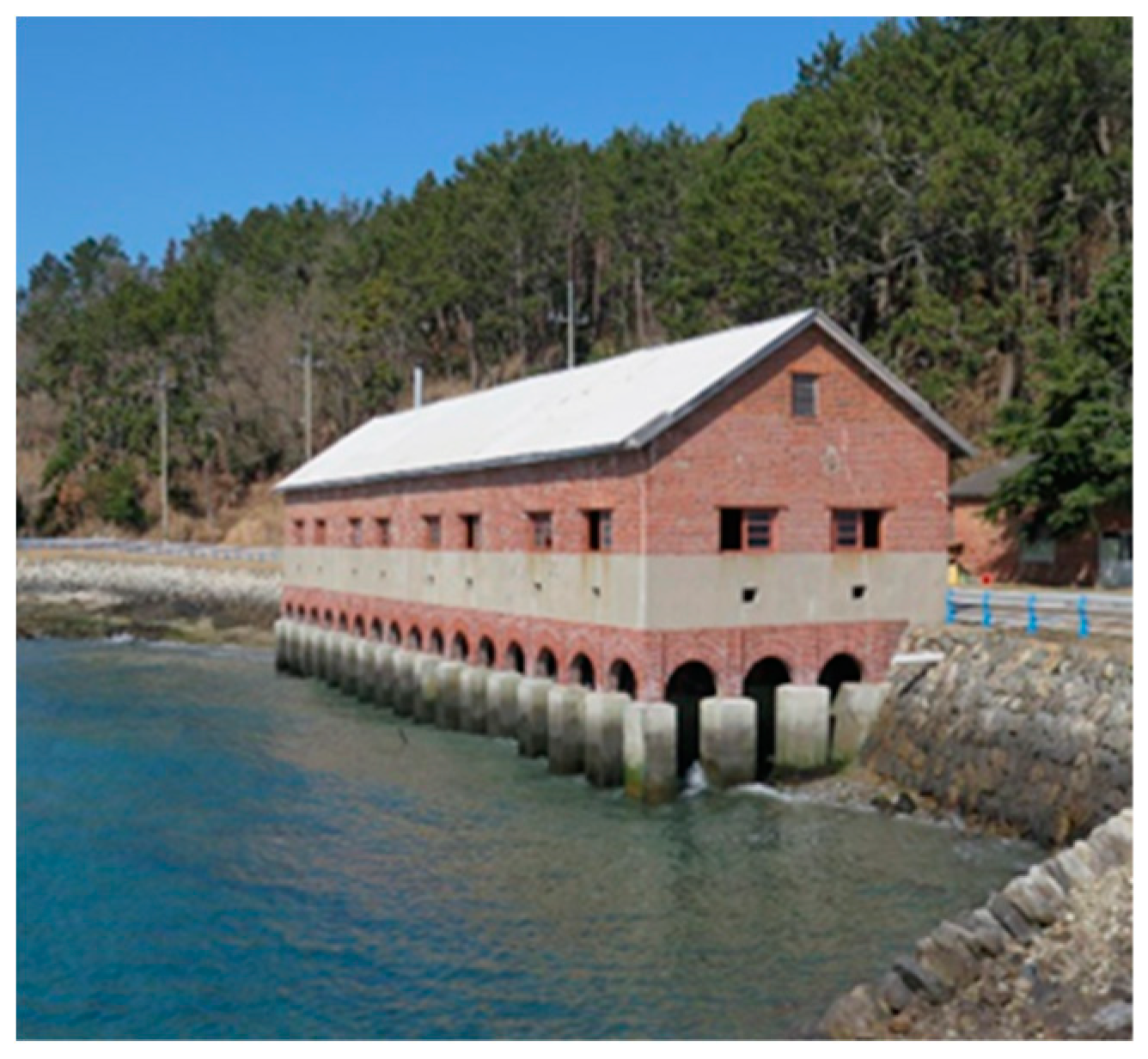
Section 4.1, conservation resources are divided into tangible and intangible types. The tangible conservation resources are as follows: the natural environment, buildings, structures, equipment, the memorial facility, and place. A total of 266 sites are included, based on the memories of the Hansen’s disease patients. The natural environment category consists of terrain, forest, water system, beach, farmland, hills, and trees, and includes 28 sites, which all have meaning associated with the Hansen’s disease patients’ survival. In particular, as part of the natural environment, the forest and beach are included as the memories of Hansen’s disease patients and were associated with heir walking paths. Old-growth and giant trees are classified into this category, as patients remembered them as friends with whom they could grow up and get old together. The category of building is directly related to the treatment of Hansen’s disease as well as the lives and management of Hansen’s disease patients. These resources are sub-divided into buildings for treatment, administration, housing, living convenience, industry, industrial support, detention, funeral, education, religion, culture/leisure, and other. The category of “buildings” represents 30% of the total number (96) of conservation resources, showing the highest share. The buildings include the first treatment facility of Sorok-do, the Jahye Clinic main building, the Gubuk-ri treatment room, the main treatment building, the Dongsaeng-ri food warehouse, the autopsy room, and Manryeongdang (see
Figure 12).
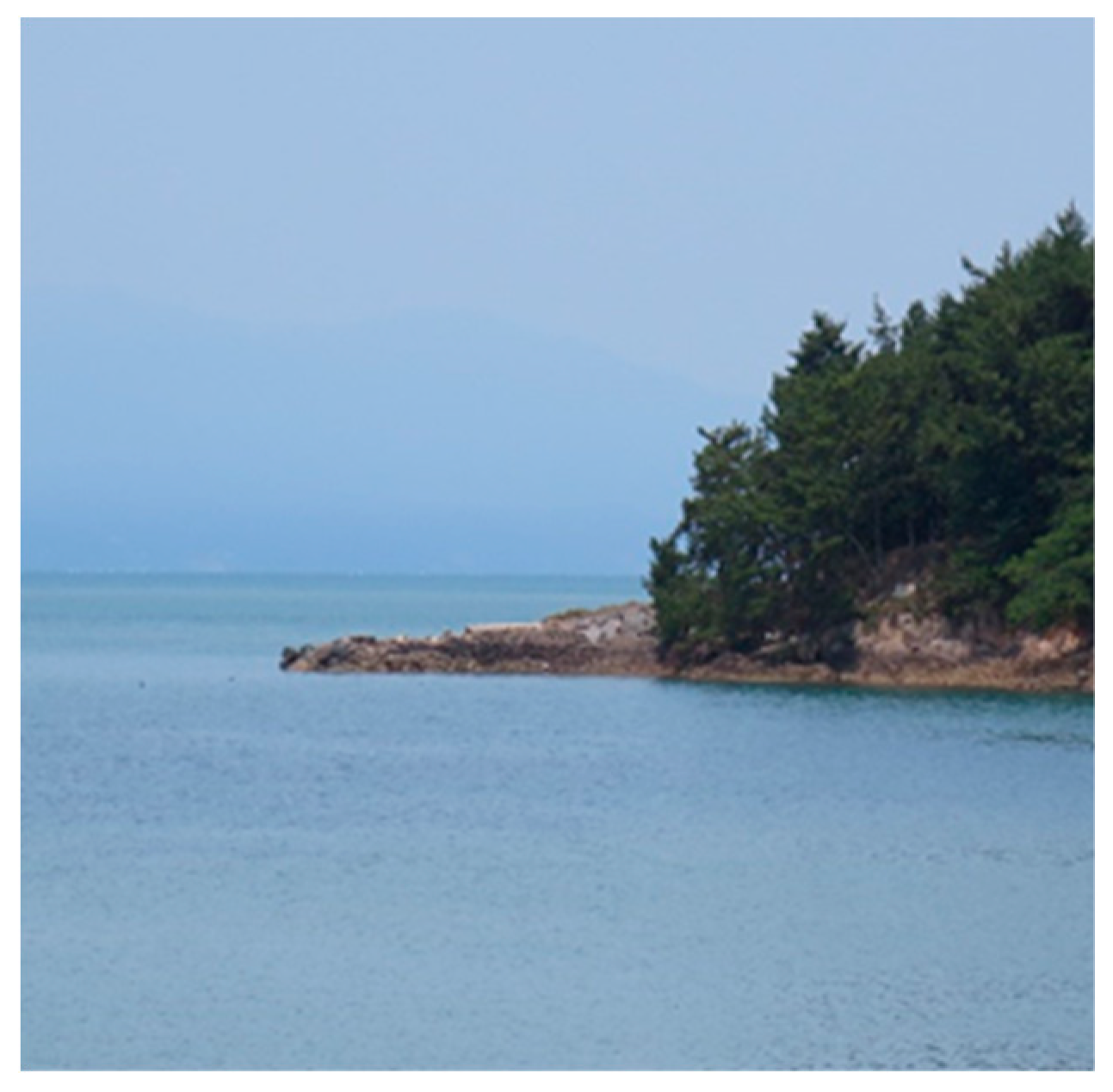
The category of structures is classified into pier/bridge, stonework/stairs, wells, and lighthouse, including 27 sites, such as the inner wall of the first pier, Sorok-do Pier, and Jebi Pier, which symbolizes the painful memories of discrimination against Hansen’s disease patients (
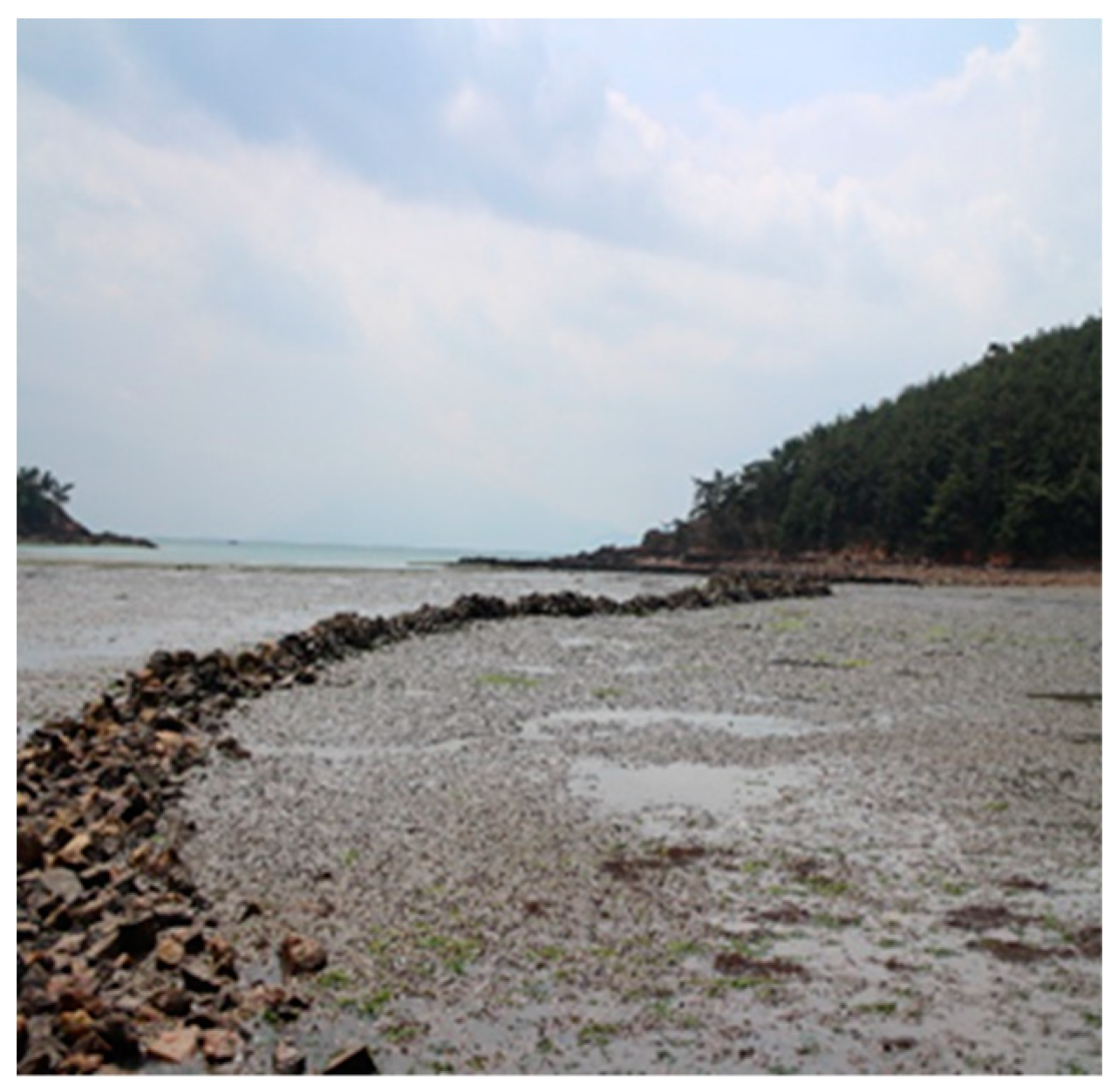
Figure 13). The category of equipment includes 26 sites, such as the gatepost and ship. The category of memorial facilities consists of a number of commemoration halls, a number of tombstones, and some memorial trees—a total of 26 sites. The category of place consists of roads, pavilion/rest areas, “open spaces”, film shooting places, and vestiges of destroyed buildings. There are 63 place sites, including the road connecting Sorok-do Pier and Jahye Clinic, created in 1916, and four fishing facilities that utilized the tides to operate (see
Figure 14).
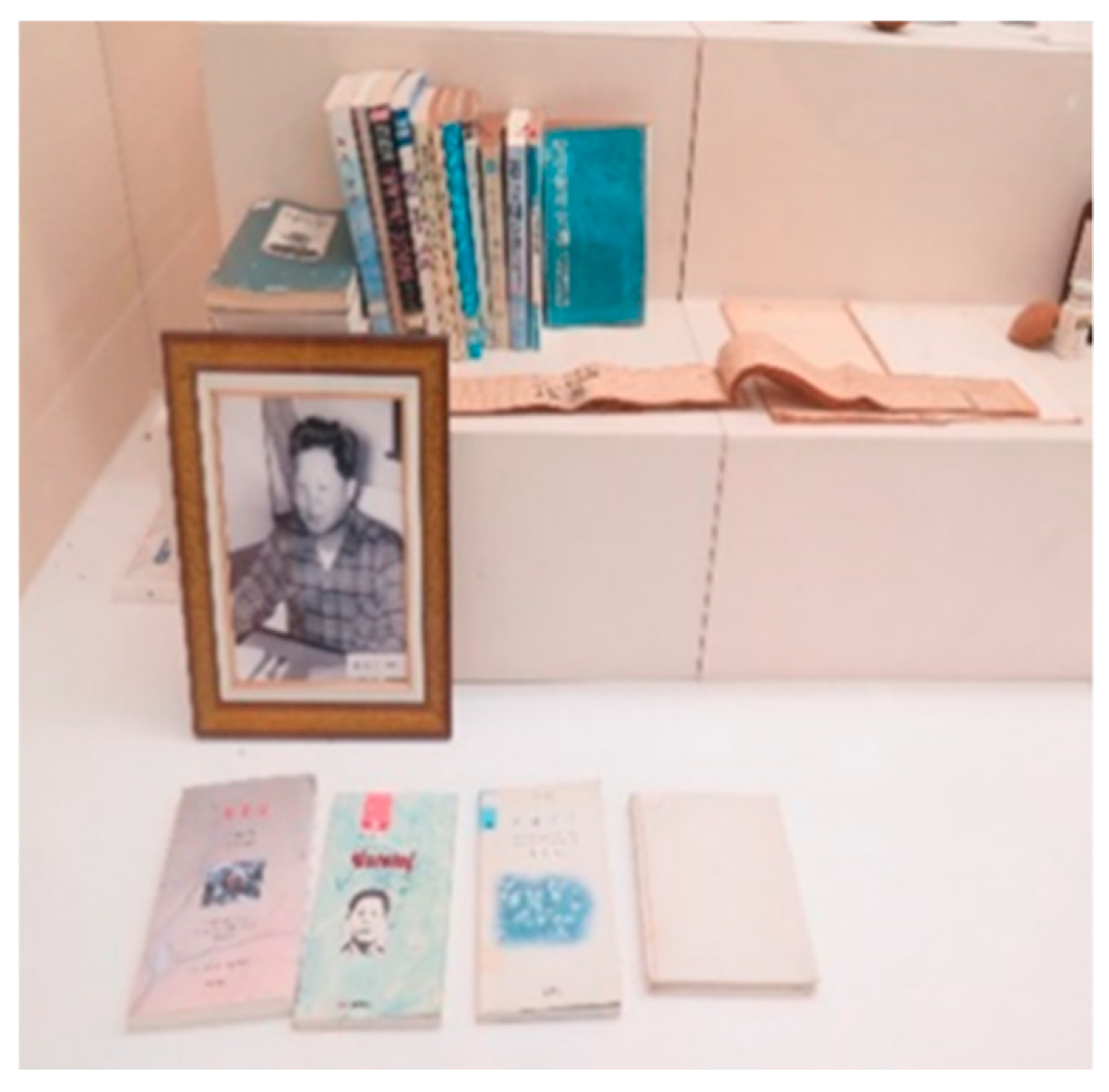
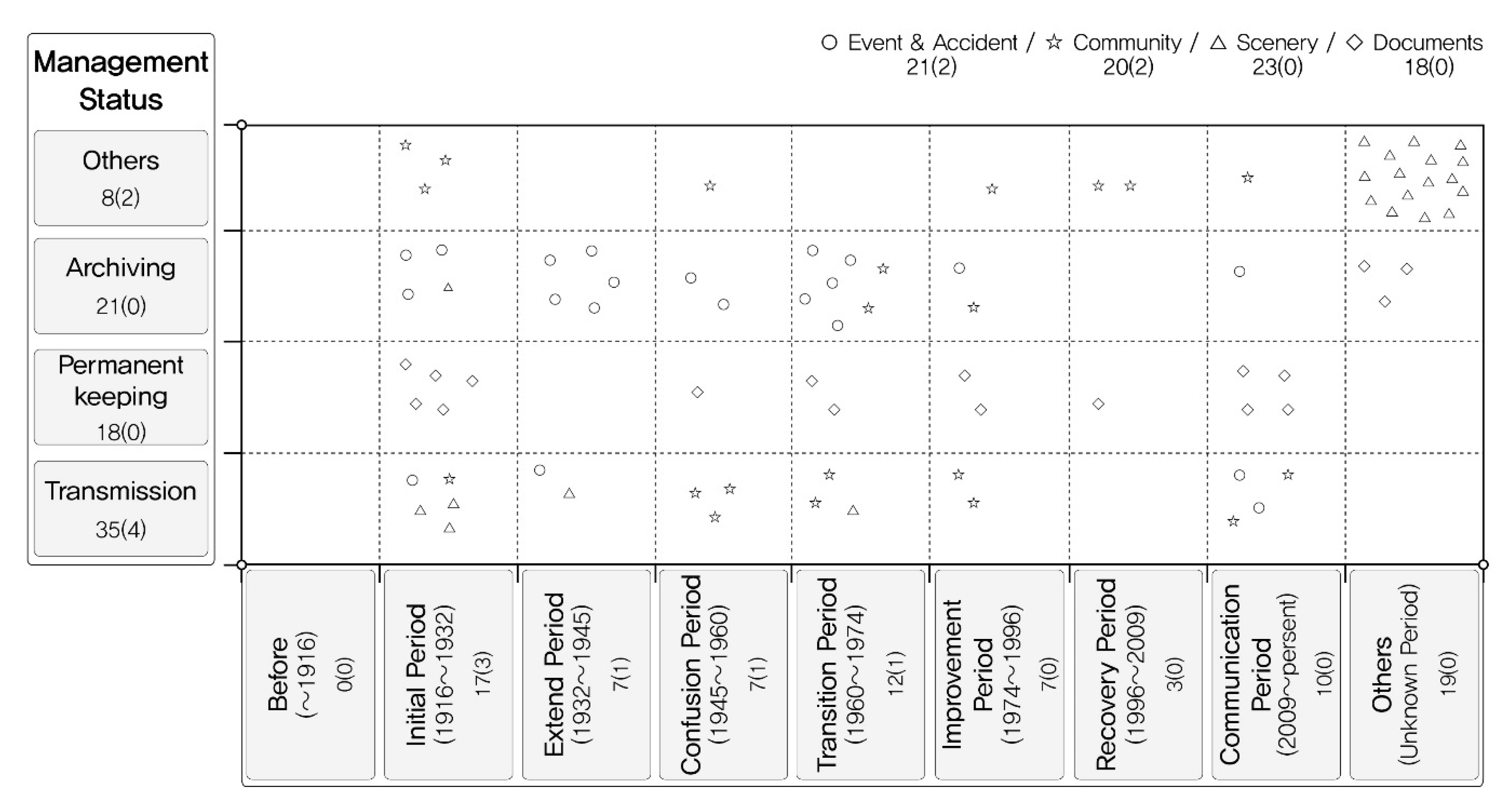
The intangible-type conservation resources assist in evoking memories of life and social activities related to Hansen’s disease patients, medical personnel, and visitors to Sorok-do. They are classified into memories of events/accidents, social community, landscape, and archives—a total of 82 items. The resource consisting of memories of events/accidents has 21 items, including Chun-sang Lee’s Heroic Deed (1942) and the Murder of 84 Patients (1945). In particular, “Chun-sang Lee’s Heroic Deed” that took place in 1942 is considered to be one of the most important events in the history of Sorok-do. Chun-sang Lee, who was one of the Hansen’s disease patients, killed the Japanese director of the Jahye Clinic because he had inflicted forced labor and shrine worship on the Korean patients. Although Chun-sang Lee was executed, his heroic deed is still commemorated on Sorok-do. These memories of events are regularly commemorated at the Celebration of the Opening of the Jahye Clinic, and at the Hansen’s Disease patients’ Joint Memorial Service. The conservation resources related to the memories of society/community comprise a total of 20 sites. The Sorok-do Co-Op, Geumsong Welfare Society, and the Harmonica Concert are all still in operation. The category related to daily landscape consists of two main scenes, including a total of 23 resources: First, scenes of the patients’ daily lives, including treatment, work (including forced labor during the colonial period), economic activity, funerals, education, religious life, and visitor activity; and second, special scenes deeply embedded in the memories of Hansen’s disease patients. The category of archive memories includes maps, drawings, photographs, literary works, and various documents that are closely related to the lives of the patients, and comprise a total of 18 items. Most of the archives are preserved in the SNH and the National Archives of Korea, and some of them are exhibited in the Hansen’s Disease Patients’ Museum (see
Figure 15).
4.3. Analysis of the Values of the Conservation Resources
4.3.1. Tangible Conservation Resources
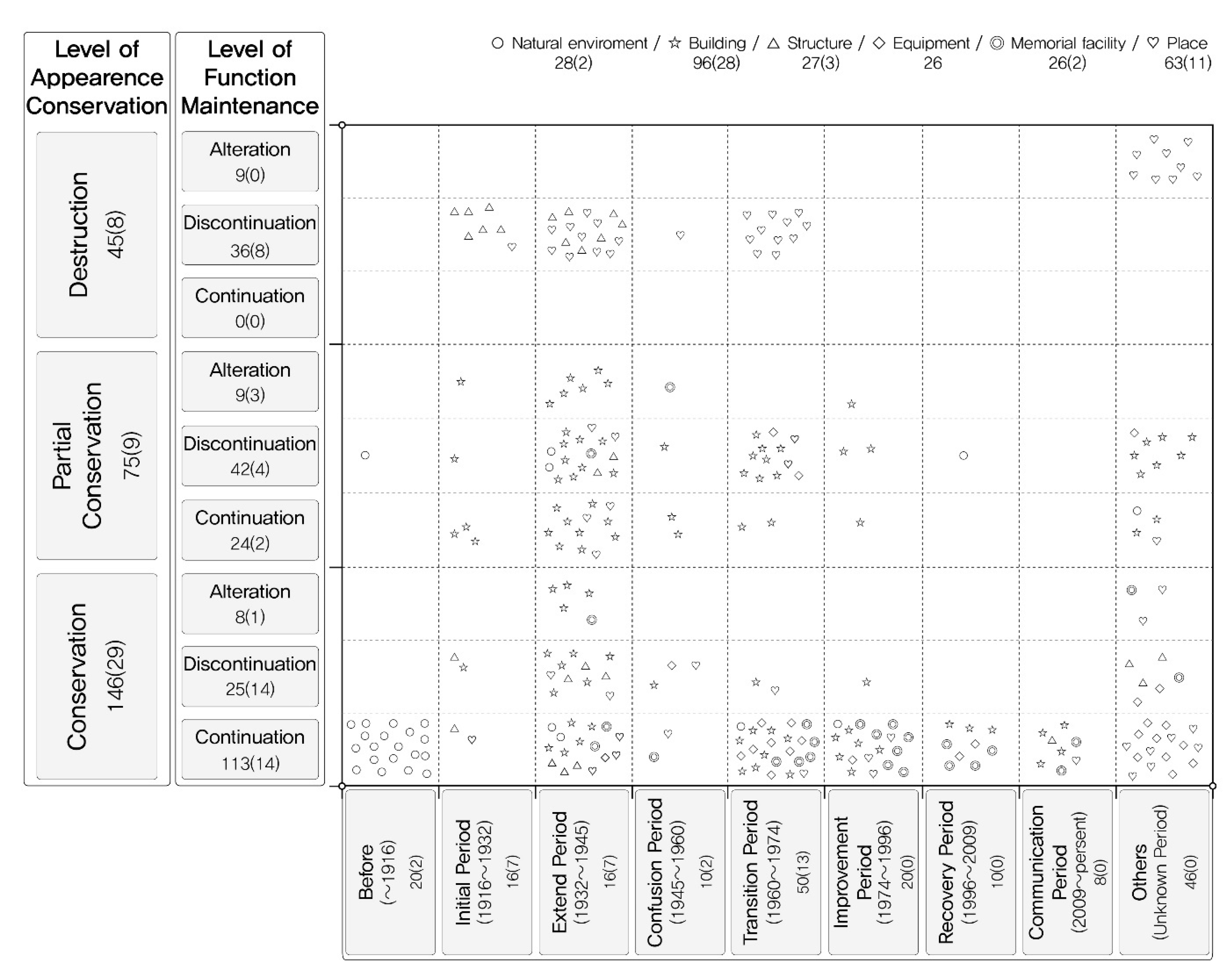
The characteristics of the 266 tangible conservation resources shown in the positioning map are as follows. First, the conservation resources are mainly concentrated in two periods: the extension period (83 items, 31.2%) and the transition period (50 items, 18.8%) (see
Figure 16). The extension period is related to the increase in treatment-related spaces and facilities while the transition period is related to the increase in welfare-related policies designed to correct the social misunderstanding of Hansen’s disease.
Secondly, considering the criteria of the evaluation of the tangible conservation resources that was explained in
Section 1.2, the conservation resources that fulfil the two criteria (complete preservation and continuation) are 42.5% (113 items out of a total of 266), which is the highest share of the conservation resources (see
Figure 17). It can be shown that many tangible resources of Sorok-do are still in good shape, and function as a living heritage and witness of Sorok-do’s history in the present and future.
Thirdly, the conservation resources representing dissolution and discontinuation comprise 36 sites (13.5%), where only vestiges remain after the buildings were destroyed (see
Figure 16). It is important to note that the conservation resources representing partial presentation and discontinuation comprise 42 sites (15.8%), and are at risk of demolition in the near future. Hence, they will be moved to the category of conservation resources representing dissolution and discontinuation. This means that more than 30% of the conservation resources soon will be neglected as vestiges on Sorok-do.
Of the 266 conservation resources, 46 sites were selected as essential conservation resources that are more meaningful than the rest (see
Section 1.2 and
Table 4). Heritage professionals might assume that the conservation resources that represent complete preservation and continuation are more authentic. However, as seen in
Figure 7, of the 113 relevant conservation resources, only 14 sites (12.3%) were categorized as essential. This stems from the fact that most conservation resources representing complete preservation and continuation are currently being used, which makes it challenging to maintain a high level of authenticity. In comparison, of the 25 conservation resources representing complete preservation and discontinuation, 14 sites (56.0%) are considered essential. This shows that the conservation resources that are no longer used are more likely to retain their original state. This is connected to the fact that, apart from the case of Ward Church, most cultural heritage sites on Sorok-do that no longer function are designated as Registered Cultural Heritage, due to their high level of authenticity.
There is a total of 28 essential conservation resources that both represent complete preservation, maintenance, and discontinuation, and show a high level of authenticity and integrity. These criteria are used to evaluate the Outstanding Universal Value in the UNESCO World Heritage Convention (see
Section 1.2). The rest of the essential conservation resources (18 cases) show a relatively low level of authenticity as their original functions were changed. The reasons for choosing them as the essential conservation resources are that, firstly, although the function was changed, the integrity of the exterior was excellent (e.g., the children’s center that is now in use as the Life Museum, established for the 80th Anniversary celebrations). Secondly, there are cases where the facility itself has a strong identity in spite of its low level of authenticity and integrity stemming from its functional change (e.g., The Gubuk-ri warehouse, which was used as a chapel and the watch office that was used as a depository financial institution). Thirdly, there are cases where the original form was partially preserved, but the function was maintained or stopped (The Gubuk-ri treatment room, the crematorium, the Namsaeng-ri office, the former Sorok-do Rehabilitation Center Shrine, Seoseong Church, and Saemaeul ward). In addition, eight were selected from the conservation resources representing destruction and discontinuation, such as the First Treatment Road, Seosaeng-ri ward, and Dongsaeng-ri pig-farm, which are closely related to the treatment and lives of the Hansen’s disease patients.
4.3.2. Intangible Conservation Resources
The number of intangible conservation resources shows a more even distribution over the time periods compared to the tangible conservation resources (see
Figure 17). There are 35 cases categorized into transmission (42.6%) and 18 cases classified as permanent resources, such as drawings, photos, and maps kept in museums and storage (22.2%, see
Figure 17). Of the entire group of intangible conservation resources, 65% are in relatively good condition. Amongst the intangible conservation resources, six are selected as essential conservation resources. For example, the Sorok-do Hospital Opening Ceremony and the Hansen’s disease patients’ Joint Memorial Service are categorized as memories of events and accidents. In the category of memories of social community, there are cases such as the SNH Patients Association (the first Hansen’s Disease patients’ association) and the Sorok-do Co-Op. Furthermore, the “Hansen’s disease patients” and “SNH employees” who have been living in Sorok-do since the initial period (1916–1932) are classified into the essential conservation resources as both of them represent Sorok-do itself.
5. Conclusions: Towards the Sustainable Conservation of a Difficult Heritage
This paper has provided the sustainable conservation planning for a difficult heritage through the case of Sorok-do. Sorok-do is a historic site representing the lives of Hansen’s disease patients who have lived in conditions of social prejudice, discrimination, and isolation due to the misrepresentation and misunderstanding of Hansen’s disease in contemporary Korea. In addition, it is a difficult heritage site in South Korea where various memories have been accumulated for a period of 100 years. After liberation, Sorok-do was not freed from its symbolic meaning of isolation and exclusion from the mainland, which had formed during the Japanese colonial period. However, a dramatic urban change stemming from the opening of the Sorok-do Bridge in 2009 has provided a communication channel between the Sorok-do Island and the mainland.
Consequently, the number of visitors to Sorok-do sharply increased and visitor’s interest brought about positive changes in South Korean’s perception of Sorok-do. Visitors’ engagement in Sorok-do has been activated and that, in turn, has affected the identity of Sorok-do that the Hansen’s disease patients have mainly formed. Although only limited areas (e.g., Sorok-do National Museum) are open to visitors, the influx of visitors have challenged the original lifestyle of patients who have lived on Sorok-do for 100 years. Although visitors perceive Sorok-do as an interesting tourist site, this island is primarily a significant place of physical and mental healing for Hansen’s disease patients. While respecting the visitors’ influence on Sorok-do, the local residents had to change their lifestyle accordingly. In addition, since the early 2000s, the incidence rate of Hansen’s disease has decreased, and the surviving patients have aged. According to the statistics, Hansen’s disease patients in Sorok-do will completely disappear in 20 years.
The current situation is that the outsiders’ influence is increasing. In other words, in the near future, the main actor group will change from Hansen’s disease patients to people from the mainland, and Sorok-do’s function will be rapidly transformed from the settlement of Hansen’s disease patients to a tourist site. Thus, in 20 years from now, when Hansen’s disease patients who have been the main contributors to forming the collective memory and identity of Sorok-do disappear, it will bring about a crisis of losing the collective memory of Sorok-do. Therefore, in preparation, it is time to set up the principles and criteria to conserve Sorok-do’s memories and identity. We have, therefore, endeavored to provide a plan for sustainable conservation.
In order to provide a comprehensive understanding of the multi-layered memory layers of Sorok-do, this paper has analyzed the historical, spatial, and social changes of Sorok-do over the last 100 years. Based on this data, we have selected 348 conservation resources and in turn, 52 essential conservation resources from the entire list. Conservation resources are related to the following themes: An island used as a forcibly isolated community of Hansen’s disease patients, a representation of the 100-year history, the legal system and policy of treating Hansen’s disease, the values of Sorok-do Hospital medical workers and volunteers (benevolence and sacrifice), the home of Hansen’s disease patients, and the paths and landscape in the memory of Hansen’s disease patients. The list of conservation resources acts as the basic data needed to set up sustainable conservation planning. More importantly, such a classification of conservation resources is used to provide the criteria of monitoring Sorok-do for ongoing sustainable conservation. Reflecting on the rapid transformation of Sorok-do’s physical environment, the results of the research provides the basic data to develop the conservation policy of Sorok-do’s tangible and intangible resources. Despite such efforts to list the conservation resources based on archival research and in-depth field works, this paper still has a limitation. In particular, in order to improve the list of intangible conservation resources, ethnographic research methods need to be applied. Hence, the next project will be carried out with anthropological approaches to examine both the tangible and intangible conservation resources. In addition, new research for developing the conservation planning is necessary in order to strengthen the monitoring and archiving that would help to keep the disappearing memories of Sorok-do.
The most difficult heritage of South Korea was built during the Japanese colonial period and the Korean War (1950–1953). After these historic events, South Korea’s difficult heritage sites disappeared due to rapid urban development, or they were deliberately targeted to symbolize how South Korea overcame the painful and traumatic Japanese colonial period in the nation-building process (e.g., the destruction of the Japanese Government General Building). South Korea has not been actively engaged in conserving this difficult heritage, which not only exacerbates South Korea’s historical pain, but also frequently provokes social conflicts between diverse stakeholders. As a result, most difficult heritage sites remain excluded from conservation efforts. In addition, instead of encouraging conservation plans for difficult heritage sites, traditional conservation principles have simply been applied to these sites without consideration for the multi-layered and complex memories of a difficult heritage. As the novel sustainable conservation classification outlined in this study was based on UNESCO’s international standards and Sorok-do’s characteristics, we hope to contribute to enhancing the methods of keeping, remembering, and interpreting such a difficult heritage.
Notes
We use the Revised Romanization of Korean. All subjects gave their informed consent for inclusion before they participated in the study. The study was conducted in accordance with in accordance with the Ethical Research Manual published by National Research Foundation of Korea, and the protocol was approved by the Ethics Committee of Kyungsung University.
Author Contributions
Conceptualization, H.K.L.; data curation, S.-G.J. and D.-J.K.; formal analysis, S.-G.J. and D.-J.K.; funding acquisition, H.K.L. and D.-J.K.; investigation, S.-G.J. and H.K.L.; methodology, D.-J.K.; resources, H.K.L.; supervision, D.-J.K.; visualization, S.-G.J. and D.-J.K.; writing—original draft, S.-G.J., H.K.L. and D.-J.K.; writing—review and editing, H.K.L. All authors have read and agreed to the published version of the manuscript.
Funding
This work was funded by the National Research Foundation of Korea (NRF), the Korean government [NRF-2020R1A2C2004566] and by the Laboratory Program for Korean Studies through the Ministry of Education of the Republic of Korea and the Korean Studies Promotion Service of the Academy of Korean Studies under Grant [AKS-2016-LAB-2250005].
Acknowledgments
We are so grateful to the anonymous interviewees, key informants, Sorok-do national Hospital, Cultural Heritage Administration of Korea, and Marianne and Margaret Association for their generous support to provide the photos.
Conflicts of Interest
The authors declare no conflict of interest.
Appendix A
The interview questionnaire (originally in Korean, and translated into English by the authors).
기본 사항 조사 (The basic research)
- 1.1
소록도에서의 거주기간은 어떻게 되나요?
(How long have you lived in Sorok-do?)
- 1.2
가족 관계와 변화 과정은 어떠했는지요?
(How have your family relationship been changed during your stay in Sorok-do?)
- 1.3
소록도의 경제활동은 어떻게 하셨는지요?
(How did you do in Sorok-do?)
- 1.4
기타 보완 질문 (others)
소록도 물적환경 조사 (The research on the tangible environment)
- 2.1
소록도 경계선의 변화가 어떻게 진행되었나요?
(Could you please let me know how the boundary of Sorok-do has been changed?)
- 2.2
소록도에서 가장 중요하다고 생각되는 공간과 장소들은 어디이고, 그 이유는
무엇입니까?
(Where are the significant places in Sorok-do from your point of view, and what are the reasons for?)
- 2.3
소록도에서 가장 기억에 남는 공간과 장소들은 어디이고, 그 이유는
무엇입니까?
(Where are the most memorable places in Sorok-do in your memory, and why do you choose them?)
- 2.4
기타: 관찰조사의 결과물에 대한 설명과 이에 대한 의견 교환
(The others: explanation of outcomes of participant observation and opinion exchanges)
소록도 비물적 환경 조사 (The research on the intangible environment)
- 3.1
소록도에서의 삶에서 가장 좋았던 점(기억하고 싶은 것, 자랑하고 싶은 것)과
나빳던 점(잊고 싶은 것)은 무엇인지요? 그 이유를 설명해 주세요?
(Could you please share with us two main parts of your life in Sorok-do: the favorite part (what you would like to remember or what you would like to be proud of) and the worst part (what you would like to forget)? Could you please explain the reasons for?)
- 3.2
소록도에 조합이 있었던 것으로 아는데 어떻게 작동이 되는 건가요?
(Could you please explain the operation of the Sorok-do Association?)
- 3.3
소록도에 있어 종교시설은 한센인들에게 어떤 존재인가요?
(What is the role of Sorok-do’s religious facilities for Hansen’s disease patients?)
- 3.4
기타: 문헌조사 결과물에 대한 설명과 이에 대한 의견 교환
(The others: explanation of outcomes of archival research and opinion exchanges)
특별 조사 (Special research)
- 4.1
소록도에서 외부로 나가는 것이 금지되었다고 하는데 이 당시 상황과
언제부터 섬에서 나갈 수 있었나요?
(It is heard that those who lived in Sorok-do was not allowed to go outside in the past. Could you please explain how it was and when you were able to go outside?)
- 4.2
소록도에서 발생했던 갈등(예: 주민들 간, 주민과 직원, 주민과 방문객 등)이
있었는지요?
(Could you please tell us some conflicts between diverse stakeholders, such as between local people, between local people and government officers, and between local people and visitors)?)
- 4.3
소록도 한센인들에게 마리안느 마가렛 수녀님은 어떤 존재였나요?
(How did Hansen’s disease patient understand Sister Margaret?)
- 4.4
2009 년 소록대교가 개통되었는데 이것은 주민들에게 어떤 의미와 삶의
변화에 어떤 영향을 미치고 있는지요?
(The Sorok-do Bridge was opened in 2009. How have this change affected local people’s life?)
기타 (Others)
- 5.1
선생님이 소록도에 계시면서 촬영하였던 사진이 있습니까?
(Do you have some photos taken of Sorok-do while you lived there?)
References
- Logan, W.; Reeves, K. (Eds.) Places of Pain and Shame: Dealing with ‘Difficult Heritage’; Routledge: London, UK, 2009. [Google Scholar]
- Macdonald, S. Difficult Heritage: Negotiating the Nazi Past in Nuremburg and Beyond; Routledge: Malton Park, UK; Abingdon, UK; Oxon, UK; New York, NY, USA, 2009. [Google Scholar]
- Lee, H.K. Difficult Heritage in Nation Building: South Korea’s Response to Japanese Colonial Occupation Architecture; Palgrave Macmillan: Cham, Switzerland, 2019. [Google Scholar]
- Huang, S.M.; Lee, H.K. Difficult heritage diplomacy? Re-articulating places of pain and shame as world heritage in northeast Asia. Int. J. Herit. Stud. 2019, 25, 143–159. [Google Scholar] [CrossRef]
- Sorokdo National Hospital. Sorokdo 80yeonsa: 1916–1996; Sorokdo National Hospital: Goheung, Korea, 1996. [Google Scholar]
- Dong-Jin Kang’s Interview with a Curator, Interview. 1 April 2020.
- JoseonChongdokbu. Year Book 1935; JoseonChongdokbu: Seoul, Korea, 1935. [Google Scholar]
- Hong, S.T.; Hong, S.J.; Lee, S.H.; Kim, I.S.; Shin, J.S. A Study on the Intestinal Helminths of the Patients in a Leprosarium in Korea. Korean J. Parasitol. 1983, 21, 102–104. [Google Scholar] [CrossRef] [PubMed]
- Hwang, K.K.; Cho, S.R. The Seroactivities to Phenolic Glycolipid I of Mycobacterium leprae Among Leprosy Patients in National Sorokdo Hospital and Their Children. Korean J. Dermatol. 1988, 26, 513–517. [Google Scholar]
- Jung, K.S. Colonial Modernity and Body Politics: Social History of Leprosy in Korea. Soc. Hist. 1997, 51, 211–267. [Google Scholar]
- Jeon, J.H. A Garden Museum Design for Sorok-Island by Applying Industrial Heritage. Master’s Dissertation, Seoul National University, Seoul, Korea, 2010. [Google Scholar]
- Park, K.D. Change of Meaning in Sorok Island and Actions Taken in the Hansen Community. Korean Reg. Sociol. 2010, 11, 91–130. [Google Scholar]
- Seo, K.J. A Modern History of ‘Imperial Medicine’ Surrounding Hansen’s Disease: Strategies to Manage Public Opinion in Modern Japanese Media. Korean J. Med. Hist. 2017, 26, 417–453. [Google Scholar] [CrossRef] [PubMed]
- Kim, J.H. Death and Survival of Patients with Hansen’s Disease in Colonial Korea. Korean J. Med. Hist. 2019, 28, 469–508. [Google Scholar] [CrossRef] [PubMed]
- Choung, E.H.; Choi, S.H. Sorokdo as a Combined Dark Tourism Site of Leprosy and Colonized Past. Asia Pac. J. Tour. Res. 2020, 25, 814–828. [Google Scholar] [CrossRef]
- Kim, S.D. Geunhyeondae Munhwajae: Geonchugyusanui Bojongwa Hwaryong; Goryeo: Seoul, Korea, 2012. [Google Scholar]
- Dong-Jin Kang’s Interview with a Public Official, Interview. 12 December 2017.
- Sorokdo National Hospital. Sorokdo 100yeonsa: Medical Archives; Sorokdo National Hospital: Goheung, Korea, 2014. [Google Scholar]
- Sorokdo National Hospital. Sorokdo 100yeonsa: Hansenbeong, Saram, Baekyeonui Seongcha; Sorokdo National Hospital: Goheung, Korea, 2017. [Google Scholar]
- Seong-Gon Jang’s Interview with a Local Resident, Interview. 10 December 2017.
- Dong-Jin Kang’s Interview with a Curator, Interview. 11 December 2017.
- Dong-Jin Kang’s Interview with a Curator, Interview. 5 January 2018.
- Dong-Jin Kang’s Interview with a Curator, Interview. 6 January 2018.
- Seong-Gon Jang’s Interview with a Public Official, Interview. 11 December 2017.
- Yang, K.Y.; Cheon, D.Y. An Analysis of Development of Change in Sorok Island Leprosy care villages. Proc. Ann. Conf. Archit. Inst. Korea 2017, 3, 410–414. [Google Scholar]
- Seong-Gon Jang’s Interview with a Curator and a Local Resident, Interview. 5 January 2018.
- Dong-Jin Kang’s Interview with a Curator, Interview. 2 March 2018.
- Yeo, U.C. Sorokdo 100yeon ③ Yonhap News. 2016. Available online: https://www.yna.co.kr/view/AKR20160204087400054?site=mapping_related/ (accessed on 10 April 2020).
- Seong-Gong Jang’s Interview with a Local Resident and Curator, Interview. 11 December 2017.
- International Leprosy Association. Available online: https://leprosyhistory.org/database/archive64 (accessed on 30 July 2020).
- Chang, K.H.; Choi, K.J. Koreans’ Diseases through the Eyes of Western Doctors in the Period of Enlightenment—Focusing on ‘First Annual Report of the Korean Government Hospital’ (1886) and ‘Annual Report of the Imperial Korean Hospital’(1910). J. Hist. (YEOKSA YEONGU) 2019, 36, 45–97. [Google Scholar] [CrossRef]
- Korean Leprosy Control Association. Hankunnabyungsa; Korean Leprosy Control Association: Seoul, Korea, 1988. [Google Scholar]
- Jang, S.K.; Kang, D.J. Characteristics and Transition of SOROKDO during the 100 Years. J. Urban Des. 2018, 19, 105–123. [Google Scholar]
Figure 1.
Instructions given by the Director of Police Affairs, Ikeda Kiyoshi, in front of patients in Sorok-do (source: [
7]).
Figure 1.
Instructions given by the Director of Police Affairs, Ikeda Kiyoshi, in front of patients in Sorok-do (source: [
7]).
Figure 2.
Map of Sorok-do (by the authors).
Figure 2.
Map of Sorok-do (by the authors).
Figure 3.
Artifact (button hooks) used by Hansen’s disease patients (Registered Cultural Heritage No. 663). Source: Cultural Heritage Administration of Korea.
Figure 3.
Artifact (button hooks) used by Hansen’s disease patients (Registered Cultural Heritage No. 663). Source: Cultural Heritage Administration of Korea.
Figure 4.
Prediction of the change in Sorok-do after 20 years (by the authors).
Figure 4.
Prediction of the change in Sorok-do after 20 years (by the authors).
Figure 5.
Spatial structure and composition of Sorok-do (by the authors).
Figure 5.
Spatial structure and composition of Sorok-do (by the authors).
Figure 6.
View of the Jahye Clinic in Sorok-do in 1916 (source: SNHM).
Figure 6.
View of the Jahye Clinic in Sorok-do in 1916 (source: SNHM).
Figure 7.
Sister Marianne Stoeger of the Damien Foundation, who takes care of child patients (1960s).
Figure 7.
Sister Marianne Stoeger of the Damien Foundation, who takes care of child patients (1960s).
Figure 8.
Pope John Paul II’s visit in 1984 (source: SNHM).
Figure 8.
Pope John Paul II’s visit in 1984 (source: SNHM).
Figure 9.
Sorok-do in the extension period, in which the second boundary is set up (1932–1945) (by the authors).
Figure 9.
Sorok-do in the extension period, in which the second boundary is set up (1932–1945) (by the authors).
Figure 10.
“Sorok-do Rehabilitation Center Map” in which the barbed wire-fence boundaries (2nd) are marked (produced in 1942, Anonymous; source: [
5]).
Figure 10.
“Sorok-do Rehabilitation Center Map” in which the barbed wire-fence boundaries (2nd) are marked (produced in 1942, Anonymous; source: [
5]).
Figure 11.
Spatial changes to the Sorok-do piers (by the authors).
Figure 11.
Spatial changes to the Sorok-do piers (by the authors).
Figure 12.
Building-type: The Dongsaeng-ri Food Warehouse (photographed by the author in 2018).
Figure 12.
Building-type: The Dongsaeng-ri Food Warehouse (photographed by the author in 2018).
Figure 13.
Structure-type: The Jebi Pier site (photographed by the author in 2018).
Figure 13.
Structure-type: The Jebi Pier site (photographed by the author in 2018).
Figure 14.
Place-type: Fishing trace in Gubuk-ri (photographed by the author in 2018).
Figure 14.
Place-type: Fishing trace in Gubuk-ri (photographed by the author in 2018).
Figure 15.
Literary works by the writer Ha-un Han, who suffered from Hansen’s disease (photographed by the author in 2018).
Figure 15.
Literary works by the writer Ha-un Han, who suffered from Hansen’s disease (photographed by the author in 2018).
Figure 16.
Composition of the tangible conservation resources in Sorok-do.
Figure 16.
Composition of the tangible conservation resources in Sorok-do.
Figure 17.
Composition of the intangible-type conservation resources in Sorok-do.
Figure 17.
Composition of the intangible-type conservation resources in Sorok-do.
Table 1.
List of cultural assets of Sorok-do (source: Cultural Heritage Administration of Korea).
Table 1.
List of cultural assets of Sorok-do (source: Cultural Heritage Administration of Korea).
| Name of Cultural Asset | Types | Registration Title | Year | Number |
|---|
| Main Building of Jahye Clinic in Sorok-do | Building | Cultural Asset of Jeonnam 238 | 2003 | 1 |
| Former autopsy lab, detention rooms, main administration building and auditorium, Mannyeongdang charnel house, food storehouse, Shinto Shrine, lighthouse, official residence of the Director of Sorok-do Rehabilitation Center, former Noksan Elementary School building, Former Seongsil Bible Middle·High school building | Building | National Registered Cultural Heritage 66~75 | 2004 | 10 |
| Mailbox at Sorok Post Office | Equipment | National Registered Cultural Heritage 438 | 2009 | 1 |
| Former Suncheon Correctional Institution, Sorok-do Island Branch | Building | National Registered Cultural Heritage 469 | 2010 | 1 |
| Byeongsa catholic church on Sorok-do Island | Building | National Registered Cultural Heritage 659 | 2016 | 1 |
| Residence of Marianne and Margaret, Sorok-do Island | Building | National Registered Cultural Heritage 660 | | 1 |
| Artifacts used by Hansen’s disease patients on Sorok-do Island | Artifact | National Registered Cultural Heritage 663 | | 14 |
Table 2.
The entire time frame and seven phases of Sorok-do.
Table 2.
The entire time frame and seven phases of Sorok-do.
| Item | Before Initial Period | Japanese Colonial Era | Republic of Korea Era |
|---|
| Initial | Extension | Confusion | Conversion | Improvement/Decline | Recovery | Communication |
|---|
| 1916–1932 | 1932–1945 | 1945–1960 | 1960–1974 | 1974–1996 | 1996–2009 | 2009–Present |
|---|
| Moment-um of transitio-n periods | Establishment of Sorok-do Jahye Clinic (1916) | Launching of Joseon Leprosy Prevention Association (1932) | August 15 Liberation (1945) | Revision of the organization (Rehabilitation Center Hospital) (1960) | Shutdown of boundary line and detention room (1974) | Publication of Sorok-do 80-Year History (1996) | Opening of Sorok-do Bridge (2009) |
Table 3.
Characteristics of the conservation resources in Sorok-do.
Table 3.
Characteristics of the conservation resources in Sorok-do.
| | Main Characteristics of Conservation Resources | No. of Assets (348 sites) | Example of the Asset |
|---|
| Tangible (Essential) | Intangible (Essential) |
|---|
| 266 (46) | 82 (6) |
|---|
| Before initial period | The primeval natural environment before it was changed into an island for Hansen’s disease patients | 20 (2) | 0 (0) | Island topography, tidal phenomena, Namsaeng-ri beach, Sorok-do beach, first road, and shrine maple trees |
Initial period
1916–1932 | Hansen’s disease’s patient-related assets from the early stages of Sorok-do formed around the establishment of the Jahye Clinic in 1916 | 16 (7) | 17 (3) | Jahye Clinic main building, Gubuk-ri treatment room, ward in Gubuk-ri (Eight buildings), and Sorok-do Pier |
Extension period
1932–1945 | Facilities and sites of forced segregation and forced labor relating to treatment, living, and management, formed during construction work for large-scale expansion | 83 (21) | 7 (1) | Main treatment building, TB ward, Sorok Island rehabilitation center autopsy room, main office building, Noksan Elementary School building, and Heroic Deed of Chun-Sang Lee |
Confusion period
1945–1960 | An extension of the previous period when there was little new formation of conservation resources | 10 (2) | 7 (1) | Road to the place of tragedy, Seongsil Bible Middle & High School building on Sorok-do Island, autopsy room, ward in Jangan-ri, massacre of 84 patients |
Conversion period
1960–1974 | Assets formed as part of patients’ migration and during the time that the accommodation of negative testing patients became official. | 50 (13) | 12 (1) | Saemaeul ward (Site), Seoseong Church, Jebi Pier (Site), Dongsaeng-ripig Farm (Site), and Sorok-do Co-Op |
Improvement/Decline period
1974–1996 | Improvement of systems, living environment, medical and welfare services, volunteer’ activities and traces recognized as assets | 23 (0) | 7 (0) | Hanrok Stele, planting to celebrate Pope John Paul II’s visit, ward in Noksaeng-ri (three buildings) |
Recovery period
1996–2009 | Assets increased in relation to the improvements in understanding of the Sorok-do history, patients’ welfare | 10 (0) | 3 (0) | Voluntary service center, ward church, education center, and Sorok-do National Hospital signboard |
Communication period
2009–Present | Assets related to the opening of the island with the construction of the Sorok-do Bridge and the opening of the museum | 8 (0) | 10 (0) | Sorok-do Bridge, Hansen’s Disease Museum for the centenary celebration, Marianne Stoeger and Margaret Pissare Voluntary Service School |
| Others | Assets of which the formation period cannot accurately be identified | 46 (1) | 19 (0) | Fishing facilities on the shore, Hansen’s disease patients’ literary works, and various places for filming |
Table 4.
Sorok-do’s essential conservation resources (52).
Table 4.
Sorok-do’s essential conservation resources (52).
| Tangible Conservation Resources (46) | Intangible Conservation Resources (6) |
|---|
Natural environment
(2) | ① Island topography looking like a deer
② Tidal phenomena (Gathering fish and seafood.) | Event/Accident
(2) | ① Opening Ceremony of Sorok-do
② Joint memorial service for Hansen’s disease patients |
Buildings
(28) | ③ Former Sorok-do Jahye Clinic Main Building, ④ Gubuk-ri treatment room, ⑤ Namsaeng-ri office, ⑥ Former Sorok-do Rehabilitation Center office main building, ⑦ Second information desk, ⑧ Marianne Stoeger & Margret Pissare’s house, ⑨ Former Sorok-do Rehabilitation Center Director’s house, ⑩ Gubuk-ri warehouse (Gubuk-ri chapel), ⑪ Dongsaeng-ri food warehouse, ⑫ Nonghyup Sorok Depository Agency (watch office), ⑬ Former Sorok-do Rehabilitation Center detention room, ⑭ Goheung Suncheon Prison former Sorok-do Branch, ⑮ Crematory facility, ⑯ Former Sorok-do Rehabilitation Center autopsy room, ⑰ Manryeongdang, ⑱ Noksan Elementary School building, ⑲ Nok-dong Elementary School Sorok branch school, ⑳ Seongsil Bible and High School, ㉑ Former Sorok-do Rehabilitation Center shrine, ㉒ Bukseong Church, ㉓ Seoseong Church, ㉔ Namseong Church, ㉕ Dongsung Church, ㉖ Jungang Church, ㉗ Shinseong Church, ㉘ Sorok Church, ㉙ Sorok-do Employees’ Cathedral, ㉚ Sorok-do Ward Church | Society/Community
(4) | ③ Sorok-do National Hospital Patients’ Autonomous Body
④ Sorok-do Cooperative Society
⑤ Hansen’s disease patients
⑥ Sorok-do National Hospital employees |
Structure
(3) | ㉛ Sorok-do Pier, ㉜ Dongsaeng-ri Pier, ㉝ Former Sorok-do Rehabilitation Center lighthouse | Landscape
(0) | - |
Installation
(0) | - | Archive
(0) | - |
Memorial facility
(2) | ㉞Sorok-do Life Museum (Accommodation for patients’ children, Noksan Middle School)
㉟ Hansen’s disease patients’ artefacts, 14 items | |
Place
(11) | ㊱ First road on Sorok-do, ㊲ First healing road on Sorok-do, ㊳ Road of the place of tragedy (Regular meeting), ㊴ Hospital main building (Site), ㊵ Brick factory (Site), ㊶ Ward in Seosaeng-ri (Site), ㊷ Ward in Dongsaeng-ri (Site), ㊸ Fishing site in Gubuk-ri㊹ Jebi Pier (Site), ㊺ Dongsaeng-ri pig farm (Site), ㊻ Saemaeul Ward (Site) |
© 2020 by the authors. Licensee MDPI, Basel, Switzerland. This article is an open access article distributed under the terms and conditions of the Creative Commons Attribution (CC BY) license (http://creativecommons.org/licenses/by/4.0/).