Article

Multi-Scale Analysis of Green Space for Human Settlement Sustainability in Urban Areas of the Inner Mongolia Plateau, China

1
College of resources and Environmental Economics, Inner Mongolia University of Finance and Economics, Inner Mongolia, Hohhot 010070, China
2
Resource Utilization and Environmental Protection Coordinated Development Academician Expert Workstation in the North of China, Inner Mongolia University of Finance and Economics, Inner Mongolia, Hohhot 010070, China
3
College of Geography and Tourism, Qufu Normal University, Shandong, Rizhao 276826, China
4
Department of Geography, Ghent University, 9000 Ghent, Belgium
5
Land Research Center of Qufu Normal University, Shandong, Rizhao 276826, China
*
Author to whom correspondence should be addressed.
Sustainability 2020, 12(17), 6783; https://doi.org/10.3390/su12176783
Submission received: 19 July 2020 / Revised: 9 August 2020 / Accepted: 18 August 2020 / Published: 21 August 2020
(This article belongs to the Section Sustainable Urban and Rural Development)

Abstract

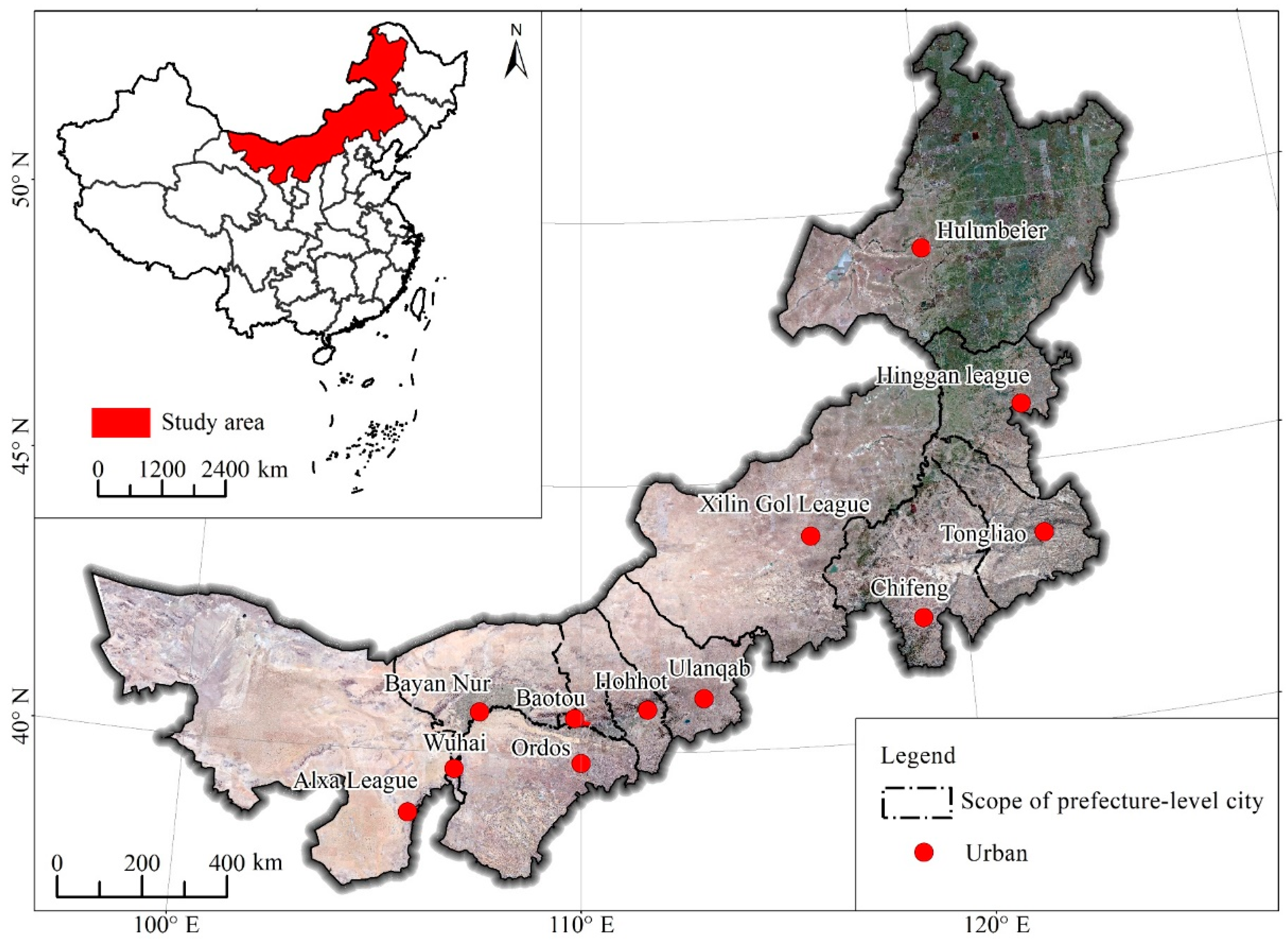
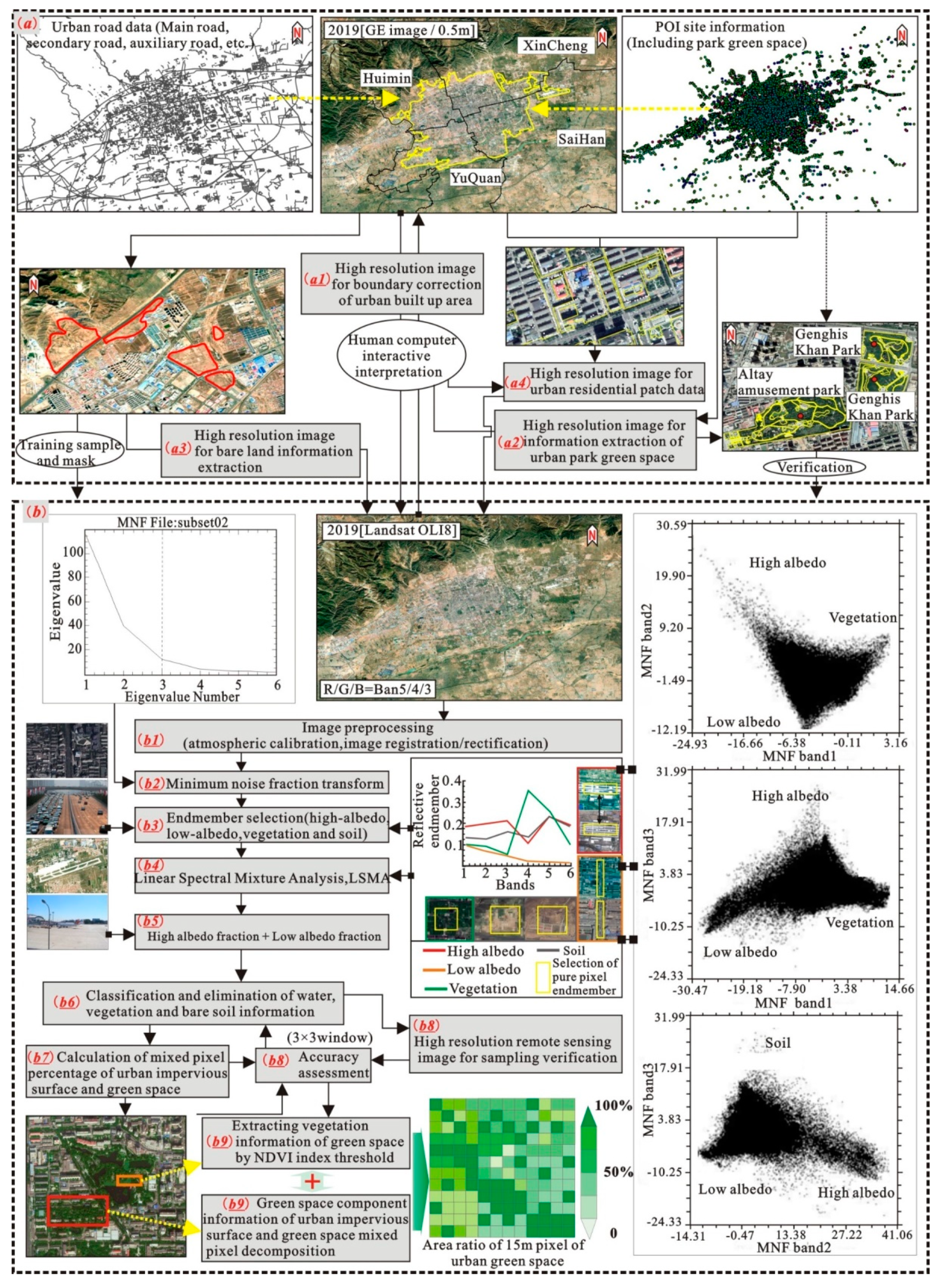
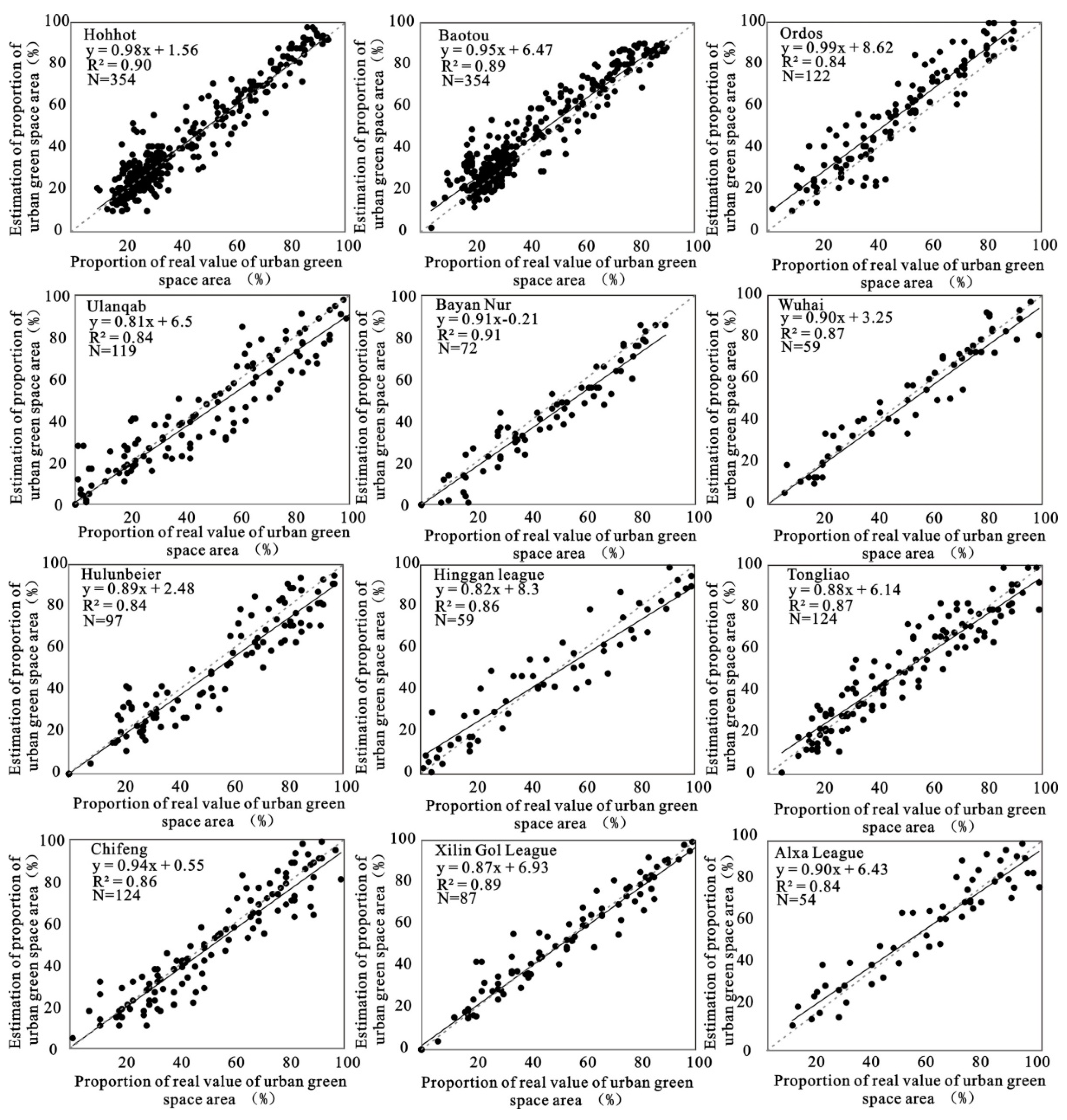
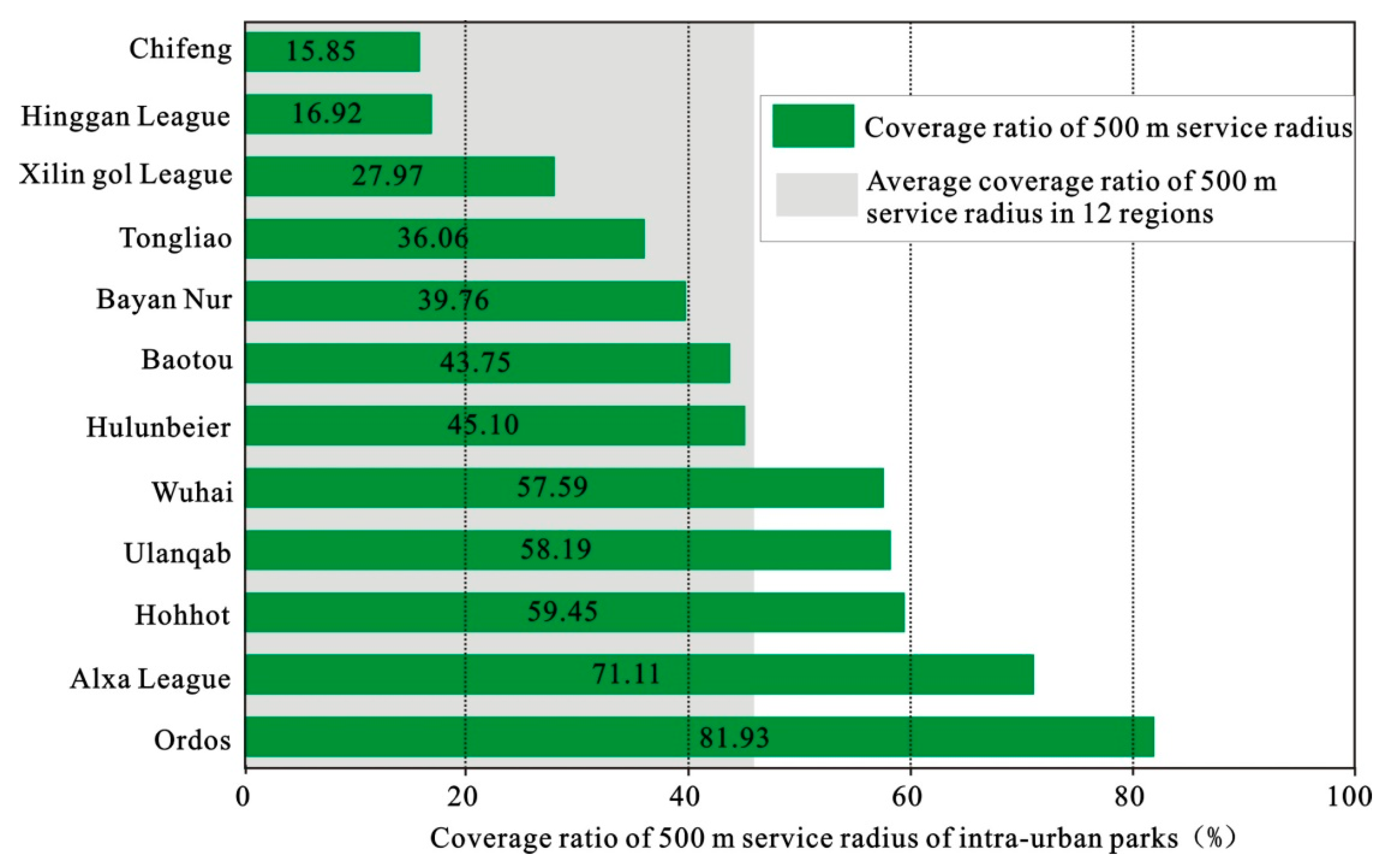
Green space in intra-urban regions plays a significant role in improving the human habitat environment and regulating the ecosystem service in the Inner Mongolian Plateau of China, the environmental barrier region of North China. However, a lack of multi-scale studies on intra-urban green space limits our knowledge of human settlement environments in this region. In this study, a synergistic methodology, including the main process of linear spectral decomposition, vegetation-soil-impervious surface area model, and artificial digital technology, was established to generate a multi-scale of green space (i.e., 15-m resolution intra-urban green components and 0.5-m resolution park region) and investigate multi-scale green space characteristics as well as its ecological service in 12 central cities of the Inner Mongolian Plateau. Results showed that: (1) Total urban areas and urban green space across the studied cities were 1249.87 km2 and 295.40 km2, indicating that the average proportion of green space to urban areas was 24.03%. (2) The proportion of green space to urban areas ranged from 17.09% to 32.17%, and the proportion of parks’ green space to green space ranged from 5.55% to 50.20%, indicating a wide range of quantitative discrepancies. (3) In different climate regions, there were higher proportions of urban/park green space in arid/semi-arid areas to reduce the impacts of dry climate on human settlements; by contrast, lower green space in humid areas mainly displayed a scattered pattern because of the relatively lower influence of climate pressure. (4) Green coverage was an essential indicator of the “Beautiful China” project, and its ratio within 500-m ecological service zones from parks across all cities was 46.14%, which indicated that the ratio of residential land and green space was close to 1:1. Overall, urban/park green space patterns in urban areas adapted to the different climate features in the Inner Mongolian Plateau. For better human settlement sustainability across all studied cities, more greening patches and ecological corridors should be designed in the lower green space regions of the Inner Mongolian Plateau.
Keywords: intra-urban green component; park green space; greening ecological service; environmental barrier region of North China intra-urban green component; park green space; greening ecological service; environmental barrier region of North China