Article

The Spatio-Temporal Heterogeneity of Financial Agglomeration on Green Development in China Cities Using GTWR Model


1
Economics School, Zhongnan University of Economics and Law, Wuhan 430074, China
2
School of Economic & Management, Nanchang University, Nanchang 330031, China
3
Department of City and Regional Planning, University of North Carolina at Chapel Hill, Chapel Hill, NC 27599, USA
4
College of Environment and Planning, Henan University, Kaifeng 475001, China
5
Department of Geography, Kent State University, Kent, OH 44242, USA
6
Institute of Geographic Sciences and Natural Resources Research (IGSNRR), Chinese Academy of Sciences (CAS), Beijing 100101, China
*
Authors to whom correspondence should be addressed.
Sustainability 2020, 12(16), 6660; https://doi.org/10.3390/su12166660
Submission received: 2 July 2020 / Revised: 28 July 2020 / Accepted: 28 July 2020 / Published: 18 August 2020

Abstract

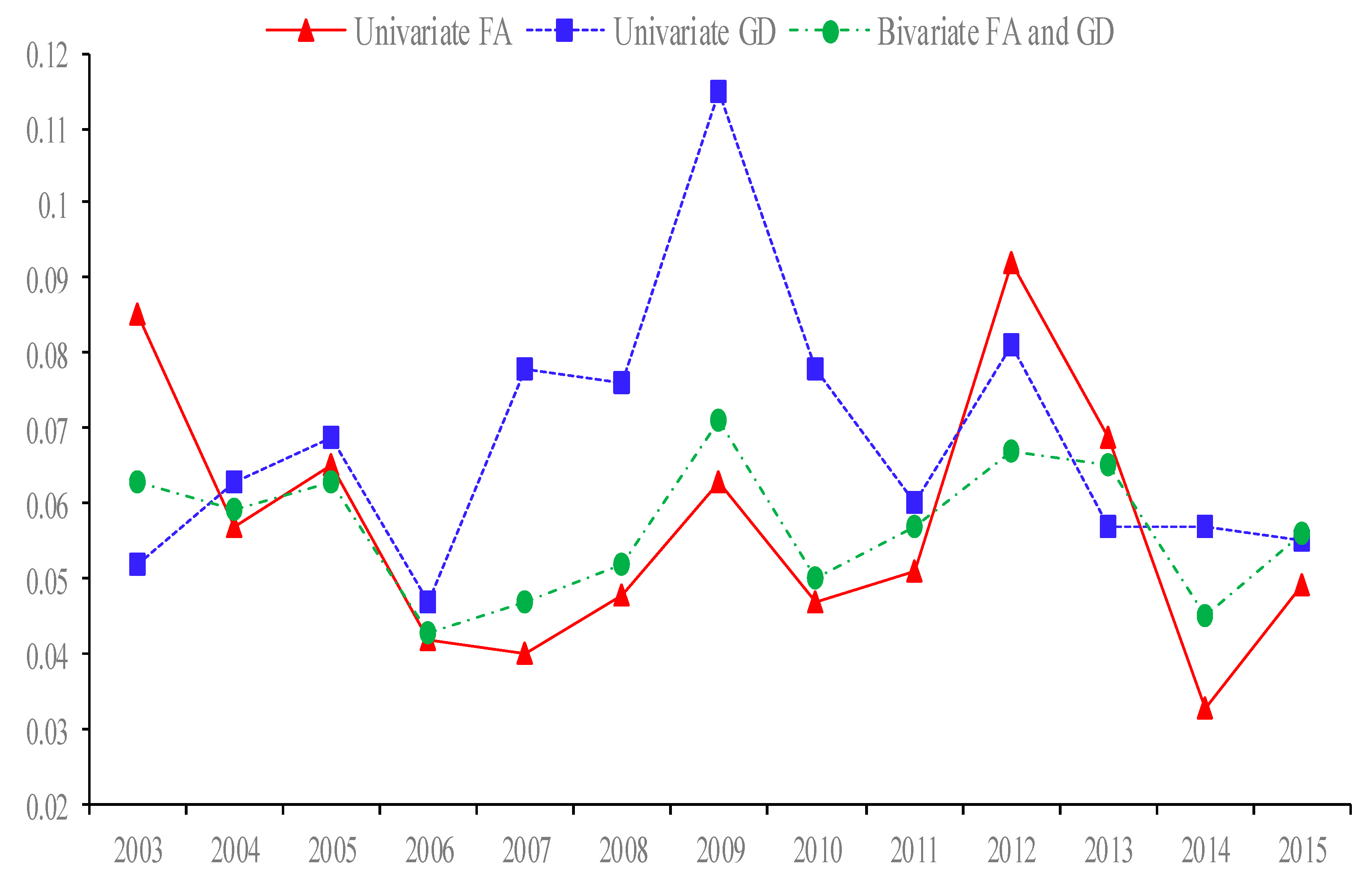
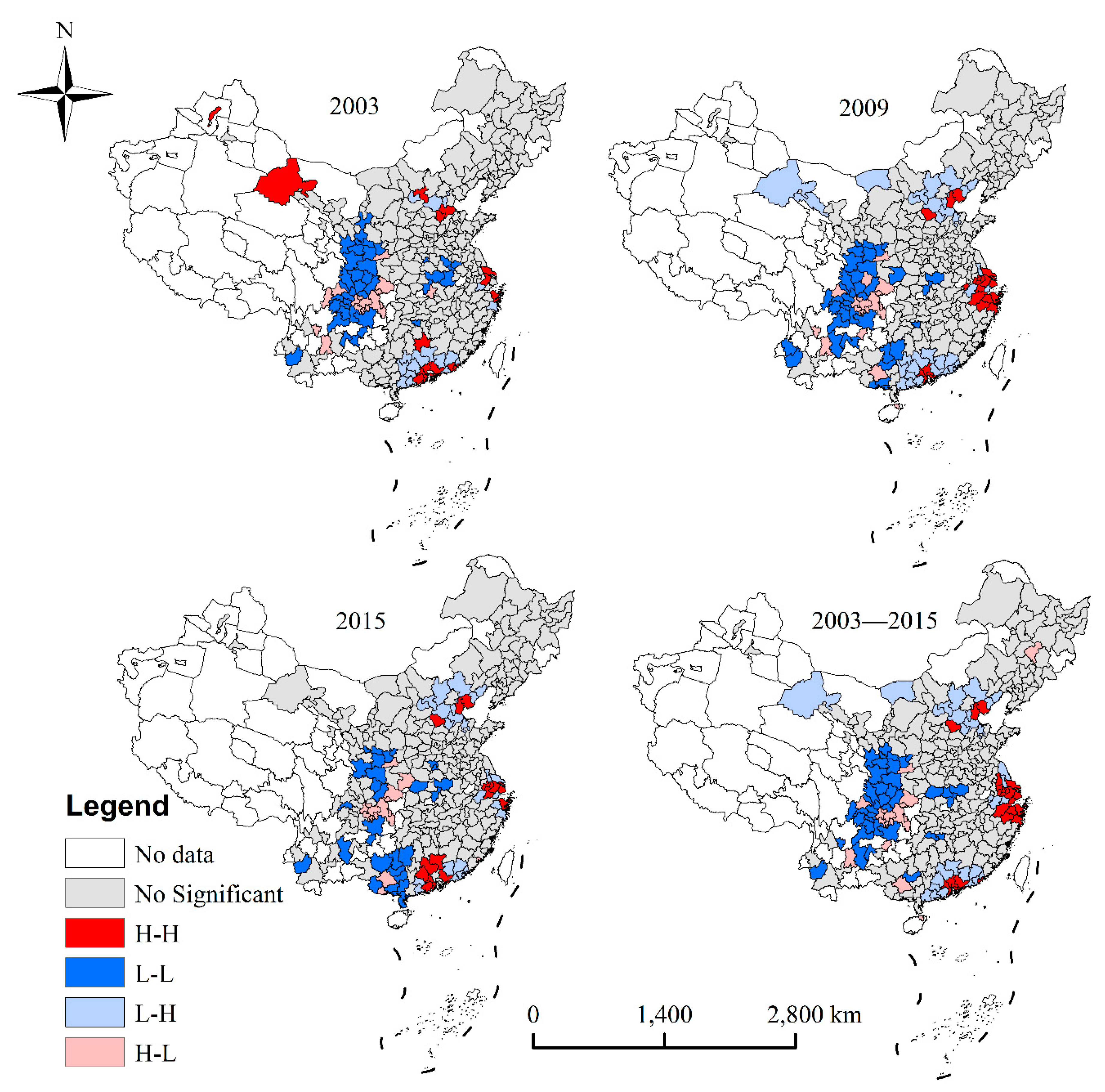
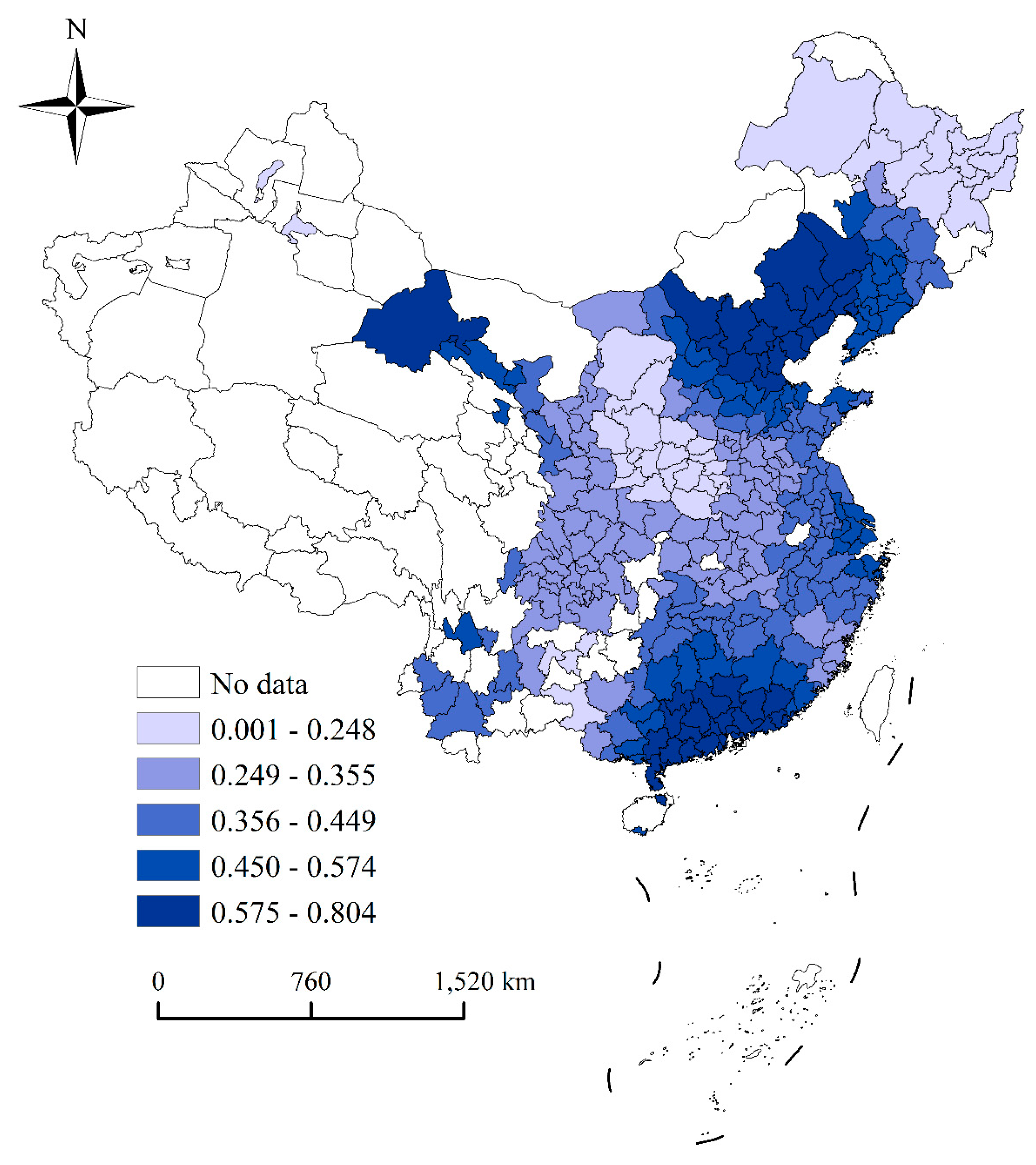
By promoting financial agglomerations to support green development in a region is a keyway for China to resolve the sharp contradiction between economic growth and environmental protection. However, existing research only considered the promotion effect of financial agglomerations on green development, but the spatio-temporal non-stationarity of that effect has been overlooked. Using a panel data of 285 prefecture-level cities in China and based on the evaluation of green development by a Driving-Pressure-State-Impact-Response (DPSIR) model, this paper analyzes the spatial correlation of financial agglomeration on green development. The paper also investigates the differences in the spatio-temporal influence of financial agglomeration on green development from both global and local perspectives by employing a Bivariate Local Indicators of Spatial Association (BLISA) model and a Geographically and Temporally Weighted Regression (GTWR) model. The results indicate that: (1) There exists significant spatial dependency between financial agglomeration and green development from 2003 to 2015, with Low-Low (L-L) and Low-High (L-H) spatial clusters as the main cluster types. (2) From the local perspective, the promoting effect of financial agglomerations on green development has showed significant spatial heterogeneity with a gradually decreasing trend from the southeast coast to the northwest inland of China. This work can help to develop policies for supporting green development by formulating differential strategies for financial agglomerations.
Keywords: financial agglomeration; green development; spatial autocorrelation; spatio-temporal heterogeneity; GTWR; China financial agglomeration; green development; spatial autocorrelation; spatio-temporal heterogeneity; GTWR; China