Family Firms and Sustainability. A Longitudinal Analysis


Abstract
1. Introduction
1.1. Literature Review
1.1.1. Family Firms
1.1.2. Sustainability in Family Firms
1.1.3. Other Bibliometric Studies
2. Methods
2.1. Materials
2.2. Software
3. Results
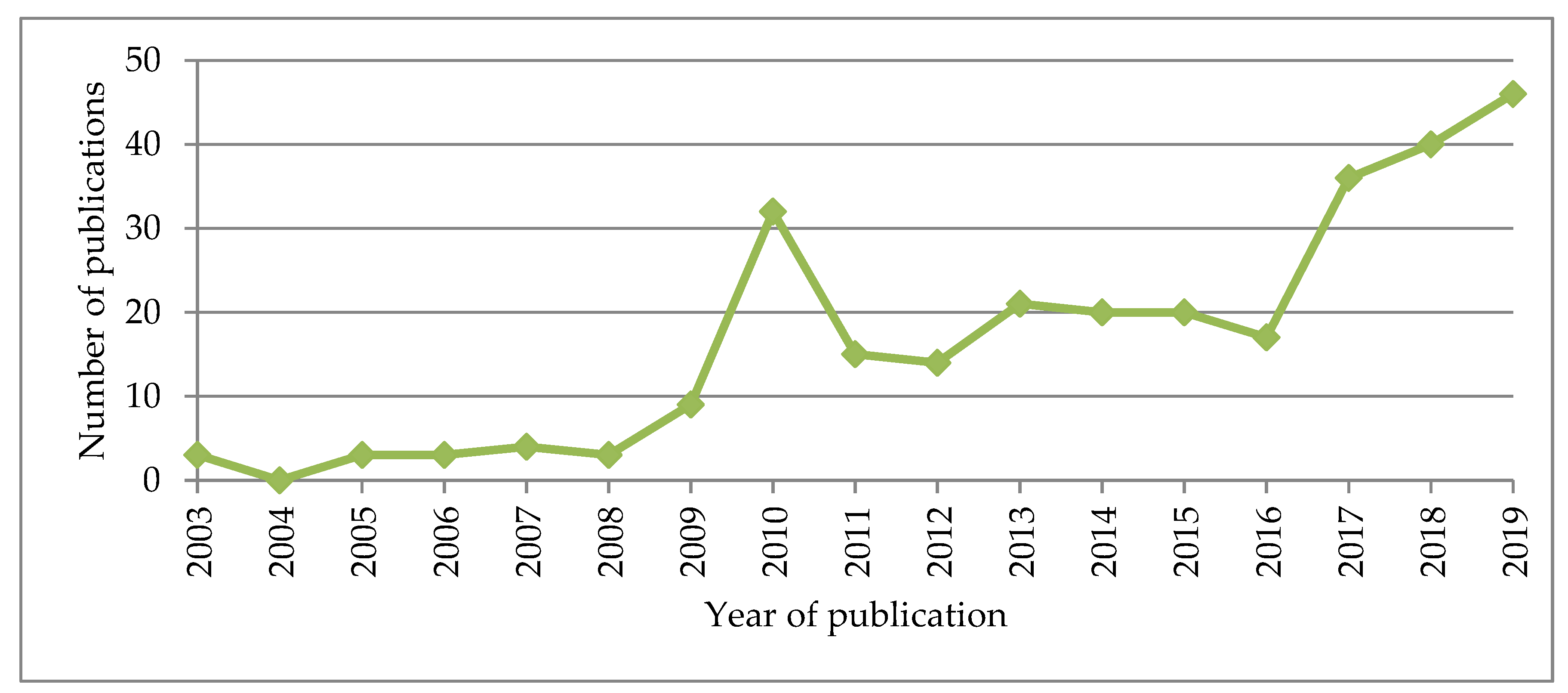
3.1. Activity Indicators in the Literature on the Sustainability of Family Businesses
3.2. Content Analysis
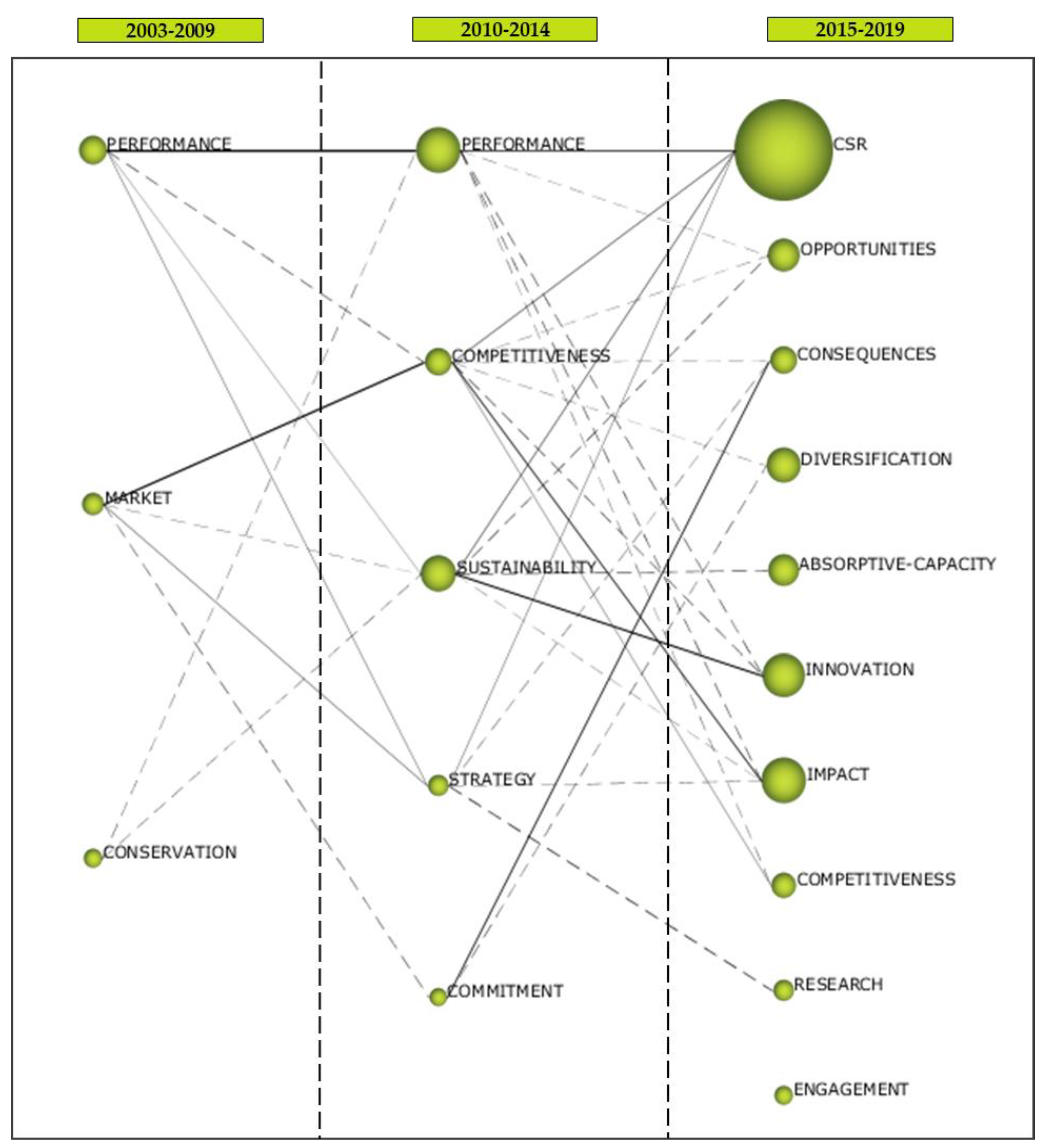
3.2.1. Evolution of Keywords
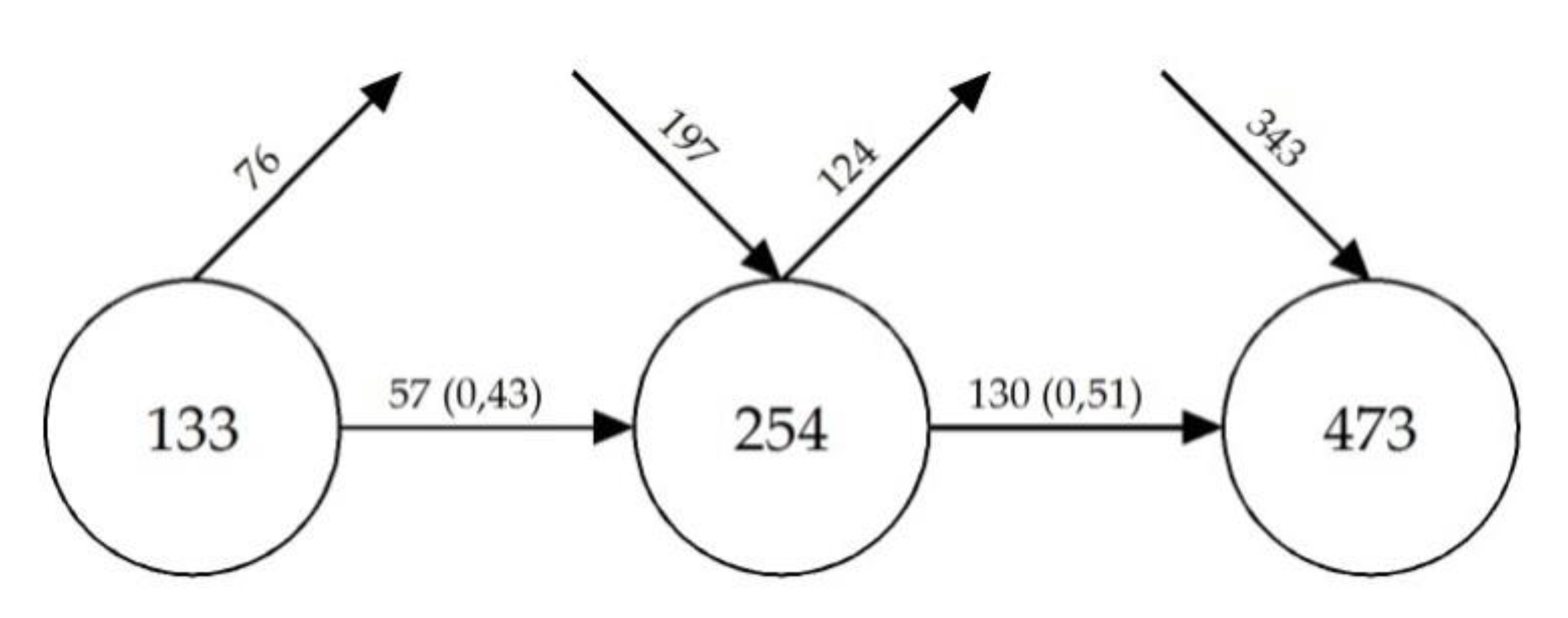
3.2.2. Longitudinal Analysis
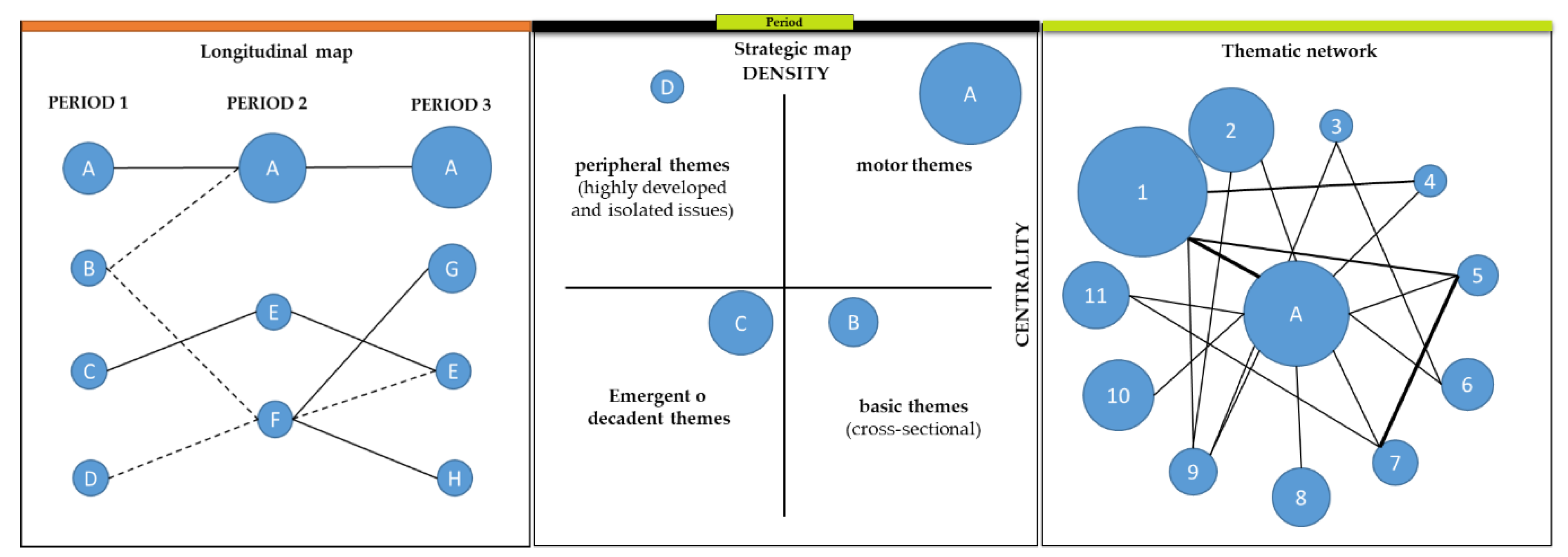
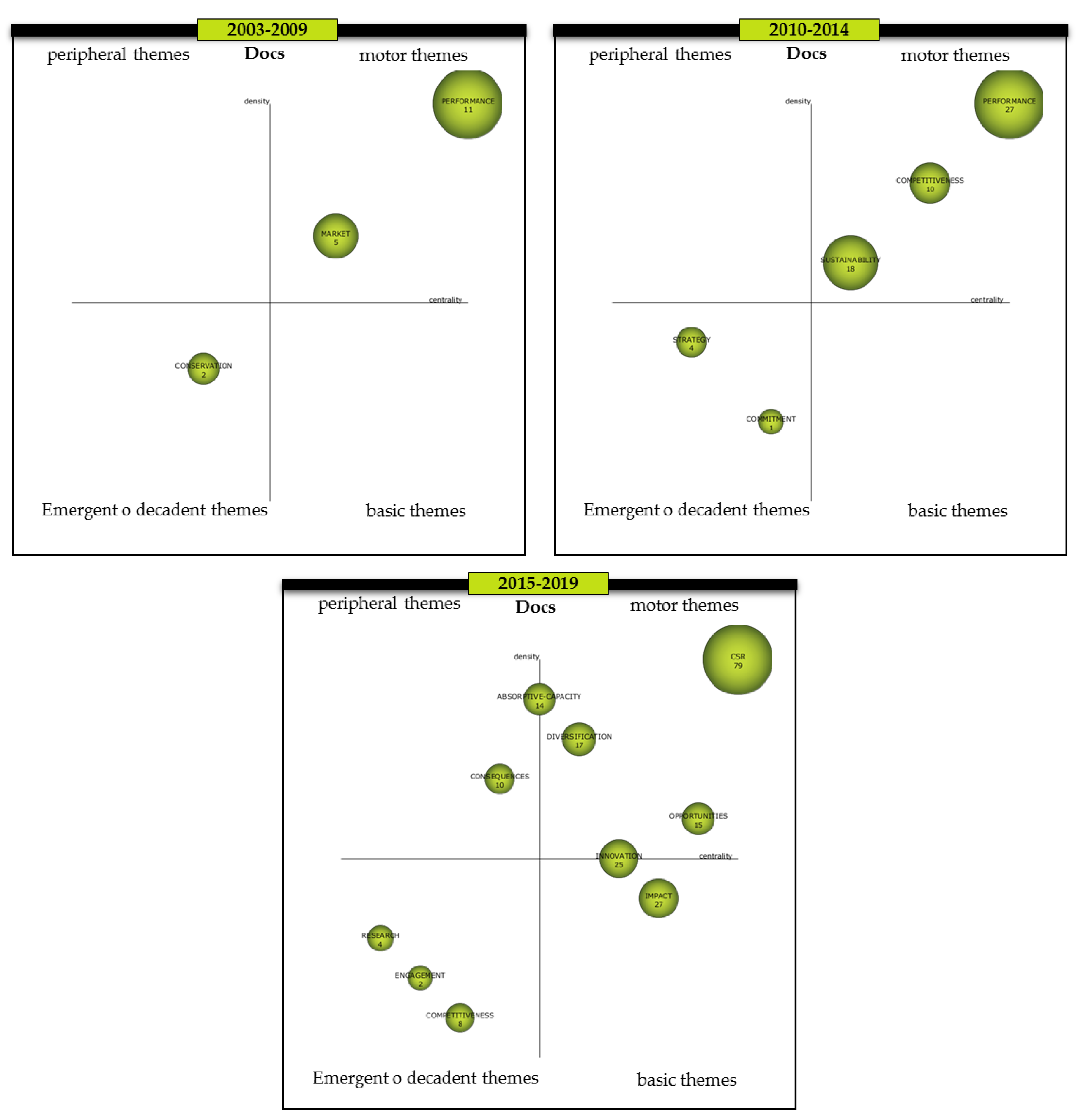
3.2.3. Analysis of Strategic Maps by Period
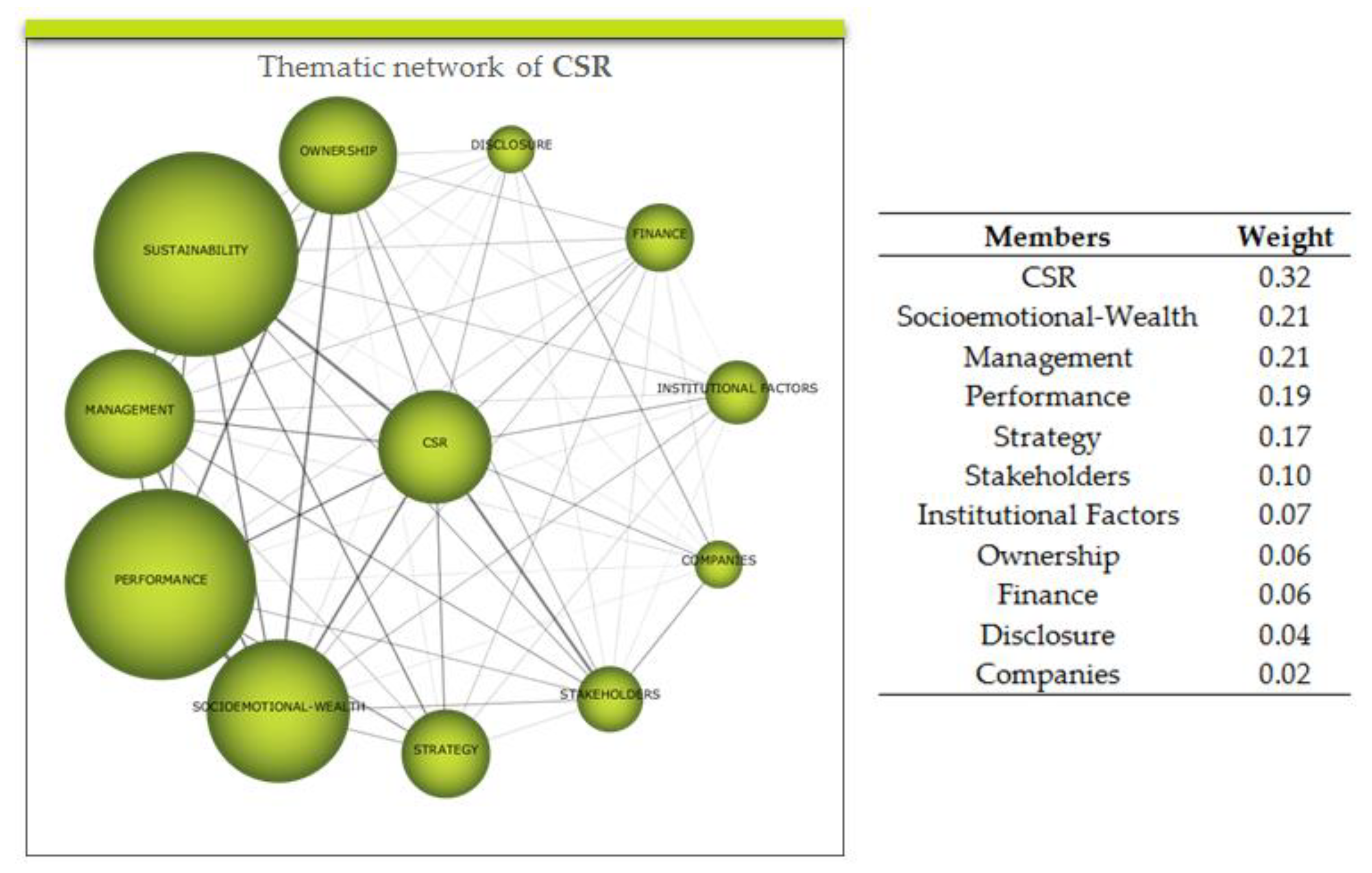
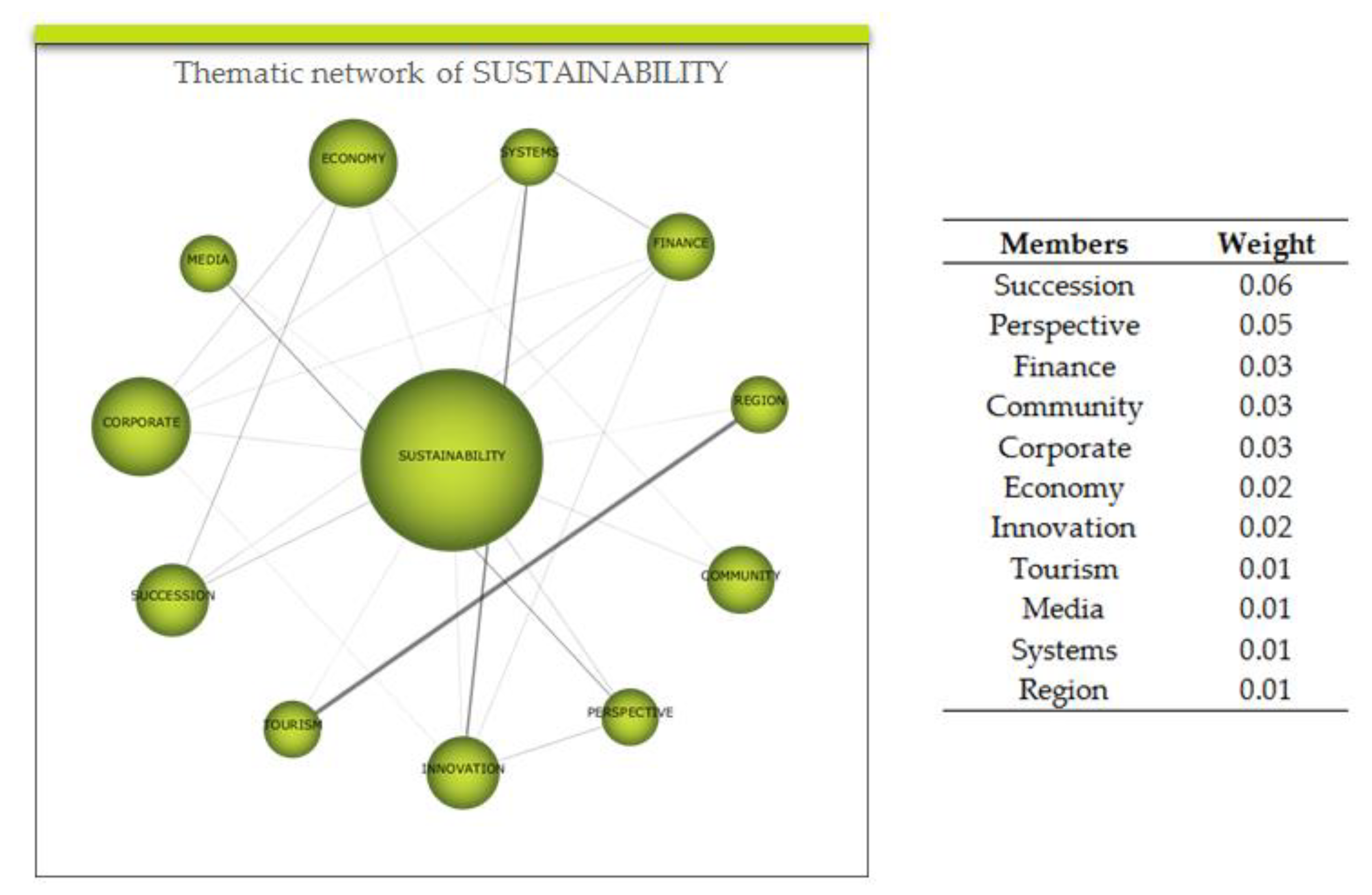
3.2.4. Thematic Network on Sustainability by Period
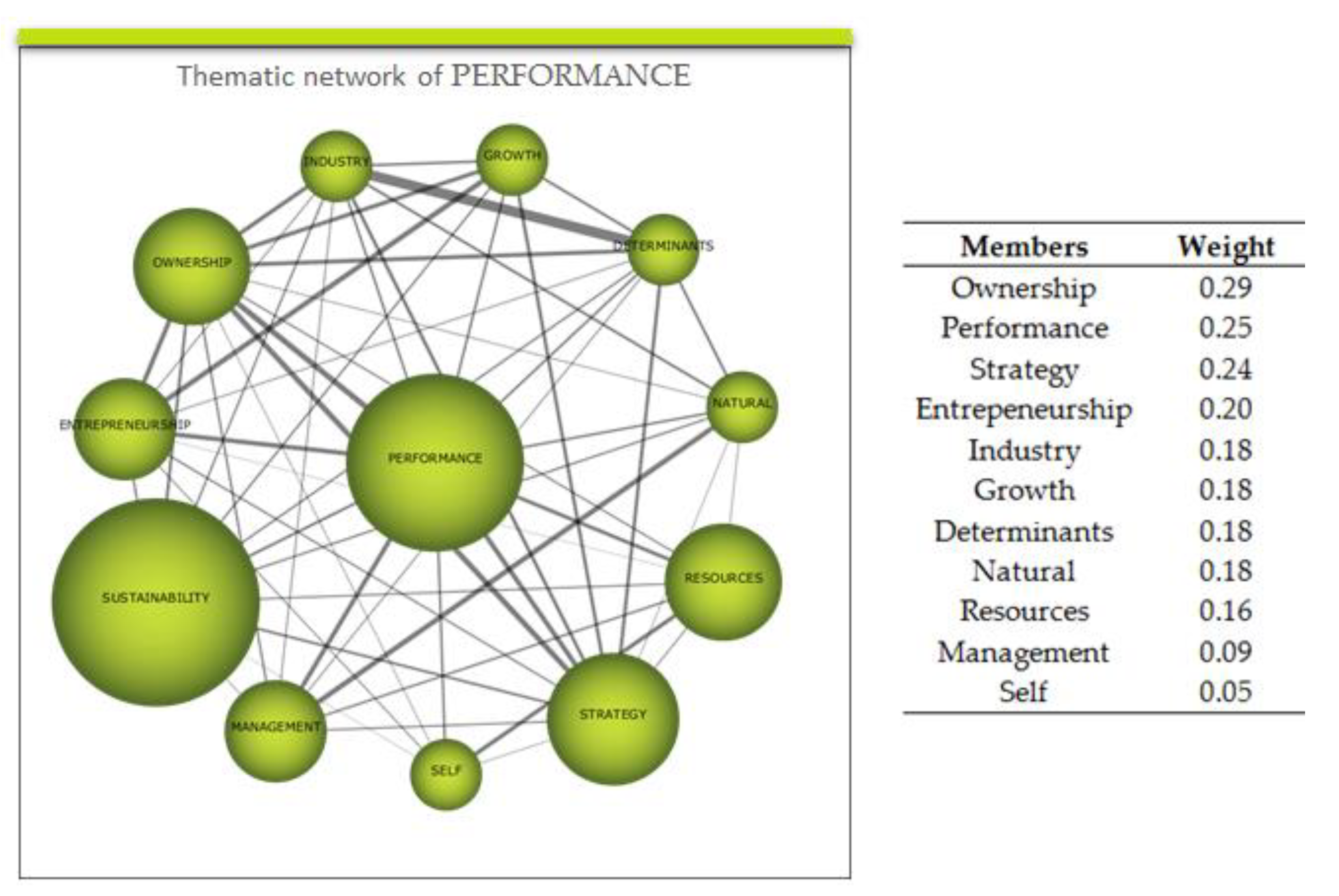
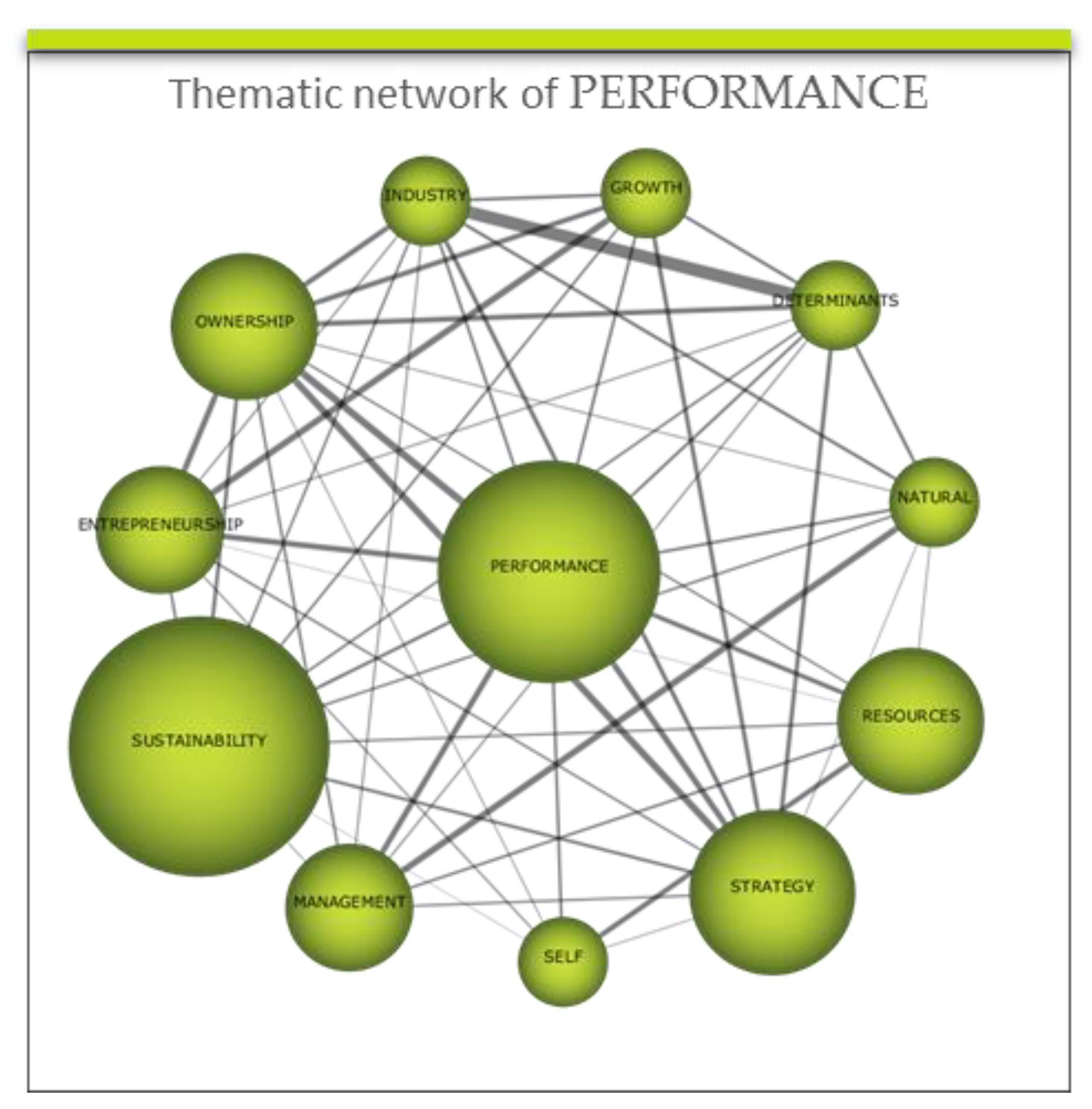
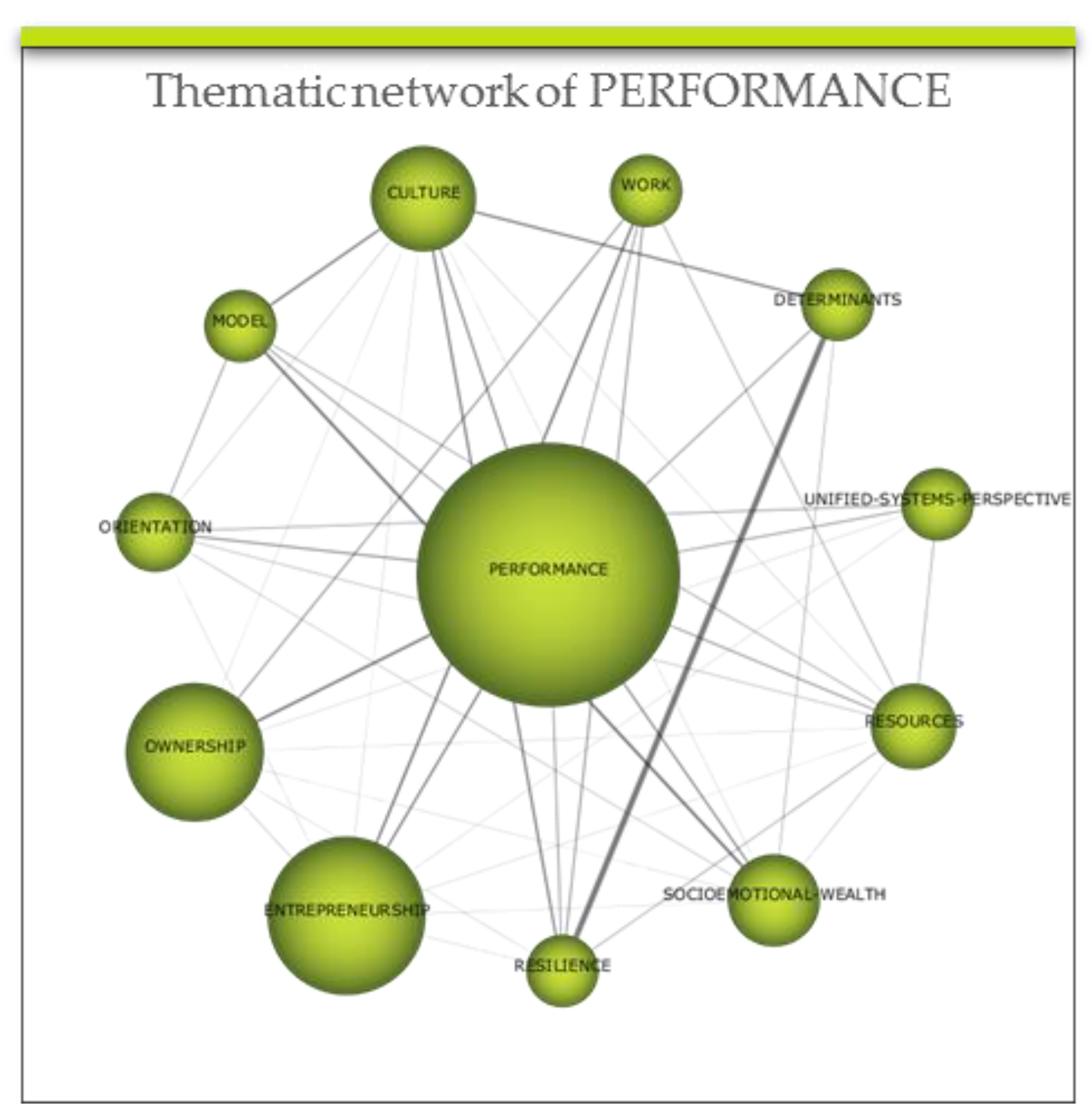
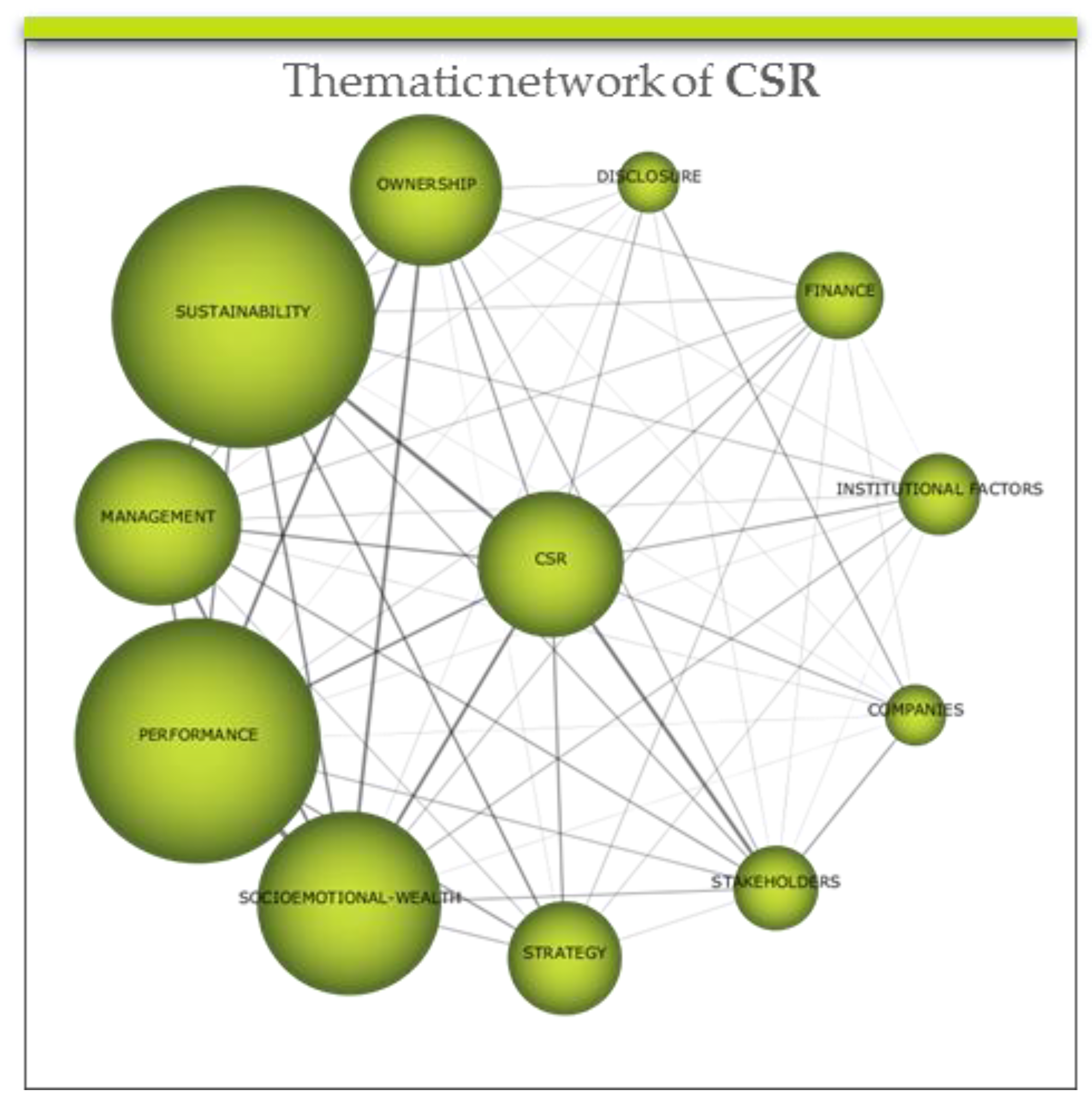
3.2.5. Thematic Networks of the Driving Topics Per Period
4. Conclusions
Author Contributions
Funding
Acknowledgments
Conflicts of Interest
References
- Wright, M.; Kellermanns, F. Family firms: A research agenda and publication guide. J. Fam. Bus. Strategy 2011, 2, 187–198. [Google Scholar] [CrossRef] [Scilit]
- European Parliament. Report on Family Businesses in Europe (2014/2210 (INI)). Available online: https://www.europarl.europa.eu/doceo/document/A-8-2015-0223_ES.html#title1 (accessed on 10 March 2020).
- IFERA. Family businesses dominate: International family enterprise research academy (IFERA). Fam. Bus. Rev. 2003, 16, 235–240. [Google Scholar] [CrossRef] [Scilit]
- Gersick, K.E.; Davis, J.; Hampton, M.M.; Lansberg, I. Generation to Generation: Life Cycles of the Family Business; Harvard Business School Press: Boston, MA, USA, 1997. [Google Scholar]
- Upton, N.; Teal, E.J.; Felan, J.T. Strategic and business planning practices of fast growth family firms. J. Small Bus. Manag. 2001, 39, 60–72. [Google Scholar] [CrossRef] [Scilit]
- Hernandez Fernandez, L. Essential competences for small and medium family enterprises: A model for business success. Rev. Cienc. Soc. 2007, 13, 249–263. [Google Scholar]
- Acquaah, M. Management control systems, business strategy and performance: A comparative analysis of family and non-family businesses in a transition economy in sub-Saharan Africa. J. Fam. Bus. Strategy 2013, 4, 131–146. [Google Scholar] [CrossRef] [Scilit]
- Chrisman, J.; Memili, E.; Misra, K. Nonfamily managers, family firms, and the winner’s curse: The influence of noneconomic goals and bounded rationality. Entrep. Theory Pract. 2014, 38, 1–25. [Google Scholar] [CrossRef] [Scilit]
- García-Ramos, R.; García-Olalla, M. Board characteristics and firm performance in public founder- and nonfounder-led family businesses. J. Fam. Bus. Strategy 2011, 2, 220–231. [Google Scholar] [CrossRef] [Scilit]
- Singal, M.; Gerde, V. Is diversity management related to financial performance in family firms? Fam. Bus. Rev. 2015, 28, 243–259. [Google Scholar] [CrossRef] [Scilit]
- Astrachan, J.H.; Shanker, M.C. Family businesses’ contribution to the US economy: A closer look. Fam. Bus. Rev. 2003, 16, 211–219. [Google Scholar] [CrossRef] [Scilit]
- James, H. Owner as manager, extended horizons and the family firm. Int. J. Econ. Bus. 1999, 6, 41–55. [Google Scholar] [CrossRef] [Scilit]
- Lumpkin, G.; Brigham, K. Long-term orientation and Intertemporal choice in family firms. Entrep. Theory Pract. 2011, 35, 1149–1169. [Google Scholar] [CrossRef] [Scilit]
- Memili, E.; Fang, H.; Koç, B.; Yildirim-Öktem, Ö.; Sonmez, S. Sustainability practices of family firms: The interplay between family ownership and long-term orientation. J. Sustain. Tour. 2018, 26, 9–28. [Google Scholar] [CrossRef] [Scilit]
- Schmidt, F.; Zanini, R.; Korzenowski, A.; Schmidt, R.; Benchimol, K. Evaluation of sustainability practices in small and medium-sized manufacturing enterprises in Southern Brazil. Sustainability 2018, 10, 2460. [Google Scholar] [CrossRef] [Scilit]
- Sharma, S.; Henriques, I. Stakeholder influences on sustainability practices in the Canadian forest products industry. Strateg. Manag. J. 2005, 26, 159–180. [Google Scholar] [CrossRef] [Scilit]
- Berrone, P.; Cruz, C.; Gomez-Mejia, L.; Larraza-Kintana, M. Socioemotional wealth and corporate responses to institutional pressures: Do family-controlled firms pollute less? Adm. Sci. Q. 2010, 55, 82–113. [Google Scholar] [CrossRef] [Scilit]
- Debicki, B.; Matherne, C.; Kellermanns, F.; Chrisman, J. Family business research in the new millennium: An overview of the who, the where, the what, and the why. Fam. Bus. Rev. 2009, 22, 151–166. [Google Scholar] [CrossRef] [Scilit]
- Broccardo, L.; Truant, E.; Zicari, A. Internal corporate sustainability drivers: What evidence from family firms? A literature review and research agenda. Corp. Soc. Responsib. Environ. Manag. 2019, 26, 1–18. [Google Scholar] [CrossRef] [Scilit]
- Le Breton-Miller, I.; Miller, D. Family firms and practices of sustainability: A contingency view. J. Fam. Bus. Strategy 2016, 7, 26–33. [Google Scholar] [CrossRef] [Scilit]
- Brigham, K.; Lumpkin, G.; Payne, G.; Zachary, M.; Sharma, P.; Salvato, C.; Reay, T. Researching Long-Term Orientation: A Validation Study and Recommendations for Future Research. Fam. Bus. Rev. 2014, 27, 72–88. [Google Scholar] [CrossRef] [Scilit]
- Eddleston, K.; Kellermanns, F. Destructive and productive family relationships: A stewardship theory perspective*. J. Bus. Ventur. 2007, 22, 545–565. [Google Scholar] [CrossRef] [Scilit]
- Chua, J.; Chrisman, J.; Sharma, P. Defining the family business by behavior. Entrep. Theory Pract. 1999, 23, 19–39. [Google Scholar] [CrossRef] [Scilit]
- Lansberg, I.S.; Perrow, E.L.; Rogolsky, S. Family business as an emerging field. Fam. Bus. Rev. 1988, 1, 1–8. [Google Scholar] [CrossRef] [Scilit]
- Rosenblatt, P.C.; de Mik, L.; Anderson, R.M.; Johnson, P.A. The Family in Business: Understanding and Dealing with the Challenges Entrepreneurial Families Face; Jossey-Bass: San Fransisco, CA, USA, 1985. [Google Scholar]
- Westhead, P.; Howorth, C. “Types” of private family firms: An exploratory conceptual and empirical analysis. Entrep. Reg. Dev. 2007, 19, 405–431. [Google Scholar] [CrossRef] [Scilit]
- Astrachan, J.; Klein, S.; Smyrnios, K. The F-PEC scale of family influence: A proposal for solving the family business definition problem. Fam. Bus. Rev. 2002, 15, 45–58. [Google Scholar] [CrossRef] [Scilit]
- Chen, S.; Chen, X.; Cheng, Q.; Shevlin, T. Are family firms more tax aggressive than non-family firms. J. Financ. Econ. 2010, 95, 41–61. [Google Scholar] [CrossRef] [Scilit]
- Basco, R. ‘Where do you want to take your family firm?’ A theoretical and empirical exploratory study of family business goals. Bus. Res. Q. 2017, 20, 28–44. [Google Scholar] [CrossRef] [Scilit]
- Achleitner, A.; Günther, N.; Kaserer, C.; Siciliano, G. Real earnings management and accrual-based earnings management in family firms. Eur. Account. Rev. Account. Report. Fam. Firms 2014, 23, 431–461. [Google Scholar] [CrossRef] [Scilit]
- Diéguez-Soto, J.; Martínez-Romero, M. Family involvement in management and product innovation: The mediating role of R & D strategies. Sustainability 2019, 11, 2162. [Google Scholar] [CrossRef] [Scilit]
- Sharma, P.; Salvato, C. Commentary: Exploiting and exploring new opportunities over life cycle stages of family firms. Entrep. Theory Pract. 2011, 35, 1199–1205. [Google Scholar] [CrossRef] [Scilit]
- Yew, J. Tacit knowledge and generational change: The china factor, enterprise development and malaysian chinese family SMEs in traditional food production. China Rep. 2020, 56, 103–128. [Google Scholar] [CrossRef] [Scilit]
- Sun, Y.; Sun, X.; Wang, W. Research on sustainable develop of Chinese family enterprise based on independent innovation ability. In Proceedings of the 19th International Conference on Industrial Engineering and Engineering Management: Management System Innovation, Changsha, China, 1 January 2013; Springer: Berlin, Germany, 2011; pp. 651–658. [Google Scholar] [CrossRef]
- Ardito, L.; Petruzzelli, A.; Pascucci, F.; Peruffo, E. Inter-firm R&D collaborations and green innovation value: The role of family firms’ involvement and the moderating effects of proximity dimensions. Bus. Strategy Environ. 2019, 28, 185–197. [Google Scholar] [CrossRef] [Scilit]
- Villalonga, B.; Amit, R. How do family ownership, control and management affect firm value. J. Financ. Econ. 2006, 80, 385–417. [Google Scholar] [CrossRef] [Scilit]
- Zahra, S.A. Entrepreneurial risk taking in family firms. Fam. Bus. Rev. 2005, 18, 23–40. [Google Scholar] [CrossRef] [Scilit]
- Naldi, L.; Nordqvist, M.; Sjöberg, K.; Wiklund, J. Entrepreneurial orientation, risk taking, and performance in family firms. Fam. Bus. Rev. 2007, 20, 33–47. [Google Scholar] [CrossRef] [Scilit]
- Cucculelli, M.; Micucci, G. Family succession and firm performance: Evidence from Italian family firms. J. Corp. Financ. 2008, 14, 17–31. [Google Scholar] [CrossRef] [Scilit]
- Ali, A.; Chen, T.Y.; Radhakrishnan, S. Corporate disclosures by family firms. J. Account. Econ. 2007, 44, 238–286. [Google Scholar] [CrossRef] [Scilit]
- van Essen, M.; Carney, M.; Gedajlovic, E.R.; Heugens, P.P.M.A.R.; van Oosterhout, J. Do U.S. Publicly-Listed Faimly Firms Differ? Does It Matter? A Meta-Analysis. Acad. Manag. Best Paper Proc. 2011, 1, 1–2. [Google Scholar]
- Lee, Y.; Danes, S.; Shelley, M. Work roles, management and perceived well-being for married women within family businesses. J. Fam. Econ. Issues 2006, 27, 523–541. [Google Scholar] [CrossRef] [Scilit]
- Al-Dajani, H.; Bika, Z.; Collins, L.; Swail, J. Gender and family business: New theoretical directions. Int. J. Gender Entrep. 2014, 6, 218–230. [Google Scholar] [CrossRef] [Scilit]
- Amarapurkar, S.; Danes, S. Farm business-owning couples: Interrelationships among business tensions, relationship conflict quality, and spousal satisfaction. J. Fam. Econ. Issues 2005, 26, 419–441. [Google Scholar] [CrossRef] [Scilit]
- Wang, Y.; Poutziouris, P. Leadership styles, management systems and growth: Emperical evidence from UK owner-managed SMEs. J. Enterprising Cult. 2010, 18, 331–354. [Google Scholar] [CrossRef] [Scilit]
- Uhlaner, L.; Berent-Braun, M.; Jeurissen, R.; Wit, G. Beyond size: Predicting engagement in environmental management practices of Dutch SMEs. J. Bus. Ethics 2012, 109, 411–429. [Google Scholar] [CrossRef] [Scilit]
- Doluca, H.; Wagner, M.; Block, J. Sustainability and environmental behaviour in family firms: A longitudinal analysis of environment-related activities, innovation and performance. Bus. Strategy Environ. 2018, 27, 152–172. [Google Scholar] [CrossRef] [Scilit]
- Pushkarskaya, H.; Marshall, M. Family structure, policy shocks, and family business adjustment choices. J. Fam. Econ. Issues 2010, 31, 414–426. [Google Scholar] [CrossRef] [Scilit]
- Giovanna, C.; Alfredo, D.; Lucio, C. Corporate social responsibility: A survey among SMEs in Bergamo. Procedia-Soc. Behav. Sci. 2012, 62, 325–341. [Google Scholar] [CrossRef] [Scilit]
- Iaia, L.; Vrontis, D.; Maizza, A.; Fait, M.; Scorrano, P.; Cavallo, F. Family businesses, corporate social responsibility, and websites. Br. Food J. 2019, 121, 1442–1466. [Google Scholar] [CrossRef] [Scilit]
- Hernández-Perlines, F.; Rung-Hoch, N. Sustainable entrepreneurial orientation in family firms. Sustainability 2017, 9, 1212. [Google Scholar] [CrossRef] [Scilit]
- Iyer, V.; Lulseged, A. Does family status impact US firms’ sustainability reporting? Sustain. Account. Manag. Policy J. 2013, 4, 163–189. [Google Scholar] [CrossRef] [Scilit]
- Kotlar, J.; Fang, H.; De Massis, A.; Frattini, F. Profitability goals, control goals, and the R&D investment decisions of family and nonfamily firms. J. Prod. Innov. Manag. 2014, 31, 1128–1145. [Google Scholar] [CrossRef] [Scilit]
- Huang, Y.-C.; Ding, H.-B.; Kao, M.-R. Salient stakeholder voices: Family business and green innovation adoption. J. Manag. Organ. 2009, 15, 309–326. [Google Scholar] [CrossRef] [Scilit]
- Kallmuenzer, A.; Nikolakis, W.; Peters, M.; Zanon, J. Trade-offs between dimensions of sustainability: Exploratory evidence from family firms in rural tourism regions. J. Sustain. Tour. 2018, 26, 1204–1221. [Google Scholar] [CrossRef] [Scilit]
- Cristiano, E. Internationalisation and corporate governance in family businesses: A case study. Int. J. Bus. Perform. Manag. 2018, 19. [Google Scholar] [CrossRef] [Scilit]
- Mitter, C.; Emprechtinger, S. The role of stewardship in the internationalisation of family firms. Int. J. Entrep. Ventur. 2016, 8, 400–421. Available online: https://www.inderscience.com/info/inarticle.php?artid=82220 (accessed on 7 July 2020). [CrossRef] [Scilit]
- Kuo, A.; Kao, M.; Chang, Y.; Chiu, C. The influence of international experience on entry mode choice: Difference between family and non-family firms. Eur. Manag. J. 2012, 30, 248–263. [Google Scholar] [CrossRef] [Scilit]
- Carvalho, L.; Williams, B. Let the cork fly: Creativity and innovation in a family business. Int. J. Entrep. Innov. 2014, 15, 127–133. [Google Scholar] [CrossRef] [Scilit]
- Tegtmeier, S.; Classen, C. How do family entrepreneurs recognize opportunities? Three propositions. Rev. Int. Bus. Strategy 2017, 27, 199–216. [Google Scholar] [CrossRef] [Scilit]
- Sharma, P.; Sharma, S. Drivers of proactive environmental strategy in family firms. Bus. Ethics Q. 2011, 21, 309–334. [Google Scholar] [CrossRef] [Scilit]
- Adendorff, C.; Halkias, D. Leveraging ethnic entrepreneurship, culture and family dynamics to enhance good governance and sustainability in the immigrant family business. J. Dev. Entrep. 2014, 19. [Google Scholar] [CrossRef] [Scilit]
- Van Der Merwe, S.P. Determinants of family employee work performance and compensation in family businesses. South Afr. J. Bus. Manag. 2009, 40, 51–63. [Google Scholar] [CrossRef] [Scilit]
- Eddleston, K.; Kellermanns, F.; Sarathy, R. Resource configuration in family firms: Linking resources, strategic planning and technological opportunities to performance. J. Manag. Stud. 2008, 45, 26–50. [Google Scholar] [CrossRef] [Scilit]
- Reay, T.; Jaskiewicz, P.; Hinings, C. How family, business, and community logics shape family firm behavior and “rules of the game” in an organizational field. Fam. Bus. Rev. 2015, 28. [Google Scholar] [CrossRef] [Scilit]
- Gavana, G.; Gottardo, P.; Moisello, A. The effect of equity and bond issues on sustainability disclosure. Family vs. non-family Italian firms. Soc. Responsib. J. 2017, 13, 126–142. [Google Scholar] [CrossRef] [Scilit]
- Mzid, I.; Khachlouf, N.; Soparnot, R. How does family capital influence the resilience of family firms? J. Int. Entrep. 2019, 17, 249–277. [Google Scholar] [CrossRef] [Scilit]
- Dominici, A.; Boncinelli, F.; Marone, E. Lifestyle entrepreneurs in winemaking: An exploratory qualitative analysis on the non-pecuniary benefits. Int. J. Wine Bus. Res. 2019, 31, 385–405. [Google Scholar] [CrossRef] [Scilit]
- Cherchem, N. The relationship between organizational culture and entrepreneurial orientation in family firms: Does generational involvement matter? J. Fam. Bus. Strategy 2017, 8, 87–98. [Google Scholar] [CrossRef] [Scilit]
- Pikkemaat, B.; Peters, M.; Bichler, B. Innovation research in tourism: Research streams and actions for the future. J. Hosp. Tour. Manag. 2019, 41, 184–196. [Google Scholar] [CrossRef] [Scilit]
- Stafford, K.; Bhargava, V.; Danes, S.; Haynes, G.; Brewton, K. Factors associated with long-term survival of family businesses: Duration analysis. J. Fam. Econ. Issues 2010, 31, 442–457. [Google Scholar] [CrossRef] [Scilit]
- Botella-Carrubi, M.D.; González-Cruz, T.F. Context as a provider of key resources for succession: A case study of sustainable family firms. Sustainability 2019, 11, 1873. [Google Scholar] [CrossRef] [Scilit]
- Lušňáková, Z.; Juríčková, Z.; Šajbidorová, M.; Lenčéšová, S. Succession as a sustainability factor of family business in Slovakia. Equilibrium. Q. J. Econ. Econ. Policy 2019, 14, 503–520. [Google Scholar] [CrossRef] [Scilit]
- Hidayah, S. Succession role of indigenous and non-indigenous family business in Indonesia to achieve business sustainability. In Proceedings of the 16th International Symposium on Management (INSYMA 2019). Manado, Indonesia; Atlantic Press: Paris, France, 2019; pp. 214–217. [Google Scholar] [CrossRef] [Scilit]
- Porfírio, J.; Carrilho, T.; Hassid, J.; Rodrigues, R. Family business succession in different national contexts: A Fuzzy-Set QCA approach. Sustainability 2019, 11, 6309. [Google Scholar] [CrossRef] [Scilit]
- Wang, Y.-Z.; Lo, F.-Y.; Weng, S.-M. Family businesses successors knowledge and willingness on sustainable innovation: The moderating role of leader’s approval. J. Innov. Knowl. 2019, 4, 188–195. [Google Scholar] [CrossRef] [Scilit]
- Koiranen, M. Over 100 years of age but still entrepreneurially active in business: Exploring the values and family characteristics of old Finnish family firms. Fam. Bus. Rev. 2002, 15, 175–187. [Google Scholar] [CrossRef] [Scilit]
- Cretu, A.; Brodie, R. The influence of brand image and company reputation where manufacturers market to small firms: A customer value perspective. Ind. Mark. Manag. 2007, 36, 230–240. [Google Scholar] [CrossRef] [Scilit]
- Gómez-Mejía, L.; Haynes, K.; Núñez-Nickel, M.; Jacobson, K.; Moyano-Fuentes, J. Socioemotional wealth and business risks in family-controlled firms: Evidence from Spanish olive oil mills. Adm. Sci. Q. 2007, 52, 106–137. [Google Scholar] [CrossRef] [Scilit]
- Gómez-Mejía, L.R.; Cruz, C.; Berrone, P.; De Castro, J. The bind that ties: Socioemotional wealth preservation in family firms. Acad. Manag. Annu. 2011, 5, 653–707. [Google Scholar] [CrossRef]
- Patel, P.; Chrisman, J. Risk abatement as a strategy for R&D investments in family firms. Strateg. Manag. J. 2014, 35, 617–627. [Google Scholar] [CrossRef] [Scilit]
- Chrisman, J.; Chua, J.; De Massis, A.; Frattini, F.; Wright, M. The ability and willingness paradox in family firm innovation. J. Prod. Innov. Manag. 2015, 32, 310–318. [Google Scholar] [CrossRef] [Scilit]
- De Massis, A.; Kotlar, J.; Chua, J.; Chrisman, J. Ability and willingness as sufficiency conditions for family-oriented particularistic behavior: Implications for theory and empirical studies. J. Small Bus. Manag. 2014, 52. Available online: http://search.proquest.com/docview/1756519504/ (accessed on 7 July 2020). [CrossRef] [Scilit]
- Cennamo, C.; Berrone, P.; Cruz, C.; Gomez–Mejia, L. Socioemotional wealth and proactive stakeholder engagement: Why family–controlled firms care more about their stakeholders. Entrep. Theory Pract. 2012, 36, 1153–1173. [Google Scholar] [CrossRef] [Scilit]
- Cruz, C.; Larraza-Kintana, M.; Garcés-Galdeano, L.; Berrone, P. Are family firms really more socially responsible. Entrep. Theory Pract. 2014, 38, 1295–1316. [Google Scholar] [CrossRef] [Scilit]
- López-Fernández, M.; Serrano-Bedia, A.; Pérez-Pérez, M. Entrepreneurship and Family Firm Research a Bibliometric Analysis of an Emerging Field. J. Small Bus. Manag. 2016, 54, 622–639. [Google Scholar] [CrossRef] [Scilit]
- López-Pérez, M.; Melero-Polo, I.; Vázquez-Carrasco, R.; Cambra-Fierro, J. Sustainability and business outcomes in the context of SMEs: Comparing family firms vs. non-family firms. Sustainability 2018, 10, 4080. [Google Scholar] [CrossRef] [Scilit]
- Xi, J.; Kraus, S.; Filser, M.; Kellermanns, F. Mapping the field of family business research: Past trends and future directions. Int. Entrep. Manag. J. 2015, 11, 113–132. [Google Scholar] [CrossRef] [Scilit]
- Baumgartner, R.J. Managing corporate sustainability and CSR: A conceptual framework combining values, strategies and instruments contributing to sustainable development. Corp. Soc. Responsib. Environ. Manag. 2014, 21, 258–271. [Google Scholar] [CrossRef] [Scilit]
- Babiak, K.; Trendafilova, S. CSR and environmental responsibility: Motives and pressures to adopt green management practices. Corp. Soc. Responsib. Environ. Manag. 2011, 18, 11–24. [Google Scholar] [CrossRef] [Scilit]
- Albort-Morant, G.; Ribeiro Soriano, D. A bibliometric analysis of international impact of business incubators. J. Bus. Res. 2016, 69, 1775–1779. [Google Scholar] [CrossRef] [Scilit]
- Chen, G.; Xiao, L. Selecting publication keywords for domain analysis in bibliometrics: A comparison of three methods. J. Informetr. 2016, 10, 212–223. [Google Scholar] [CrossRef] [Scilit]
- Rey-Martí, A.; Ribeiro Soriano, D.; Palacios Marqués, D. A bibliometric analysis of social entrepreneurship. J. Bus. Res. 2016, 69, 1651–1655. [Google Scholar] [CrossRef] [Scilit]
- WoS Database Available from the Spanish Foundation for Science and Technology. FEYCT. Available online: https://www.recursoscientificos.fecyt.es/ (accessed on 7 January 2020).
- Cobo, M. SciMAT: Software Tool for the Analysis of the Evolution of Scientific Knowledge. Proposal for an Evaluation Methodology. Ph.D. Thesis, University of Granada, Granada, Spain, 2011. [Google Scholar]
- Olson, P.D.; Zuiker, V.S.; Danes, S.M.; Stafford, K.; Heck, R.K.; Duncan, K.A. The impact of the family and the business on family business sustainability. J. Bus. Ventur. 2003, 18, 639–666. [Google Scholar] [CrossRef] [Scilit]
- Fitzgerald, M.A.; Haynes, G.W.; Schrank, H.L.; Danes, S.M. Socially responsible processes of small family business owners: Exploratory evidence from the national family business survey. J. Small Bus. Manag. 2010, 48, 524–551. [Google Scholar] [CrossRef] [Scilit]
- Wagner, M. Corporate social performance and innovation with high social benefits: A quantitative analysis. J. Bus. Ethics 2010, 94, 581–594. [Google Scholar] [CrossRef] [Scilit]
- Niehm, L.; Swinney, J.; Miller, N. Community social responsibility and its consequences for family business performance*. J. Small Bus. Manag. 2008, 46, 331–350. [Google Scholar] [CrossRef] [Scilit]
- Wei, Y.; Li, W.; Wang, C. Restructuring industrial districts, scaling up regional development: A study of the Wenzhou Model, China. Econ. Geogr. 2007, 83, 421–444. [Google Scholar] [CrossRef] [Scilit]
- Janjuha-Jivraj, S. The sustainability of social capital within ethnic networks. J. Bus. Ethics 2003, 47, 31–43. [Google Scholar] [CrossRef] [Scilit]
- Siakas, K.; Naaranoja, M.; Vlachakis, S.; Siakas, E. Family businesses in the new economy: How to survive and develop in times of financial crisis. Procedia Econ. Financ. 2014, 9, 331–341. [Google Scholar] [CrossRef] [Scilit]
- Cavicchioli, D.; Bertoni, D.; Pretolani, R. Farm succession at a crossroads: The interaction among farm characteristics, labour market conditions, and gender and birth order effects. J. Rural. Stud. 2018, 61, 73–83. [Google Scholar] [CrossRef] [Scilit]
- Suess-Reyes, J.; Fuetsch, E. The future of family farming: A literature review on innovative, sustainable and succession-oriented strategies. J. Rural. Stud. 2016, 47, 117–140. [Google Scholar] [CrossRef] [Scilit]
- Vrontis, D.; Bresciani, S.; Giacosa, E. Tradition and innovation in Italian wine family businesses. Br. Food J. 2016, 118, 1883–1897. [Google Scholar] [CrossRef] [Scilit]
- Anglin, A.; Reid, S.; Short, J.; Zachary, M.; Rutherford, M.; Payne, G.; Carr, J. An Archival Approach to Measuring Family Influence: An Organizational Identity Perspective. Fam. Bus. Rev. 2017, 30, 19–36. [Google Scholar] [CrossRef] [Scilit]
- Zellweger, T.; Nason, R.; Nordqvist, M.; Brush, C. Why do family firms strive for nonfinancial goals? An organizational identity perspective. Entrep. Theory Pract. 2013, 37, 229–248. [Google Scholar] [CrossRef] [Scilit]
- Price, D.; Gürsey, S. Studies in scientometrics I: Transience and continuance in scientific authorship. Ciênc. Inform. 1975, 4, 27–40. [Google Scholar]
- Danes, S.; Stafford, K.; Haynes, G.; Amarapurkar, S. Family capital of family firms: Bridging human, social, and financial capital. Fam. Bus. Rev. 2009, 22, 199–215. [Google Scholar] [CrossRef] [Scilit]
- Basco, R. Family business and regional development—A theoretical model of regional familiness. J. Fam. Bus. Strategy 2015, 6, 259–271. [Google Scholar] [CrossRef] [Scilit]



| Author | Number of Articles | Year of Publication Last Article | Cited by |
|---|---|---|---|
| Danes, Sharon M. | 17 | 2019 | 696 |
| Haynes, George | 6 | 2016 | 251 |
| Stafford, Kathryn | 6 | 2013 | 540 |
| Fitzgerald, Margaret A. | 4 | 2017 | 52 |
| Amarapurkar, Sayali | 3 | 2009 | 190 |
| Lee, Yoon G. | 3 | 2017 | 18 |
| Heck, Ramona Kay Z. | 2 | 2008 | 335 |
| Kellermanns, Franz W. | 2 | 2009 | 304 |
| Zellweger, Thomas | 2 | 2013 | 150 |
| Lee, Jinhee | 2 | 2009 | 145 |
| Sharma, Pramodite | 2 | 2011 | 122 |
| Sharma, Sanjay | 2 | 2011 | 79 |
| Short, Jeremy C. | 2 | 2017 | 64 |
| Zachary, Miles A. | 2 | 2017 | 64 |
| Fang, Hanging | 2 | 2018 | 57 |
| Vrontis, Demetris | 2 | 2019 | 59 |
| Payne, G. Tige | 2 | 2015 | 55 |
| De Massis, Alfredo | 2 | 2019 | 54 |
| Schrank, Holly L. | 2 | 2010 | 53 |
| Brewton, Katherine | 2 | 2010 | 46 |
| Basco, Rodrigo | 2 | 2017 | 38 |
| Gudmunson Clinton | 2 | 2013 | 22 |
| Dangelico, Rosa Maria | 2 | 2019 | 19 |
| Hernandez-Perlines, Felipe | 2 | 2018 | 17 |
| Gavana, Giovanna | 2 | 2017 | 15 |
| Gottardo, Pietro | 2 | 2017 | 15 |
| Misello, Anna Maria | 2 | 2017 | 15 |
| Veltri, Stefania | 2 | 2017 | 10 |
| Venturelli, Andrea | 2 | 2017 | 10 |
| N. | Journal | Q1 | Q2 | Q3 | Q4 | Total Items | % | FirstDoc. | LastDoc. |
|---|---|---|---|---|---|---|---|---|---|
| 1 | Sustainability | X | 20 | 7.0% | 2017 | 2019 | |||
| 2 | Business Strategy and the Environment | X | 8 | 2.8% | 2016 | 2019 | |||
| 3 | Journal of Family Business Management | X(*) | 7 | 2.4% | 2011 | 2018 | |||
| 4 | Journal of Family And Economic Issues | X | 6 | 2.1% | 2005 | 2017 | |||
| 5 | Journal of Family Business Strategy | X | 5 | 1.7% | 2013 | 2019 | |||
| 6 | Journal Of Business Ethics | X | 5 | 1.7% | 2003 | 2018 | |||
| 7 | Family Business Review | X | 5 | 1.7% | 2009 | 2017 | |||
| 8 | Entrepreneurship Theory and Practice | X | 5 | 1.7% | 2009 | 2015 | |||
| 9 | Int. Jour. of Entrepreneurial Behaviour and Research | X | 4 | 1.4% | 2005 | 2018 |
| NO. | Period | N. of Documents |
|---|---|---|
| 1 | 2003–2009 | 25 |
| 2 | 2010–2014 | 102 |
| 3 | 2015–2019 | 159 |
| Name | Centrality | Centrality Range | Density | Density Range | Documents | Citations | H-Index |
|---|---|---|---|---|---|---|---|
| Performance | 125.87 | 1.00 | 117.86 | 1.00 | 11 | 895 | 9 |
| Market | 94.79 | 0.67 | 107.05 | 0.67 | 5 | 488 | 4 |
| Conservation | 35.10 | 0.33 | 23.89 | 0.33 | 2 | 171 | 2 |
| Name | Centrality | Centrality Range | Density | Density Range | Documents | Citations | H-Index |
|---|---|---|---|---|---|---|---|
| Performance | 93.21 | 1.00 | 31.64 | 1.00 | 27 | 745 | 13 |
| Competitiveness | 77.24 | 0.80 | 20.32 | 0.80 | 10 | 272 | 6 |
| Sustainability | 66.09 | 0.60 | 12.10 | 0.60 | 18 | 266 | 7 |
| Strategy | 25.91 | 0.20 | 9.78 | 0.40 | 4 | 73 | 2 |
| Commitment | 27.82 | 0.40 | 4.17 | 0.20 | 1 | 4 | 1 |
| Name | Centrality | Centrality Range | Density | Density Range | Documents | Citations | H-Index |
|---|---|---|---|---|---|---|---|
| CSR | 173.24 | 1.00 | 52.33 | 1.00 | 79 | 357 | 11 |
| Opportunities | 103.35 | 0.90 | 14.87 | 0.60 | 15 | 59 | 3 |
| Impact | 98.28 | 0.80 | 8.60 | 0.40 | 27 | 99 | 5 |
| Innovation | 94.90 | 0.70 | 10.88 | 0.50 | 25 | 207 | 9 |
| Diversification | 90.17 | 0.60 | 18.44 | 0.80 | 17 | 84 | 4 |
| Absorptive capacity | 79.32 | 0.50 | 29.21 | 0.90 | 14 | 53 | 4 |
| Consequences | 77.87 | 0.40 | 15.51 | 0.70 | 10 | 16 | 3 |
| Competitiveness | 57.89 | 0.30 | 3.88 | 0.10 | 8 | 34 | 3 |
| Engagement | 26.40 | 0.20 | 4.63 | 0.20 | 2 | 12 | 2 |
© 2020 by the authors. Licensee MDPI, Basel, Switzerland. This article is an open access article distributed under the terms and conditions of the Creative Commons Attribution (CC BY) license (http://creativecommons.org/licenses/by/4.0/).
Share and Cite
de las Heras-Rosas, C.; Herrera, J. Family Firms and Sustainability. A Longitudinal Analysis. Sustainability 2020, 12, 5477. https://doi.org/10.3390/su12135477
de las Heras-Rosas C, Herrera J. Family Firms and Sustainability. A Longitudinal Analysis. Sustainability. 2020; 12(13):5477. https://doi.org/10.3390/su12135477
Chicago/Turabian Stylede las Heras-Rosas, Carlos, and Juan Herrera. 2020. "Family Firms and Sustainability. A Longitudinal Analysis" Sustainability 12, no. 13: 5477. https://doi.org/10.3390/su12135477
APA Stylede las Heras-Rosas, C., & Herrera, J. (2020). Family Firms and Sustainability. A Longitudinal Analysis. Sustainability, 12(13), 5477. https://doi.org/10.3390/su12135477