Article

Evaluation of Process Orientation Dimensions in the Apparel Industry


by
Andrea Dobrosavljević
1,
Snežana Urošević
1,
Milovan Vuković
1,
Miroslav Talijan
2 and
Dragan Marinković
3,*
1
Technical Faculty in Bor, University of Belgrade, Vojske Jugoslavije 12, 19210 Bor, Serbia
2
Military Academy, University of Defence, Pavla Jurišića Šturma 33, 11000 Belgrade, Serbia
3
Faculty of Mechanical Engineering and Traffic Systems, TU Berlin, Str. d. 17. Juni 135, 10623 Berlin, Germany
*
Author to whom correspondence should be addressed.
Sustainability 2020, 12(10), 4145; https://doi.org/10.3390/su12104145
Submission received: 8 April 2020 / Revised: 13 May 2020 / Accepted: 15 May 2020 / Published: 19 May 2020

Abstract

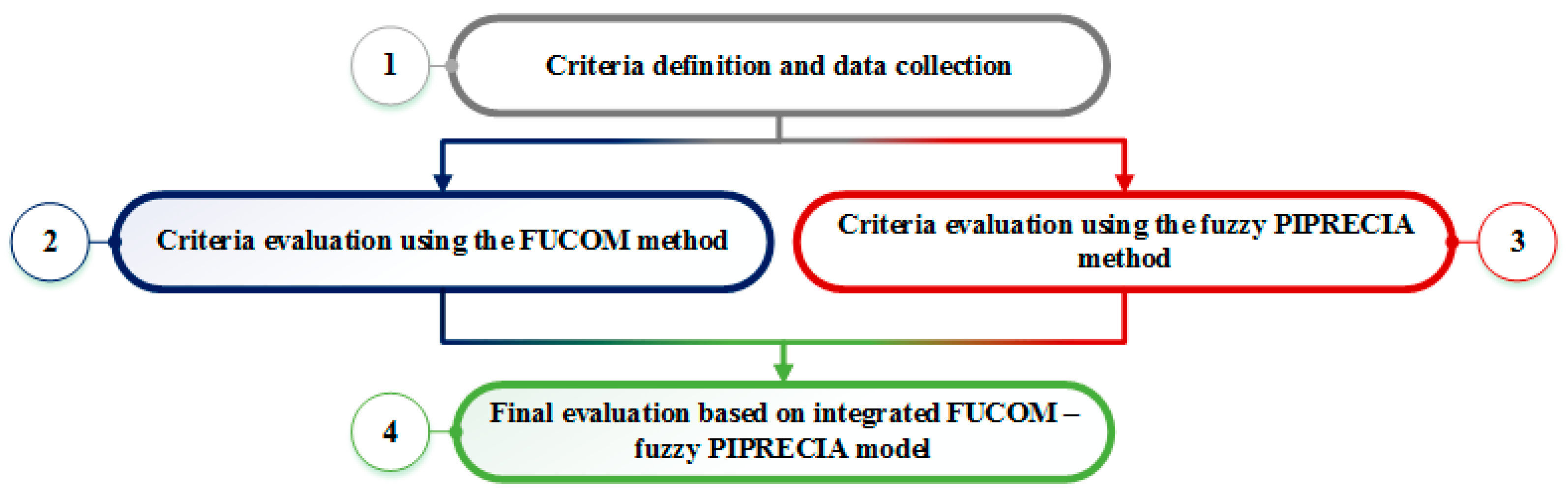
The dimensions that influence the establishment of business process management (BPM) practices and the progression to higher levels of process maturity derive from exploring the dimensions of process orientation of organizations. Small and medium-sized clothing enterprises (SME’s) are characterized by various specifics that can affect the degree of process orientation adoption and the pace of transition from lower to higher levels of process maturity. According to these specifics, the acceptance of the process approach may be differently affected. For the purpose of adequate evaluation and prioritization of the most influential dimensions, a new integrated multicriteria decision-making (MCDM) model that combines classical and fuzzy theory was developed. First, the full consistency method (FUCOM) method was applied, followed by the fuzzy pivot pairwise relative criteria importance assessment (fuzzy PIPRECIA) method to obtain more accurate criteria values. Prioritization of the most influential BPM dimension contributes to highlighting the area of business that needs to be primarily strengthened by appropriate actions for successful establishment of BPM in apparel industry SMEs. Within this research, the prioritized dimension refers to human resource management in accordance with the specific aspects of business within the apparel industry.
Keywords: business process orientation (BPO); business process management (BPM); FUCOM; fuzzy PIPRECIA; apparel industry; SMEs business process orientation (BPO); business process management (BPM); FUCOM; fuzzy PIPRECIA; apparel industry; SMEs