Article

Evaluating the Effects of Human Activity over the Last Decades on the Soil Organic Carbon Pool Using Satellite Imagery and GIS Techniques in the Nile Delta Area, Egypt

by
Elsayed Said Mohamed
1,
Mohamed Abu-hashim
2,
Mohamed A. E. AbdelRahman
1,
Brigitta Schütt
3 and
Rosa Lasaponara
4,*
1
National Authority for Remote Sensing and Space Sciences (NARSS), Cairo 1564, Egypt
2
Soil Science Department, Faculty of Agriculture, Zagazig University, Zagazig 44511, Egypt
3
Institute of Geographic Sciences, 12249 Berlin, Germany
4
Italian National Research Council, C.da Santa Loja, Tito Scalo, 85050 Potenza, Italy
*
Author to whom correspondence should be addressed.
Sustainability 2019, 11(9), 2644; https://doi.org/10.3390/su11092644
Submission received: 14 February 2019 / Revised: 25 April 2019 / Accepted: 6 May 2019 / Published: 8 May 2019

Abstract

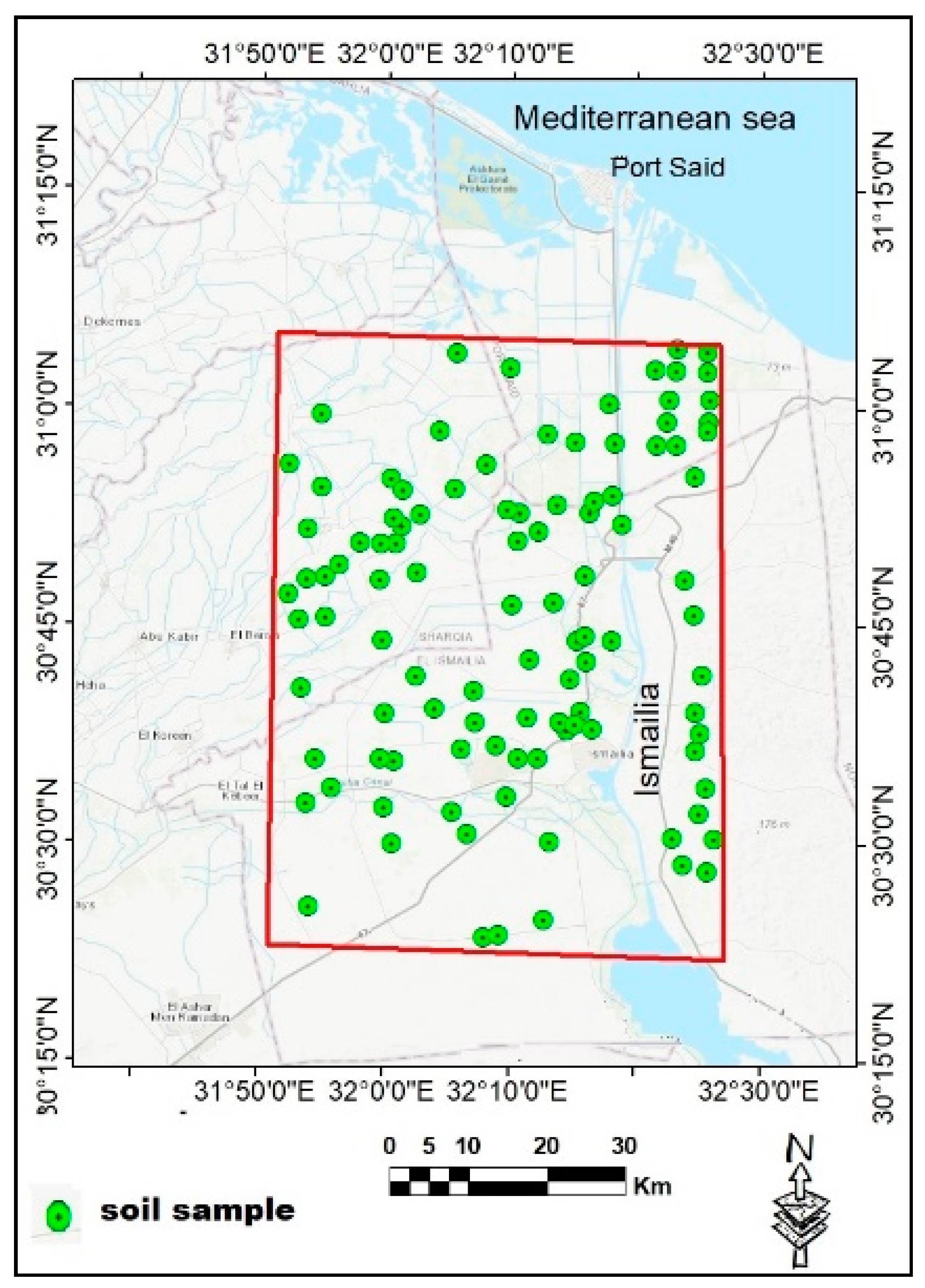
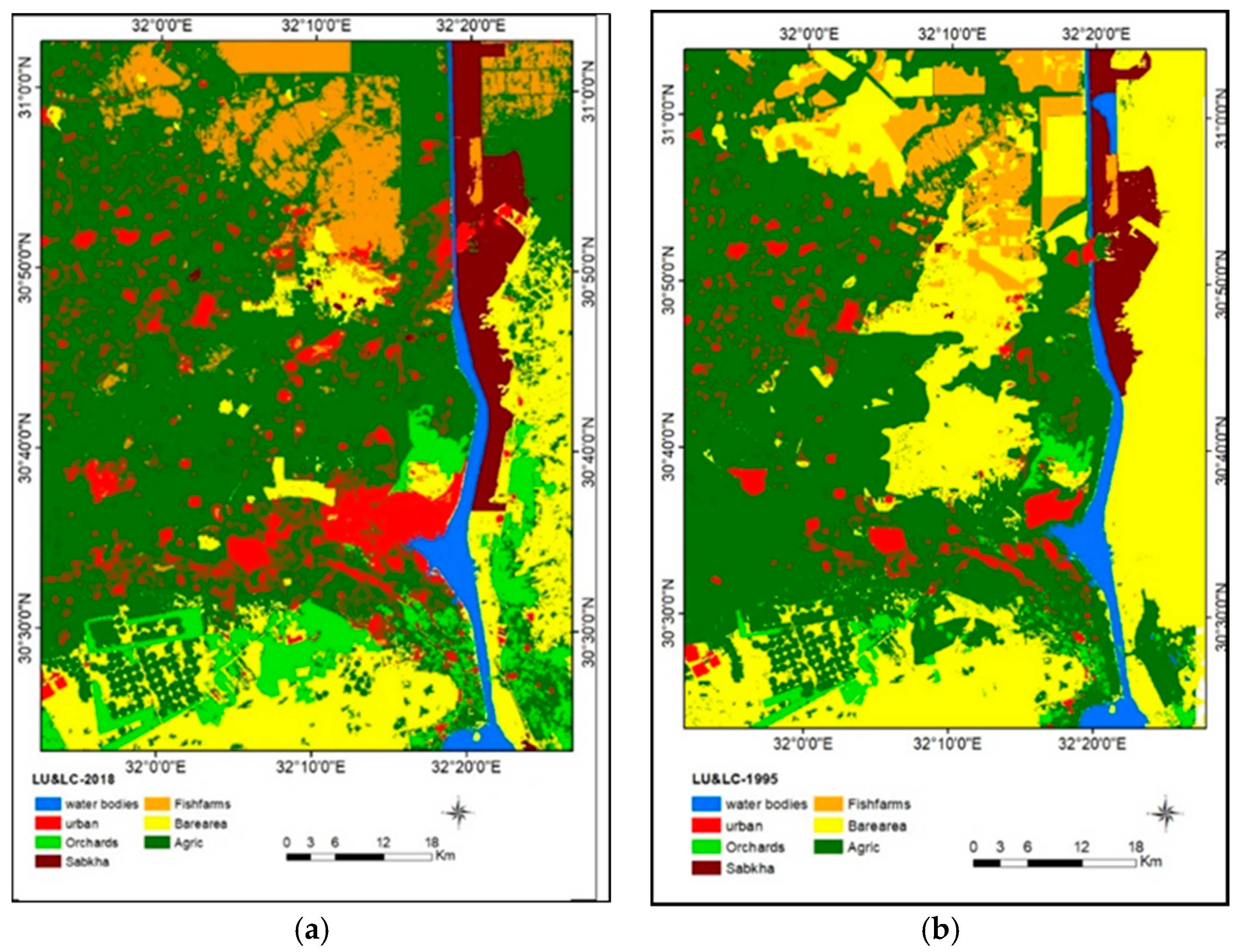
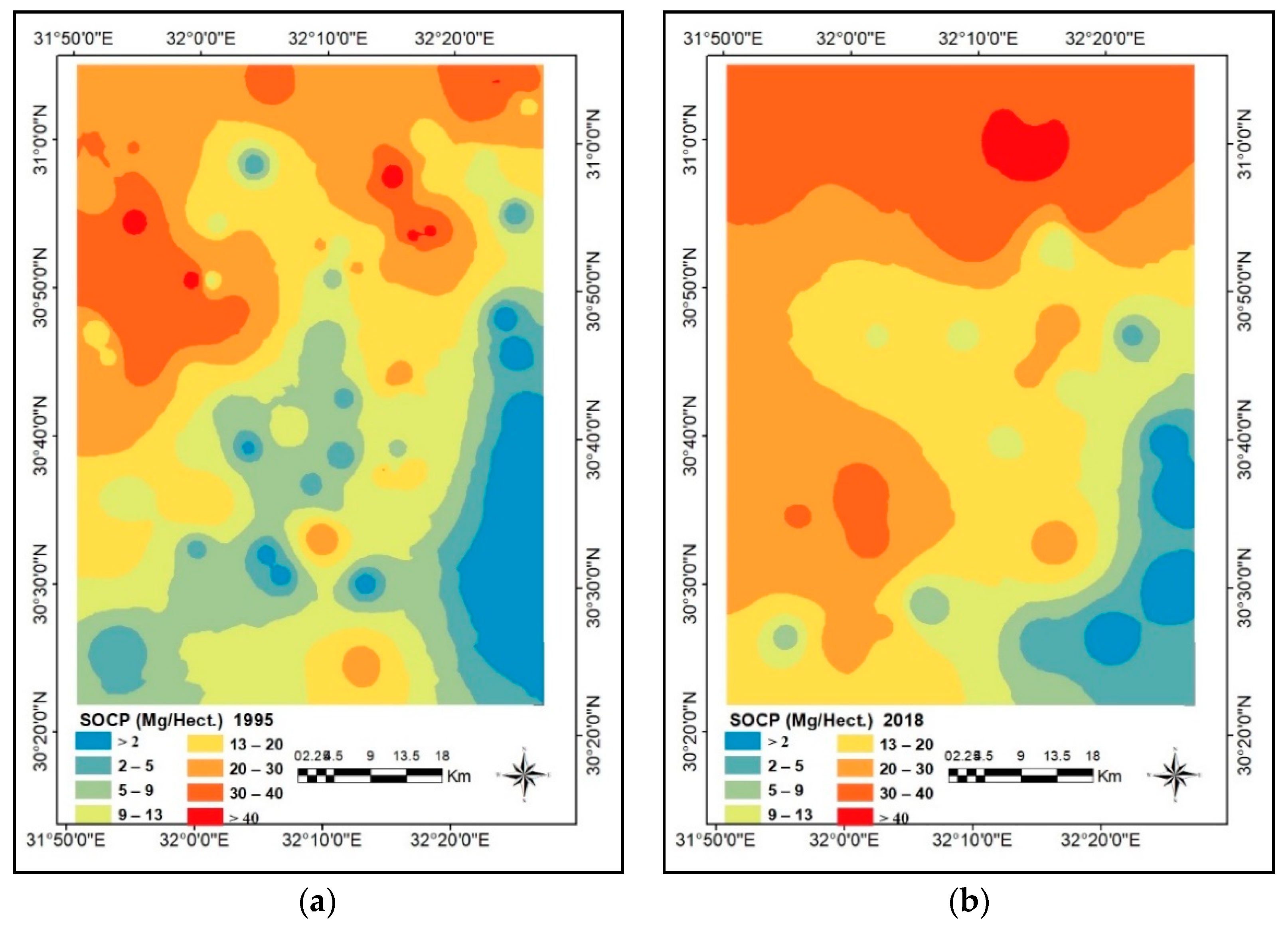
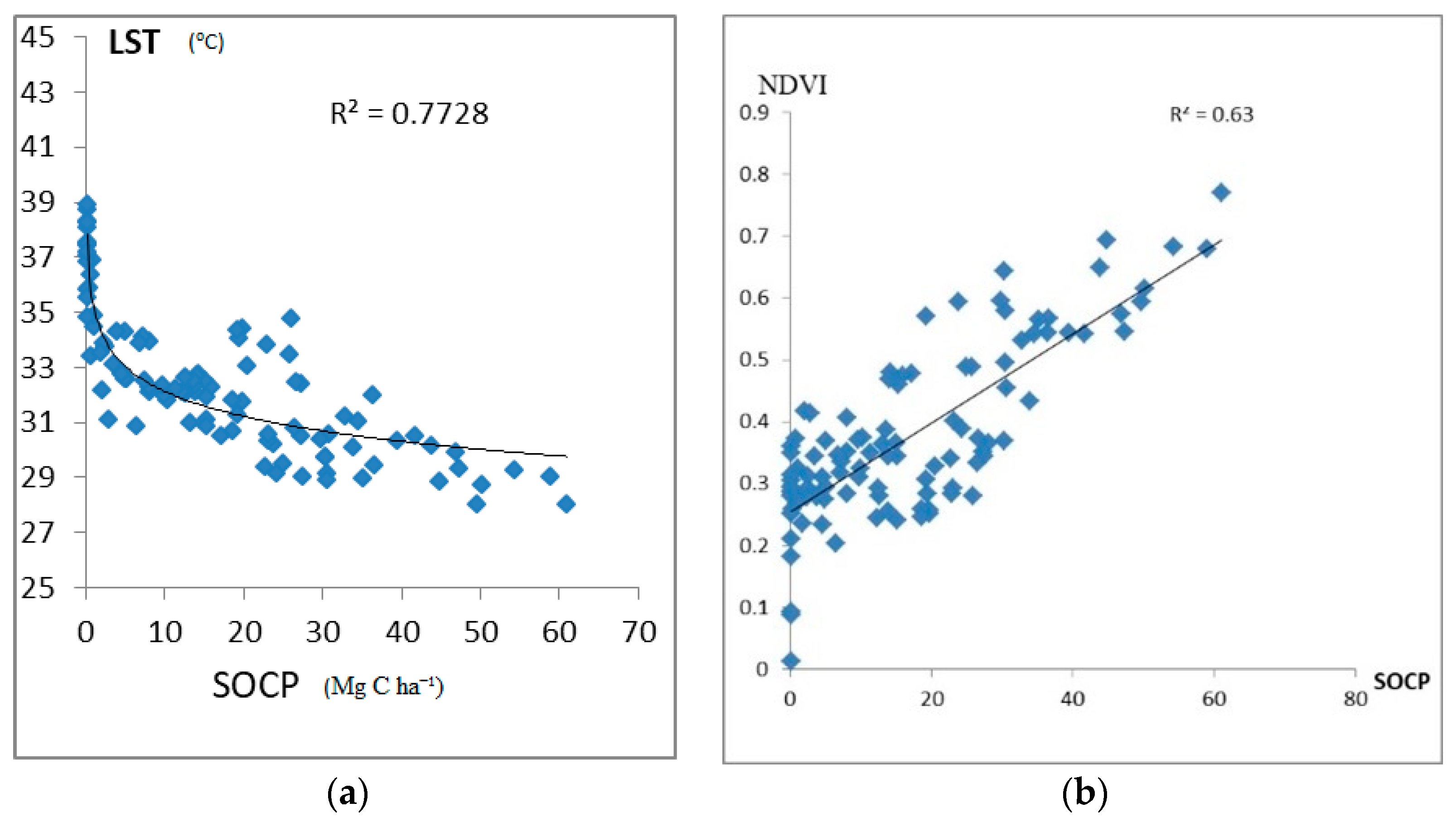
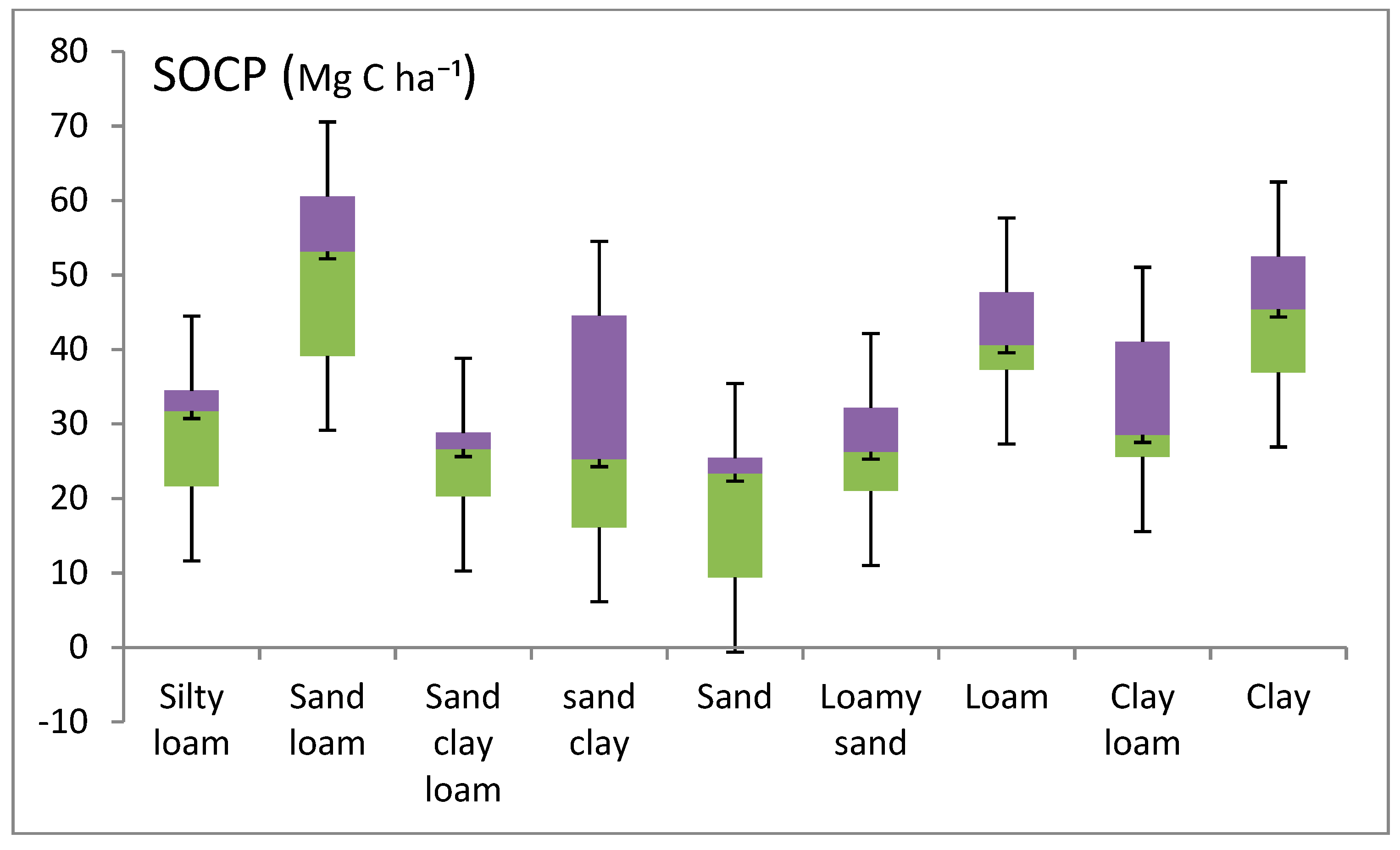
The study aims to clarify the relationship between soil organic carbon (SOC) and human activity under arid conditions, in the east area of the Nile Delta, Egypt. SOC is one of the critical factors in food production and plays an important role in the climate change because it affects the physio-chemical soil characteristics, plant growth, and contributes to sustainable development on global levels. For the purpose of our investigations, 120 soil samples (0–30 cm) were collected throughout different land uses and soil types of the study area. Multiple linear regressions (MLR) were used to investigate the spatiotemporal relationship of SOC, soil characteristics, and environmental factors. Remote sensing data acquired from Landsat 5 TM in July 1995 and operational land imager (OLI) in July 2018 were used to model SOC pool. The results revealed significant variations of soil organic carbon pool (SOCP) among different soil textures and land-uses. Soil with high clay content revealed an increase in the percentage of soil organic carbon, and had mean SOCP of 6.08 ± 1.91 Mg C ha−1, followed by clay loams and loamy soils. The higher values of SOCP were observed in the northern regions of the study area. The phenomenon is associated with the expansion of the human activity of initiating fish ponds that reflected higher values of SOC that were related to the organic additions used as nutrients for fish. Nevertheless, the SOC values decreased in southeast of the study area with the decrease of soil moisture contents and the increase in the heavy texture profiles. As a whole, our findings pointed out that the human factor has had a significant impact on the variation of soil organic carbon values in the Eastern Nile Delta from 1995 to 2018. As land use changes from agricultural activity to fish ponds, the SOCP significantly increased. The agriculture land-use revealed higher SOCP with 60.77 Mg C ha−1 in clay soils followed by fish ponds with 53.43 Mg C ha−1. The results also showed a decrease in SOCP values due to an increasing in land surface temperature (LST) thus highlighting that influence of temperature and ambient soil conditions linked to land-use changes have a marked impact on surface SOCP and C sequestration.
Keywords: Spatiotemporal Evaluation; Remote sensing indices; land use/land cover; GIS Spatiotemporal Evaluation; Remote sensing indices; land use/land cover; GIS