Article

A Multilevel Model Approach for Assessing the Effects of House and Neighborhood Characteristics on Housing Vacancy: A Case of Daegu, South Korea


Department of Urban Planning, Keimyung University, 1095 Dalgubeol-daero, Dalseo-gu, Daegu 42601, Korea
Sustainability 2019, 11(9), 2515; https://doi.org/10.3390/su11092515
Submission received: 26 March 2019 / Revised: 16 April 2019 / Accepted: 29 April 2019 / Published: 30 April 2019
(This article belongs to the Special Issue Shrinking Cities—Testing Ground for Sustainability)

Abstract

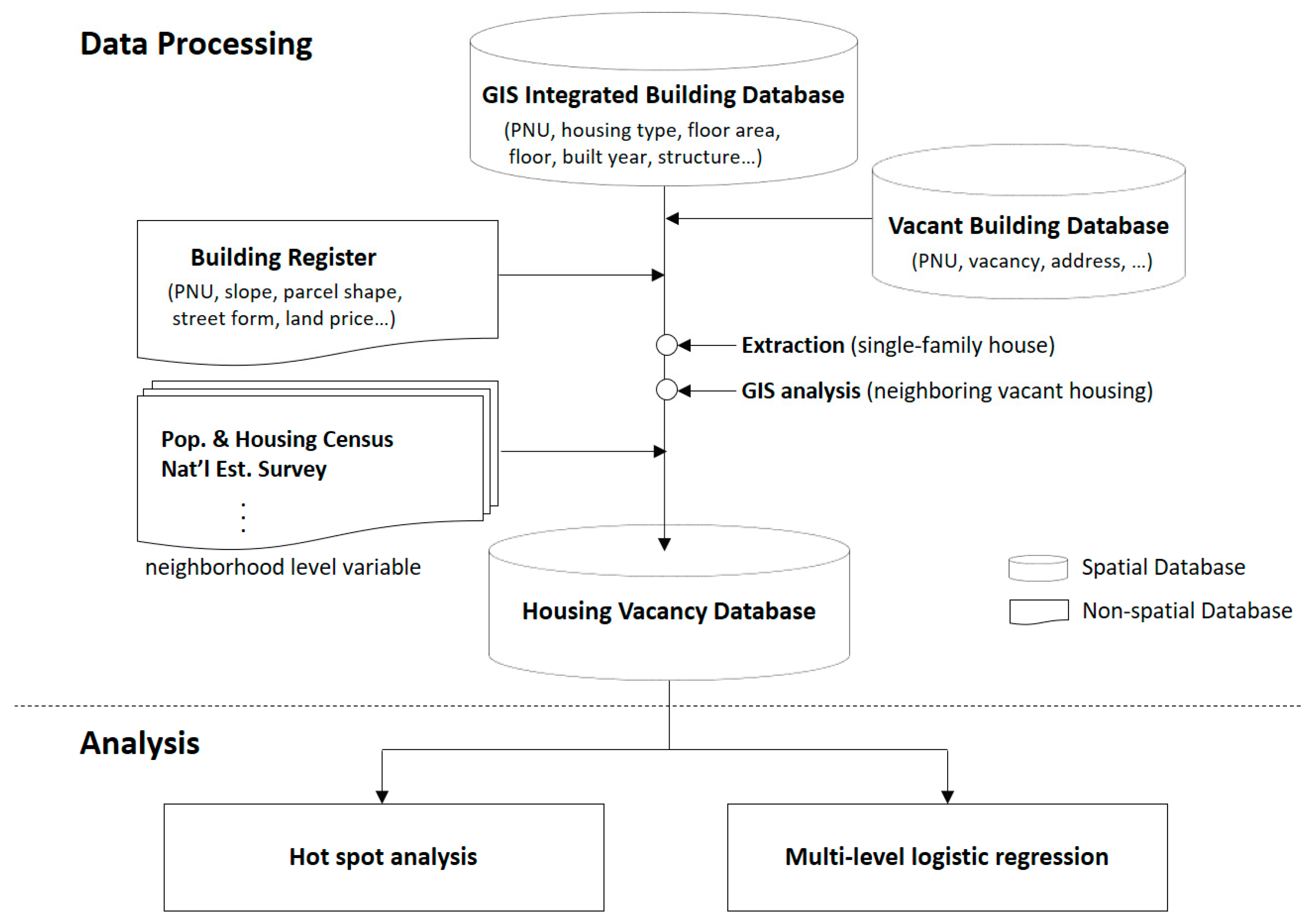
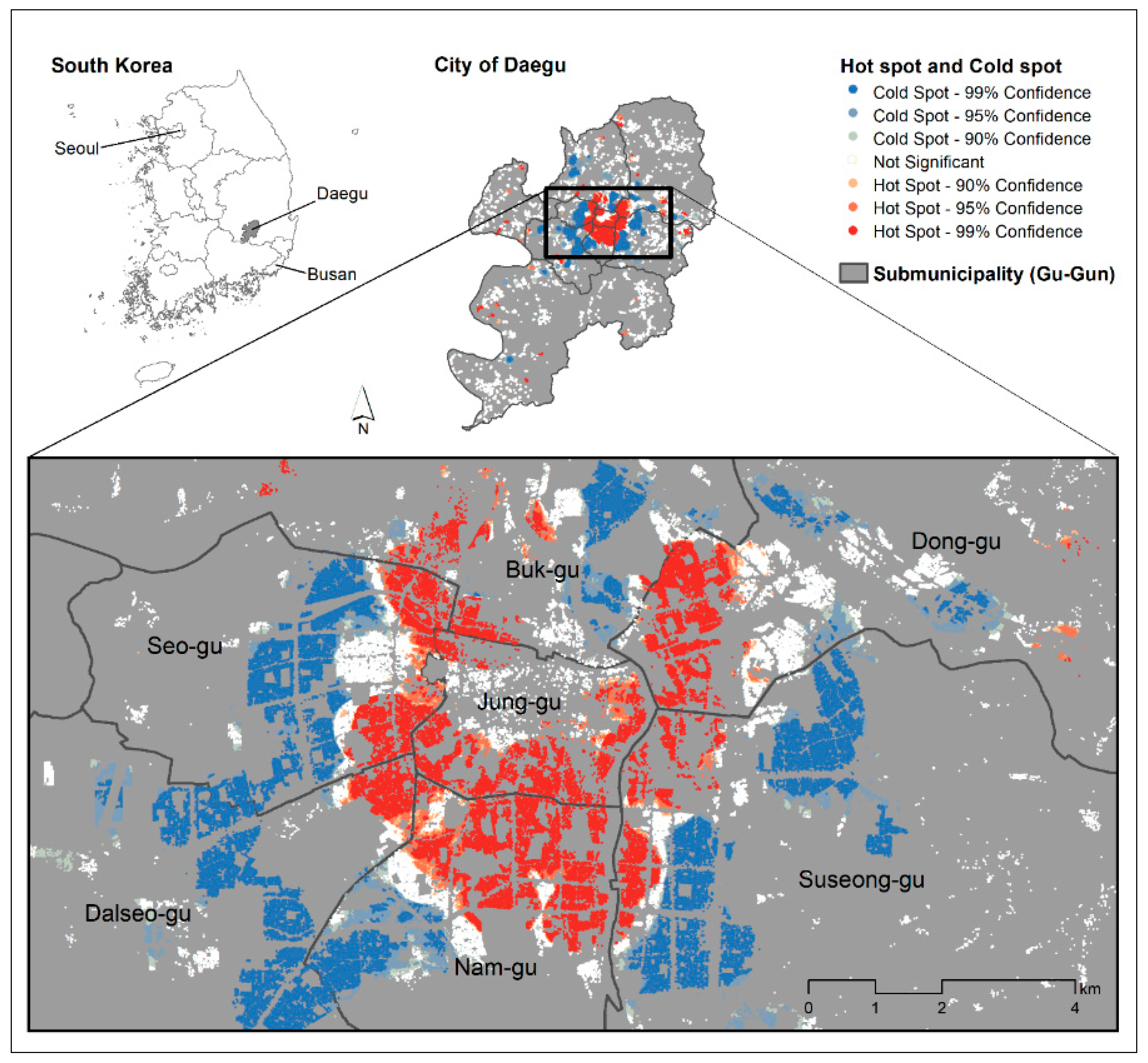
Previous studies on housing vacancy mostly focused on variables representing regional characteristics while overlooking the characteristics of individual houses. This is due to the limitations of available data. Using the house-level Housing Vacancy Database, this study aims to identify the spatial clustering pattern of vacant houses by examining single-family houses in Daegu, South Korea, and analyze the factors affecting housing vacancy. The Housing Vacancy Database built in this study provides accurate location information of vacant houses, making it possible to analyze the clustering pattern of vacant houses in a more detailed spatial unit. Furthermore, the Housing Vacancy Database considered various physical and neighborhood factors at the house level. The result of hot spot analysis showed that vacant houses were spatially concentrated in the city center. As a result of analyzing the factors affecting housing vacancy at the house level and neighborhood level using a multilevel model, it was found that the physical environment characteristics of individual houses were key factors affecting housing vacancy. Additionally, the probability of housing vacancy tended to increase when the land prices were higher, the houses were located in redevelopment zones, and there were more neighboring vacant houses nearby. Meanwhile, population decline and the ratio of old houses were the only significant variables at the neighborhood level. Thus, this study addresses that policies are needed to improve housing and physical environment characteristics that contribute to housing vacancy.
Keywords: housing vacancy; housing abandonment; shrinking cities; house and neighborhood characteristics; Housing Vacancy Database; multilevel model; Korea housing vacancy; housing abandonment; shrinking cities; house and neighborhood characteristics; Housing Vacancy Database; multilevel model; Korea