
Mapping Urban Resilience for Spatial Planning—A First Attempt to Measure the Vulnerability of the System



Abstract
1. Introduction
2. Measuring Vulnerability as a First Step to Resilience
- Oftentimes, resilience is measured as the counter position of vulnerabilities and therefore the indicator-based quantitative methods do not lend to capturing intangible elements such as the social capital, power relations, partnership, and self-sufficiency that contradistinguish urban resilience;
- even when vulnerability is measured with different methodologies, indicators of the state of the system are mixed up with an indicator of response (coping capacity), generating confusion and misleading interpretations;
- the neglecting of a more self-adapting and governance capacity of the system in a proper measurement approach, namely ‘resilience’, may lead to ignoring the most important determinants factors that can lower the vulnerability of a system;
- indicators are, in the vast majority of cases, non-spatial but purely statistical and therefore useful for a cross-comparative analysis of different urban areas but unhelpful to construct a spatial support system that steers the urban agenda of local institutions.
3. Materials and Methods
- “R3C” elaborations, when indicators are autonomously created by the Research Group of the Responsible Risk Resilience Centre, Interuniversity Department of Regional and Urban Studies and Planning, Politecnico di Torino (This work is the first output of the project “Measuring Resilience” initiated in early 2018, which aims to develop an operational framework to address urban resilience. The R3C Project aims at design and operationalize an interdisciplinary research methodology to implement resilience in regional and urban systems. The project has been used to set up an in-depth discussion around the epistemological knowledge of resilience by different theoretical scientific approaches and their practical applications through the operational research carried out by urban and regional planners, social scientists, anthropologists, engineers, historicist and ecologists);
- “Existent” indicators, that are the ones that were applied to the context without any kind of elaboration (despite clipping the pixel value in the context of analysis);
- Indicators that are the output of other mapping software, and particularly Integrated Evaluation of Ecosystem Services and their trade-off—“InVEST, ver. 3.4.4” of the Natural Capital Project.
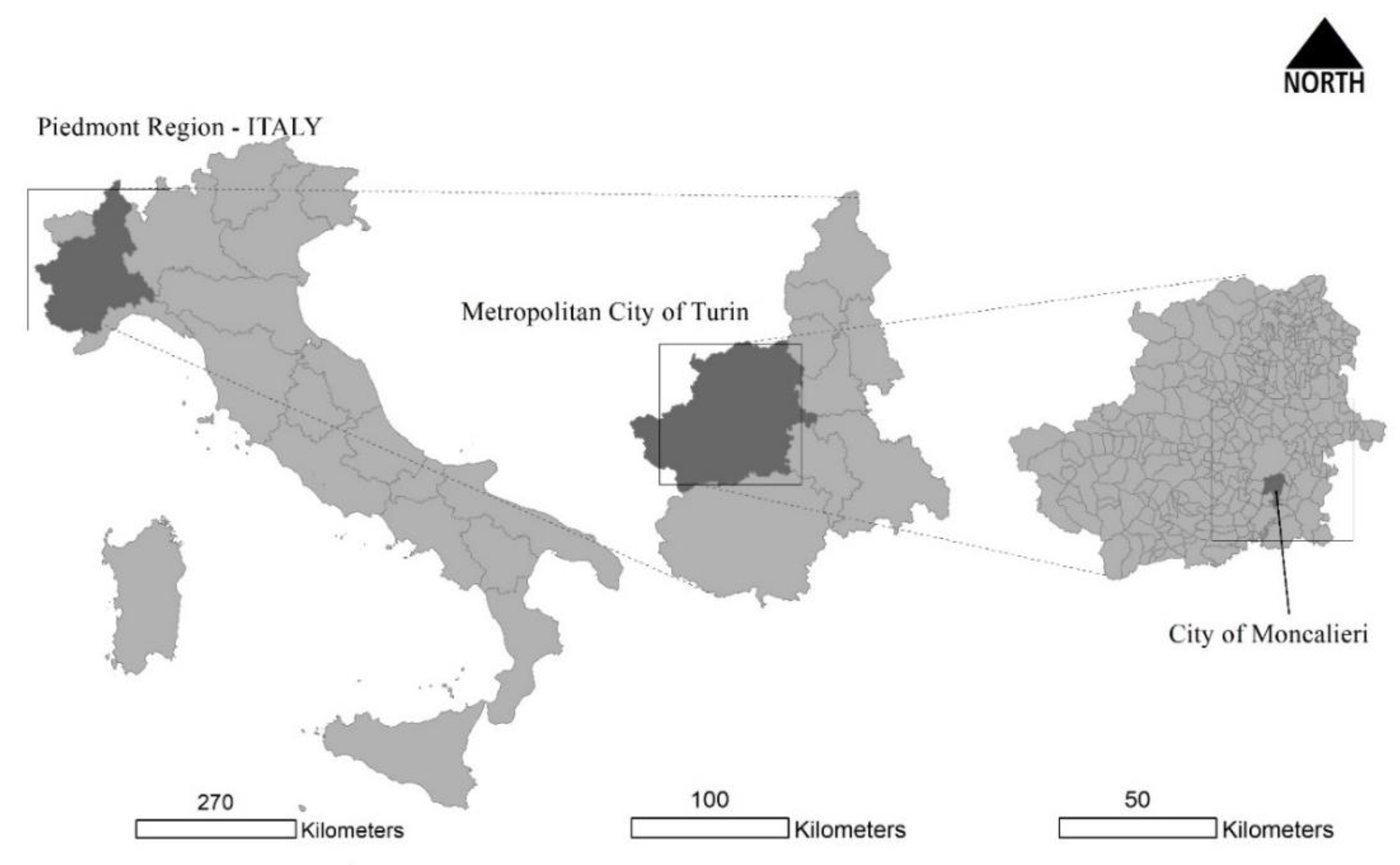
3.1. Context of the Study
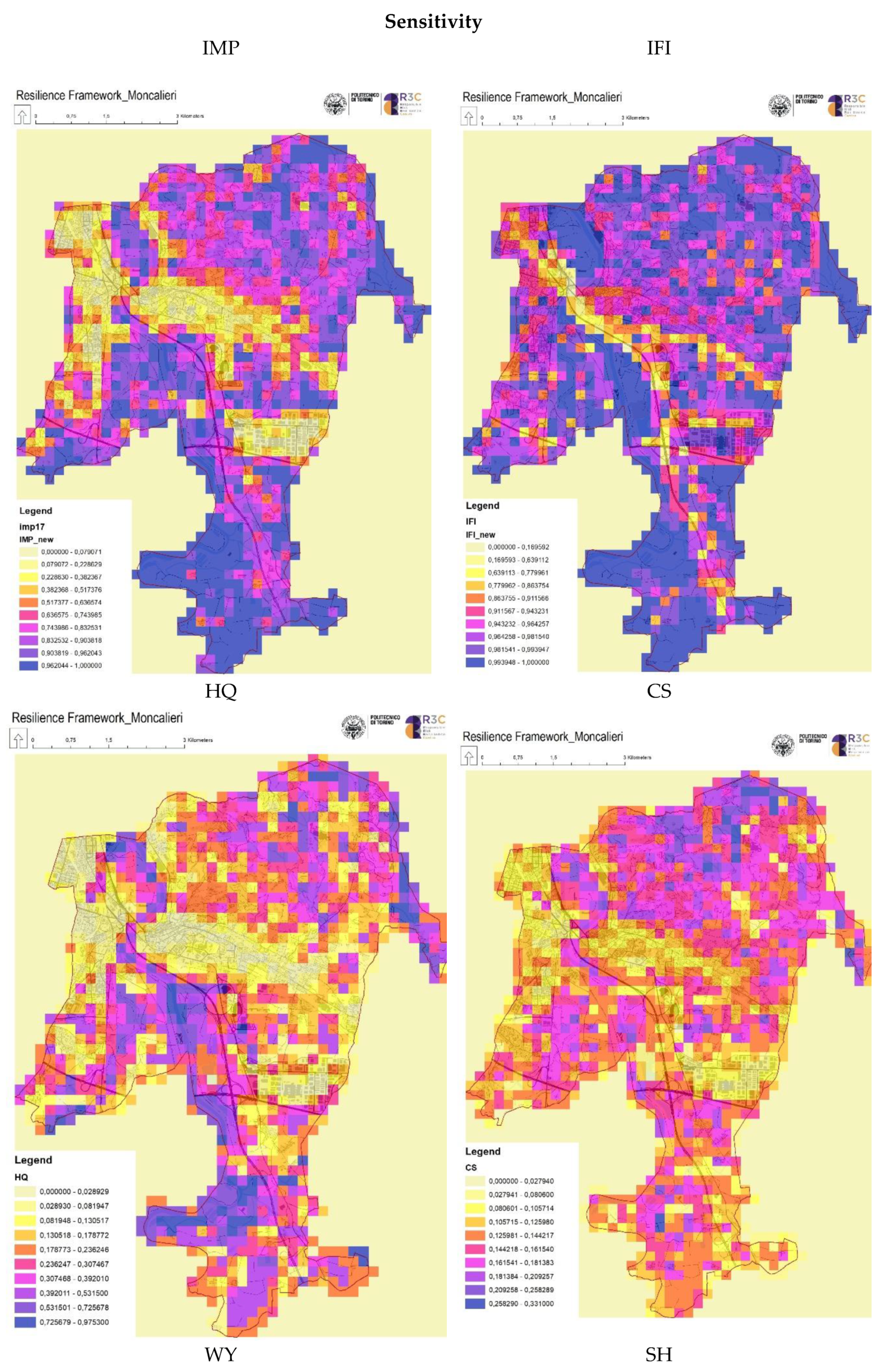
3.2. Sensitivity
- three indicators refer to the landscape ecology approach on environmental planning (IMP, IFI, and SH);
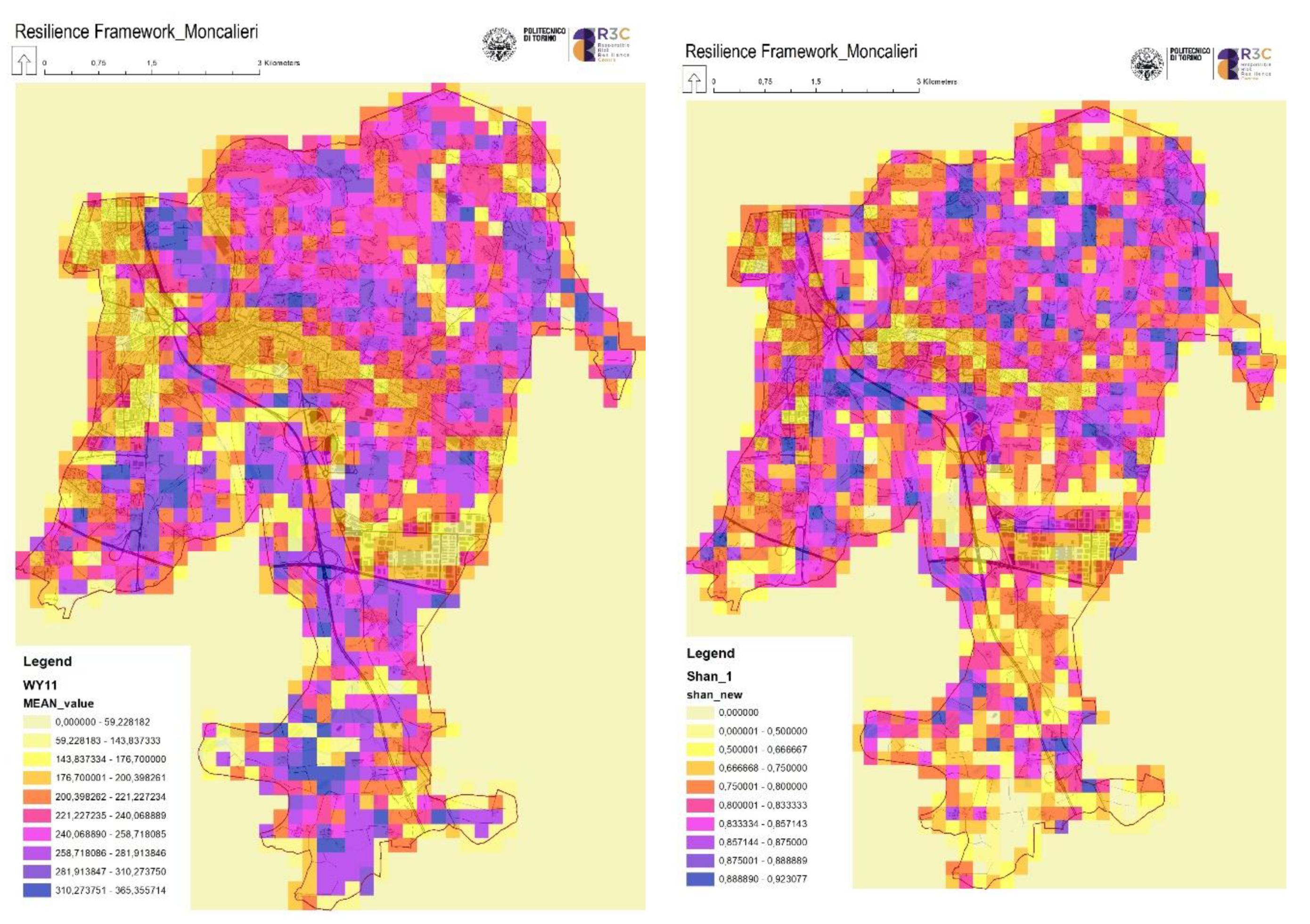
- three indicators refer to ecosystem services dimension (HQ, CS, WY);
3.3. Normalization of Variables
3.3.1. Environment (IMP, IFI, SH)
3.3.2. Ecosystem Services (HQ, CS, WY)
- the spatial representation of the Land Use Land Cover distribution, that is a GIS raster map which includes the area of analysis, as well as a buffer zone that include potential threats;
- the spatial distribution of intensity of each individual threat in a GIS raster file with values between 0 and 1;
- a .csv table with threats data. This table contains all threats considered in the landscape weighting their impact;
- a .csv table of the sensitivity of LULC to threats. This table contains the specific sensitivity of each habitat to the considered threats.
- Root restricting layer depth: the land capability classification took soil depth data with a scale of representation of 150,000.
- Precipitation: data were collected from the regional department for environmental protection (ARPA Piemonte. http://www.arpa.piemonte.it/rischinaturali/tematismi/clima/confronti-storici/precipitazioni/introduzione.html)
- Plant available water content: data comes from the SPAW Model for Agricultural Field and Pond Hydrologic Simulation. To obtain the specific data required by the SPAW Model the original land capability map was integrated with additional soil texture information provided by The Regional Institute for Plant and Environment (IPLA) at a reference scale of 1:250,000.
- Average annual reference evapotranspiration: values for each watershed were collected from the regional department for the environmental protection (watershed boundary dataset) http://www.scia.isprambiente.it/Documentazione/report2006.pdf Watersheds:
- The biophysical values in the attributes table were taken from references collected in the InVEST user’s guide and supervised by the National Institute for Environmental research and Protection—ISPRA.
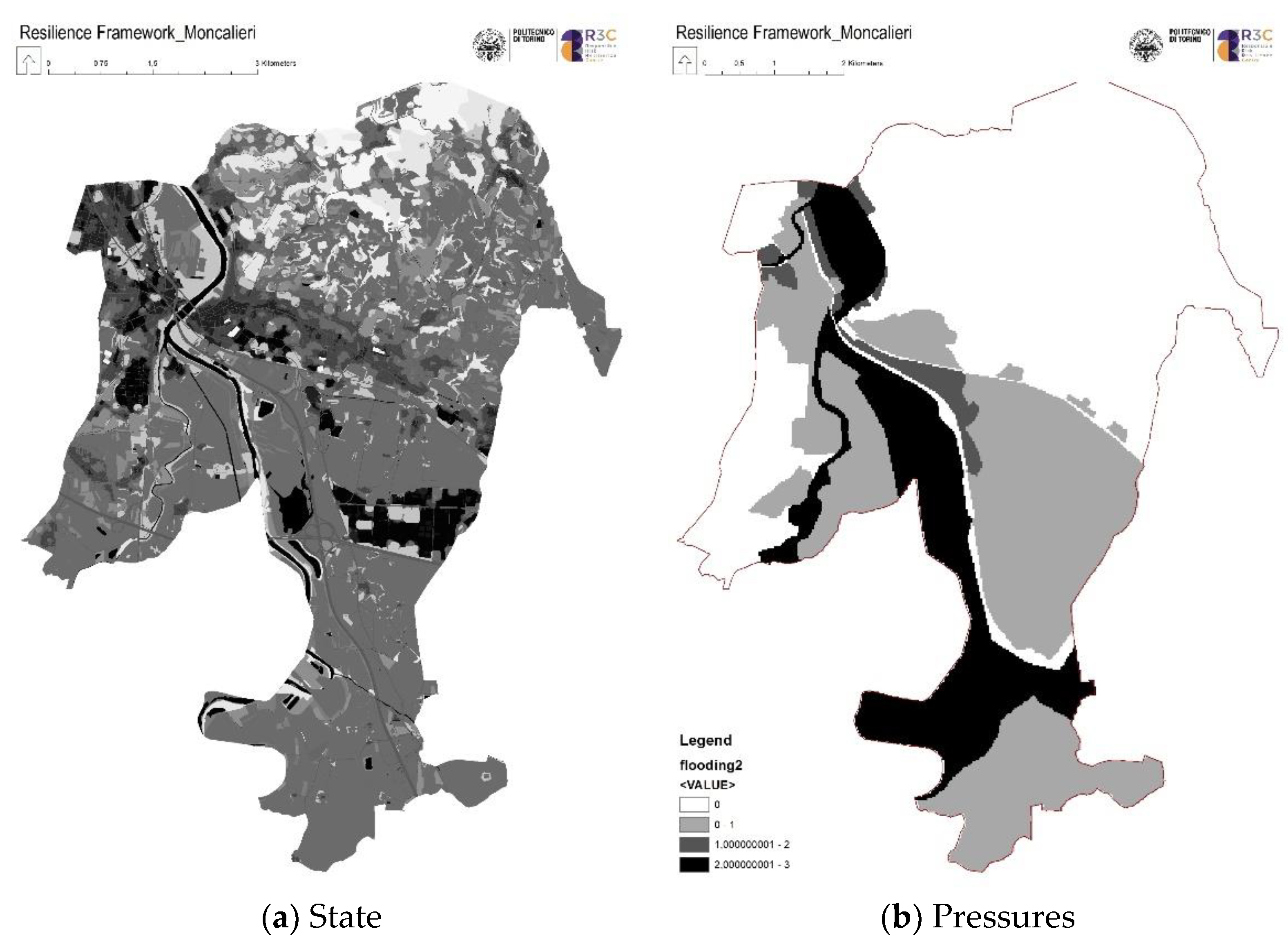
3.4. Pressures on the System: Disturbances
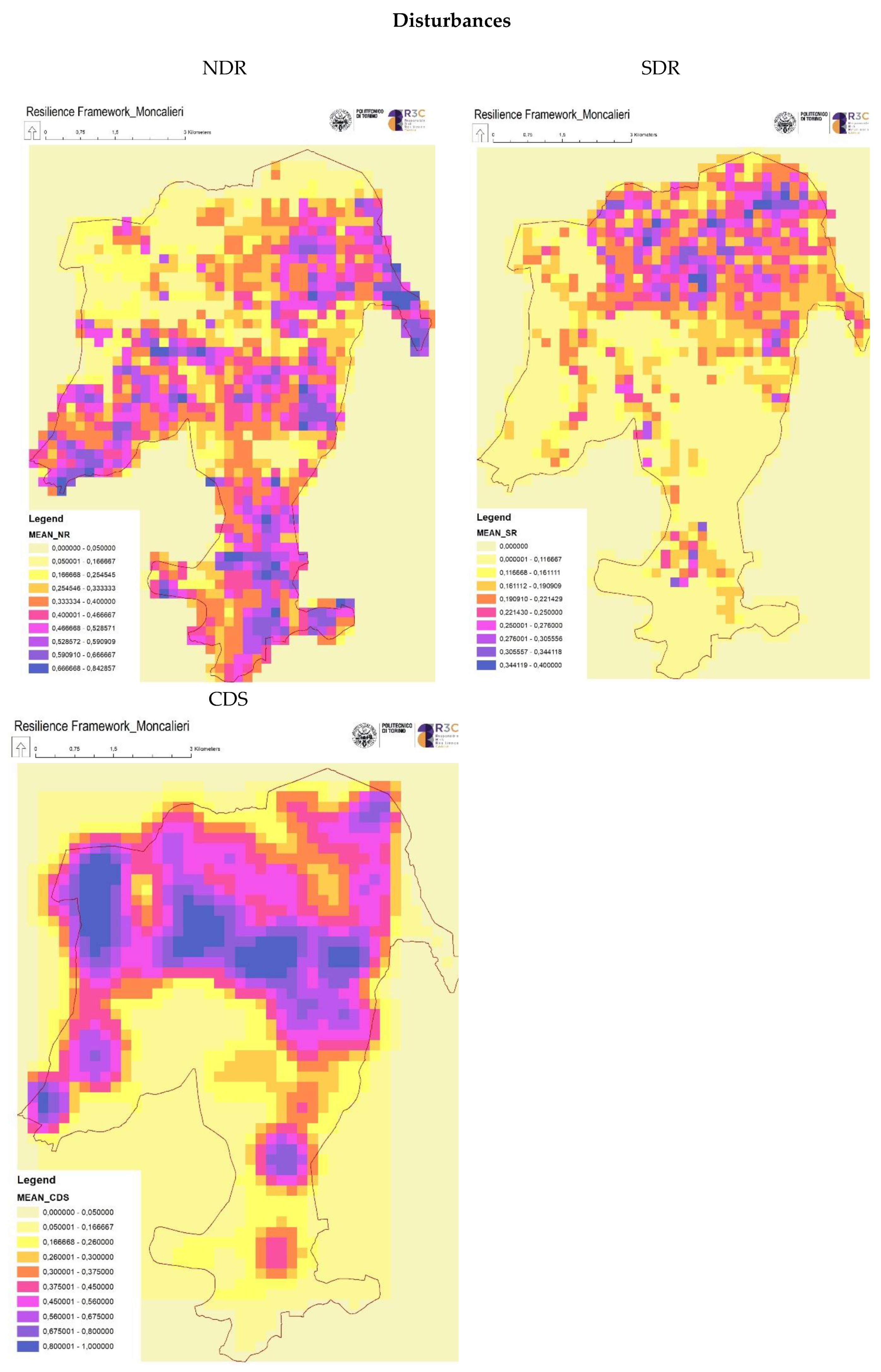
- Two indicators depend on soil ES: nutrient contamination—NDR that is an output of the model nutrient retention of InVEST; and the Erosion—SDR, that is an output of the model sediment retention of InVEST;
- One indicator refers to the landscape transformation due by the process of urbanization: the land take indicator—CDS represents the areas where the process of urbanization has been concentrated in the last years.
- Average annual precipitation was calculated using the regional climate report of ARPA;
- Digital elevation model (DEM) is a raster file provided by Regione Piemonte by aerophoto Ice 2009–2011. The DTM covers the entire regional territory and it has a 25 sqm grid resolution.
3.5. Pressures on the System: Shocks
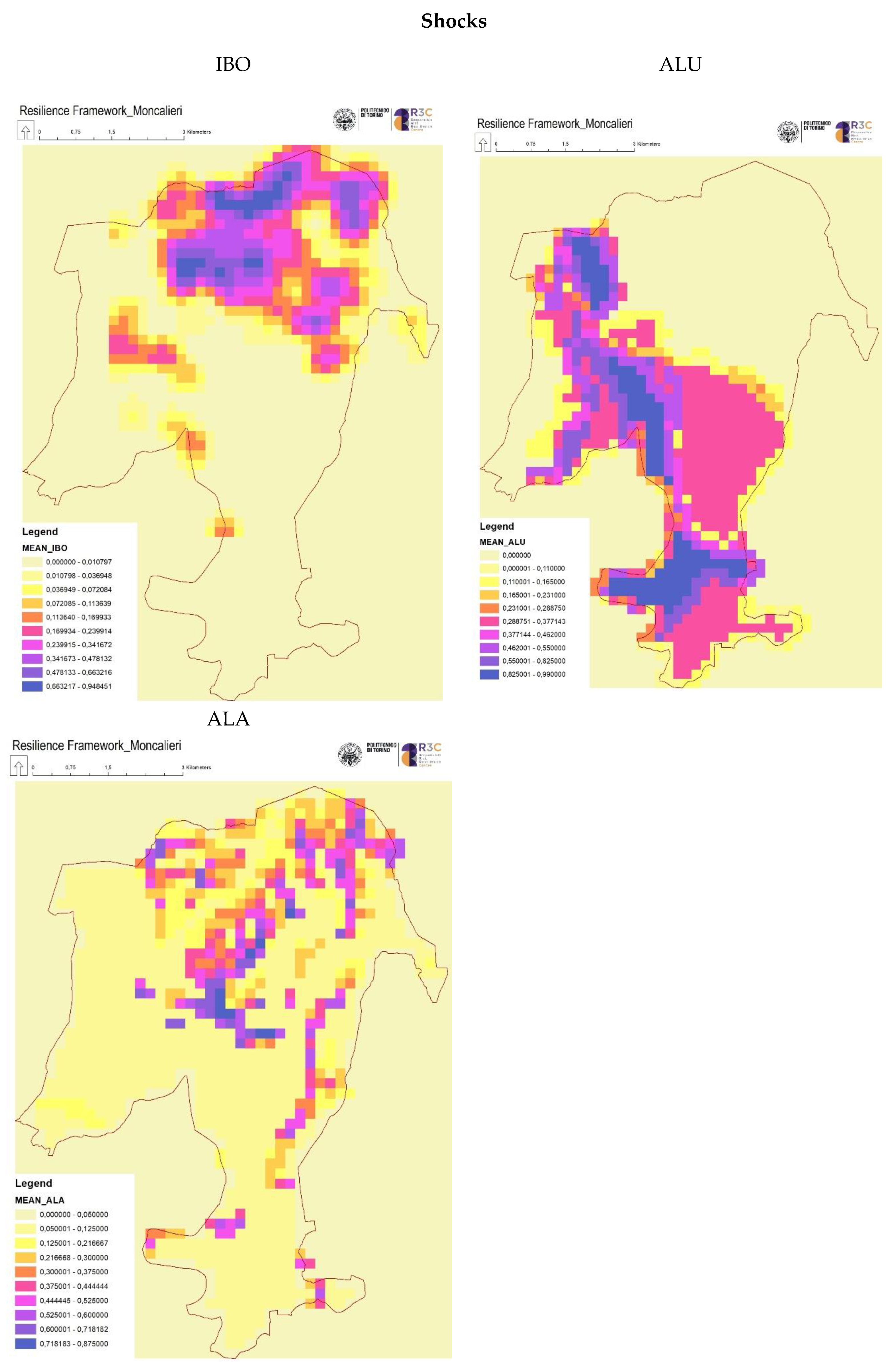
- An indicator refers to the risk of fire IBO;
- Two indicators ALU and ALA refer to meteo-hydrological related risks. ALU represent the spatial distribution of flooded areas in case of a catastrophic event while ALA represents the areas that are threatened by high run-off processes and therefore are affected by debris flows.
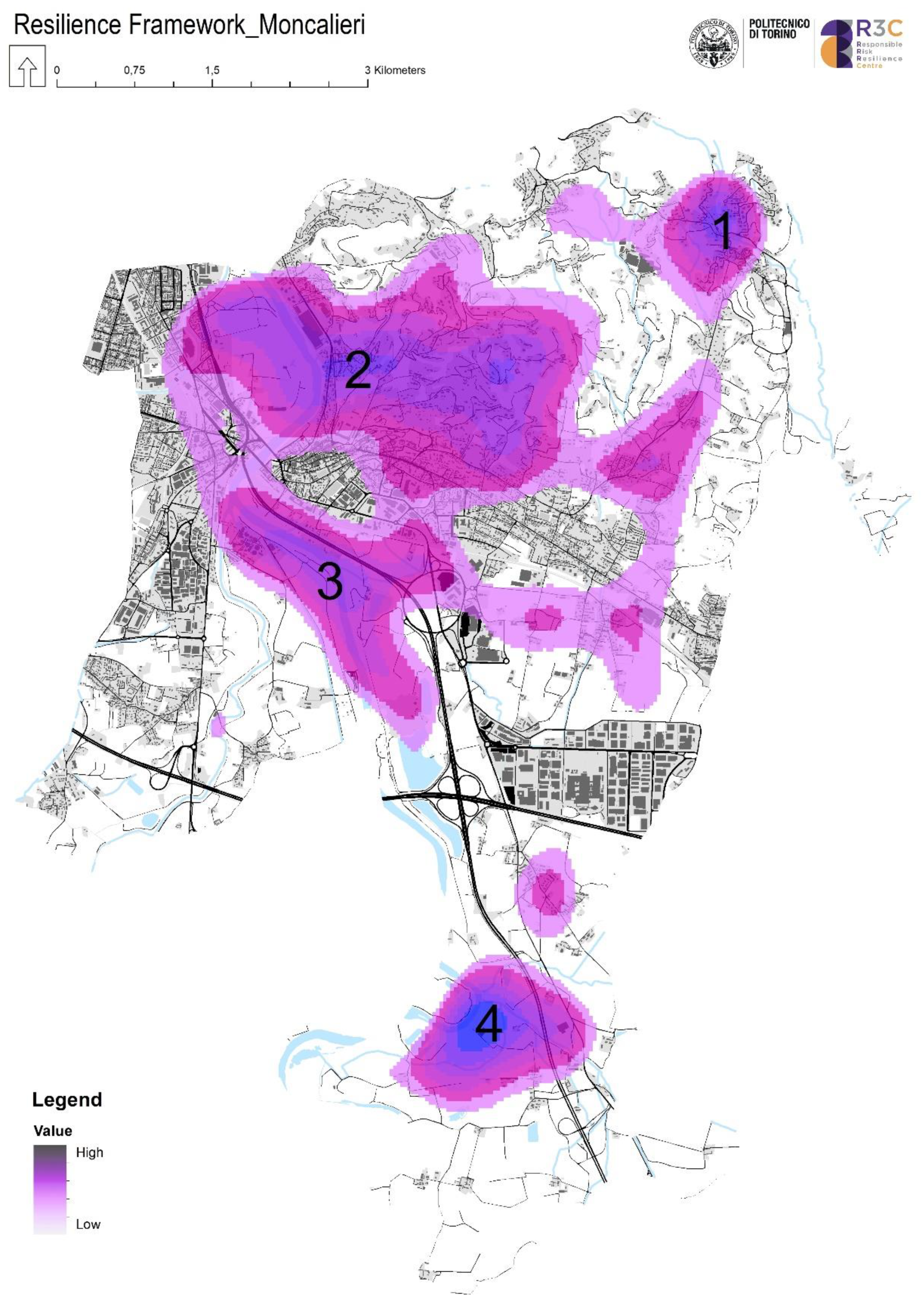
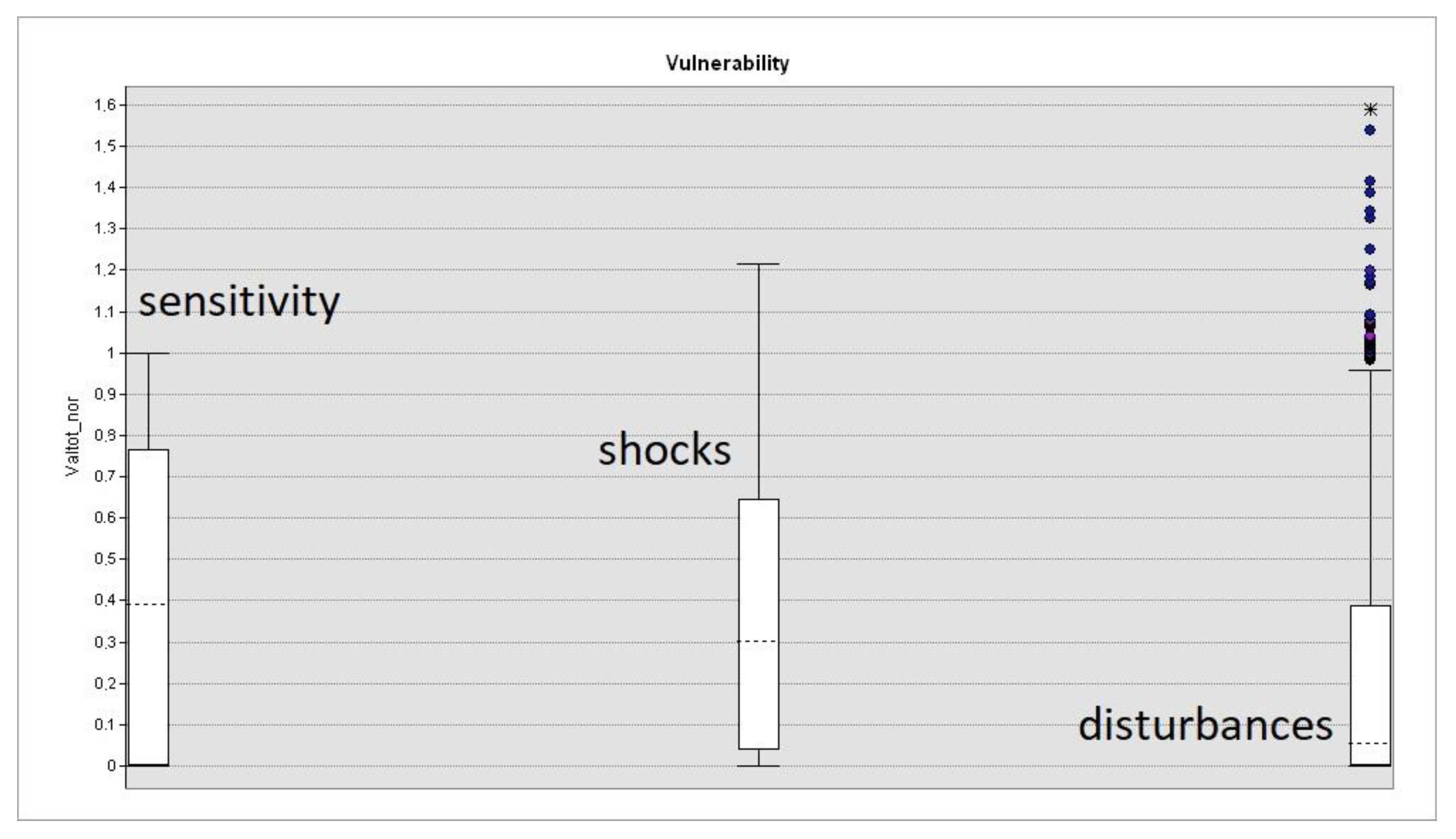
3.6. Mapping the Vulnerability of the System
4. Discussion and Conclusions
4.1. Designing Adaptation: Where?
4.2. Designing Adaptation: What?
- planting green roofs or green walls to intercept rainfall;
- creating rain gardens/plaza reducing run-off;
- create underground water storage that increase the absorption capacity of urban areas;
- urban catchment forestry to retrofit sustainable urban tree cover to reduce flood risk;
- floodable parks to absorb flood peaks.
- creating landscape connections with urban green space—trees, alleys, hedges, riparian vegetation;
- increase biodiversity within green areas, paying particular attention to the distance between forested areas and settlements to cope with fire risk;
- urban catchment forestry to retrofit sustainable urban tree cover to improve water supply;
- natural wastewater treatment to reduce drinking water consumption for irrigation.
5. Conclusions
- as regards the governance system, introducing local prescriptions that lead to propose natural parks and environmental protection zones in high habitat quality areas should be considered. Moreover, the re-design of the ecological network should consider much more the connections between primary ecological zones and the built-up environment. Strategic environmental assessment for plans and projects should include the evaluation of ecosystem services and the efficiency of buildings and infrastructures introducing a monitoring system that provide an ongoing adaptation of policies and environmental strategies;
- regarding associations, fire vulnerability sheds light on the need to consider the activation of an inter-municipal consortium of forested areas that also includes active associations and citizens to promote conservation, monitoring, and emergency coordination in case of dangerous events;
- regarding the population, awareness, learning capacity, and innovation, the need to increase the perception of natural capital is an asset to develop and promote a diffuse preparation and the spread of initiatives aimed at improving the value of the territory and the needs to understand the vulnerability of the system. Teaching classes in primary schools while providing evening courses for workers and seniors are, among others, channels to promote knowledge of the territory that is fundamental to increasing the social resilience and the capacity of adaptability to dangerous events.
Author Contributions
Funding
Acknowledgments
Conflicts of Interest
References
- Brand, F.S.; Jax, K. Focusing the meaning(s) of resilience: Resilience as a descriptive concept and a boundary object. Ecol. Soc. 2007, 12. [Google Scholar] [CrossRef]
- White, I.; O’Hare, P. From rhetoric to reality: Which resilience, why resilience, and whose resilience in spatial planning? Environ. Plan. C Gov. Policy 2014, 32, 934–950. [Google Scholar] [CrossRef]
- Pickett, S.T.A.; Cadenasso, M.L.; Grove, J.M. Resilient cities: Meaning, models, and metaphor for integrating the ecological, socio-economic, and planning realms. Landsc. Urban Plan. 2004, 69, 369–384. [Google Scholar] [CrossRef]
- Folke, C. Resilience: The emergence of a perspective for social-ecological systems analyses. Glob. Environ. Chang. 2006, 16, 253–267. [Google Scholar] [CrossRef]
- Davoudi, S.; Shaw, K.; Haider, L.J.; Quinlan, A.E.; Peterson, G.D.; Wilkinson, C.; Fünfgeld, H.; McEvoy, D.; Porter, L. Resilience: A Bridging Concept or a Dead End? “Reframing” Resilience: Challenges for Planning Theory and Practice Interacting Traps: Resilience Assessment of a Pasture Management System in Northern Afghanistan Urban Resilience: What Does it Mean in Planni. Plan. Theory Pract. 2012, 13, 299–333. [Google Scholar] [CrossRef]
- Starzomski, B.M. Book Review: Navigating Social-Ecological Systems: Building Resilience for Complexity and Change; Cambridge University Press: Cambridge, UK, 2004; Volume 9. [Google Scholar]
- Berkes, F.; Ross, H. Community Resilience: Toward an Integrated Approach. Soc. Nat. Resour. 2013, 26, 5–20. [Google Scholar] [CrossRef]
- Folke, C.; Carpenter, S.R.; Walker, B.; Scheffer, M.; Chapin, T.; Rockström, J. Resilience Thinking: Integrating Resilience, Adaptability and Transformability. Ecol. Soc. 2010, 15. [Google Scholar] [CrossRef]
- Holling, C.S. Understanding the Complexity of Economic, Ecological, and Social Systems. Hum. Ecol. Rev. 2001, 4, 390–405. [Google Scholar] [CrossRef]
- Portugali, J. Self-Organization and the City; Springer: New York, NY, USA, 2000; ISBN 978-3-662-04099-7. [Google Scholar]
- Schwarz, A.M.; Béné, C.; Bennett, G.; Boso, D.; Hilly, Z.; Paul, C.; Posala, R.; Sibiti, S.; Andrew, N. Vulnerability and resilience of remote rural communities to shocks and global changes: Empirical analysis from Solomon Islands. Glob. Environ. Chang. 2011, 21, 1128–1140. [Google Scholar] [CrossRef]
- Brunetta, G.; Caldarice, O. Spatial Resilience in Planning: Meanings, Challenges, and Perspectives for Urban Transition. In Sustainable Cities and Communities; Leal Filho, W., Azul, A.M., Brandli, L., Özuyar, P.G., Wall, T., Eds.; Springer International Publishing: Cham, Switzerland, 2019; pp. 1–12. ISBN 978-3-319-71061-7. [Google Scholar]
- Wilkinson, C.; Porter, L.; Colding, J. Metropolitan Planning and Resilience Thinking: A Practitioner’s Perspective. Crit. Plan. 2010, 17, 24–45. [Google Scholar]
- Proag, V. Assessing and Measuring Resilience. Procedia Econ. Financ. 2014, 18, 222–229. [Google Scholar] [CrossRef]
- Quinlan, A.E.; Berbés-Blázquez, M.; Haider, L.J.; Peterson, G.D. Measuring and assessing resilience: Broadening understanding through multiple disciplinary perspectives. J. Appl. Ecol. 2016, 53, 677–687. [Google Scholar] [CrossRef]
- Markolf, S.A.; Chester, M.V.; Eisenberg, D.A.; Iwaniec, D.M.; Davidson, C.I.; Zimmerman, R.; Miller, T.R.; Ruddell, B.L.; Chang, H. Interdependent Infrastructure as Linked Social, Ecological, and Technological Systems (SETSs) to Address Lock-in and Enhance Resilience. Earth’s Future 2018, 6, 1638–1659. [Google Scholar] [CrossRef]
- Krumme, K. Sustainable Development and Social-Ecological-Technological Systems Sustainable Development and Social-Ecological-Technological Systems (SETS): Resilience as a Guiding Principle in the Urban-Industrial Nexus. J. Renew. Energy Sustain. Dev. 2016, 2, 70–90. [Google Scholar] [CrossRef]
- Mcphearson, T.; Pickett, T.A.S.; Nancy, B.G.; Niemelä, J.; Alberti, M.; Elmqvist, T.; Weber, C.; Haase, D.; Breuste, J.; Qureshi, S. Advancing Urban Ecology toward a Science of Cities. Bioscience 2016, 66, 198–212. [Google Scholar] [CrossRef]
- Pizzo, B. Problematizing resilience: Implications for planning theory and practice. Cities 2015, 43, 133–140. [Google Scholar] [CrossRef]
- UNFCCC/LED. National Adaptation Plans: Technical Guidelines for the National Adaptation Plan Process; UNDP: Washington, DC, USA, 2012; Volume 152. [Google Scholar]
- Attolico, A. Building Resilience Through Territorial Planning: The Experience of Province of Potenza. Procedia Econ. Financ. 2014, 18, 528–535. [Google Scholar] [CrossRef][Green Version]
- Allen, C.R.; Angeler, D.G.; Garmestani, A.S.; Gunderson, L.H.; Holling, C.S. Panarchy: Theory and Application. Ecosystems 2014, 17, 578–589. [Google Scholar] [CrossRef]
- Carpignano, A.; Golia, E.; Di Mauro, C.; Bouchon, S.; Nordvik, J.P. A methodological approach for the definition of multi-risk maps at regional level: First application. J. Risk Res. 2009, 12, 513–534. [Google Scholar] [CrossRef]
- Di Mauro, C.; Bouchon, S.; Carpignano, A.; Golia, E.; Peressin, S. Definition of Multi-Risk Maps at Regional Level as Management Tool: Experience Gained by Civil Protection Authorities of Piemonte Region; University of Pisa: Pisa, Italy, 2006. [Google Scholar]
- United Nations. Sendai Framework for Disaster Risk Reduction 2015–2030. In Proceedings of the Third UN World Conference on Disaster Risk Reduction, Sendai, Japan, 18 March 2015. [Google Scholar]
- United Nations. UNISDR Terminology on Disaster Risk Reduction; UNISDR: Geneva, Switzerland, 2009. [Google Scholar]
- Bollettino, V.; Alcayna, T.; Dy, P.; Vinck, P. Introduction to Socio-Ecological Resilience. Oxford Res. Encycl. Nat. Hazard Sci. 2017, 4. [Google Scholar] [CrossRef]
- Vale, L.J. The politics of resilient cities: Whose resilience and whose city? Build. Res. Inf. 2014, 42, 191–201. [Google Scholar] [CrossRef]
- Mehmood, A. Of resilient places: Planning for urban resilience. Eur. Plan. Stud. 2016, 24, 407–419. [Google Scholar] [CrossRef]
- Adger, W.N. Social and ecological resilience: Are they related? Prog. Hum. Geogr. 2000, 24, 347–364. [Google Scholar] [CrossRef]
- Shin, S.; Lee, S.; Judi, D.R.; Parvania, M.; Goharian, E.; McPherson, T.; Burian, S.J. A systematic review of quantitative resilience measures for water infrastructure systems. Water 2018, 10, 164. [Google Scholar] [CrossRef]
- Béné, C. Towards a Quantifiable Measure of Resilience. IDS Work. Pap. 2013, 2013, 1–27. [Google Scholar] [CrossRef]
- Allen, C.R.; Angeler, D.G.; Cumming, G.S.; Folke, C.; Twidwell, D.; Uden, D.R. Quantifying spatial resilience. J. Appl. Ecol. 2016, 53, 625–635. [Google Scholar] [CrossRef]
- Meerow, S.; Newell, J.P.; Stults, M. Defining urban resilience: A review. Landsc. Urban Plan. 2016, 147, 38–49. [Google Scholar] [CrossRef]
- Desouza, K.C.; Flanery, T.H. Designing, planning, and managing resilient cities: A conceptual framework. Cities 2013, 35, 89–99. [Google Scholar] [CrossRef]
- Rizzi, P.; Graziano, P.; Dallara, A. A capacity approach to territorial resilience: The case of European regions. Ann. Reg. Sci. 2018, 60, 285–328. [Google Scholar] [CrossRef]
- Sala, S.; Ciuffo, B.; Nijkamp, P. A systemic framework for sustainability assessment. Ecol. Econ. 2015, 119, 314–325. [Google Scholar] [CrossRef]
- Sharifi, A. A critical review of selected tools for assessing community resilience. Ecol. Indic. 2016, 69, 629–647. [Google Scholar] [CrossRef]
- Maes, J.; Liquete, C.; Teller, A.; Erhard, M.; Paracchini, M.L.; Barredo, J.I.; Grizzetti, B.; Cardoso, A.; Somma, F.; Petersen, J.E.; et al. An indicator framework for assessing ecosystem services in support of the EU Biodiversity Strategy to 2020. Ecosyst. Serv. 2016, 17, 14–23. [Google Scholar] [CrossRef]
- McPhearson, T.; Andersson, E.; Elmqvist, T.; Frantzeskaki, N. Resilience of and through urban ecosystem services. Ecosyst. Serv. 2015, 12, 152–156. [Google Scholar] [CrossRef]
- McPhearson, T.; Hamstead, Z.A.; Kremer, P. Urban Ecosystem Services for Resilience Planning and Management in New York City. Ambio 2014, 43, 502–515. [Google Scholar] [CrossRef] [PubMed]
- Borgogno-Mondino, E.; Fabietti, G.; Ajmone-Marsan, F. Soil quality and landscape metrics as driving factors in a multi-criteria GIS procedure for peri-urban land use planning. Urban For. Urban Green. 2015, 14, 743–750. [Google Scholar] [CrossRef]
- Cassatella, C. The ‘Corona Verde’ Strategic Plan: An integrated vision for protecting and enhancing the natural and cultural heritage. Urban Res. Pract. 2013, 6, 219–228. [Google Scholar] [CrossRef]
- European Commission. Guidelines on Best Practice to Limit, Mitigate or Compensate Soil Sealing; European Commission: Brussels, Belgium, 2012; ISBN 9789279262104. [Google Scholar]
- Artmann, M. Assessment of soil sealing management responses, strategies, and targets toward ecologically sustainable urban land use management. Ambio 2014, 43, 530–541. [Google Scholar] [CrossRef]
- Bennett, G.; Mulongoy, K.J. Review of Experience with Ecological Networks, Corridors and Buffer Zones; The Secretariat of the Convention on Biological Diversity: Montreal, QC, Canada, 2006; Volume 23, ISBN 9292250426. [Google Scholar]
- Benini, L.; Bandini, V.; Marazza, D.; Contin, A. Assessment of land use changes through an indicator-based approach: A case study from the Lamone river basin in Northern Italy. Ecol. Indic. 2010, 10, 4–14. [Google Scholar] [CrossRef]
- Mosammam, H.M.; Nia, J.T.; Khani, H.; Teymouri, A.; Kazemi, M. Monitoring land use change and measuring urban sprawl based on its spatial forms: The case of Qom city. Egypt. J. Remote Sens. Space Sci. 2016. [Google Scholar] [CrossRef]
- Haines-Young, R.; Potschin, M. Common International Classification of Ecosystem Services (CICES) Consultation on Version 4; School of Geography, University of Nottingham Nottingham: Nottingham, UK, 2013; pp. 1–17. [Google Scholar]
- Nelson, E.; Ennaanay, D.; Wolny, S.; Olwero, N.; Pennington, D.; Mendoza, G.; Aukema, J.; Foster, J.; Forrest, J.; Cameron, D.; et al. InVEST 2.0 Beta User’s Guide: Integrated Valuation of Ecosystem Services and Tradeoffs; Woods Institute for the Environment, Stanford University: California, CA, USA, 2011; Available online: http://data.naturalcapitalproject.org/nightly-build/invest-users-guide/html/ (accessed on 1 April 2019).
- Salata, S.; Garnero, G.; Barbieri, C.; Giaimo, C. The Integration of Ecosystem Services in Planning: An Evaluation of the Nutrient Retention Model Using InVEST Software. Land 2017, 6, 48. [Google Scholar] [CrossRef]
- Salvati, L.; Munafo, M.; Morelli, V.G.; Sabbi, A. Low-density settlements and land use changes in a Mediterranean urban region. Landsc. Urban Plan. 2012, 105, 43–52. [Google Scholar] [CrossRef]
- Gardi, C.; Panagos, P.; Van Liedekerke, M.; Bosco, C.; De Brogniez, D. Land take and food security: Assessment of land take on the agricultural production in Europe. J. Environ. Plan. Manag. 2015, 58, 898–912. [Google Scholar] [CrossRef]
- Salata, S. Land take in the Italian Alps: Assessment and proposals for further development. Manag. Environ. Qual. 2014, 25. [Google Scholar] [CrossRef]
- Salata, S. Land take effects on airborne fluxes: A proposal for future research development. Manag. Environ. Qual. 2017, 28. [Google Scholar] [CrossRef]
- Pileri, P. Learning and interpreting land cover and its changes. In Land Cover Changes in Lombardy over the Last 50 Years; ERSAF: Regione Lombardia, Italy, 2012; pp. 185–204. [Google Scholar]
- Cortinovis, C.; Geneletti, D. Ecosystem services in urban plans: What is there, and what is still needed for better decisions. Land Use Policy 2018, 70, 298–312. [Google Scholar] [CrossRef]
- Salata, S.; Ronchi, S.; Ghirardelli, F. Ecosystem services supporting landscape planning|I servizi ecosistemici a supporto della pianificazione paesaggistica. Territorio 2016, 77, 45–52. [Google Scholar] [CrossRef]
- Meerow, S.; Newell, J.P. Spatial planning for multifunctional green infrastructure: Growing resilience in Detroit. Landsc. Urban Plan. 2017, 159, 62–75. [Google Scholar] [CrossRef]
- Raymond, C.M.; Frantzeskaki, N.; Kabisch, N.; Berry, P.; Breil, M.; Nita, M.R.; Geneletti, D.; Calfapietra, C. A framework for assessing and implementing the co-benefits of nature-based solutions in urban areas. Environ. Sci. Policy 2017, 77. [Google Scholar] [CrossRef]
- Dizdaroglu, D.; Yigitcanlar, T. Integrating urban ecosystem sustainability assessment into policy-making: Insights from the Gold Coast City. J. Environ. Plan. Manag. 2016, 59, 1982–2006. [Google Scholar] [CrossRef]
- Salmond, J.A.; Tadaki, M.; Vardoulakis, S.; Arbuthnott, K.; Coutts, A.; Demuzere, M.; Dirks, K.N.; Heaviside, C.; Lim, S.; Macintyre, H.; et al. Health and climate related ecosystem services provided by street trees in the urban environment. Environ. Heal. 2016, 15, 36. [Google Scholar] [CrossRef]
- Meisner, C.; Gjorgjev, D.; Tozija, F. Estimating health impacts and economic costs of air pollution in the Republic of Macedonia. South East. Eur. J. Public Heal. 2015, 10, 1–8. [Google Scholar] [CrossRef]
- Frumkin, H. Urban sprawl and public health. Public Health Rep. 2002, 117, 201–217. [Google Scholar] [CrossRef]
- Pulighe, G.; Fava, F.; Lupia, F. Insights and opportunities from mapping ecosystem services of urban green spaces and potentials in planning. Ecosyst. Serv. 2016, 22, 1–10. [Google Scholar] [CrossRef]
- Mononen, L.; Auvinen, A.P.; Ahokumpu, A.L.; Rönkä, M.; Aarras, N.; Tolvanen, H.; Kamppinen, M.; Viirret, E.; Kumpula, T.; Vihervaara, P. National ecosystem service indicators: Measures of social-ecological sustainability. Ecol. Indic. 2016, 61. [Google Scholar] [CrossRef]
- Lin, S.; Wu, R.; Yang, F.; Wang, J.; Wu, W. Spatial trade-offs and synergies among ecosystem services within a global biodiversity hotspot. Ecol. Indic. 2018, 84, 371–381. [Google Scholar] [CrossRef]
- Turkelboom, F.; Thoonen, M.; Jacobs, S.; Berry, P. Ecosystem Service Trade-offs and Synergies. Ecol. Soc. 2015, 21, 43. [Google Scholar] [CrossRef]
- Brunetta, G.; Caldarice, O. Urban Resilience for Risk and Adaptation Governance; Brunetta, G., Caldarice, O., Tollin, N., Rosas-Casals, M., Morató, J., Eds.; Springer International Publishing: Cham, Switzerland, 2019; pp. 27–41. ISBN 978-3-319-76943-1. [Google Scholar]
- Arcidiacono, A.; Ronchi, S.; Salata, S. Managing Multiple Ecosystem Services for Landscape Conservation: A Green Infrastructure in Lombardy Region. Procedia Eng. 2016, 161, 2297–2303. [Google Scholar] [CrossRef]
- Bottalico, F.; Chirici, G.; Giannetti, F.; De Marco, A.; Nocentini, S.; Paoletti, E.; Salbitano, F.; Sanesi, G.; Serenelli, C.; Travaglini, D. Air Pollution Removal by Green Infrastructures and Urban Forests in the City of Florence. Agric. Agric. Sci. Procedia 2016, 8, 243–251. [Google Scholar] [CrossRef]
- Lovell, S.T.; Taylor, J.R. Supplying urban ecosystem services through multifunctional green infrastructure in the United States. Landsc. Ecol. 2013, 28, 1447–1463. [Google Scholar] [CrossRef]
- European Environment Agency. Spatial Analysis of Green Infrastructure in Europe; European Environment Agency: Copenhagen, Denmark, 2014. [Google Scholar]



| State of the System | |||||
| Sensitivity | |||||
| Indicator | Structure | Source | Year | Unit | |
| IMP | Imperviousness | Impermeable surface/pixel | Existent | 2012 | % |
| IFI | Ecological Fragmentation | Infrastructure length * weight/pixel | R3C | 2016 | % |
| HQ | Habitat Quality | Value habitat/pixel | (InVEST) | 2010 | % |
| CS | Carbon Sequestration | Tons C02/pixel | (InVEST) | 2010 | num |
| WY | Water Yield | Mm * year/pixel | (InVEST) | 2010 | num |
| SH | Landscape Diversity | n.patches * area/pixel | R3C | 2010 | % |
| Pressures on the System | |||||
| Disturbances | |||||
| NDR | Nutrient Contamination | Kg nutrients * pixel/year | (InVEST) | 2010 | num converted in % |
| SDR | Erosion | Tons eroded * pixel/year | (InVEST) | 2010 | num converted in % |
| CDS | Land Take | Built up areas between 1990 and 2016 | R3C | 2016 | % |
| Shocks | |||||
| IBO | Fires | Buildings near forested areas/pixel | R3C | 2010 | % |
| ALU | Flooding | Flooding risk/pixel | R3C | 2006 | % |
| ALA | Flows | Run-off/pixel | (InVEST) | 2010 | % |
| Land Use | Land Use/Cover Type | Surface (ha) | Land Use Index (%) |
| Antropic | 1638.87 | 34.48% | |
| Agricultural | 1838.60 | 38.68% | |
| Natural and Seminatural | 654.44 | 13.77% | |
| Other (green) | 173.21 | 3.64% | |
| Infrastructures | 294.33 | 6.19% | |
| Water | 153.54 | 3.23% | |
| 4752.99 | 100.00% | ||
| Land cover | Impermeable | 1276.94 | 26.87% |
| Permeable | 3476.05 | 73.13% | |
| 4752.99 | 100.00% |
© 2019 by the authors. Licensee MDPI, Basel, Switzerland. This article is an open access article distributed under the terms and conditions of the Creative Commons Attribution (CC BY) license (http://creativecommons.org/licenses/by/4.0/).
Share and Cite
Brunetta, G.; Salata, S. Mapping Urban Resilience for Spatial Planning—A First Attempt to Measure the Vulnerability of the System. Sustainability 2019, 11, 2331. https://doi.org/10.3390/su11082331
Brunetta G, Salata S. Mapping Urban Resilience for Spatial Planning—A First Attempt to Measure the Vulnerability of the System. Sustainability. 2019; 11(8):2331. https://doi.org/10.3390/su11082331
Chicago/Turabian StyleBrunetta, Grazia, and Stefano Salata. 2019. "Mapping Urban Resilience for Spatial Planning—A First Attempt to Measure the Vulnerability of the System" Sustainability 11, no. 8: 2331. https://doi.org/10.3390/su11082331
APA StyleBrunetta, G., & Salata, S. (2019). Mapping Urban Resilience for Spatial Planning—A First Attempt to Measure the Vulnerability of the System. Sustainability, 11(8), 2331. https://doi.org/10.3390/su11082331