1. Introduction
In the last years, concepts such as circular economy (CE) and urban metabolism (UM) have been receiving increasing attention worldwide. The rate of both natural resource consumption and waste generation are, in fact, urgent issues that require proper solutions. Eurostat data show that “in 2014, the total waste generated in the EU-28 by all economic activities and households amounted to 2.503 million tons; this was the highest amount recorded for the EU-28 during the period 2004–2014” [
1]. The general amount of waste, as well as its composition, varies from country to country partly according to the population size. Out of the total waste generated, municipal waste accounts only for 10%; however, it remains a sensitive issue considering its varied composition and its strong connection with consumer behavior [
2]. In the period of 1995 to 2016, landfilled waste was significantly reduced, while waste incineration increased steadily, but not as much as recycling and composting. Although there is important evidence that waste management practices are improving according to the European Waste Hierarchy guidance, but the amount of waste generated and the differences between countries suggest that there is still extensive room for improvement. Moreover, this cannot be oversimplified to a “bottom of the value chain” problem, since waste is a manifestation of a deeper problem embedded in the way (natural) resources are extracted and used, thus depleting natural ecosystems and consequently jeopardizing economic stability and humanity’s survival [
3]. These concerns have been subject of discussion in the EU political arena in the last years, leading to the development of the CE package and the CE Action Plan that recently gave a new boost to the EU strategies for waste prevention and resource management. The CE model can be interpreted as a new approach to deal with waste issues, but, more broadly, it provides an alternative development model to the “take, make, and dispose” dominant economic model [
4]. Although one of the most prominent definitions of CE was provided by Ellen MacArthur Foundation in the initial report on CE (p. 7 [
5]), as argued by several authors (e.g., Kirchherr et al. [
6], Geissdoerfer et al. [
7]), the concept has been later interpreted differently by many other authors. Kirchherr and colleagues [
6] identified and analyzed 114 CE definitions, concluding that CE is mainly described as a combination of reducing, reuse, and recycling activities with a stronger emphasis on economic prosperity rather than environmental quality, whereas issues such as social equity and impacts on future generations are rarely mentioned. Despite CE principles are being promoted by governments and business organizations worldwide, there are researchers arguing that the concept is still in its infancy [
8], and that it still presents several limitations [
9].
UM is a different approach that, although it was developed earlier and independently from CE, endorses some of its principles. The UM metaphor conceptualizes cities as living organisms that need inputs to support their activities, and discard outputs (waste) as a result of the process of transformation. Kennedy et al. ([
10], p. 44) defines UM as “[…] the total sum of the technical and socioeconomic processes that occur in cities, resulting in growth, production of energy, and elimination of waste […].” In this paper, the metabolism of a city is considered in terms of (i) input of resources (mainly as materials, goods, and products) that support socioeconomic activities and (ii) output of waste. Other flows of products that can be derived from the implementation of activities such as repair, upcycling, recycling, and prevention, are implicitly considered as joining elements between waste and resource flows. As for the CE concept, the rationale behind the achievement of more sustainable urban systems relies on the transition from linear to circular models. Unsustainable cities are therefore characterized by a linear metabolism with great inputs from external systems (host environment) that are transformed to produce goods and services, which are then dumped in other systems as negative externalities (outputs). On the other hand, sustainable cities rely on a more circular metabolism that minimizes inputs from external systems and, consequently, the production of negative externalities and waste. This might occur through the development of internal reuse and recycling activities, as well as applying the CE model at the city level. UM and CE are two concepts that can benefit from each other and can be adopted simultaneously. In particular, CE activities can be intended as practical measures to achieve more sustainable and circular urban metabolisms. Different authors emphasized that the implementation of CE principles can greatly contribute to the achievement of sustainable development in the UM context [
11,
12,
13]. Merli and colleagues [
14] conducted an extended literature review revealing that the CE concept is often associated with Life Cycle Assessment and Material Flow Analysis (MFA) that are common tools in the UM context and, particularly, in industrial ecology. Examples of studies attempting to measure the metabolism of cities are numerous (e.g., Niza et al. [
15], Zhang et al. [
16], Hoekman and von Blottnitz [
17], Li et al. [
18], Thomson and Newman [
19], Wang et al. [
20], Arora et al. [
21]). Such studies contribute to a more comprehensive and detailed knowledge of how resource flows through urban systems define their reliance on certain specific resources, and quantify their impacts in terms of waste/pollution/emissions and resource consumption. Measuring the metabolism of cities can support more sound decisions, minimizing the use and discard of resources by making the urban system more efficient [
22]. In these terms, analytical research can provide important information about waste management and prevention in urban systems [
23,
24]. Lee et al. [
25] identified at least three reasons why it is important to understand the material flows in cities: “[…] (i) to provide a baseline for future work; (ii) to identify the significant flows with regards to weight […] and value, and (iii) to address how best to tackle the issues arising with a reduction in the availability of these resources […].” However, while it proved to be a powerful analytical tool, the operationalization and integration of UM into policy-making and strategic planning has seen increasing efforts only in recent years. For example, the BRIDGE project (developed under the EU 7th Framework Programme for Research and Innovation) developed a Decision Support System (DSS) that includes UM elements into a sustainability impact assessment framework, with the intention to support the plan-making process [
26]. Despite its limits, identified by the authors themselves, the DSS was effective in supporting the assessment of planning alternatives and introducing the UM concept into the planning process. Other researches and projects undertook the challenge of incorporating “metabolic thinking” (e.g., Galan and Perrotti [
27]) and UM in policy- and decision-making [
28,
29]. This increasing corpus of researches highlights the promising potential of the metabolic approach as a planning tool. Furthermore, scholars recommend the combination of qualitative and quantitative methods [
27], the development of clear and comprehensible information, and the involvement of both policymakers and local stakeholders in a participatory decision-making process [
28,
30]. In general, innovative and sustainable strategies for resource and waste management (including those based on UM and CE) cannot overlook the importance of detailed and high-quality information (e.g., high-quality information to address sustainable biodiesel production [
31]). However, the engagement of different stakeholders/actors in the decision-making process needs also to be addressed in order to thoroughly support the design of urban strategies for waste prevention and resource management [
28].
This paper contributes to the recent efforts of incorporating UM and CE in policy- and decision-making processes by providing a methodology that operationalizes and integrates the UM approach, as well as CE principles, into policy-making and strategic planning, using a creative combination of well-established methodologies that support and inform decisions. According to UN Habitat [
32], urban strategic planning is “a dynamic process, inclusive and participatory, with an eye on implementation” that “involves an inclusive consultation process for development of a vision, mission, goal and objectives; setting priorities and strategic directions; and defining action plans,” seeking the answer to the following questions.
“Where are we now? (What is the present status, situation or condition of the city?)”
“Where do we want to go? (Where would the city like to go or what direction it is taking?)”
“How do we get there? (How would the city like to get there?)”
The methodology proposed follows the abovementioned rationale of the urban strategic planning, trying to overcome the limits of the dominant economic model, as well as those related to monodisciplinary and sector-by-sector approaches, by building on an integral vision that makes the best out of different disciplines and tools. The methodology was developed and tested in the H2020 project “Urban_Wins”, leading to the development of strategic plans for waste prevention and resource management in eight pilot cities. The project is led by the Municipality of Cremona and involves 27 EU partners, including the eight pilot municipalities that are: Albano Laziale and Pomezia (Rome, IT), Turin (IT), Cremona (IT), Bucharest (RO), Sabadell and Manresa (Barcelona, ES), and Leiria (PT). These municipalities were chosen as relevant to the project because of their heterogeneity, so as to test the methodology in different urban contexts. In particular, they are different in size, location, socioeconomic environment, and administrative organization, which are all elements that can influence both the production/consumption patterns and the policy-making mechanism.
2. Materials and Methods
The methodology proposed is based on the integration of the UM concept in a strategic planning process for the definition of urban strategic plans for waste prevention and resource management. It seeks to ensure that our cities will shift towards more sustainable production and consumption patterns, by focusing on both (i) the planning tools (e.g., quantitative and qualitative analysis, specific technical tools to support decision-makers, etc.) and processes considered in the whole planning process and (ii) the engagement of stakeholders and participatory approaches that should be carried out in order to secure the legitimacy, functionality, and endorsement of the plan. The methodology principles are shared among all the pilot municipalities. However, specific local characteristics that might influence their metabolism, such as the level of economic development, environmental and climate factors, as well as social, cultural, and political issues, are implicitly considered in the process, since this kind of local knowledge is guaranteed by the involvement of local actors and stakeholders.
The strategic plans should follow the path “from the city strategy to the action planning”, in which, after setting the city priorities and objectives—“the strategic direction”—on the basis of a recognized urban situation—“the strategic situation”—a set of strategic actions needed to reach each specific goal are specified—“the strategic action”—[
32]. In this regard, the strategic plans are organized in two sections: the first related to the so-called Strategic Planning Framework (SPF), containing the strategic situation and direction, and the second related to the Local Strategic Action Planning (LSAP), containing the strategic action. The SPF section aims to guide policy-makers to the definition of a vision of their city and the identification of the related priorities and objectives. The main tasks of the SPF are (i) to enhance the use of the UM approach into policy-making, specifically for the waste prevention and resource management sectors, through the accounting and use of quantitative data on material flows and the extraction of multiple information on the resource and waste sectors and (ii) to ensure an active participation of stakeholders in waste strategic planning. The LSAP section is meant to contribute to the operationalization of the SPF. It is composed of specific measures and actions that need to be implemented in order to accomplish the city strategy by planning and prioritizing them on the basis of the city’s main problems and needs.
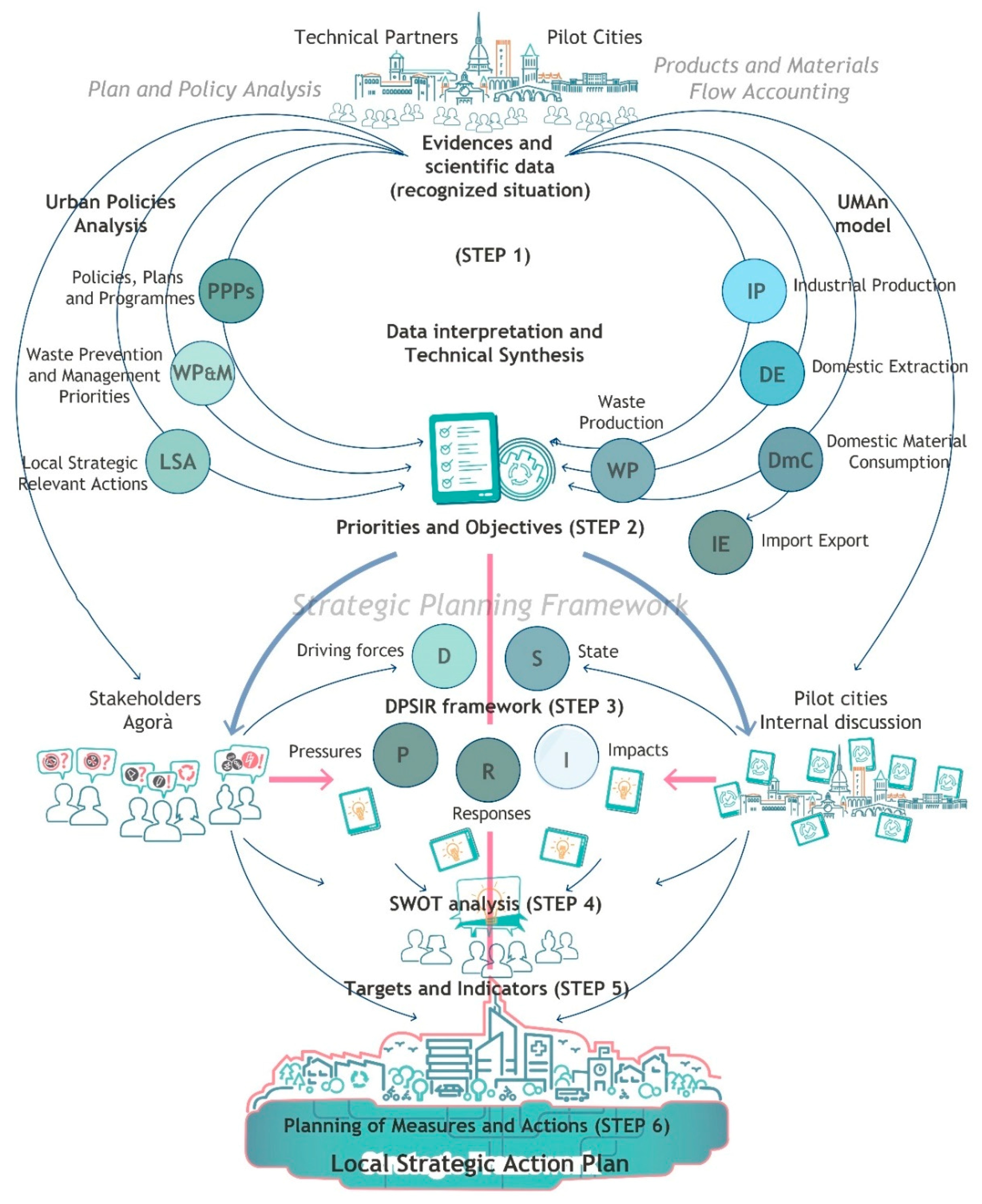
The following elements are considered in the planning process for the development of the strategic plans for waste prevention and resource management (graphically presented in
Figure 1):
the building of quantitative (i.e., data on material flows) and qualitative knowledge (i.e., existing policies and strategies affecting the resource/waste sectors within the city) in relation to the resource consumption and waste production in the urban system;
the definition of the city priorities and related objectives on the basis of the quantitative and qualitative knowledge;
the environmental and socioeconomic assessment of the current situation related to resource consumption and waste production within the city through the Driver-Pressure-State-Impact-Response (DPSIR) analysis, in order to identify potential responses linked to the priorities and objectives;
the Strengths–Weaknesses–Opportunities–Threats (SWOT) analysis in relation to the potential responses, in order to support the transition from potential responses to measures and actions for the achievement of the priorities and objectives;
the definition of specific measurable targets according to a time frame, as well as the indicators aimed at their measuring, in order to monitor the accomplishment of the priorities and objectives;
the final formulation and planning of appropriate measures and actions for the achievement of the priorities and objectives.
They are organized in subsequent steps, developed in accordance with a participatory process. Below, after introducing the process for the engagement of the local authorities (i.e., policy-makers) and stakeholders in the whole planning process, such steps are explained one by one.
The process for the engagement of the local authorities (i.e., policy-makers) and stakeholders in the whole planning process—i.e., public participation organized in the form of consultation meetings, working groups, and other kind of interactive activities supporting each one of the abovementioned steps—is formulated in order to involve them since the first steps of the strategic plan’s definition. Public participation in urban strategic planning offers better chances for developing solutions that are sustainable and feasible, and which citizens are willing to implement [
32] by following a bottom-up approach where the city strategy is built by decision and policy-makers with the support of the relevant stakeholders and citizens. There is evidence that stakeholders’ participation can enhance the quality of environment-related decisions by considering more comprehensive information inputs [
33,
34]. The meaningfulness of stakeholders’ engagement can be seen, on the one hand, in an ethical perspective to enhance inclusive decision-making, promote equity, enhance local decision-making, and build social capital, and, on the other hand, in a strategic management perspective to capture knowledge, increase ownership of the project by users, reduce conflict, encourage innovation, and facilitate spin-off partnerships [
35]. Furthermore, integrating local and scientific knowledge can provide a more comprehensive understanding of complex and dynamic social and environmental systems and processes; such knowledge can be used to evaluate the appropriateness of potential technical and local measures [
33].
In this context, the participatory process in the Urban_WINS project was carried out following a defined and shared protocol that implicated various meetings, called Face-to-Face Agoras, and involved both policy-makers and relevant stakeholders (e.g., industry and professional associations, private and municipal companies, local authorities, citizens, etc.). Such protocol was developed by a project partner, FCT NOVA—the Faculty of Sciences and Technology of Nova University of Lisbon —and was aimed at giving arrangements as regards the main organizational and management contents of the meetings, providing sufficient flexibility to cities to tailor the activities according to their own situation, characteristics, and needs. After each Face-to-Face Agora, all the information and suggestions collected were subsequently explored, verified, and eventually integrated internally by the decision-makers of the municipal authority.
2.1. Step 1
The building of quantitative and qualitative knowledge in relation to resource consumption and waste production in the urban system is aimed at providing useful information and data to start the building of the urban strategy on the basis of a recognized situation—the strategic situation. This is composed of the analysis of the current policies which insist on the urban area (the so-called qualitative analysis) and the quantitative analysis of the city’s resource consumption and waste production through the analysis of material flows.
The analysis of current policies foresees the collection of all the information contained in plans, documents, reports, etc., that are necessary to build the state-of-the-art of the urban and territorial strategies and initiatives, which have an effect on resource consumption and waste production within the urban system. The legislative frameworks considered:
National: directives determining policies to be implemented in regions and municipalities;
River Basin—Interregional: river basin sectoral plans;
Regional: Regional legal provisions, included the ones from autonomous communities;
Provincial—Metropolitan: provisions on resource consumption, metropolitan plans;
Municipal: local activities, programs, action plans, agricultural parks, energy savings initiatives, etc.
The relevant information emerged from such analysis needs to be synthesized in an easy and communicative way in order to highlight issues, synergies, and problems that need to be addressed during the development of the strategic plan. This can serve both to avoid redundancies and overlapping interventions, and to highlight potential links between the existing policies and the strategic plan. The main information extracted during the analysis is related to the specific objectives of plans/policies, the stakeholders involved, and the relevant measures implemented or allocated that have an effect on the resource and waste sectors, as well as their fields of action. Such measures were then classified according to the following four main categories: waste prevention and management, development of new sustainable sectors and local economies, rational use of resources—energy, water, soil, and sustainable mobility—and CO2 reduction. The latter information aims to make clearer what are the main fields of action a city currently focuses on (according to the objectives and actions contained in its current planning tools), allowing to understand in which fields the city should instead reinforce its strategy.
The quantitative analysis of the city’s resource consumption and waste production patterns provides to decision-makers, as well as to other stakeholders interested in evaluating and understanding the complexities of such patterns in a city, consolidated and useful information and data to build a recognized urban situation. It aimed at giving a better understanding of how the city consumes and discards its products and resources in order to assess how to prevent, reduce, and reuse waste, using an UM accounting model. One of the most important UM tools is the MFA [
36,
37]. MFA helps decision-makers to understand the metabolism of their city or region, by examining the materials flowing into it, the stocks and flows within the system, and the materials exchanged with other systems [
36]. However, since incorporating MFA results in the planning processes is challenging, there is need to further interpret them before to present the resulting data to decision-makers and stakeholders [
30]. When presenting MFA results in a comprehensible manner, decision-makers are provided with an improved understanding of the functioning of their region or city, allowing them to prepare for, and react to, present and future material flows and stock issues, also providing a good basis for comparing a set of scenarios [
36]. If the system boundaries and the selection of processes and goods are well known and documented, MFA permits an objective discussion of environmental and resource/waste policy measures, improving the ability of the actors to define a common platform with regard to the current situation, and participation in the development of future scenarios for long-term planning by visualizing the consequences of certain measures at an early stage [
38]. Zengerling (2019) [
39] reported two successful cases in which “data on past, current and predicted future scenarios of the cities’ carbon and material flows supported informed decision-making in target setting, choice of measures and indicators,” using, e.g., “dynamic mathematical models to predict and assess different policy scenarios in their efforts to reduce GHG emissions and work towards zero waste”. Within the Urban_Wins project, a novel model for the calculation of material flows, called the Urban Metabolism Analyst (UMAn) model, was proposed in order to inform decision-making with quantitative results. This model was already used to study material flows and inform local decisions in relation to a city’s strategic planning in waste management [
40]. Such a model allows standard detailed accounting of material flows at the urban level [
41], identifying sectors, materials, and products that mainly affect the urban system. However, in the Urban_WINS project, the use of quantitative results in the planning process was not tested in a real case study because of a delay in the processing of the data (more details on this are provided in the Results). Nevertheless, it is proven that incorporating quantitative data on material flows in a planning process is very useful and can support decision-making in strategic planning, as evidenced in other case studies (e.g., Zhang et al. [
30], Zengerling [
39]), for example, supporting the formulation of strategies and objectives on the basis of the outcomes of the metabolic assessment [
30].
2.2. Step 2
The definition of the city priorities and related objectives—the strategic direction—on the basis of the quantitative and qualitative knowledge—the strategic situation—is formulated in order to respond to/improve the current situation, emerged in the above-mentioned analysis. A priority can be defined as the medium/long term strategy that a municipality is determined to reach, which is built to address the main problems and needs related to/causing the priority. Accordingly, an objective can be defined as the measurable target to be achieved in order to reach the identified priority (i.e., targets relate to those subsequent paths that a municipality needs to undertake in order to achieve the strategy). In this context, more objectives can compete simultaneously for the achievement of a priority.
The first formulation of city priorities and objectives is generally done by decision- and policy-makers on the basis of the strategic situation resulting from the previous analysis. Subsequently, the priorities and objectives, together with the reasons that led to their formulation, are explored and assessed with all the relevant stakeholders and citizens engaged in the participatory process, by using a set of decision support tools (i.e., DPSIR and SWOT, see Steps 3 and 4 for detailed descriptions). During this phase, meetings with the stakeholders are organized in a cooperative and social learning-oriented environment (e.g., workshops, interactive sessions, etc.) aimed at creating a shared vision, as well as at promoting a dialogue that can help to increase awareness, change attitudes, and affect behaviors. During such meetings, priorities and objectives may be subject to adjustments and new proposals, thanks to the new information inputs.
2.3. Step 3
The environmental and socioeconomic assessment of the current situation in terms of social and environmental issues (related to resource consumption and waste production), which generated the need to set priorities and objectives, is carried out in order to set out potential responses through the Driver-Pressure-State-Impact-Response (DPSIR) framework. The usefulness of the DPSIR framework in the urban planning practice is due to its focus in supporting the design of the relationship among society, activities, and urban environment; carrying out the consequences of the choices; and building knowledge on environmental impacts and problems [
29]. Furthermore, some authors [
29,
42,
43] argue that the DPSIR framework can be successfully combined with other problem structuring methods (e.g., in the Urban_WINS case with the SWOT analysis, see Step 4 for a detailed description) rather than using one single method, and that, especially if applied in a participatory and systemic multimethodology, this helps to create outcomes of value to local populations. The DPSIR framework was developed by the Organization of Economic Cooperation and Development [
44] and the European Environment Agency [
45], and it is identified as a “causal framework for describing the interactions between society and the environment” [
46]. It is an adaptive management tool used to analyze environmental problems by establishing cause–effect relations between anthropogenic activities and their environmental and socioeconomic consequences [
47], in a policy-meaningful way [
48]. According to the DPSIR terminology, social and economic developments (Driving Forces, D) exert Pressures (P) on the environment and, as a consequence, the State (S) of the environment changes. This leads to Impacts (I) on ecosystems, human health, and society, which may cause a societal Response (R) that feeds back on Driving Forces, on State, or on Impacts through various mitigation, adaptation, or curative measures [
48,
49,
50]. Moreover, combining the DPSIR framework with other methods could improve its results [
47,
51,
52,
53].
In the Urban_Wins project, the process of analysis of the Driver-Pressure-State-Impact-Response was adapted by CTM (Fundació CTM Centre Tecnològic, a partner of the project) according to the participatory process, and it supported the definition of potential responses taking into account the relationships occurring among society, activities, and the related environmental impacts. In particular, after the analysis of the Driving Forces, Pressures, State, and Impacts, performed by the policy-makers of the municipality together with the stakeholders, a set of responses (measures of interventions, strategic actions, and/or policies) for waste prevention and resource management were formulated in order to modify determinants (prevention approach), reduce pressures (prevention and management approaches), and mitigate changes in the state of the environment and impacts or adapt to them (management approach).
2.4. Step 4
After the formulation of the set of responses, a SWOT analysis is needed to further discuss, approve, and specify the potential responses according to its results. SWOT is one of the most frequently used methods by practitioners; it was already successfully used within a participatory process in the waste management sector [
54,
55]. Yuan (2013) [
56] reported several case studies in which the SWOT analysis was used in strategic planning, arguing that it is evidently demonstrated that the SWOT is one of the best tools for investigating problems from a strategic perspective. In fact, SWOT is a strategic planning technique used to identify the strengths, weaknesses, opportunities, and threats (SWOTs) of project planning. It is designed to be used in the preliminary stages of decision-making on the one hand, and as a precursor to strategic management planning on the other hand. Its main purpose in the planning process is to obtain decision support, usable for choosing the strategy to be followed [
54]. Based on the SWOTs identified during the analysis of the potential responses, recommendations for improving the actual situation come out. These recommendations are then used to support the formulation of appropriate measures and actions as a response to the current situation of the city.
2.5. Step 5
Specific measurable targets according to a time frame, as well as the indicators aimed at their measuring, are defined in order to identify a series of time frames to monitor the various steps for the accomplishment of the objectives and priorities through specific actions and measures (see the Step 6 for the detailed description). In the Urban_WINS project, specific measurable targets and related indicators were established in each pilot city for each objective identified. Such indicators were selected from a list specifically prepared for the project purpose. The list included a wide range of indicators coming from various sources (i.e., literature on waste prevention and management, CE, and UM, as well as from the EU Resource Efficiency Scoreboard [
57]). Pilot cities, under the guidance of the technical partners, first chose the most appropriate indicator(s) for each one of their objectives and, second, set the related targets to be measured through the selected indicator(s). In particular, three specific targets were fixed according to a specific timeline: one concerning a short-term period (up to 1–2 year/s), another concerning a medium-term period (from 2 to 5 years), and the last concerning a long-term period (more than 5 years). This step is useful to create the basis for the further setting up of a monitoring program in order to monitor how the planned actions and measures are contributing to the achievement of the related objectives, i.e., if the fixed targets are reliable and attainable through the implementation of the planned actions and measures or something needs to be adjusted and/or changed during the implementation phase. A similar approach was carried out within the BRIDGE project, which defined a set of indicators to be used for the assessment of planning alternatives.
2.6. Step 6
The final step regards the formulation and planning of appropriate measures and actions within the LSAP section in order to accomplish the objectives and priorities identified in the SPF section. In doing so, strategies are converted into practical programs or activities for implementation starting from the information collected during the analysis phases (i.e., potential responses from the DPSIR framework and additional information and recommendations from the SWOT analysis). Like in the other phases, stakeholders need to take jointly part into the decision-making process in order to minimize or avoid conflicts and oppositions. Action planning identifies the key undertakings in consultation with stakeholders while focusing on resources and partnerships [
58]. The planning of measures and actions shall be organized in relation to the priorities and objectives (an action could accomplish one or more objectives, which targets are measured through the selected indicators as described in Step 5) and, based on the Urban_WINS experience and according to [
58], should consider (at least)
the expected results and the time horizon of their implementation;
the responsible body/department of the municipal authority for their implementation;
the actors to be involved and the stakeholders affected by their implementation;
the human and financial resources to be allocated to each measure/action; and
the monitoring phase to be put in place in order to track their state of advancement and potential critical issues that may arise during their implementation.
3. Results
Following the above methodology, each pilot city developed its own strategic plan for waste prevention and resource management. A total of eight strategic plans were thus implemented, composed of all the elements explained in the steps from 1 to 6. The proposed planning process make use of both qualitative (e.g., analysis of current policies, DPSIR, and SWOT analysis) and quantitative analysis/methods (e.g., MFA, indicators, and targets). Qualitative ones were intended to be used to gain an understanding of underlying reasons, perceptions, opinions, and motivations for the development of the strategic plans, as well as to provide insights into the problems of the waste and resource management sector. Quantitative ones were intended to be used to quantify the problems by way of generating numerical data that can be measurable, as well as to formulate and monitor appropriate pathways deployed as a response to such problems through measurable data and/or usable statistics. In the next paragraphs, after presenting some findings on the participatory process, the main results are presented for each one of the six steps. In each city, the implementation of the strategic plan was carried out in parallel and with the support of the participatory process organized through various meetings (the so-called Face-to-Face Agoras).
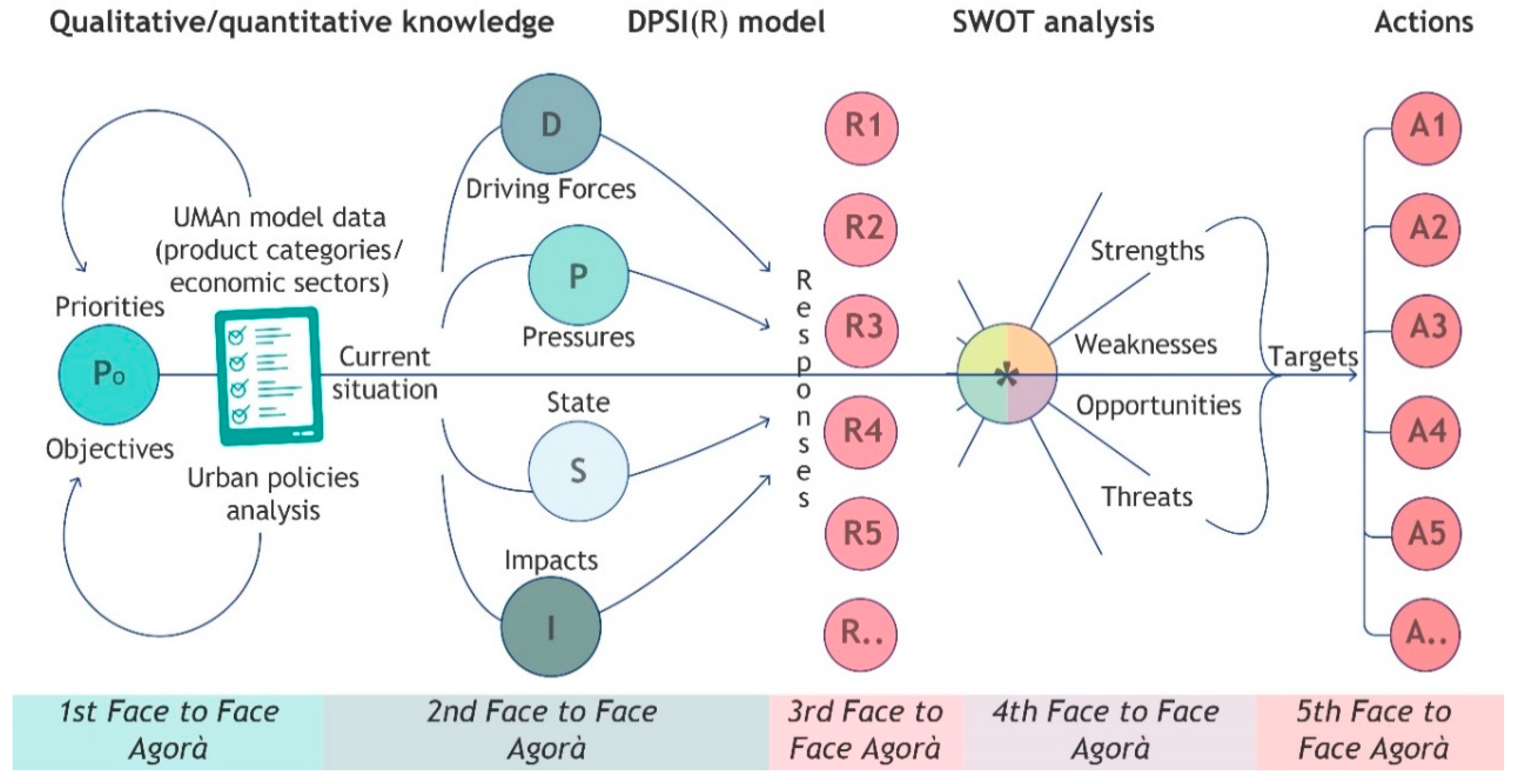
Figure 2 resumes the various steps of the participatory process that were carried out in each city, which led to the joint formulation of priorities, objectives, and actions that were included in the strategic plan.
The organization of such meetings resulted in different levels of stakeholders’ involvement from one city to another.
Table 1 shows the number of different stakeholders (one person is counted only once also if he/she participated in more than one meeting) engaged during the participatory process up to the formulation of the actions.
Cities with more stakeholders engaged are Leiria (173) and Bucharest (155), followed by Manresa (91) and Cremona (83). On the contrary, cities with fewer stakeholders engaged are Sabadell (48), Pomezia (64), Torino (68), and Albano Laziale (70).
3.1. Step 1
As regards the qualitative and quantitative knowledge, the results are explained only for the former, since it was not possible to apply and inform the planning process with the quantitative results coming from the UMAn model.
Concerning the qualitative analysis elaborated for each city,
Table 2 shows the number of the existing policy-related measures having an effect on the resource and waste sectors that are implemented or allocated in the eight pilot cities, classified according to the four categories identified for the fields of action (see Step 1 in Materials and Methods).
The city with the highest number of existing policy-related measures having an effect on the resource and waste sectors is Torino (54), closely followed by Leiria (50). The city with the lowest number is Cremona (20), closely followed by Bucharest (23) and Albano Laziale (26). The field of action with the highest amount of existing measures is the “rational use of resources—energy, soil, and water” (109), while the field of action with the lowest amount is the “development of new sustainable sectors and local economies” (42). “Sustainable mobility and CO2 reduction” and “Waste prevention and management” have similar results (66 and 61, respectively).
3.2. Step 2
The definition of city priorities and related objectives resulted in a total of 31 priorities and 91 objectives, as shown in
Table 3.
While the number of priorities is similar among all the cities (from three to five), the number of objectives is more diverse, with a minimum of four objectives in Torino and a maximum of 22 objectives in Manresa.
According to the issues addressed by the strategies (i.e., priorities and objectives) defined in the eight pilot cities, some major topics emerged, such as circular economy, waste management, waste prevention, recycling of materials/products, collection of waste, food waste, and reduction of packaging.
3.3. Step 3 and Step 4
The implementation of the DPSIR framework led to the definition of potential responses linked to the priorities and objectives that were subsequently explored, assessed, and refined using the SWOT analysis, in order to come out with additional information and recommendations for improving the actual situation.
Table 4 shows the number of potential responses came out and analyzed during these phases.
The city with the highest number of potential responses is Torino (43), closely followed by Sabadell (43) and Leiria (39). The city with the lowest number is Albano Laziale (10), followed by Cremona (18).
3.4. Step 5
The definition of the targets (in terms of expected results) and related indicators to measure their accomplishment over time was performed by each city by selecting one or more (usually, no more than 2 or 3) quantitative/performance indicators, and by establishing the target value to be achieved in the short, medium, and long-term for each objective (e.g., the amount in tons, or the percentage over the total, of the daily separate waste collected, as expected after one year, two years, and five years from the starting of a new policy/program on separate waste collection). Furthermore, qualitative indicators were also included in order to monitor more qualitative results (e.g., citizens’ satisfaction after one year, two years, and five years from the starting of an intervention measure).
3.5. Step 6
Table 5 shows the number of measures and actions that were defined and included in the strategic plan of each city to accomplish the city strategy, i.e., objectives and priorities.
Manresa has the highest number of actions in its strategic plan (24), while Albano Laziale and Torino have the lowest number (8).
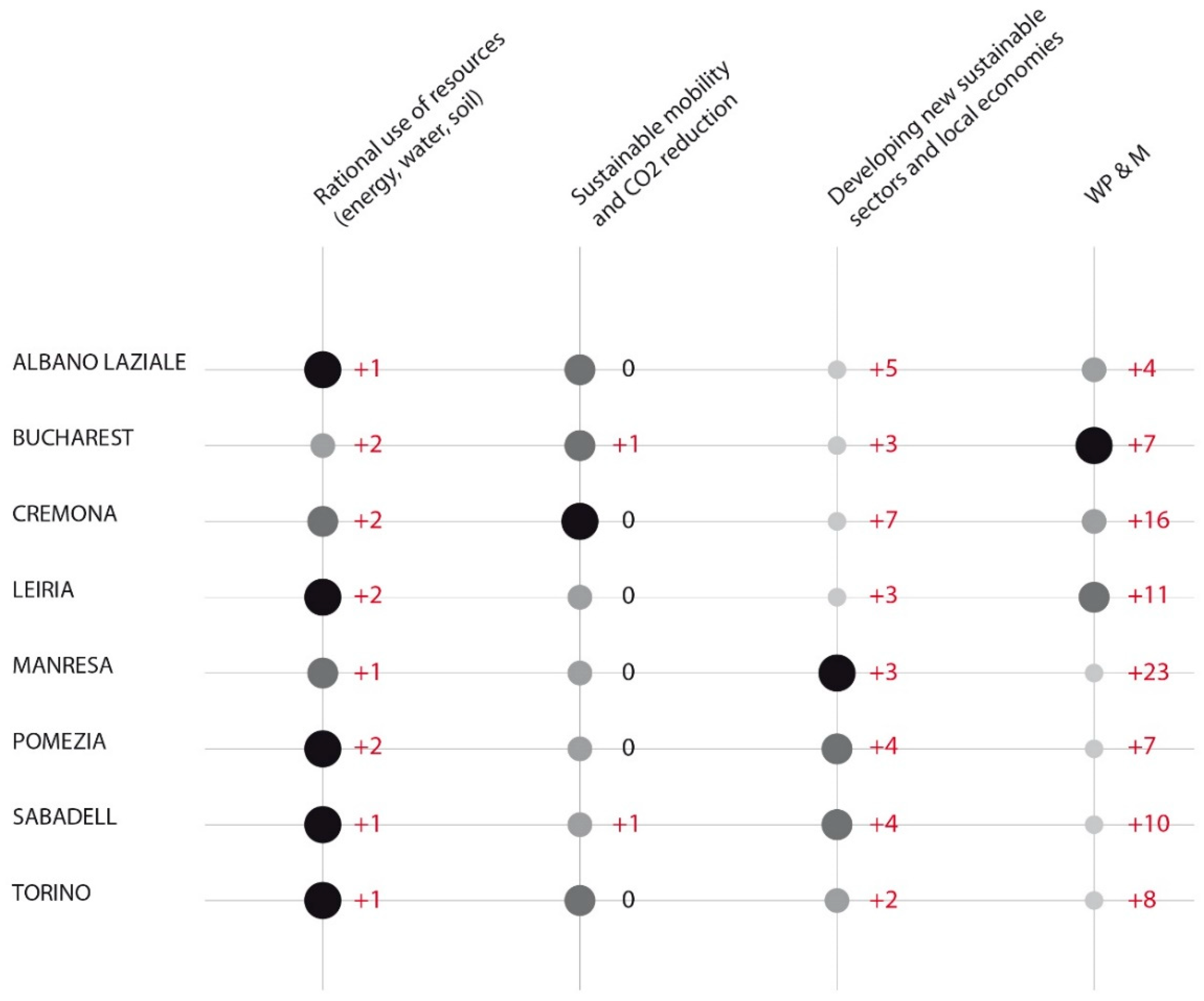
Figure 3 shows, for each one of the pilot cities, both the existing measures implemented or allocated within the current policies (see also
Table 1) and the new planned measures defined within the eight strategic plans. This allows a visual and immediate comparison of the relevance (in terms of magnitude and number) between the existing and the new planned measures and actions. It helps to understand how (i.e., in which sectors and with which relevance) the strategic plans developed within the Urban_WINS project could contribute/reinforce the city strategy on waste prevention and resource management.
4. Discussion
UM is considered as a potential means for analyzing and enhancing the sustainability of the resource and waste management sectors at the city or regional scale. From the Urban_WINS experience, the relation between UM and urban planning practices and policy frameworks can be understood under two important aspects: (i) as a theoretical approach and way of thinking that assists policy and decision-makers when implementing sustainable measures for their cities (in this case, to better manage resources while preventing waste) and (ii) as a powerful tool to analyze and account material flows for the production of analytical data that supports and orientates the formulation of policies. The methodology developed within the eight pilot cities of the project highlighted very well how these two aspects could be applied and be reinforced from each other, even if it was not possible to test the use of the data coming from material flow accounting in the real planning process. In fact, since data on material flows took more time and effort, and collection and processing were more challenging than expected, the results came out too late to be used for feeding the planning process with quantitative data. However, cities are provided at the end of this project with such data and, according to its usability, they can use them for further applications in relation to the implementation of the measures and actions included in their strategic plans (e.g., for their prioritization and/or monitoring). The methodology proved to be innovative in combining tools, expertise, and processes that are usually applied separately in the decision-making process, as well as operational in introducing metabolic thinking within both the policy framework and the society’s awareness through the engagement of decision-makers and stakeholders. Based on the Uban_WINS experience, the participation of the municipality offices relating to different sectors/departments (e.g., Environment, Energy, Building, Urban planning, Mobility, Smart City Initiatives, Social affairs, etc.) and administrative levels (councilors, officers, technicians, internal and/or external experts, etc.) is crucial to ensure a constructive discussion by involving all issues having some kind of interrelation with the resource and waste sectors, and, as a consequence, to have a more comprehensive setting of responses.
In the eight case studies, the implementation of the methodology resulted in the identification of various strategies, consisting of several priorities, objectives, and actions, which, although they differ in typology and topic, are all aimed at enhancing the sustainability of the resource management and waste prevention sectors. Starting from the stakeholders’ experience and territorial knowledge, it was possible from the beginning to characterize each strategic framework without imposing any technical or analytical vision, using a top-down logic [
59]. Building informed policies by incorporating the knowledge and preferences of stakeholders and decision-makers is a pretty widespread practice used when orienting sustainable development (e.g., Gissi et al. [
60]). In this way, it was possible to introduce into the political arena a real participative discussion focused on sustainability, including citizens’ perception and preferences about different (but connected) topics: resources consumption, waste prevention and reduction, waste management, sustainable practices and lifestyles, and city livability.
The topics addressed by the actions and measures defined within the eight strategic plans show that there is a particular sensitivity in addressing specific topics (more than the others) related to the waste and resource management sectors. These topics are related especially to several waste issues (e.g., management, prevention, collection, reduction, and recycling), with a focus on food wastage, and to the CE concept (e.g., reuse of materials and products). For this reason, the first two fields of action in terms of relevance (i.e., number of new planned actions classified into each one of the four main categories) are (i) waste prevention and management, mainly related to the waste issues, and (ii) development of new sustainable sectors and local economies, mainly related to the CE concept. It should be noted that the existing policies within the eight pilot cities, in general, are mainly focused on the remaining two fields of action: (i) rational use of resources—energy, water, and soil; and (ii) sustainable mobility and CO2 reduction. This means that the measures defined within the eight strategic plans are broadly focused—with a very few exceptions—on sectors where there is actually less relevant attention in the policy framework, thus leading to a reinforcement of the city strategy on these lacking sectors.
The eight pilot cities, which come from different geographical, physical, and cultural contexts, gained different results during the planning process. For example, as regards the participatory process, some cities (e.g., Leiria and Bucharest) were able to involve a higher number of stakeholders than others (e.g., Sabadell and Pomezia). These differences may be caused (in some cases), e.g., by the different size of the cities, the different sensitivity to/degree of willingness to address the problem of citizens, and/or the effort put in place by the municipal authority for their engagement. As regards the number of priorities, objectives, and actions included in the strategic plans, some cities preferred to have them in a reduced number and others not. This may depend by the fact that some cities (e.g., Torino) already had a wide range of measures implemented or allocated into their current policies, while others considered that the issues related to resource management and waste and prevention were still poorly addressed in their policy framework. Again, some of them may have preferred to have less but broader measures and others to have more specific and fragmented ones in a larger number. Given such first insights, all these aspects should be further investigated in order to better understand which are the factors that more influenced such differences.
Although the methodology seems very complicated at first sight, its structure is very flexible and guaranteed to reach the ultimate results overcoming potential bottlenecks (e.g., avoiding potential opposition). On the other hand, the entire process is also time consuming and resource demanding. Possible obstacles to entirely implement the methodology can be the lack of available information on resource consumption and waste production at the city level (as experienced in the Urban_WINS project), the lack of expertise of practitioners within the local authority for the application of specific steps of the methodology, and difficulties that may occur in the identification and engagement of the relevant stakeholders. Municipalities might therefore need to make additional efforts to collect data at the local level for the analysis of material flows, and to train the technicians responsible for the implementation of the planning process (as regards both the application of the most technical steps and the management of the various facets of public participation. Furthermore, as regards the collection of data that can be used to analyze the cities’ material flows (but this is also valid at a broader scale), it is necessary to mention the fact that there is need to standardize the way such data are collected, in order to simplify their accounting with MFA and make them more comparable across different geographical and temporal scales.
5. Conclusions
High rates of resource consumption and waste production are problems that need great attention; this is particularly true in urban areas in which resource consumption and waste generation are concentrated. The rise (or the rehashing) of approaches such as CE and UM in the last years demonstrates the urgency of the issue. Despite the increasing number of CE practices and UM researches worldwide, the operationalization and the inclusion of such approaches in policy- and decision-making processes have seen a significant progress only in recent years. Local authorities still need comprehensive guidelines that can help them to set up a proper decision-making process that incorporates metabolic thinking. This article is an attempt to contribute to this effort by proposing a methodology that can support step-by-step a municipality to operationalize UM and CE principles. The methodology developed—and tested—tries to overcome the “take, make, and dispose” dominant economic model in the resource and waste management sectors and recognizes, as a key component of the UM approach, the reformation of social processes and practices in order to shape the cities’ consumption patterns. The proposed methodology adopts a participatory approach along the entire process, supporting the municipality to move from a “strategic situation” towards a “strategic direction” through “strategic actions” [
30] by involving policy-makers and local stakeholders. The process is composed of six steps that combine different analytical and planning tools (e.g., MFA, policy analysis, DPSIR, SWOT, definition of priorities, objectives, and actions, as well as targets and indicators for monitoring purposes). The methodology was tested in eight municipalities involved in the Urban_Wins project and led to the development of eight strategic plans for waste prevention and resource management, one for each city.
Although the level of stakeholders’ involvement differed considerably from one city to another, the participation and the opportunity of dialogue between policy-makers and different stakeholders proved to be essential to legitimize the process, enrich the level of information, and raise awareness on UM and CE concepts. As already pointed out, the application of the MFA in the planning process showed big difficulties and constraints. As already noted by other researches, this happens particularly for the (un)availability of high-quality local data and the time required for their elaboration, which is often not compatible with the timing of projects and policy-making processes. However, the application of the DPSIR and SWOT analysis, together with the metabolic thinking approach applied in the participatory process, guaranteed the transition from priorities and objectives to concrete and appropriate measures and actions to deal with the challenges posed by the actual cities’ consumption patterns. Despite the lack of quantitative data from the MFA, the entire process was therefore able to incorporate the UM approach in a strategic planning process, allowing policy-makers and stakeholders to think about and address the reshaping of cities’ material flows, hence making decisions based on such an approach. In summary, the implementation of the methodology was successful in the definition of measures really aimed at (re)shaping the metabolism of cities, as well as in communication and engagement aspects that are fundamental to raise awareness among citizens and decision-makers.