Article

Impact of Population Density on PM2.5 Concentrations: A Case Study in Shanghai, China


The Center for Modern Chinese City Studies, Future City Lab ECNU, School of Urban and Regional Science, East China Normal University, Shanghai 200241, China
*
Author to whom correspondence should be addressed.
Sustainability 2019, 11(7), 1968; https://doi.org/10.3390/su11071968
Submission received: 11 March 2019 / Revised: 27 March 2019 / Accepted: 29 March 2019 / Published: 2 April 2019

Abstract

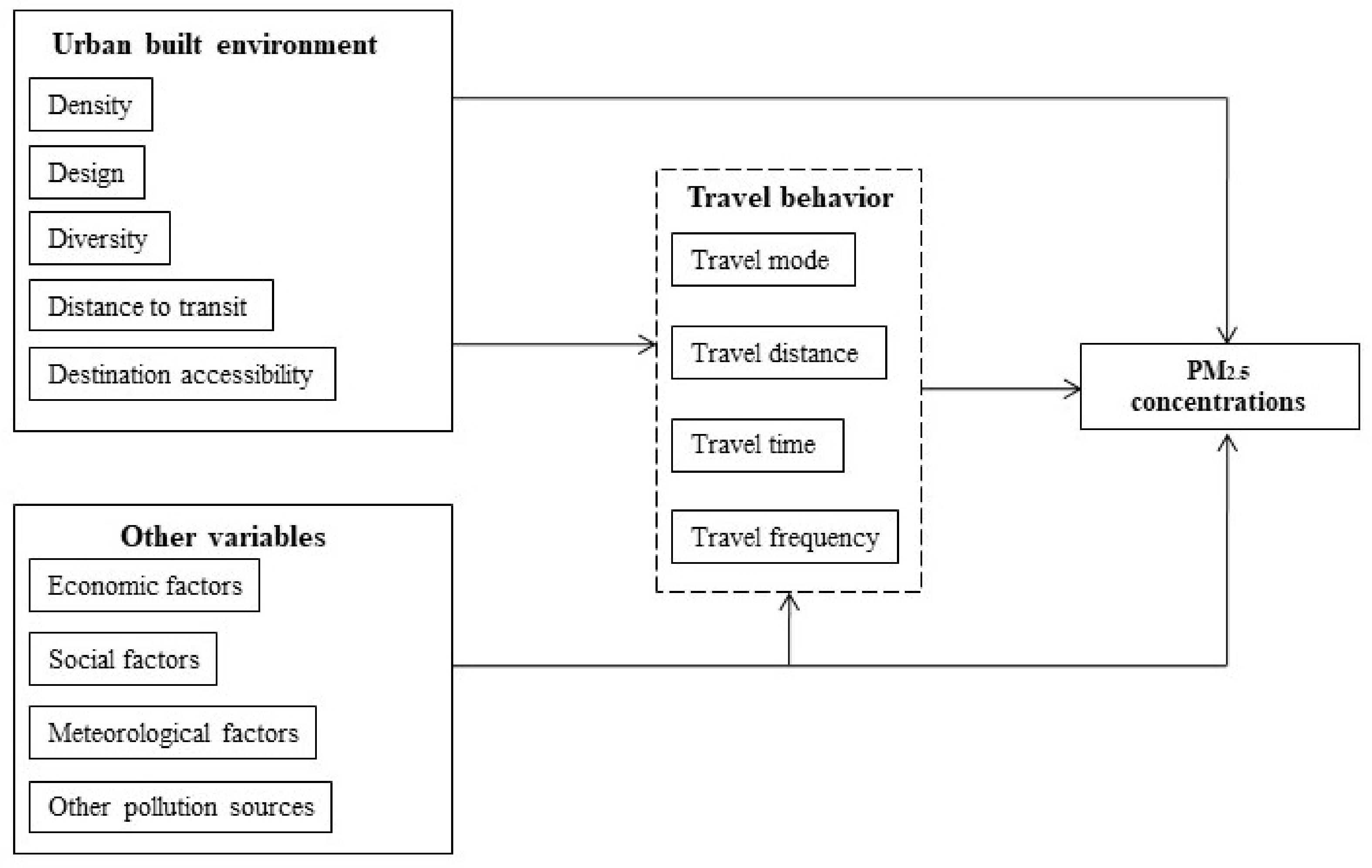
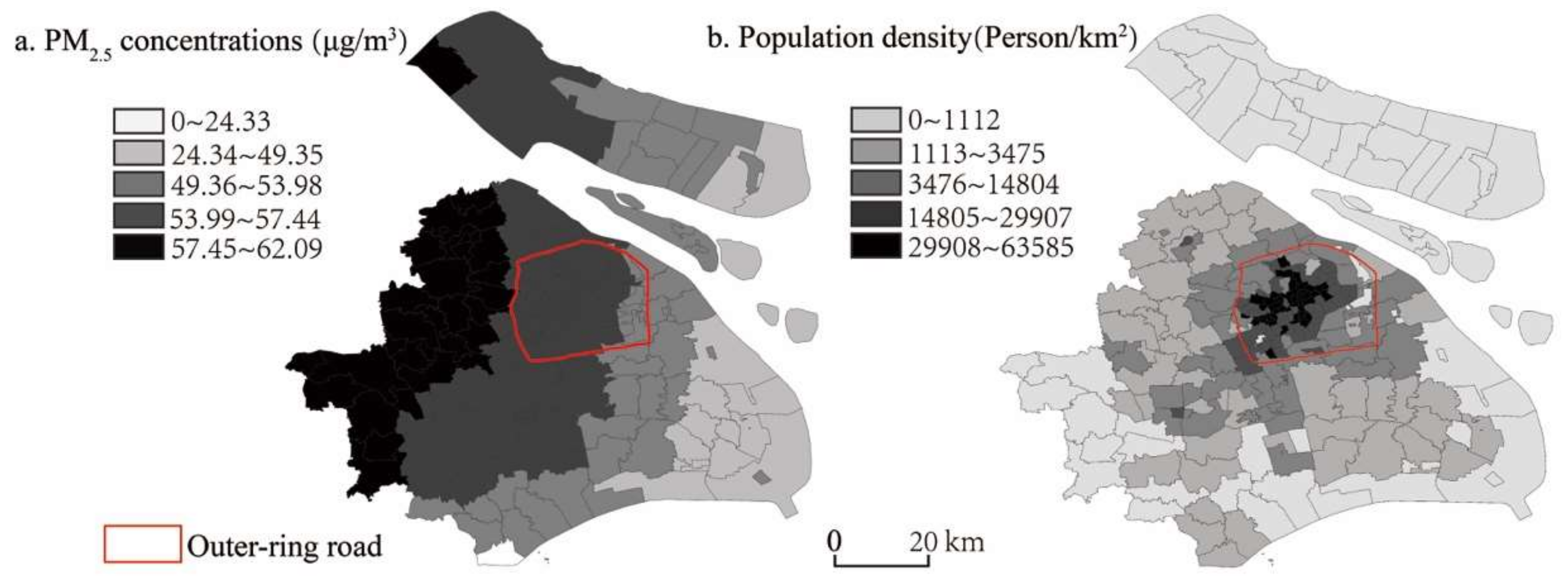
We examine the effects of the urban built environment on PM2.5 (fine particulate matter with diameters equal or smaller than 2.5 μm) concentrations by using an improved region-wide database, a spatial econometric model, and five built environment attributes: Density, design, diversity, distance to transit, and destination accessibility (the 5Ds). Our study uses Shanghai as a relevant case study and focuses on the role of density at the jiedao scale, the smallest administrative unit in China. The results suggest that population density is positively associated with PM2.5 concentrations, pointing to pollution centralization and congestion effects dominating the mitigating effects of mode-shifting associated with density. Other built environment variables, such as the proportion of road intersections, degree of mixed land use, and density of bus stops, are all positively associated with PM2.5 concentrations while distance to nearest primary or sub-center is negatively associated. Regional heterogeneity shows that suburban jiedao have lower PM2.5 concentrations when a subway station is present.
Keywords: mode-shifting effect; congestion effect; pollution centralization effect; spatial lag model; jiedao mode-shifting effect; congestion effect; pollution centralization effect; spatial lag model; jiedao