A Comparison of the Microbial Community and Functional Genes Present in Free-Living and Soil Particle-Attached Bacteria from an Aerobic Bioslurry Reactor Treating High-Molecular-Weight PAHs



Abstract
1. Introduction
2. Materials and Methods
2.1. PAH, Soil, Microorganisms, Chemicals
2.2. HMW PAH Biodegradation Experiments in the ABR
2.3. Analytical Methods
2.3.1. The Concentration of PYR
2.3.2. Biometabolite Analysis by Gas Chromatography–Mass Spectrometry (GC-MS)
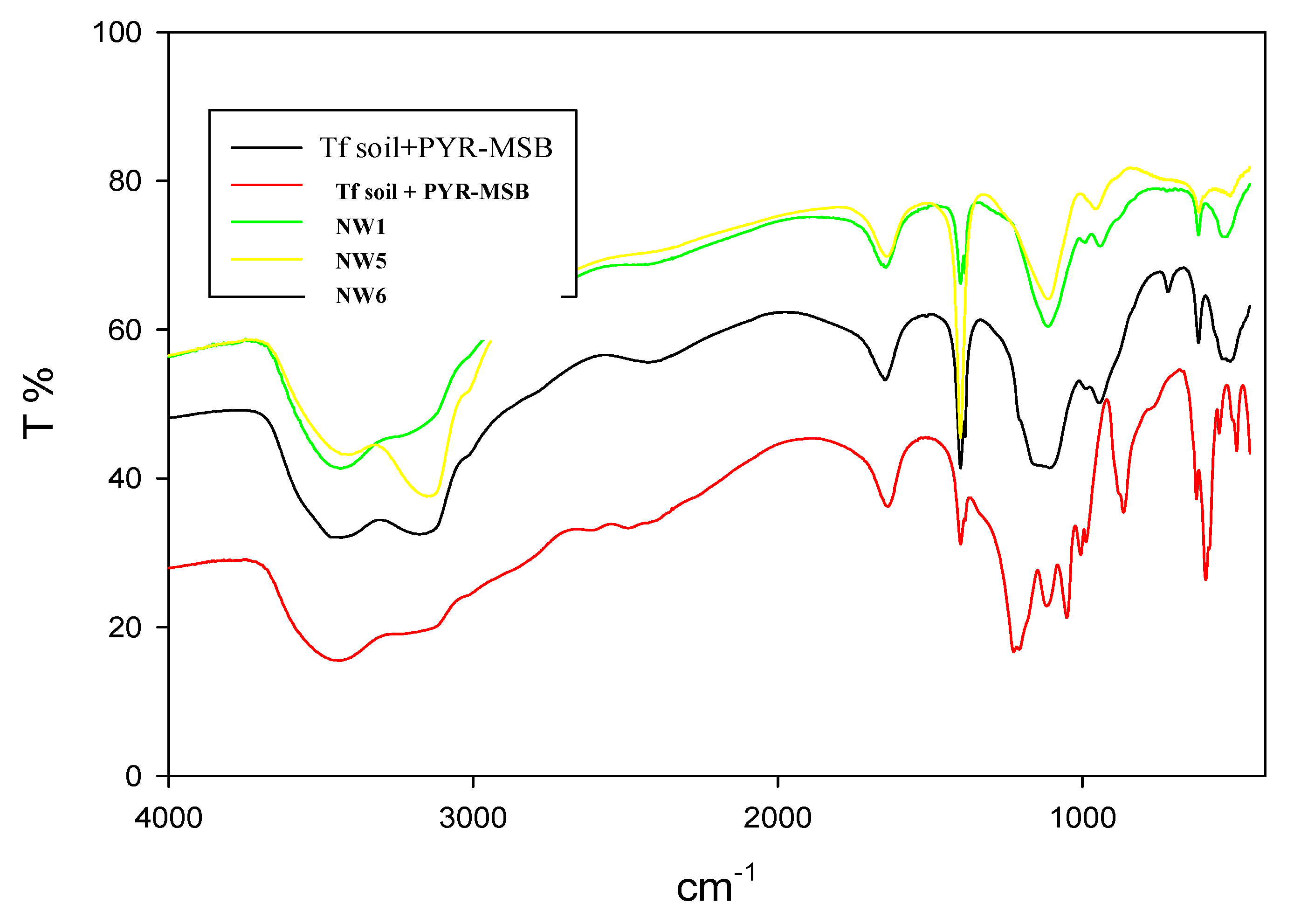
2.3.3. Detection of the Functional Groups of the Biometabolites Analysis by FTIR
2.3.4. Bacterial Community Analysis
2.3.5. Targeted Analysis of the Dioxygenase Genes
2.3.6. Community Level Performance Profiling (CLPP)
3. Results
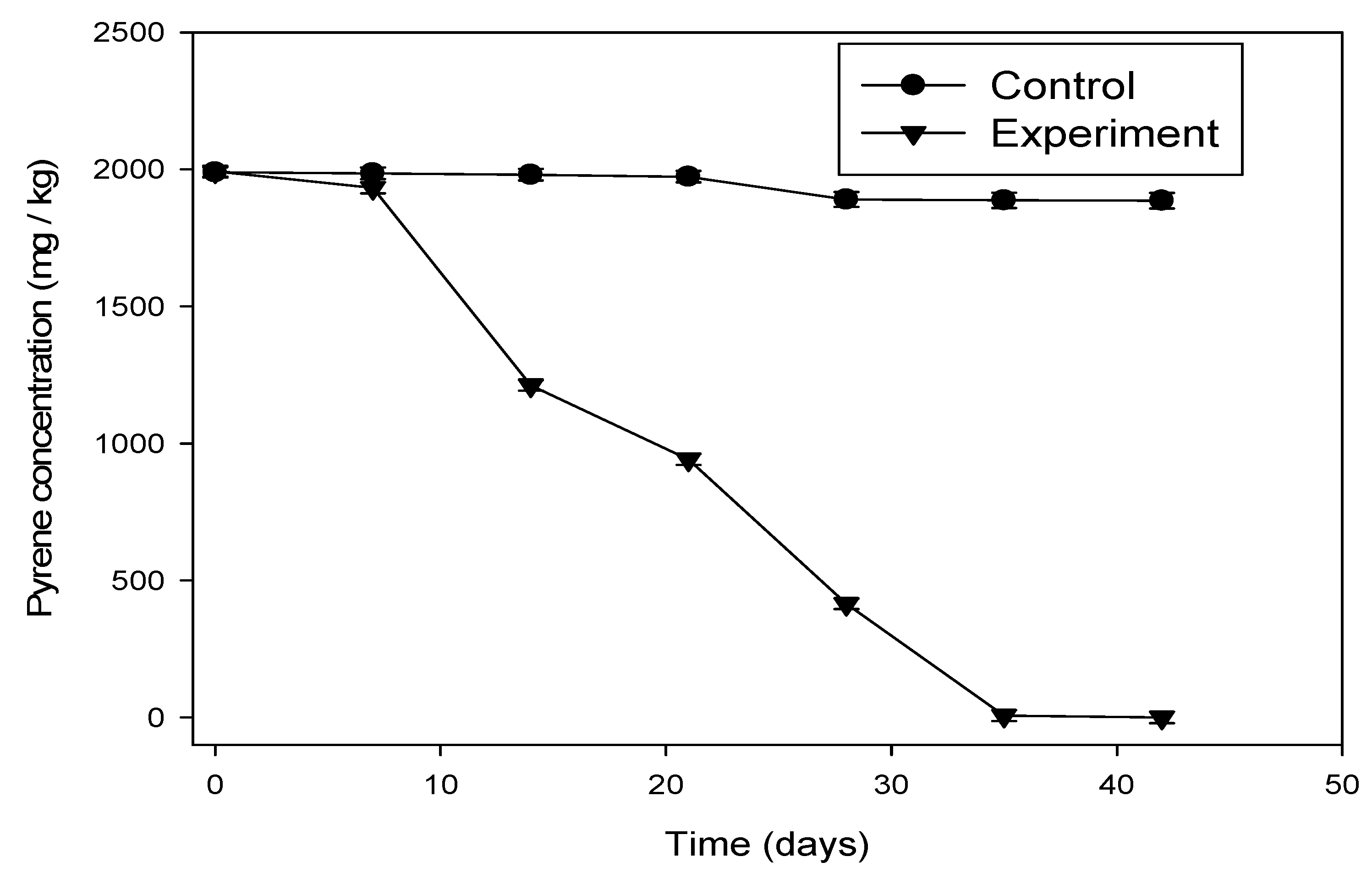
3.1. PYR Concentration and Biometabolites Analysis in the ABR
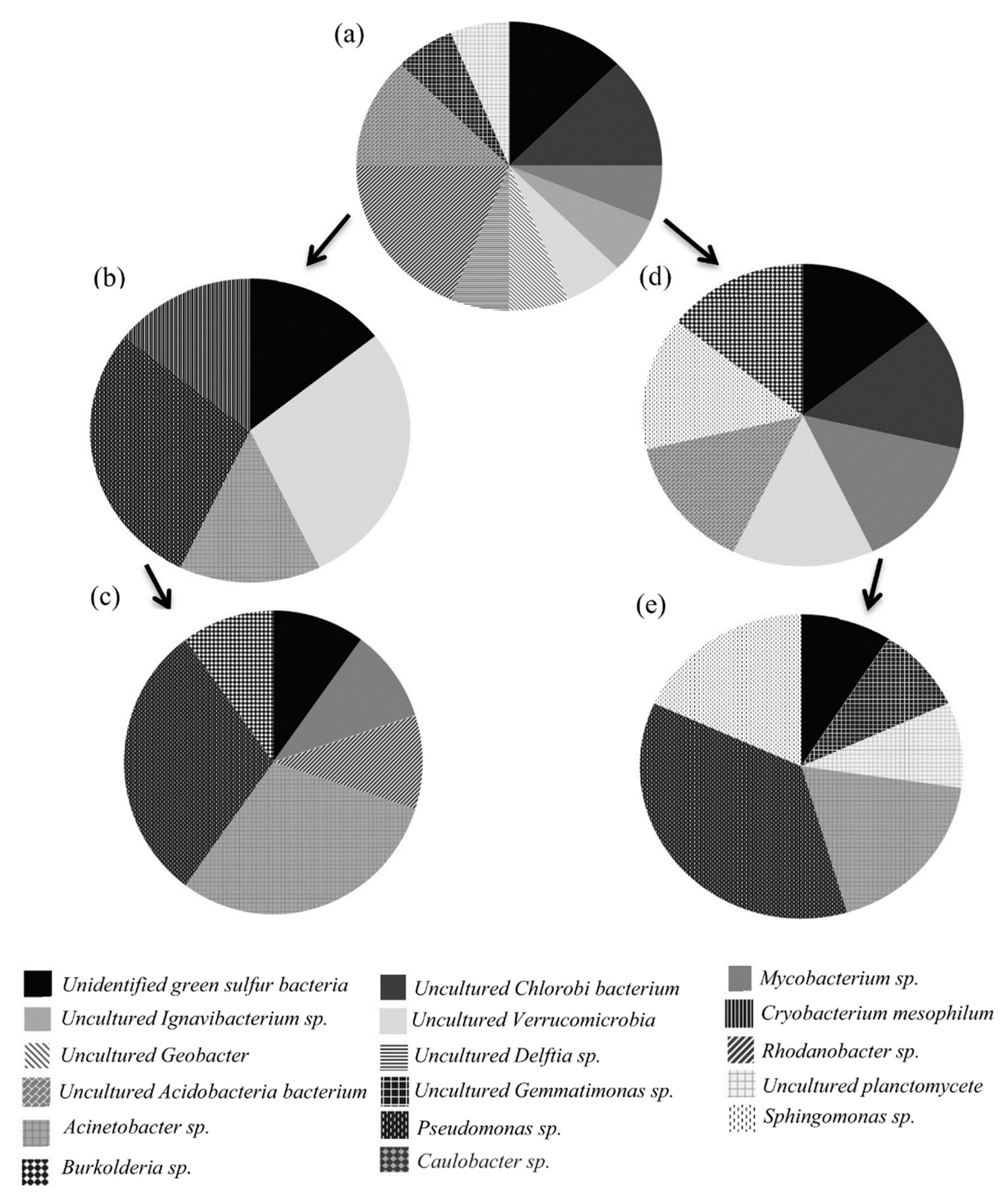
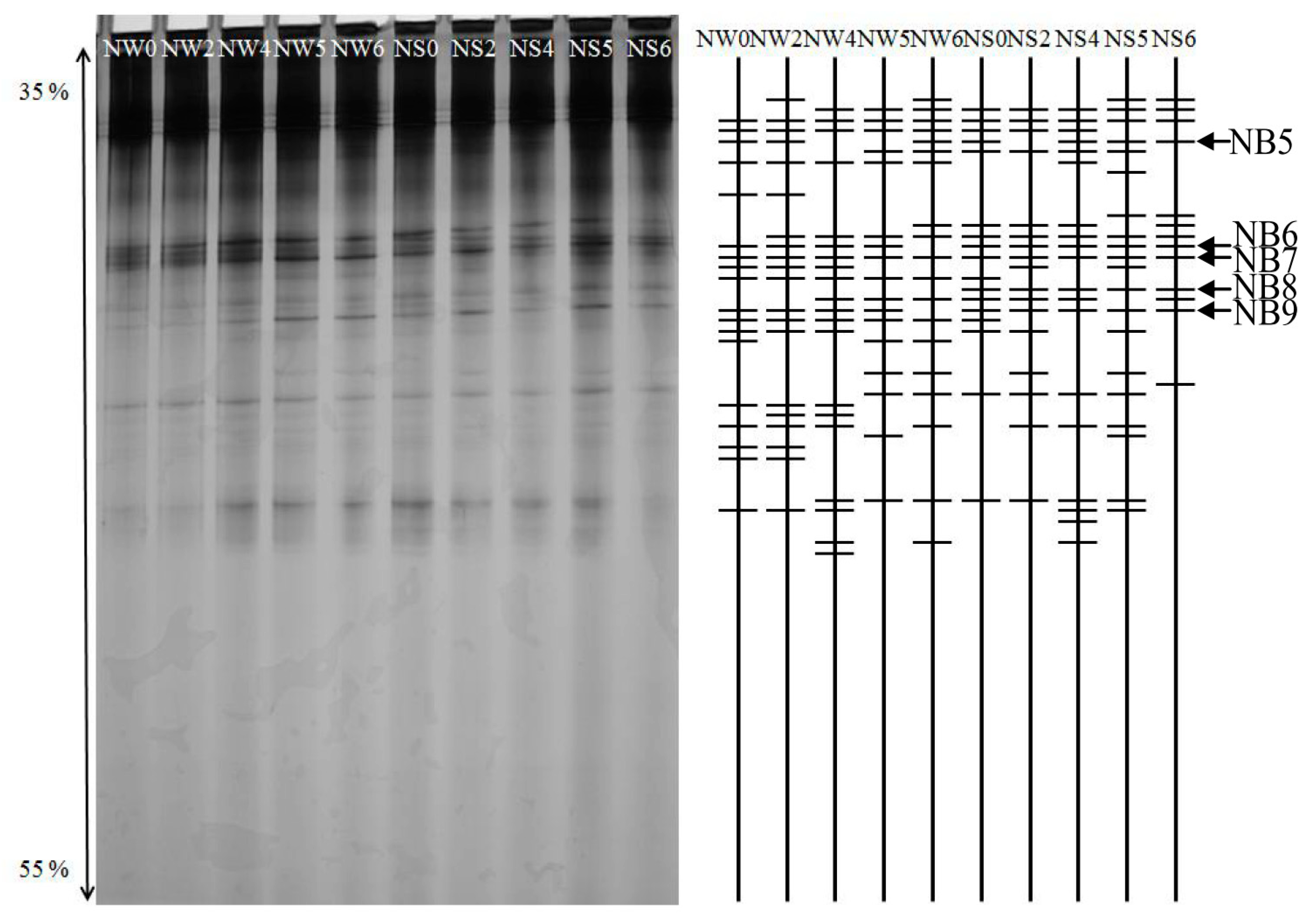
3.2. Change in the Bacterial Communities as the PYR Biodegradation Progresses in the ABR
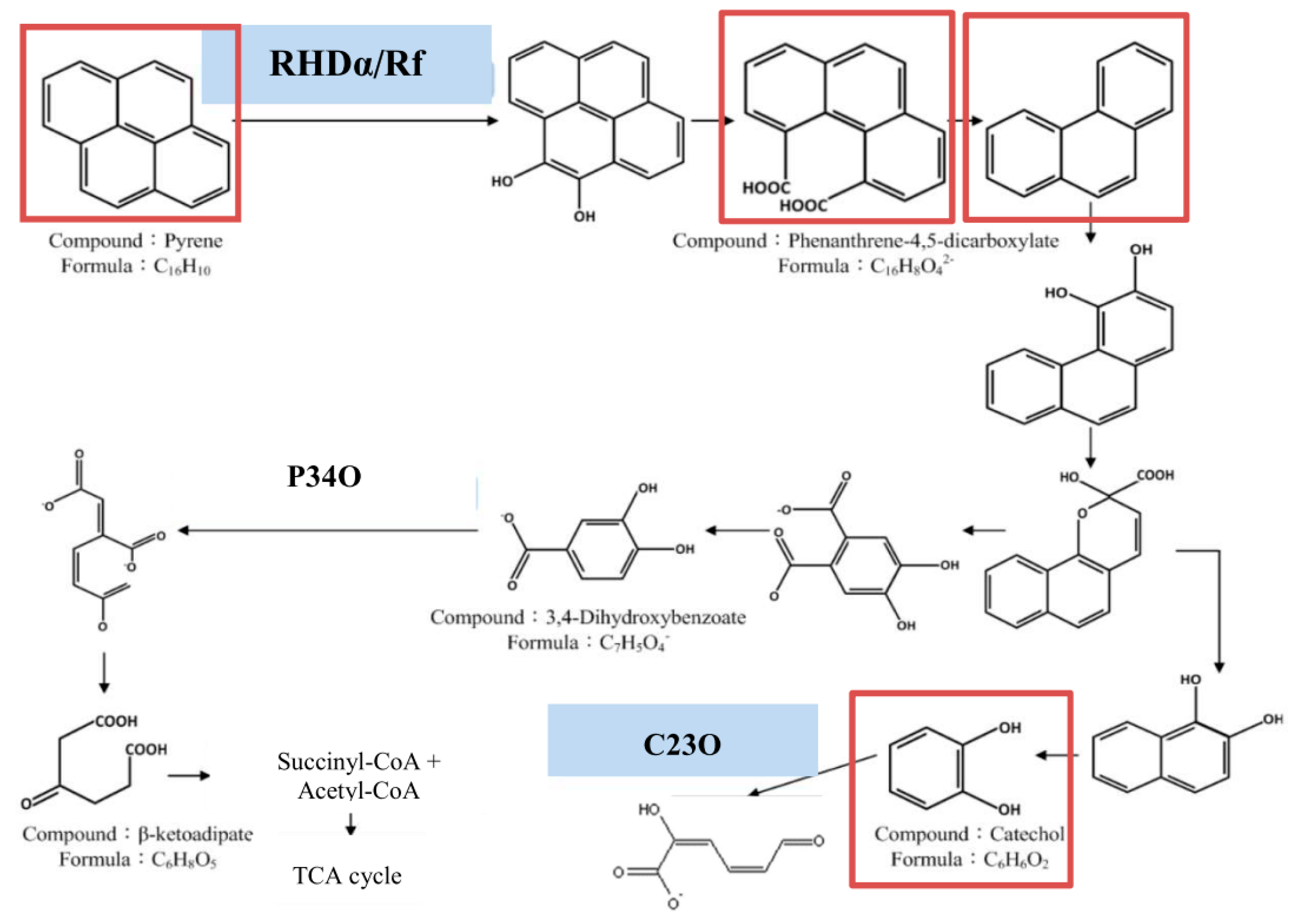
3.3. Functional Genes Present During PYR Biodegradation
3.4. CLPP
4. Discussion
4.1. The bacterial Species Identified as Present During the PYR Biodegradation in the ABR
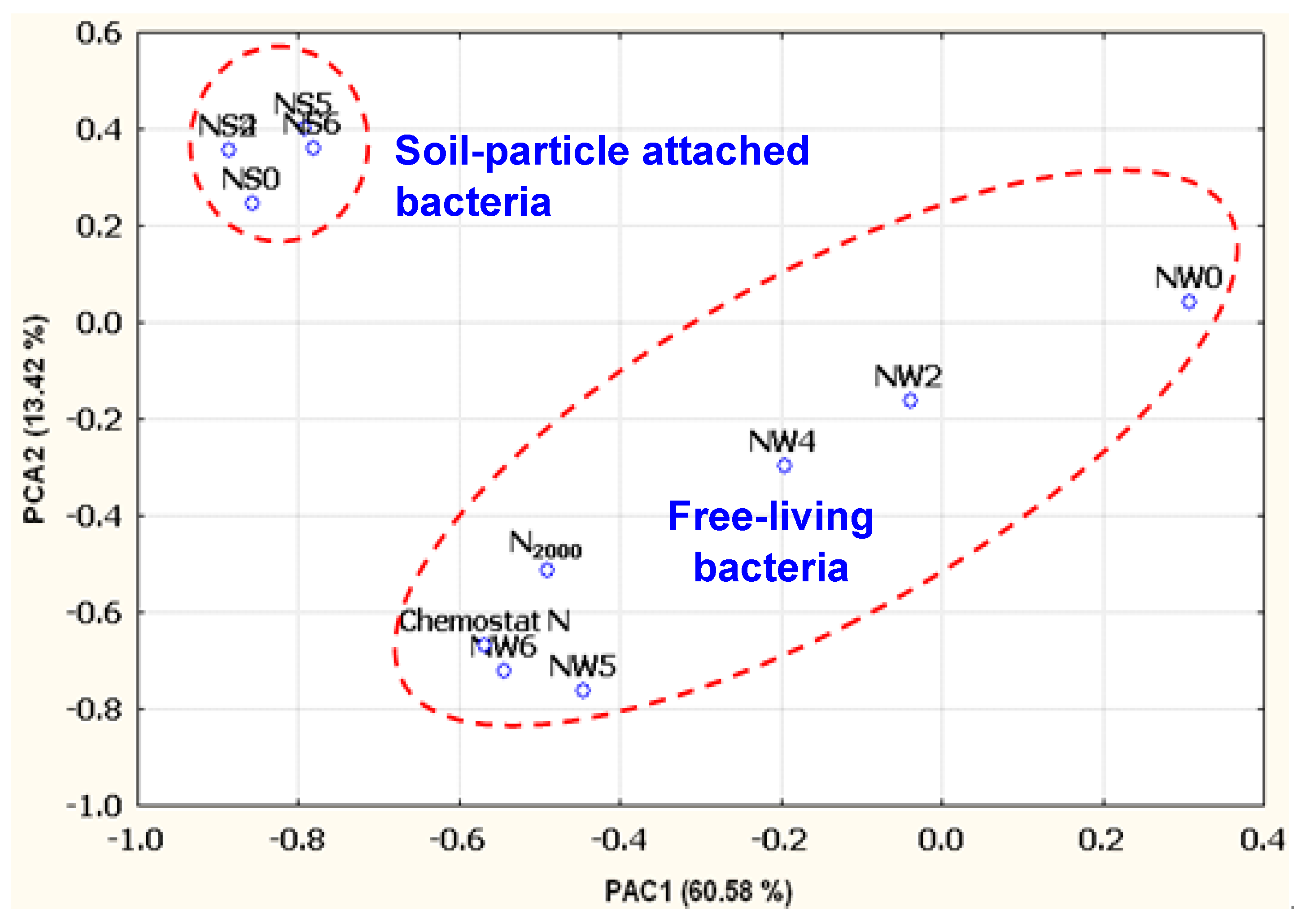
4.2. Comparison of Biodiversity of Free-Living Bacteria and Soil-Particle Bacteria Present in the ABR During PYR Bioremediation
4.3. The Presence of Dioxygenases as Functional Genes During PYR Biodegradation in the ABR
5. Conclusions
Supplementary Materials
Author Contributions
Funding
Conflicts of Interest
References
- Lawal, A.T. Polycyclic aromatic hydrocarbons: A review. Cogent Environ. Sci. 2017, 3, 1339841. [Google Scholar] [CrossRef] [Scilit]
- Machin-Ramirez, C.; Okoh, A.I.; Morales, D.; Mayolo-Deloisa, K.; Quintero, R.; Trejo-Hernández, M.R. Slurry-phase biodegradation of weathered oily sludge waste. Chemosphere 2008, 70, 737–744. [Google Scholar] [CrossRef] [Scilit] [PubMed]
- Mohan, S.V.; Prasanna, D.; Reddy, B.P.; Sarma, P.N. Ex situ bioremediation of pyrene contaminated soil in bioslurry phase reactor operated in periodic discontinuous batch mode: Influence of bioaugmentation. Int. Biodeterior. Biodegrad. 2008, 62, 162–169. [Google Scholar] [CrossRef] [Scilit]
- Pavel, L.V.; Gavrilescu, M. Overview of Ex Situ decontamination techniques for soil cleanup. Environ. Eng. Manag. J. 2008, 7, 815–834. [Google Scholar] [CrossRef] [Scilit]
- Nasseri, S.; Kalantary, R.R.; Nourieh, N.; Naddafi, K.; Mahvi, A.H.; Baradaran, N. Influence of bioaugmentation in biodegradation of PAHs-contaminated soil in bio-slurry phase reactor. Iran. J. Envrion. Health Sci. Eng. 2010, 7, 199–208. [Google Scholar]
- Robles-Gonzláez, I.; Ríos-Leal, E.; Ferrera-Cerrato, R.; Esparza-García, F.; Rinderkenecht-Seijas, N.; Poggi-Varaldo, H.M. Bioremediation of a mineral soil with high contents of clay and organic matter contaminated with herbicide 2,4-dichlorophenoxyacetic acid using slurry bioreactors: Effect of electron acceptor and supplementation with an organic carbon source. Process Biochem. 2006, 41, 1951–1960. [Google Scholar] [CrossRef] [Scilit]
- Ghosal, D.; Ghosh, S.; Dutta, T.K.; Ahn, Y. Current state of knowledge in microbial degradation of polycyclic aromatic hydrocarbons (PAHs): A review. Front. Microbiol. 2016, 7, 1369. [Google Scholar] [CrossRef] [Scilit]
- Chang, Y.-T.; Lee, J.-F.; Chao, H.-P.; Liao, W.-L. Bacterial community changes with N′-N′ dimethylforamide (DMF) additives during polycyclic aromatic hydrocarbons (PAH) biodegradation. Environ. Technol. 2010, 27, 1–14. [Google Scholar] [CrossRef] [Scilit]
- Chang, Y.-T.; Chou, H.-L.; Chao, H.-P.; Chang, Y.-J. The influence of sorption on polyaromtic hydrocarbon biodegradation in the presence of modified nonionic surfactant organoclays. Int. Biodeterior. Biodegrad. 2015, 102, 237–244. [Google Scholar] [CrossRef] [Scilit]
- Mohan, S.V.; Kisa, T.; Ohkuma, T.; Kanaly, R.A.; Shimizu, Y. Bioremediation technologies for treatment of PAH-contaminated soil and strategies to enhance process efficiency. Rev. Environ. Sci. Biotechnol. 2006, 5, 347–374. [Google Scholar] [CrossRef] [Scilit]
- Painter, R.D.; Kochary, S.; Byl, T.D. Free-living bacteria or attached bacteria: Which contributes more to bioremediation? In U.S. Geological Survey Karst Interest Group Proceedings; US Geological Survey Karst Interest Group: Rapid City, SD, USA, 2005. [Google Scholar]
- Ding, G.C.; Heuer, H.; Zühlke, S.; Spiteller, M.; Pronk, G.J.; Heister, K.; Kögel-Knabner, I.; Smalla, K. The diversity and abundance of PAHs-ring hydroxylating dioxygenase genes studied by a novel PCR detection system revealed soil type dependent responses to phenanthrene. Appl. Environ. Microbiol. 2010, 76, 4765–4771. [Google Scholar] [CrossRef] [Scilit] [PubMed]
- Kumar, A.; Kumar, S.; Kumar, S. Biodegradation kinetics of phenol and catechol using Pseudomonas putida MTCC 1194. Biochem. Eng. J. 2005, 22, 151–159. [Google Scholar] [CrossRef] [Scilit]
- Iwagami, G.S.; Yang, K.; Davies, J. Characterization of the protocatechuic acid catabolic gene cluster from Streptomyces sp. strain 2065. Appl. Environ. Microbiol. 2000, 66, 1499–1508. [Google Scholar] [CrossRef] [Scilit] [PubMed]
- Alfreider, A.; Vogt, C.; Babel, W. Expression of chlorocatechol 1,2-dioxygenase and chlorocatechol 2,3-dioxygenase genes in chlorobenzene-contaminated subsurface samples. Appl. Environ. Microbiol. 2003, 69, 1372–1376. [Google Scholar] [CrossRef] [Scilit] [PubMed]
- Brezna, B.; Khan, A.A.; Cerniglia, C.E. Molecular characterization of dioxygenases from polycyclic aromatic hydrocarbon-degrading Mycobacterium spp. FEMS Microbiol. Lett. 2003, 233, 177–183. [Google Scholar] [CrossRef] [Scilit]
- Liu, B.; Li, Y.; Zhang, X.; Wang, J.; Gao, M. Effects of chlortetracycline on soil microbial communities: Comparisons of enzyme activities to the functional diversity via Biolog EcoPlates™. Eur. J. Soil Biol. 2015, 68, 69–76. [Google Scholar] [CrossRef] [Scilit]
- Lladó, S.; Baldrian, P. Community-level physiological profiling analyses show potential to identify the copiotrophic bacteria present in soil environments. PLoS ONE 2017, 12, e0171638. [Google Scholar] [CrossRef] [Scilit] [PubMed]
- Chou, H.-L.; Hwa, M.-Y.; Lee, Y.-C.; Chang, Y.-J.; Chang, Y.-T. Microbial degradation of decabromodiphenyl ether (DBDE) in soil slurry microcosms. Environ. Sci. Pollut. Res. Int. 2016, 23, 5255–5267. [Google Scholar] [CrossRef] [Scilit]
- Guha, S.; Peters, C.A.; Jaffé, P.R. Multisubstrate biodegradation kinetics of naphthalene, phenanthrene, and pyrene mixtures. Biotechol. Bioeng. 1999, 65, 491–499. [Google Scholar] [CrossRef] [Scilit]
- Herwijnen, V.R.; Wattiau, P.; Batiaens, L.; Daai, L.; Jonker, L.; Springaei, D.; Govers, H.A.J.; Parsons, J.R. Elucidation of the metabolic pathway of fluorine and cometabolic pathways of phenanthrene, fluroanthene, anthracene and dibenzothiophene by Sphinogomonas sp. LB126. Res. Microbiol. 2003, 154, 199–206. [Google Scholar] [CrossRef] [Scilit]
- Juhasz, L.A.; Britz, M.L.; Stanley, G.A. Degradation of fluoranthene, pyrene, benz[a]anthracene and dibenz[a,h]anthracene by Burkholderia cepacia. J. Appl. Microbiol. 1997, 83, 189–198. [Google Scholar] [CrossRef] [Scilit]
- O’Sullivan, A.L.; Mahenthiralingam, E. Biotechnological potential within the genus Burkholderia. Lett. Appl. Microbiol. 2005, 41, 8–11. [Google Scholar] [CrossRef] [Scilit] [PubMed]
- Kim, R.J.; Min, B.; Logan, B.E. Evaluation of procedures to acclimate a microbial fuel cell for electricity production. Appl. Microbiol. Biotechnol. 2005, 68, 23–30. [Google Scholar] [CrossRef] [Scilit]
- Uyttebroek, M.; Vermeir, S.; Wattiau, P.; Ryngaert, A.; Springael, D. Characterization of cultures enriched from acidic polycyclic aromatic hydrocarbon-contaminated soil for growth on pyrene at low pH. Appl. Environ. Microbiol. 2007, 73, 3159–3164. [Google Scholar] [CrossRef] [Scilit] [PubMed]
- Kanaly, A.R.; Harayama, S.; Watanabe, K. Rhodanobacer sp. Strain BPC1 in a benzo[a]pyrene-mineralizing bacterial consortium. Appl. Envrion. Microbiol. 2002, 68, 5826–5833. [Google Scholar] [CrossRef] [Scilit]
- Zhang, L.; Xu, Z. Assessing bacterial diversity in soil. J. Soils Sediments 2008, 8, 379–388. [Google Scholar] [CrossRef] [Scilit]
- Butler, J.E.; He, Q.; Nevin, K.P.; He, Z.; Zhou, J.; Lovley, D.R. Genomic and microarray analysis of aromatics degradation in Geobacter metallireducens and comparison to a Geobacter isolate from a contaminated field site. BMC Genom. 2007, 8, 180. [Google Scholar] [CrossRef] [Scilit]
- Vacca, D.J.; Bleam, W.F.; Hickey, W.J. Isolation of soil bacteria adapted to degrade humic acid-sorbed phenanthrene. Appl. Environ. Microbiol. 2005, 71, 3797–3805. [Google Scholar] [CrossRef] [Scilit]
- Imhoff, J.F. Taxonomy and physiology of phototrophic purple bacteria and green sulfur bacteria. In Anoxygenic Photosynthetic Bacteria. Advances in Photosynthesis and Respiration; Blankenship, R.E., Madigan, M.T., Bauer, C.E., Eds.; Springer: Dordrecht, The Netherlands, 1995; Volume 2, pp. 1–15. ISBN 978-0-306-47954-0. [Google Scholar]
- Tai, Y.; Watts, J.E.M.; Schreier, H.J. Anaerobic ammonium-oxidizing (Anammox) bacteria and associated activity in fixed-film biofilters of a marine recirculating aquaculture system. Appl. Environ. Microbiol. 2006, 72, 2896–2904. [Google Scholar]
- Martirani-Von Abercron, S.-M.; Pacheco, D.; Benito-Santano, P.; Marín, P.; Marqués, S. Polycyclic aromatic hydrocarbon-induced changes in bacterial community structure under anoxic nitrate reducing conditions. Front. Microbiol. 2016, 7, 1775. [Google Scholar] [CrossRef] [Scilit]
- Dong, X.; Reddy, G.B. Soil bacterial communities in constructed wetlands treated with swine wastewater using PCR-DGGE technique. Bioresour Technol. 2010, 101, 1175–1182. [Google Scholar] [CrossRef] [Scilit] [PubMed]
- Seo, J.S.; Keum, Y.S.; Li, Q.X. Bacterial degradation of aromatic compounds. Int. J. Environ. Res. Public Health 2009, 6, 278–309. [Google Scholar] [CrossRef] [Scilit] [PubMed]
- Kweon, O.; Kim, S.J.; Cerniglia, C.E. Genomic view of Mycobacterial high molecular weight polycyclic aromatic hydrocarbon degradation. In Handbook of Hydrocarbon and Lipid Microbiology; Timmis, K.N., McGenity, T.J., van der Meer, J.R., de Lorenzo, V., Eds.; Springer: Berlin/Heidelberg, Germany, 2010; pp. 1166–1175. ISBN 978-3-540-77588-1. [Google Scholar]
- Mesarch, B.M.; Nakatsu, C.H.; Nies, L. Development of catechol 2,3-dioxygenase-specific primers for monitoring bioremediation by competitive quantitative PCR. Appl. Envrion. Microbiol. 2000, 66, 678–683. [Google Scholar] [CrossRef] [Scilit]
- Arora, K.P.; Kumar, M.; Chauhan, A.; Raghava, G.P.S.; Jain, R.K. OxDbase: A database of oxygenases involved in biodegradation. BMC Res. Notes 2009, 2, 1–8. [Google Scholar] [CrossRef] [Scilit]
- Gao, J.E.; Lynda, M.B.; Wackett, L.P. The university of minnesota biocatalysis/biodegradation database: Improving public access. Nucleic Acids Res. 2010, 38, D488–D491. [Google Scholar] [CrossRef] [Scilit]
- Lyu, Y.; Zheng, W.; Zheng, T.; Tian, Y. Biodegradation of polycyclic aromatic hydrocarbons by Novosphingobium pentaromativorans US6-1. PLoS ONE 2014, 9, e101438. [Google Scholar] [CrossRef] [Scilit]
- Moser, R.; Stahl, U. Insights into the genetic diversity of initial dioxygenases from PAH-degrading bacteria. Appl. Microbiol. Biotechnol. 2001, 55, 609–618. [Google Scholar] [CrossRef] [Scilit]
- Dutta, C.; Pan, A. Horizontal gene transfer and bacterial diversity. J. Biosci. 2002, 27, 27–33. [Google Scholar] [CrossRef] [Scilit]
- Mercier, A.; Kay, E.; Simonet, P. Horizontal Gene Transfer by Natural Transformation in Soil Environment. In Nucleic Acids and Proteins in Soil. Soil Biology; Nannipieri, P., Smalla, K., Eds.; Springer: Berlin/Heidelberg, Germany, 2006; Volume 8, pp. 355–373. ISBN 978-3-540-29448-1. [Google Scholar]
- Chen, K.; Zhu, Q.; Qian, Y.; Song, Y.; Yao, J.; Choi, M.M. Microcalorimetric investigation of the effect of non-ionic surfactant on biodegradation of pyrene by PAH-degrading bacteria Burkholderia cepacia. Ecotoxicol. Environ. Saf. 2013, 98, 361–367. [Google Scholar] [CrossRef] [Scilit]
- Mangwani, N.; Kumari, S.; Das, S. Marine bacterial biofilms in bioremediation of polycyclic aromatic hydrocarbons (PAHs) under terrestrial condition in a soil microcosm. Pedosphere 2017, 27, 548–558. [Google Scholar] [CrossRef] [Scilit]




| Soil | Composition (%) | pH | CEC 1 (cmol/kg) | SOM 2 (%) | Total Fe (%) | ||
|---|---|---|---|---|---|---|---|
| Sand | Slit | Clay | |||||
| Tf | 51.0 ± 0.2 | 4.0 ± 0.3 | 45.0 ± 0.5 | 4.80 ± 0.12 | 14.1 ± 0.2 | 1.8 ± 0.1 | 3.35 ± 0.22 |
| Target Gene (Abbreviation) | Primers | Sequence (5′→3′) | Size (bp) | Reference |
|---|---|---|---|---|
| PAHs-RHDα (RHDα) | 396F 696R | ATTGCGCTTAYCAYGGBTGG ATAGGTGTCTCCAACRAARTT | 320 | [12] |
| Rieske iron-sulfur motif (Rf1) | Rf1 Rr1 | AGGGATCCCCANCCRTGRTANSWRCA TGTTCCCGAACTTGTCCTTC | 700 | [13] |
| Protocatechuate 3,4-dioxygenase (P340) | P34OF P34OR | CTCACGCAGCACGACATCGACCT CCGGGCGCGACTGTCGATCGTGGT | 800 | [14] |
| Catechol 2,3-dioxygenase (C23O) | C230F C230R | AAGAGGCATGGGGGCGCACCGGTTCGATCA CCAGCAAACACCTCGTTGCGGTTGCC | 450 | [15] |
| Ring-hydroxylating dioxygenase (Nid A) | NidAf NidAr | ATGACCACCGAAACAACCGGAACAGC TCAAGCACGCCCGCCGAATGCGGGAG | 1400 | [16] |
| Sample 1 | Biometabolites (Identity% by GC-MS) |
|---|---|
| NW0 | ND 2 |
| NS0 | |
| NW2 | Phenanthrene (96%), Catechol (96%), Dibenzothiophene (97%), 4,4′-Bipyrimidine (90%), Cyclopentaphenanthrene (89%) |
| NS2 | 4-Carboxy-5-phenanthrenecarboxaldehyde (91%) |
| NW6 | Catechol (96%) |
| NS6 | ND 2 |
| Bacterial Species | NCBI Accession No. (Closest Match) | Sequences Similarity (%) | Samples 1 | ||
|---|---|---|---|---|---|
| N2000 | NW | NS | |||
| Green sulfur bacterium | AJ630296 | 99 | + | + | + |
| Chlorobi bacterium | EF446837 | 98 | + | − | + |
| Mycobacterium sp. | AJ783967 | 99 | + | + | + |
| Ignavibacterium sp. | JQ724348 | 85 | + | − | − |
| Verrucomicrobia bacterium | DQ450782 | 95 | + | + | + |
| Geobacter sp. | AM712168 | 100 | + | − | − |
| Delftia sp. | FN435935 | 92 | + | − | − |
| Rhodanobacter sp. | FJ608778 | 100 | + | + | − |
| Acidobacteria bacterium | FJ535087 | 99 | + | + | + |
| Gemmatimonas sp. | EU283563 | 96 | + | − | + |
| Planctomycete bacterium | JN038656 | 94 | + | − | + |
| Acinetobacter sp. | JF901932 | 100 | − | + | + |
| Pseudomonas sp. | AM911668 | 100 | − | + | + |
| Sphingomonas sp. | AB235162 | 98 | − | − | + |
| Burkolderia sp. | DQ279344 | 97 | − | − | + |
| Caulobacter sp. | JF905609 | 99 | − | + | − |
| Cryobacterium mesophilum | NR044239 | 99 | − | + | − |
| Primer Sample 1 | RHDα | Nid A | Rf | P340 | C230 |
|---|---|---|---|---|---|
| Chemostat N | + | − | + | + | + |
| N2000 | + | − | + | + | + |
| NW0/NS0 | +/+ | −/− | +/+ | −/− | +/+ |
| NW2/NS2 | +/+ | −/− | +/+ | −/− | +/+ |
| NW4/NS4 | +/+ | −/− | +/+ | −/− | +/+ |
| NW5/NS5 | +/+ | −/− | +/+ | −/− | +/+ |
| NW6/NS6 | +/+ | −/− | +/+ | −/− | +/+ |
| NW 1 | Biodiversity | NS 1 | Biodiversity | ||||
|---|---|---|---|---|---|---|---|
| SWI | R | E | SWI | R | E | ||
| N2000 | 0.84 | 9 | 0.38 | - | - | - | - |
| NW0 | 1.10 | 18 | 0.37 | NS0 | 1.09 | 17 | 0.38 |
| NW2 | 1.18 | 20 | 0.39 | NS2 | 1.06 | 17 | 0.36 |
| NW4 | 1.18 | 20 | 0.42 | NS4 | 1.13 | 19 | 0.38 |
| NW5 | 1.03 | 17 | 0.35 | NS5 | 0.87 | 20 | 0.34 |
| NW6 | 1.08 | 19 | 0.38 | NS6 | 0.90 | 13 | 0.31 |
© 2019 by the authors. Licensee MDPI, Basel, Switzerland. This article is an open access article distributed under the terms and conditions of the Creative Commons Attribution (CC BY) license (http://creativecommons.org/licenses/by/4.0/).
Share and Cite
Yu, C.-C.; Chang, T.-C.; Liao, C.-S.; Chang, Y.-T. A Comparison of the Microbial Community and Functional Genes Present in Free-Living and Soil Particle-Attached Bacteria from an Aerobic Bioslurry Reactor Treating High-Molecular-Weight PAHs. Sustainability 2019, 11, 1088. https://doi.org/10.3390/su11041088
Yu C-C, Chang T-C, Liao C-S, Chang Y-T. A Comparison of the Microbial Community and Functional Genes Present in Free-Living and Soil Particle-Attached Bacteria from an Aerobic Bioslurry Reactor Treating High-Molecular-Weight PAHs. Sustainability. 2019; 11(4):1088. https://doi.org/10.3390/su11041088
Chicago/Turabian StyleYu, Chu-Chun, Ting-Chieh Chang, Chien-Sen Liao, and Yi-Tang Chang. 2019. "A Comparison of the Microbial Community and Functional Genes Present in Free-Living and Soil Particle-Attached Bacteria from an Aerobic Bioslurry Reactor Treating High-Molecular-Weight PAHs" Sustainability 11, no. 4: 1088. https://doi.org/10.3390/su11041088
APA StyleYu, C.-C., Chang, T.-C., Liao, C.-S., & Chang, Y.-T. (2019). A Comparison of the Microbial Community and Functional Genes Present in Free-Living and Soil Particle-Attached Bacteria from an Aerobic Bioslurry Reactor Treating High-Molecular-Weight PAHs. Sustainability, 11(4), 1088. https://doi.org/10.3390/su11041088