Analysis and Modelling of PM2.5 Temporal and Spatial Behaviors in European Cities



Abstract
1. Introduction
2. Materials and Methods
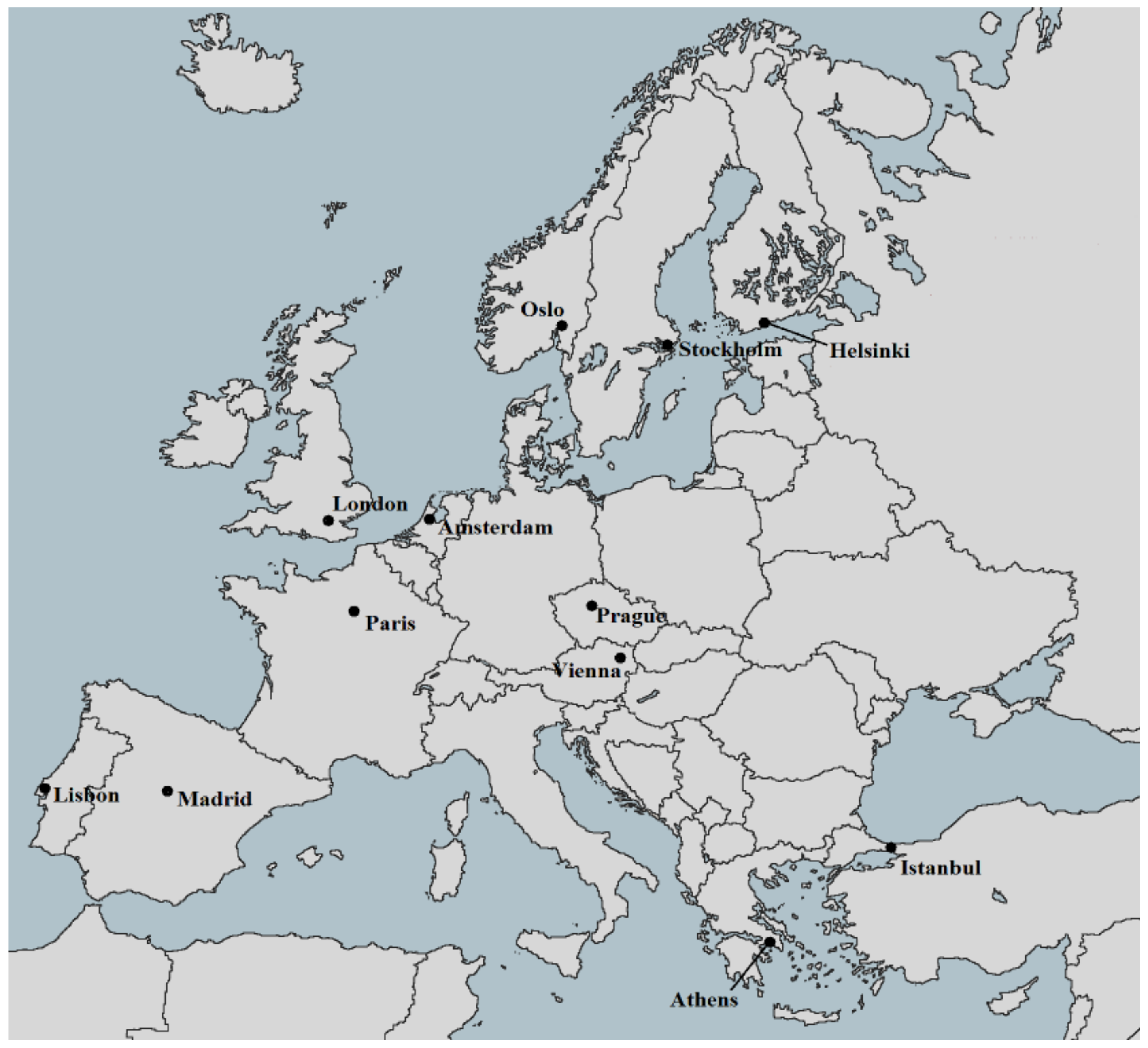
2.1. Study Areas
2.2. Sample Collection
- (a)
- Negative concentration values were excluded;
- (b)
- Upper outliers (values 1.5 times above the 3rd quartile of each station’s hourly data) were excluded.
2.3. Temporal and Spatial Analysis
2.4. Statistical Model
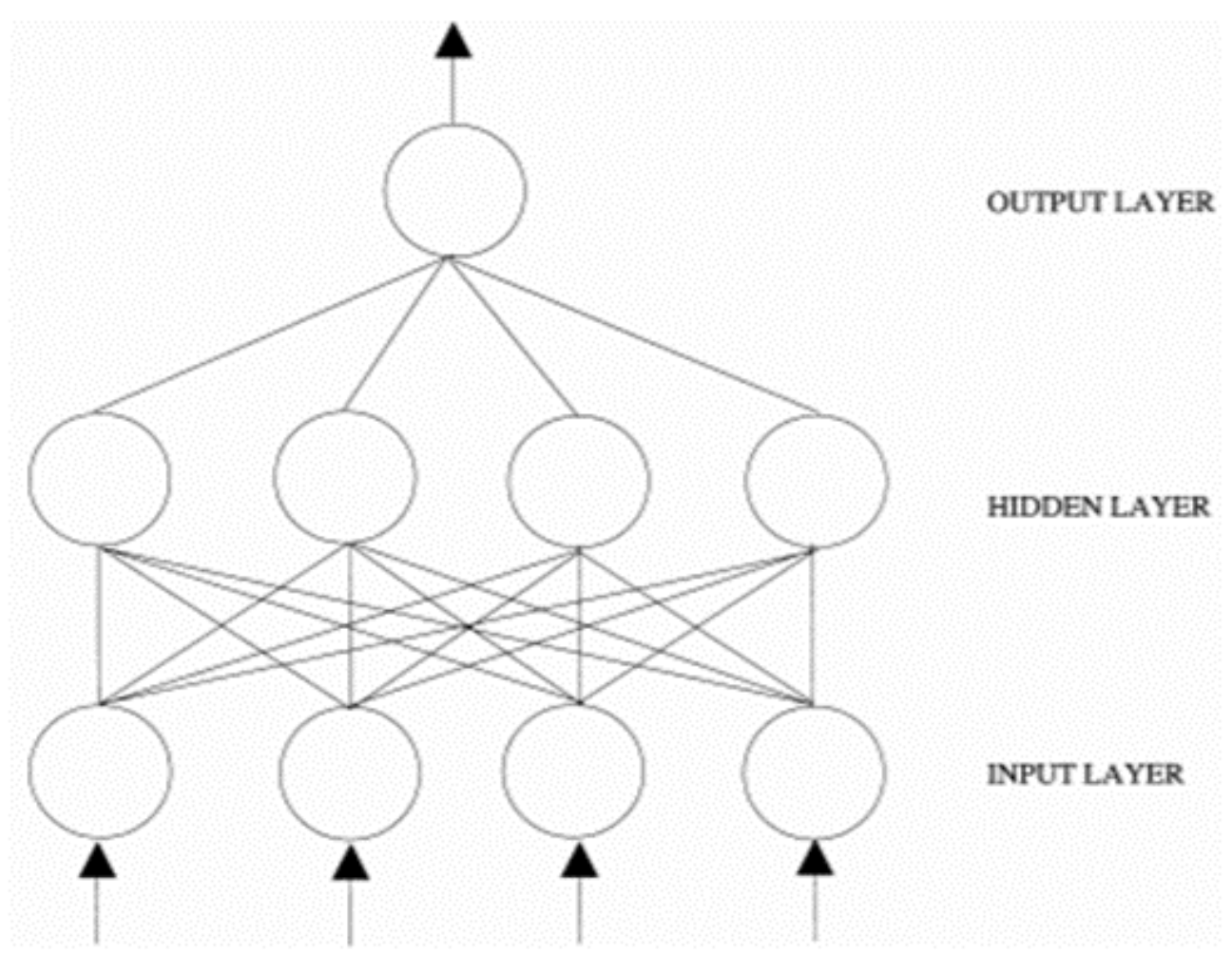
2.4.1. Artificial Neural Networks
2.4.2. Genetic Algorithms
2.4.3. Model Structure
2.4.4. Model Performance Evaluation
3. Results and Discussion
3.1. Behavior of PM2.5 Concentrations
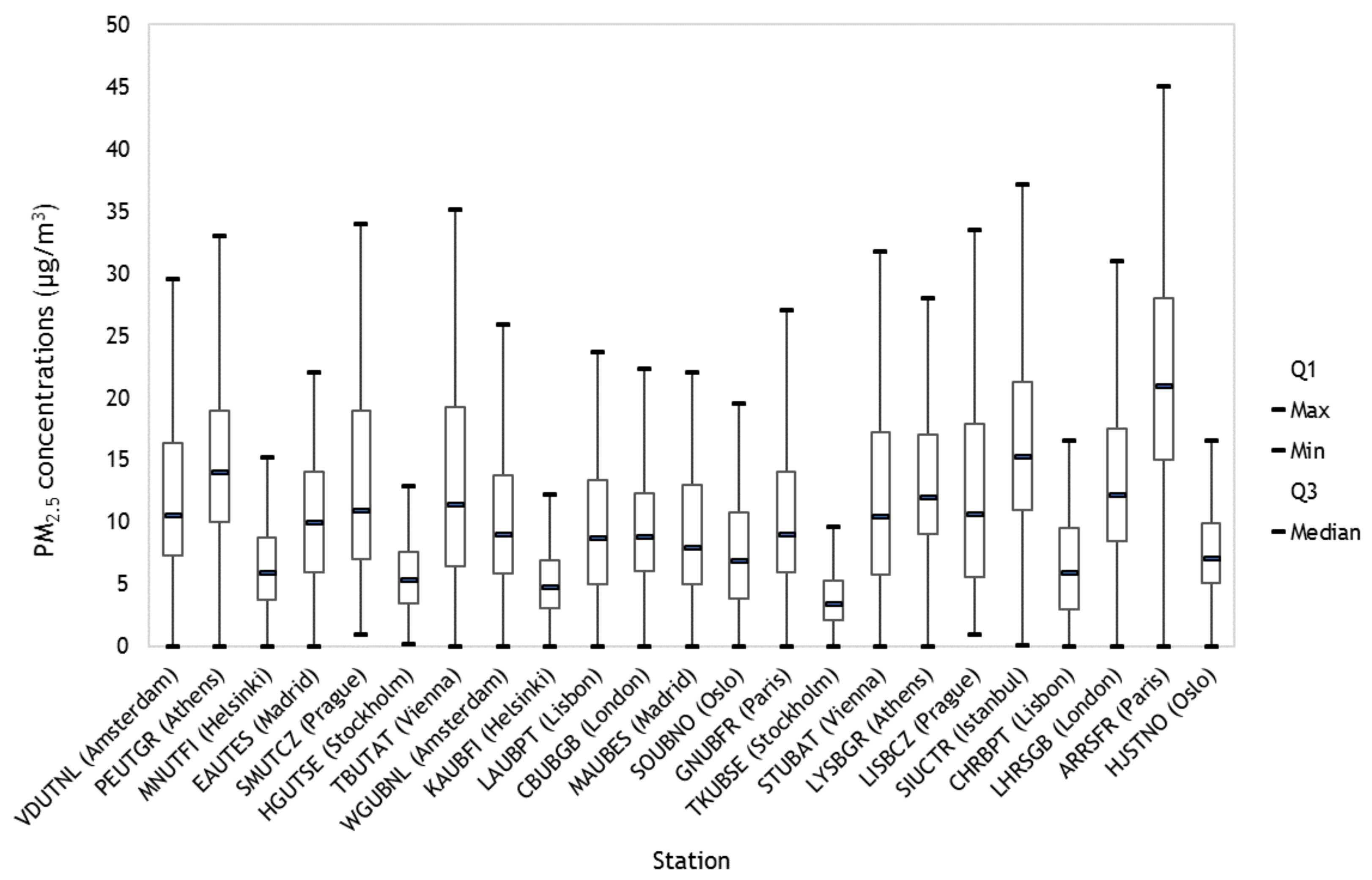
3.1.1. Analysis of the Study Period
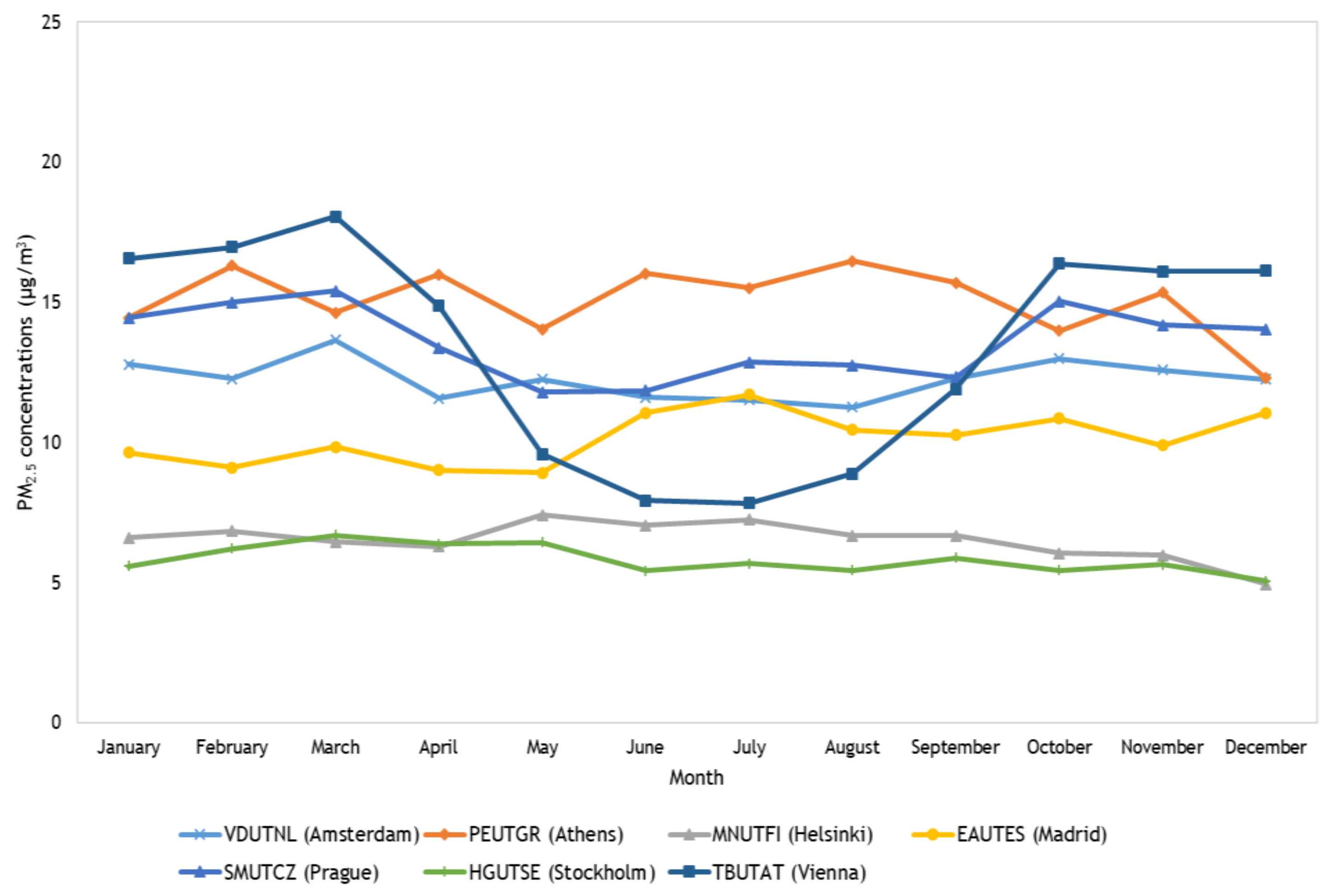
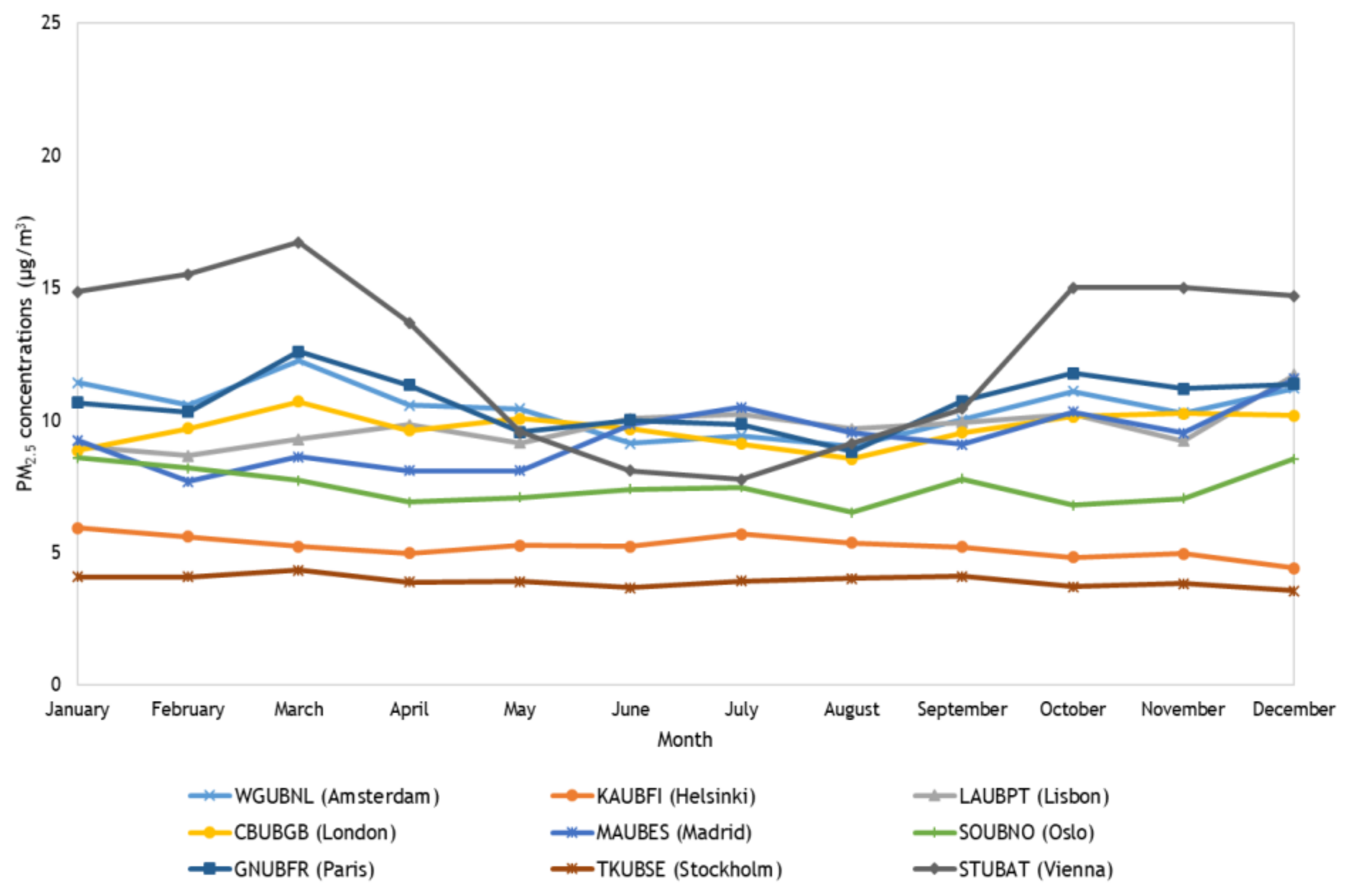
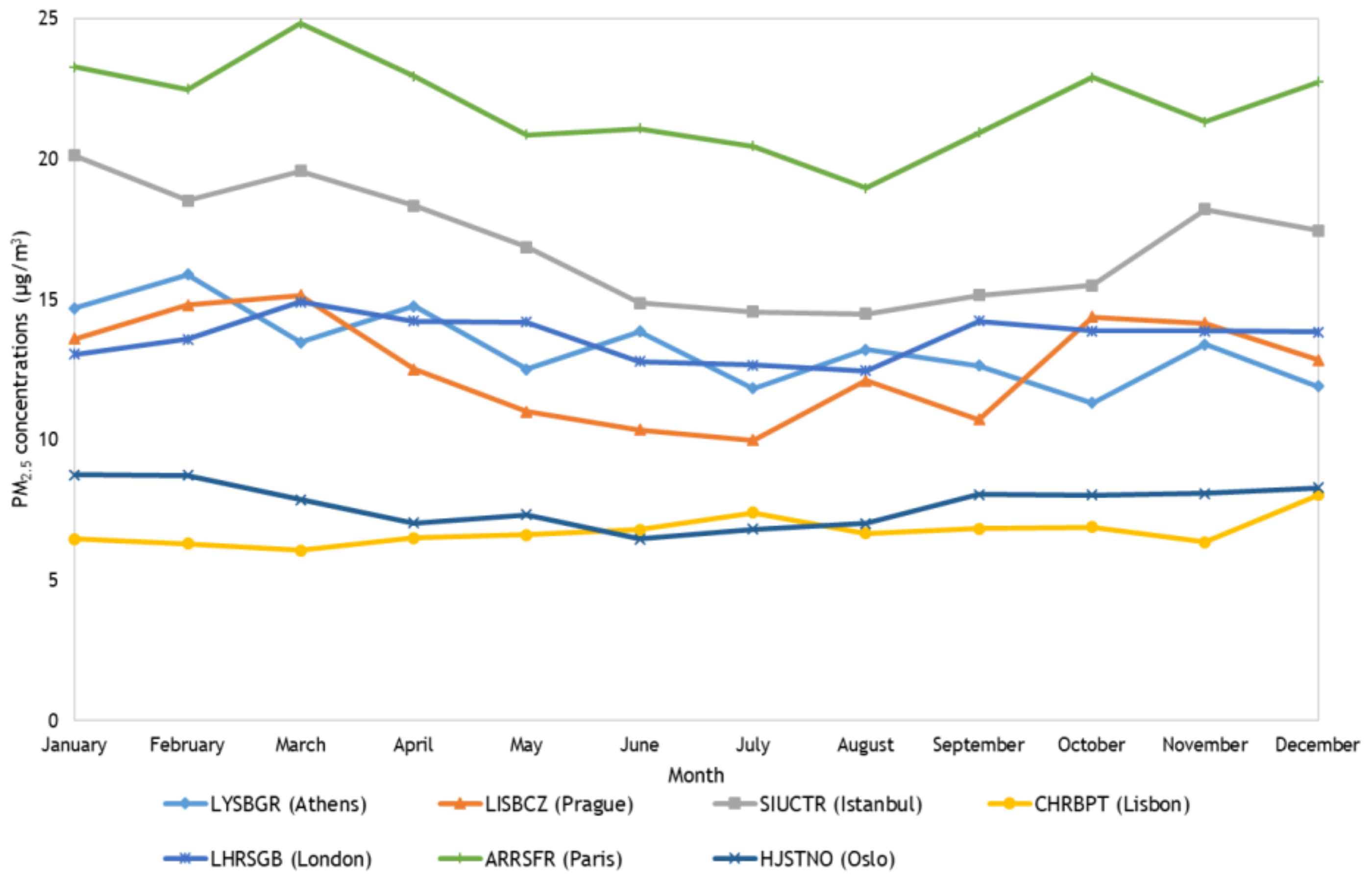
3.1.2. Annual Profiles
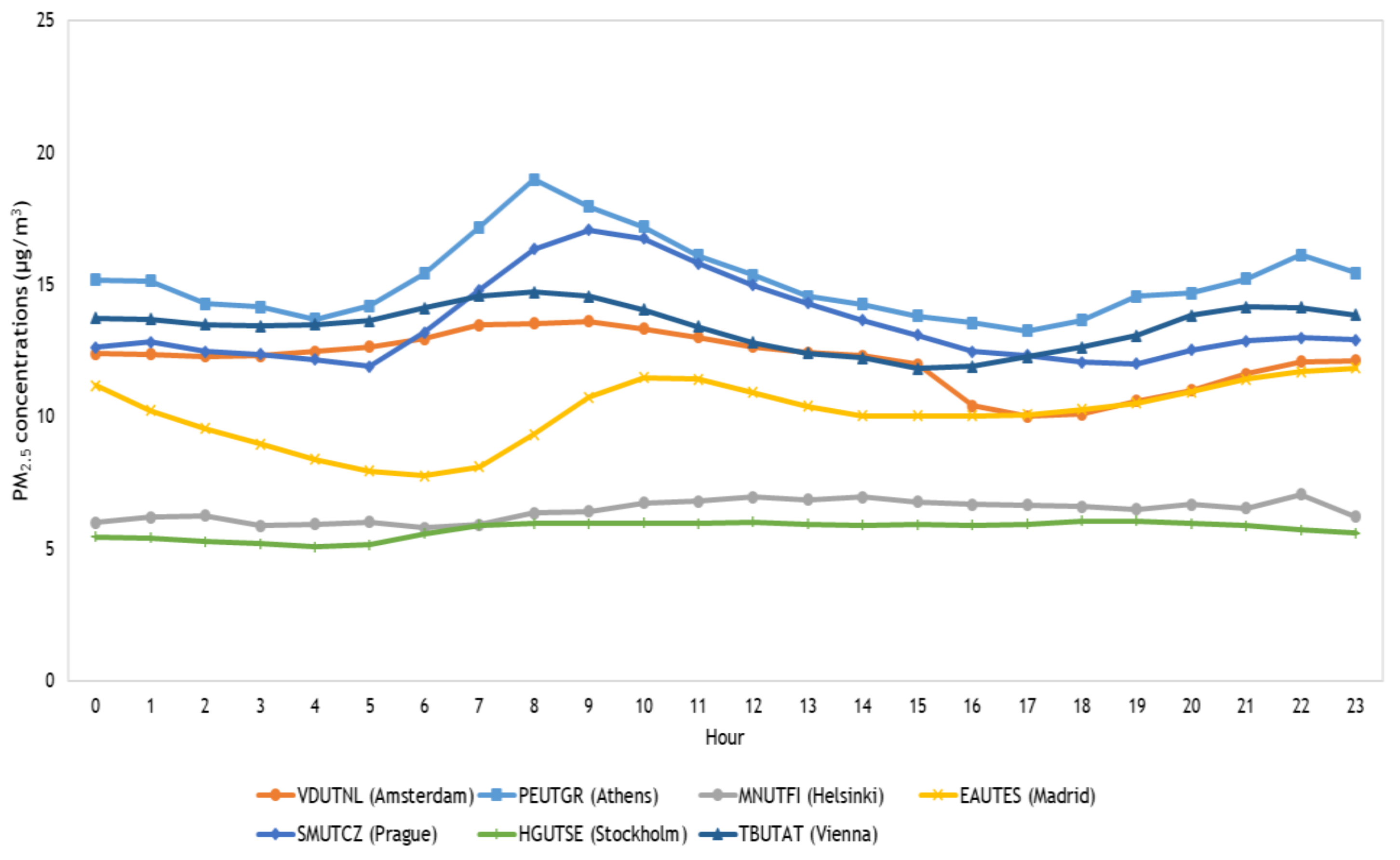
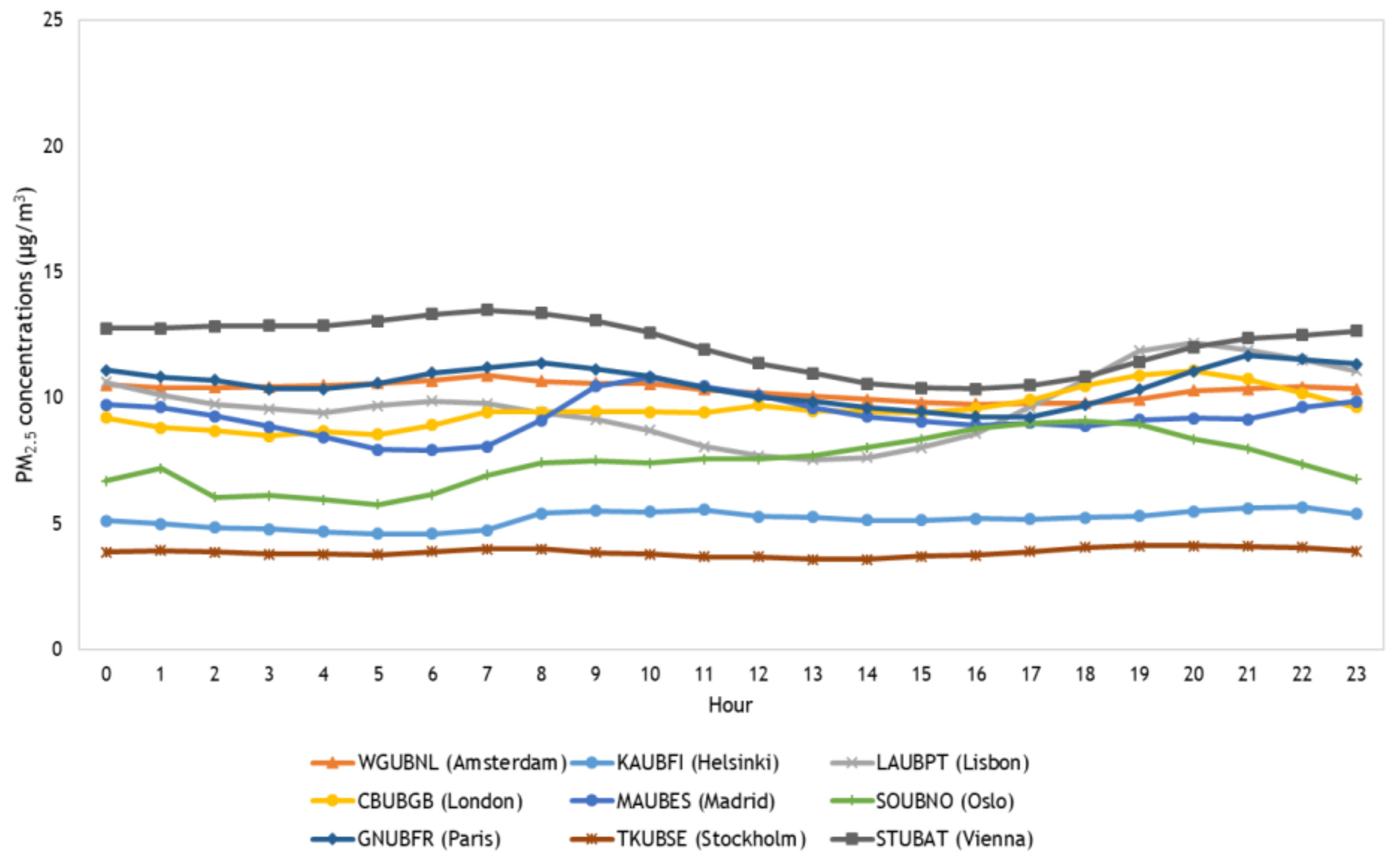
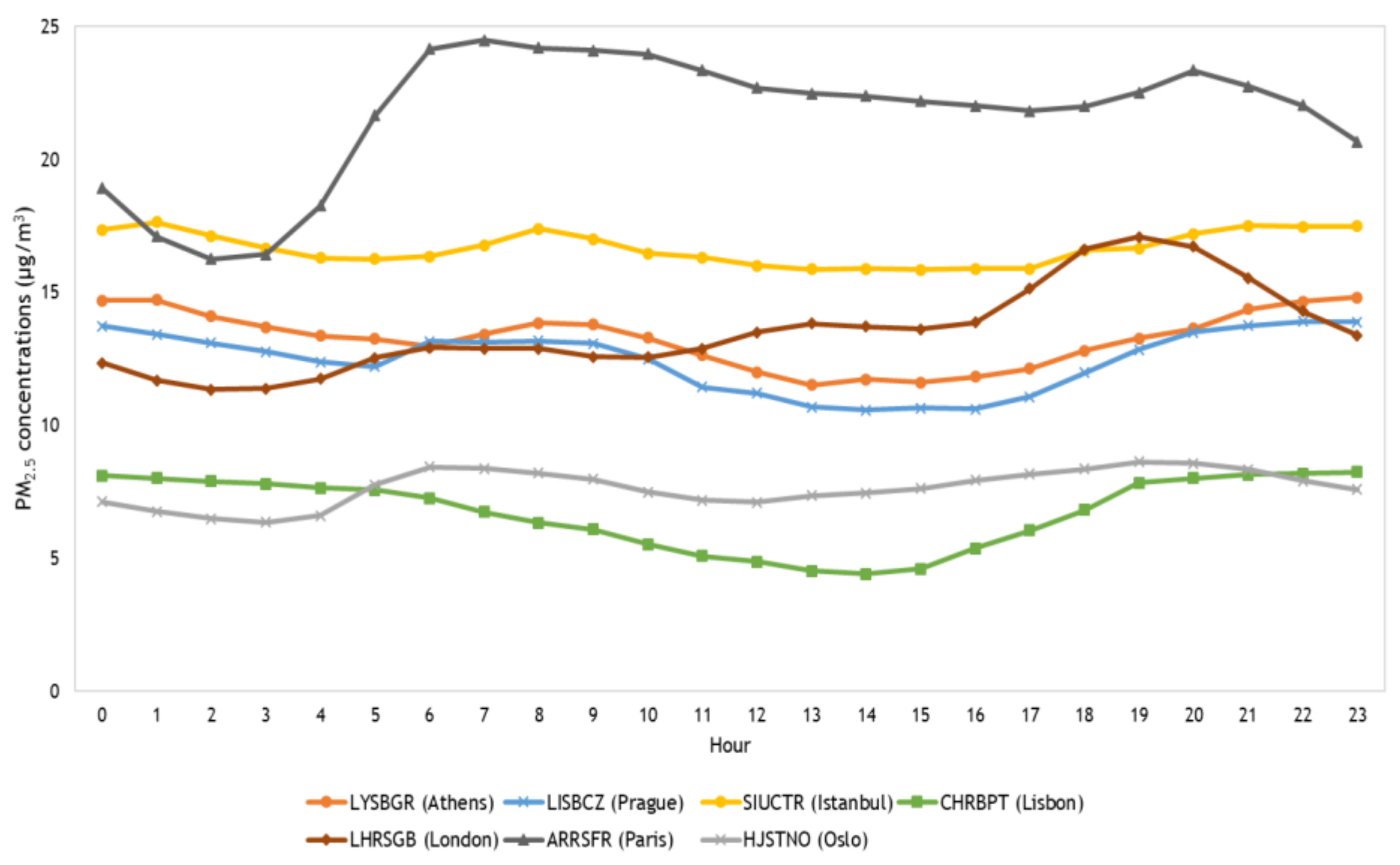
3.1.3. Daily Profiles
3.2. Behavior of PM2.5/PM10 Ratios
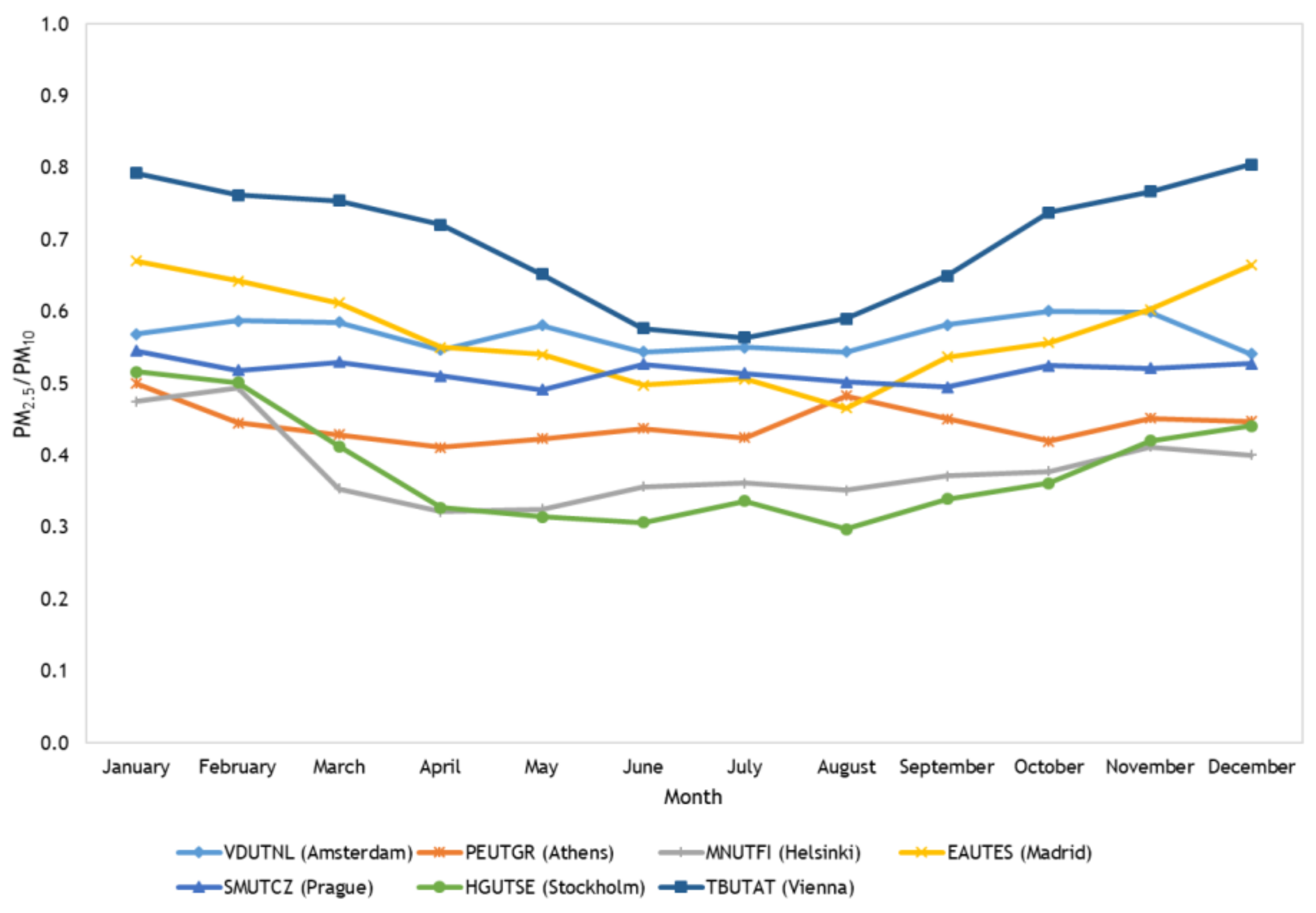
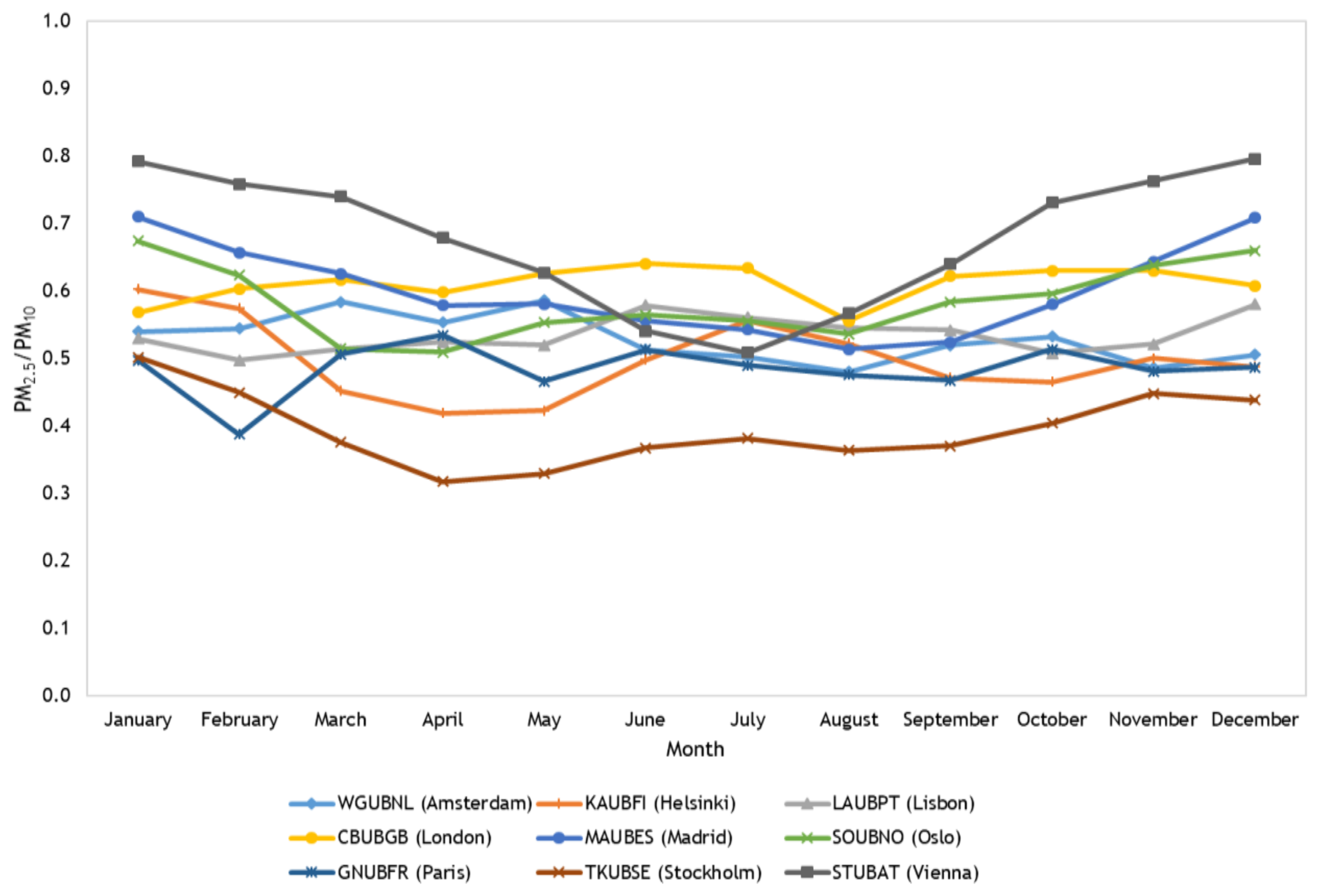
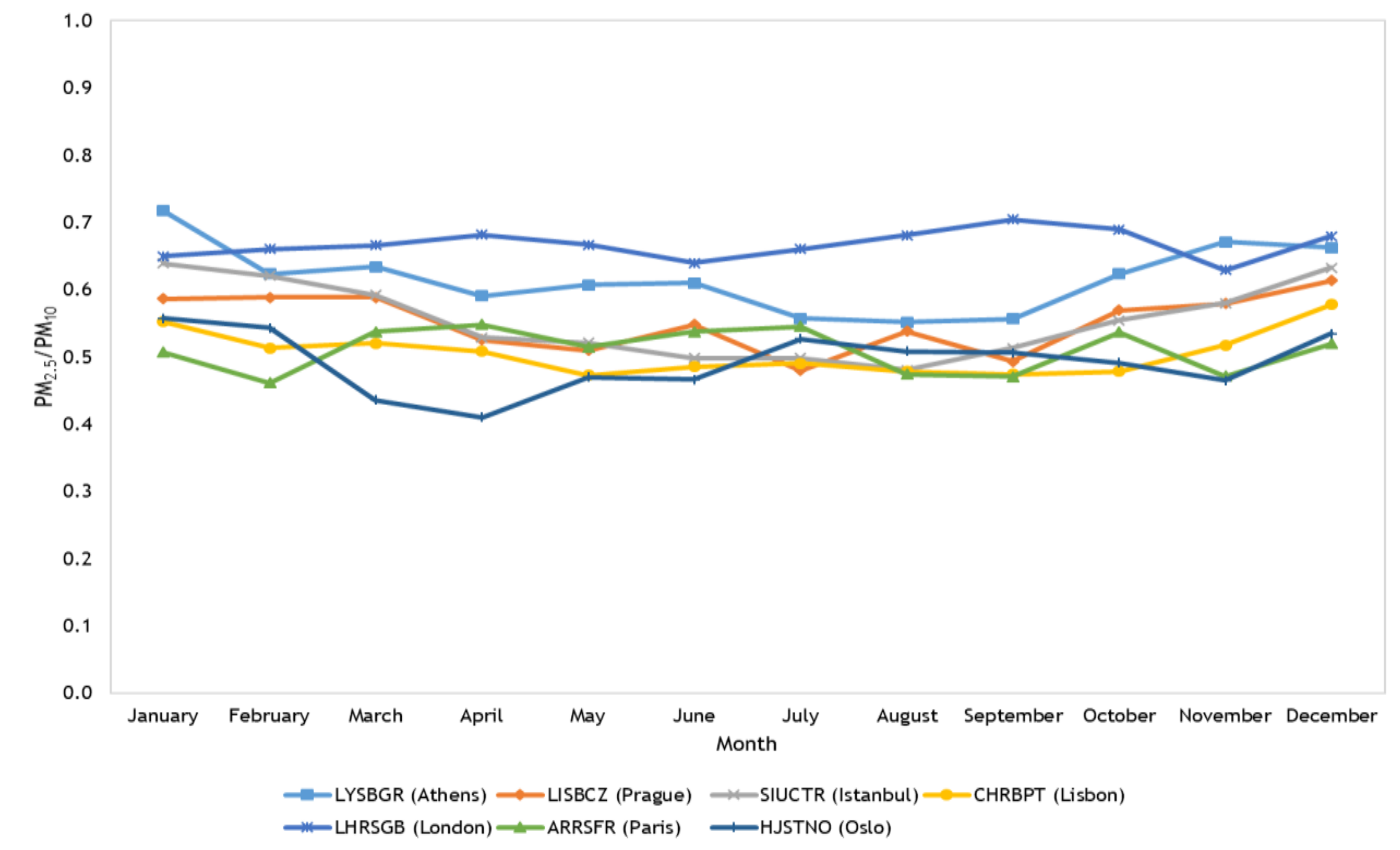
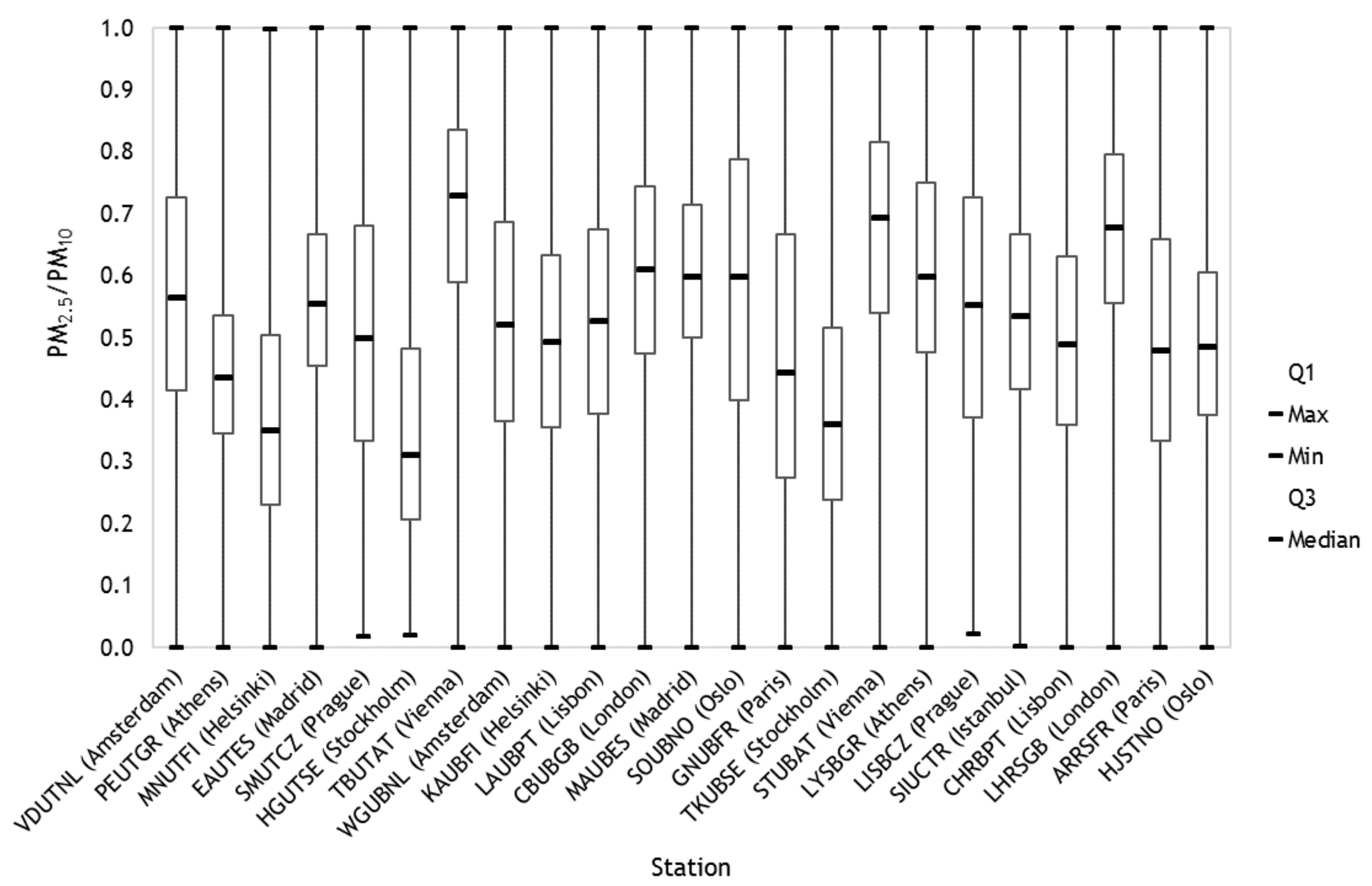
3.2.1. Analysis of the Study Period
3.2.2. Annual Profiles
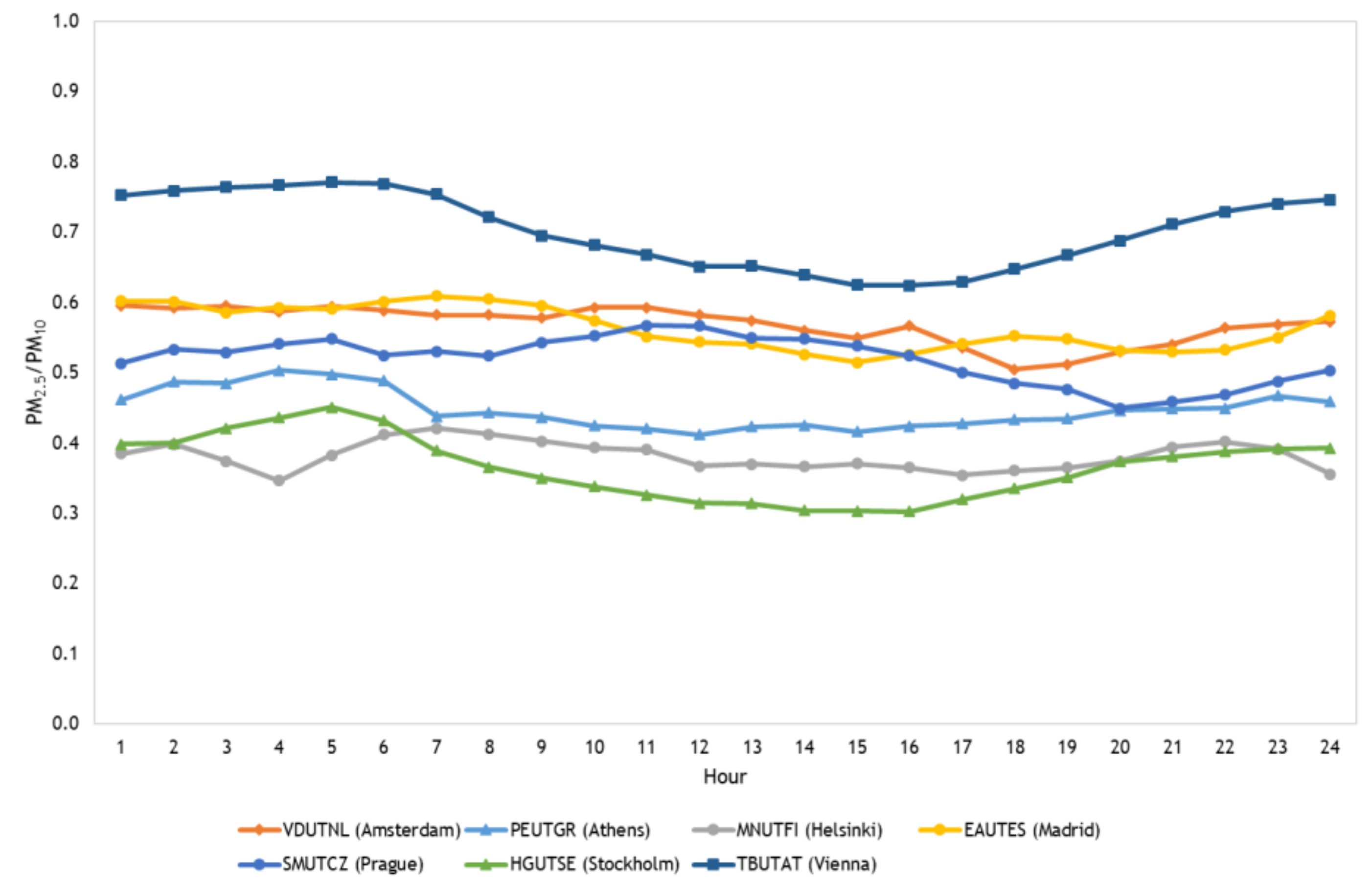
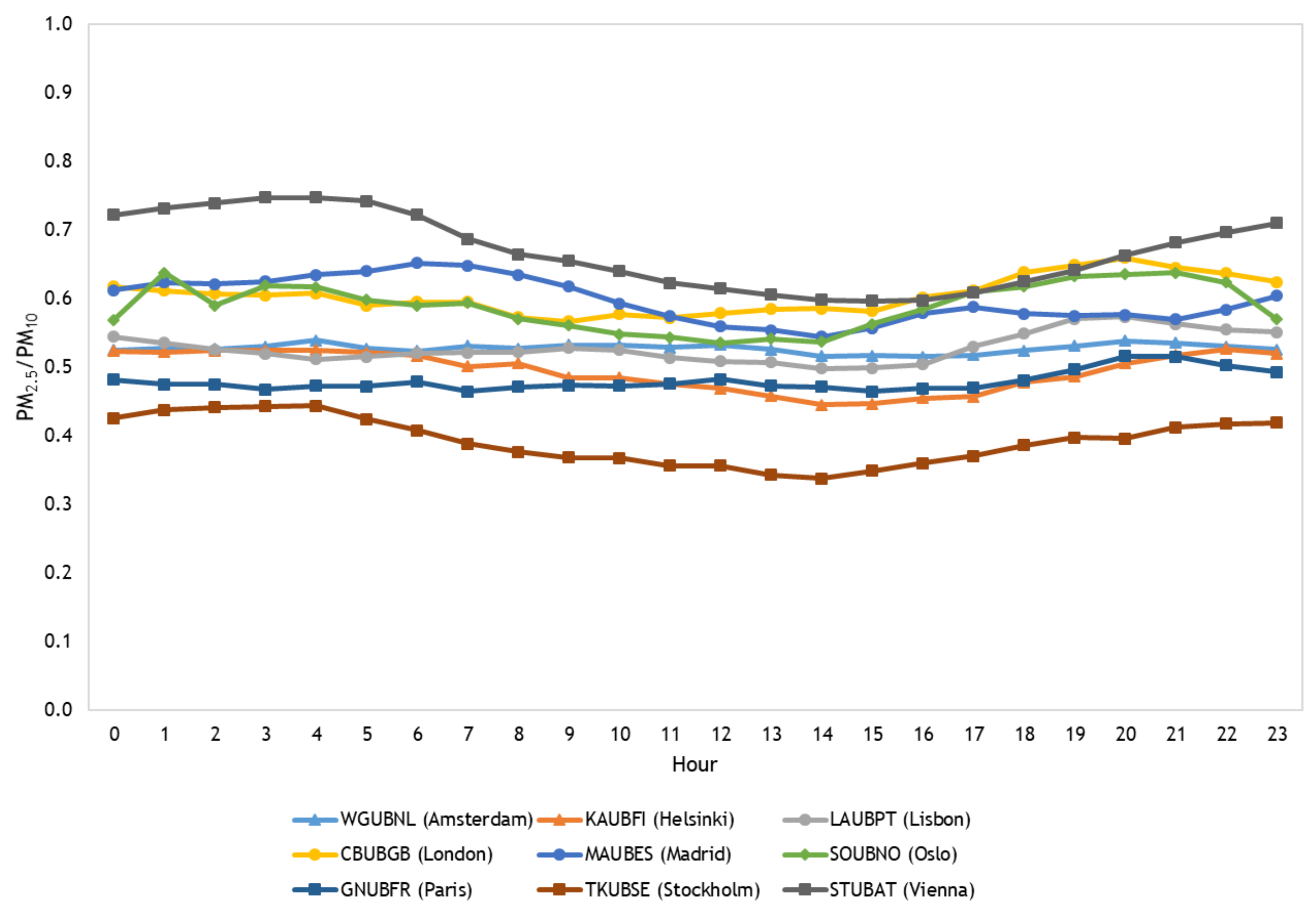
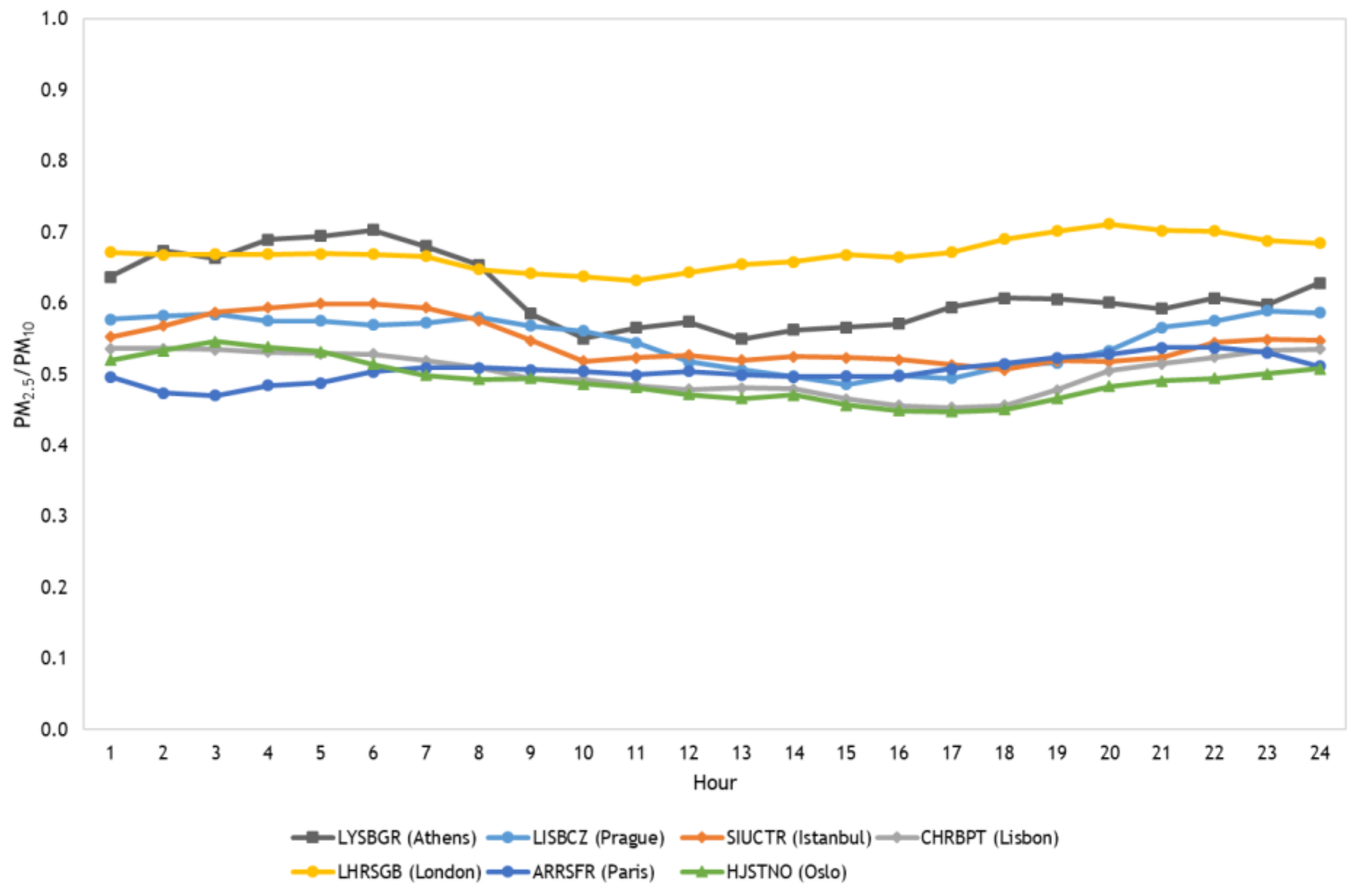
3.2.3. Daily Profiles
3.3. Modelling of PM2.5 Concentrations
3.3.1. Statistical Models
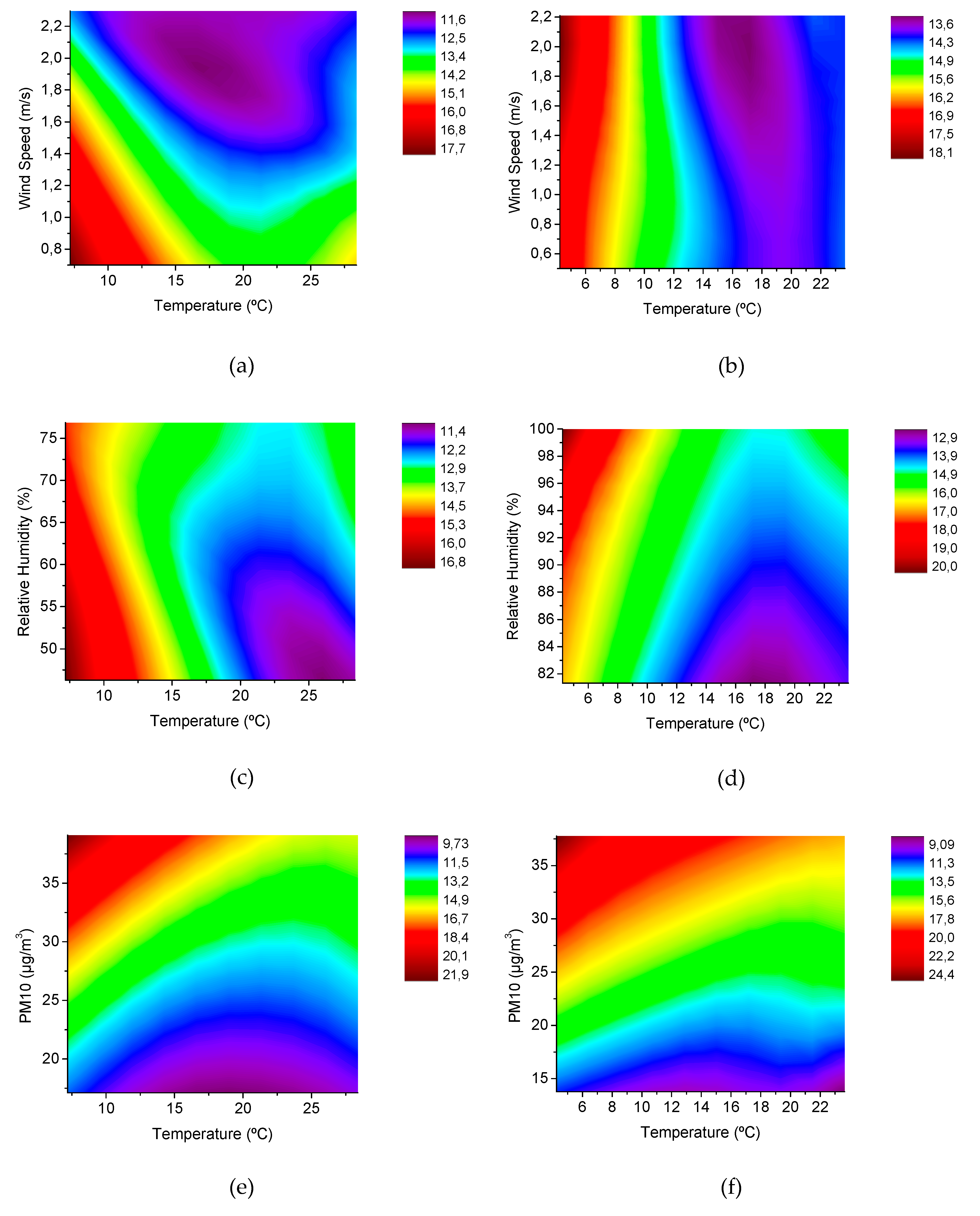
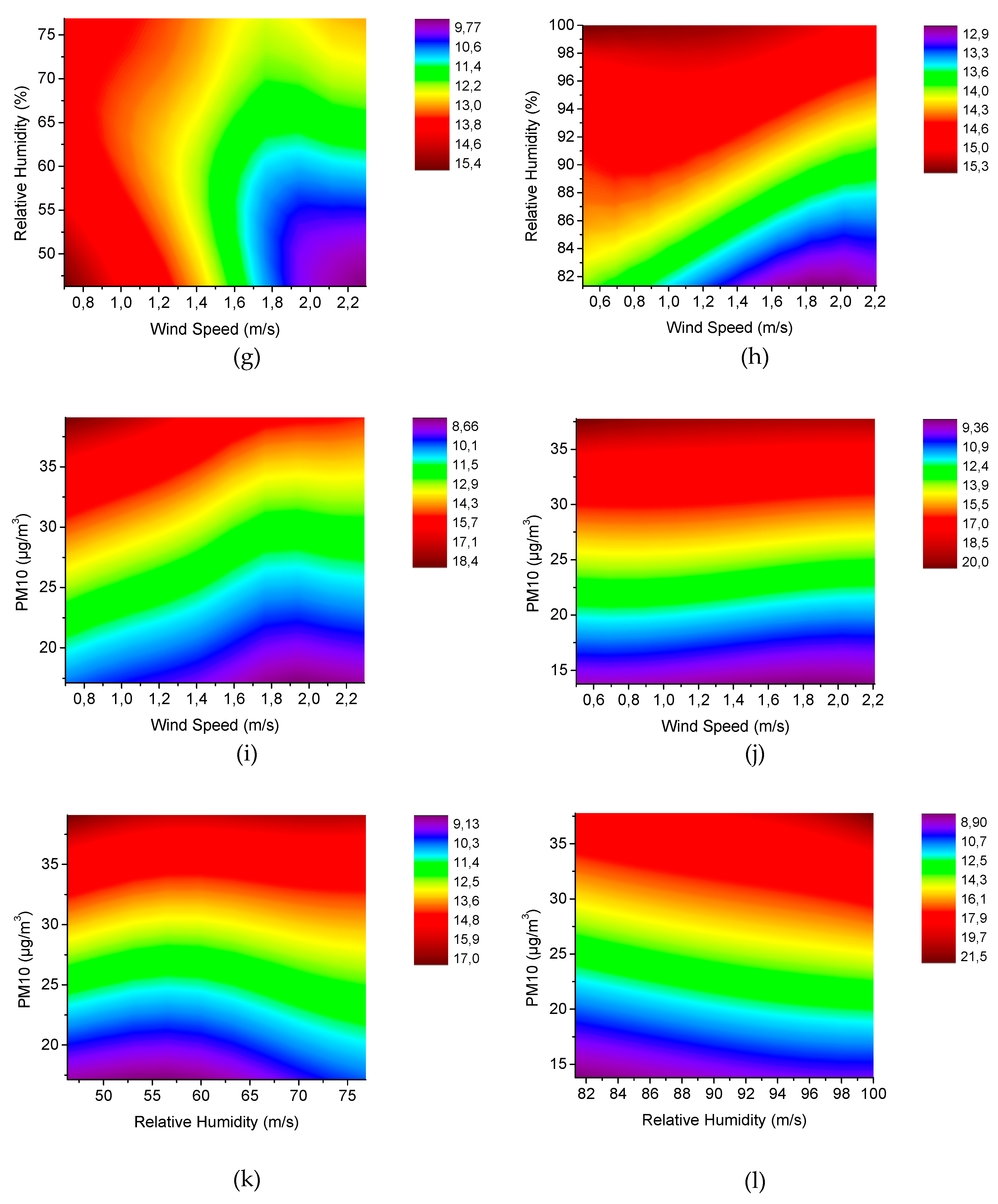
3.3.2. Combined Effects of Meteorological Variables and PM10 Concentrations on PM2.5 Concentrations
4. Conclusions
Author Contributions
Funding
Acknowledgments
Conflicts of Interest
References
- WHO. 9 Out of 10 People Worldwide Breathe Polluted Air, But More Countries Are Taking Action. Available online: https://www.who.int/airpollution/en/ (accessed on 19 March 2019).
- Eeftens, M.; Tsai, M.Y.; Ampe, C.; Anwander, B.; Beelen, R.; Bellander, T.; Cesaroni, G.; Cirach, M.; Cyrys, J.; de Hoogh, K.; et al. Spatial variation of PM2.5, PM10, PM2.5 absorbance and PMcoarse concentrations between and within 20 European study areas and the relationship with NO2- Results of the ESCAPE project. Atmos. Environ. 2012, 62, 303–317. [Google Scholar] [CrossRef]
- Tallon, L.A.; Manjourides, J.; Pun, V.C.; Salhi, C.; Suh, H. Cognitive impacts of ambient air pollution in the National Social Health and Aging Project (NSHAP) cohort. Environ. Int. 2017, 104, 102–109. [Google Scholar] [CrossRef] [PubMed]
- Ailshire, J.A.; Clarke, P. Fine particulate matter air pollution and cognitive function among U.S. older adults. J. Gerontol.-Ser. B Psychol. Sci. Soc. Sci. 2015, 70, 322–328. [Google Scholar] [CrossRef] [PubMed]
- Xu, G.; Jiao, L.; Zhang, B.; Zhao, S.; Yuan, M.; Gu, Y.; Liu, J.; Tang, X. Spatial and temporal variability of the PM2.5/PM10 ratio in Wuhan, Central China. Aerosol Air Qual. Res. 2017, 17, 741–751. [Google Scholar] [CrossRef]
- Munir, S. Analysing temporal trends in the ratios of PM2.5/PM10 in the UK. Aerosol Air Qual. Res. 2017, 17, 34–48. [Google Scholar] [CrossRef]
- Megaritis, A.G.; Fountoukis, C.; Charalampidis, P.E.; Denier Van Der Gon, H.A.C.; Pilinis, C.; Pandis, S.N. Linking climate and air quality over Europe: Effects of meteorology on PM2.5 concentrations. Atmos. Chem. Phys. 2014, 14, 10283–10298. [Google Scholar] [CrossRef]
- Daly, A.; Zannetti, P. Air Pollution Modeling-An Overview. Ambient Air Pollut. 2007, I, 15–28. [Google Scholar]
- Pisoni, E.; Guerreiro, C.; Lopez-Aparicio, S.; Guevara, M.; Tarrason, L.; Janssen, S.; Thunis, P.; Pfäfflin, F.; Piersanti, A.; Briganti, G.; et al. Supporting the improvement of air quality management practices: The “FAIRMODE pilot” activity. J. Environ. Manage. 2019, 245, 122–130. [Google Scholar] [CrossRef]
- Font, A.; Guiseppin, L.; Blangiardo, M.; Ghersi, V.; Fuller, G.W. A tale of two cities: is air pollution improving in Paris and London? Environ. Pollut. 2019, 249, 1–12. [Google Scholar] [CrossRef]
- EEA. Air quality in Europe—2018 report. Available online: https://www.eea.europa.eu/publications/air-quality-in-europe-2018 (accessed on 31 July 2019).
- Karanasiou, A.; Querol, X.; Alastuey, A.; Perez, N.; Pey, J.; Perrino, C.; Berti, G.; Gandini, M.; Poluzzi, V.; Ferrari, S.; et al. Particulate matter and gaseous pollutants in the Mediterranean Basin: Results from the MED-PARTICLES project. Sci. Total Environ. 2014, 488–489, 297–315. [Google Scholar] [CrossRef]
- Zhang, G.; Patuwo, B.E.; Hu, M.Y. Forecasting with artificial neural networks: The state of the art. Int. J. Forecast. 1998, 14, 35–62. [Google Scholar] [CrossRef]
- Mahajan, R.; Kaur, G. Neural Networks using Genetic Algorithms. Int. J. Comput. Appl. 2013, 77, 6–11. [Google Scholar] [CrossRef]
- Mlakar, P.; Zlata, M. Artificial Neural Networks - a Useful Tool in Air Pollution and Meteorological Modelling. Adv. Air Pollut. 2012. [Google Scholar]
- Maciąg, P.S.; Kasabov, N.; Kryszkiewicz, M.; Bembenik, R. Air pollution prediction with clustering-based ensemble of evolving spiking neural networks and a case study on London area. Environ. Model. Softw. 2019, 118, 262–280. [Google Scholar] [CrossRef]
- Pires, J.C.M.; Gonçalves, B.; Azevedo, F.G.; Carneiro, A.P.; Rego, N.; Assembleia, A.J.B.; Lima, J.F.B.; Silva, P.A.; Alves, C.; Martins, F.G. Optimization of artificial neural network models through genetic algorithms for surface ozone concentration forecasting. Environ. Sci. Pollut. Res. 2012, 19, 3228–3234. [Google Scholar] [CrossRef]
- Vanneschi, L.; Castelli, M. Multilayer Perceptrons. In Encyclopedia of Bioinformatics and Computational Biology; Elsevier: Amsterdam, The Netherlands, 2018. [Google Scholar]
- Huang, X.H.H.; Bian, Q.; Ng, W.M.; Louie, P.K.K.; Yu, J.Z. Characterization of PM2.5 major components and source investigation in suburban Hong Kong: A one year monitoring study. Aerosol Air Qual. Res. 2014, 14, 237–250. [Google Scholar] [CrossRef]
- Hao, Y.; Deng, S.; Yang, Y.; Song, W.; Tong, H.; Qiu, Z. Chemical composition of particulate matter from traffic emissions in a road tunnel in Xi’an, China. Aerosol Air Qual. Res. 2019, 19, 234–246. [Google Scholar] [CrossRef]
- Amaral, S.S.; de Carvalho, J.A.; Costa, M.A.M.; Pinheiro, C. An overview of particulate matter measurement instruments. Atmosphere 2015, 6, 1327–1345. [Google Scholar] [CrossRef]
- Pires, J.C.M.; Sousa, S.I.V.; Pereira, M.C.; Alvim-Ferraz, M.C.M.; Martins, F.G. Management of air quality monitoring using principal component and cluster analysis-Part I: SO2 and PM10. Atmos. Environ. 2008, 42, 1249–1260. [Google Scholar] [CrossRef]
- Afonso, N.; Pires, J. Characterization of Surface Ozone Behavior at Different Regimes. Appl. Sci. 2017, 7, 944. [Google Scholar] [CrossRef]
- Botchkarev, A. Performance Metrics (Error Measures) in Machine Learning Regression, Forecasting and Prognostics: Properties and Typology. Interdiscip. J. Inf. Knowl. Manag. 2019, 14, 45–79. [Google Scholar]
- Willmott, C.J.; Ackleson, S.G.; Davis, R.E.; Feddema, J.J.; Klink, K.M.; Legates, D.R.; O’Donnell, J.; Rowe, C.M. Statistics for the evaluation and comparison of models. J. Geophys. Res. 1985, 90, 8995. [Google Scholar] [CrossRef]
- Dimitriou, K.; Kassomenos, P. The fine and coarse particulate matter at four major Mediterranean cities: Local and regional sources. Theor. Appl. Climatol. 2013, 114, 375–391. [Google Scholar] [CrossRef]
- Querol, X.; Alastuey, A.; Rodríguez, S.; Viana, M.M.; Artíñano, B.; Salvador, P.; Mantilla, E.; Do Santos, S.G.; Patier, R.F.; De La Rosa, J.; et al. Levels of particulate matter in rural, urban and industrial sites in Spain. Sci. Total Environ. 2004, 334–335, 359–376. [Google Scholar] [CrossRef]
- Querol, X.; Alastuey, A.; Ruiz, C.R.; Artiñano, B.; Hansson, H.C.; Harrison, R.M.; Buringh, E.; Ten Brink, H.M.; Lutz, M.; Bruckmann, P.; et al. Speciation and origin of PM10 and PM2.5 in selected European cities. Atmos. Environ. 2004, 38, 6547–6555. [Google Scholar] [CrossRef]
- Kopanakis, I.; Mammi-Galani, Ε.; Pentari, D.; Glytsos, T.; Lazaridis, M. Ambient Particulate Matter Concentration Levels and their Origin During Dust Event Episodes in the Eastern Mediterranean. Aerosol Sci. Eng. 2018, 2, 61–73. [Google Scholar] [CrossRef]
- Lamancusa, C.; Wagstrom, K. Global transport of dust emitted from different regions of the sahara. Atmos. Environ. 2019, 1–10. [Google Scholar] [CrossRef]
- Querol, X.; Pérez, N.; Reche, C.; Ealo, M.; Ripoll, A.; Tur, J.; Pandolfi, M.; Pey, J.; Salvador, P.; Moreno, T.; et al. African dust and air quality over Spain: Is it only dust that matters? Sci. Total Environ. 2019, 686, 737–752. [Google Scholar] [CrossRef]
- Air Quality Expert Group. Fine Particulate Matter in the United Kingdom. 2012. Available online: https://uk-air.defra.gov.uk/assets/documents/reports/cat11/1212141150_AQEG_Fine_Particulate_Matter_in_the_UK.pdf (accessed on 31 July 2019).
- Marcazzan, G.M.; Vaccaro, S.; Valli, G.; Vecchi, R. Characterisation of PM10 and PM2.5 particulate matter in the ambient air of Milan (Italy). Atmos. Environ. 2001, 35, 4639–4650. [Google Scholar] [CrossRef]
- Trinh, T.T.; Trinh, T.T.; Le, T.T.; Nguyen, T.D.H.; Tu, B.M. Temperature inversion and air pollution relationship, and its effects on human health in Hanoi City, Vietnam. Environ. Geochem. Health 2019, 41, 929–937. [Google Scholar] [CrossRef]
- Wang, Z.-b.; Fang, C.-l. Spatial-temporal characteristics and determinants of PM2.5 in the Bohai Rim Urban Agglomeration. Chemosphere 2016, 148, 148–162. [Google Scholar] [CrossRef] [PubMed]
- Yuan, S.; Xu, W.; Liu, Z. A Study on the Model for Heating Influence on PM2.5 Emission in Beijing China. Procedia Eng. 2015, 121, 612–620. [Google Scholar] [CrossRef]
- Stadt Wien Municipal Department for Environmental Protection Vienna. Vienna environmental report 2006|2007. Available online: https://www.wien.gv.at/english/environment/protection/reports/pdf/complete-06.pdf (accessed on 31 July 2019).
- Chen, T.; He, J.; Lu, X.; She, J.; Guan, Z. Spatial and temporal variations of PM2.5 and its relation to meteorological factors in the urban area of Nanjing, China. Int. J. Environ. Res. Public Health 2016, 13, 921. [Google Scholar] [CrossRef] [PubMed]
- Li, R.; Li, Z.; Gao, W.; Ding, W.; Xu, Q.; Song, X. Diurnal, seasonal, and spatial variation of PM2.5 in Beijing. Sci. Bull. 2015, 60, 387–395. [Google Scholar] [CrossRef]
- Liu, Z.; Hu, B.; Wang, L.; Wu, F.; Gao, W.; Wang, Y. Seasonal and diurnal variation in particulate matter (PM10 and PM2.5) at an urban site of beijing: Analyses from a 9-year study. Environ. Sci. Pollut. Res. 2015, 22, 627–642. [Google Scholar] [CrossRef] [PubMed]
- Tiwary, A.; Colls, J. Air Pollution: Measurement, Modelling and Mitigation; CRC Press: Boca Raton, FL, USA, 2013; Volume 47. [Google Scholar]
- Yang, Q.; Yuan, Q.; Li, T.; Shen, H.; Zhang, L. The relationships between PM2.5 and meteorological factors in China: Seasonal and regional variations. Int. J. Environ. Res. Public Health 2017, 14, 1510. [Google Scholar] [CrossRef]
- Barmpadimos, I.; Keller, J.; Oderbolz, D.; Hueglin, C.; Prévôt, A.S.H. One decade of parallel fine (PM2.5) and coarse (PM10-PM2.5) particulate matter measurements in Europe: Trends and variability. Atmos. Chem. Phys. 2012, 12, 3189–3203. [Google Scholar] [CrossRef]
- Guenther, A. A global model of natural volatile organic compound emissions. J. Geophys. Res. 1995. [Google Scholar] [CrossRef]
- Sartelet, K.N.; Couvidat, F.; Seigneur, C.; Roustan, Y. Impact of biogenic emissions on air quality over Europe and North America. Atmos. Environ. 2012, 53, 131–141. [Google Scholar] [CrossRef]
- Pun, B.K.; Wu, S.Y.; Seigneur, C. Contribution of biogenic emissions to the formation of ozone and particulate matter in the Eastern United States. Environ. Sci. Technol. 2002, 36, 3586–3596. [Google Scholar] [CrossRef]
- Vassilakos, C.; Saraga, D.; Maggos, T.; Michopoulos, J.; Pateraki, S.; Helmis, C.G. Temporal variations of PM2.5 in the ambient air of a suburban site in Athens, Greece. Sci. Total Environ. 2005, 349, 223–231. [Google Scholar] [CrossRef] [PubMed]
- Kassomenos, P.A.; Vardoulakis, S.; Chaloulakou, A.; Paschalidou, A.K.; Grivas, G.; Borge, R.; Lumbreras, J. Study of PM10 and PM2.5 levels in three European cities: Analysis of intra and inter urban variations. Atmos. Environ. 2014, 87, 153–163. [Google Scholar] [CrossRef]
- Duchi, R.; Cristofanelli, P.; Landi, T.C.; Arduini, J.; Bonafe’, U.; Bourcier, L.; Busetto, M.; Calzolari, F.; Marinoni, A.; Putero, D.; et al. Long-term (2002–2012) investigation of Saharan dust transport events at Mt. Cimone GAW global station, Italy (2165 m a.s.l.). Elem. Sci. Anthr. 2016, 4. [Google Scholar] [CrossRef]
- Matassoni, L.; Pratesi, G.; Centioli, D.; Cadoni, F.; Malesani, P.; Caricchia, A.M.; Di Bucchianico, A.D.M. Saharan dust episodes in Italy: Influence on PM10 daily limit value (DLV) exceedances and the related synoptic. J. Environ. Monit. 2009, 11, 1586–1594. [Google Scholar] [CrossRef] [PubMed]
- Tiwari, S.; Srivastava, A.K.; Bisht, D.S.; Parmita, P.; Srivastava, M.K.; Attri, S.D. Diurnal and seasonal variations of black carbon and PM2.5 over New Delhi, India: Influence of meteorology. Atmos. Res. 2013, 125–126, 50–62. [Google Scholar] [CrossRef]
- Zhao, X.; Zhang, X.; Xu, X.; Xu, J.; Meng, W.; Pu, W. Seasonal and diurnal variations of ambient PM2.5 concentration in urban and rural environments in Beijing. Atmos. Environ. 2009, 43, 2893–2900. [Google Scholar] [CrossRef]
- Finnish Meteorological Institute Temperature inversions. Available online: https://en.ilmatieteenlaitos.fi/temperature-inversions (accessed on 25 June 2019).
- Liu, Z.; Hu, B.; Ji, D.; Wang, Y.; Wang, M.; Wang, Y. Diurnal and seasonal variation of the PM2.5 apparent particle density in Beijing, China. Atmos. Environ. 2015, 120, 328–338. [Google Scholar] [CrossRef]
- Srimuruganandam, B.; Shiva Nagendra, S.M. Characteristics of particulate matter and heterogeneous traffic in the urban area of India. Atmos. Environ. 2011, 45, 3091–3102. [Google Scholar] [CrossRef]
- Ferm, M.; Sjöberg, K. Concentrations and emission factors for PM2.5 and PM10 from road traffic in Sweden. Atmos. Environ. 2015, 119, 211–219. [Google Scholar] [CrossRef]
- Pateraki, S.; Asimakopoulos, D.N.; Maggos, T.; Flocas, H.A.; Vasilakos, C. The role of wind, temperature and relative humidity on PM fractions in a suburban mediterranean region. Fresenius Environ. Bull. 2010, 19, 2013–2018. [Google Scholar]
- Sorek-Hamer, M.; Broday, D.M.; Chatfield, R.; Esswein, R.; Stafoggia, M.; Lepeule, J.; Lyapustin, A.; Kloog, I. Monthly analysis of PM ratio characteristics and its relation to AOD. J. Air Waste Manag. Assoc. 2017, 67, 27–38. [Google Scholar] [CrossRef] [PubMed]
- Chen, Z.; Xie, X.; Cai, J.; Chen, D.; Gao, B.; He, B.; Cheng, N.; Xu, B. Understanding meteorological influences on PM2.5 concentrations across China: A temporal and spatial perspective. Atmos. Chem. Phys. 2018, 18, 5343–5358. [Google Scholar] [CrossRef]
- Munir, S.; Habeebullah, T.M.; Mohammed, A.M.F.; Morsy, E.A.; Rehan, M.; Ali, K. Analysing PM2.5 and its association with PM10 and meteorology in the arid climate of Makkah, Saudi Arabia. Aerosol Air Qual. Res. 2017, 17, 453–464. [Google Scholar] [CrossRef]
- Tai, A.P.K.; Mickley, L.J.; Jacob, D.J. Correlations between fine particulate matter (PM2.5) and meteorological variables in the United States: Implications for the sensitivity of PM2.5 to climate change. Atmos. Environ. 2010, 44, 3976–3984. [Google Scholar] [CrossRef]
- Wang, J.; Ogawa, S. Effects of meteorological conditions on PM2.5 concentrations in Nagasaki, Japan. Int. J. Environ. Res. Public Health 2015, 12, 9089–9101. [Google Scholar] [CrossRef]
- Yadav, R.; Sahu, L.K.; Beig, G.; Tripathi, N.; Maji, S.; Jaaffrey, S.N.A. The role of local meteorology on ambient particulate and gaseous species at an urban site of western India. Urban Clim. 2019, 28, 1–10. [Google Scholar] [CrossRef]





| Country | City | Source |
|---|---|---|
| Netherlands | Amsterdam | European Environment Agency (EEA) |
| Greece | Athens | Ministry of Environment and Energy of Greece |
| Finland | Helsinki | Helsinki Region Environmental Services Authority |
| Turkey | Istanbul | Republic of Turkey Ministry of Environment and Urbanization |
| Portugal | Lisbon | Portuguese Environment Agency (APA) |
| England | London | London Air Quality Network–King’s College London |
| Spain | Madrid | Ayuntamiento de Madrid |
| Norway | Oslo | European Environment Agency (EEA) |
| France | Paris | Airparif |
| Czech Republic | Prague | European Environment Agency (EEA) |
| Sweden | Stockholm | Swedish Meteorological and Hydrological Institute |
| Austria | Vienna | Provincial Government of Vienna |
| Station ID | City | Station Name | Station Type | Latitude | Longitude | Altitude (m) | Sampling Period |
|---|---|---|---|---|---|---|---|
| VDUTNL | Amsterdam | Van Diemenstraat | Urban Traffic | 52.390003 | 4.888058 | 4 | 2013–2017 |
| PEUTGR | Athens | Peiraias | 37.943287 | 23.647511 | 20 | 2016–2017 | |
| MNUTFI | Helsinki | Mannerheimintie | 60.16964 | 24.93924 | 5 | 2013–2017 | |
| EAUTES | Madrid | Escuelas Aguirre | 40.421667 | −3.682222 | 672 | 2013–2017 | |
| SMUTCZ | Prague | Smichov | 50.073135 | 14.398141 | 216 | 2013–2017 | |
| HGUTSE | Stockholm | Hornsgatan 108 Gata | 59.317299 | 18.048994 | 24 | 2013–2017 | |
| TBUTAT | Vienna | Taborstraße | 48.205000 | 16.309750 | 236 | 2013–2017 | |
| WGUBNL | Amsterdam | Wagenschotpad | Urban Background | 52.450001 | 4.816667 | 1 | 2013–2017 |
| KAUBFI | Helsinki | Kallio | 60.187390 | 24.950600 | 21 | 2013–2017 | |
| LAUBPT | Lisbon | Laranjeiro | 38.663611 | −9.157778 | 63 | 2013–2017 | |
| CBUBGB | London | Camden-Bloomsbury | 51.522290 | −0.125889 | 20 | 2013–2017 | |
| MAUBES | Madrid | Méndez Álvaro | 40.420000 | −3.749167 | 645 | 2013–2017 | |
| SOUBNO | Oslo | Sofienbergparken | 59.922950 | 10.765730 | 24 | 2013–2017 | |
| GNUBFR | Paris | Gennevilliers | 48.929692 | 2.294719 | 28 | 2013–2017 | |
| TKUBSE | Stockholm | Torkel Knutssongatan | 59.316940 | 18.057501 | 58 | 2013–2017 | |
| STUBAT | Vienna | Stadlau | 48.226361 | 16.458345 | 159 | 2013–2017 | |
| LYSBGR | Athens | Lykrovisi | Suburban Background | 38.065200 | 23.787289 | 234 | 2016–2017 |
| LISBCZ | Prague | Libus | 50.007305 | 14.445933 | 301 | 2013–2017 | |
| SIUCTR | Istanbul | Silivri | Urban Centre | 41.073056 | 28.255278 | 32 | 2013–2018 |
| CHRBPT | Lisbon | Chamusca | Rural Background | 39.352500 | −8.466111 | 143 | 2013–2017 |
| LHRSGB | London | Lewisham - New Cross | Roadside | 51.474954 | −0.039641 | 25 | 2013–2017 |
| ARRSFR | Paris | Autoroute A1 - Saint-Denis | 48.925265 | 2.356667 | 35 | 2013–2017 | |
| HJSTNO | Oslo | Hjortnes | Suburban Traffic | 59.911320 | 10.704070 | 8 | 2013–2017 |
| Period | Model | AF | HN |
|---|---|---|---|
| 2013–2014 | tansig tansig | 8 8 | |
| 2015–2016 | radbas radbas | 8 8 | |
| 2017–2018 | tansig tansig | 8 7 |
© 2019 by the authors. Licensee MDPI, Basel, Switzerland. This article is an open access article distributed under the terms and conditions of the Creative Commons Attribution (CC BY) license (http://creativecommons.org/licenses/by/4.0/).
Share and Cite
Adães, J.; Pires, J.C.M. Analysis and Modelling of PM2.5 Temporal and Spatial Behaviors in European Cities. Sustainability 2019, 11, 6019. https://doi.org/10.3390/su11216019
Adães J, Pires JCM. Analysis and Modelling of PM2.5 Temporal and Spatial Behaviors in European Cities. Sustainability. 2019; 11(21):6019. https://doi.org/10.3390/su11216019
Chicago/Turabian StyleAdães, José, and José C. M. Pires. 2019. "Analysis and Modelling of PM2.5 Temporal and Spatial Behaviors in European Cities" Sustainability 11, no. 21: 6019. https://doi.org/10.3390/su11216019
APA StyleAdães, J., & Pires, J. C. M. (2019). Analysis and Modelling of PM2.5 Temporal and Spatial Behaviors in European Cities. Sustainability, 11(21), 6019. https://doi.org/10.3390/su11216019