Socio-ecological Interactions in a Changing Climate: A Review of the Mongolian Pastoral System


Abstract
1. Introduction
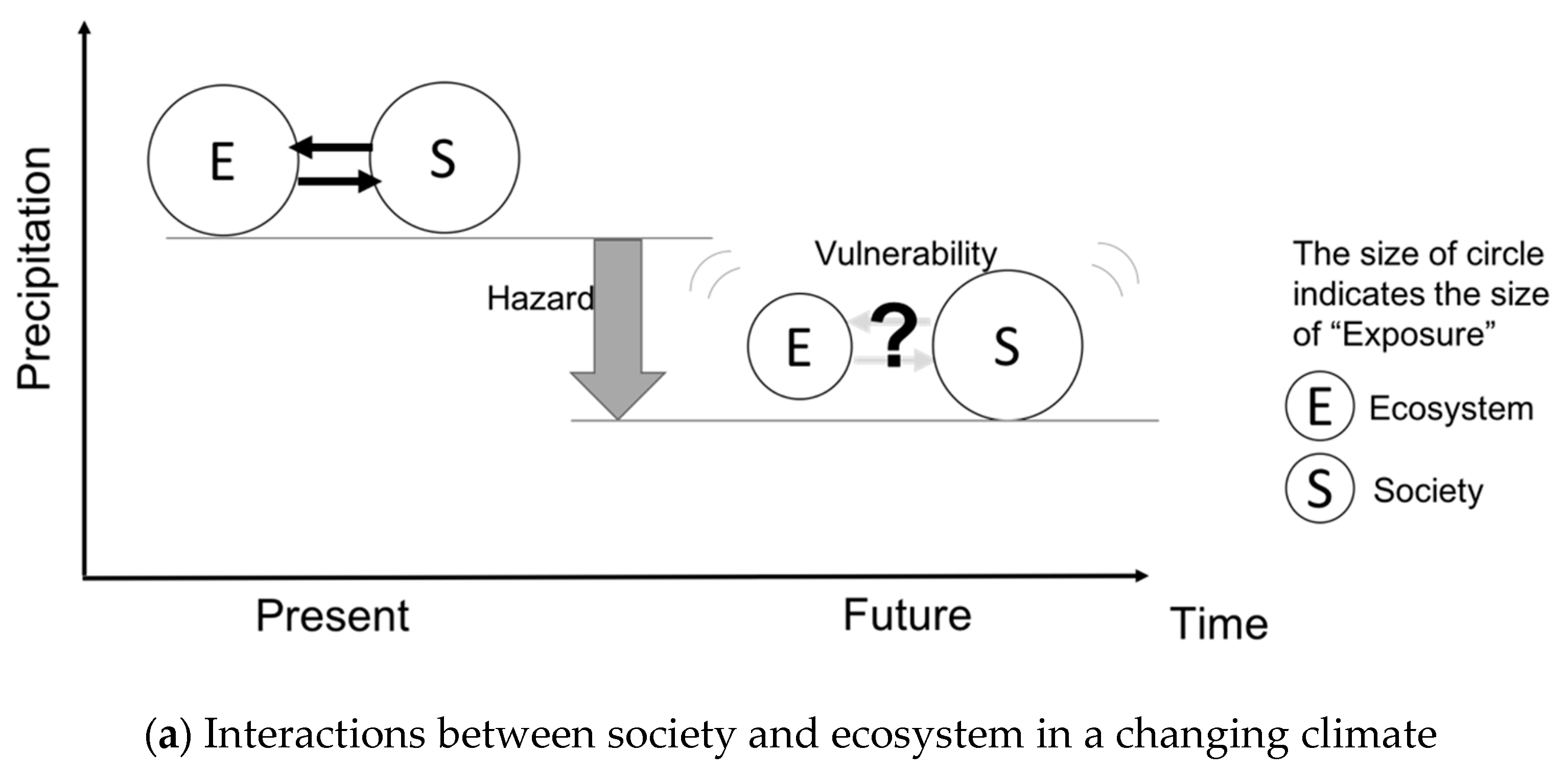
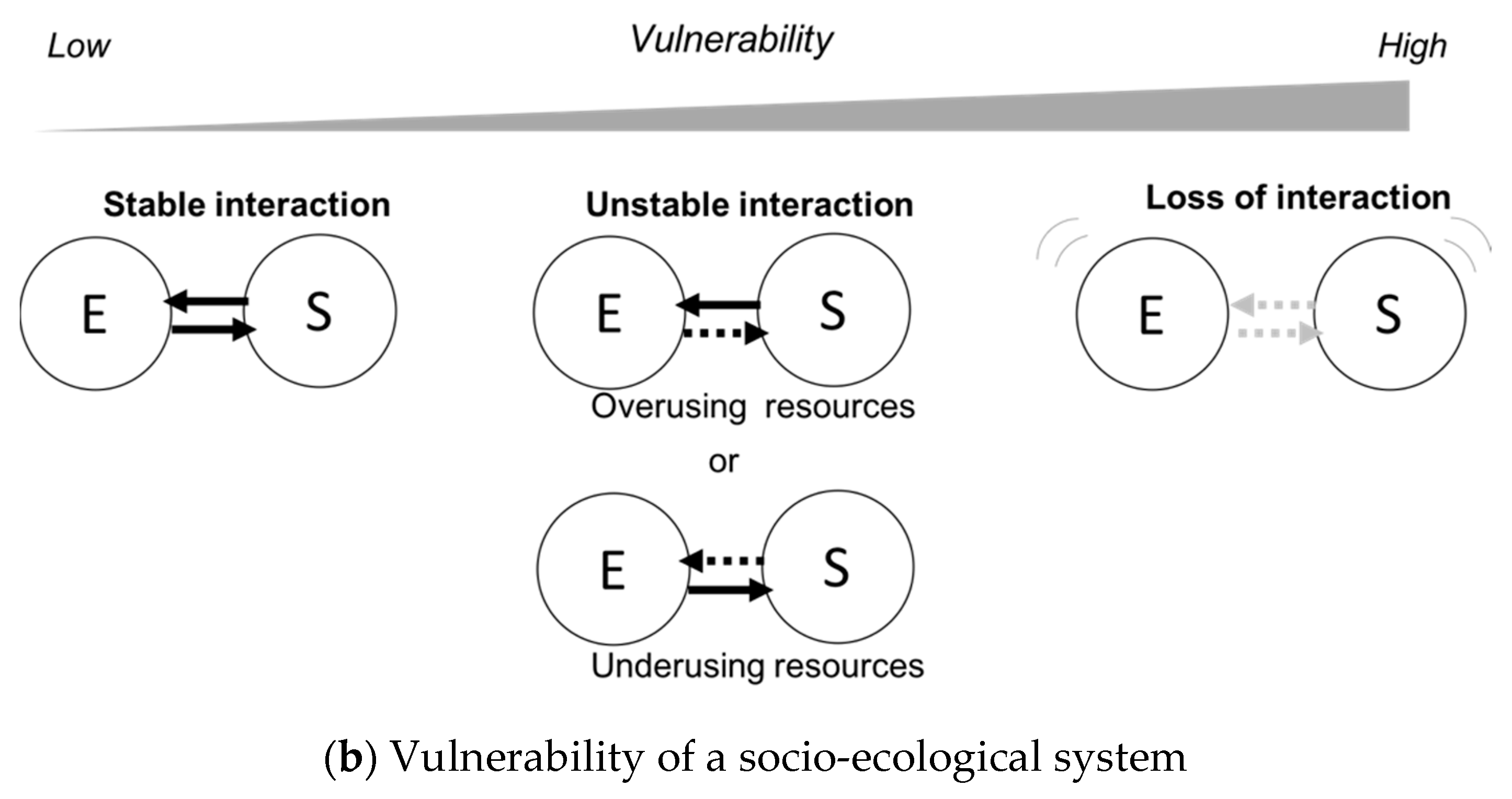
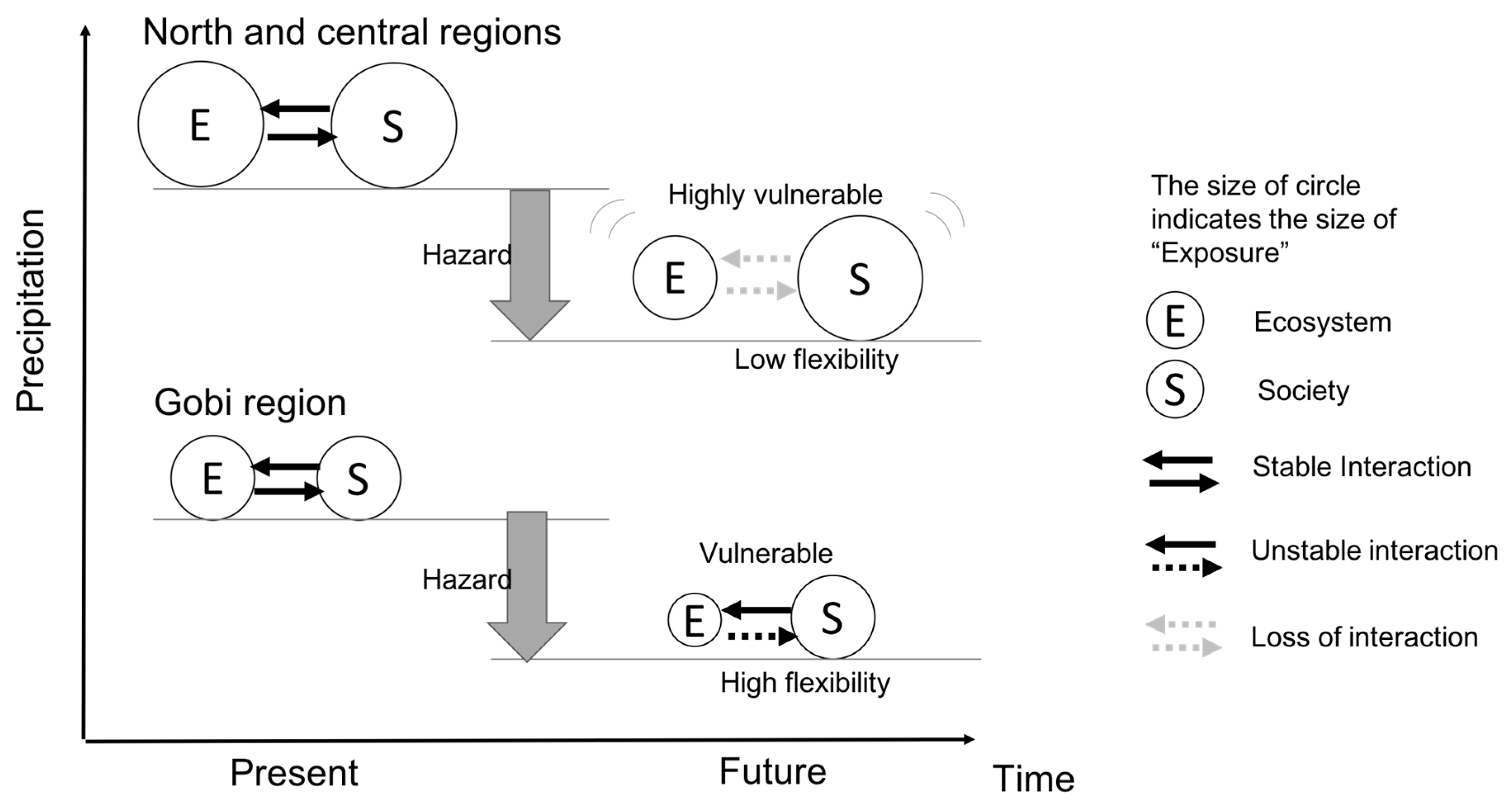
2. Framework for Assessing the Impact of Climate Change on Socio-Ecological Systems
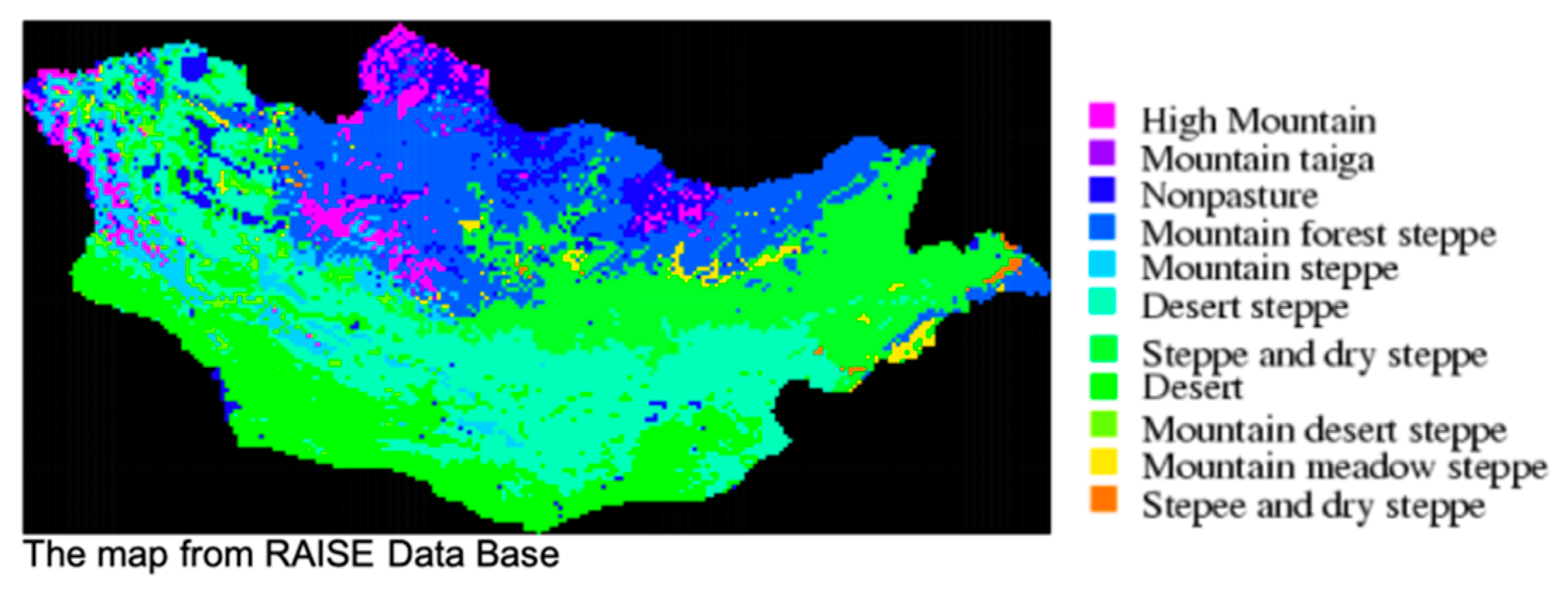
3. Study Site
4. Materials and Methods
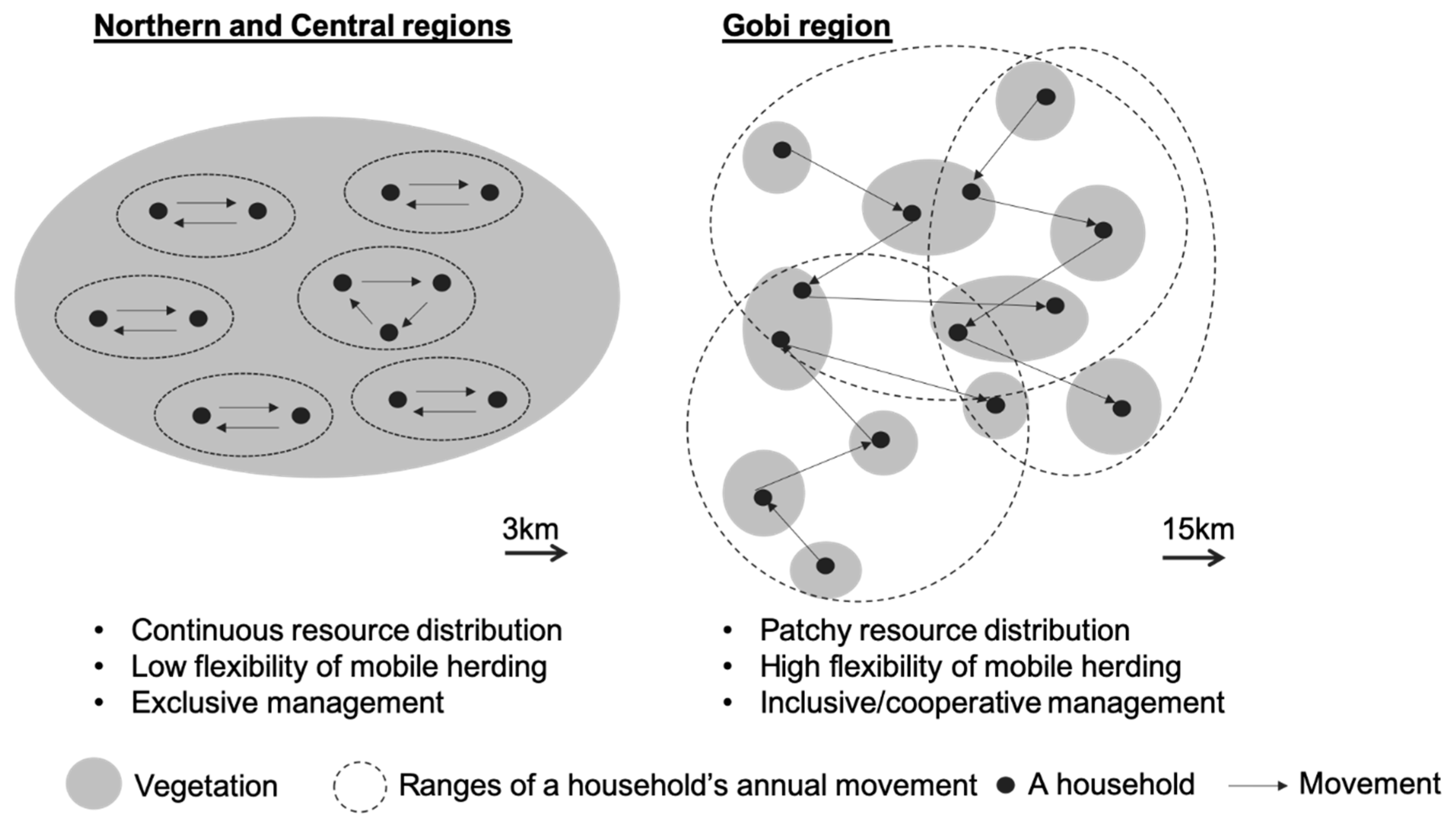
5. Society: Pastoral mobility, Flexibility and Their Trends along a Climatic Gradient
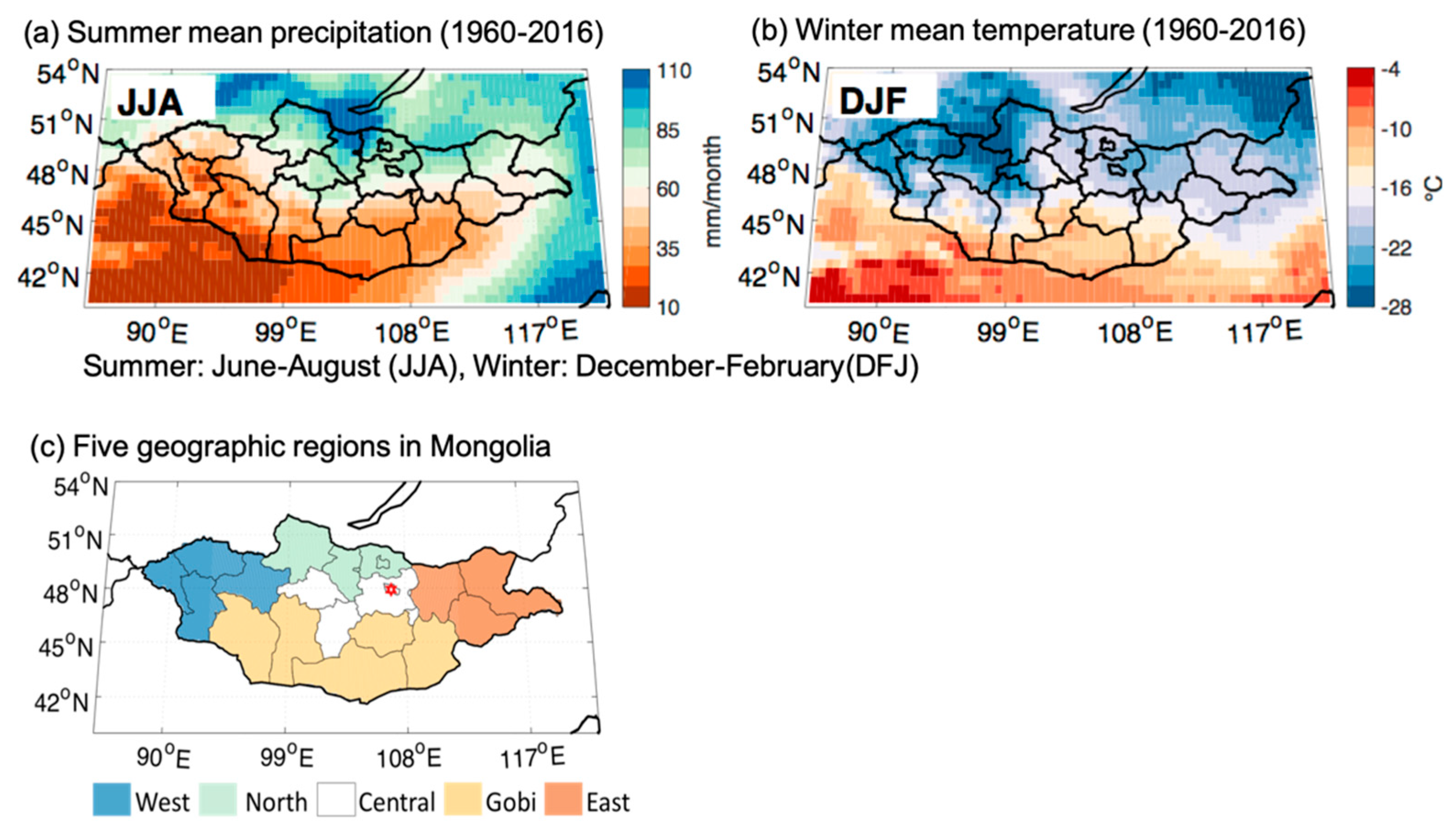
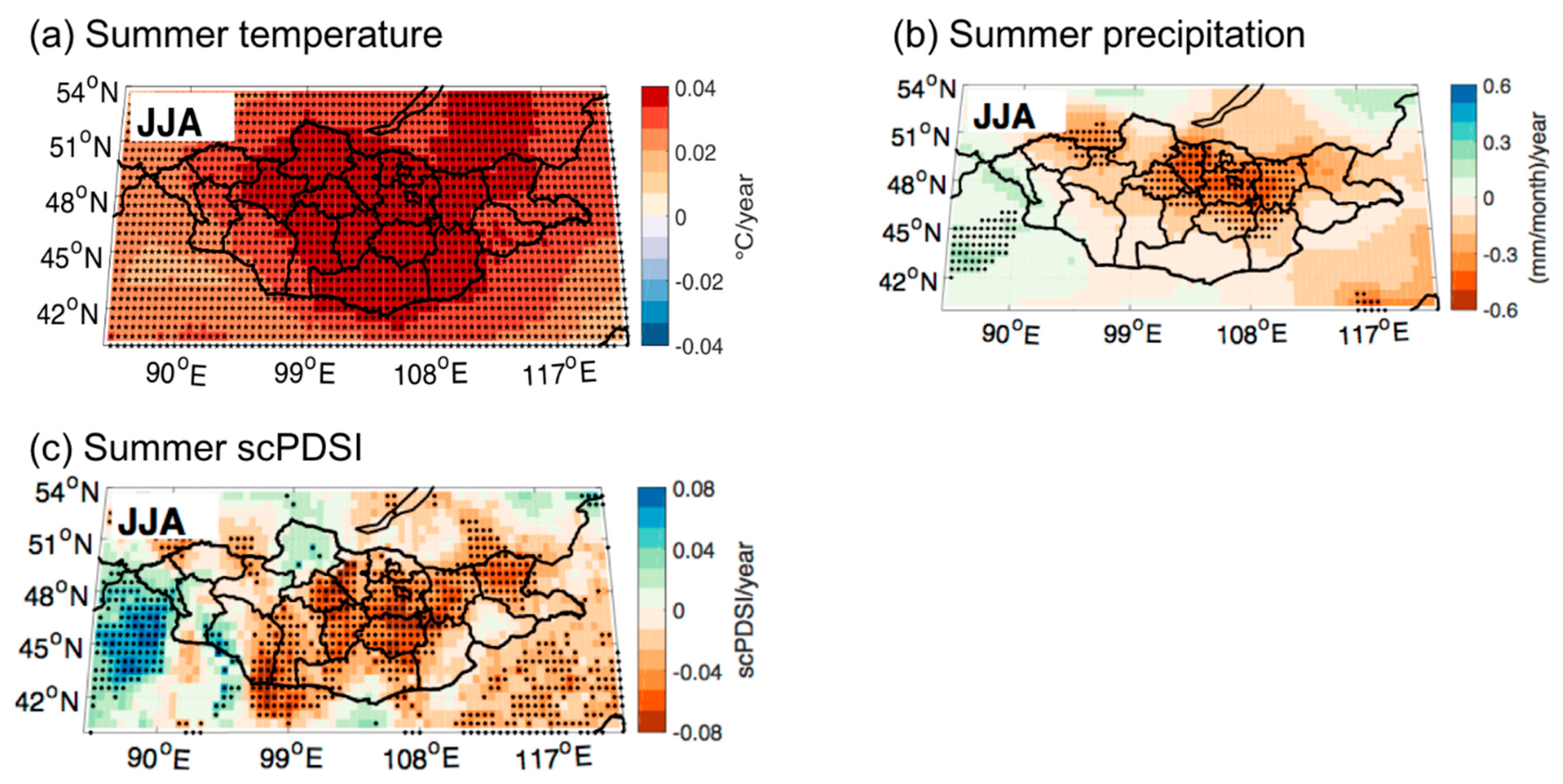
6. Hazard: Climate Trends in Mongolia
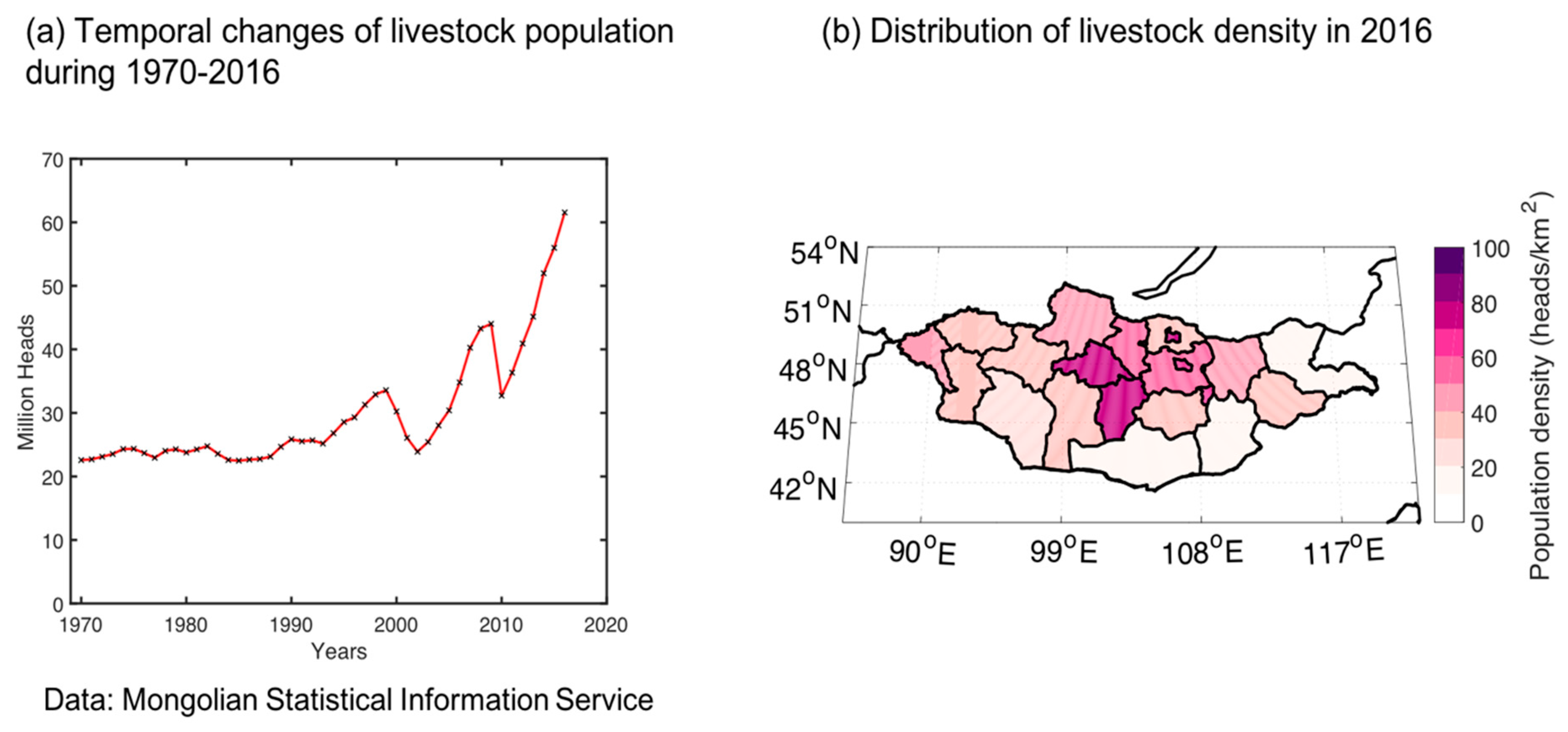
7. Exposure: Changes in Population and Livestock Distributions
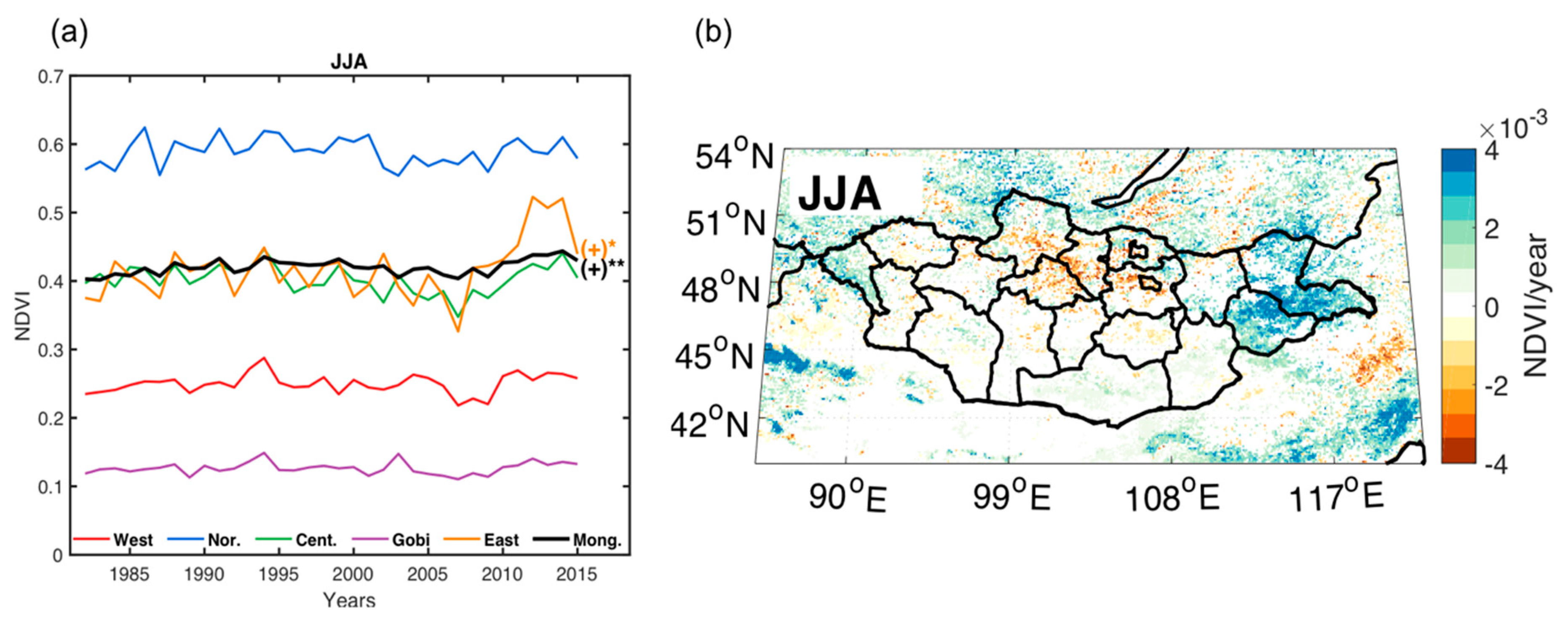
8. Ecosystem: Vegetation Trends along a Climatic Gradient
8.1. Regional and Country Level
8.2. Community Level Analysis
9. Climate Change Impacts on the Socio-Ecological System in Mongolia
10. Conclusions
Supplementary Materials
Notes
Author Contributions
Funding
Acknowledgments
Conflicts of Interest
References
- IPCC. Climate Change 2014: Impacts, Adaptation, and Vulnerability. Part A: Global and Sectoral Aspects. Contribution of Working Group II to the Fifth Assessment Report of the Intergovernmental Panel on Climate Change; Field, C.B., Barros, V.R., Dokken, D.J., Mach, K.J., Mastrandrea, M.D., Bilir, T.E., Chatterjee, M., Ebi, K.L., Estrada, Y.O., Genova, R.C., et al., Eds.; Cambridge University Press: Cambridge, UK, 2014; p. 1132. [Google Scholar]
- World Economic Forum. The Global Risk Report 2018, 13th ed.; World Economic Forum: Geneva, Switzerland, 2018. [Google Scholar]
- Liu, J.; Dietz, T.; Carpenter, S.R.; Alberti, M.; Folke, C.; Morán, E.; Pell, A.N.; Deadman, P.; Kratz, T.; Lubchenco, J.; et al. Complexity of Coupled Human and Natural Systems. Science 2007, 317, 1513–1516. [Google Scholar] [CrossRef] [PubMed]
- Reid, R.S.; Fernandez-Gimenez, M.E.; Galvin, K.A. Dynamics and Resilience of Rangelands and Pastoral Peoples around the Globe. Annu. Rev. Environ. Resour. 2014, 39, 217–242. [Google Scholar] [CrossRef]
- Tian, L.; Gong, Q.; Chen, J. Coupled dynamics of socioeconomic and environmental systems in Tibet. Environ. Res. Lett. 2018, 13, 034001. [Google Scholar] [CrossRef]
- Keys, P.W.; Galaz, V.; Dyer, M.; Matthews, N.; Folke, C.; Nyström, M.; Cornell, S.E. Anthropocene risk. Nat. Sustain. 2019, 2, 667–673. [Google Scholar] [CrossRef]
- Sternberg, T. Moderating Climate Hazard Risk through Cooperation in Asian Drylands. Land 2018, 7, 22. [Google Scholar] [CrossRef]
- Nori, M.; Davies, J. Change of Wind or Wind of Change? Climate Change, Adaptation and Pastoralism; The World Initiative for Sustainable Pastoralism; International Union for Conservation of Nature: Nairobi, Kenya, 2007; Available online: http://cmsdata.iucn.org/downloads/c__documents_and_settings_hps_local_settings_application_data_mozilla_firefox_profile.pdf (accessed on 23 October 2019).
- Wen, L.; Liu, S.; Zhang, X.; Yi, S.; Dong, S.; Lassoie, J.P.; Li, J.; Li, Y.; Li, X. Vulnerability of Worldwide Pastoralism to Global Changes and Interdisciplinary Strategies for Sustainable Pastoralism. Ecol. Soc. 2011, 16, 10. [Google Scholar]
- Chen, J.; John, R.; Zhang, Y.; Shao, C.; Brown, D.G.; Batkhishig, O.; Amarjargal, A.; Ouyang, Z.; Dong, G.; Wang, D.; et al. Divergences of Two Coupled Human and Natural Systems on the Mongolian Plateau. Bioscience 2015, 65, 559–570. [Google Scholar] [CrossRef]
- Chen, J.; John, R.; Sun, G.; Fan, P.; Henebry, G.M.; E Fernández-Giménez, M.; Zhang, Y.; Park, H.; Tian, L.; Groisman, P.Y.; et al. Prospects for the sustainability of social-ecological systems (SES) on the Mongolian plateau: Five critical issues. Environ. Res. Lett. 2018, 13, 123004. [Google Scholar] [CrossRef]
- Kaufmann, R.K.; Cleveland, C.J. Environmental Science; McGraw-Hill: New York, NY, USA, 2008; Volume 24, p. 7. [Google Scholar]
- National Statistics Office of Mongolia. Environment Mongolian Statistical Year Book; National Statistics Office of Mongolia: Ulaanbaatar, Mongolia, 2016; pp. 237–252.
- Honeychurch, W. The Late and Final Bronze Age Cultures of Mongolia, 1400–1700 BC. In Inner Asia and the Spatial Politics of Empire; Springer: New York, NY, USA, 2015; pp. 109–156. [Google Scholar]
- Baroni, I.; Gantulga, J.; Magail, J.; Yeruul-Ernedne, C. Three thousand years of nomadism on the Tsatyyn ereg site in the heart of Mongolia. In The Intangible Elements of Culture in Ethnoarchaeological Research; Springer: Cham, Switzerland, 2016; pp. 151–159. [Google Scholar]
- Tuvshintogtokh, I. The Steppe Vegetation of Mongolia; Chinbat Sanchir: Ulaanbaatar, Mongolia, 2014. [Google Scholar]
- Lapin, K.; Eipeldauer, A.; Folly, G.; Mank, D.; Bernhardt, K.-G. The Vegetation of North-Western Mongolia: Floristic Checklist and Conservation Status of Mongolian Grassland Flora. Mong. J. Boil. Sci. 2017, 15, 13–22. [Google Scholar] [CrossRef]
- Harris, I.; Jones, P.D.; Osborn, T.J.; Lister, D.H. Updated high-resolution grids of monthly climatic observations—The CRU TS3.10 Dataset. Int. J. Climatol. 2014, 34, 623–642. [Google Scholar] [CrossRef]
- Van der Schrier, G.; Barichivich, J.; Briffa, K.R.; Jones, P.D. A scPDSI-based global data set of dry and wet spells for 1901-2009: Variations in the self-calibrating PDSI. J. Geophys. Res. D Atmos. 2013, 118, 4025–4048. [Google Scholar] [CrossRef]
- Pinzon, J.; Brown, M.E.; Tucker, C.J. Satellite time series correction of orbital drift artifacts using empirical mode decomposition. In Hilbert-Huang, Transform: Introduction and Applications; Huang, N., Ed.; World Scientific Publishing Co. Pte. Ltd.: Singapore, 2005; pp. 167–186. [Google Scholar]
- Tucker, C.J.; Pinzon, J.E.; Brown, M.E.; Slayback, D.A.; Pak, E.W.; Mahoney, R.; Vermote, E.F.; El Saleous, N. An Extended AVHRR 8-km NDVI Data Set Compatible with MODIS and SPOT Vegetation NDVI Data. Int. J. Remote Sens. 2005, 26, 4485–4498. [Google Scholar] [CrossRef]
- Fernandez-Gimenez, M.E. Sustaining the Steppes: A Geographical History of Pastoral Land Use in Mongolia. Geogr. Rev. 1999, 89, 315. [Google Scholar] [CrossRef]
- Humphrey, C.; Sneath, D. The End of Nomadism? White Horse Press: Winwick, UK, 1999. [Google Scholar]
- Honeychurch, W. The heartland of Inner Asia: Mongolia and steppe pastoral nomadism. In Inner Asia and the Spatial Politics of Empire; Springer: New York, NY, USA, 2015; pp. 79–108. [Google Scholar]
- Kakinuma, K.; Okayasu, T.; Sasaki, T.; Jamsaran, U.; Okuro, T.; Takeuchi, K. Rangeland management in highly variable environments: Resource variations across the landscape mediate the impact of grazing on vegetation in Mongolia. Grassl. Sci. 2013, 59, 44–51. [Google Scholar] [CrossRef]
- McAllister, R.R.J.; Gordon, I.J.; Janssen, M.A.; Abel, N. Pastoralists’ responses to variation of rangeland resources in time and space. Ecol. Appl. 2006, 16, 572–583. [Google Scholar] [CrossRef]
- Wang, J.; Brown, D.G.; Agrawal, A. Climate adaptation, local institutions, and rural livelihoods: A comparative study of herder communities in Mongolia and Inner Mongolia, China. Glob. Environ. Chang. 2013, 23, 1673–1683. [Google Scholar] [CrossRef]
- Undargaa, S.; McCarthy, J.F. Beyond Property: Co-Management and Pastoral Resource Access in Mongolia. World Dev. 2016, 77, 367–379. [Google Scholar] [CrossRef]
- Fernández-Giménez, M.E. The effects of livestock privatization on pastoral land use and land tenure in post-socialist Mongolia. Nomadic Peoples 2001, 5, 49–66. [Google Scholar] [CrossRef]
- Okayasu, T.; Okuro, T.; Jamsran, U.; Takeuchi, K. An intrinsic mechanism for the co-existence of different survival strategies within mobile pastoralist communities. Agric. Syst. 2010, 103, 180–186. [Google Scholar] [CrossRef]
- Kakinuma, K.; Okayasu, T.; Jamsran, U.; Okuro, T.; Takeuchi, K. Herding strategies during a drought vary at multiple scales in Mongolian rangeland. J. Arid. Environ. 2014, 109, 88–91. [Google Scholar] [CrossRef]
- Institute for Global Environmental Strategies (IGES). Integration of Climate Change Climate Change Adaptation into Sustainable Development in Mongolia; IGES: Kanagawa, Japan, 2012. [Google Scholar]
- Liu, Y.Y.; Evans, J.P.; McCabe, M.F.; De Jeu, R.A.M.; Van Dijk, A.I.J.M.; Dolman, A.J.; Saizen, I. Changing Climate and Overgrazing Are Decimating Mongolian Steppes. PLoS ONE 2013, 8, e57599. [Google Scholar] [CrossRef] [PubMed]
- Bao, G.; Bao, Y.; Sanjjava, A.; Qin, Z.; Zhou, Y.; Xu, G. NDVI-indicated long-term vegetation dynamics in Mongolia and their response to climate change at biome scale. Int. J. Clim. 2015, 35, 4293–4306. [Google Scholar] [CrossRef]
- Vandandorj, S.; Munkhjargal, E.; Boldgiv, B.; Gantsetseg, B. Changes in event number and duration of rain types over Mongolia from 1981 to 2014. Environ. Earth Sci. 2017, 76, 70. [Google Scholar] [CrossRef]
- Cook, E.R.; Krusic, P.J.; Anchukaitis, K.J.; Buckley, B.M.; Nakatsuka, T.; Sano, M.; PAGES Asia2k Members. Tree-ring reconstructed summer temperature anomalies for temperate East Asia since 800 C.E. Clim. Dyn. 2013, 41, 2957–2972. [Google Scholar] [CrossRef]
- Davi, N.; D’Arrigo, R.; Jacoby, G.; Cook, E.; Anchukaitis, K.; Nachin, B.; Rao, M.; Leland, C.; Rao, M. A long-term context (931–2005 C.E.) for rapid warming over Central Asia. Quat. Sci. Rev. 2015, 121, 89–97. [Google Scholar] [CrossRef]
- Anchukaitis, K.J.; Wilson, R.; Briffa, K.R.; Büntgen, U.; Cook, E.R.; D’Arrigo, R.; Davi, N.; Esper, J.; Frank, D.; Gunnarson, B.E.; et al. Last millennium Northern Hemisphere summer temperatures from tree rings: Part II, spatially resolved reconstructions. Quat. Sci. Rev. 2017, 163, 1–22. [Google Scholar] [CrossRef]
- Khishigbayar, J.; Fernandez-Gimenez, M.E.; Angerer, J.P.; Reid, R.; Chantsallkham, J.; Baasandorj, Y.; Zumberelmaa, D. Mongolian rangelands at a tipping point? Biomass and cover are stable but composition shifts and richness declines after 20 years of grazing and increasing temperatures. J. Arid. Environ. 2015, 115, 100–112. [Google Scholar] [CrossRef]
- Fernández-Giménez, M.E.; Venable, N.H.; Angerer, J.; Fassnacht, S.R.; Reid, R.S.; Khishigbayar, J. Exploring linked ecological and cultural tipping points in Mongolia. Anthropocene 2017, 17, 46–69. [Google Scholar] [CrossRef]
- Xia, J.; Liang, S.; Chen, J.; Yuan, W.; Liu, S.; Li, L.; Cai, W.; Zhang, L.; Fu, Y.; Zhao, T.; et al. Satellite-based analysis of evapotranspiration and water balance in the grassland ecosystems of Dryland East Asia. PLoS ONE 2014, 9, e97295. [Google Scholar] [CrossRef]
- Zhao, X.; Hu, H.; Shen, H.; Zhou, D.; Zhou, L.; Myneni, R.B.; Fang, J. Satellite-indicated long-term vegetation changes and their drivers on the Mongolian Plateau. Landsc. Ecol. 2015, 30, 1599–1611. [Google Scholar] [CrossRef]
- Choi, J.W.; Kim, I.G.; Kim, J.Y.; Kim, B.J.; Park, C.H.; Kim, D.W. The assessment of droughts in Northern China and Mongolian areas using PDSI and relevant large-scale environments. Int. J. Climatol. 2016, 36, 3259–3269. [Google Scholar] [CrossRef]
- Pederson, N.; Hessl, A.E.; Baatarbileg, N.; Anchukaitis, K.J.; Di Cosmo, N. Pluvials, droughts, the Mongol Empire, and modern Mongolia. Proc. Natl. Acad. Sci. USA 2014, 111, 4375–4379. [Google Scholar] [CrossRef] [PubMed]
- Hessl, A.E.; Pederson, N.; Byambasuran, O.; Anchukaitis, K.; Leland, C. How Unusual Was the 21st Century Drought in Mongolia? Placing Recent Extremes in an 1100-Year Context. In Proceedings of the Building Resilience of Mongolian Rangelands, Ulaanbaatar, Mongolia, 9–10 June 2015; pp. 80–86. [Google Scholar]
- Hessl, A.E.; Anchukaitis, K.J.; Jelsema, C.; Cook, B.; Byambasuren, O.; Leland, C.; Nachin, B.; Pederson, N.; Tian, H.; Hayles, L.A. Past and future drought in Mongolia. Sci. Adv. 2018, 4, e1701832. [Google Scholar] [CrossRef] [PubMed]
- Park Williams, A.; Allen, C.D.; Macalady, A.K.; Griffin, D.; Woodhouse, C.A.; Meko, D.M.; Swetnam, T.W.; Rauscher, S.A.; Seager, R.; Grissino-Mayer, H.D.; et al. Temperature as a potent driver of regional forest drought stress and tree mortality. Nat. Clim. Chang. 2013, 3, 292–297. [Google Scholar] [CrossRef]
- Fernandez-Gimenez, M.E.; Batkhishig, B.; Batbuyan, B. Cross-boundary and cross-level dynamics increase vulnerability to severe winter disasters (dzud) in Mongolia. Glob. Environ. Chang. 2012, 22, 836–851. [Google Scholar] [CrossRef]
- Middleton, N.; Rueff, H.; Sternberg, T.; Batbuyan, B.; Thomas, D. Explaining spatial variations in climate hazard impacts in western Mongolia. Landsc. Ecol. 2015, 30, 91–107. [Google Scholar] [CrossRef]
- Rao, M.P.; Davi, N.K.; D’Arrigo, R.D.; Skees, J.; Nachin, B.; Leland, C.; Lyon, B.; Wang, S.-Y.; Byambasuren, O. Dzuds, droughts, and livestock mortality in Mongolia. Environ. Res. Lett. 2015, 10, 74012. [Google Scholar] [CrossRef]
- Tachiiri, K.; Shinoda, M.; Klinkenberg, B.; Morinaga, Y. Assessing Mongolian snow disaster risk using livestock and satellite data. J. Arid. Environ. 2008, 72, 2251–2263. [Google Scholar] [CrossRef]
- Batima, P. Climate Change Vulnerability and Adaptation in the Livestock Sector of Mongolia; AIACC Reports; Institute of Meteorology and Hydrology: Ulaanbaatar, Mongolia, 2006. [Google Scholar]
- Soma, T.; Schlecht, E. The relevance of herders’ local ecological knowledge on coping with livestock losses during harsh winters in western Mongolia. Pastoralism 2018, 8, 3. [Google Scholar] [CrossRef]
- Nakamura, H.; Dorjjadamba, R.; Sodnomdarjaa, D. The Impact of a Disaster on Asset Dynamics in the Gobi Region of Mongolia: An Analysis of Livestock Changes. J. Dev. Stud. 2017, 53, 1–18. [Google Scholar] [CrossRef]
- Oniki, S.; Dagys, K. Recovery from a winter disaster in Töv Province of Mongolia. J. Arid. Environ. 2017, 139, 49–57. [Google Scholar] [CrossRef]
- Fernandez-Gimenez, M.E.; Batbuyan, B. Law and Disorder: Local Implementation of Mongolia’s Land Law. Dev. Chang. 2004, 35, 141–166. [Google Scholar] [CrossRef]
- Saizen, I.; Maekawa, A.; Yamamura, N. Spatial analysis of time-series changes in livestock distribution by detection of local spatial associations in Mongolia. Appl. Geogr. 2010, 30, 639–649. [Google Scholar] [CrossRef]
- Miao, L.; Luan, Y.; Luo, X.; Liu, Q.; Moore, J.C.; Nath, R.; He, B.; Zhu, F.; Cui, X. Analysis of the Phenology in the Mongolian Plateau by Inter-Comparison of Global Vegetation Datasets. Remote Sens. 2013, 5, 5193–5208. [Google Scholar] [CrossRef]
- Hilker, T.; Natsagdorj, E.; Waring, R.H.; Lyapustin, A.; Wang, Y. Satellite observed widespread decline in Mongolian grasslands largely due to overgrazing. Glob. Chang. Biol. 2014, 20, 418–428. [Google Scholar] [CrossRef] [PubMed]
- Bao, G.; Qin, Z.; Bao, Y.; Zhou, Y.; Li, W.; Sanjjav, A. NDVI-Based Long-Term Vegetation Dynamics and Its Response to Climatic Change in the Mongolian Plateau. Remote Sens. 2014, 6, 8337–8358. [Google Scholar] [CrossRef]
- Tucker, C.J. Red and Photographic Infrared l, lnear Combinations for Monitoring Vegetation. Remote Sens. Environ. 1979, 8, 127–150. [Google Scholar] [CrossRef]
- Miao, L.; Fraser, R.; Sun, Z.; Sneath, D.; He, B.; Cui, X. Climate impact on vegetation and animal husbandry on the Mongolian plateau: A comparative analysis. Nat. Hazards 2016, 80, 727–739. [Google Scholar] [CrossRef]
- Sheehy, D.P.; Damiran, D. Assessment of Mongolian Rangeland Condition and Trend 1997–2009; Final Report for the World Bank and The Netherlans-Mongolia Trust Fund for Environmental Reform (NEMO); International Center for Advancement of Pastoral Systems: Wallowa, OR, USA, 2012; p. 46. [Google Scholar]
- Nandintsetseg, B.; Shinoda, M. Assessment of drought frequency, duration, and severity and its impact on pasture production in Mongolia. Nat. Hazards 2013, 66, 995–1008. [Google Scholar] [CrossRef]
- Jamiyansharav, K.; Fernández-Giménez, M.E.; Angerer, J.P.; Yadamsuren, B.; Dash, Z. Plant community change in three Mongolian steppe ecosystems 1994–2013: Applications to state-and-transition models. Ecosphere 2018, 9, e02145. [Google Scholar] [CrossRef]
- Suzuki, K.; Tsendeekhuu, T.; Tungalag, R.; Kamijo, T.; Shinoda, M. Evaluation of Plant Species Compositional Changes during the Recent Decades in Mongolian Steppe. J. Arid Land Stud. 2018, 27, 127–134. [Google Scholar]
- NAMEM and MEGDT. National Report on the Rangeland Health of Mongolia; Government of Mongolia, National Agency for Meteorology and Environmental Monitoring and Ministry of Environment, Green Development and Tourism: Ulaanbaatar, Mongolia, 2015.
- Dulamsuren, C.; Hauck, M.; Leuschner, C. Recent drought stress leads to growth reductions in Larix sibirica in the western Khentey, Mongolia. Glob. Chang. Boil. 2010, 16, 3024–3035. [Google Scholar] [CrossRef]
- Shinoda, M.; Nachinshonhor, G.; Nemoto, M. Impact of drought on vegetation dynamics of the Mongolian steppe: A field experiment. J. Arid. Environ. 2010, 74, 63–69. [Google Scholar] [CrossRef]
- Spence, L.A.; Liancourt, P.; Boldgiv, B.; Petraitis, P.S.; Casper, B.B. Climate change and grazing interact to alter flowering patterns in the Mongolian steppe. Oecologia 2014, 175, 251–260. [Google Scholar] [CrossRef]
- Spence, L.A.; Liancourt, P.; Boldgiv, B.; Petraitis, P.S.; Casper, B.B. Short-term manipulation of precipitation in Mongolian steppe shows vegetation influenced more by timing than amount of rainfall. J. Veg. Sci. 2016, 27, 249–258. [Google Scholar] [CrossRef]
- Liancourt, P.; Spence, L.A.; Boldgiv, B.; Lkhagva, A.; Helliker, B.R.; Casper, B.B.; Petraitis, P.S. Vulnerability of the northern Mongolian steppe to climate change: Insights from flower production and phenology. Ecology 2012, 93, 815–824. [Google Scholar] [CrossRef]
- Sasaki, T.; Okayasu, T.; Jamsran, U.; Takeuchi, K. Threshold changes in vegetation along a grazing gradient in Mongolian rangelands. J. Ecol. 2008, 96, 145–154. [Google Scholar] [CrossRef]
- Sasaki, T.; Ohkuro, T.; Jamsran, U.; Takeuchi, K. Changes in the herbage nutritive value and yield associated with threshold responses of vegetation to grazing in Mongolian rangelands: Grazing impacts on the herbage nutritive value and yield. Grass Forage Sci. 2012, 67, 446–455. [Google Scholar] [CrossRef]
- Huang, K.; Yi, C.; Wu, D.; Zhou, T.; Zhao, X.; Blanford, W.J.; Wei, S.; Wu, H.; Ling, D.; Li, Z. Tipping point of a conifer forest ecosystem under severe drought. Environ. Res. Lett. 2015, 10, 24011. [Google Scholar] [CrossRef]
- Fernandez-Gimenez, M.E.; Allen-Diaz, B.; Fernandez-Gimenez, M.E.; Allen-Diaz, B. Testing a non-equilibrium model of rangeland vegetation dynamics in Mongolia. J. Appl. Ecol. 1999, 36, 871–885. [Google Scholar] [CrossRef]
- Sasaki, T.; Okayasu, T.; Ohkuro, T.; Shirato, Y.; Jamsran, U.; Takeuchi, K. Rainfall variability may modify the effects of long-term exclosure on vegetation in Mandalgobi, Mongolia. J. Arid. Environ. 2009, 73, 949–954. [Google Scholar] [CrossRef]
- Dangal, S.R.S.; Tian, H.; Lu, C.; Pan, S.; Pederson, N.; Hessl, A. Synergistic effects of climate change and grazing on net primary production of Mongolian grasslands. Ecosphere 2016, 7, e01274. [Google Scholar] [CrossRef]
- Isbell, F.; Craven, D.; Connolly, J.; Loreau, M.; Schmid, B.; Beierkuhnlein, C.; Bezemer, T.M.; Bonin, C.; Bruelheide, H.; De Luca, E.; et al. Biodiversity increases the resistance of ecosystem productivity to climate extremes. Nature 2015, 526, 574–577. [Google Scholar] [CrossRef] [PubMed]
- Oliver, T.H.; Isaac, N.J.B.; August, T.A.; Woodcock, B.A.; Roy, D.B.; Bullock, J.M. Declining resilience of ecosystem functions under biodiversity loss. Nat. Commun. 2015, 6, 10122. [Google Scholar] [CrossRef] [PubMed]
- Chuluun, J.; Kakinuma, K.; Ozaki, T.; Takatsuki, S. How Pastoralists in Mongolia Perceive Vegetation Changes Caused by Grazing. Nomad Peoples 2008, 12, 67–73. [Google Scholar]
- Sugihara, G.; May, R.; Ye, H.; Hsieh, C.-H.; Deyle, E.; Fogarty, M.; Munch, S. Detecting Causality in Complex Ecosystems. Science 2012, 338, 496–500. [Google Scholar] [CrossRef] [PubMed]
- Lee, E.-H.; Sohn, B.-J. Recent increasing trend in dust frequency over Mongolia and Inner Mongolia regions and its association with climate and surface condition change. Atmos. Environ. 2011, 45, 4611–4616. [Google Scholar] [CrossRef]
- Munkhtsetseg, E.; Shinoda, M.; Gillies, J.A.; Kimura, R.; King, J.; Nikolich, G. Relationships between soil moisture and dust emissions in a bare sandy soil of Mongolia. Particuology 2016, 28, 131–137. [Google Scholar] [CrossRef]
- Oliver, T.H.; Heard, M.S.; Isaac, N.J.; Roy, D.B.; Procter, D.; Eigenbrod, F.; Freckleton, R.; Hector, A.; Orme, C.D.L.; Petchey, O.L.; et al. Biodiversity and Resilience of Ecosystem Functions. Trends Ecol. Evol. 2015, 30, 673–684. [Google Scholar] [CrossRef]
- Brand, F. Critical natural capital revisited: Ecological resilience and sustainable development. Ecol. Econ. 2009, 68, 605–612. [Google Scholar] [CrossRef]


| Region (See Figure 2c) | Moblie Pattern (Simukov Category) | Annual Movement |
|---|---|---|
| Northern | Khangai | 7–8 km |
| Central | Steppe | 30–50 km |
| Western | Western | 100 km |
| Eastern | Eastern | 100 km |
| Gobi | Gobi | 250 km |
| Ovorkhangai | 150–200 km |
© 2019 by the authors. Licensee MDPI, Basel, Switzerland. This article is an open access article distributed under the terms and conditions of the Creative Commons Attribution (CC BY) license (http://creativecommons.org/licenses/by/4.0/).
Share and Cite
Kakinuma, K.; Yanagawa, A.; Sasaki, T.; Rao, M.P.; Kanae, S. Socio-ecological Interactions in a Changing Climate: A Review of the Mongolian Pastoral System. Sustainability 2019, 11, 5883. https://doi.org/10.3390/su11215883
Kakinuma K, Yanagawa A, Sasaki T, Rao MP, Kanae S. Socio-ecological Interactions in a Changing Climate: A Review of the Mongolian Pastoral System. Sustainability. 2019; 11(21):5883. https://doi.org/10.3390/su11215883
Chicago/Turabian StyleKakinuma, Kaoru, Aki Yanagawa, Takehiro Sasaki, Mukund Palat Rao, and Shinjiro Kanae. 2019. "Socio-ecological Interactions in a Changing Climate: A Review of the Mongolian Pastoral System" Sustainability 11, no. 21: 5883. https://doi.org/10.3390/su11215883
APA StyleKakinuma, K., Yanagawa, A., Sasaki, T., Rao, M. P., & Kanae, S. (2019). Socio-ecological Interactions in a Changing Climate: A Review of the Mongolian Pastoral System. Sustainability, 11(21), 5883. https://doi.org/10.3390/su11215883