Renewable Energy in Wilderness Landscapes: Visitors’ Perspectives



Abstract
1. Introduction
2. Landscape: A Place Created in a Visitor’s Mind
3. Research Settings
3.1. Tourism in the Highlands of Skaftárhreppur Municipality
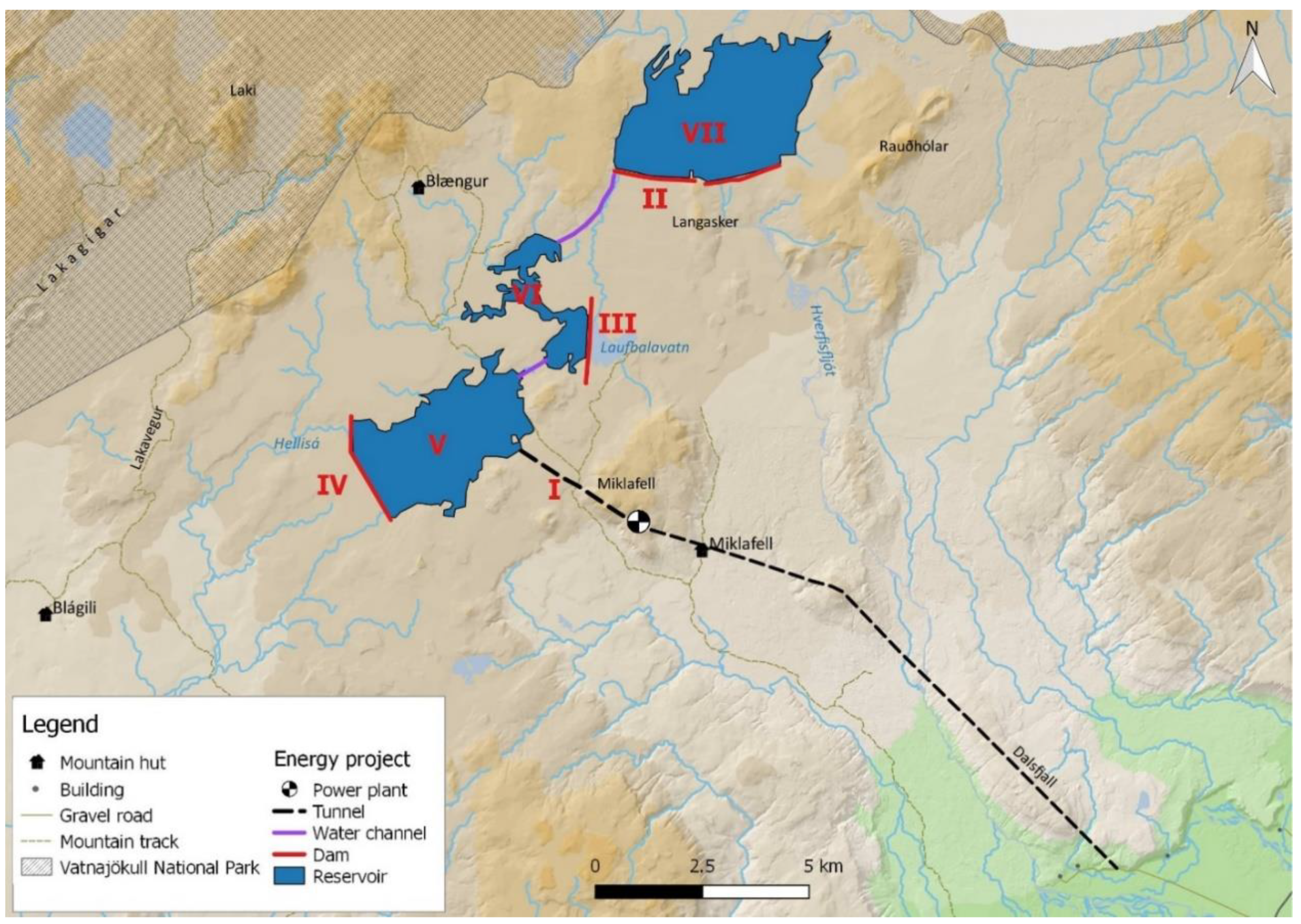
3.2. Hverfisfljót Hydropower Plant
4. Methods
4.1. Research Approach and Design
- Visitor perceptions and satisfaction;
- Preferences regarding infrastructure and level of use;
- Attitudes toward the proposed hydropower plant and toward renewable energy development in general; and
- Demographic data.
- The reasons for the visit to the area and the main attractions of the area;
- Environmental qualities that visitors are seeking during such a trip;
- Perceptions of the area;
- Preferred future management of the area; and
- The potential effects of the proposed hydropower plant on the visitor experience.
4.2. Data Collection
4.3. Data Analysis
5. Results
5.1. Main Attractions of the Area to Tourists
A huge area, horizon is very far, there is a variety of landscape all around, for kilometers and kilometers. And it’s quite unique I would say, I don’t recall such place in Europe. In continental Europe it’s very difficult, there is a few left, but it’s not that big, not walk for days and days without meeting anybody else and anything else. …And honestly, from our place it is about three and half hours’ flight, so it’s quite convenient.
Remoteness. I am grateful that places exist where it is possible to go and lose yourself. After enjoying the beautiful scenery of Laugavegur it was a pleasant change to walk all today and not see another person other than from your group. The remoteness provides a serenity matched in few places in the world which also have so much raw beauty.
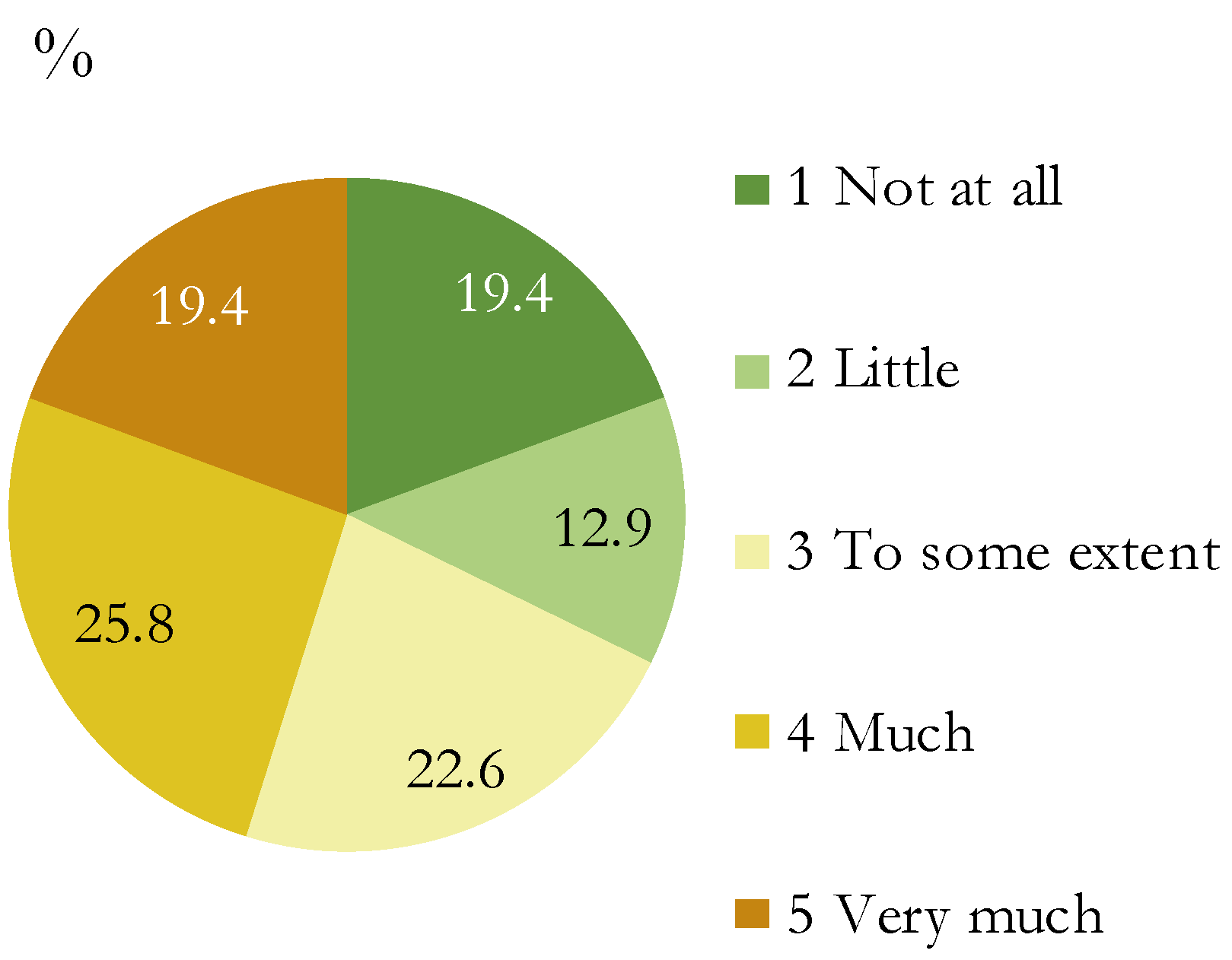
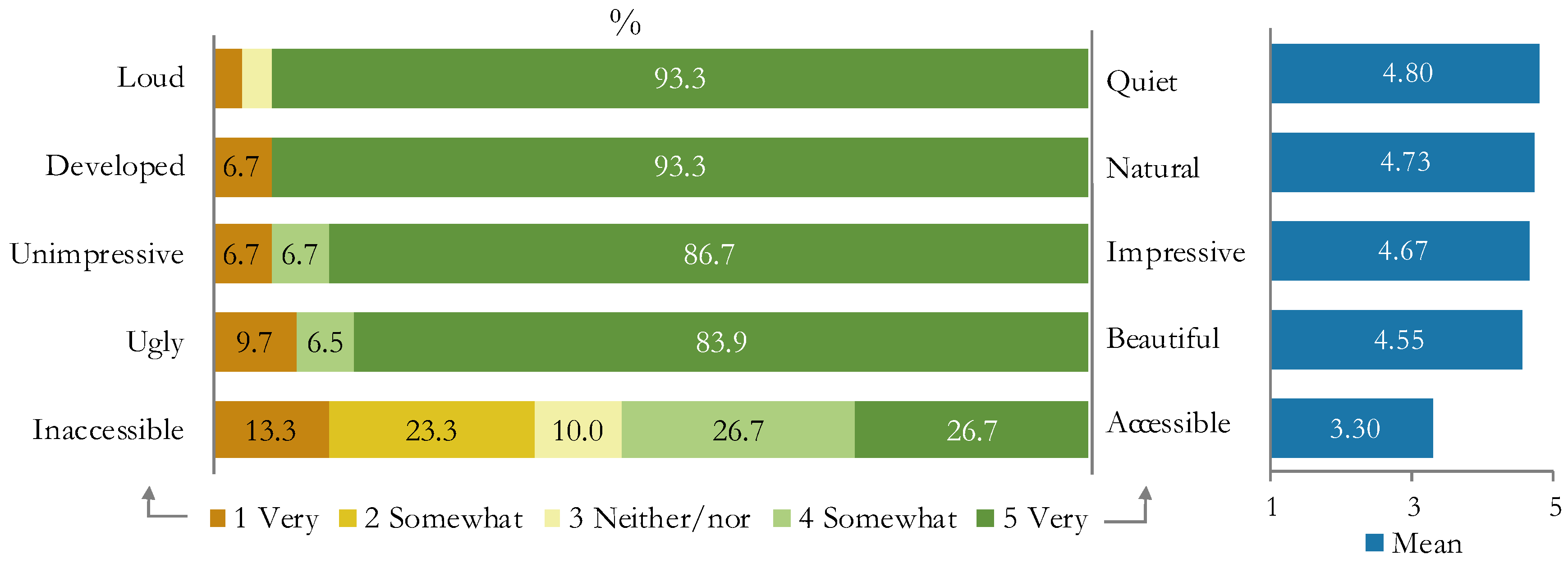
5.2. Visitor Perceptions of the Study Area
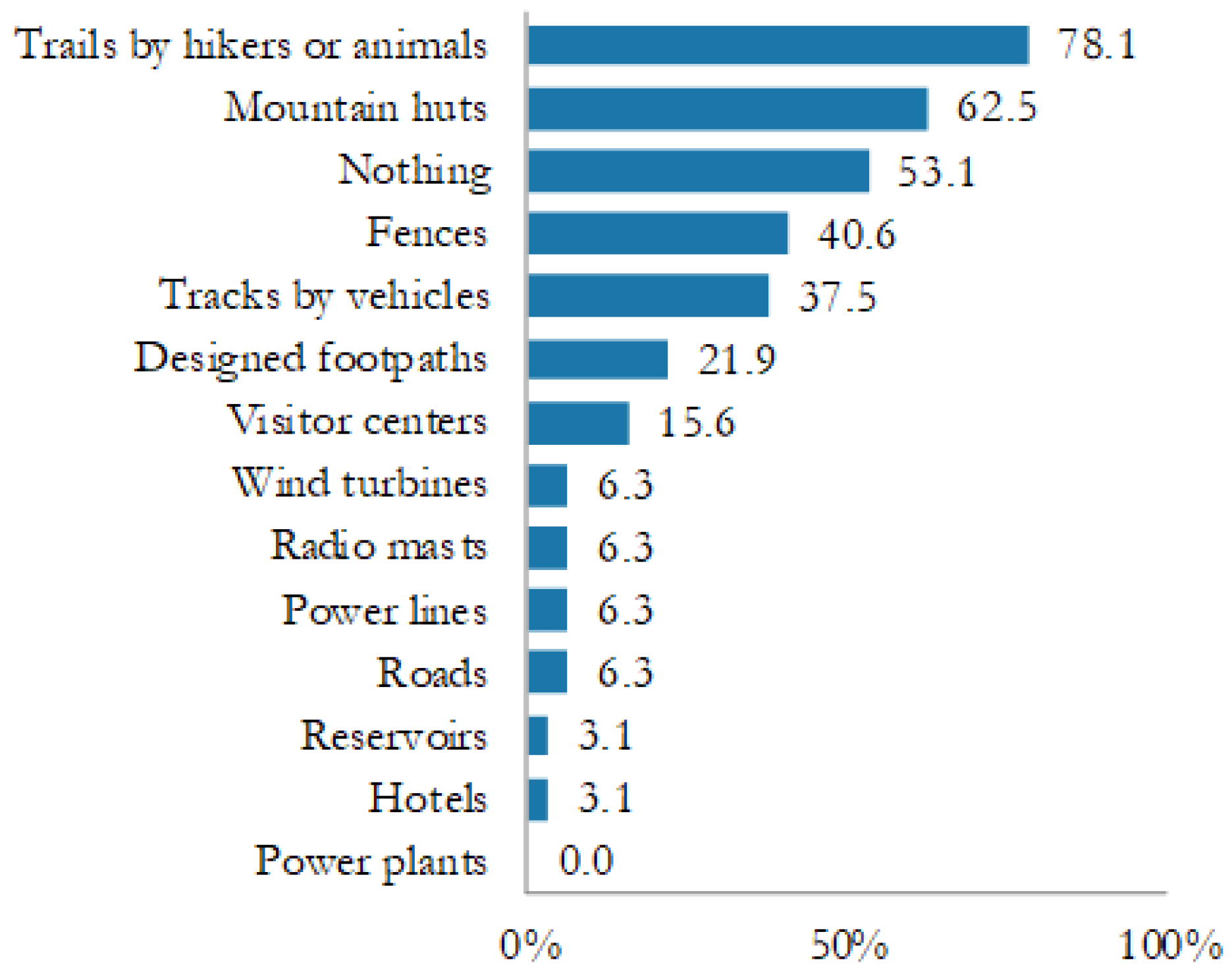
5.3. Wilderness as Defined by Visitors
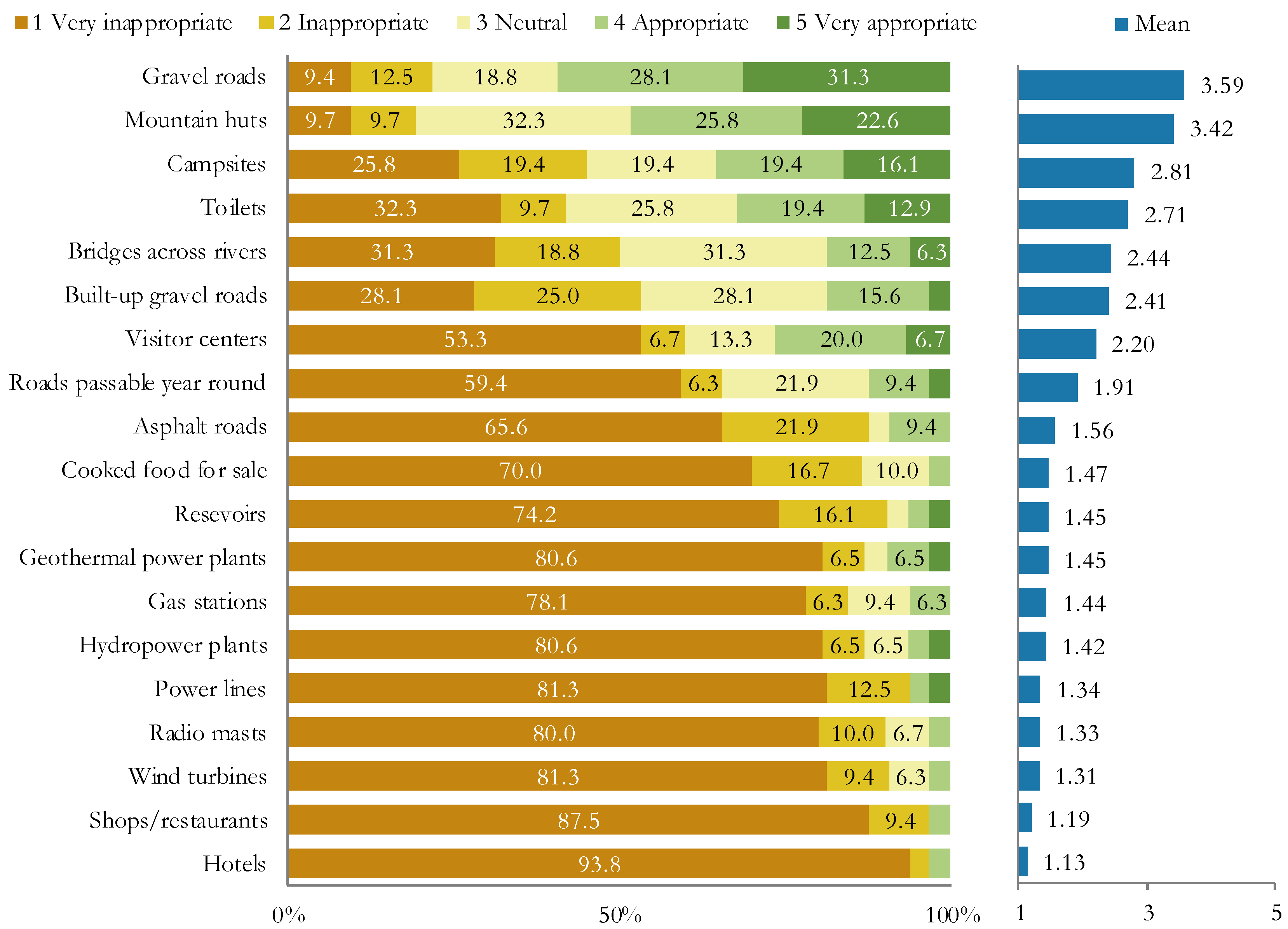
5.4. Visitor Attitudes toward Built Structures in the Area
For the trek I am doing right now I wouldn’t add anything, because it is really that you are bringing your own equipment, that was kind of things I was looking for…so I wouldn’t do anything else. Could there be some infrastructure for some other kind of activities? Why not, but this part should be preserved so that we can continue to have such trek not seeing any impacts, that could be visible in another region. I think it’s quite rare to find such place in a European country.
They need to keep in mind the wilderness and make it a blend, so that they don’t disrupt the beauty and the wilderness that’s here, but certainly if you bring more people in, you do have to think about toilets, you need to think about huts and those type of things, but making sure that it’s used correctly, and the people are mindful of how they utilize the system so that the beauty remains and is not destroyed. In the U.S. they allowed it to happen and then had to fix it. It would be nice to do it correctly from the beginning, then you don’t have problems that arise from too many people coming into an area.
If you develop this up, then you are going to run a risk of damaging. This environment does not repair itself. Nothing grows here, so I would say you don’t want any infrastructure in this environment here. If you put in trails someone will say: if you have a trail it will help to preserve the environment, people just wouldn’t wander all over the place, but trails will have more people, right now you don’t have a lot of people coming through here.
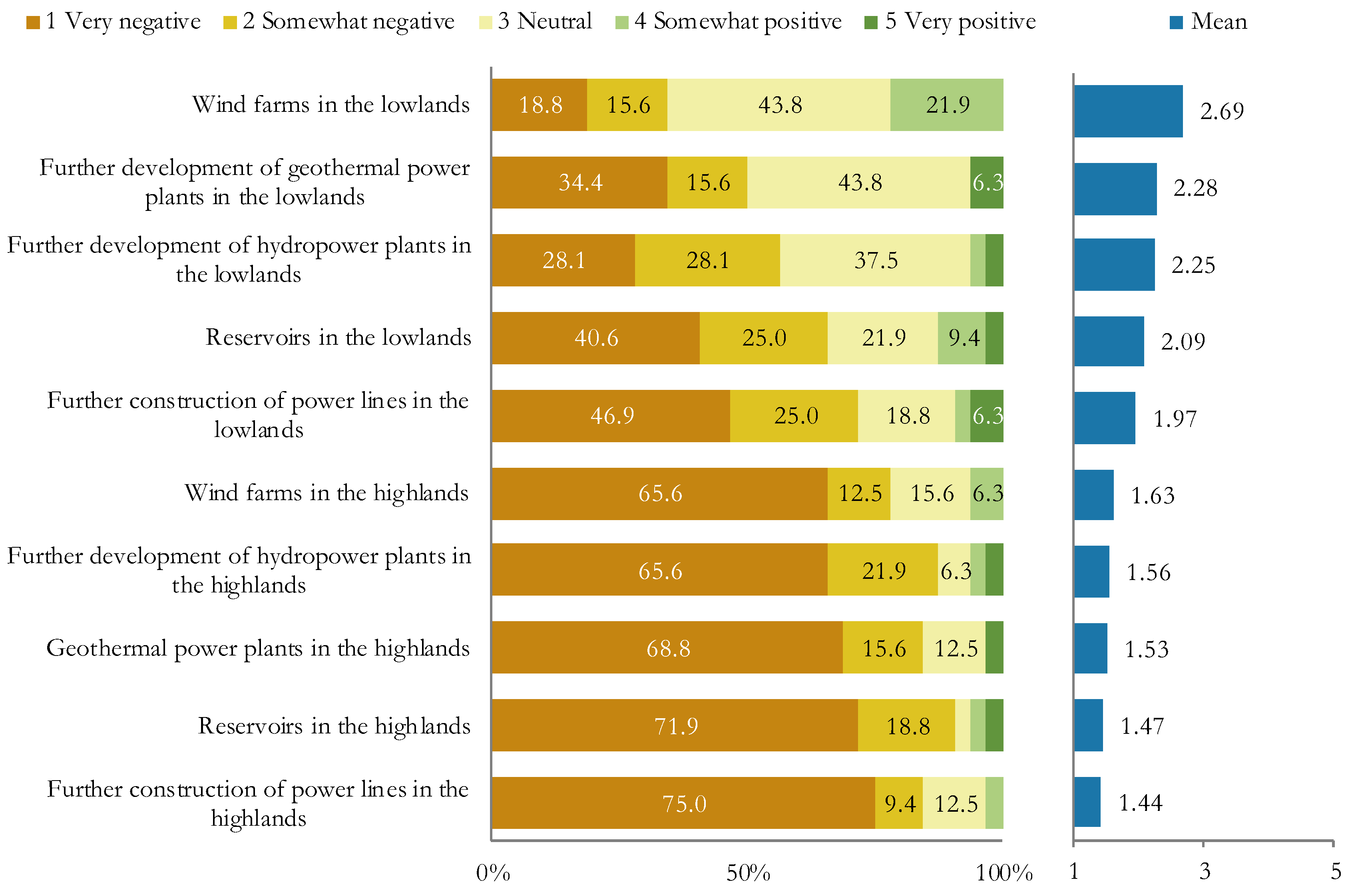
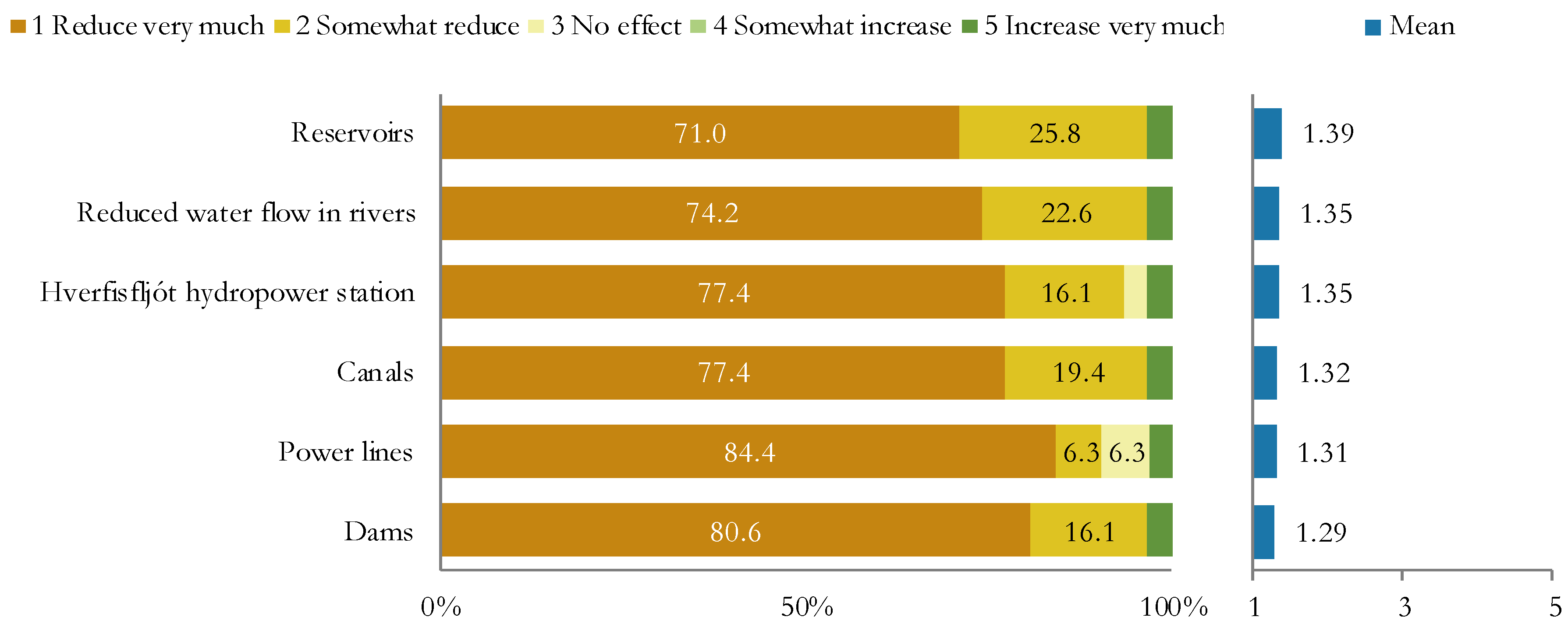
5.5. Visitor Attitudes toward Renewable Energy Infrastructure
At the moment it is untouched, the only thing we see is our own footprints and they go with the rain after a couple of days. So, you would be walking through such an unspoiled place to find a big dam, powerlines coming from it, it would absolutely ruin it.
I think that this project would be destructive to the nature. The problem with a project like this is that we don’t think about the long-term consequences, about the infrastructure, and the effects on the natural evolution of the lake and how everything is connected, all the ecosystems are connected. If you affect one, it will have an impact on another. …It is all interconnected in the long term, and it is important to resist the outsiders’ financial powers that push for investments in projects like that.
I’m not from here, I just think, if you have a little bit of nature, save it as best as you can, … but I understand if people have to work and have a living, but nature is just so, they are not building any more of it. I would just hate for the nature you guys already have, the environment, to get smaller, to be ruined.
For me from what I saw yesterday, there must be other places that are already built up that could have a power plant near the city or some of the smaller villages, but when it’s a whole natural area with nothing in it, I don’t think there is any need to build.
If you ask us as tourists, we definitely say we don’t want to have the plant, we don’t want to have the dams, we don’t want to have the reservoirs, but we don’t have enough information to evaluate why they are considering this construction, what will be the major advantage of having this.
I don’t think it would change my mind, but it would be just spoiled by having man-made things, by the construction in the places where there is nothing at the moment. I don’t think it would change my mind though.
6. Discussion
6.1. The Study Area as Perceived by Visitors
6.2. Hydropower Infrastructure and Tourism in a Wilderness Landscape
7. Conclusions
Author Contributions
Funding
Acknowledgments
Conflicts of Interest
References
- UN General Assembly. Transforming our World: The 2030 Agenda for Sustainable Development A/RES/70/1; United Nations: New York, NY, USA, 2015. [Google Scholar]
- REN21. Renewables 2019 Global Status Report; REN21 Secretariat: Paris, France, 2019. [Google Scholar]
- Gibson, L.; Wilman, E.N.; Laurance, W.F. How green is ‘green’ energy? Trends Ecol. Evol. 2017, 32, 922–935. [Google Scholar] [CrossRef] [PubMed]
- Zarfl, C.; Lumsdon, A.E.; Berlekamp, J.; Tydecks, L.; Tockner, K. A global boom in hydropower dam construction. Aquat. Sci. 2015, 77, 161–170. [Google Scholar] [CrossRef]
- Ranzani, A.; Bonato, M.; Patro, E.R.; Gaudard, L.; de Michele, C. Hydropower future: Between climate change, renewable deployment, carbon and fuel prices. Water 2018, 10, 1197. [Google Scholar] [CrossRef]
- Killingtveit, Å. Hydropower. In Managing Global Warming; Letcher, T.M., Ed.; Academic Press: London, UK, 2019; pp. 265–315. [Google Scholar]
- da Luz, T.; Moura, P. Power generation expansion planning with complementarity between renewable sources and regions for 100% renewable energy systems. Int. Trans. Electr. Energy Syst. 2019, 29, e2817. [Google Scholar] [CrossRef]
- International Hydropower Association (IHA). 2018 Hydropower Status Report: Sector Trends and Insights; Hydropower Association: London, UK, 2018. [Google Scholar]
- Bruckner, T.; Bashmakov, I.A.; Mulugetta, Y.; Chum, H.; de la Navarro, A.V.; Edmonds, J.; Faaij, A.; Fungtammasan, B.; Zhang, X.; Honnery, D.; et al. Energy systems. In Mitigation of Climate Change. Contribution of Working Group III to the Fifth Assessment Report of the Intergovernmental Panel on Climate Change; Edenhofer, O., Pichs-Madruga, R., Sokona, Y., Farahani, E., Kadner, S., Seyboth, K., Adler, A., Baum, I., Brunner, S., Eickemeier, P., et al., Eds.; Cambridge University Press: Cambridge, UK, 2014. [Google Scholar]
- Chen, S.; Chen, B.; Fath, B.D. Assessing the cumulative environmental impact of hydropower construction on river systems based on energy network model. Renew. Sustain. Energy Rev. 2015, 42, 78–92. [Google Scholar] [CrossRef]
- Abbasi, S.A.; Abbasi, N. The likely adverse environmental impacts of renewable energy sources. Appl. Energy 2000, 65, 121–144. [Google Scholar] [CrossRef]
- VanZwieten, J.; McAnally, W.; Ahmad, J.; Davis, T.; Martin, J.; Bevelhimer, M.; Cribbs, A.; Lippert, R.; Hudon, T.; Trudeau, M. In-stream hydrokinetic power: Review and appraisal. J. Energy Eng. 2015, 141, 04014024. [Google Scholar] [CrossRef]
- Moran, E.F.; Lopez, M.C.; Moore, N.; Müller, N.; Hyndman, D.W. Sustainable hydropower in the 21st century. Proc. Natl. Acad. Sci. USA 2018, 115, 11891–11898. [Google Scholar] [CrossRef]
- Botelho, A.; Ferreira, P.; Lima, F.; Pinto, L.M.C.; Sousa, S. Assessment of the environmental impacts associated with hydropower. Renew. Sustain. Energy Rev. 2017, 70, 896–904. [Google Scholar] [CrossRef]
- Stefánsson, Þ.; Sæþórsdóttir, A.D.; Hall, C.M. When tourists meet transmission lines: The effects of electric transmission lines on tourism in Iceland. Energy Res. Soc. Sci. 2017, 34, 82–92. [Google Scholar] [CrossRef]
- Sæþórsdóttir, A.D. Tourism struggling as the Icelandic wilderness is developed. Scand. J. Hosp. Tour. 2010, 10, 334–357. [Google Scholar] [CrossRef]
- Sæþórsdóttir, A.D. Preserving wilderness at an emerging tourist destination. J. Manag. Sustain. 2014, 4, 65–78. [Google Scholar] [CrossRef]
- National Energy Authority (NEA). OS-2019-T006-01: Installed Capacity and Electricity Production in Icelandic Power Stations in 2018; National Energy Authority: Reykjavik, Iceland, 2019. [Google Scholar]
- Ministry for the Environment and Natural Resources. The current Master Plan. Parliamentary Resolution on the Plan for Nature Protection and Energy Utilisation. Available online: http://www.ramma.is/english/the-master-plan-today/current-master-plan/ (accessed on 9 September 2019).
- Sæþórsdóttir, A.D.; Tverijonaite, E.; Ólafsdóttir, R. Attitudes of Tourists and the Tourism Industry towards the Proposed Hydro Power Plant in Hverfisfljót River in Skaftárhreppur; Institute of Life and Environmental Sciences, University of Iceland: Reykjavik, Iceland, 2019; Available online: http://www.ramma.is/media/rannsoknir/Hverfisfljot_Report_final.pdf (accessed on 9 September 2019).
- Husserl, E. Logical Investigations; Humanities Press: New York, NY, USA, 1970. [Google Scholar]
- Pereira, A.P.C.; Long, J. The social dynamics of space constructions and leisure lifestyles. In Landscapes of Leisure. Space, Place and Identities; Gammon, S., Elkington, S., Eds.; Palgrave Macmillan: London, UK, 2015; pp. 41–54. [Google Scholar]
- Bauman, Z.; May, T. Thinking Sociologically; Blackwell: Maldon, MA, USA, 2001. [Google Scholar]
- Hutson, G.; Howard, R. Weaving place meanings into outdoor recreation sustainability: The case of the Niagara Glen. In Landscapes of Leisure. Space, Place and Identities; Gammon, S., Elkington, S., Eds.; Palgrave Macmillan: London, UK, 2015; pp. 176–191. [Google Scholar]
- Smale, B. Critical perspectives on place in leisure research. Leisure/Loisir 2006, 30, 369–382. [Google Scholar] [CrossRef]
- Tuan, Y.-F. Space and Place: The Perspective of Experience; University of Minnesota Press: Minneapolis, MN, USA, 1977. [Google Scholar]
- Stedman, R.C. Is it really just a social construction? The contribution of the physical environment to sense of place. Soc. Nat. Resour. 2003, 16, 671–685. [Google Scholar] [CrossRef]
- Manzo, L.C. For better or worse: Exploring multiple dimensions of place meaning. J. Environ. Psychol. 2005, 25, 67–86. [Google Scholar] [CrossRef]
- Kyle, G.; Chick, G. The social construction of a sense of place. Leis. Sci. 2007, 29, 209–225. [Google Scholar] [CrossRef]
- Cheng, A.S.; Kruger, L.E.; Daniels, S.E. “Place” as an integrating concept in natural resource politics: Propositions for a social science research agenda. Soc. Nat. Resour. 2003, 16, 87–104. [Google Scholar] [CrossRef]
- Duncan, J.S.; Duncan, N.G. The aestheticization of the politics of landscape preservation. Ann. Assoc. Am. Geogr. 2001, 91, 387–409. [Google Scholar] [CrossRef]
- Greider, T.; Garkovich, L. Landscapes: The social construction of nature and the environment. Rural Sociol. 1994, 59, 1–24. [Google Scholar] [CrossRef]
- Knudsen, D.C.; Metro-Roland, M.M.; Soper, A.K.; Greer, C. Landscape, tourism, and meaning: A conclusion. In Landscape, Tourism, and Meaning; Knudsen, D.C., Metro-Roland, M.M., Soper, A.K., Greer, C.E., Eds.; Ashgate Publishing Limited: Hampshire, UK, 2008; pp. 131–134. [Google Scholar]
- Eisenhauer, B.W.; Krannich, R.S.; Blahna, D.J. Attachments to special places on public lands: An analysis of activities, reason for attachments, and community connections. Soc. Nat. Resour. 2000, 13, 421–441. [Google Scholar] [CrossRef]
- Davenport, M.A.; Anderson, D.H. Getting from sense of place to place-based management: An interpretive investigation of place meanings and perceptions of landscape change. Soc. Nat. Resour. 2005, 18, 625–641. [Google Scholar] [CrossRef]
- Devine-Wright, P.; Howes, Y. Disruption to place attachment and the protection of restorative environments: A wind energy case study. J. Environ. Psychol. 2010, 30, 271–280. [Google Scholar] [CrossRef]
- Devine-Wright, P. Rethinking NIMBYism: The role of place attachment and place identity in explaining place-protective action. J. Community Appl. Soc. Psychol. 2009, 19, 426–441. [Google Scholar] [CrossRef]
- Kil, N.; Stein, T.V.; Holland, S.M.; Anderson, D.H. Understanding place meanings in planning and managing the wildland–urban interface: The case of Florida trail hikers. Landsc. Urban Plan. 2012, 107, 370–379. [Google Scholar] [CrossRef]
- Council of Europe. European Landscape Convention; CETS No. 176; Council of Europe: Strasbourg, France, 2000. [Google Scholar]
- Kühne, O. Landscape and Power in Geographical Space as a Social-Aesthetic Construct; Springer International Publishing: Dordrecht, The Netherlands, 2018. [Google Scholar]
- Smardon, R.; Pasqualetti, M.J. Social acceptance of renewable energy landscapes. In The Renewable Energy Landscape: Preserving Scenic Values in our Sustainable Future; Apostol, D., Palmer, J., Pasqualetti, M., Smardon, R., Sullivan, R., Eds.; Routledge: New York, NY, USA, 2017; pp. 108–142. [Google Scholar]
- Pröbstl, U.; Jiricka, A.; Hindinger, F. Renewable energy in winter sports destinations—Desired, ignored or rejected? In Managing Alpine Future II: Inspire and Drive Sustainable Mountain Regions; Borsdorf, A., Stötter, J., Veuillet, E., Eds.; Austrian Academy of Sciences Press: Vienna, Austria, 2011; pp. 309–318. [Google Scholar]
- Haggett, C. Understanding public responses to offshore wind power. Energy Policy 2011, 39, 503–510. [Google Scholar] [CrossRef]
- Johansson, M.; Laike, T. Intention to respond to local wind turbines: The role of attitudes and visual perception. Wind Energy 2007, 10, 435–451. [Google Scholar] [CrossRef]
- Pasqualetti, M.J.; Gipe, P.; Righter, R.W. Wind Power in View: Energy Landscapes in a Crowded World; Academic Press: New York, NY, USA, 2002. [Google Scholar]
- Wolsink, M. Wind power implementation: The nature of public attitudes: Equity and fairness instead of ‘backyard motives’. Renew. Sustain. Energy Rev. 2007, 11, 1188–1207. [Google Scholar] [CrossRef]
- Wolsink, M. Near-shore wind power—Protected seascapes, environmentalists’ attitudes, and the technocratic planning perspective. Land Use Policy 2010, 27, 195–203. [Google Scholar] [CrossRef]
- Frantál, B.; Kunc, J. Wind turbines in tourism landscapes: Czech experience. Ann. Tour. Res. 2011, 38, 499–519. [Google Scholar] [CrossRef]
- Lilley, M.B.; Firestone, J.; Kempton, W. The effect of wind power installations on coastal tourism. Energies 2010, 3, 1–22. [Google Scholar] [CrossRef]
- Broekel, T.; Alfken, C. Gone with the wind? The impact of wind turbines on tourism demand. Energy Policy 2015, 86, 506–519. [Google Scholar] [CrossRef]
- Frantál, B.; Urbánková, R. Energy tourism: An emerging field of study. Curr. Issues Tour. 2017, 20, 1395–1412. [Google Scholar] [CrossRef]
- Gailing, L.; Leibenath, M. The social construction of landscapes: Two theoretical lenses and their empirical applications. Landsc. Res. 2015, 40, 123–138. [Google Scholar] [CrossRef]
- Hall, T.E. Hikers’ perspectives on solitude and wilderness. Int. J. Wilderness 2001, 7, 20–24. [Google Scholar]
- Cole, D.N.; Hall, T.E. Wilderness Visitors, Experiences, and Management Preferences: How They Vary with Use Level and Length of Stay; Rocky Mountain Research Station, Forest Service, U.S. Department of Agriculture: Fort Collins, CO, USA, 2008. Available online: https://www.fs.fed.us/rm/pubs/rmrs_rp071.pdf (accessed on 9 September 2019).
- Sæþórsdóttir, A.D. Managing popularity: Changes in tourist attitudes in a wilderness destination. Tour. Manag. Perspect. 2013, 7, 47–58. [Google Scholar] [CrossRef]
- Ólafsdóttir, R.; Sæþórsdóttir, A.D.; Runnström, M. Purism scale approach for wilderness mapping in Iceland. In Mapping Wilderness: Spatial Methods and Applications in Mapping and Modelling Wild Landscapes; Carver, S.J., Fritz, S., Eds.; Springer: London, UK, 2015. [Google Scholar]
- Sæþórsdóttir, A.D.; Ólafsdóttir, R.; Smith, D. Turbulent times: tourists’ attitudes towards wind turbines in the Southern Highlands in Iceland. Int. J. Sustain. Energy 2018, 37, 886–901. [Google Scholar] [CrossRef]
- Sæþórsdóttir, A.D.; Saarinen, J. Challenges due to changing ideas of natural resources: Tourism and power plant development in the Icelandic wilderness. Polar Rec. 2016, 52, 82–91. [Google Scholar] [CrossRef]
- Sæþórsdóttir, A.D.; Hall, C.M. Floating away: The impact of hydroelectric power stations on tourists’ experience in Iceland. Sustainability 2018, 10, 2315. [Google Scholar] [CrossRef]
- National Land Survey of Iceland (NLSI). IS50v Geodatabase, Municipalities [IS50V_MORK_17062018_ISN2004] (data updated 17th June 2018). 2018. Available online: http://atlas.lmi.is/LmiData/index.php?id=1805547497832 (accessed on 18 October 2019).
- Statistics Iceland. Municipalities and Urban Nuclei. 2019. Available online: https://www.statice.is/statistics/population/inhabitants/municipalities-and-urban-nuclei/ (accessed on 9 September 2019).
- Sæþórsdóttir, A.D.; Stefánsson, Þ. Ferðaþjónusta og virkjanir til bjargar byggðum? Can tourism and power plants aid rural communities? Tímarit Um Viðskipti Og Efnahagsmál 2017, 14. [Google Scholar] [CrossRef]
- Þórhallsdóttir, G.; Ólafsson, R. Fjöldi Gesta í Vatnajökulsþjóðgarði frá Upphafi Talninga út Árið 2017 (Number of Visitors to Vatnajökull National Park from the Beginning of Record-Keeping Until 2017); Vatnajökull National Park: Reykjavík, Iceland, 2018. [Google Scholar]
- Thordarson, T.; Self, S. The Laki (Skaftár Fires) and Grímsvötn eruptions in 1783–1785. Bull. Volcanol. 1993, 55, 233–263. [Google Scholar] [CrossRef]
- Kiernan, K.; Wood, C.; Middleton, G. Aquifer structure and contamination risk in lava flows: Insights from Iceland and Australia. Environ. Geol. 2003, 43, 852–865. [Google Scholar] [CrossRef]
- National Energy Authority (NEA). R3115A Hverfisfljótsvirkjun. Viðauki 15 af 92 við Skýrslu Orkustofnunar OS-2015/04. Virkjunarkostir til umfjöllunar í 3. áfanga rammaáætlunar; National Energy Authority: Reykjavik, Iceland, 2015. [Google Scholar]
- Booth, K.L. Review of Visitor Research for the Department of Conservation; Department of Conservation: Wellington, New Zealand, 2005.
- Hall, C.M. (Ed.) Fieldwork in Tourism: Methods, Issues and Reflections; Routledge: Abington, UK, 2010. [Google Scholar]
- Higham, J. Sustaining the physical and social dimensions of wilderness tourism: The perceptual approach to wilderness management in New Zealand. J. Sustain. Tour. 1998, 6, 26–51. [Google Scholar] [CrossRef]
- Hall, C.M.; Ram, Y.; Shoval, N.E. The Routledge International Handbook of Walking; Routledge: Abingdon, UK, 2017. [Google Scholar]
- Bryman, A. Social Research Methods, 5th ed.; Oxford University Press: New York, NY, USA, 2016. [Google Scholar]
- Berg, B. (Ed.) A dramaturgical look at interviewing. In Qualitative Research Methods for the Social Sciences, 7th ed.; Pearson: London, UK, 2009; pp. 101–157. [Google Scholar]
- Waller, V.; Farquharson, K.; Dempsey, D. Qualitative Social Research: Contemporary Methods for the Digital Age; SAGE Publications: London, UK, 2016. [Google Scholar]
- Sheble, L.; Wildemuth, B.M. Research diaries. In Applications of Social Research Methods to Questions in Information and Library Science; Wildemuth, B.M., Ed.; Libraries Unlimited: Westport, CT, USA, 2009; pp. 211–221. [Google Scholar]
- Kawulich, B.B. Participant observation as a data collection method. Forum Qual. Soc. Res. 2005, 6, art.43. [Google Scholar]
- DeWalt, K.M.; DeWalt, B.R. Participant Observation: A Guide for Fieldworkers; Altamira: New York, NY, USA, 2002. [Google Scholar]
- Creswell, J.W.; Poth, C.N. Qualitative Inquiry and Research Design: Choosing Among Five Approaches; Sage Publications: Thousand Oaks, CA, USA, 2017. [Google Scholar]
- Prayag, G. Mixed methods in tourism: Philosophical assumptions and key research design issues. In Handbook of Research Methods for Tourism and Hospitality Management; Nunkoo, R., Ed.; Edward Elgar Publishing: Cheltenham, UK, 2018; p. 363. [Google Scholar]
- Creswell, J.W. Educational Research: Planning, Conducting, and Evaluating Quantitative and Qualitative Research; Pearson/Merrill Prentice Hall: Upper Saddle River, NJ, USA, 2008. [Google Scholar]
- Joffe, H. Thematic analysis. In Qualitative Research Methods in Mental Health and Psychotherapy; Harper, D., Thompson, A.R., Eds.; John Willey & Sons: Oxford, UK, 2011; pp. 209–223. [Google Scholar]
- Bevk, T.; Golobič, M. What fits where? Landscape approach to renewable energy development. In Renewable Energy and Landscape Quality; Roth, M., Eiter, S., Röhner, S., Kruse, A., Schmitz, S., Frantál, B., Centeri, C., Frolova, M., Buchecker, M., Stober, D., et al., Eds.; Jovis Verlag GmbH: Berlin, Germany, 2018; pp. 139–144. [Google Scholar]
- Frantál, B.; van der Horst, D.; Martinát, S.; Schmitz, S.; Teschner, N.; Silva, L.; Golobic, M.; Roth, M. Developing renewables in crowded landscapes: In search of international smart practice. In Renewable Energy and Landscape Quality; Roth, M., Eiter, S., Röhner, S., Kruse, A., Schmitz, S., Frantál, B., Centeri, C., Frolova, M., Buchecker, M., Stober, D., et al., Eds.; Jovis Verlag GmbH: Berlin, Germany, 2018; pp. 145–151. [Google Scholar]
- Apostol, D.; McCarty, J.; Sullivan, R. Improving the visual fit of renewable energy projects. In The Renewable Energy Landscape: Preserving Scenic Values in our Sustainable Future; Apostol, D., Palmer, J., Pasqualetti, M., Smardon, R., Sullivan, R., Eds.; Routledge: New York, NY, USA, 2017; pp. 176–197. [Google Scholar]
- Miller, D. Transformations in European energy landscapes: Towards 2030 targets. In Renewable Energy and Landscape Quality; Roth, M., Eiter, S., Röhner, S., Kruse, A., Schmitz, S., Frantál, B., Centeri, C., Frolova, M., Buchecker, M., Stober, D., et al., Eds.; Jovis Verlag GmbH: Berlin, Germany, 2018; pp. 214–225. [Google Scholar]
- Benediktsson, K.; Waage, E.R.H. Iceland. In Renewable Energy and Landscape Quality; Roth, M., Eiter, S., Röhner, S., Kruse, A., Schmitz, S., Frantál, B., Centeri, C., Frolova, M., Buchecker, M., Stober, D., et al., Eds.; Jovis Verlag GmbH: Berlin, Germany, 2018; pp. 48–51. [Google Scholar]
- Watson, J.E.M.; Shanahan, D.F.; di Marco, M.; Allan, J.; Laurance, W.F.; Sanderson, E.W.; Mackey, B.; Venter, O. Catastrophic declines in wilderness areas undermine global environment targets. Curr. Biol. 2016, 26, 2929–2934. [Google Scholar] [CrossRef] [PubMed]




| Most Fascinating Characteristics of the Area | % | Reasons for Visiting the Area | % |
|---|---|---|---|
| Unspoiled nature/wilderness | 32.3 | Hiking/trekking/backpacking | 28.1 |
| Views | 32.3 | Nature | 25.0 |
| Beautiful nature/landscape | 29.0 | Mountain biking | 18.8 |
| Geology | 29.0 | Caving | 18.8 |
| Diversity | 22.6 | The waterfalls of Hverfisfljót | 12.5 |
| Hverfisfljót and its waterfalls | 22.6 | Experiencing wilderness | 9.4 |
| Unique nature | 16.1 | Volcanic landscape | 9.4 |
| Peace | 12.9 | Challenge | 9.4 |
© 2019 by the authors. Licensee MDPI, Basel, Switzerland. This article is an open access article distributed under the terms and conditions of the Creative Commons Attribution (CC BY) license (http://creativecommons.org/licenses/by/4.0/).
Share and Cite
Tverijonaite, E.; Sæþórsdóttir, A.D.; Ólafsdóttir, R.; Hall, C.M. Renewable Energy in Wilderness Landscapes: Visitors’ Perspectives. Sustainability 2019, 11, 5812. https://doi.org/10.3390/su11205812
Tverijonaite E, Sæþórsdóttir AD, Ólafsdóttir R, Hall CM. Renewable Energy in Wilderness Landscapes: Visitors’ Perspectives. Sustainability. 2019; 11(20):5812. https://doi.org/10.3390/su11205812
Chicago/Turabian StyleTverijonaite, Edita, Anna Dóra Sæþórsdóttir, Rannveig Ólafsdóttir, and C. Michael Hall. 2019. "Renewable Energy in Wilderness Landscapes: Visitors’ Perspectives" Sustainability 11, no. 20: 5812. https://doi.org/10.3390/su11205812
APA StyleTverijonaite, E., Sæþórsdóttir, A. D., Ólafsdóttir, R., & Hall, C. M. (2019). Renewable Energy in Wilderness Landscapes: Visitors’ Perspectives. Sustainability, 11(20), 5812. https://doi.org/10.3390/su11205812