Article

A Vulnerability Assessment of Urban Emergency in Schools of Shanghai

1
Faculty of Education, East China Normal University, Shanghai 200062, China
2
Key Laboratory of Geographic Information Science (Ministry of Education), East China Normal University, Shanghai 200241, China
3
Institute of Eco-Chongming, East China Normal University, Shanghai 200062, China
4
Department of Geography, Loughborough University, Loughborough LE11 3TU, UK
5
School of Environmental and Geographical Sciences, Shanghai Normal University, Shanghai 200234, China
*
Author to whom correspondence should be addressed.
Sustainability 2019, 11(2), 349; https://doi.org/10.3390/su11020349
Submission received: 16 December 2018 / Revised: 30 December 2018 / Accepted: 8 January 2019 / Published: 11 January 2019
(This article belongs to the Special Issue Sustainable Urban and Regional Management)

Abstract

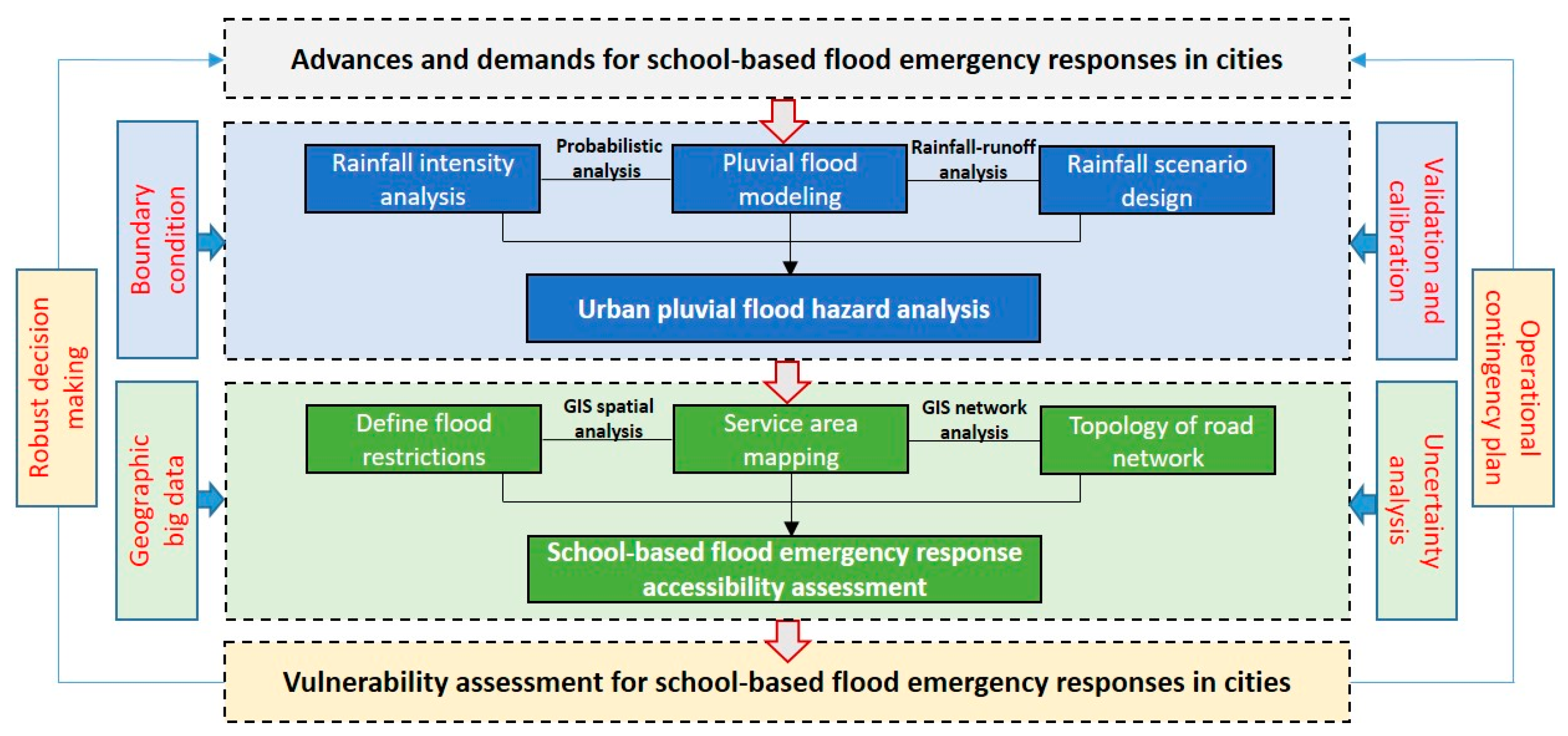
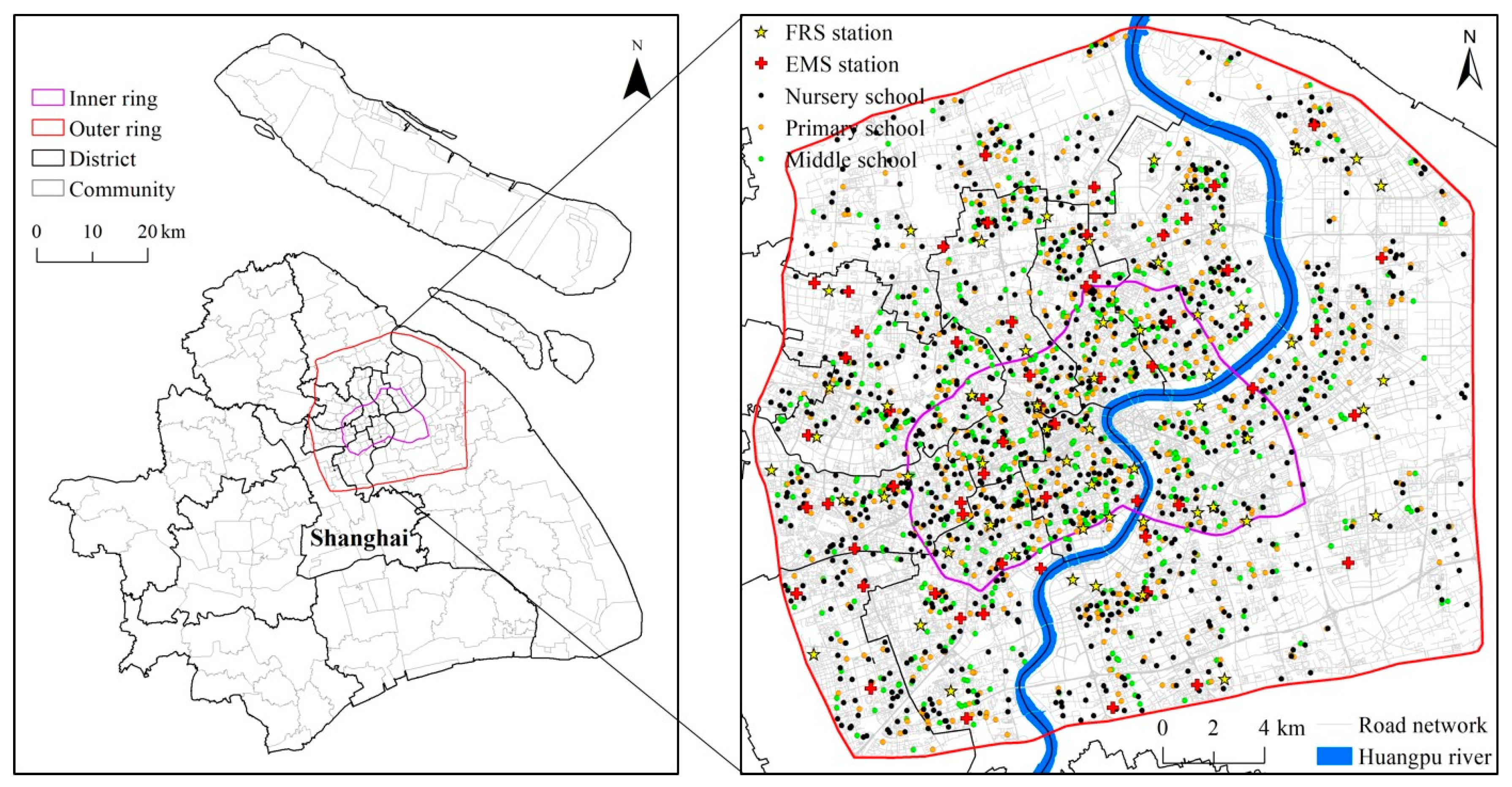
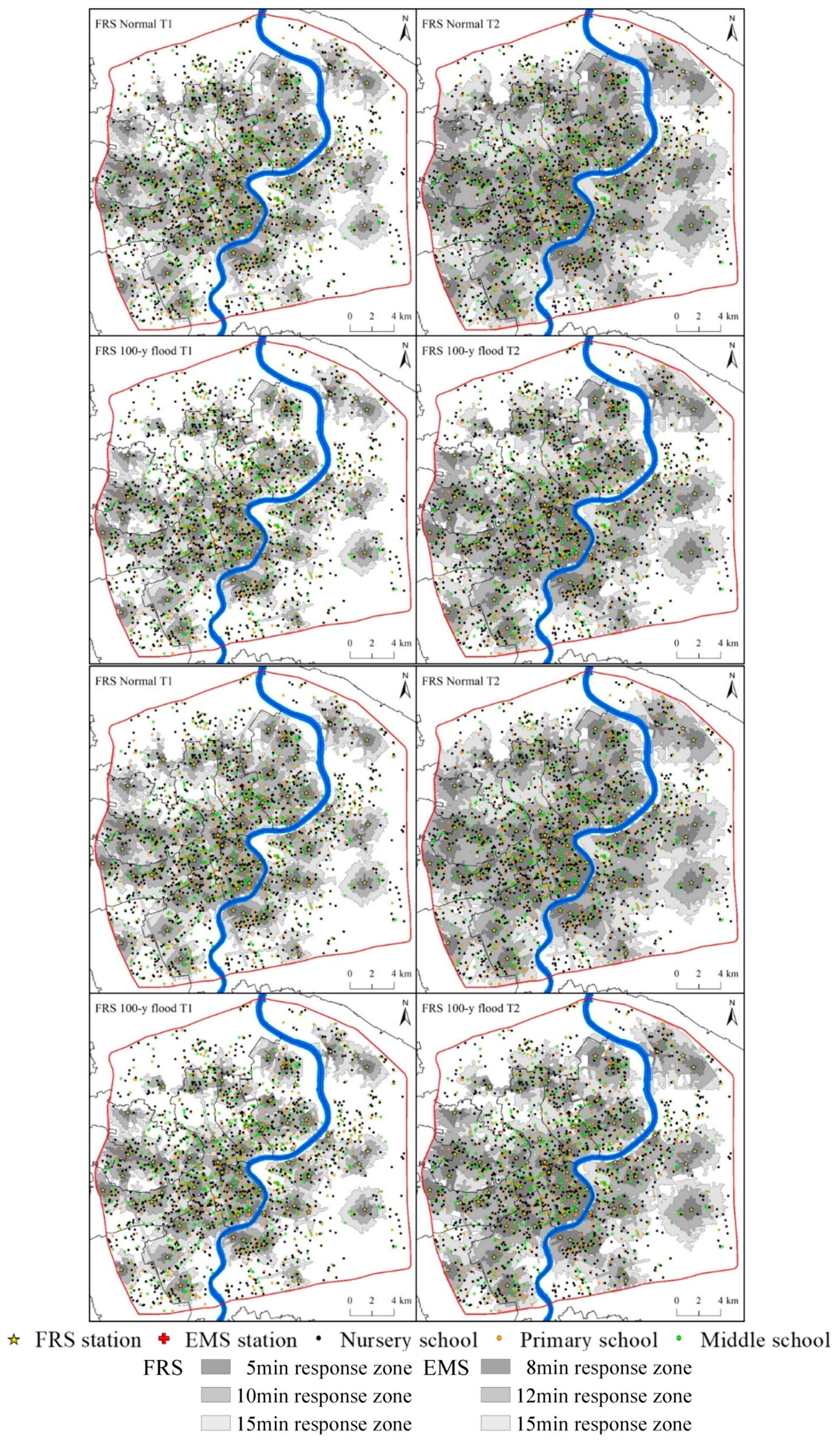
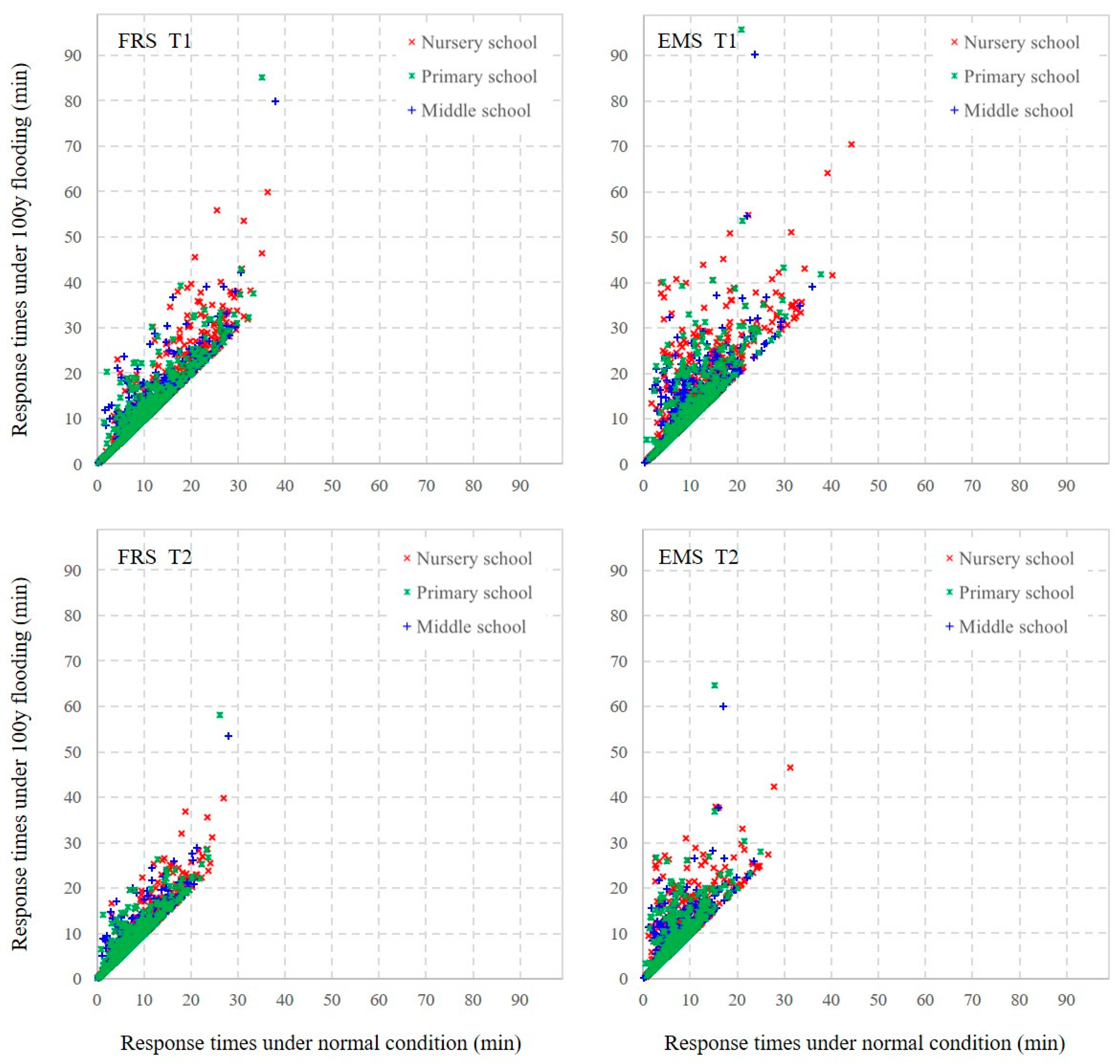
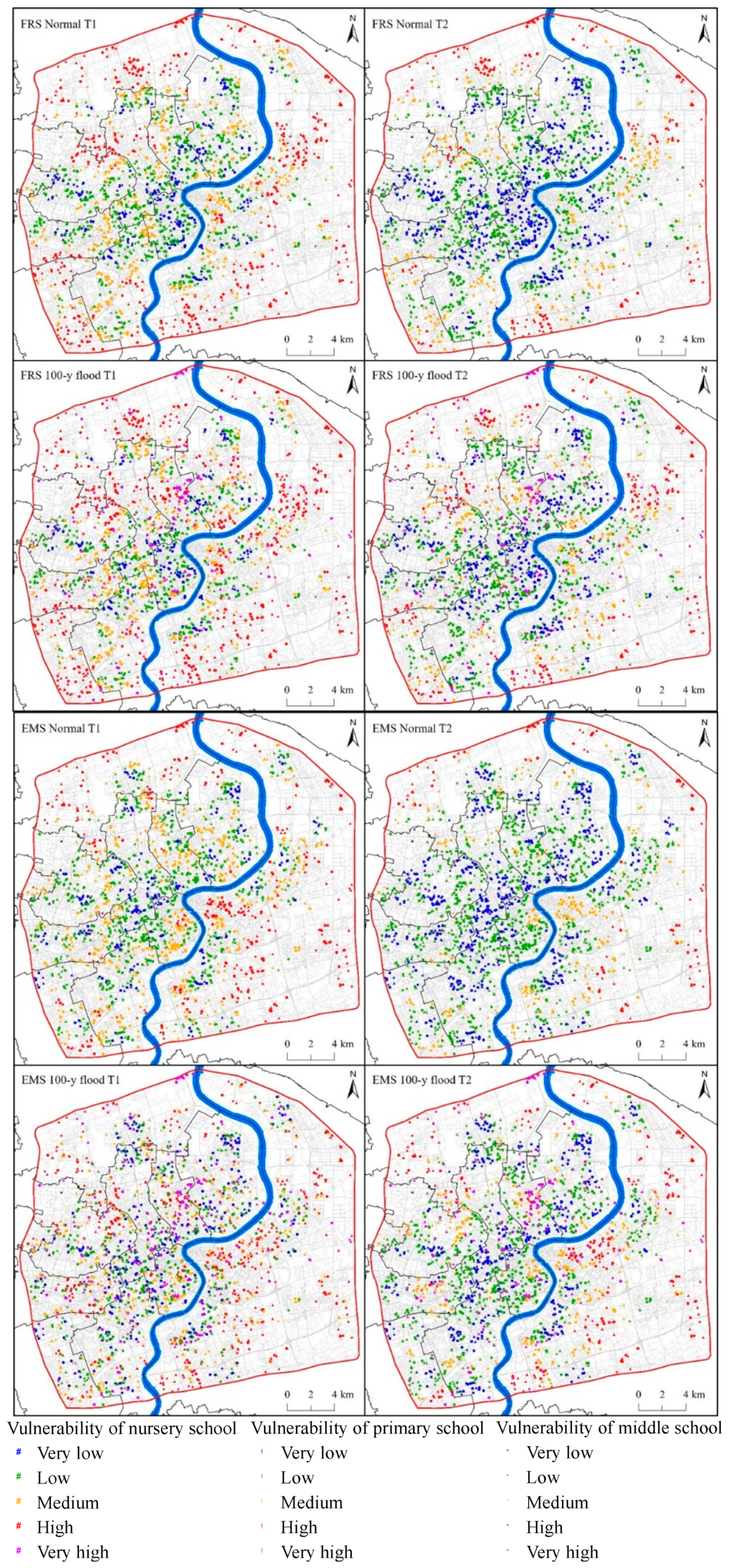
Schools and students are particularly vulnerable to natural hazards, especially pluvial flooding in cities. This paper presents a scenario-based study that assesses the school vulnerability of emergency services (i.e., Emergency Medical Service and Fire & Rescue Service) to urban pluvial flooding in the city center of Shanghai, China through the combination of flood hazard analysis and GIS-based accessibility mapping. Emergency coverages and response times in various traffic conditions are quantified to generate school vulnerability under normal no-flood and 100-y pluvial flood scenarios. The findings indicate that severe pluvial flooding could lead to proportionate and linear impacts on emergency response provision to schools in the city. Only 11% of all the schools is predicted to be completely unreachable (very high vulnerability) during flood emergency but the majority of the schools would experience significant delay in the travel times of emergency responses. In this case, appropriate adaptations need to be particularly targeted for specific hot-spot areas (e.g., new urbanized zones) and crunch times (e.g., rush hours).
Keywords: emergency response; vulnerability assessment; schools and students; pluvial flooding; Shanghai emergency response; vulnerability assessment; schools and students; pluvial flooding; Shanghai