Article

Environmental Concern, Income, and Nature Experience in India


Georg-August Universität Göttingen, Platz der Göttinger Sieben 5, 37073 Göttingen, Germany
*
Author to whom correspondence should be addressed.
Sustainability 2019, 11(2), 346; https://doi.org/10.3390/su11020346
Submission received: 16 November 2018 / Revised: 14 December 2018 / Accepted: 9 January 2019 / Published: 11 January 2019

Abstract

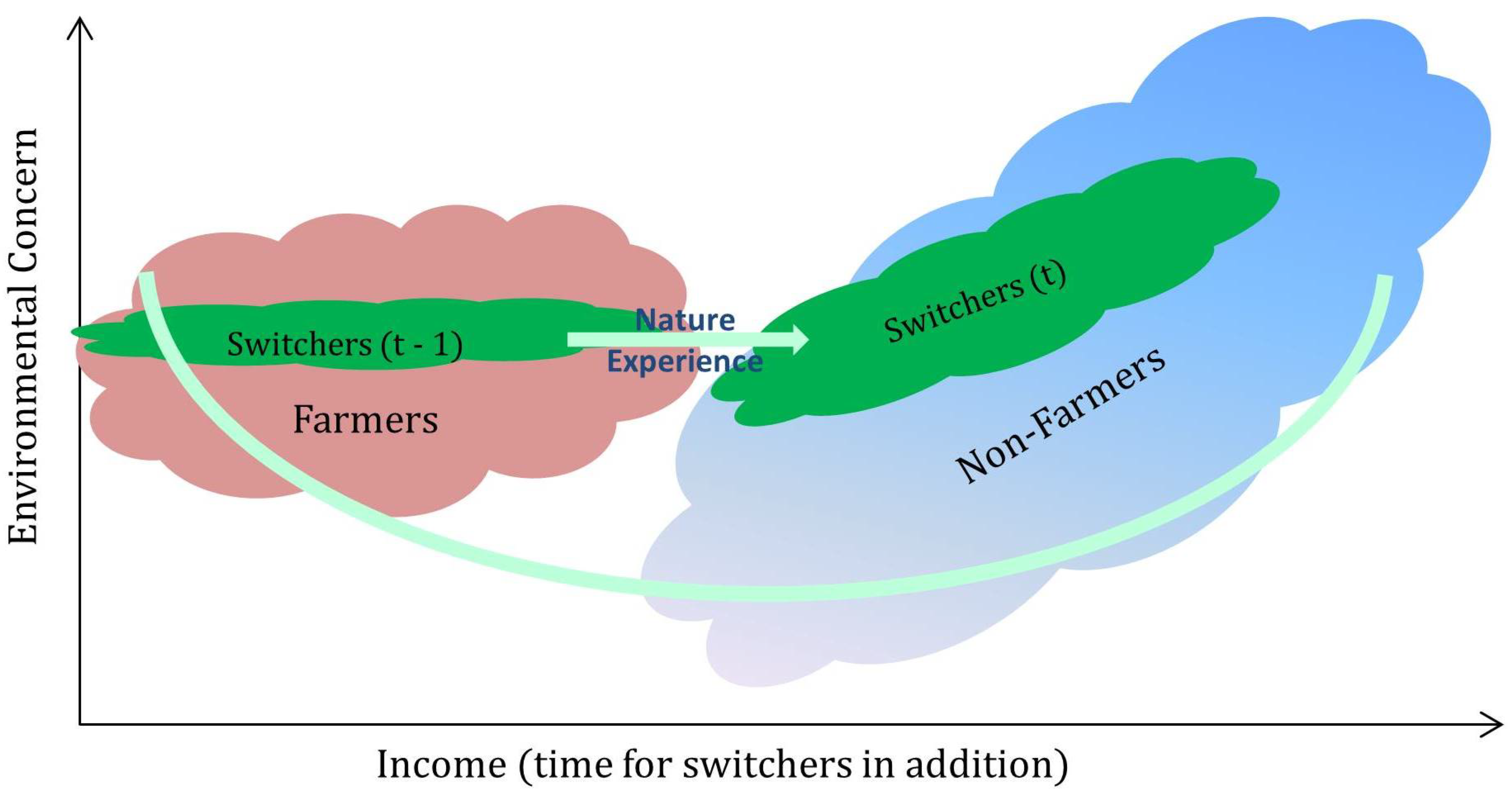
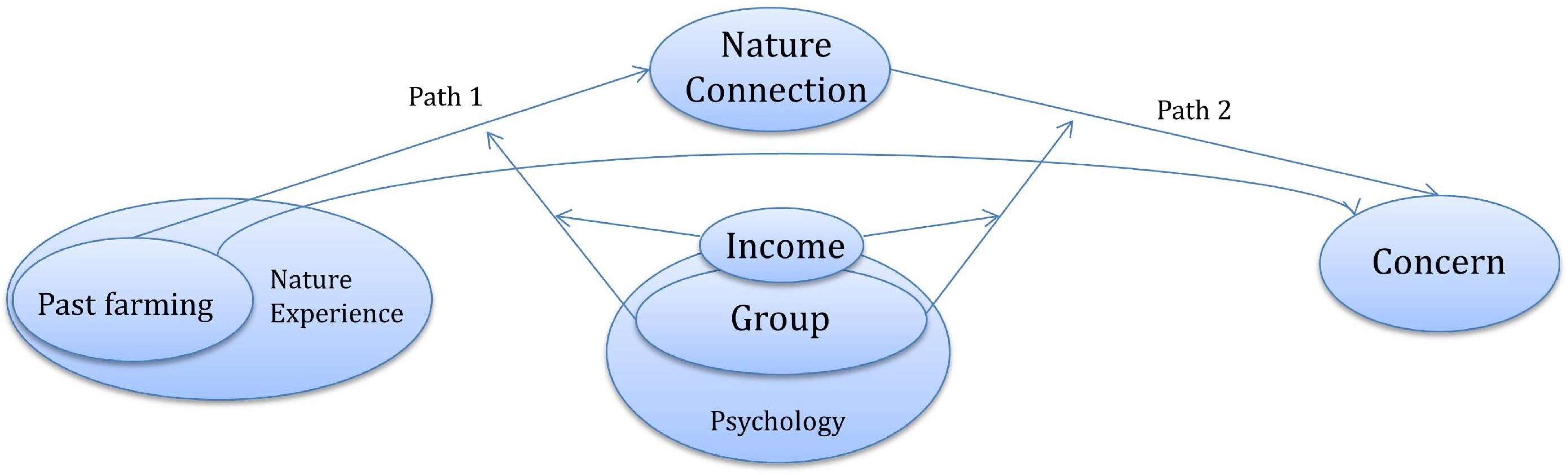
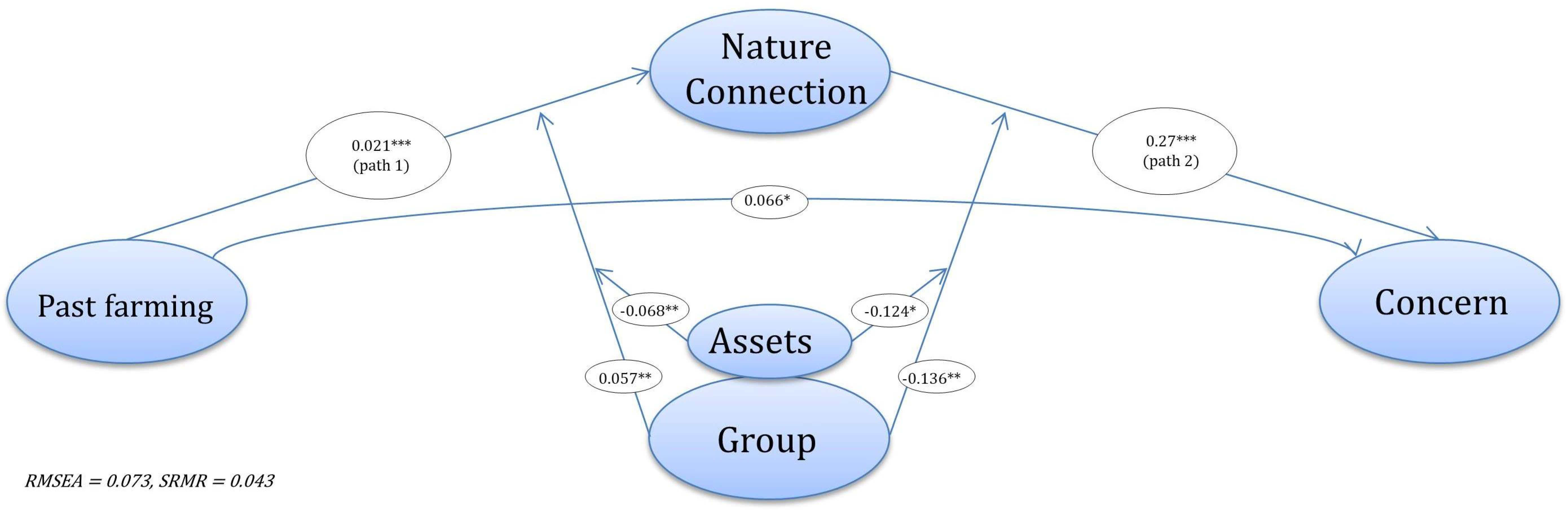
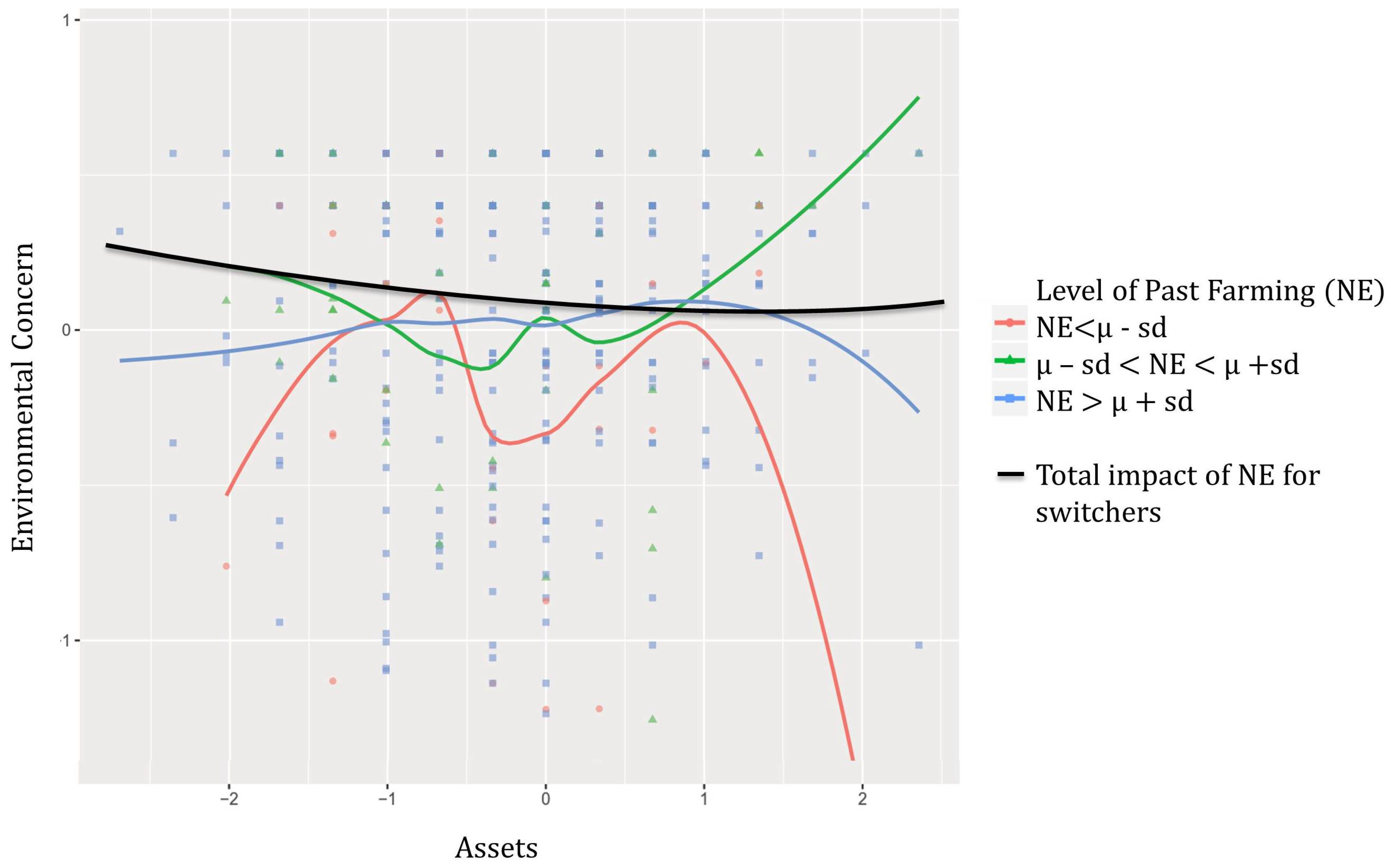
The relationship between income and environmental concern has only in some samples been found to mirror an Environmental Kuznets curve of pollution behavior by U-shaped preferences. Inconclusive aggregate findings may be due to the differential presence of mechanisms causing a linear relationship, or a psychological equivalent to tunneling maximum pollution. We enquire into determinants of such a mechanism previously unrelated to income-concern literature, which could arise from persistent influence of environmentalism of the poor through economic development, until affluence and postmaterialist values become effective. It is empirically captured as influence of past nature experience on concern at critical intermediate income, retained by individuals that have abandoned farming and advanced to such income. The resultant moderated mediation model is calibrated on representative survey data from highly heterogeneous, urbanizing India. Our results explain pollution behavior within this middle-income country by a corresponding, U-shaped income-concern relationship. However, in addition, this relationship is hidden by bridging, i.e., particularly pronounced influence of past nature experience at middle-income for individuals that switched out of farming. Policy leverage may thus derive from reducing the attitude-behavior gap in India and fostering persistent positive nature experience elsewhere.
Keywords: Environmental Kuznets Curve; Tunneling; Environmentalism of the Poor; Nature Experience; Environmental Concern Environmental Kuznets Curve; Tunneling; Environmentalism of the Poor; Nature Experience; Environmental Concern