Abstract
A sustainable and environmentally friendly society is developing rapidly, in which pavement engineering is an essential part. Therefore, more attention has been paid toward waste utilization and urban noise pollution in road construction. The object of this study was not only to investigate the mix proportion of waste crumb modified asphalt mixtures with diatomite and basalt fiber but also to evaluate the comprehensive performances including sound and vibration absorption of modified asphalt mixtures. Firstly, the mix proportion scheme was designed based on Marshall indices and sound and vibration absorption properties according to the orthogonal experimental method. Considering the specification requirements, as well as better performances, the optimal mix proportion was determined as follows: diatomite content at 7.5%, basalt fiber content at 0.3%, and asphalt-aggregate ratio at 5.5%. The range and variance analysis results indicated that asphalt-aggregate ratio has the most significant influence on volumetric parameters, diatomite has the most significant influence on sound absorption, and basalt fiber has the most significant influence on vibration reduction. Furthermore, the conventional pavement performances and sustainable sound and vibration absorption performances of modified asphalt mixtures were also analyzed. The results showed that the performances of modified asphalt mixtures were improved to different extents compared to the base asphalt mixture. This may be attributed to the microporous structure property of diatomite and the spatial network structure formed by basalt fibers. The pavement as well as sound and vibration absorption performances of the waste crumb modified asphalt mixture with diatomite and basalt fiber would be a good guidance for asphalt pavement design.
1. Introduction
Modern pavements not only need to satisfy the mechanical performances but they also need meet the requirements of service performances in regard to security, smoothness, comfortable driving, and environmental effects according to different traffic environments. Compared with cement concrete pavement, asphalt pavement produces less road noise and is more comfortable to drive [1,2]. The performance of asphalt pavement is still a hot and difficult point in the field of pavement engineering. Nowadays, in order to improve the physical and mechanical properties of asphalt mixtures, adding modifiers to asphalt has gradually become the focus of research and is a commonly used method [3,4].
Polymers are one kind of the widely adopted modifiers for asphalt, and much research has been carried out on the addition of various polymers into asphalt [5,6,7]. Due to the urgent need for waste recycling, crumb rubber as one early used modifier is widely used in asphalt to improve the performances of asphalt mixtures [8,9]. Nowadays, there are many of end-of-life tires in the world because of the rapid development of the vehicle industry. The end-of-life tires are considered a great threat to the environment and to human beings, and it will be very helpful and beneficial if those end-of-life tires are recycled as crumb rubber used for pavement engineering. La Rosa et al. [10] used life cycle assessment to study the effect of styrene-isoprene-styrene by adding ground end-of-life tire rubber. Peralta et al. [11] investigated the quantitative relationship between asphalt and rubber, and the test results showed that the addition of rubber into asphalt would improve the physical and rheological performances. Manosalvas-Paredes et al. [12] found that rubber modified stone mastic asphalt had better moisture stability and resistance to permanent deformation. Based on a large number of previous studies, crumb rubber has been proven as a very effective modifier for asphalt, and it has many advantages such as high- and low-temperature anti-deformation, noise absorption, moisture stability, and so on [13].
Fibers, such as glass fiber, corn stalk fiber, polyester, etc., are usually regarded as the skeleton materials for asphalt and have been widely applied in asphalt pavement engineering [14,15,16]. Basalt fiber is a kind of eco-friendly fiber additive with many excellent performances, such as high toughness and good damping properties. Basalt fiber has been widely used in the field of aeronautics and in ships for their sound absorption, insulation, and vibration reduction properties. [17]. Wang et al. [18] studied the effect of basalt fiber on asphalt materials with the help of direct tension and fatigue tests, and they found that the addition of basalt fiber could improve the low-temperature performance of road materials to some extent. Gu et al. [19] found that asphalt materials reinforced with basalt fiber has better high-temperature mechanical properties due to its superior mechanical and thermal properties. Zhang et al. [20] adopted the numerical method and related software to investigate and analyze the mechanical performance of asphalt mix modified by basalt fiber. They also discussed the influences of basalt fiber content and aspect ratio on the mechanical performances of asphalt mix. Qin et al. [21] studied the influences of basalt fiber contents and lengths on the pavement performances of asphalt mixtures, and they concluded that the optimal basalt fiber length was 6 mm for the excellent asphalt absorption.
Diatomite, as a kind of natural and eco-friendly inorganic modifier, can not only improve the pavement performances of asphalt mixtures but it also has the characteristics of strong adsorption performance and high micro-porosity. This is because diatomite is a sedimentary rock composed of fossilized skeletons of diatoms, which forms a honeycomb silica structure and results in a higher specific surface area [22]. It has been widely used in the construction industry for its performance in sound absorption, air purification, and moisture removal [23]. Tan et al. [24] compared and analyzed the low-temperature performances of asphalt mixtures with and without diatomite and found that diatomite could improve the low-temperature performance. They also discussed the influence of diatomite content. Guo et al. [14] also showed that diatomite could improve the low-temperature and thermal mechanical properties of asphalt mixtures based on a large number of experiments. Yang et al. [25] aimed to test the pavement performances of asphalt mixtures with diatomite content and they found that diatomite was strongly correlated with the high-temperature properties and there was little correlation between diatomite and the low-temperature properties. Bao [26] also investigated the comprehensive road performances of asphalt mixtures with diatomite, and test results showed that the modified asphalt mixture had better high-temperature and mechanical properties and water stability compared to base asphalt mixtures.
With the development of modernization, noise has become a serious environmental problem affecting human beings, animals, and plants. Relevant research shows that road traffic noise is one of the main noise sources [27]. Low noise pavements are actually used as the best solution in order to comply with mitigations and action plans demands [28,29,30,31]. According to current research on basalt fiber and diatomite modified asphalt mixtures, many studies aimed to improve the conventional pavement performances of asphalt mixture. However, less research has been carried out on the noise investigation of pavement engineering. While dealing with pavement designs for noise reduction, the acoustic performances of a road surface are due to both acoustic absorption and tire/road noise generation [32]. Exciting research has shown that the impedance tube test has been proven as an effective method to characterize the sound absorption property of materials [33]. Guo et al. [34] studied the noise absorption and corresponding factors of porous asphalt mixtures and field asphalt pavements by using the impedance tube method. They found that rubber, air void, and surface texture could influence the noise absorption property of asphalt pavement. In addition, there are methods to evaluate the vibration reduction property of pavement, including tire free vibration attenuation and pavement hammering tests [35]. Thereafter, it is necessary to investigate the comprehensive performances, including sound and vibration absorption of asphalt mixtures with diatomite and basalt fibers.
The main objective of this study was not only to investigate the mix proportion of diatomite and basalt fiber composite modified asphalt mixtures but also to evaluate the comprehensive performances including sound and vibration absorption of modified asphalt mixtures. Firstly, the mix proportion scheme was designed based on the orthogonal experimental method. Then, the optimal mix proportion was determined considering the specification requirements as well as better performances. Moreover, the conventional pavement performances and sustainable sound and vibration absorption performances of modified asphalt mixtures were also analyzed.
2. Experimental Materials and Methods
2.1. Experimental Materials
The experimental materials used in this study included waste crumb rubber modified asphalt, aggregates, mineral filler, basalt fiber, as well as diatomite. The waste rubber modified asphalt was made from base asphalt AH–90# and waste rubber, in which the technical properties of base asphalt AH–90# from Liaoning Province are shown in Table 1, and the properties of waste crumb rubber with a maximum particle size of 550 μm from Jilin Province are shown in Table 2. The technical properties of course and fine aggregates as well as mineral filler from Jiutai, Jilin Province, are listed in Table 3, Table 4 and Table 5, respectively. The basalt fiber with a length of 6 mm was chosen for the asphalt mixtures in this study. The appearance of basalt fiber is golden brown, and basalt fibers have good mechanical properties, low water absorption, and a high melting point. The detailed technical properties have been given in previous studies [2,21]. The properties of diatomite have been introduced in a previous study [36]. The above physical properties meet the requirement of the specifications JTG F40–2004.
Table 1.
Technical properties of base asphalt AH–90#.
Table 2.
Technical properties of waste crumb rubber.
Table 3.
Technical properties of basalt coarse aggregates.
Table 4.
Technical properties of basalt fine aggregates.
Table 5.
Technical properties of limestone mineral filler.
2.2. Mix Design and Specimen Preparations
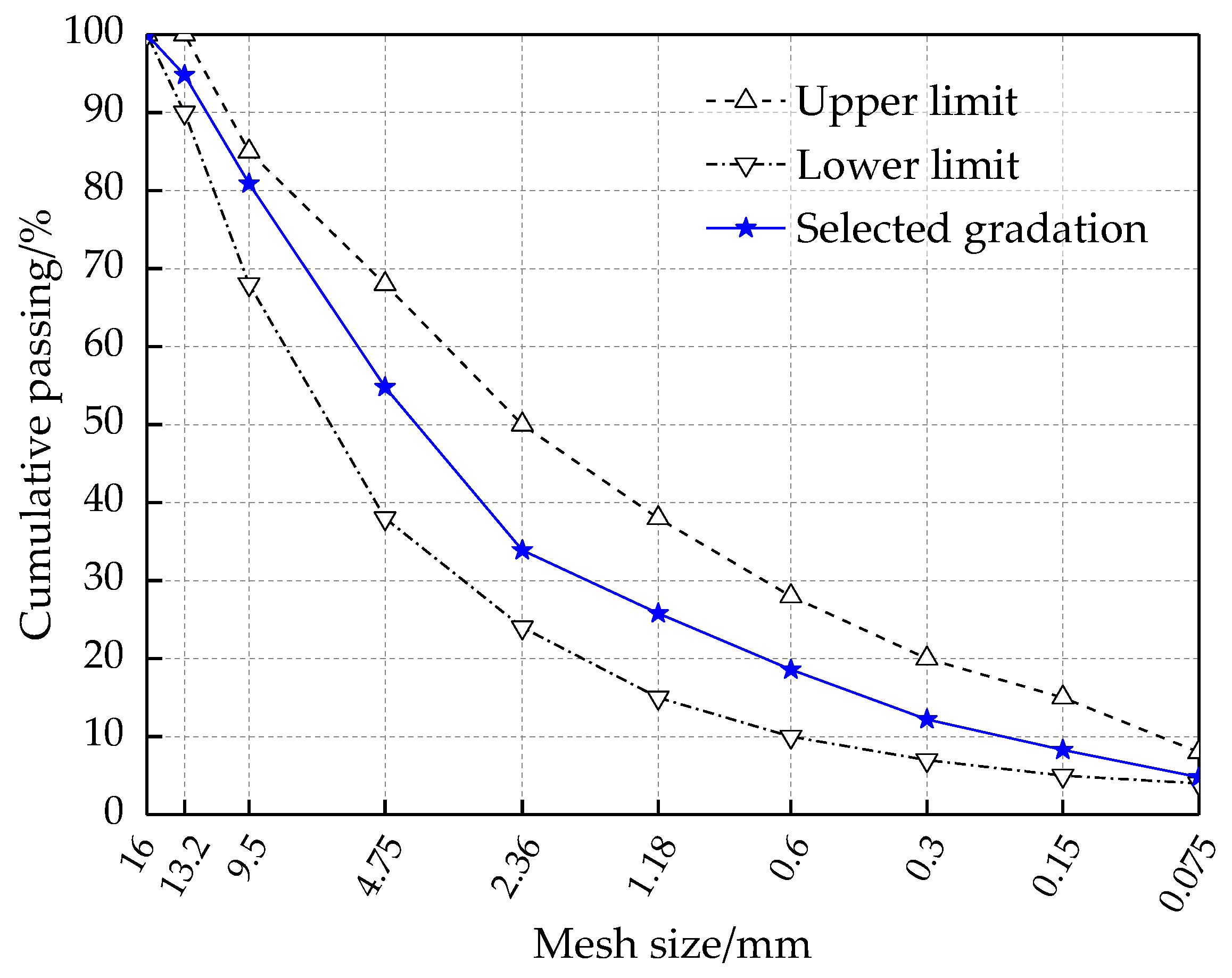
The gradation of AC-13 (which is usually used in the upper layers of highways), as illustrated in Figure 1, was selected for the asphalt mixtures in this study. For the mix design, the orthogonal experimental design and the Marshall design were combined to study the diatomite and basalt fiber composite modified asphalt mixtures. The diatomite content, basalt fiber content, and asphalt-aggregate ratio were chosen as the orthogonal factors. The L9 orthogonal table was used to design the three-factor experiment, and the mix design of composite modified asphalt mixtures is shown in Table 6. The mentioned AC specimens with diatomite and basalt fiber were prepared by the Marshall compaction method. The detailed procedures have been illustrated in previous studies [16,30].
Figure 1.
Gradation of AC-13.
Table 6.
Mix orthogonal design of diatomite and basalt fiber composite modified asphalt mixture.
2.3. Experimental Methods
2.3.1. Design Indices of Orthogonal Experiment
Marshall Design Indices
The volumetric properties of the Marshall design method will directly influence the performances of asphalt mixtures. In the study, air voids (VA), voids in mineral aggregates (VMA), and voids filled with asphalt (VFA), as well as Marshall stability (MS) and flow (FL), were adopted as the dependent variables of orthogonal experiments. These Marshall design indices have been defined in previous studies [16,31].
Sound and Vibration Absorption Properties
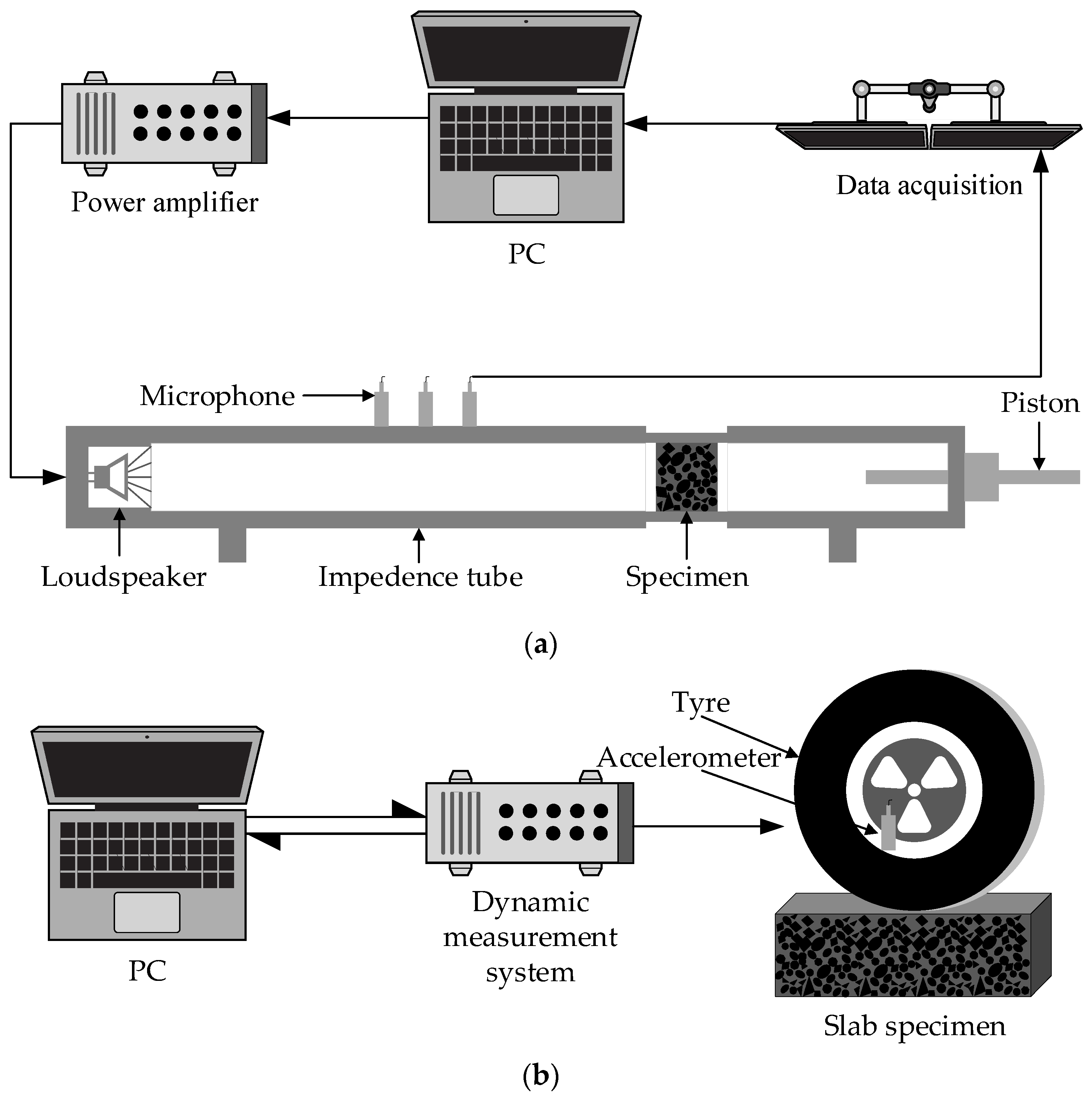
Effective methods for characterizing the sound absorption property of materials mainly include the reverberation chamber method and the impedance tube method, and the reverberation chamber method is relatively expensive. The impedance tube method has low requirements for specimens and is precise and convenient while measuring the sound absorption properties of specimens [28]. The measurement system using the impedance tube method is shown in Figure 2a; it consists of a power amplifier, loudspeaker, impedance tube, microphone, and data acquisition system. The specimen was firstly placed on one side of impedance tube, and the loudspeaker was placed on the other side to produce an acoustic wave. Then, the sound absorption properties of materials could be measured through the standing wave ratio, which could be calculated by Equations (1–4).
where P0 is the acoustic amplitude of loudspeaker; r is the reflective defined by the ratio of reflected wave Pr and acoustic wave Pi; Pmax and Pmin are obtained when Pr and Pi are in phase or out of phase, respectively; G is the standing wave ratio; and α is the sound absorption coefficient.
|Pmax| = P0 × (1 + |r|),
|Pmin| = P0 × (1 − |r|),
G = |Pmax|/|Pmin| = (1 + |r|)/(1 − |r|),
α = 1 − |r|2 = 4 × G/(G + 1)2,
Figure 2.
Schematic of sound and vibration absorption: (a) impedance tube; (b) tire free vibration.
According to the ASTM C423–09a standard, the sound absorption average (SAA) is a single number rating—the average, rounded off to the nearest 0.01, of the sound absorption coefficients of a material for the twelve one-third octave bands from 200 through 2500 Hz, inclusive, measured according to this method.
In this study, the tire free vibration attenuation test was selected to evaluate the vibration absorption property of modified asphalt mixture, and the schematic of tire free vibration attenuation test is shown in Figure 2b. The damping ratio (DR) is defined in the Equation (5) and was adopted for evaluating the damping vibration reduction property.
where ζ is the damping ratio and δ is the logarithmic attenuation rate.
ζ = δ/(4π2 +δ2)1/2,
2.3.2. Pavement Performances for Asphalt Mixtures
Based on the optimal mix proportion of diatomite and basalt fiber composite modified asphalt mixtures, the pavement performance tests were carried out to evaluate the diatomite and basalt fiber composite modified asphalt mixtures, which focused on the high-temperature rutting test, low-temperature splitting test, moisture stability (immersion Marshall and freeze-thaw splitting), as well as sound and vibration absorption tests. The specific experimental processes and steps can be found for the high-temperature rutting test, low-temperature splitting test, and moisture stability in previous studies [37,38].
3. Results and Discussion
For each orthogonal group, six Marshall specimens were used for Marshall design indices and the sound absorption test, and three slab specimens were used for the vibration absorption test. The orthogonal experimental results (i.e., Marshall design indices and sound and vibration absorption) of diatomite and basalt fiber composite modified asphalt mixtures are summarized in Table 7.
Table 7.
Orthogonal results of diatomite and basalt fiber composite modified asphalt mixtures.
3.1. Analysis of Orthogonal Experimental Design for Composite Modified Asphalt Mixtures
3.1.1. Range Analysis
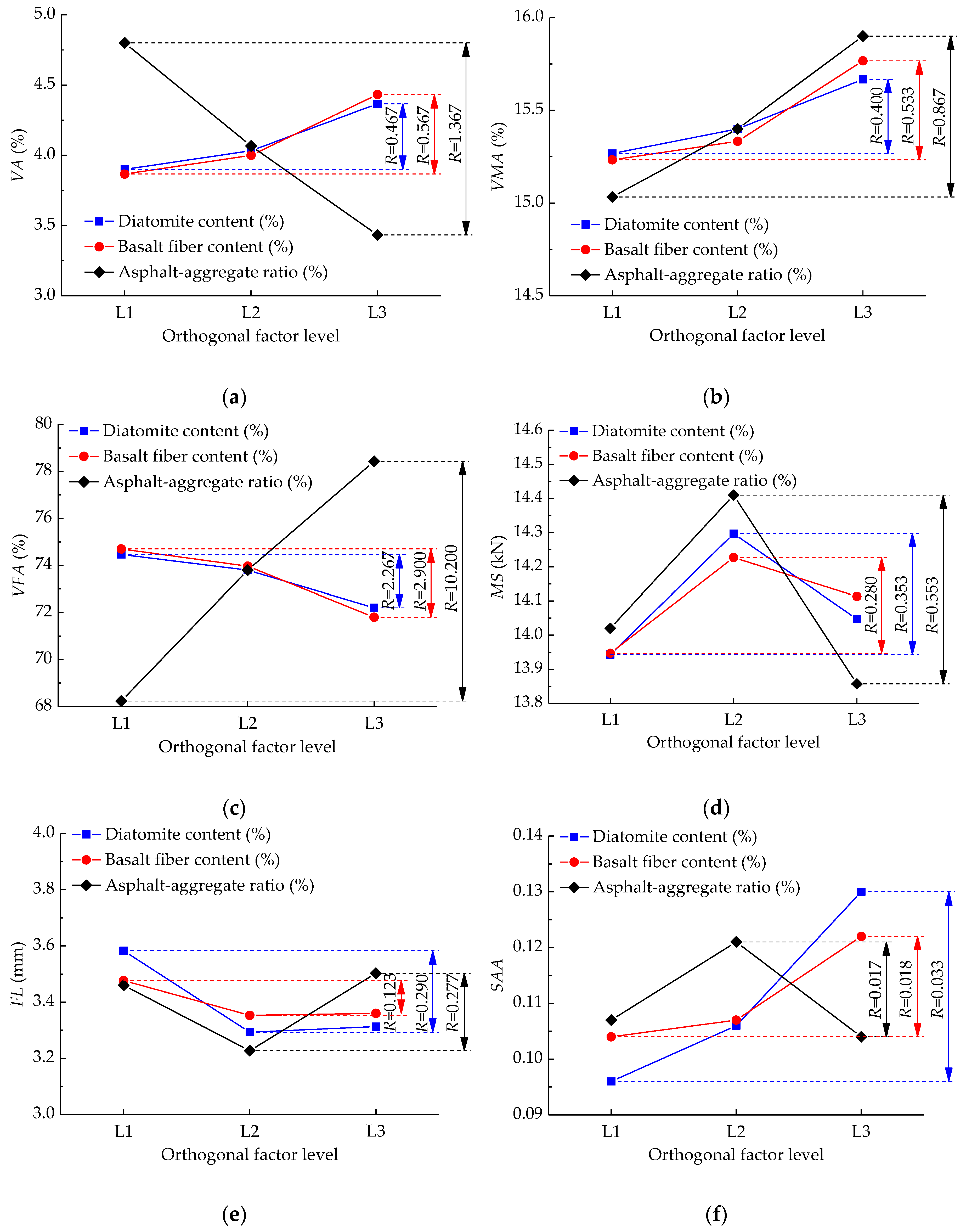
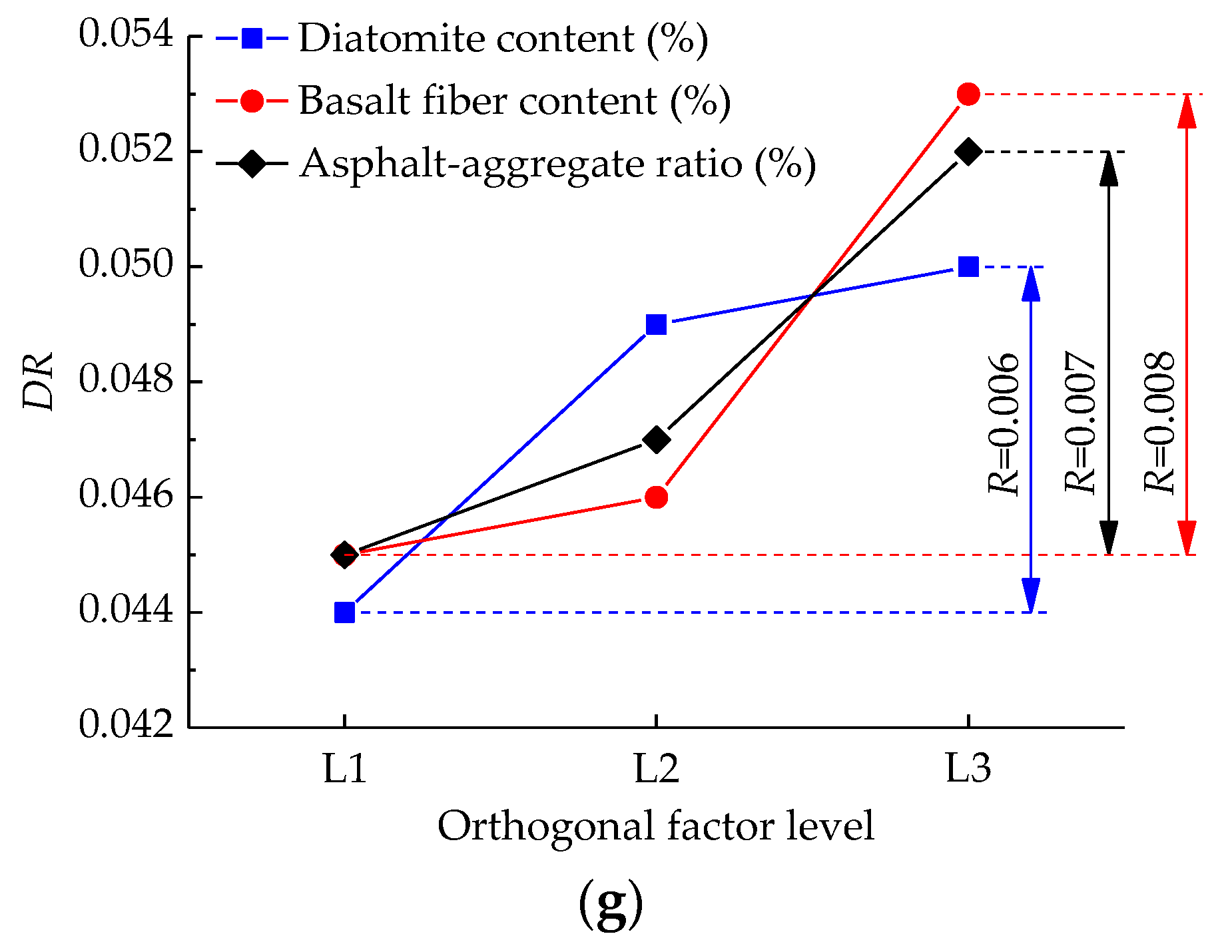
In this study, the range method was used to calculate the range (R) of each index, and the relationship trend between design indices and factor levels was plotted for the orthogonal experiment to determine the order and the optimal mix proportion of the three factors, i.e., the diatomite content, basalt fiber content, and asphalt-aggregate ratio. The range analysis results are shown in Figure 3, in which L1, L2, and L3 represent three levels of the orthogonal factors and R is the range value of different orthogonal factors. A larger R value indicates the corresponding orthogonal factor has a greater influence on the design index.

Figure 3.
Relationships between design indices and factor levels for the orthogonal experiment: (a) VA—air voids; (b) VMA—voids in mineral aggregates; (c) VFA—voids filled with asphalt; (d) MS—Marshall stability; (e) FL—flow; (f) SAA—sound absorption coefficient; and (g) DR—vibrations absorption coefficient.
Air Voids (VA)
According to Figure 3a, with different levels of the orthogonal factors, the VA values of diatomite and basalt fiber composite modified asphalt mixtures met the standard of 3.0–5.0%. The influence order of three orthogonal factors on VA was asphalt-aggregate ratio > basalt fiber content > diatomite content. The increase of asphalt content would fill the voids in the asphalt mixture, leading to a decrease in the VA. Due to the adsorption of asphalt by diatomite and basalt fibers, the increase of diatomite and basalt fiber content would absorb more asphalt, reduce free asphalt, and then increase the VA. At the same time, the spatial network structure made by basalt fibers would enhance the asphalt mixture, resulting in difficulties in compacting asphalt mixtures. Therefore, the addition of basalt fibers would also increase the VA gradually.
Voids in Mineral Aggregates (VMA)
From Figure 3b, with different levels of the orthogonal factors, the VMA values of diatomite and basalt fiber composite modified asphalt mixtures met the standard of >14.0%. The influence order of three orthogonal factors on VMA is asphalt-aggregate ratio > basalt fiber content > diatomite content. The increase of the asphalt-aggregate ratio, basalt fibers, and diatomite content would increase the VMA value of asphalt mixtures. This is because the excessive amount of asphalt would gradually expand the mineral aggregates, resulting in an increase of the voids in mineral aggregates (VMA).
Voids Filled with Asphalt (VFA)
Figure 3c shows that the influence order of three orthogonal factors on VFA was asphalt-aggregate ratio > basalt fiber content > diatomite content. Because of the absorption of asphalt of diatomite and basalt fibers, with the increase of their content, the VFA of the asphalt mixture would gradually decrease. Compared with diatomite, basalt fiber had a greater impact on the VFA.
Marshall Stability (MS) and Flow (FL)
Figure 3d indicates that the influence order of three orthogonal factors on MS was asphalt-aggregate ratio > diatomite content > basalt fiber content. Meanwhile, Figure 3e indicates that the influence order of three orthogonal factors on FL was diatomite content > asphalt-aggregate ratio > basalt fiber content. With the increase of the asphalt-aggregate ratio, basalt fibers, and diatomite content, the MS values would firstly increase and then decrease, while the FL values would firstly decrease and then increase. Diatomite can enhance the adhesion of asphalt mortar, while excessive diatomite would affect the adhesion between asphalt binder and aggregate, decreasing the stability of asphalt mixtures. Basalt fibers would form a spatial network structure, thus improving the stability; excessive basalt fibers would agglomerate, reducing the stability of the network structure and making the stability decline.
Sound Absorption Coefficient (SAA)
It can be seen from Figure 3f that the influence order of three orthogonal factors on SAA was diatomite content > basalt fiber content > asphalt-aggregate ratio. With the increase of diatomite and basalt fiber content, the SAA of composite modified asphalt mixtures showed an increasing trend. The larger the diatomite and basalt fiber content, the better the sound absorption ability of the asphalt mixture. This is because the microporous structure of diatomite has an excellent sound absorption effect, and the addition of basalt fibers forming the network structure plays a role in the loss of sound energy, so the sound absorption coefficient becomes larger.
Vibration Absorption Coefficient (DR)
It can be seen from Figure 3g that the influence order of three orthogonal factors on DR is basalt fiber content > asphalt-aggregate ratio > diatomite content. The increase of diatomite, basalt fibers, and asphalt would increase the damping ratio of the asphalt mixture. The addition of basalt fiber had the best effect on the vibration reduction. The special network structure by basalt fibers will strength and enhance asphalt mixtures, leading to a better vibration reduction performance.
3.1.2. Variance Analysis
The range analysis method does not consider the influence of errors on the order of orthogonal factors and cannot quantitatively analyze the importance of each orthogonal factor. Therefore, the variance analysis method was used to accurately analyze the significance of each orthogonal factor.
The variance analysis results of diatomite and basalt fiber composite modified asphalt mixtures are listed in Table 8. From Table 8, the following conclusions can be drawn:
Table 8.
Variance analysis for orthogonal results of modified asphalt mixture.
- (a)
- The F-value indicates the significance of different orthogonal factors on the design indices, and the significances of three orthogonal factors on these design indices were consistent with the influence order in the range analysis.
- (b)
- The F-values of the asphalt-aggregate ratios for VA, VMA, VFA, and MS were larger than those of diatomite and basalt fiber content, which indicates that the influences of asphalt-aggregate ratio were larger than the others on VA, VMA, VFA, and MS. The F-value of the asphalt-aggregate ratio on VA was larger than F0.1, which represents a 90% probability that the asphalt-aggregate ratio had a significant influence. The F-value of asphalt-aggregate ratio on VMA was larger than F0.2, which represents a 80% probability that asphalt-aggregate ratio had a significant influence. The F-value of the asphalt-aggregate ratio on VFA was larger than F0.05, which represents a 95% probability that the asphalt-aggregate ratio had a significant influence.
- (c)
- For the sound absorption property, the F-value of diatomite was the largest, the F-value of basalt fiber was smaller than diatomite, and asphalt-aggregate ratio was lightly smaller than basalt fiber. This means that diatomite had a more significant influence on SAA compared with basalt fiber and the asphalt-aggregate ratio.
- (d)
- For the vibration absorption property, the F-value of basalt fiber was the largest, the F-value of asphalt-aggregate ratio was smaller than basalt fiber, and diatomite was slightly smaller than the asphalt-aggregate ratio. This means that basalt fiber had a more significant influence on DR compared with diatomite and the asphalt-aggregate ratio.
3.2. Pavement Performances and of Diatomite and Basalt Fiber Composite Modified Asphalt Mixtures
Based on the range analysis and variance analysis, different orthogonal factors had different influences and significances on the orthogonal design indices. Considering the specification requirements as well as better performances of modified asphalt mixture, the optimal mix proportion in the orthogonal experiment was determined as follows: diatomite content at 7.5%, basalt fiber content at 0.3%, and asphalt-aggregate ratio at 5.5%. The corresponding Marshall indices were as follows: VA = 3.9%, VMA = 15.2%, VFA = 74.4%, MS = 15.74 kN, FL = 3.85 mm. For the comparison and illustration of the performances of the diatomite and basalt fiber composite modified asphalt mixture, the base asphalt mixture was selected as the control group. The optimal asphalt-aggregate ratio of the base asphalt mixture was 5.1%. The corresponding Marshall indices were as follows: VA = 3.6%, VMA = 14.1%, VFA = 75%, MS = 14.28 kN, FL = 3.26 mm. Three replicate specimens of both the control group and the experimental group were prepared for each performance test.
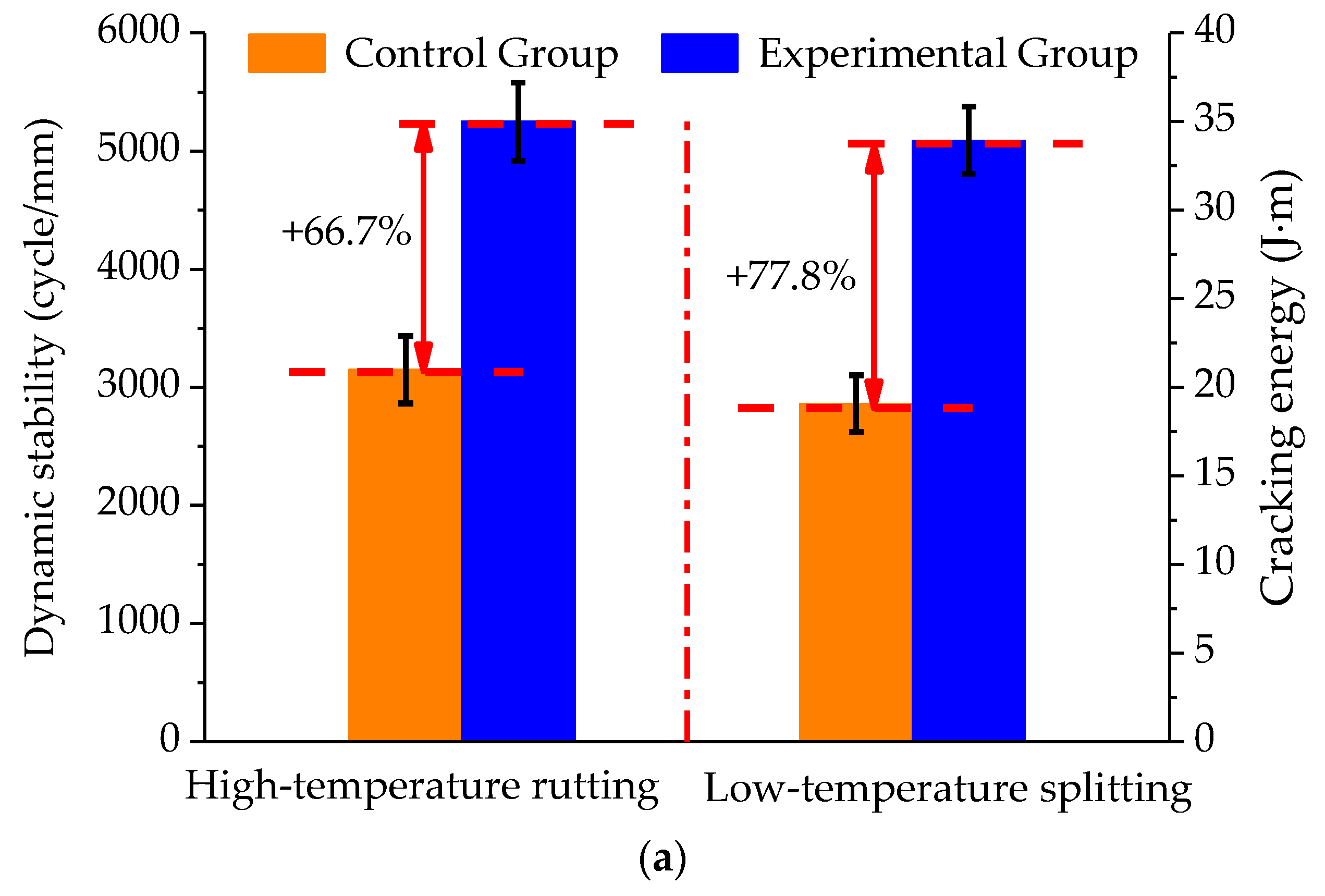
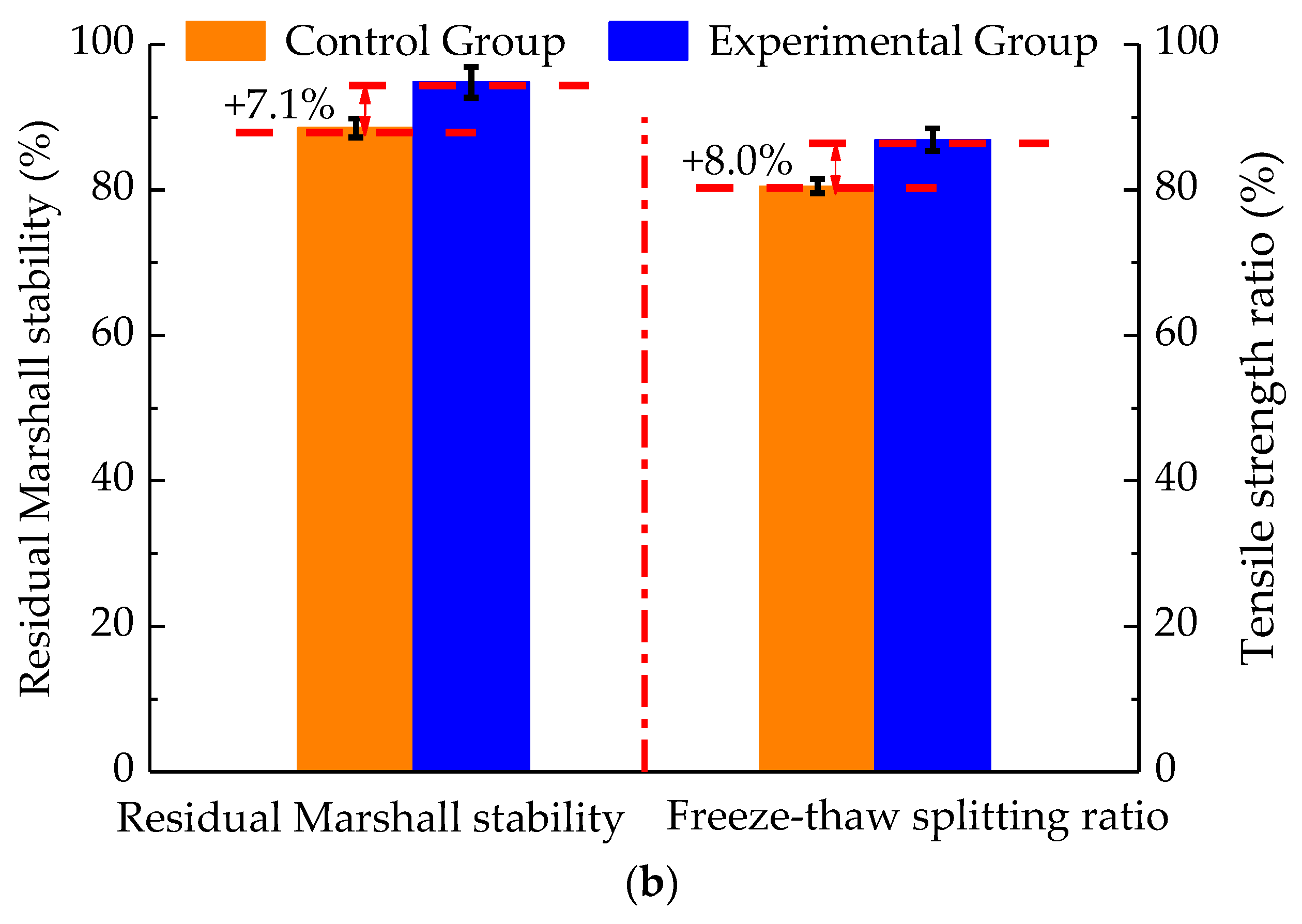
In order to further evaluate the improvement effect of composite modified asphalt mixtures on pavement performances, sound and vibration absorption performances, high-temperature rutting, low-temperature splitting, moisture stability, impedance tube, and tire free vibration tests were conducted, and the comparison results are plotted in Figure 4 and Figure 5. As shown in Figure 4a, compared with the base asphalt mixture, the dynamic stability of diatomite and basalt fiber composite modified asphalt mixture was greatly improved, and its high-temperature rutting resistance was improved by 66.7%. This is because diatomite enhances the adhesion between asphalt mortar and aggregate, and the special network structure of basalt fibers reduces the mobility of asphalt and then improves the high-temperature rutting resistance. Meanwhile, Figure 4a shows that the low-temperature cracking energy of the modified asphalt mixture also increased by 77.8%. Therefore, the low-temperature cracking resistance of diatomite and basalt fiber composite modified asphalt mixtures was significantly improved compared with the base asphalt mixture. With respect to the moisture stability, the residual Marshall stability and freeze-thaw splitting ratio of the modified asphalt mixture were improved by 7.1% and 8.0%, respectively. This is because diatomite increases the cohesive force of asphalt mortar, enhances the overall structural performance of asphalt mixture, and the special network structure of basalt fibers also plays a role in anti-spalling and water damage.

Figure 4.
The conventional pavement performances of asphalt mixtures: (a) high and low temperature test; (b) moisture stability test.
Figure 5.
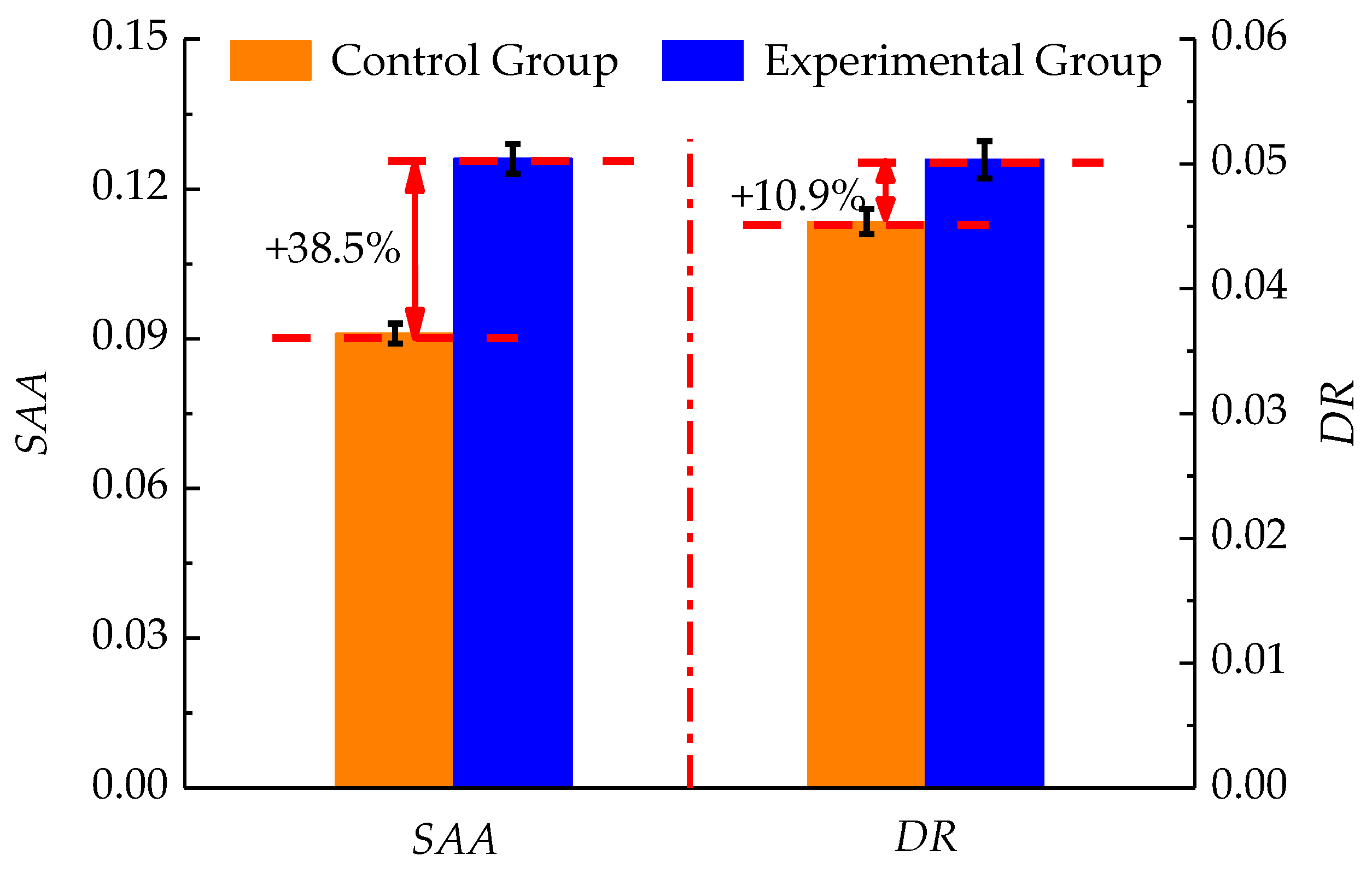
The sound and vibration absorption performances of asphalt mixtures.
With regard to sound and vibration absorption performances of asphalt mixtures, SAA and DR were chosen to characterize the sustainable performances, and the comparison results are illustrated in Figure 5. From Figure 5, the addition of diatomite and basalt fiber composite modifier could significantly improve the sound absorption performance of the asphalt mixture by about 38.5%. At the same time, the vibration reduction of the diatomite and basalt fiber composite modified asphalt mixture also improved, and the DR improved by 10.9% compared with the base asphalt mixture, which means the modified asphalt pavement had a more comfortable performance. Moreover, crumb rubber was proven to improve the acoustic performances of asphalt pavement [39,40].
4. Conclusions
In this study, the Marshall design indices and sound and vibration absorption properties of waste crumb rubber modified asphalt mixtures with diatomite and basalt fibers were carried out based on the orthogonal design experiment using different diatomite content, basalt fiber content, and asphalt-aggregate ratios. Then, the range and variance analyses were adopted to investigate the orthogonal experimental design for the mix proportion. Finally, the conventional pavement performances and sustainable sound and vibration absorption properties of the optimal modified asphalt mixture were also analyzed and evaluated compared to the base asphalt mixture. Therefore, the experimental findings were drawn as follows:
- Based on the range and variance analysis of orthogonal experiment, the influence order of three orthogonal factors on VA, VMA, VFA, and MS was asphalt-aggregate ratio > diatomite content > basalt fiber content, which indicates that asphalt-aggregate ratio had the most significant influence. Besides, it was found that diatomite had the most significant influence on sound absorption, and basalt fiber had the most significant influence on vibration reduction.
- Considering the specification requirements as well as better performances of modified asphalt mixture, the optimal mix proportion in the orthogonal experiment was determined as follows: diatomite content at 7.5%, basalt fiber content at 0.3%, and asphalt-aggregate ratio at 5.5%.
- Compared to the base asphalt mixture, the high-temperature rutting, low-temperature splitting, moisture stability, as well as sound and vibration absorption properties of the waste crumb rubber modified asphalt mixture with diatomite and basalt fiber were improved to different extents.
- Due to the microporous structure of diatomite, diatomite can enhance the adhesion of asphalt mortar, and the spatial network structure formed by basalt fibers plays an important role. Thus, to some extent, diatomite and basalt fibers could reinforce the asphalt mixture. Besides, the addition of diatomite and basalt fiber would improve the sound and vibration absorption properties significantly.
- A test road will be constructed with the optimal mix proportion and tested through sound and vibration absorption experiments, which provides a guidance for composite modified asphalt mixtures and a reference for the sound and vibration absorption performances.
Author Contributions
Conceptualization, W.W. and Y.C.; methodology, W.W., H.C., Z.L., and G.T.; validation, Y.C. and H.C.; formal analysis, H.C., G.T., and Y.B.; Investigation, W.W., Z.L., and Y.B.; writing—original draft preparation, W.W.; writing—review and editing, Y.C. and G.T.; project administration, Y.C. and W.W.; funding acquisition, W.W.
Funding
This research was supported by the Graduate Innovation Fund of Jilin University, grant number 101832018C003, and the China Scholarship Council, grant number 201906170186, and was funded by the National Natural Science Foundation of China, grant number 51678271, and the Science Technology Development Program of Jilin Province, grant number 20160204008SF.
Acknowledgments
The authors would like to appreciate the anonymous reviewers for their constructive suggestions and comments to improve the quality of the paper.
Conflicts of Interest
The authors declare no conflict of interest.
References
- Wang, W.S.; Cheng, Y.C.; Tan, G.J. Design Optimization of SBS-Modified Asphalt Mixture Reinforced with Eco-Friendly Basalt Fiber Based on Response Surface Methodology. Materials 2018, 11, 1311. [Google Scholar] [CrossRef] [PubMed]
- Cao, W.D.; Liu, S.T.; Feng, Z.G. Comparison of Performance of Stone Matrix Asphalt Mixtures Using Basalt and Limestone Aggregates. Constr. Build. Mater. 2013, 41, 474–479. [Google Scholar] [CrossRef]
- Navarro, F.M.; Gamez, M.C.R. Influence of Crumb Rubber on the Indirect Tensile Strength and Stiffness Modulus of Hot Bituminous Mixes. J. Mater. Civ. Eng. 2012, 24, 715–724. [Google Scholar] [CrossRef]
- Chiu, C.T.; Lu, L.C. A Laboratory Study on Stone Matrix Asphalt Using Ground Tire Rubber. Constr. Build. Mater. 2007, 21, 1027–1033. [Google Scholar] [CrossRef]
- Brasileiro, L.; Moreno-Navarro, F.; Tauste-Martínez, R.; Matos, J.; Rubio-Gámez, M.C. Reclaimed Polymers as Asphalt Binder Modifiers for More Sustainable Roads: A Review. Sustainability 2019, 11, 646. [Google Scholar] [CrossRef]
- Yao, H.; You, Z.P.; Li, L.; Shi, X.M.; Goh, S.W.; Mills-Beale, J.; Wingard, D. Performance of Asphalt Binder Blended with Non-Modified and Polymer-Modified Nanoclay. Constr. Build. Mater. 2012, 35, 159–170. [Google Scholar] [CrossRef]
- Brasileiro, L.L.; Moreno-Navarro, F.; Martinez, R.T.; del Sol-Sanchez, M.; Matos, J.M.E.; Rubio-Gamez, M.D. Study of the Feasability of Producing Modified Asphalt Bitumens Using Flakes Made from Recycled Polymers. Constr. Build. Mater. 2019, 208, 269–282. [Google Scholar] [CrossRef]
- Hill, B.; Buttlar, W.G. Evaluation of Polymer Modification in Asphalt Mixtures Through Digital Image Correlation and Performance Space Diagrams. Constr. Build. Mater. 2016, 122, 667–673. [Google Scholar] [CrossRef]
- Ma, T.; Zhao, Y.L.; Huang, X.M.; Zhang, Y. Characteristics of Desulfurized Rubber Asphalt and Mixture. KSCE J. Civ. Eng. 2016, 20, 1347–1355. [Google Scholar] [CrossRef]
- La Rosa, A.D.; Recca, G.; Carbone, D.; Battiato, S.; Latteri, A.; Cozzo, G.; Cicala, G. Environmental Benefits of Using Ground Tyre Rubber in New Pneumatic Formulations: A life Cycle Assessment Approach. Proc. Inst. Mech. Eng. Part L 2015, 229, 309–317. [Google Scholar]
- Peralta, J.; Silva, H.M.; Hilliou, L.; Machado, A.V.; Pais, J.; Williams, R.C. Mutual Changes in Bitumen and Rubber Related to the Production of Asphalt Rubber Binders. Constr. Build. Mater. 2012, 36, 557–565. [Google Scholar] [CrossRef]
- Manosalvas-Paredes, M.; Gallego, J.; Saiz, L.; Bermejo, J.M. Rubber Modified Binders as an Alternative to Cellulose Fiber-SBS Polymers in Stone Matrix Asphalt. Constr. Build. Mater. 2016, 121, 727–732. [Google Scholar] [CrossRef]
- Zedler, Ł.; Klein, M.; Saeb, M.R.; Colom, X.; Cañavate, J.; Formela, K. Synergistic Effects of Bitumen Plasticization and Microwave Treatment on Short-Term Devulcanization of Ground Tire Rubber. Polymers 2018, 10, 1265. [Google Scholar] [CrossRef] [PubMed]
- Guo, Q.L.; Li, L.L.; Cheng, Y.C.; Jiao, Y.B.; Xu, C. Laboratory Evaluation on Performance of Diatomite and Glass Fiber Compound Modified Asphalt Mixture. Mater. Des. 2015, 66, 51–59. [Google Scholar] [CrossRef]
- Chen, Z.N.; Yi, J.Y.; Chen, Z.G.; Feng, D.C. Properties of Asphalt Binder Modified by Corn Stalk Fiber. Constr. Build. Mater. 2019, 212, 225–235. [Google Scholar] [CrossRef]
- Wang, W.S.; Cheng, Y.C.; Zhou, P.L.; Tan, G.J.; Wang, H.T.; Liu, H.B. Performance Evaluation of Styrene-Butadiene-Styrene-Modified Stone Mastic Asphalt with Basalt Fiber Using Different Compaction Methods. Polymers 2019, 11, 1006. [Google Scholar] [CrossRef] [PubMed]
- Zhang, X.Y.; Gu, X.Y.; Lv, J.X. Effect of Basalt Fiber Distribution on the Flexural–Tensile Rheological Performance of Asphalt Mortar. Constr. Build. Mater. 2018, 179, 307–314. [Google Scholar] [CrossRef]
- Wang, D.; Wang, L.B.; Gu, X.Y.; Zhou, G.Q. Effect of Basalt Fiber on the Asphalt Binder and Mastic at Low Temperature. J. Mater. Civ. Eng. 2013, 25, 355–364. [Google Scholar] [CrossRef]
- Gu, X.Y.; Xu, T.T.; Ni, F.J. Rheological Behavior of Basalt Fiber Reinforced Asphalt Mastic. J.Wuhan Univ. Technol. 2014, 29, 950–955. [Google Scholar] [CrossRef]
- Zhang, X.Y.; Gu, X.Y.; Lv, J.X.; Zhu, Z.K.; Zou, X.Y. Numerical Analysis of the Rheological Behaviors of Basalt Fiber Reinforced Asphalt Mortar Using ABAQUS. Constr. Build. Mater. 2017, 157, 392–401. [Google Scholar] [CrossRef]
- Qin, X.; Shen, A.Q.; Guo, Y.C.; Li, Z.N.; Lv, Z.H. Characterization of Asphalt Mastics Reinforced With Basalt Fibers. Constr. Build. Mater. 2018, 159, 508–516. [Google Scholar] [CrossRef]
- Cheng, Y.C.; Tao, J.L.; Jiao, Y.B.; Tan, G.J.; Guo, Q.L.; Wang, S.R.; Ni, P. Influence of the Properties of Filler on High and Medium Temperature Performances of Asphalt Mastic. Constr. Build. Mater. 2016, 118, 268–275. [Google Scholar] [CrossRef]
- Cong, P.; Chen, S.; Chen, H. Effects of Diatomite on the Properties of Asphalt Binder. Constr. Build. Mater. 2012, 30, 495–499. [Google Scholar] [CrossRef]
- Tan, Y.Q.; Zhang, L.; Zhang, X.Y. Investigation of Low-Temperature Properties of Diatomite-Modified Asphalt Mixtures. Constr. Build. Mater. 2012, 36, 787–795. [Google Scholar]
- Yang, C.; Xie, J.; Zhou, X.; Liu, Q.; Pang, L. Performance Evaluation and Improving Mechanisms of Diatomite-Modified Asphalt Mixture. Materials 2018, 11, 686. [Google Scholar] [CrossRef] [PubMed]
- Bao, Y.N. Study of Asphalt Mixture Modified by Diatomite. Master’s Thesis, Chang’an University, Xi’an, China, 2005. [Google Scholar]
- Bull, J.; Watts, G.; Pearse, J. The Use of In-Situ Test Method EN 1793-6 for Measuring the Airborne Sound Insulation of Noise Barriers. Appl. Acoust. 2017, 116, 82–86. [Google Scholar] [CrossRef]
- Licitra, G.; Ascari, E.; Fredianelli, L. Prioritizing Process in Action Plans: A Review of Approaches. Curr. Pollut. Rep. 2017, 3, 151–161. [Google Scholar] [CrossRef]
- Praticò, F.G.; Anfosso-Lédée, F. Trends and Issues in Mitigating Traffic Noise Through Quiet Pavements. Proc. Soc. Behave. Sci. 2012, 53, 203–212. [Google Scholar] [CrossRef]
- Losa, M.; Leandri, R.; Licitra, G. Mixture Design Optimization of Low-Noise Pavements. Transp. Res. Record 2013, 2372, 25–33. [Google Scholar] [CrossRef]
- Pratico, F.G. On the Dependence of Acoustic Performance on Pavement Characteristics. Transport. Res. Part D-Transport. Environ. 2014, 29, 79–87. [Google Scholar] [CrossRef]
- Sandberg, U.; Ejsmont, J. Tyre/Road Noise Reference Book; Informex: Kisa, Sweden, 2002. [Google Scholar]
- Vissamraju, K. Measurement of Absorption Coefficient of Road Surfaces Using Impedance Tube Method. Master’s Thesis, Auburn University, Auburn, AL, USA, 2005. [Google Scholar]
- Guo, Z.Y.; Yi, J.Y.; Xie, S.A.; Chu, J.P.; Feng, D.C. Study on the Influential Factors of Noise Characteristics in Dense-Graded Asphalt Mixtures and Field Asphalt Pavements. Shock Vib. 2018, 5742412. [Google Scholar] [CrossRef]
- Knabben, R.M.; Triches, G.; Gerges, S.N.Y. Vergara, E.F. Evaluation of Sound Absorption Capacity of Asphalt Mixtures. Appl. Acoust. 2016, 114, 266–274. [Google Scholar] [CrossRef]
- Cheng, Y.C.; Yu, D.; Gong, Y.F.; Zhu, C.F.; Tao, J.L.; Wang, W.S. Laboratory Evaluation on Performance of Eco-Friendly Basalt Fiber and Diatomite Compound Modified Asphalt Mixture. Materials 2018, 11, 2400. [Google Scholar] [CrossRef] [PubMed]
- Wang, W.S.; Cheng, Y.C.; Tan, G.J.; Shi, C.L. Pavement Performance Evaluation of Asphalt Mixtures Containing Oil Shale Waste. Road Mater. Pavement Des. 2018. [Google Scholar] [CrossRef]
- Cheng, Y.C.; Wang, W.S.; Tan, G.J.; Shi, C.L. Assessing High-and Low-Temperature Properties of Asphalt Pavements Incorporating Waste Oil Shale as an Alternative Material in Jilin Province, China. Sustainability 2018, 10, 2179. [Google Scholar] [CrossRef]
- Licitra, G.; Cerchiai, M.; Teti, L.; Ascari, E.; Bianco, F.; Chetoni, M. Performance Assessment of Low-Noise Road Surfaces in the Leopoldo Project: Comparison and Validation of Different Measurement Methods. Coatings 2015, 5, 3–25. [Google Scholar] [CrossRef]
- Licitra, G.; Cerchiai, M.; Teti, L.; Ascari, E.; Fredianelli, L. Durability and Variability of the Acoustical Performance of Rubberized Road Surfaces. Appl. Acoust. 2015, 94, 20–28. [Google Scholar] [CrossRef]
© 2019 by the authors. Licensee MDPI, Basel, Switzerland. This article is an open access article distributed under the terms and conditions of the Creative Commons Attribution (CC BY) license (http://creativecommons.org/licenses/by/4.0/).