Article

Operational Efficiency of Chinese Provincial Electricity Grid Enterprises: An Evaluation Employing a Three-Stage Data Envelopment Analysis (DEA) Model

1
School of Economics and Management, North China Electric Power University, Beijing 102206, China
2
Beijing Key Laboratory of New Energy and Low-Carbon Development, North China Electric Power University, Beijing 102206, China
*
Author to whom correspondence should be addressed.
Sustainability 2018, 10(9), 3168; https://doi.org/10.3390/su10093168
Submission received: 16 August 2018 / Revised: 26 August 2018 / Accepted: 28 August 2018 / Published: 5 September 2018

Abstract

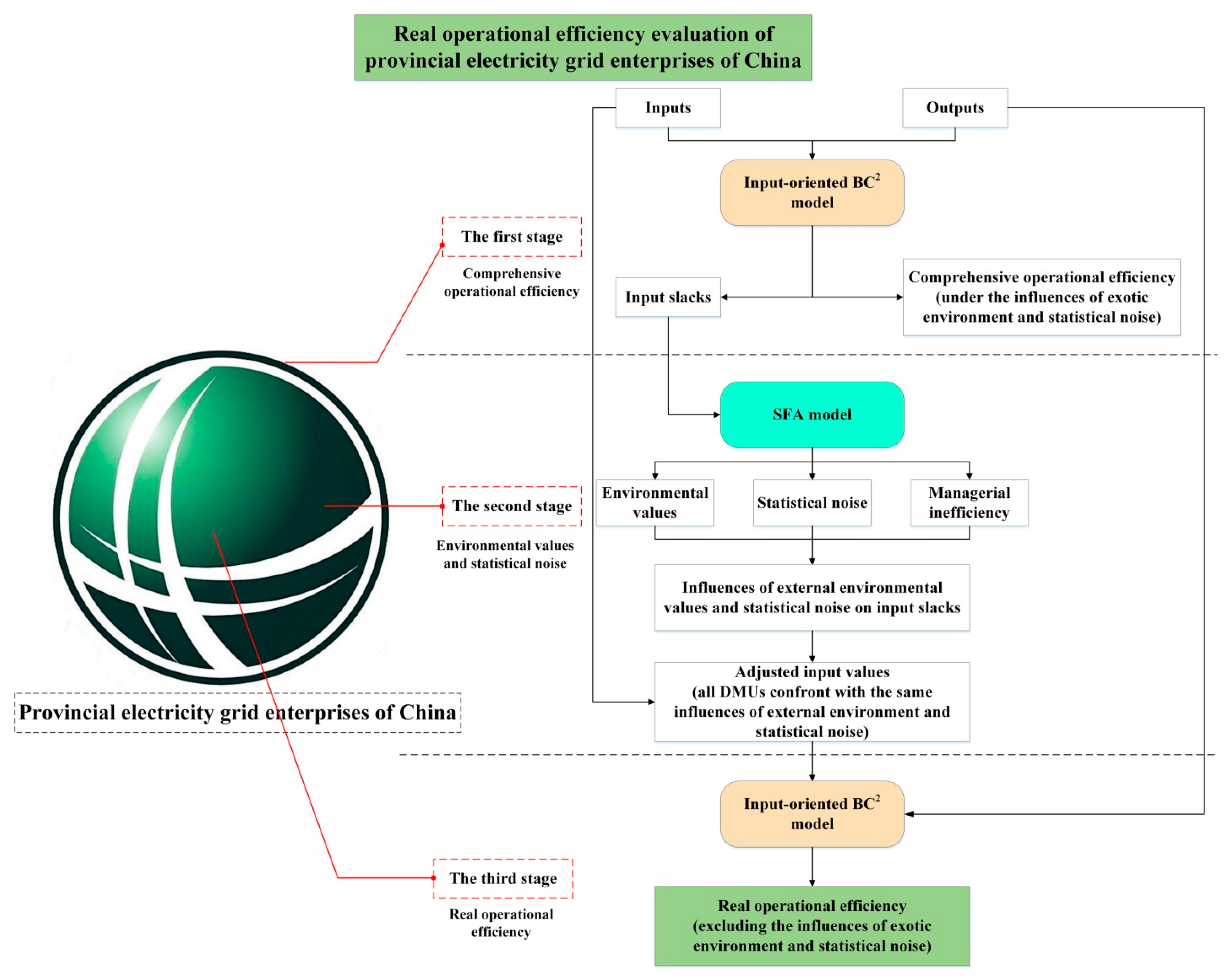
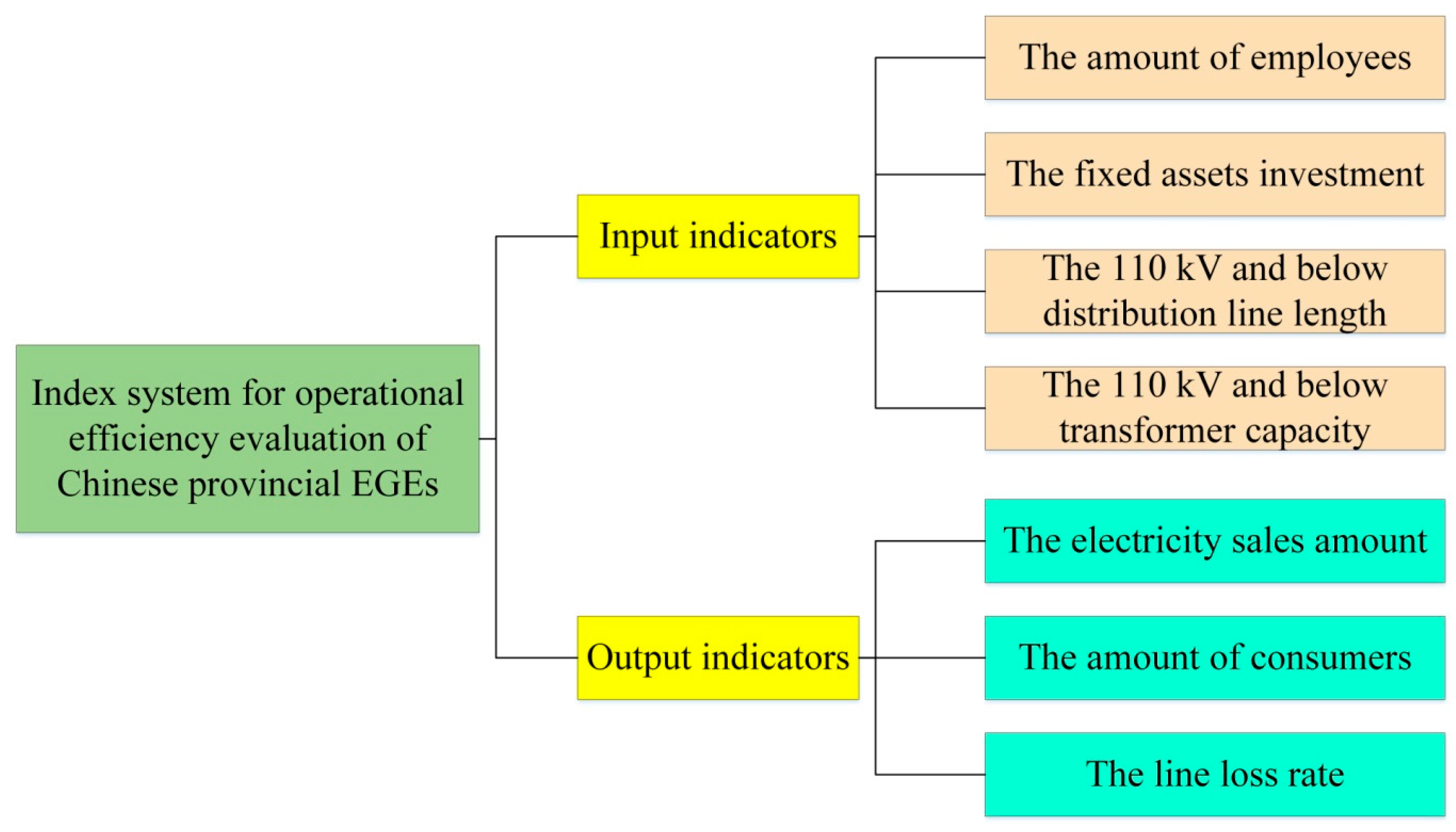
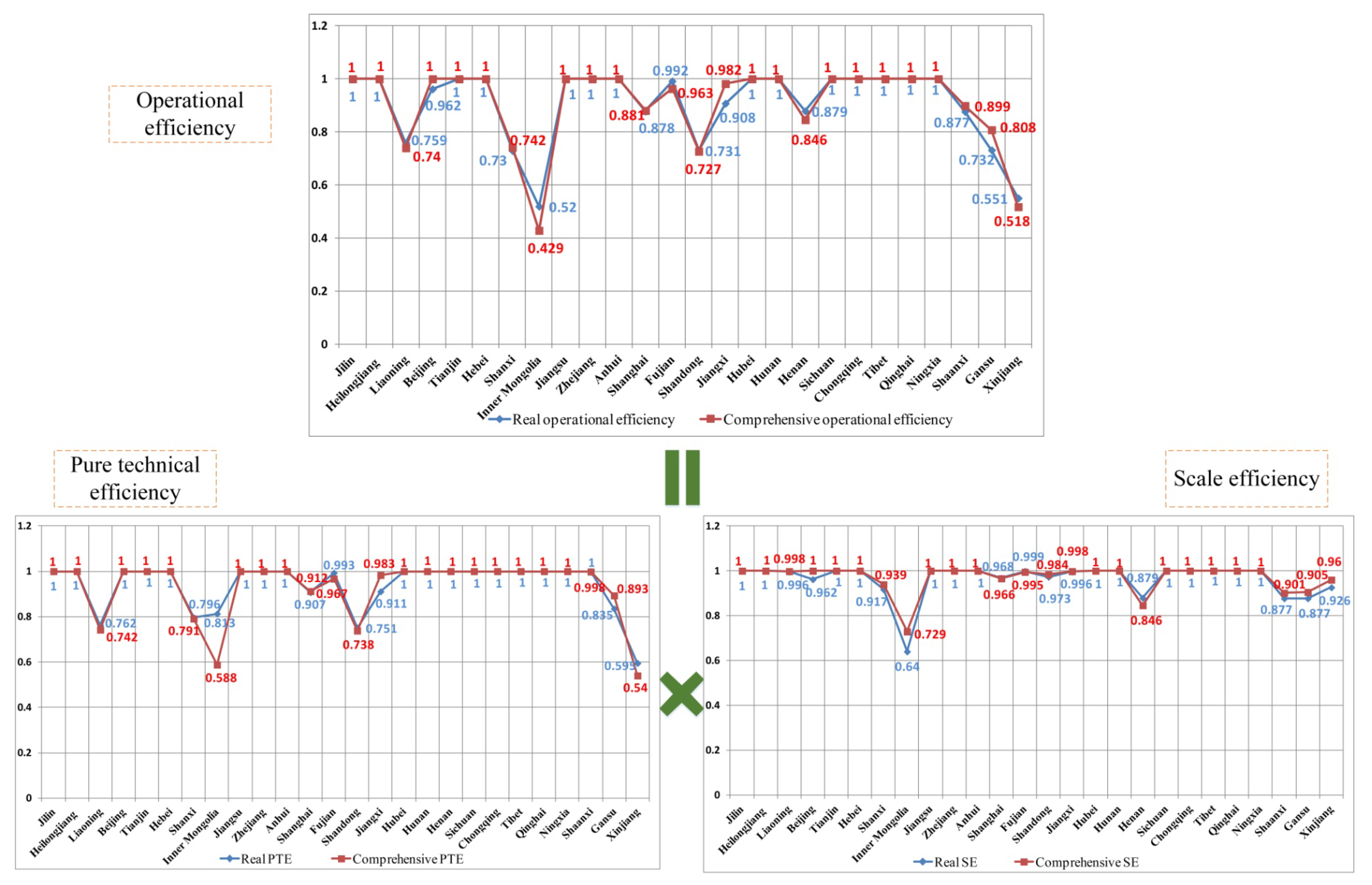
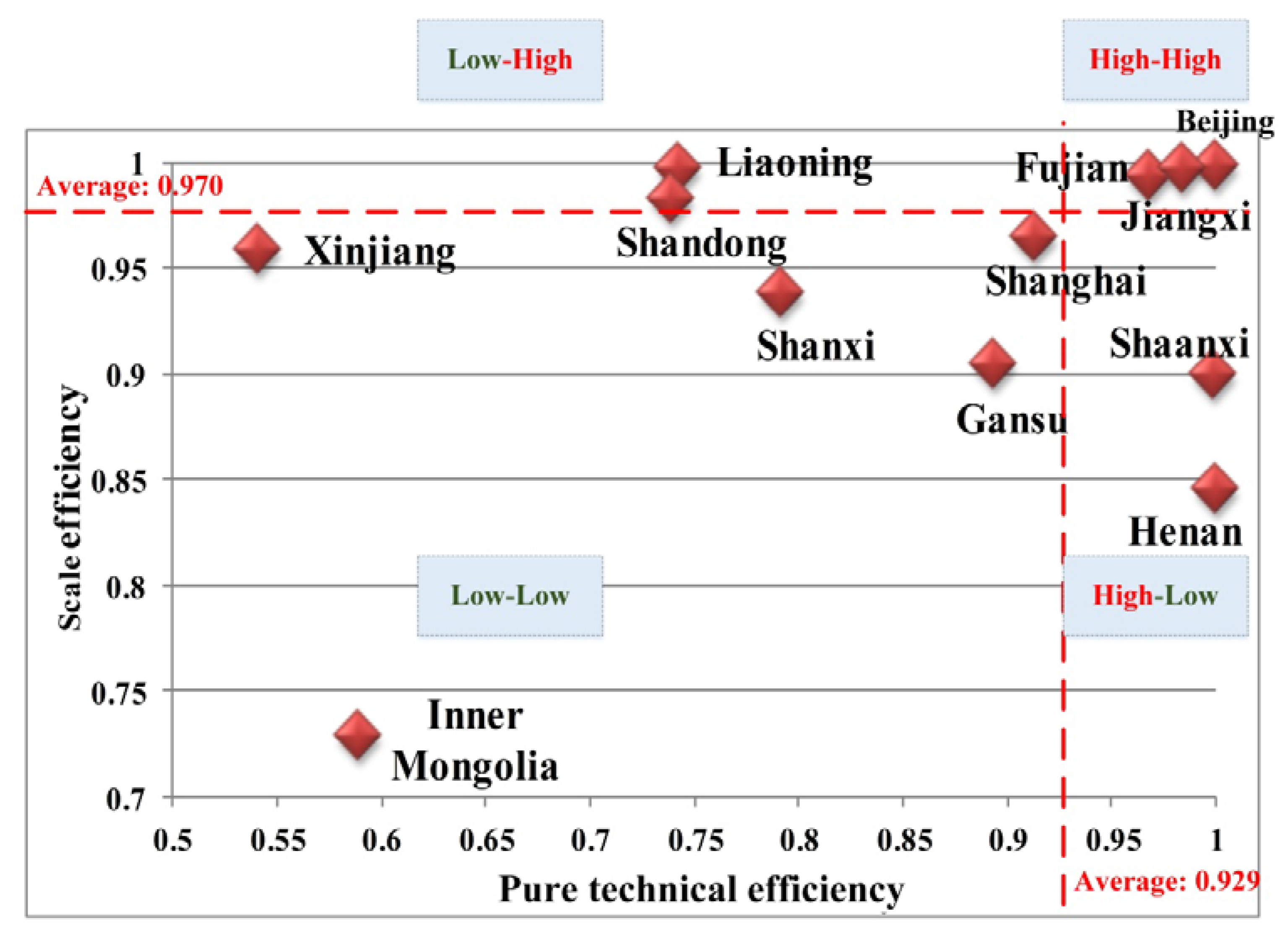
With the implementation of new round electricity system reform in China, the provincial electricity grid enterprises (EGEs) of China should focus on improving their operational efficiency to adapt to the increasingly fierce market competition and satisfy the requirements of the electricity industry reform. Therefore, it is essential to conduct operational efficiency evaluation on provincial EGEs. While considering the influences of exterior environmental variables on the operational efficiency of provincial EGEs, a three-stage data envelopment analysis (DEA) methodology is first utilized to accurately assess the real operational efficiency of provincial EGEs excluding the exterior environmental values and statistical noise. The three-stage DEA model takes the amount of employees, the fixed assets investment, the 110 kV and below distribution line length, and the 110 kV and below transformer capacity as input variables and the electricity sales amount, the amount of consumers, and the line loss rate as output variables. The regression results of the stochastic frontier analysis model indicate that the operational efficiencies of provincial EGEs are significantly affected by exterior environmental variables. Results of the three-stage DEA model imply that the exterior environmental values and statistical noise result in the overestimation of operational efficiency of provincial EGEs, and the exclusion of exterior environmental values and statistical noise has provincial-EGE-specific influences. Furthermore, 26 provincial EGEs are divided into four categories to better understand the differences of operational efficiencies before and after the exclusion of exterior environmental values and statistical noise.
Keywords: Chinese provincial electricity grid enterprises; operational efficiency assessment; three-stage DEA model; environmental variables Chinese provincial electricity grid enterprises; operational efficiency assessment; three-stage DEA model; environmental variables