Article

Advanced Wireless Sensor Networks for Sustainable Buildings Using Building Ducts


1
Department of Electronics and Communications Engineering, Hanyang University, ERICA Campus, Ansan 15588, Korea
2
Department of Architectural Engineering, Hanyang University, ERICA Campus, Ansan 15588, Korea
*
Author to whom correspondence should be addressed.
Sustainability 2018, 10(8), 2628; https://doi.org/10.3390/su10082628
Submission received: 30 May 2018 / Revised: 17 July 2018 / Accepted: 23 July 2018 / Published: 26 July 2018

Abstract

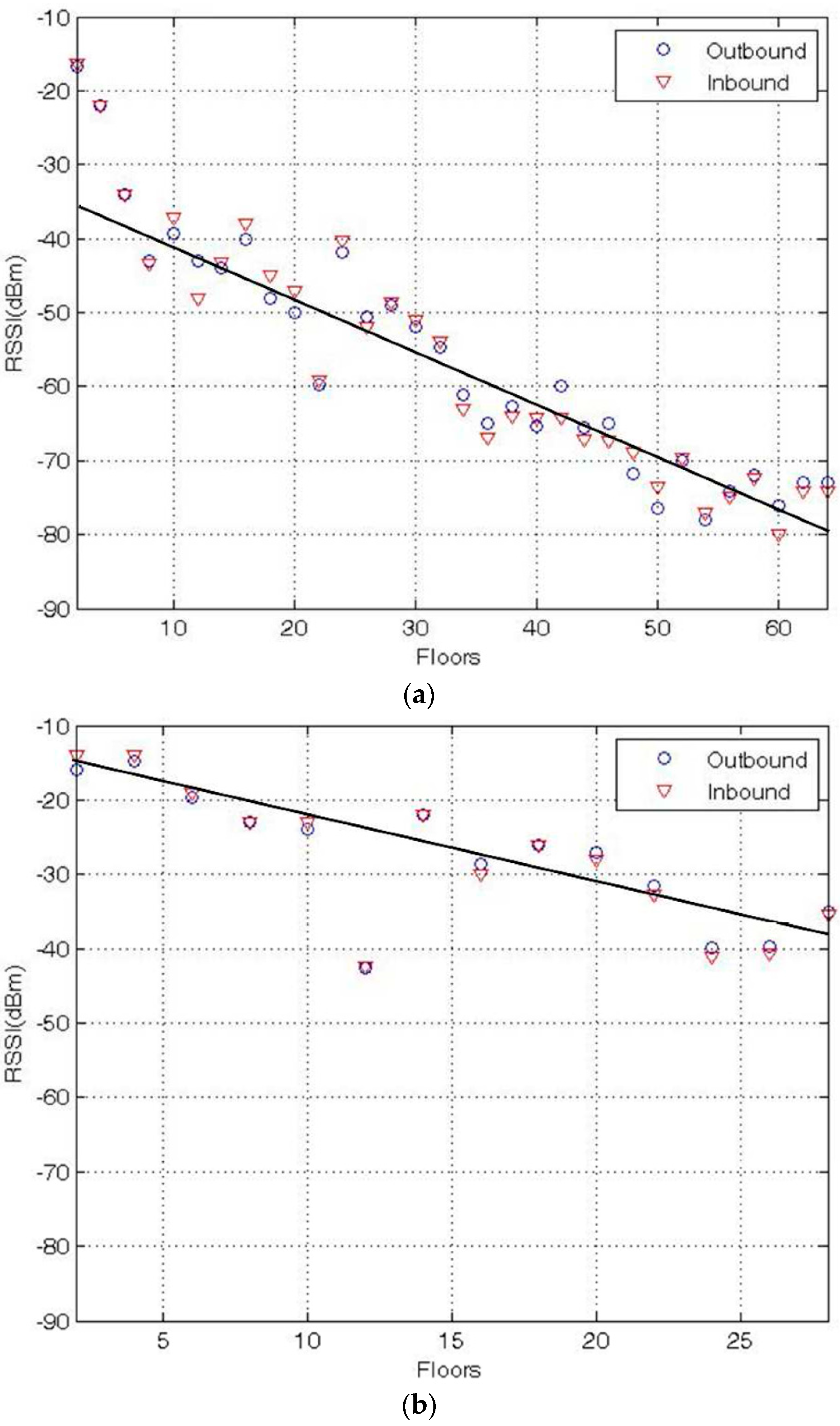
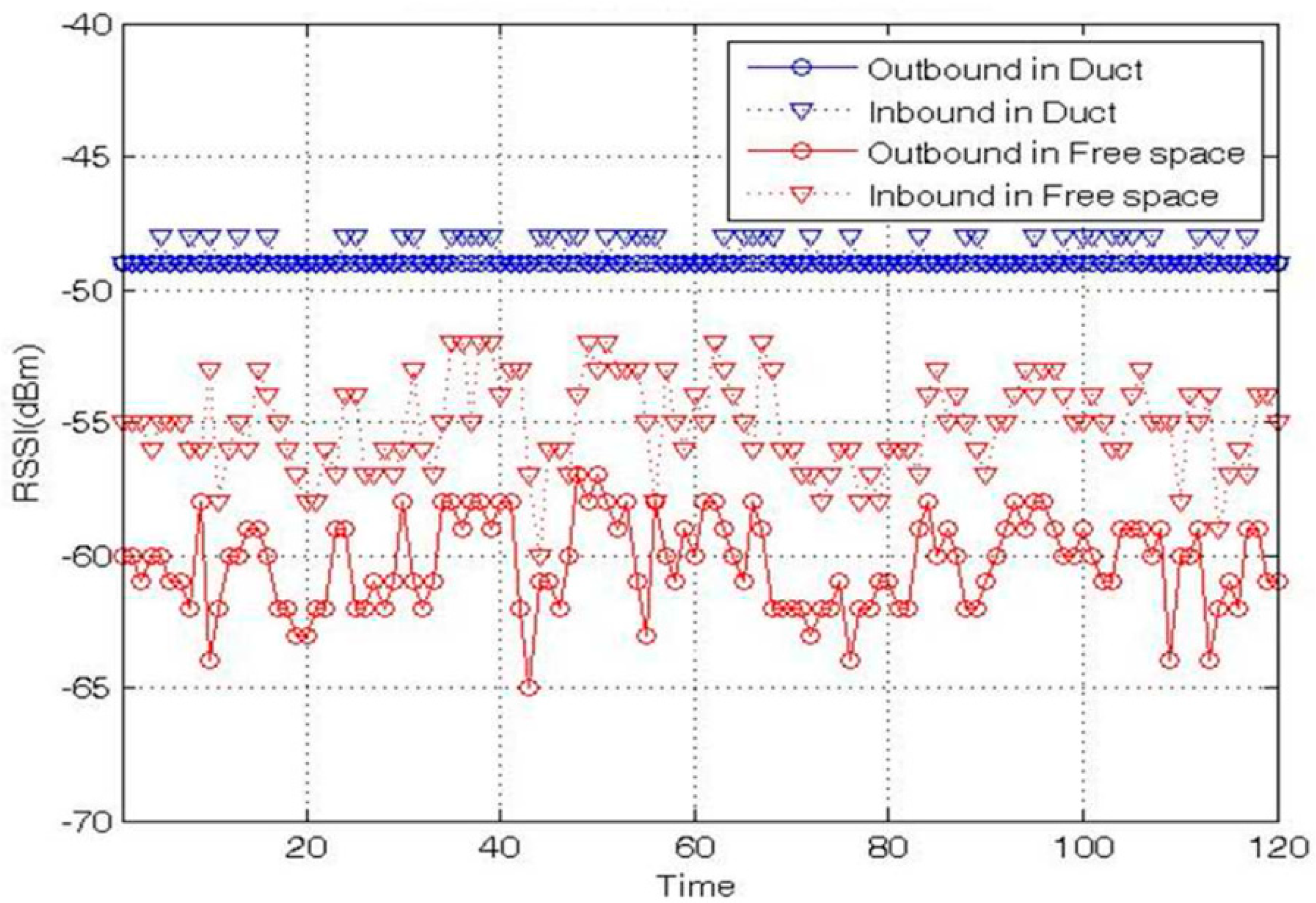
The communication technology ZigBee has been widely adopted in wireless sensor networks (WSNs) for a wide range of industrial applications. However, although ZigBee provides low-power, low-cost mesh networking, it cannot guarantee steady and predictable network performance as channels are time-variant and highly attenuated by man-made obstacles. The networks also suffer from interference, especially in the important 2.4 GHz industrial, scientific, and medical (ISM) band. These degraded channel characteristics increase the number of hops, thus increasing both the packet error rate and transmission delays. In this paper, we report the deployment of a ZigBee-based WSN inside an existing building duct system utilized for intelligent waste collection in an industrial environment. The Received Signal Strength (RSS) and path losses were measured, revealing that the duct communication channel acts as a very effective waveguide, providing a more reliable and consistent network performance than conventional free space channels.
Keywords: duct communication; wireless sensor network; ZigBee; industrial automation; automatic waste collection system; EM35; intelligent building system; sustainable building duct communication; wireless sensor network; ZigBee; industrial automation; automatic waste collection system; EM35; intelligent building system; sustainable building