Article

Cross-Cultural Analysis of Young Drivers’ Preferences for In-Vehicle Systems and Behavioral Effects Caused by Secondary Tasks


1
School of Mechanical Engineering, Beijing Institute of Technology, Beijing 100081, China
2
Chair of Ergonomics, Technical University of Munich, 85748 Munich, Germany
*
Authors to whom correspondence should be addressed.
Sustainability 2018, 10(11), 4083; https://doi.org/10.3390/su10114083
Submission received: 2 October 2018 / Revised: 22 October 2018 / Accepted: 5 November 2018 / Published: 7 November 2018
(This article belongs to the Section Sustainable Transportation)

Abstract

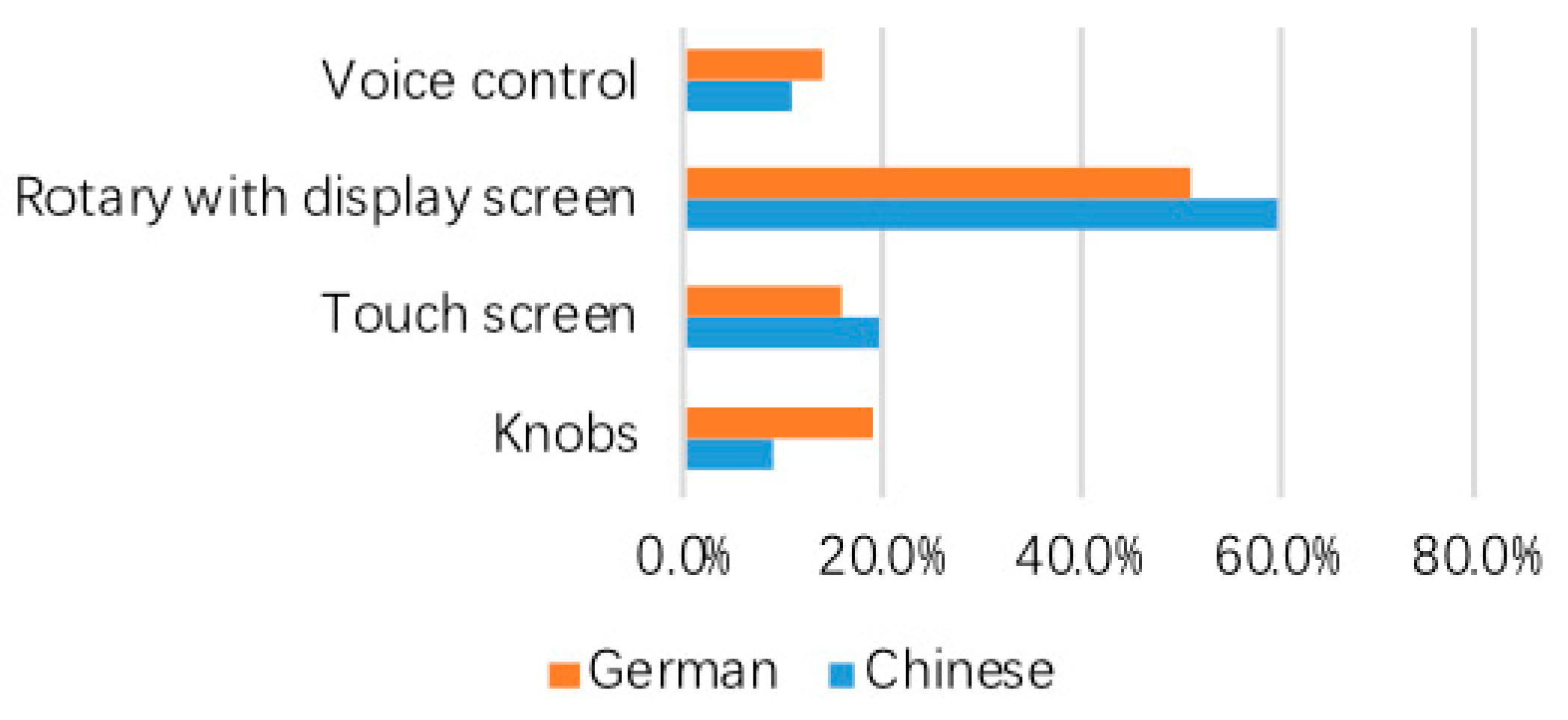
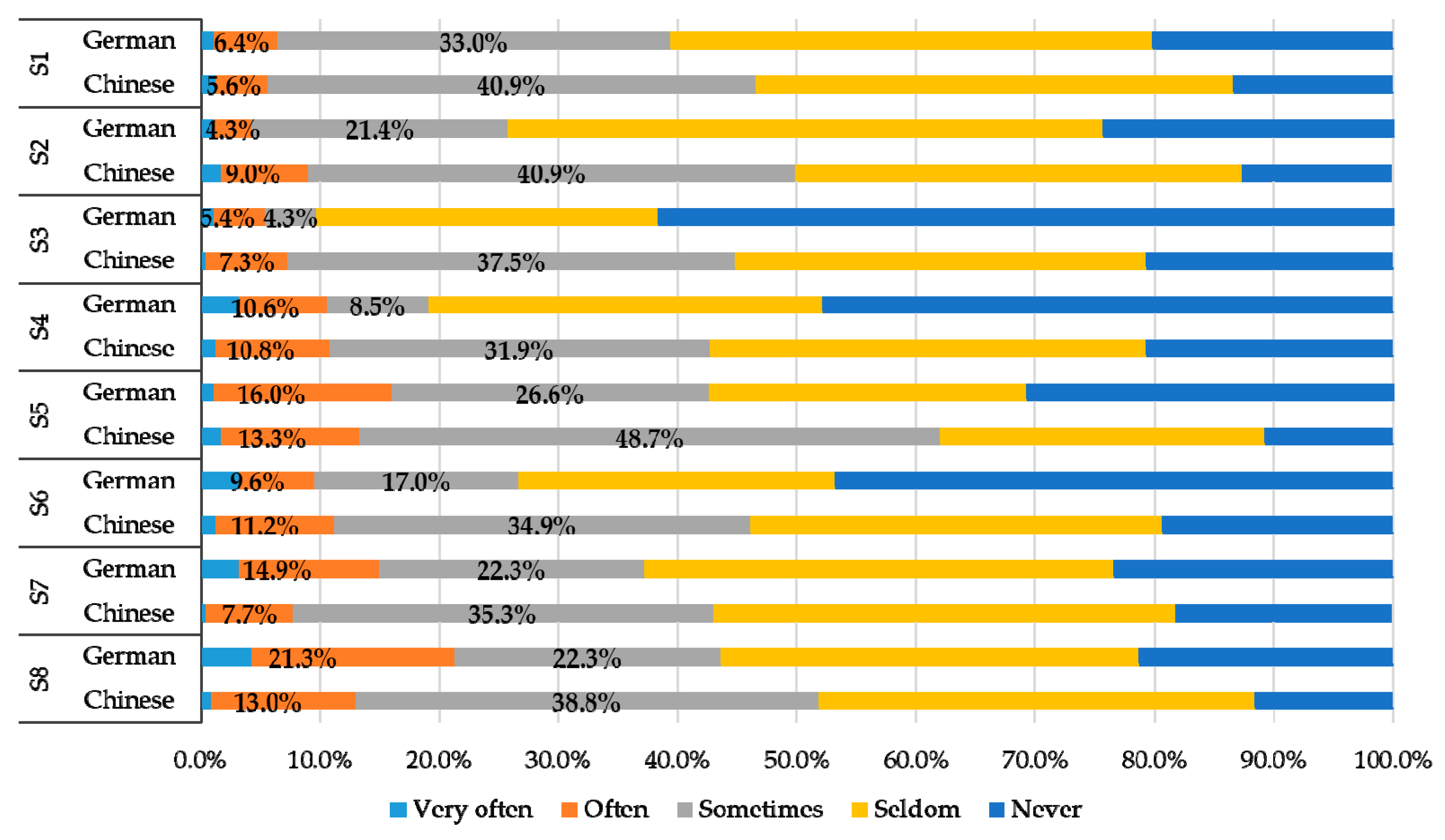
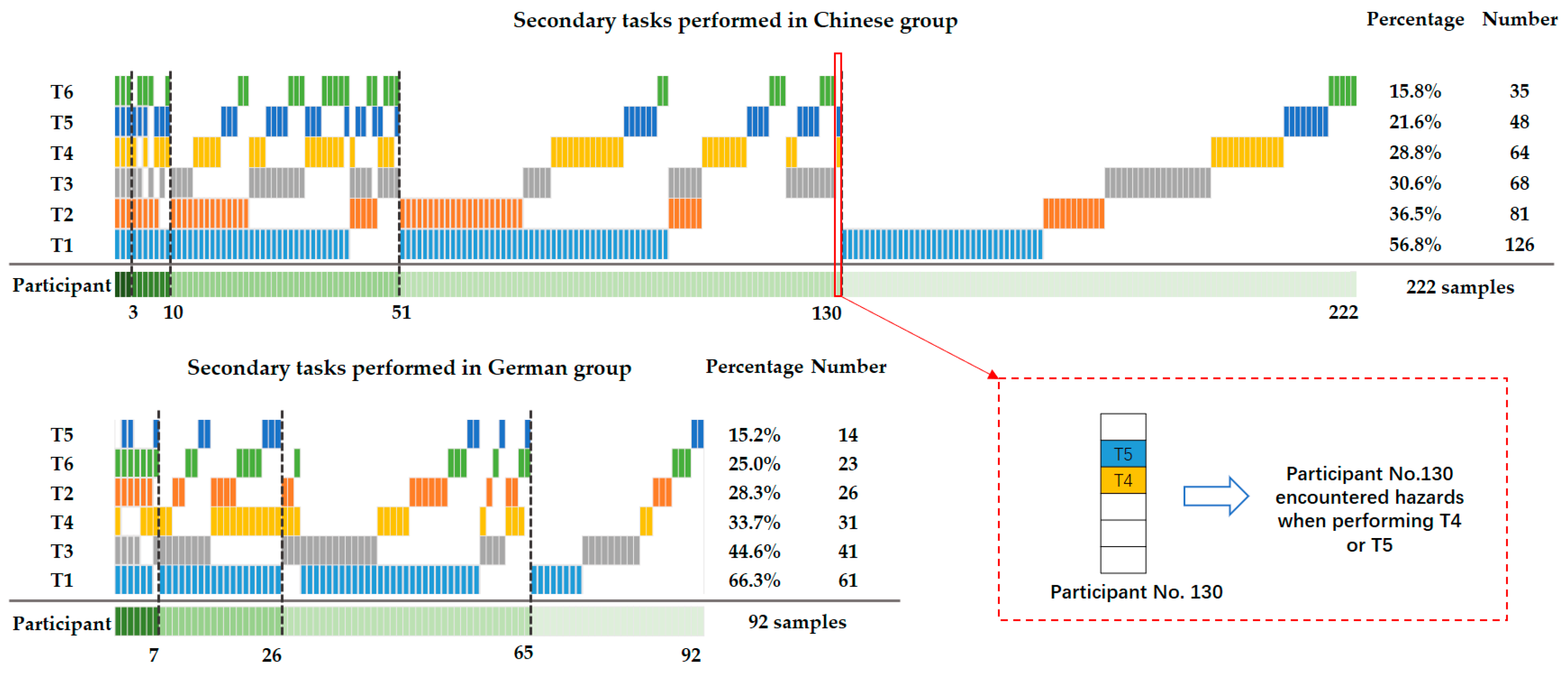
Hundreds of new features and functionalities have been introduced as in-vehicle systems (IVS) mature. However, it remains unclear whether these novel designs have appropriately addressed driver preferences and requirements, especially when factors such as geographical or cultural differences are considered. An empirical study was conducted to determine cultural differences between young Chinese and German drivers with respect to (a) preferences for 18 selected IVS and (b) behavioral effects in six secondary driving tasks. Data from 232 Chinese and 94 German drivers were collected through an online questionnaire and the results indicate that young Chinese drivers value most of the selected IVS designs more significantly than the Germans do, except in categories such as radio, navigation and autonomous emergency braking. In addition, rotary with a display screen is the most preferred interaction modality for both groups. As for behavioral effects when performing secondary tasks, young Chinese drivers are more likely to engage in safety-related scenarios while the Germans in efficiency-related scenarios. An ordinal logistic regression analysis suggested a strong correlation between secondary tasks (looking up navigation, dialing the phone and connecting Bluetooth) and behavioral degradation for young Chinese drivers, whereas the six secondary tasks seem to affect German drivers minimally. Based on the preference analysis and attitudes to behavioral impacts, implications for the design of IVS are discussed to better satisfy needs from drivers of different cultural backgrounds.
Keywords: cross-cultural analysis; in-vehicle systems; interaction modality; secondary tasks; behavioral effects cross-cultural analysis; in-vehicle systems; interaction modality; secondary tasks; behavioral effects