


Neurobiological Effects of Non-Invasive Behavioural Management Strategies in Paediatric Dentistry: A Scoping Review

 ,
, 
Abstract
1. Introduction
2. Materials and Methods
2.1. Research Questions
2.2. Search Strategy
2.3. Title, Abstract, and Article Screening
2.4. Eligibility Criteria
2.5. Data Extraction
2.6. Data Analysis
3. Results
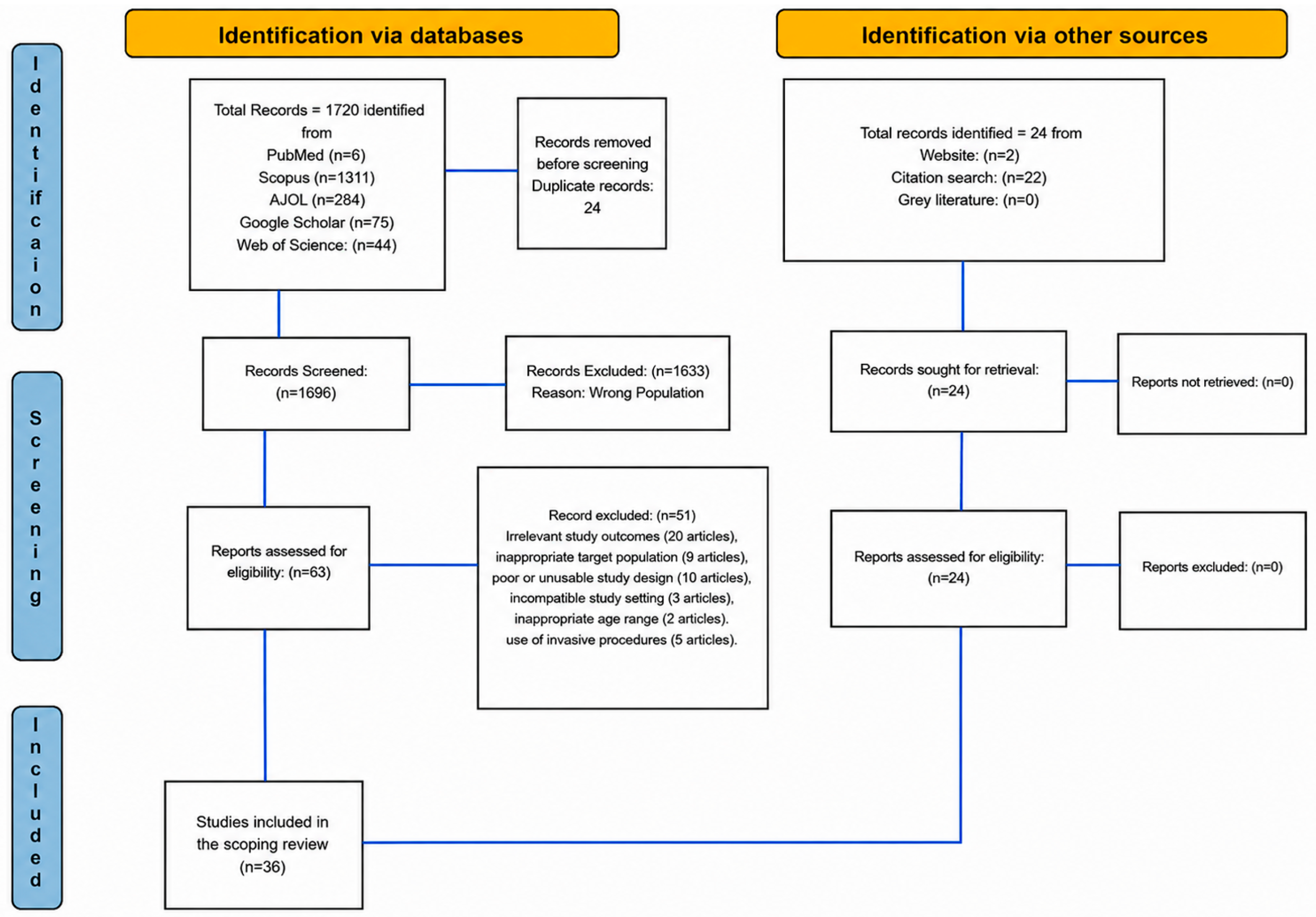
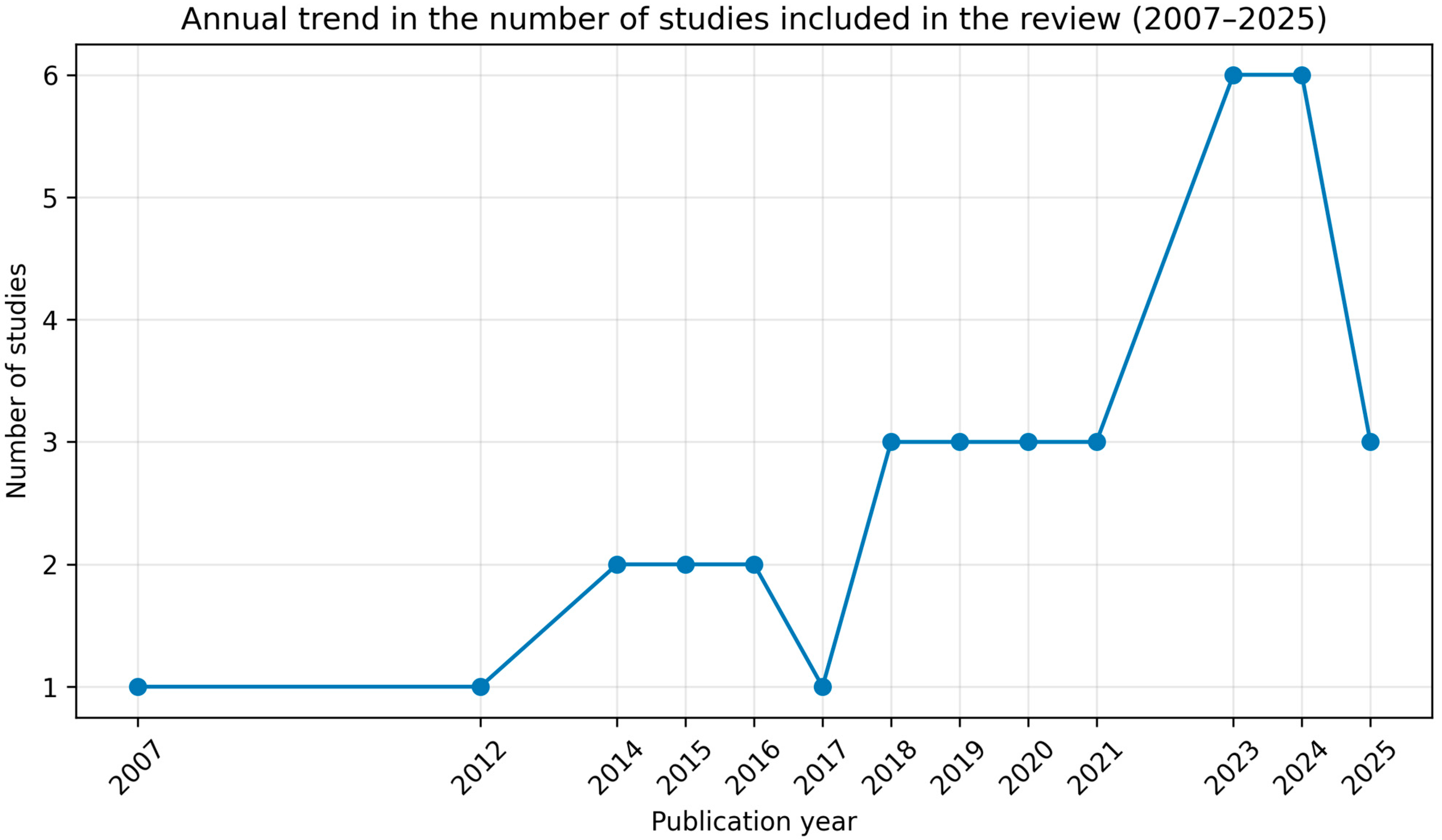
3.1. Characteristics of Included Studies
3.2. Non-Invasive Behavioural Strategies Evaluated for Neurobiological Impacts
3.3. Neurobiological Outcomes Assessed
3.4. Stress Biomarkers: HPA Axis Activation
3.5. Autonomic Nervous System Activity
3.6. Evolution of Behavioural Interventions for Paediatric Dental Anxiety
3.7. Behavioural and Self-Reported Measures of Anxiety and Fear
- Child-Reported Anxiety and Fear Instruments: The tools comprised validated pictorial and verbal scales designed to capture the child’s subjective internal state, circumventing the limitations of literacy and developmental comprehension. The Facial Image Scale was the single most frequently employed instrument [23,30,31,32,33,37,38,39,41,44,45]. The Venham picture test and its variants—the Venham 6-point index and Venham’s rating of clinical anxiety—constituted the second most prevalent subjective measure [25,27,34,35,38,43,49,55]. Anxiety-specific multi-item scales were employed to provide greater granularity. The modified Child Dental Anxiety Scale (MCDAS) and its faces version, (MCDAS(f), were utilised [24,26,50]. Broader fear assessment was captured through the Dental sub-scale of the Children’s Fear Survey Schedule [28] and Corah’s Dental Anxiety Scale [54]. Regionally adapted instruments included the modified Abeer Dental Anxiety Scale—Arabic version [40], the Romanian IDAF-4C+ [53]. Notably, Kilic et al. [50] introduced the novel Child Drawing: Hospital (CD: H) scale, a projective measure that circumvents verbal response biases.
- Pain Perception Instruments: Pain assessment was predominantly executed through self-report scales, with the Wong–Baker FACES pain rating scale featuring most prominently [24,34,46,47,49]. The visual analogue scale was also employed [29,51], while the Faces pain scale—revised was used for its improved psychometric properties over earlier iterations [42,51]. One study utilised the standard Pain Faces scale [48].
- Clinician/Observer-Rated Behavioural and Anxiety Scales: Observer-rated instruments served as the bridge between subjective experience and objective clinical presentation, mitigating the limitations of child self-report in high-stress environments. The Frankl behaviour rating scale, particularly Wright’s modification, was the most frequently employed observer-rated tool [23,26,37,43,44]. The FLACC scale (Face, Legs, Activity, Cry, Consolability) and its revised version (r-FLACC) provided a standardised behavioural pain assessment for younger or non-verbal children [34,37,42,45,48,51]. The Venham Anxiety and behavioural rating scales—including the standard Venham scale, the modified Venham’s Clinical Ratings of Anxiety and Cooperative Behavior (MVARS), and the Venham 6-point index—were employed in some studies [27,40,41,46,56]. These scales offer the advantage of simultaneously rating both anxiety and cooperation. The Houpt Scale was selected for its comprehensive assessment of overall behaviour and treatment acceptability [26,49]. The Sounds, Eyes, and Motor Scale was employed in one study as an objective observer-rated anxiety measure [49]. The Raghavendra Madhuri and Sujata pictorial scale was also utilised in one study [36], representing a culturally adapted Indian instrument. Kaur et al., 2018 [28] additionally employed a dedicated dentist-assessed clinical anxiety rating scale alongside a Cooperative behavioural rating scale.
- Parental and Proxy Reports: A minority of studies employed parent and child self-report of anxiety as parallel measures, acknowledging the importance of caregiver perspective in the paediatric dental setting [6,52]. The synthesis of findings demonstrates that while self-reported anxiety improved across interventions using tools such as the FIS, Frankl scale, and Venham scales, physiological responses showed greater variability. VR distraction was assessed using multiple tool combinations, and its impact was assessed across subjective, behavioural, and neuroendocrine domains [24,25,34,40]. Disjunctions between subjective improvement and physiological measures were also observed [6,26,28,32,49].
4. Discussion
5. Conclusions
Supplementary Materials
Author Contributions
Funding
Institutional Review Board Statement
Informed Consent Statement
Data Availability Statement
Conflicts of Interest
Abbreviations
| BMT | Behaviour Management Technique |
| PRISMA | Preferred Reporting Items for Systematic Reviews and Meta-Analyses |
| ANS | Autonomic Nervous System |
| HPA | Hypothalamic–Pituitary–Adrenal |
| RCTs | Randomised Controlled Trials |
| OSF | Open Science Framework |
References
- Răducanu, A.M.; Feraru, V.; Herteliu, C. Assessment of the prevalence of dental fear and its causes among children and adolescents attending a department of paediatric dentistry in Bucharest. J. Clin. Pediatr. Dent. 2019, 43, 405–411. [Google Scholar] [CrossRef] [Scilit]
- Piechal, A.; Siekierska, E.; Blecharz-Klin, K. Etiology of Dental Anxiety and Dental Phobia: Review. Eur. J. Dent. 2026, 20, 13–22. [Google Scholar] [CrossRef] [Scilit]
- Fernandes, S.C.; Louceiro, A.; Lopes, L.B.; Esteves, F.; Arriaga, P. Children’s attitudes and behaviors about oral health and dental practices. Healthcare 2021, 9, 416. [Google Scholar] [CrossRef] [Scilit]
- Gupta, N.; Singh, D.; Tuli, A.; Gambhir, N.; Sachdeva, P.; Singh, B.P. Behavior management in pediatric dentistry: Traditional technique versus modern approaches. Santosh Univ. J. Health Sci. 2026, 11, 286–289. [Google Scholar] [CrossRef] [Scilit]
- Almaeen, S.H.; Alam, M.K.; Alruwaili, H.O.; Alshammri, B.S. Comparative Study of Behavior Management Techniques in Pediatric Dentistry. J. Pharm. Bioallied Sci. 2025, 17, S1249–S1251. [Google Scholar] [CrossRef] [Scilit]
- Vincent, A.; Heima, M.; Farkas, K.J. Therapy dog support in pediatric dentistry: A social welfare intervention for reducing anticipatory anxiety and situational fear in children. Child Adolesc. Soc. Work J. 2020, 37, 615–629. [Google Scholar] [CrossRef] [Scilit]
- Gökoğlu, A.; Sukut, Ö. Should I play or should I watch: The effects of active and passive distraction methods on children’s pain, fear and anxiety during invasive procedures: A randomized controlled clinical trial. BMC Pediatr. 2025, 25, 875. [Google Scholar] [CrossRef] [Scilit]
- Chang, C.T.; Badger, G.R.; Acharya, B.; Gaw, A.F.; Barratt, M.S.; Chiquet, B.T. Influence of ethnicity on parental preference for pediatric dental behavioral management techniques. Pediatr. Dent. 2018, 40, 265–272. [Google Scholar]
- Guinot, F.; Virolés, M.; Lluch, C.; Costa, A.L.; Veloso, A. Spanish and Portuguese parental acceptance of behavior management techniques in pediatric dentistry. J. Clin. Pediatr. Dent. 2021, 45, 247–252. [Google Scholar] [CrossRef] [Scilit]
- Al Zoubi, L.; Schmoeckel, J.; Mustafa Ali, M.; Splieth, C. Parental acceptance of advanced behaviour management techniques in paediatric dentistry in families with different cultural backgrounds. Eur. Arch. Paediatr. Dent. 2021, 22, 707–713. [Google Scholar] [CrossRef] [Scilit]
- Hill, B.; Fadavi, S.; LeHew, C.W.; Rada, R. Effect of caregiver’s race and ethnicity on acceptance of passive immobilization for their child’s dental treatment. J. Dent. Child. 2019, 86, 3–9. [Google Scholar]
- Reich, S.M.; Ochoa, W.; Gaona, A.; Salcedo, Y.; Bardales, G.E.; Newhart, V.; Lin, J.; Díaz, G. Disparities in caregivers’ experiences at the dentist with their young child. Acad. Pediatr. 2019, 19, 969–977. [Google Scholar] [CrossRef] [Scilit]
- Heinrichs, M.; Baumgartner, T.; Kirschbaum, C.; Ehlert, U. Social support and oxytocin interact to suppress cortisol and subjective responses to psychosocial stress. Biol. Psychiatry 2003, 54, 1389–1398. [Google Scholar] [CrossRef] [Scilit]
- Hermans, E.J.; Henckens, M.J.A.G.; Joëls, M.; Fernández, G. Dynamic adaptation of large-scale brain networks in response to acute stressors. Trends Neurosci. 2014, 37, 304–314. [Google Scholar] [CrossRef] [Scilit]
- Sah, P.; Faber, E.S.; Lopez De Armentia, M.; Power, J. The amygdaloid complex: Anatomy and physiology. Physiol. Rev. 2003, 83, 803–834. [Google Scholar] [CrossRef] [Scilit]
- Bhatnagar, S.; Vining, C.; Denski, K. Regulation of chronic stress-induced changes in hypothalamic-pituitary-adrenal activity by the basolateral amygdala. Ann. N. Y. Acad. Sci. 2004, 1032, 315–319. [Google Scholar] [CrossRef] [Scilit]
- Buckner, R.L.; Andrews-Hanna, J.R.; Schacter, D.L. The brain’s default network: Anatomy, function, and relevance to disease. Ann. N. Y. Acad. Sci. 2008, 1124, 1–38. [Google Scholar] [CrossRef] [Scilit]
- Ironside, M.; Browning, M.; Ansari, T.L.; Harvey, C.J.; Sekyi-Djan, M.N.; Bishop, S.J.; Harmer, C.J.; O’Shea, J. Effect of prefrontal cortex stimulation on regulation of amygdala response to threat in individuals with trait anxiety: A randomized clinical trial. JAMA Psychiatry 2019, 76, 71–78. [Google Scholar] [CrossRef] [Scilit]
- Arksey, H.; O’Malley, L. Scoping studies: Towards a methodological framework. Int. J. Soc. Res. Methodol. 2005, 8, 19–32. [Google Scholar] [CrossRef] [Scilit]
- Tricco, A.C.; Lillie, E.; Zarin, W.; O’Brien, K.K.; Colquhoun, H.; Levac, D.; Moher, D.; Peters, M.D.J.; Horsley, T.; Weeks, L.; et al. PRISMA Extension for Scoping Reviews (PRISMA-ScR): Checklist and explanation. Ann. Intern. Med. 2018, 169, 467–473. [Google Scholar] [CrossRef] [Scilit] [PubMed]
- Pollock, D.; Peters, M.D.; Khalil, H.; McInerney, P.; Alexander, L.; Tricco, A.C.; Evans, C.; de Moraes, É.B.; Godfrey, C.M.; Pieper, D.; et al. Recommendations for the extraction, analysis, and presentation of results in scoping reviews. JBI Evid. Synth. 2023, 21, 520–532. [Google Scholar] [CrossRef] [Scilit]
- McGowan, J.; Sampson, M.; Salzwedel, D.M.; Cogo, E.; Foerster, V.; Lefebvre, C. PRESS Peer Review of Electronic Search Strategies: 2015 Guideline Statement. J. Clin. Epidemiol. 2016, 75, 40–46. [Google Scholar] [CrossRef] [Scilit]
- Raseena, K.T.; Jeeva, P.P.; Kumar, A.; Balachandran, D.; Anil, A.; Ramesh, R. A comparative study of tell-show-do technique with and without the aid of a virtual tool in the behavior management of 6–9-year-old children: A nonrandomized, clinical trial. J. Indian Soc. Pedod. Prev. Dent. 2020, 38, 393–399. [Google Scholar] [CrossRef] [Scilit]
- Shetty, V.; Suresh, L.R.; Hegde, A.M. Effect of virtual reality distraction on pain and anxiety during dental treatment in 5 to 8-year-old children. J. Clin. Pediatr. Dent. 2019, 43, 97–102. [Google Scholar] [CrossRef] [Scilit]
- Suresh, L.R.; Shetty, V. Effect of Virtual Reality Distraction Method on the Level of Salivary Cortisol in Children with Autism Spectrum Disorder During Dental Treatment. J. Autism Dev. Disord. 2024, 56, 1737–1746. [Google Scholar] [CrossRef] [Scilit]
- Nuvvula, S.; Alahari, S.; Kamatham, R.; Challa, R.R. Effect of audiovisual distraction with 3D video glasses on dental anxiety of children experiencing administration of local analgesia: A randomised clinical trial. Eur. Arch. Paediatr. Dent. 2015, 16, 43–50. [Google Scholar] [CrossRef] [Scilit]
- Prabhakar, A.R.; Marwah, N.; Raju, O.S. A comparison between audio and audiovisual distraction techniques in managing anxious pediatric dental patients. J. Indian Soc. Pedod. Prev. Dent. 2007, 25, 177–182. [Google Scholar] [CrossRef] [Scilit]
- Kaur, R.; Jindal, R.; Dua, R.; Mahajan, S.; Sethi, K.; Garg, S. Comparative evaluation of the effectiveness of audio and audiovisual distraction aids in the management of anxious pediatric dental patients. J. Indian Soc. Pedod. Prev. Dent. 2015, 33, 192. [Google Scholar] [CrossRef] [Scilit]
- Agarwal, N.; Dhawan, J.; Kumar, D.; Anand, A.; Tangri, K. Effectiveness of Two Topical Anaesthetic Agents used along with Audio Visual Aids in Paediatric Dental Patients. J. Clin. Diagn. Res. 2017, 11, ZC80–ZC83. [Google Scholar] [CrossRef] [Scilit]
- Vishwakarma, A.P.; Bondarde, P.A.; Patil, S.B.; Dodamani, A.S.; Vishwakarma, P.Y.; Mujawar, S. Effectiveness of two different behavioral modification techniques among 5–7-year-old children: A randomized controlled trial. J. Indian Soc. Pedod. Prev. Dent. 2017, 35, 143–149. [Google Scholar] [CrossRef] [Scilit]
- Pande, P.; Rana, V.; Srivastava, N.; Kaushik, N. Effectiveness of different behavior guidance techniques in managing children with negative behavior in a dental setting: A randomized controlled study. J. Indian Soc. Pedod. Prev. Dent. 2020, 38, 259–265. [Google Scholar] [CrossRef] [Scilit]
- Srinivasan, D.; Babu, A.; Ar, S.E.; Valli, L.M. A Comparative Study of the CARD™ System and Tell-show-do Technique in the Behavior Management of 6–10-year-old Children. Int. J. Clin. Pediatr. Dent. 2025, 18, 53–57. [Google Scholar] [CrossRef] [Scilit]
- Chaitanya, P.; Vinay, C.; Uloopi, K.; RojaRamya, K.S.; Ahalya, P.; Varshitha, K. Effectiveness of Distraction with Virtual Reality Eyewear in Managing 6–11-year-old Children with Hearing Impairment during Dental Treatment: A Randomized Controlled Trial. Int. J. Clin. Pediatr. Dent. 2023, 16, 820–823. [Google Scholar] [CrossRef] [Scilit]
- Pathak, P.D.; Lakade, L.S.; Patil, K.V.; Shah, P.P.; Patel, A.R.; Davalbhakta, R.N. Clinical evaluation of feasibility and effectiveness using a virtual reality device during local anesthesia and extractions in pediatric patients. Eur. Arch. Paediatr. Dent. 2023, 24, 379–386. [Google Scholar] [CrossRef] [Scilit]
- Thakkar, T.K.; Naik, S.N.; Dixit, U.B. Assessment of dental anxiety in children between 5 and 10 years of age in the presence of a therapy dog: A randomized controlled clinical study. Eur. Arch. Paediatr. Dent. 2021, 22, 459–467. [Google Scholar] [CrossRef] [Scilit]
- Elicherla, N.R.; Saikiran, K.V.; Anchala, K.; Elicherla, S.R.; Nuvvula, S. Evaluation of the effectiveness of tell-show-do and ask-tell-ask in the management of dental fear and anxiety: A double-blinded randomized controlled trial. J. Dent. Anesth. Pain Med. 2024, 24, 57–65. [Google Scholar] [CrossRef] [Scilit]
- Radhakrishna, S.; Srinivasan, I.; Setty, J.V.; DR, M.K.; Melwani, A.; Hegde, K.M. Comparison of three behavior modification techniques for management of anxious children aged 4–8 years. J. Dent. Anesth. Pain Med. 2019, 19, 29–36. [Google Scholar] [CrossRef] [Scilit]
- Khandelwal, D.; Kalra, N.; Tyagi, R.; Khatri, A.; Gupta, K. Control of anxiety in pediatric patients using “Tell Show Do” method and audiovisual distraction. J. Contemp. Dent. Pract. 2018, 19, 1058–1064. [Google Scholar] [CrossRef] [Scilit]
- Karekar, P.; Bijle, M.N.; Walimbe, H. Effect of three behavior guidance techniques on anxiety indicators of children undergoing diagnosis and preventive dental care. J. Clin. Pediatr. Dent. 2019, 43, 167–172. [Google Scholar] [CrossRef] [Scilit]
- Bagher, S.M.; Felemban, O.M.; Alandijani, A.A.; Tashkandi, M.M.; Bhadila, G.Y.; Bagher, A.M. The effect of virtual reality distraction on anxiety level during dental treatment among anxious pediatric patients: A randomized clinical trial. J. Clin. Pediatr. Dent. 2023, 47, 63–71. [Google Scholar] [CrossRef] [Scilit]
- Al-Khotani, A.; Bello, L.A.; Christidis, N. Effects of audiovisual distraction on children’s behaviour during dental treatment: A randomized controlled clinical trial. Acta Odontol. Scand. 2016, 74, 494–501. [Google Scholar] [CrossRef] [Scilit]
- Mitrakul, K.; Asvanund, Y.; Arunakul, M.; Paka-akekaphat, S. Effect of audiovisual eyeglasses during dental treatment in 5–8 year-old children. Eur. J. Paediatr. Dent. 2015, 16, 239–245. [Google Scholar]
- Paryab, M.; Arab, Z. The effect of filmed modeling on the anxious and cooperative behavior of 4–6 years old children during dental treatment: A randomized clinical trial study. Dent. Res. J. 2014, 11, 502–507. [Google Scholar]
- Abbasi, H.; Saqib, M.; Jouhar, R.; Lal, A.; Ahmed, N.; Ahmed, M.A.; Alam, M.K. The Efficacy of Little Lovely Dentist, Dental Song, and Tell-Show-Do Techniques in Alleviating Dental Anxiety in Paediatric Patients: A Clinical Trial. BioMed Res. Int. 2021, 2021, 1119710. [Google Scholar] [CrossRef] [Scilit]
- Abdalhai, R.; Kouchaji, C.; Alkhatib, R. The effect of aromatherapy with Lavender-Neroli oil and music in management of pediatric dental anxiety: A randomized controlled trial. BDJ Open 2024, 10, 5. [Google Scholar] [CrossRef] [Scilit]
- Mohamed, Y.S.; Omar, O.M. Efficacy of external vibration versus music distraction on dental anxiety and pain perception during local anaesthetic administration in children: A randomized clinical study. Adv. Dent. J. 2025, 7, 18–27. [Google Scholar] [CrossRef] [Scilit]
- Omer, M.; AbdelWahab, S.A.; Helmy, Y.S. Scentsational Smiles: The Impact of Aromatherapy on Alleviating Dental Anxiety in Children. Egypt. Dent. J. 2024, 70, 1039–1056. [Google Scholar] [CrossRef] [Scilit]
- El-Sharkawi, H.F.; El-Housseiny, A.A.; Aly, A.M. Effectiveness of New Distraction Technique on Pain Associated with Injection of Local Anesthesia for Children. Pediatr. Dent. 2012, 34, e35–e38. [Google Scholar]
- Üstün, N.; Akgöl, B.B.; Bayram, M. Cartoon-assisted visual/auditory distraction usage in paediatric dental care, assessment of effects on patient anxiety, pain, and behaviour: A randomised crossover clinical trial. BMC Oral Health 2025, 25, 425. [Google Scholar] [CrossRef] [Scilit]
- Kilic, E.; Aydinoglu, S.; Gunacar, D.N. White vs. colored coats: Which reduces dental anxiety better? BMC Oral Health 2025, 25, 661. [Google Scholar] [CrossRef] [Scilit]
- Bagattoni, S.; D’ALessandro, G.; Sadotti, A.; Alkhamis, N.; Piana, G. Effects of audiovisual distraction in children with special healthcare needs during dental restorations: A randomized crossover clinical trial. Int. J. Paediatr. Dent. 2018, 28, 111–120. [Google Scholar] [CrossRef] [Scilit]
- Guinot Jimeno, F.; Mercadé Bellido, M.; Cuadros Fernández, C.; Lorente Rodríguez, A.I.; Llopis Pérez, J.; Boj Quesada, J.R. Effect of audiovisual distraction on children’s behaviour, anxiety and pain in the dental setting. Eur. J. Paediatr. Dent. 2014, 15, 297–302. [Google Scholar]
- Bucur, S.M.; Crișan, I.M.; Cocoș, D.I.; Bud, E.S.; Galea, C. Observational Study on Progressive Muscle Relaxation and Breathing Control for Reducing Dental Anxiety in Children. Medicina 2025, 61, 876. [Google Scholar] [CrossRef] [Scilit]
- Pinheiro, S.L.; Silva, C.; Luiz, L.; Silva, N.; Fonseca, R.; Velásquez, T.; Grandizoli, D.R. Dog-assisted therapy for control of anxiety in pediatric dentistry. J. Clin. Pediatr. Dent. 2023, 47, 38–43. [Google Scholar] [CrossRef] [Scilit]
- Reis, A.C.; Sanchoten, M.C.; Pereira, K.R.; Dalpian, D.M.; Dotto, P.P.; Carpes, A.D.; Santos, B.Z. Levels of anxiety and salivary alpha-amylase in children during restorative dental treatment. Pesqui. Bras. Odontopediatria Clín. Integr. 2016, 16, 499–509. [Google Scholar] [CrossRef] [Scilit]
- Vernice, A.L. Say “Ah,” Not “Ahhh!”—Parent Intervention for the Reduction of Dental Anxiety in a Child with Autism. Doctoral Dissertation, St. John’s University, New York, NY, USA, 2024. [Google Scholar]
- Janthasila, N.; Keeratisiroj, O. Music therapy and aromatherapy on dental anxiety and fear: A randomized controlled trial. J. Dent. Sci. 2023, 18, 203–210. [Google Scholar] [CrossRef] [Scilit]
- Peters, M.; Godfrey, C.; McInerney, P.; Munn, Z.; Tricco, A.; Khalil, H. Chapter 10: Scoping Reviews; JBI: Victoria, Australia, 2024. [Google Scholar] [CrossRef] [Scilit]
- Munn, Z.; Peters, M.D.; Stern, C.; Tufanaru, C.; McArthur, A.; Aromataris, E. Systematic review or scoping review? Guidance for authors when choosing between a systematic or scoping review approach. BMC Med. Res. Methodol. 2018, 18, 143. [Google Scholar] [CrossRef] [PubMed]
- Chandran, L.S.; Issac, J.S.; Girija, P.; Thomas, P.T.; Shirli, A.D.; Jalal, S.A. Effectiveness of Two Types of Distraction Techniques in the Management of Pain and Anxiety during Dental Treatment in 6–9-year-old Children. Int. J. Clin. Pediatr. Dent. 2024, 17, 291–296. [Google Scholar] [CrossRef] [Scilit]
- Krause, L.; Askew, C. Preventing and reducing fear using positive modelling: A systematic review of experimental research with children. Behav. Res. Ther. 2022, 148, 103992. [Google Scholar] [CrossRef] [Scilit]
- Ashley, P.F.; Bonetti, D.L.; Lombardo, G.; Riley, P.; Anthonappa, R.P. Non-pharmacological interventions for managing dental anxiety in children. Cochrane Database Syst. Rev. 2017, 2017, CD012676. [Google Scholar] [CrossRef] [Scilit]
- Farzanegan, P.; Ghasempour, M.; Massoodi, A.; Shirafkan, H. Correlation between child’s dental fear and anxiety symptoms and evaluating factors associated with dental fear. Health Sci. Rep. 2025, 8, e70879. [Google Scholar] [CrossRef] [Scilit]
- Wright, G.Z.; Stigers, J.I. Non-pharmacologic management of children’s behaviors. In Dentistry for the Child and Adolescent, 9th ed.; Dean, J.A., Avery, D.R., McDonald, R.E., Eds.; CV Mosby Co.: St. Louis, MO, USA, 2011; p. 30. [Google Scholar]
- Townsend, J.A. Behaviour guidance of the paediatric dental patient. In Pediatric Dentistry-Infancy Through Adolescence, 5th ed.; Casa Massimo, P.S., Fields, H.W., McTigue, D.J., Nowak, A.J., Eds.; Elsevier Saunders: Philadelphia, PA, USA, 2013; p. 358. [Google Scholar]
- Bandura, A. Social Learning Theory; Prentice-Hall: Hoboken, NJ, USA, 1977. [Google Scholar]
- Skinner, B.F. The Behavior of Organisms: An Experimental Analysis; Appleton-Century: New York, NY, USA, 1938. [Google Scholar]
- Wolpe, J. Psychotherapy by Reciprocal Inhibition; Stanford University Press: Stanford, CA, USA, 1958. [Google Scholar]
- Paryab, M.; Arab, Z. Comparative effectiveness of tell-show-do and modeling techniques in reducing dental anxiety among children: A randomized controlled trial. Eur. Arch. Paediatr. Dent. 2022, 23, 127–135. [Google Scholar] [CrossRef] [Scilit]
- Ehizele, A.O.; Ayamolowo, L.B.; Ishola, A.; Foláyan, M.O. Culture and behaviour management of children in the dental clinic: A scoping review. Dent. J. 2025, 13, 186. [Google Scholar] [CrossRef] [Scilit]
- Lekhwani, P.S.; Nigam, A.G.; Marwah, N.; Jain, S. Comparative evaluation of Tell-Show-Do technique and its modifications in managing anxious pediatric dental patients among 4–8 years of age. J. Indian Soc. Pedod. Prev. Dent. 2023, 41, 141–148. [Google Scholar] [CrossRef] [Scilit]
- Ramirez, I.; Reis, C.L.B.; Madalena, I.R.; Filho, F.B.; Oliveira, M.A.H.D.M.; Antunes, L.S.; Antunes, L.A.A.; Kirschneck, C.; Kuechler, E.C.; Oliveira, D.S.B.D. The effect of audio distraction in reducing signs of stress and anxiety during pediatric dental treatment: A systematic review and meta-analysis. Clin. Oral Investig. 2025, 29, 58. [Google Scholar] [CrossRef] [Scilit]
- Cvijetic, S.; Keser, I.; Jurasović, J.; Orct, T.; Babić, Ž.; Boschiero, D.; Ilich, J.Z. Diurnal Salivary Cortisol in Relation to Body Composition and Heart Rate Variability in Young Adults. Front. Endocrinol. 2022, 13, 831831. [Google Scholar] [CrossRef] [Scilit]
- Dutta, K.; Rai, K.; Shetty, A.A.; Ananthu, H.; Nair, M.R. Assessment of stress levels in mothers of children with autism spectrum disorder using video self-modeling during children’s dental procedure. J. Oral Biol. Craniofacial Res. 2025, 15, 779–782. [Google Scholar] [CrossRef] [Scilit]
- Lago-Rodriguez, A.; Lopez-Alonso, V.; Fernández-del-Olmo, M. Mirror neuron system and observational learning: Behavioral and neurophysiological evidence. Behav. Brain Res. 2013, 248, 104–113. [Google Scholar] [CrossRef] [Scilit]
- Zaki, H.A.; Ling, W.W.; Tran, N.; Majid, A. Effectiveness of virtual reality distraction on dental pain and anxiety in children: A meta-analysis. J. Dent. Res. 2025, in press. [Google Scholar]
- Brandão, C.; Sampaio, M.; Sousa-Gomes, V.; Fávero, M.; Moreira, D. Effects of Animal-Assisted Therapy for Anxiety Reduction in Children and Adolescents: A Systematic Review. J. Clin. Med. 2025, 14, 287. [Google Scholar] [CrossRef] [Scilit]
- Taddio, A.; McMurtry, C.M.; Bucci, L.M.; MacDonald, N.; Ilersich, A.N.T.; Ilersich, A.L.T.; Alfieri-Maiolo, A.; Devlaming-Kot, C.; Alderman, L.; Pain Pain Go Away Team; et al. Overview of a knowledge translation (KT) project to improve the vaccination experience at school: The CARD™ system. Paediatr. Child Health 2019, 24, S3–S18. [Google Scholar] [CrossRef] [Scilit]
- Matousek, R.H.; Dobkin, P.L.; Pruessner, J. Cortisol as a marker for improvement in mindfulness-based stress reduction. Complement. Ther. Clin. Pract. 2010, 16, 13–19. [Google Scholar] [CrossRef] [Scilit]
- Petrakova, L.; Doering, B.K.; Vits, S.; Engler, H.; Rief, W.; Schedlowski, M.; Grigoleit, J.-S. Psychosocial Stress Increases Salivary Alpha-Amylase Activity Independently from Plasma Noradrenaline Levels. PLoS ONE 2015, 10, e0134561. [Google Scholar] [CrossRef] [Scilit]
- Herman, J.P.; McKlveen, J.M.; Ghosal, S.; Kopp, B.; Wulsin, A.; Makinson, R.; Scheimann, J.; Myers, B. Regulation of the Hypothalamic-Pituitary-Adrenocortical Stress Response. Compr. Physiol. 2016, 6, 603–621. [Google Scholar] [CrossRef] [Scilit]
- Chukwuemeka, A.N.; Oveh, R.; Dabar, A.; Afolabi, O.; Ibraheem, S.A.; Akinsolu, F.T.; Salako, A.O.; Alade, O.T.; Owotade, F.; Eleje, G.U.; et al. A scoping review of school-based oral health interventions among adolescents in Nigeria. Front. Oral Health 2025, 6, 1577753. [Google Scholar] [CrossRef] [Scilit]
- de Nocker, Y.L.; Toolan, C.K. Using Telehealth to Provide Interventions for Children with ASD: A Systematic Review. Rev. J. Autism Dev. Disord. 2023, 10, 82–112. [Google Scholar] [CrossRef] [Scilit]
- Burback, L.; Brult-Phillips, S.; Nijdam, M.J.; McFarlane, A.; Vermetten, E. Treatment of posttraumatic stress disorder: A state-of-the-art review. Curr. Neuropharmacol. 2024, 22, 557–635. [Google Scholar] [CrossRef] [Scilit]
- Taddio, A.; Alderman, L.; Freedman, T.; McDowall, T.; McMurtry, C.M.; MacDonald, N.; Devlaming-Kot, C.; Alfieri-Maiolo, A.; Pain Pain Go Away Team. The CARD™ System for improving the vaccination experience at school: Results of a small-scale implementation project on program delivery. Paediatr. Child Health 2019, 24, S54–S67. [Google Scholar] [CrossRef] [Scilit]
- Haridoss, S.; Swaminathan, K.; Madiraju, G.S.; Ravi, R.; Mohan, R.; Thadani, M. Technology-enhanced behavior guidance for pediatric dental anxiety: A systematic review and meta-analysis of effectiveness and safety of virtual reality, augmented reality, biofeedback, and games. Front. Dent. Med. 2026, 7, 1819864. [Google Scholar] [CrossRef] [Scilit]

| S/N | Author(s) and Year of Publication | Country | Study Design | Sample Size | Age (Years) | Behavioural Management Interventions | Neurological Outcome | Biological Outcome |
|---|---|---|---|---|---|---|---|---|
| 1. | Vincent et al., 2020 [6] | USA | Time-series design | 18 | 8–12 years | Animal-assisted therapy (dog) | Fear and anxiety | Cortisol level, oxytocin level, salivary alpha-amylase |
| 2. | Raseena et al., 2020 [23] | India | Non-randomised controlled trial | 90 | 6–9 years | Tell–show–do | Anxiety | Heart rate oxygen saturation respiratory rate |
| 3. | Shetty et al., 2019 [24] | India | Quasi-experimental study | 120 | 5–8 years | Non-medical conversation, tell–show–do, conventional distraction, voice control | Anxiety | Salivary cortisol level |
| 4. | Suresh & Shetty, 2024 [25] | India | Randomised controlled trial | 40 | 8–15 years | Non-dental conversation, dental humour, tell–show–do, mild restraints and routine distractions | Pain, anxiety | Salivary cortisol level |
| 5. | Nuvvula et al., 2015 [26] | India | Randomised controlled trial | 90 | 7–10 years | Audiovisual distraction | Anxiety | Heart rate |
| 6. | Prabhakar et al., 2007 [27] | India | Comparative study | 60 | 4–8 years | Audio distraction and audio-visual distraction | Anxiety | Pulse rate and oxygen saturation |
| 7. | Kaur et al., 2018 [28] | India | Randomised controlled trial | 60 | 4–8 years | Audiovisual distraction | Anxiety | Heart rate |
| 8. | Agarwal et al., 2017 [29] | India | Randomised controlled trial | 120 | 3–14 years | Audiovisual distraction | Pain and anxiety | Heart rate and oxygen saturation |
| 9. | Vishwakarma et al., 2021 [30] | India | Randomised controlled trial | 98 | 5–7 years | Live modelling, and tell–play–do | Fear and anxiety | Heart rate |
| 10. | Pande et al., 2020 [31] | India | Randomised controlled trial | 60 | 5–8 years | Tell–show–do, audiovisual distraction (VR and mobile phone game distraction) | Fear and anxiety | Blood pressure and heart rate |
| 11. | Babu et al., 2024 [32] | India | Cross-sectional study | 40 | 6–10 years | Comfort, Ask, Relax, and Distract (CARD™) System and tell–show–do | Anxiety | Oxygen saturation and heart rate |
| 12. | Varshitha et al., 2023 [33] | India | Randomised controlled trial | 93 | 6–11 years | Distraction with VR Eyewear | Anxiety | Heart rate |
| 13. | Pathak et al., 2023 [34] | India | Randomised controlled trial | 30 | 6–12 years | Distraction with VR device | Anxiety and pain | Heart rate |
| 14. | Thakkar et al., 2021 [35] | India | Randomised controlled trial | 102 | 5–10 years | Animal-assisted therapy | Anxiety | Heart rate |
| 15. | Elicherlia et al., 2024 [36] | India | Randomised controlled trial | 50 | 7–11 years | Tell–show–do, ask–tell–do | Anxiety and fear | Heart rate |
| 16. | Radhakrishna et al., 2019 [37] | India | Randomised controlled trial | 60 | 4–8 years | Smartphone dentist game, tell–show–do | Anxiety | Pulse rate |
| 17. | Khandelwal et al., 2018 [38] | India | Randomised controlled trial | 400 | 5–8 years | Tell–show–do, audio-visual distraction | Anxiety | Blood pressure, pulse rate oxygen saturation |
| 18. | Karekar et al., 2019 [39] | India | Randomised controlled trial | 63 | 7–9 years | Tell–show–do and live and filmed modelling | Anxiety | Facial image Heart rate |
| 19. | Bagher et al., 2023 [40] | Saudi Arabia | Randomised controlled trial | 36 | 6–14 years | Distraction with VR | Anxiety | Salivary cortisol level and heart rate |
| 20. | Al-khotani et al., 2016 [41] | Saudi arabia | Randomised controlled trial | 56 | 7–9 years | Verbal communication and positive reinforcement | Anxiety | Blood pressure and heart rate |
| 21. | Mitrakul et al., 2015 [42] | Thailand | Randomised controlled trial | 48 | 4–16 years | Distraction with audio-visual (AV eyeglasses), tell–show–do, positive reinforcement, and conventional distraction | Fear and anxiety | Blood pressure and Heart rate |
| 22. | Paryab & Arab 2014 [43] | Iran | Randomised controlled trial | 46 | 4–6 years | Tell–show–do, filmed modelling | Anxiety | Heart rate Behaviour |
| 23. | Abbasi et al., 2021 [44] | Pakistan | Clinical trial | 160 | 6–11 years | Distraction with mobile application “little lovely dentist”, YouTube dental video songs, tell–show–do | Anxiety | Heart rate |
| 24. | Abdalhai et al., 2024 [45] | Syria | Randomised controlled trial | 56 | 6–10 years | Aromatherapy with music | Anxiety and pain | Blood pressure, heart rate, and oxygen saturation |
| 25. | Mohammed & Omer, 2023 [46] | Egypt | Randomised controlled trial | 90 | 5–11 years | Buzzy device and upbeat music | Anxiety and pain | Pulse rate, oxygen saturation |
| 26. | Omer et al., 2024 [47] | Egypt | Randomised controlled trials | 45 | 4–7 years | Aromatherapy | Anxiety | Pulse rate, oxygen saturation |
| 27. | El-Sharkawi et al., 2012 [48] | Egypt | Randomised controlled trial | 48 | 5–7 years | Tell–show–do, distraction with audiovisual video glasses | Pain and anxiety | Heart rate |
| 28. | Üstün et al., 2025 [49] | Turkey | Randomised controlled trial | 62 | 4–9 years | Cartoon-assisted visual/auditory distraction, tell–show–do | Anxiety and pain | Heart rate |
| 29. | Kilic et al., 2025 [50] | Turkey | Randomised controlled trial | 150 | 6–12 years | Tell–show–do | Anxiety | Blood pressure, pulse rate, oxygen saturation |
| 30. | Bagattoni et al., 2018 [51] | Italy | Randomised controlled trial | 48 | Audio-visual distraction using video eyeglasses | Fear and anxiety | Heart rate | |
| 31. | Guinot et al., 2014 [52] | Spain | Non-randomised controlled trial | 34 | 6–8 years | Distraction with audio-visual technique (cartoon film) | Pain and anxiety | Heart rate |
| 32. | Bucur et al., 2025 [53] | Switzerland | Observational study | 189 | 8–17 years | Jacobson’s progressive muscle relaxation and breathing techniques | Anxiety and stress | Heart rate, blood pressure |
| 33. | Pinheiro et al., 2023 [54] | Brazil | Non-randomised controlled trial | 59 | 4–14 years | Animal-assisted therapy (dog) | Anxiety | Heart rate |
| 34. | Reis et al., 2016 [55] | Brazil | Quasi-experimental | 69 | 4–12 years | Tell–show–do positive reinforcement, distraction, modelling, and aversive (voice control, physical containment, threat for responsible leave, request for responsible leave) techniques | Anxiety | Salivary alpha-amylase |
| 35. | Vernice, 2024 [56] | New York | Single case | 1 | 6 years | Parent training intervention, positive reinforcement, desensitisation, incorporating special interest, in vivo modelling, and providing choice. | Anxiety | Heart rate |
| 36. | Janthasila & Keeratisiroj, 2023 [57] | Thailand | Randomised controlled trial | 128 | 10–12 years | Aromatherapy, music therapy | Fear, anxiety | Heart rate, blood pressure, oxygen saturation |
| S/N | Author(s) | Tools to Measure Study Outcomes | Findings |
|---|---|---|---|
| 1 | Vincent et al., 2020 [6] | Oxytocin trended positively from baseline for most participants, though not statistically significantly. Cortisol decreased over the three time points, while alpha-amylase followed the trend of oxytocin more than cortisol. | |
| 2 | Raseena et al., 2020 [23] | Wright’s modification of Frankl’s behaviour rating scale and Facial Image Scale | Tell–show–do, when used with virtual tools, showed lower anxiety and improved cooperation during dental procedures than when tell–show–do was used alone. |
| 3 | Shetty et al., 2019 [24] | Revised modified child cental anxiety scale, Wong–Baker FACES pain rating scale | Reduction in pain perception, state anxiety and salivary cortisol in children using VR distraction. |
| 4 | Suresh & Shetty, 2024 [25] | Venham’s picture test and Frankl’s behaviour rating scale | Report on pain between groups, dental anxiety, and behaviour between dental visits was better in children for whom VR distraction was used compared to those using conventional behaviour management. Salivary cortisol levels were lower at pre-treatment for children for whom VR distraction was used, and lower post-treatment for children for whom VR was used, though both groups had lower cortisol levels post treatment. |
| 5 | Nuvvula et al., 2015 [26] | MCDAS(f), Wright’s modification of Frankl behaviour rating scale and Houpt scale | MCDAS(f) and the Houpt scale showed significant reduction in the group that used behaviour guidance techniques and audiovisual compared to those using behaviour guidance techniques and audio only and those using only basic behaviour guidance techniques. Pulse rate increased significantly in the three groups. |
| 6 | Prabhakar et al., 2007 [27] | Venham’s picture test, Venham’s rating of clinical anxiety | Audiovisual distraction technique was more effective in managing anxious paediatric dental patients compared to the audio distraction technique. |
| 7 | Kaur et al., 2018 [28] | Dental sub-scale of children’s fear survey schedule-short scale; dentists’ assessment of Clinical anxiety rating scale and co-operative behavioural rating scale. | No significant difference in pulse rate of the control group, audio-only group, and audiovisual group before, during, and after the procedures at first, second, and third visits. The audiovisual group showed significantly lower scores than the audio-only group and the control group. The audio-only group also showed a significantly lower score than the control group. |
| 8 | Agarwal et al., 2017 [29] | Visual analogue scale | Eutectic mixture of local anaesthetic cream and benzocaine (20%) gel was least effective in reducing the pain during the needle insertion when used without audiovisual aids compared to when used with audiovisual aids. |
| 9 | Vishwakarma et al., 2021 [30] | Facial Image Scale, Venham-6-point index | Pulse rate, Facial Image Scale, and Venham-6-point index scores were significantly lower among children who received tell–play–do intervention when compared to those who received live modelling intervention. |
| 10 | Pande et al., 2020 [31] | Frankl’s rating scale, Facial Image Scale | Physiological and non-physiological parameters significantly decreased post-intervention in all the groups—tell–show–do, audio distraction, audiovisual distraction and mobile phone game distraction—with a maximum decrease in the groups that received audiovisual distraction. |
| 11 | Babu et al., 2024 [32] | Facial Image Scale | No statistically significant differences were observed in the physiological parameters (oxygen saturation levels and pulse rates), emotional responses, and behavioural responses pre- and post-procedure. |
| 12 | Varshitha et al., 2023 [33] | Facial Image Scale | Postoperative pulse rate and Facial Image Scale score in the VR + modified tell–show–do group reduced significantly, while they increased significantly in the modified tell–show–do only group. |
| 13 | Pathak et al., 2023 [34] | Venham’s picture test, Wong–Baker FACES pain rating scale, and FLACC scale | At baseline, Venham’s picture test and heart rate showed no statistically significant difference in the groups using and not using a VR device. There was a statistically significant increase in post-procedure heart rates in the group not using a VR device, with no significant change in the group using a VR device. |
| 14 | Thakkar et al., 2021 [35] | Venham picture test | Pulse rate and the Venham picture test score were significantly lower in children who interacted with therapy dogs than in those who had dental treatment carried out in a regular dental setup. |
| 15 | Elicherla et al., 2024 [36] | Raghavendra Madhuri and Sujata pictorial scale | Children in the tell–show–do group had significantly lower heart rates and RMS-PS scores in intra-group comparisons. However, children in the ask–tell–ask group showed a significant reduction only in the RMS-PS scores but not in heart rate. |
| 16 | Radhakrishna et al., 2019 [37] | Face, leg activity, cry, consolability (FLACC) rating scale, Frankl’s behavioural scale, Facial Imaging Scale | The pulse rates, Facial Imaging Scale and FLACC scores were lower in more children with a Frankl’s behaviour rating score of 4, and there was better operator compliance in both the Tell–Show–Play-doh and smartphone dentist game groups than in the conventional tell–show–do group. |
| 17 | Khandelwal et al., 2018 [38] | Facial Image Scale, Venham’s picture test | Audiovisual distraction reduced anxiety better than tell–show–do. Combining tell–show–do and audiovisual distraction had an additive effect in the reduction in anxiety level. |
| 18 | Karekar et al., 2019 [39] | -Facial Image Scale | Children who underwent tell–show–do, live and filmed modelling during diagnosis and preventive dental care had significantly lower anxiety scores and heart rates after diagnosis and preventive dental care, except for the heart rate during diagnosis. |
| 17 | Bagher et al., 2023 [40] | Venham anxiety and behavioural rating scale, modified version of the Abeer Dental Anxiety Scale–Arabic version | At the end of the treatment, the salivary cortisol level was significantly lower in the VR distraction group when compared with those watching a video cartoon on a regular screen. Neither the Venham anxiety and behavioural rating scale nor the heart rate significantly differed between the groups. |
| 18 | Al-Khotani et al., 2016 [41] | Facial Image Scale, modified Venham’s clinical ratings of anxiety and cooperative behavior scale (MVARS) | The audiovisual distraction group showed significantly lower MVARS scores than the control group during treatment. The pulse rate was significantly increased in the control group during injection with local anaesthesia, but not in the audiovisual distraction group. |
| 19 | Mitrakul et al., 2015 [42] | Faces pain scale—revised, face, legs, activity, crying and consolability scale (FLACC) | The use of audiovisual eyeglasses reduced the heart rate and the FLACC score during pre-operation and the first use of a high-speed handpiece. Heart rate decreased during rubber dam placement, the first use of a high-speed handpiece, and during remaining treatment in the second visit as compared with the first visit with or without wearing the eyeglasses. |
| 20 | Paryab and Arab, 2014 [43] | Venham and Frankl’s rating scale | There were no statistically significant differences in heart rate measures, clinical anxiety, and cooperative behaviour scores between those who received tell–show–do at the first visit and treatment procedures performed by the dentist for the children at second visit vs. children who watched a film consisting of the procedure of tell–show–do performed on a child model at the first visit and treatment procedures performed by the dentist for the children at second visit. |
| 21 | Abbasi et al., 2021 [44] | Facial Image Scale, pulse oximeter, Frankl’s behavioural rating scale | Marked reduction in heart rate and Facial Image Scale scores were found in patients who received mobile applications and dental video songs post-operatively. An increase in heart rate and Facial Image Scale scores was seen in the tell–show–do and the control group post-operatively. |
| 22 | Abdalhai et al., 2024 [45] | Facial Image Scale, Facial Leg Activity Cry Consolability (FLACC) scale. | Dental anxiety and heart rate, and diastolic and systolic blood pressure were significantly lower in the aromatherapy with music group when compared to the control group, with no differences in pain perception and oxygen saturation between groups. |
| 23 | Mohammed & Omer, 2023 [46] | Venham clinical anxiety rating scale and Wong-Becker Faces pain rating scale. | Music significantly reduced pain and anxiety before, during, and after anaesthesia, while the Buzzy device had a more pronounced effect during the procedure. Both interventions led to significant changes in pulse rate, but oxygen saturation remained unaffected. |
| 24 | Omer et al., 2024 [47] | Wong–Baker scale | There was a statistically significant reduction in the mean scores of the Wong–Baker scale, pulse rate, oxygen saturation, and blood pressure in children with no interference before dental procedures, children who inhaled three drops of rosemary oil for 3 min, and children who inhaled two drops of lemongrass oil for 3 min before, during, and after dental procedures. |
| 25 | El-Sharkawi et al., 2012 [48] | Pain Faces scale, the Face, legs, activity, cry, consolability (FLACC) | The pain scores in the Pain Faces scale and the FLACC scale were significantly lower when the use of audiovisual distraction was used compared to when it was not used. |
| 26 | Üstün et al., 2025 [49] | Venham picture test, Wong–Baker FACES pain rating scale, Sounds, Eyes, and Motor Scale, and Houpt Scale. | The cartoon-assisted distraction technique did not significantly reduce anxiety compared to the tell–show–do method. A non-significant reduction in pain perception was observed during local anaesthesia with distraction. However, this technique significantly reduced self-reported pain during treatment and improved child cooperation and behaviour. |
| 27 | Kilic et al., 2025 [50] | Modified Child Dental Anxiety Scale Faces Version (MCDASf), Child Drawing: Hospital | Compared to the coloured coat group, MCDASf values recorded before both appointments were higher in the white coat group. Also, the CD: H values of the coloured coat group were significantly lower after preventive dental treatments. There were significantly lower pulse rates after, rather than before, appointments in both coat groups. The oxygen saturation was lower in the coloured coat group after dental examination and after preventive dental treatment. Diastolic blood pressure was lower after dental examination compared to before dental examination in the coloured coat group. |
| 28 | Bagattoni et al., 2018 [51] | Face pain scale—revised (FPS-R), the revised Face, Leg, Activity, Cry, and Consolability scale (r-FLACC), visual analogue scale | The mean FPS-R score and the mean r-FLACC score were significantly lower using only the audio–video distraction during the second clinical session. The use of video eyeglasses also significantly reduced the operator’s stress measured with the visual analogue scale. |
| 29 | Guinot et al., 2014 [52] | Parent and child self-report of anxiety | Significant improvement in the behaviour of children shown cartoon films. Also, there was a significant increase in heart rate when the anaesthetic was injected. No statistically significant differences existed between the visits in terms of parental perception of the patient’s anxiety, or the patient’s self-reported anxiety, pain and heart rate. |
| 30 | Bucur et al., 2025 [53] | The Romanian version of the IDAF-4C+ | Jacobson’s Progressive Muscle Relaxation led to the highest reductions in IDAF-4C+ scores and systolic blood pressure compared to breathing control. Breathing control showed moderate anxiety reduction with minor physiological changes. High anxiety–strong responders mainly benefited from JPMR; while those with moderate anxiety were partial responders and those with low anxiety were non-responders. |
| 31 | Pinheiro et al., 2023 [54] | Corah’s Dental Anxiety Scale | Significant reduction in heart rate in the AAT group compared to children who were conditioned by methods routinely used in the clinic. The heart rate of children conditioned by methods routinely used in the clinic did not change before, during, or after treatment. Children conditioned by methods routinely used in the clinic showed a significant increase in the Corah Dental Anxiety Score before and after treatment. In the AAT group, there was no change in Corah Dental Anxiety scores before and after treatment. |
| 32 | Reis et al., 2016 [55] | Venham picture test | Salivary alpha-amylase showed high and moderate levels before the dental procedure in most children. Behavioural management techniques were not associated with Venham picture test scores and salivary alpha-amylase activity. |
| 33 | Vernice, 2024 [56] | Venham anxiety and behaviour rating scale | The child’s Venham anxiety and behaviour rating scale score decreased, and cooperation during the dental exam increased |
| 34 | Janthasila & Keeratisiroj, 2023 [57] | None | The control group had increased heart rate. The music therapy group had decreased dental anxiety and fear as well as systolic blood pressure. The aromatherapy experimental group had increased oxygen saturation. The group receiving music therapy combined with aromatherapy had decreased dental anxiety and fear, heart rate, and systolic and diastolic blood pressure, with increased oxygen saturation values. Music therapy combined with aromatherapy had a co-influence on dental anxiety, fear, and oxygen saturation. |
Disclaimer/Publisher’s Note: The statements, opinions and data contained in all publications are solely those of the individual author(s) and contributor(s) and not of MDPI and/or the editor(s). MDPI and/or the editor(s) disclaim responsibility for any injury to people or property resulting from any ideas, methods, instructions or products referred to in the content. |
© 2026 by the authors. Licensee MDPI, Basel, Switzerland. This article is an open access article distributed under the terms and conditions of the Creative Commons Attribution (CC BY) license.
Share and Cite
Ayamolowo, L.B.; Raji, I.A.; Adesoji, B.A.; Adelakun, D.O.; Foláyan, M.O. Neurobiological Effects of Non-Invasive Behavioural Management Strategies in Paediatric Dentistry: A Scoping Review. Clin. Pract. 2026, 16, 160. https://doi.org/10.3390/clinpract16090160
Ayamolowo LB, Raji IA, Adesoji BA, Adelakun DO, Foláyan MO. Neurobiological Effects of Non-Invasive Behavioural Management Strategies in Paediatric Dentistry: A Scoping Review. Clinics and Practice. 2026; 16(9):160. https://doi.org/10.3390/clinpract16090160
Chicago/Turabian StyleAyamolowo, Love Bukola, Idayat Adetoun Raji, Bukola Abimbola Adesoji, Dorcas Oluwatola Adelakun, and Moréniké Oluwátóyìn Foláyan. 2026. "Neurobiological Effects of Non-Invasive Behavioural Management Strategies in Paediatric Dentistry: A Scoping Review" Clinics and Practice 16, no. 9: 160. https://doi.org/10.3390/clinpract16090160
APA StyleAyamolowo, L. B., Raji, I. A., Adesoji, B. A., Adelakun, D. O., & Foláyan, M. O. (2026). Neurobiological Effects of Non-Invasive Behavioural Management Strategies in Paediatric Dentistry: A Scoping Review. Clinics and Practice, 16(9), 160. https://doi.org/10.3390/clinpract16090160

