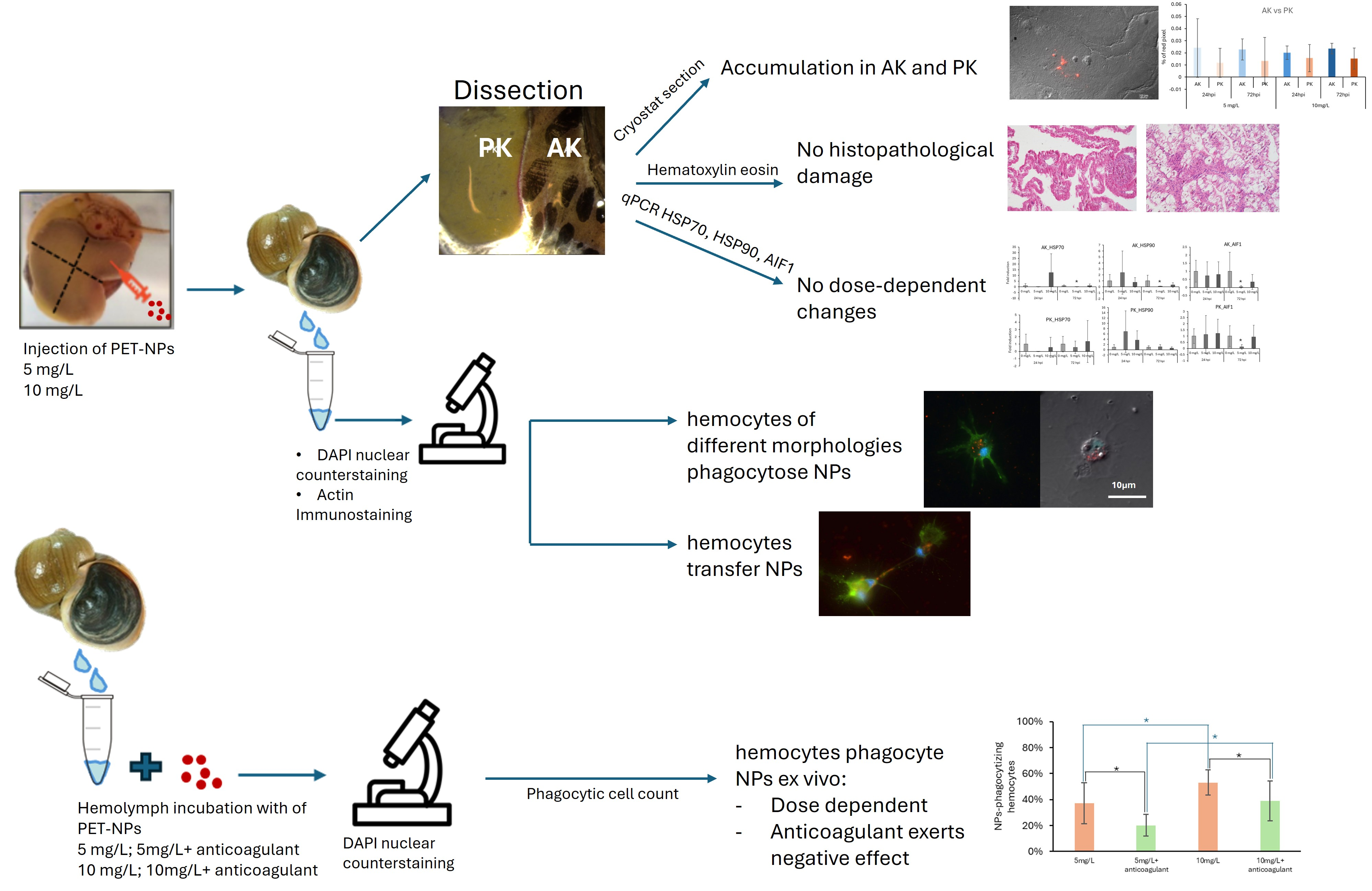

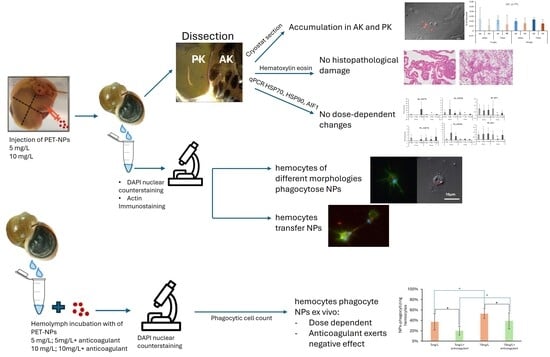
Renal Accumulation and Hemocyte-Mediated Internalization After Acute Exposure to Injected Polyethylene Terephthalate Nanoplastics (PET-NPs) in the Freshwater Gastropod Pomacea canaliculata

 , ,
, ,
Abstract
1. Introduction
2. Materials and Methods
2.1. Animal Husbandry and Acute Exposure to PET-NPs
- (i)
- control animals injected with FSS+ HFIP (hexafluor-2-propanol) 0.0035% solution (PET-NPs vehicle) [44] and sacrificed 24 h post-injection (hpi);
- (ii)
- control animals injected with FSS + HFIP 0.0035% and sacrificed 72 hpi;
- (iii)
- animals injected with 5 mg/L PET-NPs and sacrificed 24 hpi;
- (iv)
- animals injected with 5 mg/L PET-NPs and sacrificed 72 hpi;
- (v)
- animals injected with 10 mg/L PET-NPs and sacrificed 24 hpi;
- (vi)
- animals injected with 10 mg/L PET-NPs and sacrificed 72 hpi.
2.2. Hemolymph Collection and Dissection of Target Organs
2.3. PET-NPs Accumulation in Target Organs and Hemocytes
2.4. Morphological Analysis of AK and PK
2.5. Stress and Inflammation Related Gene Expression Analysis
2.6. Immunohistochemical Experiments on Circulating Hemocytes from Treated Snails
2.7. Ex Vivo Hemocyte Exposure to PET-NP
2.8. Image Acquisition and Analysis
3. Results
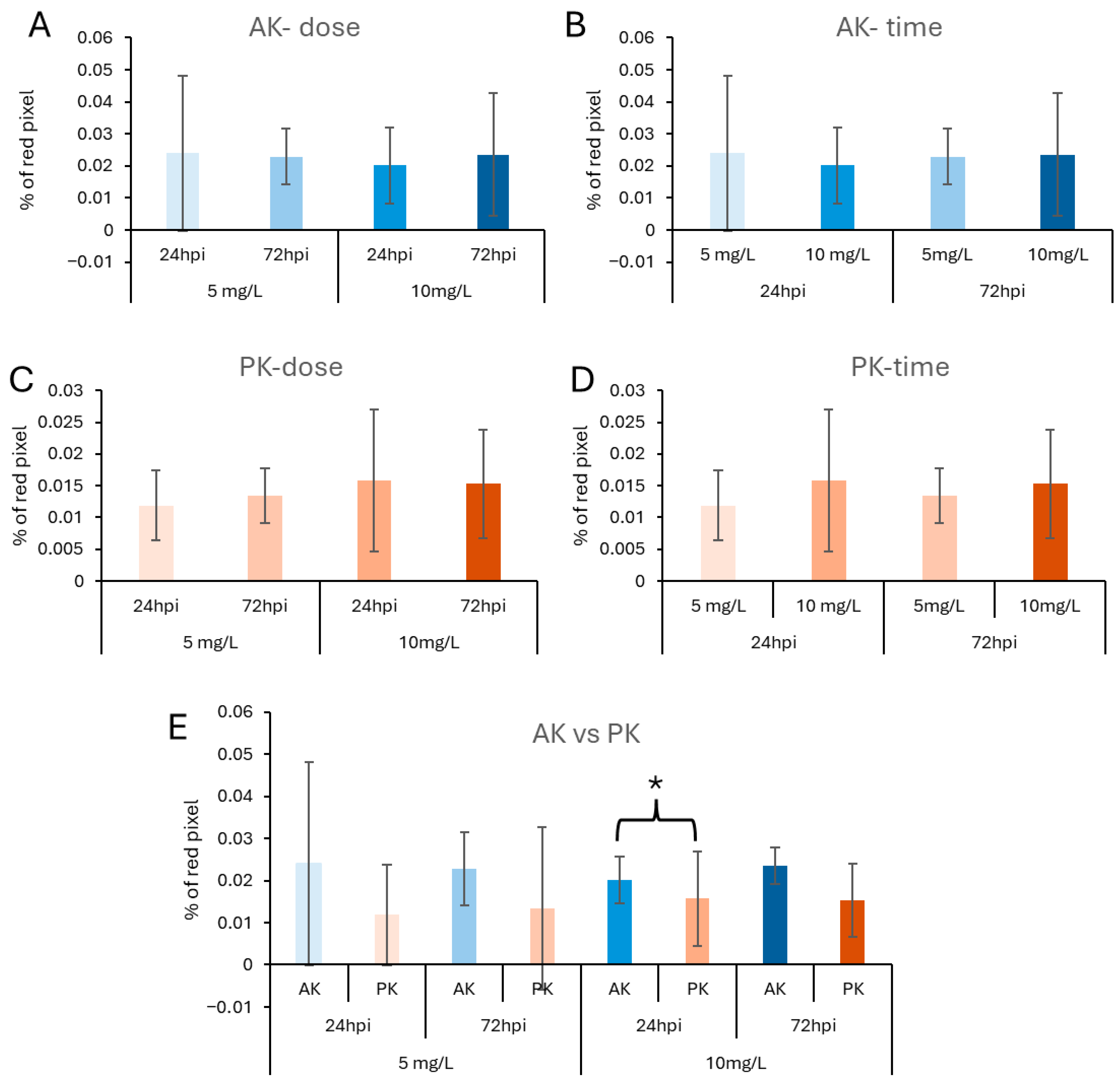
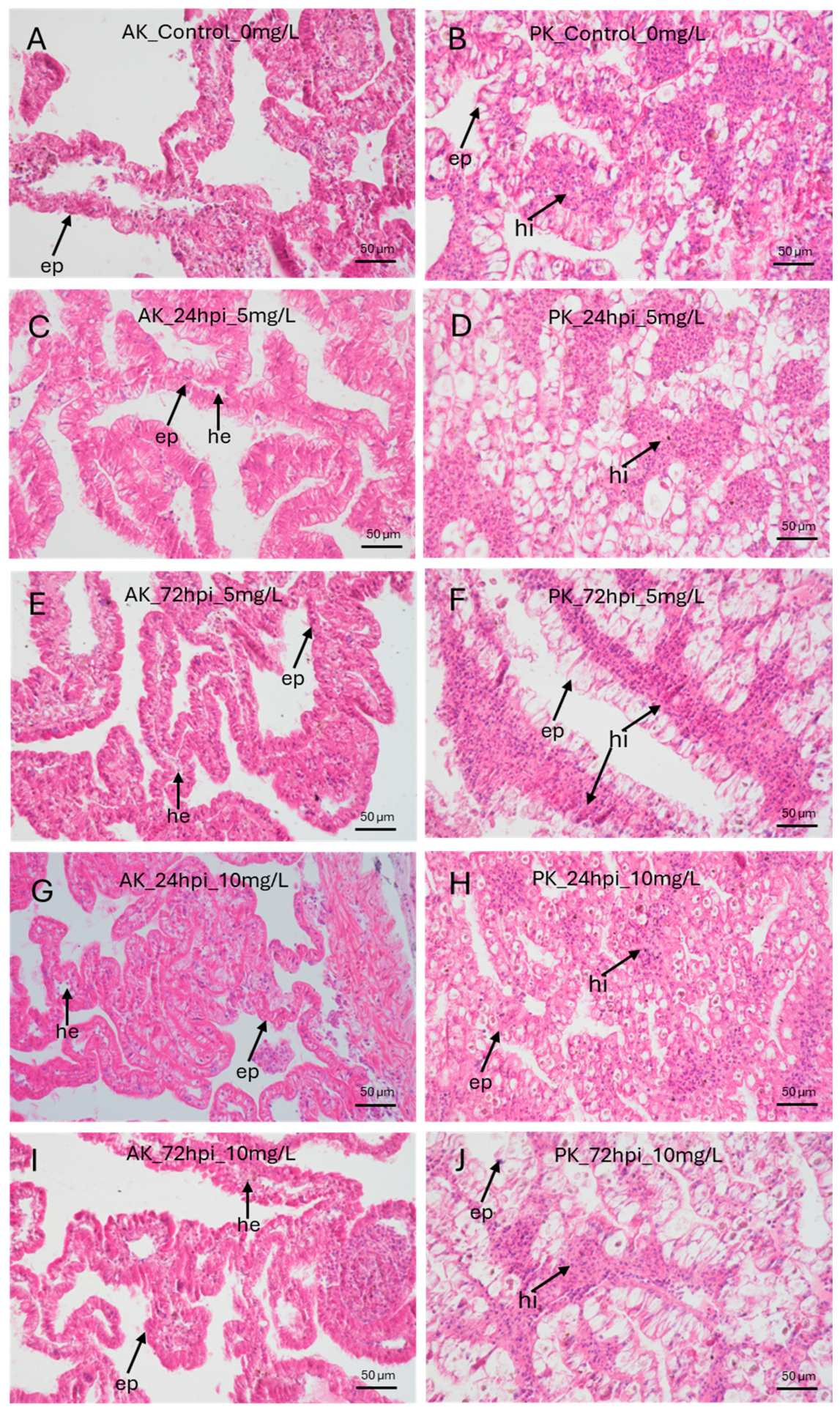
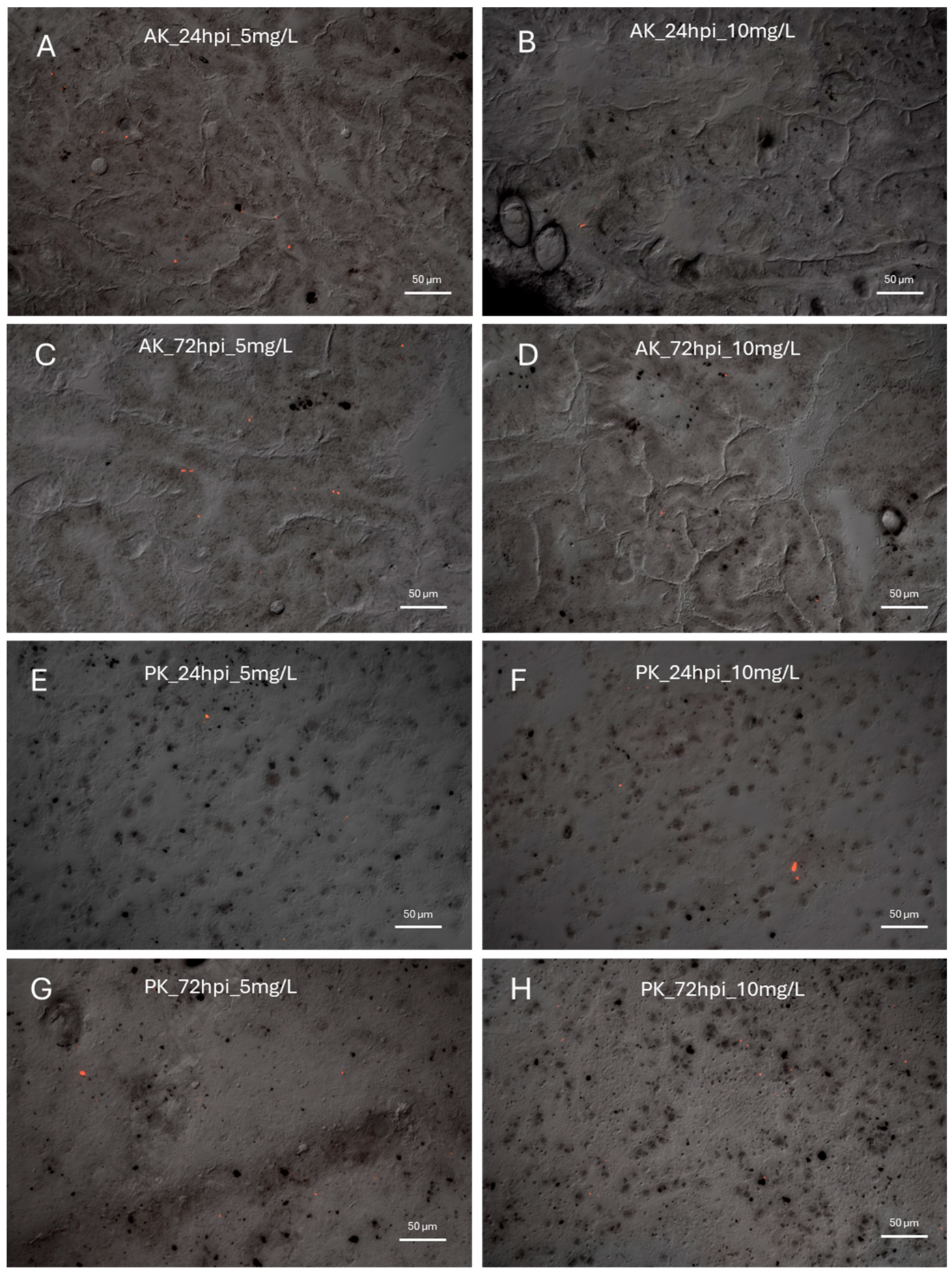
3.1. PET-NPs Accumulate in the AK and PK of P. canaliculata After Acute Exposure but Do Not Alter Kidney Morphology
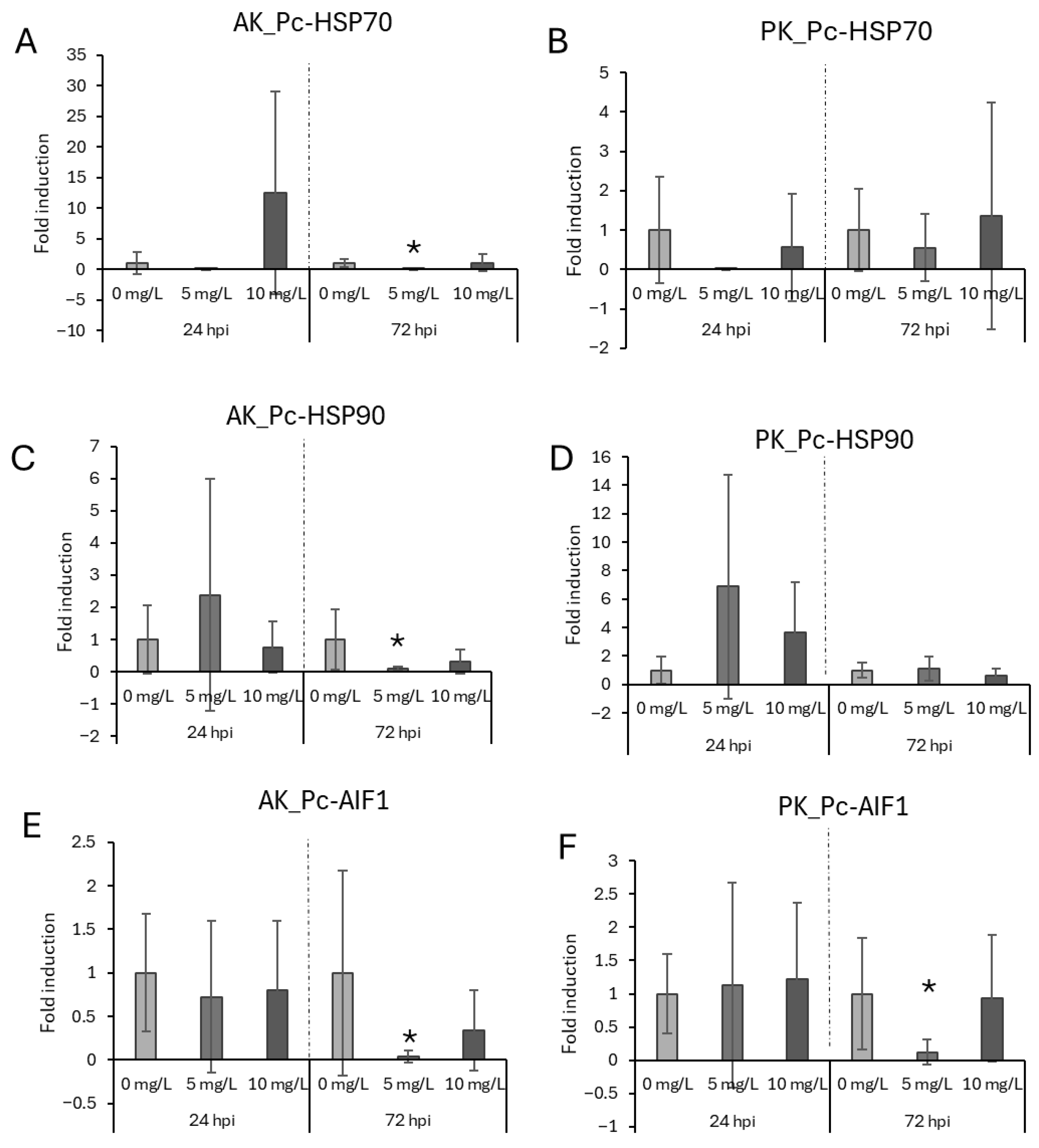
3.2. PET-NPs Do Not Induce Expression of Stress and Inflammation-Related Genes in AK and PK
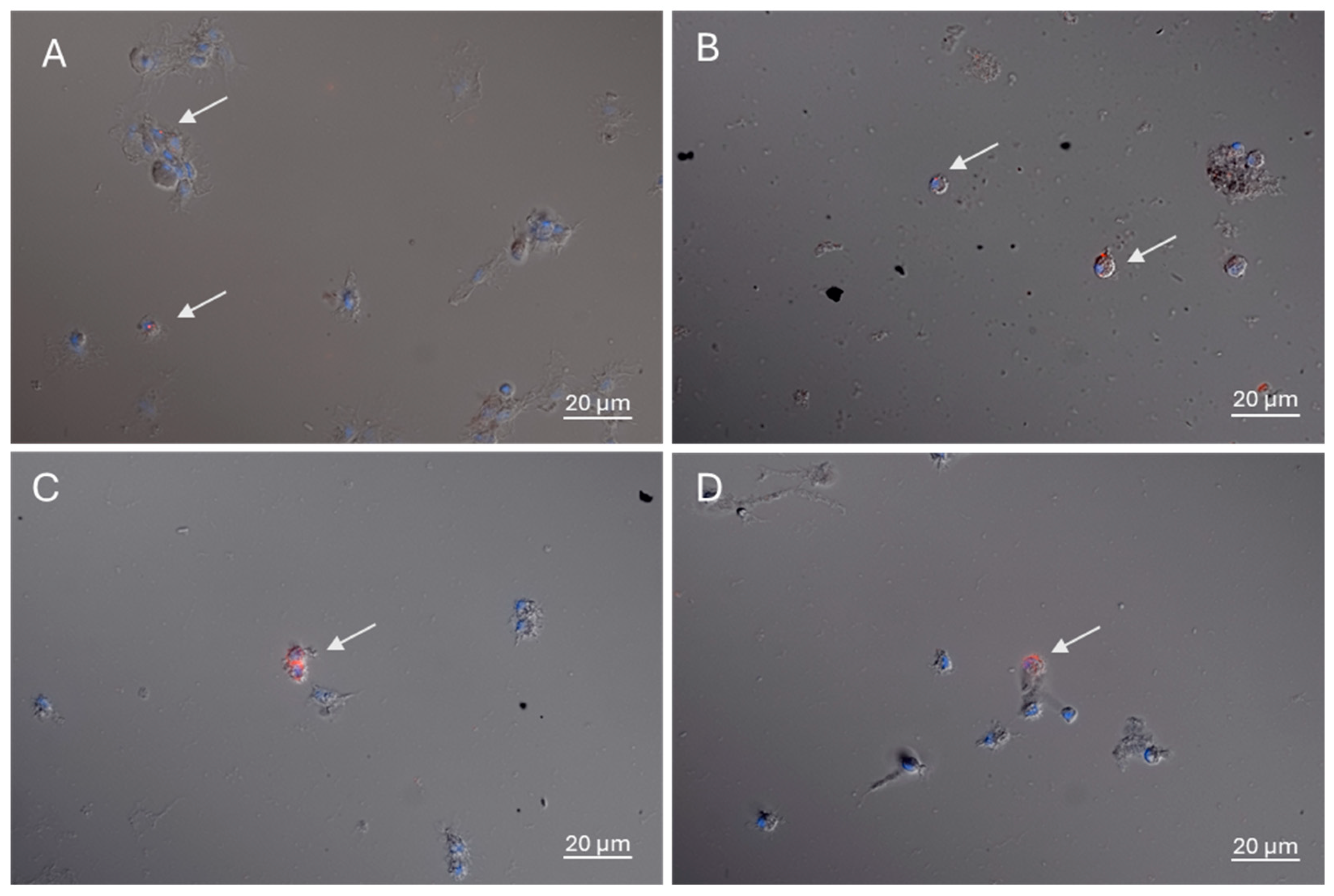
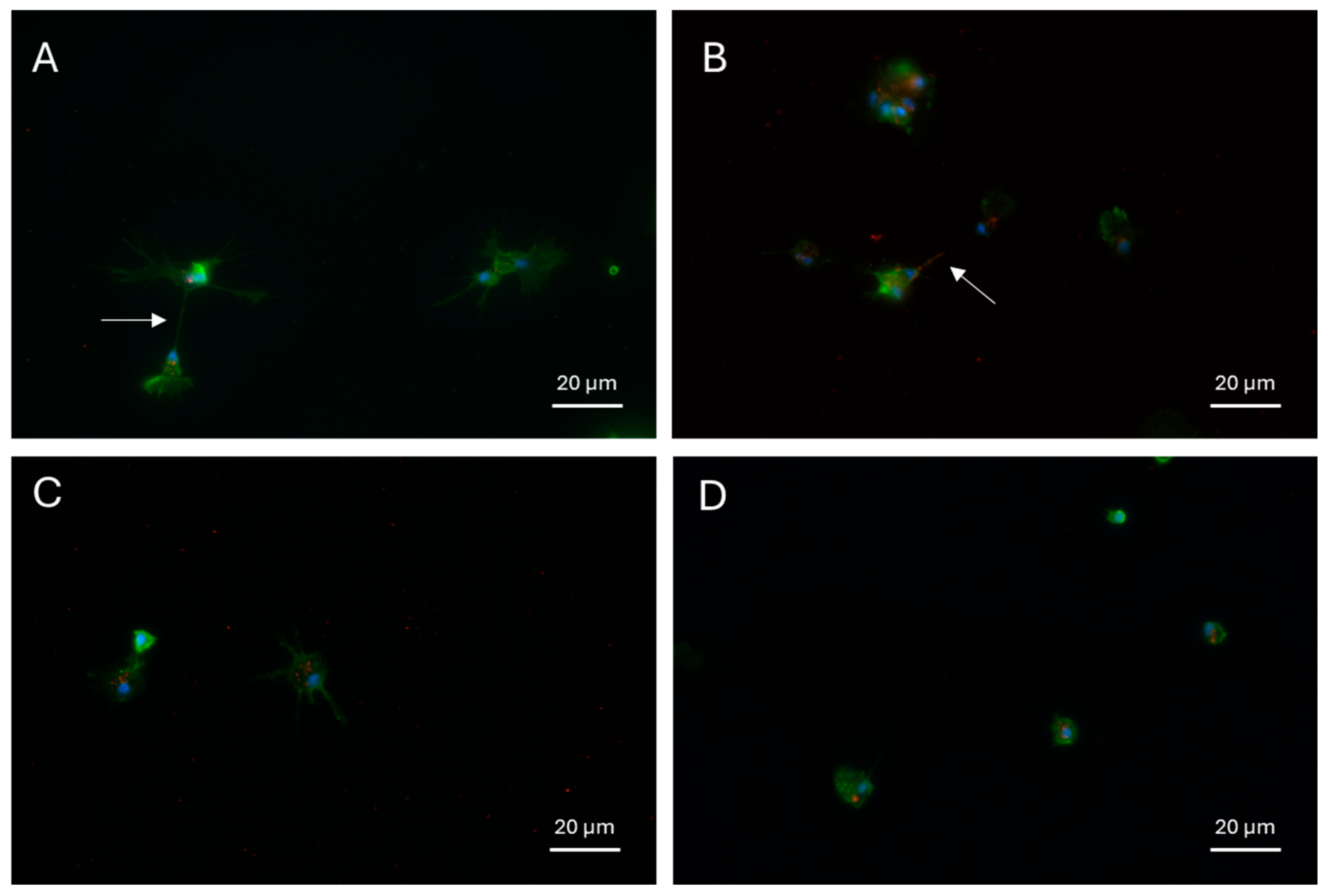
3.3. Circulating Hemocyte of Different Morphologies Phagocytized PET-NPs
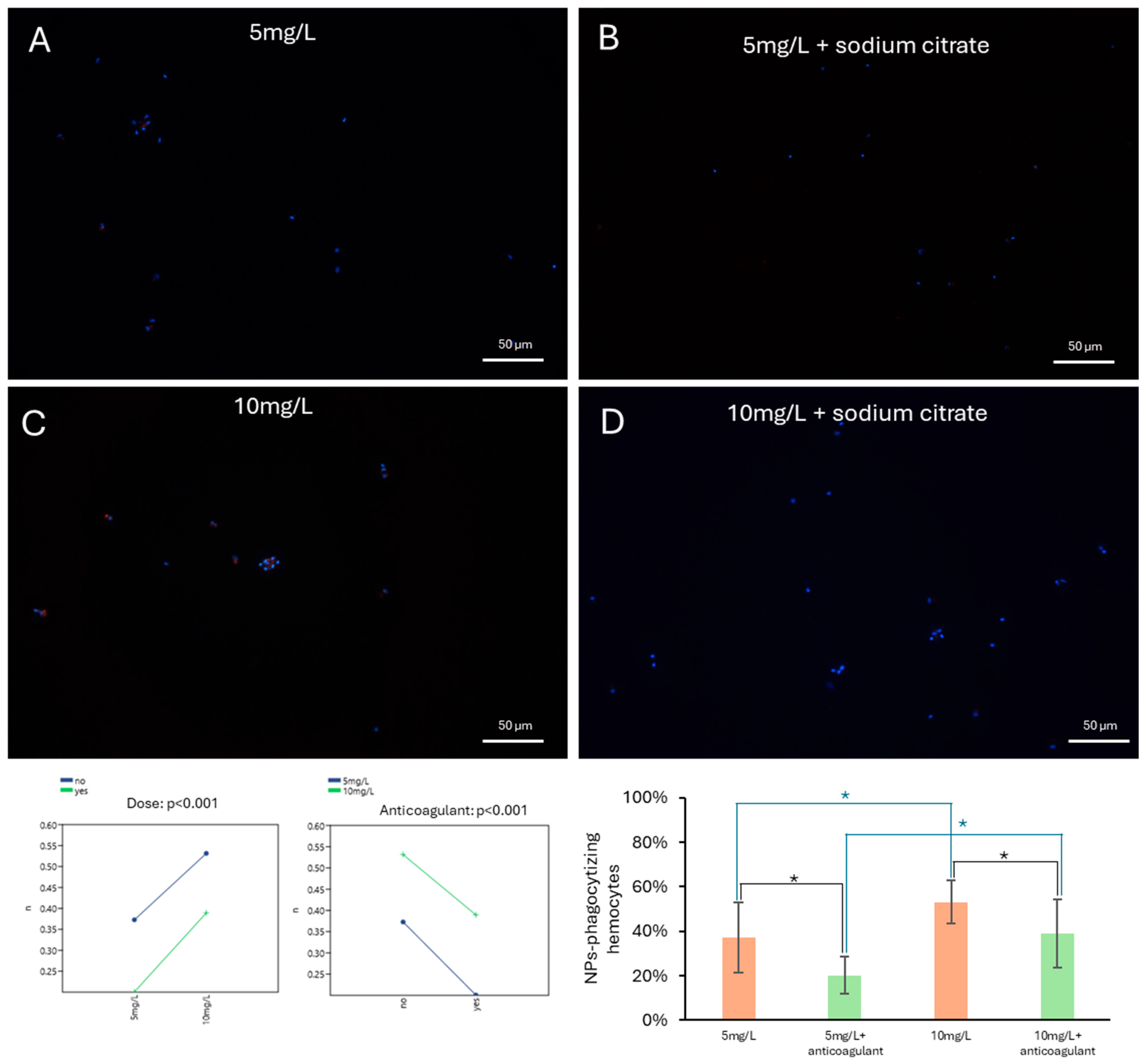
3.4. Hemocyte Can Accumulate PET-NPs Ex Vivo in a Dose-Dependent Manner and Treatment with Anticoagulant Reduces This Ability
4. Discussion
5. Conclusions
Supplementary Materials
Author Contributions
Funding
Institutional Review Board Statement
Informed Consent Statement
Data Availability Statement
Acknowledgments
Conflicts of Interest
References
- Geyer, R.; Jambeck, J.R.; Law, K.L. Production, Use, and Fate of All Plastics Ever Made. Sci. Adv. 2017, 3, e1700782. [Google Scholar] [CrossRef]
- Plastics—The Fast Facts 2024. Plastics Europe. Available online: https://plasticseurope.org/knowledge-hub/plastics-the-fast-facts-2024/ (accessed on 10 October 2025).
- Nayanathara Thathsarani Pilapitiya, P.G.C.; Ratnayake, A.S. The World of Plastic Waste: A Review. Clean. Mater. 2024, 11, 100220. [Google Scholar] [CrossRef]
- Dhaka, V.; Singh, S.; Anil, A.G.; Sunil Kumar Naik, T.S.; Garg, S.; Samuel, J.; Kumar, M.; Ramamurthy, P.C.; Singh, J. Occurrence, Toxicity and Remediation of Polyethylene Terephthalate Plastics. A Review. Environ. Chem. Lett. 2022, 20, 1777–1800. [Google Scholar] [CrossRef]
- Atugoda, T.; Piyumali, H.; Wijesekara, H.; Sonne, C.; Lam, S.S.; Mahatantila, K.; Vithanage, M. Nanoplastic Occurrence, Transformation and Toxicity: A Review. Environ. Chem. Lett. 2023, 21, 363–381. [Google Scholar] [CrossRef]
- Porta, R. Anthropocene, the Plastic Age and Future Perspectives. FEBS Open Bio 2021, 11, 948–953. [Google Scholar] [CrossRef] [PubMed]
- Thompson, R.C.; Courtene-Jones, W.; Boucher, J.; Pahl, S.; Raubenheimer, K.; Koelmans, A.A. Twenty Years of Microplastic Pollution Research—What Have We Learned? Science 2024, 386, eadl2746. [Google Scholar] [CrossRef] [PubMed]
- Kibria, M.G.; Masuk, N.I.; Safayet, R.; Nguyen, H.Q.; Mourshed, M. Plastic Waste: Challenges and Opportunities to Mitigate Pollution and Effective Management. Int. J. Environ. Res. 2023, 17, 20. [Google Scholar] [CrossRef] [PubMed]
- Pellegrino, D.; La Russa, D.; Barberio, L. Pollution Has No Borders: Microplastics in Antarctica. Environments 2025, 12, 77. [Google Scholar] [CrossRef]
- Rosso, B.; Scoto, F.; Hallanger, I.G.; Larose, C.; Gallet, J.C.; Spolaor, A.; Bravo, B.; Barbante, C.; Gambaro, A.; Corami, F. Characteristics and Quantification of Small Microplastics (<100 Μm) in Seasonal Svalbard Snow on Glaciers and Lands. J. Hazard. Mater. 2024, 467, 133723. [Google Scholar] [CrossRef]
- Zhu, X.; Rochman, C.M.; Hardesty, B.D.; Wilcox, C. Plastics in the Deep Sea—A Global Estimate of the Ocean Floor Reservoir. Deep Sea Res. Part I Oceanogr. Res. Pap. 2024, 206, 104266. [Google Scholar] [CrossRef]
- Gigault, J.; Halle, A.T.; Baudrimont, M.; Pascal, P.-Y.; Gauffre, F.; Phi, T.-L.; El Hadri, H.; Grassl, B.; Reynaud, S. Current Opinion: What Is a Nanoplastic? Environ. Pollut. 2018, 235, 1030–1034. [Google Scholar] [CrossRef]
- Oliveira, M.; Almeida, M. The Why and How of Micro(Nano)Plastic Research. TrAC Trends Anal. Chem. 2019, 114, 196–201. [Google Scholar] [CrossRef]
- Da Costa, J.P.; Santos, P.S.M.; Duarte, A.C.; Rocha-Santos, T. (Nano)Plastics in the Environment—Sources, Fates and Effects. Sci. Total Environ. 2016, 566–567, 15–26. [Google Scholar] [CrossRef] [PubMed]
- Lehner, R.; Weder, C.; Petri-Fink, A.; Rothen-Rutishauser, B. Emergence of Nanoplastic in the Environment and Possible Impact on Human Health. Environ. Sci. Technol. 2019, 53, 1748–1765. [Google Scholar] [CrossRef] [PubMed]
- Barbosa, F.; Adeyemi, J.A.; Bocato, M.Z.; Comas, A.; Campiglia, A. A Critical Viewpoint on Current Issues, Limitations, and Future Research Needs on Micro- and Nanoplastic Studies: From the Detection to the Toxicological Assessment. Environ. Res. 2020, 182, 109089. [Google Scholar] [CrossRef]
- Tang, K.H.D. Toxic Effects of Nanoplastics on Animals: Comparative Insights into Microplastic Toxicity. Environments 2025, 12, 429. [Google Scholar] [CrossRef]
- Nisticò, R. Polyethylene Terephthalate (PET) in the Packaging Industry. Polym. Test. 2020, 90, 106707. [Google Scholar] [CrossRef]
- Alaraby, M.; Villacorta, A.; Abass, D.; Hernández, A.; Marcos, R. The Hazardous Impact of True-to-Life PET Nanoplastics in Drosophila. Sci. Total Environ. 2023, 863, 160954. [Google Scholar] [CrossRef]
- De Sá, L.C.; Oliveira, M.; Ribeiro, F.; Rocha, T.L.; Futter, M.N. Studies of the Effects of Microplastics on Aquatic Organisms: What Do We Know and Where Should We Focus Our Efforts in the Future? Sci. Total Environ. 2018, 645, 1029–1039. [Google Scholar] [CrossRef]
- Naz, S.; Chatha, A.M.M.; Khan, N.A.; Ullah, Q.; Zaman, F.; Qadeer, A.; Khan, I.M.; Danabas, D.; Kiran, A.; Skalickova, S.; et al. Unraveling the Ecotoxicological Effects of Micro and Nano-Plastics on Aquatic Organisms and Human Health. Front. Environ. Sci. 2024, 12, 1390510. [Google Scholar] [CrossRef]
- Tamayo-Belda, M.; Pulido-Reyes, G.; Rosal, R.; Fernández-Piñas, F. Nanoplastic Toxicity towards Freshwater Organisms. Water Emerg. Contam. Nanoplastics 2022, 1, 19. [Google Scholar] [CrossRef]
- Matsukura, K.; Tsumuki, H.; Izumi, Y.; Wada, T. Physiological Response to Low Temperature in the Freshwater Apple Snail, Pomacea Canaliculata (Gastropoda: Ampullariidae). J. Exp. Biol. 2009, 212, 2558–2563. [Google Scholar] [CrossRef]
- Liu, C.; Zhang, Y.; Ren, Y.; Wang, H.; Li, S.; Jiang, F.; Yin, L.; Qiao, X.; Zhang, G.; Qian, W.; et al. The Genome of the Golden Apple Snail Pomacea Canaliculata Provides Insight into Stress Tolerance and Invasive Adaptation. GigaScience 2018, 7, giy101. [Google Scholar] [CrossRef]
- Yusa, Y.; Wada, T.; Takahashi, S. Effects of Dormant Duration, Body Size, Self-Burial and Water Condition on the Long-Term Survival of the Apple Snail, Pomacea canaliculata (Gastropoda: Ampullariidae). Appl. Entomol. Zool. 2006, 41, 627–632. [Google Scholar] [CrossRef]
- Kruatrachue, M.; Sumritdee, C.; Pokethitiyook, P.; Singhakaew, S. Histopathological Effects of Contaminated Sediments on Golden Apple Snail (Pomacea canaliculata, Lamarck 1822). Bull. Environ. Contam. Toxicol. 2011, 86, 610–614. [Google Scholar] [CrossRef]
- Ottaviani, E.; Accorsi, A.; Rigillo, G.; Malagoli, D.; Blom, J.M.C.; Tascedda, F. Epigenetic Modification in Neurons of the Mollusc Pomacea canaliculata after Immune Challenge. Brain Res. 2013, 1537, 18–26. [Google Scholar] [CrossRef] [PubMed]
- Malagoli, D.; Franchi, N.; Sacchi, S. The Eco-Immunological Relevance of the Anti-Oxidant Response in Invasive Molluscs. Antioxidants 2023, 12, 1266. [Google Scholar] [CrossRef] [PubMed]
- Ferri, A.; Sacchi, S.; Franchi, N.; Rosani, U.; Malagoli, D. Pc-AIF1 Is Expressed in Hemocyte-Rich and Neural Tissues and Links Immune Response and Regeneration in the Snail Model Pomacea canaliculata. Int. J. Mol. Sci. 2025, 26, 9022. [Google Scholar] [CrossRef]
- Alijagic, A.; Särndahl, E. Can Evolutionary Immunology Decode Micro and Nanoplastic Challenges? Front. Immunol. 2024, 15, 1404360. [Google Scholar] [CrossRef]
- Boraschi, D.; Canesi, L.; Drobne, D.; Kemmerling, B.; Pinsino, A.; Prochazkova, P. Interaction between Nanomaterials and the Innate Immune System across Evolution. Biol. Rev. 2023, 98, 747–774. [Google Scholar] [CrossRef]
- Kumar, A.; Thakur, Y.; Sinha, R. Physiological Impact of Secondary Nanoplastics on Aquatic Inhabitants in Special Reference to Immunotoxicity. Environ. Monit. Assess. 2025, 197, 209. [Google Scholar] [CrossRef]
- Marino, R.; Melillo, D.; Italiani, P.; Boraschi, D. Environmental Stress and Nanoplastics’ Effects on Ciona robusta: Regulation of Immune/Stress-Related Genes and Induction of Innate Memory in Pharynx and Gut. Front. Immunol. 2023, 14, 1176982. [Google Scholar] [CrossRef]
- Mustapha, D.S.; Rodríguez-Díaz, O.; Cajaraville, M.P.; Orbea, A. PLA Nanoplastics Accumulate but Do Not Cause Acute Toxicity to Marine Rotifers, Brine Shrimps, and Zebrafish Embryos. J. Xenobiotics 2025, 15, 196. [Google Scholar] [CrossRef]
- Auguste, M.; Mayall, C.; Barbero, F.; Hočevar, M.; Alberti, S.; Grassi, G.; Puntes, V.; Drobne, D.; Canesi, L. Functional and Morphological Changes Induced in Mytilus Hemocytes by Selected Nanoparticles. Nanomaterials 2021, 11, 470. [Google Scholar] [CrossRef] [PubMed]
- Sendra, M.; Saco, A.; Yeste, M.P.; Romero, A.; Novoa, B.; Figueras, A. Nanoplastics: From Tissue Accumulation to Cell Translocation into Mytilus galloprovincialis Hemocytes. Resilience of Immune Cells Exposed to Nanoplastics and Nanoplastics plus Vibrio Splendidus Combination. J. Hazard. Mater. 2020, 388, 121788. [Google Scholar] [CrossRef]
- Gianazza, E.; Eberini, I.; Palazzolo, L.; Miller, I. Hemolymph Proteins: An Overview across Marine Arthropods and Molluscs. J. Proteom. 2021, 245, 104294. [Google Scholar] [CrossRef] [PubMed]
- Auguste, M.; Balbi, T.; Miglioli, A.; Alberti, S.; Prandi, S.; Narizzano, R.; Salis, A.; Damonte, G.; Canesi, L. Comparison of Different Commercial Nanopolystyrenes: Behavior in Exposure Media, Effects on Immune Function and Early Larval Development in the Model Bivalve Mytilus galloprovincialis. Nanomaterials 2021, 11, 3291. [Google Scholar] [CrossRef]
- Qin, Z.; Yang, M.; Zhang, J.-E.; Deng, Z. Enhanced Salinity Tolerance of Pomacea canaliculata through Acclimation to Lower Salinities. Hydrobiologia 2022, 849, 3015–3029. [Google Scholar] [CrossRef]
- Junaid, M.; Liu, S.; Liao, H.; Yue, Q.; Wang, J. Environmental Nanoplastics Quantification by Pyrolysis-Gas Chromatography–Mass Spectrometry in the Pearl River, China: First Insights into Spatiotemporal Distributions, Compositions, Sources and Risks. J. Hazard. Mater. 2024, 476, 135055. [Google Scholar] [CrossRef] [PubMed]
- Razzaque, A.S.; Melesse, A.M. Global Insights into Micro- and Nanoplastic Pollution in Surface Water: A Review. Hydrology 2025, 12, 265. [Google Scholar] [CrossRef]
- Shen, A.; Wei, Y.; Pan, Y.; Li, X.; Gong, L.; Pan, Y.; Jeppesen, E.; Duan, C. Current Status of Microplastic Pollution in China’s Aquatic Environment and Its Interactions with Metal Pollutants on Aquatic Organisms. Water Res. X 2025, 28, 100392. [Google Scholar] [CrossRef]
- Ottaviani, E. The Blood Cells of the Freshwater Snail Planorbis corneus (Gastropoda, Pulmonata). Dev. Comp. Immunol. 1983, 7, 209–216. [Google Scholar] [CrossRef] [PubMed]
- Bon, C.; Pulze, L.; Amoroso, S.; Bertola, E.; Barbaro, M.; Tessaro, D.; Baranzini, N.; Grimaldi, A. Inflammatory and Oxidative Responses to PET Nanoplastics in the Leech Hirudo verbana: A Comparative Analysis of Acute and Chronic Exposure. Environ. Sci. Nano 2026, 13, 427–446. [Google Scholar] [CrossRef]
- Fiorino, R. Pomacea canaliculata as a Suitable Model for Preclinical Tests on Superparamagnetic Iron Oxide Nanoparticles (SPIONs): First Evidence in Selected Organs. Master Thesis, University of Modena and Reggio Emilia, Modena, Italy, 2021. [Google Scholar]
- Bergamini, G.; Sacchi, S.; Ferri, A.; Franchi, N.; Montanari, M.; Ahmad, M.; Losi, C.; Nasi, M.; Cocchi, M.; Malagoli, D. Clodronate Liposome-Mediated Phagocytic Hemocyte Depletion Affects the Regeneration of the Cephalic Tentacle of the Invasive Snail, Pomacea canaliculata. Biology 2023, 12, 992. [Google Scholar] [CrossRef] [PubMed]
- Ferri, A.; Costa, P.M.; Simonini, R. Secretory Cells in Halla parthenopeia (Oenonidae): Potential Implications for the Feeding and Defence Strategies of a Carnivorous Burrowing Polychaete. J. Morphol. 2024, 285, e21781. [Google Scholar] [CrossRef]
- Livak, K.J.; Schmittgen, T.D. Analysis of Relative Gene Expression Data Using Real-Time Quantitative PCR and the 2−ΔΔCT Method. Methods 2001, 25, 402–408. [Google Scholar] [CrossRef]
- Hammer, O.; Harper, D.A.T.; Ryan, P.D. PAST: Paleontological Statistics Software Package for Education and Data Analysis. Palaeontol. Electron. 2001, 4, 1–9. [Google Scholar]
- Chang, X.; Wang, W.-X. Passing the Parcels: Intercellular Nanoplastics Transfer in Mussels Perna viridis with Activated Immunomodulation. Environ. Sci. Technol. 2025, 59, 8177–8188. [Google Scholar] [CrossRef]
- Nava, V.; Chandra, S.; Aherne, J.; Alfonso, M.B.; Antão-Geraldes, A.M.; Attermeyer, K.; Bao, R.; Bartrons, M.; Berger, S.A.; Biernaczyk, M.; et al. Plastic Debris in Lakes and Reservoirs. Nature 2023, 619, 317–322. [Google Scholar] [CrossRef]
- Strong, E.E.; Gargominy, O.; Ponder, W.F.; Bouchet, P. Global Diversity of Gastropods (Gastropoda; Mollusca) in Freshwater. Hydrobiologia 2008, 595, 149–166. [Google Scholar] [CrossRef]
- Rodrigues, C.C.; Salla, R.F.; Rocha, T.L. Bioaccumulation and Ecotoxicological Impact of Micro(Nano)Plastics in Aquatic and Land Snails: Historical Review, Current Research and Emerging Trends. J. Hazard. Mater. 2023, 444, 130382. [Google Scholar] [CrossRef] [PubMed]
- Caixeta, M.B.; Araújo, P.S.; Gonçalves, B.B.; Silva, L.D.; Grano-Maldonado, M.I.; Rocha, T.L. Toxicity of Engineered Nanomaterials to Aquatic and Land Snails: A Scientometric and Systematic Review. Chemosphere 2020, 260, 127654. [Google Scholar] [CrossRef] [PubMed]
- Amorim, J.; Abreu, I.; Rodrigues, P.; Peixoto, D.; Pinheiro, C.; Saraiva, A.; Carvalho, A.P.; Guimarães, L.; Oliva-Teles, L. Lymnaea stagnalis as a Freshwater Model Invertebrate for Ecotoxicological Studies. Sci. Total Environ. 2019, 669, 11–28. [Google Scholar] [CrossRef] [PubMed]
- Martin, L.; Armendarez, C.; Merrill, M.; Huang, C.; Xu, W. Accumulation of Nanoplastics in Biomphalaria glabrata Embryos and Transgenerational Developmental Effects. Environments 2025, 12, 28. [Google Scholar] [CrossRef]
- Wang, T.; Liu, W. Metabolic Equilibrium and Reproductive Resilience: Freshwater Gastropods under Nanoplastics Exposure. Chemosphere 2024, 350, 141017. [Google Scholar] [CrossRef]
- Andrews, E.B. The Functional Anatomy of the Mantle Cavity, Kidney and Blood System of Some Pilid Gastropods (Prosobranchia). Proc. Zool. Soc. Lond. 1965, 146, 70–94. [Google Scholar] [CrossRef]
- Patra, I.; Huy, D.T.N.; Alsaikhan, F.; Opulencia, M.J.C.; Van Tuan, P.; Nurmatova, K.C.; Majdi, A.; Shoukat, S.; Yasin, G.; Margiana, R.; et al. Toxic Effects on Enzymatic Activity, Gene Expression and Histopathological Biomarkers in Organisms Exposed to Microplastics and Nanoplastics: A Review. Environ. Sci. Eur. 2022, 34, 80. [Google Scholar] [CrossRef]
- Yang, H.; Ju, J.; Wang, Y.; Zhu, Z.; Lu, W.; Zhang, Y. Micro-and Nano-Plastics Induce Kidney Damage and Suppression of Innate Immune Function in Zebrafish (Danio rerio) Larvae. Sci. Total Environ. 2024, 931, 172952. [Google Scholar] [CrossRef]
- Meng, X.; Ge, L.; Zhang, J.; Xue, J.; Gonzalez-Gil, G.; Vrouwenvelder, J.S.; Li, Z. Systemic Effects of Nanoplastics on Multi-Organ at the Environmentally Relevant Dose: The Insights in Physiological, Histological, and Oxidative Damages. Sci. Total Environ. 2023, 892, 164687. [Google Scholar] [CrossRef]
- He, J.; Han, X.; Sun, S.; Jin, S.; Liu, M.; Han, Z. Genome-Wide Identification and Transcriptome Analysis of the Hsp70 Gene Family in Monodonta labio Reveals Its Role in Response to Nanoplastics Stress. Genes 2024, 15, 291. [Google Scholar] [CrossRef]
- Rodriguez, C.; Prieto, G.I.; Vega, I.A.; Castro-Vazquez, A. Assessment of the Kidney and Lung as Immune Barriers and Hematopoietic Sites in the Invasive Apple Snail Pomacea canaliculata. PeerJ 2018, 6, e5789. [Google Scholar] [CrossRef]
- Duan, H.; Pan, N.; Shao, X.; Wang, X.; Ma, Y.; Liu, J.; Han, X.; Sui, L. Amino-Modified Polystyrene Nanoplastics Induced Multiple Response of Artemia Hemocytes. Comp. Biochem. Physiol. Part C Toxicol. Pharmacol. 2024, 283, 109974. [Google Scholar] [CrossRef] [PubMed]
- Chang, X.; Wang, W.-X. In Vivo Bioaccumulation and Responses of Hemocytes of Mussels Perna viridis to Microplastics and Nanoplastics Exposure. J. Hazard. Mater. 2024, 480, 135939. [Google Scholar] [CrossRef]
- Impellitteri, F.; Curpăn, A.-S.; Plăvan, G.; Ciobica, A.; Faggio, C. Hemocytes: A Useful Tool for Assessing the Toxicity of Microplastics, Heavy Metals, and Pesticides on Aquatic Invertebrates. Int. J. Environ. Res. Public Health 2022, 19, 16830. [Google Scholar] [CrossRef] [PubMed]
- Zhou, Y.; Zhou, X.-X.; Jiang, H.; Liu, W.; Chen, F.; Gardea-Torresdey, J.L.; Yan, B. In Vitro Toxicity and Modeling Reveal Nanoplastic Effects on Marine Bivalves. ACS Nano 2024, 18, 17228–17239. [Google Scholar] [CrossRef]
- Canesi, L.; Ciacci, C.; Bergami, E.; Monopoli, M.P.; Dawson, K.A.; Papa, S.; Canonico, B.; Corsi, I. Evidence for Immunomodulation and Apoptotic Processes Induced by Cationic Polystyrene Nanoparticles in the Hemocytes of the Marine Bivalve Mytilus. Mar. Environ. Res. 2015, 111, 34–40. [Google Scholar] [CrossRef]
- Katsumiti, A.; Losada-Carrillo, M.P.; Barros, M.; Cajaraville, M.P. Polystyrene Nanoplastics and Microplastics Can Act as Trojan Horse Carriers of Benzo(a)Pyrene to Mussel Hemocytes in Vitro. Sci. Rep. 2021, 11, 22396. [Google Scholar] [CrossRef] [PubMed]





| Gene | Primer Sequence |
|---|---|
| PcRpL5 | F: 5′-CGTATGCCAGAATTGAGGGT-3′ R: 5′-CAACATCCAAGTATGCACGG-3′ |
| PcHPS70 | F: 5′-ATGACGCTCTTCACTGGCTAGA-3′ R: 5′-ACTTCTTCTACAGTTGGTCCTCCA-3′ |
| PcHSP90 | F: 5′-TTCAAGCTGGGGCCGACATT-3′ R: 5′-AGTGCCACGTCCCAATTTGC-3′ |
| PcAIF1 | F: 5′-GCTACTGGCGCAAAGCCTAA-3′ R: 5′-TTGTGGCAGTTCCTCATCAC-3′ |
Disclaimer/Publisher’s Note: The statements, opinions and data contained in all publications are solely those of the individual author(s) and contributor(s) and not of MDPI and/or the editor(s). MDPI and/or the editor(s) disclaim responsibility for any injury to people or property resulting from any ideas, methods, instructions or products referred to in the content. |
© 2026 by the authors. Licensee MDPI, Basel, Switzerland. This article is an open access article distributed under the terms and conditions of the Creative Commons Attribution (CC BY) license.
Share and Cite
Ferri, A.; Sacchi, S.; Losi, C.; Amico, M.; Franchi, N.; Malagoli, D. Renal Accumulation and Hemocyte-Mediated Internalization After Acute Exposure to Injected Polyethylene Terephthalate Nanoplastics (PET-NPs) in the Freshwater Gastropod Pomacea canaliculata. J. Xenobiot. 2026, 16, 88. https://doi.org/10.3390/jox16030088
Ferri A, Sacchi S, Losi C, Amico M, Franchi N, Malagoli D. Renal Accumulation and Hemocyte-Mediated Internalization After Acute Exposure to Injected Polyethylene Terephthalate Nanoplastics (PET-NPs) in the Freshwater Gastropod Pomacea canaliculata. Journal of Xenobiotics. 2026; 16(3):88. https://doi.org/10.3390/jox16030088
Chicago/Turabian StyleFerri, Anita, Sandro Sacchi, Chiara Losi, Martina Amico, Nicola Franchi, and Davide Malagoli. 2026. "Renal Accumulation and Hemocyte-Mediated Internalization After Acute Exposure to Injected Polyethylene Terephthalate Nanoplastics (PET-NPs) in the Freshwater Gastropod Pomacea canaliculata" Journal of Xenobiotics 16, no. 3: 88. https://doi.org/10.3390/jox16030088
APA StyleFerri, A., Sacchi, S., Losi, C., Amico, M., Franchi, N., & Malagoli, D. (2026). Renal Accumulation and Hemocyte-Mediated Internalization After Acute Exposure to Injected Polyethylene Terephthalate Nanoplastics (PET-NPs) in the Freshwater Gastropod Pomacea canaliculata. Journal of Xenobiotics, 16(3), 88. https://doi.org/10.3390/jox16030088