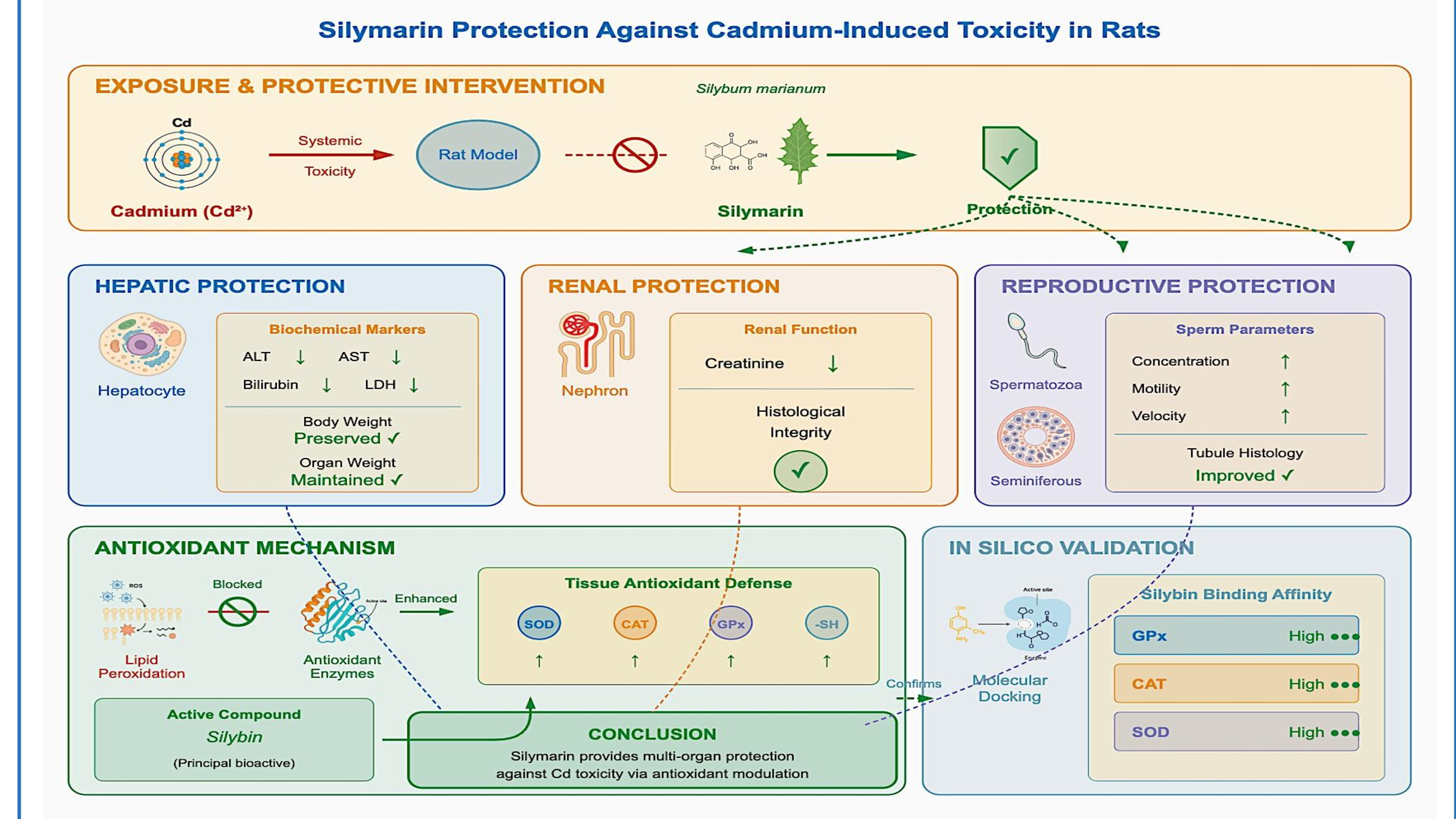

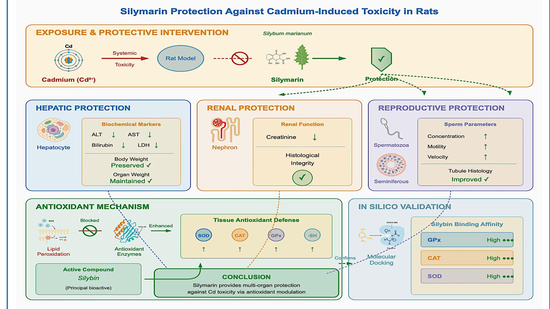
Subchronic Cadmium-Induced Xenobiotic Toxicity in Male Wistar Rats: Antioxidant and Reproductive Protection by Standardized Silymarin with Molecular Docking Insights

 , ,
, ,  and
and
Abstract
1. Introduction
2. Materials and Methods
2.1. Preparation of Silymarin and Cadmium Chloride (CdCl2) Solutions
2.2. Animal Models
- Group C: Received by gavage of 0.9% saline solution.
- Group Sily: Received by gavage of 30 mg/kg bw of Silymarin.
- Group Cd: Received by gavage of 5 mg/kg bw of CdCl2.
- Group Cd + Sily: Received a co-treatment of CdCl2 (5 mg/kg) and Silymarin (30 mg/kg).
2.3. Biochemical and Hematological Analyses
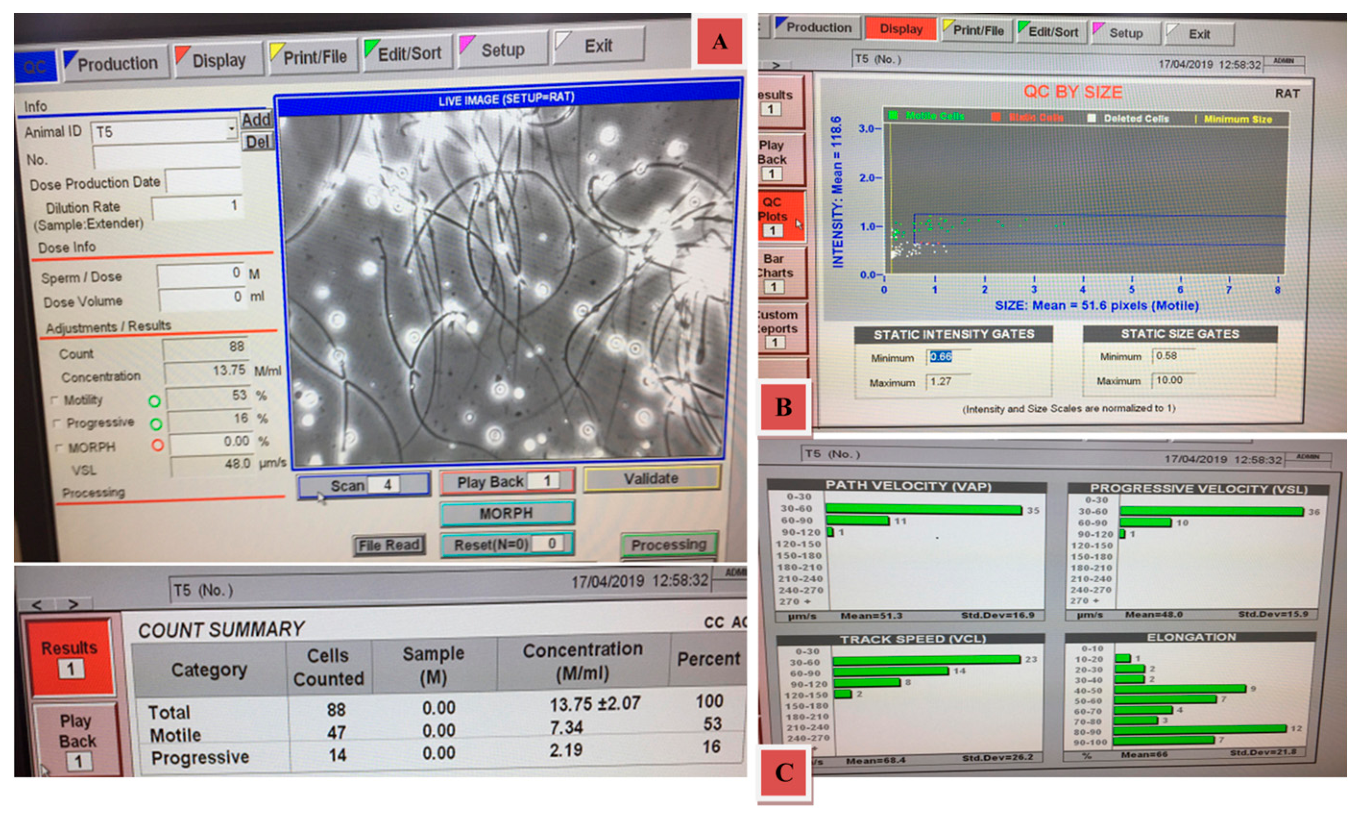
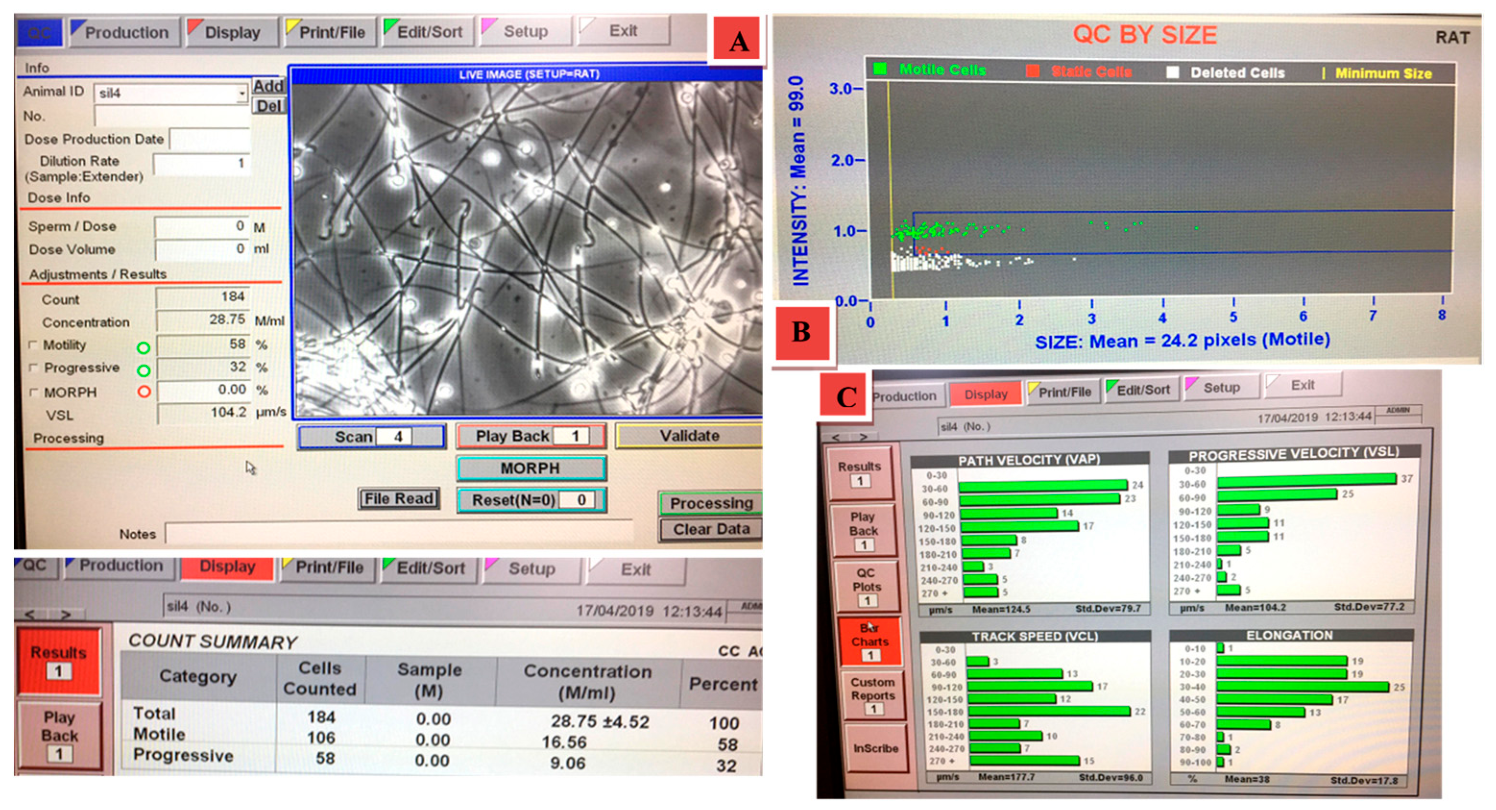
2.4. Evaluation of Sperm Parameters Using Computer-Assisted Sperm Analysis (CASA)
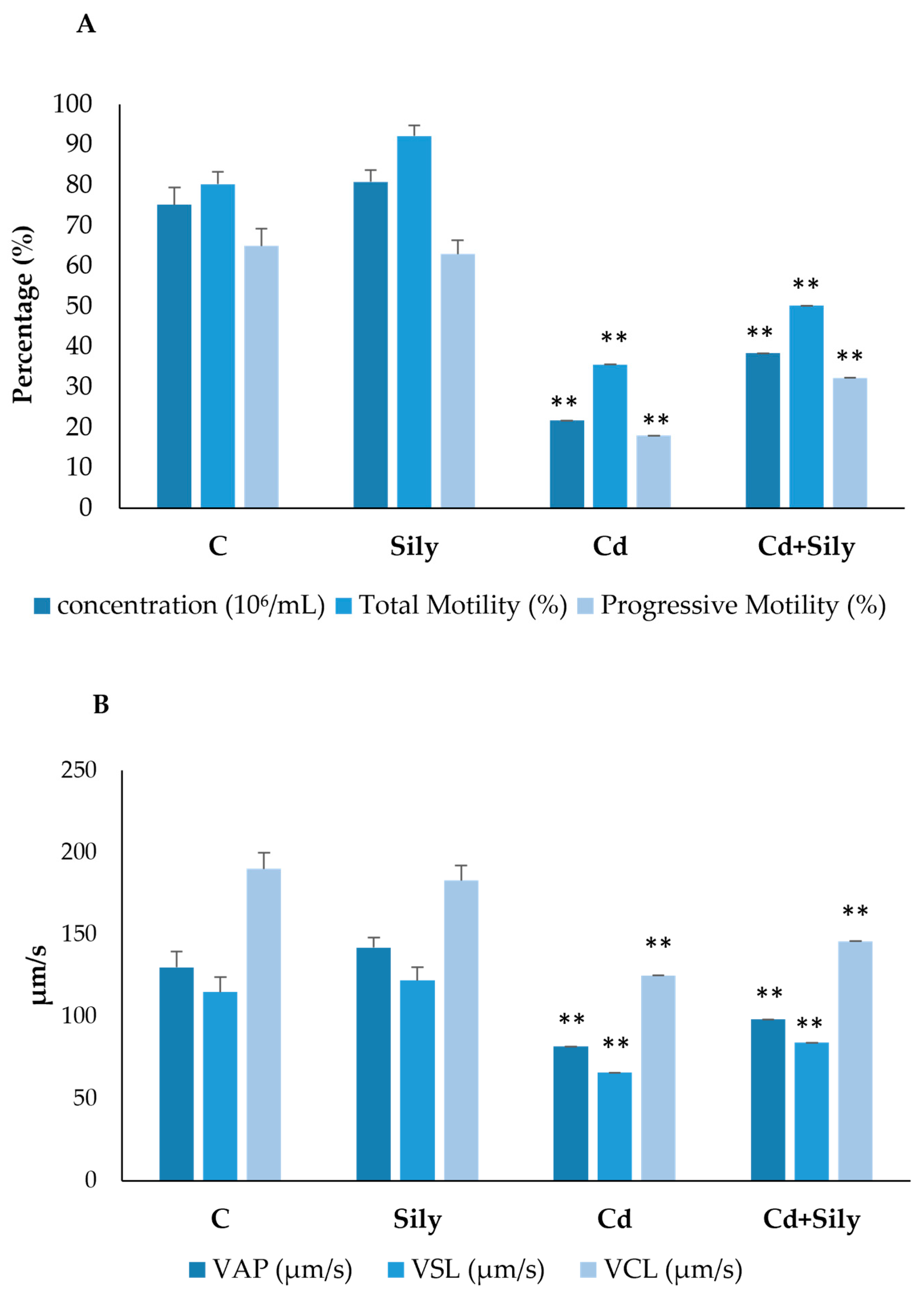
- Sperm concentration (106/mL): the total number of sperm per milliliter of suspension.
- Total motility (%): the percentage of motile sperm (progressive and non-progressive).
- Progressive motility (%): the percentage of sperm moving in a straight line or in large arcs.
- VAP (µm/s): Average Path Velocity, representing the speed along an average trajectory.
- VSL (µm/s): Straight Line Velocity, measured directly from the starting point to the endpoint.
- VCL (µm/s): Curvilinear Velocity, the actual speed following the sperm curvilinear path.
2.5. Oxidative Status Analysis in Hepatic, Testicular, and Renal Tissues
2.5.1. Lipid Peroxidation (LPO) Measurement
2.5.2. Thiol Group Measurement
2.5.3. Determination of Antioxidant Enzyme Activities in Tissue Homogenates
2.5.4. Protein Determination
2.6. Histological Analysis
2.7. Molecular Docking Study
2.8. Statistical Analysis
3. Results
3.1. Effect of Subchronic Cadmium and Silymarin Exposure on Body Weight (bw)
3.2. Effect of Subchronic Cadmium and Silymarin Exposure on Relative Organ Weights
3.3. Effects of Cadmium and Silymarin on Hematological and Immunological Parameters
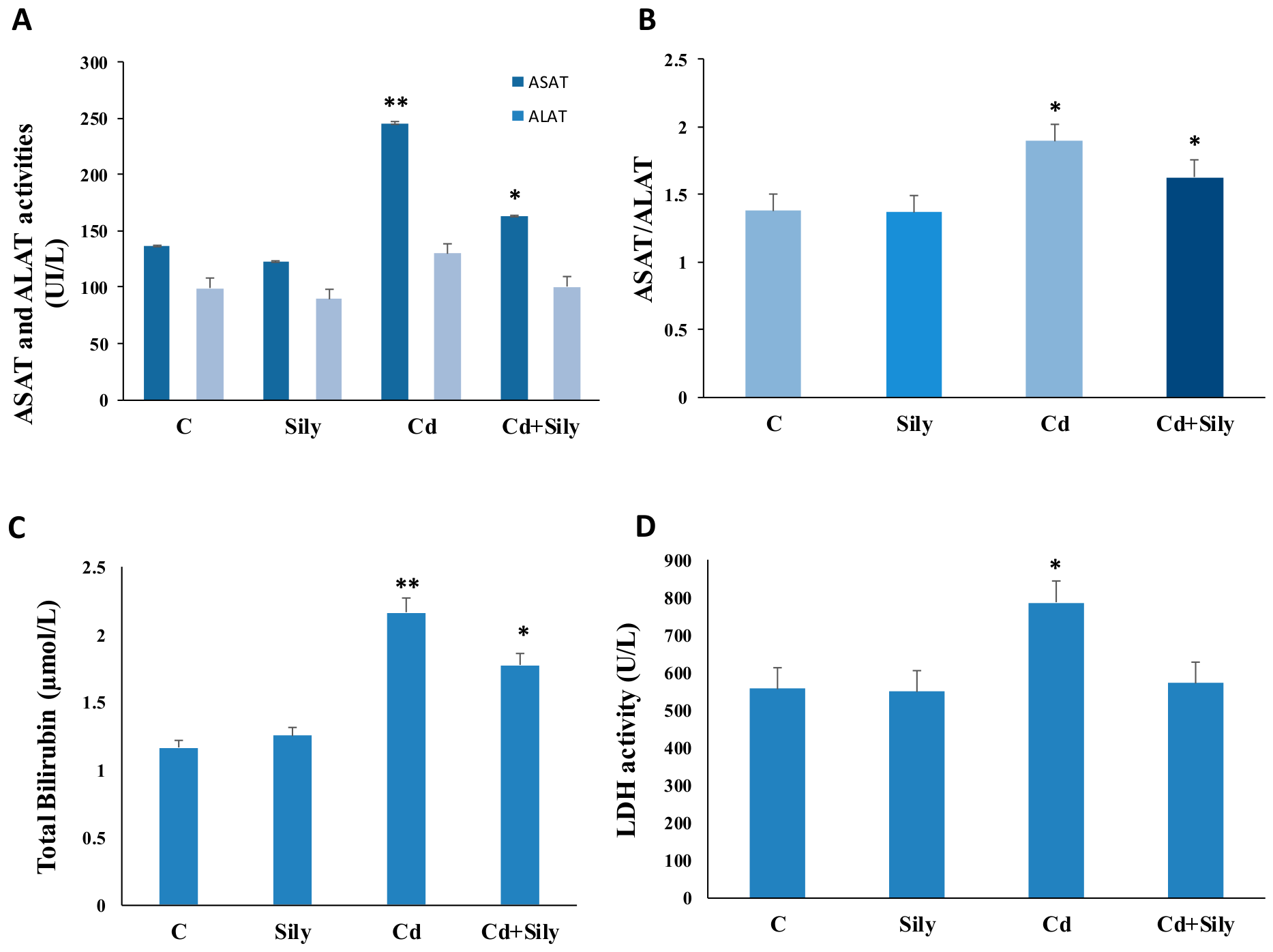
3.4. Effects of Cadmium and Silymarin on Liver Biomarkers
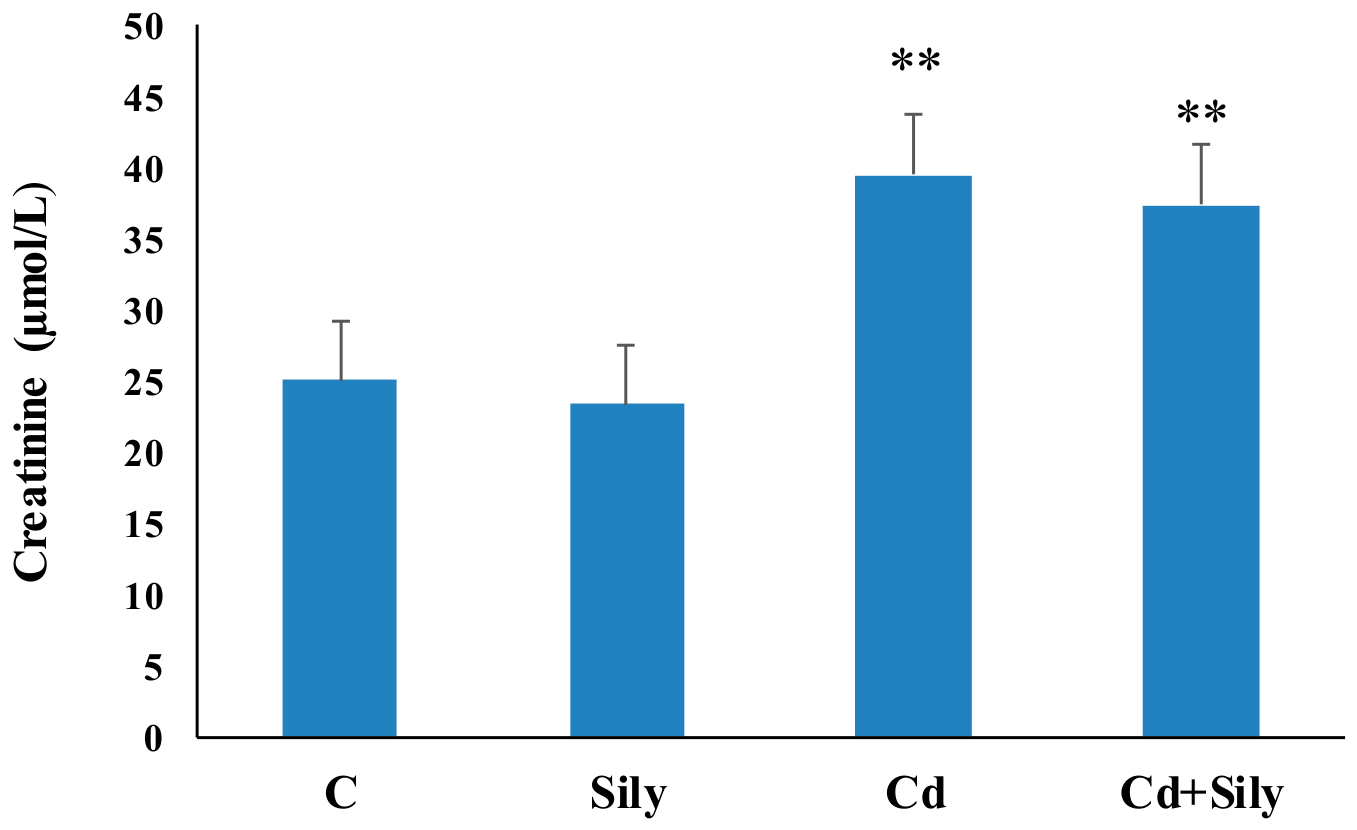
3.5. Assessment of Renal Function
3.6. Effect of Silymarin on Lipid Profile in Cadmium-Exposed Rats
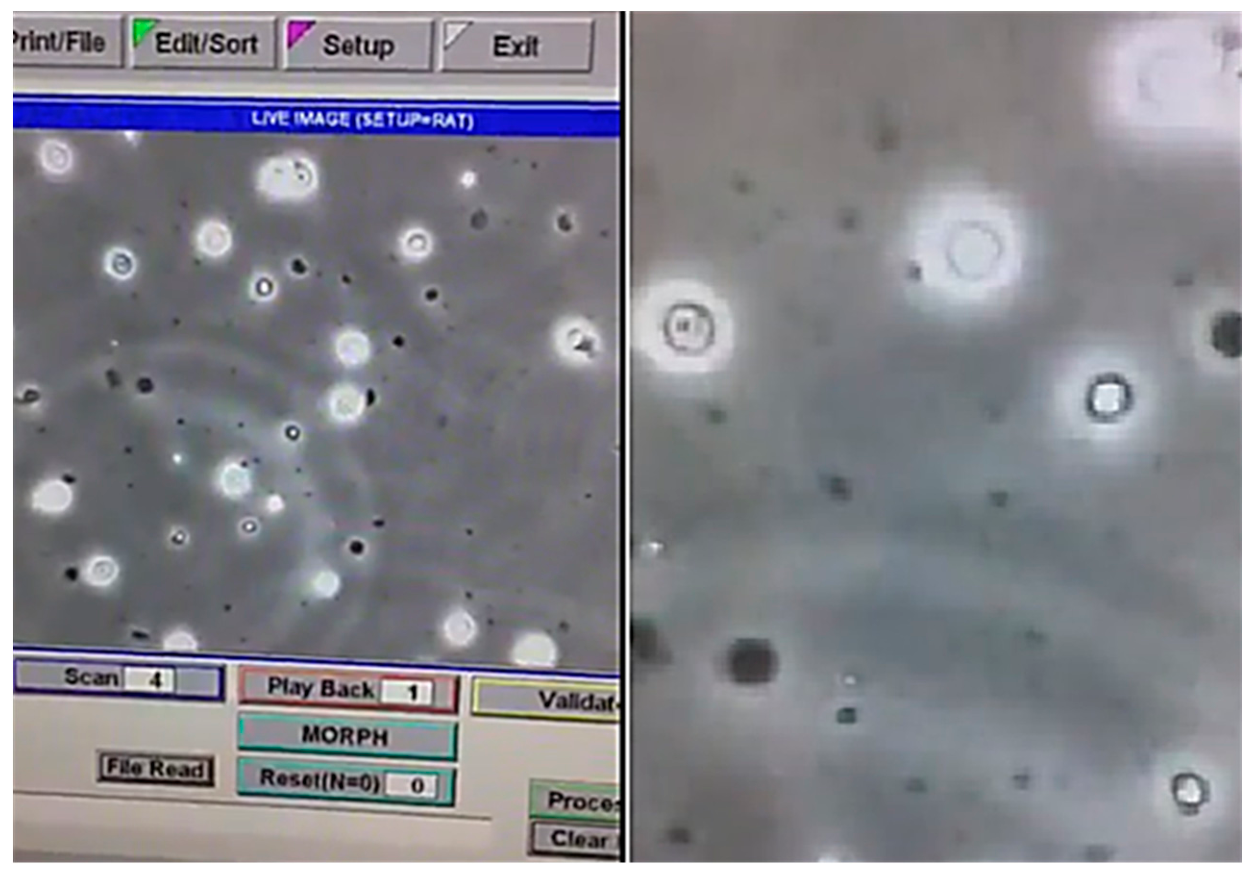
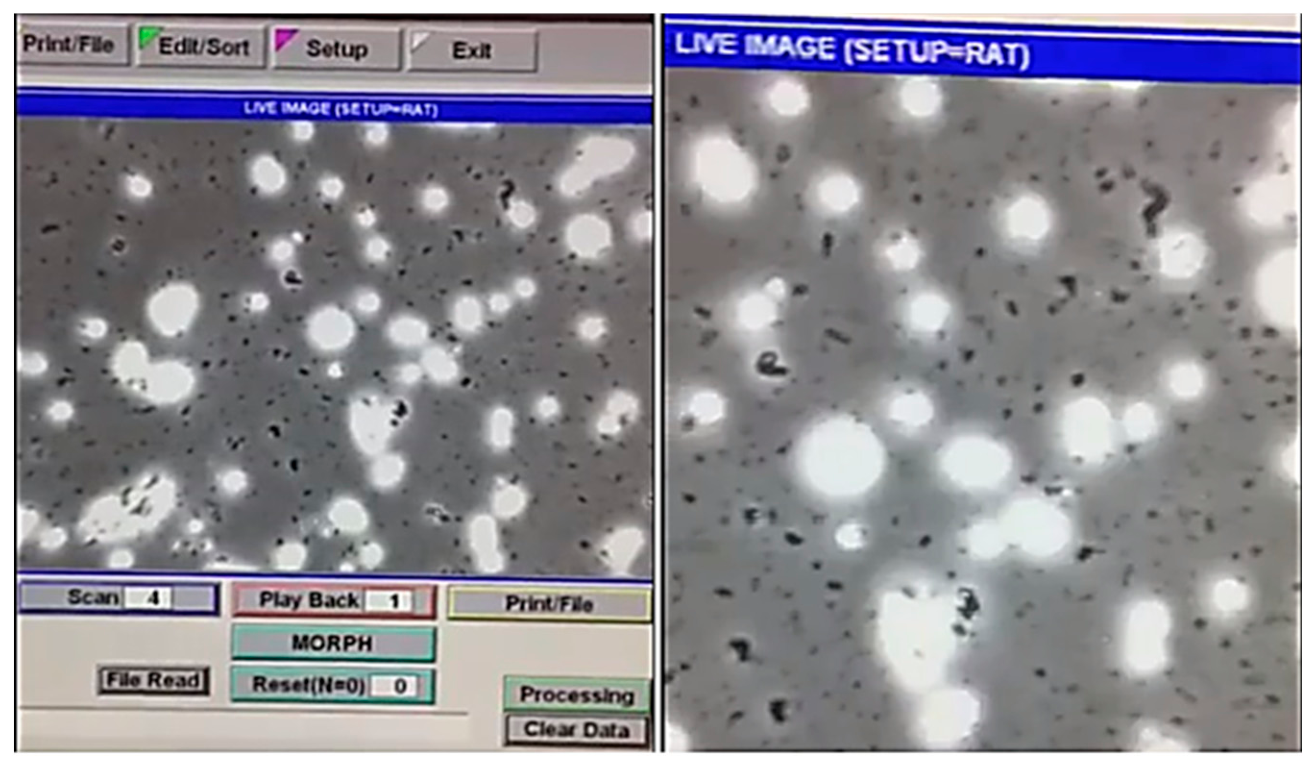
3.7. CASA of Sperm Parameters
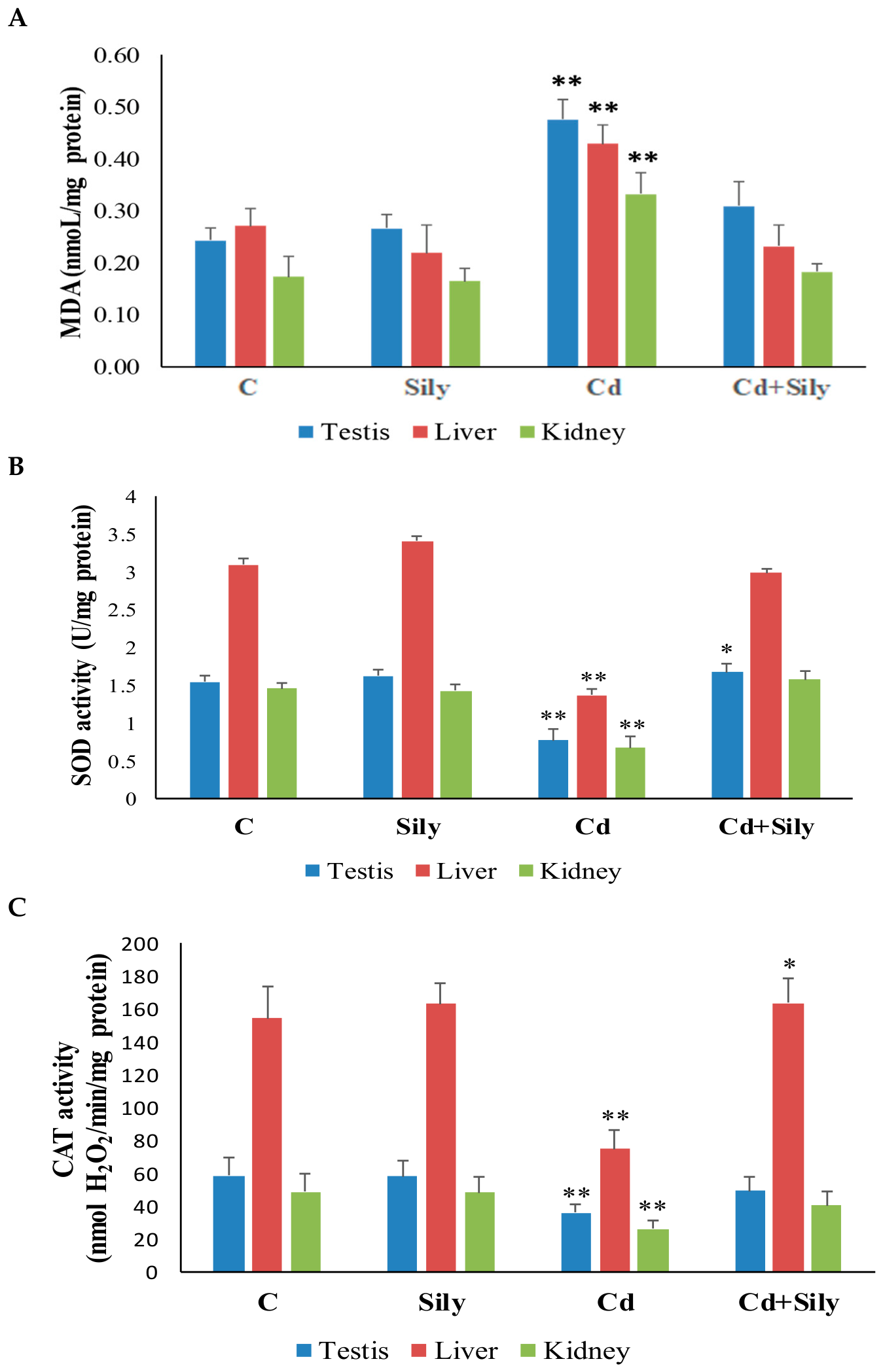
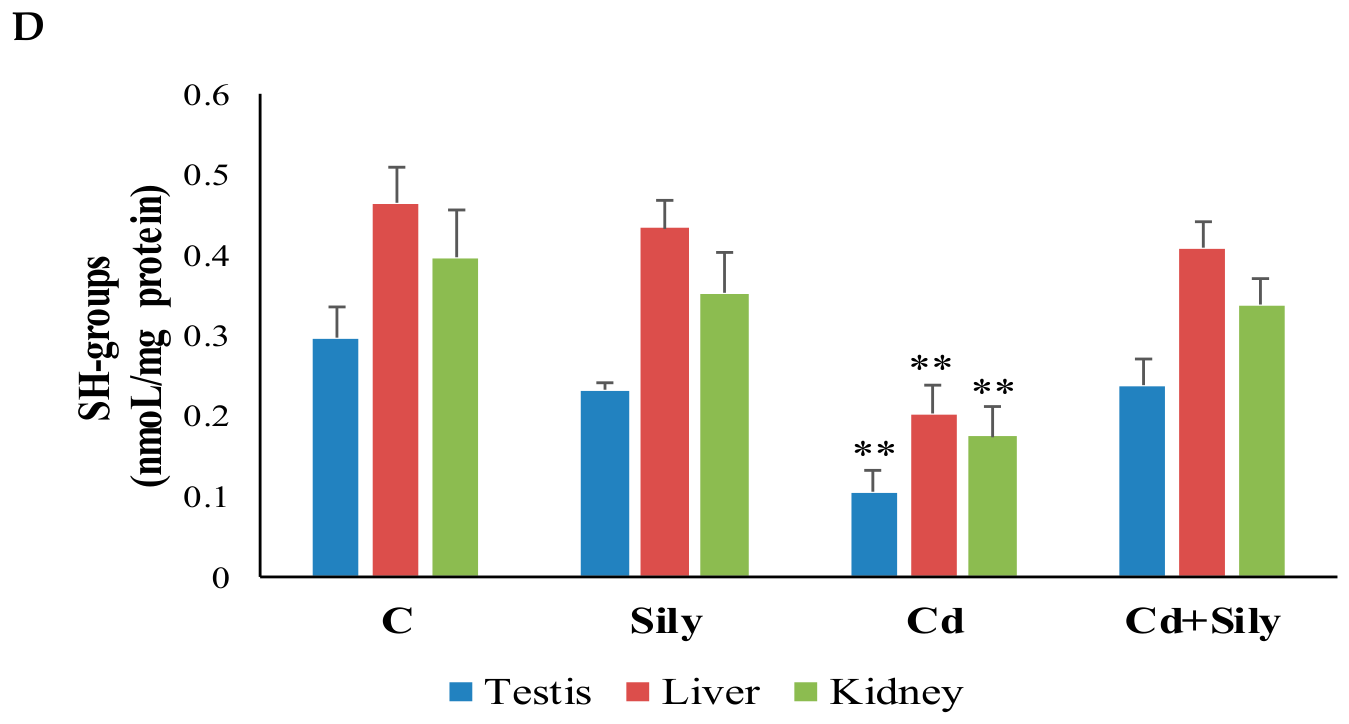
3.8. Effects of Cadmium and Silymarin on Oxidative Stress Biomarkers in Testis, Liver, and Kidney
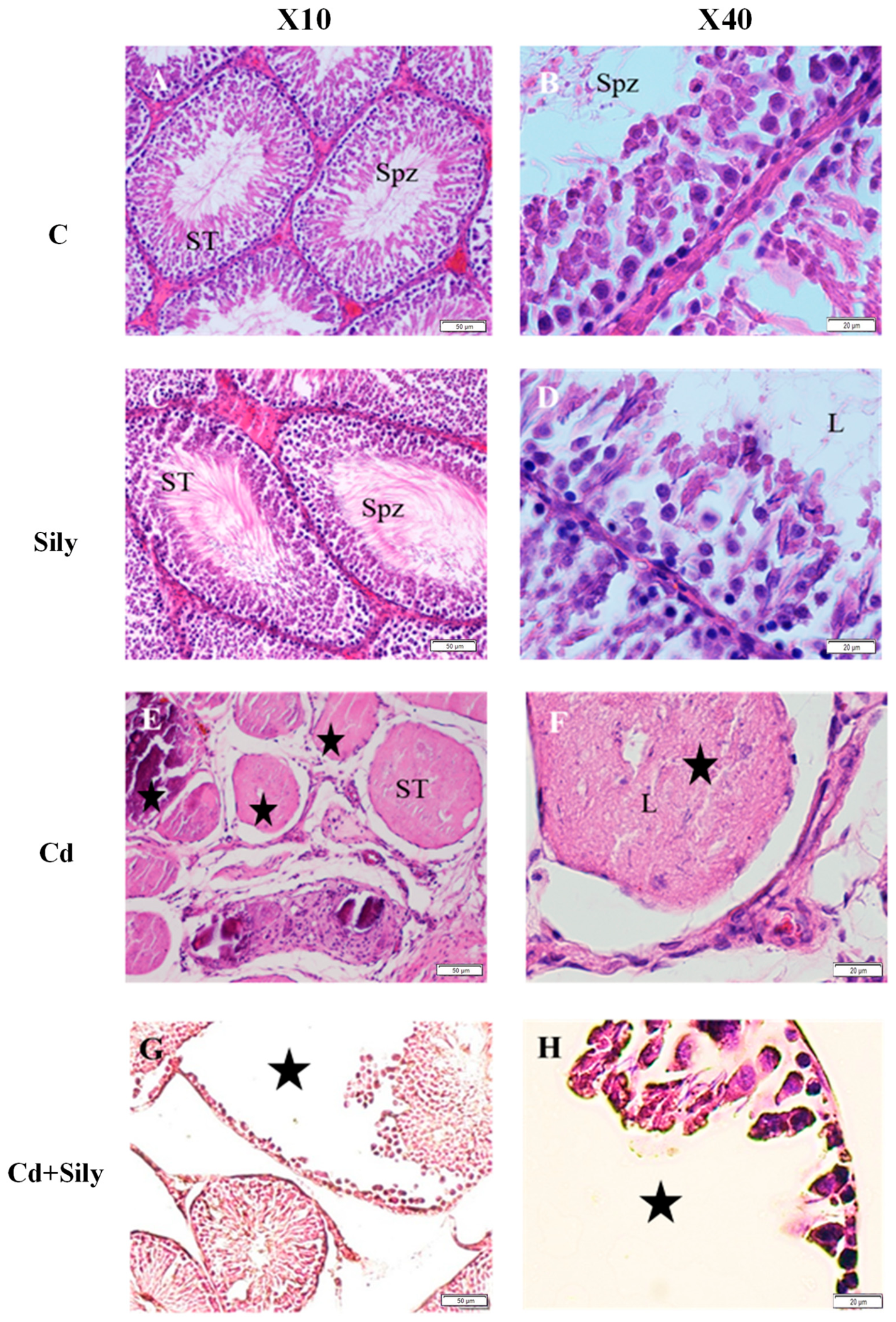
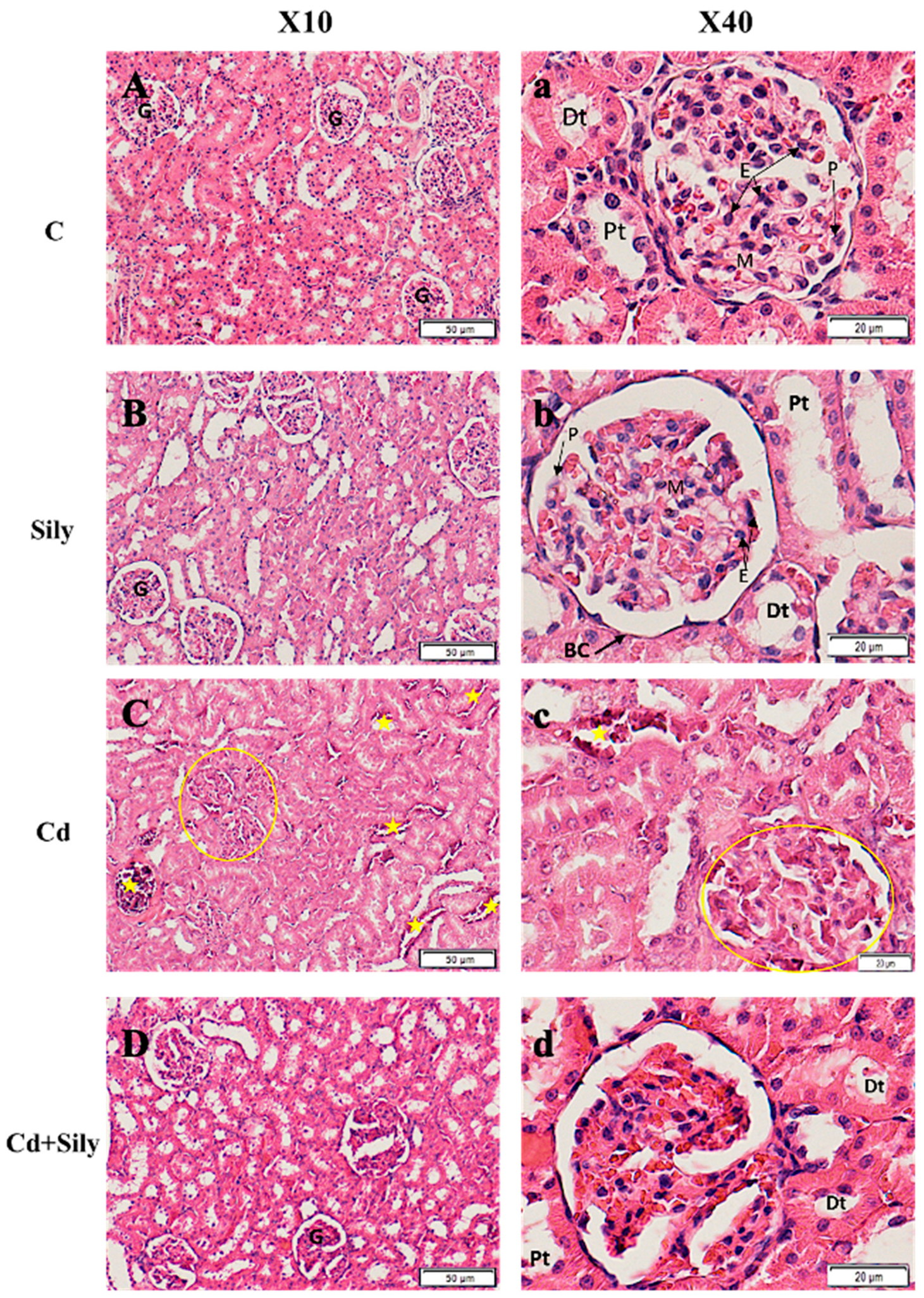
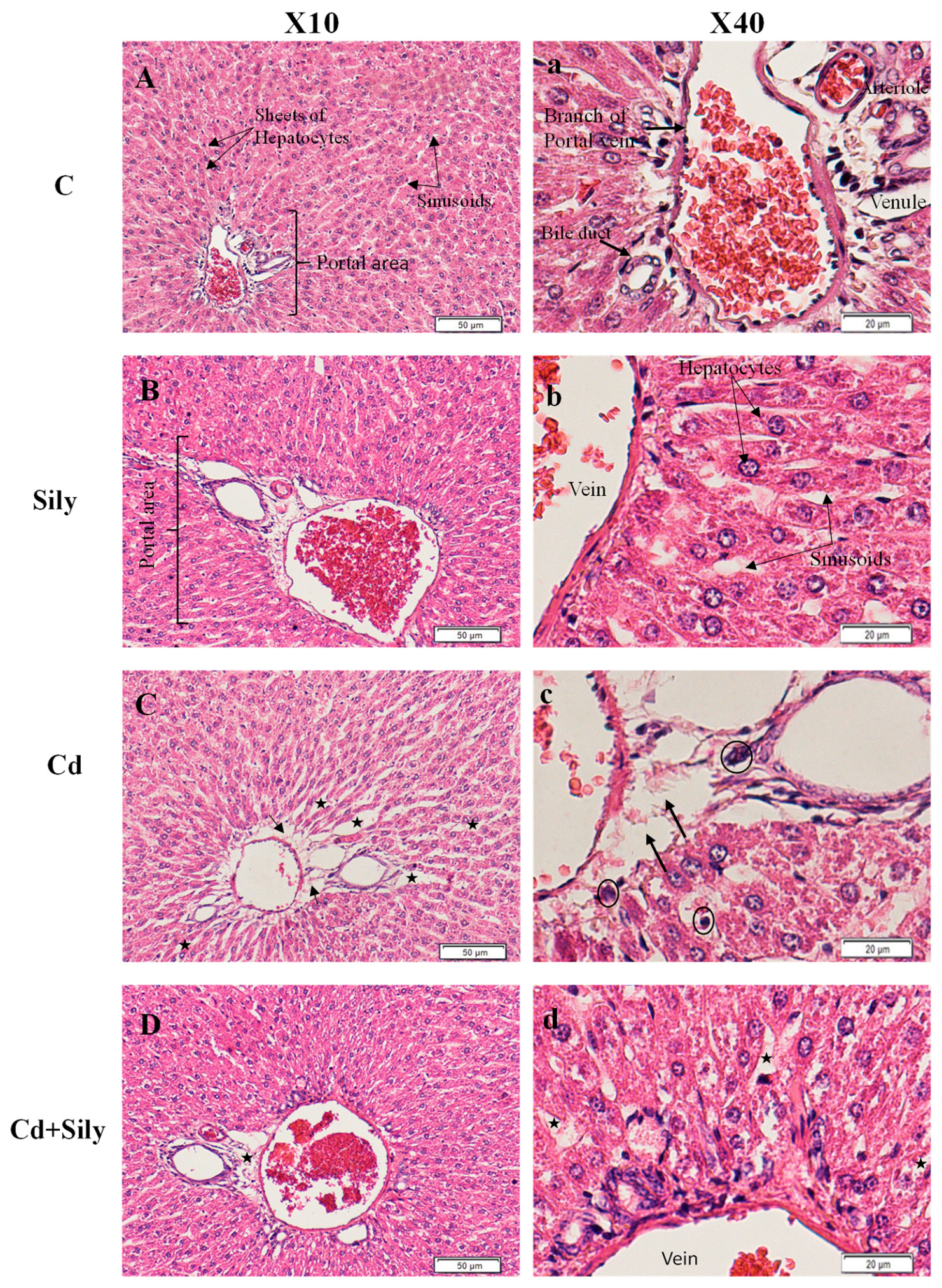
3.9. Histological Analysis of Testicular, Liver and Kidney Tissues
3.9.1. Histological Analysis of Testicular Tissue
3.9.2. Histopathological Evaluation of Testicular Damages
3.9.3. Histopathological Evaluation of Kidney Damages
3.9.4. Histopathological Evaluation of Liver Damages
3.10. Molecular Docking Studies
4. Discussion
4.1. Systemic and Metabolic Effects of Cadmium: Role of Oxidative Stress
4.2. Integrated Multi-Organ Toxicity of Cadmium: Hepatic, Renal and Reproductive Damage
4.3. Protective Effects of Silymarin Against Cadmium-Induced Systemic Toxicity: Biochemical, Histological and Molecular Docking Insights
5. Conclusions
Supplementary Materials
Author Contributions
Funding
Institutional Review Board Statement
Informed Consent Statement
Data Availability Statement
Acknowledgments
Conflicts of Interest
Appendix A. Overview of CASA-Based Assessment of Sperm Motility and Kinetic Parameters in Experimental Rat Groups


References
- Briffa, J.; Sinagra, E.; Blundell, R. Heavy metal pollution in the environment and their toxicological effects on humans. Heliyon 2020, 6, e04691. [Google Scholar] [CrossRef]
- Balali-Mood, M.; Naseri, K.; Tahergorabi, Z.; Khazdair, M.; Sadeghi, M. Toxic mechanisms of five heavy metals: Mercury, lead, chromium, cadmium, and arsenic. Front. Pharmacol. 2021, 12, 643972. [Google Scholar] [CrossRef] [PubMed]
- Peana, M.; Pelucelli, A.; Chasapis, C.; Perlepes, S.; Bekiari, V.; Medici, S.; Zoroddu, M. Biological effects of human exposure to environmental cadmium. Biomolecules 2022, 13, 36. [Google Scholar] [CrossRef] [PubMed]
- Satarug, S.; Gobe, G.C.; Vesey, D.A. Multiple targets of toxicity in environmental exposure to low-dose cadmium. Toxics 2022, 10, 472. [Google Scholar] [CrossRef] [PubMed]
- Ge, J.; Zhang, C.; Sun, Y.; Zhang, Q.; Lv, M.; Guo, K.; Li, J. Cadmium exposure triggers mitochondrial dysfunction and oxidative stress in chicken (Gallus gallus) kidney via mitochondrial UPR inhibition and Nrf2-mediated antioxidant defense activation. Sci. Total Environ. 2019, 689, 1160–1171. [Google Scholar] [CrossRef]
- Zhang, Z.; Wang, Q.; Gao, X.; Tang, X.; Xu, H.; Wang, W.; Lei, X. Reproductive toxicity of cadmium stress in male animals. Toxicology 2024, 15, 37–87. [Google Scholar] [CrossRef]
- Li, Y.; Li, Z.F.; Qiu, B.; Chen, K.; Zhang, T.L.; Wang, H.P.; Wang, L. Chronic exposure to low-dose cadmium disrupts spermatogenesis in mice through ectoplasmic specialization damage. J. Environ. Sci. 2026, 164, 632–643. [Google Scholar] [CrossRef]
- Bhardwaj, J.K.; Siwach, A.; Sachdeva, D.; Sachdeva, S.N. Revisiting cadmium-induced toxicity in the male reproductive system: An update. Arch. Toxicol. 2024, 98, 3619–3639. [Google Scholar] [CrossRef]
- Unsal, V.; Dalkıran, T.; Çiçek, M.; Kölükçü, E. The role of natural antioxidants against reactive oxygen species produced by cadmium toxicity: A review. Adv. Pharm. Bull. 2020, 10, 184–202. [Google Scholar] [CrossRef]
- Sayyad, M.; Sutar, A.D.; Shivhare, K.; Shukla, R.; Flora, S.J.S. Silymarin as a phytopharmaceutical agent: Advances in mechanistic insights, formulation strategies, and pre-clinical applications. Front. Pharmacol. 2025, 16, 1711653. [Google Scholar] [CrossRef]
- Wadhwa, K.; Pahwa, R.; Kumar, M.; Kumar, S.; Sharma, P.; Singh, G.; Verma, R.; Mittal, V.; Singh, I.; Kaushik, D.; et al. Mechanistic insights into the pharmacological significance of silymarin. Molecules 2022, 27, 65327. [Google Scholar] [CrossRef]
- Jurčacková, Z.; Hrčková, G.; Mudroňová, D.; Matiašová, A.; Biedermann, D. Flavonolignans silybin, silychristin and 2,3-dehydrosilybin showed differential cytoprotective, antioxidant and anti-apoptotic effects on splenocytes from Balb/c mice. Sci. Rep. 2025, 15, 89824. [Google Scholar] [CrossRef] [PubMed]
- Zhao, Y.; Zhou, Y.; Gong, T.; Liu, Z.; Yang, W.; Xiong, Y.; Xiao, D.; Cifuentes, A.; Ibáñez, E.; Lu, W. The clinical anti-inflammatory effects and underlying mechanisms of silymarin. iScience 2024, 27, 111109. [Google Scholar] [CrossRef]
- Etemadi, T.; Momeni, H.; Ghafarizadeh, A. Impact of silymarin on cadmium-induced apoptosis in human spermatozoa. Andrologia 2020, 52, e13795. [Google Scholar] [CrossRef]
- Ghosh, S.; Sarkar, A.; Bhattacharyya, S.; Sil, P.C. Silymarin protects mouse liver and kidney from thioacetamide-induced toxicity by scavenging reactive oxygen species and activating PI3K-Akt pathway. Front. Pharmacol. 2016, 7, 481. [Google Scholar] [CrossRef]
- Liu, Q.; Zhang, R.; Wang, X.; Shen, X.; Wang, P.; Sun, N.; Li, X.; Li, X.; Hai, C. Effects of sub-chronic, low-dose cadmium exposure on kidney damage and potential mechanisms. Ann. Transl. Med. 2019, 7, 177. [Google Scholar] [CrossRef] [PubMed]
- Candelaria, G.; Virginia, G.; Angélica, M.; Yuliana, G.; Melesio, C.; Germán, C. Effect of Arthrospira (Spirulina) maxima on cadmium chloride–induced alterations in sexual behavior and fertility in male Wistar rats. Pharmaceuticals 2024, 17, 332. [Google Scholar] [CrossRef] [PubMed]
- Zamani, M.M.; Mortazavi, S.H.; Monajjemzadeh, M.; Piranfar, V.; Aalidaeijavadi, Z.; Bakhtiarian, A. Protective effects of combined long time administration of selenium and vitamin C on liver and kidney toxicity of cadmium in rats. Iran J. Pathol. 2021, 16, 174–180. [Google Scholar] [CrossRef]
- Breton, J.; Daniel, C.; Vignal, C.; Body-Malapel, M.; Garat, A.; Ple, C.; Foligné, B. Does oral exposure to cadmium and lead mediate susceptibility to colitis? The dark-and-bright sides of heavy metals in gut ecology. Sci. Rep. 2016, 6, 19200. [Google Scholar] [CrossRef]
- Turley, A.; Zagorski, J.; Kennedy, R.; Freeborn, R.; Bursley, J.; Edwards, J.; Rockwell, C. Chronic low-level cadmium exposure in rats affects cytokine production by activated T cells. Toxicol. Res. 2019, 82, 227–237. [Google Scholar] [CrossRef]
- Wang, L.; Huang, Q.; Li, Y.; Huang, Y.; Xie, J.; Xu, L.; Dou, Y.; Su, Z.; Zeng, H.; Chen, J. Protective effects of silymarin on triptolide-induced acute hepatotoxicity in rats. Mol. Med. Rep. 2017, 17, 789–800. [Google Scholar] [CrossRef]
- Terzi, F.; Ciftci, M.K. Protective effect of silymarin on tacrolimus-induced kidney and liver toxicity. BMC Complement. Med. Ther. 2022, 22, 331. [Google Scholar] [CrossRef]
- Faraji, T.; Momeni, H.R.; Malmir, M. Protective effects of silymarin on testis histopathology, oxidative stress indicators, antioxidant defence enzymes and serum testosterone in cadmium-treated mice. Andrologia 2019, 51, e13242. [Google Scholar] [CrossRef] [PubMed]
- Guo, Y.; Wang, S.; Wang, Y.; Zhu, T. Silymarin improved diet-induced liver damage and insulin resistance by decreasing inflammation in mice. Pharm. Biol. 2016, 54, 2995–3000. [Google Scholar] [CrossRef]
- Gao, X.; Xiao, Z.-H.; Liu, M.; Zhang, N.-Y.; Khalil, M.M.; Gu, C.-Q.; Qi, D.-S.; Sun, L.-H. Dietary silymarin supplementation alleviates zearalenone-induced hepatotoxicity and reproductive toxicity in rats. J. Nutr. 2018, 148, 1209–1216. [Google Scholar] [CrossRef]
- He, Q.; Su, G.; Liu, K.; Zhang, F.; Jiang, Y.; Gao, J.; Liu, L.; Jiang, Z.; Jin, M.; Xie, H. Sex-specific reference intervals of hematologic and biochemical analytes in Sprague-Dawley rats using the nonparametric rank percentile method. PLoS ONE 2017, 12, e0189837. [Google Scholar] [CrossRef] [PubMed]
- Patel, S.; Patel, S.; Kotadiya, A.; Patel, S.; Shrimali, B.; Joshi, N.; Patel, T.; Trivedi, H.; Patel, J.; Joharapurkar, A.; et al. Age-related changes in hematological and biochemical profiles of Wistar rats. Lab. Anim. Res. 2024, 40, 7. [Google Scholar] [CrossRef]
- Jequier, A.M. Semen analysis: A new manual and its application to the understanding of semen and its pathology. Asian J. Androl. 2010, 12, 11. [Google Scholar] [CrossRef]
- Tsikas, D. Assessment of lipid peroxidation by measuring malondialdehyde (MDA) and relatives in biological samples: Analytical and biological challenges. Anal. Biochem. 2017, 524, 13–30. [Google Scholar] [CrossRef]
- Borges, C.; Sherma, N. Techniques for the Analysis of Cysteine Sulfhydryls and Oxidative Protein Folding. Antioxid. Redox Signal. 2014, 21, 511–531. [Google Scholar] [CrossRef] [PubMed]
- Mesa-Herrera, F.; Quinto-Alemany, D.; Díaz, M. A Sensitive, Accurate, and Versatile Method for the Quantification of Superoxide Dismutase Activities in Biological Preparations. React. Oxyg. Species 2018, 6, 341–350. [Google Scholar] [CrossRef]
- Bendou, O.; Gutiérrez-Fernández, I.; Marcos-Barbero, E.; Bueno-Ramos, N.; González-Hernández, A.; Morcuende, R.; Arellano, J. Theoretical and Experimental Considerations for a Rapid and High Throughput Measurement of Catalase In Vitro. Antioxidants 2021, 11, 21. [Google Scholar] [CrossRef]
- Simonian, M.; Smith, J. Spectrophotometric and Colorimetric Determination of Protein Concentration. Curr. Protoc. Mol. Biol. 1996, 76, 10.0.1–10.0.22. [Google Scholar] [CrossRef]
- Fallatah, M.; Ahmad, A.; Alabbas, K.; Alhammad, L. An Overview of Histological Staining Techniques. J. Posthumanism 2024, 4, 3191. [Google Scholar] [CrossRef]
- Chen, Y.; Zhang, Z.; Lin, Y.; Lin, H.; Li, M.; Nie, P. Long-term impact of immunosuppressants at therapeutic doses on male reproductive system in unilateral nephrectomized rats: A comparative study. Biomed. Res. Int. 2013, 2013, 690382. [Google Scholar] [CrossRef]
- Polyak, S.J.; Morishima, C.; Lohmann, V.; Pal, S.; Lee, D.Y.; Liu, Y.; Oberlies, N.H. Identification of hepatoprotective flavonolignans from silymarin. Proc. Natl. Acad. Sci. USA 2010, 107, 5995–5999. [Google Scholar] [CrossRef]
- Trott, O.; Olson, A.J. AutoDock Vina: Improving the speed and accuracy of docking with a new scoring function, efficient optimization, and multithreading. J. Comput. Chem. 2010, 31, 455–461. [Google Scholar] [CrossRef]
- Dassault Systems BIOVIA. Discovery Studio Visualizer 2021; Dassault Systems: San Diego, CA, USA, 2020. [Google Scholar]
- Genchi, G.; Sinicropi, M.S.; Lauria, G.; Carocci, A.; Catalano, A. The effects of cadmium toxicity. Int. J. Environ. Res. Public Health 2020, 17, 3782. [Google Scholar] [CrossRef]
- Zhu, Y.; Cheng, P.; Peng, J.; Liu, S.; Xiang, J.; Xu, D.; Chen, Y.; Chen, Z.; Wang, X.; Luo, C.; et al. Cadmium exposure causes transcriptomic dysregulation in adipose tissue and associated shifts in serum metabolites. Environ. Int. 2024, 185, 108513. [Google Scholar] [CrossRef]
- Breton, J.; Le Clère, K.; Daniel, C.; Sauty, M.; Nakab, L.; Chassat, T.; Dewulf, J.; Penet, S.; Carnoy, C.; Thomas, P.; et al. Subchronic ingestion of cadmium and lead alters the bioavailability of essential and heavy metals, gene expression pathways and genotoxicity in mouse intestine. Arch. Toxicol. 2013, 87, 1787–1795. [Google Scholar] [CrossRef]
- Surai, P.F. Silymarin as a natural antioxidant: An overview of the current evidence. Antioxidants 2015, 4, 204–247. [Google Scholar] [CrossRef]
- Karimi, G.; Vahabzadeh, M.; Lari, P.; Rashedinia, M.; Moshiri, M. “Silymarin”, a promising pharmacological agent for treatment of diseases. Iran J. Basic Med. Sci. 2011, 14, 308–317. [Google Scholar]
- Khazaei, R.; Seidavi, A.; Bouyeh, M.A. A review on the mechanisms of the effect of silymarin in milk thistle (Silybum marianum) on some laboratory animals. Vet. Med. Sci. 2022, 8, 289–301. [Google Scholar]
- Mirkov, I.; Popov Aleksandrov, A.; Ninkov, M.; Tucovic, D.; Kulas, J.; Zeljkovic, M.; Popovic, D.; Kataranovski, M. Immunotoxicology of cadmium: Cells of the immune system as targets and effectors of cadmium toxicity. Food Chem. Toxicol. 2021, 149, 112026. [Google Scholar] [CrossRef]
- Mladenov, M.; Lubomirov, L.; Grisk, O.; Avtanski, D.; Mitrokhin, V.; Sazdova, I.; Keremidarska-Markova, M.; Danailova, Y.; Nikolaev, G.; Konakchieva, R.; et al. Oxidative stress, reductive stress and antioxidants in vascular pathogenesis and aging. Antioxidants 2023, 12, 1126. [Google Scholar] [CrossRef]
- Nazima, B.; Manoharan, V.; Miltonprabu, S. Oxidative stress induced by cadmium in the plasma, erythrocytes and lymphocytes of rats. Hum. Exp. Toxicol. 2016, 35, 428–447. [Google Scholar] [CrossRef]
- Anyanwu, B.O.; Orish, C.N.; Ezejiofor, A.N.; Nwaogazie, I.L.; Orisakwe, O.E. Protective effect of Costus afer aqueous leaf extract (CALE) on low-dose heavy metal mixture-induced alterations in serum lipid profile and hematological parameters of male Wistar albino rats. J. Toxicol. 2020, 2020, 8850264. [Google Scholar]
- Sarmiento-Ortega, V.; Moroni-González, D.; Díaz, A.; Brambila, E.; Treviño, S. ROS and ERK pathway mechanistic approach on hepatic insulin resistance after subchronic oral exposure to cadmium NOAEL dose. Biol. Trace Elem. Res. 2022, 201, 3903–3918. [Google Scholar] [CrossRef]
- Guicciardi, M.E.; Malhi, H.; Mott, J.L.; Gores, G.J. Apoptosis and necrosis in the liver. Compr. Physiol. 2013, 3, 977–1010. [Google Scholar] [CrossRef]
- Creeden, J.F.; Gordon, D.M.; Stec, D.E.; Hinds, T.D., Jr. Bilirubin as a metabolic hormone: The physiological relevance of low levels. Am. J. Physiol. Endocrinol. Metab. 2021, 320, E191–E207. [Google Scholar] [CrossRef]
- Souza-Arroyo, V.; Fabián, J.J.; Bucio-Ortiz, L.; Miranda-Labra, R.U.; Gomez-Quiroz, L.E.; Gutiérrez-Ruiz, M.C. The mechanism of the cadmium-induced toxicity and cellular response in the liver. Toxicology 2022, 480, 153339. [Google Scholar] [CrossRef]
- Gür, F.M.; Bilgiç, S. Silymarin, an antioxidant flavonoid, protects the liver from the toxicity of the anticancer drug paclitaxel. Tissue Cell 2023, 83, 102158. [Google Scholar] [CrossRef]
- Kawada, T. Urinary cadmium and some urinary indicators of kidney tubular damage in a population exposed to subchronic environmental cadmium. Int. Arch. Occup. Environ. Health 2020, 93, 1039–1040. [Google Scholar] [CrossRef]
- De Souza Santos, V.; Peters, B.; Côco, L.; Alves, G.; De Assis, A.; Nogueira, B.V.; Meyrelles, S.S.; Porto, M.L.; Vasquez, E.C.; Campagnaro, B.P.; et al. Silymarin protects against radiocontrast-induced nephropathy in mice. Life Sci. 2019, 228, 305–315. [Google Scholar] [CrossRef]
- Bhardwaj, J.; Panchal, H.; Saraf, P. Cadmium as a testicular toxicant: A review. J. Appl. Toxicol. 2020, 41, 105–117. [Google Scholar] [CrossRef]
- Cupertino, M.; Novaes, R.; Santos, E.; Neves, A.; Silva, E.; Oliveira, J.A.; Matta, S.L.P. Differential susceptibility of germ and Leydig cells to cadmium-mediated toxicity: Impact on testis structure, adiponectin levels, and steroidogenesis. Oxid. Med. Cell. Longev. 2017, 2017, 3405089. [Google Scholar] [CrossRef]
- Wang, H.; Chang, M.; Peng, T.; Yang, Y.; Li, N.; Luo, T.; Cheng, Y.-M.; Zhou, M.-Z.; Zeng, X.-H.; Zheng, L.-P. Exposure to cadmium impairs sperm functions by reducing CatSper in mice. Cell. Physiol. Biochem. 2017, 42, 44–54. [Google Scholar] [CrossRef]
- Yi, L.; Shang, X.; Lv, L.; Wang, Y.; Zhang, J.; Quan, C.; Shi, Y.; Liu, Y.; Zhang, L. Cadmium-induced apoptosis of Leydig cells is mediated by excessive mitochondrial fission and inhibition of mitophagy. Cell Death Dis. 2022, 13, 53. [Google Scholar] [CrossRef]
- Sheweita, S.; Rafea, A.; Elbana, S. The deleterious effects of cadmium on oxidative stress markers, drug-metabolizing, and antioxidant enzyme activities: Role of silymarin and garlic as antioxidants. Environ. Sci. Pollut. Res. 2023, 30, 112490–112502. [Google Scholar] [CrossRef]
- Lafuente, A.; Márquez, N.; Pérez-Lorenzo, M.; Pazo, D.; Esquifino, A. Pubertal and postpubertal cadmium exposure differentially affects the hypothalamic-pituitary-testicular axis function in the rat. Food Chem. Toxicol. 2000, 38, 913–923. [Google Scholar] [CrossRef]
- Soto, C.; Raya, L.; Pérez, J.; González, I.; Pérez, S. Silymarin induces expression of pancreatic Nkx6.1 transcription factor and β-cells neogenesis in a pancreatectomy model. Molecules 2014, 19, 4654–4668. [Google Scholar] [CrossRef]
- Cai, L.; Ming, D.; Chen, W.; Zhao, Y.; Li, Y. Silybin alleviated hepatic injury by regulating redox balance, inflammatory response, and mitochondrial function in weaned piglets under paraquat-induced oxidative stress. Antioxidants 2024, 13, 324. [Google Scholar] [CrossRef]





| Parameter | Description |
|---|---|
| Commercial Name | Silymarin 150 mg—NOW® |
| Pharmaceutical Form | Capsules (Vcaps®—vegetarian capsules) |
| Active Ingredient | Milk Thistle Extract (Silybum marianum) standardized to contain silymarin |
| Silymarin Content | 150 mg per capsule |
| Additional Components | Cellulose (capsule), magnesium stearate (vegetable source), silica |
| Recommended Use | Liver support, antioxidant protection |
| Presentation | Bottle containing 120 capsules |
| Mode of Administration | Oral |
| Storage Conditions | Store in a cool, dry place after opening |
| Manufacturer | NOW Foods, Bloomingdale, Illinois, IL, USA |
| Certifications | GMP Quality Assured, Non-GMO, Vegan/Vegetarian |
| Group | Initial Weight (g) | Final Weight (g) | % Change |
|---|---|---|---|
| C | 315 ± 10 | 431 ± 12 | +36.8% |
| Sily | 305 ± 11 | 438 ± 14 | +43.6% |
| Cd | 325 ± 13 | 225 ± 15 * p = 0.03 | −30.8% |
| Cd + Sily | 310 ± 10 | 210 ± 13 * p = 0.02 | −32.3% |
| Relative Organ Weight (g/100 g bw) | ||||||||
|---|---|---|---|---|---|---|---|---|
| Groups | Testis | Epididymis | Prostate | Seminal Vesicles | Liver | Kidney | Heart | Brain |
| C | 0.42 ± 0.02 | 0.31 ± 0.02 | 0.31 ± 0.03 | 0.68 ± 0.03 | 3.95 ± 0.18 | 0.38 ± 0.02 | 0.40 ± 0.04 | 0.50 ± 0.06 |
| Sily | 0.43 ± 0.04 | 0.33 ± 0.03 | 0.32 ± 0.02 | 0.75 ± 0.02 | 4.02 ± 0.01 | 0.36 ± 0.02 | 0.42 ± 0.03 | 0.49 ± 0.04 |
| Cd | 0.15 ± 0.02 ** p = 0.001 | 0.22 ± 0.02 ** p = 0.004 | 0.18 ± 0.02 ** p = 0.002 | 0.45 ± 0.03 ** p = 0.004 | 2.50 ± 0.01 * p = 0.03 | 0.25 ± 0.02 * p = 0.03 | 0.35 ± 0.05 | 0.42 ± 0.02 * p = 0.04 |
| Cd+ Sily | 0.19 ± 0.02 ** p = 0.002 | 0.25 ± 0.02 ** p = 0.005 | 0.20 ± 0.02 ** p = 0.002 | 0.50 ± 0.02 ** p = 0.003 | 2.60 ± 0.03 * p = 0.04 | 0.30 ± 0.03 * p = 0.04 | 0.34 ± 0.04 | 0.47 ± 0.01 |
| Parameter | C | Sily | Cd | Cd + Sily |
|---|---|---|---|---|
| Lymphocytes (103/µL) | 3.50 ± 0.05 | 3.65 ± 0.05 | 2.06 ± 0.05 * p = 0.02 | 2.92 ± 0.05 * p = 0.04 |
| Monocytes (103/µL) | 0.24 ± 0.002 | 0.28 ± 0.022 | 0.19 ± 0.002 * p = 0.02 | 0.26 ± 0.003 |
| Eosinophils (103/µL) | 0.35 ± 0.006 | 0.34 ± 0.005 | 0.22 ± 0.004 * p = 0.02 | 0.39 ± 0.007 * p = 0.03 |
| Neutrophils (103/µL) | 1.66 ± 0.002 | 1.53 ± 0.022 | 0.98 ± 0.016 * p = 0.03 | 1.03 ± 0.017 ** p = 0.001 |
| Basophils (102/µL) | 0.047 ± 0.008 | 0.049 ± 0.008 | 0.039 ± 0.001 | 0.035 ± 0.010 |
| HEMOGLOBIN (g/dL) | 13.32 ± 1.54 | 12.06 ± 1.51 | 13.96 ± 1.91 * p = 0.04 | 14.56 ± 0.69 ** p = 0.004 |
| Total Ig (103/µL) | 0.030 ± 0.004 | 0.027 ± 0005 | 0.030 ± 0.003 | 0.027 ± 0.005 |
| Parameter | C | Sily | Cd | Cd + Sily |
|---|---|---|---|---|
| Total Cholesterol (TC) | 0.68 ± 0.03 | 0.7 ± 0.04 | 1.23 ± 0.04 ** p = 0.003 | 0.93 ± 0.05 ** p = 0.005 |
| LDL-C | 0.75 ± 0.03 | 0.79 ± 0.03 | 1.05 ± 0.04 ** p = 0.003 | 0.99 ± 0.02 ** p = 0.007 |
| HDL-C | 0.95 ± 0.04 | 0.89 ± 0.02 | 0.65 ± 0.03 ** p = 0.004 | 0.69 ± 0.03 ** p = 0.003 |
| Triglycerides (TG) | 0.62 ± 0.03 | 0.59 ± 0.01 | 1.08 ± 0.06 ** p = 0.007 | 0.94 ± 0.04 ** p = 0.005 |
| GROUPS (n = 6) | SCORE 0 | SCORE I | SCORE II | SCORE III |
|---|---|---|---|---|
| C | 6 | 0 | 0 | 0 |
Sily | 6 | 0 | 0 | 0 |
| Cd | 0 | 0 | 1 * p = 0.02 | 5 * p = 0.03 |
| Cd + Sily | 0 | 0 | 2 * p = 0.04 | 4 * p = 0.02 |
| Intermolecular Interactions | |||
|---|---|---|---|
| Protein | Binding Energy (kcal/mol) | H-Bonds | Binding Amino Acid Residues |
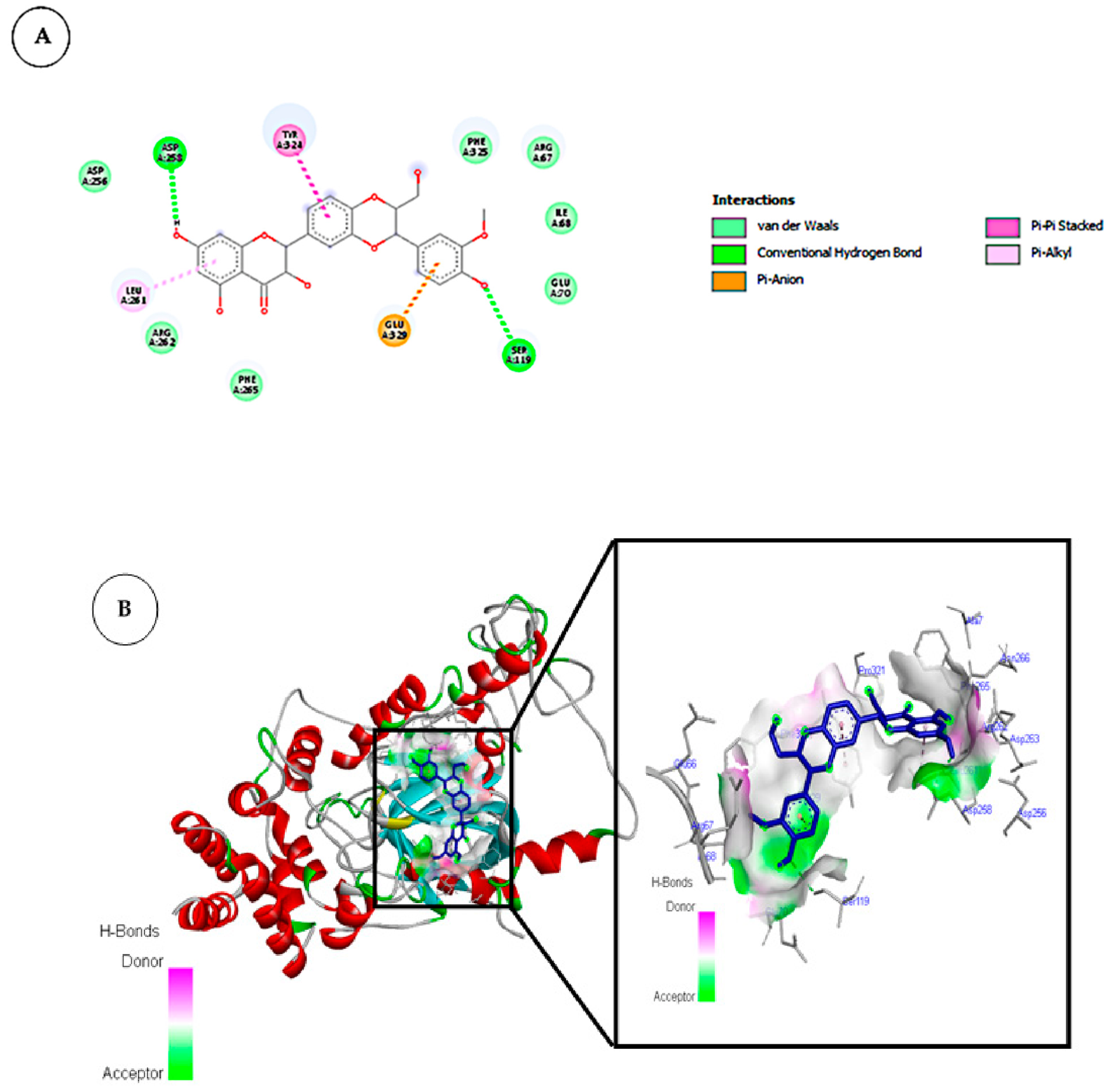
| CAT | −8.3 | 2 | ASP256, ASP258, TYR324, PHE325, ARG67, ILE68, GLU70, SER119, GLU329, PHE265, ARG262, and LEU261. |
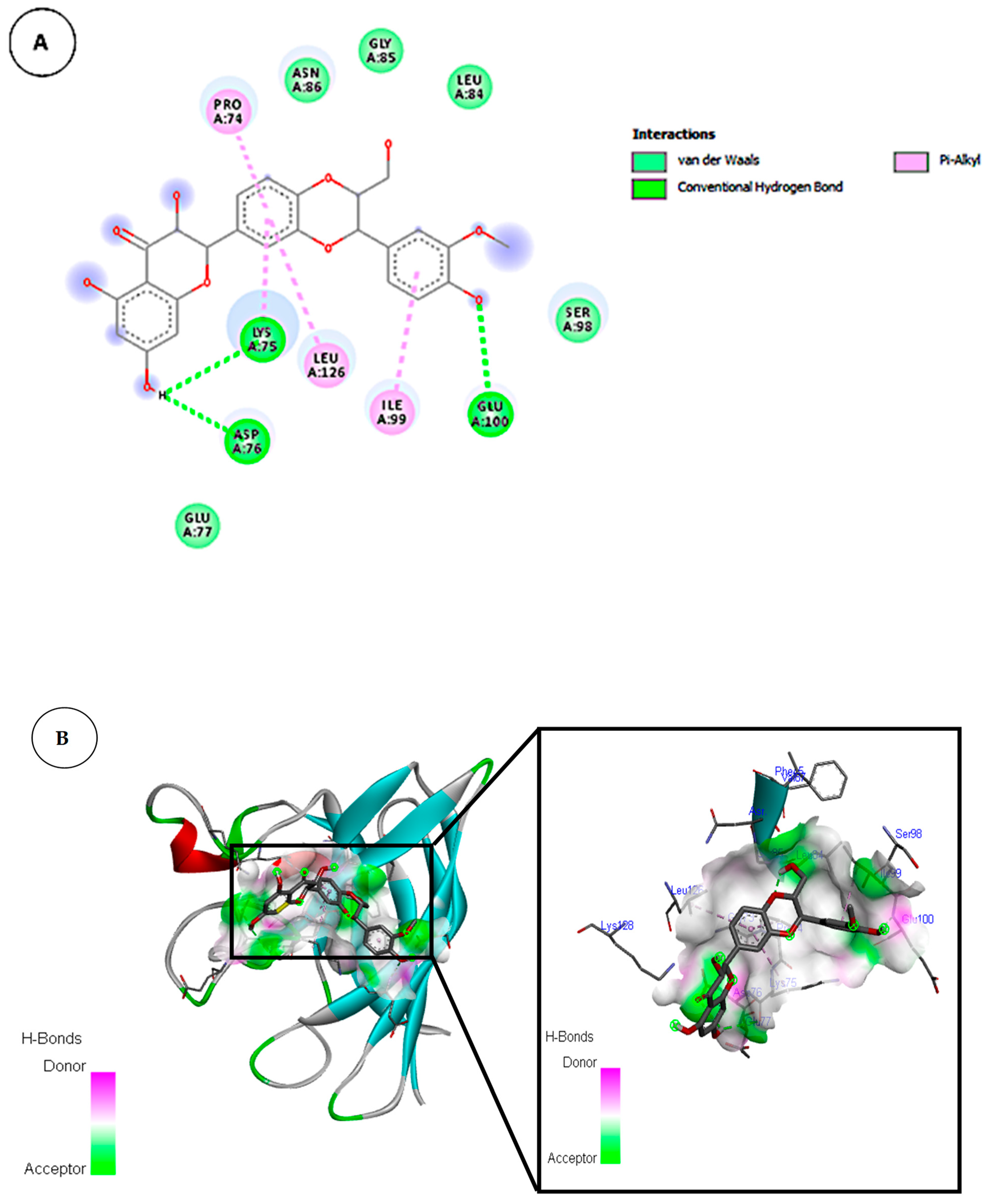
| SOD | −6.4 | 3 | PRO74, ASN86, GLY85, LEU84, SER98, GLU100, ILE99, LEU126, LYS75, and ASP76. |
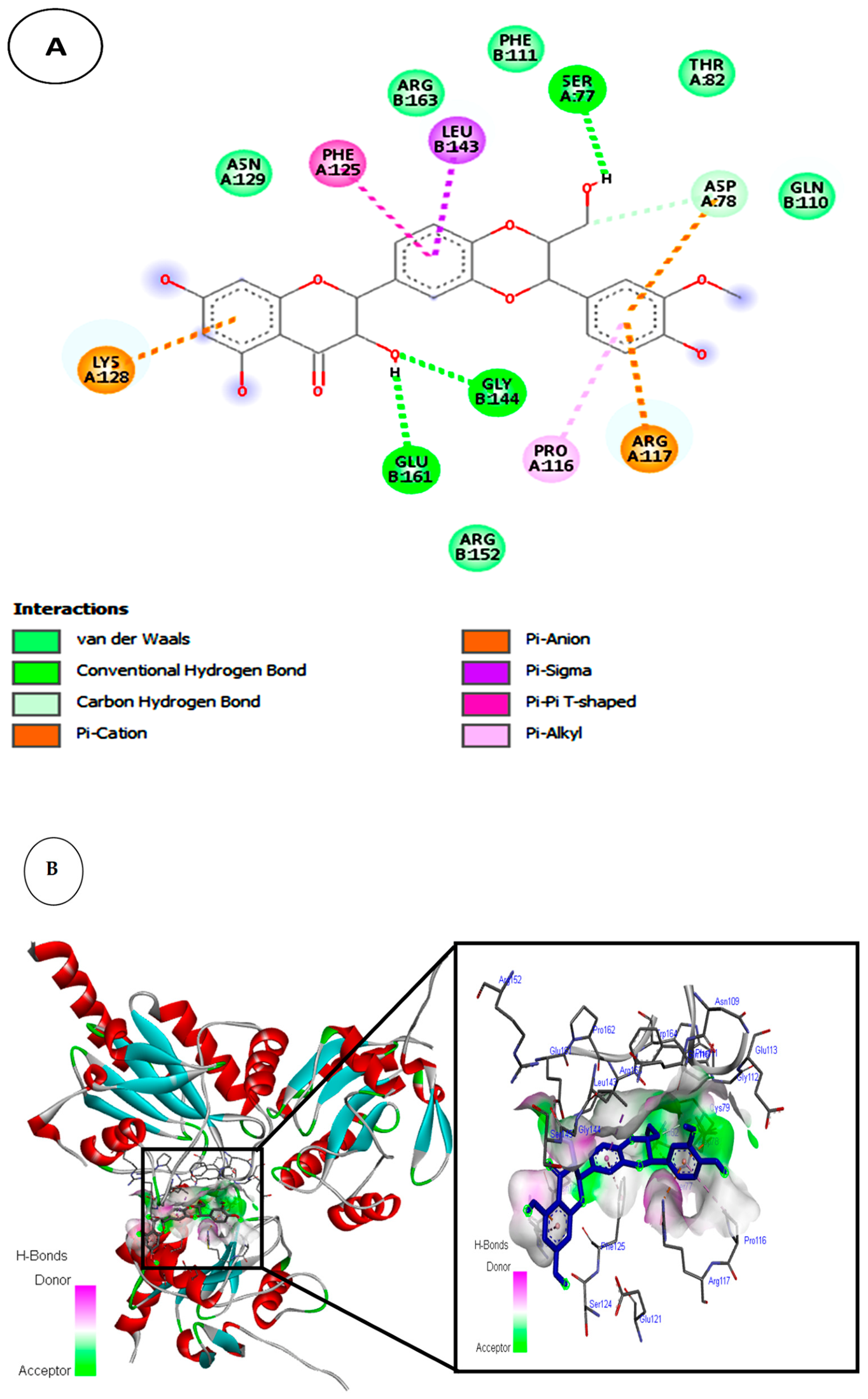
| GPx | −8.4 | 3 | ASN129, PHE125, LEU143, ARG163, PHE111, SER77, THR 82, ASP78, GLN110, ARG117, PRO116, GLY144, GLU161, ARG152, and LYS128. |
Disclaimer/Publisher’s Note: The statements, opinions and data contained in all publications are solely those of the individual author(s) and contributor(s) and not of MDPI and/or the editor(s). MDPI and/or the editor(s) disclaim responsibility for any injury to people or property resulting from any ideas, methods, instructions or products referred to in the content. |
© 2026 by the authors. Licensee MDPI, Basel, Switzerland. This article is an open access article distributed under the terms and conditions of the Creative Commons Attribution (CC BY) license.
Share and Cite
Hammami, I.; Arrari, F.; Mahjoub, R.; Ali, R.B.; Hentati, H.E.; Nahdi, A.; López-Maldonado, E.A.; Talbi, E. Subchronic Cadmium-Induced Xenobiotic Toxicity in Male Wistar Rats: Antioxidant and Reproductive Protection by Standardized Silymarin with Molecular Docking Insights. J. Xenobiot. 2026, 16, 103. https://doi.org/10.3390/jox16030103
Hammami I, Arrari F, Mahjoub R, Ali RB, Hentati HE, Nahdi A, López-Maldonado EA, Talbi E. Subchronic Cadmium-Induced Xenobiotic Toxicity in Male Wistar Rats: Antioxidant and Reproductive Protection by Standardized Silymarin with Molecular Docking Insights. Journal of Xenobiotics. 2026; 16(3):103. https://doi.org/10.3390/jox16030103
Chicago/Turabian StyleHammami, Imen, Fatma Arrari, Rahma Mahjoub, Ridha Ben Ali, Haifa El Hentati, Afef Nahdi, Eduardo Alberto López-Maldonado, and Emna Talbi. 2026. "Subchronic Cadmium-Induced Xenobiotic Toxicity in Male Wistar Rats: Antioxidant and Reproductive Protection by Standardized Silymarin with Molecular Docking Insights" Journal of Xenobiotics 16, no. 3: 103. https://doi.org/10.3390/jox16030103
APA StyleHammami, I., Arrari, F., Mahjoub, R., Ali, R. B., Hentati, H. E., Nahdi, A., López-Maldonado, E. A., & Talbi, E. (2026). Subchronic Cadmium-Induced Xenobiotic Toxicity in Male Wistar Rats: Antioxidant and Reproductive Protection by Standardized Silymarin with Molecular Docking Insights. Journal of Xenobiotics, 16(3), 103. https://doi.org/10.3390/jox16030103