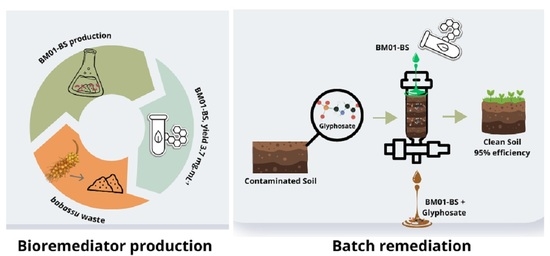
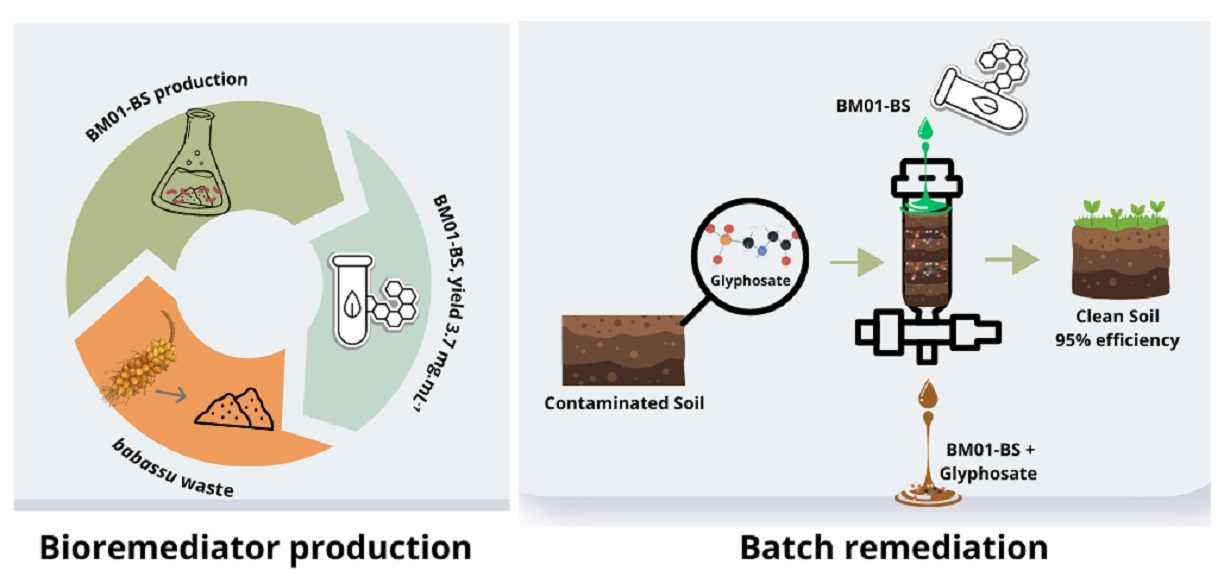
1. Introduction
Glyphosate [N-(phosphonomethyl)glycine] is recognized as the most pervasive anthropogenic xenobiotic in modern agriculture, serving as a broad-spectrum post-emergent herbicide with an estimated global application exceeding 8.6 billion kilograms over the last four decades [
1]. Despite its efficacy in weed management, escalating environmental concentrations of glyphosate in soil and aquatic systems represent a significant environmental threat [
2].
The chemical persistence of glyphosate is fundamentally rooted in the profound thermodynamic stability of its carbon-phosphorus (C–P) bond, ensuring that the phosphonomethyl moiety remains intact under varying environmental stressors, contributing significantly to the herbicide’s status as a persistent anthropogenic xenobiotic [
3]. However, the environmental behavior and longevity of glyphosate are also extensively regulated by its strong adsorption affinity for mineral surfaces and soil organic matter. This intimate interaction with the soil matrix often leads to the sequestration of the herbicide within mineral lattices, making it highly recalcitrant to both natural degradation pathways and standard remediation techniques [
4]. Beyond environmental disruption, glyphosate legacy includes significant risks to human health, acting as an endocrine disruptor and inducer of oxidative stress [
1,
5]. Such molecular resilience necessitates the application of bio-rational, innovative amphiphilic xenometabolites capable of disrupting these soil-xenobiotic complexes to facilitate mobilization and subsequent bioremediation of the herbicide.
Simultaneously, the accumulation of agro-industrial wastes, notably those derived from the babassu palm (
Attalea speciosa Mart.) processing in the Brazilian Amazon, has emerged as a parallel environmental challenge [
6]. Regulatory frameworks, including Brazil’s Law 12,305/2010, have intensified the urgency for the valorization of such residual biomass within a circular bioeconomy. In this context, integrating waste valorization with xenobiotic bioremediation offers a strategic dual-benefit approach. Microbial biosurfactants—amphiphilic secondary metabolites capable of reducing surface and interfacial tensions and forming micellar complexes with organic pollutants—have emerged as promising agents for mobilizing and solubilizing persistent soil contaminants [
7]. Unlike synthetic surfactants, these biological counterparts offer superior biocompatibility and biodegradability, positioning them as ideal candidates for “green” remediation of herbicide-contaminated sites [
8].
Among biosurfactant-producing bacteria, the genus
Serratia is recognized for its metabolic versatility in degrading complex xenobiotics, such as pesticides, pharmaceuticals, and industrial chemicals [
9]. This study focuses on a strategically isolated strain,
Serratia ureilytica BM01-BS, sourced from the extreme microbial consortia of a bauxite mine in Pará, Brazil. This environment, characterized by high mineral stress, serves as a natural selector for robust xenometabolic pathways. While microbial remediation has been previously explored [
10,
11], a significant knowledge gap persists regarding the use of Amazonian endemic waste as the sole nutritional platform for producing specialized biosurfactants targeted at glyphosate suppression.
In this study, we investigated the glyphosate-bioremediation efficacy of glycolipid biosurfactants produced by S. ureilytica BM01-BS, using babassu waste as a renewable feedstock, establishing the adsorption dynamics and assessing the ecotoxicological safety using lettuce (Lactuca sativa L.) as a biological indicator. High-resolution Whole-Genome Sequencing (WGS) was employed to elucidate the Biosynthetic Gene Clusters (BGCs) responsible for biosurfactant production, specifically targeting lipopeptide structures. By integrating genomic insights with applied environmental chemistry, this research offers a scalable framework for restoring ecological resilience in herbicide-impacted landscapes.
2. Materials and Methods
2.1. Ethics Approval
No unexpected or unusually severe safety hazards were encountered that would necessitate approval from an ethics committee.
2.2. Biological Resources
Serratia ureilytica BM01-BS was strategically isolated from the superficial soil layers of an active bauxite mining site in Marabá, Pará, Brazil. This environment was selected due to its heightened mineral stress conditions, which are expected to favor the development of robust xenometabolic pathways. The strain exhibits phenotypic characteristics typical of a Gram-negative bacillus and is preserved in a 20% glycerol solution at −20 °C at the Laboratory of Bio-test and Bio-processes (L@βio) from Campus III of Unifesspa. Legal compliance was ensured through registration with the Brazilian National Management System of Genetic Heritage (SisGen, registration n. A4DA401).
Agro-industrial waste from babassu palm (
Attalea speciosa Mart.) (Arecales: Arecaceae) processing (predominantly fruit peels and exhausted pulp) was sourced from the Associação do Movimento Interestadual das Quebradeiras de Coco Babaçu in São Domingos do Araguaia, Pará, Brazil (SisGen n. AB70C5B). To achieve a standardized fermentation feedstock, the waste underwent a rigorous pre-treatment: it was extensively washed with running tap water to remove exogenous debris and subsequently dehydrated in a forced-ventilation oven (SP-102/64, SP Labor, Presidente Prudente, SP, Brazil) at 45 ± 2 °C until a constant weight was achieved. The dried lignocellulosic matrix was then ground using a Willey-type knife mill (SL-31, Solab, São Paulo, SP, Brazil) to achieve a particle size of approximately 0.07 mm. The carbohydrate content of babassu waste was determined following the methodology outlined by Feio et al. [
12].
2.3. High-Resolution Genome Sequencing and Bioinformatic Annotation
Serratia ureilytica BM01-BS cells were lyophilized and sent for genomic DNA extraction, library preparation, and sequencing at the Vale Institute of Technology for Sustainable Development (ITV DS). Genomic DNA was extracted using the DNeasy PowerSoil Pro Kit (Qiagen®, Venlo, LI, The Netherlands), yielding a concentration of 210 ng·µL−1. The quality and concentration of the DNA were assessed using 1% agarose gel electrophoresis (Thermo Fisher Scientific™, Waltham, MA, USA) and quantified with a Qubit 3.0 fluorometer employing the 1X dsDNA BR Assay Kit (Thermo Fisher Scientific™).
DNA libraries were constructed using the Rapid Barcoding Kit (Oxford Nanopore Technologies; ONT, New York, NY, USA), and sequencing was performed on the PromethION 2 Solo (ONT) platform with R10.4.1 flow cells, utilizing two cells with a total of 1120 pores each. Initial sequencing output revealed low throughput, necessitating resequencing, which generated a cumulative total of 7 Gb of raw data. The bioinformatic processing included read trimming with Porechop (version 0.2.4) and quality filtering using Filtlong (version 0.2.1), with reads shorter than 3000 bp excluded.
Library statistics were analyzed with NanoStat (version 1.6.0) [
13]. Subsequent assembly of reads was conducted by partitioning the ONT data into four maximally independent subsets, followed by assembly with Flye (version 1.9.1-b1784) [
14], Raven (version 1.8.1) [
15], NECAT (version 0.0.1) [
16], and Miniasm (version 0.3.r179) combined with Minipolish (version 0.1.3), all integrated using the Autocycler (version 0.1.2) framework.
Taxonomic validation was performed using the Genome Taxonomy Database (GTDB-Tk version 2.2.5) [
17], confirming a 97% Average Nucleotide Identity (ANI) with
S. ureilytica CCUG:50595 (
https://www.ncbi.nlm.nih.gov/nuccore/JABXOF000000000.1, accessed on 10 March 2026). The closest reference was GCF_013375155.1 (
https://www.ncbi.nlm.nih.gov/datasets/genome/GCF_013375155.1/, accessed on 10 March 2026). The consensus assembly underwent further correction using Medaka (version 2.2.1). Annotation of the assemblies was conducted through the NCBI prokaryotic genome annotation pipeline (2025-05-06.build7983) [
18]. The final consensus assembly was evaluated for completeness using BUSCO (version 5.2.2) [
19]. Furthermore, Biosynthetic Gene Clusters (BGCs) were identified via AntiSmash 8.0 [
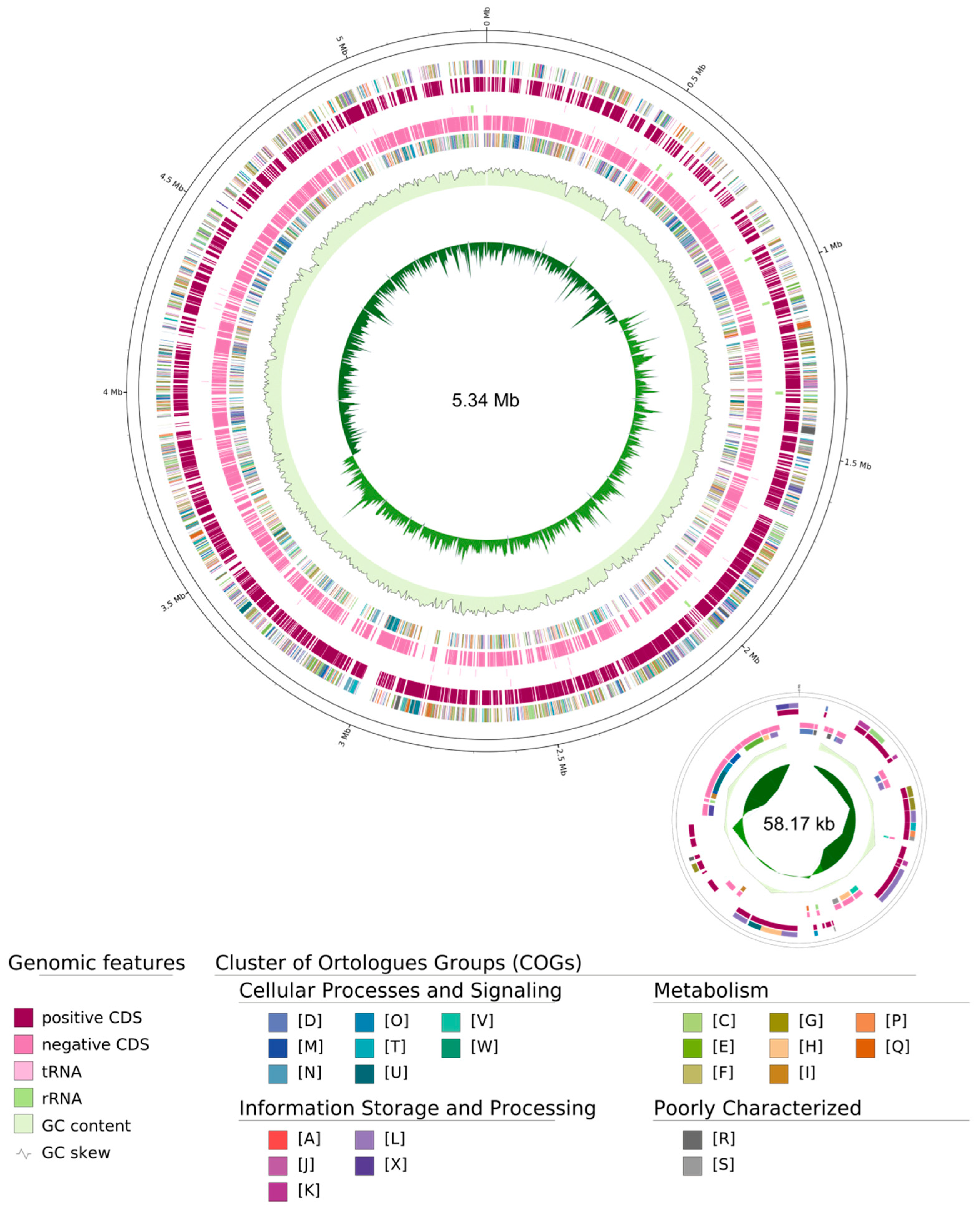
20], targeting Nonribosomal Peptide Synthetase (NRPS) clusters. Genome images were generated with GenoVi (version 0.4.3) [
21]. Protein homology searches were carried out using BLASTP (version 2.17.0) and HMMER (version 3.3.1) methodologies.
2.4. Sustainable Biosynthesis of Biosurfactant
Biosurfactant production was conducted in Erlenmeyer flasks containing 100 mL of sterilized mineral saline medium (MSM) formulated with the following components (g·L
−1): K
2HPO
4 (4.0), Na
2HPO
4 (1.5), NaNO
3 (1.0), MgSO
4·7H
2O (0.2), CaCl
2·2H
2O (0.02), and FeCl
3·6H
2O (0.02), as per the protocol established by Bodour et al. [
22]. The pH was adjusted to 7.0 prior to sterilization. Babassu waste served as the sole carbon source at a 2% (
w/
v) concentration. The flasks were inoculated with a 5% standardized bacterial suspension (1.5 × 10
8 cells·mL
−1; optical density at 600 nm between 0.6 and 0.8, measured with a Biovera Bel V-M5 spectrophotometer, Wildberg, BW, Germany) and were incubated at 35 °C under continuous orbital shaking at 180 rpm for 120 h.
2.5. Purification of the Biosurfactant
Post-fermentation, the cell-free broth (CFB) was obtained through centrifugation (4000 rpm at 4 °C for 20 min; centrifuge SL-700, Solab, Aberdeen, AB, Scotland) and subsequently acidified to pH 2.0 using hydrochloric acid (6 N). Following overnight maturation period at 4 °C, the resulting precipitate was recovered via triplicate extraction using a chloroform/methanol (3:1, v/v) solvent system. This mixture was mechanically stirred and allowed to phase-separate over 24 h. The organic phase was then concentrated via rotary evaporation (rotary evaporator LGI-52CS-1, Scientific, São Paulo, SP, Brazil) and desiccated until a stable weight was achieved, resulting in the biosurfactant purified.
2.6. Biosurfactant Characterization
2.6.1. Physicochemical Properties
The efficacy of the biosurfactant (10 mg·mL
−1; suspended in distilled water) was assessed through the emulsification index (EI
24) against mineral oil, with 1% sodium dodecyl sulfate (SDS; Dinamica Química Contemporânea LTDA, Indaiatuba, SP, Brazil) serving as the control [
23]. Surface tension measurements were performed using a DataPhysics Oca15 plus tensiometer (Filderstadt, BW, Germany) via the drop shape analysis method, employing distilled water as the control. Interfacial tension was determined by the pendant drop method, using semi-synthetic lubricating oil (15W-40, Lubrax, Rio de Janeiro, RJ, Brazil) as the immiscible phase [
24]. The Point of Zero Charge (PZC) was evaluated in a 0.01 M NaCl electrolyte across a pH gradient, with final pH measurements performed using a Hanna Instruments HI2210 pH meter (Woonsocket, RI, USA). The PZC was identified as the pH where the initial and final pH readings intersect, indicating surface charge neutrality [
25].
2.6.2. Structural Analysis
The isolated biosurfactant was characterized via Fourier-Transform Infrared Spectroscopy (FTIR) and Electrospray Ionization Mass Spectrometry (ESI-MS). FTIR spectra were recorded on a Bruker Vertex 70 FT-IR spectrometer (Bruker Daltonics, Billerica, MA, USA), covering a range from 4000 to 400 cm−1, and analyzed with OriginPro 8.0 software. ESI-MS analysis was performed using a QTOF mass spectrometer (Bruker Daltonics) equipped with direct injection. Mass spectra were obtained in both positive and negative ion modes over a full scan range from 50 to 1500 m/z. Instrument parameters included a capillary voltage of 3.8 kV, nitrogen as the nebulizer gas with a flow rate of 4.0 L·min−1, a gas temperature of 200 °C, and an ion energy of 5.0 eV.
2.7. Bioremediation Assays for Glyphosate-Contaminated Soils
Adsorption dynamics were evaluated using soil collected from Maraba, PA, Brazil, prepared by sieving through a 4.75 mm mesh. Soil samples (10 g each) were weighed, washed with distilled water, dried in an oven at 100 ± 2 °C to a constant weight, and subsequently added to a glyphosate solution to achieve specific xenobiotic loads (50, 100, 300, and 500 µg·kg−1; fresh weight based), followed by a seven-day equilibrium period. Control experiments utilized 1% SDS as a positive control, alongside uninoculated MSM as a negative control. The biosurfactant concentration of 500 µg·L−1 was selected based on Ordinance No. 2914/2011 from the Brazilian Ministry of Health regarding surfactants (such as LAS-type) levels in potable water. Although no specific regulations exist for biosurfactant concentrations in soil, this concentration was chosen to ensure safety and facilitate comparisons against established thresholds for chemical surfactants.
Bioremediation was executed in glass separation columns (40 × 400 mm), with each column containing 10 g of contaminated soil treated with 10 mL of biosurfactant solution. The systems were agitated at 180 rpm for 180 min to evaluate the influence of pH (ranging from 5 to 9), contact time (0–90 min), and initial contaminant concentration on glyphosate removal efficiency. Post-contact period, the exhaust valve of the separation column was opened to separate the soil from the supernatant containing the biosurfactant, which was subsequently set aside for glyphosate quantification.
Kinetic and isothermal data were determined to elucidate the adsorption mechanisms, modeled according to established equations for enzyme kinetics and bimolecular collisions [
26]. Removal efficiency, expressed as percentage (%), was calculated by comparing initial (
C0) and equilibrium (
Cₑ) glyphosate concentrations in mg·L
−1 using Equation (1):
Additionally, the adsorption capacity (
qe) was calculated using Equation (2):
where
m is the mass of biosurfactant in kilograms, and
V is the volume of the solution in liters.
The adsorption data were fitted to Langmuir and Temkin isotherm models, while kinetic data were analyzed through pseudo-first-order and pseudo-second-order models [
26]. All experiments were performed at 26.5 °C under constant stirring at 180 rpm. The parameters of contact time and initial concentration were optimized based on preliminary analyses.
2.8. Tri-Acid Digestion and Xenobiotic Quantification
Given the intense adsorption of glyphosate to mineral matrices, a tri-acid digestion protocol was employed to guarantee that no “masked” xenobiotic residues remained within the remediated soil, followed by chemical derivatization and UV-Vis spectrophotometry for quantification. This rigorous oxidative process is indispensable for the exhaustive breakdown of the soil-contaminant lattice, ensuring the total liberation of bound glyphosate residues that are otherwise recalcitrant to standard extraction techniques [
27]. Aliquots of the remediated soil were subjected to a concentrated mixture of nitric acid (5 mL), hydrochloric acid (2 mL), and sulfuric acid (1 mL), heated at 95 °C for three hours to ensure complete organic matter digestion and release of bound glyphosate residues. After dilution to 50 mL with ultrapure water and centrifugation, the solution was derivatized with ninhydrin to form a chromophore with an absorption peak near 570 nm. Quantification was performed via UV-Vis spectrophotometry using a calibration curve spanning from 0 to 500 µg·L
−1, yielding an R
2 of 0.996 for accurate interpolation of residual concentrations at µg·Kg
−1 levels. Control experiments involved uninoculated MSM and samples treated with SDS for comparative analysis, alongside testing these samples at the same concentrations as the biosurfactant solution.
2.9. Phytotoxicity Bioassays
The environmental safety of the biosurfactant was monitored using lettuce
Lactuca sativa L. (Asterales: Asteraceae) (Feltrin Sementes
®, Farroupilha, RS, Brazil; variety Lisa, purity: 100%) as a bioindicator. A total of 25 seeds per replicate were exposed to biosurfactant concentrations (ranging from 0.00 to 4.0 mg·mL
−1) in Petri dishes (Ø 10 cm) lined with double filter paper. Each dish was moistened with 5 mL of the biosurfactant solution and incubated at 25 °C under a 12 h photoperiod for 10 days. Control groups received an equivalent volume of sterile distilled water. Germination and root elongation (>1 cm) were assessed at 24 h intervals throughout the 10-day incubation period. The germination index (GI), relative germination (RG), and relative radicle growth (RRG) were determined using the methods outlined by Tiquia et al. [
28]. The normalized residual seed germination index (NRSGI) and the normalized residual root elongation index (NRREI) were calculated as described by Bagur-González et al. [
29]. Toxicity levels were categorized based on these indices: low (0 to −0.25), moderate (−0.25 to −0.5), high (−0.5 to −0.75), very high (−0.75 to −1.0), or stimulatory (hormesis effect, >0). A minimum root protrusion criterion of 1 cm was established, with radicle length measured from the hypocotyl base tip. At the conclusion of the 10 days, seedling biomass was quantified using an analytical balance with a sensitivity of 0.0001 g. The experimental design adhered to a 2 × 6 factorial arrangement (biosurfactant × concentrations), featuring 12 treatment combinations, each with five replicates of 25 seeds.
2.10. Statistical Analysis
Statistical analysis was conducted using Statistica© 12.5.1 software (StatSoft Inc., Tulsa, OK, USA), with a significance level set at 95%. The F-test was employed for the analysis of variance (ANOVA), assessing the variance between treatment groups against the variance within groups. Descriptive statistics were processed using OriginPro 8.5 to ensure reproducibility and reliability of the experimental results. Before analysis, data from the phytotoxicity bioassays, expressed as percentage (%), underwent arcsine transformation (x/100) 0.5 for appropriate statistical assessment.
4. Discussion
The potential for utilizing babassu waste as a primary substrate in fermentation processes is indicated by its nutritional composition, which includes a carbohydrate content of 85.21% [
12]. This remains below the acceptable thresholds set by Brazilian standards for plant-derived products [
34]. Beyond waste valorization, these findings contribute to an innovative platform that enables the production of secondary metabolites while circumventing the economic drawbacks associated with petroleum-derived substrates including glycerol [
35]. The biosurfactant yield from
S. ureilytica BM01-BS, measured at 3.7 ± 0.3 g·L
−1, surpasses that of conventional strains such as
P. aeruginosa [
36] under similar conditions. Despite thorough research, we were unable to identify any studies assessing the biosurfactant production yields of
Serratia strains. This lack of data precludes meaningful comparisons of our findings with existing literature under similar conditions. The notable metabolic efficiency of this Amazonian isolate, adapted to thrive in high-stress, mineral-rich environments [
37], favors the production of biosurfactants with high emulsification stability (EI
24 > 65%) and substantial reductions in surface and interfacial tensions, corroborating the previous findings [
38]. The energy value of the biomass waste (353.4 Kcal·100 g
−1) further validates its nutritional and biotechnological potential [
39].
Although the biosurfactant yield from S. ureilytica BM01-BS did not align with preliminary expectations (>5 g·L−1), optimization of the fermentation process is warranted. Critical parameters such as oxygenation levels in the culture medium, microbial growth dynamics, and bioprocess strategies (batch versus fed-batch) require thorough examination to fully unlock the biosurfactant production capacity of this strain. However, the use of babassu waste as a renewable and cost-effective raw material positions this approach favorably within the context of enhancing market competitiveness and diminishing dependence on glycerol. This strategy aligns with global initiatives aimed at promoting circular economies and valorizing agro-industrial waste streams, particularly in the Amazon region, fostering regional sustainability and socio-economic development.
Although the chemical identity of the
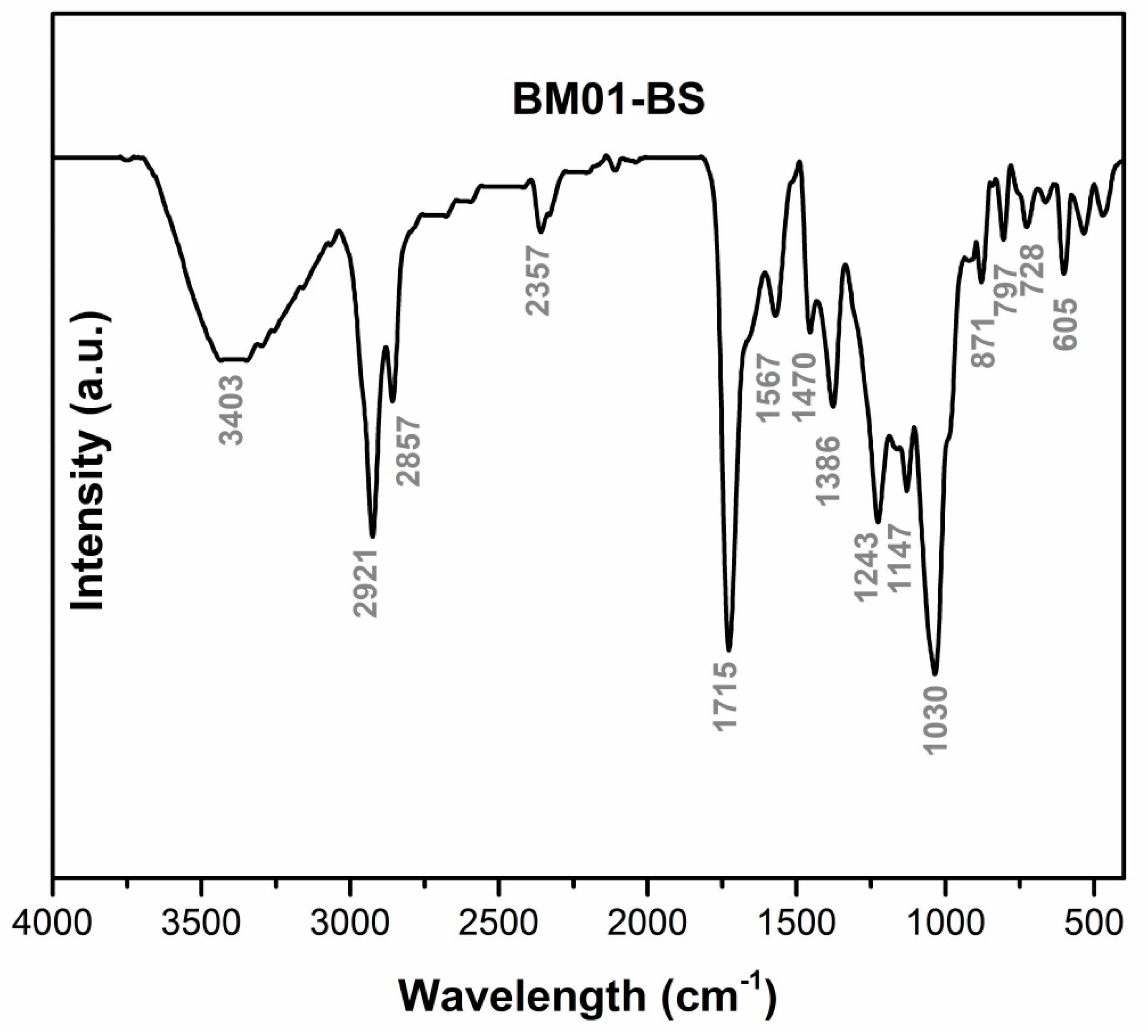
S. ureilytica BM01-BS biosurfactant has not been unambiguously established, preliminary spectroscopic data, along with genome analysis, provides evidence of its probable composition. FTIR (
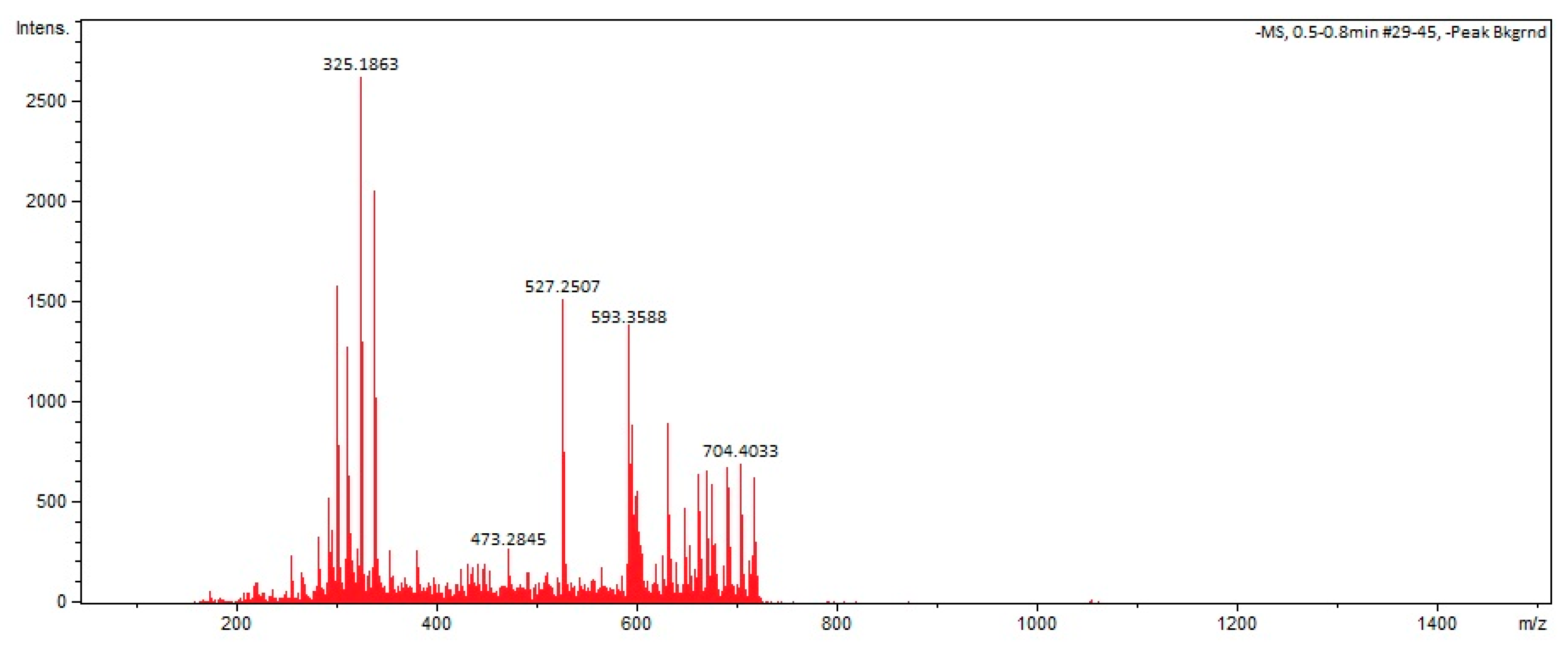
Figure 2) and ESI-MS (
Figure 3) fingerprints initially suggested a glycolipid-type structure, characterized by aliphatic chains and carbonyl groups [
40,
41]; however, high-resolution WGS followed by AntiSmash 8.0 analysis (
Table 2;
Figure 1) provided a critical counterpoint. Importantly, FTIR lacks the chemical resolution necessary to distinguish between glycolipid and lipopeptide scaffolds, particularly in the absence of clearly resolved amide I bands or sugar-specific diagnostic patterns [
42]. Similarly, while our ESI-MS data reveal ions within mass ranges commonly reported for mono- and di-rhamnolipids, these findings do not constitute definitive evidence for the presence of molecules of this type. The absence of canonical rhamnolipid biosynthetic genes (
rhlABC) in the
S. ureilytica BM01-BS genome, coupled with the identification of a BGC with high-similarity to nonribosomal peptide synthetase (NRPS) clusters related to Rhizomide A/B/C, strongly suggests that the biosurfactant produced by
S. ureilytica BM01-BS is of lipopeptide origin. Lipopeptide biosurfactants consist of a hydrophobic fatty acid moiety linked to a hydrophilic peptide chain [
43]. The predicted product of the NRPS cluster is a hydrophilic Thr-Ser-Ser-Ile-Val pentapeptide chain. Furthermore, the identification of an N-terminal Cs domain in the NRPS is indicative of lipopeptides, as these domains facilitate the transfer of a fatty acid to the initial amino acid in the peptide chain [
44].
Based on our findings, we hypothesize that a nonribosomal lipopentapeptide contributes to the observed surface activity and the high removal efficiency of glyphosate by the S. ureilytica BM01-BS biosurfactant. Although this hypothesis warrants further investigation, it is supported by reports of other strains within this species which generate biosurfactants and which possess homologous NRPS clusters. Although the current data strongly supports the “Rhizomide Hypothesis,” definitive structural elucidation of individual congeners using tandem mass spectrometry (MS/MS) and nuclear magnetic resonance (NMR) is an immediate priority for future investigations. Additionally, a definitive experimental link between this biosynthetic gene cluster and the produced metabolite has yet to be established. Future investigations employing targeted gene knockouts or transcriptomic analysis under fermentative stress are essential to definitively validate the functional role of this NRPS cluster in glyphosate remediation. This conservative interpretation maintains the study’s focus on the metabolic potential of Amazonian isolates while identifying the necessary milestones for future structural and functional genomics.
From a xenobiotic perspective, distinguishing between lipopeptides and glycolipids is crucial, as lipopeptides typically exhibit greater structural complexity and functional diversity, potentially providing advanced mechanisms for the chelation or entrapment of persistent herbicides like glyphosate [
45]. The biosurfactant produced by
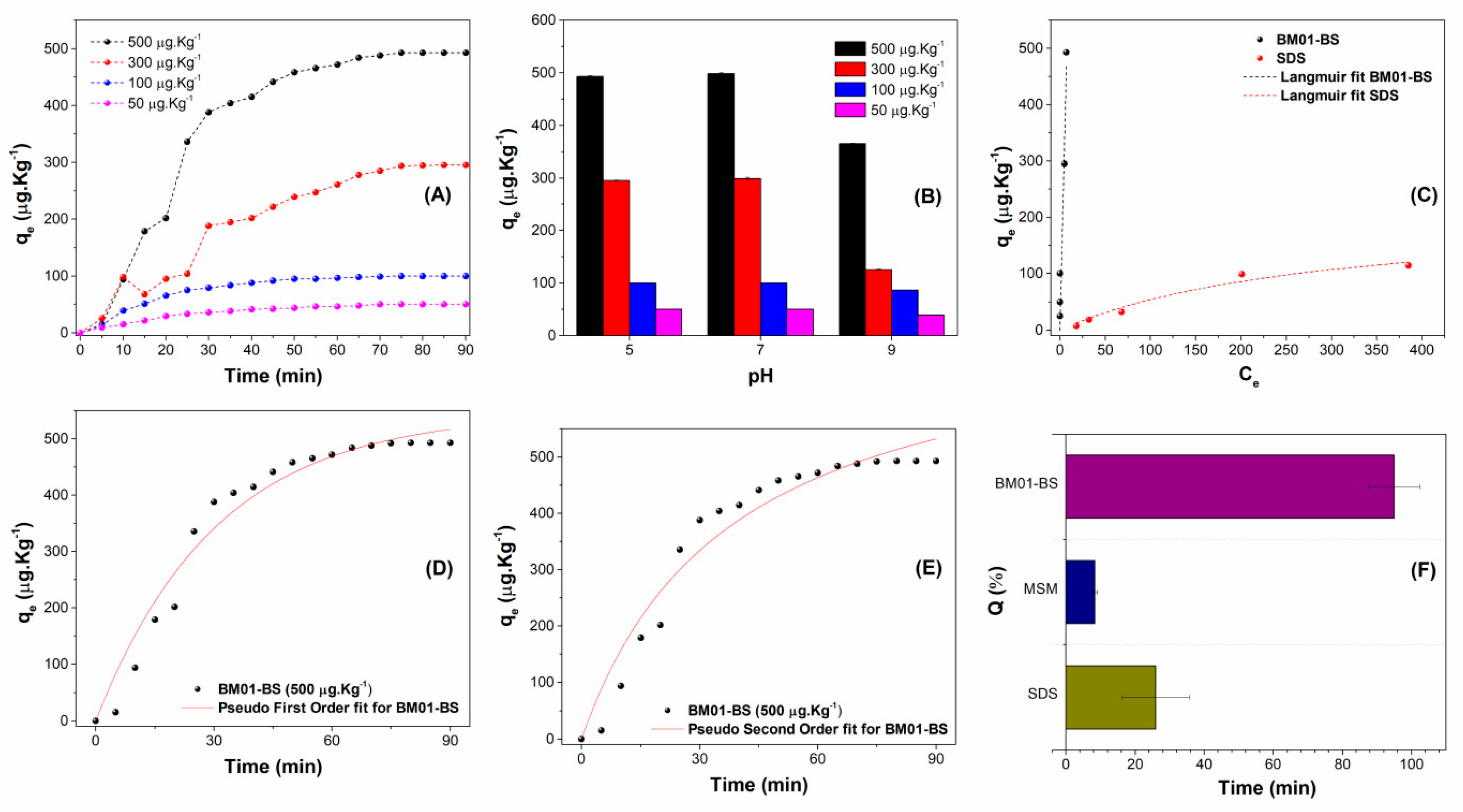
S. ureilytica BM01-BS demonstrates a remarkable glyphosate removal rate exceeding 95% within approximately 60 min, marking significant progress in addressing this persistent anthropogenic xenobiotic (
Figure 4). The superior statistical fit of the experimental data to the pseudo-second-order kinetic model (
Table 5) suggests that the adsorption rate may be governed by a rate-limiting step involving chemical interactions, rather than simple physical diffusion. This behavior points toward a mechanism where the interaction between glyphosate and the soil-biosurfactant interface likely involves valence forces, such as hydrogen bonding or ligand exchange, aligning with previous studies on the remediation of organic xenobiotics. However, it is important to note that these kinetic models provide an empirical description of the adsorption rate, and the high correlation with the pseudo-second-order model serves as a mechanistic indicator of chemisorption-like behavior in the system [
46].
The adsorption efficiency of the biosurfactant varies according to factors such as pH, temperature, initial glyphosate concentration, and surface modifications of the adsorbent [
47]. Notably, the solution’s pH influences the ionization states of both glyphosate and the biosurfactant, affecting the overall adsorption capacity [
48]. The thermodynamic alignment between the PZC (6.5) and the optimal remediation pH (7.0) elucidates this mechanism; at near-neutral pH, the biosurfactant maintains charge neutrality, minimizing electrostatic repulsion with the glyphosate’s anionic phosphonate groups. This “electrostatic window” allows for maximum interfacial affinity, explaining why the biosurfactant dramatically outperformed the synthetic surfactant SDS, which achieved only 20–30% glyphosate removal due to its linear structure and insufficient complex functional groups to disrupt glyphosate-soil mineral interactions.
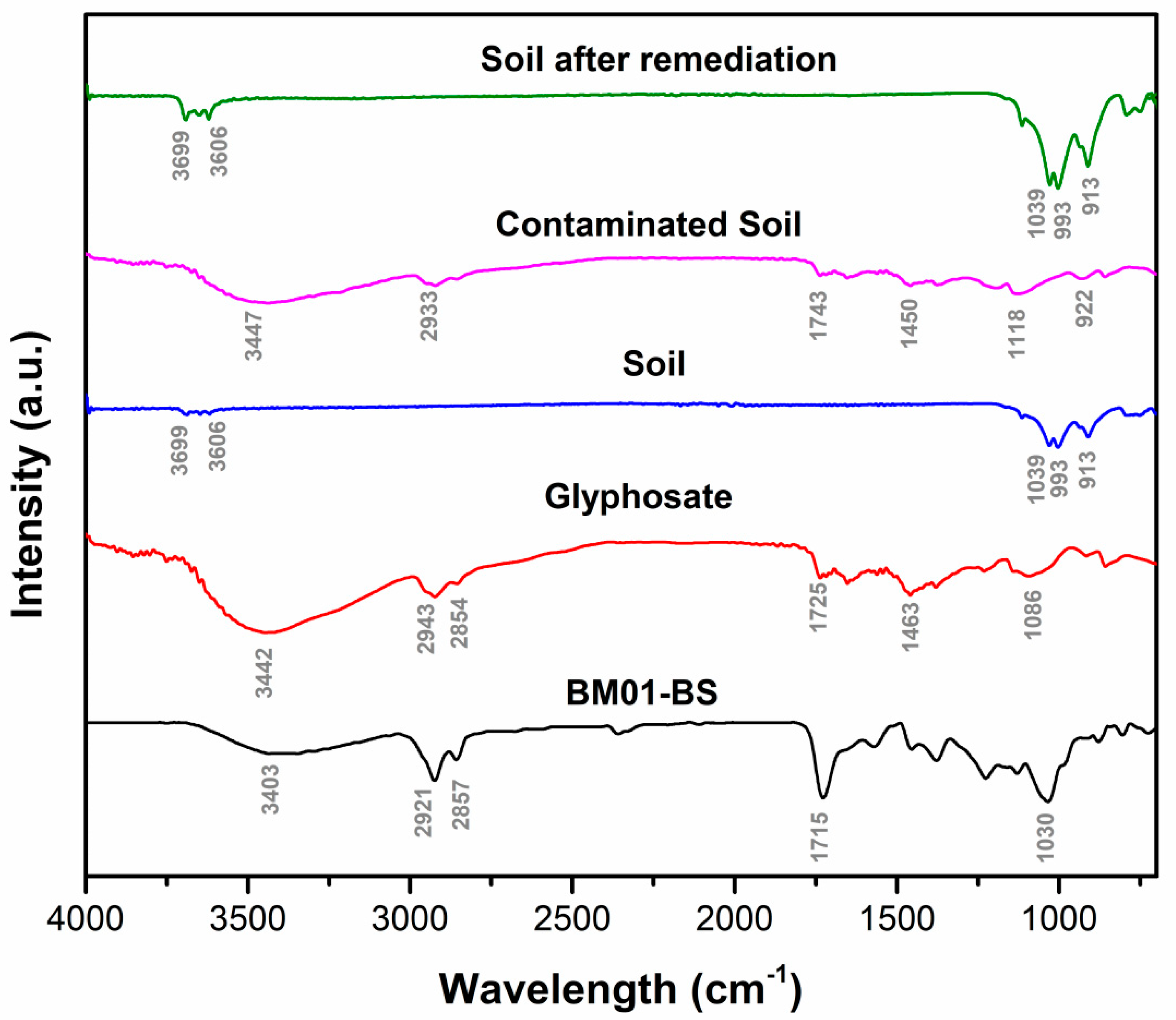
The qualitative validation of the remediation process through FTIR spectral analysis (
Figure 5) provides a “chemical signature” indicative of success. The complete disappearance of P–O and C=O stretching bands, along with the restoration of native mineral Si–O bands in the remediated soil spectrum, demonstrate a full recovery of the soil’s chemical integrity. These spectral shifts underscore the viability of FTIR as an efficient qualitative technique for monitoring the progress, supporting non-destructive and rapid assessments, as corroborated by Chakraborty et al. [
49] and Liu et al. [
50] observations. Additionally, the non-toxic effects observed on plant health further advocate for the environmental safety of employing biosurfactant in natural settings, enhancing its appeal for field applications.
The phytotoxicity trials using
Lactuca sativa (
Table 6) confirmed the biosurfactant’s biological safety, as Germination Index (GI) values ranged from 86% to 100%, consistently exceeding the non-phytotoxic threshold [
51]. The low toxicity scores (NRSGI and NRREI) further validate the isolated biosurfactant as a safe, bio-rational adjuvant for bioremediation of xenobiotics. By correlating genomic insights with applied environmental chemistry, this research advances the goals of a circular bioeconomy by offering a solution for the persistent issue of herbicide contamination, corroborating previous studies regarding the versatility of biosurfactants in environmental cleanup operations [
52,
53]. Moreover, the unique combination of biodegradability, low toxicity, and surface-active capabilities makes biosurfactants increasingly attractive for commercial applications [
41].
The global market for biosurfactants is projected to reach approximately US
$14.7 billion in 2035 [
54], with biosurfactant-based processes potentially reducing production costs by up to 50% through the use of alternative, cost-effective raw materials, such as agro-industrial processing waste [
55]. This approach promotes waste stream valorization [
35,
56] and aligns with health policies advocating the use of sustainable, plant-based inputs [
57,
58]. Given the growing demand for environmentally friendly biotechnological solutions, the findings of this study position the biosurfactants produced by the BM01-BS strain as promising candidates for large-scale application in the bioremediation of glyphosate-contaminated soils.
5. Conclusions
This study validates an integrated bioremediation framework using specialized biosurfactants derived from Serratia ureilytica BM01-BS, produced through the sustainable valorization of Amazonian babassu agro-industrial waste. By using carbohydrate-rich biomass (85.21%) as a sole nutrient source, we have established a cost-effective bioprocess that achieves a significant biosurfactant yield (3.7 g·L−1) capable of removing >95% of glyphosate residues from contaminated soil matrices within 60 min, rendering a bioremediation process both technically superior and economically viable to commercial toxic surfactants. From a mechanistic perspective, the adsorption dynamics were well-described by a pseudo-second-order kinetic model, suggesting that the removal of this persistent xenobiotic is likely influenced by chemical interactions at the interface, characteristic of a chemisorption-like process. This high-affinity interaction is optimized at a neutral pH (7.0), aligning with the biosurfactant’s Point of Zero Charge (6.5) to minimize electrostatic repulsion and facilitate ligand exchange with the xenobiotic. Furthermore, genomic analysis suggests that the high affinity for glyphosate is linked to specialized lipopentapeptide scaffolds.
Qualitative validation via FTIR and ecotoxicological monitoring using Lactuca sativa confirmed the total efficacy and environmental safety of this process. The complete disappearance of glyphosate-associated phosphonic and carboxylic bands, coupled with the recovery of native soil mineral bands, proves that the bioremediation process effectively restores the chemical and ecological integrity of the impacted landscape. Ultimately, this research establishes a scalable, biodiversity-based framework that transcends traditional high-cost bioprocessing, ensuring that the mitigation of persistent xenobiotic legacies aligns with the pragmatic requirements of a sustainable global circular bioeconomy. To unlock the full potential of biosurfactant-based bioremediation, future research should focus on optimizing production processes, including scaling strategies and comprehensive environmental impact assessments to facilitate the transition from controlled laboratory conditions to practical field applications to mitigate widespread environmental pollution.




 ,
,