
Article

Cascade Screening of β-Thalassemia in an Indian Family Using Flow Injection Analysis–Triple Quadrupole Mass Spectrometry: Comparison of Micro Sampling Approaches with Conventional Electrophoresis

by
Ankitha K. Puthiyaveettil
1,†,
Harshini K. Musuvathi
2,† and
Deepalakshmi D. Putchen
1,*
1
R&D, Neuberg Anand Academy of Laboratory Medicine Pvt Ltd., Bengaluru 560001, India
2
Department of Biotechnology, Manipal Institute of Technology, Udupi 576104, India
*
Author to whom correspondence should be addressed.
These authors contributed equally to this work.
Thalass. Rep. 2026, 16(1), 3; https://doi.org/10.3390/thalassrep16010003
Submission received: 30 October 2025 / Revised: 27 January 2026 / Accepted: 10 February 2026 / Published: 24 February 2026

Abstract

Background: β-thalassemia is a rare genetic disorder affecting 1–5% of the global population and poses a health burden due to migration of individuals from endemic regions. Identifying asymptomatic β-thalassemia carriers is essential to prevent the birth of thalassemic babies. A simple, sensitive method compatible with self-sampling could enhance the detection of β-thalassemia in the population. Methods: Capillary blood was collected via dried blood spot (DBS) and dried blood matrix (DBM) from 18 members (52.9%, 18/34) of a three-generation family. Hemoglobin was extracted, and globin chains were analyzed on a triple quadrupole mass spectrometer (TQMS). δ/β (%) was utilized as a biomarker to identify β-thalassemia. Venous blood collected from positive and negative individuals (n = 11) was further tested to confirm the findings and validated with complete blood count (CBC) and Capillary Electrophoresis (CE). Results: β-thalassemia was detected in seven individuals: three from generation I, three from generation II, and one from generation III. CBC showed thalassemia indices, while CE demonstrated elevated HbA2 consistent with β-thalassemia. Molecular sequencing of two samples confirmed the heterozygous c.92 + 5 G > C mutation in the β-globin gene. The overall prevalence of β-thalassemia in the family was 20.6% (7/34). High clinical performance was achieved across sample types, with 100% sensitivity for DBS, 100% specificity for DBM, and an overall accuracy of 91% when compared with CE. Conclusions: TQMS in combination with CBC parameters successfully identified asymptomatic heterozygous β-thalassemia carriers using self-sampling techniques. Cascade screening within affected families emerges as a possible strategy for early detection of β-thalassemia pending comprehensive validation.

1. Introduction

β-thalassemia (β-thal) is a genetic disorder caused by the absence (β0) or reduced (β+) expression of β globin genes. Depending on clinical severity, β-thal is classified into β-thal major, β-thal intermedia and β-thal minor. Patients with β-thal major require life-long blood transfusions due to the early onset of symptoms, while individuals with β-thal minor are asymptomatic and do not require genetic counseling. The clinical symptoms of β-thal intermedia are dynamic, requiring occasional intermittent transfusions if they develop complications with β-thal [1]. The survival of severely affected individuals into adulthood can be achieved through appropriate blood transfusion and chelation practices, along with early detection of complications [2].
The global health burden of hemoglobinopathies continues to rise each year [3]. Data from the 1000 genome project indicate that approximately 8.3% of healthy individuals worldwide carry a heterozygous mutation in the HBB gene [4]. In India, the prevalence of β-thal varies widely, ranging from 0 to 10.5% across different cities [5]. Several large-scale screening programs have been initiated to reduce the incidence of thalassemic births [6,7]. Successful implementation of carrier screening programs in Mediterranean countries, such as Cyprus, Greece and Italy, has effectively prevented the birth of affected newborns [8,9].
The conventional sampling technique for the diagnosis of hemoglobinopathies is venous whole blood (WB) collection, which requires a relatively high sample volume (0.1–1.0 mL), a trained phlebotomist, and a visit to the laboratory, thereby increasing costs and logistical challenges [10]. To overcome these limitations, alternate micro sampling techniques, such as dried blood spot (DBS), are being actively explored for the analysis of various clinically relevant analytes like glucose, cholesterol, iron, potassium, albumin, vitamin B12, urea, and therapeutic drug levels, as well as in large-scale epidemiological studies [11,12,13]. DBS sampling requires a smaller volume of blood (<100 µL), minimal sample processing, and offers several advantages over conventional venous blood collection [14]. Introduced by Guthrie and Susi in 1963 for the detection of phenylketonuria in newborns [15], DBS methods have since been extended for screening sickle cell disorders [16]. The hematocrit effect on the analyte concentration is case-dependent, with no significant influence observed in the measurement of Vitamin D and Cyclosporine A [17,18]. However, Möller et al. [19] reported that elevated hematocrit levels (45–60%) may affect sample extraction efficiency.
Volumetric absorptive micro sampling (VAMS), a quantitative bioanalytical technique, enables accurate and precise collection of small blood volumes (~10 µL) using a porous hydrophilic tip [20]. Across a hematocrit range of 20 to 70%, VAMS demonstrated less than 5% variation in absorbed volume, compared to approximately 30% variation observed with DBS [21]. While VAMS offers clear advantages for quantitative analysis, both DBS and VAMS must be completely dried to prevent bacterial growth and ensure analyte stability and extraction efficiency during analysis [22].
Another emerging micro sampling device, the Biosampler, facilitates rapid drying and is used for quantitative bioanalysis of drugs [23]. The processes of collection, processing, storing and transportation associated with micro sampling devices have been comprehensively reviewed by Baillargeon and Mace [24]. Such devices provide opportunities for self-sampling in remote or resource-limited settings.
To fully exploit micro sampling techniques, the use of highly sensitive analytical instruments capable of detecting analytes from low sample volumes is essential. This integration enhances the overall analytical and diagnostic potential of these tools. Newborn screening programs for inherited metabolic diseases routinely employ mass spectrometry in combination with DBS sampling [16,25,26,27]. DBS–mass spectrometry (DBS-MS), known for its high sensitivity, specificity and analytical speed, was initially developed for small-molecule analysis in pharmacokinetic and toxicokinetic studies [28]. Its application has since expanded to the analysis of peptides and proteins, focused on hemoglobin (Hb) and its variants, for identifying clinically significant mutations [29,30,31,32]. Furthermore, rare and compound Hb variants are often detected in adult WB during HbA1c screening using triple quadrupole MS (TQMS), a low-resolution MS platform commonly available in clinical laboratories [33,34].
For a definitive diagnosis of β-thal in adults, a comprehensive approach involving complete blood count (CBC), peripheral smear evaluation, capillary electrophoresis (CE) or cation exchange high-performance liquid chromatography (CX-HPLC), and clinical correlation is essential. While CE and CX-HPLC analyze Hb as a complex, MS measures the masses of individual globin chains prior to Hb assembly. The ratio of synthesized globin chains serves as a biomarker for the assessment of β-thal [35,36,37].
The present study aims to apply micro sampling techniques to identify β-thal carriers in a family with an affected individual through cascade screening using TQMS. In addition to carrier identification, the diagnostic and clinical performance of MS-based sampling approaches (DBS, dried blood matrix (DBM) and venous WB) for β-thal detection were evaluated by comparison with established laboratory methods, that includes CBC and CE.

2. Materials and Methods

2.1. Materials and Reagents

Venous blood was collected using K2 Ethylenediaminetetraacetic acid (EDTA) vacutainer tubes (BD Biosciences, Milpitas, CA, USA). DBS cards (Whatman™ 903) were sourced from Kala Scientific Inc. (Chennai, India). DBM devices (iOTA BioSampler™, 30 µL, iOTA Diagnostics Pvt Ltd., Gandhinagar, India) were kindly provided by iOTA Diagnostics Pvt. Ltd. (Gandhinagar, India). HPLC-grade acetonitrile and 98% formic acid were obtained from Ranbaxy Fine Chemicals Ltd. (New Delhi, India), and HPLC-grade water from Thermo Fisher Scientific (Bremen, Germany). Single-use lancets (Avinash Medicals, Bengaluru, India) were used for capillary blood collection and a 350 µL V-bottom collection plate was obtained from Waters Corporation (Milford, CT, USA).

2.2. Sample Preparation for Intact Mass Spectrometric Analysis

Venous samples collected in K2 EDTA tubes were prepared by mixing 5 µL of blood with 995 µL of HPLC-grade water. The mixture was vortexed and centrifuged at 10,000 rpm (~9200× g) for 5 min. From the resulting supernatant, 20 µL was combined with 180 µL of MS-compatible solvent (50% acetonitrile containing 0.2% formic acid) following a previously described procedure [38].
Capillary blood collected via finger prick was spotted onto DBS cards and DBM BioSampler devices. DBS cards were air-dried at room temperature for 3–4 h before storage and transportation to the laboratory. Circular disks (3.2 mm, corresponding to approximately 3.0 µL blood) were punched from the DBS cards and immersed in 250 µL of HPLC-grade water. Samples were sonicated for 45 min to extract Hb. DBM BioSampler devices containing approximately 30 µL of blood were processed similarly, with each device immersed in 2.5 mL of water and sonicated for 45 min. The extracted supernatants from DBS and DBM samples were subsequently processed in the same manner as venous blood samples for MS analysis [39].

2.3. Instrumentation

2.3.1. Ultra-High-Performance Liquid Chromatography

Samples were delivered to the MS using an Acquity H-Class Plus UHPLC system (Waters, Milford, CT, USA) coupled to the MS, bypassing chromatographic separation. The mobile phase comprised solvent A (0.2% formic acid in water) and solvent B (0.2% formic acid in acetonitrile), which was continuously delivered at a 50:50 ratio. The flow rate profile was programmed as follows: 0.3 mL/min initially; decreased to 0.035 mL/min between 0.15 and 0.40 min; rose to 0.6 mL/min from 0.50 to 0.75 min; and finally returned to 0.3 mL/min till 1.0 min.

2.3.2. Flow Injection Analysis–Triple Quadrupole Mass Spectrometry (FIA-TQMS)

Mass spectrometric detection was performed using a Xevo TQMS (Waters, Milford, CT, USA) operated in positive ion mode using electrospray ionization (ESI). MS settings included a capillary voltage of 2.5 kV, cone voltage of 30 V, source temperature of 150 °C, desolvation temperature of 500 °C, and collision energy of 3 eV. A low collision energy of 3 eV is applied to promote gentle declustering and stable ion transmission while remaining below the threshold for protein fragmentation. It also maintains charge-state envelopes required for deconvolution. Data was acquired at unit resolution with ± 0.75 Da mass tolerance using MassLynx v4.1 software (Waters, Milford, CT, USA).

2.3.3. Complete Blood Count

CBC parameters were analyzed using a Sysmex XN1000 automatic analyzer (Sysmex Corporation, Kobe, Japan). The analyzer operates on the principles of fluorescence flow cytometry, hydrodynamic focusing, and impedance-based cell counting, enabling precise quantification of red blood cell (RBC) indices, white blood cell differentials, Hb concentration, and platelet parameters. Cyanide-free sodium lauryl sulfate Hb methodology was employed for Hb measurement, while advanced optical and impedance technologies were used for cell classification and sizing. CBC analysis requires no manual sample preparation beyond proper collection of WB in K2 EDTA tubes, gentle mixing, and routine pre-analytical checks for issues like clots, hemolysis, and insufficient volume. All dilution and cell processing steps are performed automatically by the analyzer. The system was calibrated according to the manufacturer’s recommendations, and internal quality control was performed daily using commercial control materials to ensure analytical accuracy and precision, in line with established laboratory standards. Measured CBC parameters included white blood cell count (WBC), red blood cell count (RBC), hemoglobin (Hb), hematocrit (Hct), mean corpuscular volume (MCV), mean corpuscular hemoglobin (MCH), mean corpuscular hemoglobin concentration (MCHC), red cell distribution width (RDW), platelet count (PLT), and differential leukocyte counts. For detection of thalassemia indices, only six parameters were utilized—Hb, RBC count, MCV, MCH, MCHC and RDW.

2.3.4. Capillary Electrophoresis

CE was conducted using a CAPILLARYS 3 Octa system (Sebia, Lisses, France) in Hb (E) mode. The Hb (E) kit employs a buffer optimized for charge-based separation of Hb variants, generating an electropherogram with migration patterns distributed across 15 predefined zones. WB collected in K2 EDTA tubes was automatically diluted with a hemolyzing solution and introduced at the anodic end of a 25 µm inner-diameter silica capillary. Electrophoresis was performed at 9800 V and 45 µA per capillary under controlled temperature conditions (34 °C), with Hb detected at 415 nm at the cathodic end. Separation was achieved in an alkaline buffer (pH 9.4) based on differences in electrophoretic mobility. The system was calibrated using manufacturer-supplied pooled human blood calibrators, and daily quality control checks were performed. Hb migration times (0–300 s) were recorded and analyzed using Phoresis software v9.3.0.

2.3.5. Sanger Sequencing

Molecular confirmation of β-thal was carried out by Sanger sequencing. PCR-amplified fragments of the β-globin gene were analyzed using the BigDye Terminator v3.1 Cycle Sequencing Kit on Applied Biosystems 3730xl DNA Analyzer (Thermo Fisher Scientific, Waltham, MA, USA). Sequence analysis was carried out using Geneious software v2022.0.1, with the HBB reference sequence as NG_059281.1

2.4. Mass Spectrometry Data

2.4.1. Data Acquisition

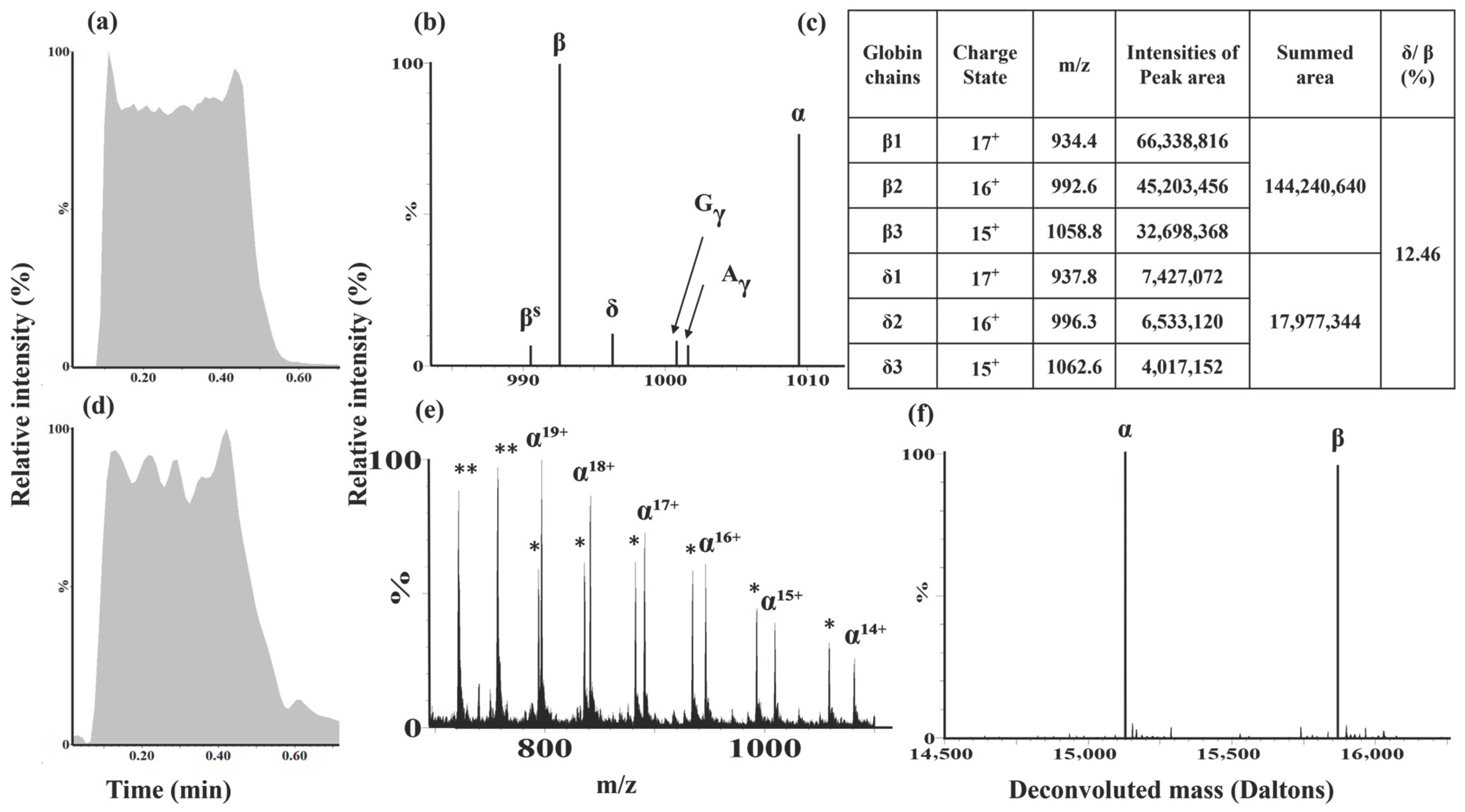
Intact globin chain measurements were obtained using a two-channel mass spectrometric acquisition strategy with FIA as a sample introduction method. In this approach, samples were injected into a continuously flowing mobile phase and transferred directly to MS, enabling rapid analysis without chromatographic separation of globin chains. The first channel monitored three charge states each for α, β, δ, Gγ, Aγ and Hb variant βS globin chains in multiple reaction monitoring (MRM) mode across the m/z 900–1100 range, chosen to minimize non-overlap of ions from different globin chains. Although the acquisition was implemented using the MRM function of the instrument, no precursor fragmentation was induced in q2. The same precursor m/z was, therefore, monitored in both Q1 and Q3, effectively constituting a non-fragmenting Q1/Q3 mass-filtered measurement rather than a classical precursor–product ion transition. The charge states monitored in this channel were α (16+–14+: 946.4, 1009.4, 1081.4 m/z), β (17+–15+: 934.3, 992.6, 1056.8 m/z), δ (17+–15+: 937.7, 996.3, 1062.6 m/z), Gγ (17+–15+: 942.0, 1000.8, 1067.7 m/z), Aγ (17+–15+: 942.8, 1001.6, 1068.7 m/z) and βS (17+–15+: 932.4, 990.6, 1056.6 m/z). For calculating the ratios, only β and δ chains were considered. The second channel employed full-scan acquisition (m/z 650–1200) for deconvolution-based identification of Hb variants. The selected range resulted in the generation of high-intensity mass spectral peaks consistently under the experimental conditions. Deconvolution was carried out using the five most intense peaks within a dual-channel workflow adapted from previously validated methodologies [38].

2.4.2. Data Analysis

For targeted relative quantitation, extracted ion chromatograms (XICs) were generated for each monitored charge state. The intensities of the peak areas of the three XICs corresponding to a given globin chain were summed to obtain a composite signal, which was used to calculate globin chain ratios (e.g., δ/β). δ/β ratios were calculated and are expressed as percentages multiplying by 100. Extraction of peak areas and quantitative data processing were performed using the IonLynx application module.
For variant identification, chromatographic profiles were integrated to obtain the mass spectral peaks. Raw m/z data were internally calibrated with α-globin m/z reference peaks to improve mass accuracy. Five intense peaks from the calibrated spectra were deconvoluted using MaxEnt 1 (Waters, Milford, CT, USA) to derive the neutral masses of intact globin chains and potential variants. The deconvolution parameters included a Gaussian model (resolution 0.75 Da), 80% intensity threshold, and iterative convergence within the 14,000–18,000 Da mass range. The methodology is detailed in Figure 1.

2.5. Statistical Analysis

All statistical analyses were performed using SPSS software v27 (IBM Corp., Rochester, MN, USA). Data variability across sampling techniques was assessed using box-and-whisker plots. The Mann–Whitney U test, a non-parametric test, was applied to evaluate the statistical significance of differences between sampling methods, with p < 0.05 considered statistically significant. Diagnostic performance was assessed using receiver operating characteristic (ROC) curve analysis. 95% confidence intervals (CIs) for AUC values were derived from nonparametric ROC analysis. The Youden index (J = Sensitivity + Specificity − 1) was determined to identify the optimal cut-off value between sensitivity and specificity and to evaluate the clinical performance of the method.

2.6. AI Assistance

The authors used ChatGPT-5 (OpenAI) to assist in statistical interpretations. All scientific content, data analysis, and interpretations were independently developed and verified by the authors, who take full responsibility for the accuracy and integrity of the work.

3. Results

3.1. Detection of β-Thal Carriers Using MS

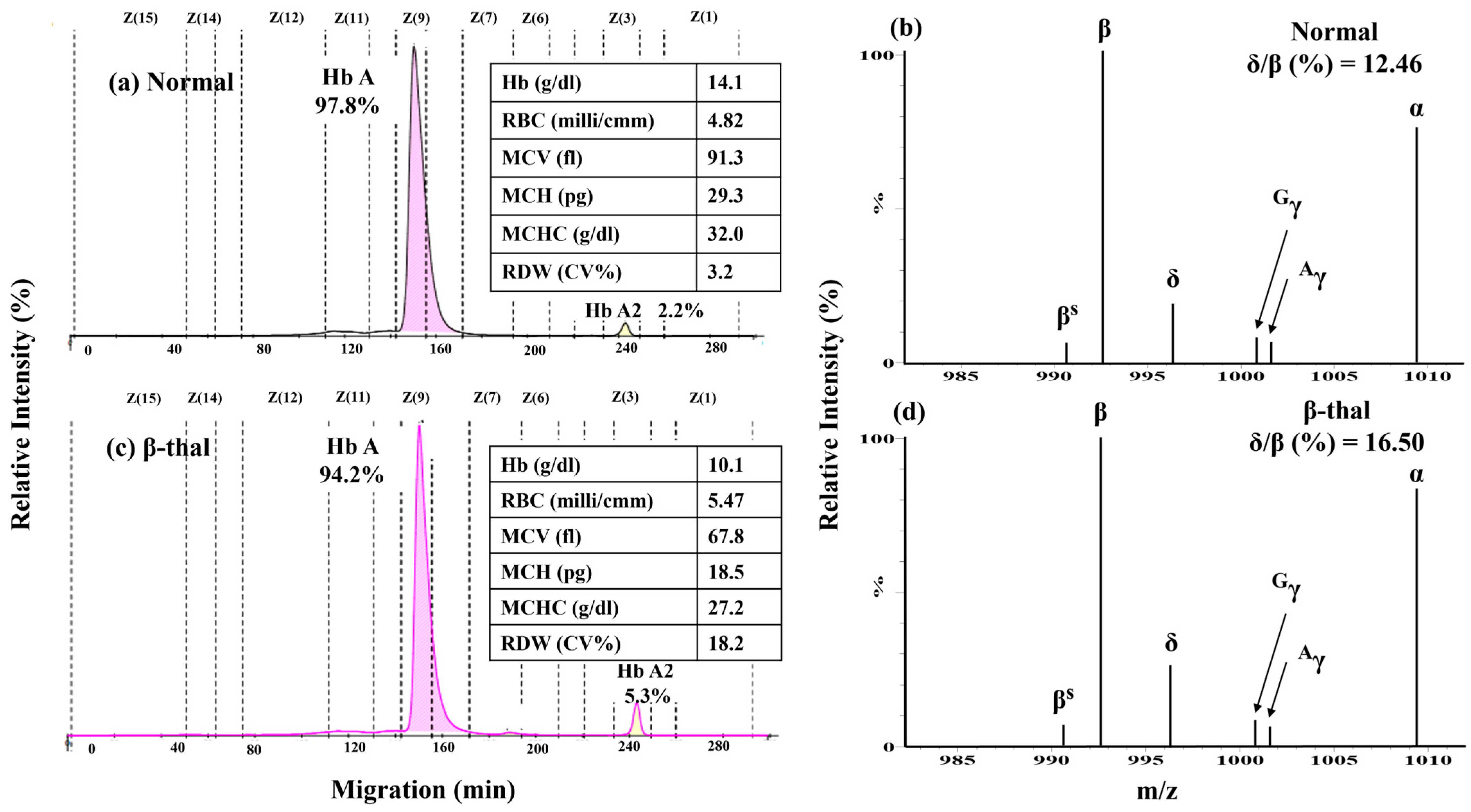
β-thal carrier detection in this study was based on the relative quantitation of β and δ globin chains. To exclude the presence of globin chain variants that could confound ratio-based interpretation, full scan m/z spectra were deconvoluted to determine the intact masses of individual globin chains. A representative deconvoluted spectrum demonstrating the absence of variants is shown in Figure 1f (Section 2.4.2). Due to the low abundance of δ and γ globin chains in adult blood, their intact masses were not detectable in the deconvoluted spectra acquired on the TQMS platform. The relative quantitation of βS compared with β was low and, hence, the presence of the variant was ruled out. No structural variants that deviate from the wild type were detected in any of the samples under the experimental conditions. An elevated δ/β (%) was observed in β-thal carriers compared with normal samples and showed concordance with thalassemia indices derived from CBC, as well as increased HbA2 (%) obtained from CE. A comparative analysis of representative normal and β-thal carrier samples is presented in Figure 2.

3.2. Cascade Screening

The participants represented three generations, with age groups of 61–80, 31–60, and 13–30 years. Participant 7 represented generation I, though they belonged to the age group between 31 and 60 yrs. Females represented 59% and males were 41%. Since Sample (S) number S4, S5 were normal, their descendants were not tested for β-thal. Samples of the descendants of S6, S7 were not collected, since they were not residing in India during the conduct of the experiment. CBC analysis of six participants (S12–S15, S18) and S16 was performed in the USA and New Zealand respectively. All other samples were processed in different labs in Bengaluru, India. The available CBC and CE data of the participants, along with mass spectrometry information from various sampling methods—DBS, DBM, WB—is provided in Table 1. Seven participants showed thalassemia indices, including S1, S2, S6 (generation I), S9, S16, S18 (generation II) and S19 (generation III), with HbA2 elevated (>4.0). S16 declined to provide venous blood, and, hence, CE and MS (WB) were not performed. Due to the unavailability of a DBM device, only DBS samples were collected for S16 and S17. β-thal carriers showed higher mean values than normal individuals across all sample types. In DBS samples, the mean value in carriers was 20.54 (18.83–22.15) compared with 17.61 (15.48–19.32) in normal individuals. In DBM samples, carriers demonstrated a mean of 19.49 (17.03–22.90), whereas normal individuals showed a mean of 16.93 (14.47–19.25). Similarly, in WB, the mean δ/β (%) value was higher in carriers at 17.04 (12.47–19.63) compared to 14.81 (10.20–16.78) in normal individuals.

3.3. Pedigree Chart

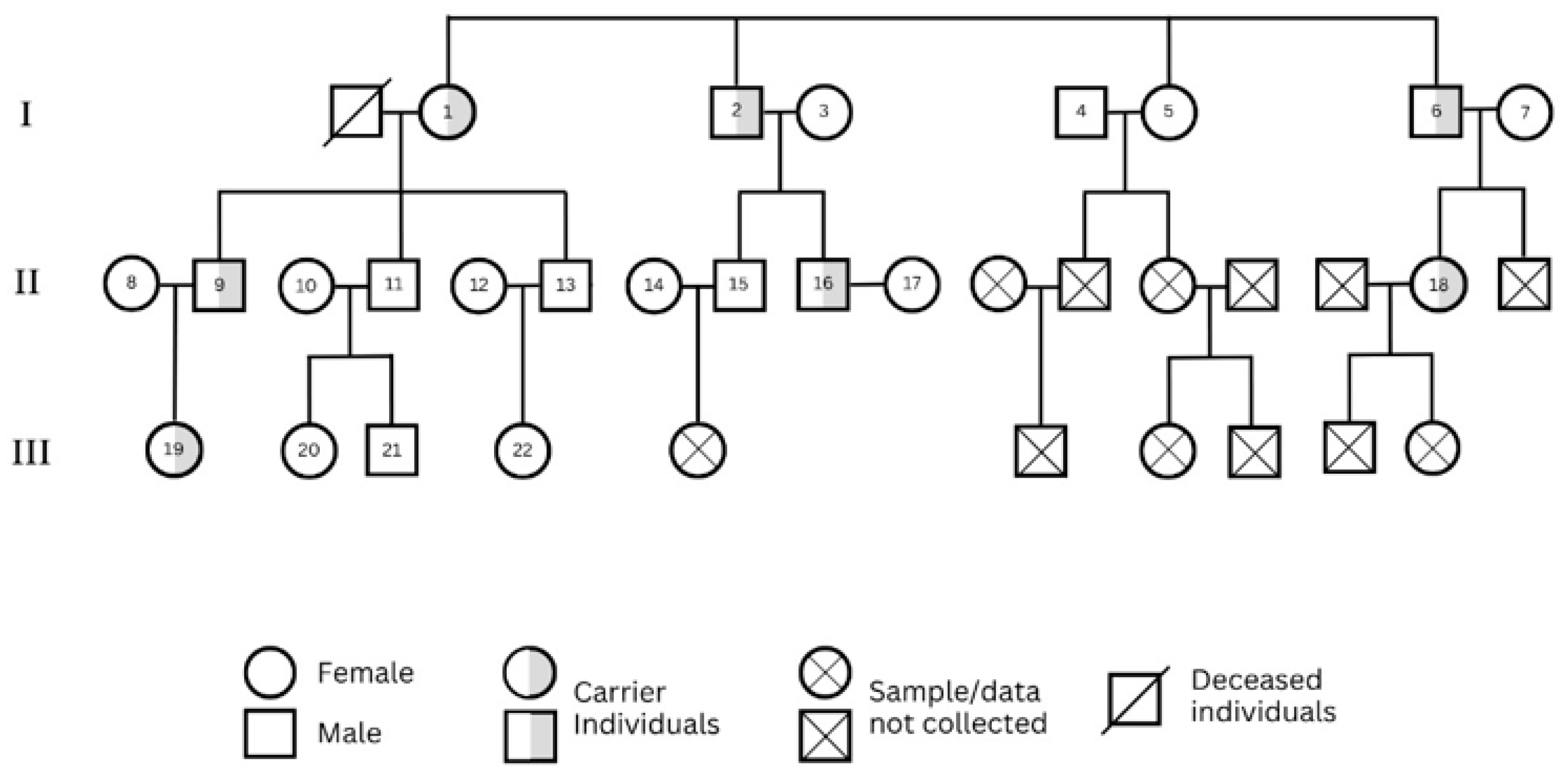
A pedigree chart highlighting β-thal carriers across three generations is presented in Figure 3. Micro sampling approaches coupled with MS identified six positive cases. In addition, one participant (S18) was confirmed based on prior CBC and molecular results, corresponding to 31.8% (7/22) of β-thal carriers in the family. The carrier status reduced to 20.6–23.5% if all members (n = 34) were included. A range is provided to include the possibility of β-thal carriers among the descendants of S18.

3.4. Comparison of Micro Sampling Techniques

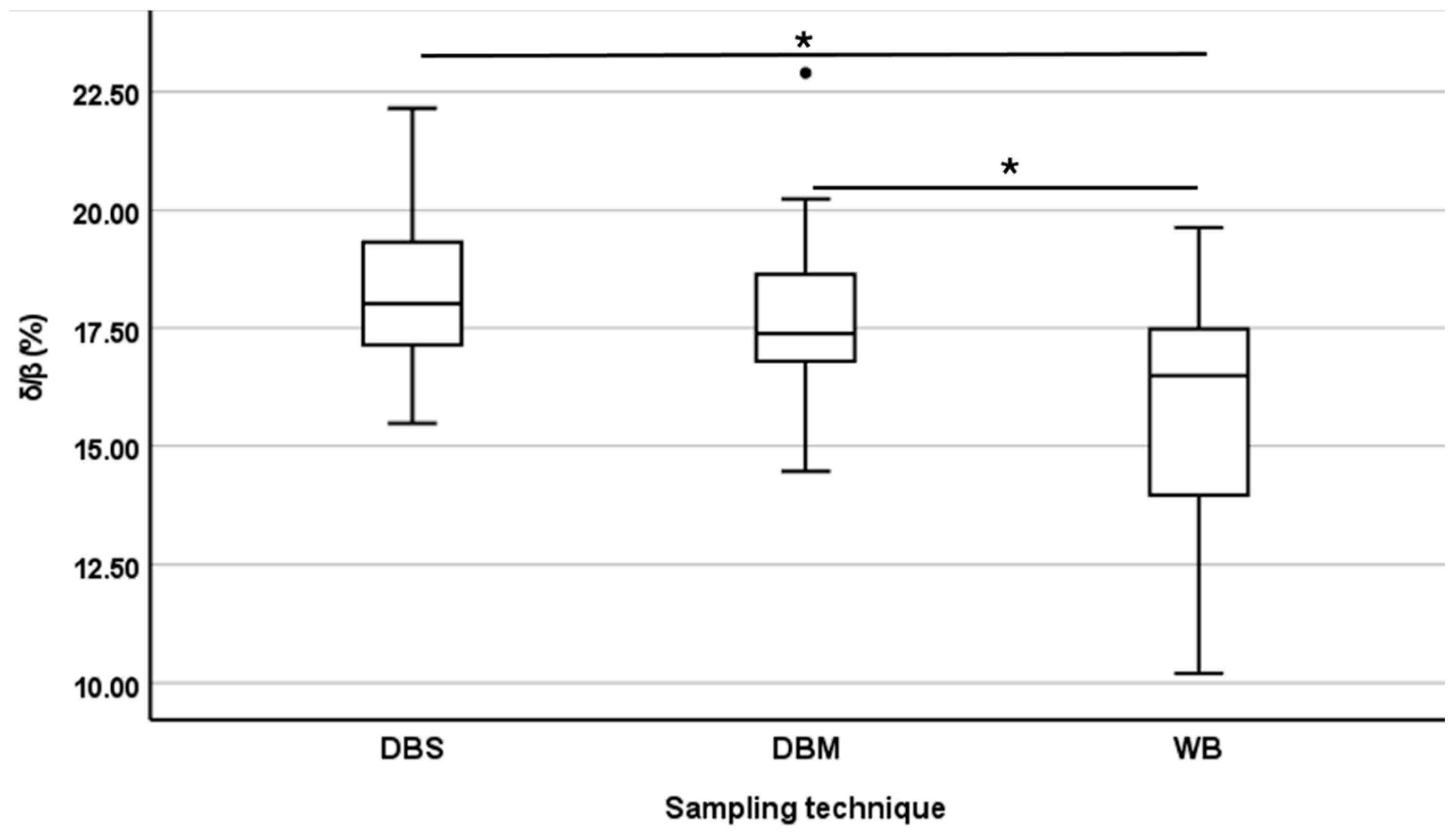
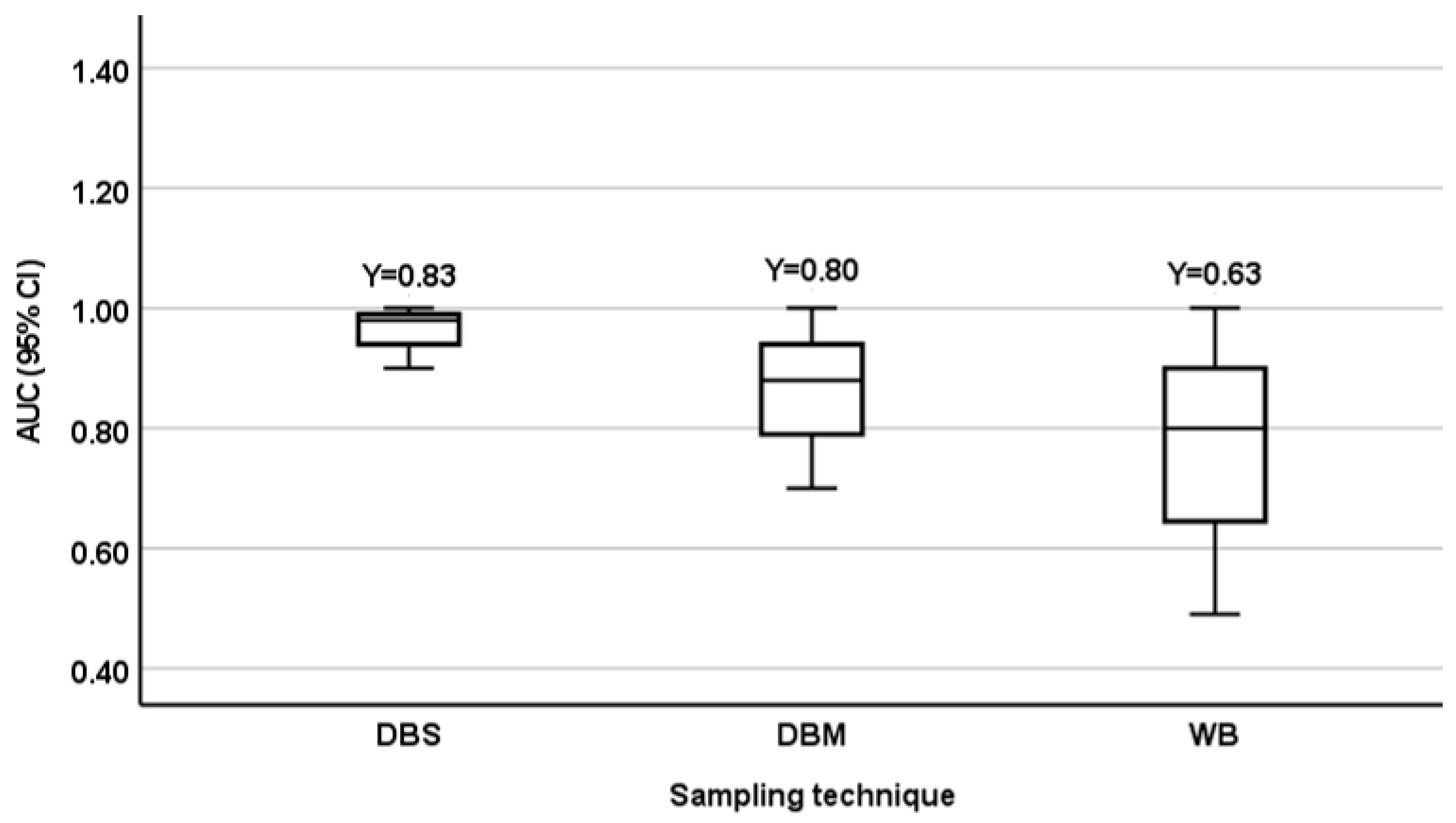
To examine the distribution of MS-derived signal intensities, box-and-whisker plot analysis (Figure 4) was performed for each sampling technique. The spread of values for DBS and DBM (capillary-derived samples) did not differ significantly (p > 0.05), indicating a comparable analytical performance. In contrast, both DBS and DBM differed significantly from venous whole blood (p < 0.05), suggesting matrix-dependent variation in ion response or analyte recovery between capillary and venous sampling.

3.5. Diagnostic Performance Across Sample Types

Receiver Operating Characteristic (ROC) curve analysis was performed to evaluate the diagnostic accuracy of mass spectrometry-based assessment of β-thal using capillary blood (DBS, DBM) and venous WB with CE as a reference standard.

3.5.1. Dried Blood Spot (DBS)—Capillary

ROC curve analysis of mass spectrometry results from DBS samples showed an area under the curve (AUC) of 0.98, reflecting excellent diagnostic accuracy in discriminating against β-thal-positive from -negative cases when compared with CE. The optimal cutoff value (~18.6) yielded a Youden index of 0.83, corresponding to 100% sensitivity and 83% specificity. Although a higher threshold (19.47) achieved complete specificity, it reduced sensitivity to 80%, thereby lowering the overall diagnostic efficiency. Hence, the cutoff of 18.63 offered the best balance between false-positive and false-negative classifications. These findings highlight the robustness of DBS as a minimally invasive, capillary-based sampling technique suitable for large-scale or cascade screening applications.

3.5.2. Dried Blood Matrix (DBM)—Capillary

For DBM samples, the ROC curve analysis yielded an AUC of 0.88, consistent with a good diagnostic performance relative to CE. The optimal threshold (~18.4) produced a Youden index of 0.8, with sensitivity of 80% and specificity of 100%. These results demonstrate that DBM performs comparably to DBS in identifying β-thal carriers, supporting its suitability as an alternative micro sampling format, particularly in settings where DBS preparation or transport may be challenging.

3.5.3. Whole Blood (WB)—Venous

ROC curve analysis for venous whole blood demonstrated an AUC of 0.80 ± 0.16 (p = 0.10, 95% CI, 0.49–1.00), indicating good, though not statistically significant, discriminating ability versus CE. The optimal cutoff (~16.5) corresponded to a Youden index of 0.63, with a sensitivity of 80% and specificity of 83%. The wide confidence interval likely reflects the small sample size (n = 11). Nonetheless, these data suggest that WB mass spectrometric analysis remains a reliable approach for confirmatory testing. The statistical parameters highlighting the diagnostic accuracy of various formats are provided in Figure 5.

3.6. Clinical Performance Across Sample Types

When compared with CE, DBS achieved the highest sensitivity (100%), identifying all CE-positive samples correctly, though one false positive reduced its specificity to 83%. DBM showed perfect specificity (100%) but a slightly reduced sensitivity (80%) due to one missed case. Whole blood showed a lower overall accuracy (82%), with one false-positive and one false-negative result. A comparative analysis of the sampling methods is shown in Table 2.
Overall, both DBS and DBM demonstrated high agreement (91%) with CE, supporting their reliability as micro sampling alternatives for β-thal screening, while WB showed a marginally lower performance.

4. Discussion

The analysis of globin chains using flow injection analysis–mass spectrometry (FIA-MS) in a high-throughput manner is well suited for both population and carrier screening. Compared to population-based screening, which is resource-intensive and logistically demanding, carrier screening offers a more targeted strategy that yields higher diagnostic accuracy. Carrier screening of β-thal can be implemented through three primary approaches: (i) cascade screening of the relatives of affected individuals, (ii) antenatal or preconception screening of couples, and (iii) population screening of all individuals of reproductive age [40].
In the present study, the index case (S19) was initially diagnosed as a β-thal carrier using gel electrophoresis. Two decades later, her parents sought to trace the carrier status within the extended family. The family members were distributed across different Indian states (Tamil Nadu, Karnataka, Andhra) and countries (USA, Dubai, New Zealand). In the absence of direct access to all relatives during the study period, only available CBC parameters were included. Capillary blood collection (finger prick) was employed to overcome challenges associated with venous sampling. Participants readily consented to capillary collection, whereas one member (S16) declined to provide venous sampling. The authors personally conducted sample collection at a common residential site.
Among micro sampling techniques, DBM collection was observed to be less cumbersome and did not require drying, unlike DBS, highlighting its potential as a practical alternative. With minimum training, capillary self-sampling could be implemented in community-based or remote settings without supervision.
Ratios of globin chains such as α/β, δ/β (%), δ/α (in the presence of variants), γ/α, and γ/β serve as reliable biomarkers for identifying and differentiating β-thal types, including β-thal, δβ thal, and HPFH (Hereditary Persistence Fetal Hemoglobin) [35,36,37]. In this study, none of the participants had a variant (based on full-scan analysis from channel 2), that confounds the quantification of globin chains. While α/β ratio is a reliable biomarker for α-thalassemia, it performs poorly in detecting β-thal carriers due to compensatory globin chain synthesis [36]. In contrast, the δ/β ratio is a more informative biomarker for β-thal, as reduced β globin production leads to compensatory upregulation of δ globin synthesis. Expressing δ/β as a percentage normalizes the relative abundance of δ globin to β globin, enabling direct comparison across samples despite variation in globin concentration. The resulting increase in δ/β (%) directly mirrors the elevation of HbA2 observed by CE, establishing a strong concordance between MS-derived δ/β measurements and CE-based HbA2 quantification.
The micro sampling technique combined with TQMS identified the β-thal trait in 20.6 % of family members. Although the participants currently reside in south India, their ancestral origin traces back to the southern region of Gujarat, from where their forebears migrated approximately 1000 years ago [41]. The detection of carrier status in two out of three siblings of S1 (the grandparent of the index case) underscores the utility of cascade screening in tracing carriers through family networks [Figure 3]. The MS-based findings were concordant with the CBC and CE results [Table 1], which showed characteristic features of β-thal-trait-reduced MCV (<80 fl) and MCH (<25 pg), along with increased HbA2 levels (>3.5%) [42]. The family carried HBB: c.92 + 5 G > C, one of the most prevalent β-thal mutations in India [43], which affects RNA processing and results in a β0 or β+ phenotype [44]. The prevalence of the mutation varies from 44.8% in the north to 71.4% in the Eastern India [43]. Although carrier detection has no direct clinical impact on individual health, its identification is crucial for genetic counseling and prevention of β-thal major births.
This study compared the performance of three sampling techniques—capillary-based micro sampling (DBS, DBM) and venous WB—for β-thal carrier detection. DBS and DBM produced comparable results, with no statistically significant difference between them, confirming their suitability for community and outreach screening programs. However, both micro sampling techniques showed a statistically significant difference (p < 0.05) when compared with venous WB (Figure 4). A higher δ/β (%) ratio was observed in capillary samples relative to venous blood, likely due to the higher Hb concentration in capillary samples, as reported by Becker et al. [45].
All micro sampling specimens were analyzed in a single batch, whereas venous WB samples were processed on separate days, depending on availability. Such differences, combined with the small sample size (reflected by wide 95% confidence intervals, Figure 5), may have contributed to the minor diagnostic variation between sampling types. The observed variation was statistically significant but not clinically significant, consistent with previous reports for analytes such as sodium, potassium, chloride, phosphate, creatinine and total protein [46]. These differences likely arise from matrix effects, including blood composition, analyte-specific bias, and hematocrit variability, supporting the need for technique-specific reference ranges for different sampling methods [11,47,48].
DBS-MS had 100% sensitivity and DBM-MS had 100% specificity (Table 2), demonstrating the feasibility of using micro sampling techniques for population-level carrier screening of β-thal. DBS-MS is already established for detecting in-born errors of metabolism in neonates [49] and has been extended to identify clinically significant hemoglobin variants (HbS, HbC, HbE, HbD-Punjab, Hb O-Arab) and β-thal major [50]. The current findings indicate that DBS-MS and DBM-MS can also be applied to adult carrier detection, where β globin chain quantification is diagnostically relevant. These micro sampling approaches in combination with MS techniques (encompassing both LC-MS/MS and Gas Chromatography–MS techniques) are particularly suited for large-scale, multi-biomarker population studies [51,52]. Among these, DBM offers practical advantages—ease of use, no drying requirement, and compatibility with self-sampling in remote areas—facilitating centralized analysis in MS-equipped laboratories.
A few limitations should be acknowledged. The small sample size, geographical dispersion of participants and collection at different times may have introduced pre-analytical variability, particularly for venous WB samples. Larger, standardized studies are needed to validate these observations.
In summary, cascade screening using micro sampling and mass spectrometry represents a sensitive, scalable and practical strategy for β-thal carrier detection in adults. Integration of these technologies into existing clinical and public health frameworks could significantly strengthen screening capacity, particularly in resource-limited or geographically diverse populations.

5. Conclusions

In this preliminary study, the application of FIA-TQMS, in combination with conventional CBC parameters, using micro sampling techniques, demonstrated the potential for detecting β-thal carriers in adults, thereby broadening the diagnostic scope of hemoglobinopathy evaluation in clinical laboratories. The identification of β-thal carriers within high-risk families suggests a targeted and practical alternative to large-scale population screening. However, the current data are insufficient to draw definite conclusions regarding its clinical performance characteristics, including sensitivity, specificity, and overall accuracy. Additionally, the influence of preanalytical variables—ranging from blood collection to sample handling and processing—on carrier detection warrants systematic investigation. Although DBS and DBM approaches showed a comparable performance, quantitative differences relative to venous blood highlight the need for sampling-technique-specific reference intervals. Despite limitations in sample size and collection conditions, these findings support the feasibility of integrating MS-based micro sampling workflows into cascade screening strategies. Such an approach may enhance accessibility and early identification of β-thal carriers; however, comprehensive clinical validation in larger and genetically diverse cohorts is required before FIA-TQMS-based strategies can be recommended for population-level or preventive β-thal screening.

Author Contributions

Conceptualization, D.D.P.; Methodology, A.K.P. and D.D.P.; Software, H.K.M.; Validation, A.K.P. and D.D.P.; Formal Analysis, A.K.P. and H.K.M.; Investigation, A.K.P., H.K.M. and D.D.P.; Resources, D.D.P.; Data Curation, A.K.P., H.K.M. and D.D.P.; Writing—Original Draft Preparation, A.K.P., H.K.M. and D.D.P.; Writing—Review and Editing, A.K.P. and D.D.P.; Visualization, H.K.M. and D.D.P.; Supervision, D.D.P.; Project Administration, D.D.P. All authors have read and agreed to the published version of the manuscript.

Funding

This research received no external funding.

Institutional Review Board Statement

The study protocol was approved by the Institutional Human Ethics Committee (Reg. No: EC/NEW/INST/2022/2627) prior to the commencement of the study. The Ethics approval number for this study is NAALM/EC/8.5/12-2023.

Informed Consent Statement

Written informed consent has been obtained from all the subjects involved in the study.

Data Availability Statement

Dataset available from the corresponding author on reasonable request.

Acknowledgments

The authors are thankful to Sujay R for his constant support and encouragement, Ananthvikas J for molecular confirmation of β-thal. Data acquisition by the technologists, logistic team particularly Bhaskar and team for collecting and transporting the samples are greatly acknowledged. The authors thank all participants for their voluntary and active participation in the study. D.D.P. greatly acknowledge Vaibhav Shitole, for kindly providing the Dried Blood Matrix-Biosampler (Iota Diagnostic Pvt Ltd., Gujarat) used in the study. Graphical abstract and Pedigree chart were created using Canva, Canva Education (Canva Pvt Ltd., Sydney, Australia) and MediBang Paint v28.17 (509) (MediBang Inc., Tokyo, Japan).

Conflicts of Interest

DBM is a gift from Iota Diagnostics Pvt Ltd., had no role in the design, execution, interpretation, or writing of the study. Authors Ankitha K. Puthiyaveettil and Deepalakshmi D. Putchen were employed by the company Neuberg Anand Academy of Laboratory Medicine Pvt Ltd. (NAALM). Harshini K. Musuvathi was an intern at NAALM; this affiliation did not influence the study design, data interpretation, or manuscript preparation. All authors declare that the research was conducted in the absence of any commercial or financial relationships that could be construed as a potential conflict of interest.

Abbreviations

αAlpha-globin chain
βBeta-globin chain
γGamma-globin chain
δDelta-globin chain
ACNAcetonitrile
AUCArea Under the Curve
CBCComplete Blood Count
CECapillary Electrophoresis
CX-HPLCCation-Exchange High-Performance Liquid Chromatography
DBMDried Blood Matrix
DBSDried Blood Spot
DNADeoxyribonucleic Acid
EDTAEthylenediaminetetraacetic Acid
ESIElectrospray Ionization
FAFormic Acid
FIAFlow Injection Analysis
HbHemoglobin
HbA1cGlycated Hemoglobin
HbA2Hemoglobin A2
HBBβ-globin gene
HPFHHereditary Persistence of Fetal Hemoglobin
LC-MS/MSLiquid Chromatography–Tandem Mass Spectrometry
MCHMean Corpuscular Hemoglobin
MCVMean Corpuscular Volume
MRMMultiple Reaction Monitoring
MSMass Spectrometry
MS/MSTandem Mass Spectrometry
PCRPolymerase Chain Reaction
RNARibonucleic Acid
ROCReceiver Operating Characteristic
SPSSStatistical Package for the Social Sciences
TQMSTriple Quadrupole Mass Spectrometry
UHPLCUltra-High-Performance Liquid Chromatography
VAMSVolumetric Absorptive Micro sampling
WBWhole Blood
XICExtracted Ion Chromatogram
β-thalBeta-Thalassemia

References

  1. Viprakasit, V.; Ekwattanakit, S. Clinical Classification, Screening and Diagnosis for Thal. Hematol. Oncol. Clin. N. Am. 2018, 32, 193–211. [Google Scholar] [CrossRef]
  2. Origa, R. β-Thal. Genet. Med. 2017, 19, 609–619. [Google Scholar] [CrossRef]
  3. Piel, F.B.; Patil, A.P.; Howes, R.E.; Nyangiri, O.A.; Gething, P.W.; Williams, T.N.; Weatherall, D.J.; Hay, S.I. Global distribution of the sickle cell gene and geographical confirmation of the malaria hypothesis. Nat. Commun. 2010, 1, 104. [Google Scholar] [CrossRef] [PubMed]
  4. Carlice-dos-Reis, T.; Viana, J.; Moreira, F.C.; Cardoso, G.d.L.; Guerreiro, J.; Santos, S.; Ribeiro-Dos-Santos, Â. Investigation of mutations in the HBB gene using the 1000 genomes database. PLoS ONE 2017, 12, e0174637. [Google Scholar] [CrossRef]
  5. Mohanty, D.; Colah, R.B.; Gorakshakar, A.C.; Patel, R.Z.; Master, D.C.; Mahanta, J.; Sharma, S.K.; Chaudhari, U.; Ghosh, M.; Das, S.; et al. Prevalence of β-thal and other haemoglobinopathies in six cities in India: A multicenter study. J. Community Genet. 2013, 4, 33–42. [Google Scholar] [CrossRef] [PubMed]
  6. Fucharoen, G.; Sanchaisuriya, K.; Sae-ung, N.; Dangwibul, S.; Fucharoen, S. A simplified screening strategy for thalassaemia and haemoglobin E in rural communities in south-east Asia. Bull. World Health Organ. 2004, 82, 364–372. [Google Scholar]
  7. Bain, B.J. Haemoglobinopathy diagnosis: Algorithms, lessons and pitfalls. Blood Rev. 2011, 25, 205–213. [Google Scholar] [CrossRef]
  8. Cao, A.; Kan, Y.W. The Prevention of Thalassemia. Cold Spring Harb. Perspect. Med. 2013, 3, a011775. [Google Scholar] [CrossRef]
  9. Angastiniotis, M.A.; Hadjiminas, M.G. Prevention of Thalassaemia in Cyprus. Lancet 1981, 317, 369–371. [Google Scholar] [CrossRef] [PubMed]
  10. Lei, B.U.W.; Prow, T.W. A review of micro sampling techniques and their social impact. Biomed. Microdevices 2019, 21, 81. [Google Scholar] [CrossRef]
  11. Doeleman, M.J.H.; Koster, A.-F.; Esseveld, A.; Kemperman, H.; Swart, J.F.; de Roock, S.; Groenestege, W.M.T. Comparison of capillary finger stick and venous blood sampling for 34 routine chemistry analytes: Potential for in hospital and remote blood sampling. Clin. Chem. Lab. Med. CCLM 2025, 63, 747–752. [Google Scholar] [CrossRef]
  12. Cafaro, A.; Conti, M.; Pigliasco, F.; Barco, S.; Bandettini, R.; Cangemi, G. Biological Fluid Micro sampling for Therapeutic Drug Monitoring: A Narrative Review. Biomedicines 2023, 11, 1962. [Google Scholar] [CrossRef]
  13. Parker, S.P.; Cubitt, W.D. The use of the dried blood spot sample in epidemiological studies. J. Clin. Pathol. 1999, 52, 633–639. [Google Scholar] [CrossRef]
  14. Wilhelm, A.J.; den Burger, J.C.G.; Swart, E.L. Therapeutic Drug Monitoring by Dried Blood Spot: Progress to Date and Future Directions. Clin. Pharmacokinet. 2014, 53, 961–973. [Google Scholar] [CrossRef]
  15. Guthrie, R.; Susi, A. A Simple Phenylalanine Method for Detecting Phenylketonuria in Large Populations of Newborn Infants. Pediatrics 1963, 32, 338–343. [Google Scholar] [CrossRef]
  16. Campbell, M.; Henthorn, J.S.; Davies, S.C. Evaluation of cation-exchange HPLC compared with isoelectric focusing for neonatal hemoglobinopathy screening. Clin. Chem. 1999, 45, 969–975. [Google Scholar] [CrossRef] [PubMed]
  17. Newman, M.S.; Brandon, T.R.; Groves, M.N.; Gregory, W.L.; Kapur, S.; Zava, D.T. A Liquid Chromatography/Tandem Mass Spectrometry Method for Determination of 25-Hydroxy Vitamin D2 and 25-Hydroxy Vitamin D3 in Dried Blood Spots: A Potential Adjunct to Diabetes and Cardiometabolic Risk Screening. J. Diabetes Sci. Technol. 2009, 3, 156–162. [Google Scholar] [CrossRef]
  18. Wilhelm, A.J.; den Burger, J.C.G.; Vos, R.M.; Chahbouni, A.; Sinjewel, A. Analysis of cyclosporin A in dried blood spots using liquid chromatography tandem mass spectrometry. J. Chromatogr. B 2009, 877, 1595–1598. [Google Scholar] [CrossRef] [PubMed]
  19. Möller, I.; Thomas, A.; Geyer, H.; Schänzer, W.; Thevis, M. Development and validation of a mass spectrometric detection method of peginesatide in dried blood spots for sports drug testing. Anal. Bioanal. Chem. 2012, 403, 2715–2724. [Google Scholar] [CrossRef] [PubMed]
  20. Denniff, P.; Spooner, N. Volumetric Absorptive Micro sampling: A Dried Sample Collection Technique for Quantitative Bioanalysis. Anal. Chem. 2014, 86, 8489–8495. [Google Scholar] [CrossRef]
  21. Denniff, P.; Spooner, N. The Effect of Hematocrit on Assay Bias When Using DBS Samples for The Quantitative Bioanalysis of Drugs. Bioanalysis 2010, 2, 1385–1395. [Google Scholar] [CrossRef]
  22. Török, D.; Mühl, A.; Votava, F.; Heinze, G.; Sólyom, J.; Crone, J.; StöcKler-Ipsiroglu, S.; Waldhauser, F. Stability of 17alpha-hydroxyprogesterone in dried blood spots after autoclaving and prolonged storage. Clin. Chem. 2002, 48, 370–372. [Google Scholar] [CrossRef]
  23. van Baar, B.L.; Verhaeghe, T.; Heudi, O.; Rohde, M.; Wood, S.; Wieling, J.; de Vries, R.; White, S.; Cobb, Z.; Timmerman, P. Is Addition in Bioanalysis of DBS: Results from The EBF DBS-Micro sampling Consortium. Bioanalysis 2013, 5, 2137–2145. [Google Scholar] [CrossRef]
  24. Baillargeon, K.R.; Mace, C.R. Micro sampling tools for collecting, processing, and storing blood at the point-of-care. Bioeng. Transl. Med. 2023, 8, e10476. [Google Scholar] [CrossRef]
  25. Chui, D.H.K.; Fucharoen, S.; Chan, V. Hemoglobin H disease: Not necessarily a benign disorder. Blood 2003, 101, 791–800. [Google Scholar] [CrossRef]
  26. Henderson, S.J.; Fishlock, K.; Bellingham, A.J. Neonatal screening for haemoglobin variants using filter paper-dried blood specimens. Clin. Lab. Haematol. 2008, 13, 327–334. [Google Scholar] [CrossRef] [PubMed]
  27. Rashed, M.S.; Ozand, P.T.; Bucknall, M.P.; Little, D. Diagnosis of Inborn Errors of Metabolism from Blood Spots by Acylcarnitines and Amino Acids Profiling Using Automated Electrospray Tandem Mass Spectrometry. Pediatr. Res. 1995, 38, 324–331. [Google Scholar] [CrossRef] [PubMed]
  28. Spooner, N.; Lad, R.; Barfield, M. Dried Blood Spots as a Sample Collection Technique for the Determination of Pharmacokinetics in Clinical Studies: Considerations for the Validation of a Quantitative Bioanalytical Method. Anal. Chem. 2009, 81, 1557–1563. [Google Scholar] [CrossRef]
  29. Daniel, Y.A.; Turner, C.; Haynes, R.M.; Hunt, B.J.; Dalton, R.N. Quantification of Hemoglobin A2 by Tandem Mass Spectrometry. Clin. Chem. 2007, 53, 1448–1454. [Google Scholar] [CrossRef]
  30. Boemer, F.; Ketelslegers, O.; Minon, J.-M.; Bours, V.; Schoos, R. Newborn Screening for Sickle Cell Disease Using Tandem Mass Spectrometry. Clin. Chem. 2008, 54, 2036–2041. [Google Scholar] [CrossRef]
  31. Moat, S.J.; Rees, D.; King, L.; Ifederu, A.; Harvey, K.; Hall, K.; Lloyd, G.; Morrell, C.; Hillier, S. Newborn Blood Spot Screening for Sickle Cell Disease by Using Tandem Mass Spectrometry: Implementation of a Protocol to Identify Only the Disease States of Sickle Cell Disease. Clin. Chem. 2014, 60, 373–380. [Google Scholar] [CrossRef] [PubMed]
  32. Boemer, F.; Cornet, Y.; Libioulle, C.; Segers, K.; Bours, V.; Schoos, R. 3-years experience review of neonatal screening for hemoglobin disorders using tandem mass spectrometry. Clin. Chim. Acta 2011, 412, 1476–1479. [Google Scholar] [CrossRef] [PubMed]
  33. Putchen, D.D.; Kulkarni, S.; Puthiyaveettil, A.K.; Venkatachala, P.K.; Golwilkar, V.A.; Ramaprasad, S. Discovery of a Rare Hemoglobin Variant Q-India/D-Punjab in Whole Blood from an Indian Patient Using Capillary Electrophoresis and Mass Spectrometry. Sep. Sci. Plus 2025, 8, e70036. [Google Scholar] [CrossRef]
  34. Puthiyaveettil, A.K.; Vaz, G.S.; Prasad, S.R.; Putchen, D.D. Presumptive Identification of Clinically Significant Hemoglobin Variants Hb E, Hb S, Hb D in Hb A1c Capillary Electrophoresis. J. Appl. Lab. Med. 2025, 10, 406–415. [Google Scholar] [CrossRef] [PubMed]
  35. Zhang, Q.; Wang, G.; Sun, D.; Lin, W.; Yan, T.; Wu, Y.; Wu, M.; Chen, J.; Zou, S.; Xie, W.; et al. MALDI–TOF–MS for Rapid Screening and Typing of β-Globin Variant and β-Thal through Direct Measurements of Intact Globin Chains. Clin. Chem. 2022, 68, 1541–1551. [Google Scholar] [CrossRef]
  36. Lin, Y.; Agarwal, A.M.; Anderson, L.C.; Marshall, A.G. Discovery of a biomarker for β-Thal by HPLC-MS and improvement from Proton Transfer Reaction—Parallel Ion Parking. J. Mass Spectrom. Adv. Clin. Lab 2023, 28, 20–26. [Google Scholar] [CrossRef]
  37. Yu, C.; Huang, S.; Wang, M.; Zhang, J.; Liu, H.; Yuan, Z.; Wang, X.; He, X.; Wang, J.; Zou, L. A novel tandem mass spectrometry method for first-line screening of mainly beta-thalassemia from dried blood spots. J. Proteom. 2017, 154, 78–84. [Google Scholar] [CrossRef]
  38. Putchen, D.D.; Nambiar, A.; Ashok Menon, A.; Jayaram, A.; Ramaprasad, S. Electrospray triple quadrupole mass spectrometry guides pathologists to suggest appropriate molecular testing in the identification of rare hemoglobin variants. J. Mass Spectrom. Adv. Clin. Lab 2024, 32, 18–23. [Google Scholar] [CrossRef]
  39. Puthiyaveettil, A.K.; Pai, P.G.; Ramaprasad, S.; Putchen, D.D. Evaluating Dried Blood Spot and Dried Blood Matrix as Alternatives to Venipuncture for Diagnosing Haemoglobinopathies in Adults: A Mass Spectrometric Approach. J. Mass Spectrom. 2025, 60, e5186. [Google Scholar] [CrossRef]
  40. Murray, A.; Clarke, A. The ethics of population screening. Curr. Paediatr. 2002, 12, 447–452. [Google Scholar] [CrossRef]
  41. Saunders, A.J. The Sourashtra Community in Madura, South India. Am. J. Sociol. 1927, 32, 787–799. [Google Scholar] [CrossRef]
  42. Galanello, R.; Melis, M.A.; Ruggeri, R.; Addis, N.; Scalas, M.T.; Maccioni, L.; Furbetta, M.; Angius, A.; Tuveri, T.; Cao, A. β° Thal Trait in Sardinia. Hemoglobin 1979, 3, 33–46. [Google Scholar] [CrossRef]
  43. Rao, E.; Kumar Chandraker, S.; Misha Singh, M.; Kumar, R. Global distribution of β-thal mutations: An update. Gene 2024, 896, 148022. [Google Scholar] [CrossRef] [PubMed]
  44. Tesio, N.; Bauer, D.E. Molecular Basis and Genetic Modifiers of Thal. Hematol. Oncol. Clin. N. Am. 2023, 37, 273–299. [Google Scholar] [CrossRef]
  45. Becker, M.; Gscheidmeier, T.; Groß, H.; Cario, H.; Woelfle, J.; Rauh, M.; Metzler, M.; Zierk, J. Differences between capillary and venous blood counts in children—A data mining approach. Int. J. Lab. Hematol. 2022, 44, 729–737. [Google Scholar] [CrossRef]
  46. Falch, D.K. Clinical chemical analyses of serum obtained from capillary versus venous blood, using Microtainers® and Vacutainers®. Scand. J. Clin. Lab. Investig. 1981, 41, 59–62. [Google Scholar] [CrossRef]
  47. Holub, M.; Tuschl, K.; Ratschmann, R.; Strnadová, K.A.; Mühl, A.; Heinze, G.; Sperl, W.; Bodamer, O.A. Influence of hematocrit and localization of punch in dried blood spots on levels of amino acids and acylcarnitines measured by tandem mass spectrometry. Clin. Chim. Acta 2006, 373, 27–31. [Google Scholar] [CrossRef]
  48. Zakaria, R.; Allen, K.J.; Koplin, J.J.; Roche, P.; Greaves, R.F. Advantages and Challenges of Dried Blood Spot Analysis by Mass Spectrometry Across the Total Testing Process. Electron. J. Int. Fed. Clin. Chem. Lab. Med. 2016, 27, 288–317. [Google Scholar]
  49. Using Tandem Mass Spectrometry for Metabolic Disease Screening Among Newborns: A Report of a Work Group. MMWR 2001 Vol 50 (No. RR-3); Epidemiology Program Office, Centers for Disease Control and Prevention (CDC), U.S. Department of Health and Human Services: Atlanta, GA, USA, 2001. Available online: https://www.cdc.gov/mmwr/pdf/rr/rr5003.pdf (accessed on 30 March 2024).
  50. Daniel, Y.; Henthorn, J. Tandem Mass Spectrometry for Sickle Cell and Thalassaemia Newborn Screening Pilot Study; Public Health England (PHE): London, UK, 2015. Available online: https://assets.publishing.service.gov.uk/media/617a65e88fa8f52981d40e7d/Sickle_cell_and_thalassaemia_screening_tandem_mass_spectrometry_newborn_screening_pilot_study.pdf (accessed on 21 March 2023).
  51. Williams, S.R.; McDade, T.W. The Use of Dried Blood Spot Sampling in the National Social Life, Health, and Aging Project. J. Gerontol. Ser. B Psychol. Sci. Soc. Sci. 2009, 64B, i131–i136. [Google Scholar] [CrossRef] [PubMed]
  52. McDade, T.W.; Williams, S.; Snodgrass, J.J. What a drop can do: Dried blood spots as a minimally invasive method for integrating biomarkers into population-based research. Demography 2007, 44, 899–925. [Google Scholar] [CrossRef]
Figure 1. Globin chain analysis by FIA-TQMS. Panels (ac) show non-fragmenting MRM mode data, and panels (df) show full scan analysis. (a) Representative chromatographic profile acquired in non-fragmenting MRM mode, (b) monitored globin chains, (c) calculation of the δ/β (%) ratio, (d) full-scan chromatographic profile, (e) mass spectra acquired over an m/z range of 650–1200, with numbers indicating the charge states of the globin chains. For clarity, m/z range of 720–1200 is shown and (f) deconvoluted intact masses of globin chains expressed in Daltons. Globin chains are denoted as α, β, δ, Gγ, Aγ and a β variant βS. FIA—Flow injection analysis, TQMS—Triple Quadrupole Mass spectrometry, MRM—Multiple reaction monitoring, m/z—mass-to-charge ratio, * β globin chains 15+–22+, ** merged α and β globin chains, ‘+’ indicates positive charge.
Thalassrep 16 00003 g001
Figure 2. Representative CE and TQMS results for normal and β-thalassemia carrier samples. Top row (normal sample): (a) CE electropherogram showing normal hemoglobin profile with HbA2% within the reference range; the inset displays the corresponding CBC parameters (refer Section 2.3.3). (b) Non-fragmenting MRM spectra acquired in a single run illustrating the monitored charge states of β and δ globin chains, with the inset showing the calculated δ/β (%). Bottom row (β-thalassemia carrier): (c) CE electropherogram demonstrating an elevated HbA2%; the inset shows the corresponding CBC parameters. (d) Non-fragmenting MRM spectra showing relative changes in β and δ globin signal intensities; inset depicting an increased δ/β (%) consistent with reduced β-globin synthesis. For clarity, only a single representative charge state of each globin chain is shown. Globin chains are denoted as α, β, δ, Gγ, Aγ and a β variant βS. Dotted lines in (a,c) indicate the instrument-defined integration boundaries used for peak quantification.
Thalassrep 16 00003 g002
Figure 3. Pedigree chart depicting β-thal carrier status in the family. I–III represent generations. Sample 19 is the proband/index case. Sample 18 was classified based on prior CBC and molecular results obtained in the USA.
Thalassrep 16 00003 g003
Figure 4. Box-and-whisker plot illustrates the distribution of δ/β (%) values across various sampling techniques. The central line denotes median, the box denotes the interquartile range, and the whiskers indicate minimum and maximum values. ● indicates an outlier. Statistical significance between groups is denoted by * (p < 0.05). DBS—dried blood spot, DBM—dried blood matrix, WB—whole blood, δ—delta globin chain, β—beta globin chain.
Thalassrep 16 00003 g004
Figure 5. Receiver operating characteristic (ROC) curve analysis illustrating the diagnostic performance of different sampling techniques. The ROC curves depict sensitivity versus 1-specificity across varying decision thresholds. The optimal cut-off point for each sampling method was determined using the Youden Index. DBS—dried blood spot, DBM—dried blood matrix, WB—whole blood, Y—Youden index, AUC—area under the curve, CI—Confidence Interval.
Thalassrep 16 00003 g005
Table 1. Sample details of participants. Hb—hemoglobin, RBC—red blood cell, MCV—mean corpuscular volume, MCH—mean corpuscular hemoglobin, MCHC—mean corpuscular hemoglobin concentration, RDW—red blood cell distribution width, HbA0—adult hemoglobin α2β2, HbA2—hemoglobin α2δ2, DBS—dried blood spot, DBM—dried blood matrix, WB—whole blood, δ—delta globin chain, β—beta globin chain. Complete blood count, Capillary Electrophoresis and WB were performed on venous blood. NA—Not available. * DBS and DBM values are an average of triplicates. ** denotes β-thal carriers. Sample 18 was classified based on prior CBC and molecular results.
Sample No.DemographicsComplete Blood CountCapillary ElectrophoresisMass Spectrometry δ/β (%)
Sex at BirthAge (Years)Hb (g/dL)RBC Count (Milli/cmm)MCV (fl)MCH (pg)MCHC (g/dL)RDW (CV%)Thal IndicesHbA0HbA2DBS *DBM *WB
1 **F61–8010.15.4767.818.527.218.2Yes94.25.322.1518.6316.51
2 **M61–809.74.8968.519.829.016.9Yes96.04.019.6218.6418.18
3F61–8012.84.5390.128.331.413.5No97.52.519.3217.7415.46
4M61–8012.74.2492.030.032.613.7No97.52.517.1415.6016.49
5F61–8011.24.2089.026.729.913.9No97.62.416.4118.2516.78
6 **M61–809.95.1466.519.328.917.8Yes95.64.419.7917.0319.63
7F31–6010.84.1286.426.230.313.7No97.72.317.9516.2913.86
8F31–6014.14.8291.329.332.013.2No97.82.217.0917.0314.07
9 **M31–6011.06.0268.118.326.817.9Yes94.84.821.5222.9018.41
10F31–6012.84.7783.226.832.213.8No--17.4117.30-
11M31–6015.35.5684.227.532.614.5No--18.0919.25-
12F31–6012.44.6484.526.731.614.1No-----
13M31–6013.54.6090.229.332.512.8No--17.6614.47-
14F31–6012.74.3990.228.932.113.6No-----
15M31–6015.85.4285.029.234.212.1No-----
16 **M31–6013.27.0363.018.8NANAYes--18.83--
17F31–6013.24.0699.532.332.4NANo--15.48--
18 **F31–608.53.9666.921.331.918.5Yes-----
19 **F13–3010.45.2762.619.731.515.4Yes95.94.119.3220.2312.47
20F13–3011.34.0287.028.132.212.6No97.52.517.0017.4610.20
21M13–30NANANANANANANA--17.6116.56-
22F13–30NANANANANANANA--18.1217.24-
Table 2. Clinical validation of samples analyzed using DBS, DBM, and WB sampling methods with CE as the reference method. Diagnostic performance is expressed in terms of sensitivity, specificity and overall accuracy. CE—capillary electrophoresis, DBS—dried blood spot, DBM—dried blood matrix, WB—whole blood, +ve Positive, −ve Negative.
Sample TypeCE +veCE −veSensitivity (%)Specificity (%)Accuracy (%)
DBS +ve511008391
DBS −ve05
DBM +ve408010091
DBM −ve16
WB +ve41808382
WB −ve15
Disclaimer/Publisher’s Note: The statements, opinions and data contained in all publications are solely those of the individual author(s) and contributor(s) and not of MDPI and/or the editor(s). MDPI and/or the editor(s) disclaim responsibility for any injury to people or property resulting from any ideas, methods, instructions or products referred to in the content.