

Tuning in: How Hearing Loss and Assistive Devices Reshape Musical Quality of Life

 , , and
Abstract
1. Introduction
1.1. Music and Quality of Life
1.2. Hearing Device Limitations and Music Perception
1.3. Consequences of HL on Music
1.4. Conceptualising Musical Experiences and QoL
1.5. Research Gap: Beyond Perception to Lived Experience
1.6. Study Aims
1.7. Research Hypotheses
2. Materials and Methods
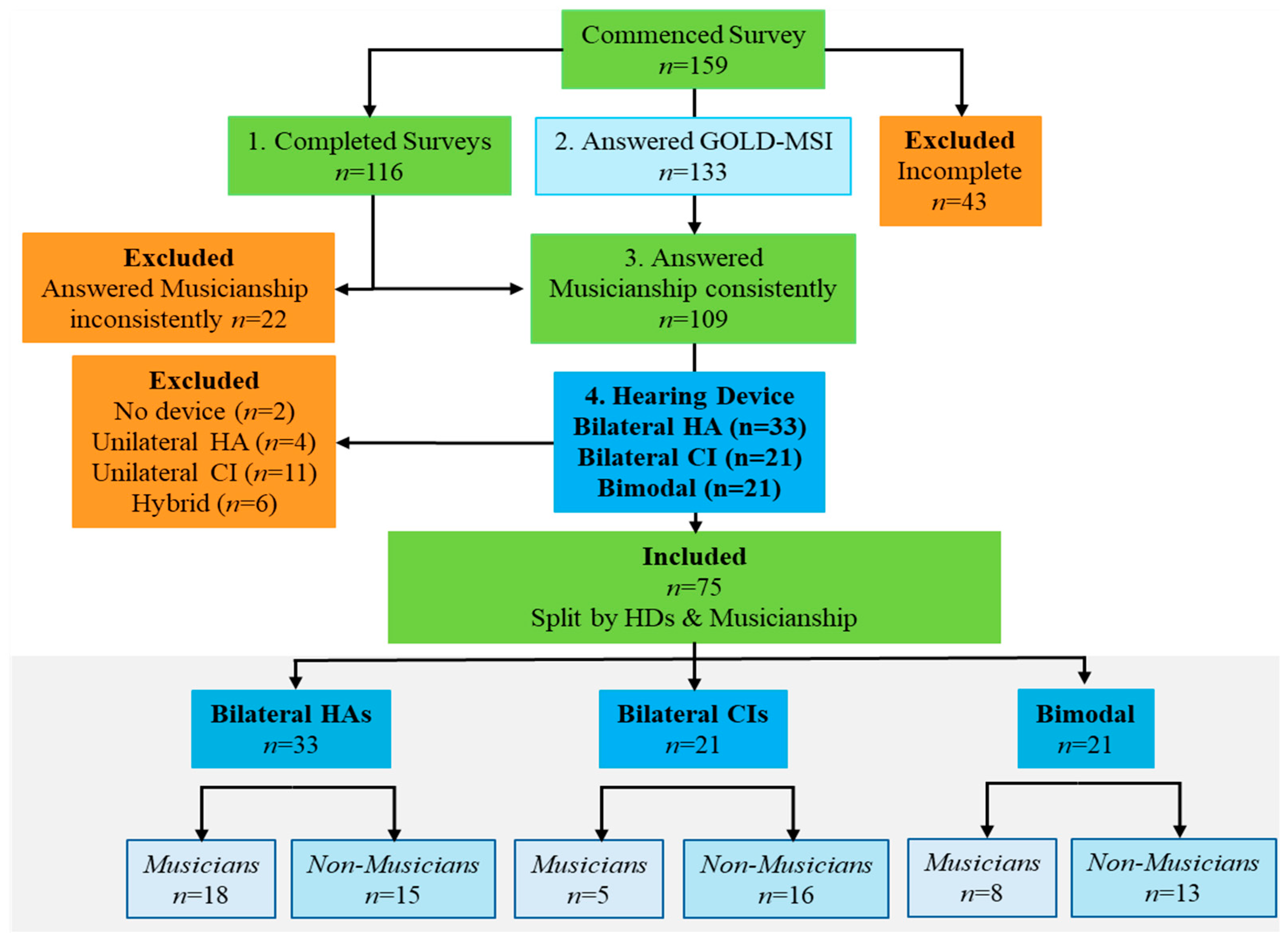
2.1. Participants
2.2. Recruitment Strategy
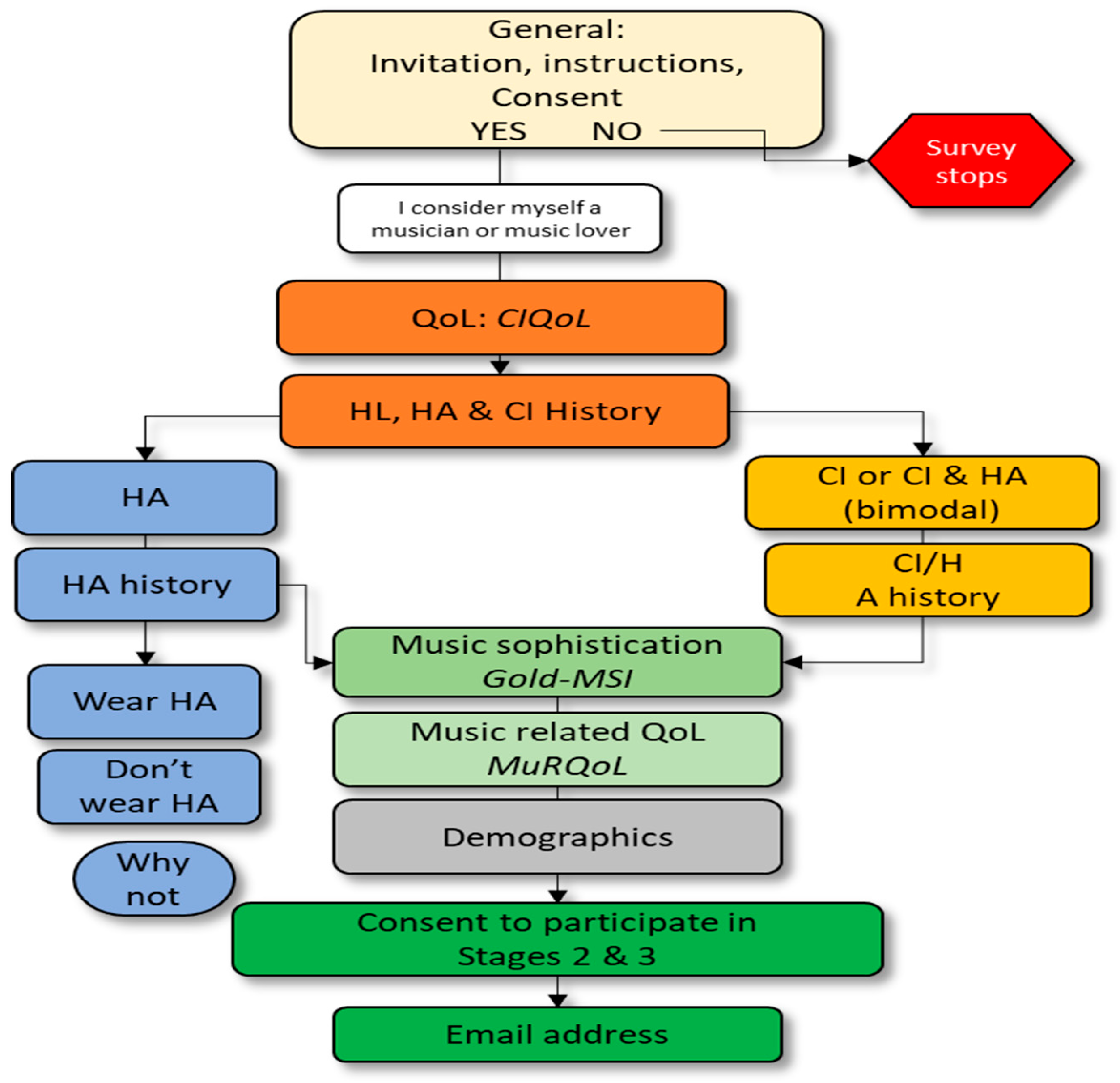
2.3. Data Collection
2.4. Analysis Tools
2.5. Data Preparation
- Many questions were subjective, so there were no right or wrong answers.
- Individual characteristics and experiences of LDAs with HL/hearing devices vary significantly.
- Eliminating outliers may silence participants who have the most challenges.
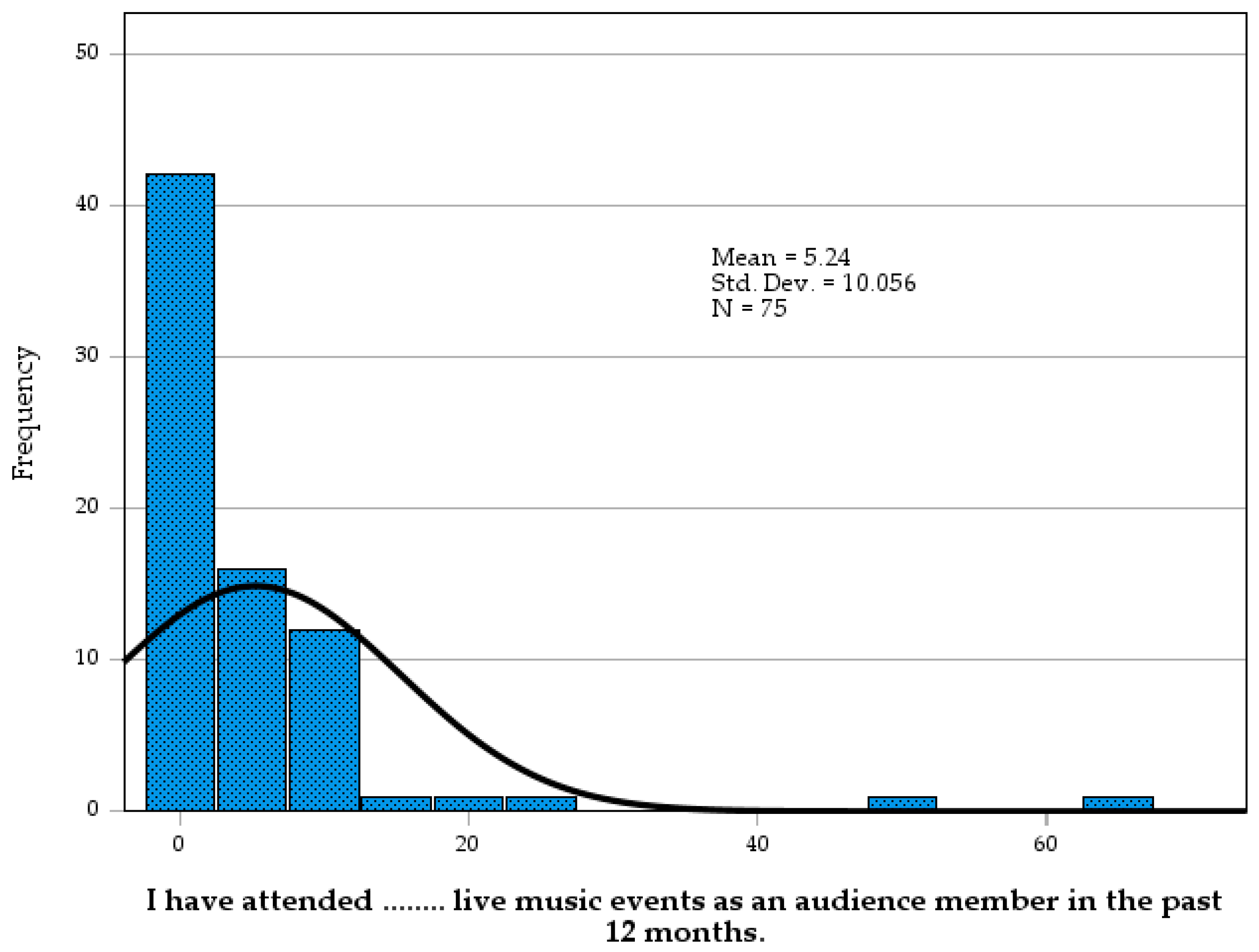
- Where applicable, due to the skewness of outliers, a median was calculated rather than a mean (e.g., listening hours and music event attendance).

2.6. Identifying Subgroups—(1) Hearing Device Type and (2) Musicians or Non-Musicians
3. Results
3.1. Demographics
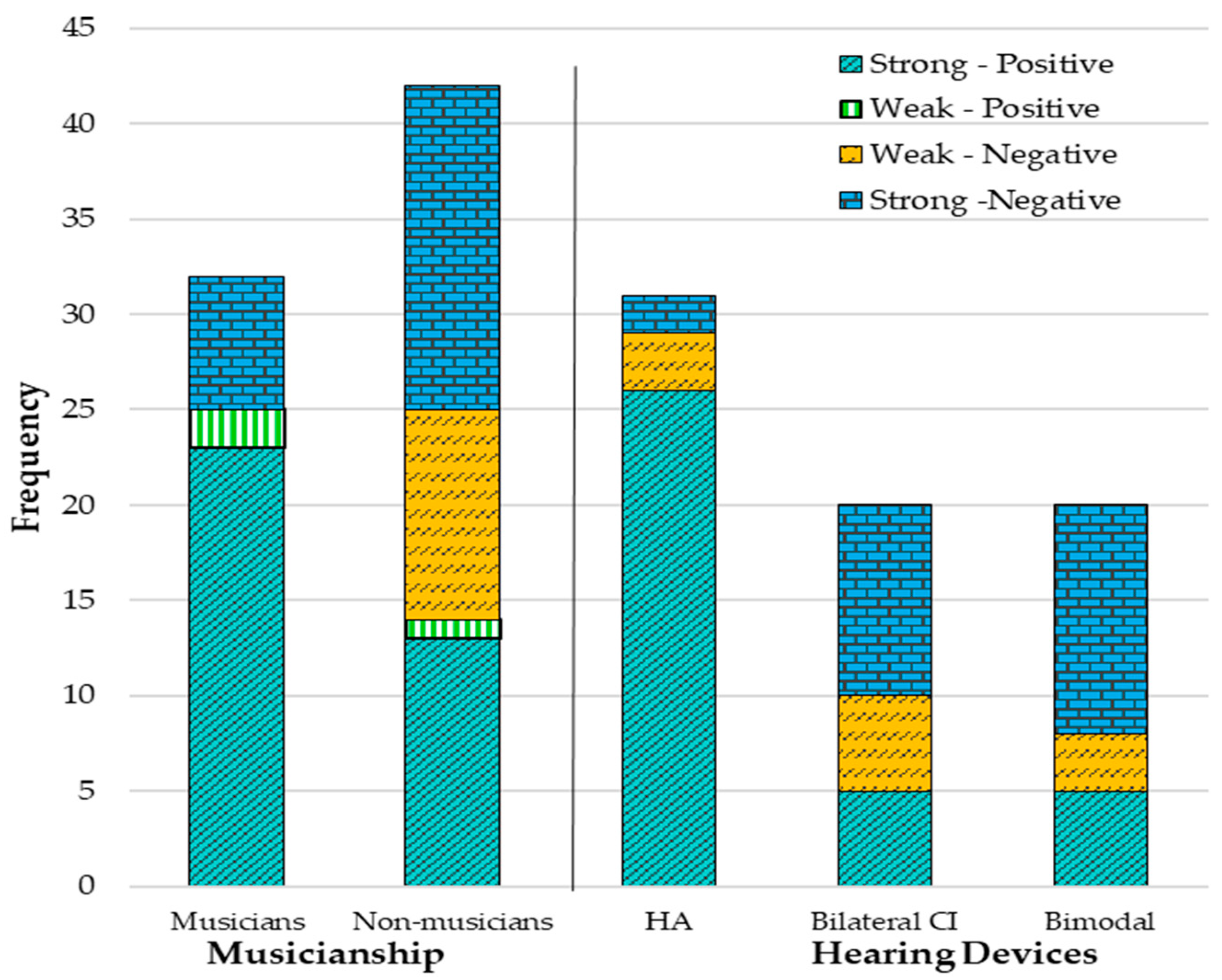
3.2. Enjoyment, Engagement, and Perception Would Be Positively Associated with QoL (H1, EQ1)
3.2.1. Musicians Versus Non-Musicians
3.2.2. Hearing Device Configurations
3.3. Exploring Music Importance, Enjoyment, Engagement, Perception, and QoL (H1, EQ1)
3.3.1. Musicians Versus Non-Musicians
3.3.2. Hearing Devices
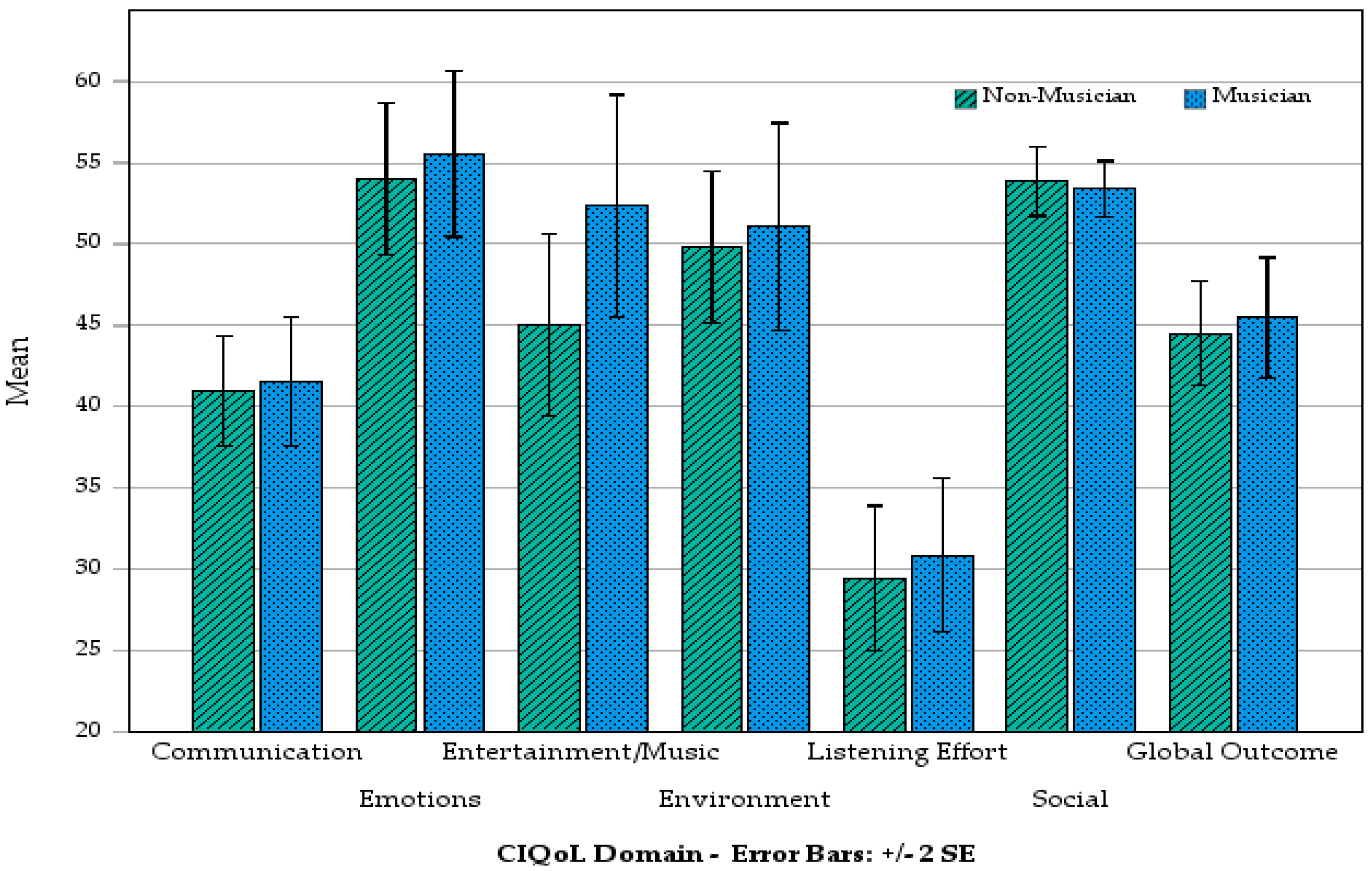
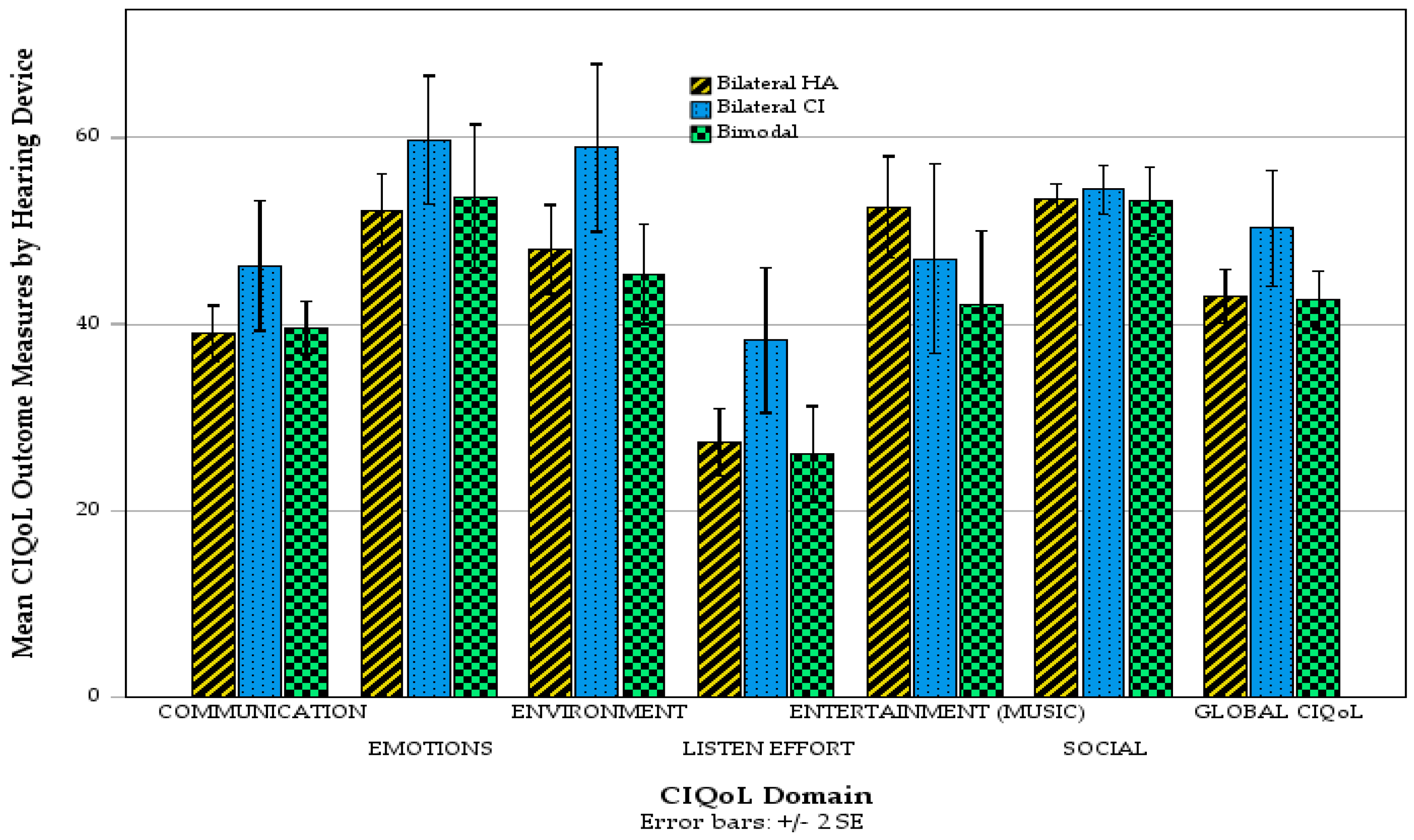
3.4. LDAs’ QoL—Musicians Versus Non-Musicians and Hearing Devices
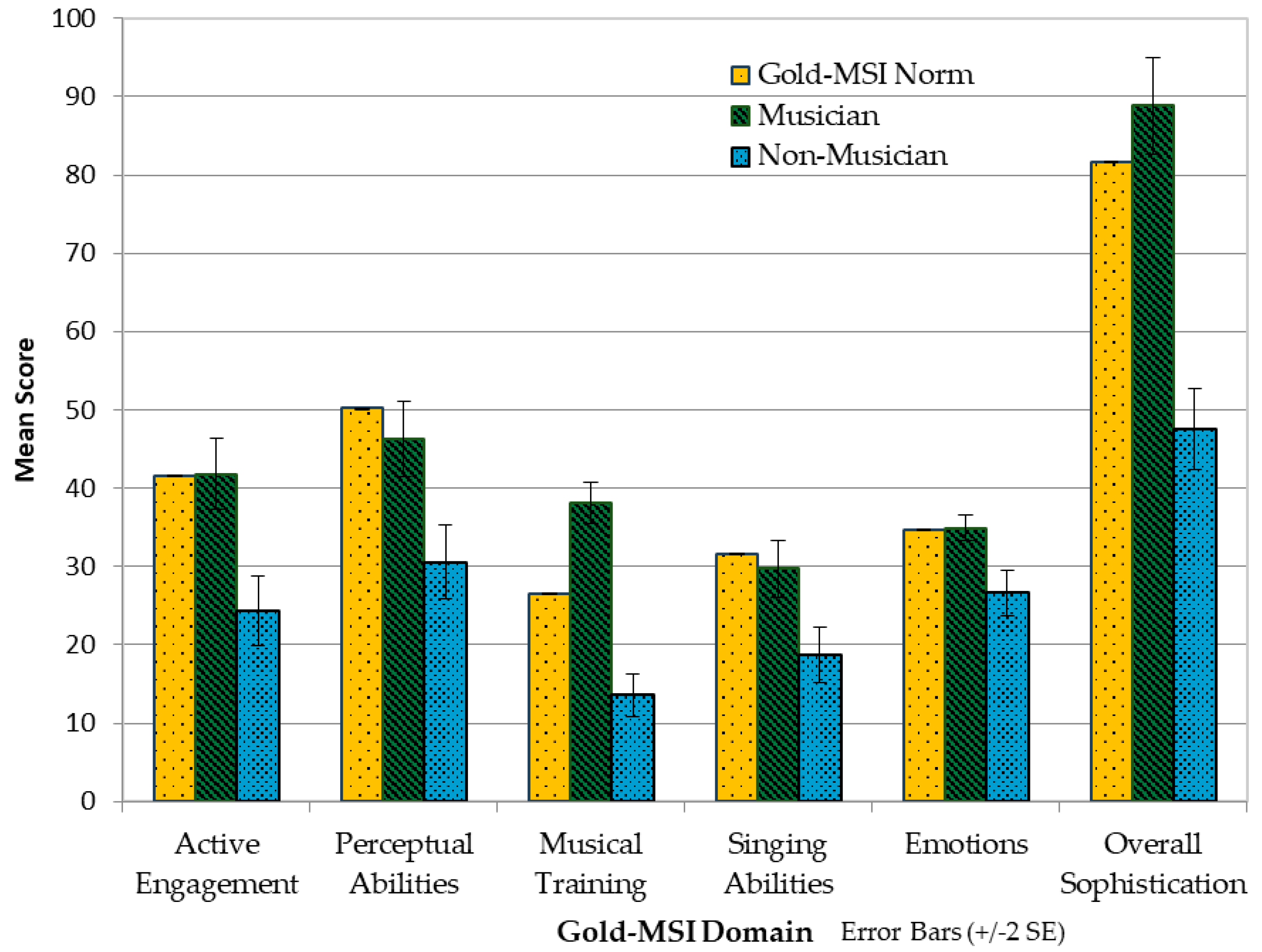
3.5. LDAs’ Music Sophistication Compared to Typical Hearing People (H2)
3.5.1. Musicians Versus Non-Musicians Versus ALL Participants
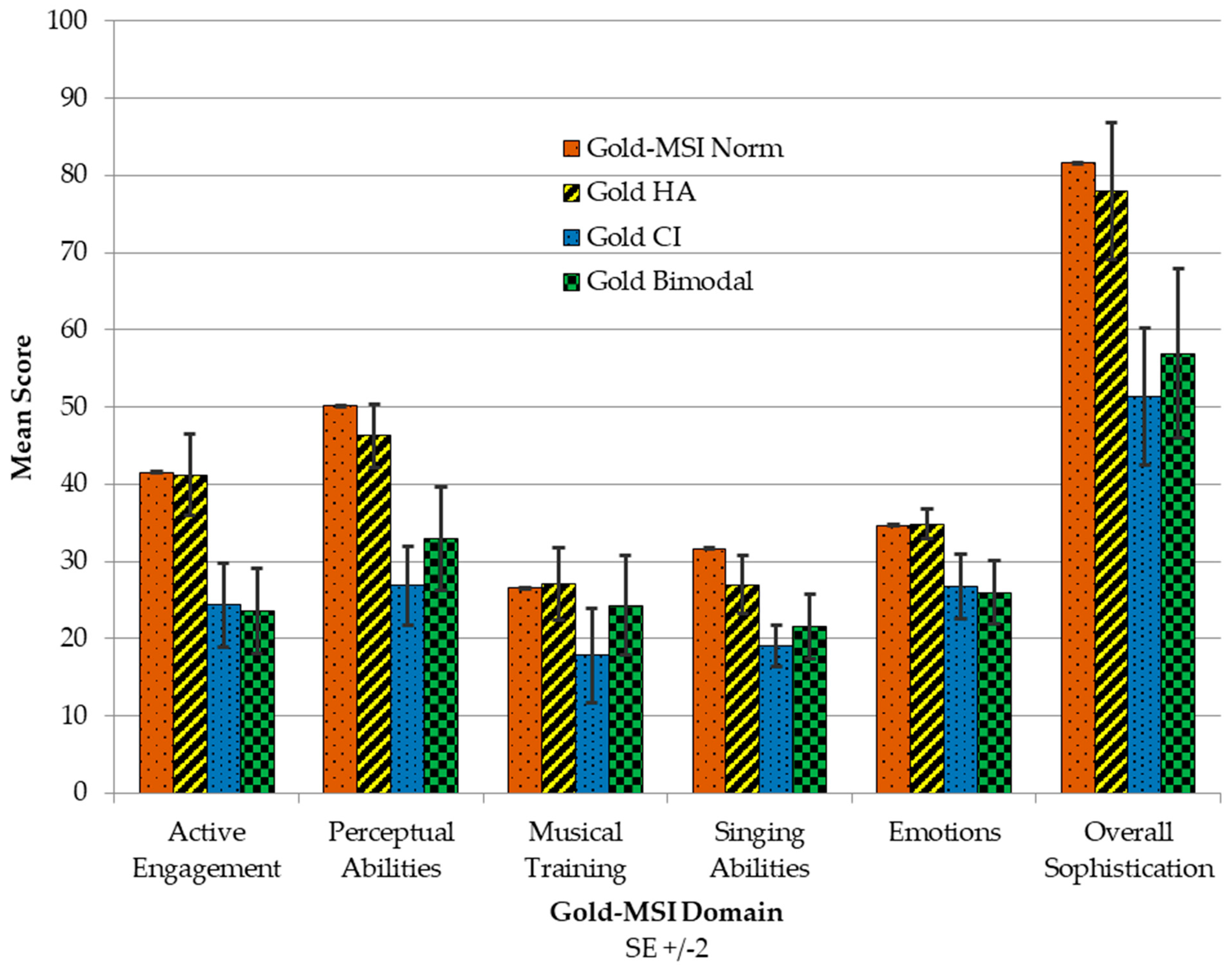
3.5.2. Hearing Devices
3.6. LDAs’ Engagement in Musical Activities (H3)
4. Discussion
5. Implications for Practice
6. Study Limitations
Author Contributions
Funding
Institutional Review Board Statement
Informed Consent Statement
Data Availability Statement
Acknowledgments
Conflicts of Interest
Abbreviations
| CI/s | Cochlear implant/s—implanted prosthesis of any brand that bypasses the damaged portion of the cochlea. When the external processor is connected, it provides a sense of sound [18,92] |
| HA/s | Hearing aids |
| HL | Hearing loss/hearing impairment—any level of loss, one or both ears, caused by any aetiology, treated or untreated |
| LDA/s | Late-deafened adults, typical hearing people who experienced HL in later life |
| QoL | Quality of life—including aspects of social wellbeing, emotional and physical health, communication, autonomy, and social integration |
| CIQoL | Cochlear Implant Quality of Life [51] |
| Gold-MSI | Goldsmith’s Musical Sophistication Index [55] |
| MuRQoL | Music-Related Quality of Life [93] |
Appendix A
| Type | Facebook Groups | Approx Membership | Link to Facebook Group |
|---|---|---|---|
| Cochlear Implant | Bilateral CI Warrior | 1300 | https://www.facebook.com/groups/325256355436065 (accessed on 19 February 2026) |
| Cochlear Implant Experiences | 46,000 | https://www.facebook.com/groups/176991415675866 (accessed on 19 February 2026) | |
| Cochlear Implant Basics | 100 | https://www.facebook.com/groups/441587200809972 (accessed on 19 February 2026) | |
| Cochlear Implants —Australian Support Group | 1700 | https://www.facebook.com/groups/1554486584854036 (accessed on 19 February 2026) | |
| Cochlear Implant Users | 17,000 | https://www.facebook.com/groups/153601038015605 (accessed on 19 February 2026) | |
| Cochlear Awareness Network | 900 | https://www.facebook.com/groups/10581738294 (accessed on 19 February 2026) | |
| Hearing Loss | Hearing Loss: The Emotional Side | 3000 | https://www.facebook.com/groups/1636847240030166 (accessed on 19 February 2026) |
| My Hearing Loss Story Group | 2100 | https://www.facebook.com/groups/1422427341250724 (accessed on 19 February 2026) | |
| Hearing Aid Forum: Hearing Loss, Hearing Aids, and Cochlear Implants | 27,000 | https://www.facebook.com/groups/hearingaidforum (accessed on 19 February 2026) | |
| Australia Hearing Loss Community | 1670 | https://www.facebook.com/groups/1606706229639531 (accessed on 19 February 2026) | |
| Music, Hearing Loss, Cochlear Implant | Cochlear Implants: How to Enjoy Music—Self Guide to Rehab & Appreciation | 650 | https://www.facebook.com/groups/MusicAndCIs (accessed on 19 February 2026) |
| Association of Adult Musicians with Hearing Loss | 1500 | https://www.facebook.com/groups/aamhl (accessed on 19 February 2026) | |
| Musicians with Hearing loss/Tinnitus | 200 | https://www.facebook.com/groups/musicianswithhearingloss (accessed on 19 February 2026) |
| Additional Promotion | Approx Numbers | Link to Web Site | |
|---|---|---|---|
| Cochlear Implant | Cochlear Implants South Australia Hearing Services | 335 | https://www.sacic.com.au/ (accessed on 19 February 2026) |
| Hearing Loss | Better Hearing Australia | Unknown | https://www.betterhearingaustralia.online (accessed on 19 February 2026) |
| Australian Hearing Hub | Unknown | https://hearinghub.edu.au/research-innovation/participate-in-research/ (accessed on 19 February 2026) |
| Age Group Category | 30–49 | 50–69 | 70+ | Sub- Total F(M) | Total |
|---|---|---|---|---|---|
| Employment status—total Female (male) | 11 (0) | 18 (12) | 18 (15) | 47 (27) | 74 |
| Retired | 0 (3) | 2 (1) | 2 (4) | 6 | |
| Unemployed | 4 (0) | 3 (3) | 7 (3) | 10 | |
| Part-time employment | 3 (0) | 2 (1) | 1 (0) | 6 (1) | 7 |
| Full-time employment | 3 (0) | 3 (0) | 3 | ||
| Self-employed | 1 (0) | 13 (5) | 15 (14) | 29 (19) | 48 |
| Education level—total Female (male) | 11 (0) | 19 (13) | 18 (15) | 48 (27) | 75 |
| Postgraduate degree | 5 (0) | 6 (4) | 9 (3) | 20 (7) | 27 |
| Undergraduate degree | 4 (0) | 9 (5) | 9 (2) | 22 (7) | 29 |
| Technical college | 1 (0) | 1 (1) | 0 (4) | 2 (5) | 7 |
| Apprenticeship | 0 (1) | 0 (1) | 1 | ||
| High school | 1 (0) | 3 (2) | 0 (5) | 4 (7) | 11 |
| Duration of Device Use * | Mean Years | (n = 71) * |
|---|---|---|
| Bilateral HA | 13.5 | 31 |
| Bilateral CI | 6.8 | 20 |
| Bimodal CI right, HA left | CI 4.3/HA 16.3 | 10 |
| Bimodal CI left, HA right | CI 3.8/HA 12.5 | 10 |
| Hearing Device | Bilateral HA | Bilateral CI | Bimodal | ALL | ||||
|---|---|---|---|---|---|---|---|---|
| MuRQoL | M | SD | M | SD | M | SD | M | SD |
| ALL | (n = 33) | (n = 21) | (n = 21) | (n = 75) | ||||
| Perception | 61.76 | 13.64 | 40.97 | 21.24 | 42.16 | 19.59 | 50.45 | 20.21 |
| Importance | 69.83 | 16.75 | 60.85 | 24.03 | 62.54 | 18.02 | 65.27 | 19.55 |
| Overall | 65.80 | 13.14 | 50.91 | 18.89 | 52.35 | 15.13 | 57.86 | 16.83 |
| Musicians | (n = 18) | (n = 5) | (n = 8) | (n = 33) | ||||
| Perception | 65.11 | 10.29 | 51.77 | 32.01 | 54.60 | 19.36 | 60.25 | 17.85 |
| Importance | 74.10 | 13.83 | 87.35 | 7.25 | 73.53 | 13.03 | 76.09 | 13.44 |
| Overall | 69.60 | 9.37 | 69.56 | 18.05 | 64.06 | 10.78 | 68.17 | 11.23 |
| Non-Musicians | (n = 15) | (n = 16) | (n = 13) | (n = 44) | ||||
| Perception | 57.75 | 16.29 | 37.59 | 16.66 | 34.50 | 15.96 | 43.55 | 19.04 |
| Importance | 64.71 | 18.91 | 52.57 | 21.19 | 55.77 | 17.63 | 57.65 | 19.69 |
| Overall | 61.23 | 15.71 | 45.08 | 15.38 | 45.14 | 12.88 | 50.60 | 16.40 |
| General Population | LDA Musicianship | |||
|---|---|---|---|---|
| Domain | Gold-MSI mean (n = 147,633) | Musicians (n = 31) | Non- musicians (n = 44) | ALL |
| Active Engagement | 41.52 | 41.81 p > 1.000 | 24.34 p < 0.001 | 31.56 p < 0.001 |
| Perceptual Abilities | 50.20 | 46.32 p = 0.678 | 30.59 p < 0.001 | 37.09 p < 0.001 |
| Musical Training | 26.52 | 38.13 p < 0.001 | 13.57 p < 0.001 | 23.72 p = 0.575 |
| Singing Abilities | 31.67 | 29.71 p > 1.000 | 18.70 p < 0.001 | 23.25 p < 0.001 |
| Emotions | 34.66 | 34.94 p > 1.000 | 26.68 p < 0.001 | 30.09 p < 0.001 |
| Overall Sophistication | 81.58 | 88.81 p = 0.150 | 47.57 p < 0.001 | 64.61 p < 0.001 |
| Norms | Hearing Devices (3 Devices × 6 Domains) | |||
|---|---|---|---|---|
| Domain | Gold-MSI Mean (n = 147,633) | HA (n = 33) | Bilateral CI (n = 21) | Bimodal (n = 21) |
| Active Engagement | 41.52 | 41.21 p = 1.000 | 24.33 p < 0.001 | 23.62 p < 0.001 |
| Perceptual Abilities | 50.20 | 46.30 p = 0.400 | 26.86 p < 0.001 | 32.86 p < 0.001 |
| Musical Training | 26.52 | 27.12 p = 1.000 | 17.81 p = 0.062 | 24.29 p = 1.000 |
| Singing Abilities | 31.67 | 26.97 p = 0.098 | 19.10 p < 0.001 | 21.57 p = 0.001 |
| Emotions | 34.66 | 34.85 p = 1.000 | 26.76 p < 0.007 | 25.95 p = 0.002 |
| General Sophistication | 81.58 | 77.94 p = 1.000 | 51.33 p < 0.001 | 56.95 p < 0.001 |
References
- Tucker, D.; Compton, M.V.; Mankoff, L.; Rulison, K. Cochlear Implant Connections: A Biopsychosocial Audiologic Rehabilitation Program for Late-Deafened Adults with Cochlear Implants. Perspect. Aural Rehabil. Instrum. 2011, 18, 23–34. [Google Scholar] [CrossRef]
- Bleckly, F.; Matthews, N.; Lo, C.Y. Identity Change of Late-Deafened Adults After Receiving Cochlear Implants. Disabil. Rehabil. Assist. Technol. 2024, 19, 1463–1472. [Google Scholar] [CrossRef] [PubMed]
- Kobosko, J.; Jedrzejczak, W.W.; Gos, E.; Geremek-Samsonowicz, A.; Ludwikowski, M.; Skarzynski, H. Self-Esteem in the Deaf Who Have Become Cochlear Implant Users as Adults. PLoS ONE 2018, 13, e0203680. [Google Scholar] [CrossRef] [PubMed]
- World Health Organization. World Report on Hearing; World Health Organization: Geneva, Switzerland, 2021. [Google Scholar]
- Dritsakis, G.; van Besouw, R.; O’Meara, A. Impact of Music on the Quality of Life of Cochlear Implant Users: A Focus Group Study. Cochlear Implant Int. 2017, 18, 207–215. [Google Scholar] [CrossRef] [PubMed]
- Sacks, O. Musicophilia: Tales of Music and the Brain; Alfred A. Knopf, Inc./Random House: New York, NY, USA, 2007. [Google Scholar]
- DeNora, T. Historical perspectives in music sociology. Poetics 2004, 32, 211–221. [Google Scholar] [CrossRef]
- Savage, P.E.; Loui, P.; Tarr, B.; Schachner, A.; Glowacki, L.; Mithen, S.; Mithen, S.; Fitch, W.T. Music as a coevolved system for social bonding. Behav. Brain Sci. 2021, 44, e59. [Google Scholar] [CrossRef]
- Ayyildiz, C.; Geibel, O.; Herff, S.A.; Hashim, S.; Eerola, T.; Küssner, M.B. Music as social surrogate? A qualitative analysis of older adults’ choices of music to alleviate loneliness. Music. Sci. 2025, 29, 535–555. [Google Scholar] [CrossRef]
- Schäfer, K.; Saarikallio, S.; Eerola, T. Music May Reduce Loneliness and Act as Social Surrogate for a Friend: Evidence from an Experimental Listening Study. Music. Sci. 2020, 3, 1–16. [Google Scholar] [CrossRef]
- Welch, G.F.; Biasutti, M.; MacRitchie, J.; McPherson, G.E.; Himonides, E. The impact of music on human development and well-being. Front. Psychol. 2020, 11, 1246. [Google Scholar] [CrossRef]
- Bonde, L.O.; Stensæth, K.; Ruud, E. Music and Health. A Comprehensive Model; Norjysk Center for Kultur & Sundhed: Aalborg, Denmark, 2023. [Google Scholar]
- Gfeller, K.; Driscoll, V.; Schwalje, A. Adult Cochlear Implant Recipients’ Perspectives on Experiences with Music in Everyday Life: A Multifaceted and Dynamic Phenomenon. Front. Neurosci. 2019, 13, 1–19. [Google Scholar] [CrossRef]
- James, C.J.; Graham, P.L.; Betances Reinoso, F.A.; Breuning, S.N.; Durko, M.; Huarte Irujo, A.; Mecklenburg, D.J. The Listening Network and Cochlear Implant Benefits in Hearing-Impaired Adults. Front. Aging Neurosci. 2021, 13, 589296. [Google Scholar] [CrossRef] [PubMed]
- Bannister, S.; Greasley, A.E.; Cox, T.J.; Akeroyd, M.A.; Barker, J.; Fazenda, B.; Whitmer, W.M. Muddy, Muddled, or Muffled? Understanding the Perception of Audio Quality in Music by Hearing Aid Users. Front. Psychol. 2024, 15, 1310176. [Google Scholar] [CrossRef] [PubMed]
- Gordo, A.; Iório, M.C.M. Dead regions in the cochlea at high frequencies: Implications for the adaptation to hearing aids. Braz. J. Otorhinolaryngol. 2007, 73, 299–307. [Google Scholar] [CrossRef] [PubMed]
- Zeng, F.-G. Trends in cochlear implants. Trends Hear. 2004, 8, 1–34. [Google Scholar] [CrossRef]
- Paisa, R.; Andersen, J.; Ganis, F.; Percy-Smith, L.M.; Serafin, S. A Concert-Based Study on Melodic Contour Identification among Varied Hearing Profiles—A Preliminary Report. J. Clin. Med. 2024, 13, 3142. [Google Scholar] [CrossRef]
- Younan, S.M.; Lin, E.Y.; Barry, B.; Kurup, A.; Barrett, K.C.; Jiam, N.T. Overcoming the Challenge of Singing Among Cochlear Implant Users: An Analysis of the Disrupted Feedback Loop and Strategies for Improvement. Brain Sci. 2025, 15, 1192. [Google Scholar] [CrossRef]
- Kasdan, A.V.; Butera, I.M.; DeFreese, A.J.; Rowland, J.; Leich Hilbun, A.; Gordon, R.L.; Gifford, R.H. Cochlear Implant Users Experience the Sound-To-Music Effect. Audit. Percept. Cogn. 2024, 7, 179–202. [Google Scholar] [CrossRef]
- Elased, R.K.; Marshall, Z.S.; Bomback, M.J.; Alter, I.L.; Lalwani, A.K. Music perception and enjoyment with hearing loss: What hearing aids and cochlear implants can—And cannot—Do. Front. Audiol. Otol. 2026, 4, 1748554. [Google Scholar] [CrossRef]
- Limb, C.J.; Roy, A.T. Technological, biological, and acoustical constraints to music perception in cochlear implant users. Hear. Res. 2014, 308, 13–26. [Google Scholar] [CrossRef]
- Moore, B.C.J. Listening to music through hearing aids: Potential lessons for cochlear implants. Trends Hear. 2022, 26, 1–13. [Google Scholar] [CrossRef]
- Dritsakis, G.; Frosolini, A.; Lam, C. The Music-Related Quality of Life Measure (MuRQoL): A Scoping Review. Audiol. Res. 2025, 15, 26. [Google Scholar] [CrossRef]
- Zatorre, R.J.; Salimpoor, V.N. From perception to pleasure: Music and its neural substrates. Proc. Natl. Acad. Sci. USA 2013, 110, 10430–10437. [Google Scholar] [CrossRef] [PubMed]
- Caldwell, M.T.; Jiradejvong, P.; Limb, C.J. Impaired Perception of Sensory Consonance and Dissonance in Cochlear Implant Users. Otol. Neurotol. 2016, 37, 229–234. [Google Scholar] [CrossRef] [PubMed]
- Chung, J.-H.; Kim, M.-K.; Heo, D.B.; Lee, J.B.; Choi, J.W. Susceptibility to Postoperative Changes in Music Appreciation in Elderly Cochlear Implant Recipients. J. Clin. Med. 2022, 11, 5029. [Google Scholar] [CrossRef] [PubMed]
- Looi, V. Music Perception of Cochlear Implant Users Compared with that of Hearing Aid Users. Ear Hear. 2008, 3, 1–14. [Google Scholar] [CrossRef]
- Gebauer, L.; Kringelbach, M.L.; Vuust, P. Ever-changing cycles of musical pleasure: The role of dopamine and anticipation. Psychomusicol. Music Mind Brain 2012, 22, 152–167. [Google Scholar] [CrossRef]
- Levitin, D.J.; Grahn, J.A.; London, J. The Psychology of Music: Rhythm and Movement. Annu. Rev. Psychol. 2018, 69, 51–75. [Google Scholar] [CrossRef]
- Pichora-Fuller, M.K.; Kramer, S.E.; Eckert, M.A.; Edwards, B.; Hornsby, B.W.Y.; Humes, L.E.; Wingfield, A. Hearing Impairment and Cognitive Energy: The Framework for Understanding Effortful Listening (FUEL). Ear Hear. 2016, 37, 5S–27S. [Google Scholar] [CrossRef]
- Benítez-Burraco, A.; Nikolsky, A. The (Co)Evolution of Language and Music Under Human Self-Domestication. Hum. Nat. 2023, 34, 229–275. [Google Scholar] [CrossRef]
- Small, C. Musicking: The Meanings of Performing and Listening; Wesleyan University Press: Middletown, CT, USA, 1998. [Google Scholar]
- Creech, A.; Larouche, K.; Generale, M.; Fortier, D. Creativity, music, and quality of later life: A systematic review. Psycol. Music 2023, 51, 1080–1100. [Google Scholar] [CrossRef]
- Frosolini, A.; Parrino, D.; Mancuso, A.; Coppola, N.; Genovese, E.; de Filippis, C. The Music-Related Quality of Life: Italian Validation of Murqol into Musquav Questionnaire and Preliminary Data from a Cohort of Postlingually Deafened Cochlear Implant Users. Eur. Arch. Otorhinolaryngol. 2022, 279, 4769–4778. [Google Scholar] [CrossRef] [PubMed]
- Skingley, A.; Martin, A.; Clift, S. The Contribution of Community Singing Groups to the Well-Being of Older People: Participant Perspectives from the United Kingdom. J. Appl. Gerontol. 2016, 35, 1302–1324. [Google Scholar] [CrossRef] [PubMed]
- Brancatisano, O.; Baird, A.; Thompson, W.F. Why is music therapeutic for neurological disorders? The Therapeutic Music Capacities Model. Neurosci. Biobehav. 2020, 112, 600–615. [Google Scholar] [CrossRef] [PubMed]
- Buzgova, R.; Kozakova, R.; Bobcikova, K.; Zelenikova, R. Predictors of life satisfaction in elders living at home in the Czech Republic. PLoS ONE 2023, 18, 1–12. [Google Scholar] [CrossRef]
- Li, B. Research on Music Make People Happy. Lect. Notes Educ. Psychol. Public Media 2023, 7, 405–410. [Google Scholar] [CrossRef]
- Desai, N.; Beukes, E.W.; Manchaiah, V.; Mahomed-Asmail, F.; Swanepoel, D.W. Consumer Perspectives on Improving Hearing Aids: A Qualitative Study. Am. J. Audiol. 2024, 33, 728–739. [Google Scholar] [CrossRef]
- Porps, S.L.; Bennett, D.M.; Gilden, J.; Ravelo, K.; Buck, B.; Reinhart, P.; Hong, R.S. Effects of an evidence-based model for cochlear implant aftercare delivery on clinical efficiency and patient outcomes. Cochlear Implants Int. 2023, 24, 325–334. [Google Scholar] [CrossRef]
- Leal, M.C.; Shin, Y.J.; Laborde, M.; Calmels, M.; Verges, S.; Lugardon, S.; Fraysse, B. Music Perception in Adult Cochlear Implant Recipients. Acta Oto-Laryngol. 2003, 123, 826–835. [Google Scholar] [CrossRef]
- Bonventre, C.; Lloyd, S.; Boisvert, I.; Campos, J.; Friedner, M.; Kolb, R.; Neal, K. Reassessing What Matters in Experiences with Cochlear Implants. 2023. Available online: https://corpus.ulaval.ca/server/api/core/bitstreams/2737d0dc-e139-44e6-b040-6344a944a728/content (accessed on 20 February 2026).
- Liamputtong, P. Handbook of Research Methods in Health Social Sciences; Springer: Singapore, 2019. [Google Scholar] [CrossRef]
- Skelton, T.; Valentine, G. “It Feels Like Being Deaf Is Normal”: An Exploration into the Complexities of Defining D/Deafness and Young D/Deaf People’s Identities. Ǵeo. Can. 2003, 47, 451–466. [Google Scholar] [CrossRef]
- Bleckly, F.; Lo, C.Y.; Rapport, F.; Clay-Williams, R. Music Perception, Appreciation, and Participation in Post-Lingually Deafened Adults and Cochlear Implant Users: A Systematic Literature Review. Trends Hear. 2024, 28, 1–35. [Google Scholar] [CrossRef]
- Akbulut, A.A.; Çiprut, A.; Akdeniz, E.; Batman, Ç. Translation and Validation of the Music-Related Quality of Life Questionnaire for Adults with Cochlear Implant in Turkish Language. Eur. Arch. Otorhinolaryngol. 2022, 279, 685–693. [Google Scholar] [CrossRef]
- Veltman, J.; Maas, M.J.M.; Beijk, C.; Groenhuis, A.Y.M.; Versnel, H.; Vissers, C.; Hoetink, A.E. Development of the Musi-CI Training, a Musical Listening Training for Cochlear Implant Users: A Participatory Action Research Approach. Trends Hear. 2023, 27, 1–16. [Google Scholar] [CrossRef] [PubMed]
- Haile, L.M.; Kamenov, K.; Briant, P.S.; Orji, A.U.; Steinmetz, J.D.; Abdoli, A.; Rana, J. Hearing loss prevalence and years lived with disability, 1990–2019: Findings from the Global Burden of Disease Study 2019. Lancet 2021, 397, 996–1009. [Google Scholar] [CrossRef] [PubMed]
- McRackan, T.; Hand, B.N.; Cochlear Implant Quality of Life Consortium; Velozo, C.A.; Dubno, J.R. Validity and Reliability of the Cochlear Implant Quality of Life (CIQOL-35 Profile and CIQOL-10) Global Instruments in Comparison to Legacy Instruments. Ear Hear. 2021, 42, 896–908. [Google Scholar] [CrossRef] [PubMed]
- McRackan, T.R.; Hand, B.N.; Chidarala, S.; Velozo, C.A.; Dubno, J.R. Normative Cochlear Implant Quality of Life (CIQOL)-35 Profile and CIQOL-10 Global Scores for Experienced Cochlear Implant Users from a Multi-Institutional Study. Otol. Neurotol. 2022, 43, 797–802. [Google Scholar] [CrossRef]
- Yang, A.W.; Pillion, E.M.; Riley, C.A.; Tolisano, A.M. Differences in music appreciation between bilateral and single-sided cochlear implant recipients. Am. J. Otolaryngol. 2024, 45, 1–5. [Google Scholar] [CrossRef]
- Mitton, T.J.; Yancey, K.L.; Isaacson, B.; Kutz, W.; Whitson, J.; Hunter, J.B. Audiometric and Patient-Reported Outcomes in Single-Sided Deafness Cochlear Implant Recipients Using the CIQOL-35. Otol. Neurotol. 2023, 168, 1156–1163. [Google Scholar] [CrossRef]
- Laplante-Lévesque, A.; Dubno, J.R.; Mosnier, I.; Ferrary, E.; McRackan, T.R. Best practices in the development, translation, and cultural adaptation of patient-reported outcome measures for adults with hearing impairment: Lessons from the cochlear implant quality of life instruments. Front. Neurosci. 2021, 15, 1–14. [Google Scholar] [CrossRef]
- Müllensiefen, D.; Gingras, B.; Stewart, L.; Ji, J. Goldsmiths Musical Sophistication Index (Gold-MSI) v1.0; Technical Report and Documentation Revision 0.3; Goldsmiths University of London: London, UK, 2014. [Google Scholar]
- Müllensiefen, D.; Gingras, B.; Musil, J.; Stewart, L. The Musicality of Non-Musicians: An Index for Assessing Musical Sophistication in the General Population. PLoS ONE 2014, 9, 1–23. [Google Scholar] [CrossRef]
- Zhang, J.D.; Schubert, E. A Single Item Measure for Identifying Musician and Nonmusician Categories Based on Measures of Musical Sophistication. Music Percept. 2019, 36, 457–467. [Google Scholar] [CrossRef]
- Correia, A.I.; Lima, C.F.; Schellenberg, E.G. Self-awareness of musical ability. Psychol. Aesthet. Creat. Arts 2023, 19, 1–34. [Google Scholar] [CrossRef]
- Lad, M.; Taylor, J.-P.; Griffiths, T.D. Reliable Web-Based Auditory Cognitive Testing: Observational Study. J. Med. Internet Res. 2024, 26, e58444. [Google Scholar] [CrossRef]
- Siedenburg, K.; Röttges, S.; Wagener, K.C.; Hohmann, V. Can You Hear Out the Melody? Testing Musical Scene Perception in Young Normal-Hearing and Older Hearing-Impaired Listeners. Trends Hear. 2020, 24, 1–15. [Google Scholar] [CrossRef] [PubMed]
- Kösemihal, E.; Yüksel, M.; Cesur, S.; Çiprut, A. Musical Mistuning Perception and Appraisal in Cochlear Implant Recipients. Otol. Neurotol. 2023, 44, e281–e286. [Google Scholar] [CrossRef] [PubMed]
- Zuazua-Gonzalez, A.; Calvino, M.; Postigo, Á.; Domingo, C.; Gavilán, J.; Lassaletta, L. Spanish translation and validation of the Music-Related Quality of Life Questionnaire (MuRQoL) in postlingually deaf cochlear implant users. Eur. Arch. Otorhinolaryngol. 2024, 281, 4575–4584. [Google Scholar] [CrossRef] [PubMed]
- Bleckly, F. Identity Effect of Hearing Changes: A Qualitative Exploration of Late-Deafened Adults’ Experiences Through Hearing Loss & Cochlear Implantation. Master’s Thesis, Macquarie University, Sydney, Australia, 2022. [Google Scholar] [CrossRef]
- Eckert, R.C.; Rowley, A.J. Audism: A Theory and Practice of Audiocentric Privilege. Humanity Soc. 2013, 37, 101–130. [Google Scholar] [CrossRef]
- Gordon Institute for Music Learning. Audiation—GIML—The Gordon Institute for Music Learning. 2024. Available online: https://giml.org/mlt/audiation/ (accessed on 21 August 2024).
- Holcomb, L.; Horejes, T.P.; Ocuto, O.; Santini, J. Sociological Perspectives on Deaf Identities; Oxford University Press: Oxford, UK, 2019; pp. 27–52. [Google Scholar] [CrossRef]
- Beckner, B.N.; Helme, D.W. Deaf or Hearing: A Hard of Hearing Individual’s Navigation Between Two Worlds. Am. Ann. Deaf 2018, 163, 394–412. [Google Scholar] [CrossRef]
- Revuelta, P.; Ortiz, T.; Lucía, M.J.; Ruiz, B.; Sánchez-Pena, J.M. Limitations of standard accessible captioning of sounds and music for deaf and hard of hearing people: An EEG study. Front. Integr. Neurosci. 2020, 14, 1. [Google Scholar] [CrossRef]
- Qureshi, H.A. Theoretical Sampling in Qualitative Research: A Multi-Layered Nested Sampling Scheme. Int. J. Cont. Res. Rev. 2018, 9, 20218–20222. [Google Scholar] [CrossRef]
- Manchaiah, V.; Bellon-Harn, M.L.; Kelly-Campbell, R.J.; Beukes, E.W.; Bailey, A.; Pyykkő, I. Media use by older adults with hearing loss: An exploratory survey. Am. J. Audiol. 2020, 29, 218–225. [Google Scholar] [CrossRef]
- Ortiz-Ospina, E. The Rise of Social Media. 2019. Available online: https://ourworldindata.org/rise-of-social-media (accessed on 19 February 2026).
- CISA. Cochlear Implants SA Hearing Services. 2021. Available online: https://www.sacic.com.au/ (accessed on 18 February 2024).
- Better Hearing Australia. Hearing Advice and Advocacy. 2023. Available online: https://bhabrisbane.org.au/ (accessed on 18 February 2024).
- Macquarie University. Australian Hearing Hub. Engage with Us. 2024. Available online: https://www.mq.edu.au/research/research-centres-groups-and-facilities/centres/hearing/engage-with-us (accessed on 26 August 2024).
- Shaheen, M.; Ranajee, R.; Reddy, K.P. Chapter 2—Sampling in qualitative research. In Qualitative Techniques for Workplace Data Analysis; IFHE University: Hyderbad, India, 2019; pp. 25–51. [Google Scholar] [CrossRef]
- Cohen, N.; Arieli, T. Field research in conflict environments: Methodological challenges and snowball sampling. J. Peace Res. 2011, 48, 423–435. [Google Scholar] [CrossRef]
- Rockliffe, L.; Chorley, A.J.; Marlow, L.A.V.; Forster, A.S. It’s hard to reach the “hard-to-reach”: The challenges of recruiting people who do not access preventative healthcare services into interview studies. Int. J. Qual. Stud. Health Well-Being 2018, 13, 1479582. [Google Scholar] [CrossRef] [PubMed]
- Bullen, P.B. How to Choose a Sample Size (for the Statistically Challenged). Tools4dev. 2013. Available online: https://tools4dev.org/resources/how-to-choose-a-sample-size/ (accessed on 10 April 2025).
- LimeSurvey Community. LimeSurvey: Hamburg, Germany, 2021.
- IBM Corp. IBM SPSS Statistics for Windows, Version 27.0; IBM: Armonk, NY, USA, 2020.
- Sun, M.; Han, R.; Jiang, B.; Qi, H.; Sun, D.; Yuan, Y.; Huang, J. A Survey on Large Language Model-based Agents for Statistics and Data Science. Am. Stat. 2025, 1–14. [Google Scholar] [CrossRef]
- Anthropic. Claude AI. 2025. Available online: https://claude.ai/new (accessed on 14 September 2025).
- McRackan, T.; Volozo, C.; Holcomb, M.; Camposoo, E.; Hatch, J.; Meyer, T.; Lambert, P.; Melvin, C.; Dubno, J. Cochlear Implant Quality of Life (CIQOL) User Manual. In Scoring Manual: MUSC; Medical University of South Carolina: Charleston, SC, USA, 2017. [Google Scholar]
- GMSI Team. GMSI Scoring App. 2024. Available online: https://shiny.gold-msi.org/gmsiscorer/ (accessed on 30 October 2023).
- Dritsakis, G. Scoring the ‘Music-Related Quality of Life’ (MuRQoL) Questionnaire. 2017. Available online: https://generic.wordpress.soton.ac.uk/auditory/wp-content/uploads/sites/336/2016/04/MuRQoL_instructions.pdf (accessed on 19 February 2026).
- Zhang, J.D.; Susino, M.; McPherson, G.E.; Schubert, E. The definition of a musician in music psychology: A literature review and the six-year rule. Psychol. Music 2020, 48, 389–409. [Google Scholar] [CrossRef]
- Microsoft Office 365. MS Office—Word, Excel, PowerPoint, Outlook, OneDrive, Teams, OneNote; Microsoft: Redmond, WA, USA, 2023. [Google Scholar]
- Rys, D. Nielsen Releases In-Depth Statistics on Live Music Behavior: 52 Percent of Americans Attend Shows. 2018. Available online: https://www.billboard.com/pro/nielsen-releases-in-depth-statistics-live-music-behavior-360-report/ (accessed on 30 December 2025).
- Hatton, C. IFPI’s Global Study Finds We’re Listening to More Music in More Ways than Ever. 2023. Available online: https://www.ifpi.org/ifpis-global-study-finds-were-listening-to-more-music-in-more-ways-than-ever/ (accessed on 30 December 2025).
- Akbulut, A.A.; Karaman Demirel, A.; Çiprut, A. Music Perception and Music-Related Quality of Life in Adult Cochlear Implant Users: Exploring the Need for Music Rehabilitation. Ear Hear. 2025, 46, 265–276. [Google Scholar] [CrossRef]
- Lassaletta, L.; Castro, A.; Bastarrica, M.; Pérez-Mora, R.; Herrán, B.; Sanz, L.; Gavilán, J. Changes in Listening Habits and Quality of Musical Sound After Cochlear Implantation. Otolaryngol. Head Neck Surg. 2008, 138, 363–367. [Google Scholar] [CrossRef]
- Deep, N.; Dowling, E.; Jethanamest, D.; Carlson, M. Cochlear Implantation: An Overview. J. Neurol. Surg. B 2019, 80, 169–177. [Google Scholar] [CrossRef]
- Dritsakis, G.; van Besouw, R.M.; Kitterick, P.; Verschuur, C. Questionnaire a Music-Related Quality of Life Measure to Guide Music Rehabilitation for Adult Cochlear Implant Users. Am. J. Audiol. 2017, 26, 268–282. [Google Scholar] [CrossRef]
- McCrary, J.M.; Altenmüller, E.; Kretschmer, C.; Scholz, D.S. Association of Music Interventions with Health-Related Quality of Life: A Systematic Review and Meta-Analysis. JAMA Netw. Open 2022, 5, 1–15. [Google Scholar] [CrossRef]
- Lo, C.Y.; Dubinsky, E.; Gilmore, S.A.; Wright-Whyte, K.; Singh, G.; Russo, F.A. Choir Singing and Music Appreciation Training Enhances Unaided Speech-in-Noise Perception and Frequency Following Responses for Older Adult Hearing Aid Users: A Randomized Controlled Trial. Semin. Hear. 2025, 46, 1–16. [Google Scholar] [CrossRef]
- Kraus, N.; Chandrasekaran, B. Music training for the development of auditory skills. Nat. Rev. Neurosci. 2010, 11, 599–605. [Google Scholar] [CrossRef] [PubMed]
- Hennessy, S.; Mack, W.J.; Habibi, A. Speech-in-noise perception in musicians and non-musicians: A multi-level meta-analysis. Hear. Res. 2022, 416, 108442. [Google Scholar] [CrossRef] [PubMed]
- Bleckly, F.; Lo, C.Y.; Rapport, F.; Clay-Williams, R.; Frances-Auton, E. Reframing Music & Wellbeing for Late-Deafened Adults: A Unique Mixed Methods Investigation. Ph.D. Thesis, Macquarie University, Sydney, Australia, 2026. [Google Scholar]
- Coffey, E.B.J.; Mogilever, N.B.; Zatorre, R.J. Speech-in-noise perception in musicians: A review. Hear. Res. 2017, 352, 49–69. [Google Scholar] [CrossRef] [PubMed]
- Gfeller, K. Aural Rehabilitation of Music Listening for Adult Cochlear Implant Recipients: Addressing Learner Characteristics. Music Ther. Perspect. 2001, 19, 88–95. [Google Scholar] [CrossRef]
- Moore, B.C.J. Dead Regions in the Cochlea: Diagnosis, Perceptual Consequences, and Implications for the Fitting of Hearing Aids. Trends Amplif. 2001, 5, 1–34. [Google Scholar] [CrossRef]
- Abdellatif, K.H.A.; Müller, V.; Walger, M.; Meister, H. Music sound quality assessment in bimodal cochlear implant users—Toward improved hearing aid fitting. Audiol. Res. 2025, 15, 151. [Google Scholar] [CrossRef]
- Molaee-Ardekani, B.; Attili Chiea, R.; Zhang, Y.; Felding, J.; Wijetillake, A.A.; Johannesen, P.T.; Segovia-Martínez, M. A Novel Sound Coding Strategy for Cochlear Implants Based on Spectral Feature and Temporal Event Extraction. Technologies 2025, 13, 318. [Google Scholar] [CrossRef]
- Lenarz, T. Cochlear Implant—State of the Art. Laryngo-Rhino-Otologie 2017, 96, S123–S151. [Google Scholar] [CrossRef]
- Casarella, A.; Notaro, A.; Laria, C.; Serra, N.; Genovese, E.; Malesci, R.; Fetoni, A.R. State-of-the-Art on the Impact of Bimodal Acoustic Stimulation on Speech Perception in Noise in Adults: A Systematic Review. Audiol. Res. 2024, 14, 914–927. [Google Scholar] [CrossRef]
- Shukla, A.; Harper, M.; Pedersen, E.; Goman, A.; Suen, J.J.; Price, C.; Reed, N.S. Hearing Loss, Loneliness, and Social Isolation: A Systematic Review. Otolaryngol. Head Neck Surg. 2020, 162, 622–633. [Google Scholar] [CrossRef]
- Audiology Australia. Help, There’s a Musician in My Clinic! In Proceedings of the Audiology Australia Conference, Adelaide, Australia, 1–4 April 2025. [Google Scholar]
- Ashley, F. Accounting for Research Fatigue in Research Ethics. Bioethics 2021, 35, 270–276. [Google Scholar] [CrossRef]
- Therapeutic Goods Administration. Note for Guidance on Good Clinical Practice. Commonwealth Department of Health and Aged Care. 2000. Available online: https://www.tga.gov.au/sites/default/files/ich13595an.pdf (accessed on 19 February 2026).
- Macquarie University. Human Research Ethics. 2022. Available online: https://www.mq.edu.au/research/ethics-integrity-and-policies/ethics/human-ethics (accessed on 12 May 2023).
- National Health and Medical Research Council, Australian Research Council, Universities Australia. National Statement on Ethical Conduct in Human Research (2007). Canberra: Commonwealth of Australia. 2018. Available online: https://www.nhmrc.gov.au/about-us/publications/national-statement-ethical-conduct-human-research-2007-updated-2018 (accessed on 19 February 2026).




| Group | N | R2 | Adj R2 | Sig | Significant Predictors | Key Finding |
|---|---|---|---|---|---|---|
| Musicianship | ||||||
| Non-Musicians | 44 | 0.172 | 0.087 | p = 0.110 | None | Very weak |
| Musicians | 31 | 0.238 | 0.153 | p = 0.059 | None (music enjoyment p = 0.086) | All value music equally, so we cannot identify predictors of QoL |
| Hearing Device | ||||||
| Bilateral HA | 33 | 0.499 | 0.428 | p < 0.001 * | Music enjoyment (β = 0.519, p = 0.002) | Enjoyment strongly predicts QoL |
| Bimodal (HA + CI) | 21 | 0.602 | 0.503 | p = 0.004 * | None individually significant | No clear individual predictor for QoL |
| Bilateral CI | 21 | 0.332 | 0.165 | p = 0.145 | None | No musicality attributes predict QoL |
| Hearing Device | Music is Always Important | Music Enjoyment * | ||||
| Always Enjoy n (%) | Enjoy Most of the Time n (%) | Enjoy Sometimes n (%) | Rarely Enjoy n (%) | Never Enjoy n (%) | ||
| Bilateral HA (n = 33) | 28 (85%) | 10 (36%) | 11 (39%) | 6 (21%) | 1 (4%) | 0 (0%) |
| Bilateral CI (n = 21) | 14 (67%) | 4 (29%) | 4 (29%) | 0 (0%) | 2 (14%) | 4 (29%) |
| Bimodal (n = 21) | 13 (62%) | 2 (15%) | 5 (38%) | 2 (15%) | 3 (23%) | 1 (8%) |
| Low Perception Never/Rarely/Occasionally | High Perception Frequently/Always | |
| Low Music Importance Not important/not very important | Weak-negative QoL impact n = 11 (14%) | Weak-positive QoL impact n = 4 (5%) |
| High Music Importance Somewhat/very/ extremely important | Strong negative QoL impact n = 24 (32%) | Strong positive QoL impact n = 36 (48%) |
| Green = negative QoL, Blue = positive QoL. Lighter colours indicate weak and darker colours indicate Strong QoL impact | ||
| Musicianship | Hearing Devices | ||||||
|---|---|---|---|---|---|---|---|
| Influence on QoL | Musicians | Non- Musicians | TOTAL Musicians | HA | Bilateral CI | Bimodal | TOTAL HD |
| Strong Negative | 7 | 17 | 24 | 2 | 10 | 12 | 24 |
| Weak Negative | 0 | 11 | 11 | 3 | 5 | 3 | 11 |
| Weak Positive | 1 | 3 | 4 | 2 | 1 | 1 | 4 |
| Strong Positive | 23 | 13 | 36 | 26 | 5 | 5 | 36 |
| TOTAL | 31 | 44 | 75 | 33 | 21 | 21 | 75 |
| MuRQoL Component | Comparison | F | p-Value |
|---|---|---|---|
| Perception | Hearing device | 8.50 | <0.001 |
| Musicianship | 10.48 | 0.002 | |
| Interaction | 0.91 | 0.408 | |
| Importance | Hearing device | 0.59 | 0.557 |
| Musicianship | 22.42 | <0.001 | |
| Interaction | 2.87 | 0.063 | |
| Overall | Hearing device | 4.48 | 0.015 |
| Musicianship | 25.03 | <0.001 | |
| Interaction | 2.13 | 0.127 |
| Music Events per Year | Musicians (n = 31) | Non-Musicians (n = 44) | ||
| (n) | Median | (n) | Median | |
| Bilateral HA | 18 | 6.5 | 15 | 2 |
| Bilateral CI | 5 | 5 | 16 | 0 |
| Bimodal | 8 | 4 | 13 | 0 |
| Daily Listening Time Categories (Minutes) | Musicians (n = 31) | Non-Musicians (n = 44) | ||
| (n) | Minutes | (n) | Minutes | |
| Bilateral HA | 18 | 16–30 | 15 | 31–60 |
| Bilateral CI | 5 | 0–15 | 16 | 0–20 |
| Bimodal | 8 | 0–15 | 13 | 0–15 |
Disclaimer/Publisher’s Note: The statements, opinions and data contained in all publications are solely those of the individual author(s) and contributor(s) and not of MDPI and/or the editor(s). MDPI and/or the editor(s) disclaim responsibility for any injury to people or property resulting from any ideas, methods, instructions or products referred to in the content. |
© 2026 by the authors. Licensee MDPI, Basel, Switzerland. This article is an open access article distributed under the terms and conditions of the Creative Commons Attribution (CC BY) license.
Share and Cite
Bleckly, F.; Francis-Auton, E.; Rapport, F.; Clay-Williams, R.; Lo, C.Y. Tuning in: How Hearing Loss and Assistive Devices Reshape Musical Quality of Life. Audiol. Res. 2026, 16, 54. https://doi.org/10.3390/audiolres16020054
Bleckly F, Francis-Auton E, Rapport F, Clay-Williams R, Lo CY. Tuning in: How Hearing Loss and Assistive Devices Reshape Musical Quality of Life. Audiology Research. 2026; 16(2):54. https://doi.org/10.3390/audiolres16020054
Chicago/Turabian StyleBleckly, Felicity, Emilie Francis-Auton, Frances Rapport, Robyn Clay-Williams, and Chi Yhun Lo. 2026. "Tuning in: How Hearing Loss and Assistive Devices Reshape Musical Quality of Life" Audiology Research 16, no. 2: 54. https://doi.org/10.3390/audiolres16020054
APA StyleBleckly, F., Francis-Auton, E., Rapport, F., Clay-Williams, R., & Lo, C. Y. (2026). Tuning in: How Hearing Loss and Assistive Devices Reshape Musical Quality of Life. Audiology Research, 16(2), 54. https://doi.org/10.3390/audiolres16020054