


Digital Tinnitus Counseling in Clinical Practice: A Multicenter Randomized Controlled Trial




Abstract
1. Introduction
2. Materials and Methods
2.1. Participants and Study Design
2.1.1. Description of Participants and Centers
2.1.2. Patients’ Recruitment and Randomization
2.1.3. Study Endpoints
2.1.4. Ethics Statement
2.1.5. Ethical Data Handling and GDPR Compliance
2.2. Smartphone-Guided Tinnitus Counseling Using “Meine Tinnitus App” (MTA)
2.3. Assessment of Tinnitus-Related Distress, and Tinnitus-Related Daily Burden and Coping Difficulties
2.3.1. Mini-TQ-12 Scoring (Primary Endpoint)
2.3.2. BVB-2000 Scoring (Secondary Endpoint)
2.3.3. Contextualization
2.4. Additional Baseline Assessments
2.5. Statistical Analysis
2.5.1. Sample Size Estimation
2.5.2. Handling of Missing Values
2.5.3. Group Comparison Testing
2.5.4. Assessment of Treatment Effect from Baseline (t0) to Endline (t1)
2.5.5. Practical Relevance Testing
2.5.6. Sensitivity Analyses
2.5.7. Exploratory Subgroup Analyses
2.5.8. Analysis Software Programs
3. Results
3.1. Patients’ Demographics and Characteristics
3.2. Change in Tinnitus-Related Distress Following 10 Weeks of Using Digital Tinnitus Counseling (Primary Endpoint)
3.3. Responder Analysis According to the Severity Level of Tinnitus Distress
3.4. Change in Daily Burden and Coping Difficulties Associated with Tinnitus, Following 10 Weeks of Using Digital Tinnitus Counseling (Secondary Endpoint)
3.5. Responder Analysis According to BVB-2000 Thresholds at 10 Weeks (t1)
3.6. Exploratory Subgroup Analyses (Primary and Secondary Endpoints)
4. Discussion
5. Conclusions
Supplementary Materials
Author Contributions
Funding
Institutional Review Board Statement
Informed Consent Statement
Data Availability Statement
Acknowledgments
Conflicts of Interest
Abbreviations
| ARR | Adjusted relative risk |
| BVB-2000 | Bochumer Veränderungsbogen-2000 (standardized questionnaire to quantify subjectively perceived alterations under treatment, which can be used to measure changes in well-being and behavior (such as daily burden and coping difficulties) in the course of therapy) |
| CBT | Cognitive behavioral therapy |
| CI | Confidence interval |
| EMM | Estimated marginal mean |
| ENT | Ear, Nose and Throat (medical specialty) |
| FAS | Full analysis set |
| Mini-TQ-12 | Short version of the tinnitus questionnaire (TQ) with 12 questions |
| MTA | Meine Tinnitus App (registered name; German for “My Tinnitus App”) |
| RR | Relative risk |
| SAP | Statistical analysis plan |
| SD | Standard deviation |
| SE | Standard error |
| t0 | Baseline (study inclusion and first primary and secondary endpoint measurements) |
| t1 | Endline (10 weeks after t0; second primary and secondary endpoint measurements) |
References
- Jastreboff, P.J. Phantom Auditory Perception (Tinnitus): Mechanisms of Generation and Perception. Neurosci. Res. 1990, 8, 221–254. [Google Scholar] [CrossRef]
- Bhatt, J.M.; Lin, H.W.; Bhattacharyya, N. Prevalence, Severity, Exposures, and Treatment Patterns of Tinnitus in the United States. JAMA Otolaryngol.-Head Neck Surg. 2016, 142, 959–965. [Google Scholar] [CrossRef]
- Lockwood, A.H.; Salvi, R.J.; Burkard, R.F. Tinnitus. N. Engl. J. Med. 2002, 347, 904–910. [Google Scholar] [CrossRef]
- Shargorodsky, J.; Curhan, G.C.; Farwell, W.R. Prevalence and Characteristics of Tinnitus among US Adults. Am. J. Med. 2010, 123, 711–718. [Google Scholar] [CrossRef]
- Cima, R.F.F.; Mazurek, B.; Haider, H.; Kikidis, D.; Lapira, A.; Noreña, A.; Hoare, D.J. A Multidisciplinary European Guideline for Tinnitus: Diagnostics, Assessment, and Treatment. HNO 2019, 67, 10–42. [Google Scholar] [CrossRef] [PubMed]
- Baguley, D.; McFerran, D.; Hall, D. Tinnitus. Lancet 2013, 382, 1600–1607. [Google Scholar] [CrossRef] [PubMed]
- Heller, A.J. Classification and Epidemiology of Tinnitus. Otolaryngol. Clin. N. Am. 2003, 36, 239–248. [Google Scholar] [CrossRef] [PubMed]
- Mazurek, B.; Hesse, G.; Dobel, C.; Kratzsch, V.; Lahmann, C.; Sattel, H. Chronic Tinnitus: Diagnosis and Treatment (01.04.2022). Dtsch. Ärztebl. 2022, 119, 219–225. [Google Scholar] [CrossRef]
- Biswas, R.; Lugo, A.; Akeroyd, M.A.; Schlee, W.; Gallus, S.; Hall, D.A. Tinnitus Prevalence in Europe: A Multi-Country Cross-Sectional Population Study. Lancet Reg. Health Eur. 2022, 12, 100250. [Google Scholar] [CrossRef]
- Nondahl, D.M.; Cruickshanks, K.J.; Huang, G.-H.; Klein, B.E.K.; Klein, R.; Tweed, T.S.; Zhan, W. Generational Differences in the Reporting of Tinnitus. Ear Hear. 2012, 33, 640–644. [Google Scholar] [CrossRef]
- Dobie, R.A. Depression and Tinnitus. Otolaryngol. Clin. N. Am. 2003, 36, 383–388. [Google Scholar] [CrossRef]
- Bhatt, J.M.; Bhattacharyya, N.; Lin, H.W. Relationships between Tinnitus and the Prevalence of Anxiety and Depression. Laryngoscope 2017, 127, 466–469. [Google Scholar] [CrossRef]
- Lukas, C.F.; Mazurek, B.; Brueggemann, P.; Junghöfer, M.; Guntinas–Lichius, O.; Dobel, C. A Retrospective Two-Center Cohort Study of the Bidirectional Relationship between Depression and Tinnitus-Related Distress. Commun. Med. 2024, 4, 242. [Google Scholar] [CrossRef] [PubMed]
- Marriage, J.; Barnes, N.M. Is Central Hyperacusis a Symptom of 5-Hydroxytryptamine (5-HT) Dysfunction? J. Laryngol. Otol. 1995, 109, 915–921. [Google Scholar] [CrossRef] [PubMed]
- Simpson, J.J.; Davies, W.E. A Review of Evidence in Support of a Role for 5-HT in the Perception of Tinnitus. Hear. Res. 2000, 145, 1–7. [Google Scholar] [CrossRef]
- Folmer, R.L.; Shi, Y.-B. SSRI Use by Tinnitus Patients: Interactions between Depression and Tinnitus Severity. Ear Nose Throat J. 2004, 83, 107–108, 110, 112 passim. [Google Scholar] [CrossRef]
- Dalrymple, S.N.; Lewis, S.H.; Philman, S. Tinnitus: Diagnosis and Management. Am. Fam. Physician 2021, 103, 663–671. [Google Scholar]
- Langguth, B. Treatment of Tinnitus. Curr. Opin. Otolaryngol.-Head Neck Surg. 2015, 23, 361–368. [Google Scholar] [CrossRef] [PubMed]
- Hesse, G. Evidence and Evidence Gaps in Tinnitus Therapy. GMS Curr. Top. Otorhinolaryngol. Head Neck Surg. 2016, 15, Doc04. [Google Scholar] [CrossRef]
- Esmaili, A.A.; Renton, J. Tinnitus. Available online: https://www1.racgp.org.au/ajgp/2018/april/tinnitus (accessed on 21 February 2025).
- Fuller, T.; Cima, R.; Langguth, B.; Mazurek, B.; Vlaeyen, J.W.; Hoare, D.J. Cognitive Behavioural Therapy for Tinnitus. Cochrane Database Syst. Rev. 2020, 1, CD012614. [Google Scholar] [CrossRef]
- Hoare, D.J.; Kowalkowski, V.L.; Kang, S.; Hall, D.A. Systematic Review and Meta-Analyses of Randomized Controlled Trials Examining Tinnitus Management. Laryngoscope 2011, 121, 1555–1564. [Google Scholar] [CrossRef]
- Schecklmann, M.; Weber, F.C.; Lehner, A.; Langguth, B.; Schoisswohl, S. Cognitive Behavioral Group Therapy for Chronic Tinnitus in a German Tertiary Clinical Real-World Setting. Int. J. Environ. Res. Public Health 2023, 20, 4982. [Google Scholar] [CrossRef]
- DGHNO-KHC. AWMF Nr. 017/064, S3-Leitlinie Chronischer Tinnitus [Guideline for Chronic Tinnitus]. 2021. Available online: https://register.awmf.org/de/leitlinien/detail/017-064 (accessed on 10 March 2025).
- Fuller, T.E.; Haider, H.F.; Kikidis, D.; Lapira, A.; Mazurek, B.; Norena, A.; Rabau, S.; Lardinois, R.; Cederroth, C.R.; Edvall, N.K.; et al. Different Teams, Same Conclusions? A Systematic Review of Existing Clinical Guidelines for the Assessment and Treatment of Tinnitus in Adults. Front. Psychol. 2017, 8, 206. [Google Scholar] [CrossRef]
- Landgrebe, M.; Azevedo, A.; Baguley, D.; Bauer, C.; Cacace, A.; Coelho, C.; Dornhoffer, J.; Figueiredo, R.; Flor, H.; Hajak, G.; et al. Methodological Aspects of Clinical Trials in Tinnitus: A Proposal for an International Standard. J. Psychosom. Res. 2012, 73, 112–121. [Google Scholar] [CrossRef]
- Overview|Tinnitus: Assessment and Management|Guidance|NICE. Available online: https://www.nice.org.uk/guidance/ng155 (accessed on 21 February 2025).
- Tunkel, D.E.; Bauer, C.A.; Sun, G.H.; Rosenfeld, R.M.; Chandrasekhar, S.S.; Cunningham, E.R.; Archer, S.M.; Blakley, B.W.; Carter, J.M.; Granieri, E.C.; et al. Clinical Practice Guideline: Tinnitus. Otolaryngol.-Head Neck Surg. Off. J. Am. Acad. Otolaryngol.-Head Neck Surg. 2014, 151, S1–S40. [Google Scholar] [CrossRef]
- Tinnitus (2024)-VA/DOD Clinical Practice Guidelines. Available online: https://www.healthquality.va.gov/guidelines/CD/tinnitus/index.asp (accessed on 21 February 2025).
- Searchfield, G.D.; Magnusson, J.; Shakes, G.; Biesinger, E.; Kong, O. Counseling and Psycho-Education for Tinnitus Management. In Textbook of Tinnitus; Møller, A.R., Langguth, B., De Ridder, D., Kleinjung, T., Eds.; Springer: New York, NY, USA, 2011; pp. 535–556. ISBN 978-1-60761-145-5. [Google Scholar]
- Fagelson, M. Tinnitus Education for Audiologists Is a Ship at Sea: Is It Coming or Going? Audiol. Res. 2023, 13, 389–397. [Google Scholar] [CrossRef]
- Thompson, D.M.; Hall, D.A.; Walker, D.-M.; Hoare, D.J. Psychological Therapy for People with Tinnitus: A Scoping Review of Treatment Components. Ear Hear. 2017, 38, 149–158. [Google Scholar] [CrossRef]
- Bartels, H.; Middel, B.L.; van der Laan, B.F.A.M.; Staal, M.J.; Albers, F.W.J. The Additive Effect of Co-Occurring Anxiety and Depression on Health Status, Quality of Life and Coping Strategies in Help-Seeking Tinnitus Sufferers. Ear Hear. 2008, 29, 947–956. [Google Scholar] [CrossRef] [PubMed]
- Rinn, A.; Hannibal, S.; Goetsch, S.; Weise, C.; Lehr, D. Apps for tinnitus? A systematic review on quality, intervention components, and behavior change techniques. Bundesgesundheitsblatt Gesundheitsforschung Gesundheitsschutz 2024, 67, 203–214. [Google Scholar] [CrossRef] [PubMed]
- Sereda, M.; Smith, S.; Newton, K.; Stockdale, D. Mobile Apps for Management of Tinnitus: Users’ Survey, Quality Assessment, and Content Analysis. JMIR mHealth uHealth 2019, 7, e10353. [Google Scholar] [CrossRef] [PubMed]
- Mehdi, M.; Stach, M.; Riha, C.; Neff, P.; Dode, A.; Pryss, R.; Schlee, W.; Reichert, M.; Hauck, F.J. Smartphone and Mobile Health Apps for Tinnitus: Systematic Identification, Analysis, and Assessment. JMIR mHealth uHealth 2020, 8, e21767. [Google Scholar] [CrossRef]
- Mehdi, M.; Riha, C.; Neff, P.; Dode, A.; Pryss, R.; Schlee, W.; Reichert, M.; Hauck, F.J. Smartphone Apps in the Context of Tinnitus: Systematic Review. Sensors 2020, 20, 1725. [Google Scholar] [CrossRef]
- Mehdi, M.; Dode, A.; Pryss, R.; Schlee, W.; Reichert, M.; Hauck, F.J. Contemporary Review of Smartphone Apps for Tinnitus Management and Treatment. Brain Sci. 2020, 10, 867. [Google Scholar] [CrossRef] [PubMed]
- Bardy, F.; Jacquemin, L.; Wong, C.L.; Maslin, M.R.D.; Purdy, S.C.; Thai-Van, H. Delivery of Internet-Based Cognitive Behavioral Therapy Combined with Human-Delivered Telepsychology in Tinnitus Sufferers through a Chatbot-Based Mobile App. Front. Audiol. Otol. 2024, 1, 1302215. [Google Scholar] [CrossRef]
- Beukes, E.W.; Andersson, G.; Allen, P.M.; Manchaiah, V.; Baguley, D.M. Effectiveness of Guided Internet-Based Cognitive Behavioral Therapy vs Face-to-Face Clinical Care for Treatment of Tinnitus: A Randomized Clinical Trial. JAMA Otolaryngol.-Head Neck Surg. 2018, 144, 1126–1133. [Google Scholar] [CrossRef] [PubMed]
- Engelke, M.; Simões, J.; Vogel, C.; Schoisswohl, S.; Schecklmann, M.; Wölflick, S.; Pryss, R.; Probst, T.; Langguth, B.; Schlee, W. Pilot Study of a Smartphone-Based Tinnitus Therapy Using Structured Counseling and Sound Therapy: A Multiple-Baseline Design with Ecological Momentary Assessment. PLoS Digit. Health 2023, 2, e0000183. [Google Scholar] [CrossRef]
- Lee, S.; Jin, T.-J.; Lee, D.; Jin, I.-K. Effectiveness of Computer-Mediated Educational Counseling for Tinnitus Relief: A Randomized Controlled Trial. Brain Sci. 2024, 14, 629. [Google Scholar] [CrossRef]
- Schlee, W.; Neff, P.; Simoes, J.; Langguth, B.; Schoisswohl, S.; Steinberger, H.; Norman, M.; Spiliopoulou, M.; Schobel, J.; Hannemann, R.; et al. Smartphone-Guided Educational Counseling and Self-Help for Chronic Tinnitus. J. Clin. Med. 2022, 11, 1825. [Google Scholar] [CrossRef]
- Walter, U.; Pennig, S.; Bleckmann, L.; Röschmann-Doose, K.; Wittig, T.; Thomsen, J.; Schlee, W. Continuous Improvement of Chronic Tinnitus Through a 9-Month Smartphone-Based Cognitive Behavioral Therapy: Randomized Controlled Trial. J. Med. Internet Res. 2025, 27, e59575. [Google Scholar] [CrossRef]
- Walter, U.; Pennig, S.; Kottmann, T.; Bleckmann, L.; Röschmann-Doose, K.; Schlee, W. Randomized Controlled Trial of a Smartphone-Based Cognitive Behavioral Therapy for Chronic Tinnitus. PLoS Digit. Health 2023, 2, e0000337. [Google Scholar] [CrossRef]
- Willutzki, U.; Ülsmann, D.; Schulte, D.; Veith, A. Direkte Veränderungsmessung in Der Psychotherapie [Direct Measurement of Change in Psychotherapy]. Z. Klin. Psychol. Psychother. 2013, 42, 256–268. [Google Scholar] [CrossRef]
- Willutzki, U.; Veith, A. BVB-2000. Bochumer Veränderungsbogen-2000 [Bochum Change Questionnaire-2000]. In Diagnostische Verfahren in der Psychotherapie; Geue, K., Strauß, B., Brähler, E., Eds.; 3. überarbeitete und erweiterte Auflage; Hogrefe: Göttingen, Germany, 2016; pp. 95–98. ISBN 978-3-8017-2700-0. [Google Scholar]
- Brueggemann, P.; Goebel, G.; Boecking, B.; Hofrichter, N.; Rose, M.; Mazurek, B. Itemanalyse der Kurzformen des Tinnitusfragebogens: Mini-TF-12 und Mini-TF-15 [Analysis of items on the short forms of the tinnitus questionnaire: Mini-TQ-12 and Mini-TQ-15]. HNO 2023, 71, 708–718. [Google Scholar] [CrossRef]
- Gürses, E.; Müjdeci, B.; Aksoy, S. Psychometric Data for the Reliability and Validity of the Mini Tinnitus Questionnaire Turkish Version (TQ 12-T). ENT Updat. 2020, 10, 340–348. [Google Scholar] [CrossRef]
- Goebel, G.; Hiller, W. Qualitätsmanagement in Der Therapie Des Chronischen Tinnitus. Oto-Rhino-Laryngol. Nova 2000, 10, 260–268. [Google Scholar] [CrossRef]
- Vanneste, S.; Plazier, M.; van der Loo, E.; Ost, J.; Meeus, O.; Van de Heyning, P.; De Ridder, D. Validation of the Mini-TQ in a Dutch-Speaking Population: A Rapid Assessment for Tinnitus-Related Distress. B-ENT 2011, 7, 31–36. [Google Scholar] [PubMed]
- Hiller, W.; Goebel, G. Rapid Assessment of Tinnitus-Related Psychological Distress Using the Mini-TQ. Int. J. Audiol. 2004, 43, 600–604. [Google Scholar] [CrossRef] [PubMed]
- Goebel, G.; Biesinger, E.; Hiller, W.; Greimel, K.V. Der Schweregrad des Tinnitus [Severity Grading of Tinnitus]. In Tinnitus; Biesinger, E., Iro, H., Eds.; Springer: Berlin/Heidelberg, Germany, 2005; pp. 19–42. ISBN 978-3-540-27491-9. [Google Scholar]
- Langguth, B.; Goodey, R.; Azevedo, A.; Bjorne, A.; Cacace, A.; Crocetti, A.; Del Bo, L.; De Ridder, D.; Diges, I.; Elbert, T.; et al. Consensus for Tinnitus Patient Assessment and Treatment Outcome Measurement: Tinnitus Research Initiative Meeting, Regensburg, July 2006. Prog. Brain Res. 2007, 166, 525–536. [Google Scholar] [CrossRef]
- Tyler, R.; Ji, H.; Perreau, A.; Witt, S.; Noble, W.; Coelho, C. Development and Validation of the Tinnitus Primary Function Questionnaire. Am. J. Audiol. 2014, 23, 260–272. [Google Scholar] [CrossRef]
- Goebel, G.; Hiller, W. Tinnitus-Fragebogen (TF) [The Tinnitus Questionnaire (TQ)]. Results of a multicenter study with the Tinnitus Questionnaire, a standard instrument for grading the degree of tinnitus. HNO 1994, 42, 166–172. [Google Scholar]
- Hallam, R.S.; Jakes, S.C.; Hinchcliffe, R. Cognitive Variables in Tinnitus Annoyance. Br. J. Clin. Psychol. 1988, 27, 213–222. [Google Scholar] [CrossRef]
- Zeman, F.; Koller, M.; Schecklmann, M.; Langguth, B.; Landgrebe, M.; TRI database study group. Tinnitus Assessment by Means of Standardized Self-Report Questionnaires: Psychometric Properties of the Tinnitus Questionnaire (TQ), the Tinnitus Handicap Inventory (THI), and Their Short Versions in an International and Multi-Lingual Sample. Health Qual. Life Outcomes 2012, 10, 128. [Google Scholar] [CrossRef]
- Adamchic, I.; Tass, P.A.; Langguth, B.; Hauptmann, C.; Koller, M.; Schecklmann, M.; Zeman, F.; Landgrebe, M. Linking the Tinnitus Questionnaire and the Subjective Clinical Global Impression: Which Differences Are Clinically Important? Health Qual. Life Outcomes 2012, 10, 79. [Google Scholar] [CrossRef]
- Jacquemin, L.; Mertens, G.; Van de Heyning, P.; Vanderveken, O.M.; Topsakal, V.; De Hertogh, W.; Michiels, S.; Van Rompaey, V.; Gilles, A. Sensitivity to Change and Convergent Validity of the Tinnitus Functional Index (TFI) and the Tinnitus Questionnaire (TQ): Clinical and Research Perspectives. Hear. Res. 2019, 382, 107796. [Google Scholar] [CrossRef]
- Tinnitus-Schweregrad-Test [Tinnitus Severity Grading Test], Deutsche Tinnitus-Liga. Available online: https://www.tinnitus-liga.de/tinnitus/tinnitus-schweregrad-test/ (accessed on 27 February 2025).
- Zielke, M.; Kopf-Mehnert, C. VEV-Veränderungsfragebogen des Erlebens und Verhaltens [Questionnaire of Changes in Experiencing and Behavior]; Beltz Test Gesellschaft: Weinheim, Germany, 1978. [Google Scholar]
- Ülsmann, D.; Fydrich, T. Es ging mir schlechter, als ich dachte! Retrospektive Symptomeinschätzung und Psychotherapieerfolg. [I felt worse than I thought! Retrospective symptom assessment and psychotherapy success]. Z. Klin. Psychol. Psychother. 2013, 42, 87–95. [Google Scholar] [CrossRef]
- Ülsmann, D.; Schulte, D. Ziel Erreicht! Aber Auch Verändert? Zwei Basale Perspektiven in Der Psychotherapieerfolgsbeurteilung. [Goal Reached! But Have You Changed? Two Perspectives on Measuring the Success of Psychotherapy.]. Z. Klin. Psychol. Psychother. Forsch. Prax. 2013, 42, 77–86. [Google Scholar] [CrossRef]
- Tiller, D.; Herzog, B.; Kluttig, A.; Haerting, J. Health Literacy in an Urban Elderly East-German Population-Results from the Population-Based CARLA Study. BMC Public Health 2015, 15, 883. [Google Scholar] [CrossRef] [PubMed]
- R Core Team. R: A Language and Environment for Statistical Computing; R Foundation for Statistical Computing: Vienna, Austria, 2021; Available online: https://www.r-project.org/ (accessed on 10 March 2025).
- Carpenter, J.R.; Roger, J.H.; Kenward, M.G. Analysis of Longitudinal Trials with Protocol Deviation: A Framework for Relevant, Accessible Assumptions, and Inference via Multiple Imputation. J. Biopharm. Stat. 2013, 23, 1352–1371. [Google Scholar] [CrossRef]
- Bartlett, J.W.; Hughes, R.A. Bootstrap Inference for Multiple Imputation under Uncongeniality and Misspecification. Stat. Methods Med. Res. 2020, 29, 3533–3546. [Google Scholar] [CrossRef]
- von Hippel, P.T.; Bartlett, J.W. Maximum Likelihood Multiple Imputation: Faster Imputations and Consistent Standard Errors Without Posterior Draws. Stat. Sci. 2021, 36, 400–420. [Google Scholar] [CrossRef]
- van Buuren, S. Flexible Imputation of Missing Data, 2nd ed.; CRC Press: Boca Raton, FL, USA; Taylor & Francis Group: Abingdon, UK, 2018. [Google Scholar]
- Berger, R.L. Multiparameter Hypothesis Testing and Acceptance Sampling. Technometrics 1982, 24, 295–300. [Google Scholar] [CrossRef]
- Dmitrienko, A.; Tamhane, A.C. Gatekeeping Procedures with Clinical Trial Applications. Pharm. Stat. 2007, 6, 171–180. [Google Scholar] [CrossRef] [PubMed]
- Gelman, A.; Hill, J. Data Analysis Using Regression and Multilevel/Hierarchical Models; Cambridge University Press: Cambridge, UK, 2007; ISBN 978-0-521-68689-1. [Google Scholar]
- Searle, S.R.; Speed, F.M.; Milliken, G.A. Population Marginal Means in the Linear Model: An Alternative to Least Squares Means. Am. Stat. 1980, 34, 216–221. [Google Scholar] [CrossRef]
- Hedges, L.V.; Olkin, I. Statistical Methods for Meta-Analysis; Academic Press: Burlington, VT, USA, 1985; ISBN 978-0-12-336380-0. [Google Scholar]
- Rosenthal, J.A. Qualitative Descriptors of Strength of Association and Effect Size. J. Soc. Serv. Res. 1996, 21, 37–59. [Google Scholar] [CrossRef]
- Uryniak, T.; Chan, I.S.F.; Fedorov, V.V.; Jiang, Q.; Oppenheimer, L.; Snapinn, S.M.; Teng, C.-H.; Zhang, J. Responder Analyses—A PhRMA Position Paper. Stat. Biopharm. Res. 2011, 3, 476–487. [Google Scholar] [CrossRef]
- Wald, A. Note on the Consistency of the Maximum Likelihood Estimate. Ann. Math. Stat. 1949, 20, 595–601. [Google Scholar] [CrossRef]
- Cummings, P. Methods for Estimating Adjusted Risk Ratios. Stata J. 2009, 9, 175–196. [Google Scholar] [CrossRef]
- Carlin, B.P.; Chib, S. Bayesian Model Choice Via Markov Chain Monte Carlo Methods. J. R. Stat. Soc. Ser. B Methodol. 1995, 57, 473–484. [Google Scholar] [CrossRef]
- Gelman, A.; Carlin, J.B.; Stern, H.S.; Dunson, D.B.; Vehtari, A.; Rubin, D.B. Bayesian Data Analysis, 3rd ed.; CRC Press: Boca Raton, FL, USA, 2013; ISBN 978-1-4398-4095-5. [Google Scholar]
- Juárez, M.A.; Steel, M.F.J. Model-Based Clustering of Non-Gaussian Panel Data Based on Skew-t Distributions. J. Bus. Econ. Stat. 2010, 28, 52–66. [Google Scholar] [CrossRef]
- Bates, D.; Mächler, M.; Bolker, B.; Walker, S. Fitting Linear Mixed-Effects Models Using Lme4. J. Stat. Softw. 2015, 67, 1–48. [Google Scholar] [CrossRef]
- Bürkner, P.-C. Advanced Bayesian Multilevel Modeling with the R Package Brms. R J. 2018, 10, 395–411. [Google Scholar] [CrossRef]
- Bürkner, P.-C. Brms: An R Package for Bayesian Multilevel Models Using Stan. J. Stat. Softw. 2017, 80, 1–28. [Google Scholar] [CrossRef]
- Brooks, S.P.; Gelman, A. General Methods for Monitoring Convergence of Iterative Simulations. J. Comput. Graph. Stat. 1998, 7, 434–455. [Google Scholar] [CrossRef]
- Aragon, T.J.; Fay, M.P.; Wollschlaeger, D.; Omidpanah, A. Epitools: Epidemiology Tools. R Package Version 0.5-10.1. Available online: https://cran.r-project.org/web/packages/epitools/index.html (accessed on 12 March 2025).
- Lüdecke, D. Esc: Effect Size Computation for Meta Analysis (Version 0.5.1). Available online: https://cran.r-project.org/web/packages/esc/index.html (accessed on 12 March 2025).
- Schlee, W.; Pryss, R.C.; Probst, T.; Schobel, J.; Bachmeier, A.; Reichert, M.; Langguth, B. Measuring the Moment-to-Moment Variability of Tinnitus: The TrackYourTinnitus Smart Phone App. Front. Aging Neurosci. 2016, 8, 294. [Google Scholar] [CrossRef] [PubMed]
- Mäder, M.; Timpel, P.; Schönfelder, T.; Militzer-Horstmann, C.; Scheibe, S.; Heinrich, R.; Häckl, D. Evidence Requirements of Permanently Listed Digital Health Applications (DiGA) and Their Implementation in the German DiGA Directory: An Analysis. BMC Health Serv. Res. 2023, 23, 369. [Google Scholar] [CrossRef] [PubMed]
- Sattel, H.; Brueggemann, P.; Steinmetzger, K.; Boecking, B.; Martin, A.; Dobel, C.; Mazurek, B. Short- and Long-Term Outcomes of e-Health and Internet-Based Psychological Interventions for Chronic Tinnitus: A Systematic Review and Meta-Analysis. Telemed. J. E-Health Off. J. Am. Telemed. Assoc. 2025, 31, 151–166. [Google Scholar] [CrossRef]
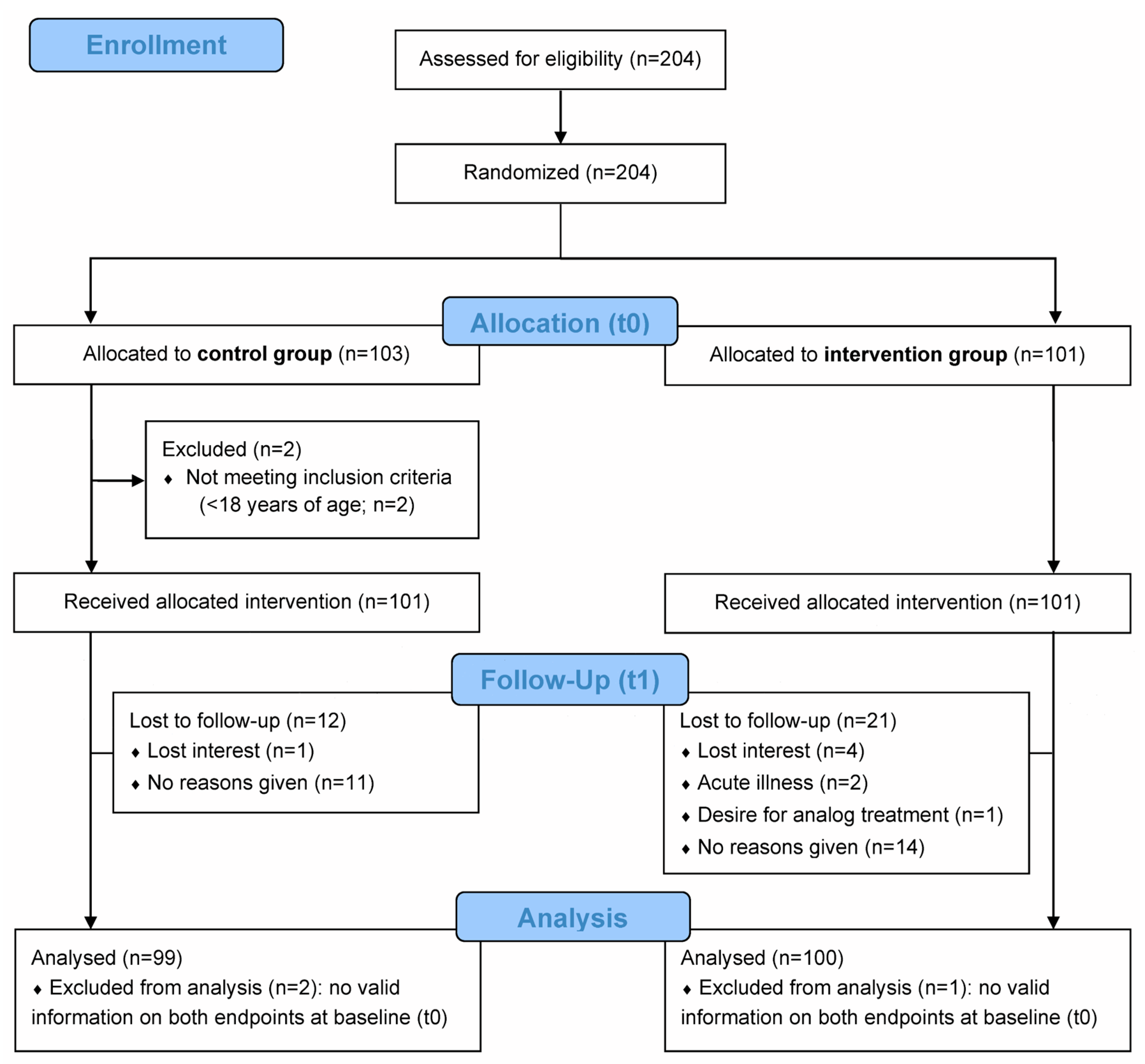
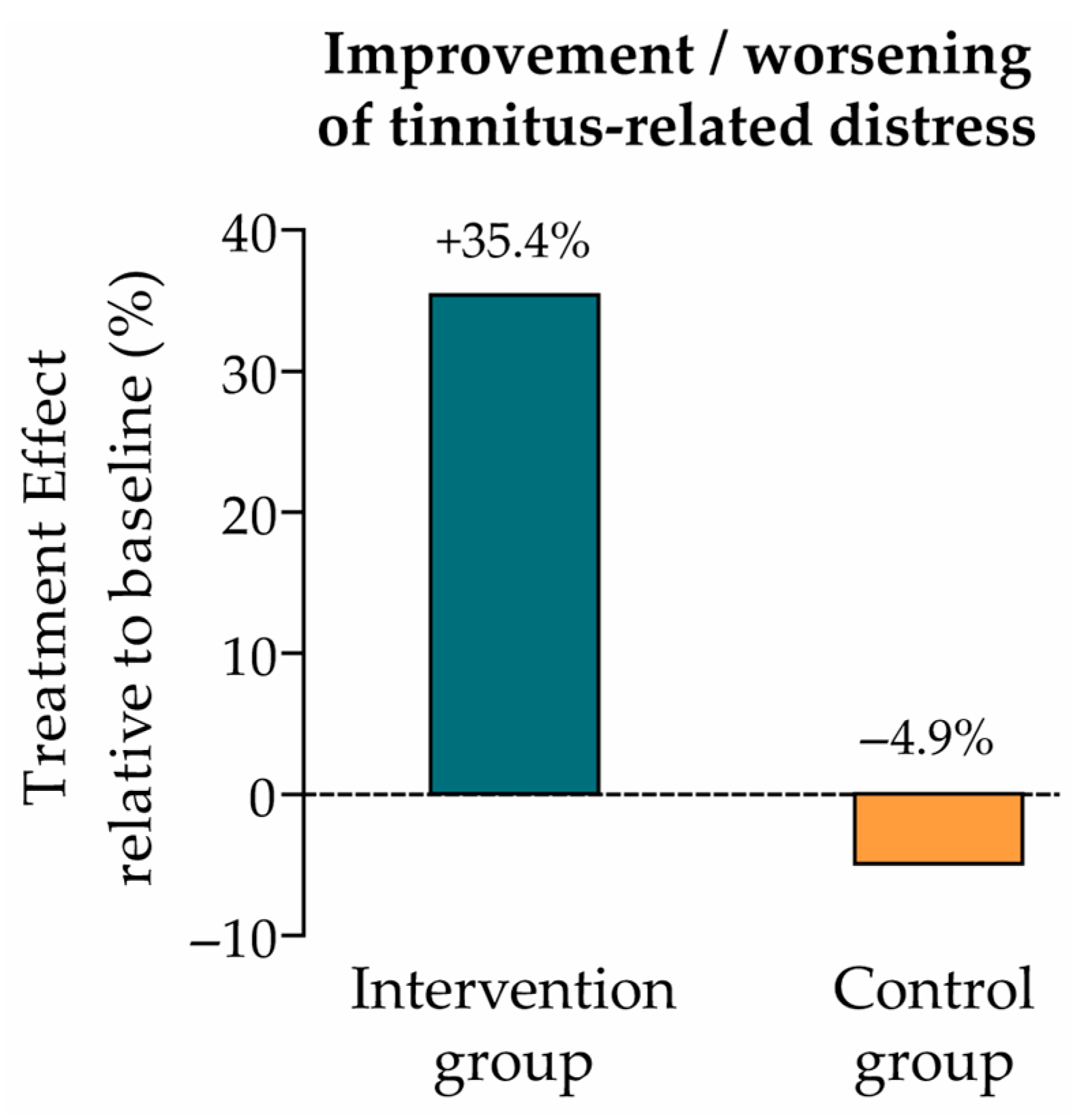
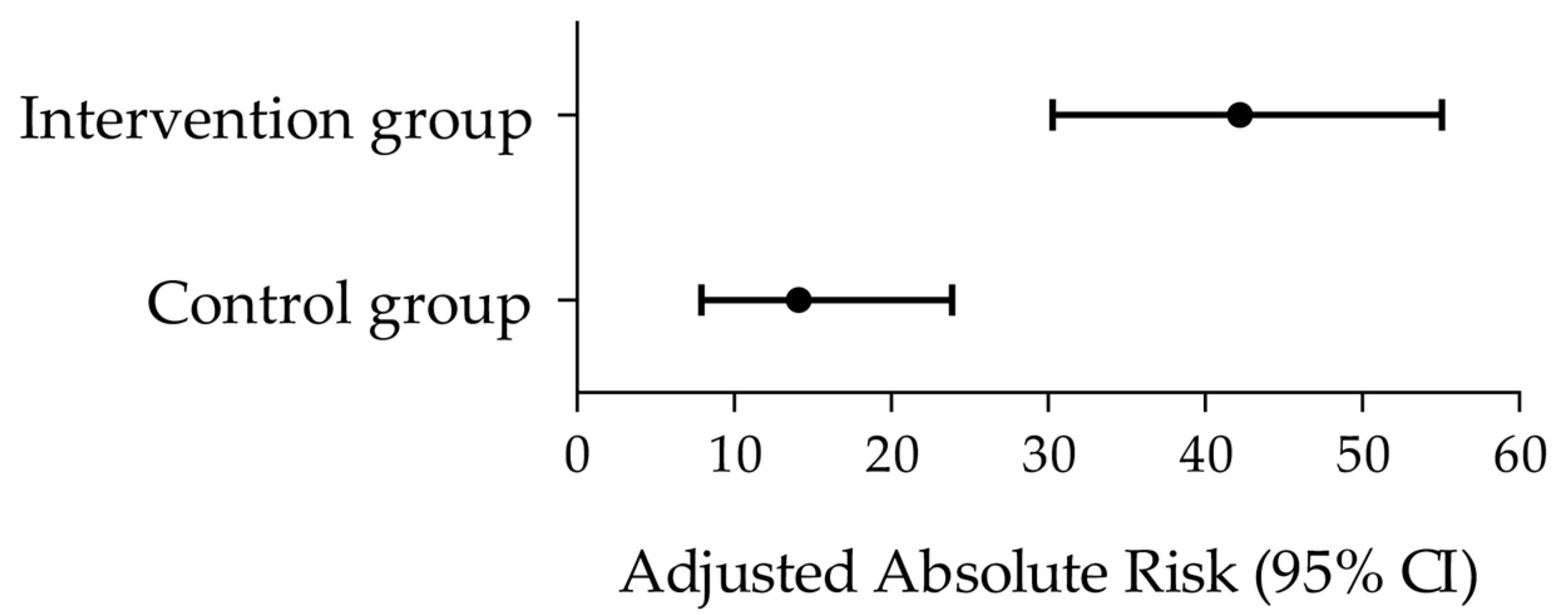
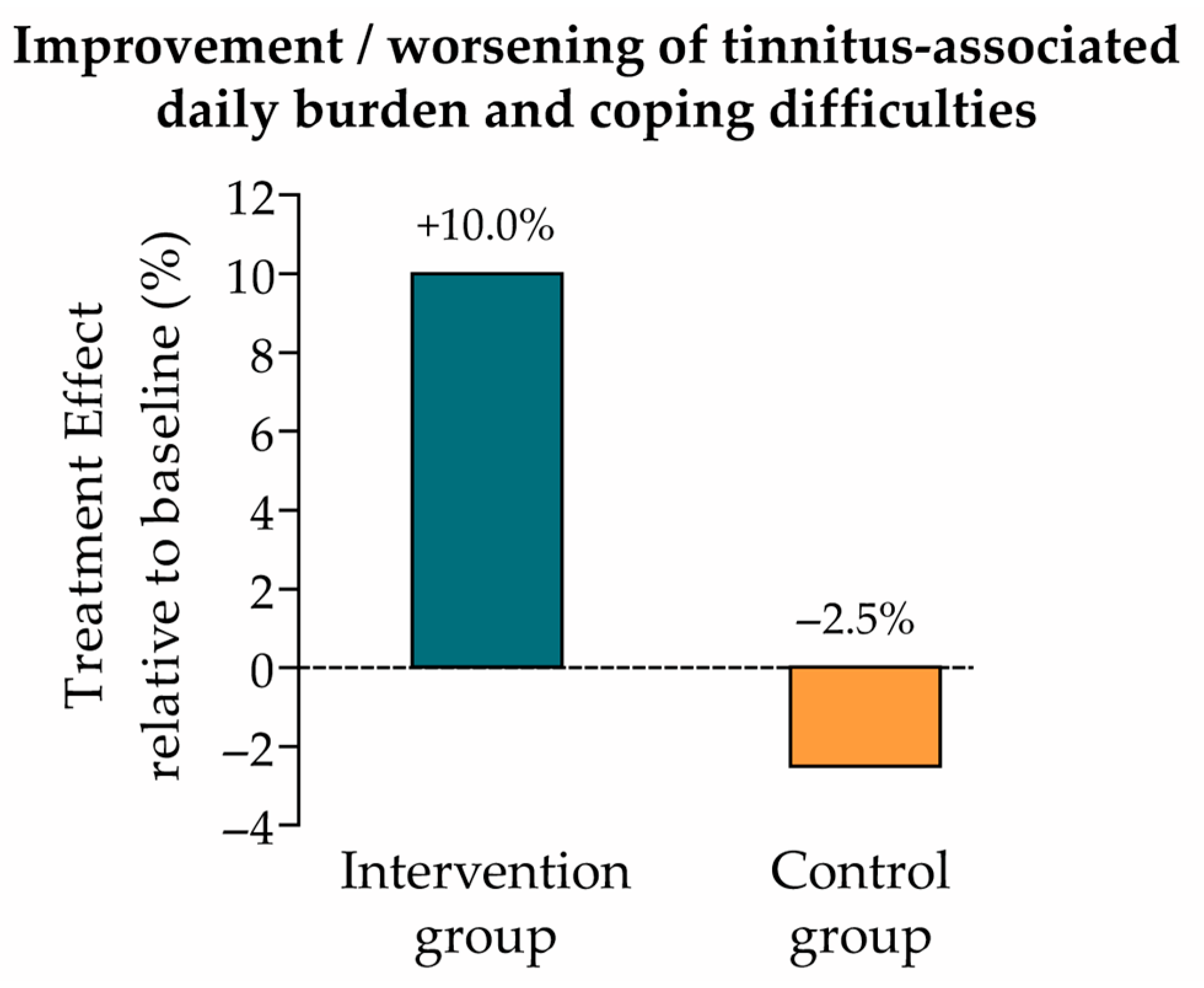
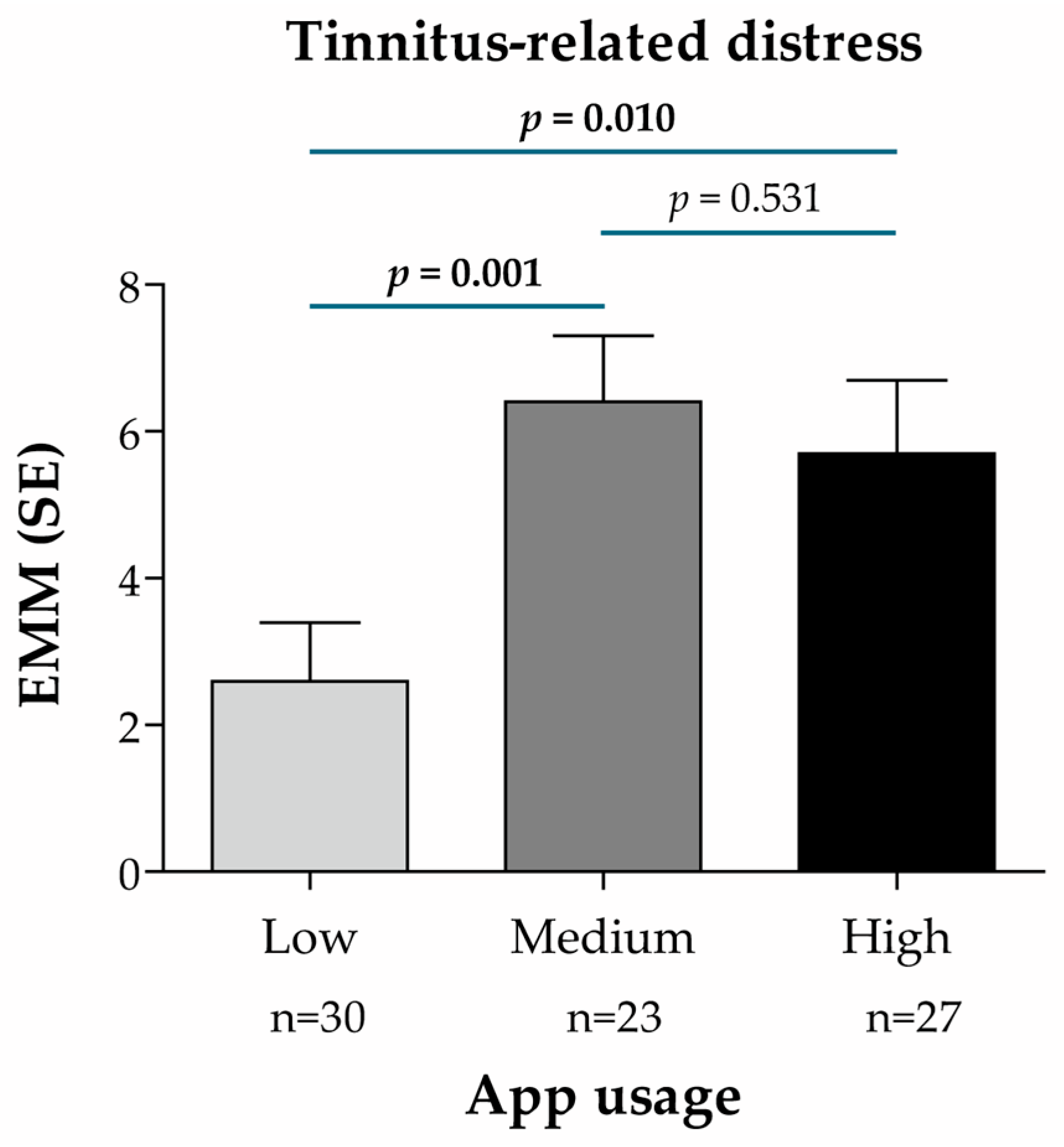
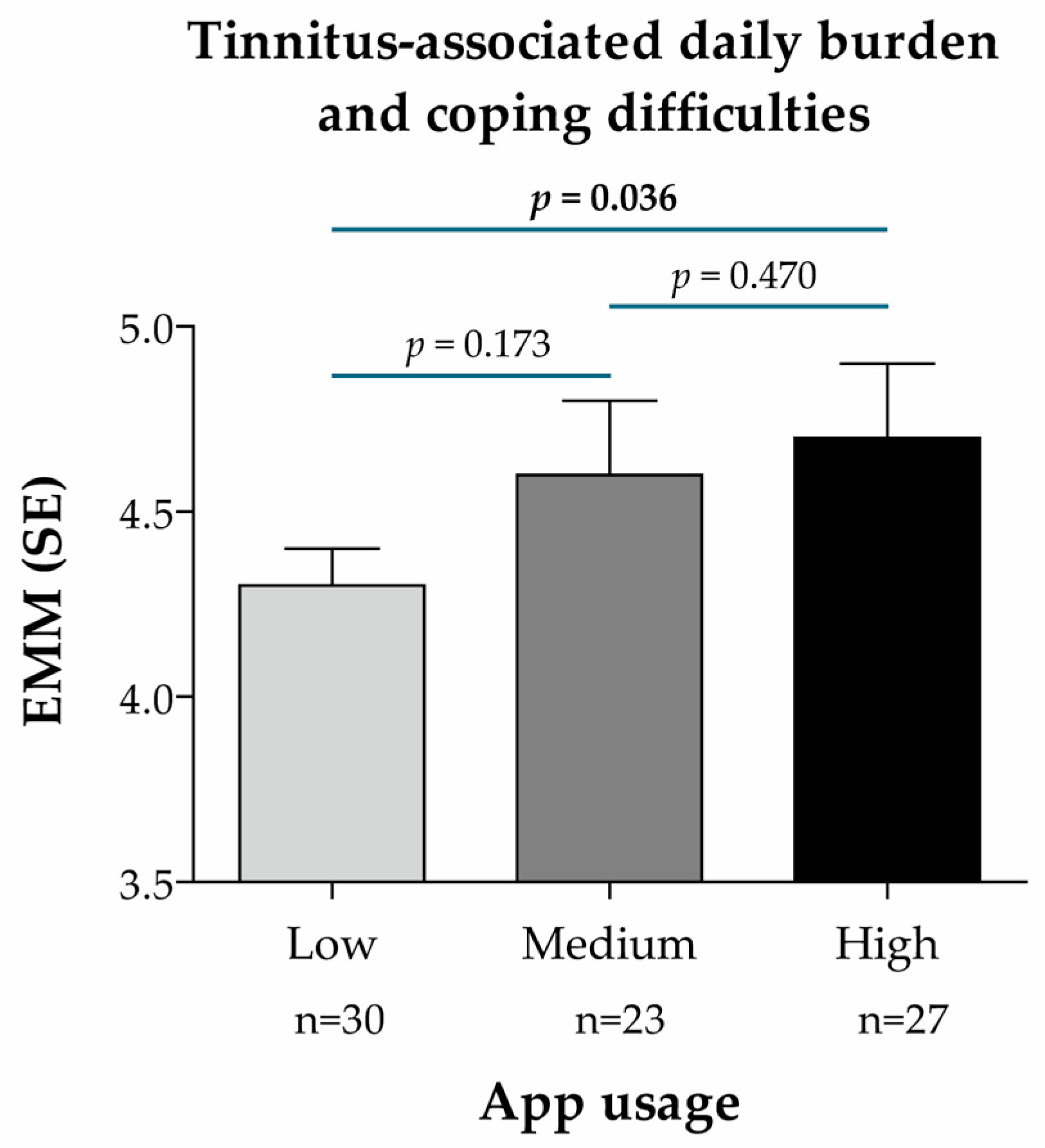

| Characteristics | Total Population (FAS) (N = 199) | Control Group (N = 99) | Intervention Group (N = 100) | p-Value |
|---|---|---|---|---|
| Age in years, mean (SD) | 52.3 (12.5) | 53.4 (12.0) | 51.2 (13.0) | 0.210 1 |
| Sex, N (%) | 0.178 2 | |||
| Male | 101 (50.8) | 45 (45.5) | 56 (56.0) | |
| Female | 98 (49.2) | 54 (54.5) | 44 (44.0) | |
| Mini-TQ-12 score, mean (SD) | 11.7 (5.6) | 12.3 (5.6) | 11.0 (5.4) | 0.104 1 |
| BVB-2000 score, mean (SD) | 4.0 (0.7) | 4.0 (0.8) | 4.0 (0.5) | 0.436 1 |
| Health literacy, N (%) | 0.585 2 | |||
| Inadequate | 26 (13.1) | 10 (0.1) | 16 (16.0) | |
| Problematic | 66 (33.2) | 36 (36.4) | 30 (30.0) | |
| Sufficient | 75 (37.7) | 37 (37.4) | 38 (38.0) | |
| Excellent | 32 (16.1) | 16 (16.2) | 16 (16.0) | |
| Tinnitus perception, N (%) | 0.977 2 | |||
| Tonal | 140 (70.4) | 69 (69.7) | 71 (71.0) | |
| Atonal | 43 (21.6) | 22 (22.2) | 21 (21.0) | |
| Tonal/Atonal | 16 (8.0) | 8 (8.1) | 8 (8.0) | |
| Hearing problems, N (%) | 0.944 2 | |||
| Yes | 100 (50.3) | 49 (49.5) | 51 (51.0) | |
| No | 99 (49.7) | 50 (50.5) | 49 (49.0) | |
| Use of hearing aids, N (%) | 1.000 2 | |||
| Yes | 19 (9.5) | 9 (9.1) | 10 (10.0) | |
| No | 180 (90.5) | 90 (90.9) | 90 (90.0) | |
| Sensitivity to noise, N (%) | 0.714 2 | |||
| Never | 16 (8.0) | 10 (10.1) | 6 (6.0) | |
| Rarely | 43 (21.6) | 23 (23.2) | 20 (20.0) | |
| Sometimes | 81 (40.7) | 37 (37.4) | 44 (44.0) | |
| Usually yes | 45 (22.6) | 23 (23.2) | 22 (22.0) | |
| Always | 14 (7.0) | 6 (6.1) | 8 (8.0) | |
| Number of tinnitus treatments, N (%) | 0.342 3 | |||
| 0 | 67 (33.7) | 34 (34.3) | 33 (33.0) | |
| 1 | 51 (25.6) | 24 (24.2) | 27 (27.0) | |
| 2–4 | 56 (28.1) | 24 (24.2) | 32 (32.0) | |
| ≥5 | 21 (10.6) | 14 (14.1) | 7 (7.0) | |
| Not specified | 4 (2.0) | 3 (3.0) | 1 (1.0) | |
| Tinnitus loudness, N (%) | 0.175 2 | |||
| Low | 48 (24.1) | 20 (20.2) | 28 (28.0) | |
| Medium | 90 (45.2) | 43 (43.4) | 47 (47.0) | |
| High | 61 (30.7) | 36 (36.4) | 25 (25.0) | |
| Tinnitus annoyance, N (%) | 0.143 3 | |||
| Strong | 73 (36.7) | 40 (40.4) | 33 (33.0) | |
| Moderate to low | 123 (61.8) | 56 (56.6) | 67 (67.0) | |
| None | 1 (0.5) | 1 (1.0) | 0 (0.0) | |
| Not specified | 2 (1.0) | 2 (2.0) | 0 (0.0) | |
| Language comprehension problems, N (%) | 0.503 3 | |||
| Very strong to strong | 45 (22.6) | 26 (26.3) | 19 (19.0) | |
| Moderate to low | 102 (51.3) | 49 (49.5) | 53 (53.0) | |
| None | 51 (25.6) | 24 (24.2) | 27 (27.0) | |
| Not specified | 1 (0.5) | 0 (0.0) | 1 (1.0) | |
| Medication intake against tinnitus, N (%) 4 | 1.000 2 | |||
| Yes | 25 (12.6) | 12 (12.1) | 13 (13.0) | |
| No | 174 (87.4) | 87 (87.9) | 87 (87.0) | |
| Other forms of therapy, N (%) 4 | 1.000 3 | |||
| Yes | 5 (2.5) | 2 (2.0) | 3 (3.0) | |
| No | 194 (97.5) | 97 (98.0) | 97 (97.0) |
| Treatment Group | Baseline t0 | Endline t1 | Change from t0 to t1 | Treatment Difference from t0 to t1 (Control vs. Intervention) | |
|---|---|---|---|---|---|
| FAS n Mean (SD) | FAS with t1 Data n Mean (SD) | FAS with t1 Data n Mean (SD) | FAS n Mean Difference (SE) EMM 1 (SE) | ||
| Control group (N = 99) | 99 | 89 | 89 | 99 | EMM [95% CI] 4.5 [3.3–5.8] p < 0.001 2 Hedges’ g [95% CI] 1.1 [0.8–1.4] |
| 12.3 | 12.0 | 12.7 | −0.6 (0.3) | ||
| (5.6) | (5.6) | (6.1) | −0.6 (0.5) | ||
| Intervention group (N = 100) | 100 | 80 | 80 | 100 | |
| 11.0 (5.4) | 11.1 (5.7) | 6.9 (5.1) | 2.9 (0.5) 3.9 (0.5) | ||
| Treatment Group | Responder 1 n (%) | RR [95% CI] | ARR 2 [95% CI] |
|---|---|---|---|
| Control group (N = 89) | 15 (16.9) | 2.6 [1.5–4.4] | 3.0 [1.6–5.5] |
| Intervention group (N = 80) | 35 (43.8) |
| Treatment Group | Baseline t0 | Endline t1 | Change from t0 to t1 | Treatment Difference from t0 to t1 (Control vs. Intervention) | |
|---|---|---|---|---|---|
| FAS n Mean (SD) | FAS with t1 Data n Mean (SD) | FAS with t1 Data n Mean (SD) | FAS n Mean Difference (SE) EMM 1 (SE) | ||
| Control group (N = 99) | 99 | 89 | 89 | 99 | EMM [95% CI] 0.5 [0.2–0.7] p < 0.001 2 Hedges’ g [95% CI] 0.5 [0.3–0.8] |
| 4.0 | 4.0 | 4.0 | 0.0 (0.1) | ||
| (0.8) | (0.8) | (0.7) | −0.1 (0.1) | ||
| Intervention group (N = 100) | 100 | 80 | 80 | 100 | |
| 4.0 (0.5) | 4.0 (0.6) | 4.5 (0.7) | 0.3 (0.1) 0.4 (0.1) | ||
| Treatment Group | t1 Measurement | Estimated Value at t1 | Treatment Difference at t1 (Control vs. Intervention) |
|---|---|---|---|
| FAS with t1 Data n Mean (SD) | FAS n Mean Difference (SE) EMM 1 (SE) | ||
| Control group (N = 99) | 89 | 99 | EMM [95% CI] 0.5 [0.3–0.7] p < 0.001 2 Hedges’ g [95% CI] 0.8 [0.5–1.0] |
| 4.0 | 4.0 (0.1) | ||
| (0.7) | 4.0 (0.1) | ||
| Intervention group (N = 100) | 80 | 100 | |
| 4.5 (0.7) | 4.5 (0.1) 4.5 (0.1) |
| Treatment Group | Responder 1 n (%) | RR [95% CI] | ARR 2 [95% CI] |
|---|---|---|---|
| Control group (N = 89) | 14 (15.7) | 2.8 [1.6–4.8] | 2.9 [1.7–4.9] |
| Intervention group (N = 80) | 35 (43.8) |
Disclaimer/Publisher’s Note: The statements, opinions and data contained in all publications are solely those of the individual author(s) and contributor(s) and not of MDPI and/or the editor(s). MDPI and/or the editor(s) disclaim responsibility for any injury to people or property resulting from any ideas, methods, instructions or products referred to in the content. |
© 2025 by the authors. Licensee MDPI, Basel, Switzerland. This article is an open access article distributed under the terms and conditions of the Creative Commons Attribution (CC BY) license (https://creativecommons.org/licenses/by/4.0/).
Share and Cite
Brueggemann, P.; Supp, G.G.; Schmidt, P.; Mazurek, B. Digital Tinnitus Counseling in Clinical Practice: A Multicenter Randomized Controlled Trial. Audiol. Res. 2025, 15, 173. https://doi.org/10.3390/audiolres15060173
Brueggemann P, Supp GG, Schmidt P, Mazurek B. Digital Tinnitus Counseling in Clinical Practice: A Multicenter Randomized Controlled Trial. Audiology Research. 2025; 15(6):173. https://doi.org/10.3390/audiolres15060173
Chicago/Turabian StyleBrueggemann, Petra, Gernot G. Supp, Paul Schmidt, and Birgit Mazurek. 2025. "Digital Tinnitus Counseling in Clinical Practice: A Multicenter Randomized Controlled Trial" Audiology Research 15, no. 6: 173. https://doi.org/10.3390/audiolres15060173
APA StyleBrueggemann, P., Supp, G. G., Schmidt, P., & Mazurek, B. (2025). Digital Tinnitus Counseling in Clinical Practice: A Multicenter Randomized Controlled Trial. Audiology Research, 15(6), 173. https://doi.org/10.3390/audiolres15060173

