
Technical Note

Technical Note of the Endonasal Endoscopic Transethmoidal Transcribriform Approach (EETTA) to the Anterior Cranial Fossa: An Update of the Surgical Technique, Indications, and Limitations


by
Edgar G. Ordóñez-Rubiano
1,2,
Antonia Cadavid-Cobo
2,3,
Alejandra Ramírez-Romero
2,4,
Ana S. Rincón-Díaz
2,3,
Luisa F. Figueredo
5,*,
Martín Pinzón
6,7,
Oscar F. Zorro
1,
Javier G. Patiño-Gómez
1,
Diego F. Gómez-Amarillo
2 and
Fernando Hakim
2
1
Department of Neurosurgery, Fundación Universitaria de Ciencias de la Salud—Hospital de San José, Bogotá 110221, Colombia
2
Department of Neurosurgery, Hospital Universitario Fundación Santa Fe de Bogotá, Bogotá 110111, Colombia
3
Faculty of Medicine, Universidad de Los Andes, Bogotá 111711, Colombia
4
Faculty of Medicine, Universidad de La Sabana, Chía 250001, Colombia
5
Department of Neurology, Larkin Community Hospital, Palm Springs, Hialeah, FL 33012, USA
6
Department of Otorhinolaryngology, Fundación Universitaria de Ciencias de la Salud—Hospital de San José, Bogotá 111411, Colombia
7
Department of Otorhinolaryngology, Fundación Santa Fe de Bogotá, Bogotá 110111, Colombia
*
Author to whom correspondence should be addressed.
Surg. Tech. Dev. 2026, 15(1), 9; https://doi.org/10.3390/std15010009
Submission received: 1 December 2025 / Revised: 23 January 2026 / Accepted: 16 February 2026 / Published: 24 February 2026

Highlights

What is the main finding?
  • The endonasal endoscopic transethmoidal transcribriform approach (EETTA) is a minimally invasive alternative for treating midline anterior cranial fossa (ACF) tumors, offering advantages such as no brain retraction, early vascular control, reduced blood loss, improved visualization, faster recovery times, and a preserved cosmetic appearance compared to traditional transcranial approaches.
What are the implication of the main findings?
  • EETTA can be offered as a surgical option for appropriately selected patients with small-to-moderate-sized midline tumors, potentially avoiding more invasive craniofacial approaches and their associated higher morbidity (35%) and mortality (5%) rates.
  • The learning curve and specialized training are critical factors for success with EETTA, emphasizing the need for patients with these tumors to be referred to tertiary care centers with experienced multidisciplinary teams to achieve optimal outcomes and minimize complications.

Abstract

Background: In the last few decades, endoscopic endonasal approaches (EEA) have revolutionized surgical access to the sellar region and anterior cranial fossa (ACF). One technique, the endoscopic endonasal transethmoidal transcribriform approach (EETTA), offers distinct advantages over traditional open transcranial approaches, such as reduced morbidity, shorter hospital stays, faster recovery, and a reduced risk of neurological deficit due to less brain tissue manipulation. Methods: We present a comprehensive step-by-step description of the EETTA surgical technique, illustrated through four representative cases of varying pathologies treated at our institution. The anatomical boundaries—including the lamina papyracea, anterior and posterior ethmoidal arteries, and frontal sinus—and the surgical corridor are detailed alongside indications, technical nuances, limitations, and operative recommendations. Results: Four cases demonstrate the versatility of EETTA across diverse pathologies: two olfactory groove meningiomas (including one WHO grade 2 and one recurrent case with invasive skull base involvement), an esthesioneuroblastoma (ENB), and a recurrent inverted papilloma requiring combined transcranial and endoscopic resection. Near-total or gross-total resection was achieved in all cases. The indications, nuances, and limitations of this approach are discussed, along with tips for successful surgery. Conclusions: The EETTA represents an important minimally invasive option for ACF tumors extending into the nasal cavity, with midline involvement limited medially by the lamina papyracea. Success requires a thorough understanding of skull base anatomy, meticulous multilayer reconstruction techniques, and appropriate patient selection, based on the tumor location and lateral extension. While cerebrospinal fluid (CSF) leak remains the primary concern, contemporary techniques have substantially reduced this complication rate.

1. Introduction

The anterior cranial fossa (ACF) is susceptible to various neoplastic pathologies, such as meningiomas [1], adenocarcinomas [2], and olfactory groove neuroblastomas [3,4]. The extent of resection, as well as the surgical technique utilized, depends on the lesion’s location, extent, and involvement of neurovascular structures, as well as the baseline preoperative functionality of these structures [5,6]. A good example is the olfactory groove meningioma, for which open approaches, such as the transbasal bifrontal and pterional, have been the preferred techniques [7,8,9]. However, these techniques sometimes require a larger area to expose the tumor, which can lead to greater brain retraction or manipulation [8]. Furthermore, complications such as hematoma, cerebral edema, hydrocephalus [8], venous infarction, cerebrospinal fluid (CSF) leakage, and bone flap infection remain significant concerns [10], with a 30% morbidity rate and a mortality rate of up to 5% [7,11]. The endoscopic endonasal transethmoidal transcribriform approach (EETTA) is a cost-effective [5,12], less invasive alternative for achieving direct [13], early access to the tumor and its blood supply, and for attaining gross-total resection of the lesion [14], especially in those with endonasal invasion [15,16,17]. However, EETTA has several limitations, including a greater risk of CSF leakage [15,16,17], compromise of the olfactory system [1], and limited access for large and giant tumors or those with lateral extension [18]. This opens a discussion of when endoscopic endonasal approach (EEA) is a better option compared to classic open transcranial approaches, and more specifically, techniques such as EETTA. Our series of illustrative cases show where EETTA was the alternative approach for tumor resection, describing the surgical technique, outcomes, and nuances, and discussing its current uses and alternatives.

2. Materials and Methods

Following CARE Guidelines for case series, we included four representative cases of varying neoplastic pathologies operated at an advanced neurological care center in Colombia.
The descriptive clinical and operative data were retrospectively collected from medical records, including initial presentation, visual and endocrine outcomes, and perioperative complications.
This study was reviewed and approved by the board and the ethics committee, in accordance with the principles of the Declaration of Helsinki. Written informed consent was obtained from all patients featured in this report.

Surgical Technique

Under general anesthesia, in accordance with institutional protocols, prophylactic antibiotics are administered, and urinary and arterial line catheters are placed. A lumbar drain is placed to facilitate the closure of the skull base dura mater. The head is fixed in a Mayfield holder, rotated slightly right, and extended ~30° to optimize ACF exposure [2]. Neuronavigation is calibrated and the lateral thigh is prepared for autologous fat and fascia lata harvest.
Using a rigid endoscope, the mucosa near the sphenopalatine artery, the anterior/posterior ethmoidal arteries, and the middle turbinates are infiltrated with 1% lidocaine and epinephrine.
The anatomical limits of the EETTA include the posterior wall of the frontal sinuses (anteriorly), lamina papyracea (laterally) (Figure 1), and anterior/posterior ethmoidal arteries (posteriorly). In most cases, complete ethmoidectomy and Draft II frontal sinusotomy are performed. Given the potential compromise of olfaction, this approach is reserved for select pathologies such as ENBs, sinonasal carcinomas, and some olfactory groove meningiomas.
The first part of the procedure begins with harvesting a large vascularized nasoseptal flap, temporarily hidden in the nasopharynx. A superior septectomy enables bi-nostril access to the ventral skull base. Following identification of the uncinate process, uncinectomy is initiated at its anterior attachment, with the incision oriented parallel to the lamina papyracea, to avoid orbital damage, and extended inferiorly and laterally toward the maxillary ostium. Bulla resection and infundibulotomy are performed, revealing the ethmoidal bullae and frontal recess. Ethmoidectomy proceeds through the bulla to expose the fovea ethmoidalis, where the anterior ethmoidal artery is coagulated and divided. The mucosa and olfactory epithelium over the cribriform plate are cauterized and removed, followed by bilateral cribriform plate resection to the lamina papyracea margins. The duramater over the cribriform plate and fovea ethmoidalis is excised to expose the rectus gyri. Tumor debulking is performed via a standard micro-neurosurgical technique. Although olfactory nerves may occasionally be preserved, functional olfaction is unlikely after epithelial removal. Tumor resection is completed. Hemostasis is achieved using a FLOSEAL® (Baxter) hemostatic matrix. Reconstruction follows a multi-layered technique with an acellular dermal allograft, autologous fascia lata graft, and a vascularized pedicled nasoseptal flap. Large cribriform plate defects and associated dead space beneath the brain may be packed with autologous fat graft; however, Gelfoam® (Pfizer) sponge is preferred to facilitate postoperative imaging whenever possible. The nasoseptal flap is finally positioned over the surgical bed. Further hemostasis is completed. Afterward, the patient is transferred to the neurointensive care unit for monitoring, and the lumbar drain is removed on postoperative day 3.

3. Results

3.1. Case 1: Meningioma

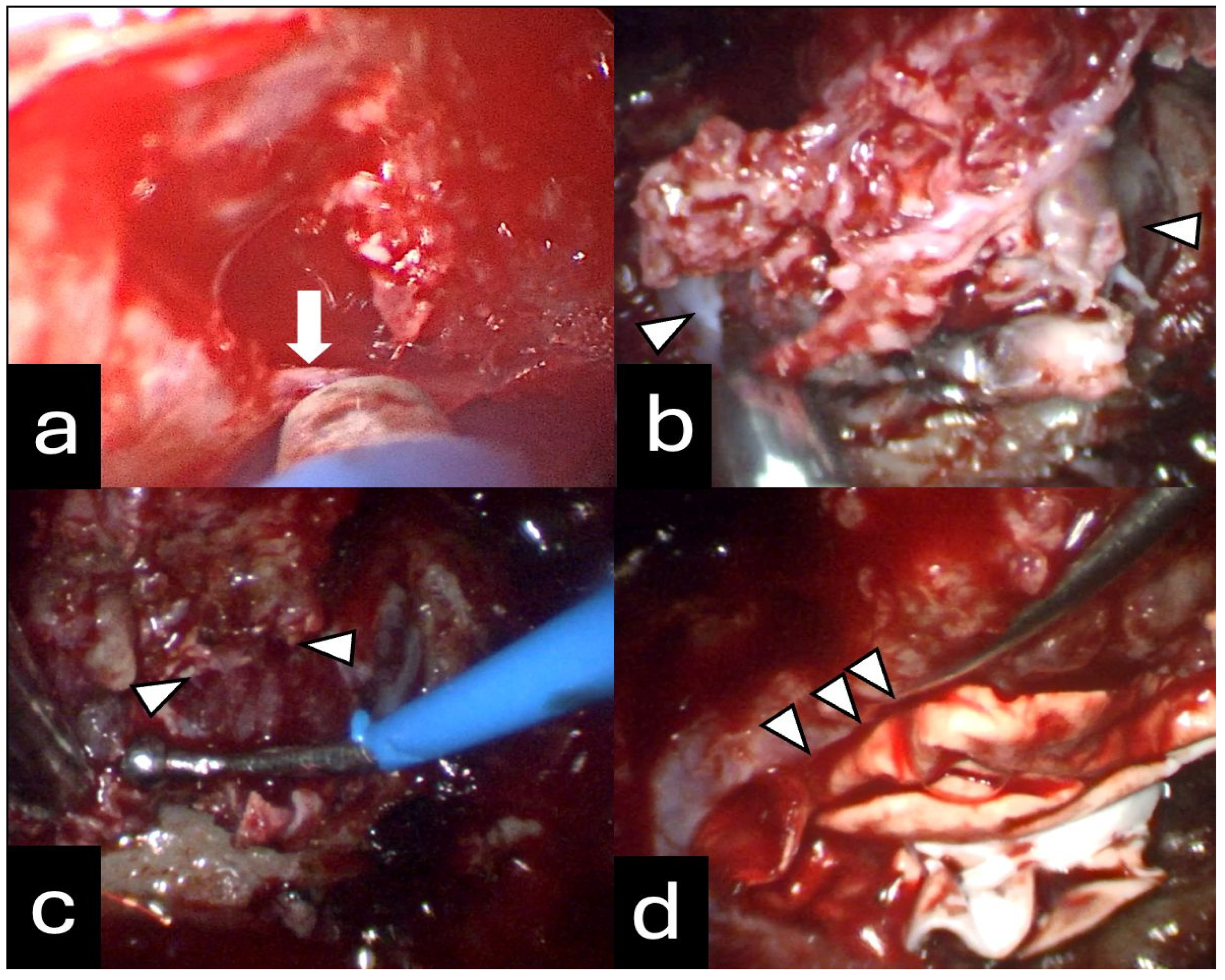
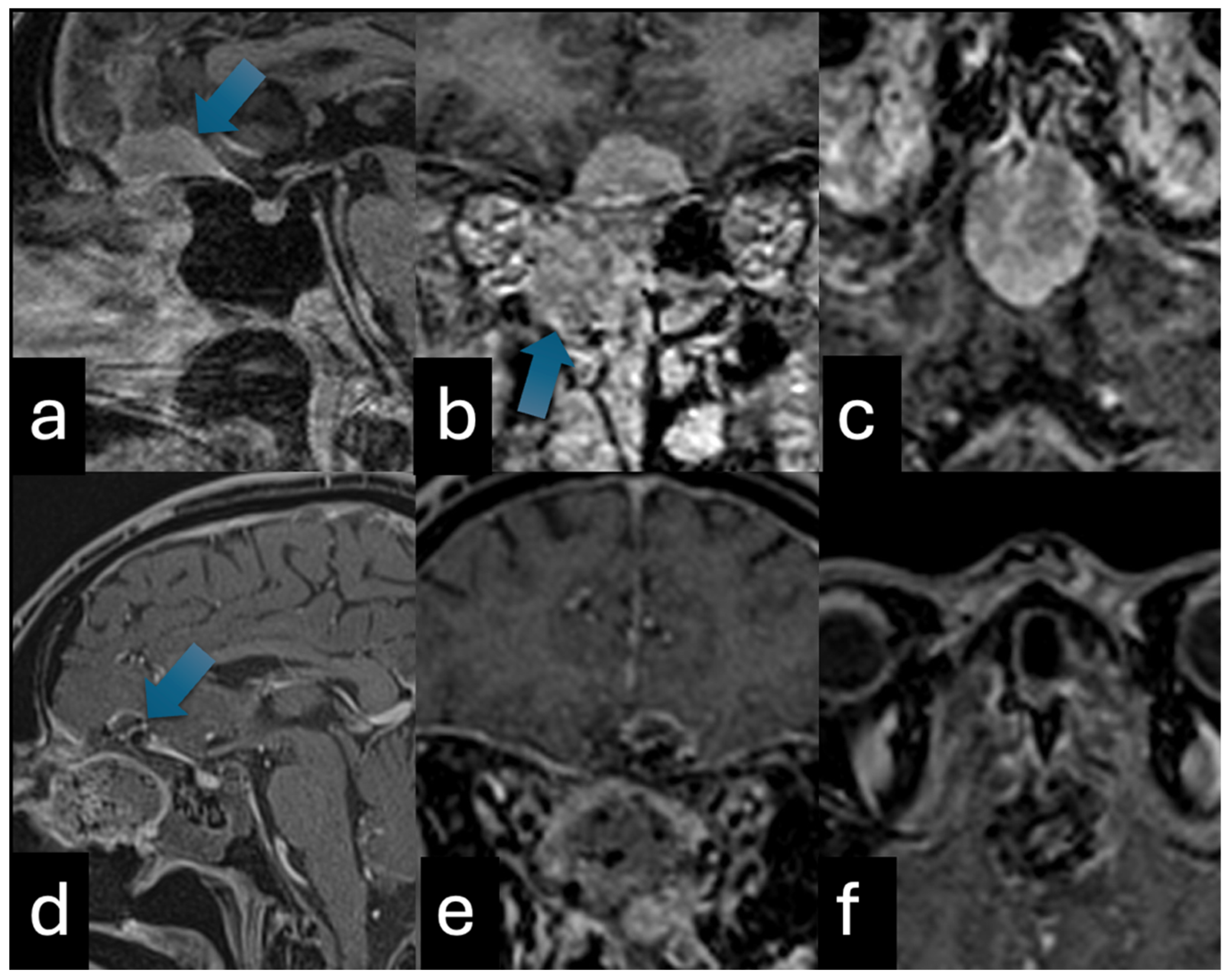
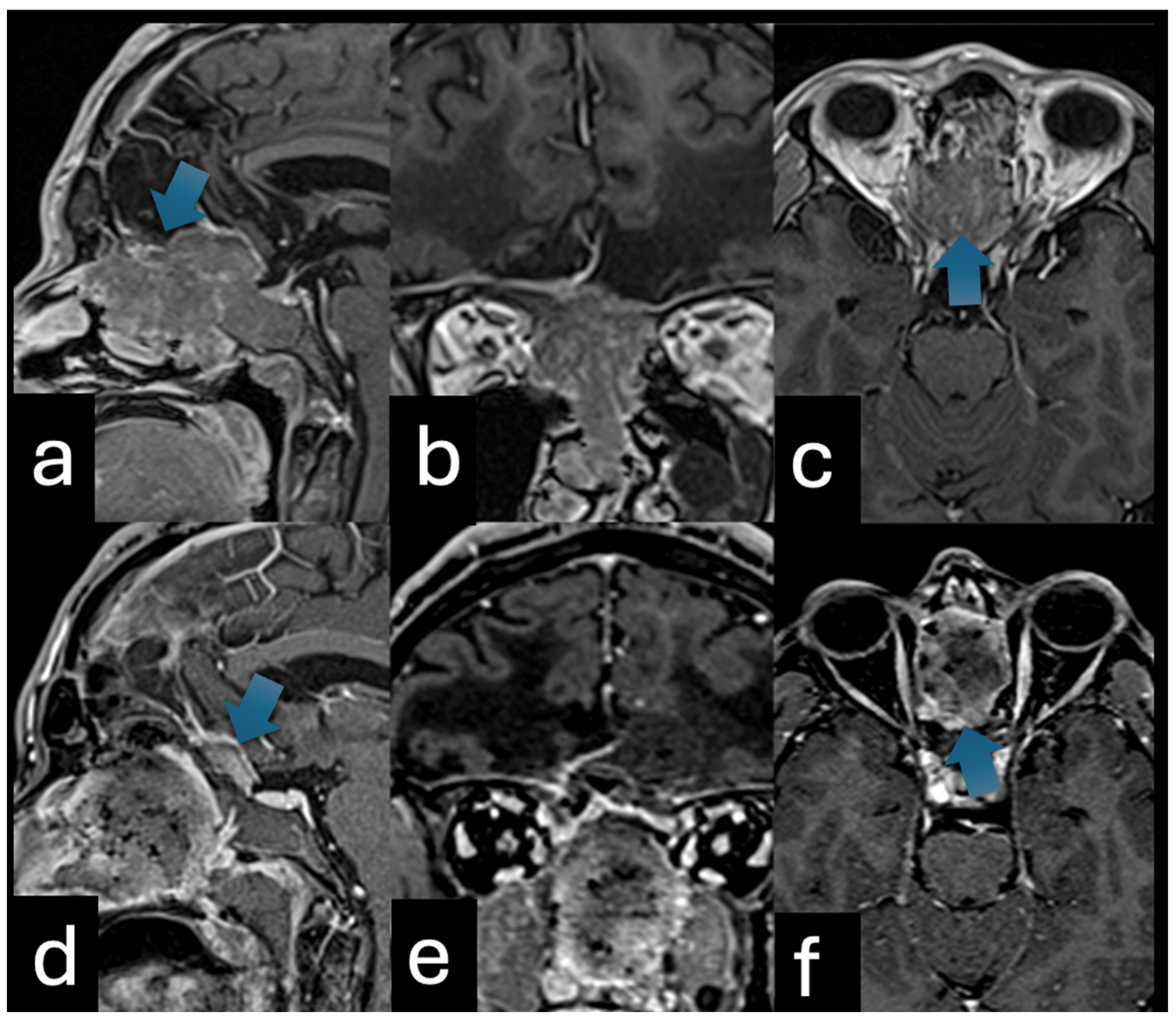
A 72-year-old man presented with bilateral hyposmia. The patient had no remarkable medical history. Aside from the hyposmia, no other deficits were noted during his physical examination. The magnetic resonance imaging (MRI) was consistent with a meningioma of the olfactory groove, with extension into the nasal cavity through the cribiform plate (Figure 2). The decision to perform an EETTA was based on the tumor’s endonasal extension and the prior onset of olfactory compromise. Regarding specific surgical features for this case, it is important to note that the tumor borders are identified endonasally (Figure 3), and the normal dura is then incised. Afterward, a brain cuff is identified, and the tumor is dissected free from the falx cerebri. A satisfactory near-total resection (NTR) (>90%) was achieved. The en-plaque component of the planum sphenoidale was intentionally not resected, due to the increased risk of CSF leakage. The postoperative period was uneventful, and the patient was discharged on postoperative day 4. The histopathology was consistent with a WHO grade 2 meningioma [19]. Consequently, further complementary radiotherapy was performed.

3.2. Case 2: Recurrent Meningioma

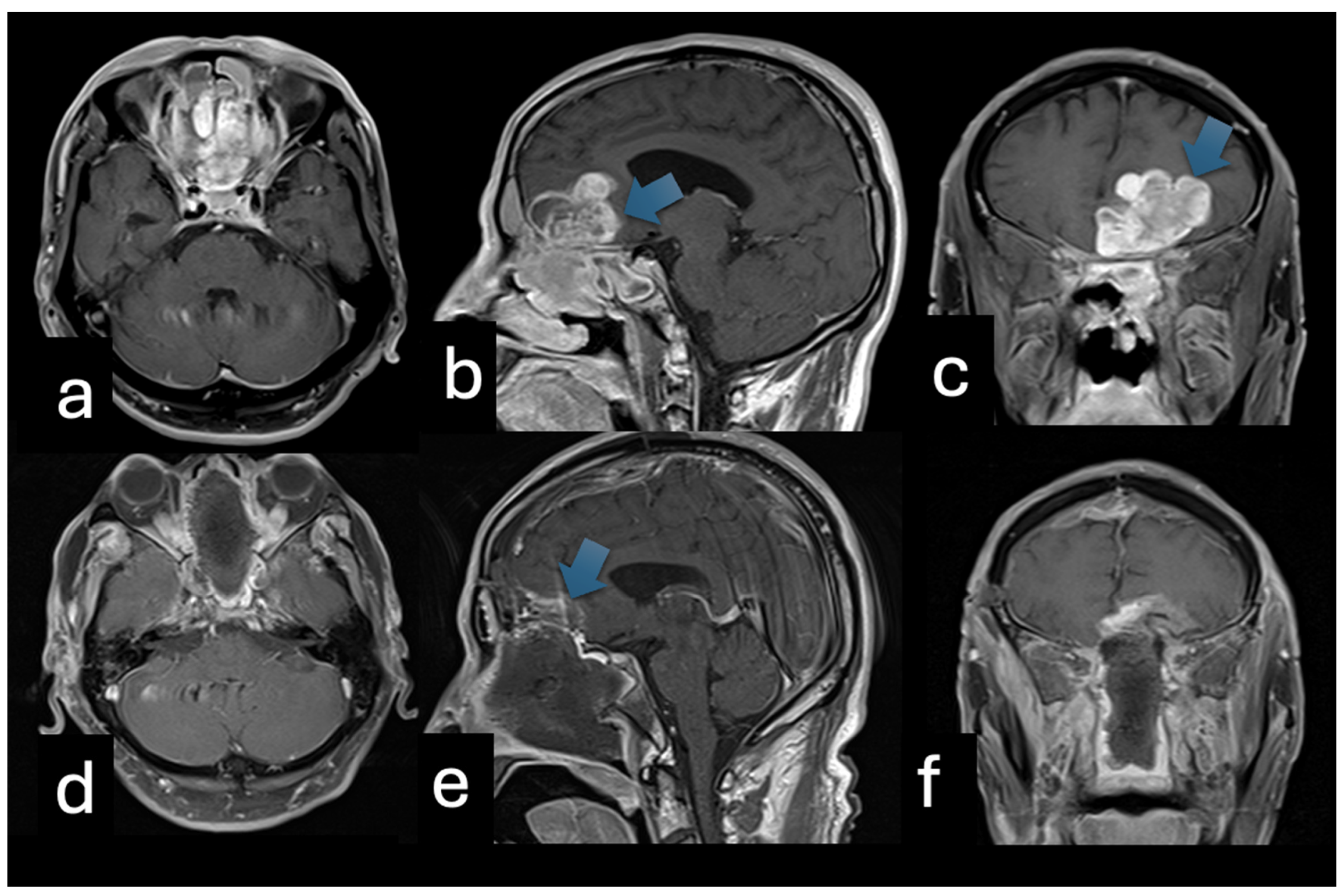
A 27-year-old man presented with severe headaches 2 years after a transcranial resection of a large olfactory groove meningioma. The patient had no other significant medical history. On his physical examination, the patient was anosmic. The follow-up MRI demonstrated a large recurrence of the tumor with invasive infiltrative compromise of the anterior cranial base and extension into the nasal cavity through the lamina papyracea (Figure 4). The decision-making board decided to perform EETTA for a maximal safe resection and decompression, given the large extension into the nasal cavity. Intraoperatively, the intracranial component of the tumor compromising the planum sphenoidale demonstrated an exaggerated hyperostosis, with lateral extension into the orbital roof bilaterally. This component was intentionally left. The postoperative MRI showed a significant decompression, with a satisfactory resection of the most anterior and inferior aspect of the recurrence. The postoperative period was uneventful, and the patient underwent complementary radiotherapy for the thin remnant.
Intraoperative imaging of endonasal resection of an olfactory groove meningioma. (a) The right anterior ethmoidal artery is pointed at with an arrow before coagulation. (b) Endonasal view of the endonasal component of the tumor. The normal dura mater is exposed bilaterally from below (arrowheads). (c) A brain cuff is shown (arrowheads), and the tumor dissection is demonstrated. (d) An inlay positioning of a dura patch is observed (arrows denoting the inlay placement).

3.3. Case 3: Inverted Papilloma

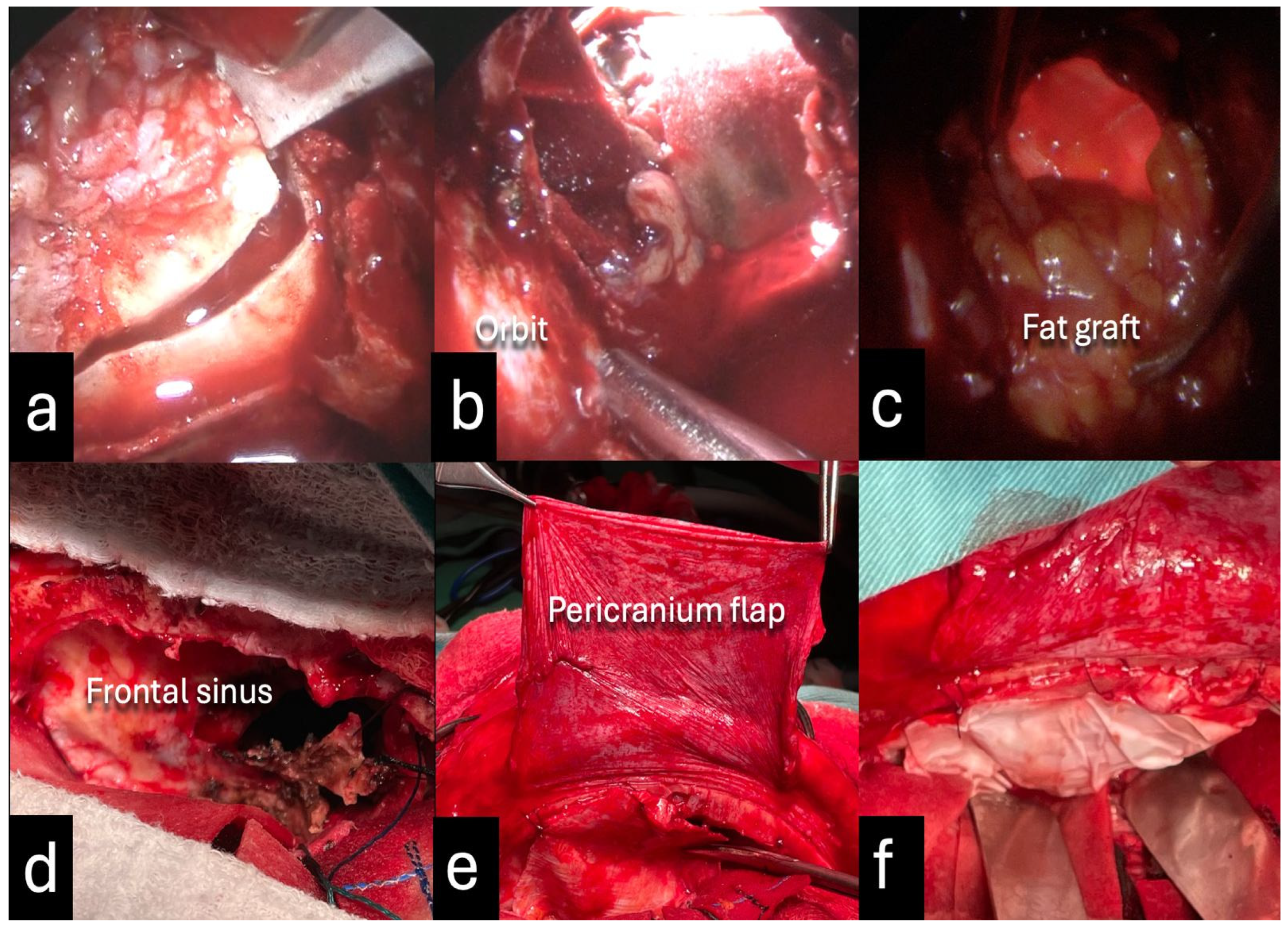
A 65-year-old man presented with progressive bilateral proptosis, right amaurosis, and anosmia. He had undergone resection of an infiltrative endonasal tumor at a different institution, which was consistent with an inverted papilloma. The patient was referred for complementary radiotherapy but was unable to complete it due to multiple access restrictions imposed by his health insurance company. A follow-up MRI showed a giant tumor compromising the endonasal cavity and the ACF (Figure 5). The patient presented to the emergency department, and it was decided to offer an emergent rescue resection for maximal safe decompression and further complementary radiation. A combined one-stage transcranial trans-basal approach and EETTA was performed, given the lateral intracranial extension, which limited access from below. A satisfactory NTR was performed. Intraoperatively, no clean margins were achieved due to bilateral infiltration into the lamina papyracea, despite successful decompression both endoscopically and intracranially (Figure 6), with improvement in his symptoms.

3.4. Case 4: Esthesioneuroblastoma

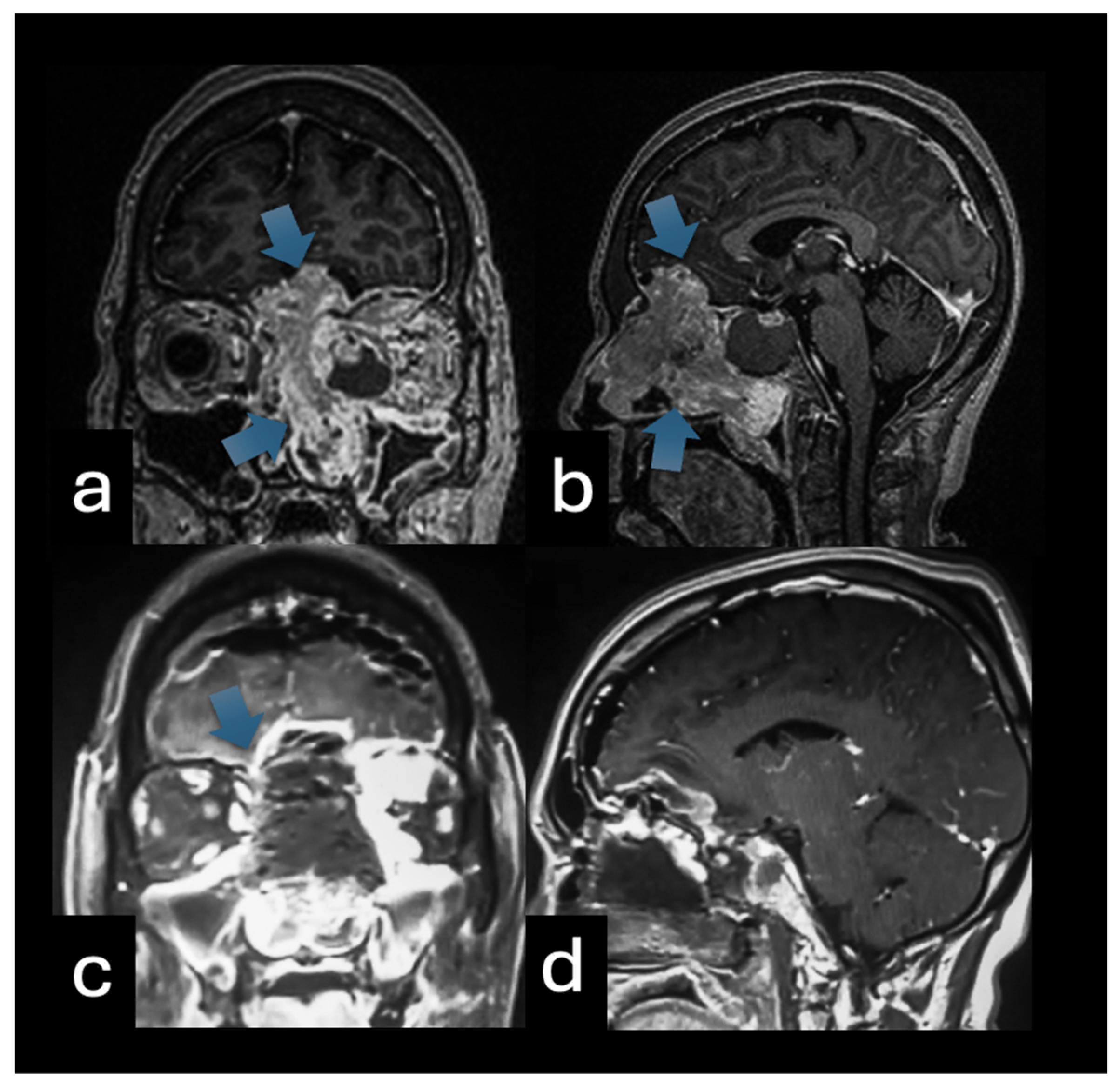
A 70-year-old woman presented with left visual loss and exophthalmos. An endonasal biopsy was done in another institution, which was consistent with an ENB. The patient was offered an endonasal resection with palliative intention, given the advanced large invasion into the cranial base (Figure 7). An EETTA was performed, allowing maximal safe resection and decompression of the left orbit and the endonasal cavity. The intracranial component was also resected, and closure was achieved with a large multilayer reconstruction. In this case, a multilayered reconstruction was performed; however, given the compromised nasal mucosa, a nasoseptal flap could not be harvested. The patient presented with a CSF leakage on her postoperative day 28, requiring a reintervention. Interestingly, the leakage was found at a different location, the middle clivus, which was also covered with fascia lata and fat graft. No further complications were noted (Table 1).

4. Discussion

The EETTA is an efficient and minimally invasive alternative for treating tumors in the midline of the ACF, especially those with extension into the nasal cavity [20]. We demonstrate the versatility of this approach in managing a variety of pathologies. The trans-ethmoidal corridor lies lateral to the middle turbinate and provides access to the fovea ethmoidalis, the orbital apex, and the lateral sphenoidal sinus. The trans-ethmoid approach is also helpful in exposing the maxillary sinus if needed [21]. The anatomic limits of the EETTA are the posterior wall of the frontal sinuses anteriorly, the medial orbits (lamina papyracea) laterally, and the most remarkable landmarks: the anterior and posterior ethmoidal arteries, posteriorly [11].

4.1. Indications and Advantages

EETTA is a suitable approach for small tumors [20,22] (less than 30–40 mm) [1,2] that are medial to the optic nerves [2,18] with or without minimal lateral extension beyond the supraclinoid internal carotid arteries. It is also suitable for patients with recurrent meningiomas at the cribriform plate extending into the paranasal sinuses [7], as was the case in one of our illustrative cases. Usually, the EETTA is indicated for benign tumors in the ACF, such as meningiomas, osteomas, and papillomas [11]. This approach is used to repair encephaloceles of the cribriform plate and fovea ethmoidalis [11]. The EETTA may be a good strategy if the basal dural attachment is between the medial walls of the orbit [7].
In addition, the indications for ENB resection include tumor burden that can be removed without injury to neurovascular structures, an enlarging tumor, and a tumor requiring a diagnosis. Furthermore, current data indicate that EETTA and stereotactic radiosurgery/fractionated radiotherapy may be as effective as the craniofacial approach for this type of tumor [11].
The advantages of this approach include the absence of brain retraction; straightforward access to the lesion and to the involved bone and dura, with an early management of the vascular supply (ethmoidal arteries) [11,23]; decreasing blood loss [24]; and improved visualization of the cranial midline and tumor margins [2,10,15,16,18,25,26]. Furthermore, it avoids scarring while preserving the cosmetic appearance [11,15,18,23], and has been shown to reduce surgical times and length of hospital stays [12,13,26] in specific scenarios [3]. Similarly, EETTA has been shown to reduce postoperative brain injury related to retraction during transcranial approaches, leading to faster edema resolution and reduced postoperative encephalomalacia [25].

4.2. Limitations and Disadvantages of the EETTA

Like other approaches, EETTA has multiple limitations and specific indications determined primarily by bone, vascular, and orbital structures. The EEA for resection of tumors infiltrating the sinus dural margin and optic apparatus is challenging and may only be offered at tertiary care centers. In addition, EEAs are limited in treating tumors that are too lateralized in the sphenoid wing or beyond the mid-pupillary line, as well as tumors located high along the posterior table of the frontal sinus. Combining endoscopic techniques with traditional open techniques can help us to overcome some of these limitations [27]. The National Comprehensive Cancer Network Clinical Practice Guidelines in Oncology for head and neck cancers recommend systemic therapy as part of the overall treatment plan for some sinonasal malignancies, but are otherwise unclear about treatment selection. Radiotherapy treatment may reduce the risk of tumor recurrence, improve survival [24], and potentially avoid the need for enucleation; however, radiation treatment can result in significant patient morbidity, and data guiding radiotherapy management are limited. Given these considerations, patients presenting with these unique tumors may require enrollment in clinical trials and/or referral to major medical centers specializing in this disease [18]. Specialized instrumentation and anatomical knowledge may also be necessary for these approaches, which a multidisciplinary trained team can better tackle. Reconstruction to prevent CSF leak is critical and requires a team approach with experience in all components of the reconstructive ladder. An en bloc resection could aid in the dissemination of cancer cells and ensure cleaner margins; however, the limited nasal corridor, which hinders visualization of critical neurovascular structures (e.g., the frontal lobe and anterior cerebral arteries), makes this approach challenging. There has not yet been a study suggesting that en bloc resection reduces recurrence rates compared with piecemeal resection for ENB.
One of the limitations of the EETTA is the access to lesions with extensive lateral involvement through the ACF or above the orbital roof behind the orbital midline, which extend laterally towards the frontal sinus [15], which is not technically possible to resect [28]. Therefore, extensive lesions or a carcinoma that requires negative margins [4] cannot be completely resected by EETTA, since tumor residues could remain and recurrence could occur [7]. In select cases, a piecemeal gross-total resection with negative margins can be obtained, followed by fractionated radiotherapy or radiosurgery [15].
The current standard of care to achieve bloc resection with negative margins, in some cases, involves a craniofacial approach [11]. However, this technique is associated with some risks (5% mortality and 35% morbidity) [11]. There is no data that clearly shows that piecemeal removal with a negative margin is less effective than en bloc resection [11]. Similarly, only 70% of patients undergoing extensive craniofacial surgery achieve negative margins, suggesting that they may be a subgroup for whom negative margins are unattainable, regardless of the procedure’s aggressiveness [7]. Complete removal of large tumors that extend up behind the frontal sinus or attach beyond the lamina papyracea is challenging [11]. The “cortical cuff” reduces the chance of a vascular injury by shielding the anterior cerebral vessels from the non-eloquent brain tissue; [4] it separates the tumor and vasculature [7,25]. The lack of a “cortical cuff” may affect the extent of resection or increase the risk of neurovascular injury [1].
Another disadvantage of the EETTA is that, due to extensive manipulation of the skull base, multiple defects may occur, leading to CSF leakage [1,2,29]. CSF leaks may prolong hospitalization and carry a risk of meningitis or a central nervous system infection [15], which are arguments often used against EEA. Nevertheless, no intracranial infections were observed in our series, supporting the validity and safety of this approach. Postoperative sinusitis is common, but typically manageable with nasal irrigation, antibiotics, and close rhinologic follow-up. Management depends on leak location, severity (flow volume) [29], and etiology [30]. Very anterior leaks just behind the frontal recess or in the back wall of the frontal sinus are difficult to address endonasally and may require craniotomy [11]. However, when there is a small-volume leak and a meticulous multilayer closure has been performed, it can often be managed initially with lumbar drainage before considering surgical reintervention [26]. Therefore, repairing or reconstructing these defects can be a significant challenge during closure [1,17].

4.3. Complications

CSF leak risk is the most significant EEA complication [31]. While early series reported leak rates of 20–30% [21,32], contemporary experience has reduced this to approximately 4–10% [1,33,34] or lower [31] with increasing surgical expertise [1]. In a study of 10 patients who underwent multilayered repair, the CSF leakage rate was 0%, and the authors also observed that over the previous 8 years, only one leak occurred in 44 patients [1].
At our institution, the management of pituitary adenomas with sellar and suprasellar extension, many of which required advanced reconstructive strategies, including nasoseptal flap harvesting, fascia lata and fat grafting [13,29], dural patch placement, and lumbar drainage, has been a cornerstone of training, with around 40 cases up to this time. Based on these cases, we established a standardized protocol for postoperative cerebrospinal fluid leakage: (1) continuation of lumbar drainage, and (2) if leakage persists, prompt revision surgery to identify the source and implement either a new vascularized flap or repeat multilayer reconstruction. This also supports the main idea that appropriate training and a surgical educational curve are needed for better outcomes.
One of the EEA complications is postsurgical anosmia [7,8], secondary to the manipulation and resection of the olfactory epithelium/fibers, with damage to the olfactory pathway [1,10].
According to Roa et al. [22] in EEA studies, 27% of the patients were already anosmic when taken to surgery. In our cases, all patients were anosmic before surgery, and this was one of the criteria used to perform EETTA. Patients with anosmia or hyposmia are candidates for EETTA; however, if their sense of smell is intact, a transcranial approach should be recommended.
In patients with a tumor located on only one side of the nasal cavity, a unilateral approach can be performed, thereby avoiding postoperative anosmia [1,35]. Different techniques, such as the endoscopic L-shape approach [8], the non-placement of a nasoseptal flap [36,37], or nasal turbinate preservation [38], are strategies that have been described in various studies, but the literature remains limited. We emphasize that, in all cases, the patients remained anosmic.
It is important to acknowledge that this study is limited to four cases, which constrains the generalizability of the findings. Nevertheless, the objective was not broad extrapolation but rather to refine and illustrate this surgical approach through carefully selected cases representing the most challenging and illustrative scenarios. These cases highlight the approach’s potential utility in complex ACF pathologies characterized by significant endonasal compromise (Table 2).

5. Conclusions

We provide a detailed step-by-step analysis of the EETTA surgical technique, clarifying its anatomical features, surgical boundaries, and technical limitations. Our case series—spanning invasive recurrent meningiomas and sinonasal malignancies—demonstrates the approach’s capacity to address complex pathologies with improved safety profiles. Despite an initial decline in popularity for the EETTA due to concerns about elevated CSF leak rates, we advocate for a thoughtful reassessment of this technique in select scenarios. Some of these options include olfactory groove meningiomas with endonasal invasion, where direct corridor access remains the most anatomically sound strategy.
The technique serves as an essential complementary option for midline ACF lesions, with endonasal extension limited by the lamina papyracea. With advancing endoscopic technology and growing surgical experience, EETTA will continue to evolve and potentially broaden its applications while upholding its core principle: achieving maximal safe resection through the least invasive approach possible—the defining principle of modern neurosurgical innovation.

Author Contributions

Conceptualization, E.G.O.-R., F.H., D.F.G.-A., O.F.Z., J.G.P.-G. and M.P.; methodology, E.G.O.-R.; software, A.R.-R. and L.F.F.; validation, M.P. and E.G.O.-R.; formal analysis, L.F.F. and A.R.-R.; investigation, E.G.O.-R., A.C.-C., A.R.-R., A.S.R.-D. and L.F.F.; resources, F.H., D.F.G.-A. and E.G.O.-R.; data curation, M.P., E.G.O.-R. and L.F.F.; writing—original draft preparation, E.G.O.-R., A.C.-C., A.R.-R. and A.S.R.-D.; writing—review and editing, F.H., D.F.G.-A. and E.G.O.-R.; visualization, F.H., D.F.G.-A. and E.G.O.-R.; supervision, E.G.O.-R., F.H., D.F.G.-A., O.F.Z., J.G.P.-G. and M.P.; project administration, E.G.O.-R. and M.P. All authors have read and agreed to the published version of the manuscript.

Funding

This research received no external funding.

Institutional Review Board Statement

The study was conducted in accordance with the Declaration of Helsinki and approved by Fundación Universitaria de Ciencias de la Salud (protocol code DI-I–0169-20 and date of 20 April 2024).

Informed Consent Statement

Informed consent was obtained from all subjects involved in the study. Written informed consent has been obtained from the patient(s) to publish this paper.

Data Availability Statement

The original contributions presented in this study are included in the article. Further inquiries can be directed to the corresponding author.

Conflicts of Interest

The authors declare no conflicts of interest.

Abbreviations

The following abbreviations are used in this manuscript:
EETTAEndonasal endoscopic transethmoidal transcribriform approach
CSFCerebrospinal fluid
ENBEsthesioneuroblastoma
MRIMagnetic resonance imaging
NTRNear-total resection
ACFAnterior cranial fossa
EEAEndoscopic endonasal approach

References

  1. Majmundar, N.; Kamal, N.H.; Reddy, R.K.; Eloy, J.A.; Liu, J.K. Limitations of the Endoscopic Endonasal Transcribriform Approach. J. Neurosurg. Sci. 2018, 62, 287–296. [Google Scholar] [CrossRef]
  2. Agosti, E.; Alexander, A.Y.; Leonel, L.C.P.C.; Graepel, S.; Choby, G.; Pinheiro-Neto, C.D.; Peris Celda, M. Anatomical Step-by-Step Dissection of Complex Skull Base Approaches for Trainees: Surgical Anatomy of the Endoscopic Endonasal Approach to the Anterior Cranial Fossa. J. Neurol. Surg. Part B Skull Base 2024, 85, 575–586. [Google Scholar] [CrossRef]
  3. Khan, O.H.; Raithatha, R.; Castelnuovo, P.; Anand, V.K.; Schwartz, T.H. Draft III Extension in the Endoscopic Endonasal Transethmoidal, Transcribriform Approach Through the Back Wall of the Frontal Sinus: A Cadaveric Study. World Neurosurg. 2016, 85, 136–142. [Google Scholar] [CrossRef]
  4. Greenfield, J.P.; Anand, V.K.; Kacker, A.; Seibert, M.J.; Singh, A.; Brown, S.M.; Schwartz, T.H. Endoscopic Endonasal Transethmoidal Transcribriform Transfovea Ethmoidalis Approach to the Anterior Cranial Fossa and Skull Base. Neurosurgery 2010, 66, 883–892. [Google Scholar] [CrossRef]
  5. Figueredo, L.F.; Martínez, A.L.; Suarez-Meade, P.; Marenco-Hillembrand, L.; Salazar, A.F.; Pabon, D.; Guzmán, J.; Murguiondo-Perez, R.; Hallak, H.; Godo, A.; et al. Current Role of Endoscopic Endonasal Approach for Craniopharyngiomas: A 10-Year Systematic Review and Meta-Analysis Comparison with the Open Transcranial Approach. Brain Sci. 2023, 13, 842. [Google Scholar] [CrossRef]
  6. Fu, T.S.; Yao, C.M.K.L.; Ziai, H.; Monteiro, E.; Almeida, J.P.; Zadeh, G.; Gentili, F.; de Almeida, J.R. Cost-Effectiveness of Endoscopic Endonasal vs Transcranial Approaches for Olfactory Groove Meningioma. Head Neck 2021, 43, 79–88. [Google Scholar] [CrossRef]
  7. Liu, J.K.; Hattar, E.; Eloy, J.A. Endoscopic Endonasal Approach for Olfactory Groove Meningiomas: Operative Technique and Nuances. Neurosurg. Clin. N. Am. 2015, 26, 377–388. [Google Scholar] [CrossRef]
  8. Alrasheed, A.S.; Alqurashi, A.; Ajlan, A. The Endoscopic L-Shape Approach for Anterior Skull Base Meningiomas with Olfactory Preservation: A Technical Note. World Neurosurg. 2025, 193, 1059–1064. [Google Scholar] [CrossRef]
  9. Liu, J.K.; Silva, N.A.; Sevak, I.A.; Eloy, J.A. Transbasal versus Endoscopic Endonasal versus Combined Approaches for Olfactory Groove Meningiomas: Importance of Approach Selection. Neurosurg. Focus 2018, 44, E8. [Google Scholar] [CrossRef]
  10. Purohit, A.; Jha, R.; Khalafallah, A.M.; Price, C.; Rowan, N.R.; Mukherjee, D. Endoscopic endonasal versus transcranial approach to resection of olfactory groove meningiomas: A systematic review. Neurosurg. Rev. 2020, 43, 1465–1471. [Google Scholar] [CrossRef]
  11. Schwartz, T.H.; Anand, V.K. Endoscopic Skull Base and Pituitary Approaches: A Step-by-Step Guide for Cadaveric Dissection and Surgical Instruction; Endo-Press: Tuttlingen, Germany, 2007; ISBN 978-3-89756-817-4. [Google Scholar]
  12. Narang, K.; Jolly, K. Training in Paranasal Sinus Surgery: A Review of Current Modalities and What the Future May Hold. In Paranasal Sinuses—Surgical Anatomy and Its Applications; Gendeh, B.S., Ed.; IntechOpen: London, UK, 2023; pp. 1–13. [Google Scholar] [CrossRef]
  13. Ein, L.; Sargi, Z.; Nicolli, E.A. Update on anterior skull base reconstruction. Curr. Opin. Otolaryngol. Head Neck Surg. 2019, 27, 426–430. [Google Scholar] [CrossRef] [PubMed]
  14. Algattas, H.N.; Wang, E.W.; Zenonos, G.A.; Snyderman, C.H.; Gardner, P.A. Endoscopic endonasal surgery for anterior cranial fossa meningiomas. J. Neurosurg. Sci. 2021, 65, 118–132. [Google Scholar] [CrossRef]
  15. Shetty, S.R.; Ruiz-Treviño, A.S.; Omay, S.B.; Almeida, J.P.; Liang, B.; Chen, Y.-N.; Singh, H.; Schwartz, T.H. Limitations of the Endonasal Endoscopic Approach in Treating Olfactory Groove Meningiomas. A Systematic Review. Acta Neurochir. 2017, 159, 1875–1885. [Google Scholar] [CrossRef]
  16. Zwagerman, N.T.; Zenonos, G.; Lieber, S.; Wang, W.-H.; Wang, E.W.; Fernandez-Miranda, J.C.; Snyderman, C.H.; Gardner, P.A. Endoscopic Transnasal Skull Base Surgery: Pushing the Boundaries. J. Neurooncol. 2016, 130, 319–330. [Google Scholar] [CrossRef]
  17. Liu, J.K.; Mendelson, Z.S.; Kohli, G.; Eloy, J.A. Relaxing Sphenoidal Slit Incision to Extend the Anterior and Posterior Reach of Pedicled Nasoseptal Flaps During Endoscopic Skull Base Reconstruction of Transcribriform Defects: Technical Note and Results in 20 Patients. World Neurosurg. 2018, 113, 49–57. [Google Scholar] [CrossRef]
  18. Abbassy, M.; Woodard, T.D.; Sindwani, R.; Recinos, P.F. An Overview of Anterior Skull Base Meningiomas and the Endoscopic Endonasal Approach. Otolaryngol. Clin. N. Am. 2016, 49, 141–152. [Google Scholar] [CrossRef]
  19. Torp, S.H.; Solheim, O.; Skjulsvik, A.J. The WHO 2021 Classification of Central Nervous System tumours: A practical update on what neurosurgeons need to know—A minireview. Acta Neurochir. 2022, 164, 2453–2464. [Google Scholar] [CrossRef]
  20. Ordóñez-Rubiano, E.G.; Zorro, O.; Rincón Arias, N.; Abdalá-Vargas, N.J.; Patiño-Gómez, J.G.; Contreras López, W.O. Endonasal Endoscopic Approaches to the Sellar Region and the Anterior Fossa. In Endoscopy and Fetoscopy Techniques for the Brain and Neuroaxis; Lewandrowski, K.-U., Contreras López, W.O., Ramírez León, J.F., Dowling, Á., Lorio, M.P., Yang, H., Zhang, X., Yeung, A.T., Eds.; Bentham Science Publishers: Singapore, 2024; Volume 2, pp. 37–49. ISBN 978-981-5274-49-3. [Google Scholar]
  21. Frank, G.; Pasquini, E.; Doglietto, F.; Mazzatenta, D.; Sciarretta, V.; Farneti, G.; Calbucci, F. The endoscopic extended transsphenoidal approach for craniopharyngiomas. Neurosurgery 2006, 59, ONS75–ONS83. [Google Scholar] [CrossRef]
  22. Roa Montes de Oca, J.C.; Gonçalves Estella, J.M.; Nieto-Librero, A.B.; Galindo-Villardón, P.; Roa Ramírez, C.J.; Gonçalves Sánchez, J.; Berhouma, M.; Cornelius, J.F.; Daniel, R.T.; Zazpe, I.; et al. Olfactory groove meningiomas: Comprehensive assessment between the different microsurgical transcranial approaches and the endoscopic endonasal approaches—A systematic review and meta-analysis on behalf of the EANS skull base section. Brain Spine 2022, 2, 101661. [Google Scholar] [CrossRef]
  23. Seaman, S.C.; Ali, M.S.; Marincovich, A.; Li, L.; Walsh, J.E.; Greenlee, J.D.W. Minimally invasive approaches to anterior skull base meningiomas. J. Neurol. Surg. B Skull Base 2022, 83, 254–264. [Google Scholar] [CrossRef]
  24. Lepera, D.; Leone, F.; Volpi, L.; Bignami, M.; Karligkiotis, A.; Lambertoni, A.; Pistochini, A.; Accorona, R.; Nicolai, P.; Castelnuovo, P. Endoscopic endonasal approach for sinonasal and anterior skull base malignancies in the elderly. Head Neck 2018, 40, 917–926. [Google Scholar] [CrossRef]
  25. Wang, A.J.; Lee, C.K.; Blanch, M.; Talati, P.A.; Gray, S.T.; Bleier, B.S.; Scangas, G.A.; Holbrook, E.H.; Curry, W.T. Endoscopic Endonasal Approach for Olfactory Groove Meningioma Resection: Strategies and Outcomes in a Retrospective Case Series. J. Clin. Neurosci. 2024, 122, 93–102. [Google Scholar] [CrossRef]
  26. Emengen, A.; Gökbel, A.; Yilmaz, E.; Uzuner, A.; Caklili, M.; Cabuk, B.; Anik, I.; Yapıcıer, O.; Ceylan, S. Endoscopic endonasal approach for rare sellar/parasellar pathologies: Insights from a neurosurgical perspective. Neurosurg. Rev. 2025, 49, 65. [Google Scholar] [CrossRef]
  27. Makihara, S.; Otani, Y.; Uraguchi, K.; Shimizu, A.; Murai, A.; Higaki, T.; Akisada, N.; Fujimoto, S.; Makino, T.; Ishida, J.; et al. Combined simultaneous endoscopic endonasal and transcranial surgery using high-definition three-dimensional exoscope for malignant tumors of the anterior skull base. Head Neck 2024, 46, 1074–1082. [Google Scholar] [CrossRef]
  28. Silveira-Bertazzo, G.; Manjila, S.; London, N.R.; Prevedello, D.M. Surgical Nuances of the Expanded Endoscopic Anterior Skull Base Craniectomy for Hyperostotic Meningioma Resection. Acta Neurochir. 2020, 162, 1269–1274. [Google Scholar] [CrossRef] [PubMed]
  29. Kraimer, K.; Geltzeiler, M. Skull Base Reconstruction by Subsite after Sinonasal Malignancy Resection. Cancers 2024, 16, 242. [Google Scholar] [CrossRef] [PubMed]
  30. Omer, G.L.; Di Girolamo, S.; Ahmed, O.H.; Abdullah, A.S.; Ali, S.S.; Maurizi, R.; De Donato, G. Coblation assistance in endoscopic repair of skull base cerebrospinal fluid leak: A prospective cohort and single-centre study. Egypt. J. Neurosurg. 2025, 40, 106. [Google Scholar] [CrossRef]
  31. Leng, L.Z.; Brown, S.; Anand, V.K.; Schwartz, T.H. “Gasket-Seal” Watertight Closure in Minimal-Access Endoscopic Cranial Base Surgery. Oper. Neurosurg. 2008, 62, ONSE342–ONSE343. [Google Scholar] [CrossRef]
  32. De Divitiis, E.; Cavallo, L.M.; Cappabianca, P.; Esposito, F. Extended Endoscopic Endonasal Transsphenoidal Approach for the Removal of Suprasellar Tumors: Part 2. Neurosurgery 2007, 60, 46–59. [Google Scholar] [CrossRef]
  33. Hadad, G.; Bassagasteguy, L.; Carrau, R.L.; Mataza, J.C.; Kassam, A.; Snyderman, C.H.; Mintz, A. A Novel Reconstructive Technique After Endoscopic Expanded Endonasal Approaches: Vascular Pedicle Nasoseptal Flap. Laryngoscope 2006, 116, 1882–1886. [Google Scholar] [CrossRef]
  34. Tabaee, A.; Anand, V.K.; Brown, S.M.; Lin, J.W.; Schwartz, T.H. Algorithm for Reconstruction After Endoscopic Pituitary and Skull Base Surgery. Laryngoscope 2007, 117, 1133–1137. [Google Scholar] [CrossRef]
  35. Orgain, C.A.; Kuan, E.C.; Alvarado, R.; Adappa, N.D.; Jonker, B.P.; Lee, J.Y.K.; Palmer, J.N.; Winder, M.; Harvey, R.J. Smell preservation following unilateral endoscopic transnasal approach to resection of olfactory groove meningioma: A multi-institutional experience. J. Neurol. Surg. B Skull Base 2020, 81, 263–267. [Google Scholar] [CrossRef] [PubMed]
  36. Mayor de Carvalho, A.C.; Lutaif Dolci, R.L.; Kozechen Rickli, J.C.; Tateno, D.A.; Sousa Garcia, D.; Escalante Encinas, W.; Leite dos Santos, A.R.; Lazarini, P.R. Evaluation of olfactory function in patients undergoing endoscopic skull base surgery with nasoseptal flap. Braz. J. Otorhinolaryngol. 2020, 88, 15–21. [Google Scholar] [CrossRef] [PubMed]
  37. Ting, K.-C.; Wang, W.-H.; Kuan, E.C.; Lin, Y.-Y.; Lan, M.-Y. Bilateral smell preservation is routinely possible following endoscopic endonasal approach for sellar/suprasellar lesions. J. Neurol. Surg. B Skull Base 2021, 82, 410–416. [Google Scholar] [CrossRef] [PubMed]
  38. Wolf, A.; Andrianakis, A.; Tomazic, P.V.; Mokry, M.; Clarici, G.; Holl, E.; Weiland, T.; Kiss, P.; Vasicek, S.; Brunner, A.; et al. Preservation of nasal turbinates in endoscopic, anterior skull base surgery—Yes, we can! Eur. Arch. Otorhinolaryngol. 2021, 279, 785–791. [Google Scholar] [CrossRef]
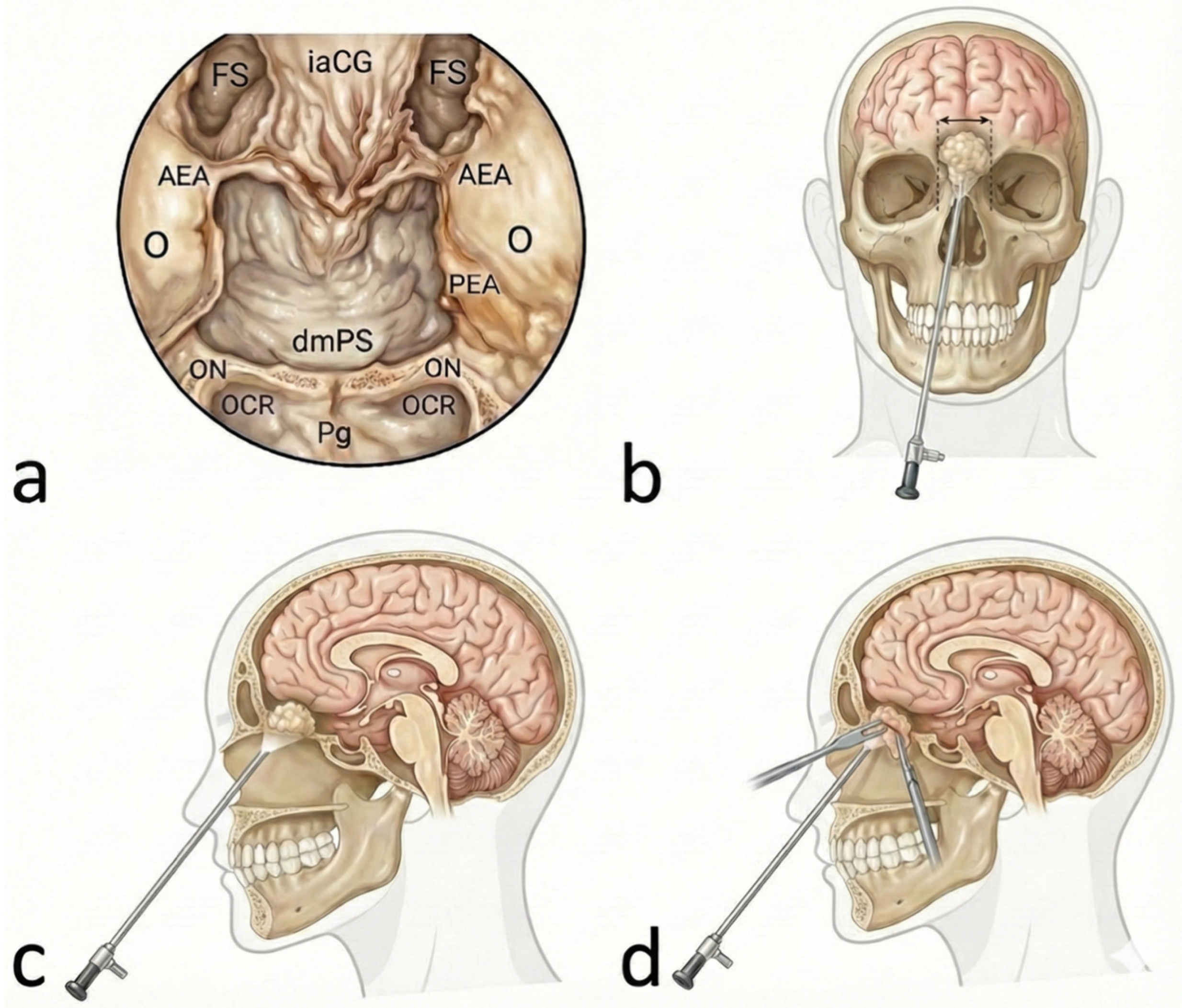
Figure 1. Description of anatomical landmarks of the anterior skull base. (a) Endoscopic anatomical landmarks of the anterior skull base. dmPS, dura mater of the planum sphenoidale; iaCG, inferior aspect of the crista galli; Pg, pituitary gland; FS, frontal sinus; AEA, anterior ethmoidal artery; PEA, posterior ethmoidal artery; O, orbit; and ON, optic nerve. (b) A lesion between both lines of the lamina papyracea would be amenable to endonasal resection. (c) While purely intracranial lesions would be most suitable for transcranial approaches (e.g., supraorbital, mini pterional), (d) those extending to the nasal cavity would fit better for endonasal resection. Created with www.biorender.com, © Edgar G. Ordóñez-Rubiano. Figure 1a was generated using Gemini (Google, 2026), based on an original anatomical schema.
Std 15 00009 g001
Figure 2. Endonasal resection of an olfactory groove meningioma. (ac) Preoperative enhanced magnetic resonance imaging (MRI) of the brain demonstrates an olfactory groove meningioma with en-plaque extension to the planum sphenoidale and invasive endonasal extension (arrows). (df) Immediate postoperative enhanced MRI of the brain demonstrates a satisfactory near-total resection (arrow), with an intentional en-plaque residual at the planum sphenoidale.
Std 15 00009 g002
Figure 3. Intraoperative imaging of endonasal resection of an olfactory groove meningioma. (a) The right anterior ethmoidal artery is pointed at with an arrow before coagulation. (b) Endonasal view of the endonasal component of the tumor. The normal dura mater is exposed bilaterally from below (arrowheads). (c) A brain cuff is shown (arrowheads), and the tumor dissection is demonstrated. (d) An inlay positioning of a dura patch is observed (arrows denoting the inlay placement).
Std 15 00009 g003
Figure 4. Endonasal resection of an olfactory groove meningioma with endonasal recurrence. (ac) Preoperative enhanced magnetic resonance imaging (MRI) of the brain demonstrates a large tumor extending from the anterior cranial fossa (ACF) into the nasal cavity, extending from one lamina papyraceae to the other, laterally (arrows). Postoperative findings from a previous transcranial trans-basal resection include significant bifrontal encephalomalacia. (df) Postoperative MRI demonstrates a satisfactory resection. A bony residual on the planum sphenoidale is observed, which was intentionally left, given the benefit/risk ratio of cerebrospinal fluid (CSF) leak and neurovascular injury (blue arrow in panel (d)).
Std 15 00009 g004
Figure 5. Combined transcranial and endonasal resection of an inverted papilloma. (ac) Pre-operative enhanced magnetic resonance imaging (MRI) of the head demonstrates a giant tumor extending from the hard palate up to the anterior fossa with mass effect and extending laterally to the left (arrows). (df) Post-operative MRI demonstrates a radiologically gross-total resection (arrow), with endonasal and intracranial decompression.
Std 15 00009 g005
Figure 6. Intraoperative images of a combined transcranial and endonasal resection of an inverted papilloma. Endonasal views of the resection are observed. (a) A posterior cut of the compromised dura of the planum sphenoidale is shown from below. (b) After tumor resection, communication is observed between the intracranial cavity and the endonasal cavity. (c) A layer of fat graft is positioned after intracranial reconstruction. (df) Transcranial images demonstrate the (d) resection cavity from above, (e) a pericranium flap for reconstruction, and (f) a dura patch for intracranial multilayer reconstruction.
Std 15 00009 g006
Figure 7. Endonasal resection of an esthesioneuroblastoma (ENB). (a,b) Preoperative enhanced magnetic resonance imaging (MRI) of the brain demonstrates a giant tumor compromising the nasal cavity, extending primarily into the right side, posteriorly extending to the nasopharynx, and superiorly intracranially. (c,d) Postoperative enhanced MRI of the brain shows an aggressive, satisfactory resection, including the intracranial component in the midline and the whole endonasal part.
Std 15 00009 g007
Table 1. Key patient outcomes of 4 cases.
CaseDiagnosisAge/SexSurgical ApproachExtent of ResectionPostoperative CourseAdjuvant TherapyKey Outcome
1Meningioma (olfactory groove, WHO grade 2 [19])72/MEETTANTR (>90%); en-plaque planum sphenoidale left intactUneventful; discharged POD 4RadiotherapyGood surgical outcome with disease control via adjuvant RT
2Recurrent meningioma27/MEETTANTR; hyperostotic planum/orbital roof component leftUneventfulRadiotherapyEffective decompression with stable residual disease
3Inverted papilloma (recurrent, invasive)65/MCombined transcranial transbasal + EETTANTR; no clean marginsSymptomatic improvement postoperativelyPlanned radiotherapySuccessful decompression despite residual infiltrative disease
4Esthesioneuroblastoma70/FEETTANTR (endonasal + intracranial)CSF leak on POD 28 → reoperation; resolvedPalliative intentAdequate decompression; delayed CSF leak successfully managed
Note: WHO = World Health Organization, M = male, F = female, EETTA = endoscopic endonasal transethmoidal transcribriform approach, NTR = near-total resection, CSF = cerebrospinal fluid, POD = postoperative day, and RT = radiotherapy.
Table 2. Comparative analysis of endoscopic endonasal trans-ethmoidal trans-cribriform approach (EETTA) versus traditional transcranial approaches for anterior cranial fossa tumors.
ParameterEETTATransbasalPterionalSupraorbital/Mini-Pterional
Surgical corridorEndonasal transethmoidal transcribriformBifrontal craniotomyFrontotemporal craniotomyEyebrow/supraorbital craniotomy
Optimal tumor locationMidline ACFMidline and lateral ACFLateral ACFSmall lateral ACF
Brain retractionNoneSignificantModerateMinimal
Early vascular controlYesNoVariablePartial
Tumor visualizationExcellent midlineWide bilateralExcellent lateralAdequate (small tumors)
Olfactory preservationNoPossibleUsually preservedUsually preserved
CSF leak riskModerateModerateLow–moderateLow
Cosmetic impactNoneBicoronal scarTemporal hollowingMinimal
Main advantagesNo retraction, direct midline accessWide exposure, oncologic marginsVersatile lateral accessMinimally invasive
Main limitationsLimited lateral reachHigher morbidityBrain retractionRestricted exposure
Note: EETTA = endoscopic endonasal transethmoidal transcribriform approach, ACF = anterior cranial fossa and CSF = cerebrospinal fluid.
Disclaimer/Publisher’s Note: The statements, opinions and data contained in all publications are solely those of the individual author(s) and contributor(s) and not of MDPI and/or the editor(s). MDPI and/or the editor(s) disclaim responsibility for any injury to people or property resulting from any ideas, methods, instructions or products referred to in the content.