1. Introduction
Multiple myeloma (MM) is an incurable hematologic malignancy characterized by uncontrolled proliferation of plasma cells in the bone marrow. Although newer therapies such as daratumumab have improved survival, patients often require continuous treatment and frequent monitoring, resulting in a substantial burden for both patients and healthcare systems.
To support patients in maintaining everyday life and to reduce pressure on healthcare services, home-based treatment models have increasingly been introduced in hematology care [
1,
2,
3]. One example is subcutaneous (SC) daratumumab, which can be administered in patients’ homes or local healthcare clinics. However, these treatment models require assessment of treatment readiness reliably before each administration to ensure patient safety outside the hospital setting. Traditionally, this has been performed through nurse-led telephone consultations evaluating symptoms and general fitness for treatment. While clinically effective, these assessments are time-consuming and may be inconvenient for patients, highlighting the need for more efficient and patient-centered approaches.
Patient-reported outcomes (PROs) have increasingly been integrated into cancer care to support symptom monitoring and communication between patients and healthcare professionals. In solid cancers, digital PRO solutions have been shown to reduce unnecessary consultations and support remote clinical assessment without compromising patient safety [
4,
5,
6,
7,
8].
However, evidence regarding the clinical use of PROs in hematologic malignancies remains limited, despite patients with hematologic cancers often following complex, long-term treatment trajectories involving frequent symptom monitoring and healthcare contact.
In 2022, we demonstrated that a digital PRO-based approach could support the replacement of standardized pre-treatment telephone assessments in patients receiving bortezomib [
9]. The solution was integrated directly into the electronic health record system and has since been implemented in routine clinical practice.
Building on these experiences, the present study aimed to evaluate whether digital PRO-based symptom reporting could support treatment-readiness assessment before daratumumab in patients with MM. In addition, we explored the feasibility of integrating this approach into routine clinical practice.
2. Materials and Methods
2.1. Design
This was a prospective, non-randomized feasibility study with a parallel mixed-methods design. The intervention consisted of a digital PRO-based treatment readiness assessment. Due to the exploratory feasibility design, no formal sample size calculation was performed, as the study was not designed to assess non-inferiority or definitive safety outcomes. During the study period, nurses were blinded to PRO responses to ensure that treatment readiness evaluations were based solely on standard clinical procedures. Quantitative data were reported in accordance with the EQUATOR STROBE guidelines for observational studies [
10], and qualitative data were reported following the COREQ (Consolidated Criteria for Reporting Qualitative Research) checklist [
11].
2.2. Setting and Study Population
The study was conducted at a single tertiary hematology center as part of a clinical trial evaluating the feasibility of SC daratumumab being partly administered by primary care nurses either in patients’ homes or in local healthcare clinics, depending on patient preference and local municipal arrangements for treatment administration [
3]. Participation in digital symptom reporting and treatment relocation could not be chosen independently. Patients eligible for inclusion were adults (>18 years), had a diagnosis of relapsed MM, were in possession of a smartphone or computer, and were planning to start or were already in treatment with daratumumab. Patients received daratumumab either as monotherapy or in combination with standard anti-myeloma regimens according to routine clinical practice, as previously described. Treatment schedules followed routine clinical practice as previously described [
3].
Prior to each treatment administered outside the hospital, patients were contacted by a specialized hematology nurse to ensure they were clinically fit for treatment. Some daratumumab administrations remained hospital-based according to routine clinical practice, particularly during treatment initiation and clinically indicated visits. Prior to these hospital-based administrations, patients underwent standard clinical assessment by hematology staff. Further details on the treatment schedule and procedures have been described previously [
3]. Moreover, patients completed a digital questionnaire prior to each scheduled treatment addressing the most important side effects of daratumumab. During the study period, nurses and physicians independently assessed treatment readiness according to usual clinical practice while remaining blinded to the PRO responses. Concordance between PRO-based triage and routine clinical assessments was evaluated retrospectively. Most patients received their first study treatment (C1D1) on the day of inclusion and therefore did not fill in a questionnaire prior to that treatment.
2.3. Data Collection
Quantitative data were primarily obtained directly from patients through a secure, regionally provided digital health platform, as previously described [
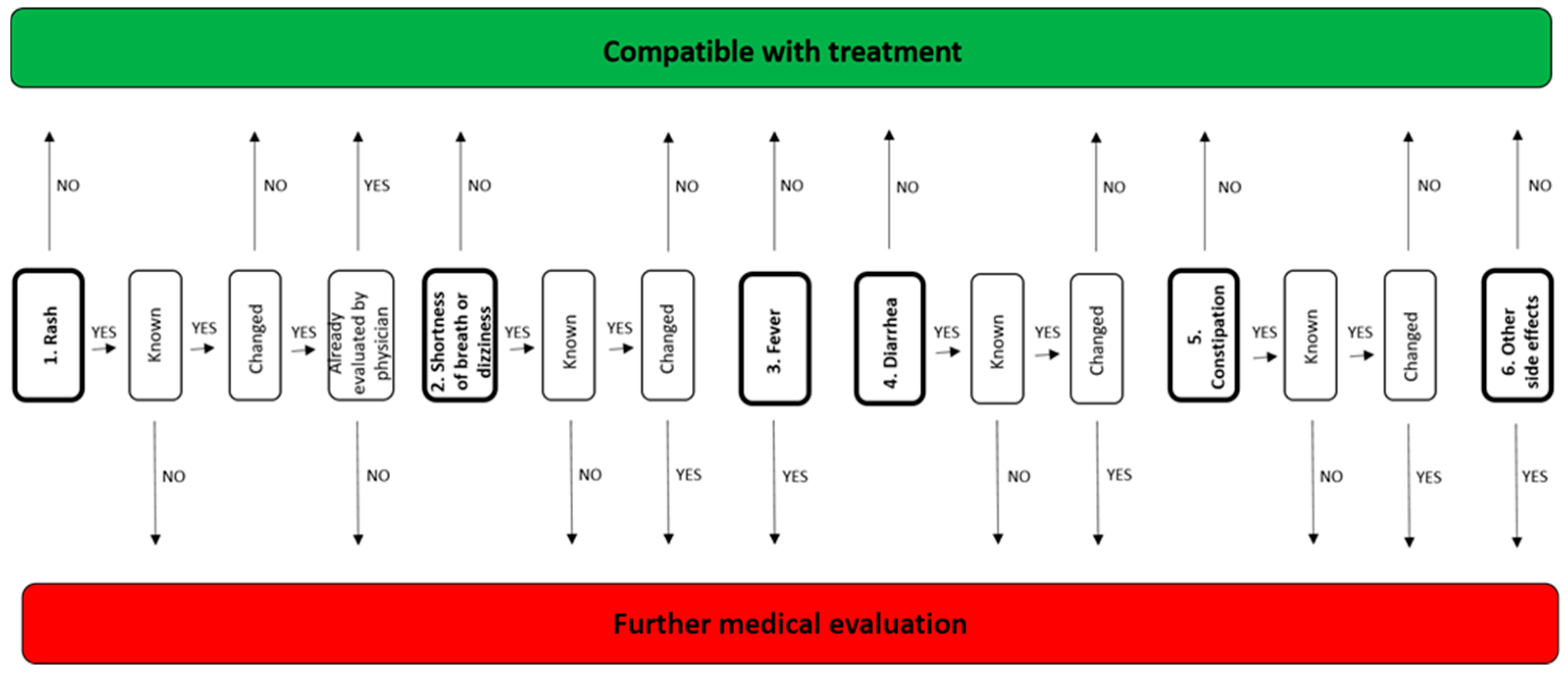
9]. Based on clinical experience, we developed a PRO measure addressing the most relevant side effects of daratumumab, including rash, shortness of breath, dizziness, fever, diarrhea, and constipation. Patients could further report additional symptoms through a free-text field. Based on patient responses, an algorithm categorized patients as either treatment-ready (green coded) or requiring further clinical evaluation (red coded) (
Figure 1). When patients left the study, they were further provided a custom-built questionnaire evaluating self-reporting of side effects. Patients were contacted in case of missing treatment-readiness questionnaire responses. Other quantitative data were collected from the patients’ medical records.
Qualitative data were obtained from individual, semi-structured interviews with patients. We planned to include 10 consecutive patients initially, with up to three additional participants added until data saturation was reached [
12,
13]. A trained nurse not further involved in patient treatment conducted the interviews. The interviews were conducted by phone at a time point chosen by the patient and lasted 10–15 min. A semi-structured interview guide based on previous experiences [
9] and existing literature was used. All interviews were recorded and transcribed verbatim.
2.4. Data Analysis
Quantitative data were summarized using descriptive statistics and presented as numbers, percentages, medians, and ranges. Due to the exploratory feasibility design and limited sample size, no formal statistical comparisons between groups were performed. Agreement between PRO-based triage and routine clinical assessment was evaluated by calculating positive and negative predictive values using the standard clinical assessment as the comparator. Data were analyzed using Stata BE 17.
Qualitative data were analyzed applying a hermeneutic approach. Systematic text condensation was performed according to Malterud, and transcripts were reviewed throughout the coding process to ensure that themes reflected the original data and their context [
14]. Data analysis was performed using the electronic program NVivo Version 13.
3. Results
3.1. Study Population
Between March 2022 and June 2023, 54 patients were invited to participate in the clinical trial evaluating home-based daratumumab administration and digital symptom reporting. Of these, 30 patients (18 males and 12 females) with a median age of 76 years (range 61–87) were included (see
Table 1). The main reason for declining was reluctance toward treatment relocation to primary care or home-based administration (
n = 21), while three patients declined due to not owning a smartphone. Further details on declining patients have been described previously [
3].
In the individual patient interviews, data saturation was reached when consecutive interviews no longer contributed new themes or perspectives relevant to the study aim [
12,
13]. This occurred after the inclusion of 19 consecutive patients.
3.2. Safety and Feasibility
In total, 269 treatments were administered in the study. Of these, 30 treatments occurred on the day of inclusion without prior side effect reporting through the digital platform. Nine questionnaires were not sent, while treatment postponement resulted in three additional questionnaires. As a result, 233 questionnaires were available for completion. Of these, 179 were completed, yielding a completion rate of 77%.
Reasons for non-completion included patients forgetting to respond and being unreachable (n = 4), and repeated difficulties completing digital symptom reporting using the smartphone-based platform (n = 50). Six patients accounted for 41 of the 54 non-completed questionnaires.
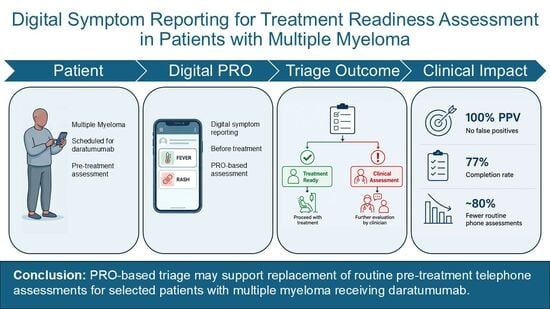
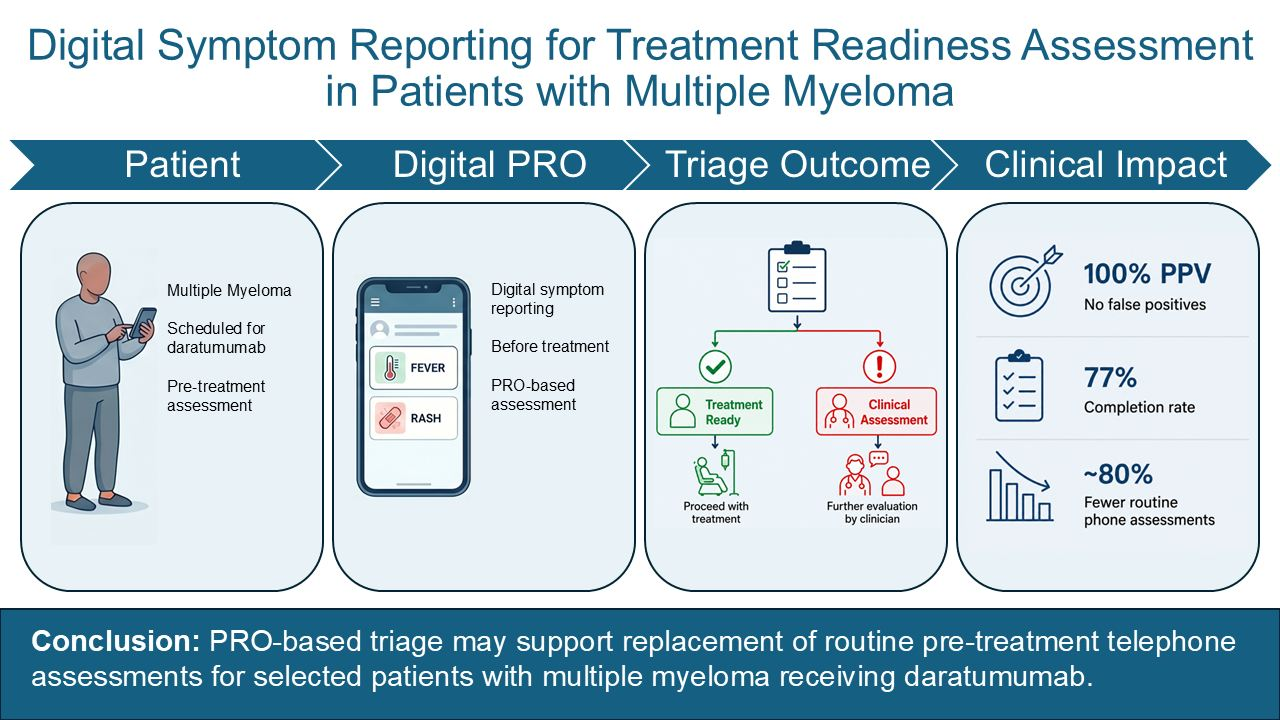
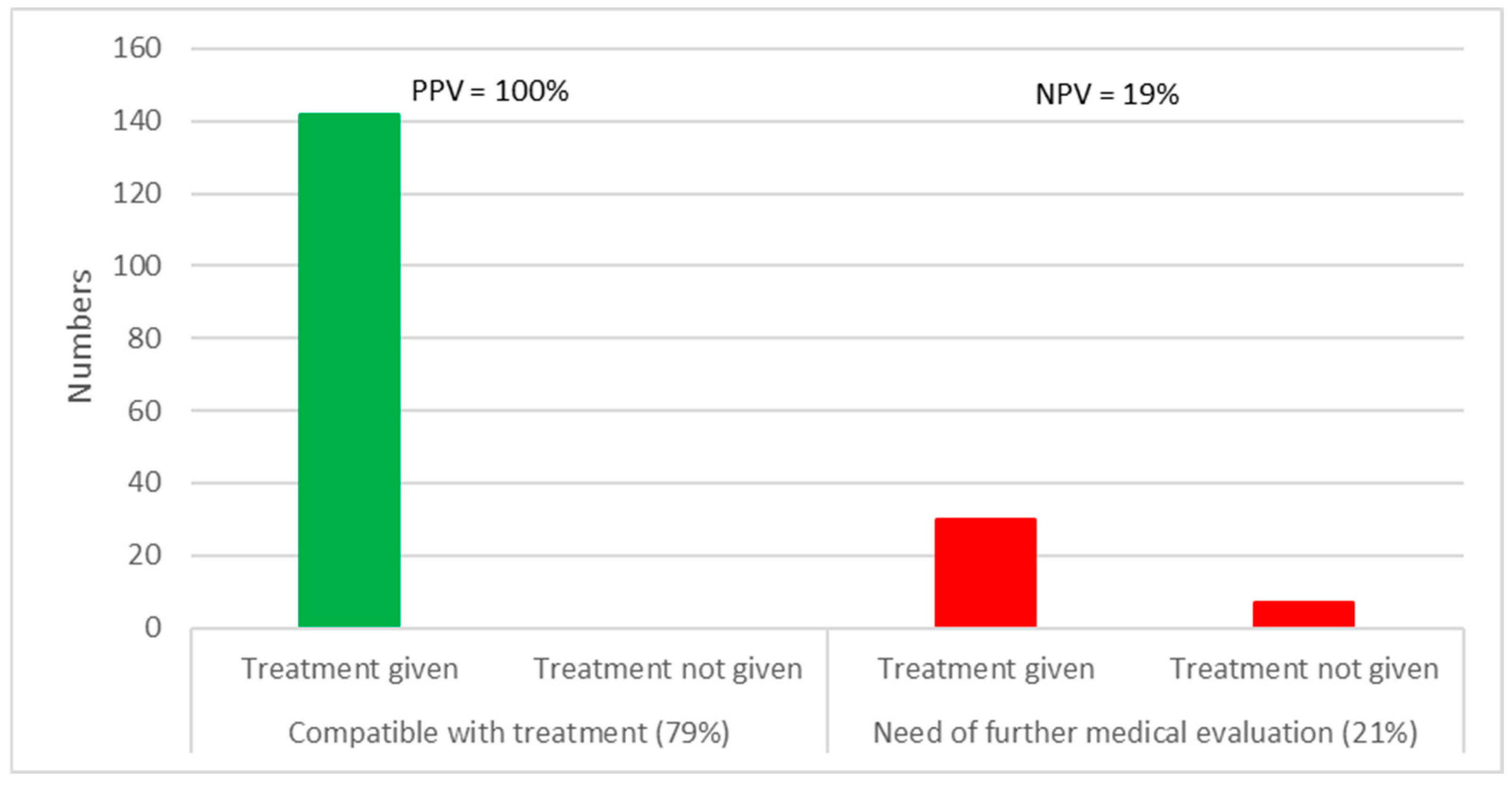
Of the 179 completed questionnaires, 142 had green-coded responses with the algorithm recommending treatment, and 37 were flagged in red. In all cases, green codes corresponded with treatment being administered after clinical evaluation. The algorithm demonstrated a positive predictive value of 100%, suggesting that digital PRO data may support a reduction in routine clinical evaluations in 79% of cases. With a negative predictive value of 19%, 30 of 37 treatments linked to a red-coded questionnaire response were administered (
Figure 2). Reasons for red-coded responses are provided in
Table 2.
3.3. Evaluation
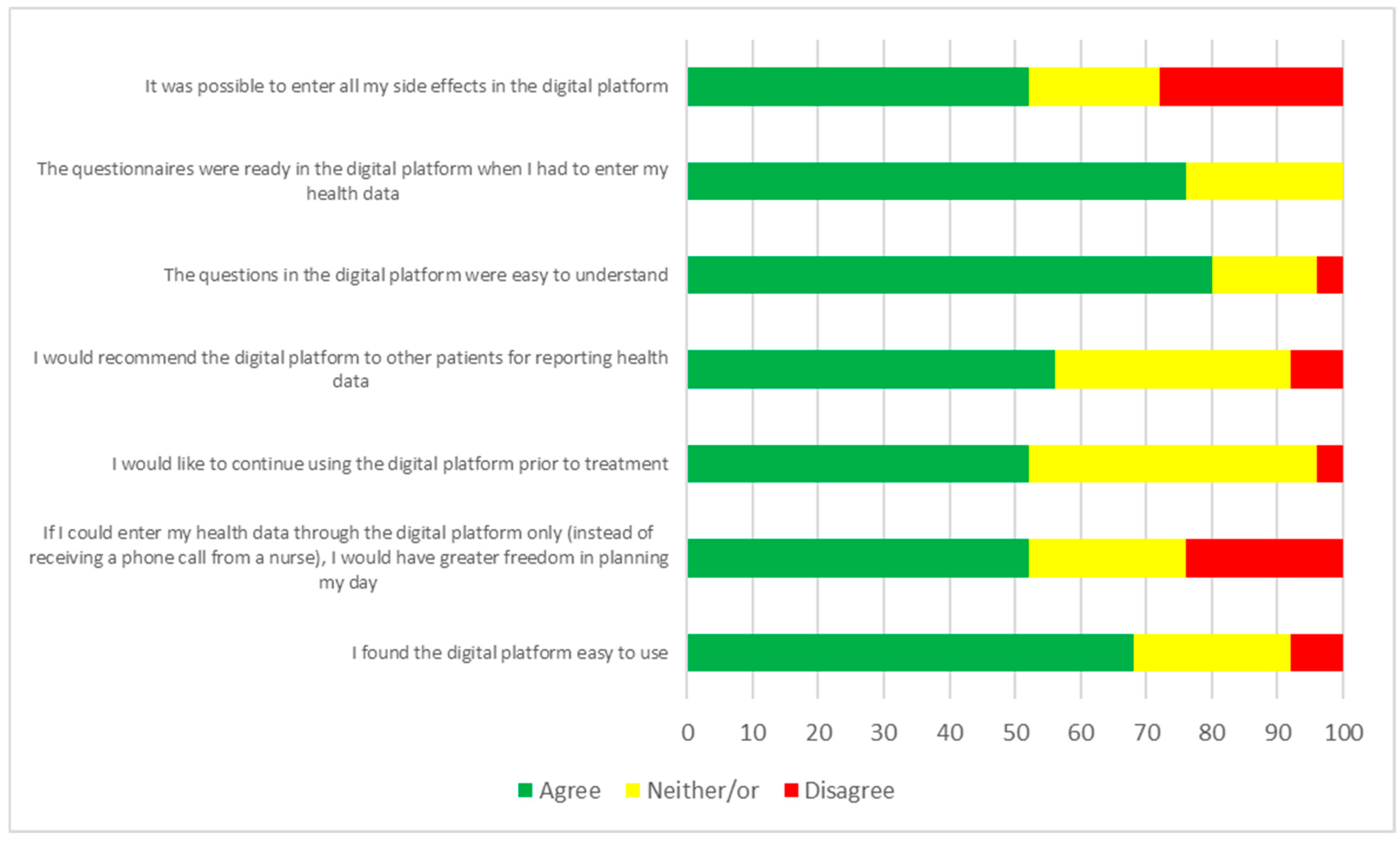
Of the 30 patients included in the study, 25 (83%) filled out the evaluation form when they left the study. Reasons for non-response included early study withdrawal and limited experience with the app (n = 3) and the patient forgetting to respond (n = 2).
Of 25 respondents, 17 (68%) found the digital platform easy to use. Fifty-two percent (
n = 13) preferred registering their side effects themselves, and 56% (
n = 14) would recommend the platform to other patients (
Figure 3).
Most patients found the platform easy to understand (80% agreed and 16% neither agreed nor disagreed) and experienced the questionnaires as accessible and available when needed (76% agreed and 24% neither agreed nor disagreed). This was also reflected in the interviews. One patient stated:
“It shows up in the app, saying there are two messages from the hospital. Then I have to respond to them. I think that’s fine.”
(Male, 70 years)
However, not all patients perceived the solution positively. In addition to the three patients declining participation because they did not own a smartphone, other patients reported challenges related to the platform during the interviews. One patient said:
“It’s too complicated. It’s the app—we can’t get into our app because we can’t remember the password.”
(Male, 84 years)
Another patient expressed that it was not the technology, but rather the lack of contact with the healthcare staff, that made her skeptical of the solution. She said:
“I have enjoyed my conversations with the doctors, and now I’m losing that… I might just need someone to talk to.”
(Female, 68 years)
4. Discussion
This study suggests that PRO data collected through a digital platform may help identify patients with MM ready for their next dose of daratumumab. With a positive predictive value of 100%, the algorithm suggested the potential to reduce routine telephone evaluations in nearly 80% of cases, thereby potentially reducing clinical workload. While the low negative predictive value (19%) indicates that patients reporting side effects would still require follow-up contact, the algorithm was intentionally designed conservatively, such that any reported symptom triggered additional clinical assessment rather than automatic treatment approval. In this context, the findings suggest that PRO-based triage may offer a pragmatic way to direct clinical attention toward cases where treatment eligibility is uncertain [
15].
However, the findings should be interpreted within the context of a small exploratory single-center feasibility study; confirmatory studies are needed before broader implementation can be recommended. Furthermore, PRO-based triage was compared with routine nurse-led clinical assessment rather than an independent gold standard such as physician examination or prospective adverse-event outcomes. Accordingly, the results should be interpreted as reflecting concordance with existing clinical workflow rather than definitive validation of clinical safety or treatment-readiness assessment.
Several studies in solid tumor oncology have demonstrated that digital PRO monitoring can support remote symptom assessment and reduce unnecessary consultations without compromising patient safety [
4,
5,
6,
7,
16,
17]. As treatment pathways increasingly move beyond the hospital setting, efficient and safe approaches to remote symptom monitoring are becoming increasingly important. Existing digital PRO systems in cancer care primarily focus on symptom monitoring, patient education, or supporting communication between patients and healthcare professionals [
18,
19,
20,
21], while only a few have been developed as stand-alone tools for treatment-readiness assessment [
7,
22]. Moreover, evidence regarding routine PRO use in hematologic malignancies remains limited [
8,
9,
22,
23]. In this context, the present study adds to the emerging field by supporting the feasibility of digital symptom reporting for treatment-readiness assessment in routine hematology care. The present study builds on earlier work evaluating digital PRO-based pre-treatment assessments in patients receiving bortezomib, where a similar approach showed potential to replace routine telephone consultations in selected patients [
9]. However, inclusion and response rates were lower in the present study (55% vs. 91% and 77% vs. 98%, respectively). This likely reflects that the current study was embedded within a broader clinical trial involving both digital symptom reporting and relocation of daratumumab treatment from hospital to patients’ homes or local health clinics [
3]. Because participation in digital symptom reporting and treatment relocation could not be chosen independently, the observed inclusion, response, and satisfaction rates cannot be interpreted as reflecting acceptance of the digital PRO intervention alone.
The combined introduction of home-based care and digital symptom assessment may also have influenced patient satisfaction levels. One patient expressed: “I have enjoyed my conversations with the doctors, and now I’m losing that… I might just need someone to talk to.” Whether this reflected the loss of telephone contact, relocation of treatment, or both remains unclear and should be considered when interpreting the feasibility and acceptability findings.
The findings additionally highlight important challenges related to digital literacy in older hematology populations. Although only three patients declined participation because they did not own a smartphone, several enrolled patients experienced repeated difficulties using the digital platform, accounting for the majority of non-completed questionnaires. Thus, while digital PRO-based workflows may be feasible for many patients, some may require caregiver support, additional training, or alternative non-digital pathways. Accordingly, digital symptom reporting should currently be viewed as a complementary approach rather than a universal replacement for conventional clinical assessment.
In designing the PRO component, we deliberately developed a tailored screening tool rather than adopting a validated questionnaire. The aim was not longitudinal symptom measurement or comparison of symptom burden across patients, but rapid binary treatment-readiness assessment integrated into a specific clinical workflow. Therefore, concise yes/no questions were considered more clinically relevant than detailed symptom grading. A limitation of this approach is that the questionnaire was not formally psychometrically validated, and no reliability testing was performed prior to implementation. While this was considered acceptable within the exploratory feasibility framework of the present study, future studies should evaluate the reliability, usability, and clinical performance of the tool more systematically before broader implementation.
A key strength of the solution was its direct integration into the electronic patient record system, allowing both nurses and physicians to access patient-reported data without switching platforms. The red/green algorithm provided a simple visual overview of treatment readiness and need for follow-up assessment, thereby supporting workflow efficiency and clinical prioritization. The solution has since been fully implemented in routine clinical practice, supporting its feasibility and applicability in everyday patient management.
5. Conclusions
This feasibility study suggests that digital PRO-based triage may support the replacement of some routine pre-treatment telephone assessments for selected patients with multiple myeloma receiving daratumumab. Although the findings indicate potential for reducing clinical workload while maintaining patient safety, confirmatory studies are needed to validate the approach and clarify its applicability across broader patient populations.
Importantly, the intervention was developed with long-term feasibility in mind: concise, binary items tailored to the clinical workflow, direct integration with the electronic health record, and intuitive visualization for healthcare staff. These design features facilitated successful implementation, and the solution is now embedded in daily clinical practice. Our findings support broader efforts to integrate digital PRO into hematology, a field where evidence remains limited, and point to opportunities for expansion to other treatments and disease areas.
Author Contributions
Conceptualization, T.L., T.R. and J.K.; methodology, T.L., T.R. and J.K.; software, A.M.Ø.; validation, T.R. and J.K.; formal analysis, J.K., M.T.G., T.R. and T.L.; investigation, T.R. and J.K.; data curation, T.R. and J.K.; writing—original draft preparation, T.R.; writing—review and editing, J.K., M.T.G., A.M.Ø., K.B.D. and T.L.; supervision, T.L.; project administration, T.R. and J.K.; funding acquisition, T.L. All authors have read and agreed to the published version of the manuscript.
Funding
The study was supported financially by an unrestricted grant from the patent holder of daratumumab, Janssen-Cilag, from the fund to support health service and intervention research in the Region of Southern Denmark, grant number A1704 (Region Syddanmarks pulje for Sundhedstjenesteforskning), and from Odense University Hospital.
Institutional Review Board Statement
The study was formally assessed by the Regional Committee on Health Research Ethics for Southern Denmark, which determined that the study was not subject to notification or approval by the Danish Research Ethics Committee system, in accordance with Section 14(1) of the Danish Act on Research Ethics Review of Health Research Projects (the Committee Act).
Informed Consent Statement
Informed consent was obtained from all subjects involved in the study.
Data Availability Statement
The raw data supporting the conclusions of this article are available from the corresponding authors upon reasonable request. The study was conducted in accordance with Danish data protection regulations (registration no. 21/39486).
Acknowledgments
The authors thank the participating patients and their families for their trust and the time they devoted to this study. We also acknowledge the valuable contributions of the nurses and physicians involved in patient care and study procedures. Finally, we acknowledge that the project was carried out using facilities provided by OPEN (Open Patient data Explorative Network), Odense University Hospital. For the preparation of the graphical abstract, the authors used the Notebook LM Free version. The authors have reviewed and edited the output and take full responsibility for the content of this publication.
Conflicts of Interest
The authors declare no conflicts of interest. The funders had no role in the design of the study; in the collection, analyses, or interpretation of data; in the writing of the manuscript; or in the decision to publish the results.
Abbreviations
The following abbreviations are used in this manuscript:
| COREQ | Consolidated Criteria for Reporting Qualitative Research |
| CTCAE | Common Terminology Criteria for Adverse Events |
| EORTC | European Organization for Research and Treatment of Cancer |
| MM | Multiple Myeloma |
| PRO | Patient-Reported Outcome |
| SC | Subcutaneous |
References
- Kirkegaard, J.; Lundholm, B.W.; Rosenberg, T.; Lund, T.; Gundesen, M.T.; Dieperink, K.B. Home is best. Self-administration of subcutaneous Bortezomib at home in patients with multiple myeloma—A mixed method study. Eur. J. Oncol. Nurs. 2022, 60, 102199. [Google Scholar] [CrossRef] [Scilit] [PubMed]
- Kharfan-Dabaja, M.A.; Roy, V.; Murthy, H.; Fischer, D.; Mohty, R.; Greathouse, A.; Brown, A.; Moreno, K.; Godsey, E.; Higginbotham, J.M.; et al. Post-Autologous Hematopoietic Cell Transplant Care in the “Home Sweet Home” Setting: A Treatment Paradigm Shift. Hematol. Oncol. Stem Cell Ther. 2023, 16, 407–411. [Google Scholar] [CrossRef] [Scilit]
- Rosenberg, T.; Kirkegaard, J.; Gundesen, M.T.; Rasmussen, M.K.; Dieperink, K.B.; Lund, T. Home-Based Daratumumab in Patients with Multiple Myeloma. Eur. J. Haematol. 2025, 115, 72–81. [Google Scholar] [CrossRef] [Scilit]
- Basch, E.; Deal, A.M.; Dueck, A.C.; Scher, H.I.; Kris, M.G.; Hudis, C.; Schrag, D. Overall Survival Results of a Trial Assessing Patient-Reported Outcomes for Symptom Monitoring During Routine Cancer Treatment. JAMA 2017, 318, 197–198. [Google Scholar] [CrossRef] [Scilit] [PubMed]
- Denis, F.; Lethrosne, C.; Pourel, N.; Molinier, O.; Pointreau, Y.; Domont, J.; Bourgeois, H.; Senellart, H.; Trémolières, P.; Lizée, T.; et al. Randomized Trial Comparing a Web-Mediated Follow-up with Routine Surveillance in Lung Cancer Patients. J. Natl. Cancer Inst. 2017, 109, 436. [Google Scholar] [CrossRef] [Scilit] [PubMed]
- Campbell, R.; King, M.T.; Stockler, M.R.; Lee, Y.C.; Roncolato, F.T.; Friedlander, M.L. Patient-Reported Outcomes in Ovarian Cancer: Facilitating and Enhancing the Reporting of Symptoms, Adverse Events, and Subjective Benefit of Treatment in Clinical Trials and Clinical Practice. Patient Relat. Outcome Meas. 2023, 14, 111–126. [Google Scholar] [CrossRef] [Scilit]
- Jensen, R.E.; Snyder, C.F.; Abernethy, A.P.; Basch, E.; Potosky, A.L.; Roberts, A.C.; Loeffler, D.R.; Reeve, B.B. Review of electronic patient-reported outcomes systems used in cancer clinical care. J. Oncol. Pract. 2014, 10, e215–e222. [Google Scholar] [CrossRef] [Scilit] [PubMed]
- Cannella, L.; Efficace, F.; Giesinger, J. How should we assess patient-reported outcomes in the onco-hematology clinic? Curr. Opin. Support. Palliat. Care 2018, 12, 522–529. [Google Scholar] [CrossRef] [Scilit]
- Rosenberg, T.; Kirkegaard, J.; Tveden, M.G.; Hyldig, N.; Dieperink, K.B.; Steffensen, N.H.; Ulriksen, S.B.; Lund, T. Making decisions for follow-up chemotherapy based on digital patient reported outcomes data in patients with multiple myeloma and other M protein diseases—A mixed method study. Eur. J. Oncol. Nurs. 2023, 68, 102455. [Google Scholar] [CrossRef] [Scilit] [PubMed]
- von Elm, E.; Altman, D.G.; Egger, M.; Pocock, S.J.; Gøtzsche, P.C.; Vandenbroucke, J.P. The Strengthening the Reporting of Observational Studies in Epidemiology (STROBE) statement: Guidelines for reporting observational studies. Lancet 2007, 370, 1453–1457. [Google Scholar] [CrossRef] [Scilit] [PubMed]
- Tong, A.; Sainsbury, P.; Craig, J. Consolidated criteria for reporting qualitative research (COREQ): A 32-item checklist for interviews and focus groups. Int. J. Qual. Health Care 2007, 19, 349–357. [Google Scholar] [CrossRef] [Scilit]
- Moser, A.; Korstjens, I. Series: Practical guidance to qualitative research. Part 3: Sampling, data collection and analysis. Eur. J. Gen. Pract. 2018, 24, 9–18. [Google Scholar] [CrossRef] [Scilit]
- Francis, J.J.; Johnston, M.; Robertson, C.; Glidewell, L.; Entwistle, V.; Eccles, M.P.; Grimshaw, J.M. What is an adequate sample size? Operationalising data saturation for theory-based interview studies. Psychol. Health 2010, 25, 1229–1245. [Google Scholar] [CrossRef] [Scilit]
- Malterud, K. Systematic text condensation: A strategy for qualitative analysis. Scand. J. Public Health 2012, 40, 795–805. [Google Scholar] [CrossRef] [Scilit] [PubMed]
- Challinor, J.M.; Alqudimat, M.R.; Teixeira, T.O.A.; Oldenmenger, W.H. Oncology nursing workforce: Challenges, solutions, and future strategies. Lancet Oncol. 2020, 21, e564–e574. [Google Scholar] [CrossRef] [Scilit] [PubMed]
- Hubel, N.J.; Vorbach, S.M.; de Ligt, K.M.; Rathgeber, I.S.; Beyer, K.; Wintner, L.M.; Faller, B.; Nemec, J.; Holzner, B.; Sztankay, M.; et al. Sustainability and Time Trends in Electronic Patient-Reported Outcome Assessment in Routine Cancer Care: Systematic Scoping Review and Follow-Up Survey. J. Med. Internet Res. 2025, 27, e69398. [Google Scholar] [CrossRef] [Scilit] [PubMed]
- Weaver, A.; Love, S.B.; Larsen, M.; Shanyinde, M.; Waters, R.; Grainger, L.; Shearwood, V.; Brooks, C.; Gibson, O.; Young, A.M.; et al. A pilot study: Dose adaptation of capecitabine using mobile phone toxicity monitoring—Supporting patients in their homes. Support. Care Cancer 2014, 22, 2677–2685. [Google Scholar] [CrossRef] [Scilit]
- Villanueva-Bueno, C.; Collado-Borrell, R.; Escudero-Vilaplana, V.; Revuelta-Herrero, J.L.; Marzal-Alfaro, M.B.; González-Haba, E.; Arranz-Arija, J.; Osorio, S.; Herranz-Alonso, A.; Sanjurjo-Saez, M. A smartphone app to improve the safety of patients undergoing treatment with oral antineoplastic agents: 4 years of experience in a university hospital. Front. Public Health 2022, 10, 978783. [Google Scholar] [CrossRef] [Scilit]
- da Silva, H.E.C.; Santos, G.N.M.; Ferreira Leite, A.; Mesquita, C.R.M.; de Souza Figueiredo, P.T.; Miron Stefani, C.; de Santos Melo, N. The feasibility of telehealth in the monitoring of head and neck cancer patients: A systematic review on remote technology, user adherence, user satisfaction, and quality of life. Support. Care Cancer 2022, 30, 8391–8404. [Google Scholar] [CrossRef] [Scilit] [PubMed]
- Thomas, T.H.; Go, K.; Go, K.; McKinley, N.J.; Dougherty, K.R.; You, K.L.; Lee, Y.J. Empowerment through technology: A systematic evaluation of the content and quality of mobile applications to empower individuals with cancer. Int. J. Med. Inform. 2022, 163, 104782. [Google Scholar] [CrossRef] [Scilit] [PubMed]
- Yang, L.Y.; Manhas, D.S.; Howard, A.F.; Olson, R.A. Patient-reported outcome use in oncology: A systematic review of the impact on patient-clinician communication. Support. Care Cancer 2018, 26, 41–60. [Google Scholar] [CrossRef] [Scilit] [PubMed]
- Brown, R.; Wages, N.A.; Liu, L.; Sutton, A.L.; Poklepovic, A.S. Understanding the Role of Patient-Reported Outcomes for Decision-Making in Early-Phase Dose-Finding Clinical Trials. Curr. Oncol. 2025, 32, 176. [Google Scholar] [CrossRef] [Scilit] [PubMed]
- Efficace, F.; Gaidano, G.; Lo-Coco, F. Patient-reported outcomes in hematology: Is it time to focus more on them in clinical trials and hematology practice? Blood 2017, 130, 859–866. [Google Scholar] [CrossRef] [Scilit] [PubMed]
| Disclaimer/Publisher’s Note: The statements, opinions and data contained in all publications are solely those of the individual author(s) and contributor(s) and not of MDPI and/or the editor(s). MDPI and/or the editor(s) disclaim responsibility for any injury to people or property resulting from any ideas, methods, instructions or products referred to in the content. |



 ,
,