Article

Whole-Genome Identification of the Kunitz Trypsin Inhibitor (CaKTI) Gene Family in Capsicum annuum and Its Response to Verticillium dahliae Infection


College of Biology and Food Engineering, Guangdong University of Petrochemical Technology, Maoming 525000, China
*
Author to whom correspondence should be addressed.
Int. J. Plant Biol. 2026, 17(6), 42; https://doi.org/10.3390/ijpb17060042
Submission received: 19 April 2026 / Revised: 26 May 2026 / Accepted: 26 May 2026 / Published: 28 May 2026
(This article belongs to the Section Plant Biochemistry and Genetics)

Abstract

Verticillium wilt caused by Verticillium dahliae poses a severe threat to pepper (Capsicum annuum) production worldwide. Kunitz trypsin inhibitors (KTIs) play crucial roles in plant disease resistance, yet research on the CaKTI gene family in pepper, especially regarding its regulatory functions in resistance to V. dahliae, remains limited. In this study, members of the CaKTI gene family were systematically identified in the pepper genome, followed by comprehensive analyses of their physicochemical properties, phylogeny, chromosomal localization, conserved motifs, cis-acting elements in promoters, and expression profiles. A total of 22 CaKTI genes were identified, all harboring the beta-trefoil_STI superfamily domain. They were unevenly distributed across four chromosomes, with evident tandem duplication events, and exhibited tissue-specific and developmental stage-specific expression patterns. In the Verticillium-resistant pepper cultivar, five candidate CaKTI genes (CaKTI9, CaKTI6, CaKTI17, CaKTI18, and CaKTI22) were significantly induced and upregulated, particularly in roots, and their expression might be modulated by the methyl jasmonate signaling pathway. This study reveals the molecular features, evolutionary conservation, and defense-associated expression patterns of CaKTI genes in pepper and provides a preliminary exploratory basis for future research on disease resistance and molecular breeding.

1. Introduction

Plants have evolved complex and multi-layered defense mechanisms against pathogen invasion during their long evolutionary history [1,2]. As a category of small peptides or proteins, plant protease inhibitors play an irreplaceable core role in plant defense systems by directly targeting pathogens, inhibiting pathogen protease activity, or regulating endogenous plant defense signaling pathways [3,4]. Kunitz trypsin inhibitors (KTIs) represent a highly typical class of plant protease inhibitors. Possessing a distinctive Kunitz domain and belonging to the I3 inhibitor family, KTIs can specifically recognize and suppress trypsin activity, thereby blocking the degradation of essential proteins in pathogens or insect pests and inhibiting their growth and development [5,6,7]. Beyond their central defensive functions, KTIs are also widely involved in diverse physiological processes in plants, including cell growth, cell cycle regulation, apoptosis, stress responses, and developmental growth, thus contributing to the regulation of plant growth, development, and stress responses [8,9,10,11,12].
Numerous studies have demonstrated the antimicrobial potential and regulatory role of KTIs in plant disease resistance. A novel Kunitz-type inhibitor, EpTI, isolated from Erythrina poeppigiana seeds, exhibits antibacterial and antibiofilm activities [13]. Another Kunitz trypsin inhibitor, EgPI, purified from Enterolobium gummiferum seeds also displays antimicrobial effects and can inhibit biofilm formation by Candida albicans [14]. Additionally, a Kunitz-type trypsin inhibitor designated AnTI has been purified and characterized from Acacia nilotica seeds, showing potent antifungal activity [15]. At the molecular level, overexpression of NtKTI1 in tobacco significantly enhances resistance to Rhizoctonia solani, and also confers resistance against Rhizopus nigricans and Phytophthora parasitica var. nicotianae [16]. Furthermore, Alternaria alternata can induce the expression of NaKTI2 in tobacco leaves, thereby enhancing plant disease resistance [17]. Similarly, overexpression of AtKTI1 in Arabidopsis thaliana affects pathogen-induced programmed cell death in leaf tissues [18]. Moreover, the expression of the potato StMLP1 (as a Kunitz trypsin inhibitor) gene is induced by Ralstonia solanacearum, and overexpression of StMLP1 in potato can enhance its resistance to R. solanacearum [8].
Capsicum annuum L., a member of the Solanaceae family, is rich in vitamins, minerals, and natural pigments, with a unique flavor and health-promoting properties. It serves as an indispensable fresh vegetable and condiment in human production and daily life [19,20]. Additionally, capsicum red pigment and capsanthin hold broad application prospects in the food, chemical, and agricultural sectors, rendering pepper a globally important vegetable crop [21,22,23]. However, with the continuous large-scale planting of pepper year after year, continuous cropping obstacles have become increasingly severe, and disease problems have become more prominent. More than 34 types of diseases have been reported [24], and new types of diseases have been emerging in recent years [25,26,27], which seriously threaten the healthy development of the pepper industry.
Pepper Verticillium wilt, caused by Verticillium dahliae Kleb., is a typical soil-borne vascular fungal disease distributed in all pepper-producing regions worldwide [28,29,30,31]. The pathogen overwinters in the soil with diseased residues in the form of dormant hyphae, chlamydospores, and microsclerotia, with a survival period of 14 years [32]. It can invade plants through wounds on pepper roots or the epidermis of young roots, multiply and spread within the vascular bundles, leading to leaf yellowing, wilting, and even whole-plant death in severe cases, which significantly reduces pepper yield and quality and is extremely difficult to control [33,34]. Although new V. dahliae-resistant pepper varieties have been bred and reported [29,35], chemical control remains the primary strategy for managing this disease to date, which is prone to inducing a series of environmental and food safety problems, such as soil pollution, pesticide residues, and enhanced pathogen resistance [36,37], conflicting with the concept of green and sustainable development in modern agriculture. Therefore, breeding and selecting disease-resistant varieties have become the most effective approach to prevent and control major pepper diseases and realize the green and sustainable development of the pepper industry [35,38]. In recent years, the rapid advancement of genomics technologies has provided new technical support for pepper disease-resistant breeding, and mining disease resistance-related genes and deciphering their molecular mechanisms are the core prerequisites for conducting pepper disease-resistant variety breeding, which can effectively accelerate the breeding process of disease-resistant varieties [39,40].
Given the severe harm of pepper Verticillium wilt and the current predicament in its control, it is particularly urgent to mine its disease resistance-related genes and elucidate the molecular mechanisms underlying disease resistance. As a key gene in plant defense responses, KTI plays a crucial role in the biotic stress response of various plant species, and its regulatory mechanisms in plant disease and insect resistance have been initially clarified. However, there is no systematic report on the genome-wide identification and expression characteristics of the CaKTI gene family in pepper, especially the lack of studies on the response of CaKTI genes to V. dahliae stress. Based on this, the present study systematically performed genome-wide identification of the pepper CaKTI gene family and analyzed its gene structure, evolutionary characteristics, chromosomal distribution, and expression profiles under V. dahliae stress. This study not only enriches the gene resources associated with pepper disease resistance and clarifies the mechanism by which CaKTI genes respond to V. dahliae but also provides a theoretical basis and technical support for the development of molecular markers for V. dahliae resistance and molecular breeding of disease-resistant varieties, facilitating the green and sustainable development of the pepper industry.

2. Materials and Methods

2.1. Identification of CaKTI Gene Family Members in Pepper

The whole-genome sequence and annotation files of pepper variety ‘Zunla-1’ were downloaded from the Pepper Genomic Database website (https://solgenomics.net/organism/Capsicum_annuum/genome, accessed on 18 July 2025). The protein sequences of A. thaliana AtKTIs were retrieved from the online database TAIR (https://www.arabidopsis.org/, accessed on 18 July 2025). Using the AtKTIs protein sequences of A. thaliana as reference sequences, BLASTp alignment was performed against the pepper genome data with an e-value cutoff of 1 × 10⁻¹⁰. Subsequently, the candidate sequences were validated for the conserved domains of the CaKTI family using SMART (http://smart.embl-heidelberg.de/, accessed on 18 July 2025) and NCBI Batch CD Search (https://www.ncbi.nlm.nih.gov/Structure/bwrpsb/bwrpsb.cgi, accessed on 18 July 2025). Finally, the valid sequences were confirmed as members of the pepper CaKTIs gene family. Furthermore, the ProtParam tool (https://web.expasy.org/protparam/, accessed on 19 July 2025) was employed to evaluate the sequence length, isoelectric point (pI), and molecular weight (MW) of CaKTIs proteins [41].

2.2. Phylogenetic Analysis of the CaKTI Gene Family

Multiple alignments of the KTI amino acid sequences from pepper, A. thaliana, S. lycopersicum, N. benthamiana, and S. tuberosum were performed using MEGA software (version 7) [42]. A phylogenetic tree was constructed using the neighbor-joining (NJ) method with 1000 bootstrap replicates after alignment. The tree was visualized using the online tool iTOL (https://itol.embl.de/, accessed on 25 July 2025).

2.3. Chromosomal Localization of CaKTI Genes

Information on the positions of CaKTI genes and gene density on chromosomes was obtained from the pepper genome annotation GFF file. The chromosomal localization of CaKTI genes was visualized using TBtools II software (version 2.476) [43].

2.4. Analysis of Motifs, Domains, and Gene Structure of CaKTIs

The amino acid sequences of CaKTIs were submitted to the MEME platform (https://meme-suite.org/meme/tools/meme, accessed on 22 July 2025) to identify conserved motifs in CaKTIs proteins. Meanwhile, the amino acid sequences of CaKTIs were submitted to Batch CD Search (https://www.ncbi.nlm.nih.gov/Structure/bwrpsb/bwrpsb.cgi, accessed on 22 July 2025) for the identification of CaKTI protein domains. Multiple alignments of the amino acid sequences of CaKTI proteins were performed using MEGA software (version 7), and a phylogenetic tree was constructed based on the aligned sequences [42]. Finally, TBtools II was used to visualize the CaKTIs phylogenetic tree, motifs, domains, and gene structures.

2.5. Analysis of Cis-Acting Elements in the Upstream Regions of Pepper CaKTI Genes

To identify potential cis-acting elements in the promoter regions, the 2000 bp upstream sequences of the translation start codon of CaKTI genes were obtained using TBtools II. These sequences were submitted to the PlantCARE database (https://bioinformatics.psb.ugent.be/webtools/plantcare/html, accessed on 22 July 2025) using Version 1.58 of the software to identify cis-acting elements. The visualization of cis-acting elements of CaKTI genes was generated using TBtools II software.

2.6. Spatiotemporal Transcript Profiles of CaKTI Genes in Different Tissues and Developing Fruits

The expression level data of pepper CaKTI genes in different tissues and different fruit development stages were downloaded from the pepper omics database PepperBase (http://www.bioinformaticslab.cn/PepperBase/, accessed on 22 July 2025) [44]. A heatmap of the expression profiles of the pepper CaKTI gene family was generated using TBtools II v2.142 software.

2.7. Expression Characteristics of Pepper CaKTI Genes Under V. dahliae Infection

Transcriptome data from our previous study was used to analyze the expression of pepper CaKTI genes under V. dahliae infection [31]. This transcriptome dataset included samples from two pepper varieties with different V. dahliae resistance: a susceptible variety (MS66, susceptible to V. dahliae) and a resistant variety (MS72, resistant to V. dahliae). For each variety, samples were collected at three time points after V. dahliae inoculation, including 0 h, 3 d, and 5 d, where the 0 h time point served as the uninoculated control group to characterize the basal expression of CaKTI genes without pathogen stress. Fragments Per Kilobase of transcript per Million mapped reads (FPKM) values for pepper CaKTI genes were obtained from a previously generated transcriptomic dataset, and a heatmap was constructed using TBtools II (v2.142) to evaluate gene expression patterns in susceptible and resistant varieties following V. dahliae infection. The raw sequencing data are available in the Genome Sequence Archive at the National Genomics Data Center (https://ngdc.cncb.ac.cn/gsa; accessed on 16 August 2024) under accession number CRA018402, and detailed information about this dataset has been reported previously [31].
In addition, seedlings of the resistant variety (MS72) at the two-true-leaf stage were selected and inoculated with a 1 × 10⁷ CFU/mL V. dahliae conidial suspension by root irrigation. Root and leaf samples were collected at 0, 3, and 5 days post-inoculation (dpi), snap-frozen in liquid nitrogen, and stored at −80 °C. Total RNA was isolated using the FastPure Universal Plant Total RNA Isolation Kit (Vazyme, Nanjing, China), and cDNA was synthesized using HiScript III RT SuperMix for qPCR with gDNA wiper (Vazyme).
Quantitative RT-PCR (qRT-PCR) was performed on a Vazyme FMR3 system using AceQ Universal SYBR qPCR Master Mix (Vazyme) to assess CaKTI gene expression, with three technical replicates per sample. Each 10 μL reaction contained 5 μL of 2× AceQ Master Mix, 1.5 μL of cDNA template, 0.4 μL of each primer (10 μM), and 2.7 μL of nuclease-free water. The thermal cycling conditions were as follows: initial denaturation at 95 °C for 30 s, followed by 40 cycles of 95 °C for 5 s and 60 °C for 30 s. A melting curve analysis, from 60 °C to 95 °C, was performed to verify amplification specificity and exclude non-specific products [31].
CaActin was used as the internal reference gene, and relative gene expression levels were calculated using the 2−ΔΔCt method (Livak and Schmittgen [45]) (Table 1), as described elsewhere [31,45]. The data are presented as the mean ± standard error (Mean ± SE) of three independent biological replicates, and the significance of differences was tested by one-way ANOVA combined with Duncan’s new multiple range test (p < 0.05). Data statistical analysis and graphing were performed using Sigmaplot 11 (Systat, San Jose, CA, USA) and Excel software (version 11, Microsoft, Redmond, WA, USA).

3. Results

3.1. Identification and Physicochemical Properties of the Pepper CaKTI Gene Family

A total of 22 CaKTI gene family members were identified by searching the pepper genome via BLASTp analysis. These members were named CaKTI1 to CaKTI22 based on their genome ID numbers (Table 2). The members of the CaKTI gene family exhibited considerable differences in the length of coding sequences (CDSs), which resulted in variations in the length, molecular weight (MW), isoelectric point (pI), instability index, aliphatic index, and grand average of hydropathicity (GRAVY) of the encoded proteins. The CDS lengths of CaKTIs ranged from 450 bp (CaKTI4) to 765 bp (CaKTI7), encoding 149 to 254 amino acid residues, with molecular weights ranging from 16,431.02 D to 27,852.17 D. Among the 22 CaKTI proteins, the pI values ranged from 5.41 (CaKTI12) to 9.57 (CaKTI21), the instability indices varied from 20.40 (CaKTI2) to 51.94 (CaKTI4), the aliphatic indices ranged from 86.00 (CaKTI13) to 102.73 (CaKTI16), and the GRAVY values spanned from −0.273 (CaKTI11) to 0.137 (CaKTI5).
In this study, 22, 13, 11, 40, and 7 KTI family members were identified in C. annuum, S. lycopersicum, N. benthamiana, S. tuberosum, and A. thaliana, respectively. A phylogenetic tree was constructed based on the protein sequences of these genes, and all KTI genes were classified into four distinct evolutionary clades (Group I–Group IV) (Figure 1). Among them, Group I was predominantly composed of Arabidopsis AtKTI (six AtKTIs), with only a small number of genes from Solanaceae. Group IV consisted entirely of Solanaceae members without any Arabidopsis genes, harboring one CaKTI. Group II represented the major clade enriched in pepper CaKTI genes, in which 16 CaKTIs were closely clustered with their homologs from tomato and potato. Similarly, five CaKTIs in Group III also formed distinct homologous clusters with orthologous sequences from tomato and potato. Collectively, Groups II and III revealed high sequence homology among Solanaceae.

3.2. Chromosomal Localization of Pepper CaKTI Genes

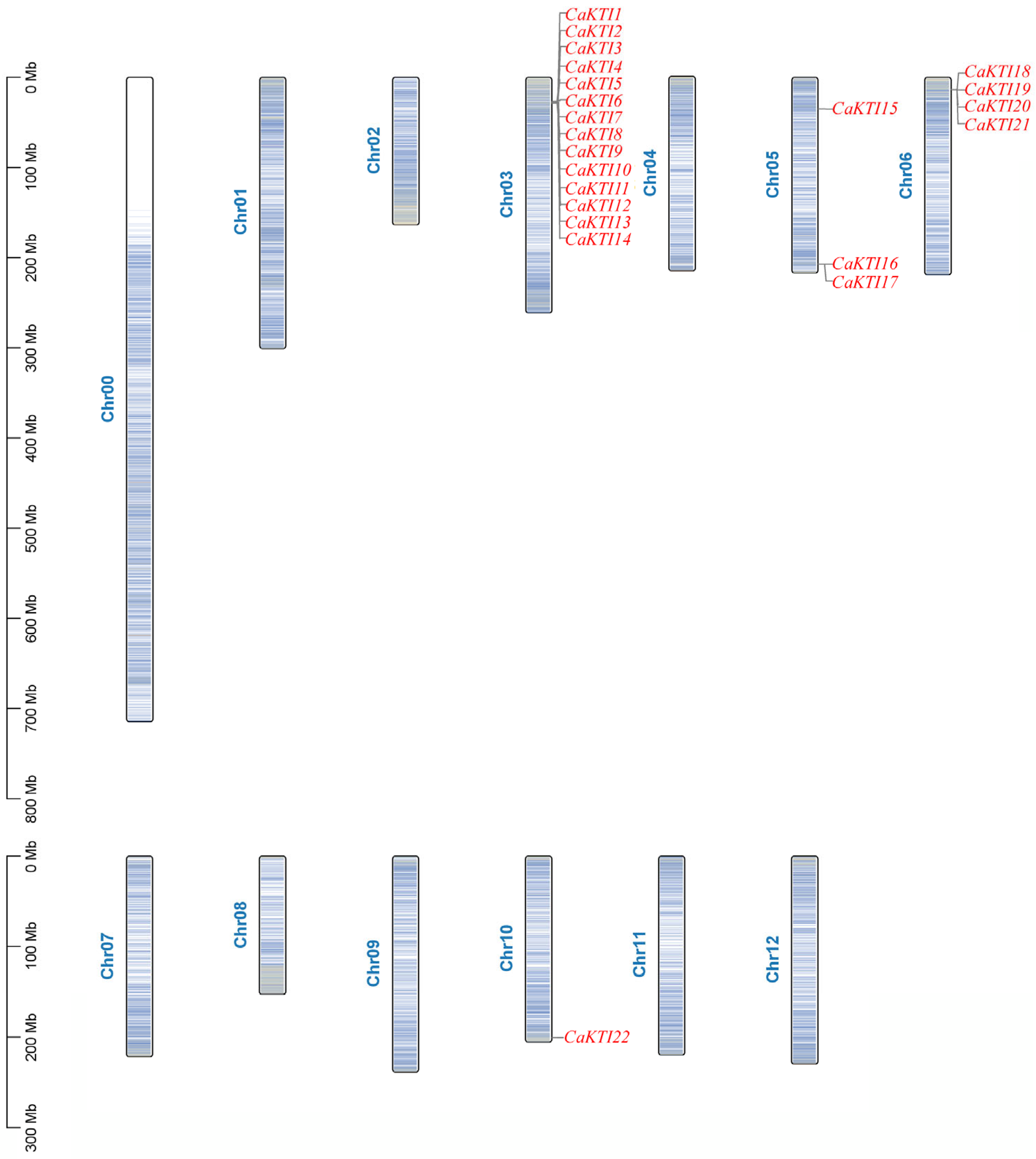
Chromosomal localization analysis showed that the 22 CaKTI genes were distributed on 4 pepper chromosomes (Figure 2). Among them, chromosome CaChr03 contained the largest number of CaKTI family genes, with a total of 14. Three CaKTI family genes were distributed on chromosome CaChr05, and four CaKTI family genes were located on chromosome CaChr06. Only one CaKTI gene was found on chromosome CaChr10. Further analysis of gene tandem duplication revealed that there were two segments of genes with tandem duplication on chromosome CaChr03: CaKTI1 and CaKTI2 were tandemly duplicated, and 7 genes from CaKTI5 to CaKTI11 were also tandemly duplicated. On chromosome CaChr05, CaKTI6 and CaKTI7 had gene duplication, while all 4 CaKTI family genes on chromosome CaChr06 had gene duplication (Figure 2). These results indicate that tandem duplication is the main cause of CaKTI gene duplication.

3.3. Analysis of Conserved Domains and Gene Structure of Pepper CaKTIs

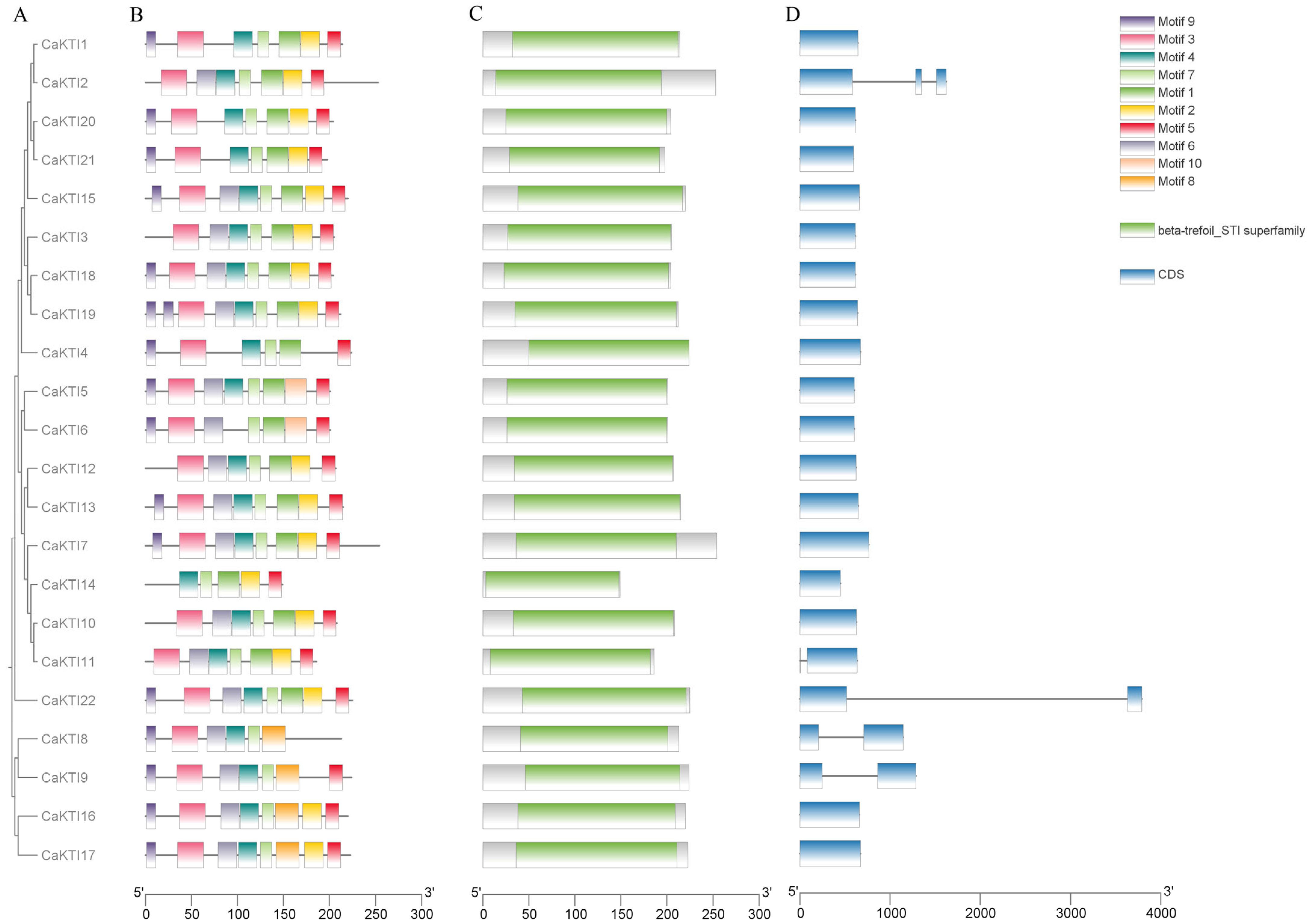
A total of 10 different conserved motifs were identified in the 22 CaKTI proteins (Figure 3B). The number of motifs varied among each CaKTI protein, ranging from 5 to 8. Among them, Motif7 was present in all CaKTI proteins, and Motif3, Motif4, and Motif5 existed in most CaKTI proteins, indicating that Motif7, Motif3, Motif4, and Motif5 were relatively conserved during the evolution of the KTI gene family. In addition, combined with the phylogenetic tree, it was found that CaKTI proteins within the same branch showed high similarity in motif distribution (Figure 3A,B). Analysis of the 22 CaKTI proteins using NCBI CDD showed that all 22 CaKTI proteins contained the “beta-trefoil_STI superfamily” conserved domain (Figure 3C). Analysis of the exon-intron distribution of the 22 CaKTI genes revealed that CaKTI2 contained two introns: CaKTI8, CaKTI9, CaKTI11, and CaKTI22 contained one intron each, while the other CaKTI genes contained no introns (Figure 3D).

3.4. Promoter Analysis of Pepper CaKTI Genes

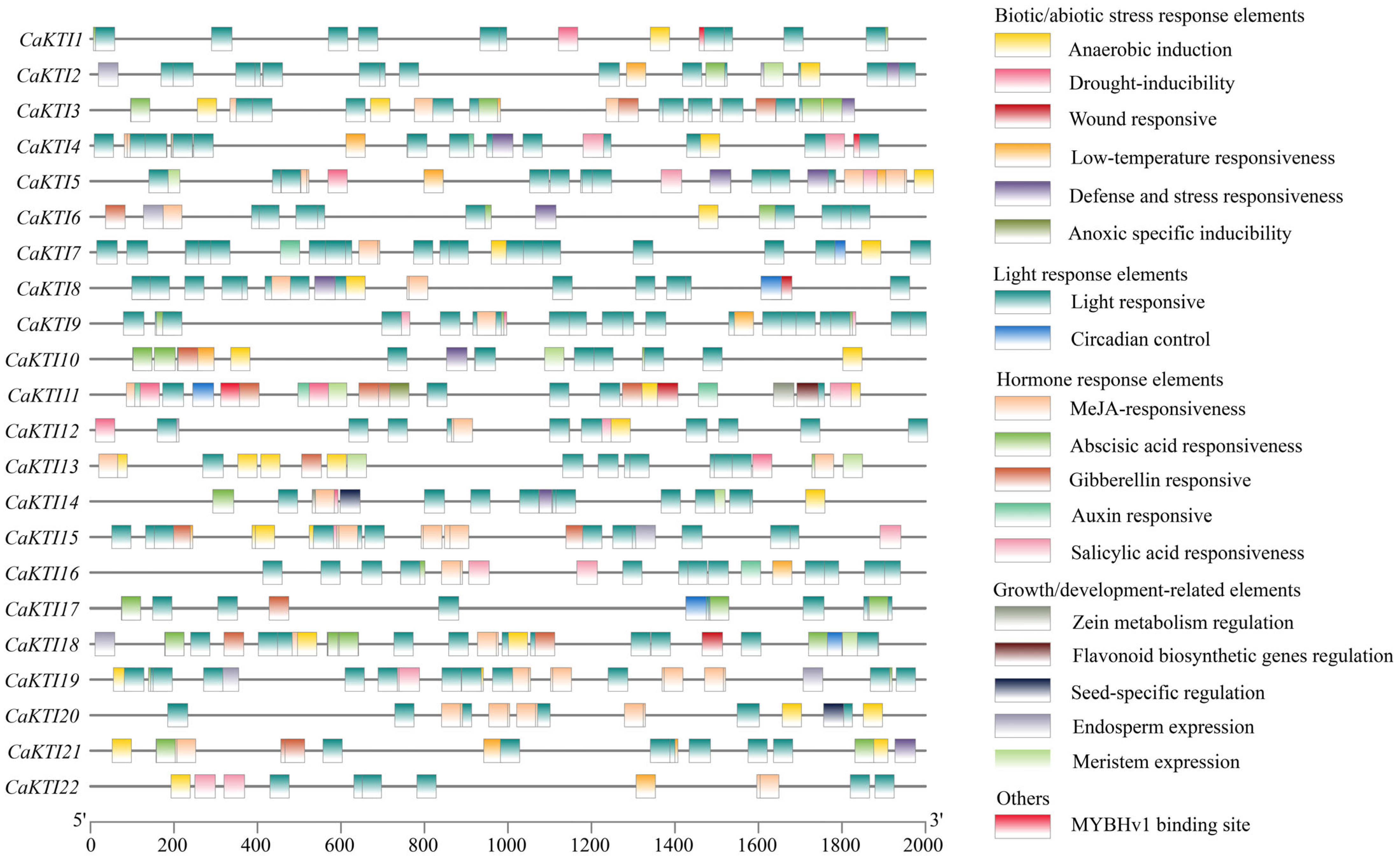
To clarify the expression regulation characteristics of pepper CaKTI genes, PlantCARE was used to analyze the cis-acting elements in the 2000 bp region upstream of the start codon of 22 CaKTI genes (Figure 4). The results showed that 19 types of cis-acting elements were identified in the promoter regions of the 22 CaKTI genes, which could be divided into 5 major categories: biotic/abiotic stress response elements, hormone response elements, light response elements, growth/development-related elements, and others. Among the biotic/abiotic stress response elements, there were 6 types of response elements. Among them, anaerobic induction elements were the most widely distributed, present in the promoters of 19 CaKTI genes; this was followed by low-temperature induction elements, present in the promoters of 11 CaKTI genes; defense and stress response elements in the promoters of 10 CaKTI genes; drought response elements in 7 CaKTI gene promoters; and wound response elements in the promoters of CaKTI8, CaKTI11, and CaKTI18, while anoxia-specific induction elements were only present in the promoter of CaKTI11.
In the category of light response elements, light response elements were distributed in the promoters of all 22 CaKTI genes, and circadian rhythm control elements were only present in the promoters of CaKTI7, CaKTI8, CaKTI11, CaKTI17, and CaKTI18. Among the hormone response elements, abscisic acid response elements were the most abundant, present in the promoters of 19 CaKTI genes, followed by methyl jasmonate response elements, present in the promoters of 17 CaKTI genes. Gibberellin response elements were found in the promoters of 10 CaKTI genes, salicylic acid response elements in 9 CaKTI gene promoters, while auxin response elements were only present in the promoters of CaKTI4, CaKTI7, CaKTI11, and CaKTI16.
In the growth/development-related elements, meristem-specific expression elements were present in the promoters of 7 CaKTI genes, endosperm-specific expression elements in 6 CaKTI gene promoters, and seed-specific expression elements only in the promoters of CaKTI14 and CaKTI20. The flavonoid biosynthesis gene regulatory element was only found in the promoter of CaKTI11, while the zein metabolism regulatory element was detected in the promoters of CaKTI3, CaKTI11, and CaKTI14. In addition, MYBHv1 binding site elements were only identified in the promoters of CaKTI1, CaKTI4, and CaKTI11.

3.5. Tissue Expression Characteristics of Pepper CaKTI Genes

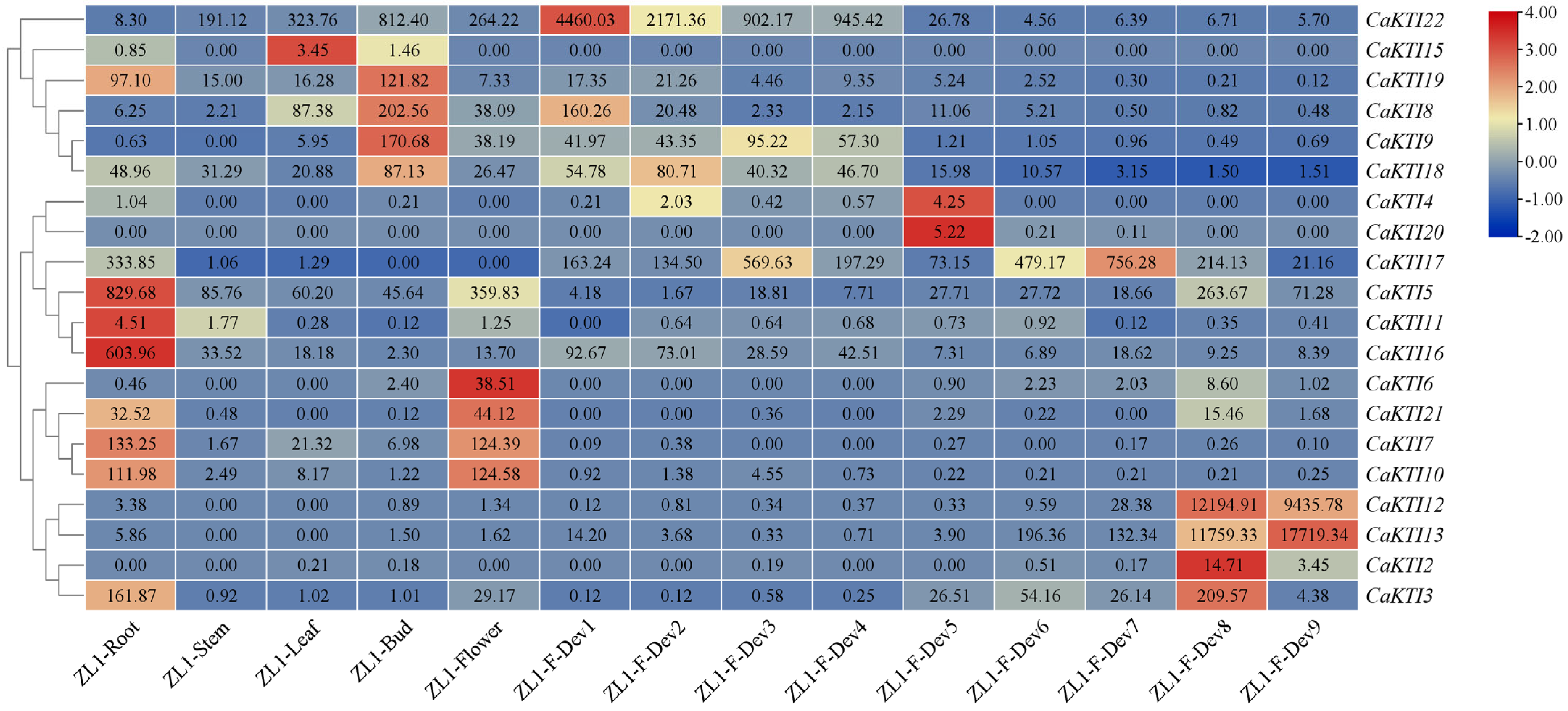
Analysis of the expression profiles of the pepper CaKTI gene family in different tissues and fruit development stages revealed that the family members exhibited distinct tissue-specific and developmental stage-specific expression patterns (Figure 5). CaKTI1 and CaKTI14 were not expressed in any of the tested tissues or fruit development stages. Most genes displayed low expression levels in vegetative and reproductive organs, including roots, stems, leaves, buds, and flowers. A few members, such as CaKTI5 and CaKTI16, were highly expressed in root tissues, while CaKTI15 was specifically expressed in leaf tissues. During fruit development, the expression levels of CaKTI12 and CaKTI13 increased sharply at the late developmental stages (Dev8~Dev9), whereas CaKTI22 was highly expressed in flower tissues and the early stage of fruit development, followed by a rapid downregulation. CaKTI17 showed relatively high expression levels in both fruit and root tissues. In addition, some other genes, such as CaKTI4 and CaKTI20, were specifically expressed only at a few developmental stages. Overall, the expression patterns of different CaKTI members were significantly differentiated, suggesting that they may undertake diverse biological functions during the development of different pepper tissues and fruit ripening.

3.6. Expression Characteristics of Pepper CaKTI Genes Under Verticillium dahliae Infection

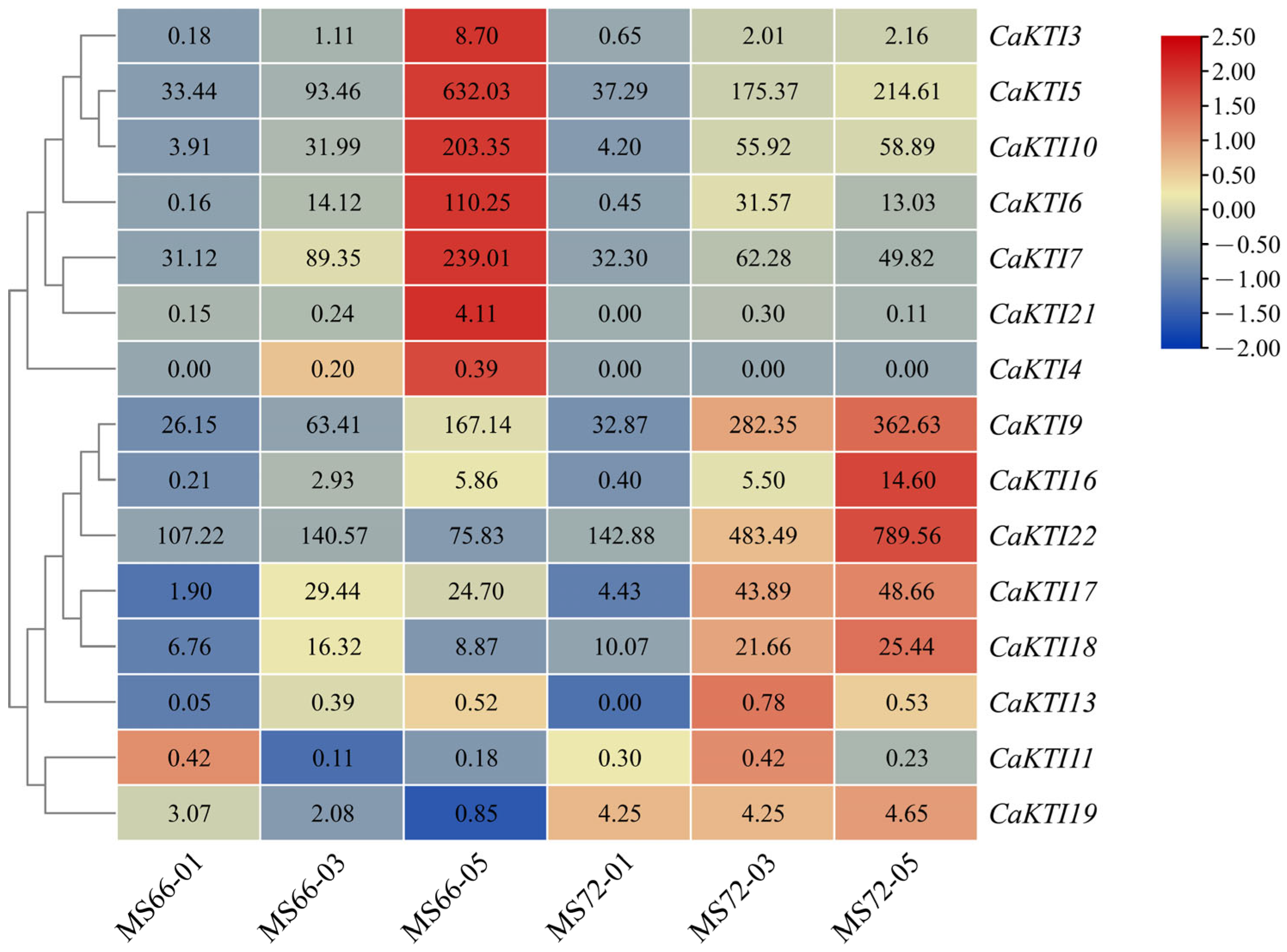
To investigate the response characteristics of the CaKTI gene family to V. dahliae infection, we analyzed publicly available transcriptome data from an in vitro leaf inoculation system [31]. These data were derived from gene expression profiles of detached leaves from the susceptible cultivar MS66 and the resistant cultivar MS72 following inoculation with V. dahliae. Our analysis revealed distinct expression patterns of CaKTI family members between the two cultivars (Figure 6). Among them, CaKTI1, CaKTI2, CaKTI8, CaKTI12, CaKTI14, CaKTI15, and CaKTI20 showed no detectable expression in either cultivar. Notably, in detached leaves of the resistant pepper cultivar MS72, five genes—CaKTI9, CaKTI16, CaKTI17, CaKTI18, and CaKTI22—showed significantly stronger induced upregulation and higher transcript accumulation. These expression patterns suggest their responsiveness to V. dahliae stress in this in vitro system and imply their potential involvement in early or basal defense responses of pepper against pathogen infection. Collectively, these results provide valuable candidate gene resources for further functional characterization under conditions that more closely mimic natural infection.
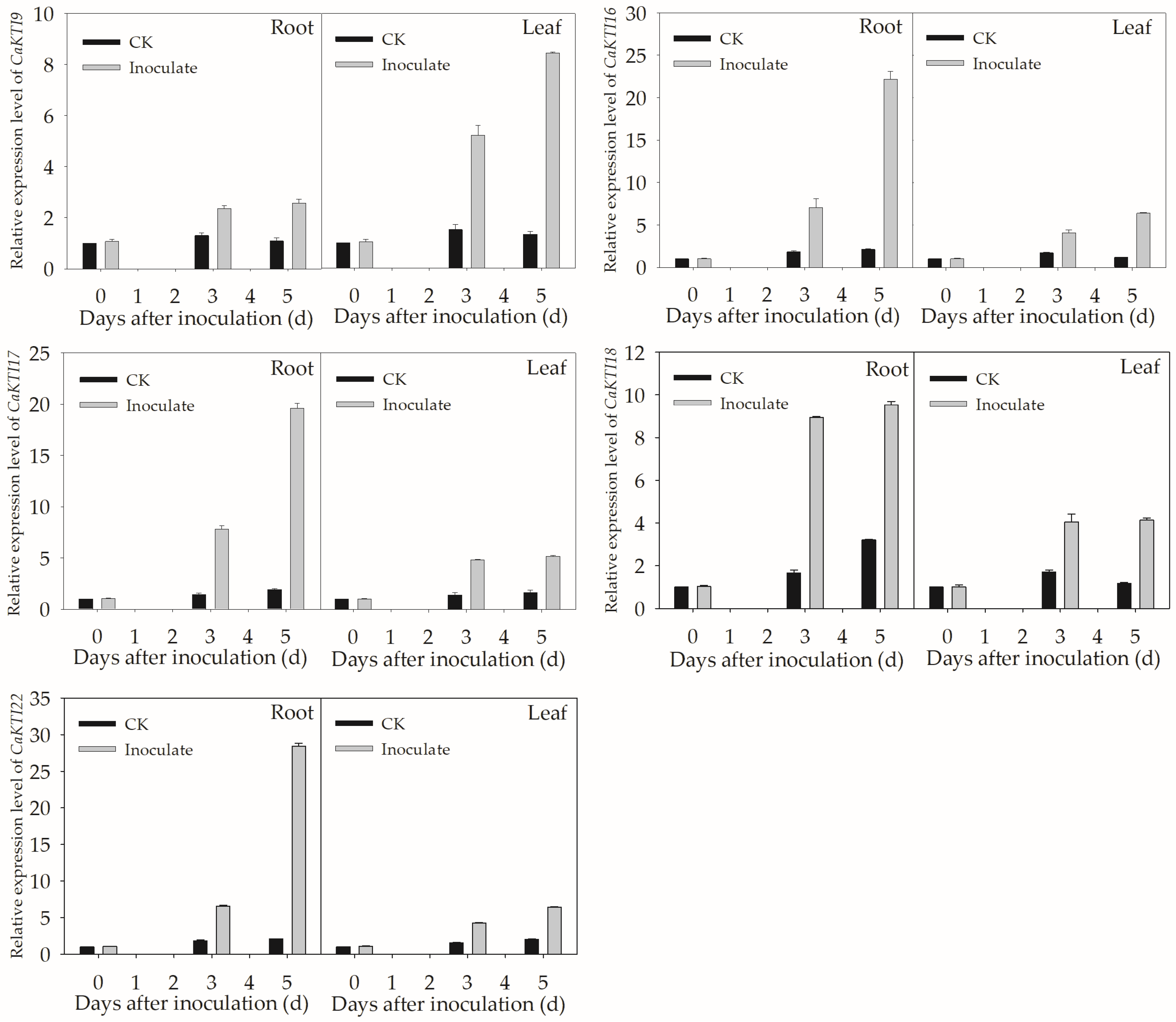
To further explore the response of these candidate CaKTI genes under conditions more closely mimicking the natural infection route of V. dahliae, we selected the five responsive CaKTI genes (CaKTI9, CaKTI16, CaKTI17, CaKTI18, and CaKTI22) that were identified in the detached leaf assay and determined their relative expression levels in roots and leaves of the resistant pepper cultivar at 0, 3, and 5 days post-inoculation (dpi) using the whole-plant rhizosphere irrigation inoculation method (Figure 7). All five genes displayed similar response patterns in both roots and leaves: their expression remained low and stable at all time points in the control group (CK), but was strongly induced in the inoculated group, showing obvious time-dependent upregulation following pathogen challenge. In root tissues, the primary infection site of V. dahliae, induction of these genes was rapid and pronounced. Transcript levels of CaKTI16, CaKTI17, CaKTI18, and CaKTI22 began to increase at 3 dpi and peaked at 5 dpi, with expression significantly upregulated compared with the corresponding controls. CaKTI9 was rapidly upregulated in leaves upon inoculation, with expression levels markedly higher than in the control and in inoculated root tissues. In contrast, the upregulation amplitudes of CaKTI16, CaKTI17, CaKTI18, and CaKTI22 in leaf tissues were weaker than those in roots, consistent with the characteristic that V. dahliae mainly infects plants via the root system.

4. Discussion

Plant protease inhibitors, especially Kunitz trypsin inhibitors (KTIs), are vital components of innate immunity and are widely involved in defense against pathogens, insects, and various abiotic stresses. KTI proteins possess a conserved β-treefoil_STI superfamily domain. To date, genome-wide identification of the KTI gene family has been reported in diverse plant lineages, including A. thaliana, soybean, Populus simonii × P. nigra, P. yunnanensis, cotton, Curcuma longa, and tomato, revealing substantial differences in family size, structural architecture, and expression dynamics [7,9,46,47,48,49]. In this study, we systematically identified 22 CaKTI genes in the C. annuum genome, representing a moderately sized family. The gene number is slightly higher than that in tomato (13 KTIs) and tobacco (11 KTIs) but lower than that in potato (40 KTIs). Notably, distinct differences in KTI gene copy numbers exist between monocotyledonous and dicotyledonous plants: monocots generally harbor only 1 to 3 KTI members [46]. This suggests that the expansion of the KTI family is largely specific to dicot plants, implying that KTIs play more essential roles in the growth, development, and stress response processes of dicotyledonous species.
Physicochemical property analysis revealed that the 22 CaKTI proteins varied widely in coding sequence length (450–765 bp), amino acid chain length (149–254 aa), molecular weight (16.43–27.85 kDa), and isoelectric point (pI 5.41–9.57). These parameters indicate structural heterogeneity, which may underlie functional differences in substrate specificity, subcellular localization, and protein stability. All CaKTI proteins contained a β-treefoil_STI superfamily domain, a typical characteristic of the KTI family that confers protease inhibitory activity and multivalent binding capacity [9,46,47]. Conserved motif analysis showed that Motif 7 was present in all CaKTI proteins, and Motif 3, Motif 4, and Motif 5 were also detected in most CaKTI proteins, suggesting that these four motifs are key evolutionarily conserved elements. Furthermore, CaKTI proteins within the same phylogenetic group shared similar motif compositions, indicating structural conservation and potentially analogous functions. Gene structure analysis revealed that most CaKTI genes lacked introns, with only a small number harboring one or two introns, a pattern commonly observed in previously characterized KTI gene families [7,9,49].
Phylogenetic analysis was extended to include representative KTI proteins from key Solanaceae species—pepper, tomato, potato, and tobacco—as well as the outgroup species A. thaliana. The tree resolved four major clades (Groups I–IV). Group I was dominated by Arabidopsis KTIs, whereas Groups III and IV were Solanaceae-specific, suggesting clade-specific evolution of the gene family. Groups II and III contained the majority of CaKTI, which clustered closely with homologs from tomato and potato, indicating high sequence conservation. Such species-specific clustering of KTI members has also been reported in the soybean KTI family [47], implying substantial structural divergence among KTIs from different plant lineages. This divergence may arise from distinct selective pressures and mutational events during evolution, leading to lineage-specific biological functions of KTI. Accordingly, functional characterization of the KTI family should take into account the unique features of individual species. Tandem duplication events were detected on chromosome CaChr03, where 14 CaKTI genes were densely distributed. Gene duplication represents a major driving force for the expansion and functional diversification of gene families. Tandem duplication of KTI gene families has also been observed in other plant species [9,47,48]. The expansion of the CaKTI gene family not only increases genetic diversity but may also enhance adaptive advantages in pepper to cope with complex environmental and physiological demands. In addition, cis-acting element analysis identified 19 types of cis-regulatory elements in the promoters of CaKTI genes, including those responsive to biotic/abiotic stresses, hormones, and growth/developmental signals. These elements may participate in the regulation of CaKTI gene expression under diverse environmental and developmental conditions.
The tissue-specific and developmental stage-specific expression patterns of CaKTI genes indicate that they may play important regulatory roles in pepper growth and development, which is consistent with the widely reported functions of KTI genes in plant growth and stress responses. Previous studies have shown that KTI genes are not only core components of plant defense systems but also widely involved in diverse physiological processes such as cell growth, cell cycle regulation, and developmental growth. For instance, AtKTI1 is expressed in tissues of A. thaliana such as flower buds, inflorescence stems, rosette leaves, and roots, and overexpression of AtKTI1 can advance the flowering time of A. thaliana [10]. In tobacco, NtKTI1 is preferentially expressed in roots and stems, and overexpression of NtKTI1 significantly enhances tobacco resistance to R. solani [16]. In pepper, most CaKTI genes showed low expression levels in vegetative and reproductive organs such as roots, stems, leaves, buds, and flowers, while a few genes exhibited specific high expression in certain tissues: CaKTI5 and CaKTI16 were highly expressed in roots, CaKTI15 was specifically expressed in leaves, and CaKTI17 was highly expressed in both roots and fruits, indicating that these genes may be involved in the physiological processes of specific tissues. The high expression of CaKTI5 and CaKTI16 in roots may be related to the defense function of roots against soil-borne pathogens, as roots are the first line of defense against soil-borne diseases. During fruit development, the expression levels of CaKTI12 and CaKTI13 were significantly upregulated in the late developmental stages (Dev8~Dev9), and CaKTI22 was highly expressed in flowers and the early stage of fruit development, followed by a rapid downregulation, indicating that these genes may be involved in the regulation of fruit ripening and flower development.
Previous studies have reported that Solanaceous KTIs participate in the regulation of plant resistance to biotic stresses. Multiple Kunitz trypsin inhibitors have been identified in potato tubers, showing potential antifungal and antibacterial activities [50]. KTI protease inhibitors on potato chromosome III are associated with resistance to late blight [51]. NtKTI1 confers tobacco resistance to R. solani, R. nigricans, and P. nicotianae var. Nicotianae [16]. Transformation of soybean KTI3 into potato and tobacco can improve insect resistance in transgenic plants [52]. Given the devastating impact of Verticillium wilt, a soil-borne disease, on global pepper production, it is particularly important to investigate the association between CaKTI genes and pepper resistance to V. dahliae. First, we analyzed the expression profiles of CaKTI genes in detached leaves of two pepper cultivars differing in Verticillium wilt resistance following inoculation with V. dahliae. The results showed that CaKTI9, CaKTI16, CaKTI17, CaKTI18, and CaKTI22 were significantly induced in the resistant cultivar MS72 after inoculation, implying that they may participate in early or basal defense responses against pathogen infection. However, detached leaf assays have limitations, as gene expression can also be affected by abscission, senescence, and wounding induction. Nevertheless, these results provide valuable candidate gene resources for further functional characterization under conditions more closely resembling natural infection. To this end, we further performed qRT-PCR to analyze the expression patterns of the five candidate CaKTI genes in roots and leaves of resistant pepper plants after soil-drench inoculation with V. dahliae. The results showed that all five CaKTI genes were significantly induced in both roots and leaves, with stronger induction of CaKTI16, CaKTI17, CaKTI18, and CaKTI22 in roots than in leaves. This is consistent with the fact that V. dahliae primarily invades host plants through roots, suggesting that these genes may play crucial roles in early root defense against pathogen ingress. In contrast, CaKTI9 was rapidly upregulated in leaves with higher transcript levels than in roots, indicating that CaKTI9 may be involved in systemic defense responses in pepper leaves following pathogen infection. Notably, CaKTI9, CaKTI16, CaKTI17, CaKTI18, and CaKTI22 all clustered within the same phylogenetic clade (Group III), indicating strong evolutionary conservation of defense-related functions among CaKTIs in this clade, which may share similar regulatory mechanisms or biochemical functions in response to V. dahliae.
The response of CaKTI genes to V. dahliae infection may be related to their promoter cis-acting elements. Promoter analysis showed that CaKTI gene promoters contained multiple biotic stress response elements, such as defense and stress response elements, drought response elements, and wound response elements, which can be recognized and bound by transcription factors under pathogen infection, thereby activating the expression of CaKTI genes. In addition, hormone response elements such as abscisic acid response elements and methyl jasmonate (MeJA) response elements in the promoters may also participate in the regulation of CaKTI gene expression under V. dahliae infection, as these hormones are closely related to plant disease resistance. MeJA is an important signal molecule in plant defense responses; for example, the expression of ClKTI in turmeric is generally increased under MeJA treatment, with the highest expression in roots and stems [53]. A novel Kunitz trypsin inhibitor NaMLP, co-regulated by JA and ethylene signals, confers resistance to Spodoptera litura in Nicotiana attenuata [54]. KTI_400 and KTI_600 in poplar are strongly induced by mechanical damage and MeJA treatment, and overexpression of KTI_400 and KTI_600 can improve poplar resistance to Helicoverpa armigera [55]. The high abundance of MeJA response elements in CaKTI gene promoters suggests that CaKTI genes may be regulated by the MeJA signaling pathway and participate in pepper stress resistance.
In summary, the CaKTI gene family in pepper exhibits obvious structural conservation and functional diversity. Its members exhibit tissue-specific and developmental stage-specific expression patterns, and their strong induction upon V. dahliae infection associates them with pepper’s response to this pathogen. The results of this study enrich the understanding of the CaKTI gene family in pepper, provide a theoretical basis and candidate gene resources for clarifying the molecular mechanism of CaKTI genes in pepper disease resistance, and suggest potential avenues for the application of CaKTI genes in pepper molecular breeding for disease resistance. However, whether the CaKTI genes are directly involved in the regulation of pepper resistance against V. dahliae, directly inhibit the growth of V. dahliae, or enhance the actual resistance of plants remains to be further studied through transgenic functional verification, protein–protein interaction analysis and pathway dissection. These studies will further supplement the existing knowledge of KTI-mediated plant defense mechanisms and provide more comprehensive technical support for the molecular breeding of disease-resistant pepper.

5. Conclusions

In this study, we identified 22 CaKTI genes in pepper and characterized their physicochemical properties, gene structures, evolutionary relationships, and expression patterns. All CaKTI proteins harbored the conserved beta-trefoil_STI domain. Phylogenetic analysis revealed that most CaKTI genes clustered tightly with tomato and potato homologs, indicating evolutionary conservation within the Solanaceae. Chromosomal mapping showed uneven distribution across four chromosomes, with tandem duplication as the main force driving family expansion. CaKTI genes displayed distinct tissue- and development-specific expression profiles. Following V. dahliae infection, five CaKTI genes were significantly induced in the resistant pepper genotype, particularly in roots, consistent with root-mediated pathogen invasion. MeJA-responsive elements in their promoters suggest potential regulation by the jasmonate signaling pathway. Notably, these five defense-responsive genes all belonged to Group III. Collectively, our results identify key CaKTI genes associated with V. dahliae resistance and provide valuable candidate genes and theoretical support for further functional analysis and molecular breeding of disease-resistant pepper varieties.

Author Contributions

Conceptualization, X.H. and Q.H.; methodology, Y.W. and Q.H.; software, Y.W. and L.Z.; validation, Y.W. and J.W.; formal analysis, Y.W. and X.W.; investigation, X.W. and H.L.; resources, X.H.; data curation, Y.W., L.Z. and J.W.; writing—original draft preparation, Y.W., L.Z. and J.W.; writing—review and editing, X.H. and Q.H.; visualization, Y.W. and H.L.; supervision, X.H.; project administration, X.H. and Q.H.; funding acquisition, X.H. and Q.H. All authors have read and agreed to the published version of the manuscript.

Funding

This research was funded by the Maoming Science and Technology Plan Project (2022S033), Guangdong Science and Technology Innovation Strategy Special Project (Major Project and Task List) (2023S017083), Maoming City Street Rural Science and Technology Special Envoy Project-Xiaguo Street (z20250070), and Guangdong University of Petrochemical Technology College Student Innovation and Entrepreneurship Project (25C239).

Data Availability Statement

The data are presented in the article. Further inquiries can be directed to the corresponding author.

Acknowledgments

Thank you to Maoming Maoshu Seed Industry Technology Co., Ltd. for providing the disease-resistant variety MS72 seeds.

Conflicts of Interest

The authors declare no conflicts of interest.

References

  1. Han, G.Z. Origin and evolution of the plant immune system. New Phytol. 2019, 222, 70–83. [Google Scholar] [CrossRef]
  2. Jones, J.D.; Staskawicz, B.J.; Dangl, J.L. The plant immune system: From discovery to deployment. Cell 2024, 187, 2095–2116. [Google Scholar] [CrossRef] [PubMed]
  3. Dunaevsky, Y.E.; Elpidina, E.N.; Vinokurov, K.S.; Belozersky, M.A. Protease inhibitors in improvement of plant resistance to pathogens and insects. Mol. Biol. 2005, 39, 608–613. [Google Scholar] [CrossRef]
  4. Wang, X.; Wang, B.; Zhu, X.; Zhao, Y.; Jin, B.; Wei, X. Exogenous nitric oxide alleviates the damage caused by Tomato Yellow Leaf Curl Virus in tomato through regulation of peptidase inhibitor genes. Int. J. Mol. Sci. 2022, 23, 12542. [Google Scholar] [CrossRef] [PubMed]
  5. Bendre, A.D.; Ramasamy, S.; Suresh, C.G. Analysis of Kunitz inhibitors from plants for comprehensive structural and functional insights. Int. J. Biol. Macromol. 2018, 113, 933–943. [Google Scholar] [CrossRef]
  6. Arnaiz, A.; Talavera-Mateo, L.; Gonzalez-Melendi, P.; Martinez, M.; Diaz, I.; Santamaria, M.E. Arabidopsis Kunitz trypsin inhibitors in defense against spider mites. Front. Plant Sci. 2018, 9, 986. [Google Scholar] [CrossRef]
  7. Shehzad, S.; Hafeez, A.; Chang, M.S.; Suthar, V.; Khaskheli, R.A.; Fatima, S.; Binish, S.; Rasool, G.; Mehmood, A.; Ali, A.; et al. Genome-wide identification and functional analysis of Kunitz-type trypsin inhibitor gene family in cotton against pest resistance. Int. J. Agric. Biosci. 2026, 15, 168–174. [Google Scholar] [CrossRef]
  8. Wang, B.; Wang, Y.; He, W.; Huang, M.; Yu, L.; Cheng, D.; Du, J.; Song, B.; Chen, H. StMLP1, as a Kunitz trypsin inhibitor, enhances potato resistance and specifically expresses in vascular bundles during Ralstonia solanacearum infection. Plant J. 2023, 116, 1342–1354. [Google Scholar] [CrossRef]
  9. Guo, H.; Ma, S.; Zhang, X.; Xu, R.; Wang, C.; Zhang, S.; Zhao, L.; Li, D.; Zong, D. Identification of Kunitz-Type Inhibitor Gene Family of Populus yunnanensis Reveals a Stress Tolerance Function in Inverted Cuttings. Int. J. Mol. Sci. 2025, 26, 188. [Google Scholar] [CrossRef]
  10. Kim, J.; Baek, S.A.; Im, K.H. Overexpression of a Kunitz-Type Trypsin Inhibitor (AtKTI1) Causes Early Flowering in Arabidopsis. Plant Growth Regul. 2009, 59, 75–81. [Google Scholar] [CrossRef]
  11. Lü, H.; Li, R.; Liu, Q.; Xu, L.; Xu, Y.; Yu, H.; Guo, C.; Long, R. Cloning and Salt Tolerance Function Analysis of MsKTI3 Gene in Alfalfa. Sci. Agric. Sin. 2025, 58, 4497–4511. [Google Scholar] [CrossRef]
  12. Zhou, J.; Die, P.; Zhang, S.; Han, X.; Wang, C.; Wang, P. Overexpression of RpKTI2 from Robinia pseudoacacia Affects the Photosynthetic Physiology and Endogenous Hormones of Tobacco. Plants 2024, 13, 1867. [Google Scholar] [CrossRef] [PubMed]
  13. de Barros, K.M.A.; Sardi, J.D.C.O.; Maria-Neto, S.; Macedo, A.J.; Ramalho, S.R.; de Oliveira, D.G.L.; Pontes, G.S.; Weber, S.S.; de Oliveira, C.F.R.; Macedo, M.L.R. A New Kunitz Trypsin Inhibitor from Erythrina poeppigiana Exhibits Antimicrobial and Antibiofilm Properties against Bacteria. Biomed. Pharmacother. 2021, 144, 112198. [Google Scholar] [CrossRef]
  14. da Silva, M.M.; de Oliveira, C.F.R.; Almeida, C.V.; Sobrinho, I.A.S.; Macedo, M.L.R. A Novel Kunitz Trypsin Inhibitor from Enterolobium gummiferum Seeds Exhibits Antibiofilm Properties against Pathogenic Yeasts. Molecules 2024, 29, 3777. [Google Scholar] [CrossRef]
  15. Mehmood, S.; Imran, M.; Ali, A.; Munawar, A.; Khaliq, B.; Anwar, F.; Saeed, Q.; Buck, F.; Hussain, S.; Saeed, A.; et al. Model Prediction of a Kunitz-type Trypsin Inhibitor Protein from Seeds of Acacia nilotica L. with Strong Antimicrobial and Insecticidal Activity. Turk. J. Biol. 2020, 44, 188–200. [Google Scholar] [CrossRef]
  16. Huang, H.; Qi, S.D.; Qi, F.; Wu, C.A.; Yang, G.D.; Zheng, C.C. NtKTI1, a Kunitz Trypsin Inhibitor with Antifungal Activity from Nicotiana tabacum, Plays an Important Role in Tobacco’s Defense Response. FEBS J. 2010, 277, 4076–4088. [Google Scholar] [CrossRef]
  17. Yin, M.; Song, N.; Chen, S.Y.; Wu, J.S. NaKTI2, a Kunitz Trypsin Inhibitor Transcriptionally Regulated by Nawrky3 and Nawrky6, is Required for Herbivore Resistance in Nicotiana attenuata. Plant Cell Rep. 2021, 40, 97–109. [Google Scholar] [CrossRef] [PubMed]
  18. Li, J.; Brader, G.; Palva, E.T. Kunitz Trypsin Inhibitor: An Antagonist of Cell Death Triggered by Phytopathogens and Fumonisin B1 in Arabidopsis. Mol. Plant 2008, 1, 482–495. [Google Scholar] [CrossRef]
  19. Gu, L.B.; Pang, H.L.; Lu, K.K.; Liu, H.M.; Wang, X.D.; Qin, G.Y. Process Optimization and Characterization of Fragrant Oil from Red Pepper (Capsicum annuum L.) Seed Extracted by Subcritical Butane Extraction. J. Sci. Food Agric. 2017, 97, 1894–1903. [Google Scholar] [CrossRef]
  20. Rahmani, F.; Kouki, H.; Hamdi, M.; Bouazizi, S.; Khammassi, M.A.; Zernadji, W.; Bulka, S.; Gryczka, U.; Hmaied, F. Implementation of Low Energy e-Beam for Dried Vegetable Treatment: Effect on Microbial and Physicochemical Qualities of Dried Red Chili Pepper (Capsicum annuum L.). Innov. Food Sci. Emerg. Technol. 2025, 101, 103954. [Google Scholar] [CrossRef]
  21. Yang, S.; Luo, X.; Jin, J.; Guo, Y.; Zhang, L.; Li, J.; Tong, S.; Luo, Y.; Li, T.; Chen, X.; et al. Key Candidate Genes for Male Sterility in Peppers Unveiled via Transcriptomic and Proteomic Analyses. Front. Plant Sci. 2024, 15, 1334430. [Google Scholar] [CrossRef]
  22. Parisi, M.; Alioto, D.; Tripodi, P. Overview of Biotic Stresses in Pepper (Capsicum spp.): Sources of Genetic Resistance, Molecular Breeding and Genomics. Int. J. Mol. Sci. 2020, 21, 2587. [Google Scholar] [CrossRef]
  23. Baenas, N.; Belović, M.; Ilic, N.; Moreno, D.A.; García-Viguera, C. Industrial use of Pepper (Capsicum annuum L.) Derived Products: Technological Benefits and Biological Advantages. Food Chem. 2019, 274, 872–885. [Google Scholar] [CrossRef]
  24. Bezabh, Y.A.; Salau, A.O.; Abuhayi, B.M.; Mussa, A.A.; Ayalew, A.M. CPD-CCNN: Classification of Pepper Disease using a Concatenation of Convolutional Neural Network Models. Sci. Rep. 2023, 13, 15581. [Google Scholar] [CrossRef]
  25. Vo, H.H.; Han, V.C.; Tran, T.T.; Vu, T.T.; Tran, D.K. First Report of Wilt and Root Rot on Bell Pepper (Capsicum annuum) caused by Thielaviopsis ethacetica. New Dis. Rep. 2022, 46, e12113. [Google Scholar] [CrossRef]
  26. Ao, N.; Zou, H.; Li, J.; Shao, H.; Kageyama, K.; Feng, W. First Report of Pythium aphanidermatum and Pythium myriotylum causing Root Rot on Chili Pepper (Capsicum annuum L.) in Guizhou, China. Crop Prot. 2024, 181, 106704. [Google Scholar] [CrossRef]
  27. Tang, L.; Huang, W.; Wang, J.; Huang, S.; Liu, Y.; Li, M.; Feng, S. First Report of Lasiodiplodia theobromae Causing Wilt and Fruit Rot of Pepper in Hainan Province, China. Plant Dis. 2025, 109, 1172. [Google Scholar] [CrossRef]
  28. Sanogo, S.; Carpenter, J. Incidence of Phytophthora blight and Verticillium wilt within chile pepper fields in New Mexico. Plant Dis. 2006, 90, 291–296. [Google Scholar] [CrossRef]
  29. Gurung, S.; Short, D.P.G.; Hu, X.; Sandoya, G.V.; Hayes, R.J.; Subbarao, K.V. Screening of Wild and Cultivated Capsicum Germplasm Reveals New Sources of Verticillium Wilt Resistance. Plant Dis. 2015, 99, 1404–1409. [Google Scholar] [CrossRef] [PubMed]
  30. Hassan, O.; Ryu, H.; Choi, H.W. First Report of Verticillium Wilt Caused by Verticillium dahliae on Chilli in South Korea. Plant Dis. 2024, 108, 219. [Google Scholar] [CrossRef]
  31. Huang, X.; He, L.; Tan, H.; Liu, J.; Qiu, Q.; Sun, Q.; Ouyang, L.; Han, H.; He, Q. Transcriptome and Physiological Analyses of Resistant and Susceptible Pepper (Capsicum annuum) to Verticillium dahliae Inoculum. Horticulturae 2024, 10, 1160. [Google Scholar] [CrossRef]
  32. Wilhelm, S. Longevity of the Verticillium Wilt Fungus in the Laboratory and Field. Phytopathology 1955, 45, 180–181. [Google Scholar]
  33. Goicoechea, N. Verticillium-Induced Wilt in Pepper: Physiological Disorders and Perspectives for Controlling the Disease. Plant Pathol. J. 2006, 5, 258–265. [Google Scholar] [CrossRef]
  34. Bhat, R.G.; Smith, R.F.; Koike, S.T.; Wu, B.M.; Subbarao, K.V. Characterization of Verticillium dahliae Isolates and Wilt Epidemics of Pepper. Plant Dis. 2003, 87, 789–797. [Google Scholar] [CrossRef]
  35. González-Salán, M.M.; Bosland, P.W. Sources of resistance to Verticillium wilt in Capsicum. Euphytica 1991, 59, 49–53. [Google Scholar] [CrossRef]
  36. Goicoechea, N. To What Extent Are Soil Amendments Useful to Control Verticillium Wilt? Pest Manag. Sci. 2009, 65, 831–839. [Google Scholar] [CrossRef]
  37. Pei, D.; Zhang, Q.; Zhu, X.; Zhang, L. Biological Control of Verticillium Wilt and Growth Promotion in Tomato by Rhizospheric Soil-Derived Bacillus amyloliquefaciens Oj-2.16. Pathogens 2022, 12, 37. [Google Scholar] [CrossRef] [PubMed]
  38. Vasileva, K.; Todorova, V.; Masheva, S. Evaluation of Collection of Pepper (Capsicum spp.) Resources for Resistance to Verticillium dahliae Kleb. Bulg. J. Agric. Sci. 2019, 25, 1030–1038. [Google Scholar] [CrossRef]
  39. Islam, K.; Kumar, N.; Yadava, S.K.; Momo, J.; Ramchiary, N. Genomic Designing for Breeding Biotic Stress Resistant Pepper Crop. In Genomic Designing for Biotic Stress Resistant Vegetable Crops; Kole, C., Ed.; Springer: Cham, Switzerland, 2022; pp. 65–145. [Google Scholar] [CrossRef]
  40. Naresh, P.; Suwor, P.; Kumsee, N.; Pydi, R.; Kumar, S. Peppers (Capsicum spp.): Domestication, Breeding and Epigenetics. In Biodiversity and Genetic Improvement of Herbs and Spices; Springer: Cham, Switzerland, 2025; pp. 295–317. [Google Scholar] [CrossRef]
  41. Gasteiger, E.; Gattiker, A.; Hoogland, C.; Ivanyi, I.; Appel, R.D.; Bairoch, A. ExPASy: The Proteomics Server for In-Depth Protein Knowledge and Analysis. Nucleic Acids Res. 2003, 31, 3784–3788. [Google Scholar] [CrossRef] [PubMed]
  42. Kumar, S.; Stecher, G.; Tamura, K. MEGA7: Molecular Evolutionary Genetics Analysis Version 7.0 for Bigger Datasets. Mol. Biol. Evol. 2016, 33, 1870–1874. [Google Scholar] [CrossRef]
  43. Chen, C.; Wu, Y.; Li, L.; Wang, X.; Zeng, Z.; Xu, J.; Liu, Y.; Feng, J.; Chen, H.; He, Y.; et al. TB-toolsII: A “One for All, All for One” Bioinformatics Platform for Biological Bigdata Mining. Mol. Plant 2023, 16, 1733–1742. [Google Scholar] [CrossRef] [PubMed]
  44. Zhang, K.; Wang, X.; Chen, S.; Liu, Y.; Zhang, L.; Yang, X.; Yu, H.; Cao, Y.; Zhang, L.; Cai, C.; et al. The gap-Free Assembly of Pepper Genome Reveals Transposable-Element-Driven Expansion and Rapid Evolution of Pericentromeres. Plant Commun. 2025, 6, 101177. [Google Scholar] [CrossRef]
  45. Livak, K.J.; Schmittgen, T.D. Analysis of Relative Gene Expression Data Using Real-Time Quantitative PCR and the 2−ΔΔCT Method. Methods 2001, 25, 402–408. [Google Scholar] [CrossRef]
  46. Zhang, X.; Liao, D.Y.; Gou, X.Z.; Zhou, J.Y.; Liao, H. Structure and function of Plant Kunitz-Type Protease Inhibitors. Plant Physiol. J. 2018, 54, 1391–1400. [Google Scholar] [CrossRef]
  47. Tian, H.; Zhang, Z.; Feng, S.; Song, J.; Han, X.; Chen, X.; Li, C.; Liu, E.; Xu, L.; Yang, M.; et al. Genome-Wide Characterization and Haplotype Module Stacking Analysis of the KTI Gene Family in Soybean (Glycine max L. Merr.). Agronomy 2025, 15, 1210. [Google Scholar] [CrossRef]
  48. Jiang, J.; Sun, Z.; Fan, G.; Yu, Y.; Zhou, B.; Jiang, T. Functional Characterization of the KTI Protein Family and the Role of PsnKTI21 from Populus simonii × P. nigra in Defense against Hyphantria cunea. Plant Sci. 2026, 367, 113089. [Google Scholar] [CrossRef]
  49. Fan, Y.; Yang, W.; Yan, Q.; Chen, C.; Li, J. Genome-Wide Identification and Expression Analysis of the Protease Inhibitor Gene Families in Tomato. Genes 2020, 11, 1. [Google Scholar] [CrossRef]
  50. Bártová, V.; Bárta, J.; Jarošová, M. Antifungal and Antimicrobial Proteins and Peptides of Potato (Solanum tuberosum L.) tubers and Their Applications. Appl. Microbiol. Biotechnol. 2019, 103, 5533–5547. [Google Scholar] [CrossRef]
  51. Odeny, D.A.; Stich, B.; Gebhardt, C. Physical Organization of Mixed Protease Inhibitor Gene Clusters, Coordinated Expression and Association with Resistance to Late Blight at the StKI Locus on Potato Chromosome III. Plant Cell Environ. 2010, 33, 2149–2161. [Google Scholar] [CrossRef] [PubMed]
  52. Marchetti, S.; Delledonne, M.; Fogher, C.; Chiaba, C.; Chiesa, F.; Savazzini, F.; Giordano, A. Soybean Kunitz, C-II and PI-IV Inhibitor Genes Confer Different Levels of Insect Resistance to Tobacco and Potato Transgenic Plants. Theor. Appl. Genet. 2000, 101, 519–526. [Google Scholar] [CrossRef]
  53. Chan, S.N.; Abu Bakar, N.; Mahmood, M.; Ho, C.L.; Mohamad Dzaki, N.; Shaharuddin, N.A. Identification and Expression Profiling of a Novel Kunitz Trypsin Inhibitor (KTI) Gene from Turmeric, Curcuma longa, by Real-Time Quantitative PCR (RT-qPCR). Acta Physiol. Plant. 2017, 39, 12. [Google Scholar] [CrossRef]
  54. Yang, M.; Cheng, J.; Yin, M.; Wu, J. NaMLP, a New Identified Kunitz Trypsin Inhibitor Regulated Synergistically by JA and Ethylene, Confers Spodoptera litura Resistance in Nicotiana attenuata. Plant Cell Rep. 2023, 42, 723–734. [Google Scholar] [CrossRef]
  55. Das, I.S.; Shi, Q.; Dreischhoff, S.; Polle, A. Divergent Functions of Three Kunitz Trypsin Inhibitor (KTI) Proteins in Herbivore Defense in Poplar. BMC Plant Biol. 2026, 26, 153. [Google Scholar] [CrossRef]
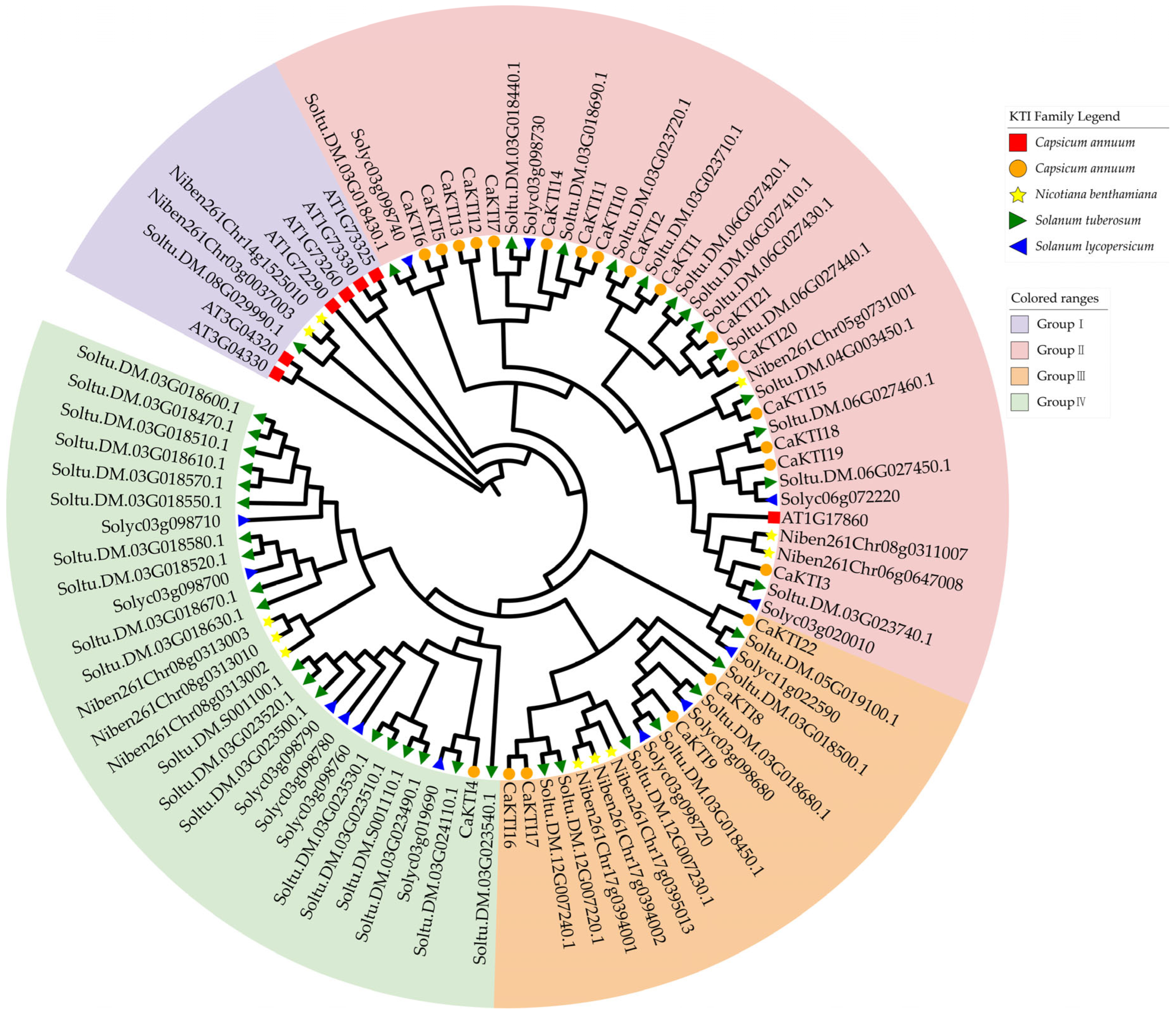
Figure 1. Phylogenetic analysis of KTI family from pepper, tomato, Nicotiana benthamiana, potato and Arabidopsis thaliana. Multiple sequence alignment was performed using 22 pepper CaKTI, 13 tomato SlKTI, 40 potato StKTI, 11 N. benthamiana NbKTI, and 7 A. thaliana AtKTI. A phylogenetic tree was constructed using the Neighbor-Joining method implemented in MEGA software (version 7) with 1000 bootstrap replicates. Clades for Group I, Group II, Group III, and Group IV in the phylogenetic tree are highlighted in purple, red, yellow, and green, respectively.
Ijpb 17 00042 g001
Figure 2. Chromosomal distribution of CaKTI gene family members in pepper. The scale on the left indicates chromosome length. Different colors in the figure represent gene density.
Ijpb 17 00042 g002
Figure 3. The motifs, conserved domains, and gene structures of the 22 CaKTI genes. (A) Phylogenetic tree of the 22 CaKTI proteins. (B) Distribution of motifs in CaKTI proteins. Ten distinct motifs were identified using MEME, with motifs 1–10 shown in different colors. (C) Distribution of conserved domains in CaKTI proteins. Green boxes represent conserved domains. (D) Gene structures of CaKTI genes. Blue boxes indicate exons and black lines indicate introns.
Ijpb 17 00042 g003
Figure 4. Cis-regulatory element analysis of CaKTI genes family of pepper. Different colored boxes represent different cis-regulatory elements and black lines represent the promoter length of the CaKTI genes.
Ijpb 17 00042 g004
Figure 5. Expression heatmap of CaKTI genes in different pepper tissues and fruit development stages. The values represent the FPKM (Fragments Per Kilobase of transcript per Million mapped reads) of roots, stems, leaves, buds, flowers, and fruits. ZL1-Dev1: 0–1 cm fruits; ZL1-Dev2: 1–3 cm fruits; ZL1-Dev3: 3–4 cm fruits; ZL1-Dev4: 4–5 cm fruits; ZL1-Dev5: green fruits; ZL1-Dev6: initial color transition stage; ZL1-Dev7–ZL1-Dev9: 3, 5, and 7 days after the color transition stage. The FPKM values were normalized, and the heatmap was generated using TBtools II. High and low transcription levels are represented by magenta and blue, respectively, and the numbers in the figure are FPKM values.
Ijpb 17 00042 g005
Figure 6. Expression heatmap of CaKTI genes in pepper varieties with different resistance levels after inoculation with Verticillium dahliae. MS66 is a susceptible variety and MS72 is a resistant variety. 01, 03, and 05 represent 0 d, 3 d, and 5 d post-inoculation. The FPKM values were normalized, and the heatmap was generated using TBtools II. High and low transcription levels are represented by magenta and blue, respectively, and the numbers in the figure are FPKM values.
Ijpb 17 00042 g006
Figure 7. Relative expression levels of 5 candidate CaKTI genes in roots and leaves of resistant pepper varieties after inoculation with Verticillium dahliae. CK: control; Inoculate: inoculation with V. dahliae.
Ijpb 17 00042 g007
Table 1. Primer sequences of pepper CaKTI gene and reference gene CaActin for quantitative real-time PCR.
Gene NameForward PrimerReverse Primer
CaKTI9TCACTTGCCCATCTCGTTACCTCGCCTTACTCCTCC
CaKTI16CCACCACTGACACTCTCGACAACAACACGTACGCCTCCAT
CaKTI17TGACACTCCCACCAACCAAGCATAGTGGTGTAGGCCGGAC
CaKTI18CGACGAGGACCAAGAAGGCTCCACCAGTCACCACAA
CaKTI22GTCTAAAGGTGATGCAGGGCTACATAGGGGTGGCAATGGTG
CaActinCCACCTCTTCACTCTCTGCTCTACTAGGAAAAACAGCCCTTGGT
Table 2. Physical and chemical properties of CaKTI gene family in pepper.
Sequence IDGene NameCDS Coding SequenceNumber
of Amino
Acids
Molecular Weight/DIsoelectric Point (pI)Instability IndexAliphatic IndexGrand Average of
Hydropathicity
Capana03g001420CaKTI164521424,176.988.3429.7490.56−0.107
Capana03g001421CaKTI276225327,796.066.8820.40101.260.118
Capana03g001423CaKTI361820522,836.618.6835.1696.490.063
Capana03g001465CaKTI467522424,579.228.4751.9490.850.001
Capana03g001484CaKTI560620121,396.839.1939.9894.080.137
Capana03g001485CaKTI660620121,540.979.3340.1094.580.074
Capana03g001486CaKTI776525427,852.178.5430.1596.180.033
Capana03g001487CaKTI864221323,376.716.348.4286.43−0.054
Capana03g001488CaKTI967522424,586.188.2638.5388.30−0.010
Capana03g001489CaKTI1062720822,910.569.2327.4998.220.058
Capana03g001490CaKTI1156118620,509.459.0628.6585.75−0.273
Capana03g001491CaKTI1262420722,258.365.4136.6294.010.043
Capana03g001492CaKTI1364821523,454.656.1228.3286.00−0.049
Capana03g001550CaKTI1445014916,431.029.4431.3386.24−0.184
Capana05g000903CaKTI1566322023,990.659.0739.7888.95−0.013
Capana05g002308CaKTI1666322024,501.388.2826.06102.730.061
Capana05g002309CaKTI1767222325,105.158.9928.8496.190.018
Capana06g000841CaKTI1861520422,882.558.4727.3988.68−0.002
Capana06g000842CaKTI1963921223,564.459.1522.3289.480.024
Capana06g000843CaKTI2061520423,082.678.4535.2991.57−0.095
Capana06g000844CaKTI2159719822,772.579.5728.9788.43−0.172
Capana10g002167CaKTI2267822524,984.059.1832.6393.070.045
Disclaimer/Publisher’s Note: The statements, opinions and data contained in all publications are solely those of the individual author(s) and contributor(s) and not of MDPI and/or the editor(s). MDPI and/or the editor(s) disclaim responsibility for any injury to people or property resulting from any ideas, methods, instructions or products referred to in the content.