


In Vitro Bioactivities of Plants Used against Skin Diseases in the Eastern Free State, South Africa
 , and
, and
Abstract
1. Significance of the Main Findings
2. Background
3. Results
3.1. Ethnobotanical Survey
3.2. Phytochemical Analysis
3.3. Antibacterial Activity
3.4. Antifungal Activity
3.5. Antioxidant Activity
3.6. Anti-Inflammatory Activity
4. Discussion
4.1. Ethnobotanical Survey
4.2. Phytochemical Analysis
4.3. Antibacterial Activity
4.4. Antifungal Activity
4.5. In Vitro Antioxidant Activity
4.6. In Vitro Anti-Inflammatory Activity
5. Materials and Methods
5.1. Study Area
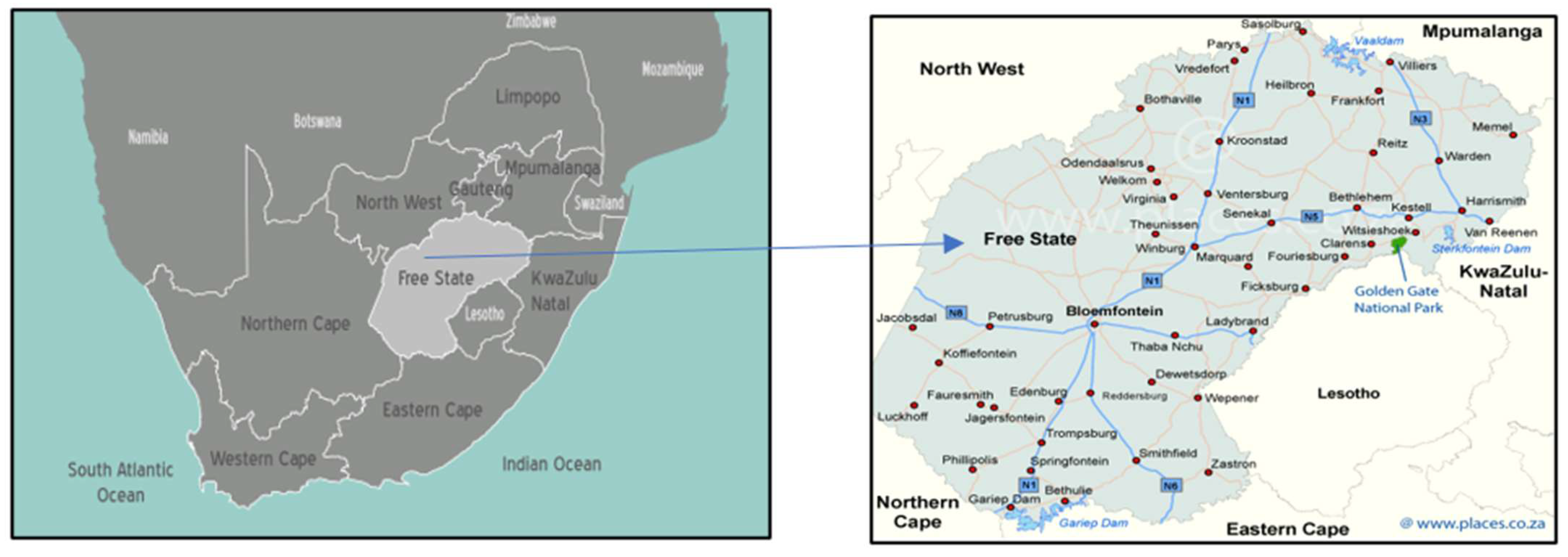
5.2. Ethnobotanical Survey
5.3. Plant Collection and Identification
5.4. Intellectual Property Agreement Statement
5.5. Relative Frequency of Citation (RFC)
5.6. Preparation of Plant Extracts
5.7. Phytochemical Analysis
5.8. Determination of Total Phenol Content
5.9. Antibacterial Activity
5.10. Antifungal Activity
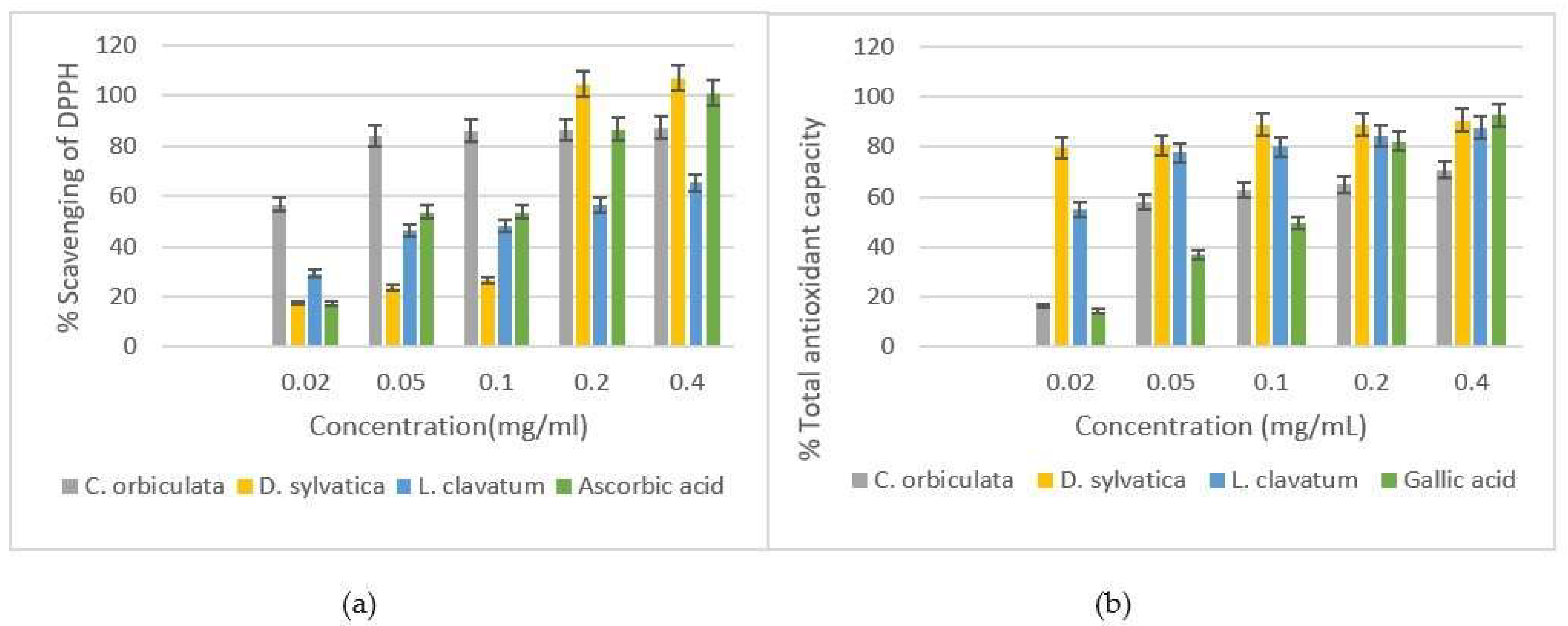
5.11. In Vitro Antioxidant Assay
5.12. DPPH Radicals Scavenging Assay
5.13. Phosphomolybdenum Total Antioxidant Capacity Assay
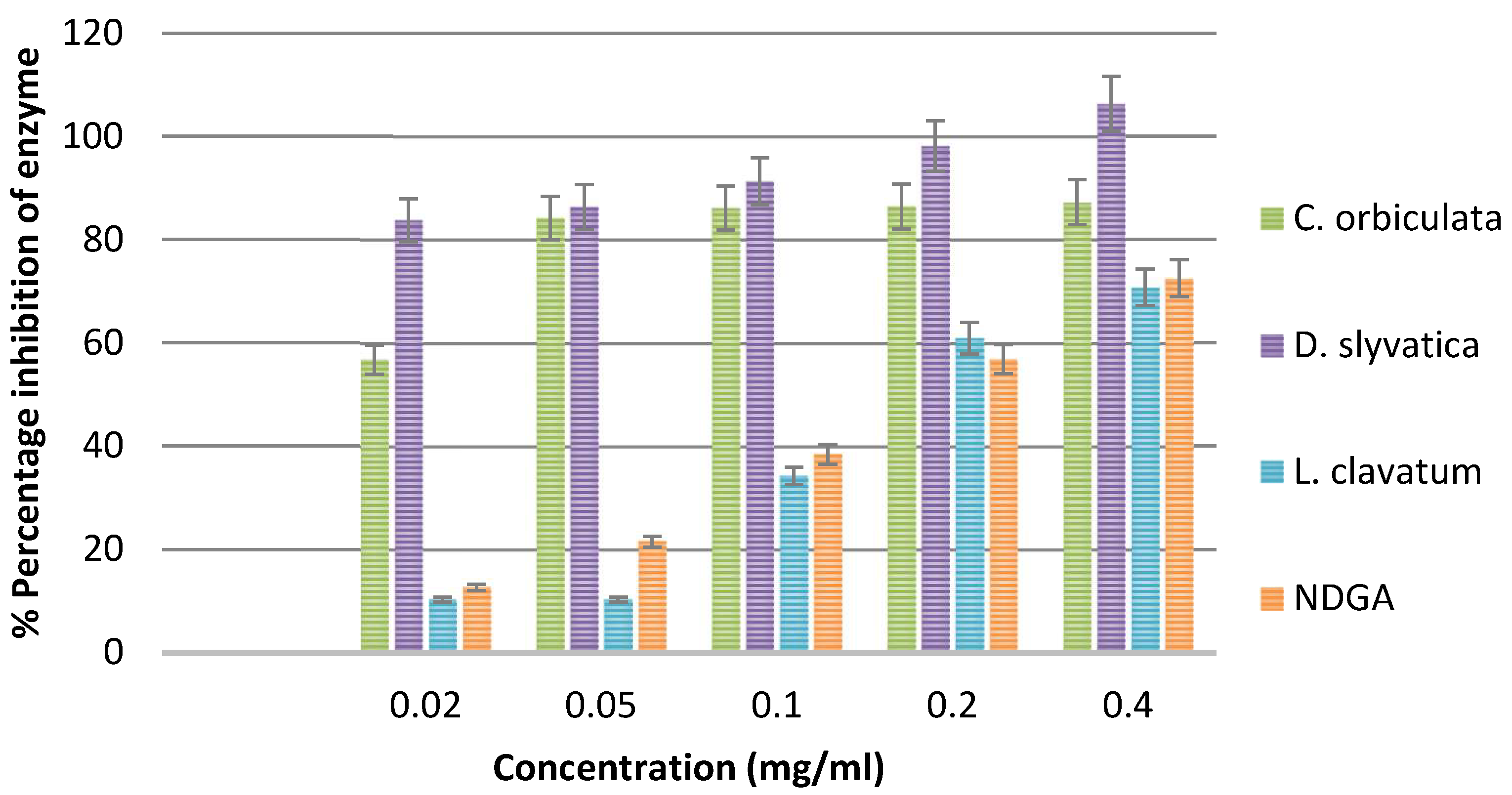
5.14. In Vitro Anti-Inflammatory Activity Assay
6. Conclusions
Author Contributions
Funding
Institutional Review Board Statement
Informed Consent Statement
Data Availability Statement
Acknowledgments
Conflicts of Interest
List of Abbreviations
References
- Weideman, L. An Investigation into the Antibacterial Activities of Medicinal Plants Traditionally Used in the Eastern Cape to Treat Secondary Skin Infections Associated with Burn Wounds. Ph.D. Thesis, Nelson Mandela Metropolitan University, Department of Biomedical Sciences, Gqeberha, South Africa, 2007. Available online: https://hdl.handle.net/10948/172 (accessed on 31 January 2005).
- Grice, E.A.; Kong, H.H.; Conlan, S.; Deming, C.B.; Davis, J.; Young, A.C.; NISC Comparative Sequencing Program; Bouffard, G.G.; Blakelesley, R.W.; Murray, P.R.; et al. Topographical and temporal diversity of the human skin microbe. Science 2009, 324, 1190–1192. [Google Scholar] [CrossRef]
- Török, E.; Conlon, C.P. Skin and soft tissue infections. Medicine 2005, 33, 84–88. [Google Scholar] [CrossRef]
- Dryden, M.S. Complicated skin and soft tissue infection. J. Antimicrob. Chemother. 2010, 65, 35–44. [Google Scholar] [CrossRef]
- Kowsalya, V. Antibacterial activity of honey and Erytlaria Acualis against bacteria isolated from burnt wound sepsis. J. Pharm. Biol. Sci. 2012, 1, 1–20. [Google Scholar] [CrossRef]
- Von Eiff, C.; Peters, G.; Heilmann, C. Pathogenesis of infections due to coagulase negative staphylococci. Lancet Infect. Dis. 2002, 2, 677–685. [Google Scholar] [CrossRef]
- Bagdonas, R.; Tamelis, A.; Rimdeika, R. Staphylococcus aureus infection in the surgery of burns. Medicina 2003, 39, 1078–1081. [Google Scholar]
- Armstrong, D.; Neu, H.; Peterson, L.R.; Tomasz, A.; Olajuyigbe, O.O.; Afolayan, A.J.; Wilcox, M.H.; Spencer, R.C.; Cercenado, E.; Garau, J.; et al. Editorial: The Prospects of Treatment Failure in the Chemotherapy of Infectious Diseases in the 1990s. Microb. Drug Resist. 1995, 1, 1–4. [Google Scholar] [CrossRef]
- Hansis, M. Pathophysiology of infection—A theoretical approach. Injury 1996, 27, SC5–SC8. [Google Scholar] [CrossRef]
- Stevens, D.L.; Bisno, A.L.; Chambers, H.F.; Everett, E.D.; Dellinger, P.; Goldstein, E.J.C.; Gorbach, S.L.; Hirschmann, J.V.; Kaplan, E.L.; Montoya, J.G.; et al. Practice guidelines for the management of skin and soft-tissue infections. Clin. Infect. Dis. 2005, 41, 1373–1406. [Google Scholar] [CrossRef]
- Wang, J.-M.; Lim, H.-K. Necrotizing fasciitis: Eight-year experience and literature review. Braz. J. Infect. Dis. 2014, 18, 137–143. [Google Scholar] [CrossRef]
- Maseleno, A.; Hasan, M. Skin diseases expert system using Dempster-Shafer theory. Int. J. Intell. Syst. Appl. 2012, 4, 38–41. [Google Scholar] [CrossRef][Green Version]
- Hay, R.; Bendeck, S.E.; Chen, S.; Estrada, R.; Haddix, A.; Mcleod, T.; Mahé, A. Skin Diseases. In Disease Control Priorities in Developing Countries, 2nd ed.; Jamison, D.T., Breman, J.G., Measham, A.R., Alleyne, G., Claeson, M., Evans, D.B., Jha, P., Mills, A., Musgrove, P., Eds.; The International Bank for Reconstruction and Development/The World Bank: Washington, DC, USA; Oxford University Press: New York, NY, USA, 2006; Volume 37, pp. 707–721. [Google Scholar]
- Davis, S.C.; Cazzaniga, A.L.; Eaglstein, W.H.; Mertz, P.M. Over-the-counter topical antimicrobials: Effective treatment? Arch. Dermatol. Res. 2005, 297, 190–195. [Google Scholar] [CrossRef] [PubMed]
- Kumar, S.; Bajwa, B.S.; Kuldeep, S.; Kalia, A.N. Anti-inflammatory activity of herbal plants: A Review. Int. J. Adv. Pharm. Biol. Chem. 2013, 2, 2277–4688. [Google Scholar]
- De Wet, H.; Nciki, S.; van Vuuren, S.F. Medicinal plants used for the treatment of various skin disorders by a rural community in northern Maputaland, South Africa. J. Ethnobiol. Ethnomed. 2013, 9, 51–60. [Google Scholar] [CrossRef] [PubMed]
- Bowler, P.G.; Duerden, B.I.; Armstrong, D.G. Wound microbiology and associated approaches to wound management. Clin. Microbiol. Rev. 2001, 14, 244–269. [Google Scholar] [CrossRef]
- Apu, A.S.; Bhuyan, S.H.; Prova, S.S.; Muhit, M.A. Anti-inflammatory activity of medicinal plants native to Bangladesh: A review. J. Appl. Pharm. Sci. 2012, 2, 7–10. [Google Scholar]
- Nisa, H.; Kamili, A.N.; Bandh, S.A.; Amin, S.U.; Lone, B.A.; Parray, J.A. Phytochemical screening, antimicrobial and antioxidant efficacy of different extracts of Rumex dentatus L.—A locally used medicinal herb of Kashmir Himalaya. Asian Pac. J. Trop. Dis. 2013, 3, 434–440. [Google Scholar] [CrossRef]
- Murugesan, P.A.; Deviponnuswamy, K.A. Potential anti-inflammatory medicinal plants—A review. Int. J. Pharm. Pharmacol. Sci. 2014, 6, 43–49. [Google Scholar]
- Zengin, G.; Cziáky, Z.; Jekő, J.; Kang, K.W.; Lorenzo, J.M.; Sivanesan, I. Phytochemical Composition and Biological Activities of Extracts from Early, Mature, and Germinated Somatic Embryos of Cotyledon orbiculata L. Plants 2023, 12, 1065. [Google Scholar] [CrossRef]
- Kim, D.H.; Sivanesan, I. Somatic embryogenesis in Hosta minor (Baker) Nakai. Propag. Ornam. Plants 2019, 19, 24–29. [Google Scholar]
- Molefe, N.I. Anthelmintic, Anticancer and Phytochemical Screening of Cotyledon orbiculata; Hermannia depressa; Nicotiana glauca and Potassium Permanganate. Master’s Dissertation, University of the Free State (Qwaqwa Campus), Bloemfontein, South Africa, 2013; 274p. [Google Scholar]
- Cogne, A.L. Phytochemical Investigation of Plants Used in African Traditional Medicine: Dioscorea sylvatica (Dioscoreaceae), Urginea altissima (Liliaceae), Jamesbrittenia fodina and Jamesbrittenia elegantissima (Scrophulariaceae); Universite de Lausanne, Faculte Des Sciences, Institut de Pharmacognosie et Phytochimie: Lausanne, Switzerland, 2002; 206p. [Google Scholar]
- Sibandze, G.F.; Stapleton, P.; Gibbons, S. Constituents of two Dioscorea species that potentiate antibiotic activity against MRSA. J. Nat. Prod. 2020, 83, 1696–1700. [Google Scholar] [CrossRef] [PubMed]
- Li, X.; Kang, M.; Ma, N.; Pang, T.; Zhang, Y.; Jin, H.; Yang, Z.; Song, L. Identification and analysis of chemical constituents and rat serum metabolites in Lycopodium clavatum using UPLC-Q-TOF/MS combined with multiple data-processing approaches. Evid.-Based Complement. Altern. Med. 2019, 2019, 5165029. [Google Scholar] [CrossRef] [PubMed]
- Buwa-Komoreng, L.V.; Mayekiso, B.; Mhinana, Z.; Adeniran, A.L. An ethnobotanical and ethnomedicinal survey of traditionally used medicinal plants in Seymour, South Africa: An attempt toward digitization and preservation of ethnic knowledge. Pharmacogn. Mag. 2019, 15, 115–123. [Google Scholar] [CrossRef]
- Louw, C.; Regnier, T.; Korsten, L. Medicinal bulbous plants of South Africa and their traditional relevance in the control of infectious diseases. J. Ethnopharmacol. 2002, 82, 147–154. [Google Scholar] [CrossRef]
- Trouillas, P.; Calliste, C.-A.; Allais, D.-P.; Simon, A.; Marfak, A.; Delage, C.; Duroux, J.-L. Antioxidant, anti-inflammatory and antiproliferative properties of sixteen water plant extracts used in the Limousin countryside as herbal teas. Food Chem. 2003, 80, 399–407. [Google Scholar] [CrossRef]
- Koduru, S.; Grierson, D.S.; Afolayan, A.J. Ethnobotanical information of medicinal plants used for treatment of cancer in the Eastern Cape Province, South Africa. Curr. Sci. 2007, 92, 45–52. [Google Scholar]
- Wabe, N.; Mohammed, M.; Raju, N. Ethnobotanical survey of medicinal plants in the Southeast Ethiopia used in traditional medicine. Spatula DD-Peer Rev. J. Complement. Med. Drug Discov. 2011, 1, 153–158. [Google Scholar] [CrossRef]
- Awoyinka, O.A.; Balogun, I.O.; Ogunnowo, A.A. Phytochemical screening and in vitro bioactivity of Cnidoscolus aconitifolius (Euphorbiaceae). J. Med. Plants Res. 2007, 1, 63–65. [Google Scholar]
- Cowan, M.M. Plant products as antimicrobial agents. Clin. Microbiol. Rev. 1999, 2, 564–582. [Google Scholar] [CrossRef]
- Namuli, A.; Abdullah, N.; Sieo, C.C.; Zuhainis, S.W.; Oskoueian, E. Phytochemical compounds and antibacterial activity of Jatropha curcas Linn. extracts. J. Med. Plant Res. 2011, 5, 3982–3990. [Google Scholar]
- Orhan, I.; Özçelik, B.; Aslan, S.; Kartal, M.; Karaoglu, T.; Şener, B.; Terzioglu, S.; Choudhary, M.I. Antioxidant and antimicrobial actions of the clubmoss Lycopodium clavatum L. Phytochem. Rev. 2007, 6, 189–196. [Google Scholar] [CrossRef]
- Ogundajo, A.L.; Adeniran, L.A.; Ashafa, A.O. Medicinal properties of Ocotea bullata stem bark extracts: Phytochemical constituents, antioxidant and anti-inflammatory activity, cytotoxicity and inhibition of carbohydrate-metabolizing enzymes. J. Integr. Med. 2018, 16, 132–140. [Google Scholar] [CrossRef] [PubMed]
- Kelmanson, J.E.; Jager, A.K.; van Staden, J. Zulu medicinal plants with antibacterial activity. J. Ethnopharmacol. 2000, 69, 241–246. [Google Scholar] [CrossRef] [PubMed]
- Adeniran, L.A.; Ohanaka, J.N.; McGaw, L.J.; Ashafa, A.O.T. In vitro anti-inflammation, selective cytotoxicity, and inhibition of induced nitric oxide from lipopolysaccharide-stimulated raw 264.7 macrophages activities of flavonoids from Hermannia geniculata Eckl. and Zeyh. roots extract. Pharmacogn Mag. 2020, 16, 145–150. [Google Scholar]
- Pattanayak, S.P.; Sunita, P. Wound healing, anti-microbial and antioxidant potential of Dendrophthoe falcata (L.f) Ettingsh. J. Ethnopharmacol. 2008, 120, 241–247. [Google Scholar] [CrossRef] [PubMed]
- Sakthidevi, G.; Mohan, V.R. Total phenolic, flavonoid contents and in vitro antioxidant activity of Dioscorea alata L. tuber. Int. J. Pharm. Sci. Res. 2013, 5, 11–19. [Google Scholar]
- Hossain, M.A.; Shah, M.D. A study on the total phenols content and antioxidant activity of essential oil and different solvent extracts of endemic plant Merremia borneensis. Arab. J. Chem. 2015, 8, 66–71. [Google Scholar] [CrossRef]
- Safayhi, H.; Mack, A.S.; Sabieraj, I.M.; Anazodo, M.I.; Subramanian, L.R.; Ammon, H.P. Boswellic acids: Novel, specific, non-redox inhibitors of 5-lipoxygenase. J. Pharmacol. Exp. Ther. 1992, 261, 1143–1146. [Google Scholar]
- Abad, M.J.; Bermejo, P.; Villar, A. The activity of flavonoids extracted from Tanacetum microphyllum DC. (Compositae) on soybean lipoxygenase and prostaglandin synthetase. Gen. Pharmacol. 1995, 26, 815–819. [Google Scholar] [CrossRef]
- Kamotou, G.P.P.; Viljoen, A.M.; Erono-Bwalya, A.B.; van Zyl, R.L.; van Vuuren, S.F.; Lourens, A.C.U. The in vitro pharmacological activities and a chemical investigation of three South Africa Salvia species. J. Ethnopharmacol. 2005, 102, 382–390. [Google Scholar] [CrossRef]
- Amoo, S.; Finnie, J.; Van Staden, J. In vitro pharmacological evaluation of three Barleria species. J. Ethnopharmacol. 2009, 121, 274–277. [Google Scholar] [CrossRef] [PubMed]
- Amabeoku, G.J.; Kabatende, J. Antinociceptive and anti-inflammatory activities of leaf methanol extract of Cotyledon orbiculata L. (Crassulaceae). Adv. Pharmacol. Sci. 2012, 2012, 862625. [Google Scholar] [PubMed]
- Mucina, L.; Rutherford, M.C.; Powrie, L.W. Vegetation Map of South Africa, Lesotho, and Swaziland 1: 1,000,000 Scale Sheet Maps; South African National Biodiversity Institute: Pretoria, South Africa, 2005; ISBN 1-919976-22-1. [Google Scholar]
- SA Places. Map of the Free State. 1997–2020. Available online: www.places.co.za (accessed on 4 October 2020).
- Iyamah, P.; Idu, M. Ethnomedicinal survey of plants used in the treatment of malaria in Southern Nigeria. J. Ethnopharmacol. 2015, 173, 287–302. [Google Scholar] [CrossRef] [PubMed]
- Trease, G.E.; Evans, W.C. Pharmacognosy, 13th ed.; ELBS/Bailliere Tindall: London, UK, 1989; pp. 345–346. [Google Scholar]
- Sofowora, A. Medicinal Plants and Traditional Medicine in Africa; Spectrum Books Limited: Ibadan, Nigeria, 1993; p. 346. [Google Scholar]
- Edeoga, H.; Okwu, D.E.; Mbaebie, B. Phytochemical Constituents of some Nigerian Medicinal Plants. Afr. J. Biotechnol. 2005, 4, 685–688. [Google Scholar] [CrossRef]
- Singleton, V.L.; Orthofer, R.; Lamuela-Raventós, R.M. [14] Analysis of total phenols and other oxidation substrates and antioxidants by means of Folin-Ciocalteu reagent. Methods Enzymol. 1999, 299, 152–178. [Google Scholar] [CrossRef]
- Wolfe, K.; Wu, X.; Liu, R.H. Antioxidant activity of apple peels. J. Agric. Food Chem. 2003, 51, 609–614. [Google Scholar] [CrossRef] [PubMed]
- Eloff, J.N. A sensitive and quick microplate method to determine the minimal inhibitory concentration of plant extracts for bacteria. Planta Med. 1998, 64, 711–713. [Google Scholar] [CrossRef]
- Motsei, M.; Lindsey, K.; van Staden, J.; Jäger, A. Screening of traditionally used South African plants for antifungal activity against Candida albicans. J. Ethnopharmacol. 2003, 86, 235–241. [Google Scholar] [CrossRef]
- Ursini, F.; Maiorino, M.; Morazzoni, P.; Roveri, A.; Pifferi, G. A novel antioxidant flavonoid (IdB 1031) affecting molecular mechanisms of cellular activation. Free. Radic. Biol. Med. 1994, 16, 547–553. [Google Scholar] [CrossRef]
- Liyana-Pathirana, C.; Shahidi, F. Optimization of extraction of phenolic compounds from wheat using response surface methodology. Food Chem. 2005, 93, 47–56. [Google Scholar] [CrossRef]
- Umamaheswari, M.; Chatterjee, T. In vitro antioxidant activities of the fractions of Coccinia grandis L. leaf extract. Afr. J. Trad. Complement. Altern. Med. 2008, 5, 61–73. [Google Scholar] [CrossRef]
- Baylac, S.; Racine, P. Inhibition of 5-lipoxygenase by essential oils and other natural fragrant extracts. Int. J. Aromather. 2003, 13, 138–142. [Google Scholar] [CrossRef]

| Scientific Names | Family | Common Names | Plant Part Used | Medicinal Uses | Applications and Preparations |
|---|---|---|---|---|---|
| Acorus calamus L. | Acoraceae | Sweet flag (E), uKhalumuzi (Z), and Makkalmoes (A) | Rhizome | Used for stomach ulcers, chest complaints, asthma, headache, appetite stimulant, antibacterial, mucus congestion, and diarrhoea. | Preparations: Dried or candied rhizomes may be swallowed straight or in a boiling water infusion. Typically, alcoholic extracts are employed. Application: Taken via oral administration. |
| Carpobrotus edulis (L.) L.B. Bolus. | Aizoaceae | Sour fig/Cape fig (E), Umgongozi/Ikhambilamabulano (Z), and Hottentosvyg (A) | Leaves/roots | Used for oral and mouth ulcers, burns, bruises, scrape, cuts, eczema, dermatitis, and other skin conditions. Internally, it is used to treat diarrhoea, dysentery, and stomach pains, as well as laryngitis, sore throats, and mouth infections. | Preparations: The leaf pulp may be used to heal wounds and infections on the skin. The leaf juice is astringent and antibacterial in nature. Application: The juice is orally consumed or used as a mouth wash. Chewing a leaf tip and drinking the liquid might help with a sore throat. The leaf juice is used to burns, sunburns, and other skin conditions as a lotion. |
| Aloe ferox Mill. | Aloaceae | Bitter aloe (E) Umhlaba (Z), and Ikhala (X) | Leaves and roots | Used for dermatis, cutaneous, disorders of skin, burns, and jaundice. Also helps with toothaches, earaches, and oral and vaginal thrush, as well as skin and wound healing. | Preparations: The leaves are cooked in boiling water, cooled, and filtered before being given orally in a half-cup dose. Skin wounds and infections such as burns, bruises, scrapes, cuts, sunburn, eczema, dermatitis, and other skin disorders may be treated with the leaf pulp. The leaves are used as an emetic and laxative. Approximately three leaves. Applications: Taken via oral administration. The root infusion’s fresh juice is eaten orally or gargled. |
| Haemanthus albiflos Jacq. | Amaryllidaceae | Paintbrush (E) and uZaneke | Roots | Used for sores and wounds. | Preparations: Powdered sun-dried roots are infused in water and consumed orally to treat wounds. Applications: Taken via oral administration. |
| Alepidea amatymbica var. amatymbica Eckl. & Zeyh. | Apiaceae | Larger tinsel (E), iKhathazo (Z), and Iqwili (X). | Roots/rhizomes | Used for inflammation, bleeding wounds, burns, etc. | Preparations: Roots and rhizome are smoked for mild sedation and vivid dreams or in a powdered form and sniffed. The fresh roots and rhizomes may be chewed, while the roots are boiled, and a decoction is taken orally. Fresh rhizome is also applied externally as a styptic. Applications: Oral administration, sniffed, and externally applied. |
| Xysmalobium undulatum (L.) W.T. Aiton | Apocynaceae | White Bush (E), Ishongwe (Z), and Poho-tsehla (S) | Entire plant/roots and leaves | Used as an anti-diarrhoeal, spasmolytic, and wound-healing; used topically to sores and wounds. | Preparations: The powdered root is used to cure wounds and abscesses, as an anti-diarrhea remedy, and as a snuff. The dry, powdered root and its extract possess an antispasmodic effect and are said to be an effective cure for unpleasant menstrual cramps. In youngsters, it is used as a vermifuge, as well as a decongestant and for headaches. Both the roots and the leaves are cooked, and the decoction is consumed. Application: Taken via oral administration. |
| Asparagus africanus Lam. | Asparagaceae | uMathunga (X) | Roots | Used for sores and wounds, flatulence, and colic. Cleanses the blood to assist HIV/AIDs patients. | Preparations: Warm bulb decoctions in water or milk are frequently taken orally for many weeks. Mode of action: “Taken per os”. |
| Aloe aristata Haw. | Asphodelaceae | Umathithibala (Z) | Leaf | Used in the treatment of infections, internal parasites, and digestive ailments and as a dressing for wounds. | Preparations: Aloe is mixed with water to wash wounds and sores for a refreshing effect. Also used as a laxative. The inner pulp is used externally to relieve skin discomforts. Applications: Applied on skin; Taken as laxative. |
| Cotyledon orbiculata L. | Crassulaceae | Pig’s Ear (E) and Morianna wa di-tsebe/sereledi (S) | Leaves/Stem | Used for inflammation, removes warts, and treats epilepsy, internal parasites, skin ailments, and various diseases. | Preparations: Corns and warts are treated using fleshy leaves. The leaves’ juice is used as a drop for earaches and toothaches, as well as a heated poultice for boils and inflammation. Fresh leaf juice is taken twice or three times a day in half-cup amounts. The leaves are used to cure boils, earaches, and inflammation, as a vermifuge, and as a heated poultice. To cure acne and other skin disorders, roots and rhizomes are cooked in water and applied externally. Applications: Applied externally, inhaled, and via oral administration. |
| Dioscorea elephantipes (L’Her.) Engl. | Dioscoreaceae | Elephant’s foot (E), and Ingweva (Z) | Whole plant | Used for sores, wounds, syphilis, and peptic ulcers. | Preparations: Before boiling, the whole plant is submerged in water for three days. The skin is massaged with peeled or grated root. It has the potential to be utilized as a contraceptive. Applications: Taken orally and applied externally or topically as an ointment. |
| Dioscorea sylvatica Eckl. | Dioscoreaceae | Wild Yam (E) Ingefu/Uskolpati (Z), Usikolipati (X), and Skilpadknol (A) | Whole plant | Used for skin problems. | Preparations: Human and animal sores and wounds are treated with water heated in the scooped-out tuber. The fresh, peeled rhizome is rubbed on the skin. Infusions are takenduring pregnancy to ensure health, as oral contraceptives, and to treat nervous spasms. Applications: Applied externally on skin; taken via oral administration. |
| Elephantorrhiza elephantina (Burch.) Skeels | Fabaceae | Elephant’s foot/Mosquito plant/(E), Mositsane (S), and Intolwane (Z) | Underground parts | Used for sunburn, acne, burns, and rash. | Preparations: The grated root is steeped in water for 24 h or more then strained and ready for external use. For internal use, it must be boiled for 10 min, and small quantities must be taken 3 times a day. When treating acne, a warm infusion is used to hold the face in a vapor. Sunburn may be treated using the subterranean sections, and acne can be treated with root infusions. Applications: Taken orally; applied topically as lotion or ointment. |
| Afzelia quanzensis Welw. | Fabaceae | Lucky bean (E), umDlavusa (Z), umHlavusi (X), and Peulmahonie (A) | Bark/root | Used for burns and warts. | Preparations: Cold water infusions of powdered bark are taken orally. Applications: Oral administration. |
| Eucomis bicolar Baker. | Hyacinthaceae | uMbola (Z) | Bulbs | Used for skin ailments, burns, and wounds. | Preparations: Decoctions and infusions are prepared. Applications: Oral administration. |
| Eucomis autumnalis (Mill.) Speta. Chitt | Hyacinthaceae | Pineapple flower/Pineapple lily (E), and uMakhandakantsele (Z) | Bulbs/roots | Used for ores and wounds. | Preparations: Warm bulb decoctions in water or milk are frequently taken orally for many weeks. Powdered sun-dried roots are steeped in water before being taken orally until the patient is healed. Applications: Taken orally. |
| Merwilla plumbea (Lindl.) Speta (Blue squil) | Hyacinthaceae | Wild squill/Blue hyacinth (E), and Inguduza (Z) | Bulbs | Used in the treatment of skin conditions. Bulb decoctions are used as enemas and purgatives and for boils, sprains, and fractures. | Preparations: Externally, ointments made from fresh bulbs are used to treat skin conditions such as boils and ulcers. Powdered ash from burned plants and bulbs is used on wounds and scrapes as well as sprains and fractures. Bulb decoctions/infusions are prepared from bulbs, gently warmed, and given orally till the patient is healed. Applications: Taken as oral administration, applied topically as ointment. |
| Hypericum aethiopicum Thunb. | Hypericaceae | John’s Wort/Two days (E), uNsukumbili (Z), and Bohoho (S) | Leaves/bark | Used for stomach ulcers and complaints, fever, backache and as an antidepressant and diuretic. | Preparations: The grated plant is boiled for 20 min and then strained and must be taken 3 times a day. Alternatively, half a cup of boiling water must be poured over two spoons of the powdered plant and then strained after 10 min. Applications: Taken via oral administration. |
| Hypoxis hemerocallidea Fisch. Mey. & Ave & Ave-Lall. | Hypoxidaceae | African potato (E), Inkomfe (Z), Ilabatheka (X). | Corm | Used as an immune stimulant and for mouth and oral ulcers, colds and flu, cancer, and tumors. | Preparations: The corm is diced, boiled, and taken internally. The dosage depends on the discretion of the person with sores. Applications: Taken orally. |
| Lycopodium clavatum L. | Lycopodiaceae | Clubmoss/Belly powder (E), and uMnwele (Z) | Whole plant | Used for wounds, sores, warts, and other skin ailments. | Preparations: The whole part is ground into powder, boiled, and taken internally, or the roots applied externally on burns. Applications: Taken orally. |
| Themeda triandra forssk. var. burchellii (Hack.) Stapf | Poaceae | Seboku (S) | Leaves | Used for eczema and skin allergies. | Preparations: Infusion of ground leaves and water is drunk for stomach pains. Applications: Taken as oral administration. |
| Pentanisia prunelloides (Klotzsch ex Eckl. & Zeyh.) Walp. | Rubiaceae | Wild verbena/broad leaved Pentanisia (E), Icimamlilo (Z), Setimamollo (S), and Sooibrandbossie (A) | Root | Root decoctions are used to treat burns and swellings, both internally and topically. | Preparations: Boils and other easily accessible inflammations are treated with a poultice made from the heated leaf. To soften and remove stubborn corns and warts, the fleshy section of the leaf is used. A dried leaf is used as a protective charm and a toy for orphaned Basotho children. Also used to treat insect stings and bites when combined with Dicoma anomala. Applications and Mode of action: Applied topically as ointment; taken orally. |
| Hermannia depressa N.E.Br. | Sterculiaceae | Doll’s Rose (E) and seletjhane (S) | Root | Used for headaches and wound healing. | Preparations and Application: Externally applied roots for burns, swellings, and irritated wounds. |
| Plant Species | Frequency of Citation | Relative Frequency of Citation |
|---|---|---|
| Cotyledon orbiculata | 6 | 0.75 |
| Dioscorea sylvatica | 5 | 0.63 |
| Lycopodium clavatum | 4 | 0.50 |
| Hermannia depressa | 3 | 0.37 |
| Pentanisia prunelloides | 3 | 0.37 |
| Merwilla plumbea | 2 | 0.25 |
| Eucomis bicolar | 2 | 0.25 |
| Xysmalobium undulatum | 2 | 0.25 |
| Plant Name | Extract | Tannins | Terpenoids | Saponins | Flavonoids | Cardiac Glycosides | Alkaloids | Anthroquinones | Steroids |
|---|---|---|---|---|---|---|---|---|---|
| Cotyledon orbiculata (Stem) | MeOH | + | − | − | + | + | − | − | − |
| EtOH | + | − | − | + | + | − | − | − | |
| Acetone | + | + | − | + | − | + | − | − | |
| H2O | + | − | + | + | − | − | − | − | |
| C. orbiculata (Leaves) | MeOH | + | − | − | − | − | + | + | − |
| EtOH | − | − | − | − | − | + | + | − | |
| Acetone | − | + | − | + | − | + | + | − | |
| H2O | − | + | − | − | − | − | − | − | |
| Dioscorea sylvatica | MeOH | − | + | + | − | − | + | − | − |
| EtOH | − | + | − | − | − | + | + | − | |
| Acetone | − | + | − | + | − | − | + | − | |
| H2O | − | − | − | − | − | − | + | + | |
| Lycopodium clavatum | MeOH | + | − | − | + | + | − | − | − |
| EtOH | + | − | − | + | − | + | − | + | |
| Acetone | + | + | − | + | − | − | − | − | |
| H2O | + | + | + | + | − | − | − | − |
| Plant Species | Family | Common Name | Plant Part Used | Chemical Composition |
|---|---|---|---|---|
| Cotyledon orbiculata L. | Crassulaceae | Pig’s Ear (E); Morianna wa di-tsebe/Sereledi (S) | Leaves/stems | Chemical characterisation—a total of 32 compounds were found in an early somatic embryo, 33 compounds in a mature somatic embryo, 32 compounds in a germinated somatic embryo extract, via UHPLC/MS/MS ex-vitro studies [21,22,23]. A flavone derivative, linoleamide, and oleamide were detected from extracts and fatty amides [23]. |
| Dioscorea sylvatica Eckl. | Dioscoreaceae | Wild Yam (E); Ingefu/Uskolpati (Z); Skilpadkol (A) | Whole plant | Previous phytochemical investigations of the genus via TLC and HPLC revealed the following: alkaloid dioscorin sapogenins, sterodial saponins, and related, steroids, glycosides of diosgenin, dioscin, alkaloids (dioscorine and dihydrodioscorine) [24,25]. Other compounds found were oxalate salts and calcium oxalate raphide (determined via a light microscopic observation in the tuber/bulb) [24,25]. |
| Lycopodium clavatum | Lycopodiaceae | Clubmoss/Belly powder (E); uMnwele (Z) | Whole Plant | Methylation and demethylation were determnined (in vivo) via UPLC-Q TOF/MS [26]. Lycojaponicumin C, huperzine E, and lycopodine (in-vitro) were determined via MS and MS/MS [26]. |
| Plant Name | Extracts (Values in mg GAE/g) Percentage (%w/w) | |||
|---|---|---|---|---|
| Methanol | Ethanol | Acetone | Aqueous | |
| C. orbiculata (stem) | 1.48 ± 0.64 | 1.20 ± 0.64 | 1.48 ± 0.64 | 0.78 ± 0.64 |
| D. sylvatica | 0.56 ± 0.13 | 0.75 ± 0.13 | 1.48 ± 0.13 | 1.00 ± 0.13 |
| L. clavatum | 0.75 ± 0.13 | 1.50 ± 0.13 | 0.92 ± 0.13 | 0.67 ± 0.13 |
| Gallic acid (standard reference) | 0.87 ± 0.07 | |||
| Plant Name | Plant Part Used | Extract Yield (g) | Extract | Bacterial Strains | ||||
|---|---|---|---|---|---|---|---|---|
| K.p. | B.p. | E.c. | S.a. | P.a. | ||||
| C. orbiculata | Stem | 143.96 | Ace | 6.25 | 6.25 | 6.25 | 6.25 | 1.56 |
| 139.65 | EtOH | 5.21 | 6.25 | 6.25 | 2.15 | 6.25 | ||
| 135.42 | MeOH | 6.25 | 6.25 | 6.25 | 6.25 | 3.125 | ||
| 148.95 | dH2O | 6.25 | 6.25 | 6.25 | 6.25 | 6.25 | ||
| C. orbiculata | Leaf | 176.62 | Ace | 2.08 | 1.56 | 1.56 | 3.125 | 0.78 |
| 174.34 | EtOH | 6.25 | 3.125 | 1.56 | 6.25 | 6.25 | ||
| 163.24 | MeOH | 2.60 | 3.125 | 3.125 | 3.125 | 0.78 | ||
| 181.32 | dH2O | 4.70 | 4.70 | 1.56 | 1.56 | 1.56 | ||
| D. sylvatica | Whole plant | 173.24 | Ace | 3.125 | 6.25 | 12.5 | 6.25 | 3.125 |
| 184.36 | EtOH | 6.25 | 6.25 | 6.25 | 6.25 | 3.125 | ||
| 163.24 | MeOH | 3.125 | 3.125 | 3.125 | 3.125 | 3.125 | ||
| 167.64 | dH2O | 12.5 | 12.5 | 12.5 | 12.5 | 12.5 | ||
| L. clavatum | Whole plant | 153.32 | Ace | 6.25 | 3.125 | 12.5 | 0.39 | 0.098 |
| 143.62 | EtOH | 3.125 | 1.56 | 1.56 | 1.56 | 6.25 | ||
| 148.32 | MeOH | 12.5 | 12.5 | 1.56 | 1.56 | 6.25 | ||
| 155.24 | dH2O | 12.5 | 6.25 | 0.78 | 3.125 | 12.5 | ||
| Neomycin µg/mL (control) | 0.098 | 0.098 | 0.098 | 0.098 | 0.098 | |||
| Plant Name | Part Used | Extract Yield (mg) | Extract | Fungal Strains | |
|---|---|---|---|---|---|
| C. albicans | T. mucoides | ||||
| C. orbiculata | Stem | 146.98 | Ace | 0.78 | 1.56 |
| 174.56 | EtOH | 0.78 | 1.56 | ||
| 170.09 | MeOH | 0.78 | 1.56 | ||
| 186.98 | dH2O | 6.25 | 1.56 | ||
| D. sylvatica | Whole plant | 168.57 | Ace | 0.39 | 0.39 |
| 134.45 | EtOH | 1.56 | 2.08 | ||
| 109.87 | MeOH | 0.39 | 0.39 | ||
| 197.65 | dH2O | 1.56 | 3.125 | ||
| L. clavatum | Whole plant | 175.36 | Ace | 3.125 | 3.125 |
| 127.95 | EtOH | 1.56 | 2.60 | ||
| 143.89 | MeOH | 3.125 | 3.125 | ||
| 145.36 | dH2O | 3.125 | 3.125 | ||
| Gentamycin µg/mL (control) | 0.049 | 0.049 | |||
| Plant Name | DPPH Assay (IC50 Values in µg/mL) | Total Antioxidant Capacity (IC50 Values in µg/mL) | ||||||
|---|---|---|---|---|---|---|---|---|
| Methanol | Ethanol | Water | Acetone | Methanol | Ethanol | Water | Acetone | |
| C. orbiculata | 0.10 ± 0.03 | 0.37 ± 0.188 | 0.44 ± 0.198 | 0.20 ± 0.05 | 0.44 ± 0.157 | 0.58 ± 0.124 | 0.36 ± 0.126 | 0.62 ± 0.267 |
| L. clavatum | 0.25 ± 0.06 | 0.24 ± 0.04 | 0.18 ± 0.02 | 0.57 ± 0.33 | 0.11 ± 0.04 | 0.29 ± 0.08 | 0.03 ± 0.09 | 0.08 ± 0.04 |
| D. sylvatica | 0.40 ± 0.04 | 0.28 ± 0.01 | 0.12 ± 0.03 | 0.28 ± 0.02 | 0.08 ± 0.01 | 0.04 ± 0.03 | 0.03 ± 0.09 | 0.14 ± 0.061 |
| Ascorbic acid | 0.27 ± 0.11 | Gallic acid: 0.135 ± 0.365 | ||||||
| Plant Name | 5-Lipoxygenase Assay (µg/mL) | |||
|---|---|---|---|---|
| Methanol | Ethanol | Water | Acetone | |
| C. orbiculate | 0.26 ± 0.04 | 0.09 ± 0.02 | 0.47 ± 0.24 | 0.45 ± 0.64 |
| L. clavatum | 0.16 ± 0.02 | 0.02 ± 0.08 | 0.26 ± 0.56 | 0.04 ± 0.32 |
| D. sylvatica | 0.49 ± 0.364 | 0.25 ± 0.54 | 0.25 ± 0.54 | 0.24 ± 0.44 |
| NDGA (control) | 0.58 ± 0.35 | |||
Disclaimer/Publisher’s Note: The statements, opinions and data contained in all publications are solely those of the individual author(s) and contributor(s) and not of MDPI and/or the editor(s). MDPI and/or the editor(s) disclaim responsibility for any injury to people or property resulting from any ideas, methods, instructions or products referred to in the content. |
© 2023 by the authors. Licensee MDPI, Basel, Switzerland. This article is an open access article distributed under the terms and conditions of the Creative Commons Attribution (CC BY) license (https://creativecommons.org/licenses/by/4.0/).
Share and Cite
Xaba, V.M.; Adeniran, A.L.; Lamula, S.Q.N.; Buwa-Komoreng, L.V. In Vitro Bioactivities of Plants Used against Skin Diseases in the Eastern Free State, South Africa. Int. J. Plant Biol. 2024, 15, 13-31. https://doi.org/10.3390/ijpb15010002
Xaba VM, Adeniran AL, Lamula SQN, Buwa-Komoreng LV. In Vitro Bioactivities of Plants Used against Skin Diseases in the Eastern Free State, South Africa. International Journal of Plant Biology. 2024; 15(1):13-31. https://doi.org/10.3390/ijpb15010002
Chicago/Turabian StyleXaba, Valeria Makhosazana, Ariyo Lateef Adeniran, Siphamandla Qhubekani Njabuliso Lamula, and Lisa Valencia Buwa-Komoreng. 2024. "In Vitro Bioactivities of Plants Used against Skin Diseases in the Eastern Free State, South Africa" International Journal of Plant Biology 15, no. 1: 13-31. https://doi.org/10.3390/ijpb15010002
APA StyleXaba, V. M., Adeniran, A. L., Lamula, S. Q. N., & Buwa-Komoreng, L. V. (2024). In Vitro Bioactivities of Plants Used against Skin Diseases in the Eastern Free State, South Africa. International Journal of Plant Biology, 15(1), 13-31. https://doi.org/10.3390/ijpb15010002

