1. Introduction
Wesselsbron disease is caused by Wesselsbron virus (WSLV), a mosquito-borne flavivirus originally described in South Africa in association with abortion in domestic animals, particularly sheep [
1]. Although WSLV has been recognized for decades in specialist veterinary and arbovirology literature, it remains peripheral in routine differential diagnosis, integrated arbovirus surveillance, and preparedness planning. This mismatch between biological evidence and operational neglect is the central rationale for a focused narrative review. Accordingly, WSLV is considered here not only as a neglected arbovirus, but as a surveillance-sensitive pathogen whose apparent rarity may reflect fragmented animal, human, vector, ecological, and diagnostic evidence streams.
At the molecular level, WSLV is best framed as an orthoflavivirus rather than only as a livestock-associated arboviral syndrome. In the current International Committee on Taxonomy of Viruses (ICTV) taxonomy, WSLV is the exemplar virus of the species
Orthoflavivirus wesselsbronense within the genus
Orthoflavivirus, family
Flaviviridae. Like other orthoflaviviruses, WSLV is an enveloped, positive-sense, non-segmented single-stranded RNA virus with an approximately 11-kb genome containing 5′ and 3′ non-coding regions and one long open reading frame translated as a polyprotein. Proteolytic processing yields the structural proteins capsid (C), precursor membrane/membrane (prM/M), and envelope (E), and the non-structural proteins NS1, NS2A, NS2B, NS3, NS4A, NS4B, and NS5. This genome organization matters for the review because E underlies antigenic recognition and serological cross-reactivity, whereas NS3 and NS5 provide conserved targets for molecular detection and phylogenetic interpretation. Rift Valley fever virus (RVFV), by contrast, is not a flavivirus: it is a segmented negative-sense/ambisense RNA virus in the genus
Phlebovirus, family
Phenuiviridae. The WSLV-RVF comparison in this review is therefore clinical, ecological, and diagnostic rather than taxonomic; both viruses may be considered in mosquito-associated ruminant reproductive disease and febrile-illness investigations, but they belong to distinct virus families and have different genome architectures [
2,
3].
The evidence base is scientifically richer than the disease’s low profile suggests. Classical veterinary studies documented neonatal and hepatic disease in lambs, febrile and pathological responses in sheep and goats, congenital abnormalities in calves, and broader animal–host signals [
4,
5,
6,
7,
8,
9,
10]. These studies do not simply provide historical background; they show that the virus has repeatedly been linked to clinically meaningful animal disease, even though surveillance systems have rarely been built around detecting it.
The modern relevance of WSLV is strengthened by new evidence streams that were unavailable to earlier investigators. Molecular epidemiology has characterized African isolates and clade structure, field investigations have detected WSLV in mosquito and multi-host contexts, experimental work has shown maternal-fetal and milk-associated transmission pathways, and ecological modeling has identified areas of environmental suitability [
11,
12,
13,
14,
15,
16]. These advances make it possible to reassess WSLV not as an isolated veterinary syndrome, but as a pathogen whose detection depends on the integration of animal, human, vector, and environmental evidence.
This reassessment is timely because neglected arboviruses are increasingly shaped by changing vector habitats, livestock movement, land-use change, wildlife-livestock interfaces, and uneven diagnostic capacity. Broad reviews of animal arboviruses and emerging mosquito-borne flaviviruses recognize WSLV as a pathogen of veterinary and zoonotic relevance, but they do not resolve the specific question of why WSLV remains under-detected and under-prioritized despite decades of evidence [
17,
18,
19]. A focused narrative review is therefore justified because the literature is scattered across pathology, serology, entomology, diagnostic development, molecular epidemiology, ecological modeling, and isolated human case reports.
A further reason to revisit WSLV is its diagnostic relationship with Rift Valley fever (RVF). WSLV should not be presented as epidemiologically equivalent to RVF, because the evidence base, recognized public-health impact, and surveillance infrastructure for RVF are much larger. Nevertheless, RVF-like clinical and ecological contexts are precisely where WSLV may be missed: ruminant abortions, neonatal disease, rainfall-associated mosquito activity, and undiagnosed febrile illness can all channel attention toward better-known pathogens while leaving WSLV untested [
20,
21]. This makes RVF useful as a comparator for differential diagnosis and preparedness, not as a second focus of the review.
This framing moves the review beyond a descriptive catalogue of reports by distinguishing strongly supported disease and diagnostic evidence from plausible but unconfirmed transmission, reservoir, and burden claims. In doing so, fragmented evidence is treated as a central feature of WSLV risk assessment rather than as a peripheral limitation.
The objective is to critically synthesize verified evidence on WSLV biology, animal disease, zoonotic relevance, vector ecology, climate-sensitive risk, diagnostics, differential diagnosis, and One Health surveillance readiness. Each thematic section evaluates the strength of evidence, compares authors and study designs, identifies numerical findings that are informative but not directly poolable, and defines the remaining uncertainty.
2. Materials and Methods
2.1. Review Design
This article was designed as a narrative review using structured literature searching, verified-source selection, and critical thematic synthesis. The objective was to synthesize the available verified evidence on WSLV disease ecology, animal and human infection, diagnostics, surveillance, laboratory readiness, and One Health risk assessment. The review was not designed as a systematic review or scoping review and does not claim exhaustive retrieval, formal risk-of-bias grading, or meta-analysis. The methodological emphasis was transparency, citation verification, comparison of evidence types, and cautious interpretation of heterogeneous data.
2.2. Information Sources and Search Strategy
Searches were conducted in PubMed/MEDLINE and Europe PMC in April 2026 using combinations of terms related to Wesselsbron disease, Wesselsbron virus, livestock hosts, human infection, mosquito vectors, diagnostics, geography, and RVF as a differential-diagnosis comparator. Representative search blocks included: (“Wesselsbron disease” OR “Wesselsbron virus” OR Wesselsbron), Wesselsbron AND (sheep OR goat OR ruminant OR cattle OR lamb OR ewe), Wesselsbron AND (human OR zoonotic OR laboratory), Wesselsbron AND (mosquito OR Aedes OR vector), Wesselsbron AND (diagnostic OR RT-qPCR OR sequencing OR serology), and Wesselsbron AND (“Rift Valley fever” OR RVF). DOI, publisher, PubMed, Europe PMC, PubMed Central, and institutional repository records were used to verify citation metadata and source authenticity.
The search strategy was intentionally organized around animal, human, vector, environmental, and diagnostic evidence domains so that the review could evaluate WSLV as a surveillance-sensitive One Health pathogen rather than as isolated reports from separate disciplines. Animal-domain searches captured ruminant disease, reproductive loss, neonatal pathology, wildlife or non-ruminant host signals, and experimental infection; human-domain searches captured confirmed infection, febrile illness, laboratory exposure, and serological or molecular evidence; and vector-domain searches captured mosquito detection, Aedes ecology, and outbreak-linked entomology. Environmental and climate-related information was extracted when included sources reported geography, ecological suitability, land-use context, rainfall or floodwater conditions, or RVF-like investigation settings.
2.3. Eligibility and Source Selection
Eligible sources included peer-reviewed primary studies, diagnostic-development studies, experimental infection studies, molecular epidemiology papers, mosquito and ecological surveillance reports, human case reports, relevant review articles used for contextual framing and citation tracking, and authoritative repository records for older foundational literature. No date restriction was imposed because foundational WSLV evidence is distributed across older veterinary and arbovirology literature. Sources were prioritized when they provided WSLV-specific data, diagnostic information, quantitative findings, host or vector evidence, or directly relevant One Health interpretation. Sources were excluded from synthesis when WSLV was only tangentially mentioned, citation metadata could not be verified, findings could not be traced to primary or authoritative scholarly evidence, or the article did not contribute to the review objectives.
2.4. Data Extraction, Appraisal, and Synthesis
For included sources, extracted items included author and year, geographic setting, host or population, study type, sample size or dataset where available, diagnostic or analytical method, principal numerical findings, and major limitations. Evidence was synthesized by thematic domain and critically compared according to study design, geography, host species, diagnostic specificity, sample frame, and strength of inference. Primary experimental, field, diagnostic, molecular, and surveillance studies were weighted more heavily for specific evidence claims than narrative reviews. Ecological models were interpreted as suitability and hypothesis-generating evidence rather than as proof of disease occurrence or burden. The qualitative risk assessment evaluated animal-health consequence, zoonotic relevance, vector/environmental suitability, diagnostic uncertainty, laboratory readiness, and feasibility of targeted surveillance separately rather than collapsing them into a single numerical score.
For cross-domain triangulation, each source was also appraised for whether it linked WSLV evidence across domains, such as animal disease with mosquito detection, human infection with outbreak investigation context, vector detection with geography or season, or ecological suitability with field-confirmed circulation. This allowed the synthesis to distinguish single-domain evidence from partially concordant animal–human–vector–environment evidence and from unpaired observations that remain hypothesis-generating.
Spatial and genomic concordance was assessed descriptively at the resolution provided by the original sources. Extracted variables included country or subnational location, sampling year or period, host or vector source, outbreak-investigation context, diagnostic method, genomic region analysed, sequence type where reported, and clade assignment. Because the source literature does not provide a harmonized dataset of paired animal, human, vector, and environmental observations, no formal GIS clustering, distance-based overlap analysis, or de novo phylogenetic reconstruction was performed.
The qualitative risk matrix used an ordinal, semi-quantitative appraisal rather than pooled effect estimates. Each risk domain was appraised across five axes: evidence strength, health consequence, likelihood or exposure plausibility, diagnostic and surveillance uncertainty, and feasibility of targeted action. Evidence was weighted hierarchically: WSLV-specific pathology, experimental infection, molecular confirmation, and repeated field detection in compatible contexts were given greater interpretive weight than isolated serology, model-only suitability, or unpaired detections. Formal quantitative thresholds, including standardized incidence ratios, entomological inoculation rates, or experimentally derived vector-competence cut-offs, were not calculated because the reviewed WSLV literature does not provide harmonized denominators, paired host–vector–human sampling, or comparable vector-competence datasets.
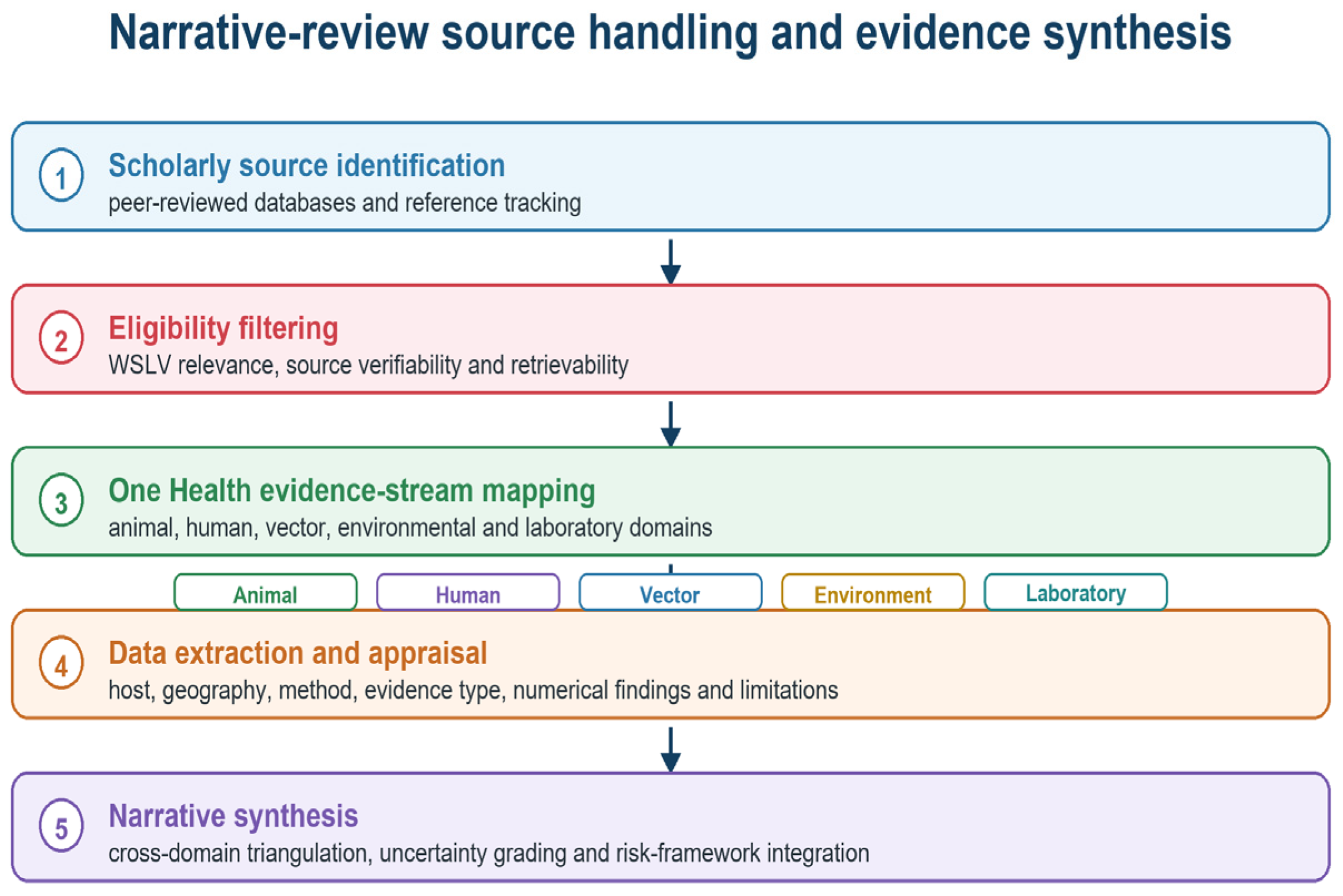
The structured narrative-review workflow is summarized in
Figure 1, showing how eligibility filtering, evidence-stream mapping, data extraction, appraisal, and narrative synthesis were linked across One Health domains.
2.5. Methodological Limitations
The main limitations of this narrative approach are possible selection bias, dependence on indexed and verifiable literature, limited access to some older full texts, heterogeneity of diagnostic methods, and sparse active-surveillance data. Because the available evidence spans different hosts, regions, designs, and outcomes, numerical findings were not pooled. Instead, quantitative data were used to assess biological plausibility, diagnostic relevance, and evidence strength within each domain.
3. Evidence Landscape and Analytical Framework
The reviewed literature does not form a single linear evidence chain. Instead, it consists of partially overlapping domains: veterinary pathology, experimental infection, human infection, vector detection, molecular epidemiology, diagnostic development, and ecological suitability modeling. A high-impact narrative synthesis must therefore avoid treating all evidence as equivalent. Historical pathology reports, controlled experimental studies, serological surveys, mosquito detections, and climate-suitability models answer different questions and carry different levels of uncertainty.
This section summarizes the analytical frame used throughout the manuscript. Quantitative findings are included where they clarify evidence strength, but they are not pooled because denominators, host species, diagnostic methods, and study aims differ substantially. The figures below are intended to orient the reader before the thematic sections, not to replace the critical analysis within those sections.
Accordingly,
Figure 2 and
Figure 3 function as the visual key for this section:
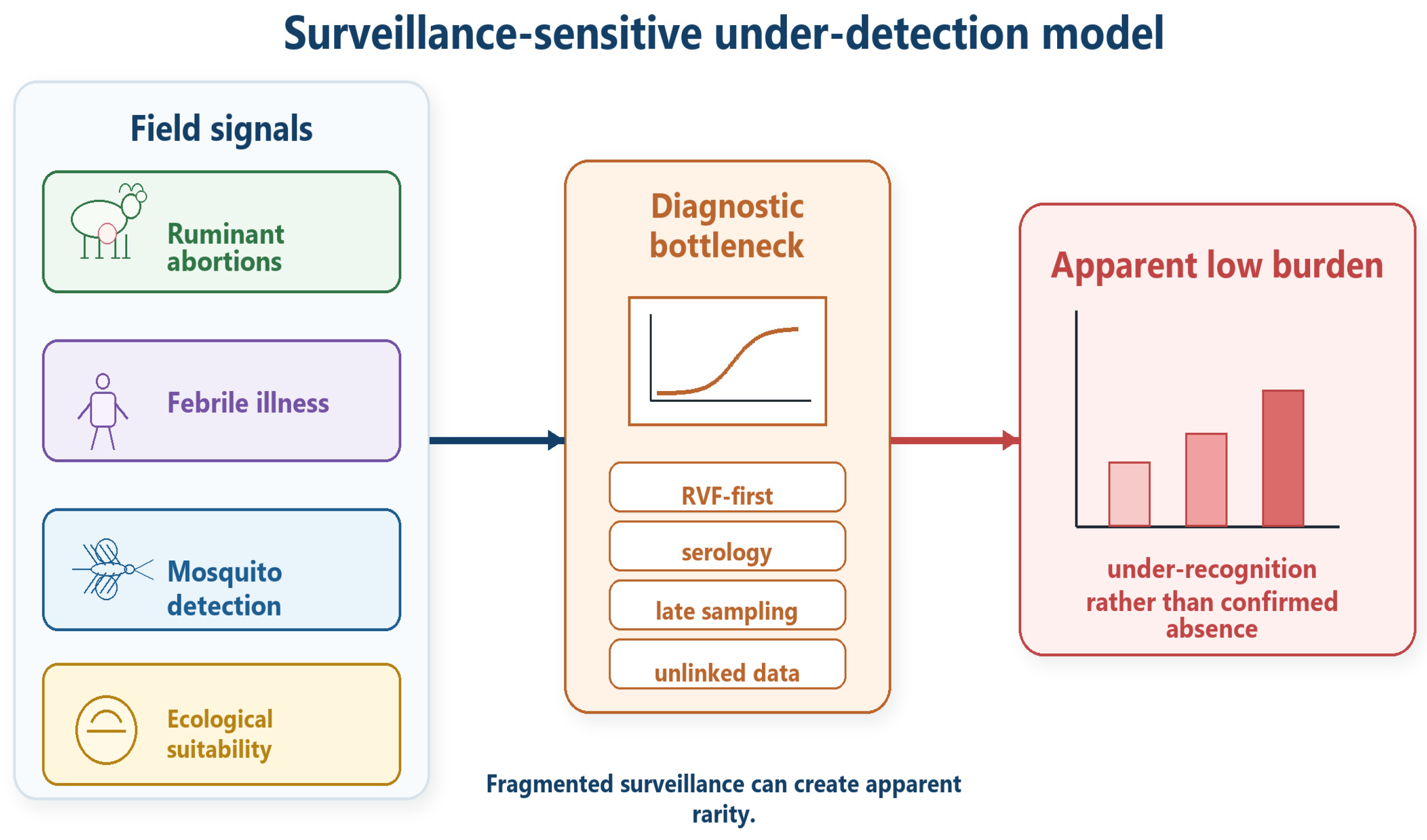
Figure 2 defines the surveillance blind spot, whereas
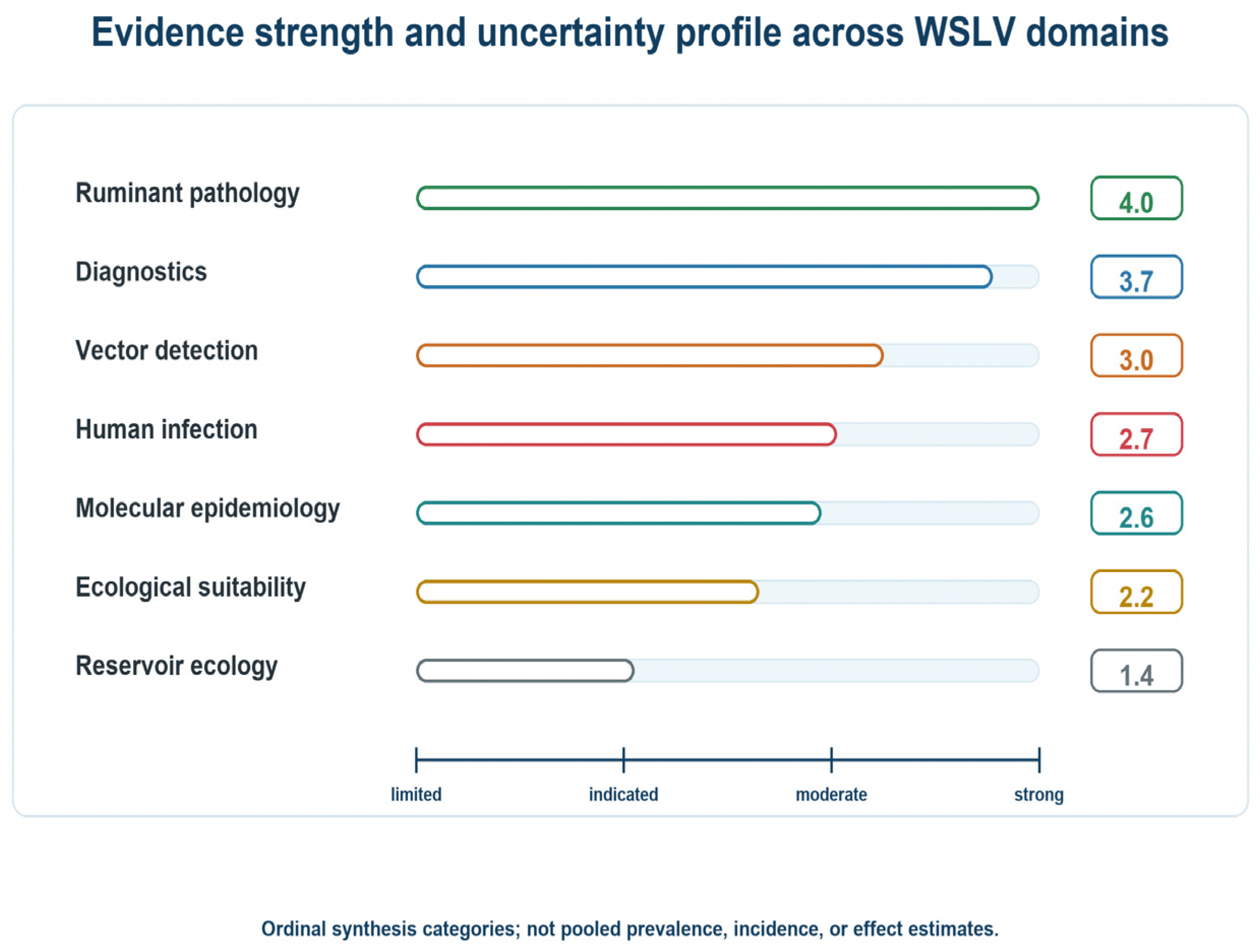
Figure 3 sets out the evidence-strength profile used to interpret the subsequent animal, human, vector, diagnostic, and ecological domains.
Across the WSLV-specific literature, animal–host evidence is distributed across heterogeneous study types rather than a single comparable dataset.
Table 1 therefore functions as an orientation table: it summarizes the host species, geographic settings, evidence type, and interpretive weight of selected animal evidence, while the following thematic sections provide the detailed critical analysis.
This distinction prevents virus isolation, molecular detection, serological exposure, experimental susceptibility, and disease attribution from being interpreted as equivalent forms of evidence.
Table 1.
Selected animal–host and geographic evidence for WSLV detection, infection, or exposure in the reviewed literature.
Table 1.
Selected animal–host and geographic evidence for WSLV detection, infection, or exposure in the reviewed literature.
| Animal Host/Species | Geographic Setting | WSLV Evidence Reported | Interpretive Value and Citations |
|---|
| Sheep, lambs, and ewes | South Africa; experimental models | Abortion and neonatal disease association; lamb pathology; pregnant ewe and milk-associated experimental evidence. | Strongest animal-disease anchor for reproductive and neonatal surveillance [1,4,7,8,11,13,22]. |
| Goats | South Africa; Nigeria | Experimental infection in adult goats and Nigerian goat breeds, including viremia and mortality under controlled conditions. | Confirms susceptibility, but severity estimates depend on breed, route, dose, and experimental context [7,8,23,24]. |
| Cattle, calves, heifers, and Zebu cattle | South Africa; Zimbabwe; Central African Republic | Congenital lesions in calves, experimental viremia in calves/heifers, and cattle/Zebu serological evidence. | Supports bovine exposure and susceptibility; population burden remains incompletely quantified [5,25,26]. |
| Dromedary camels | Borana Zone, Ethiopia | Molecular detection during a severe camel morbidity/mortality investigation, including WSLV RNA in tissue and blood samples. | Recent field signal in camels; causality requires pathology and co-infection context [15]. |
| Ostriches | South Africa | Virus isolation from ostriches. | Broadens host-range evidence beyond domestic ruminants; disease burden remains undefined [27]. |
| Wild animals | Southern Africa | WSLV antibodies reported in multiple wild-animal species. | Exposure signal; does not establish reservoir competence or attributable disease burden [10]. |
| Black rats | Eastern Senegal | WSLV reported in black rats during a cross-host investigation that also included human infection signals. | Multi-host detection signal; not proof of reservoir competence or a closed transmission chain [28]. |
| Mixed domestic animals | Nigeria | Domestic-animal antibody evidence and sentinel seroconversion signals, including cattle and sheep. | Useful exposure and surveillance evidence; interpretation is limited by serology and flavivirus cross-reactivity [29]. |
Figure 2 translates this fragmentation into a conceptual surveillance-blind-spot model, showing how animal, human, vector, ecological, and laboratory signals can be separated by diagnostic bottlenecks and thereby generate an apparent low-burden impression.
Figure 2.
The WSLV surveillance blind spot. The model illustrates how animal, human, vector, ecological, and laboratory signals can remain fragmented, pass through a diagnostic bottleneck, and produce an apparent low-burden impression despite biologically credible risk.
Figure 2.
The WSLV surveillance blind spot. The model illustrates how animal, human, vector, ecological, and laboratory signals can remain fragmented, pass through a diagnostic bottleneck, and produce an apparent low-burden impression despite biologically credible risk.
This problem-framing model is not intended to quantify risk, but to show why WSLV can remain scientifically visible yet operationally under-recognized: the evidence exists in separate animal, human, vector, ecological, and laboratory compartments, while routine diagnostic pathways often prioritize better-known pathogens.
As summarized in
Figure 3, the relative strength of evidence differs substantially across WSLV domains, with ruminant pathology supported more strongly than reservoir ecology, climate expansion, or population-level burden.
Figure 3.
Evidence strength and uncertainty profile across WSLV domains. Scores are interpretive categories derived from the reviewed literature, not meta-analytic effect estimates.
Figure 3.
Evidence strength and uncertainty profile across WSLV domains. Scores are interpretive categories derived from the reviewed literature, not meta-analytic effect estimates.
The scores in
Figure 3 represent ordinal evidence-strength categories rather than quantitative effect estimates: higher scores reflect WSLV-specific experimental or pathological evidence, molecular confirmation, or repeated field detection in compatible contexts, whereas lower scores reflect domains dominated by serological cross-reactivity, model-based suitability, isolated detections, absent denominators, or unpaired host–vector–human observations.
This evidence-strength profile positions ruminant pathology as the strongest domain because multiple experimental and pathological studies support disease causation, whereas reservoir ecology and climate-sensitive expansion remain less certain because the available evidence is indirect, model-based, or geographically sparse.
For consistency across the thematic sections, evidence was interpreted using three practical levels. Strongly supported evidence refers to WSLV-specific experimental infection, pathology, molecular confirmation, or repeated field observations in compatible clinical contexts. Moderately indicated evidence refers to exposure, detection, or host/vector associations that are biologically plausible but incompletely paired across time, place, host, vector, or diagnostic method. Hypothesis-generating evidence refers to model-based suitability, isolated serological or molecular signals, and transmission routes that remain plausible but insufficiently validated under natural field conditions.
The evidence landscape reveals a distinctive pattern: WSLV is not supported by one dominant body of epidemiological burden studies, but by multiple converging evidence streams that differ in age, design, and inferential strength. The oldest studies remain central for defining animal disease phenotype, whereas newer studies add molecular resolution, transmission hypotheses, and ecological prioritization. This creates a scientific opportunity but also a methodological risk: without explicit evidence appraisal, a narrative review could either understate WSLV because burden data are scarce or overstate it by treating detection, exposure, and disease causation as equivalent.
The interpretive strategy used here is therefore deliberately layered. Pathology and experimental infection are used to assess biological capacity; serology is used to identify exposure and diagnostic ambiguity; vector detections are used to justify surveillance attention but not to infer transmission rate; molecular studies are used to interpret viral diversity and relatedness; and ecological models are used to prioritize field validation rather than to claim disease occurrence.
This layered interpretation explains why a narrative review is appropriate for this topic. The field has not developed through large, directly comparable epidemiological studies; instead, it has accumulated in waves, from veterinary pathology and host susceptibility toward molecular epidemiology, experimental transmission, ecological modelling, and digital pathology. The analytical task is therefore to preserve historical evidence while showing how modern tools can make WSLV more visible to One Health surveillance.
4. Virus Biology, Transmission Pathways, and Pathogenesis
This section applies the evidence-strength framework to the biological layer of the One Health argument, separating strongly supported pathogenesis from plausible but incompletely validated transmission pathways. The molecular literature changes the interpretation of WSLV from a historically recognized veterinary virus to an actively evolving arbovirus with unresolved biological consequences. Faye et al. [
12] reported inter-clade recombination and clade-related pathogenicity differences in experimental models, whereas Eibner et al. [
14] emphasized sylvatic detection and phylogeographic spread. These findings are complementary but not identical: one supports genetic and pathogenic diversity, while the other supports ecological circulation beyond outbreak-detected livestock systems. Together, they justify lineage-aware surveillance by linking genetic diversity, pathogenicity signals, and ecological circulation as connected evidence layers.
Transmission evidence is strongest for mosquito-associated circulation but now includes experimental evidence for mosquito-independent exposure. Jupp and Kemp [
30] linked WSLV isolation from floodwater Aedes mosquitoes to a lamb outbreak context, whereas Kayiwa et al. [
21] detected WSLV in Aedes tricholabis and Ae. gibbinsi during RVF-oriented surveillance. Zimoch et al. [
13] added a different mechanism by showing WSLV infection and milk-associated transmission to lambs under insect-free experimental conditions. These findings are complementary rather than interchangeable: mosquito isolation supports ecological presence, experimental milk transmission demonstrates biological plausibility, and paired field studies are needed to identify dominant natural routes.
Zimoch et al. [
13] is particularly important because it links transmission, pathology, and risk in one experimental system. In that study, inoculated lactating ewes developed fever and viremia, viral RNA and infectious virus were detected in milk, and several lambs developed severe disease after exposure in insect-free conditions. The authors reported that severe disease occurred in 40% of lambs in each infected group, with clade-related differences in dominant lesion patterns. For risk assessment, the study should be read as experimental pathway evidence: it expands the exposure scenarios that One Health surveillance should consider when raw milk exposure, neonatal animals, and WSLV-compatible disease coincide.
Pathogenesis evidence is strongest in ruminants. Coetzer et al. [
4] established neonatal hepatic disease as a core phenotype, whereas Oymans et al. [
11] showed that WSLV can cross the maternal-fetal interface and infect fetal trophoblasts and neural-lineage cells. Grau-Roma et al. [
22] further strengthened the pathology evidence by applying machine-learning-driven digital histopathology to ewes and lambs infected with clade I and clade II strains. Their analysis compared infected animals with mock controls, showing higher lymphohistiocytic infiltration, higher hepatocyte proliferation index, and T-cell density approximately tenfold higher than B-cell density in infected animals. The critical interpretation is that WSLV pathogenesis is biologically credible and increasingly measurable, but most pathogenesis data remain experimental, species-specific, or derived from limited outbreak contexts.
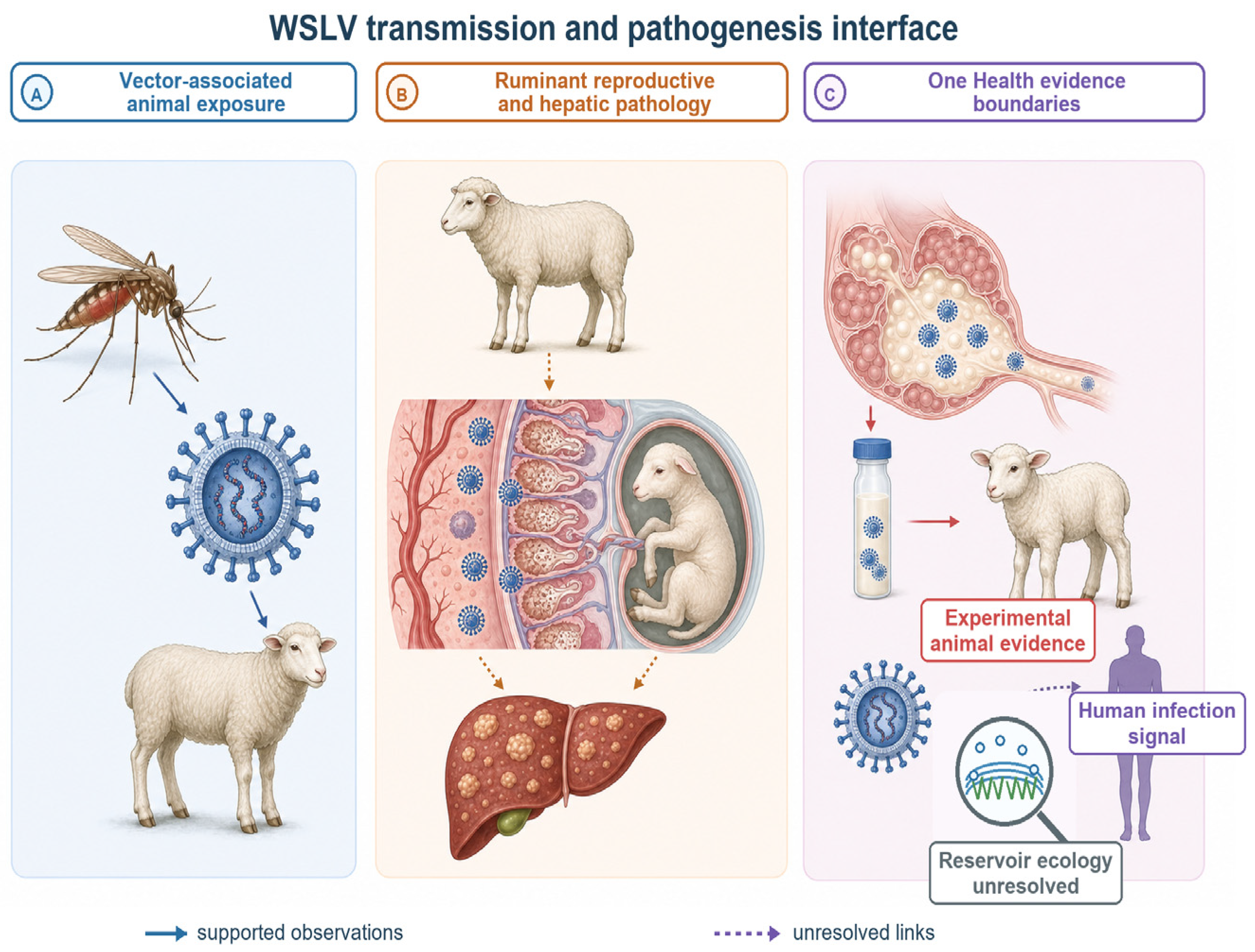
The next figure integrates the main transmission and pathogenesis pathways discussed above, distinguishing established mosquito-associated evidence from experimentally plausible but field-uncertain routes.
This distinction is important for the review’s evidence-strength framework because mosquito-associated exposure and experimental milk-associated transmission carry different inferential weights for natural field risk.
Critical synthesis within this domain: authors agree that WSLV is more than a serological curiosity, but they examine different layers of evidence. Classical pathology defines disease phenotype, molecular studies define viral diversity, and experimental transmission studies define biological plausibility. The major unresolved question is not whether WSLV can infect and cause disease, but which transmission pathways dominate under field conditions and which host or vector combinations sustain circulation. The interface between WSLV transmission routes, host involvement, and key pathogenic outcomes is schematically summarized in
Figure 4.
5. Animal Disease, Host Range, and Veterinary Significance
This section evaluates the animal-health domain as the strongest empirical anchor for WSLV surveillance sensitivity, while distinguishing established ruminant disease from broader host-range signals. The animal-health evidence is strongest for sheep and goats, especially pregnancy-associated and neonatal disease. In newborn lambs, Coetzer et al. [
4] described 37 clinical cases and reported icterus in 13 of 14 necropsied lambs, with hepatic necrosis and cholestasis among characteristic lesions. Adult sheep and goats experimentally infected by Theodoridis and Coetzer [
7] and Coetzer and Theodoridis [
8] developed mainly febrile and hepatic responses with lower lethality, suggesting that age and physiological state influence disease expression.
Small-ruminant susceptibility studies illustrate why numerical values are study-context dependent. Baba et al. [
23] reported viremia two days after infection and 100% mortality in experimentally infected West African dwarf goats, whereas Baba [
24] reported viremia beginning 24–72 h after infection and 50% mortality in experimentally infected Red Sokoto goats. These differences may reflect breed, age, virus strain, inoculation route, dose, or experimental design. Rather than a single mortality estimate, these data show that severe disease can occur under defined experimental conditions.
The host-range literature also extends beyond sheep and goats. Coetzer et al. [
5] linked WSLV to congenital porencephaly and cerebellar hypoplasia in calves; Allwright et al. [
27] reported isolation from ostriches; Simpson et al. [
6] described a fatal canine case;, Barnard [
10] reported antibodies against Wesselsbron disease in multiple wildlife species; and Ishag et al. [
15] detected WSLV in sick dromedary camels in Ethiopia during an investigation involving 209 affected animals and 147 deaths. The camel report is important because it broadens the clinical-surveillance signal, although causal attribution requires integration with pathology, co-infection assessment, and temporally matched epidemiological data.
Cattle and camel evidence illustrates the difference between experimental susceptibility and field-attribution uncertainty. Blackburn and Swanepoel [
25] reported viremia in five of six newborn calves, three of four pregnant heifers, and three of four ewes after inoculation, supporting biological susceptibility across ruminant hosts. By contrast, Ishag et al. [
15] reported WSLV RNA in 25 of 35 tissue samples and 3 of 16 blood samples from affected camels, with a severe field event, but the observational context makes causal attribution more complex than in controlled infection studies. The two evidence streams are therefore best read together: experimental work shows host susceptibility, while field detection broadens the surveillance signal and generates hypotheses for targeted camel-health investigations.
Critical synthesis within this domain: animal data provide one of the strongest WSLV evidence domains because pathology, experimental susceptibility, and field detections converge on reproductive and neonatal disease. The most defensible action point is targeted inclusion of WSLV in ruminant abortion, neonatal hepatitis, and RVF-like reproductive events, especially when standard tests are negative or ecological conditions are compatible. What remains unresolved is the denominator-based scale of regional mortality, economic loss, and species-specific reservoir competence.
6. Zoonotic Evidence and Human Health Relevance
This section assesses the human-health domain of the multi-host framework, treating confirmed infection as evidence of zoonotic capacity while examining how weakly human incidence is linked to animal and vector events. In the literature reviewed up to April 2026, the clearest documented count is 31 published acute human WSLV/Wesselsbron disease cases. Weyer et al. [
20] summarized 29 previously recognized acute human cases and added two laboratory-confirmed cases from South Africa during the 2010-2011 RVF investigation period; Faye et al. [
30] reiterated the same total in the context of WSLV-specific molecular assay development. Earlier laboratory-acquired infection evidence was reported by Tomori et al. [
31] among arbovirus infections in Ibadan, Nigeria. These reports confirm zoonotic potential and support targeted febrile-illness testing.
Serological evidence suggests wider exposure, but interpretation is constrained by flavivirus cross-reactivity. Baba et al. [
32] tested 446 human sera in Nigeria and reported WSLV IgM-only reactivity in 61 persons, while heterologous IgM to WSLV and other flaviviruses occurred in 9 persons. Because many sera reacted with multiple flaviviruses, these results are better interpreted as evidence of exposure signals and diagnostic complexity than as a direct estimate of acute WSLV disease.
Molecular and genomic studies add a second layer to the human evidence, but they should not be interpreted as increasing the documented case count unless individual acute infections are reported as cases. Faye et al. [
33] developed WSLV-specific RT-qPCR and RT-RPA assays, improving the ability to detect acute infection and to distinguish WSLV from serologically cross-reactive flaviviruses. Diagne et al. [
28] broadened the One Health relevance by reporting WSLV among humans and black rats in eastern Senegal, providing a cross-host surveillance signal. Faye et al. [
12] further connected human isolates to broader African molecular epidemiology, reinforcing the need to interpret human infection as part of an animal–-vector–human system rather than as isolated case reports.
Critical synthesis within this domain: the strongest inference is qualitative: human infection is confirmed, while incidence, severity distribution, and the attributable fraction among febrile illnesses remain unresolved. The practical implication is targeted inclusion in differential diagnosis and surveillance when exposure history, geography, livestock events, or mosquito context make WSLV plausible.
7. Vector Ecology, Climate-Sensitive Risk, and Geographic Distribution
This section evaluates the vector and environmental domain, distinguishing geographically concrete mosquito detections from model-based suitability and unpaired host–vector–human observations. WSLV is linked to mosquito ecology, especially Aedes-associated systems shaped by rainfall, flooding, vegetation, and livestock distribution. Jupp and Kemp [
33] tested 4732 floodwater Aedes mosquitoes during a South African lamb outbreak and isolated WSLV from Aedes mcintoshi/luridus and Ae. juppi/caballus groups, reporting isolation rates of 1.63 and 3.38 per 1000 mosquitoes for these two groups respectively. Kayiwa et al. [
21] recovered WSLV from field-captured mosquitoes in Uganda, and Eibner et al. [
14] detected WSLV in sylvatic Aedes mcintoshi from Semuliki National Park. Together, these studies identify priority mosquito contexts for surveillance and indicate where vector-competence and longitudinal studies are most needed.
Geographic evidence indicates broader African circulation than a narrow southern African framing would suggest. Blackburn and Swanepoel [
25] investigated cattle flavivirus infections in Zimbabwe Rhodesia; van der Riet et al. [
34] reported arbovirus zoonosis surveillance in the Cape Province; Morvan et al. [
35] reported WSLV as a new arbovirus for Madagascar; Monlun et al. [
36] documented surveillance in eastern Senegal; Traore-Lamizana et al. [
37] included WSLV in Senegalese arbovirus surveillance; and Diallo et al. [
38] reported Wesselsbron virus among arboviruses investigated during the 1998–1999 RVF outbreak context in Mauritania and Senegal. These reports support broad geographic concern, but they are unevenly distributed and surveillance-dependent.
Climate-sensitive risk is most useful as a surveillance-prioritization layer. Nabatanzi et al. [
16] used 154 WSLV presence records in species distribution models and projected current and future suitability patterns under climate and land-use scenarios. The model identified human-built-up pressure, Aedes mcintoshi, and Aedes circumluteolus as major predictors. Its principal value is to prioritize field validation in predicted hotspots, with observed expansion, outbreak occurrence, and livestock burden remaining empirical questions.
The comparison across vector and climate studies is methodological. Jupp and Kemp [
30], Kayiwa et al. [
21], and Eibner et al. [
14] provide geographically concrete field detections, whereas Nabatanzi et al. [
16] provide a continent-wide framework for prioritizing targeted surveillance.
Critical synthesis within this domain: vector and climate evidence is strongest when used to rank surveillance settings. Its current limitation is integration: vectors, ecological suitability, livestock disease, and human infection are rarely sampled in the same place and period, leaving the animal–human–vector–environment chain only partly connected.
8. Diagnostics, Differential Diagnosis, and Surveillance Readiness
This section connects diagnostic readiness to the central surveillance-sensitive premise because cross-host evidence can only be integrated when syndrome recognition, sampling timing, assay choice, and differential diagnosis are documented together. In this review, diagnostics and differential diagnosis are treated as related but distinct components of surveillance. Diagnostics refers to the laboratory pathway used to confirm, exclude, or characterize WSLV infection in a tested specimen, including specimen selection, sampling timing, molecular or antigenic detection, serological interpretation, sequencing, and confirmatory referral. Differential diagnosis refers to the clinical and epidemiological process that determines whether WSLV should be considered among alternative causes of ruminant abortion, neonatal death, hepatic disease, undiagnosed febrile illness, laboratory-associated infection, or RVF-like mosquito-associated events. The distinction is practical: diagnostics answers what a test shows in an available sample, whereas differential diagnosis determines whether WSLV is tested for at all.
Within diagnostics, the main challenge is specificity and timing. Older haemagglutination-inhibition and complement-fixation methods contributed foundational knowledge but are vulnerable to cross-reactivity in flavivirus-endemic settings. Baba et al. [
29] reported flavivirus antibodies in 481 of 1492 domestic animal sera in Nigeria and sentinel seroconversion in cattle and sheep, while Guilherme et al. [
26] placed WSLV within broader cattle arbovirus serosurveillance in the Central African Republic. These studies are most useful for exposure mapping, diagnostic-context building, and identifying where confirmatory molecular testing is needed.
Diagnostic development has progressed from broad serology toward WSLV-specific and higher-specificity methods. Williams et al. [
39] compared ELISA and haemagglutination-inhibition, Mathengtheng and Burt [
40] evaluated envelope domain III protein for flavivirus differentiation, Bonnet et al. [
41] developed rapid reverse-transcriptase recombinase polymerase amplification for flaviviruses using non-infectious RNA controls, and Faye et al. [
33] developed WSLV RT-qPCR and RT-RPA assays with analytical sensitivity down to low-copy RNA targets. Whole-genome sequencing approaches for neglected African arboviruses further show how molecular surveillance can support confirmation, strain comparison, and unexpected detection [
42].
Within differential diagnosis, WSLV should be considered when the clinical syndrome and ecological context are compatible, especially where better-known causes do not fully explain the event. In livestock, the relevant entry points are abortion clusters, neonatal death, hepatic lesions, icterus, or RVF-like reproductive disease. In human health, the relevant entry point is undiagnosed acute febrile illness or laboratory exposure in an arbovirus-compatible setting. In vector and environmental surveillance, mosquito activity, floodwater Aedes ecology, rainfall-linked risk, or ecological suitability can strengthen the rationale for targeted WSLV testing. Together, these entry points support syndromic escalation when animal, human, vector, and environmental signals converge.
The diagnostic literature also shows why evidence cannot be interpreted without a method. A WSLV-positive RT-qPCR result from acute tissue or serum has a different evidential weight from a single serological reaction, and a negative molecular result after delayed sampling does not exclude WSLV if viremia was transient. For a submission-ready review, the critical message is therefore operational: WSLV testing should be embedded in diagnostic algorithms that specify syndrome, sampling timing, sample type, assay specificity, and ecological context.
RVF is best used as a differential-diagnosis comparator rather than a competing review topic. WSLV and RVF can overlap clinically in ruminant reproductive events, neonatal disease, mosquito ecology, rainfall-linked risk, and outbreak investigations. Oymans et al. [
11] noted clinical and climatic overlap, while Weyer et al. [
20] and Kayiwa et al. [
21] show how WSLV can be identified in investigation contexts shaped by RVF. The practical implication is not that WSLV equals RVF, but that RVF-like syndromes with negative, delayed, or ambiguous results should trigger broader arbovirus testing when context supports it. A balanced comparison should also acknowledge that RVF testing is itself sampling-time dependent: molecular assays are most informative during acute infection, whereas negative molecular results from late or poorly timed sampling may require interpretation alongside IgM/IgG serology and clinical-epidemiological context [
43].
Critical synthesis within this domain: diagnostics and differential diagnosis answer different questions but fail together when they are not connected. Diagnostics determines whether WSLV can be confirmed, excluded, or genetically characterized in available specimens; differential diagnosis determines whether WSLV enters the testing pathway in the first place. High-impact preparedness therefore requires syndromic triggers, validated molecular assays, context-aware interpretation of serology, sequencing where possible, and communication between veterinary and human-health laboratories. WSLV is most likely to be missed when diagnostic algorithms stop after testing for better-known pathogens or when compatible animal, human, vector, and environmental signals are not assessed together.
The following table translates this distinction into practical decision points for One Health settings: the trigger column represents the differential-diagnosis entry point, while the evidence stream column identifies the diagnostic pathway needed to evaluate WSLV. Based on the available animal, human, vector, and ecological evidence, the key diagnostic and differential-diagnosis decision points for WSLV in One Health settings are summarized in
Table 2.
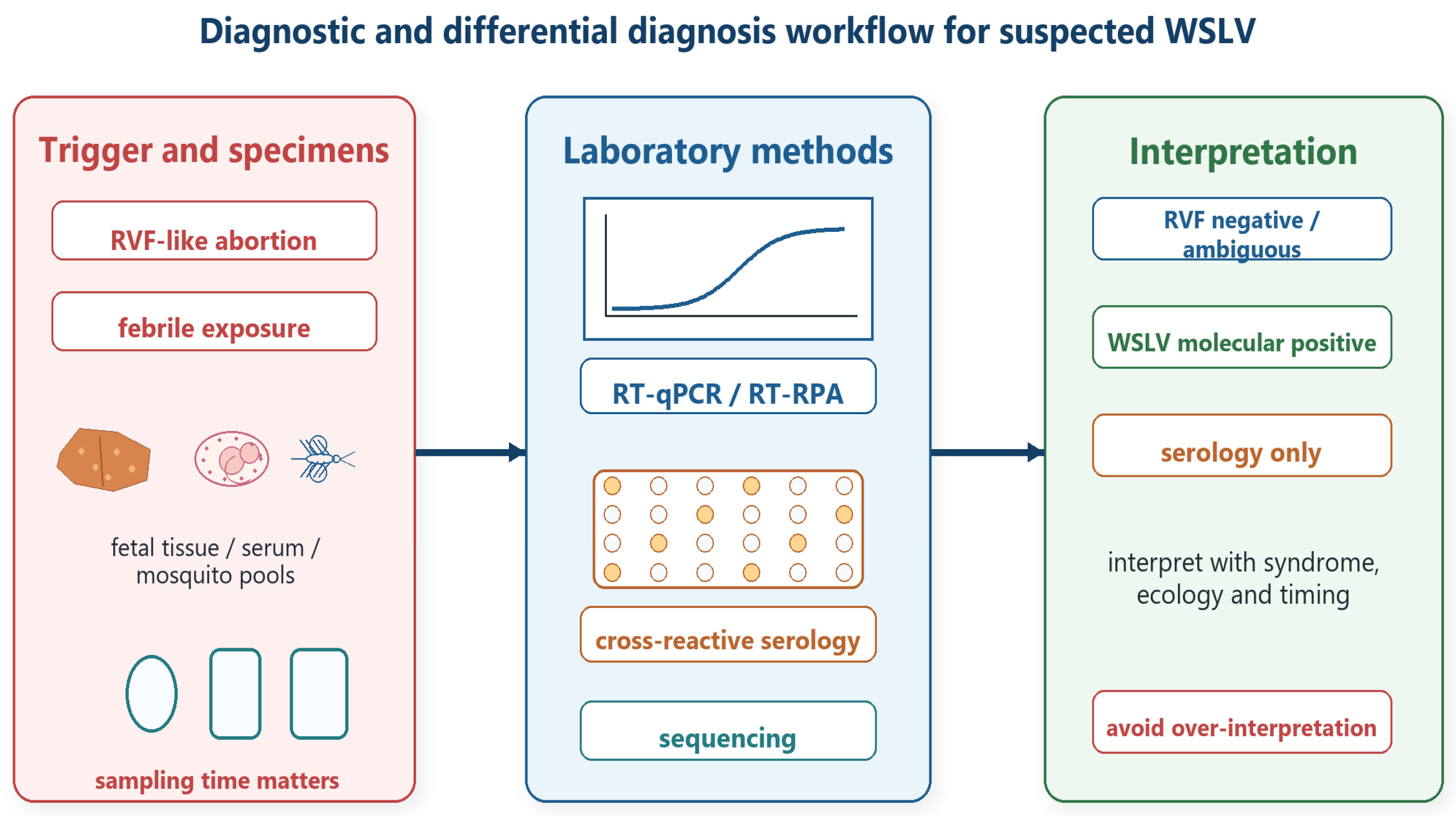
The next figure presents the combined diagnostic and differential-diagnosis logic as a surveillance pathway, showing where WSLV becomes relevant when syndromic, ecological, and laboratory evidence converge. To support practical application of these diagnostic considerations,
Figure 5 presents a workflow for integrating clinical triggers, specimen selection, laboratory testing, and cautious interpretation when WSLV is included in the differential diagnosis.
The pathway links diagnostic decision-making with One Health risk assessment: WSLV testing becomes most informative when compatible syndrome, sampling timing, vector or ecological context, and unresolved differential diagnosis converge.
9. Integrated Cross-Host Evidence Synthesis, One Health Risk Assessment, and Research Priorities
9.1. Integrated Cross-Host Analysis
The cross-host evidence allows a structured concordance assessment across animal, human, vector, environmental, spatial, and genomic domains. In this review, concordance is interpreted as the degree to which evidence from different compartments aligns by compatible syndrome, geography, sampling period, diagnostic method, outbreak-investigation context, or sequence and clade information. Because the source literature does not provide harmonized paired datasets, this assessment is an evidence-weighted narrative synthesis rather than a formal geospatial clustering analysis or de novo phylogenetic reconstruction.
Spatial concordance is strongest where animal and vector evidence were collected within the same outbreak context. Jupp and Kemp [
30] linked WSLV isolation from floodwater Aedes mosquitoes to a lamb-outbreak setting in the Free State, South Africa. Other spatial signals are broader but less tightly paired: Weyer et al. [
20] confirmed human cases in South Africa during the 2010–2011 RVF investigation period, but not in the same site or period as the Free State animal–vector investigation; Kayiwa et al. [
21] and Eibner et al. [
14] provide Ugandan mosquito-derived detections from Kabale District and Semuliki Forest contexts without simultaneous animal and human sampling; Diagne et al. [
28] reported human and black-rat detection in eastern Senegal; and Ishag et al. [
15] identified WSLV in sick dromedary camels in Ethiopia. Together, these observations show regional and ecological overlap, while paired cross-compartment sampling remains sparse.
Phylogenetic and genomic concordance is also partial rather than chain-closing. Weyer et al. [
20] used partial NS5 sequencing to identify two southern African clades and reported human isolates in both; Kayiwa et al. [
21] and Eibner et al. [
14] provide mosquito-derived phylogenetic evidence from Uganda; Faye et al. [
12] placed African isolates into a broader molecular epidemiology and pathogenicity framework; and Ishag et al. [
15] placed camel-derived partial NS5 sequences within clade 1, with 97–98% identity to existing WSLV sequences. These studies demonstrate genetic diversity and cross-source detection, but they do not provide matched whole-genome or directly comparable intra-strain sequences from livestock, humans, mosquitoes, and environmental samples collected at the same transmission focus.
Human evidence adds a confirmed zoonotic infection to the cross-host synthesis. Weyer et al. [
20] reported laboratory-confirmed human WSLV cases during an RVF investigation period, Faye et al. [
33] used a panel of 31 acute human cases to develop WSLV-specific molecular assays, and Diagne et al. [
28] identified a human and black-rat detection context that supports cross-host surveillance attention. These findings confirm human infection and justify an integrated investigation.
Animal host-range evidence broadens the surveillance signal but also shows why evidence strength must be stratified. Classical ruminant pathology and experimental infection provide strongly supported evidence for animal disease, whereas camel field detection in Ethiopia [
15], wildlife serology [
10], ostrich isolation [
27], canine disease [
6], and black-rat detection [
28] are better interpreted as moderately indicated or hypothesis-generating multi-host signals. The strongest integrated implication is to design WSLV investigations that capture host, vector, and environmental context together.
Overall, the spatial-genomic synthesis supports WSLV as a surveillance-sensitive One Health pathogen. Evidence is strongest for ruminant disease, confirmed human infection, mosquito-associated detection, and WSLV-specific molecular diagnosis, whereas multi-host maintenance and dominant natural transmission pathways remain priority questions. The empirical next step is paired geospatial sampling of livestock, febrile humans, mosquitoes, and environmental predictors in the same sites and periods, followed by harmonized whole-genome or comparable genomic-region analysis.
9.2. One Health Risk Assessment and Research Priorities
The One Health implication of this review is that WSLV should be approached as a pathogen that exposes surveillance fragmentation. Animal disease, human infection, mosquito detections, and ecological suitability are each documented, but they are rarely integrated into coordinated field studies. This fragmentation explains why WSLV can be biologically plausible and yet operationally neglected.
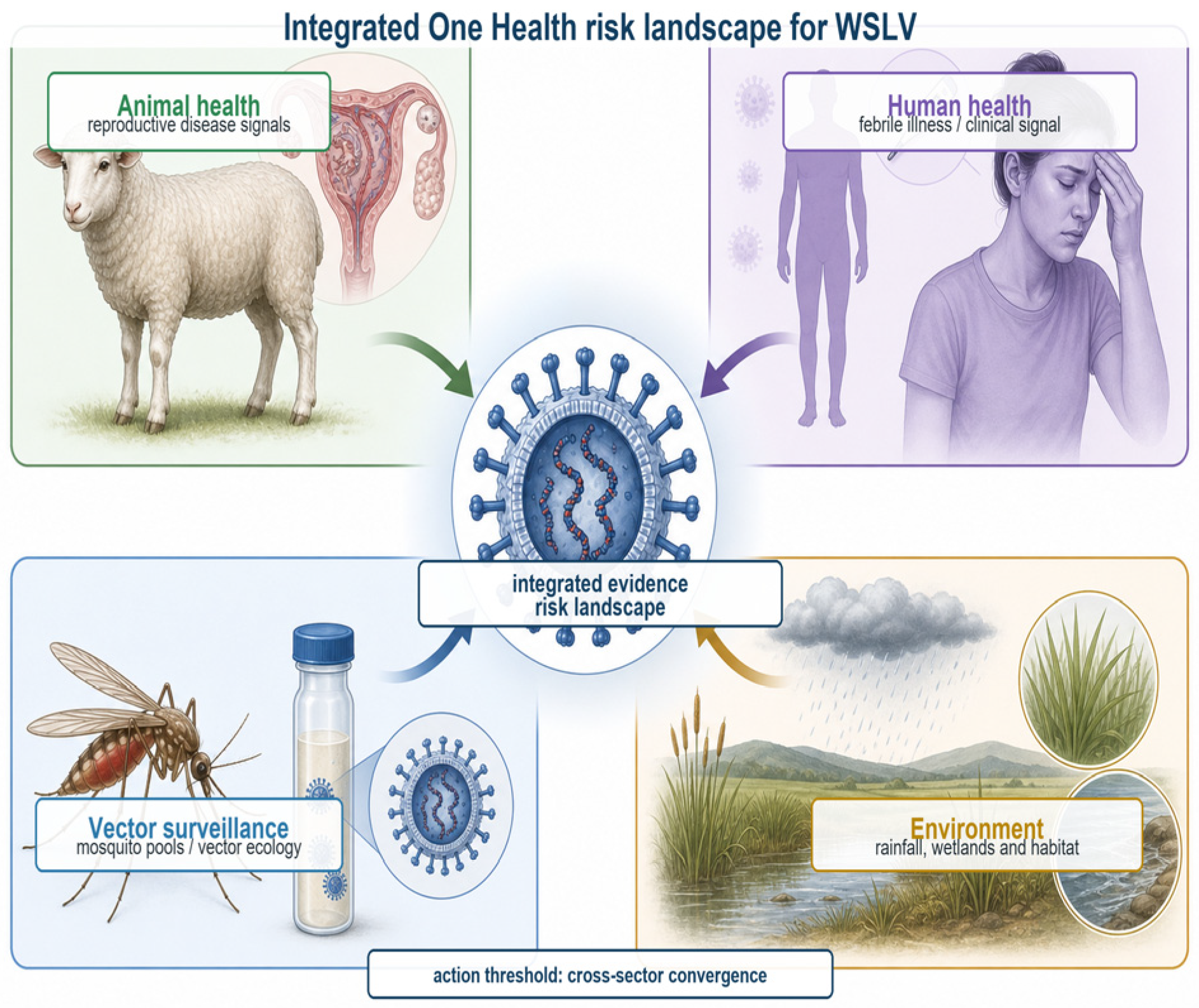
The section therefore moves from integrated evidence synthesis to decision-relevant interpretation:
Figure 6 shows the cross-sector One Health risk landscape,
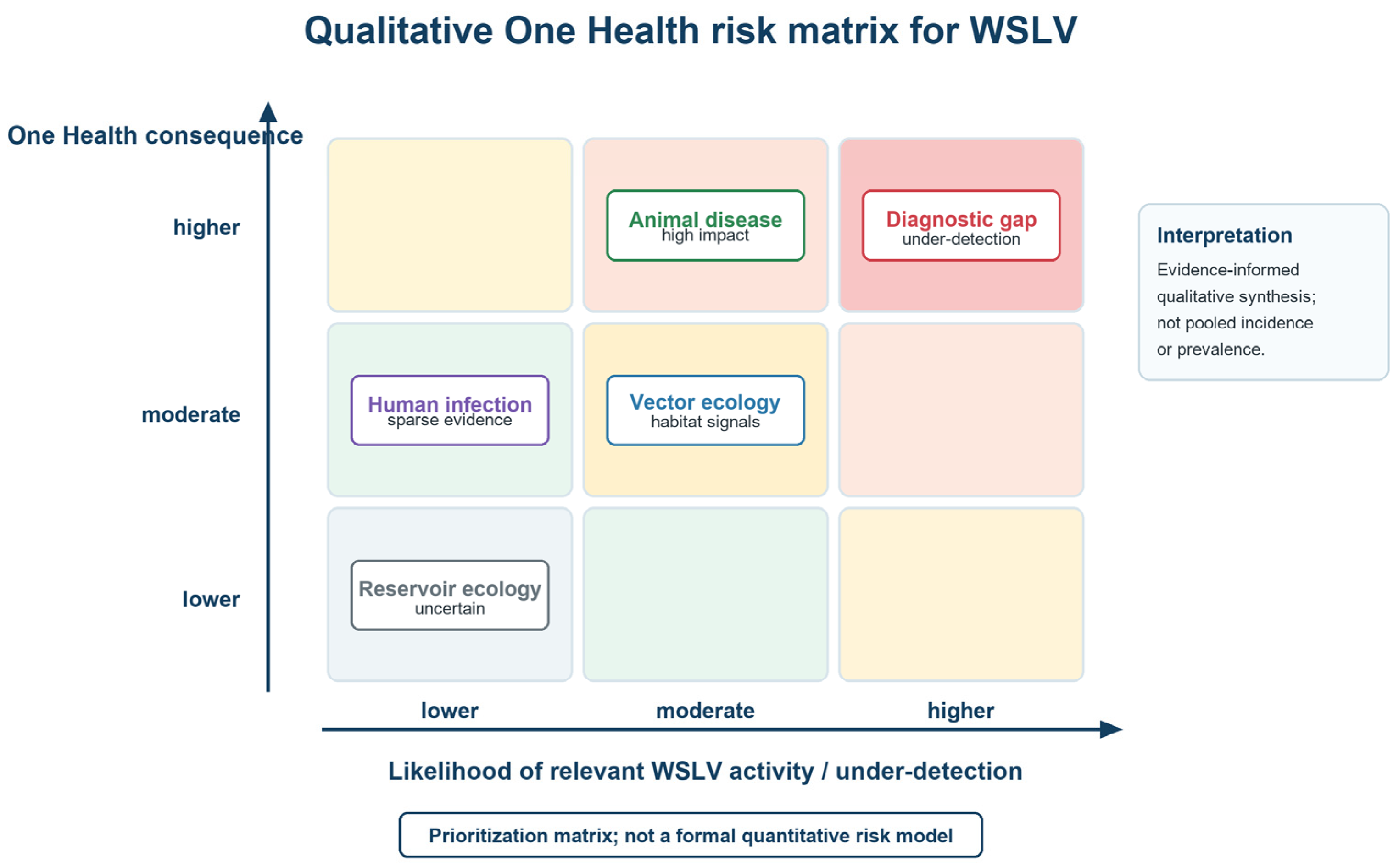
Figure 7 visualizes the qualitative risk profile,
Table 3 specifies domain-level risk interpretation, and
Table 4 identifies research designs needed to strengthen future inference.
In this framework, WSLV risk becomes operationally meaningful when animal, human, vector, environmental, and laboratory signals are evaluated together, rather than when any single signal is interpreted in isolation.
Figure 7.
Evidence-informed qualitative One Health risk assessment for WSLV. Domains are positioned according to public/animal-health consequence and likelihood of relevant WSLV activity; placement is interpretive and based on the reviewed evidence rather than formal quantitative risk modelling.
Figure 7.
Evidence-informed qualitative One Health risk assessment for WSLV. Domains are positioned according to public/animal-health consequence and likelihood of relevant WSLV activity; placement is interpretive and based on the reviewed evidence rather than formal quantitative risk modelling.
Risk assessment for WSLV should not ask a single binary question, such as whether the virus is a major or minor pathogen. The more useful One Health question is where WSLV could be missed despite a biologically meaningful risk. Animal-health consequences are supported most strongly by ruminant reproductive and neonatal disease. Zoonotic relevance is proven but poorly quantified. Vector and climate risk are plausible and increasingly modelled, but still require field validation. Diagnostic risk is high because WSLV can sit inside syndromes and ecological contexts that are usually investigated for RVF or other better-known arboviruses.
This produces a risk profile with uneven certainty. The livestock-neonatal domain carries the highest biological confidence, the human domain carries confirmed but low-quantification concern, the vector-climate domain is most useful for directing field validation, and the reservoir domain remains the least resolved. The practical consequence is targeted testing when clinical syndrome, mosquito ecology, geography, and negative or ambiguous results for higher-priority pathogens make WSLV a plausible explanation.
To make the risk matrix reproducible, domains were assigned through a four-level ordinal interpretation: high, moderate, low, or unresolved/hypothesis-generating. Higher priority was assigned when high-specificity evidence coincided with meaningful animal- or public-health consequences and feasible targeted action. Moderate priority was assigned when evidence confirmed biological plausibility or infection but lacked denominators, paired sampling, or transmission-intensity estimates. Domains were treated as unresolved when they were dominated by serological cross-reactivity, model-only suitability, opportunistic detections, or absence of paired host–vector–human observations.
The framework therefore uses transparent evidence-informed parameters rather than artificial numerical thresholds. For animal disease burden, the preferred parameters are denominator-based abortion, stillbirth, neonatal mortality, pathology, and molecular-confirmation data. For human case incidence, the preferred parameters are acute molecular positivity among febrile patients, paired serology with confirmatory interpretation, exposure history, and clinical denominator data. For vector competence or vector-associated circulation, the preferred parameters are mosquito species, positive pools, infection rates where reported, season or rainfall context, sequence confirmation, laboratory vector-competence data where available, and paired host sampling.
The qualitative risk profile is visualized below to distinguish high-confidence animal-health and diagnostic domains from more uncertain human-incidence, reservoir, and climate-expansion questions.
Table 3 is positioned here as the synthesis endpoint of the evidence-strength framework, aligning each risk domain with the parameters used for appraisal, the weighting rationale, the qualitative assignment, and a sensitivity check relevant to policy and surveillance decisions.
Table 3.
Qualitative One Health risk-assessment matrix for WSLV.
Table 3.
Qualitative One Health risk-assessment matrix for WSLV.
| Risk Domain | Evidence-Informed Parameters Used for Appraisal | Scoring/Weighting Rationale and Qualitative Assignment | Sensitivity Check and Decision Implication |
|---|
| Ruminant reproductive and neonatal disease | Abortion, stillbirth, neonatal mortality, hepatic pathology, experimental infection, maternal-fetal evidence, molecular confirmation, and denominator-based livestock surveillance, where available. | Direct WSLV-specific pathology, experimental infection, and molecular or histopathological evidence carry the highest weight. Qualitative assignment: high animal-health priority, with population burden still not precisely quantified. | Stable when serological or model-only evidence is down-weighted. WSLV should remain in the differential diagnosis for RVF-like abortions, stillbirths, neonatal hepatitis, and unexplained reproductive loss. |
| Human infection and case incidence | Laboratory-confirmed acute cases, acute molecular positivity among febrile patients, paired or confirmatory serology, exposure history, clinical severity, and denominator-based febrile-illness surveillance where available. | Confirmed infection is weighted strongly for zoonotic capacity, but absence of robust denominators limits incidence inference. Qualitative assignment: moderate public-health concern and high diagnostic relevance, not high quantified population burden. | Down-weighting serological exposure signals reduces prevalence inference but does not remove confirmed zoonotic infection. Testing should be targeted to compatible exposure, geography, livestock events, mosquito context, or unexplained acute fever. |
| Mosquito and vector-associated circulation | Mosquito species, positive pools, infection rates where reported, rainfall or floodwater context, sequence confirmation, field detection setting, laboratory vector-competence data where available, and paired host sampling. | Field detection in ecologically compatible mosquitoes is weighted above model-only suitability, but vector competence and transmission intensity remain insufficiently quantified. Qualitative assignment: moderate vector/ecological priority. | The surveillance signal remains when suitability models are down-weighted, but positive mosquito pools should trigger paired animal and human sampling rather than be interpreted as proof of transmission burden. |
| Diagnostic and surveillance uncertainty | Syndrome overlap with RVF, sampling timing, assay specificity, serological cross-reactivity, availability of RT-qPCR, RT-RPA, sequencing or referral testing, and documentation of negative or ambiguous higher-priority pathogen results. | Diagnostic uncertainty is weighted as a practical risk because missed detection can occur even when incidence is unknown. Qualitative assignment: high surveillance-readiness priority. | Stable under conservative assumptions because the conclusion depends on diagnostic pathway vulnerability rather than prevalence estimates. WSLV should be embedded in targeted differential algorithms where context supports testing. |
| Reservoir, multi-host maintenance, and climate suitability | Wildlife serology, black-rat detection, camel field detection, non-ruminant host signals, ecological suitability models, geography, seasonality, and paired animal–human–vector–environment observations, where available. | Unpaired detections, serology, and model-based suitability are weighted lower than paired molecular and pathological evidence. Qualitative assignment: unresolved to moderate hypothesis-generating priority. | When serology, model-only suitability, and opportunistic detections are down-weighted, this domain moves toward unresolved status. Priority should be paired prospective sampling, reservoir-competence testing, and harmonized genomic comparison. |
A qualitative sensitivity check was applied by down-weighting lower-specificity evidence streams, including serology without confirmatory interpretation, model-only suitability, and unpaired host or vector detections. Under this conservative scenario, the high-priority interpretation of ruminant reproductive and neonatal disease and diagnostic under-detection remains stable, and confirmed human infection remains established. By contrast, population-level human incidence, reservoir competence, climate-driven expansion, and transmission intensity shift toward unresolved or hypothesis-generating status. This sensitivity pattern supports targeted surveillance and paired field studies rather than universal WSLV screening or unsupported burden claims.
Priority research should focus on integrated prospective designs. The highest-yield approach would sample livestock abortion events, neonatal deaths, febrile human cases, mosquitoes, and selected wildlife or peridomestic animals within the same ecological setting. Such a design would allow comparison between molecular detection, serology, clinical syndrome, vector infection, and environmental predictors. It would also allow investigators to distinguish incidental detection from transmission relevance.
Preparedness should be proportionate. The evidence does not support presenting WSLV as equivalent to RVF, but it does support targeted inclusion in diagnostic algorithms when clinical and ecological signals justify testing. This position balances caution with scientific value: WSLV does not need to be a high-incidence pathogen to be important; it needs to be detectable when it contributes to animal or human disease.
Critical synthesis within this domain: the manuscript’s practical contribution is a reframing of WSLV from a neglected arbovirus to a surveillance-sensitive One Health signal. The research priority is not only to find more positives, but to build study designs capable of interpreting positives in relation to disease, transmission, and environmental risk.
Table 4 translates these remaining evidence limitations into research priorities and study designs intended to strengthen linked animal–human–vector–environment interpretation.
Table 4.
Research priorities derived from evidence gaps identified in the narrative synthesis.
Table 4.
Research priorities derived from evidence gaps identified in the narrative synthesis.
| Priority | Study Design Needed | Expected Contribution |
|---|
| Burden estimation in livestock | Prospective abortion and neonatal-mortality surveillance with molecular confirmation. | Separates true disease burden from opportunistic detection. |
| Human clinical relevance | Febrile-illness studies using acute molecular testing and cautious serology. | Defines whether WSLV contributes meaningfully to undiagnosed fever. |
| Vector competence and seasonality | Longitudinal mosquito surveillance plus laboratory vector competence studies. | Connects mosquito detection to transmission risk. |
| Reservoir and amplifier hosts | Multi-host sampling with viral detection, serology, and ecological metadata. | Distinguishes incidental exposure from reservoir competence. |
| Climate and land-use validation | Field validation of suitability models in predicted hotspots. | Turns model outputs into actionable surveillance priorities. |
10. Practical One Health Implications, Biosafety, and Preparedness
Section 10 applies the risk domains and research gaps summarized in
Table 3 and
Table 4 to practical preparedness decisions.
Table 5 is used as the operational synthesis of the preceding surveillance, biosafety, control, and knowledge-gap analysis.
Because WSLV is likely to be investigated in endemic or at-risk settings with uneven diagnostic infrastructure, these actions should be interpreted as tiered rather than uniform requirements. The minimum field level is syndrome recognition and metadata capture: animal species, event date, location, flock or herd context, reproductive or neonatal syndrome, rainfall or mosquito context, and whether specimens were safely collectable. Where cold-chain, pathology, molecular testing, or referral pathways exist, this minimum record can be expanded to fetal tissues, neonatal liver, acute serum, mosquito pools, RT-qPCR/RT-RPA, sequencing, and cross-sector interpretation.
10.1. Practical Implications for One Health Surveillance
The practical implication of this review is a targeted, convergence-based surveillance strategy. The strongest trigger is not one isolated observation, but convergence: ruminant reproductive or neonatal disease, compatible mosquito ecology, recent rainfall or floodwater Aedes activity, unexplained human febrile illness, and negative or ambiguous testing for higher-priority pathogens such as RVF, interpreted in light of sampling timing and assay choice. This approach concentrates WSLV testing where prior probability is highest and where missed detection has animal- or human-health relevance.
For veterinary services, WSLV should be considered in abortion storms, stillbirths, neonatal hepatic disease, and RVF-like syndromes when routine causes are not confirmed. For public-health laboratories, WSLV is most relevant in acute undifferentiated febrile illness when exposure history, geography, livestock events, or mosquito context support arboviral investigation. For entomological surveillance, Aedes-rich floodwater environments and modelled suitability hotspots should be used to prioritize mosquito-pool testing and guide paired host sampling. For One Health coordination, the key operational step is to link these data streams before interpretation rather than after isolated positives are found.
10.2. Biosafety and Laboratory Readiness
Biosafety is relevant because human WSLV infection has been reported in laboratory settings and because diagnostic confirmation often requires handling acute clinical, animal, fetal, or mosquito-derived material [
20,
31]. This review does not prescribe a universal biosafety level, because requirements depend on national regulations, specimen type, viral culture use, and institutional risk assessment. Instead, the evidence supports a conservative laboratory-readiness principle: suspected WSLV material should be processed under approved arbovirus biosafety procedures, with viral culture, high-titre material, and experimentally infected tissues handled only in facilities with appropriate containment, trained staff, and validated protocols.
Diagnostic readiness also depends on assay choice. Molecular methods such as WSLV RT-qPCR and RT-RPA provide greater specificity for acute infection than non-confirmatory flavivirus serology, while sequencing can resolve unexpected detections and support phylogenetic interpretation [
33,
42]. Non-infectious RNA controls and carefully designed molecular assays reduce some laboratory risk during assay development and deployment [
41]. The critical limitation is that assay availability alone does not create surveillance capacity; laboratories also need sampling algorithms, quality control, confirmatory pathways, and communication channels between animal-health, public-health, and vector-surveillance teams.
10.3. Treatment, Control, Prevention, and Preparedness Gaps
No WSLV-specific antiviral treatment is currently supported by the reviewed evidence for either animal or human Wesselsbron disease. Current treatment is therefore supportive, symptomatic, and syndrome-based rather than pathogen-specific. In livestock, management focuses on veterinary assessment of affected neonates or adults, maintenance of hydration and nutrition where feasible, management of systemic or hepatic complications, humane case management when prognosis is poor, and safe handling of aborted fetuses, placentas, neonatal carcasses, and diagnostic specimens. In humans, reported disease is managed as an acute arboviral febrile illness with supportive care, clinical monitoring, and evaluation for treatable alternative diagnoses. Because WSLV-associated abortion, stillbirth, or congenital injury cannot be reversed therapeutically, the practical value of treatment is limited; early recognition, differential diagnosis, safe sampling, and prevention of further exposure are therefore central [
4,
8,
11,
20].
Beyond supportive case management, there is no evidence base that supports WSLV-specific vaccination, routine mass screening, or broad control programmes comparable to those used for better-characterized arboviral threats. Preparedness should therefore focus on early recognition, differential diagnosis, laboratory confirmation, vector-context interpretation, and integrated reporting. In livestock systems, the minimum practical requirement is to record abortion or neonatal-death metadata, rainfall or mosquito context, and safely collectable specimens. Where cold-chain, pathology support, or referral laboratories are available, fetal tissues, neonatal liver, acute serum, and outbreak metadata should be preserved for confirmatory investigation; RVF-negative reproductive disease should not be considered diagnostically resolved when sampling timing, specimen type, or serological follow-up remain incomplete.
Prevention and control remain largely indirect. Vector-control measures, animal movement awareness, and avoidance of high-risk exposure to animal tissues or raw animal products may be relevant in outbreak-like contexts, but WSLV-specific effectiveness data are lacking. Zimoch et al. [
13] expand preparedness thinking by showing that milk-associated transmission is experimentally plausible; field studies are now needed to determine whether this route contributes meaningfully to natural exposure. The most defensible prevention message is therefore cautious and evidence-weighted: preparedness should reduce missed detection and unsafe exposure while avoiding unsupported claims about dominant transmission routes.
10.4. High-Priority Knowledge Gaps
The major knowledge gaps are not peripheral; they define the limits of current risk assessment. First, the livestock burden is unknown because most evidence comes from experimental studies, outbreak-linked investigations, or opportunistic detection rather than prospective denominator-based surveillance. Second, human incidence and clinical spectrum remain unresolved because confirmed cases and serological signals do not measure the attributable fraction of undiagnosed febrile illness. Third, vector competence, seasonal dynamics, and reservoir competence remain insufficiently characterized, even though field detections support surveillance concerns. Fourth, climate-suitability models require validation through integrated field studies that test animals, humans, mosquitoes, and environmental predictors in the same settings.
These gaps do not weaken the review’s scientific value; they define its central contribution. WSLV is important precisely because it illustrates a common problem in neglected arbovirology: enough evidence exists to justify targeted preparedness, but not enough integrated evidence exists to quantify burden, rank risk across regions, or design pathogen-specific control programmes. A future evidence base should therefore move from isolated detection toward linked surveillance designs capable of interpreting whether a positive WSLV result is incidental exposure, active transmission, or disease-relevant infection.
Table 5 completes this sequence by translating the One Health synthesis into proportionate operational actions for veterinary investigation, public-health assessment, laboratory networks, vector surveillance, and One Health coordination, while retaining the evidence limitations identified in the risk and research-priority tables.
Table 5.
Practical preparedness actions derived from the One Health synthesis.
Table 5.
Practical preparedness actions derived from the One Health synthesis.
| Operational Level | Immediate Action | Scientific Rationale | Main Limitation |
|---|
| Veterinary field investigation | Record minimum outbreak metadata and retain safely collectable specimens; where feasible, preserve fetal tissues, neonatal liver, acute serum, and relevant RVF-like event metadata. | Animal disease evidence is strongest for reproductive and neonatal syndromes. | Burden estimation requires denominator-based surveillance. |
| Public-health investigation | Consider WSLV in acute undiagnosed febrile illness when exposure and ecology support arboviral testing. | Confirmed human infection with poorly measured incidence. | Use confirmatory molecular testing or paired serology where feasible. |
| Laboratory network | Use available molecular testing or referral pathways for suspect material; apply sequencing where feasible and follow institutional biosafety procedures. | RT-qPCR, RT-RPA, and sequencing strengthen specificity and interpretation. | Assay availability may be uneven across endemic or at-risk settings. |
| Vector surveillance | Target Aedes-rich floodwater habitats and modelled suitability hotspots for mosquito-pool testing. | Field detections and suitability modelling identify plausible surveillance contexts. | Link mosquito positives with contemporaneous animal and human sampling. |
| One Health coordination | Interpret animal, human, vector, and environmental signals together before risk communication. | WSLV risk is fragmented across evidence streams. | Integrated sampling designs are still uncommon. |
11. Conclusions
WSLV is an underrecognized arboviral pathogen with credible veterinary, zoonotic, vector, and environmental relevance. The strongest evidence supports ruminant reproductive and neonatal disease, hepatic pathology, human infection, and mosquito-associated circulation. The weakest evidence concerns population burden, reservoir competence, natural route frequency, and the magnitude of climate-driven change.
The central conclusion is that WSLV should be incorporated into targeted One Health surveillance where ruminant reproductive losses, neonatal disease, compatible mosquito ecology, undiagnosed febrile illness, ecological suitability, laboratory exposure risk, or diagnostic ambiguity indicate plausible risk. The qualitative risk assessment developed in this review supports a proportionate position: animal-health and diagnostic risk justify active preparedness, while human incidence, reservoir competence, natural route frequency, and climate-driven expansion require better field evidence before stronger quantitative claims can be made.
The scientific value of the topic lies not in overstating WSLV as an imminent pandemic threat, but in demonstrating how a neglected arbovirus can remain underestimated when animal, human, vector, environmental, laboratory, and preparedness systems are not integrated. A submission-ready narrative review on WSLV should therefore contribute both a disease-specific synthesis and a broader preparedness argument: surveillance systems need mechanisms to recognize pathogens that are biologically credible, diagnostically plausible, operationally relevant, and epidemiologically undermeasured.