Review

Engineering Escherichia coli for Aromatic Compound Biosynthesis: Integrating Metabolic Engineering and Synthetic Biology


by
Silvana M. Tapia-Cabrera
,
Adelfo Escalante
* and
Francisco Bolívar
*
Departamento de Ingeniería Celular y Biocatálisis, Instituto de Biotecnología, Universidad Nacional Autónoma, Cuernavaca 62210, Mexico
*
Authors to whom correspondence should be addressed.
Microbiol. Res. 2026, 17(5), 94; https://doi.org/10.3390/microbiolres17050094 (registering DOI)
Submission received: 9 April 2026 / Revised: 5 May 2026 / Accepted: 6 May 2026 / Published: 9 May 2026

Abstract

Aromatic compounds derived from the shikimate (SHK) pathway constitute a diverse class of high-value molecules with applications in the pharmaceutical, food, cosmetic, and chemical industries. In microbial systems, particularly Escherichia coli, this pathway links central carbon metabolism (CCM) to the biosynthesis of L-tyrosine (L-Tyr), L-phenylalanine (L-Phe), and L-tryptophan (L-Trp), which serve as key precursors for structurally diverse metabolites. Over the past decades, metabolic engineering strategies have focused on increasing precursor availability, relieving feedback inhibition, and eliminating competing pathways. More recently, advances in synthetic biology have enabled dynamic control of metabolic flux through pathway modularization, genome-scale interventions, and regulatory circuit design. In this review, we provide a comprehensive overview of the engineering of E. coli for aromatic compound biosynthesis, highlighting key developments in the optimization of the SHK pathway and its major metabolic nodes chorismate, L-Tyr, L-Phe, and L-Trp. We examine emerging approaches, including CRISPR-based regulation, biosensor-driven dynamic control, membrane engineering, and synthetic microbial consortia. Despite significant progress, challenges related to pathway regulation, cofactor balance, metabolic burden, and product toxicity remain critical bottlenecks. Integrating metabolic engineering with synthetic biology is driving the development of programmable, scalable microbial platforms for the efficient bioproduction of aromatic compounds.

1. Introduction

Aromatic compounds represent a diverse group of molecules utilized in the pharmaceutical, food, cosmetic, and chemical industries. Many of these compounds are derived from the shikimate (SHK) pathway, which serves as a critical link between central carbon metabolism (CCM) and the biosynthesis of L-phenylalanine (L-Phe), L-tyrosine (L-Tyr), L-tryptophan (L-Trp), and various secondary metabolites. The absence of this pathway in mammals, contrasted with its prevalence in microbes and plants, has established it as a primary target for metabolic engineering [1,2,3,4,5].
The SHK pathway is highly conserved across bacteria, fungi, and plants, in which a series of enzymatic reactions converts phosphoenolpyruvate (PEP) and erythrose-4-phosphate (E4P) into chorismate (CHA), the key branching metabolite in aromatic biosynthesis. In microorganisms, this pathway not only supports the synthesis of essential aromatic amino acids but also provides precursors for a wide range of industrially relevant compounds, including vitamins, cofactors, and specialized aromatic metabolites [1,2,3,4,5].
Although comprehensive reviews have addressed metabolic engineering for aromatic production, including the landmark work of Shen et al. [1], the synthetic biology-focused perspective of Tang et al. [2], and the comparative bacterial analysis of Hirasawa et al. [3], the present review offers a distinct contribution. We organize the discussion around metabolic nodes (CHA, L-Tyr, L-Phe, L-Trp) rather than by product class or strategy type, and we integrate the literature from 2023 to 2026, including emerging themes such as biosensor-driven dynamic control, CRISPRi-mediated flux regulation, outer membrane vesicle (OMV)-based secretion, and synthetic microbial consortia. Furthermore, we specifically contextualize E. coli within the broader landscape of microbial hosts, discussing cases where alternative chassis may be superior.
While E. coli remains the preferred platform for many aromatic compounds owing to its rapid growth, genetic tractability, and extensive toolkit, alternative hosts offer complementary advantages for specific product classes. Corynebacterium glutamicum is particularly well-suited for the overproduction of aromatic amino acids at industrial scale, owing to its innate tolerance to high amino acid concentrations and the absence of acetate overflow metabolism [3]. Saccharomyces cerevisiae offers advantages for plant-derived polyphenols that require cytochrome P450 enzymes, which are more efficiently folded in eukaryotic systems. Pseudomonas putida excels at tolerating toxic aromatic intermediates due to its robust membrane composition and efflux pump repertoire [5]. For the compound classes discussed in this review, particularly those requiring multi-enzyme heterologous pathways, rapid genetic iteration, and compatibility with synthetic biology tools, E. coli remains the most versatile and accessible chassis.
Previous engineering efforts have primarily focused on redirecting carbon flux from CCM toward the SHK pathway [6]. Classical metabolic engineering strategies have included increasing precursor availability, relieving feedback inhibition, and eliminating competing pathways. While these approaches have enabled significant improvements in product titers, they often remain limited by intrinsic regulatory constraints, cofactor imbalances, and metabolic burden.
In recent years, advances in synthetic biology, genome engineering, and systems-level analysis have enabled more precise and dynamic control of metabolic networks through pathway modularization, regulatory circuit design, and large-scale genome modifications. This review summarizes these advances and highlights the diversity of products accessible from the SHK pathway and its downstream branches.

2. The Shikimate Pathway as a Central Platform for Aromatic Compound Biosynthesis

2.1. Architecture and Control of the SHK Pathway

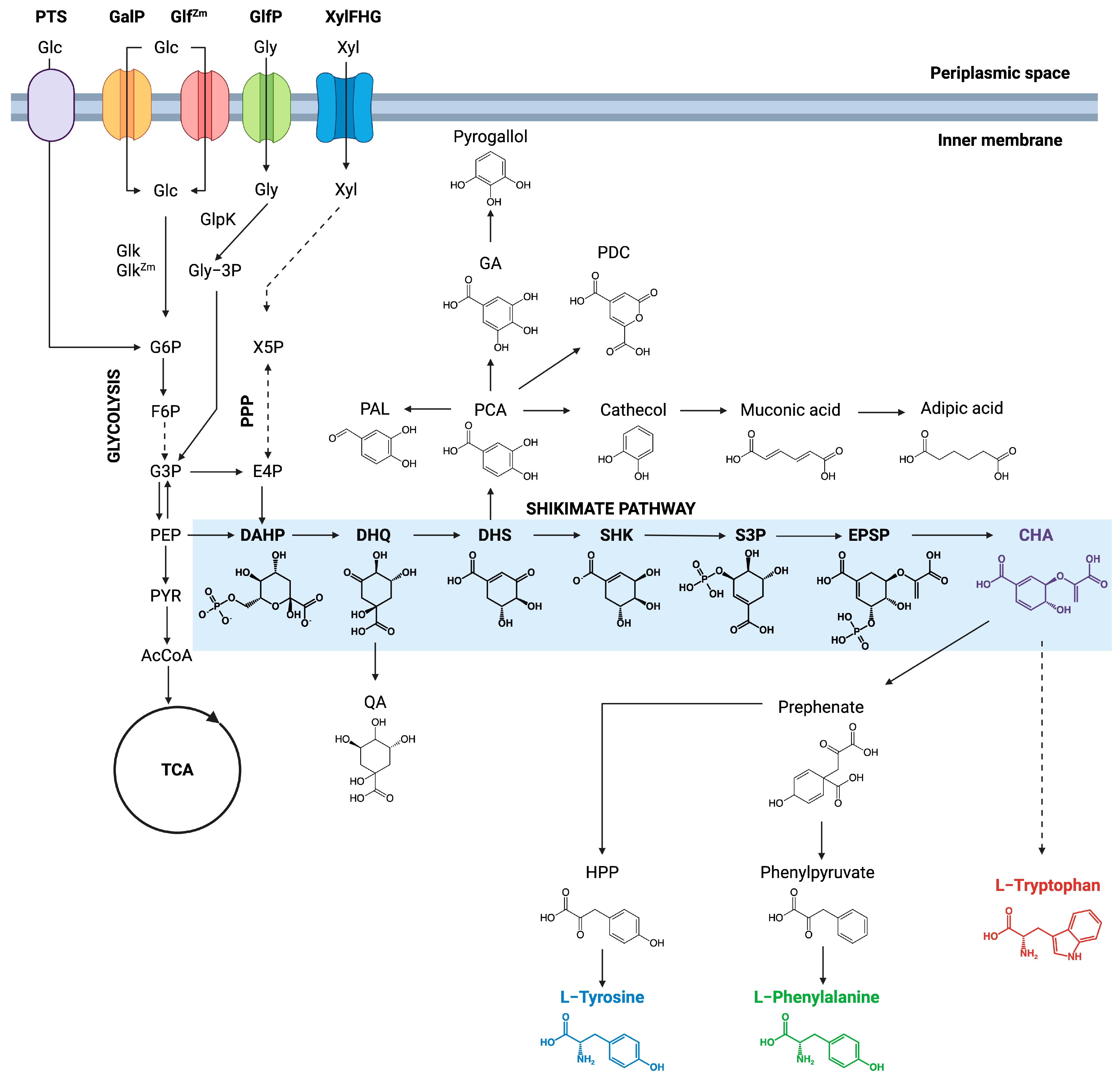
The SHK pathway serves as a central metabolic bridge between CCM and the biosynthesis of aromatic compounds. In E. coli, this pathway begins with the condensation of phosphoenolpyruvate (PEP) and erythrose-4-phosphate (E4P) to form 3-deoxy-D-arabino-heptulosonate-7-phosphate (DAHP), catalyzed by the isoenzymes AroF (encoded by aroF), AroG (encoded by aroG), and AroH (encoded by aroH). These enzymes genes are subjected to distinct feedback inhibition: AroF is feedback-inhibited by L-Tyr, AroG by L-Phe, and AroH by L-Trp. This differential inhibition is a critical regulatory checkpoint and a primary engineering target; feedback-resistant (fbr) variants, AroFfbr, AroGfbr, and AroHfbr, have been widely employed to deregulate pathway entry [4,7,8,9] (Figure 1).
DAHP subsequently undergoes a series of enzymatic transformations leading to CHA: DAHP is converted to 3-dehydroquinate (DHQ) by AroB (dehydroquinate synthase), to 3-dehydroshikimate (DHS) by AroD (dehydroquinate dehydratase), and to shikimate (SHK) by AroE (shikimate dehydrogenase, NADPH-linked). Phosphorylation by shikimate kinases AroK and AroL yields shikimate-3-phosphate (S3P), which is converted to 5-enolpyruvylshikimate-3-phosphate (EPSP) by EPSP synthase (AroA) and finally to CHA by chorismate synthase (AroC) [4,7,8,9]. From CHA, the pathway branches: L-Phe and L-Tyr are synthesized via prephenate intermediates using chorismate mutase/prephenate dehydratase (PheA) and chorismate mutase/prephenate dehydrogenase (TyrA), respectively, while L-Trp biosynthesis proceeds through the multi-step trpEDCBA operon.
Regulation of the SHK pathway is multilayered. In addition to feedback inhibition at the DAHP synthase isoenzymes, transcriptional control by global regulators TyrR and TrpR modulates the expression of key pathway genes. This multilayered regulation ensures metabolic balance but also represents a major constraint for metabolic engineering efforts [4,9].
The choice of carbon source profoundly influences flux distribution, cofactor balance, and product profiles in the SHK pathway. Glucose metabolism, through the phosphotransferase system (PTS), generates PEP and E4P primarily via glycolysis and the pentose phosphate pathway (PPP), respectively, but PEP is consumed by PTS-mediated glucose uptake, creating fundamental competition. Glycerol, as a non-PTS substrate, circumvents this constraint and has proven effective for producing several aromatic compounds (e.g., (S)-mandelic acid at 160 mM [10] and 2-phenylethanol at 9 g/L [11]). Xylose, metabolized via the PPP, generates abundant E4P and has been exploited in glucose–xylose co-utilization strategies that decouple biomass production from aromatic product synthesis [12]. More recently, strategies incorporating lignocellulosic hydrolysates and agricultural byproducts such as whey powder [13] are being explored in alignment with sustainability goals, though inhibitor tolerance and feedstock variability remain engineering challenges. Carbon source selection therefore must be considered in conjunction with transporter engineering (e.g., the replacement of PTS with the glucose facilitator GlfZm from Zymomonas mobilis) and cofactor management [4].
Cofactor balance is a pervasive bottleneck across SHK pathway branches. Several key reactions are NADPH-dependent (e.g., AroE-catalyzed SHK formation, reductases in L-Tyr and L-Phe catabolism, heterologous hydroxylases), while others require NADH or ATP. Strategies to address cofactor limitations include: (i) the overexpression of transhydrogenase (pntAB or udhA) to interconvert NADPH and NADH according to demand; (ii) enhancement of the oxidative PPP to increase NADPH regeneration; (iii) the expression of heterologous NADPH-generating enzymes such as glucose-6-phosphate dehydrogenase or malic enzyme; and (iv) the engineering of cofactor-independent enzyme variants [4,5,14,15]. In heterologous pathways, cofactor demands can be particularly acute: tetrahydrobiopterin (BH4) regeneration for 5-HTP production [16], malonyl-CoA supply for polyketide biosynthesis [17], and NADPH availability for hydroxylase activities in curcumin and L-DOPA production [18,19] represent well-documented cases. Balancing these demands through targeted pathway and cofactor engineering is therefore an essential—and often underappreciated—component of strain design for aromatic compound overproduction.
Product toxicity represents a major but under-addressed limitation in aromatic compound production. Several classes of aromatic molecules exert membrane disruption, enzyme inhibition, or growth arrest at concentrations far below economically relevant titers. For instance, 2-phenylethanol (2-PE) inhibits E. coli growth at approximately 2–3 g/L, constraining batch titers despite high biosynthetic capacity [11]. Curcumin and curcuminoids accumulate intracellularly due to their hydrophobicity, prompting the development of OMV-based export systems that achieved a titer of 978 mg/L by redirecting product into vesicular structures [19]. Indigo toxicity and poor solubility were mitigated through membrane engineering with heterologous membrane proteins, alongside a two-stage fermentation strategy that decoupled growth from production [20]. Cinnamaldehyde (CAD) toxicity was addressed by deleting ten endogenous reductases and dehydrogenases that spontaneously reduced CAD, combined with in situ product recovery to maintain low intracellular concentrations, ultimately achieving 3.8 g/L CAD [21]. These examples illustrate that product toxicity management requires compound-specific strategies, ranging from efflux pump engineering and membrane modifications to bioprocess interventions such as extractive fermentation and controlled feeding.
Figure 1. The connection between main glucose, glycerol, and xylose transporters, central carbon metabolism, the SHK pathway, and aromatic amino acids biosynthetic pathways in E. coli. Schematic representation of glucose (Glc), glycerol (Gly), and xylose (Xyl) transporter systems: PTS, phosphoenolpyruvate (PEP)-glucose phosphotransferase system; GalP, galactose permease; GlfZm, glucose facilitator from Zymomonas mobilis; GlfP, Glycerol facilitator; XylFHG, xylose ABC transporter. Glycolysis pathway: G6P, glucose-6-phosphate; F6P, fructose-6-phosphate; G3P, glyceraldehyde-3-phosphate; Gly3-P, glycerol-3-phosphate; PYR, pyruvate; AcCoA, acetyl-coenzyme A; PPP, the pentose phosphate pathway; X5P, xylulose-5-phosphate; E4P, erythrose-4-phosphate; TCA, the tricarboxylic acids pathway. Glk, GlkZm, glucokinase and glucokinase from Z. mobilis, respectively; GlpK, glycerol kinase. The SHK pathway is highlighted against a blue background: DAHP, 3-deoxy-D-arabinoheptulosonate-7-P; DHQ, 3-dehydroquinate; DHS, 3-dehydroshikimic acid; SHK, shikimate; S3P, shikimate-3-P; EPSP, 5-enolpyruvylshikimate-3-phosphate; and CHA, chorismate. Aromatic derivatives from the DHQ node: QA, quinic acid. Aromatic derivatives from the DHS node: PCA, protocatechuate; PAL, protocatechuic aldehyde; GA, gallic acid; PDC, 2-pyrone-4,6-dicarboxylic acid; Aromatic amino acids intermediate: HPP, 4-hydroxyphenylpyruvate. Solid arrows designate one enzymatic reaction; dashed arrows illustrate two or more enzymatic reactions. Figure merged from information reported in [2,4,5,9,12,22]. Created in BioRender. Escalante, A. (2026) https://BioRender.com/1xkfv71.
Microbiolres 17 00094 g001

2.2. Intermediates of the SHK Pathway as Precursors of Valuable Aromatic Compounds

The SHK pathway serves as a metabolic hub, supplying key intermediates for a wide range of aromatic compounds. DHQ, DHS, and SHK represent valuable nodes that can be redirected toward industrially relevant molecules [7,8,9,22] (Figure 1).
Quinic acid (QA), a starting material for immunosuppressive FK-506 synthesis, was produced in E. coli from DHQ via shikimate/quinate dehydrogenase (YdiB), achieving 49 g/L with 20% (mol/mol) yield [23,24,25]. DHS is a key precursor for gallic acid (GA), protocatechuate (PCA), and, via AroE-catalyzed NADPH-linked reduction, for SHK itself [4,5,12,26]. SHK is the chiral precursor for the antiviral oseltamivir phosphate (Tamiflu®, manufactured by Roche Pharmaceuticals, Reinach, Switzerland), used against influenza A (H5N1) and A(H1N1). Engineered strains achieved 126.4 g/L in E. coli SA09 [27] and 141.2 g/L in C. glutamicum SKM7 [8], illustrating complementary host capabilities.

2.3. Chorismate as a Metabolic Node for the Biosynthesis of Valuable Aromatic Compounds

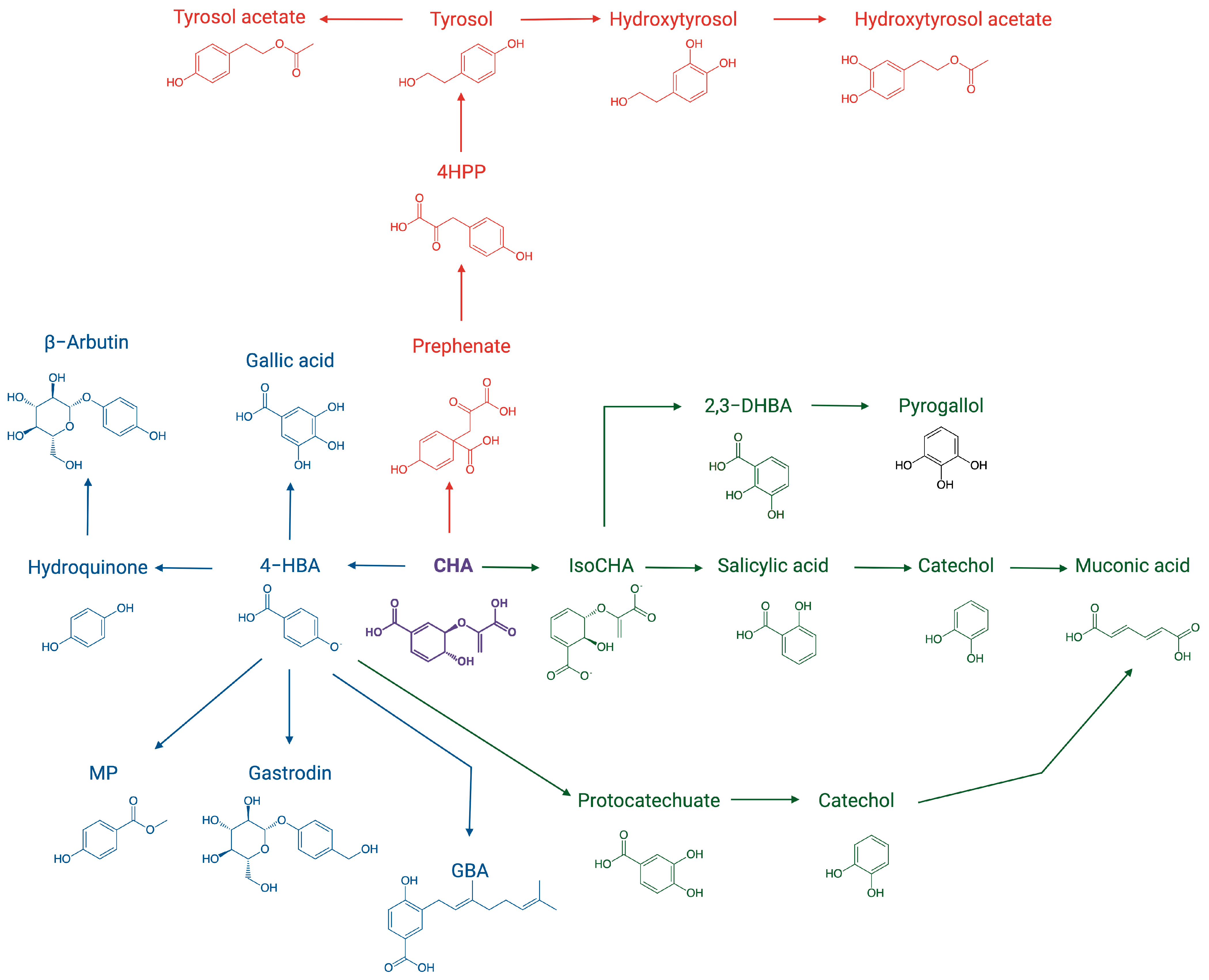
CHA functions as a central hub for aromatic compound diversification. In E. coli, CHA not only supports the biosynthesis of the aromatic amino acids L-Phe, L-Tyr, and L-Trp, but also enables the production of numerous value-added metabolites through both native and engineered pathways (Figure 2). These routes can be broadly categorized into (i) hydroxybenzoic acid derivatives, (ii) catechol and muconic acid pathways, and (iii) specialized aromatic compounds synthesized through heterologous pathway extension [4,5,7,28].
Hydroxybenzoic acid (HBA) derivatives exhibit antibacterial, anticancer, antidiabetic, antiaging, antiviral, and anti-inflammatory activities [4]. HBA, 3,4-dihydroxybenzoic acid (protocatechuic acid, DHB), and its methyl ester (methylparaben, MP) were produced in E. coli BL21 derivatives [29]. Gastrodin (4-hydroxymethylphenyl β-D-glucopyranoside) was produced at 545 mg/L via a de novo heterologous pathway from CHA [30]. β-Arbutin was produced at 30.52 g/L by rational modular and transcription factor engineering [31]. Geranyl-4-hydroxybenzoic acid (GBA) and analogs (94.3 mg/L) were synthesized using chorismate pyruvate lyase (UbiC, encoded by ubiC) and the heterologous prenyltransferase XimB [32].
cis,cis-Muconic acid (MA) is an important precursor for adipic acid and terephthalic acid production. Relevant strategies include native–exogenous enzyme combinations converting CHA to catechol via p-hydroxybenzoate and protocatechuate intermediates, with subsequent MA synthesis by catechol 1,2-dioxygenase from Acinetobacter calcoaceticus [33,34]. Parallel catabolic pathway engineering enabled glucose–xylose co-utilization, producing 4.09 g/L MA [12]. Salicylic acid (SA, 1.2 g/L) provides an additional route to MA via isochorismate synthase and isochorismate pyruvate lyase [35] (Figure 2).
Tyrosol (2-(4-hydroxyphenyl)ethanol) and hydroxytyrosol (2-(3,4-dihydroxyphenyl)ethanol) are phenolic antioxidants found in olive oil. These two compounds share structural similarities but differ in the presence of an additional hydroxyl group on the catechol ring of hydroxytyrosol, which confers greater antioxidant potency. From an engineering perspective, tyrosol can be synthesized directly from CHA-derived intermediates (4-hydroxyphenylpyruvate and its derivatives) without requiring L-Tyr as an obligate intermediate, while hydroxytyrosol is typically produced by an additional hydroxylation step catalyzed by HpaBC (4-hydroxyphenylacetate 3-monooxygenase from E. coli) acting on tyrosol [28]. Further discussion of the production routes from L-Tyr is provided in Section 3.1.1.
Figure 2. Chorismate-derived secondary aromatic metabolites in E. coli. Hydroxybenzoic acid derivatives are shown in dark blue. The catechol and muconic acid pathways are shown in green. Specialized aromatic compounds via heterologous pathway extension are shown in red. CHA, chorismate; IsoCHA, isochorismate; 2,3-DHBA, 2,3-dihydoxybenzoic acid; 4-HBA, 4-hydroxybenzoate; MP, methyl paraben; GBA, geranyl-4-hydroxybenzoic acid. Solid arrows designate one enzymatic reaction; arrows illustrate enzymatic reactions. Figure merged from information reported in [4,5,29,31,36]. Created in BioRender. Escalante, A. (2026) https://BioRender.com/1xkfv71.
Microbiolres 17 00094 g002

3. Production of Derivatives from Aromatic Amino Acids

3.1. L-Tyrosine as a Versatile Precursor for Aromatic Compound Biosynthesis

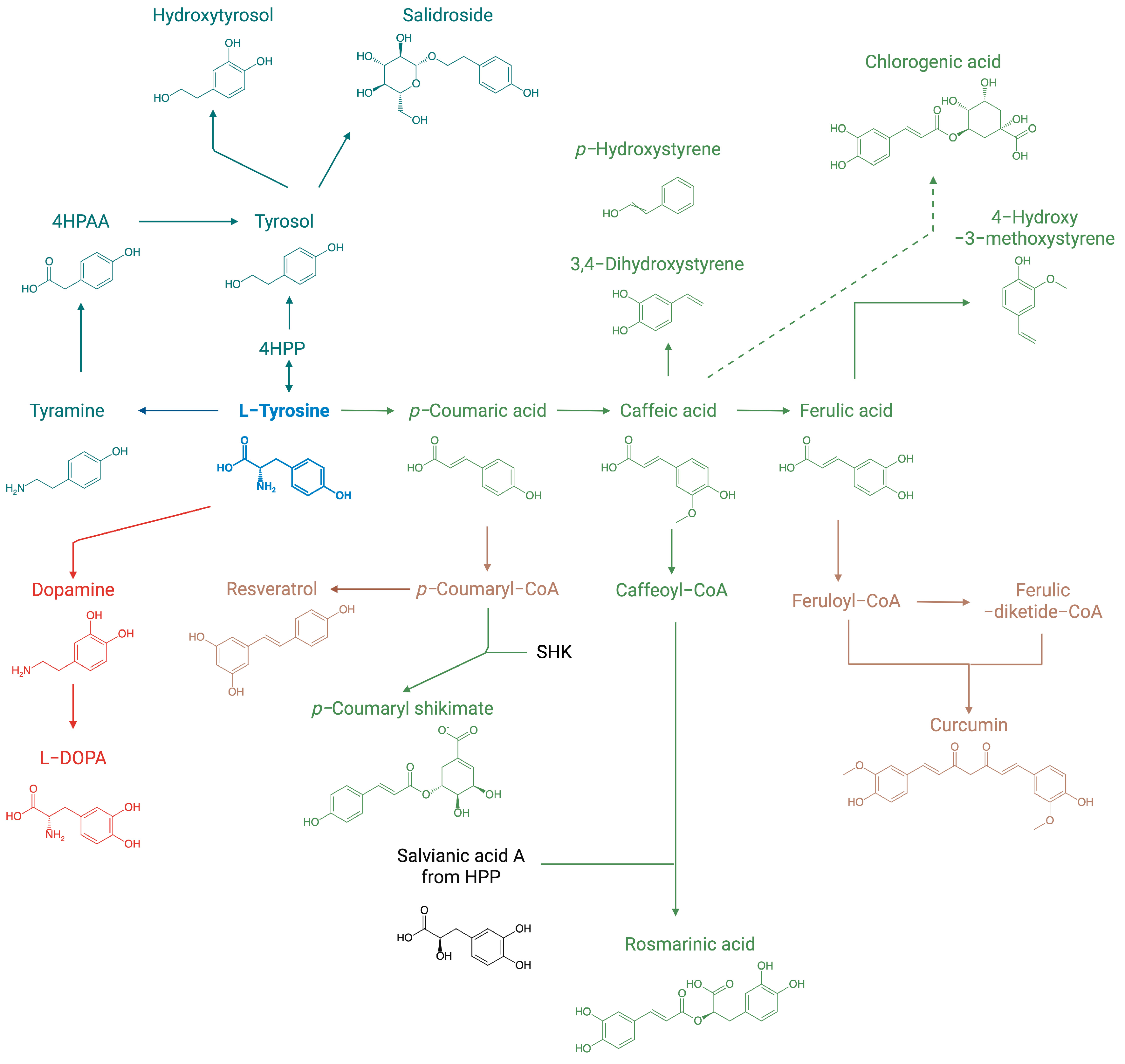
L-Tyr, derived from CHA within the SHK pathway, represents a key metabolic node for the biosynthesis of a wide range of structurally diverse aromatic compounds. L-Tyr-derived pathways can be broadly categorized into (i) phenolic alcohols and glycosides, (ii) hydroxycinnamic acids and related phenylpropanoids, (iii) catecholamine-related compounds, and (iv) complex polyphenolic and plant-derived metabolites. This classification highlights both the versatility of L-Tyr as a precursor and the increasing complexity of engineered biosynthetic routes [1,2,37] (Figure 3).

3.1.1. Phenolic Alcohols and Glycosylated Derivatives

Tyrosol can be synthesized from L-Tyr through multiple routes, including: (i) the Ehrlich pathway via 4-hydroxyphenylpyruvate (4-HPP) as an intermediate, (ii) the decarboxylation of L-Tyr to tyramine followed by oxidative deamination and reduction, and (iii) conversion by aromatic aldehyde synthases. In engineered E. coli, tyrosol was produced from 4-hydroxyphenyllactic acid by the chromosomal integration of lactate dehydrogenase (ldhA from Cupriavidus necator), phenylpyruvate decarboxylase (ipdC from Azospirillum brasilense), and phenylacetaldehyde dehydrogenase (feaB from E. coli) into L-Tyr overproducers [38]. Hydroxytyrosol, the hydroxylated derivative of tyrosol bearing a catechol ring, is typically produced by the additional action of HpaBC on tyrosol [28].
Glycosylation of tyrosol yields salidroside (p-hydroxyphenylethyl-O-β-D-glucopyranoside), a bioactive phenylpropanoid glycoside from Rhodiola species with antifatigue, anticancer, and anti-inflammatory effects. De novo synthesis of salidroside was achieved at 16.8 g/L (productivity 0.4 g/L/h) in fed-batch fermentation using a 5 L bioreactor, through expression of ARO10 (phenylpyruvate decarboxylase) and ADH6 (ethanol dehydrogenase) from Saccharomyces cerevisiae and a mutant glucosyltransferase AtUGT85A1 from Arabidopsis thaliana [39].

3.1.2. Hydroxycinnamic Acids and Related Phenylpropanoids

Conversion of L-Tyr to hydroxycinnamic acids is initiated by tyrosine ammonia-lyase (TAL), yielding p-coumaric acid, which undergoes hydroxylation and methylation to produce caffeic and ferulic acids. Ferulic acid is produced via the methylation of caffeic acid by an engineered O-methyltransferase (AtCOMT) from A. thaliana [40]. Rosmarinic acid (5780.6 mg/L by fed-batch fermentation) was produced via modules synthesizing caffeoyl-CoA from caffeic acid and salvianic acid A from 4-HPP, with subsequent condensation by rosmarinic acid synthase from Plectranthus scutellarioides [41].
p-Hydroxystyrene (355 mg/L in shake flask), 3,4-dihydroxystyrene (63 mg/L), and 4-hydroxy-3-methoxystyrene (64 mg/L) were produced by the introduction of tyrosine ammonia lyase (tal from Saccharothrix espanaensis) and phenolic acid decarboxylase (pad from Bacillus amyloliquefaciens) into L-Tyr-producing strains, with additional 4-coumarate 3-hydroxylase (sam5 from S. espanaensis) and caffeic acid methyltransferase (com) for the hydroxylated and methoxylated derivatives [42]. Chlorogenic acid (109.7 mg/L) and p-coumaroyl shikimate (713 mg/L) were produced by combining SHK pathway modules with hydroxycinnamoyl transferase genes [43,44].

3.1.3. Catecholamine-Related and Neurotransmitter Precursors

L-Tyr serves as a precursor for catecholamines of significant pharmaceutical interest. L-DOPA production from L-Tyr reached 25.53 g/L through the overexpression of 4-hydroxyphenylacetate 3-hydroxylase (4HPA3H) [18], while dopamine (27 mg/L in shake flask) was achieved by extending the pathway with HpaBC and dopamine decarboxylase (DDC) from porcine kidney cells [37]. The requirement for complex cofactors and sensitivity to metabolic imbalance remain key challenges in these pathways. These are primarily laboratory achievements; translation to industrial scale would require cofactor regeneration systems, efflux pump engineering for dopamine secretion, and careful metabolic burden management.

3.1.4. Complex Polyphenols and Plant-Derived Metabolites

Resveratrol biosynthesis in E. coli proceeds via TAL/PAL-catalyzed deamination of L-Tyr or L-Phe to p-coumaric acid and cinnamic acid, respectively, followed by 4CL-mediated CoA activation and stilbene synthase (STS)-catalyzed condensation with malonyl-CoA. Titers of up to 2340 mg/L from p-coumaric acid have been achieved [45,46]; however, the low activity of TAL and PAL enzymes limits de novo titers. These results represent high-performance laboratory demonstrations; bioreactor-scale production from glucose remains challenging and has been reported only at lower titers.
Curcumin production in E. coli was achieved at 978 mg/L by an integrated strategy combining chaperone-assisted enzyme folding, OMV-based export, and metabolic engineering from L-Tyr through p-coumaric acid, ferulic acid, and CoA-activated intermediates, with curcumin synthase (CURS1, from C. longa) performing the final condensation [19].
Figure 3. The L-Tyr node in E. coli and the production of relevant aromatic derivatives. The phenolic alcohols and glycosides pathway is shown in cyan. The hydroxycinnamic acids and related phenylpropanoids pathway is shown in green. The catecholamine-related compounds pathway is shown in red. Complex polyphenolic and plant-derived metabolites are shown in brown. 4HPP, 4-hydroxyphenylpyruvate; 4-HPAA, 4-hydroxyphenyl acetic acid; HPP, hydroxyphenylpyruvate; SHK, shikimate. Solid arrows designate one enzymatic reaction; dashed arrows illustrate two or more enzymatic reactions. Figure merged from information reported in [1,2,3,18,19,28,37,42,43,44,45,46,47,48,49,50,51]. Created in BioRender. Escalante, A. (2026) https://BioRender.com/1xkfv71.
Microbiolres 17 00094 g003

3.2. L-Phenylalanine as a Platform for the Biosynthesis of Aromatic Fine Chemicals and Phenylpropanoid Derivatives

L-Phe represents a major branching node within the SHK pathway and serves as a precursor for a broad range of industrially relevant aromatic compounds via its key intermediate phenylpyruvate. L-Phe-derived pathways include: (i) phenylpyruvate-derived alcohols and acids, (ii) mandelate and phenylglycine-related chiral compounds, and (iii) cinnamic acid-derived phenylpropanoid and flavonoid pathways [1,2,3] (Figure 4).

3.2.1. Phenylpyruvate-Derived Alcohols and Organic Acids

Phenyl-lactate can be produced enantioselectively from phenylpyruvate using D-lactate dehydrogenase from Cupriavidus necator or phenylpyruvate reductase from Wickerhamia fluorescens; L-phenyllactate was produced at 52.89 g/L from glucose in fed-batch cultivation [52]. Phenylacetic acid was produced by the co-expression of phenylpyruvate decarboxylase (ipdC from A. brasilense) and phenylacetaldehyde dehydrogenase (feaB from E. coli) [38].
2-Phenylethanol (2-PE) is a fragrance compound widely used in food and cosmetics. Its production in E. coli was achieved by parallel cultivation: strain NST74-Phe-Sty overexpressing the L-Phe biosynthetic pathway with an enzyme cascade for L-Phe-to-2-PE conversion yielded 0.17 g/L at 22 °C. Subsequent optimization using separate strains, E. coli NST74-Phe (37 °C, for L-Phe production from glucose or glycerol) and E. coli T7-Sty (22–30 °C, expressing conversion enzymes), yielded up to 9 g/L 2-PE, the highest reported from glucose [11]. Despite this high titer, 2-PE toxicity (~2–3 g/L inhibitory concentration) necessitates in situ extraction or fed-batch strategies for industrial realization.

3.2.2. Mandelate and Phenylglycine-Related Chiral Compounds

Production of (S)-mandelic acid was achieved by overexpressing key enzymes of the SHK pathway and hydroxymandelate synthase (HmaS) from Amycolatopsis orientalis, while eliminating competing pathways, yielding up to 1.02 g/L in shake flask cultures [10,53]. HmaS exhibits substrate promiscuity, catalyzing the conversion of both phenylpyruvate and 4-hydroxyphenylpyruvate. Whole-cell biocatalysis approaches have achieved up to 160 mM (S)-mandelic acid from L-Phe, and up to 10 g/L from glycerol [53].
An alternative HmaS homolog from Actinosynnema mirum was employed for de novo mandelic acid (MA) synthesis, combined with enhancement of the SHK pathway, supply of PEP and E4P, and application of the CRISPR interference (CRISPRi) to repress competing pathways. This strategy produced 9.58 g/L of MA using 0.5% glycerol and 0.05% glucose as carbon sources, the highest reported titer for microbial production [54].
(R)-Mandelic acid (1.52 g/L) was produced via an epoxidation–hydrolysis–double oxidation artificial enzyme cascade from L-Phe; further incorporation of deamination and decarboxylation steps enabled direct L-Phe conversion at 913 mg/L, and co-culture coupling of L-Phe-biosynthetic and conversion-expressing strains yielded 760 or 455 mg/L from glycerol or glucose, respectively [53].
L-Phenylglycine (L-PHG) was produced by E. coli cascade biocatalysis from racemic mandelic acid through the co-expression of mandelate racemase, D-mandelate dehydrogenase, and L-leucine dehydrogenase, achieving 87.89% yield with a productivity of 79.70 g/L/d and >99% enantiomeric purity [55] (Figure 4).

3.2.3. Cinnamic Acid-Derived Pathways and Phenylpropanoid Diversification

The deamination of L-Phe by phenylalanine ammonia-lyase (PAL) yields cinnamic acid, the entry point into phenylpropanoid metabolism. Cinnamaldehyde (CAD) production in E. coli YHP05 was optimized by the co-expression of carboxylic acid reductase and phosphopantetheinyl transferase (PPTase); the deletion of ten endogenous reductases and dehydrogenases to prevent spontaneous CAD-to-cinnamyl alcohol conversion; the chromosomal integration of all expression units for antibiotic- and inducer-free production; the enhancement of NADPH, CoA, and ATP cofactor pools; and the deletion of acetate pathways. Fed-batch cultivation with in situ product recovery yielded 3.8 g/L CAD with a productivity of 49.1 mg/L/h, reported as the highest CAD titer [21].
Pinocembrin (710 mg/L) and its derivatives chrysin (82 mg/L using FNS from Petroselinum crispum), pinostrobin (558 mg/L using flavonoid pinocembrin 7-O-methyltransferase from Eucalyptus nitida), pinobanksin (12.6 mg/L using bifunctional F3H/FLS from Glycine max), and galangin (18.2 mg/L) were produced in engineered E. coli by combinatorial library engineering, cofactor supply optimization, and toxicity alleviation strategies [17,56] (Figure 4).

3.3. L-Tryptophan as a Platform for Indole-Derived Compounds and Functional Aromatic Molecules

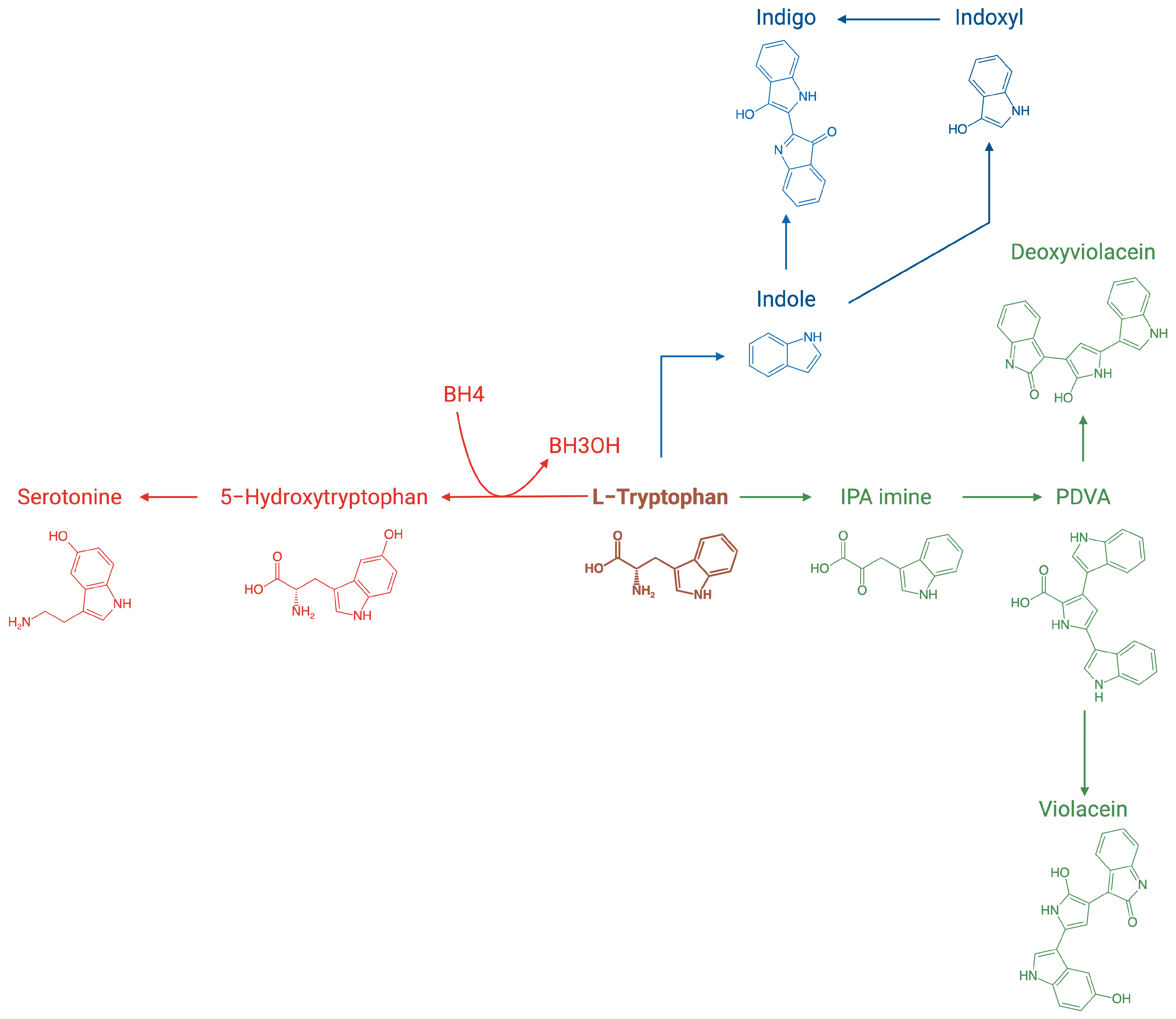
L-Trp constitutes a versatile metabolic node within the SHK pathway, enabling the biosynthesis of indole-derived molecules, monoamine neurotransmitter precursors, and complex bisindole compounds. L-Trp-derived pathways can be broadly categorized into (i) monoamine and neurotransmitter-related compounds, (ii) indole-derived pigments and oxidative dimers, and (iii) complex bisindole compounds synthesized through multienzyme pathways [1,2,3] (Figure 5).

3.3.1. Monoamine and Neurotransmitter-Related Compounds

5-Hydroxytryptophan (5-HTP) is a neurotransmitter serotonin precursor with efficacy in treating depression, fibromyalgia, and obesity. Production in E. coli C1T7-S337A/F318Y with optimized promoter distribution for L-Trp hydroxylase and BH4 synthesis/regeneration pathways resulted in a 60.3% increase in 5-HTP compared to the initial strain, reaching 1.3 g/L 5-HTP from 2.0 g/L L-Trp using whey powder as substrate and inducer. Further scale-up to a 5 L fermenter improved yield to 1.6 g/L [13]. A titer of 5.1 g/L 5-HTP was achieved by fed-batch culture in glycerol as carbon source, co-expressing human TPH and the BH4 biosynthesis and regeneration system in E. coli [16] (Figure 5).

3.3.2. Indole-Derived Pigments and Oxidative Products

Indigo, a natural blue pigment, was produced in E. coli MG1655 at 3.9 g/L via genomic integration of flavin-containing monooxygenase (MaFMO from Methylophaga aminisulfidivorans) and endogenous tryptophanase (TnaA), combined with the deletion of competing pathway genes, membrane engineering to reduce toxicity and improve product secretion, and a two-stage fermentation strategy [20]. The highest indigo titer (12.9 g/L in 100 h; productivity 0.12 g/h) was achieved through enhanced L-Trp production and a heterologous pathway converting L-Trp via indole to indoxyl and self-dimerization to indigo, using NDOb (naphthalene dioxygenase from Pseudomonas balearica DSM 6083), IH (isatin hydrolase from P. putida), BX1 (indole-3-glycerol phosphate lyase from Zea mays), and TnaA [57].

3.3.3. Bisindole Compounds and Multienzyme Pathway Systems

Violacein and deoxyviolacein are bisindole pigments with antimicrobial, antiviral, and anticancer activities, synthesized through the vioABCDE gene cluster. Optimized expression of a shortened cluster (vioABCE) yielded 12.18 g/L of deoxyviolacein from glucose, the highest competitive titer reported [36]. A novel mutualistic E. coli–E. coli self-coordinating co-culture system in a two-compartment bioreactor (37 °C for anthranilate-producing growth strain; 20–30 °C for auxotrophic violacein-producing strain) achieved a maximum biomass-specific productivity of 6 mg/g/h at 25 °C for violacein [58].

4. Future Perspectives in the Engineering of Aromatic Compound Biosynthesis

The transition from classical metabolic engineering to synthetic biology has fundamentally reshaped strategies for optimizing aromatic compound biosynthesis. Early efforts largely relied on the overexpression or deletion of individual genes within the SHK pathway [6]. While such approaches enabled substantial improvements in product titers, they often failed to overcome intrinsic regulatory constraints, particularly feedback inhibition by the aromatic amino acids end-product at the DAHP synthase isoenzymes (AroG inhibited by L-Phe; AroF inhibited by L-Tyr; AroH inhibited by L-Trp). The development of feedback-resistant variants AroGfbr and PheAfbr increased L-Phe production but exposed persistent limitations in precursor supply and cofactor balance, underscoring the need for coordinated, system-level interventions.
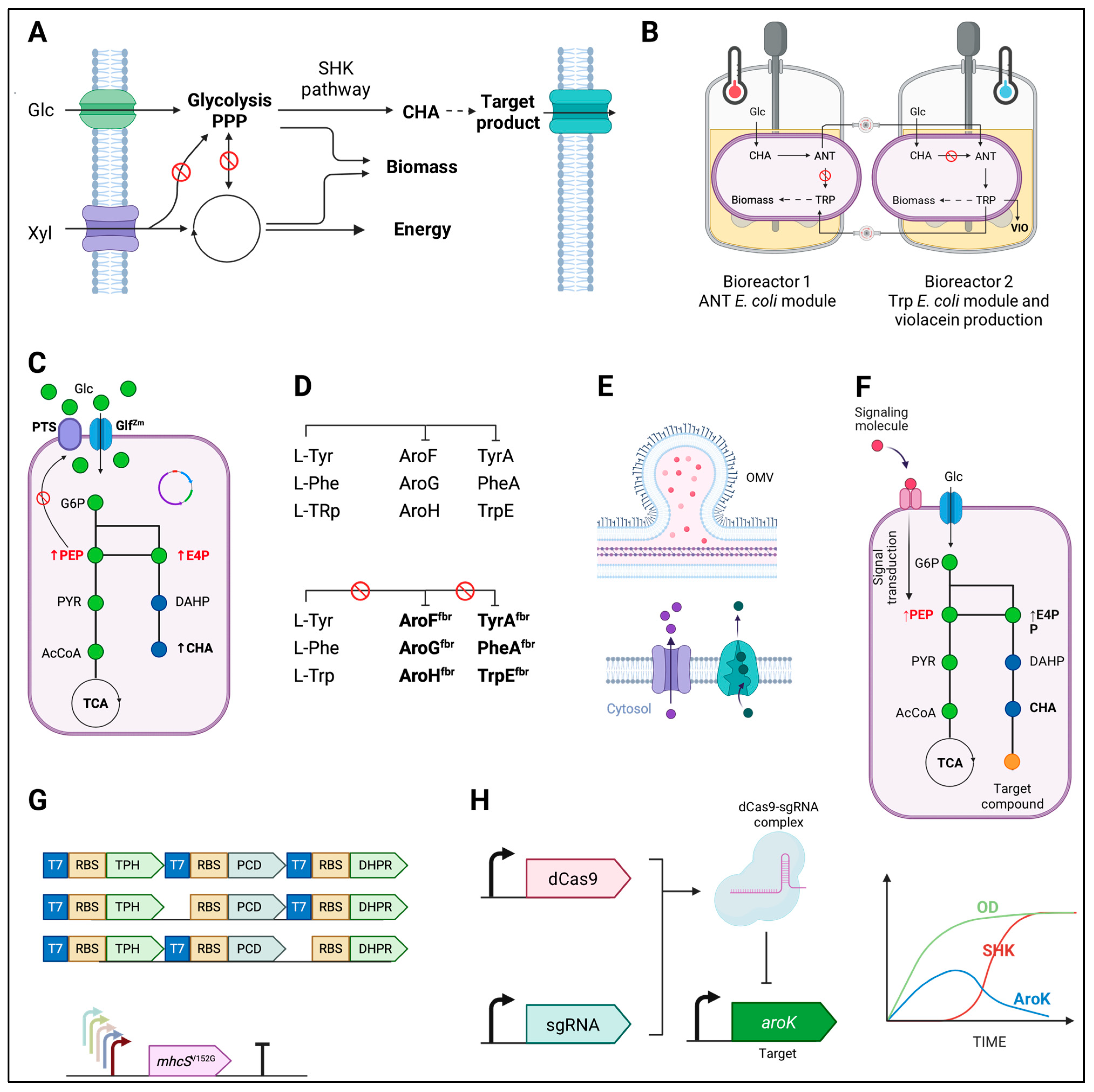
Synthetic biology has addressed multilayered regulatory constraints by implementing orthogonal regulatory systems and tunable expression platforms. Synthetic promoter libraries combined with ribosome binding site (RBS) engineering enable fine control of flux across SHK intermediates. In parallel, dynamic regulation strategies—such as aromatic amino acid-responsive biosensors coupled to pathway gene expression—allow for the real-time modulation of flux. Specific biosensor implementations include the salicylate-responsive sensor-reporter system used to rapidly identify optimal expression levels for key SHK enzymes [60], and tyrosine-responsive biosensors used in high-throughput screening for L-Tyr overproducers. CRISPRi has been applied to precisely repress competing pathways, for instance, the repression of pheA and trpE branches to redirect flux toward 4-hydroxymandelate and 5-HTP, respectively [13,61] (Figure 6G,H). These approaches collectively enable the fine-tuning of metabolic flux while mitigating toxic intermediate accumulation.
Metabolic burden, the diversion of cellular resources (ATP, NADPH, precursors, and ribosomes) from growth toward heterologous production, is a fundamental constraint that is often cited but rarely quantified in the context of aromatic compound engineering. Strategies to decouple growth from production include: (i) two-stage fermentation, where biomass accumulation at optimal growth conditions is followed by a production phase induced by nutrient limitation, temperature shift, or metabolite signals; (ii) dynamic regulation systems that sense growth rate or metabolite levels and modulate pathway flux accordingly; (iii) chromosomal integration and auto-inducible systems that eliminate plasmid maintenance burden, as demonstrated for CAD (3.8 g/L) and pinocembrin derivatives [17,21]; and (iv) synthetic microbial consortia that partition biosynthetic burden across specialized strains, as implemented for violacein production [58]. The quantitative assessment of metabolic burden using growth rate measurements, proteomic profiling, and flux balance analysis remains an important area for future work in aromatic compound engineering.
A major frontier is the optimization of CCM to enhance precursor availability. Engineering efforts have focused on rewiring glycolysis and PPP to increase PEP and E4P supply (Figure 6A,C), implementing glucose–xylose co-utilization [12], and replacing the PTS with more efficient transporters (GlfZm from Z. mobilis) (Figure 6D) [4]. Membrane engineering strategies, including OMV-based secretion (Figure 6E) and the introduction of heterologous membrane proteins, have enhanced secretion and reduced intracellular toxicity for hydrophobic compounds such as curcuminoids and indigo [19,20].
Modular and distributed metabolic engineering via synthetic microbial consortia, such as the E. coli–E. coli co-culture for violacein production (Figure 6B), enables the partitioning of complex pathways into specialized modules, alleviating metabolic burden and resolving growth–production temperature incompatibilities [58].
An area that merits increasing attention—and which represents a recognized gap in this review—is the integration of upstream strain engineering with downstream processing and techno-economic considerations. Product toxicity and poor solubility (as discussed in Section 2.1) directly impact downstream extraction yields and purification costs. For example, the hydrophobicity of curcumin and indigo complicates aqueous extraction, increasing reliance on organic solvents or resin-based adsorption, which increase cost and environmental burden. Similarly, the use of complex feedstocks (e.g., lignocellulosic hydrolysates) introduces inhibitor management challenges in fermentation scale-up. Future engineering strategies for aromatic compound production should incorporate a techno-economic analysis (TEA) and life-cycle assessment (LCA) from early strain design stages, as has been increasingly advocated in the metabolic engineering field [62].
Future directions include the integration of multi-omics data, machine-learning (ML)-guided design, and automated Design–Build–Test–Learn (DBTL) cycles. For aromatic compound engineering specifically, ML approaches could accelerate the optimization of: (i) enzyme variant selection for improved cofactor specificity or feedback resistance; (ii) promoter and RBS strength combinations for balanced pathway expression; and (iii) fermentation process parameters (feeding strategy, dissolved oxygen, and pH) for scale-up. Automated DBTL platforms have already demonstrated effectiveness in optimizing lycopene and amino acid production in E. coli [63], and their application to SHK pathway products—where flux is distributed across many competing branches—represents a promising near-term direction. More broadly, the transition toward programmable, adaptive, and distributed metabolic systems represents an emerging paradigm in microbial biotechnology that is directly applicable to aromatic compound production.

5. Conclusions

The engineering of E. coli for aromatic compound production has progressed substantially from classical single-gene metabolic engineering toward the design of integrated, systems-level platforms. The SHK pathway remains the central metabolic hub, and the present review has organized its discussion around metabolic nodes to highlight the diversity of engineering approaches and their outcomes.
Among the strategies reviewed, several have proven particularly effective at overcoming specific bottlenecks. Feedback-resistant enzyme variants (AroGfbr, AroFfbr, PheAfbr) were the most universally applicable for deregulating pathway entry flux. PTS replacement by GlfZm, combined with PPP enhancement, has consistently improved PEP and E4P supply. For product toxicity, compound-specific solutions proved most effective: OMV-based export for curcumin, membrane engineering for indigo, in situ product recovery for 2-PE and CAD, and two-stage fermentation for biosynthetically and physiologically incompatible production conditions (e.g., violacein at 20–30 °C). CRISPRi-mediated flux redirection and biosensor-guided expression optimization demonstrated clear advantages for fine-tuning competing branch points, achieving titers such as 9.58 g/L mandelic acid and 5.1 g/L 5-HTP. By contrast, the fully de novo reconstruction of complex plant biosynthetic pathways (e.g., curcumin, resveratrol) showed lower robustness and scalability, limited by low enzyme activity, cofactor imbalances, and intermediate toxicity; these cases remain primarily laboratory demonstrations requiring further systems-level optimization.
Key challenges remain: tight regulatory control of the SHK pathway, pervasive cofactor imbalances (particularly NADPH demand), metabolic burden from large heterologous gene clusters, product toxicity across compound classes, and the gap between laboratory titers and industrially validated processes. Closing this gap will require integrating strain engineering with downstream process design and adopting techno-economic and life-cycle frameworks from early development stages.
The continued convergence of metabolic engineering, synthetic biology, and data-driven approaches, including ML-guided strain design and automated DBTL cycles, will be essential to fully exploit the biosynthetic potential of E. coli as a microbial cell factory for complex aromatic compounds. Emerging strategies such as synthetic microbial consortia and programmable regulatory circuits will further expand the accessible chemical space, enabling efficient, scalable, and sustainable aromatic compound bioproduction.

Author Contributions

S.M.T.-C., A.E., and F.B. participate equally in the conceptualization, investigation, writing, original draft preparation, review, editing, and visualization; F.B. funding acquisition All authors have read and agreed to the published version of the manuscript.

Funding

This research was funded by PAPIIT-DGAPA, grant number IN210924.

Institutional Review Board Statement

Not applicable.

Informed Consent Statement

Not applicable.

Data Availability Statement

No new data were created or analyzed in this study.

Conflicts of Interest

The authors declare no conflicts of interest.

References

  1. Shen, Y.P.; Niu, F.X.; Yan, Z.B.; Fong, L.S.; Huang, Y.B.; Liu, J.Z. Recent advances in metabolically engineered microorganisms for the production of aromatic chemicals derived from aromatic amino acids. Front. Bioeng. Biotechnol. 2020, 8, 407. [Google Scholar] [CrossRef] [PubMed]
  2. Tang, M.; You, J.; Yang, T.; Sun, Q.; Jiang, S.; Xu, M.; Pan, X.; Rao, Z. Application of modern synthetic biology technology in aromatic amino acids and derived compounds biosynthesis. Bioresour. Technol. 2024, 406, 131050. [Google Scholar] [CrossRef]
  3. Hirasawa, T.; Satoh, Y.; Koma, D. Production of aromatic amino acids and their derivatives by Escherichia coli and Corynebacterium glutamicum. World J. Microbiol. Biotechnol. 2025, 41, 65. [Google Scholar] [CrossRef] [PubMed]
  4. Escalante, A.; Martínez, A.; Bolívar, F.; Gosset, G. Metabolic engineering of the shikimic acid pathway in Escherichia coli for production of derived aromatic compounds. In Handbook of Biorefinery Research and Technology: Production of Biofuels and Biochemicals; Bisaria, V., Ed.; Springer Nature: Singapore, 2024; pp. 291–317. ISBN 978-981-97-7585-9. [Google Scholar]
  5. Cao, M.; Gao, M.; Suástegui, M.; Mei, Y.; Shao, Z. Building microbial factories for the production of aromatic amino acid pathway derivatives: From commodity chemicals to plant-sourced natural products. Metab. Eng. 2020, 58, 94–132. [Google Scholar] [CrossRef] [PubMed]
  6. Rodriguez, A.; Martínez, J.A.; Flores, N.; Escalante, A.; Gosset, G.; Bolivar, F. Engineering Escherichia coli to overproduce aromatic amino acids and derived compounds. Microb. Cell Fact. 2014, 13, 126. [Google Scholar] [CrossRef]
  7. Braga, A.; Faria, N. Bioprocess optimization for the production of aromatic compounds with metabolically engineered hosts: Recent developments and future challenges. Front. Bioeng. Biotechnol. 2020, 8, 96. [Google Scholar] [CrossRef]
  8. Sheng, Q.; Yi, L.; Zhong, B.; Wu, X.; Liu, L.; Zhang, B. Shikimic acid biosynthesis in microorganisms: Current status and future direction. Biotechnol. Adv. 2023, 62, 108073. [Google Scholar] [CrossRef]
  9. Karp, P.D.; Paley, S.; Caspi, R.; Kothari, A.; Krummenacker, M.; Midford, P.E.; Moore, L.R.; Subhraveti, P.; Gama-Castro, S.; Tierrafria, V.H.; et al. The EcoCyc database (2025). EcoSal Plus 2025, 13, eesp-0019-2024. [Google Scholar] [CrossRef] [PubMed]
  10. Lukito, B.R.; Wang, Z.; Sundara Sekar, B.; Li, Z. Production of (R)-mandelic acid from styrene, L-phenylalanine, glycerol, or glucose via cascade biotransformations. Bioresour. Bioprocess. 2021, 8, 22. [Google Scholar] [CrossRef] [PubMed]
  11. Sekar, B.S.; Lukito, B.R.; Li, Z. Production of natural 2-phenylethanol from glucose or glycerol with coupled Escherichia coli strains expressing L-phenylalanine biosynthesis pathway and artificial biocascades. ACS Sustain. Chem. Eng. 2019, 7, 12231–12239. [Google Scholar] [CrossRef]
  12. Fujiwara, R.; Noda, S.; Tanaka, T.; Kondo, A. Metabolic engineering of Escherichia coli for shikimate pathway derivative production from glucose–xylose co-substrate. Nat. Commun. 2020, 11, 279. [Google Scholar] [CrossRef]
  13. Shen, B.; Zhang, L.; Zhou, Y.; Song, F.; You, S.; Su, R.; Qi, W. Efficient synthesis of 5-hydroxytryptophan in Escherichia coli by bifunctional utilization of whey powder as a substrate for cell growth and inducer production. J. Biotechnol. 2024, 393, 100–108. [Google Scholar] [CrossRef]
  14. Shen, P.; Gu, S.; Jin, D.; Su, Y.; Wu, H.; Li, Q.; Yang, J.; He, W.; Huang, J.; Qi, F. Engineering metabolic pathways for cofactor self-sufficiency and serotonin production in Escherichia coli. ACS Synth. Biol. 2022, 11, 2889–2900. [Google Scholar] [CrossRef]
  15. Li, Z.; Wang, X.; Hu, G.; Li, X.; Song, W.; Wei, W.; Liu, L.; Gao, C. Engineering metabolic flux for the microbial synthesis of aromatic compounds. Metab. Eng. 2025, 88, 94–112. [Google Scholar] [CrossRef]
  16. Wang, H.; Liu, W.; Shi, F.; Huang, L.; Lian, J.; Qu, L.; Cai, J.; Xu, Z. Metabolic pathway engineering for high-level production of 5-hydroxytryptophan in Escherichia coli. Metab. Eng. 2018, 48, 279–287. [Google Scholar] [CrossRef] [PubMed]
  17. Hanko, E.K.R.; Robinson, C.J.; Bhanot, S.; Jervis, A.J.; Scrutton, N.S. Engineering an Escherichia coli strain for enhanced production of flavonoids derived from pinocembrin. Microb. Cell Fact. 2024, 23, 312. [Google Scholar] [CrossRef]
  18. Jia, M.; Pei, J.; Chen, F.; Duan, R.; Liu, A.; Chu, X.; Ye, B.; Zhang, B. Emerging strategies for L-DOPA production: Integrating plant, chemical, enzymatic, and microbial strategies. ACS Synth. Biol. 2026, 15, 877–892. [Google Scholar] [CrossRef] [PubMed]
  19. Shi, Y.; Shi, T.; Yu, J.; Shen, X.; Wang, J.; Sun, X.; Yuan, Q. Membrane and co-culture engineering for high-level curcumin production in Escherichia coli. Bioresour. Technol. 2026, 445, 134116. [Google Scholar] [CrossRef]
  20. Hu, H.; Li, Z.; Chen, R.; Lu, R.; Zhou, D.; Zhu, Y.; Mu, W. Enhancement of indigo production by a metabolically engineered Escherichia coli MG1655 using membrane engineering and two-stage cultivation. J. Agric. Food Chem. 2025, 73, 9782–9792. [Google Scholar] [CrossRef] [PubMed]
  21. Bang, H.B.; Son, J.; Kim, S.C.; Jeong, K.J. Systematic metabolic engineering of Escherichia coli for the enhanced production of cinnamaldehyde. Metab. Eng. 2023, 76, 63–74. [Google Scholar] [CrossRef] [PubMed]
  22. Effendi, S.S.W.; Ng, I.S. Challenges and opportunities for engineered Escherichia coli as a pivotal chassis toward versatile tyrosine-derived chemicals production. Biotechnol. Adv. 2023, 69, 108270. [Google Scholar] [CrossRef]
  23. Draths, K.M.; Knop, D.R.; Frost, J.W. Shikimic acid and quinic acid: Replacing isolation from plant sources with recombinant microbial biocatalysis. J. Am. Chem. Soc. 1999, 121, 1603–1604. [Google Scholar] [CrossRef]
  24. Knop, D.R.; Draths, K.M.; Chandran, S.S.; Barker, J.L.; Von Daeniken, R.; Weber, W.; Frost, J.W. Hydroaromatic equilibration during biosynthesis of shikimic acid. J. Am. Chem. Soc. 2001, 123, 10173–10182. [Google Scholar] [CrossRef] [PubMed]
  25. Ran, N.; Knop, D.R.; Draths, K.M.; Frost, J.W. Benzene-free synthesis of hydroquinone. J. Am. Chem. Soc. 2001, 123, 10927–10934. [Google Scholar] [CrossRef] [PubMed]
  26. Banwell, M.G.; Edwards, A.J.; Essers, M.; Jolliffe, K.A. Conversion of (−)-3-dehydroshikimic acid into derivatives of the (+)-enantiomer. J. Org. Chem. 2003, 68, 6839–6841. [Google Scholar] [CrossRef]
  27. Li, Z.; Gao, C.; Ye, C.; Guo, L.; Liu, J.; Chen, X.; Song, W.; Wu, J.; Liu, L. Systems engineering of Escherichia coli for high-level shikimate production. Metab. Eng. 2023, 75, 1–11. [Google Scholar] [CrossRef] [PubMed]
  28. Guo, D.; Fu, X.; Sun, Y.; Li, X.; Pan, H. De novo biosynthesis of tyrosol acetate and hydroxytyrosol acetate from glucose in engineered Escherichia coli. Enzym. Microb. Technol. 2021, 150, 109886. [Google Scholar] [CrossRef] [PubMed]
  29. Kim, H.; Kim, S.Y.; Sim, G.Y.; Ahn, J.H. Synthesis of 4-hydroxybenzoic acid derivatives in Escherichia coli. J. Agric. Food Chem. 2020, 68, 9743–9749. [Google Scholar] [CrossRef] [PubMed]
  30. Bai, Y.; Yin, H.; Bi, H.; Zhuang, Y.; Liu, T.; Ma, Y. De novo biosynthesis of gastrodin in Escherichia coli. Metab. Eng. 2016, 35, 138–147. [Google Scholar] [CrossRef]
  31. Jiang, S.; Pan, X.; Zhang, X.; Wang, N.; Tang, M.; Sun, Q.; Yang, T.; Rao, Z. Development of a β-arbutin hyperproducer in Escherichia coli by rational modular and transcription factor engineering. ACS Sustain. Chem. Eng. 2024, 12, 18588–18599. [Google Scholar] [CrossRef]
  32. He, B.B.; Bu, X.L.; Zhou, T.; Li, S.M.; Xu, M.J.; Xu, J. Combinatory biosynthesis of prenylated 4-hydroxybenzoate derivatives by overexpression of the substrate-promiscuous prenyltransferase XimB in engineered E. coli. ACS Synth. Biol. 2018, 7, 2094–2104. [Google Scholar] [CrossRef] [PubMed]
  33. Pugh, S.; McKenna, R.; Osman, M.; Thompson, B.; Nielsen, D.R. Rational engineering of a novel pathway for producing the aromatic compounds p-hydroxybenzoate, protocatechuate, and catechol in Escherichia coli. Process Biochem. 2014, 49, 1843–1850. [Google Scholar] [CrossRef]
  34. Niu, W.; Draths, K.M.; Frost, J.W. Benzene-free synthesis of adipic acid. Biotechnol. Prog. 2002, 18, 201–211. [Google Scholar] [CrossRef]
  35. Lin, Y.; Sun, X.; Yuan, Q.; Yan, Y. Extending shikimate pathway for the production of muconic acid and its precursor salicylic acid in Escherichia coli. Metab. Eng. 2014, 23, 62–69. [Google Scholar] [CrossRef] [PubMed]
  36. Tang, M.; Pan, Z.; Jin, M.; Zhang, H.; Pan, X.; Rao, Z. Systems metabolic engineering of Escherichia coli for the high-level production of deoxyviolacein, a natural colorant. Bioresour. Technol. 2025, 431, 132584. [Google Scholar] [CrossRef]
  37. Song, Y.; Han, B.; Feng, Y.; Jiang, Y.; Zhang, W.; Wang, H.; Xin, F.; Jiang, W. Recent advances in the biological synthesis of L-tyrosine derivatives by genetically engineered microbes. ACS Synth. Biol. 2025, 14, 3332–3347. [Google Scholar] [CrossRef] [PubMed]
  38. Koma, D.; Yamanaka, H.; Moriyoshi, K.; Ohmoto, T.; Sakai, K. Production of aromatic compounds by metabolically engineered Escherichia coli with an expanded shikimate pathway. Appl. Environ. Microbiol. 2012, 78, 6203–6216. [Google Scholar] [CrossRef] [PubMed]
  39. Zeng, W.; Wang, H.; Chen, J.; Hu, M.; Wang, X.; Chen, J.; Zhou, J. Engineering Escherichia coli for efficient de novo synthesis of salidroside. J. Agric. Food Chem. 2024, 72, 28369–28377. [Google Scholar] [CrossRef] [PubMed]
  40. Qiu, D.; Ding, H.; Zhou, C.; Hou, Z.; Zhang, G. Ferulic acid production in Escherichia coli by engineering caffeic acid O-methyltransferase. Int. J. Biol. Macromol. 2025, 306, 141764. [Google Scholar] [CrossRef]
  41. Wang, L.; Wang, H.; Chen, J.; Qin, Z.; Yu, S.; Zhou, J. Coordinating caffeic acid and salvianic acid A pathways for efficient production of rosmarinic acid in Escherichia coli. Metab. Eng. 2023, 76, 29–38. [Google Scholar] [CrossRef] [PubMed]
  42. Kang, S.Y.; Choi, O.; Lee, J.K.; Ahn, J.O.; Ahn, J.S.; Hwang, B.Y.; Hong, Y.S. Artificial de novo biosynthesis of hydroxystyrene derivatives in a tyrosine overproducing Escherichia coli strain. Microb. Cell Fact. 2015, 14, 78. [Google Scholar] [CrossRef]
  43. Lee, H.L.; Song, M.K.; Kim, B.; Ahn, J. Synthesis of chlorogenic acid and p-coumaroyl shikimate by expressing shikimate gene modules in Escherichia coli. J. Appl. Microbiol. 2022, 132, 1166–1175. [Google Scholar] [CrossRef] [PubMed]
  44. Kim, B.G.; Jung, W.D.; Mok, H.; Ahn, J.H. Production of hydroxycinnamoyl-shikimates and chlorogenic acid in Escherichia coli: Production of hydroxycinnamic acid conjugates. Microb. Cell Fact. 2013, 12, 15. [Google Scholar] [CrossRef] [PubMed]
  45. Lim, C.G.; Fowler, Z.L.; Hueller, T.; Schaffer, S.; Koffas, M.A.G. High-yield resveratrol production in engineered Escherichia coli. Appl. Environ. Microbiol. 2011, 77, 3451–3460. [Google Scholar] [CrossRef]
  46. Feng, C.; Chen, J.; Ye, W.; Liao, K.; Wang, Z.; Song, X.; Qiao, M. Synthetic biology-driven microbial production of resveratrol: Advances and perspectives. Front. Bioeng. Biotechnol. 2022, 10, 833920. [Google Scholar] [CrossRef]
  47. Yang, H.; Xue, Y.; Yang, C.; Shen, W.; Fan, Y.; Chen, X. Modular engineering of tyrosol production in Escherichia coli. J. Agric. Food Chem. 2019, 67, 3900–3908. [Google Scholar] [CrossRef]
  48. Satoh, Y.; Tajima, K.; Munekata, M.; Keasling, J.D.; Lee, T.S. Engineering of a tyrosol-producing pathway, utilizing simple sugar and the central metabolic tyrosine, in Escherichia coli. J. Agric. Food Chem. 2012, 60, 979–984. [Google Scholar] [CrossRef] [PubMed]
  49. Simos, Y.V.; Zerikiotis, S.; Lekkas, P.; Zachariou, C.; Halabalaki, M.; Ververidis, F.; Trantas, E.A.; Tsamis, K.; Peschos, D.; Angelidis, C.; et al. Hydroxytyrosol produced by engineered Escherichia coli strains activates Nrf2/HO-1 pathway: An in vitro and in vivo study. Exp. Biol. Med. 2023, 248, 1598–1612. [Google Scholar] [CrossRef]
  50. Koma, D.; Fujisawa, M.; Ohashi, H.; Yamanaka, H.; Moriyoshi, K.; Nagamori, E.; Ohmoto, T. Production of 3-hydroxytyrosol from glucose by chromosomally engineered Escherichia coli by fed-batch cultivation in a jar fermenter. J. Agric. Food Chem. 2023, 71, 9451–9459. [Google Scholar] [CrossRef] [PubMed]
  51. Thapa, S.B.; Pandey, R.P.; Park, Y.I.; Sohng, J.K. Biotechnological advances in resveratrol production and its chemical diversity. Molecules 2019, 24, 2571. [Google Scholar] [CrossRef] [PubMed]
  52. Wu, W.; Chen, M.; Li, C.; Zhong, J.; Xie, R.; Pan, Z.; Lin, J.; Qi, F. Efficient production of phenyllactic acid in Escherichia coli via metabolic engineering and fermentation optimization strategies. Front. Microbiol. 2024, 15, 1457628. [Google Scholar] [CrossRef] [PubMed]
  53. Lukito, B.R.; Sekar, B.S.; Wu, S.; Li, Z. Whole cell-based cascade biotransformation for the production of (S)-mandelic acid from styrene, L-phenylalanine, glucose, or glycerol. Adv. Synth. Catal. 2019, 361, 3560–3568. [Google Scholar] [CrossRef]
  54. Liu, C.; Xiao, X.; Xing, W.; Na, R.; Song, Y.; Cao, G.; Wang, P. Metabolic engineering of Escherichia coli for de novo biosynthesis of mandelic acid. Fermentation 2025, 11, 331. [Google Scholar] [CrossRef]
  55. Tang, C.D.; Shi, H.L.; Jia, Y.Y.; Li, X.; Wang, L.F.; Xu, J.H.; Yao, L.G.; Kan, Y.C. High level and enantioselective production of L-phenylglycine from racemic mandelic acid by engineered Escherichia coli using response surface methodology. Enzym. Microb. Technol. 2020, 136, 109513. [Google Scholar] [CrossRef]
  56. Dunstan, M.S.; Robinson, C.J.; Jervis, A.J.; Yan, C.; Carbonell, P.; Hollywood, K.A.; Currin, A.; Swainston, N.; Feuvre, R.L.; Micklefield, J.; et al. Engineering Escherichia coli towards de novo production of gatekeeper (2S)-flavanones: Naringenin, pinocembrin, eriodictyol and homoeriodictyol. Synth. Biol. 2020, 5, ysaa012. [Google Scholar] [CrossRef] [PubMed]
  57. Planchestainer, M.; Chen, L.; Kardashliev, T.; Panke, S.; Held, M. A microbial factory for bio-indigo synthesis: Demonstration of sustainable denim dying. Green Chem. 2025, 27, 6430–6436. [Google Scholar] [CrossRef]
  58. Müller, T.; Schick, S.; Klemp, J.S.; Sprenger, G.A.; Takors, R. Synthetic co-culture in an interconnected two-compartment bioreactor system: Violacein production with recombinant E. coli strains. Bioprocess Biosyst. Eng. 2024, 47, 713–724. [Google Scholar] [CrossRef]
  59. Li, D.; Tan, F.; Lin, C.S.K.; Liu, Y.; Liu, J.; Gao, C. Advances in the metabolic engineering of Escherichia coli for the production of serotonin and its precursor, tryptophan. Biochem. Eng. J. 2024, 208, 109360. [Google Scholar] [CrossRef]
  60. Qian, S.; Li, Y.; Cirino, P.C. Biosensor-guided improvements in salicylate production by recombinant Escherichia coli. Microb. Cell Fact. 2019, 18, 18. [Google Scholar] [CrossRef]
  61. Liu, P.; Jin, Q.; Li, X.; Zhang, R.; Yuan, H.; Liu, C.; Wang, P. Directed evolution and metabolic engineering generate an Escherichia coli cell factory for de novo production of 4-hydroxymandelate. Bioresour. Technol. 2024, 413, 131497. [Google Scholar] [CrossRef] [PubMed]
  62. Stalidzans, E.; Dace, E. Sustainable metabolic engineering for sustainability optimisation of industrial biotechnology. Comput. Struct. Biotechnol. J. 2021, 19, 4770–4776. [Google Scholar] [CrossRef] [PubMed]
  63. Xu, X.; Li, X.; Liu, Y.; Zhu, Y.; Li, J.; Du, G.; Chen, J.; Ledesma-Amaro, R.; Liu, L. Pyruvate-responsive genetic circuits for dynamic control of central metabolism. Nat. Chem. Biol. 2020, 16, 1261–1268. [Google Scholar] [CrossRef] [PubMed]
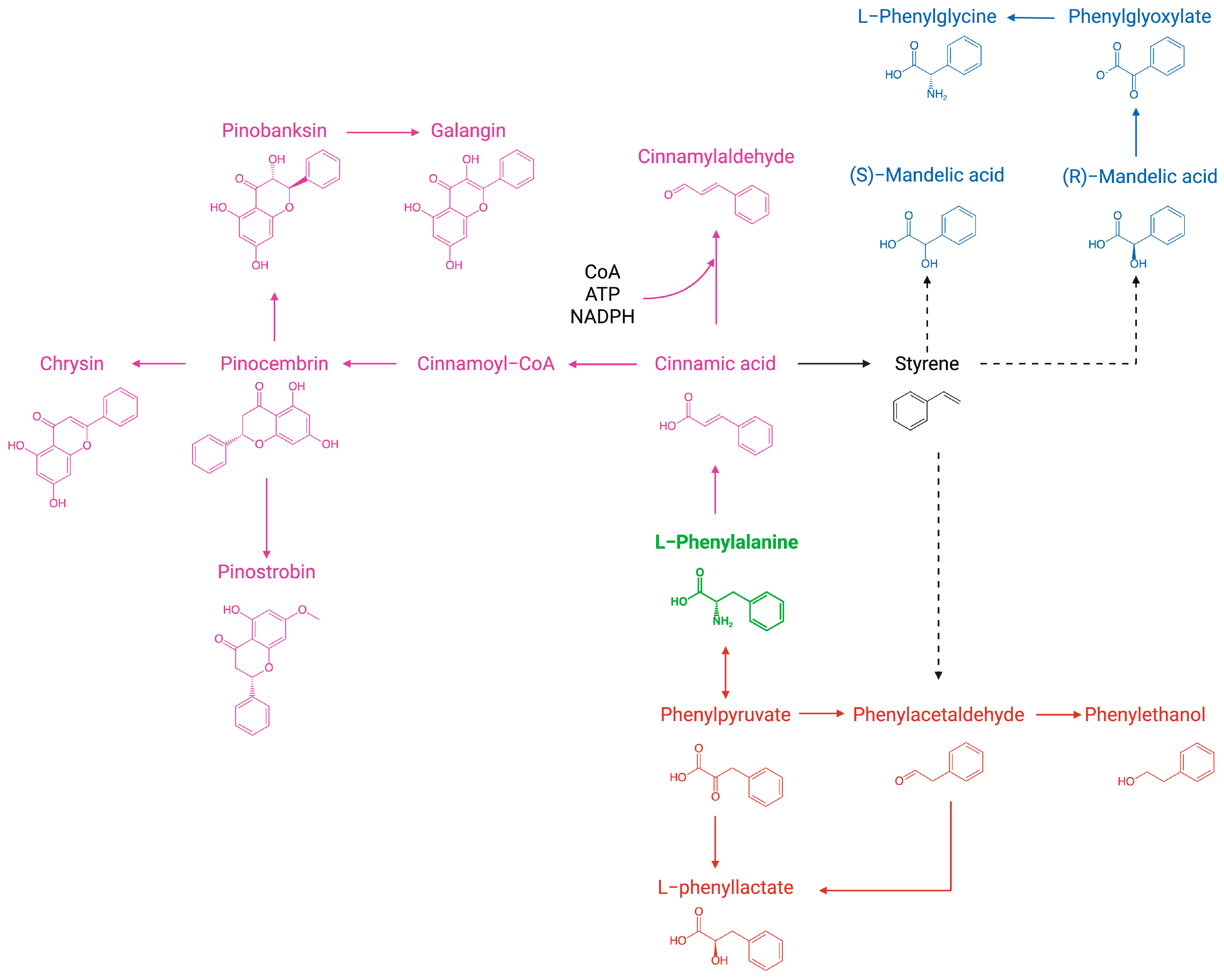
Figure 4. The L-Phe node in E. coli and the production of relevant aromatic derivatives. Phenylpyruvate-derived alcohols and acids pathways are shown in red. Mandelate and phenylglycine-related chiral compound pathways are shown in blue. Cinnamic acid-derived phenylpropanoid and flavonoid pathways are shown in pink. Solid arrows designate one enzymatic reaction; dashed arrows illustrate two or more enzymatic reactions. Figure merged from information reported in [10,11,17,21,38,52,53,54,55]. Created in BioRender. Escalante, A. (2026) https://BioRender.com/1xkfv71.
Microbiolres 17 00094 g004
Figure 5. The L-Trp node in E. coli and the production of relevant aromatic derivatives. The monoamine and neurotransmitter-related compounds pathway is shown in red. The indole-derived pigments and oxidative dimer pathway are shown in blue. Complex bisindole compounds via multienzyme pathways are shown in green. BH4 (tetrahydrobiopterin) indicates cofactor synthesis and regeneration. Solid arrows designate one enzymatic reaction; dashed arrows illustrate two or more enzymatic reactions. Figure merged from information reported in [13,14,16,20,36,57,58,59]. Created in BioRender. Escalante, A. (2026) https://BioRender.com/1xkfv71.
Microbiolres 17 00094 g005
Figure 6. Strategies for the optimization and overproduction of CCM precursors (PEP and E4P) and aromatic compounds in E. coli. (A). Development of parallel catabolic pathways dissecting glycolysis and PPP from the TCA cycle; glucose is channeled to cis,cis-muconic acid from CHA, and xylose to biomass production via the heterologous Dahms pathway from Caulobacter crescentus. Red circles represent the deletion of enzymes involved in the intersection between the PPP, glycolysis, the TCA cycle, and xylose consumption. Through the elimination of these enzymes, the PPP and glycolysis pathways were effectively isolated from the TCA cycle [12]. (B). Mutualistic self-coordinating E. coli–E. coli consortia for violacein production [58]. (C). Glucose transport optimization by the inactivation of PTS:Glc and its replacement with GlfZm, with the plasmid-based overexpression of key CCM genes to increase the supply of PEP and E4P, as well as the production of the SHK pathway end product, CHA. The red circle represents how PEP cannot be directed toward the PTS system due to the absence of the cytosolic enzymes required for this transport system. As a result, PEP becomes more available and can therefore be redirected toward other metabolic pathways [4]. (D). Feedback inhibition and its release in SHK and L-Trp biosynthesis pathways: AroG, AroF, and AroH are inhibited by L-Phe, L-Tyr, and L-Trp, respectively; complementation with feedback-resistant (fbr) variants abolishes inhibition [1,2,3,4]. (E). OMV-mediated secretion to improve the solubility of hydrophobic compounds such as curcuminoids [19]; membrane engineering alleviates toxicity and improves indigo secretion [20]. (F). High-throughput sensor–reporter system for optimizing gene expression in the SHK pathway (salicylate production) [60]. (G). Promoter optimization for 5-hydroxytryptophan [13] and 4-hydroxymandelate [61] production. The arrows represent the different promoters with varying strengths tested for mhcS expression optimization (H). Gene overexpression and multi-level gene interference using CRISPRi for 4-hydroxymandelate production [61]. Solid line arrows designate one enzymatic reaction; dashed arrows illustrate two or more enzymatic reactions. Created in BioRender. Escalante, A. (2026) https://BioRender.com/7c4sohn.
Microbiolres 17 00094 g006
Disclaimer/Publisher’s Note: The statements, opinions and data contained in all publications are solely those of the individual author(s) and contributor(s) and not of MDPI and/or the editor(s). MDPI and/or the editor(s) disclaim responsibility for any injury to people or property resulting from any ideas, methods, instructions or products referred to in the content.