Article

Microbial and Chemical Contamination in Springs of Northern and Central Lithuania

by
Žaneta Maželienė
,
Giedrė Jarienė
and
Asta Aleksandravičienė
*
Faculty of Medicine, Kauno Kolegija Higher Education Institution, Pramones pr. 20, LT-50468 Kaunas, Lithuania
*
Author to whom correspondence should be addressed.
Microbiol. Res. 2025, 16(11), 229; https://doi.org/10.3390/microbiolres16110229

Submission received: 25 September 2025 / Revised: 17 October 2025 / Accepted: 27 October 2025 / Published: 29 October 2025

Abstract

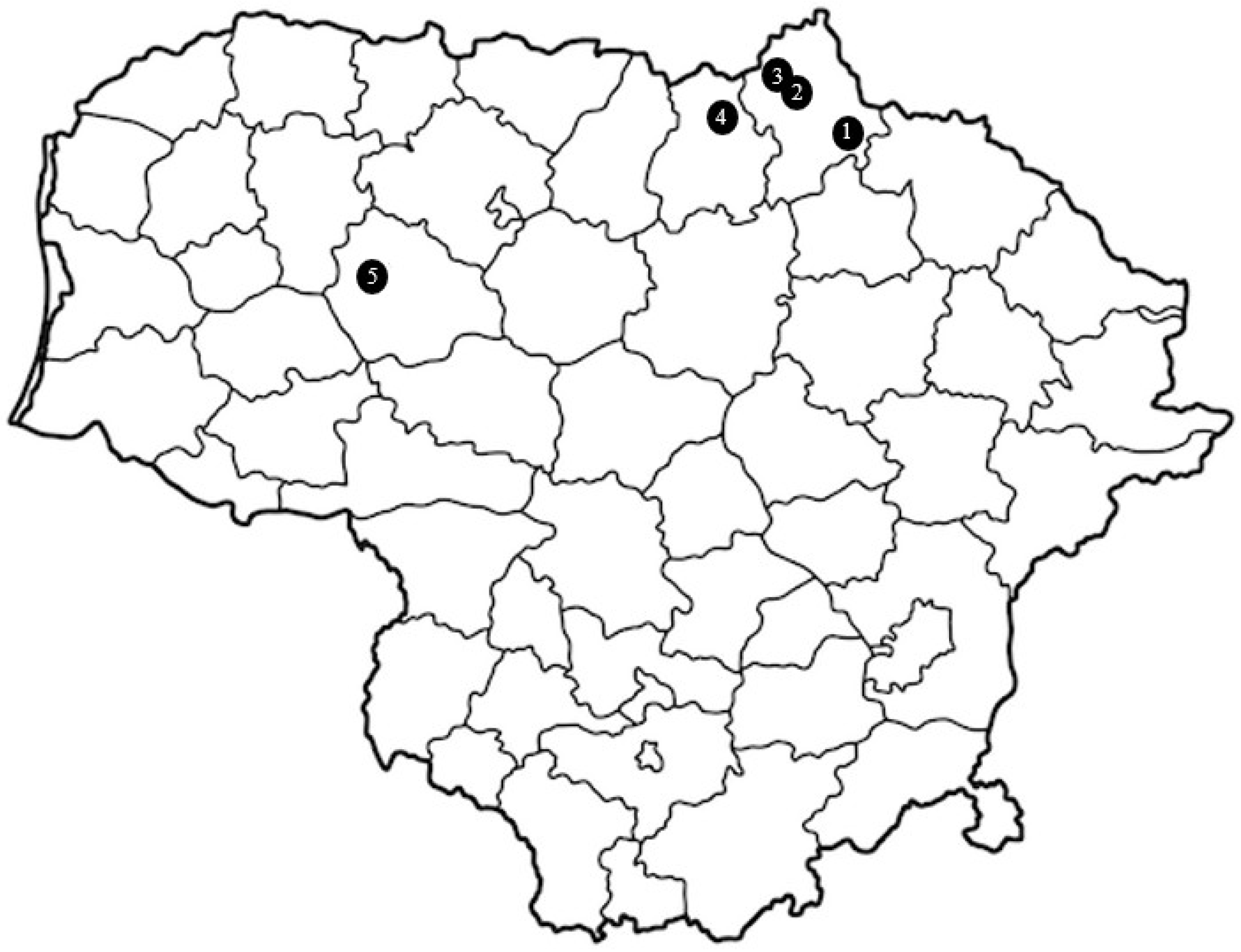
Groundwater springs are an important source of drinking water in Lithuania; however, they are highly sensitive to microbial and chemical contamination. The aim of this study was to assess microbial and chemical contamination in springs from different regions of Lithuania. Five springs were analyzed: Kučgaliai, Smardonė, Salomėja and Žalsvoji (Biržai and Pasvalys districts, Northern Lithuania) and Svilė (Kelmė district, Central Lithuania). Water samples were collected four times a year—during spring, summer, autumn, and winter—and analyzed according to international standards. Chemical parameters included pH, nitrites, nitrates, chlorides, sulfates, and permanganate index, while microbiological analysis targeted Escherichia coli, Enterococcus spp., and coliform bacteria. The results revealed substantial differences between karst and groundwater-fed springs. Karst springs were more vulnerable to fluctuations in contamination, with Smardonė exhibiting extremely high sulfate concentrations and significant microbial loads. In contrast, Kučgaliai, although located in a karst region, was covered and protected, and its water fully complied with hygiene standards. Groundwater-fed springs showed less variability but were still affected by surface sources. The highest microbial contamination was recorded in autumn and winter, coinciding with increased rainfall and reduced dilution capacity.
Keywords: springs; groundwater; Lithuania; karst; microbial contamination; chemical contamination; water quality; seasonality springs; groundwater; Lithuania; karst; microbial contamination; chemical contamination; water quality; seasonality