
Article

Prevalence of Intestinal Parasites in HIV/AIDS-Infected Patients Attending Clinics in Selected Areas of the Eastern Cape

1
Department of Public Health, Faculty of Health Sciences, Walter Sisulu University, Nelson Mandela Drive, Mthatha 5117, South Africa
2
Division of Medical Microbiology, Department of Laboratory Medicine and Pathology, Faculty of Health Sciences, Walter Sisulu University, Mthatha 5117, South Africa
3
HERENDA Program, Department of Laboratory Medicine and Pathology, Faculty of Health Sciences, Walter Sisulu University, Mthatha 5117, South Africa
*
Author to whom correspondence should be addressed.
Microbiol. Res. 2022, 13(3), 574-583; https://doi.org/10.3390/microbiolres13030040

Submission received: 28 May 2022 / Revised: 25 July 2022 / Accepted: 30 July 2022 / Published: 19 August 2022
(This article belongs to the Topic Host–Parasite Interactions)

Abstract

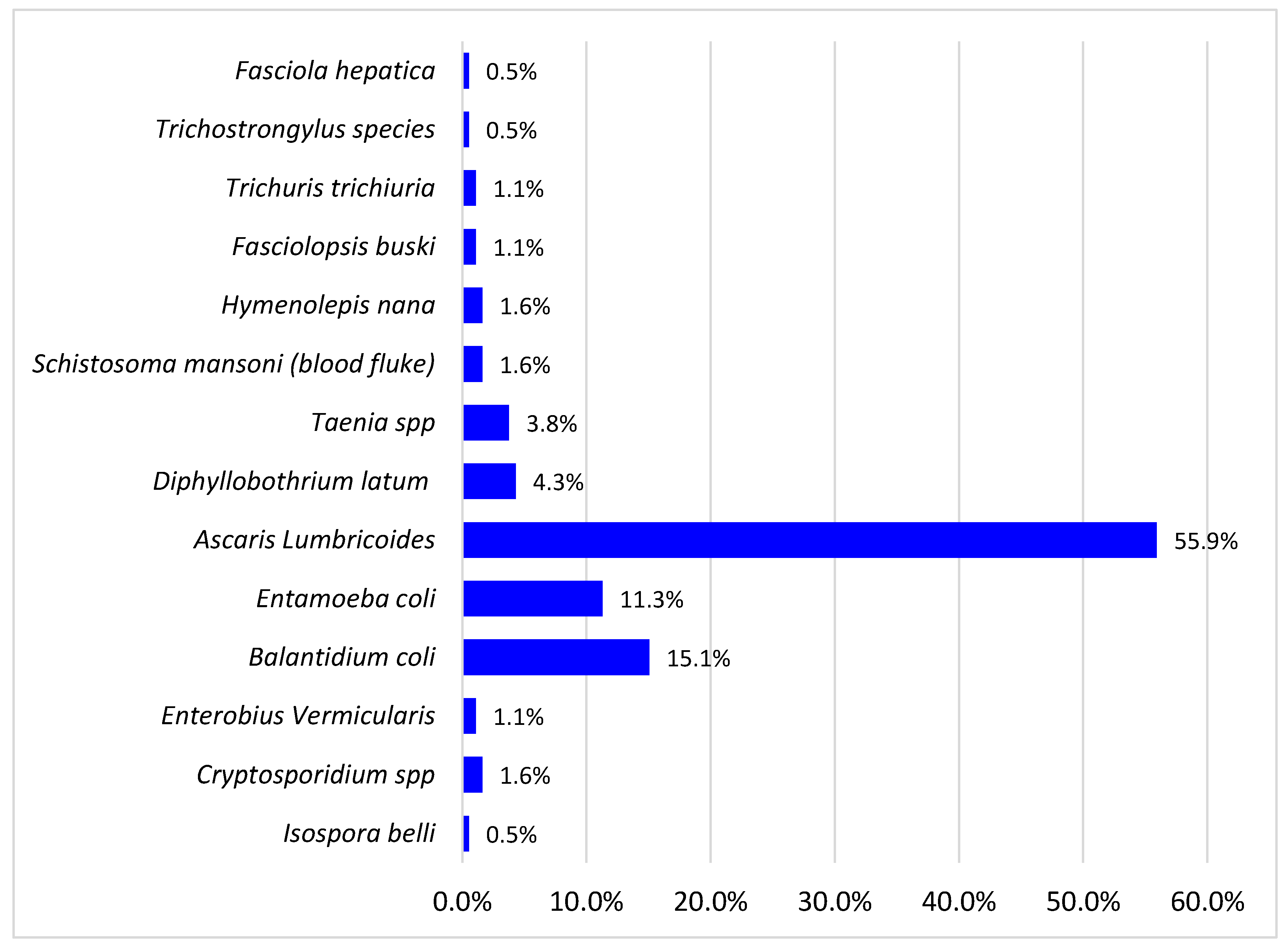
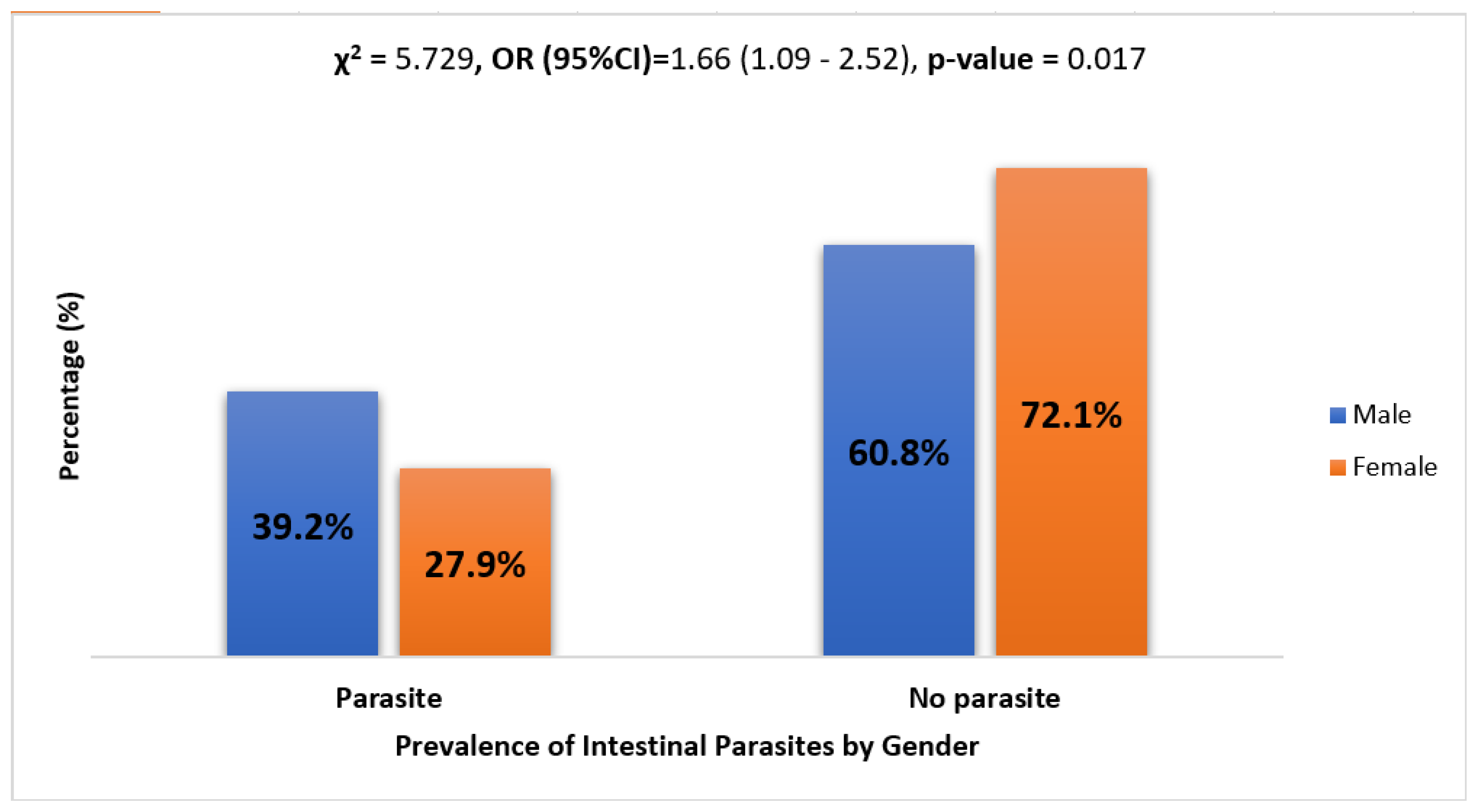
Introduction: Intestinal parasites in HIV and AIDS patients increase the risk of gastroenteritis, adding to the complexity of the virus. According to the literature, their interactions are one of the factors leading to HIV replication and progression of AIDS in Africa. Chronic immunosuppression caused by HIV infection makes people vulnerable to parasitic infections, and this is associated with a CD4+ cell count of less than 100. The study describes the prevalence of intestinal parasites in patients attending HIV/AIDS clinics in certain areas of the Eastern Cape. Methods: A cross-sectional study was conducted among 600 patients from HIV/AIDS clinics in the Eastern Cape. Tambo Municipality and Amatole Municipality were the municipalities covered. These included the Ngangalizwe Community Clinic, Tsolo Gateway Clinic, Idutywa Health Centre, and Nqamakwe Health Centre. The stools of 600 participants were examined using direct wet saline/iodine embedding, formal ether concentration technique, and modified Ziehl–Neelsen methods. Results: The mean age of the study participants was 28.2 years. They were predominantly female (79.9%), mostly single (63.6%), and lived in rural (65.2%) and urban areas (34.8%). The prevalence of intestinal parasites was determined to be 30% (180/600) after screening 600 stool samples. The most frequently detected parasites were Ascaris lumbricoides (55.9%), Balantidium coli (15.1%), Entamoeba coli (11.3%), Diphyllobothrium latum (4.3%), Taenia species (3.8%), Schistosoma mansoni (1.6%), and Cryptosporidium spp. (1.6%). Males were affected more frequently (39.2%) than females (27.9%). The difference was statistically significant (p = 0.017). Among the identified intestinal parasites, A. lumbricoides, B. coli, and Taenia spp. were found at all four sites. Conclusion: This study has shed light on the high burden of intestinal parasites in HIV/AIDS patients in the Eastern Cape. Medication adherence, deworming, and sanitary hygiene practices are needed to enhance the control of infection in the affected communities and hence contribute to the control of the HIV pandemic.
Keywords: HIV/AIDS clinics; intestinal parasites; prevalence HIV/AIDS clinics; intestinal parasites; prevalence